Downloaded 77 times




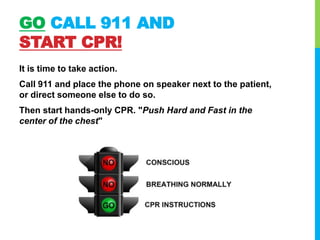

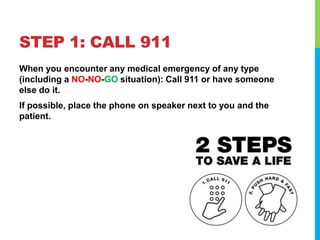



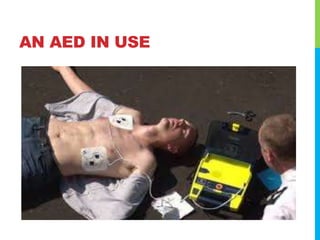


This document provides instructions for performing hands-only CPR. It begins by outlining the learning objectives of calling 911, giving compressions, switching with another person, and using an AED. It then explains that hands-only CPR involves only compressions, no rescue breathing. The document notes that this is an informational session and not a formal CPR course, and encourages practicing compressions if health allows. It emphasizes that early CPR can double survival chances and help prevent brain damage until emergency responders arrive. The key steps of hands-only CPR - check for safety, assess for consciousness and breathing, call 911, then push hard and fast in the center of the chest - are explained. Examples of proper


