Cyberethics for Educators
The Rising Cost of Digital Misconduct
Frederick S. Lane
Calif. Schools Risk Management
San Bernardino, CA
19 August 2015
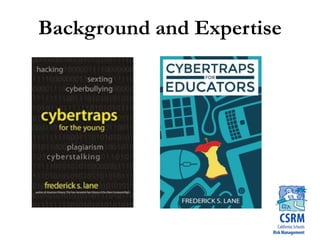
Background and Expertise
Lecture Overview
• Defining Cyberethics
• Familiar Cyberethical Issues
• Challenges to Cyberethics
• Workplace Cybertraps
• Boundary Cybertraps
• National Initiative
• District Initiatives
• The Cyberethical Teacher
Defining Cyberethics
• Ethics – About 2,500 years of
study and discussion about
moral behavior
• Cyberethics – About 40 years
• “The field of applied ethics
that examines moral, legal,
and social issues in the
development and use of
cybertechnology.”
Familiar Cyberethical Issues
• Downloading “free” music or
movies
• Using a neighbor’s open WiFi
connection
• Uploading a photo or tagging
someone without permission
• Posting snarky messages
when someone leaves their
social media unlocked
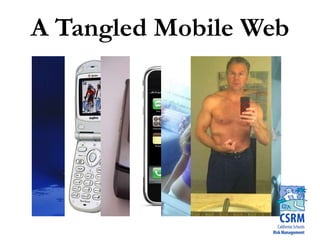
A Tangled Mobile Web
Challenges to Cyberethics
• Communication at the
Speed of Light
• Shifting Cultural Mores
• “Digital Natives” Entering
the Teaching Profession
• Insufficient Training
Workplace Cybertraps
• Cyberloafing
• Copyright Infringement
• Hostile Work Environment
• Accessing Inappropriate or
Illegal Materials
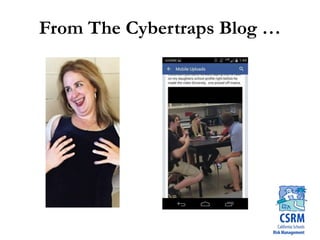
From The Cybertraps Blog …
Boundary Cybertraps
• Inappropriate Use of
Communication Technology
• Cyberbullying,
Cyberharassment, and
Cyberstalking
• Invasion of
Privacy/Voyeurism
• Sexting, Solicitation, and
Sexual Assault
Increased Litigation
• … for paddling 18-year-old student
• … for negligence in hiring, training,
and supervision
• … for failing to investigate
suspicious relationship
• … for failing to stop ongoing sexual
harassment
• … for failing to prevent sexual
assault
National Ethics Initiative
• NASDTEC – Model Code of Ethics for Educators
(June 2015)
• Five Principles:
• Responsibility to the Profession
• Responsibility for Professional Competence
• Responsibility to Students
• Responsibility to the School Community
• Responsible and Ethical Use of Technology
• “The professional educator considers the impact of
consuming, creating, distributing and communicating
information through all technologies. The ethical
educator is vigilant to ensure appropriate boundaries of
time, place and role are maintained when using electronic
communication.”
District and School Prevention
• Plan Ahead
• Good Policies and Clear
Procedures
• Ongoing Education of Entire
Community About These Issues
• Cultivate a Culture of Safety
• Promote Digital Citizenship
• Rinse and Repeat
Cyberethics for Educators
• Pre-Certification Training and
Ongoing Professional Development
• Standards of Electronic Behavior and
Teacher-Student Interaction
• Promoting Sound Decision-Making
Online and Off
• Modeling Cyberethical Behavior for
Students
• Educating Cyber Citizens for 21st
Century
Contact Information
• “The Cybertraps Blog”:
• http://www.FrederickLane.com/the-Cybertraps-blog/
• E-Mail:
• FSLane3@gmail.com
• Telephone:
• 802-318-4604
• Twitter
• @FSL3, @Cybertraps
• LinkedIn:
• www.linkedin.com/in/fredericklane/
• SlideShare.net
• www.slideshare.net/FSL3
Cyberethics for Educators
The Rising Cost of Digital Misconduct
Frederick S. Lane
So. Calif. Schools Risk Management
San Bernardino, CA
19 August 2015

2015-08-19 Cyberethics for Educators

  • 1.
    Cyberethics for Educators TheRising Cost of Digital Misconduct Frederick S. Lane Calif. Schools Risk Management San Bernardino, CA 19 August 2015
  • 2.
  • 3.
    Lecture Overview • DefiningCyberethics • Familiar Cyberethical Issues • Challenges to Cyberethics • Workplace Cybertraps • Boundary Cybertraps • National Initiative • District Initiatives • The Cyberethical Teacher
  • 4.
    Defining Cyberethics • Ethics– About 2,500 years of study and discussion about moral behavior • Cyberethics – About 40 years • “The field of applied ethics that examines moral, legal, and social issues in the development and use of cybertechnology.”
  • 5.
    Familiar Cyberethical Issues •Downloading “free” music or movies • Using a neighbor’s open WiFi connection • Uploading a photo or tagging someone without permission • Posting snarky messages when someone leaves their social media unlocked
  • 6.
  • 7.
    Challenges to Cyberethics •Communication at the Speed of Light • Shifting Cultural Mores • “Digital Natives” Entering the Teaching Profession • Insufficient Training
  • 8.
    Workplace Cybertraps • Cyberloafing •Copyright Infringement • Hostile Work Environment • Accessing Inappropriate or Illegal Materials
  • 9.
  • 10.
    Boundary Cybertraps • InappropriateUse of Communication Technology • Cyberbullying, Cyberharassment, and Cyberstalking • Invasion of Privacy/Voyeurism • Sexting, Solicitation, and Sexual Assault
  • 11.
    Increased Litigation • …for paddling 18-year-old student • … for negligence in hiring, training, and supervision • … for failing to investigate suspicious relationship • … for failing to stop ongoing sexual harassment • … for failing to prevent sexual assault
  • 12.
    National Ethics Initiative •NASDTEC – Model Code of Ethics for Educators (June 2015) • Five Principles: • Responsibility to the Profession • Responsibility for Professional Competence • Responsibility to Students • Responsibility to the School Community • Responsible and Ethical Use of Technology • “The professional educator considers the impact of consuming, creating, distributing and communicating information through all technologies. The ethical educator is vigilant to ensure appropriate boundaries of time, place and role are maintained when using electronic communication.”
  • 13.
    District and SchoolPrevention • Plan Ahead • Good Policies and Clear Procedures • Ongoing Education of Entire Community About These Issues • Cultivate a Culture of Safety • Promote Digital Citizenship • Rinse and Repeat
  • 14.
    Cyberethics for Educators •Pre-Certification Training and Ongoing Professional Development • Standards of Electronic Behavior and Teacher-Student Interaction • Promoting Sound Decision-Making Online and Off • Modeling Cyberethical Behavior for Students • Educating Cyber Citizens for 21st Century
  • 15.
    Contact Information • “TheCybertraps Blog”: • http://www.FrederickLane.com/the-Cybertraps-blog/ • E-Mail: • FSLane3@gmail.com • Telephone: • 802-318-4604 • Twitter • @FSL3, @Cybertraps • LinkedIn: • www.linkedin.com/in/fredericklane/ • SlideShare.net • www.slideshare.net/FSL3
  • 16.
    Cyberethics for Educators TheRising Cost of Digital Misconduct Frederick S. Lane So. Calif. Schools Risk Management San Bernardino, CA 19 August 2015