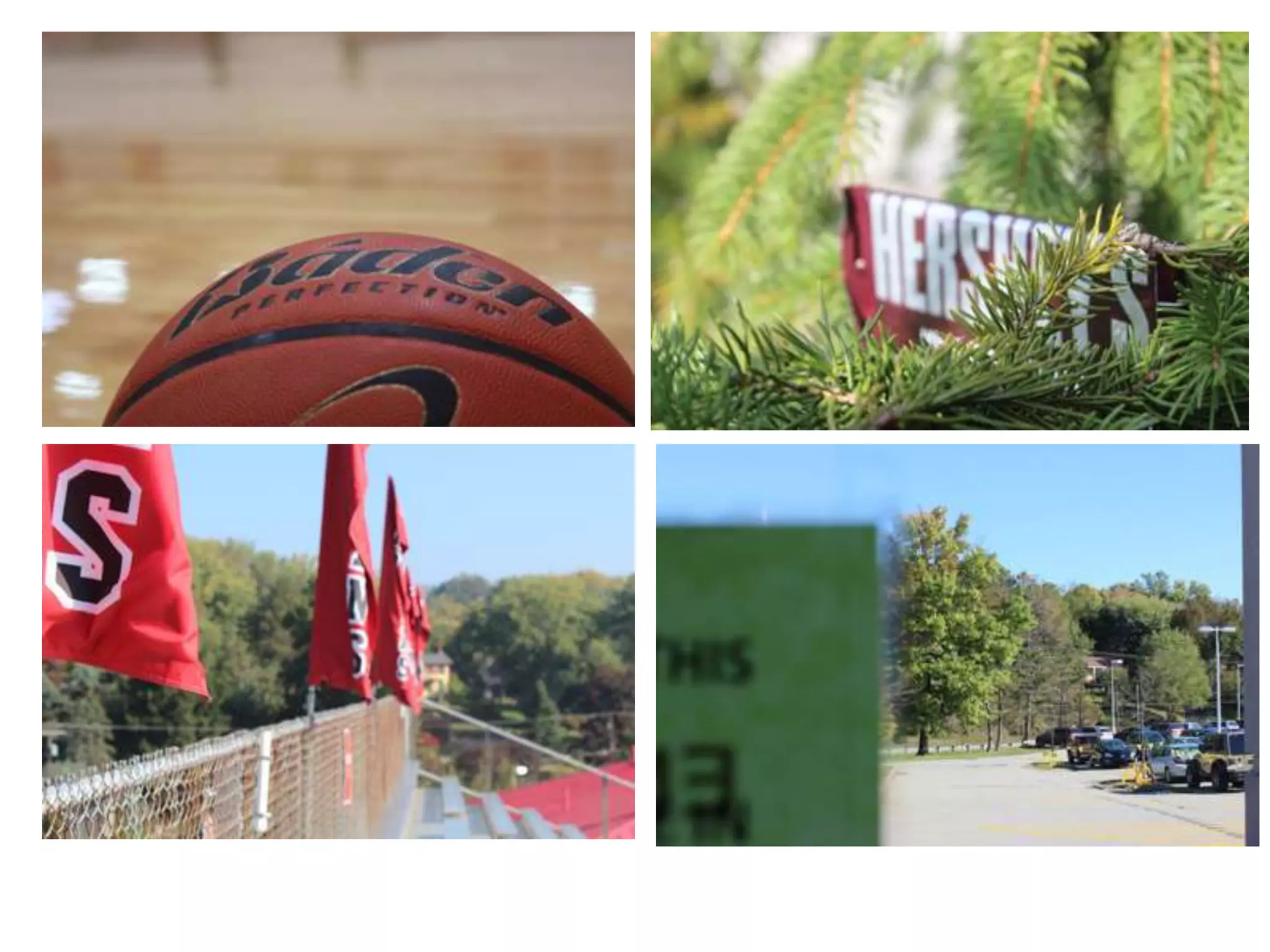
Photo
Composition
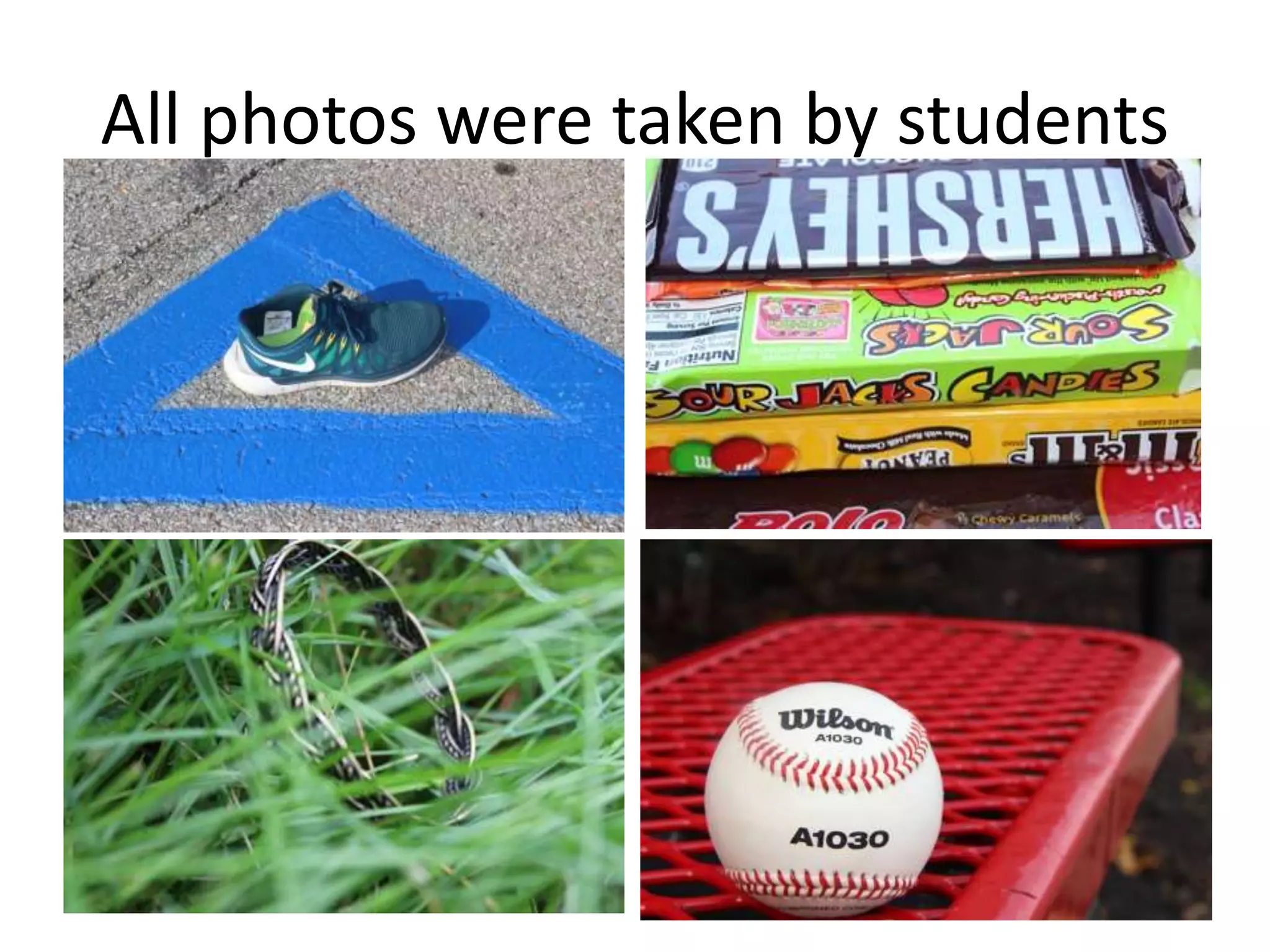
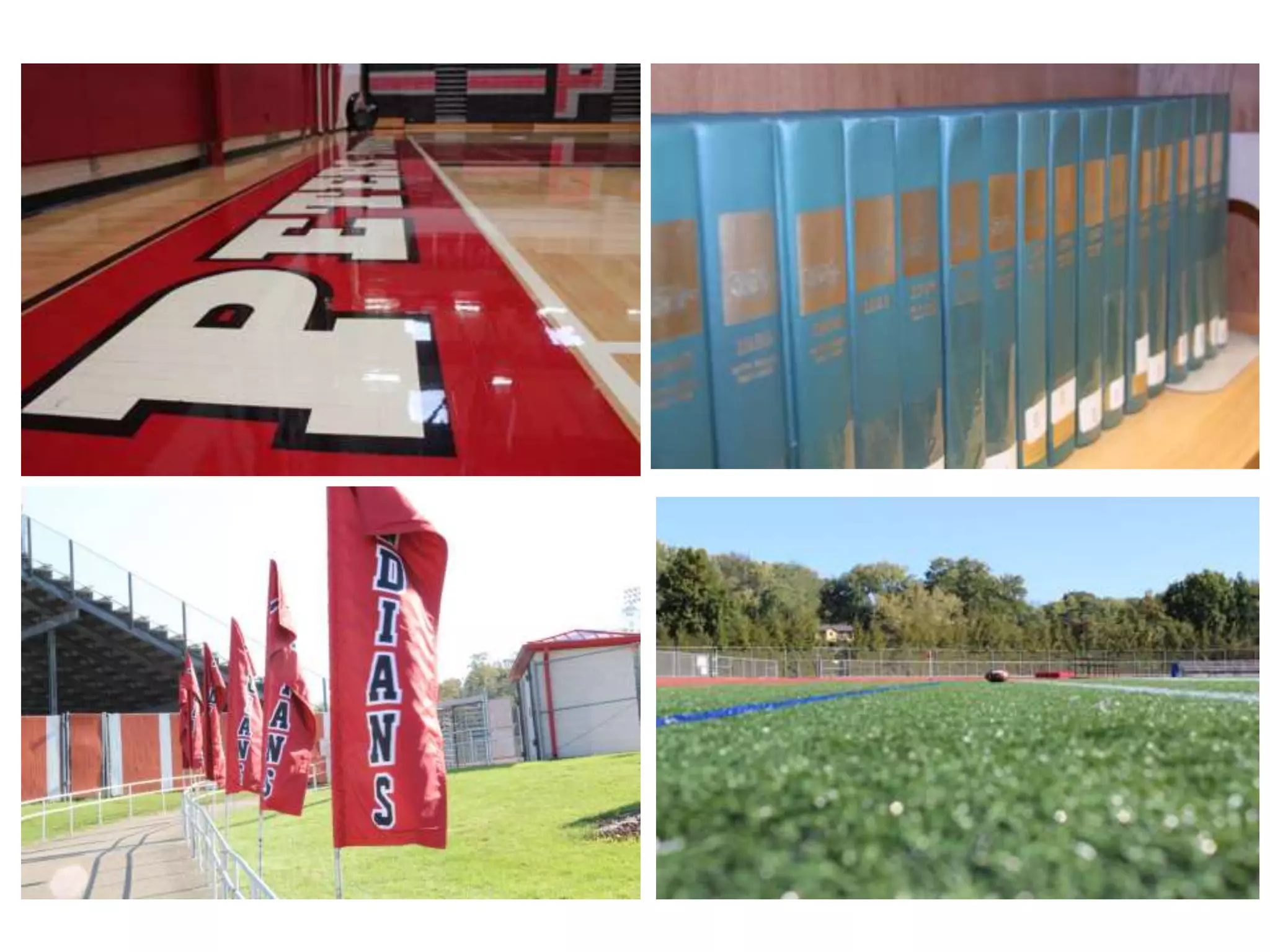
All photos were taken by students
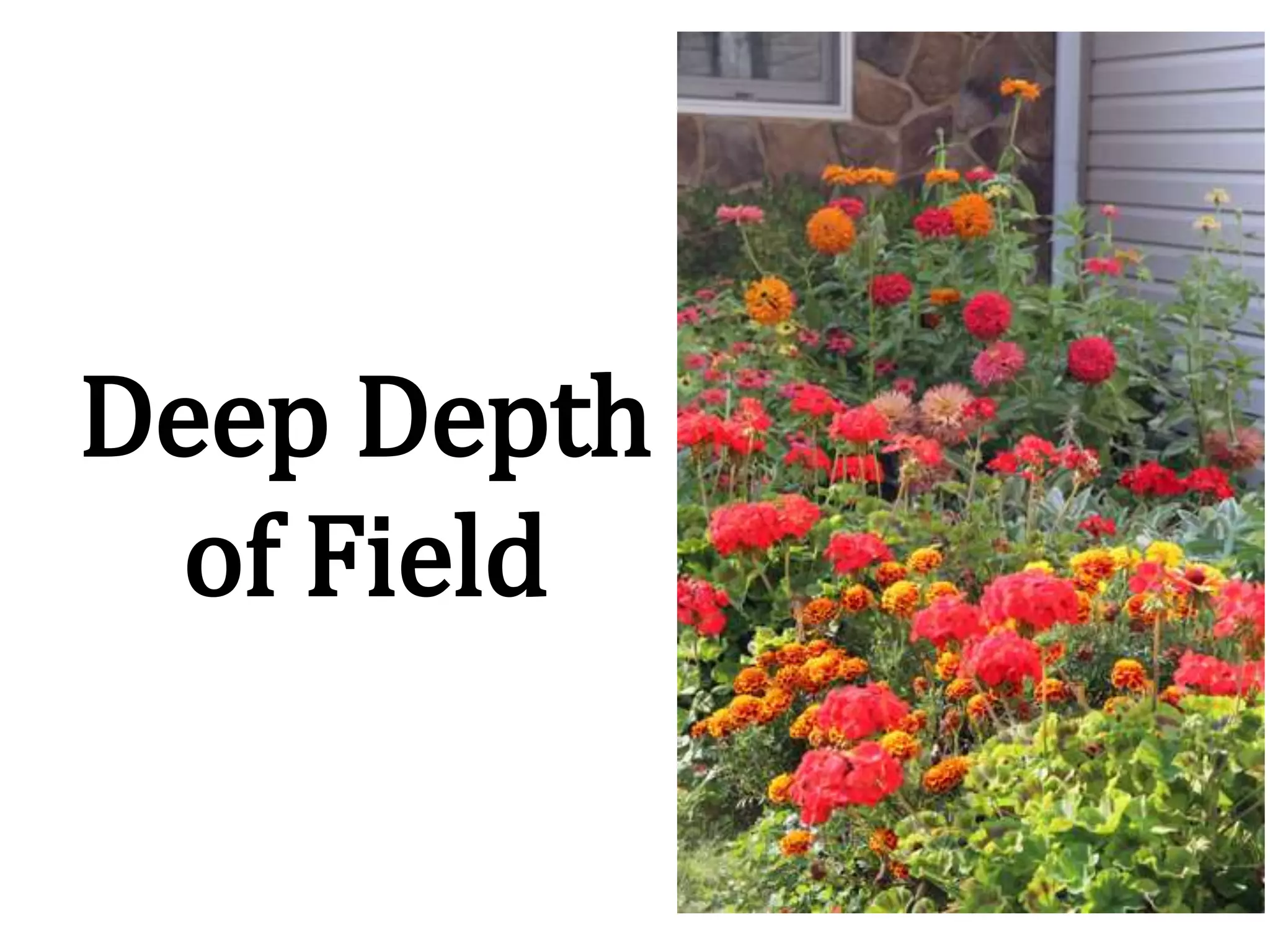
Deep Depth
of Field
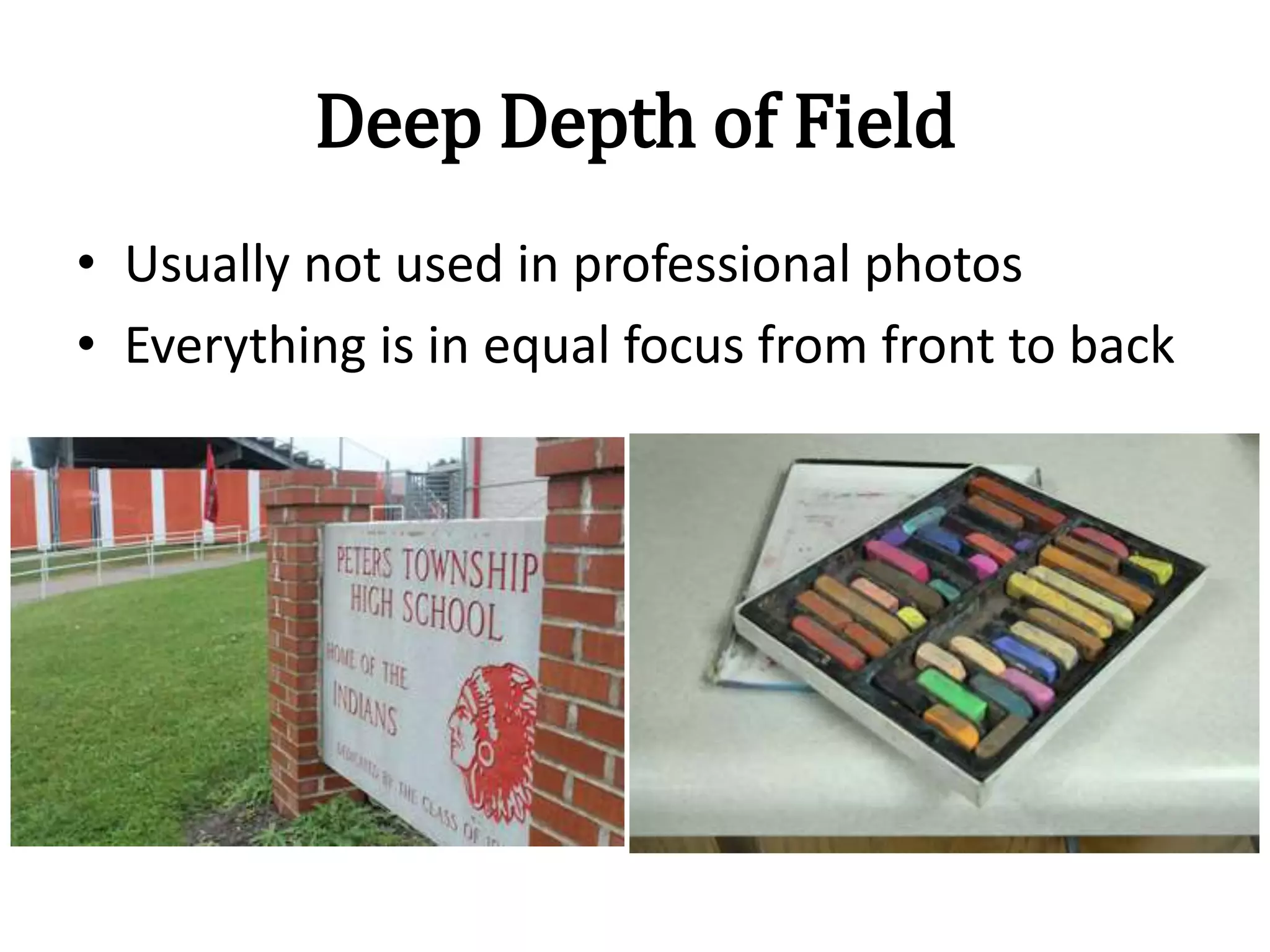
Deep Depth of Field
• Usually not used in professional photos
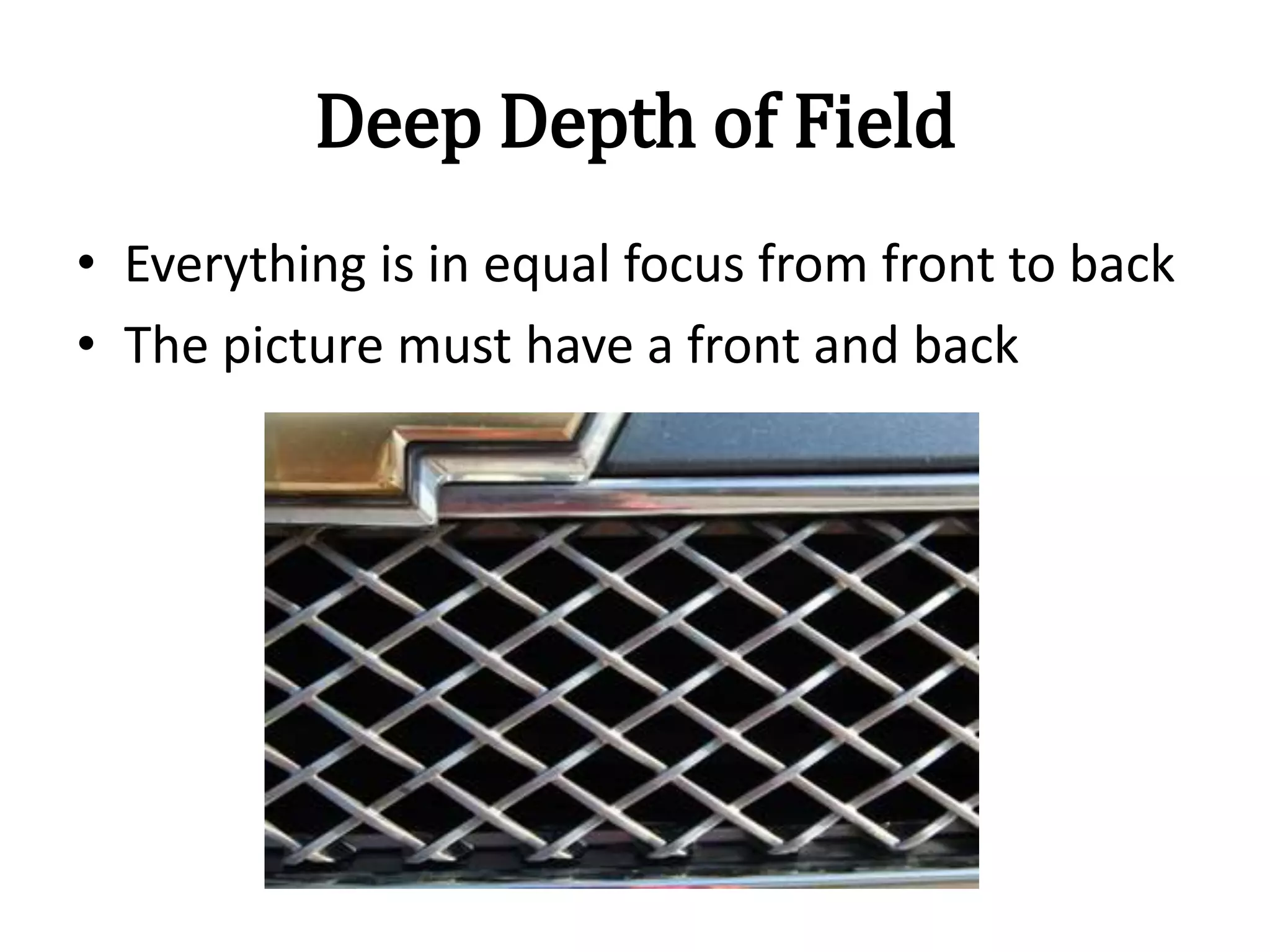
• Everything is in equal focus from front to back
Deep Depth of Field
• Everything is in equal focus from front to back
• The picture must have a front and back
Deep Depth of Field
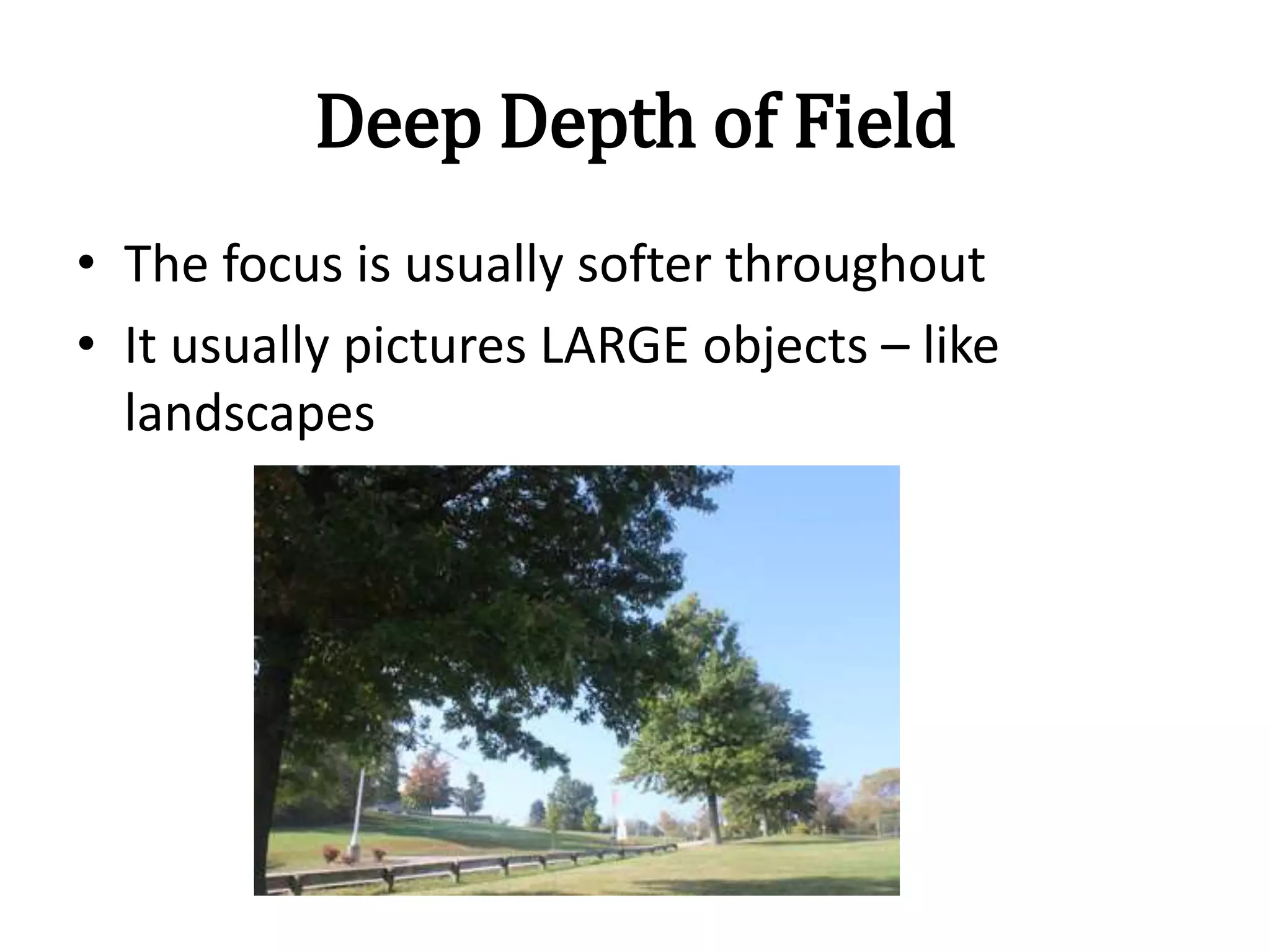
• The focus is usually softer throughout
• It usually pictures LARGE objects – like
landscapes
Deep Depth of Field
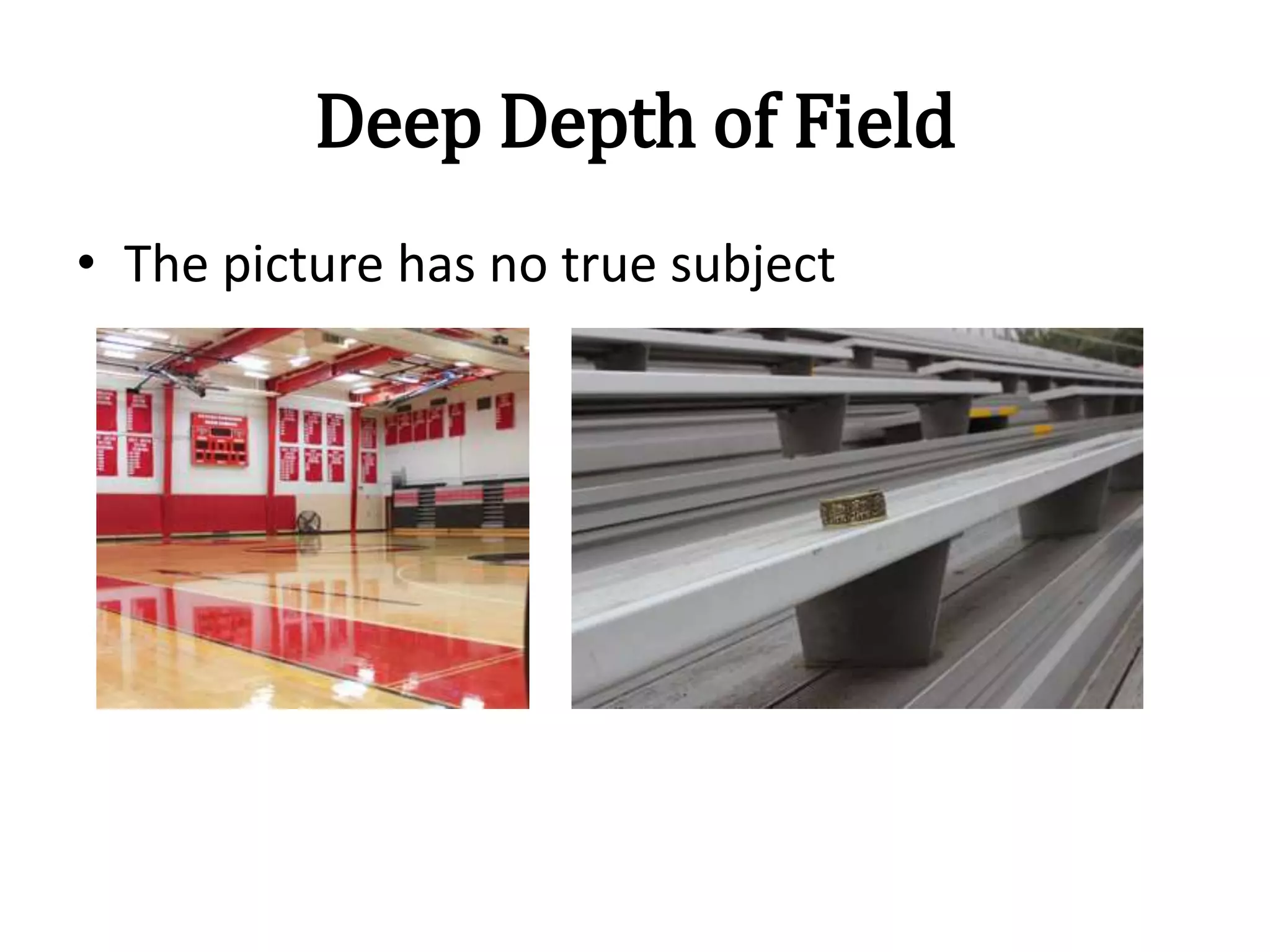
• The picture has no true subject
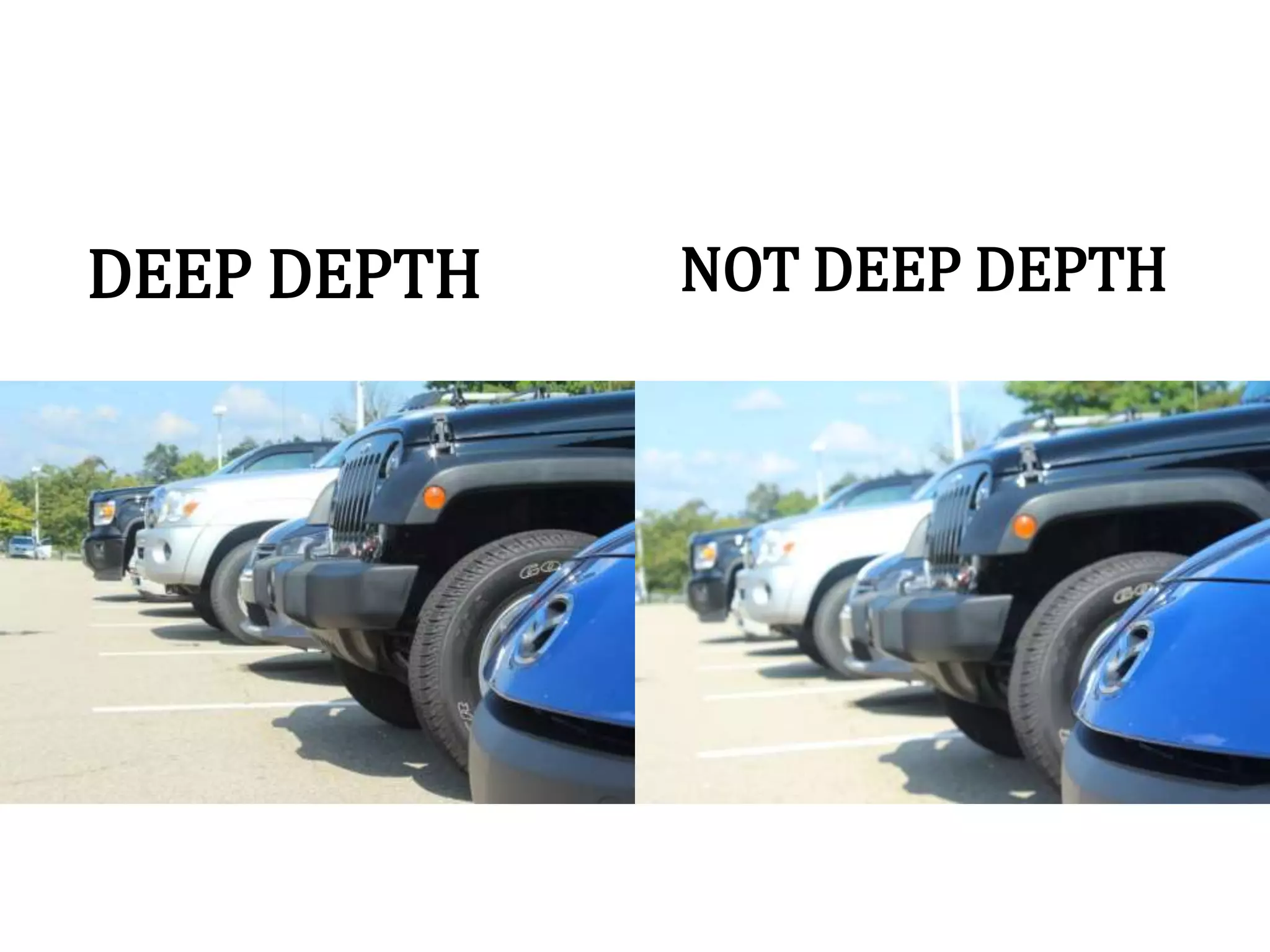
DEEP DEPTH NOT DEEP DEPTH
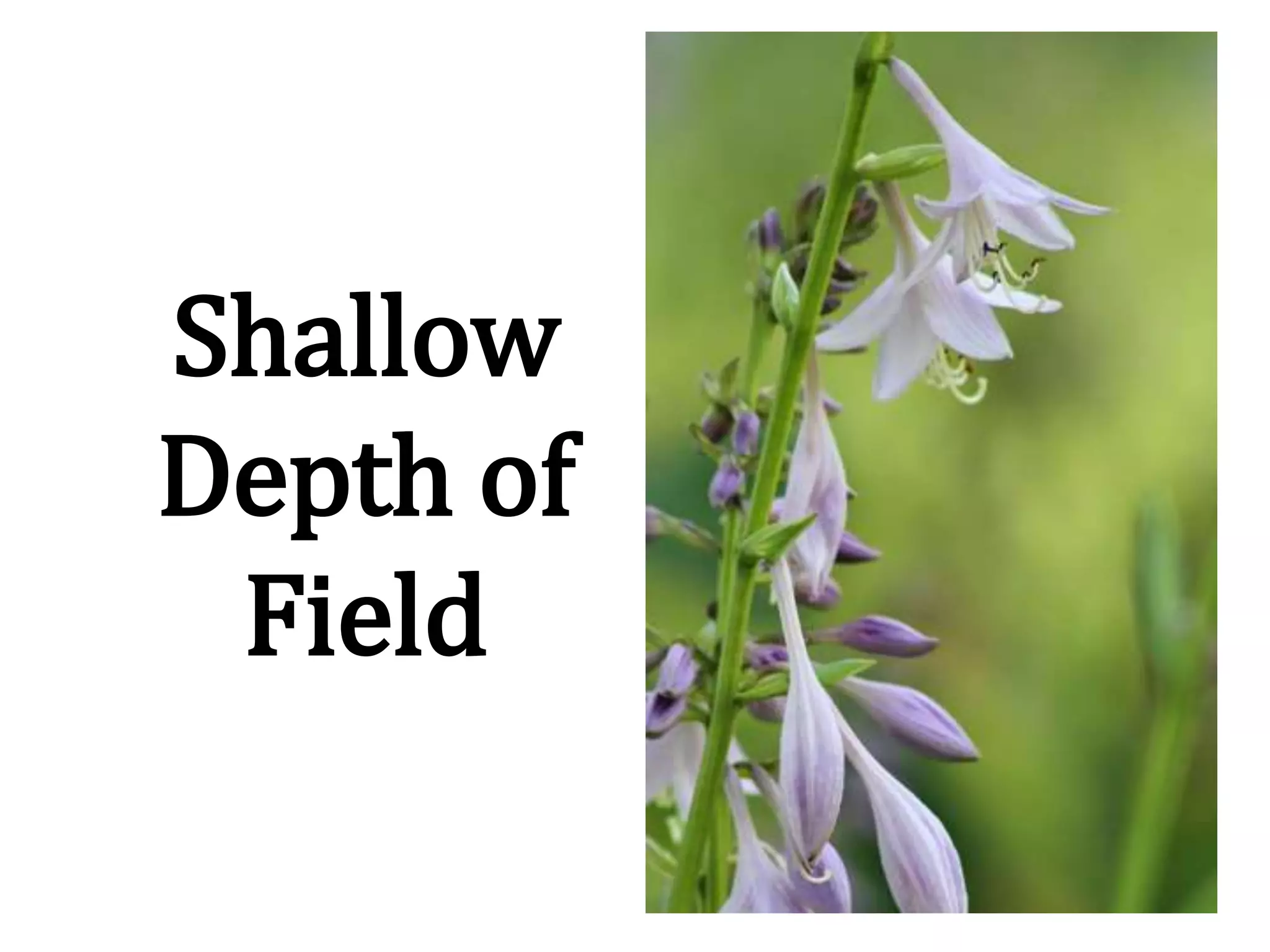
Shallow
Depth of
Field
Shallow Depth of Field
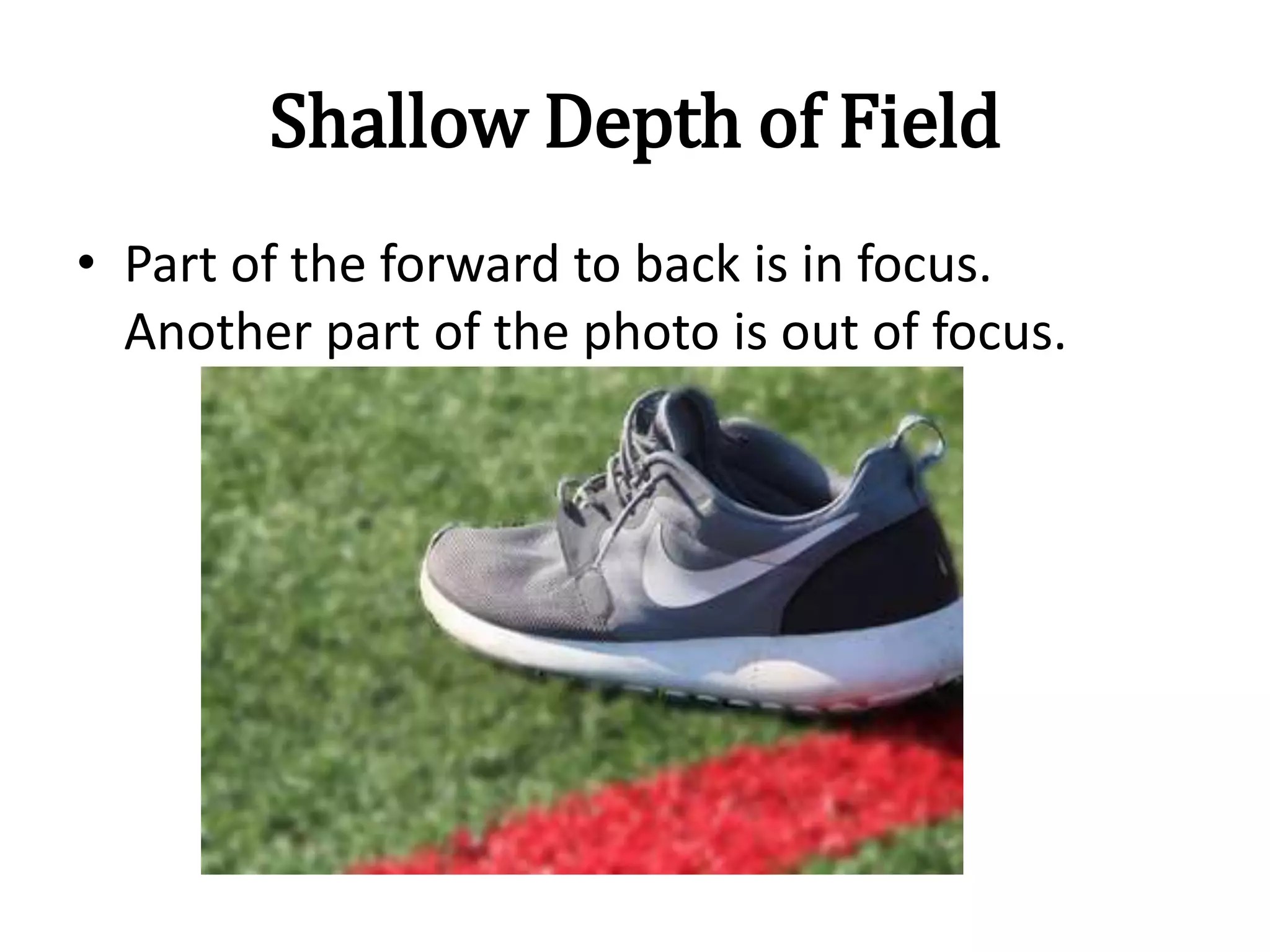
• Part of the forward to back is in focus.
Another part of the photo is out of focus.
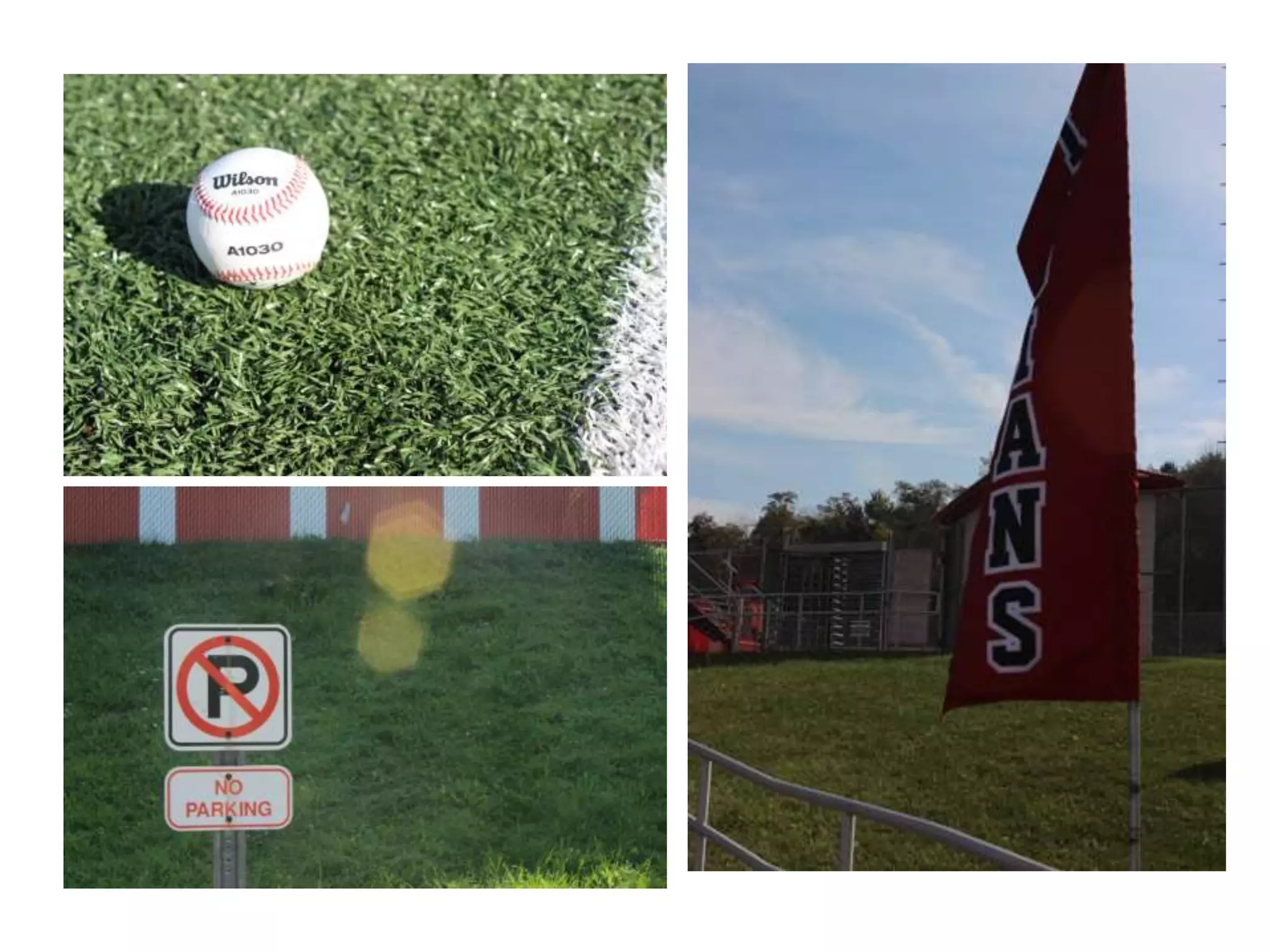
Shallow Depth of Field
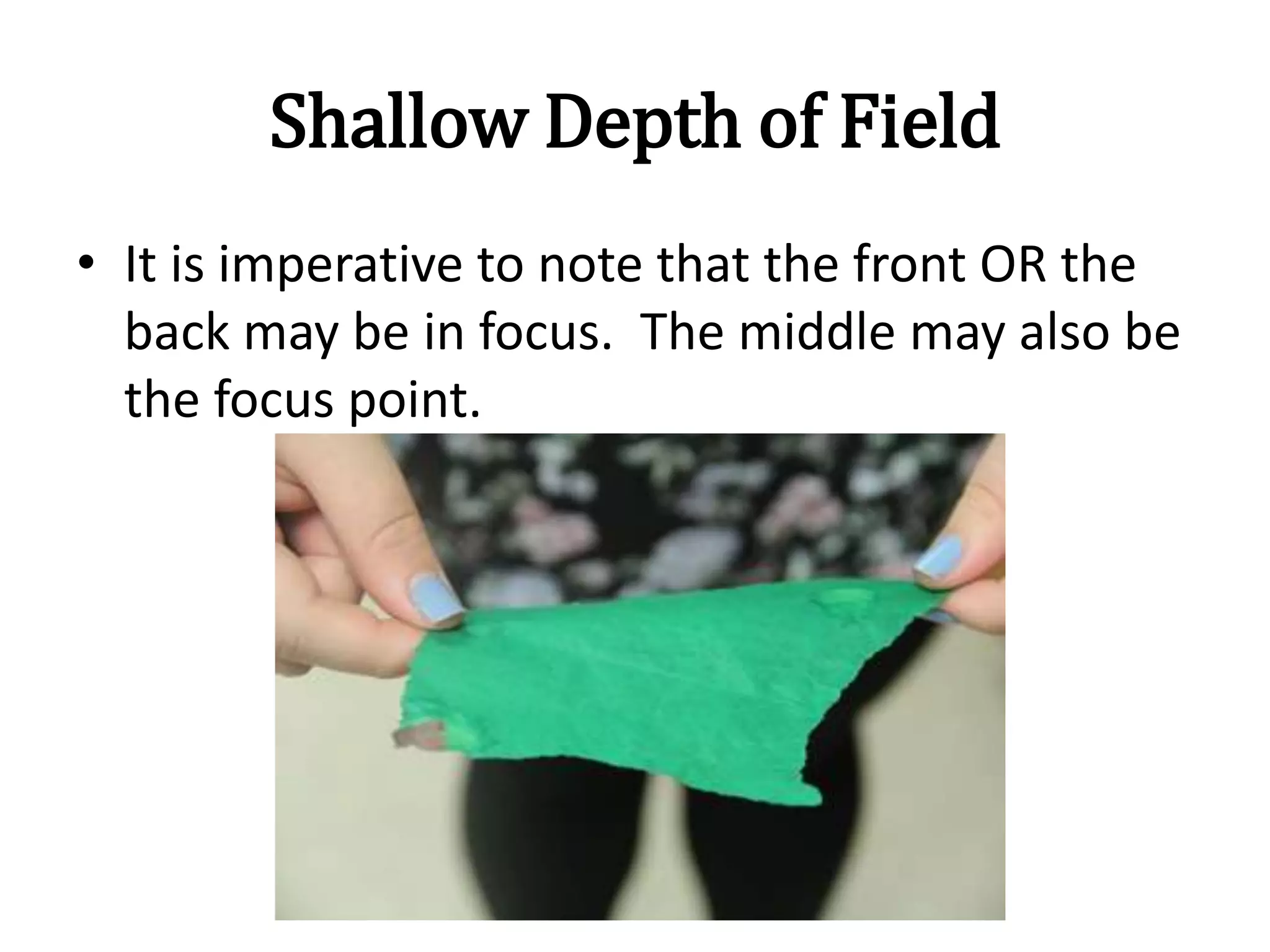
• It is imperative to note that the front OR the
back may be in focus. The middle may also be
the focus point.
Shallow Depth of Field
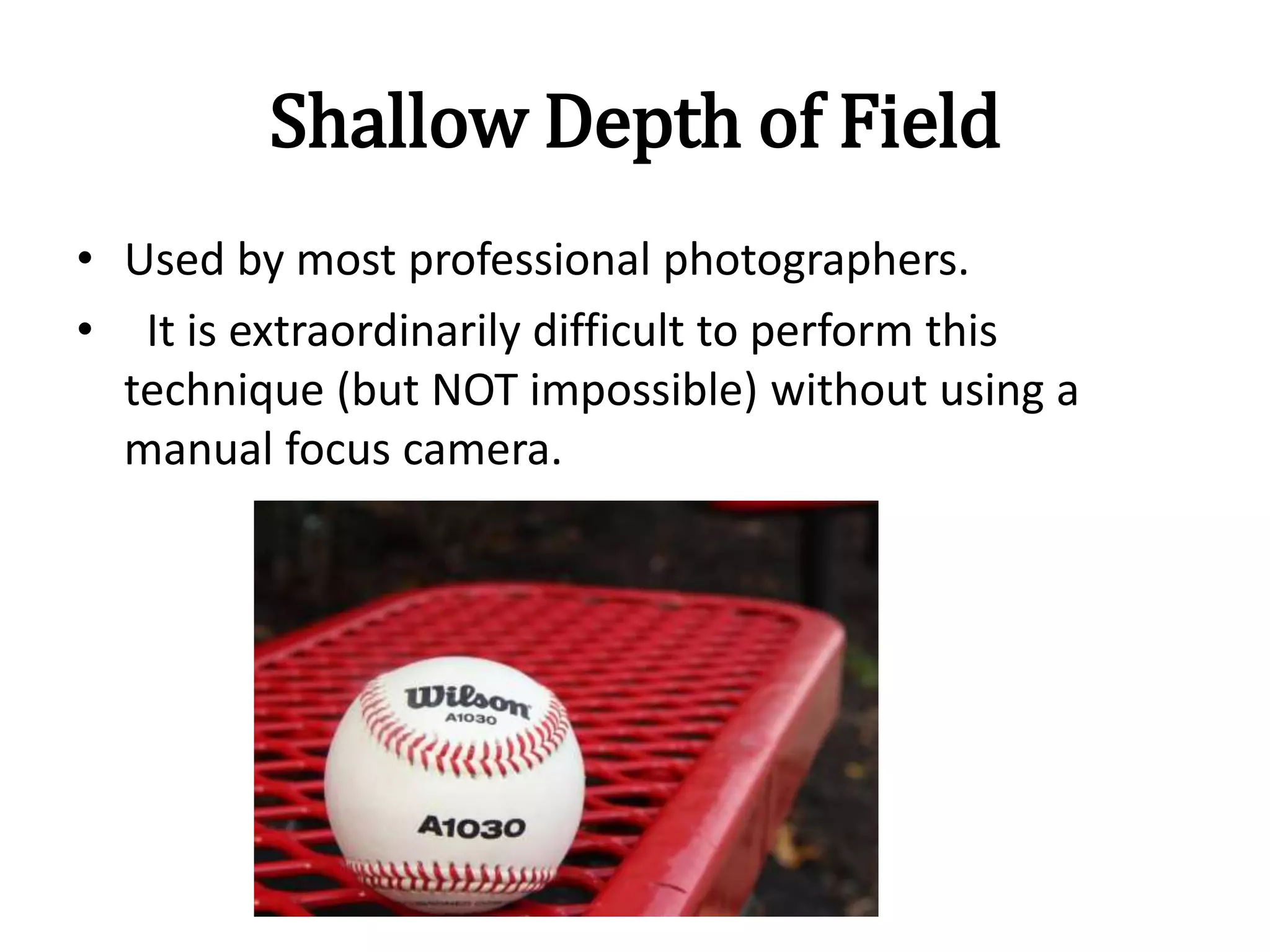
• Used by most professional photographers.
• It is extraordinarily difficult to perform this
technique (but NOT impossible) without using a
manual focus camera.
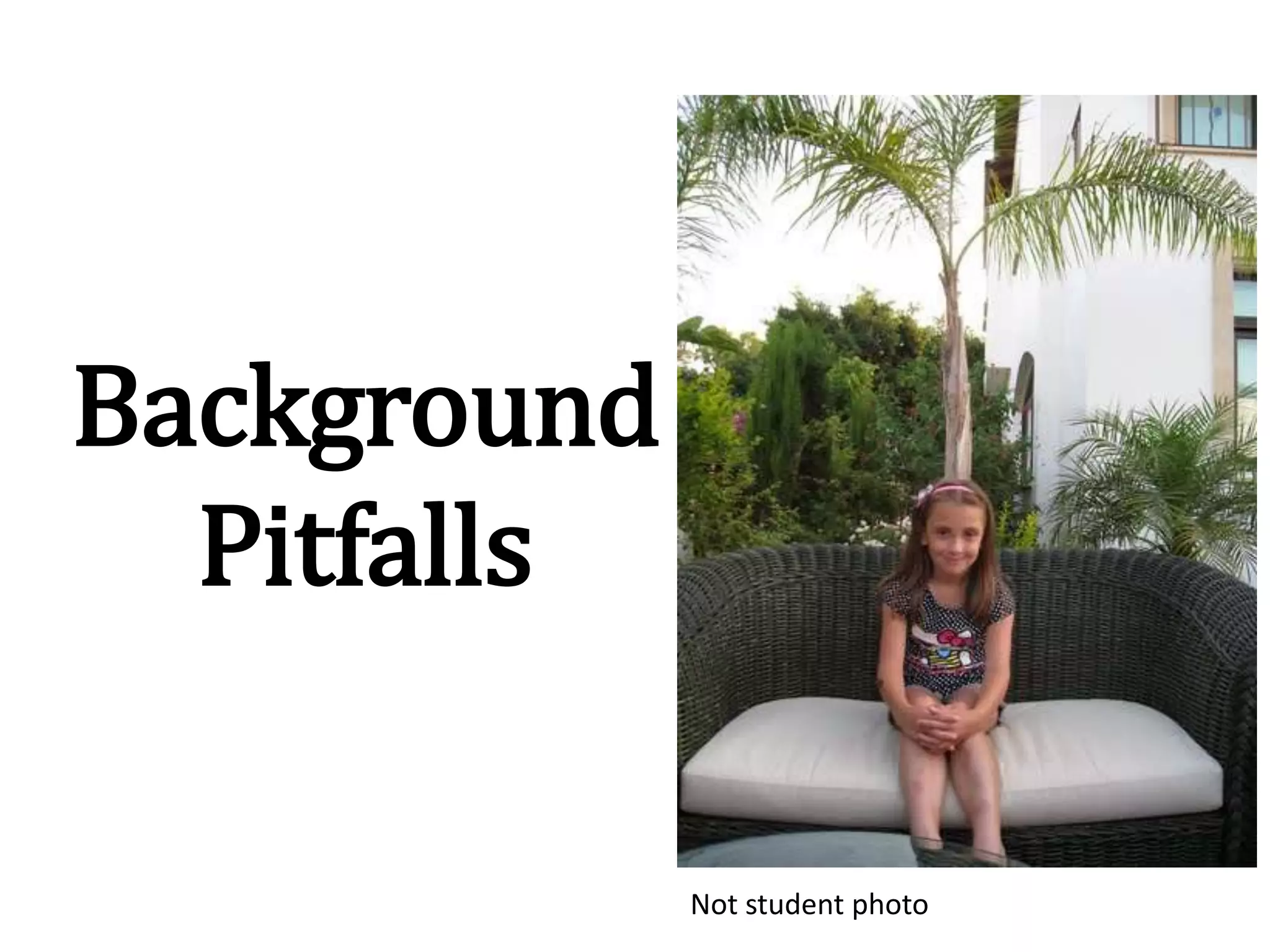
Background
Pitfalls
Not student photo
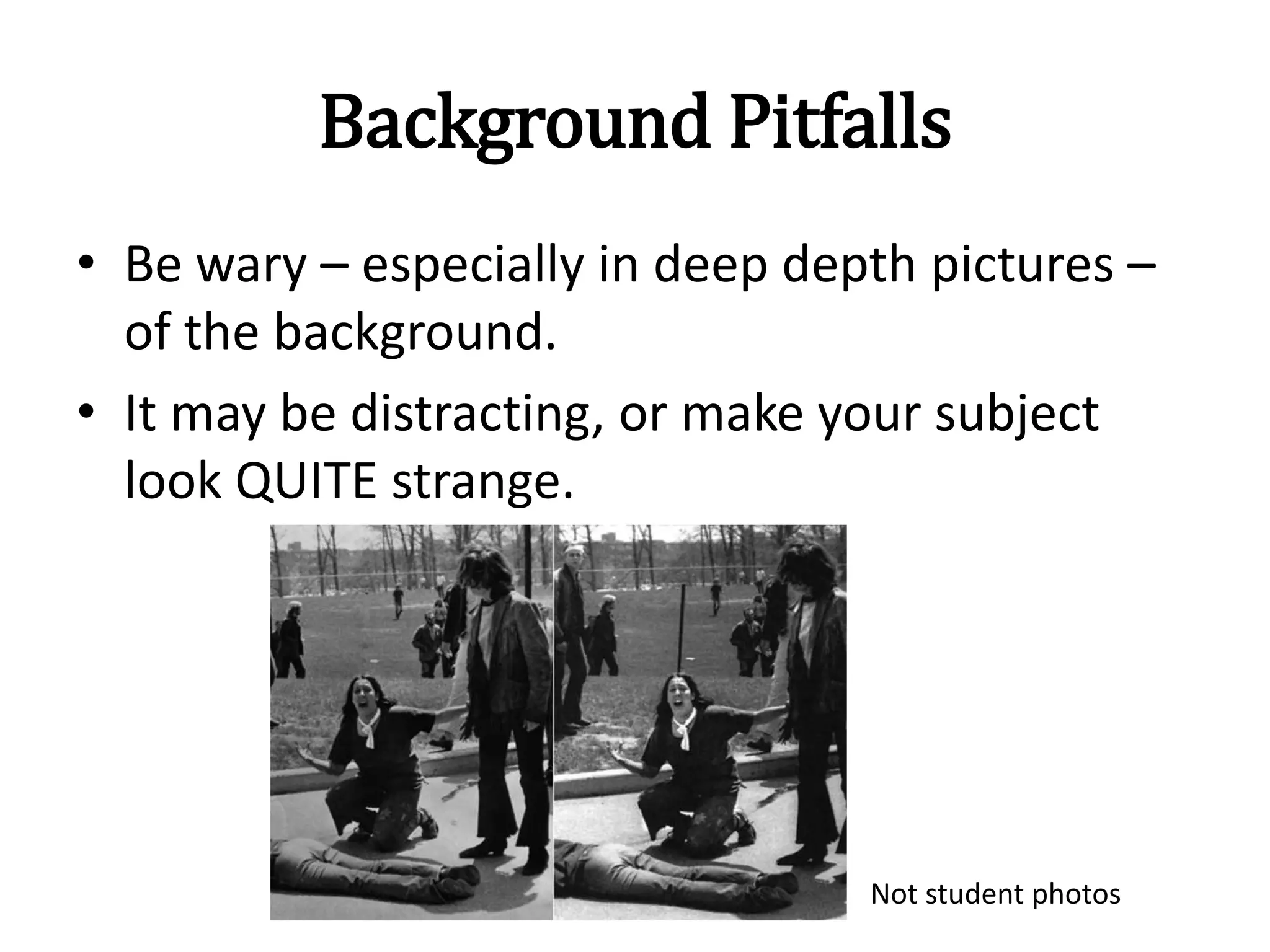
Background Pitfalls
• Be wary – especially in deep depth pictures –
of the background.
• It may be distracting, or make your subject
look QUITE strange.
Not student photos
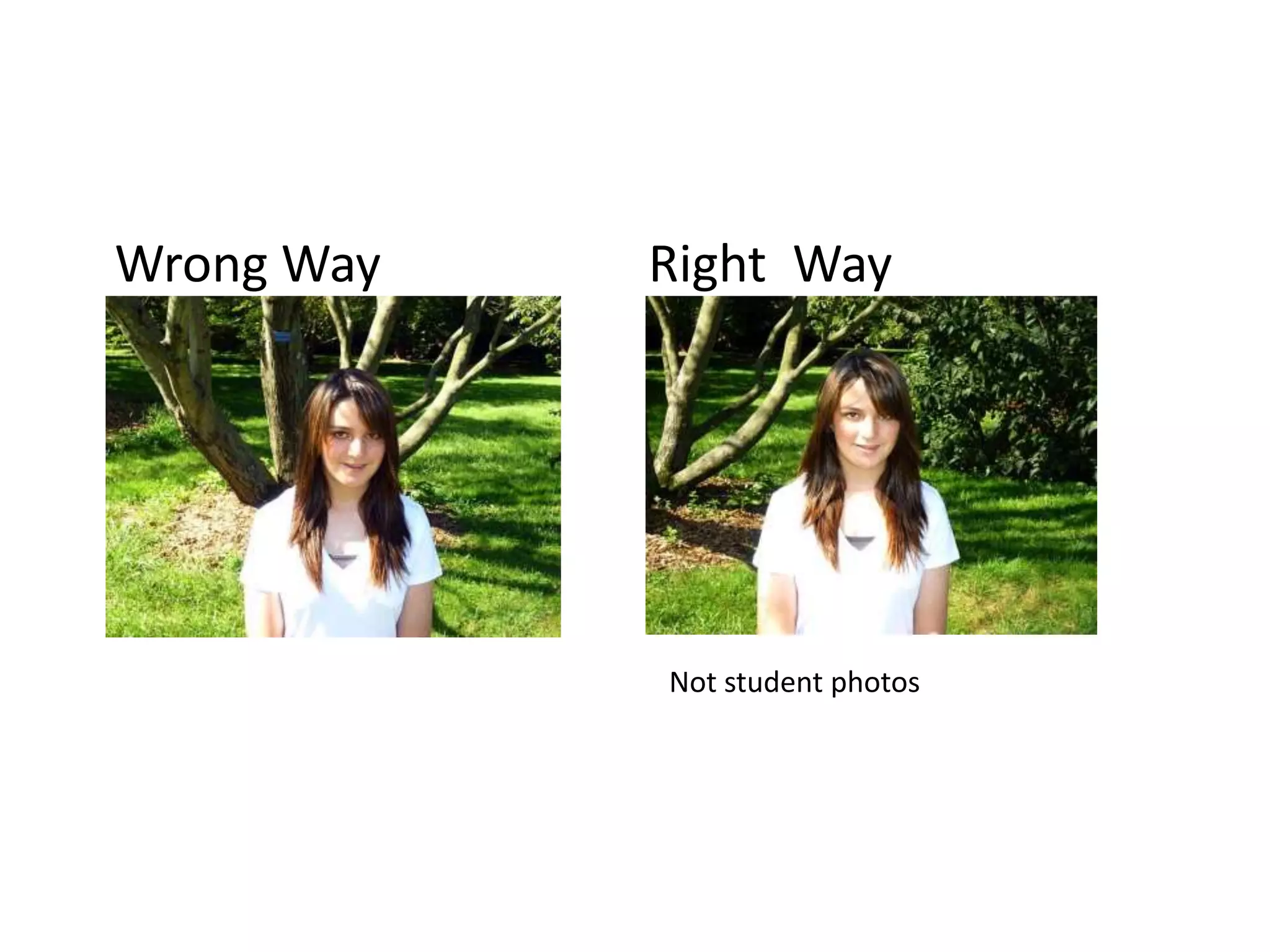
Wrong Way Right Way
Not student photos
High Angle
High Angle
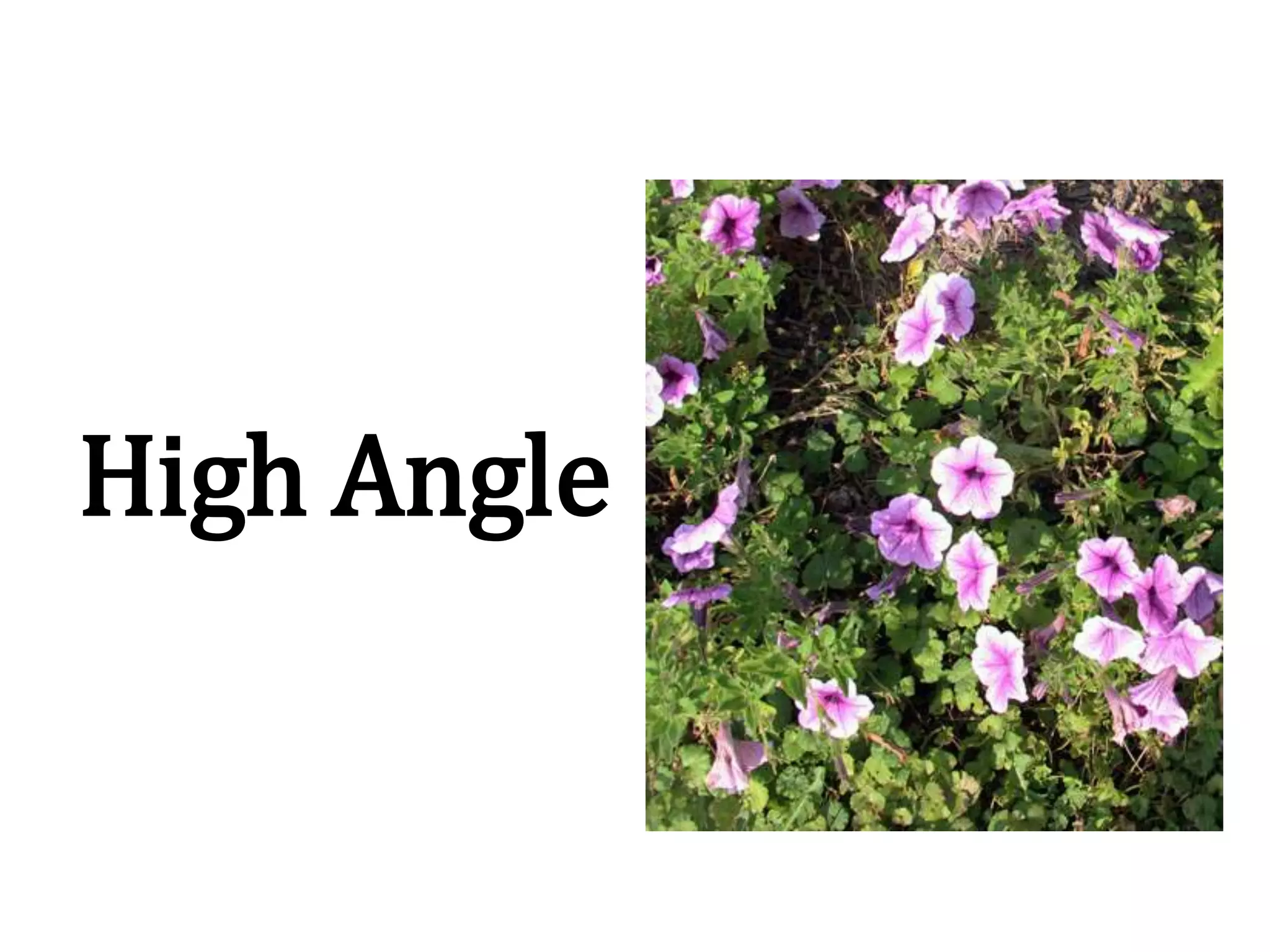
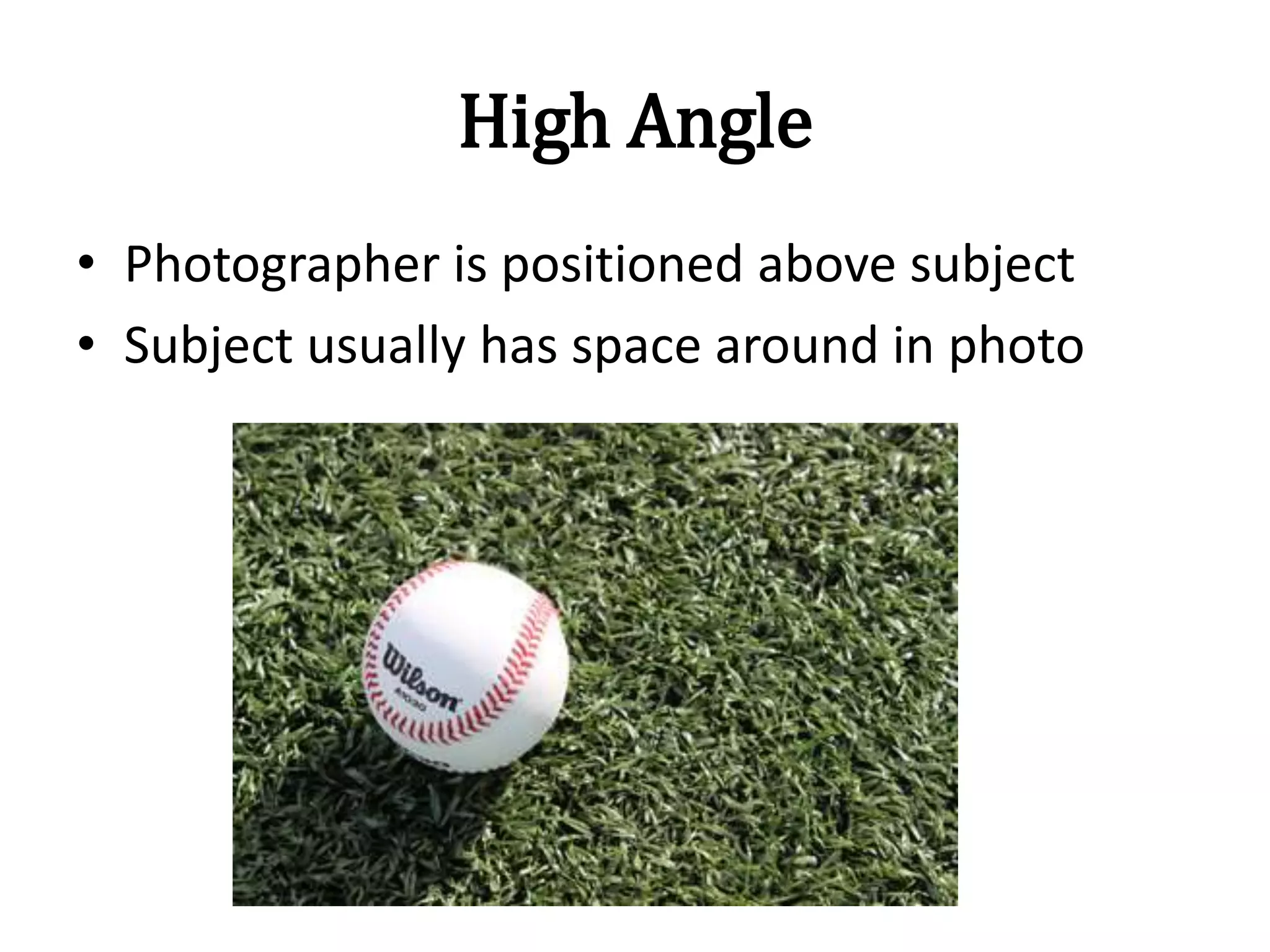
• Photographer is positioned above subject
• Subject usually has space around in photo
High Angle
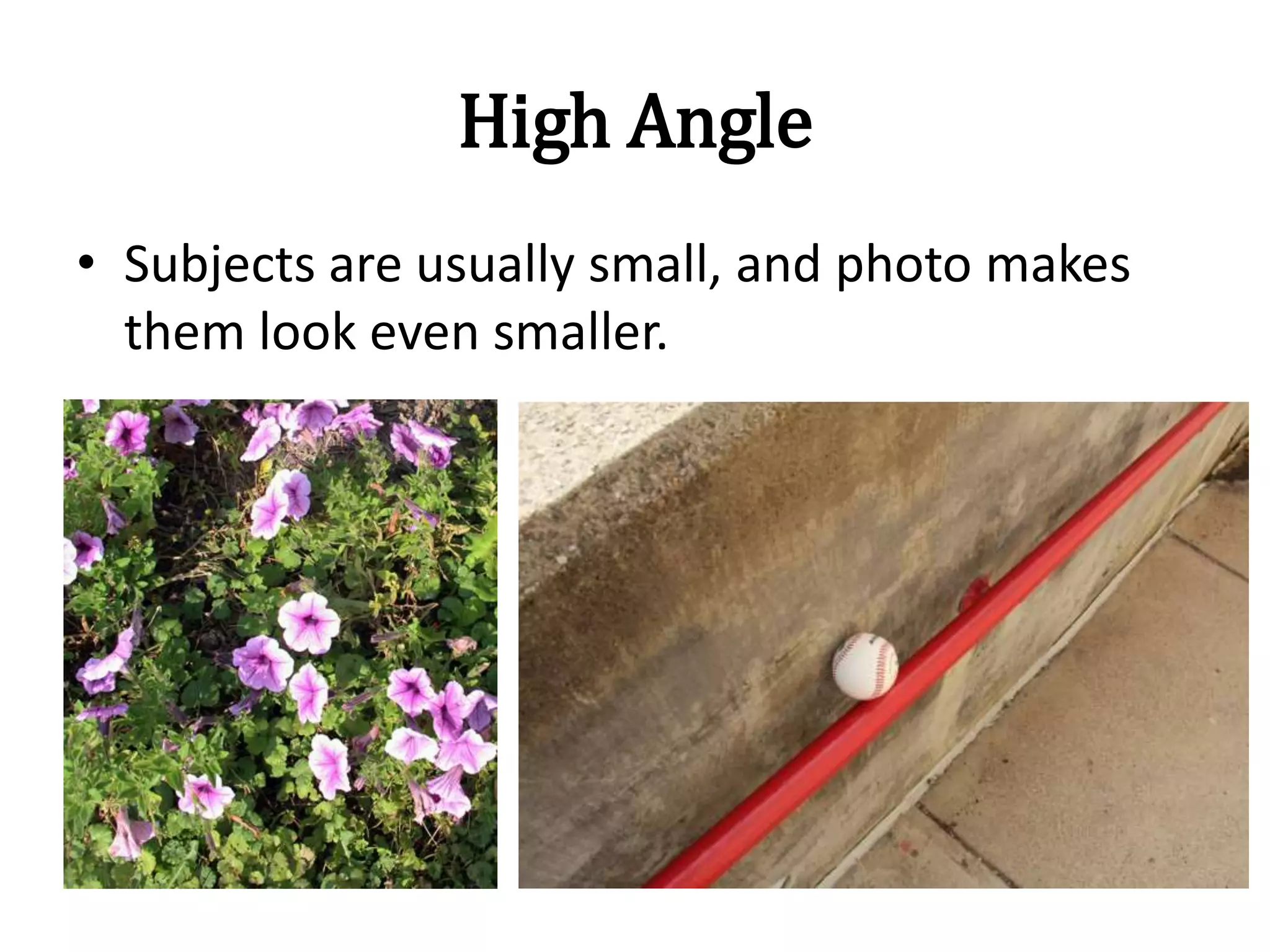
• Subjects are usually small, and photo makes
them look even smaller.
High Angle
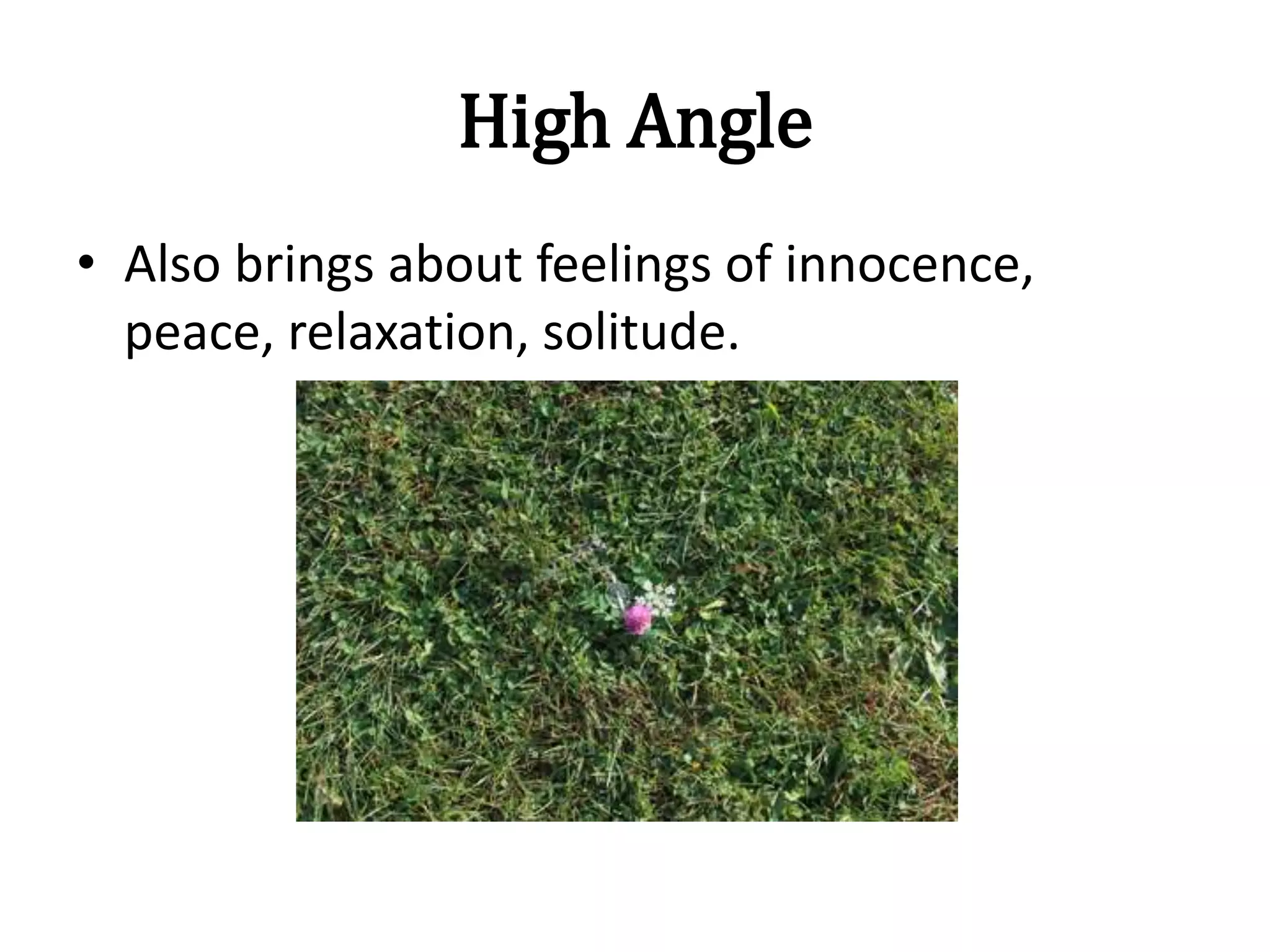
• Also brings about feelings of innocence,
peace, relaxation, solitude.
High Angle
• Typical subjects include nature, children, small
animals.
Low
Angle
Low Angle
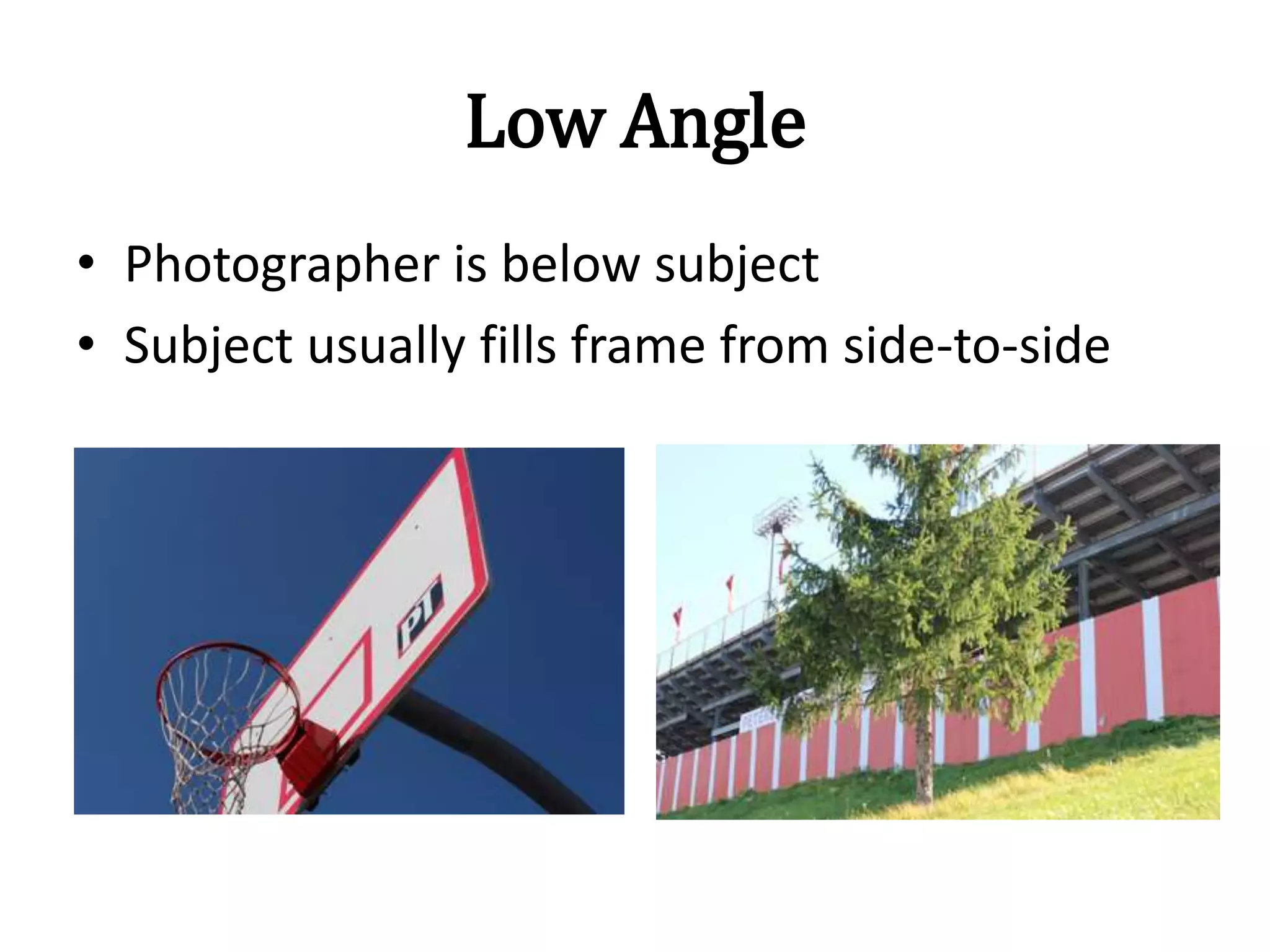
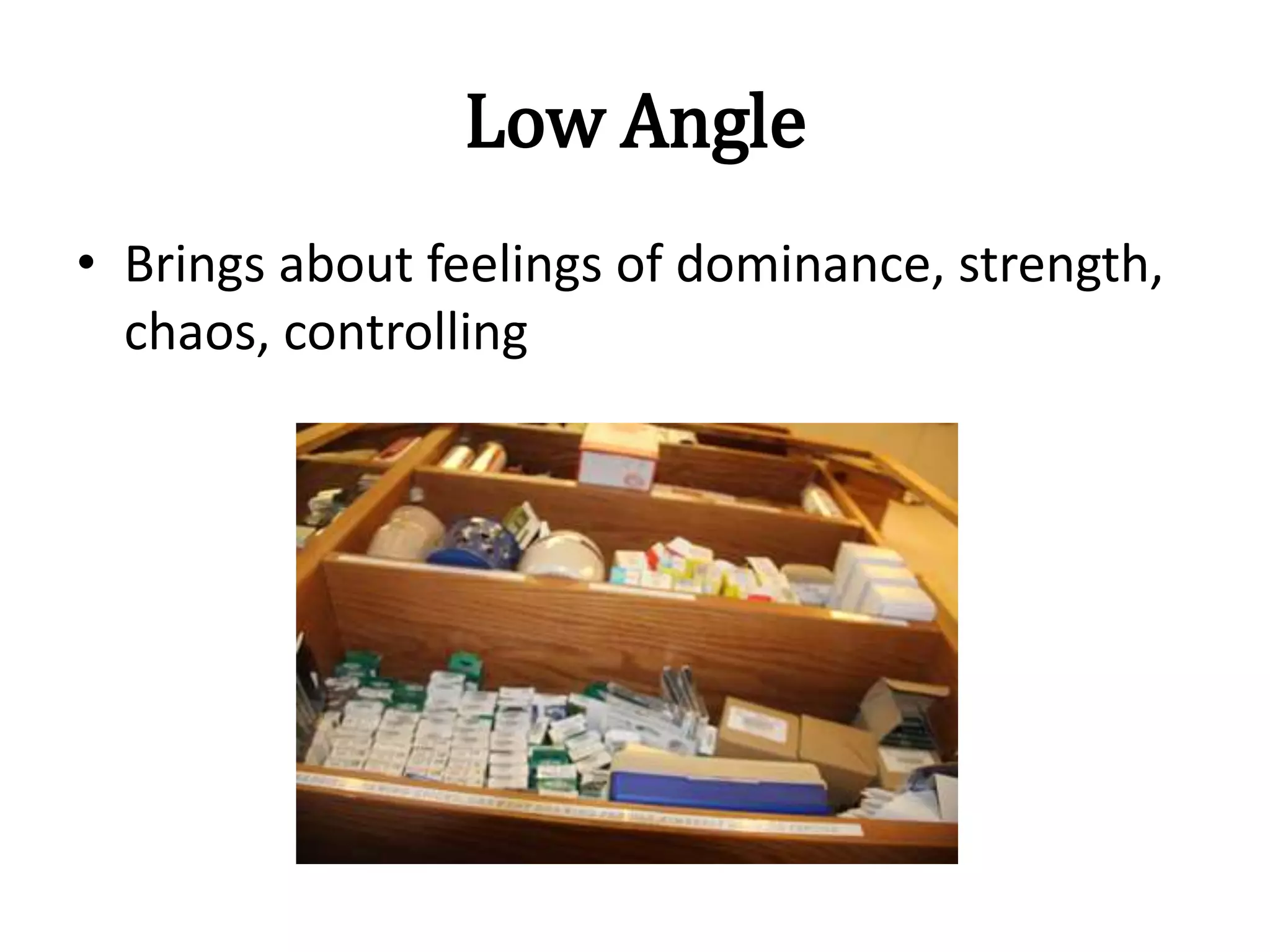
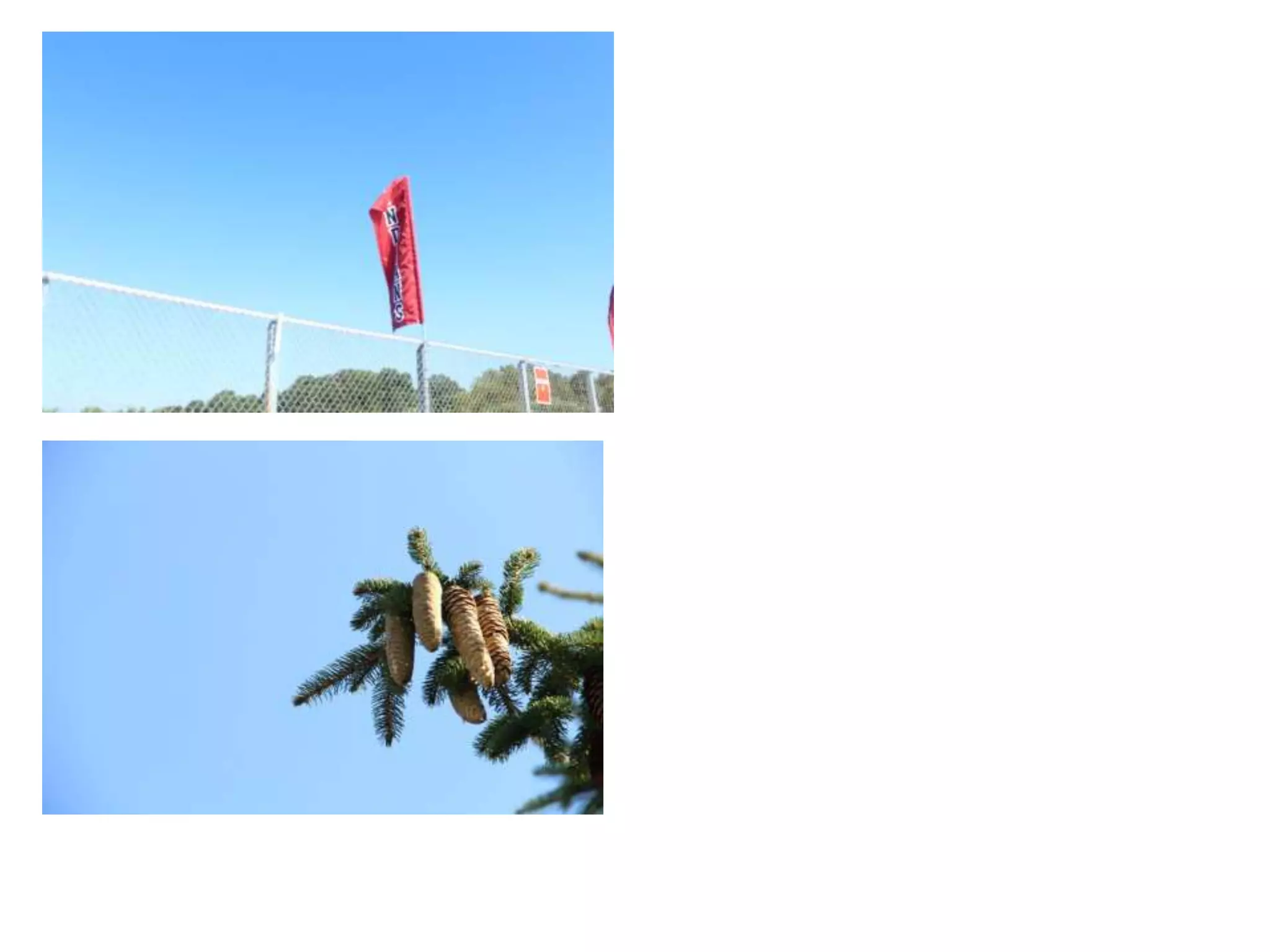
• Photographer is below subject
• Subject usually fills frame from side-to-side
Low Angle
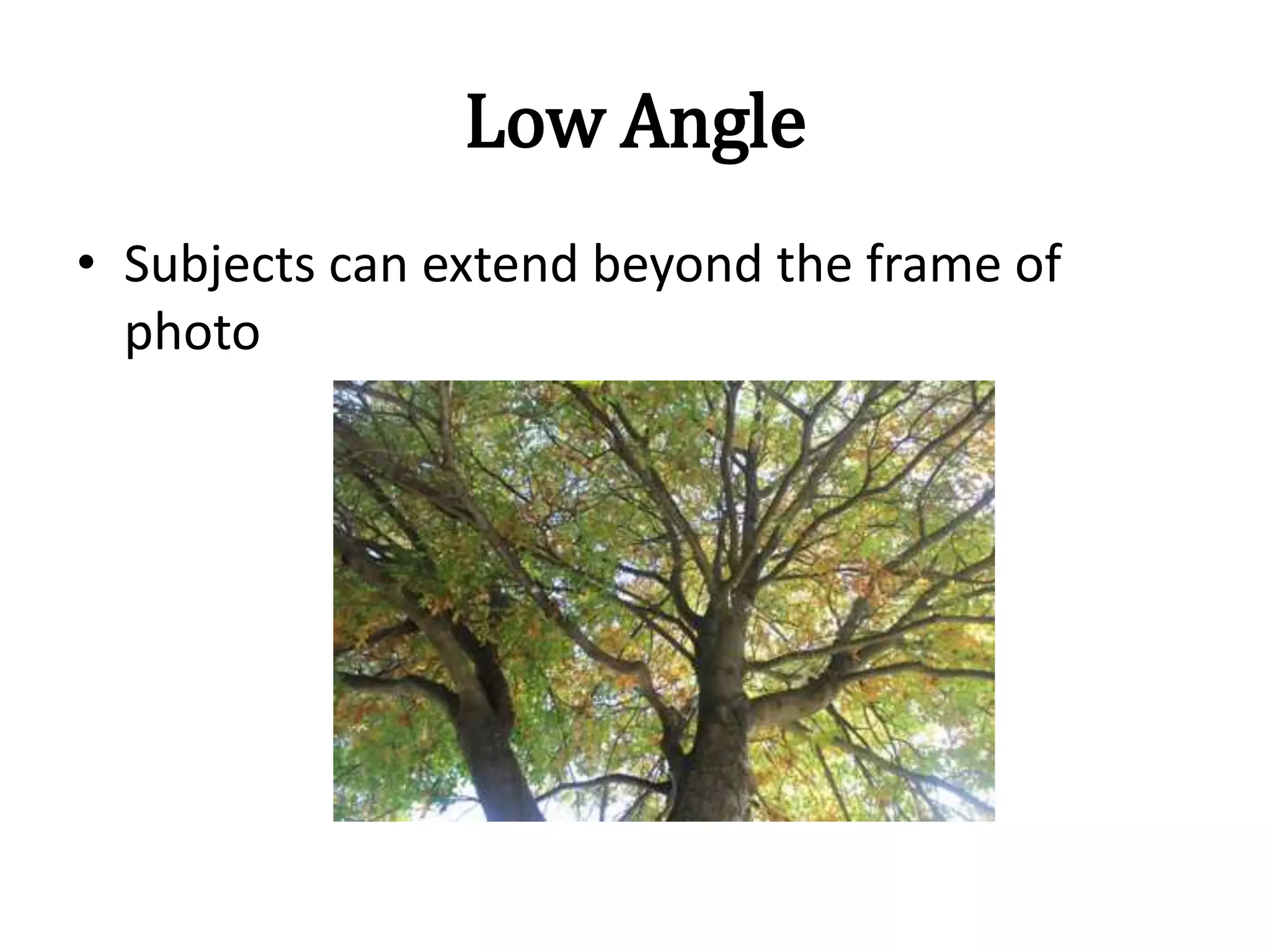
• Subjects can extend beyond the frame of
photo
Low Angle
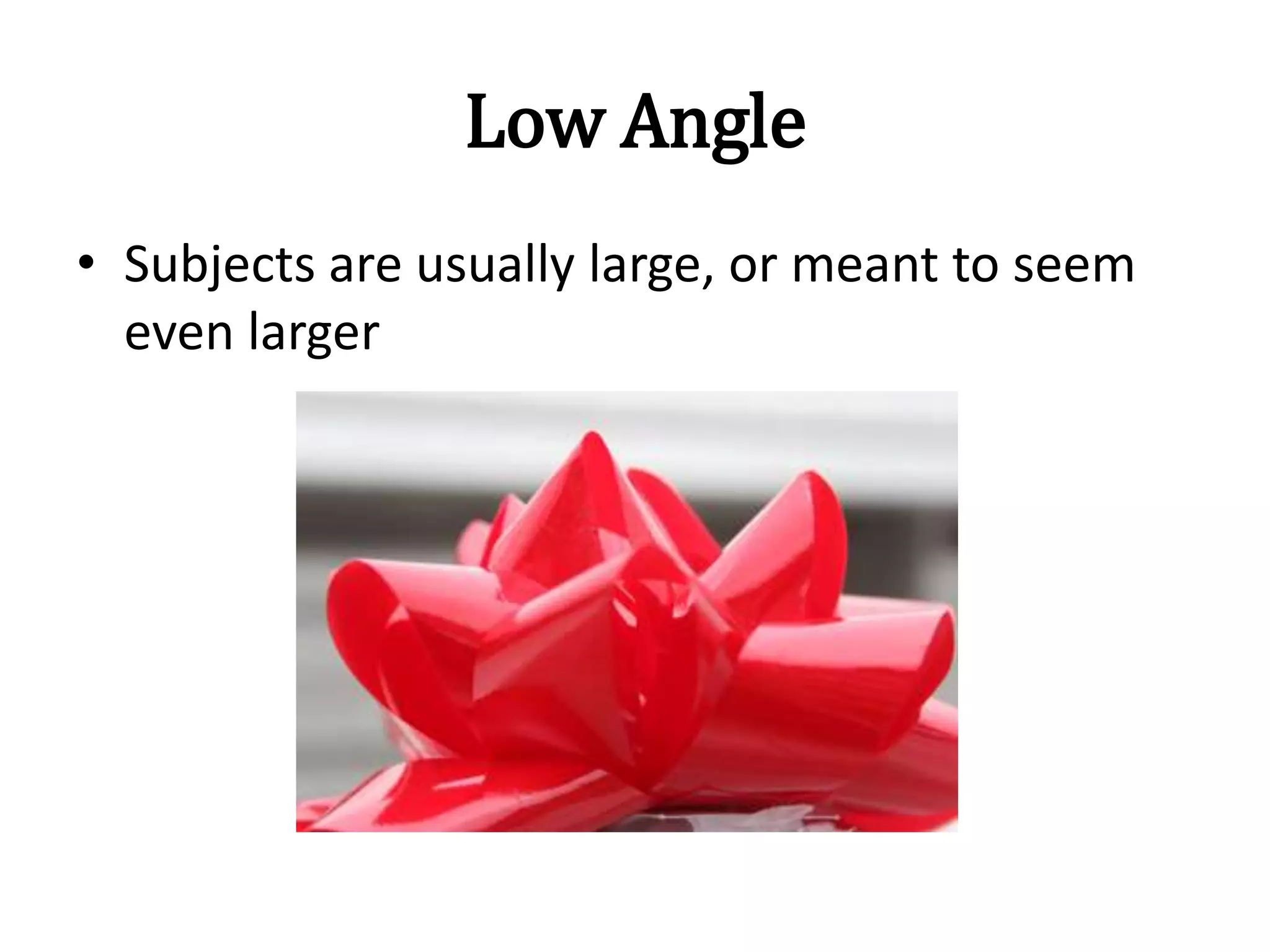
• Subjects are usually large, or meant to seem
even larger
Low Angle
• Brings about feelings of dominance, strength,
chaos, controlling
Low Angle
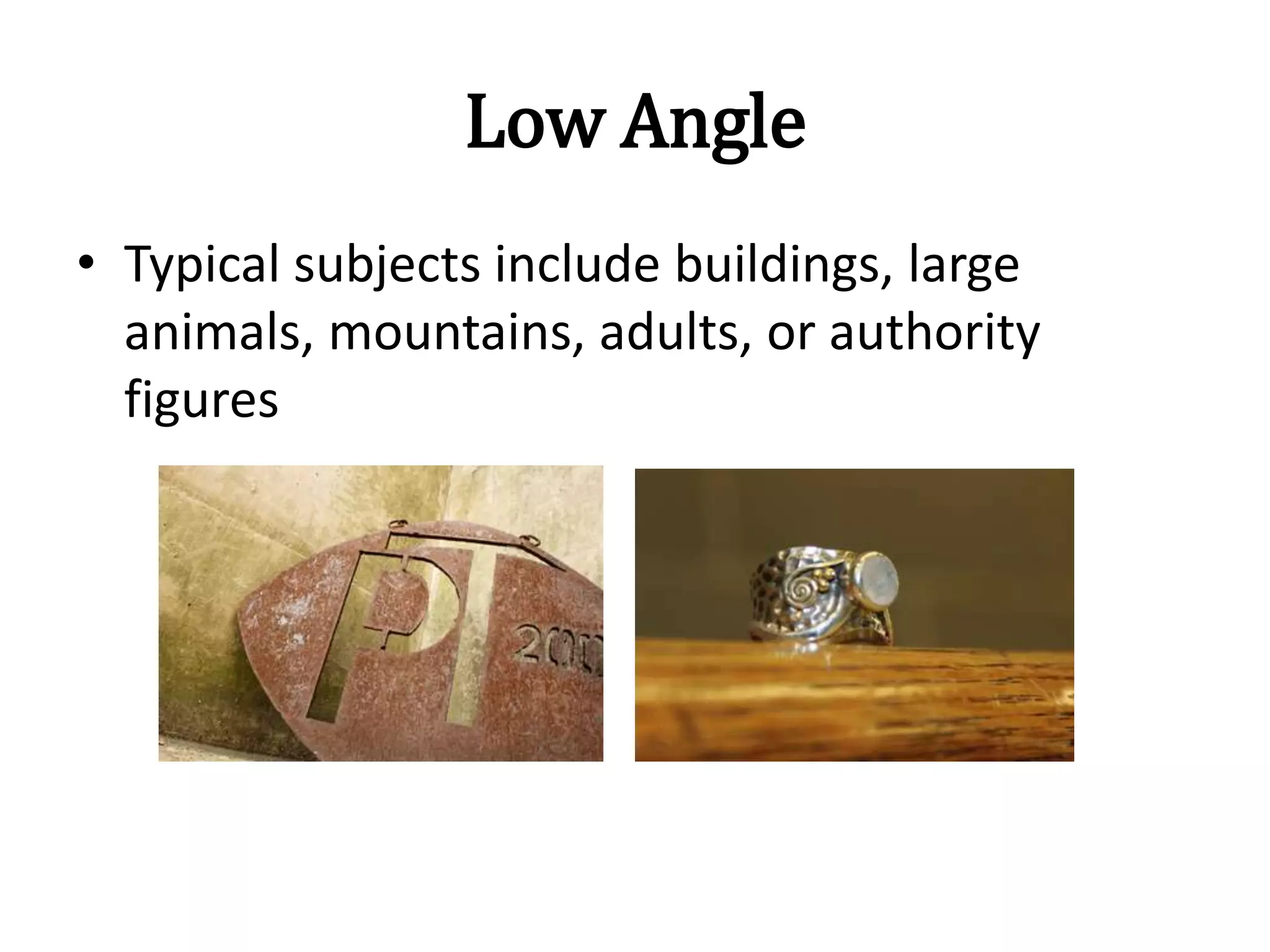
• Typical subjects include buildings, large
animals, mountains, adults, or authority
figures
Tilted
Composition
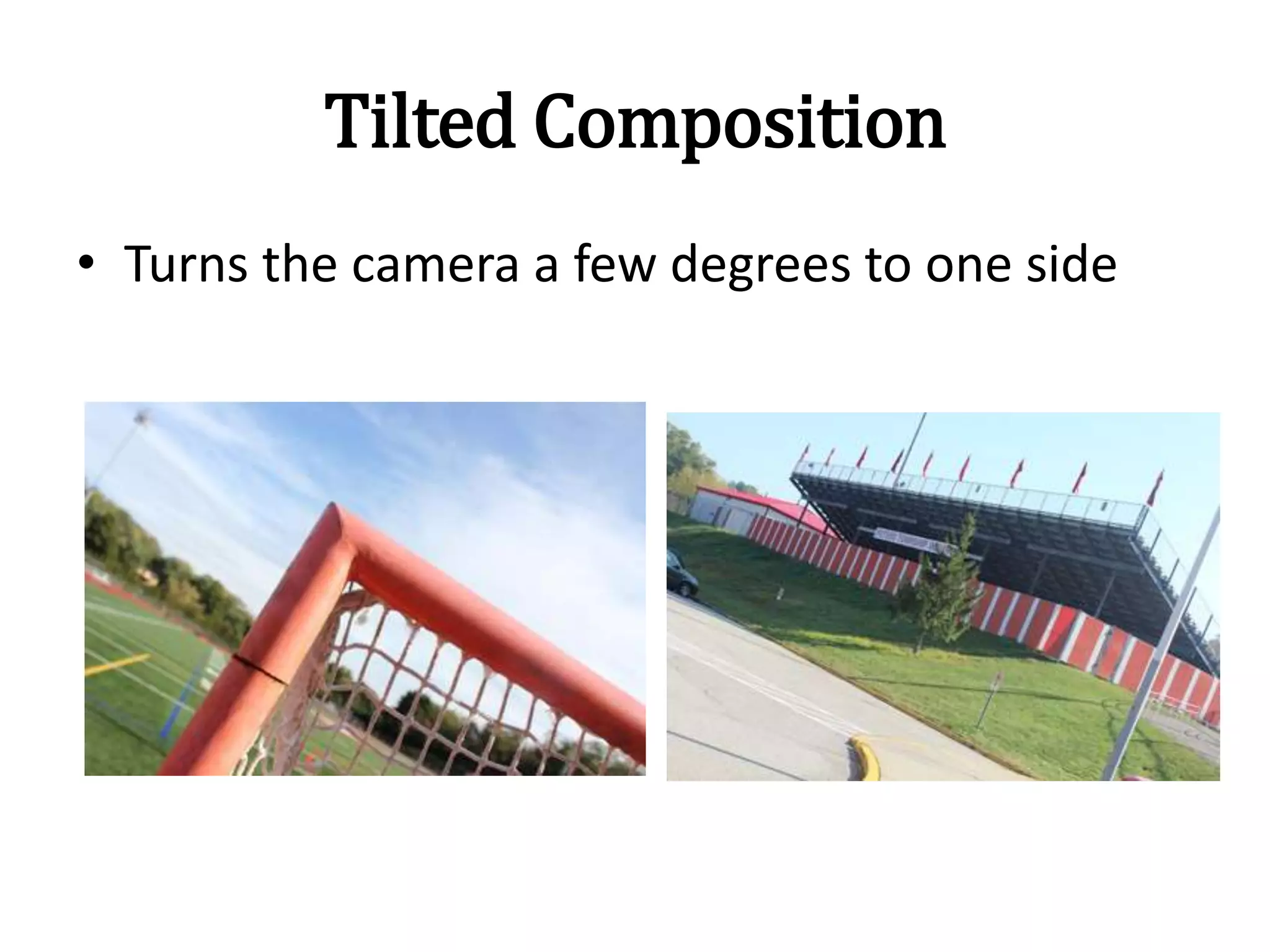
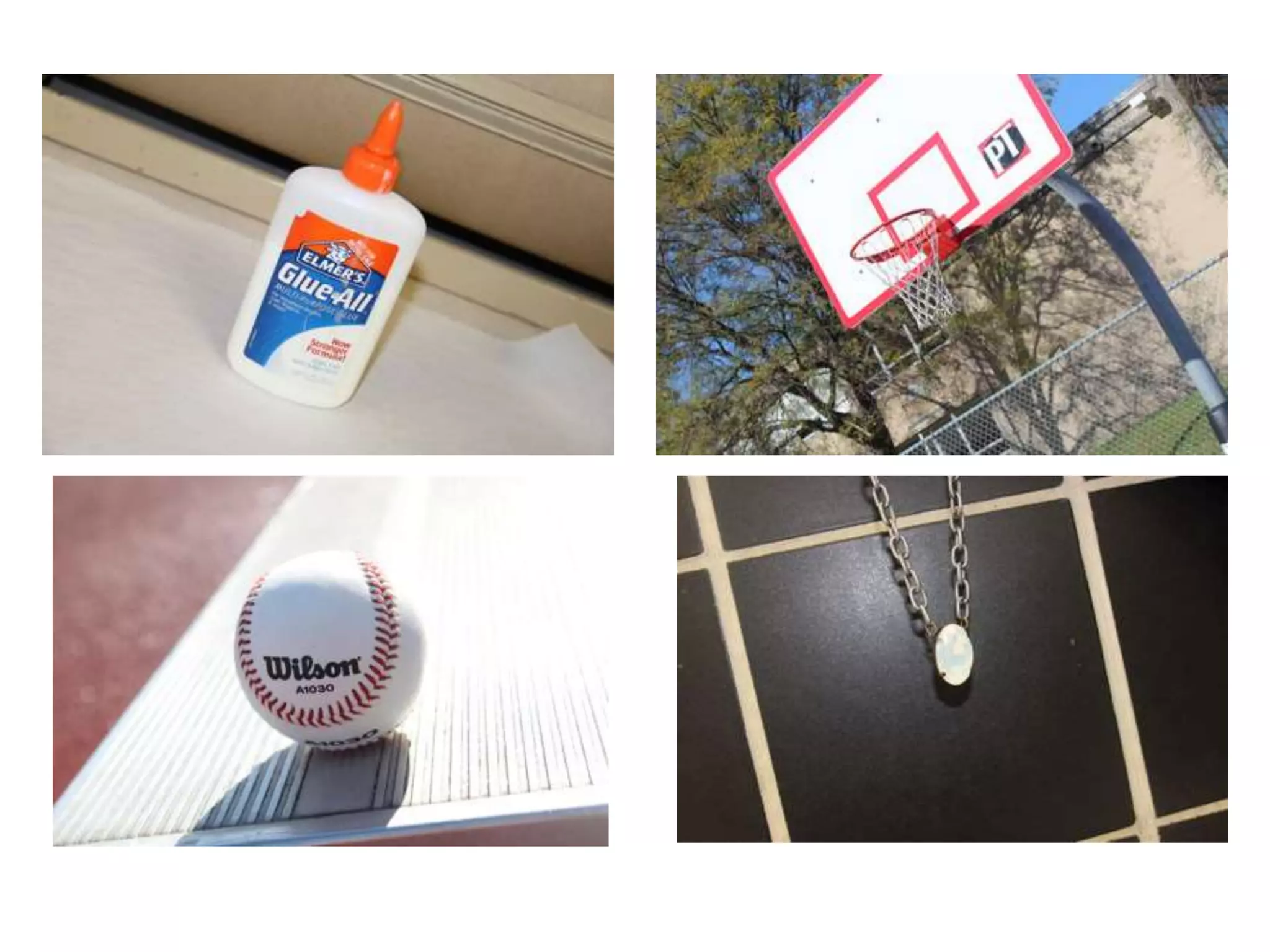
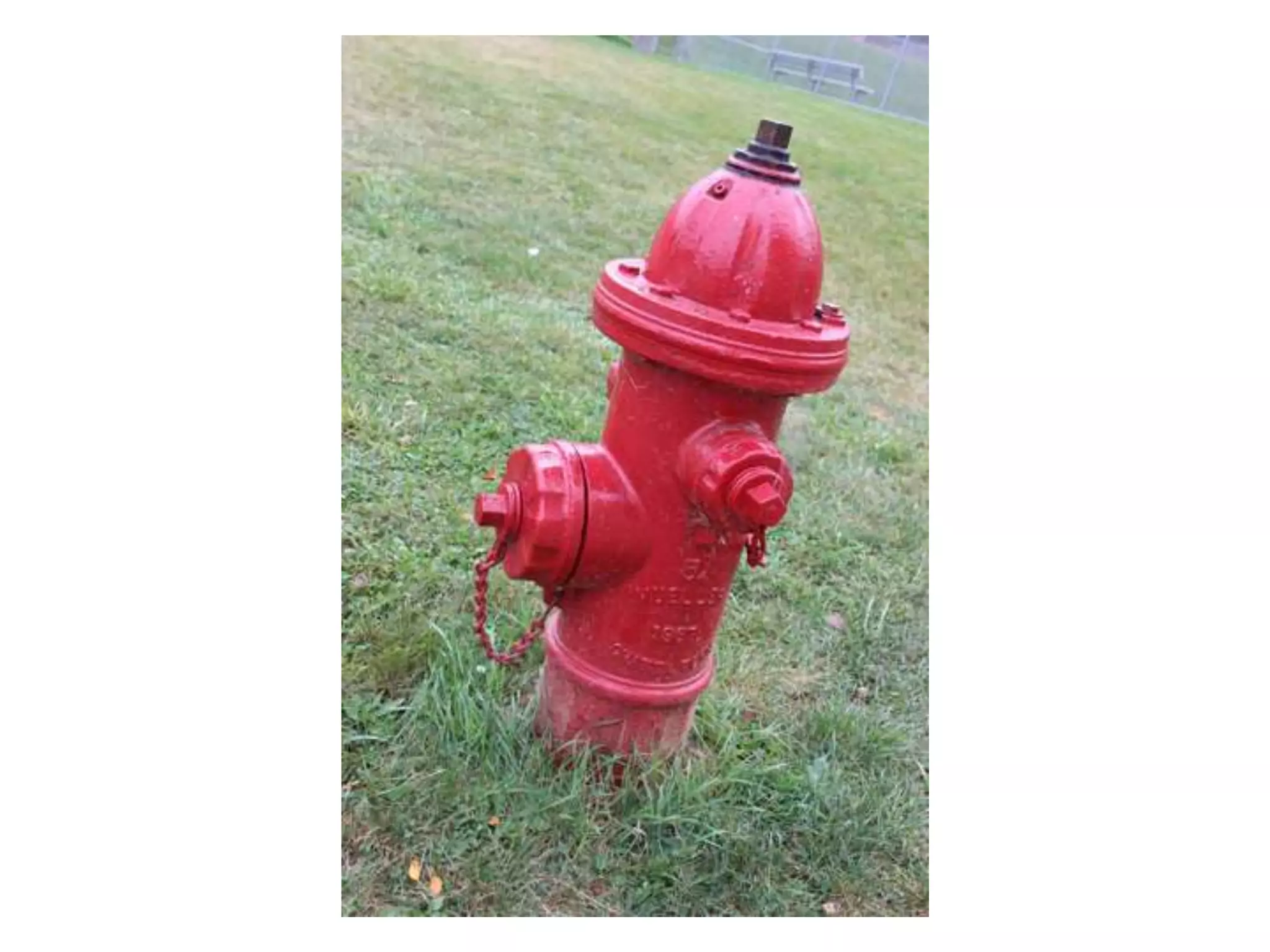
Tilted Composition
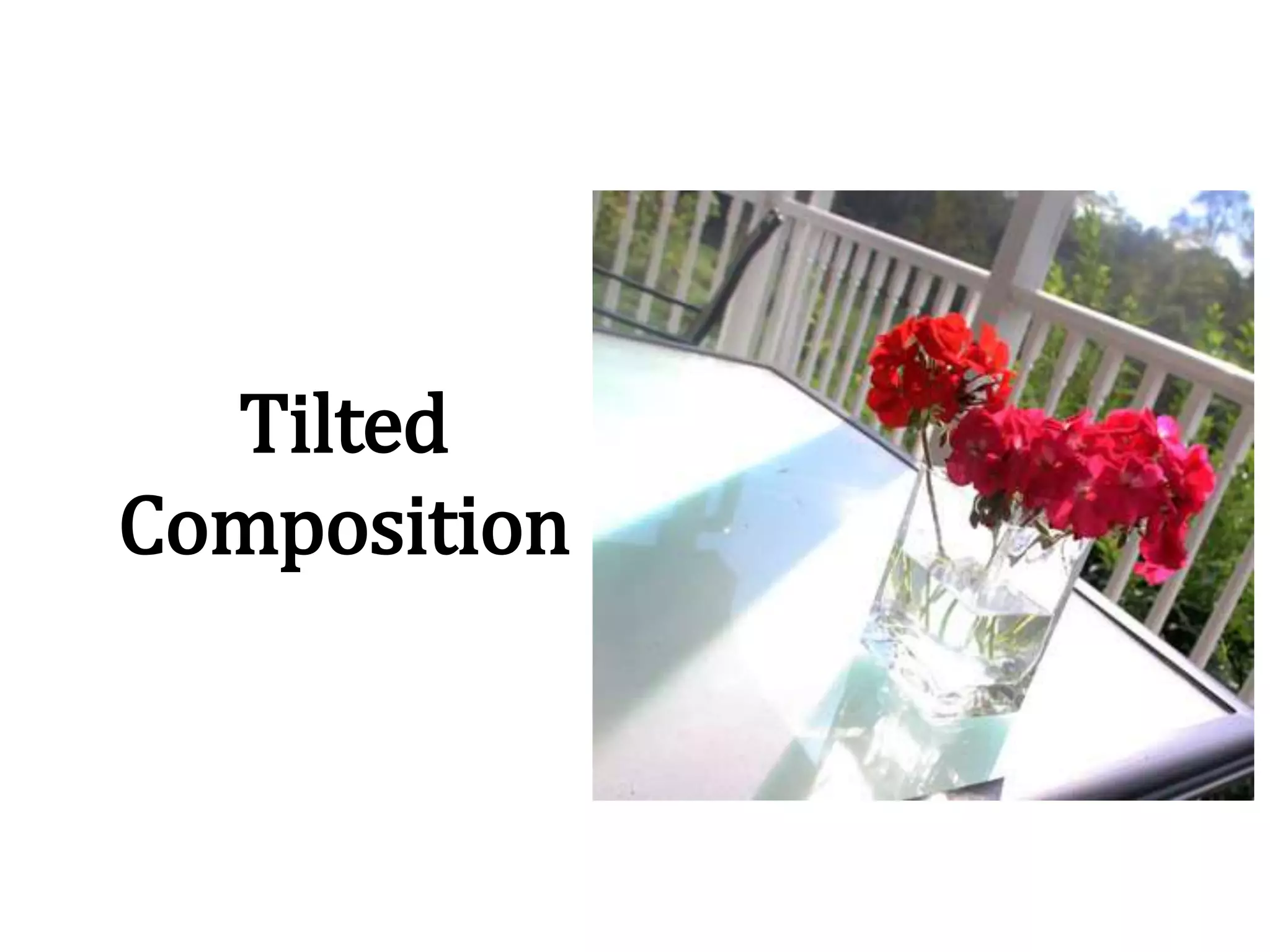
• Turns the camera a few degrees to one side
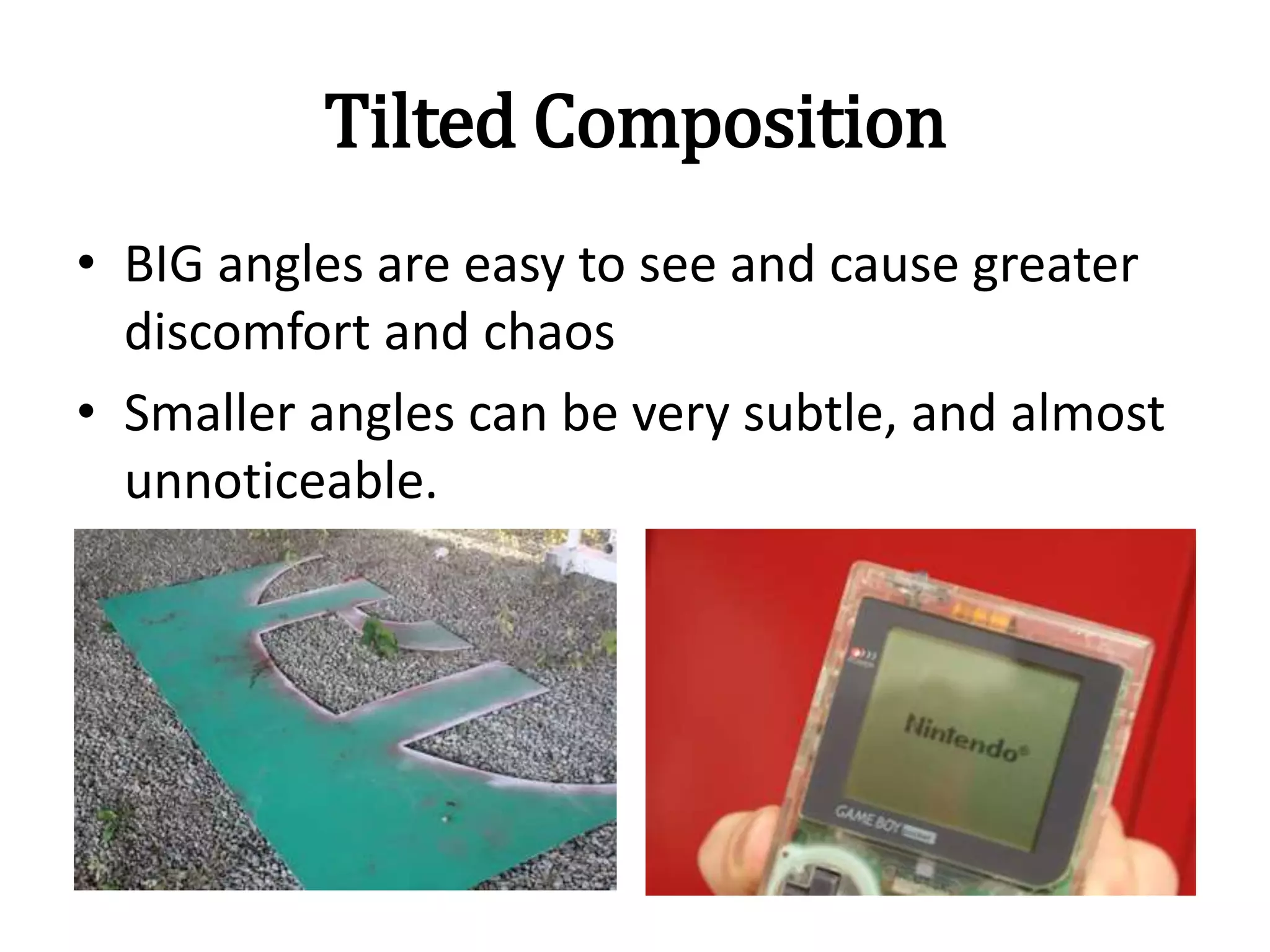
Tilted Composition
• BIG angles are easy to see and cause greater
discomfort and chaos
• Smaller angles can be very subtle, and almost
unnoticeable.
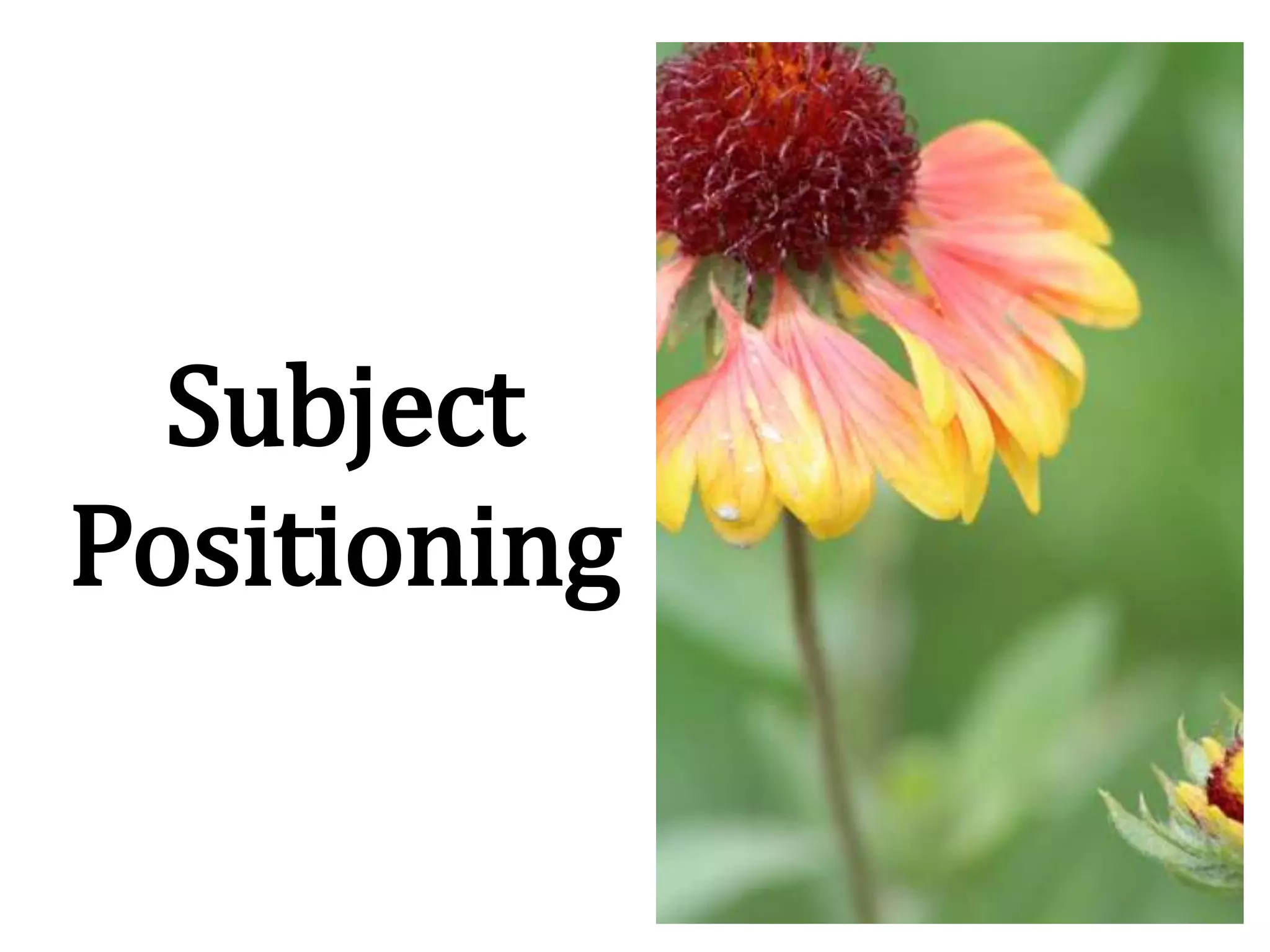
Subject
Positioning
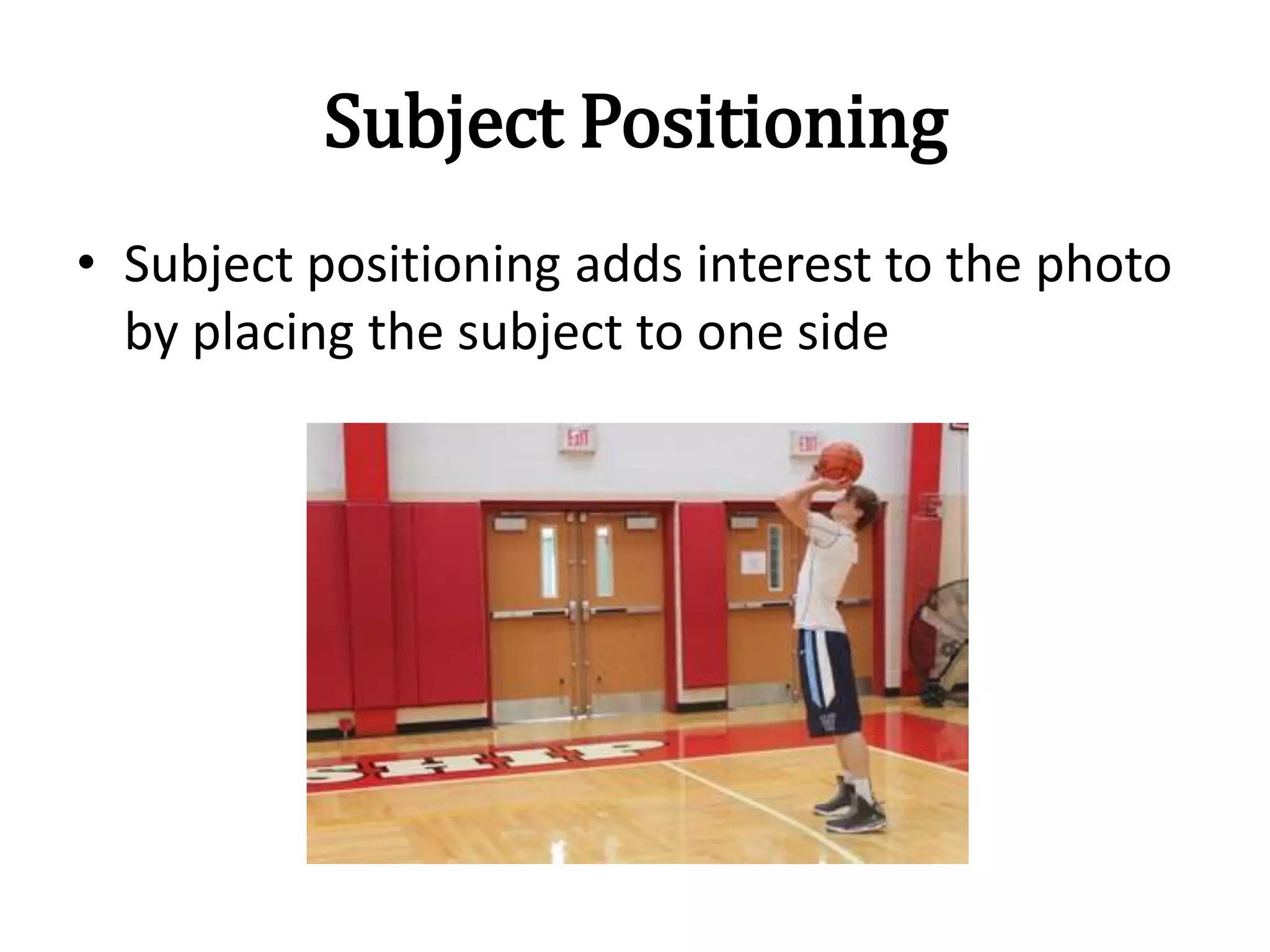
Subject Positioning
• Subject positioning adds interest to the photo
by placing the subject to one side
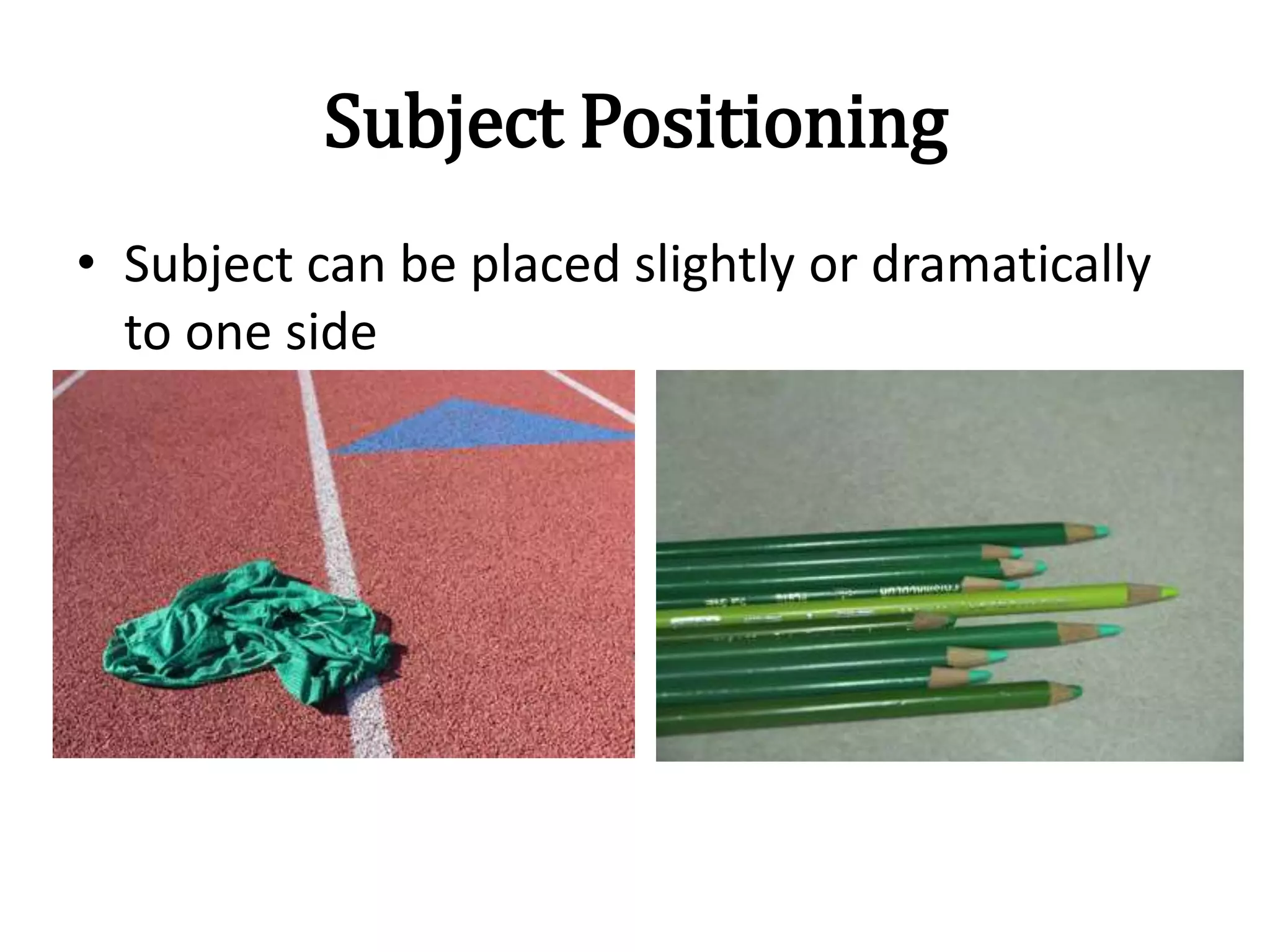
Subject Positioning
• Subject can be placed slightly or dramatically
to one side
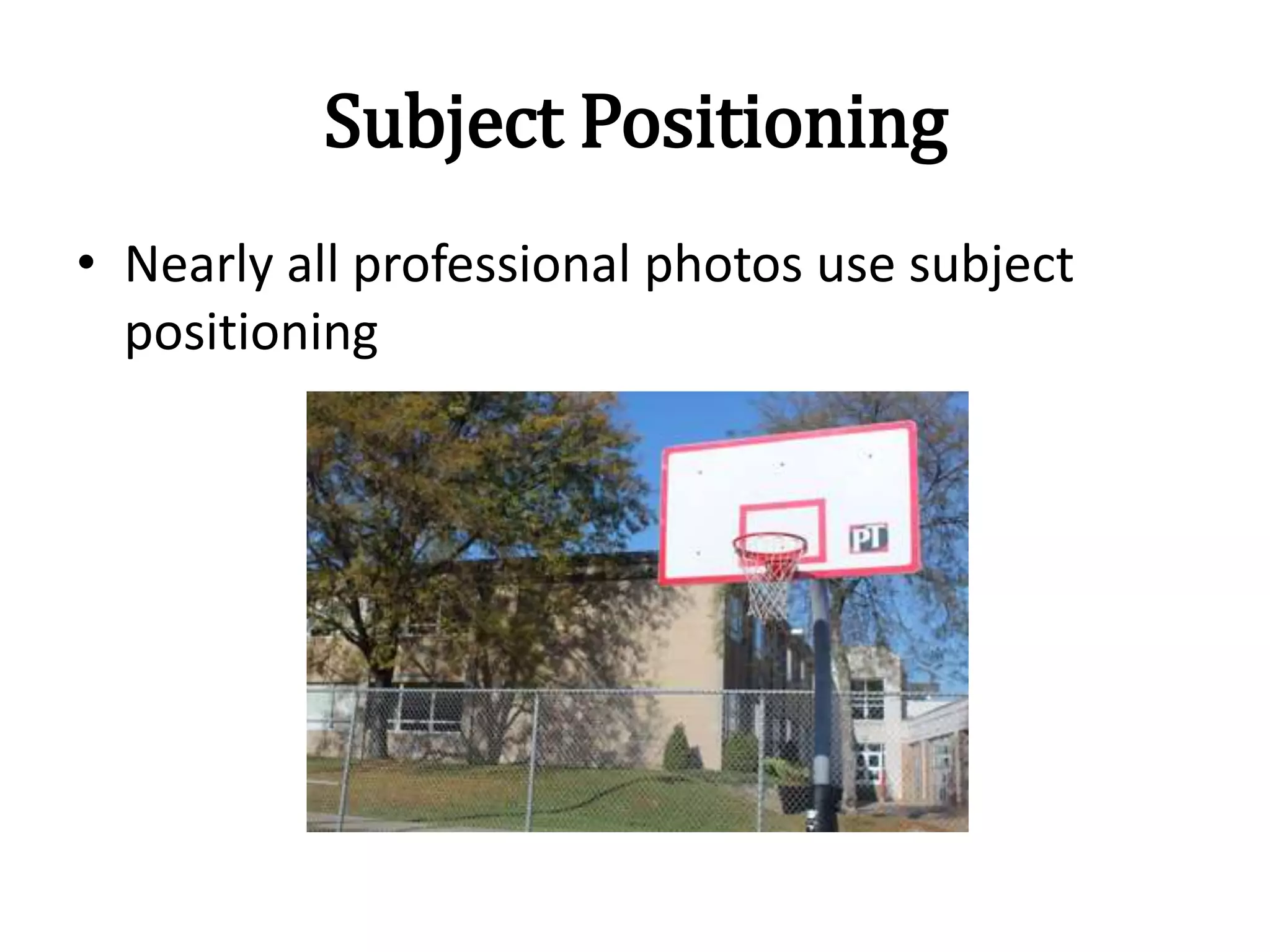
Subject Positioning
• Nearly all professional photos use subject
positioning
Subject Positioning
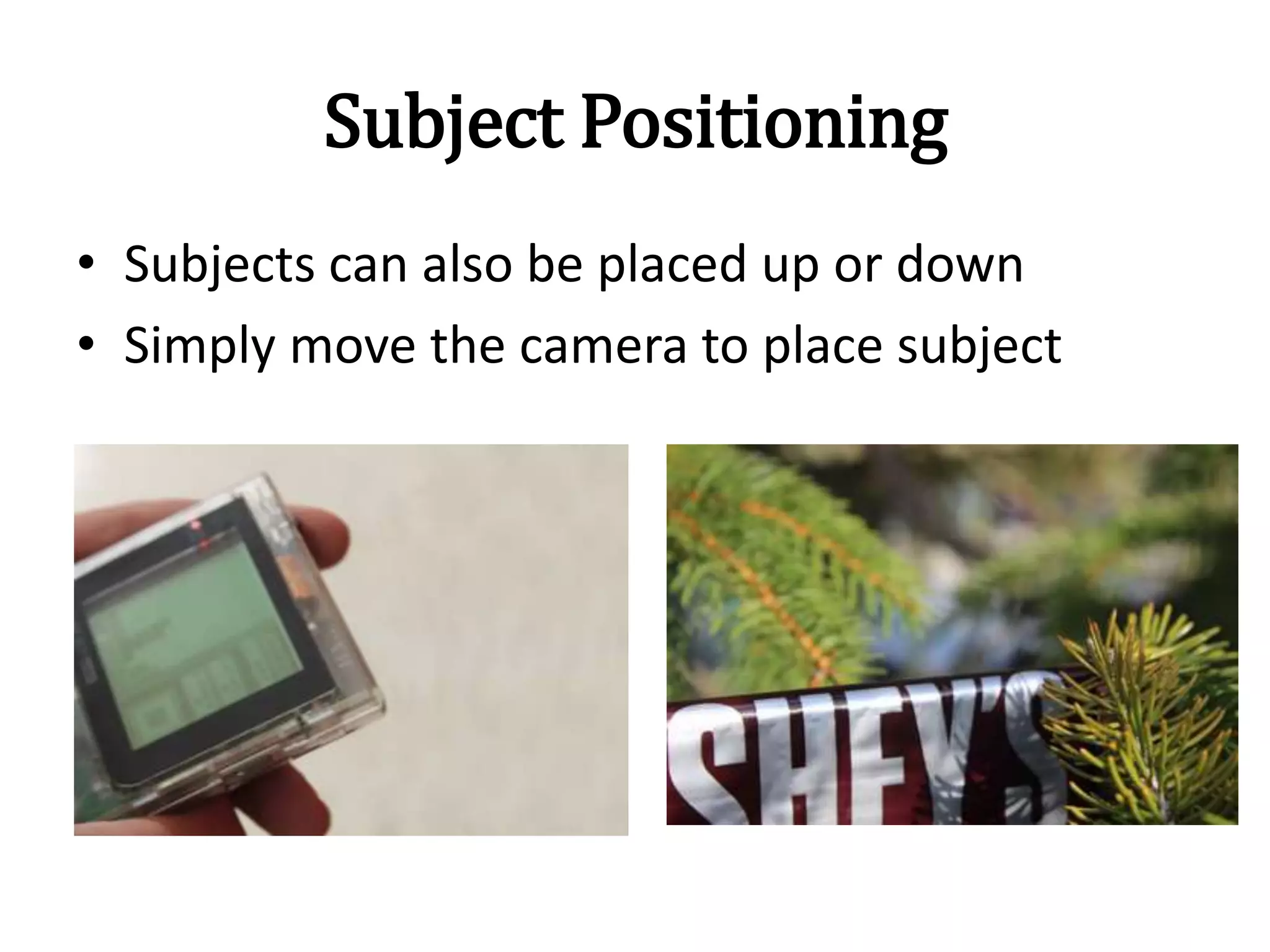
• Subjects can also be placed up or down
• Simply move the camera to place subject
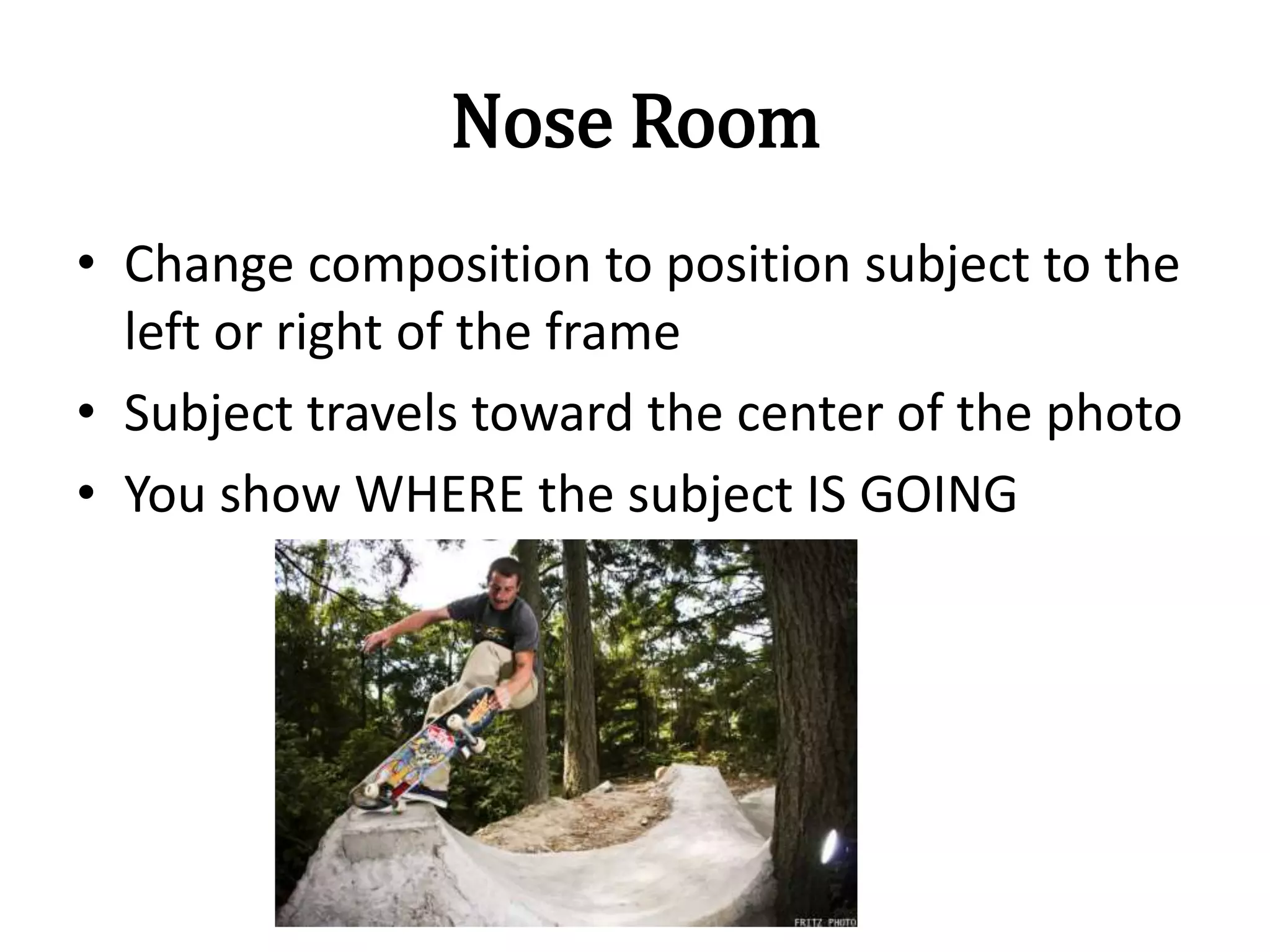
Nose Room
• Change composition to position subject to the
left or right of the frame
• Subject travels toward the center of the photo
• You show WHERE the subject IS GOING
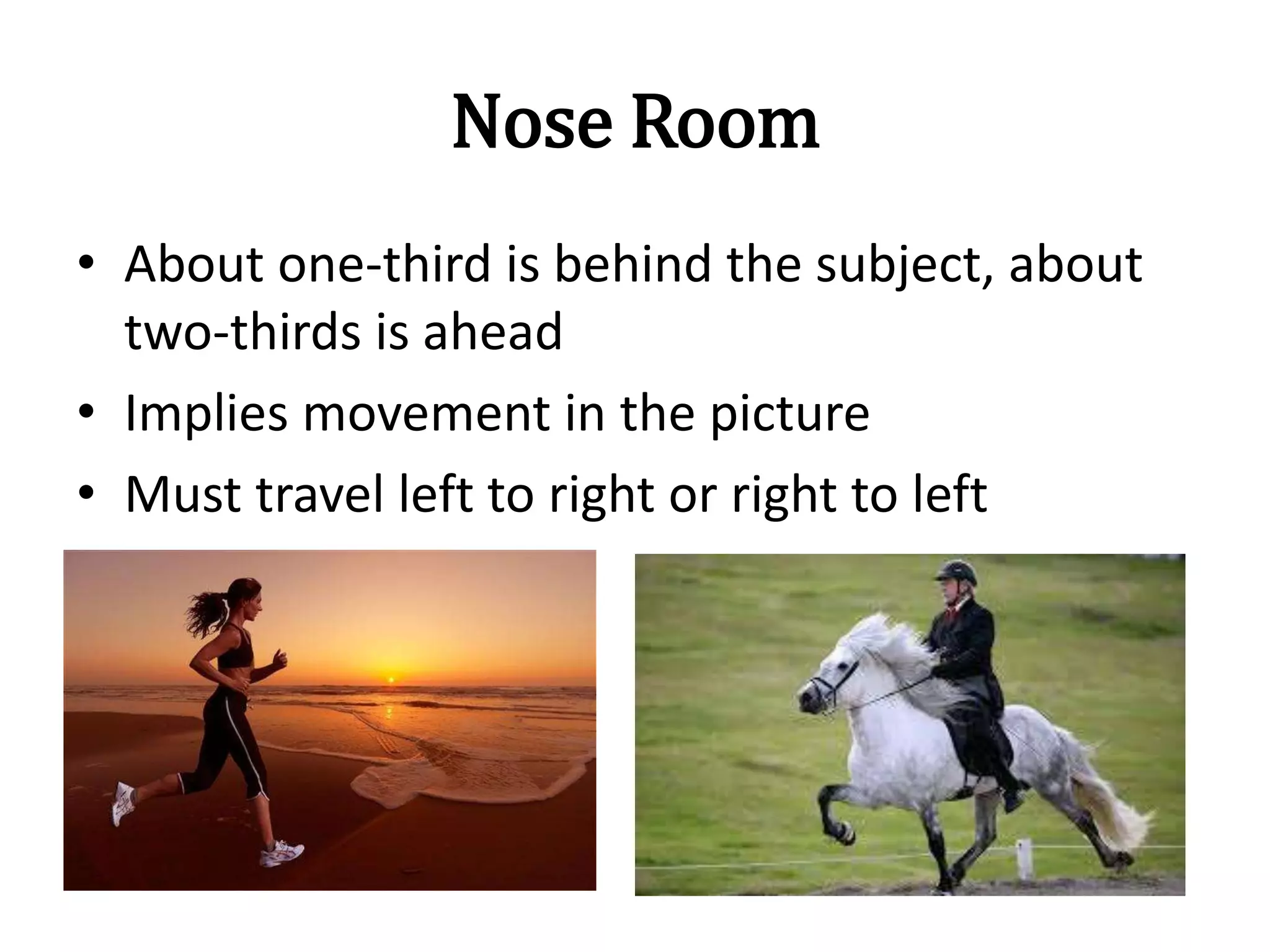
Nose Room
• About one-third is behind the subject, about
two-thirds is ahead
• Implies movement in the picture
• Must travel left to right or right to left
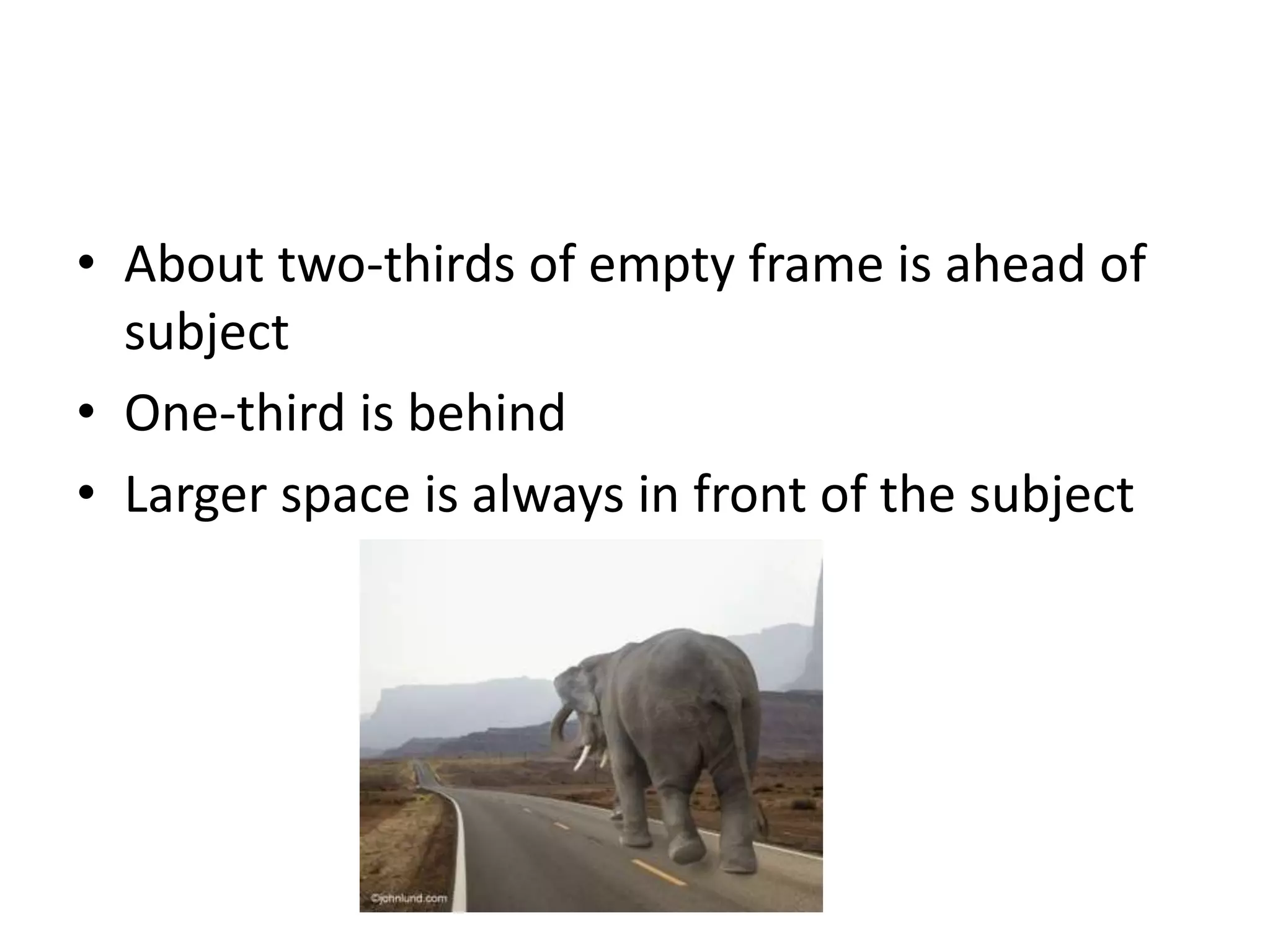
• About two-thirds of empty frame is ahead of
subject
• One-third is behind
• Larger space is always in front of the subject
Color
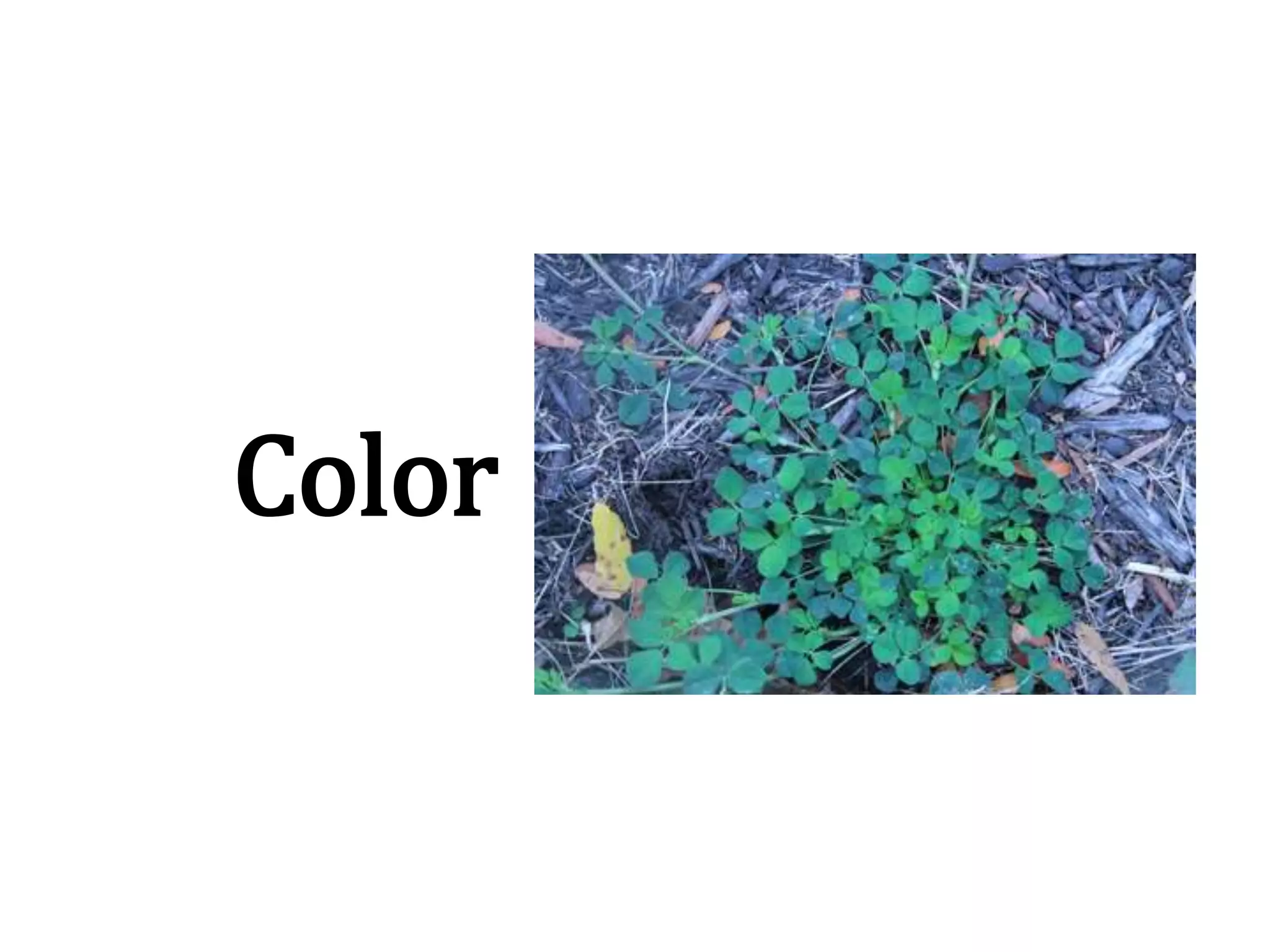
Color
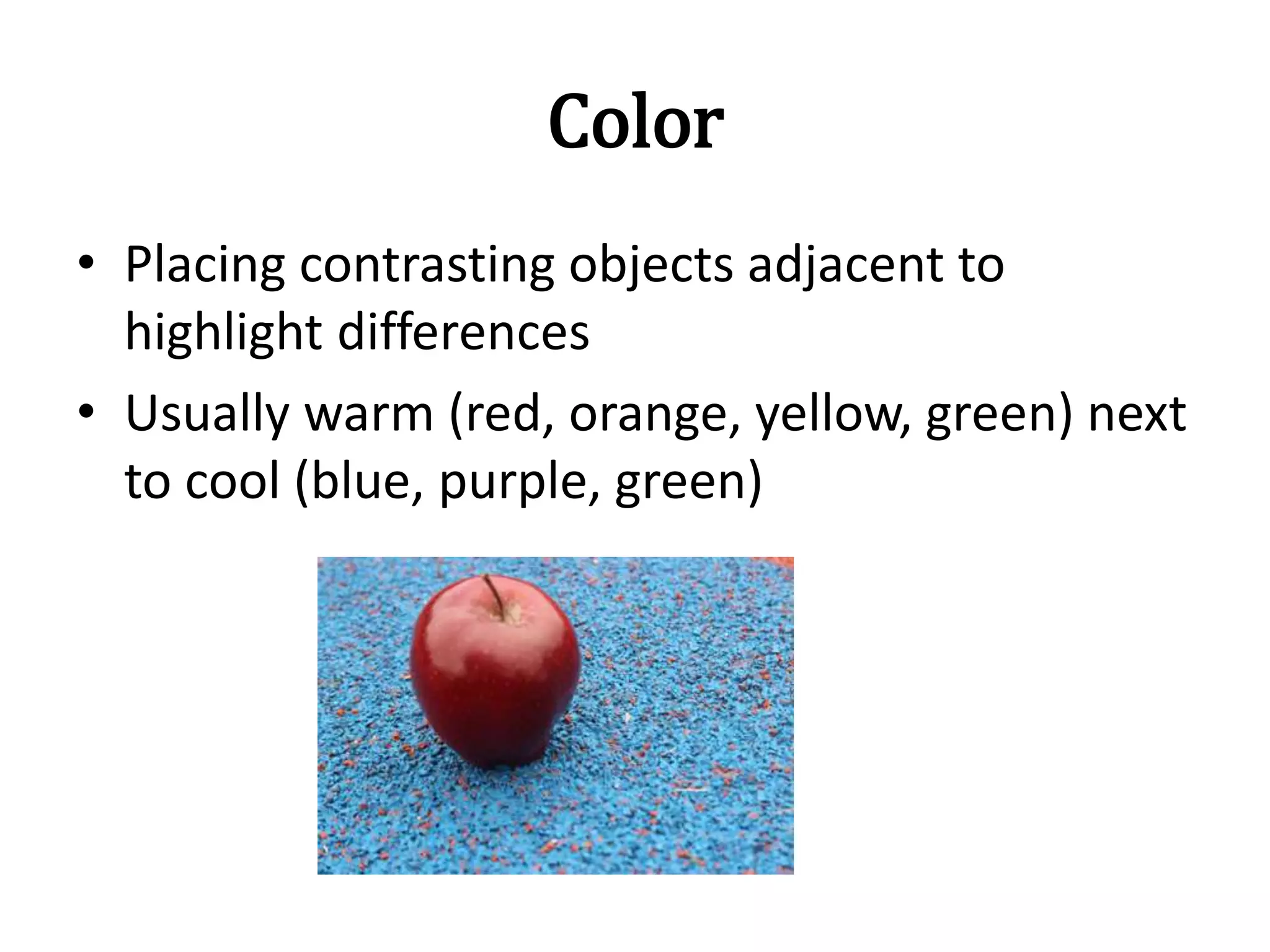
• Placing contrasting objects adjacent to
highlight differences
• Usually warm (red, orange, yellow, green) next
to cool (blue, purple, green)
Color
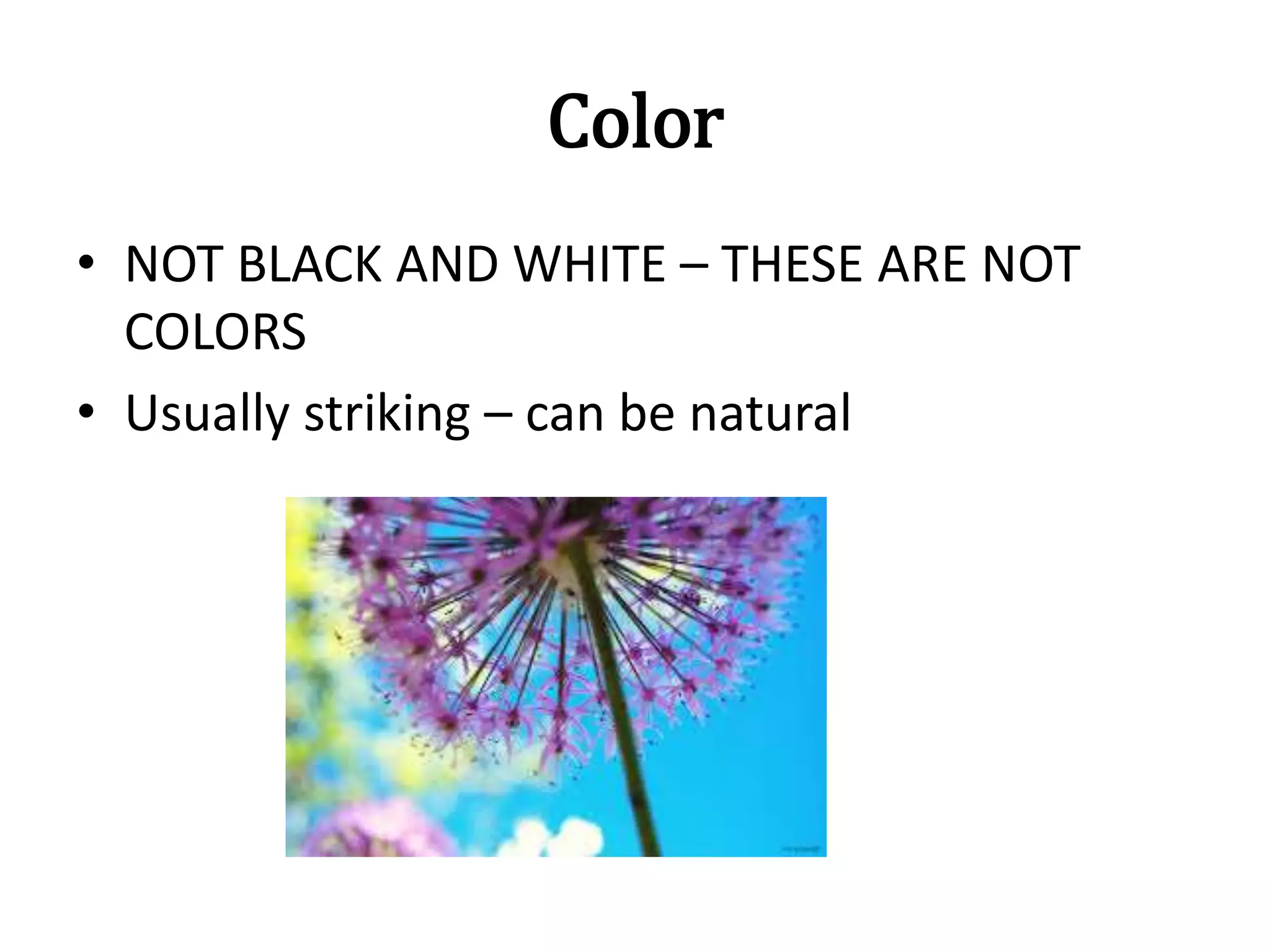
• NOT BLACK AND WHITE – THESE ARE NOT
COLORS
• Usually striking – can be natural
Texture
Texture
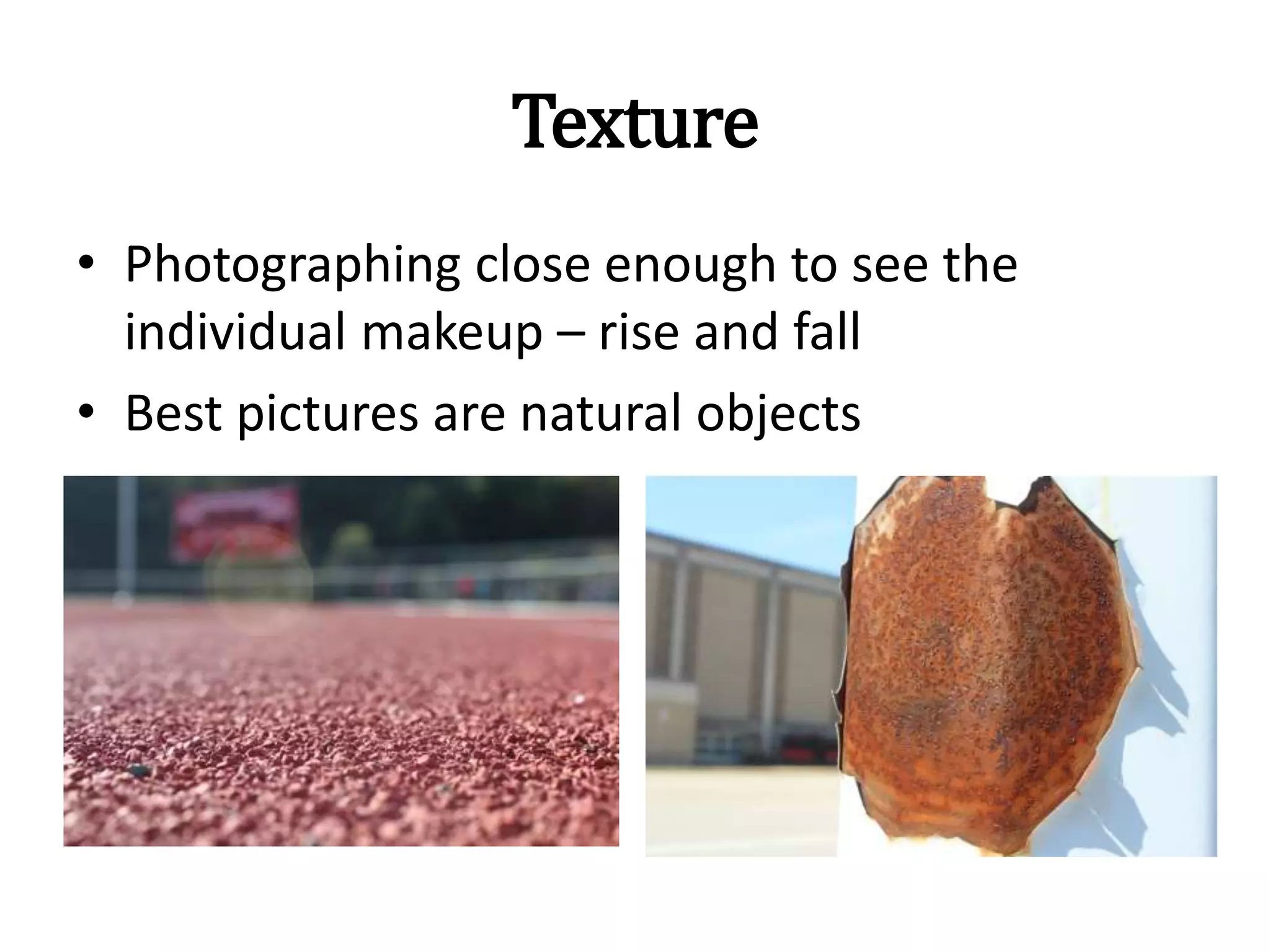
• Photographing close enough to see the
individual makeup – rise and fall
• Best pictures are natural objects
Texture
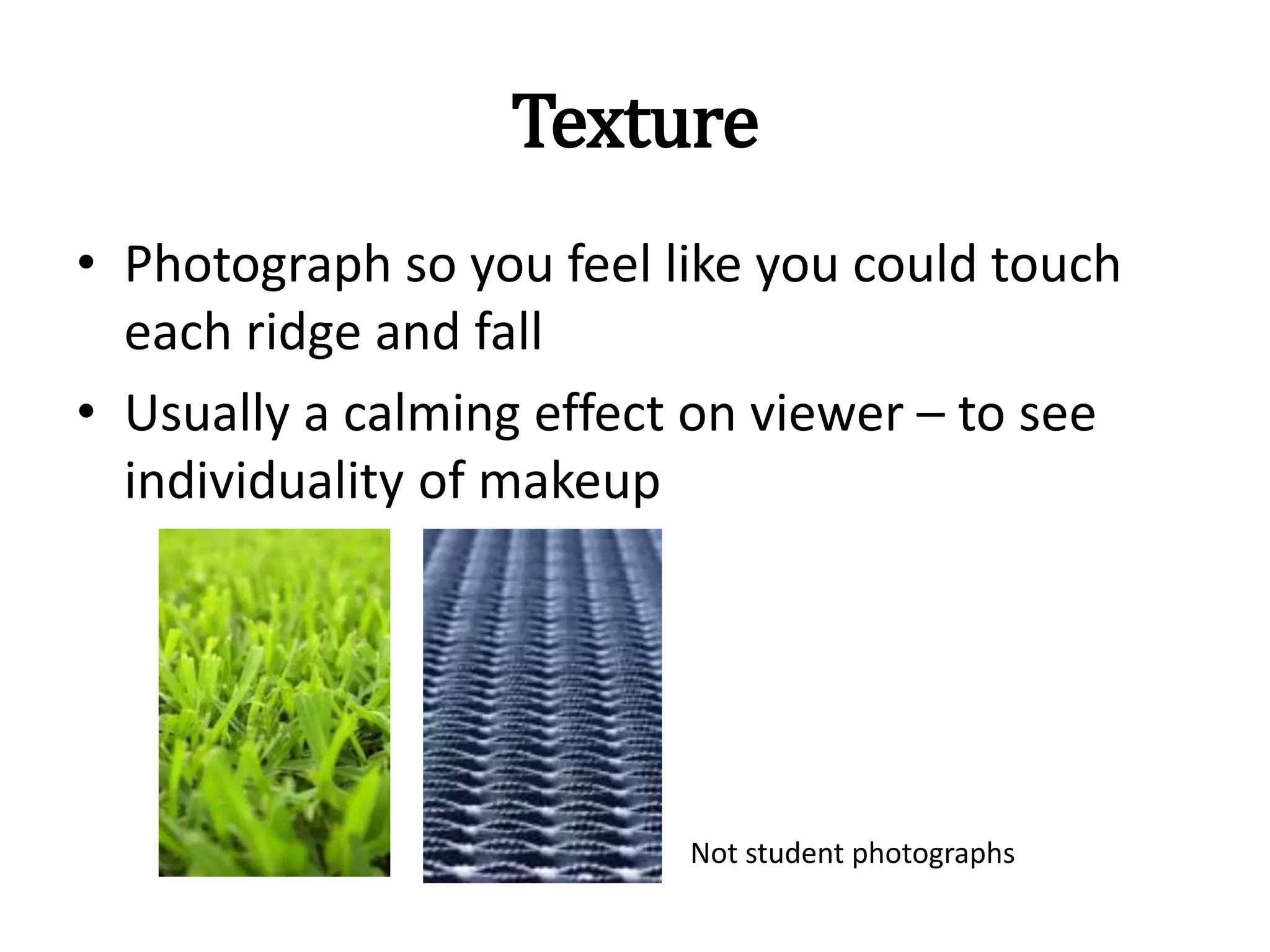
• Photograph so you feel like you could touch
each ridge and fall
• Usually a calming effect on viewer – to see
individuality of makeup
Not student photographs
Leading
Lines
Leading Lines
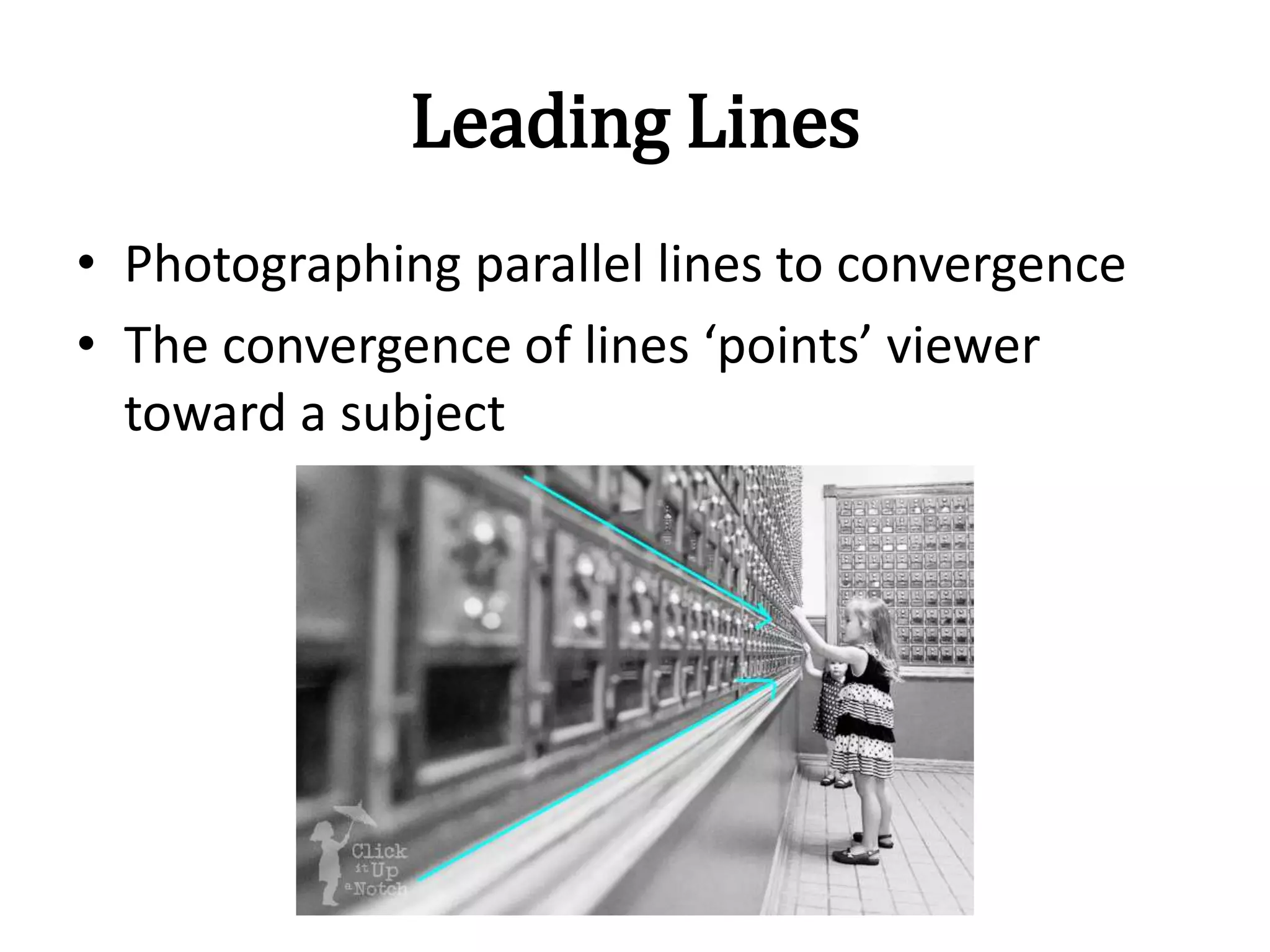
• Photographing parallel lines to convergence
• The convergence of lines ‘points’ viewer
toward a subject
Leading Lines
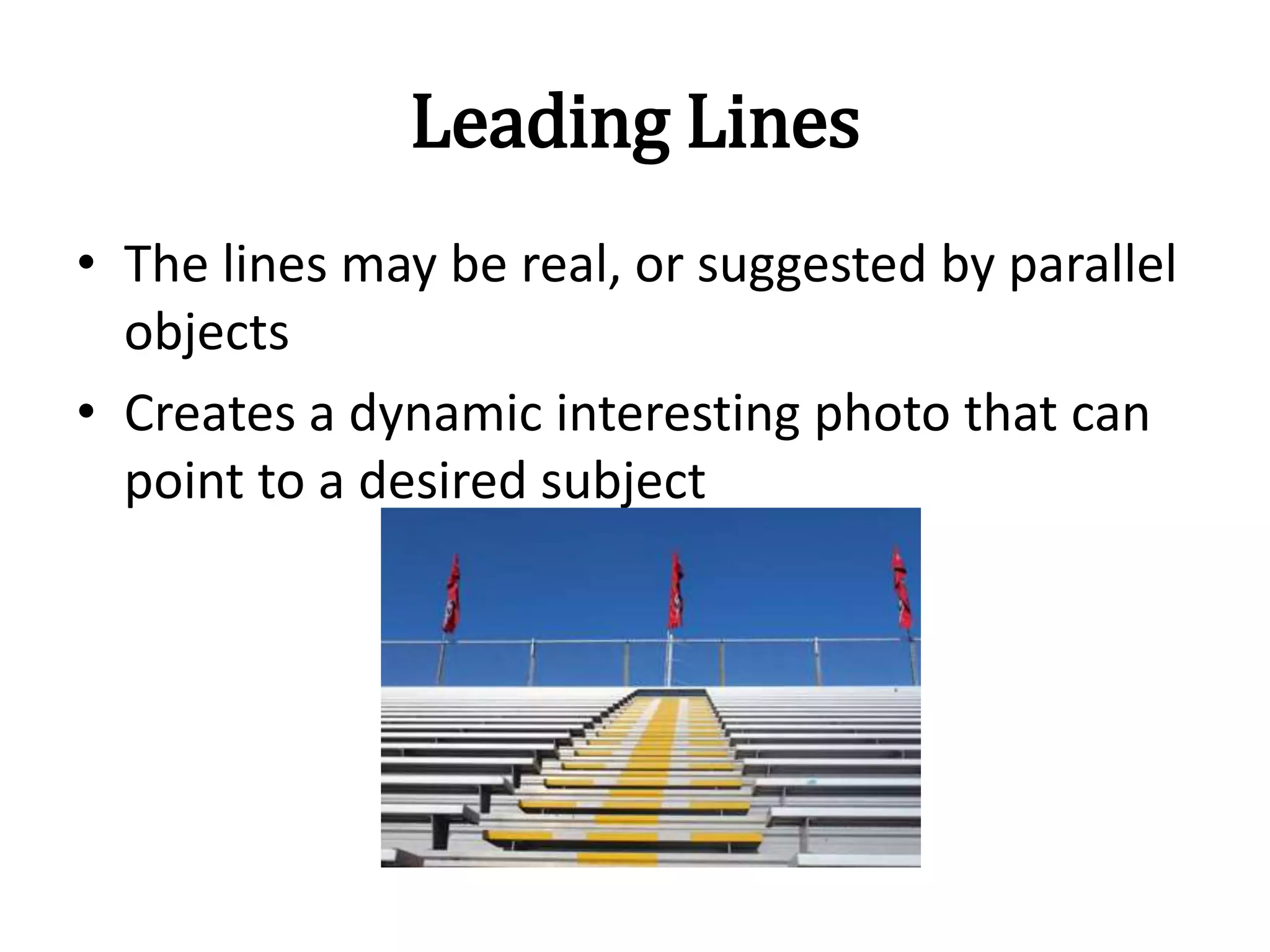
• The lines may be real, or suggested by parallel
objects
• Creates a dynamic interesting photo that can
point to a desired subject
Framing
Framing
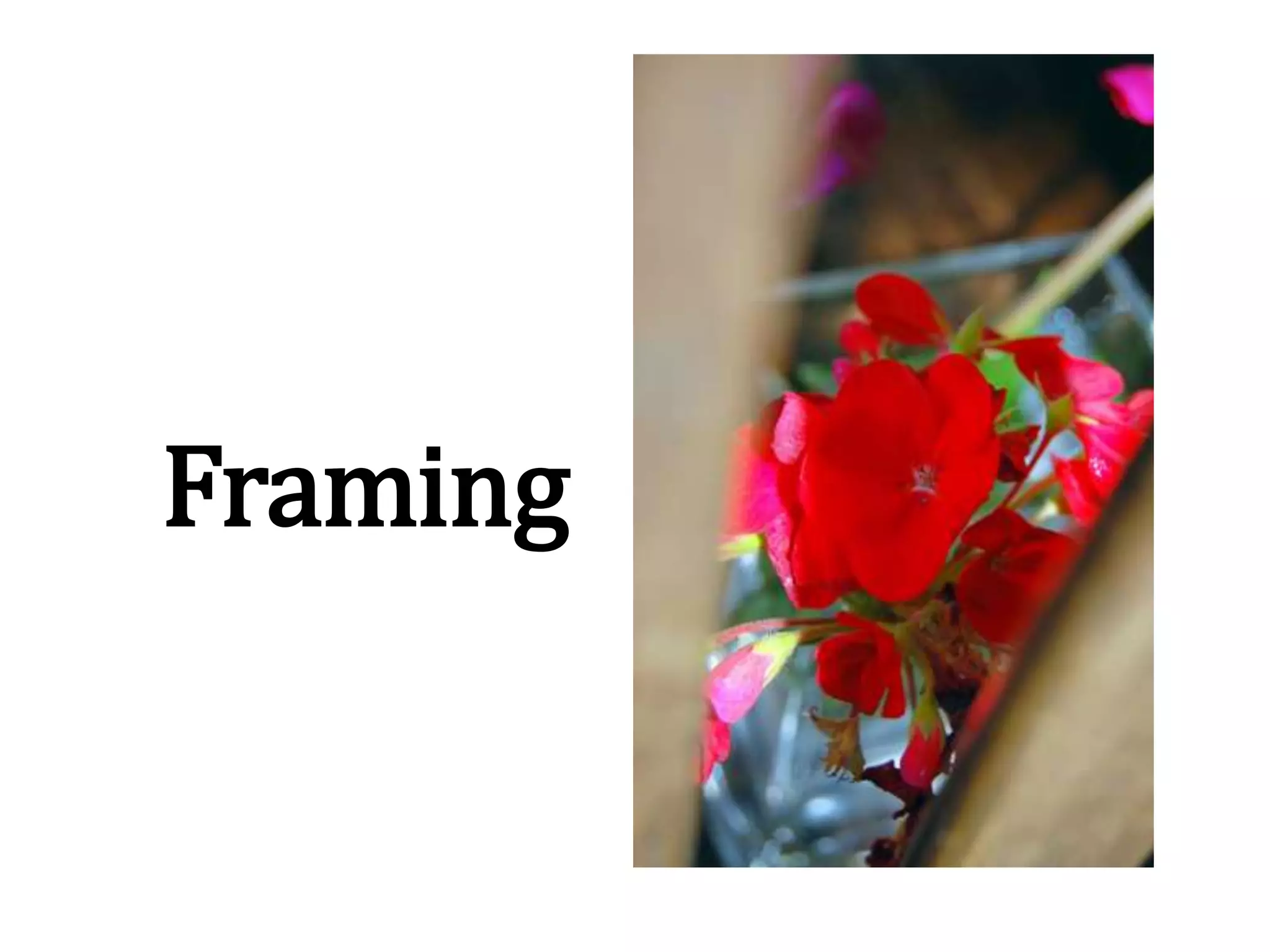
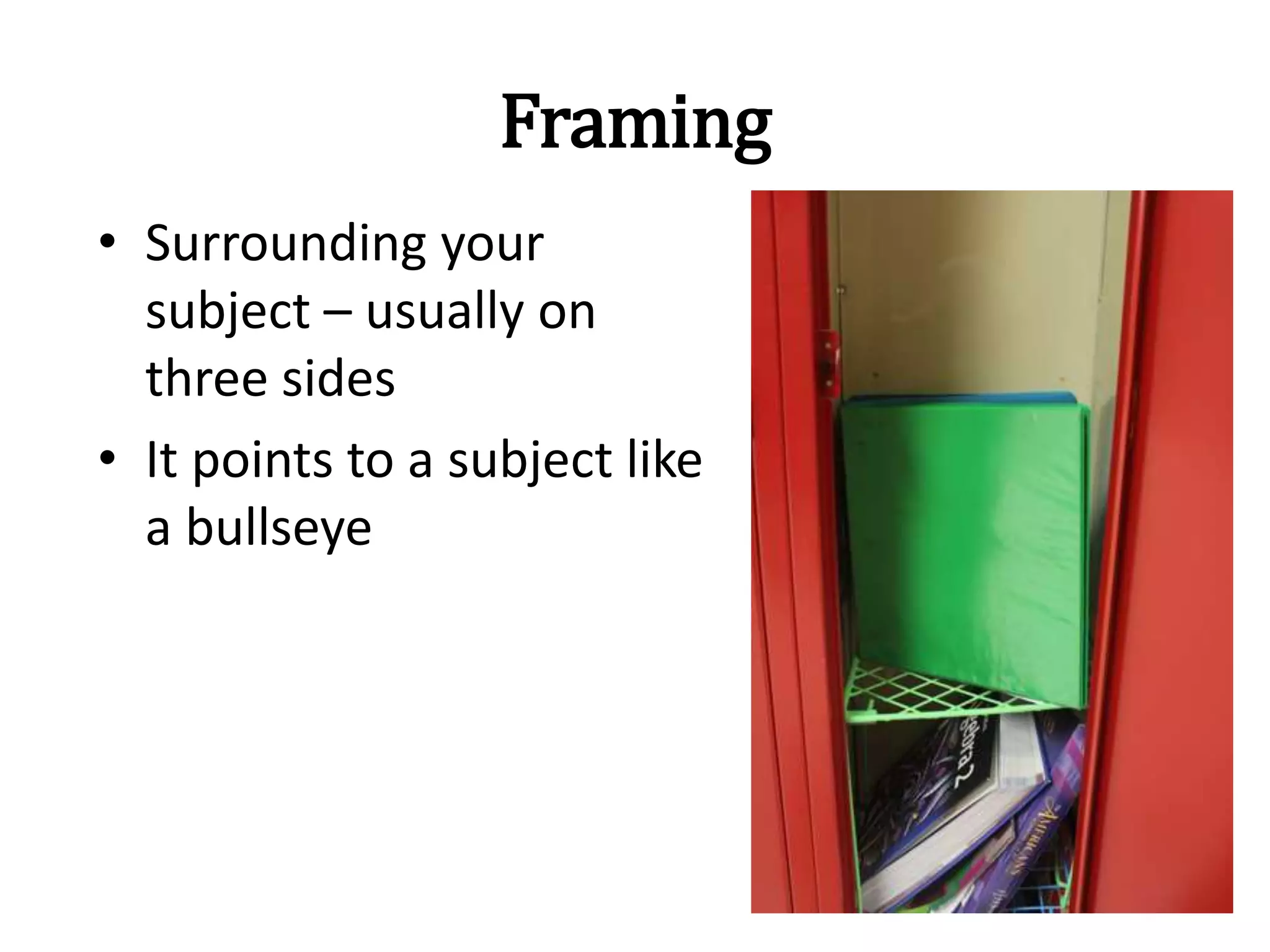
• Surrounding your
subject – usually on
three sides
• It points to a subject like
a bullseye
Framing
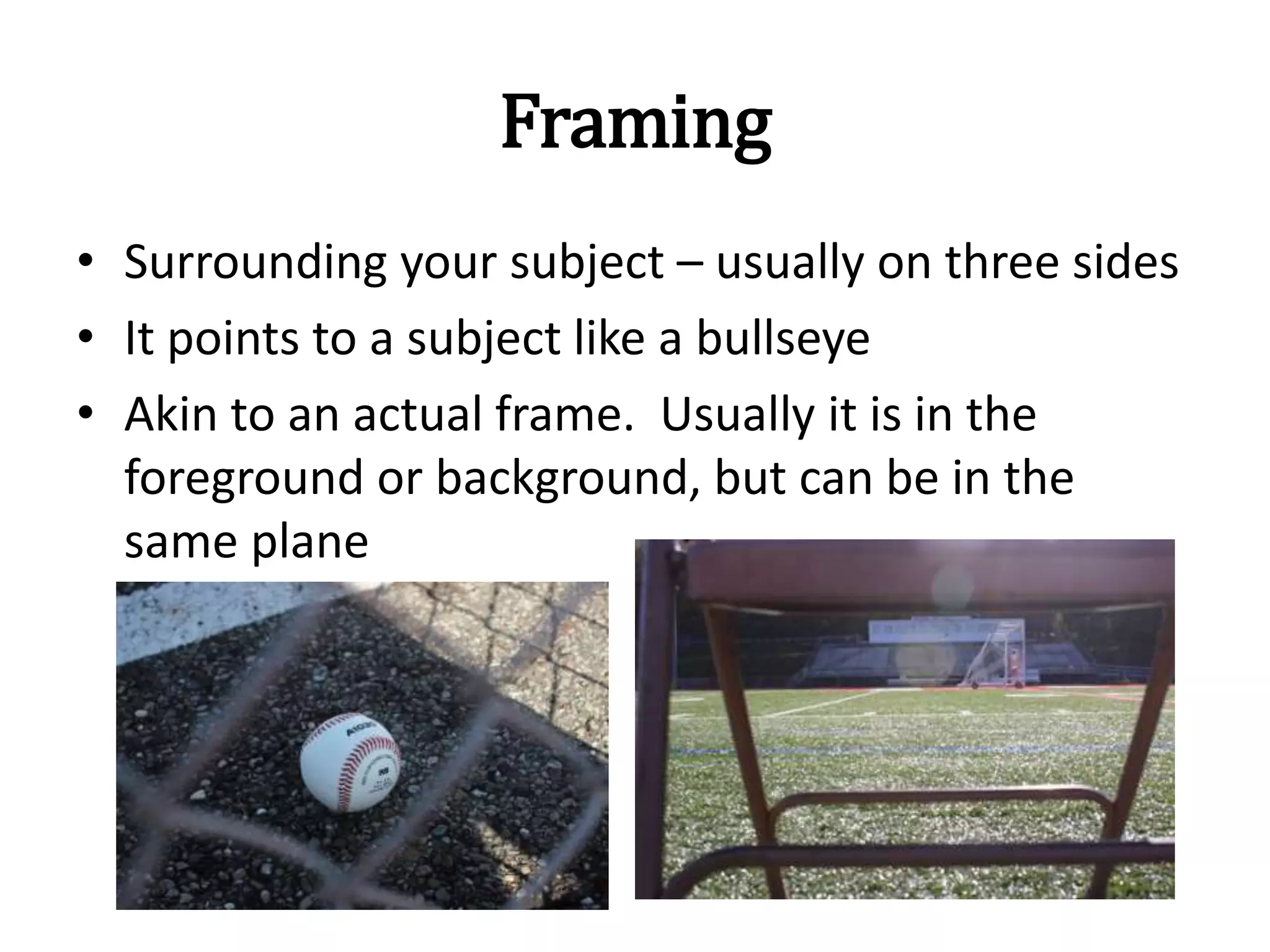
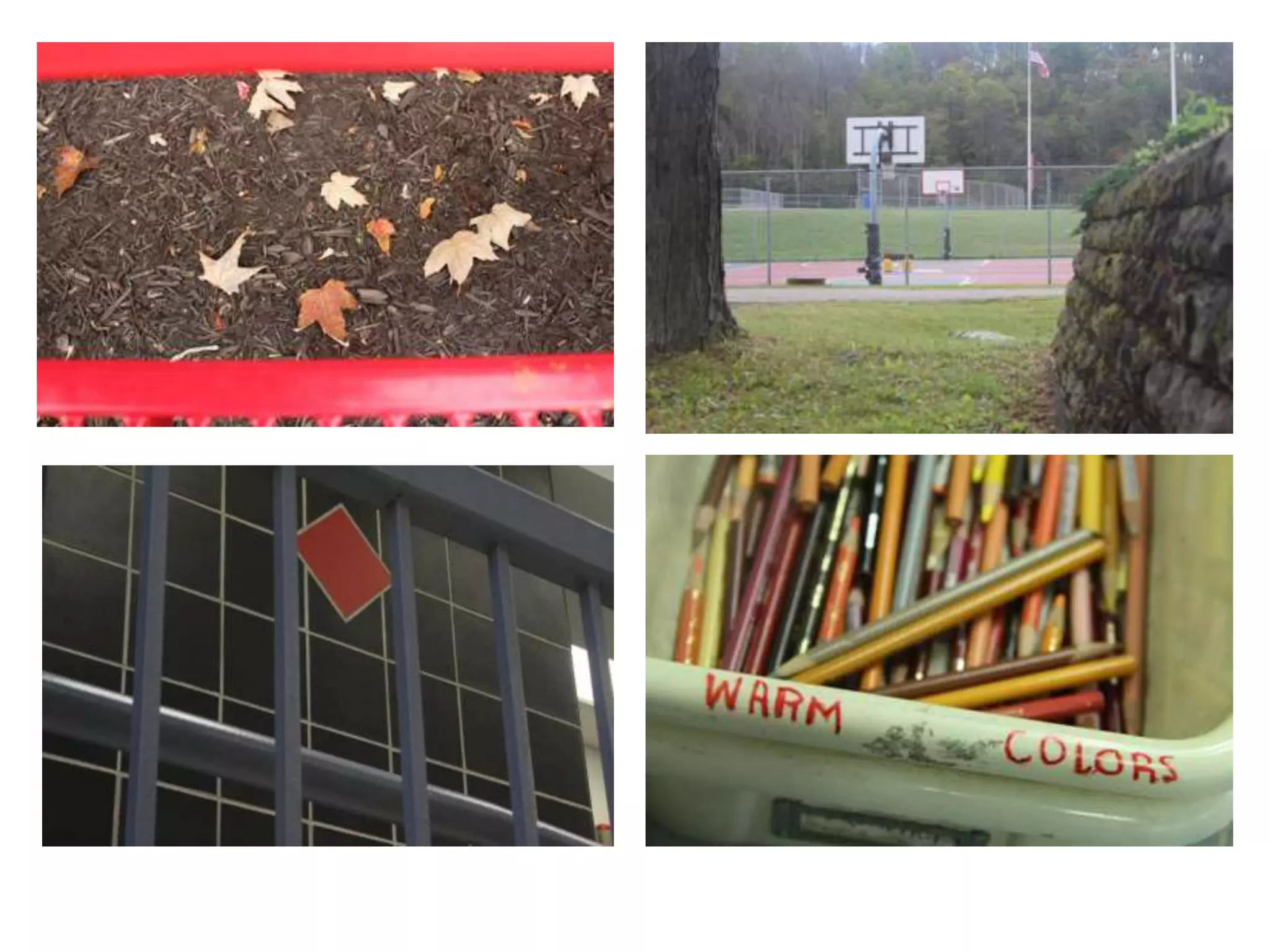
• Surrounding your subject – usually on three sides
• It points to a subject like a bullseye
• Akin to an actual frame. Usually it is in the
foreground or background, but can be in the
same plane
Framing
• Akin to an actual frame. Usually it is in the
foreground or background, but can be in the
same plane
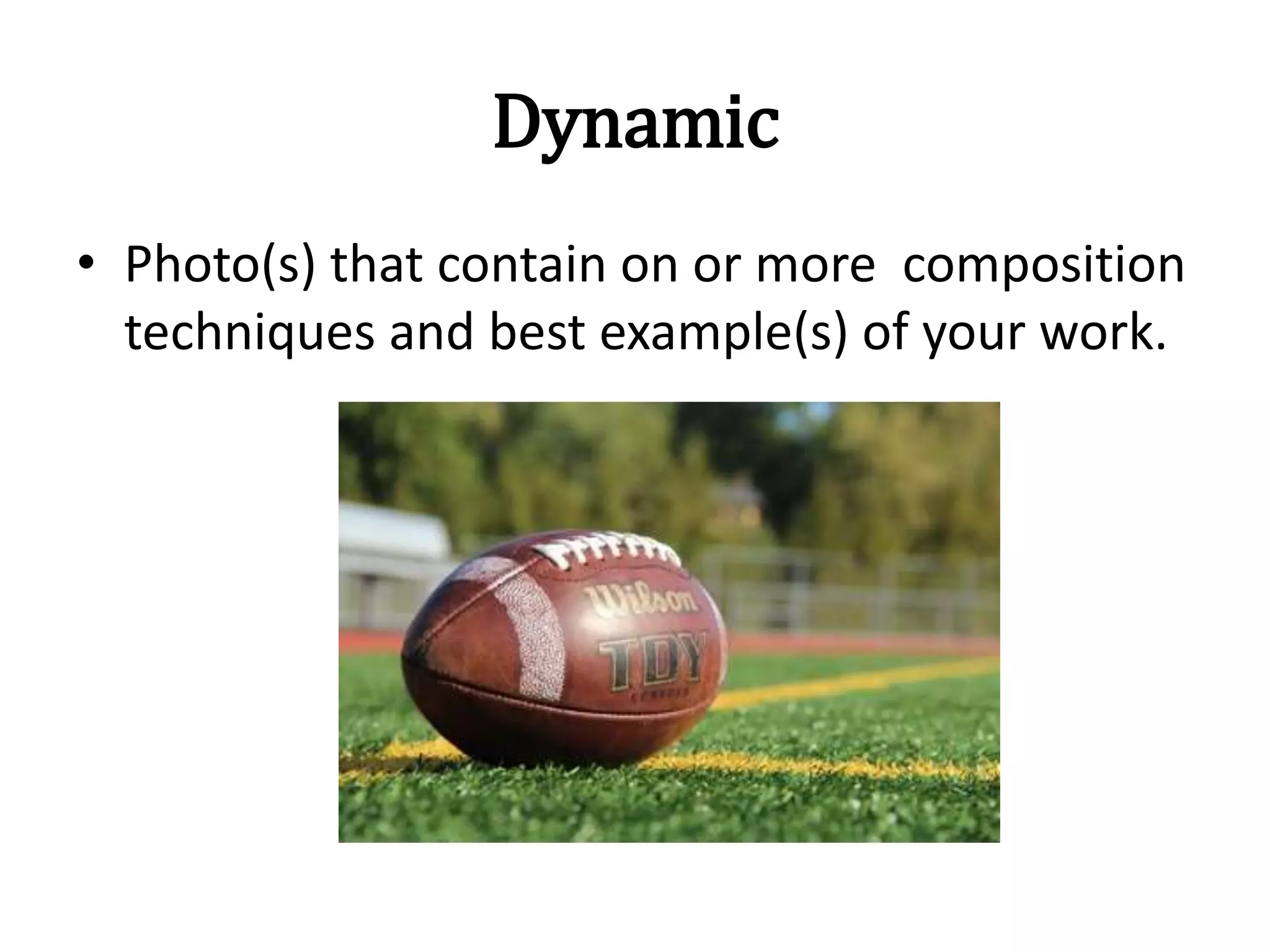
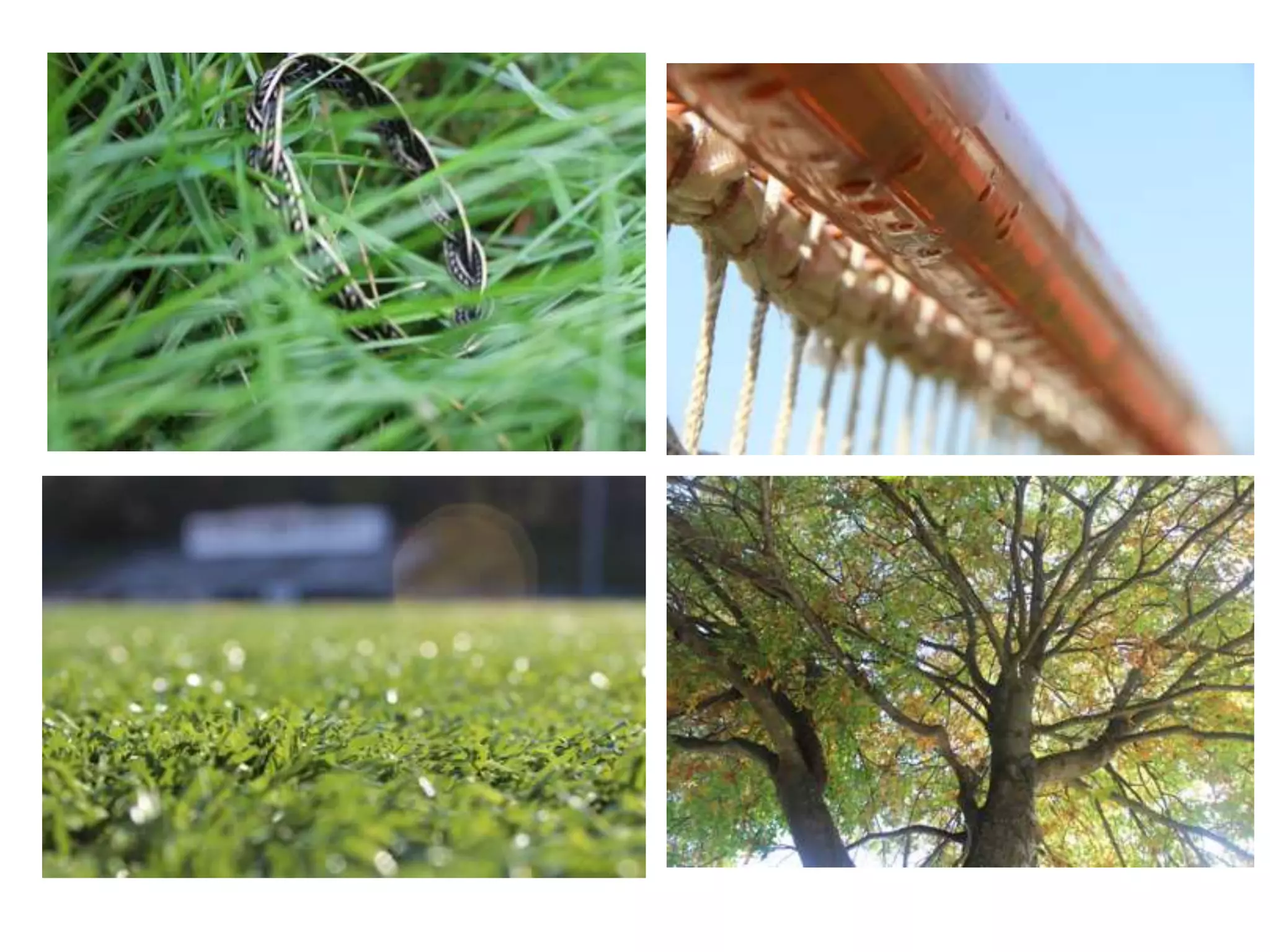
Dynamic
Dynamic
• Photo(s) that contain on or more composition
techniques and best example(s) of your work.
2015 Composition Techniques

2015 Composition Techniques