Big Data in Politics: How Did We
Get Here & Where Are We Going?
Colin Delany, Epolitics.com
March 6, 2014
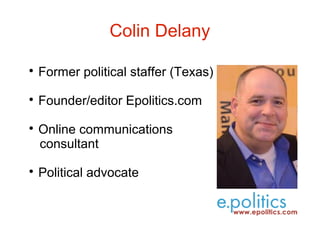
Colin Delany


Former political staffer (Texas)



Founder/editor Epolitics.com





Online communications
consultant
Political advocate
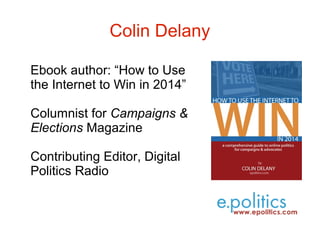
Colin Delany
Ebook author: “How to Use
the Internet to Win in 2014”
Columnist for Campaigns &
Elections Magazine
Contributing Editor, Digital
Politics Radio
Political Data: History
[We've been using data w/o knowing it]


1970's/80's – direct mail, phones



2002/2004: Republican microtargeting



2006: Catalist founded (Dems)



2008 Obama: grassroots & online



2008-2012: cookie targeting & other new tech



2012 Obama:data integration, TV targeting



2013: Dems take down-ballot



2014: Parabellum Labs, Dem national rollout
Political Data: Essentials
Essential political data tools:


Voter file



Data manipulation software



Voter models



Ways to put data into action

NOTE: commercial marketers are way ahead of
political marketers
Political Data: Essentials
What you can do with data


Overall: target communications



Online advertising



Field organizing/canvassing



Direct mail/TV

In theory, data lets you hit the right person with
the right message at the right time.

Political Data: Essentials

Key concept: data = listening
Political Data: Essentials
Data sources:


Voter file



Commercial data



Field data (canvassing, phone bank responses)

Behavioral data (history of interactions with the
campaign)




Online behavior
Political Data: Limits
Limits on political data:


Legal framework



Data quality



Infrequency of voting = small data set



Match rates



Diminishing marginal returns



Need for niche content
Political Data & Democracy

Is political data good or bad for democracy?


Does it have a corrosive effect?



Is it manipulative?



Or, could it lead to a more-engaged electorate?
Thank You
Colin Delany
Epolitics.com
cpd@epolitics.com
@epolitics
+1 202 422 4682
Big Data: la nueva tendencia para
conocer al elector
Bruce Willsie, Labels & Lists
Chris Wegrzyn, Blue Labs, @wegbert
Matt McMillan, Buzzmaker, @wearebuzzmaker
Colin Delany, Epolitics.com, @epolitics (moderator)
Hashtag: #VAC14

Big Data in Politics: How Did We Get Here & Where Are We Going?

  • 1.
    Big Data inPolitics: How Did We Get Here & Where Are We Going? Colin Delany, Epolitics.com March 6, 2014
  • 2.
    Colin Delany  Former politicalstaffer (Texas)  Founder/editor Epolitics.com   Online communications consultant Political advocate
  • 3.
    Colin Delany Ebook author:“How to Use the Internet to Win in 2014” Columnist for Campaigns & Elections Magazine Contributing Editor, Digital Politics Radio
  • 4.
    Political Data: History [We'vebeen using data w/o knowing it]  1970's/80's – direct mail, phones  2002/2004: Republican microtargeting  2006: Catalist founded (Dems)  2008 Obama: grassroots & online  2008-2012: cookie targeting & other new tech  2012 Obama:data integration, TV targeting  2013: Dems take down-ballot  2014: Parabellum Labs, Dem national rollout
  • 5.
    Political Data: Essentials Essentialpolitical data tools:  Voter file  Data manipulation software  Voter models  Ways to put data into action NOTE: commercial marketers are way ahead of political marketers
  • 6.
    Political Data: Essentials Whatyou can do with data  Overall: target communications  Online advertising  Field organizing/canvassing  Direct mail/TV In theory, data lets you hit the right person with the right message at the right time. 
  • 7.
    Political Data: Essentials Keyconcept: data = listening
  • 8.
    Political Data: Essentials Datasources:  Voter file  Commercial data  Field data (canvassing, phone bank responses) Behavioral data (history of interactions with the campaign)   Online behavior
  • 9.
    Political Data: Limits Limitson political data:  Legal framework  Data quality  Infrequency of voting = small data set  Match rates  Diminishing marginal returns  Need for niche content
  • 10.
    Political Data &Democracy Is political data good or bad for democracy?  Does it have a corrosive effect?  Is it manipulative?  Or, could it lead to a more-engaged electorate?
  • 11.
  • 12.
    Big Data: lanueva tendencia para conocer al elector Bruce Willsie, Labels & Lists Chris Wegrzyn, Blue Labs, @wegbert Matt McMillan, Buzzmaker, @wearebuzzmaker Colin Delany, Epolitics.com, @epolitics (moderator) Hashtag: #VAC14