Big Data in Elections
Big data is revolutionizing elections by enabling smarter decision-
making. It helps election teams analyze voter preferences, predict
outcomes, and design targeted strategies. This case study highlights
how big data improves efficiency and impacts election management.
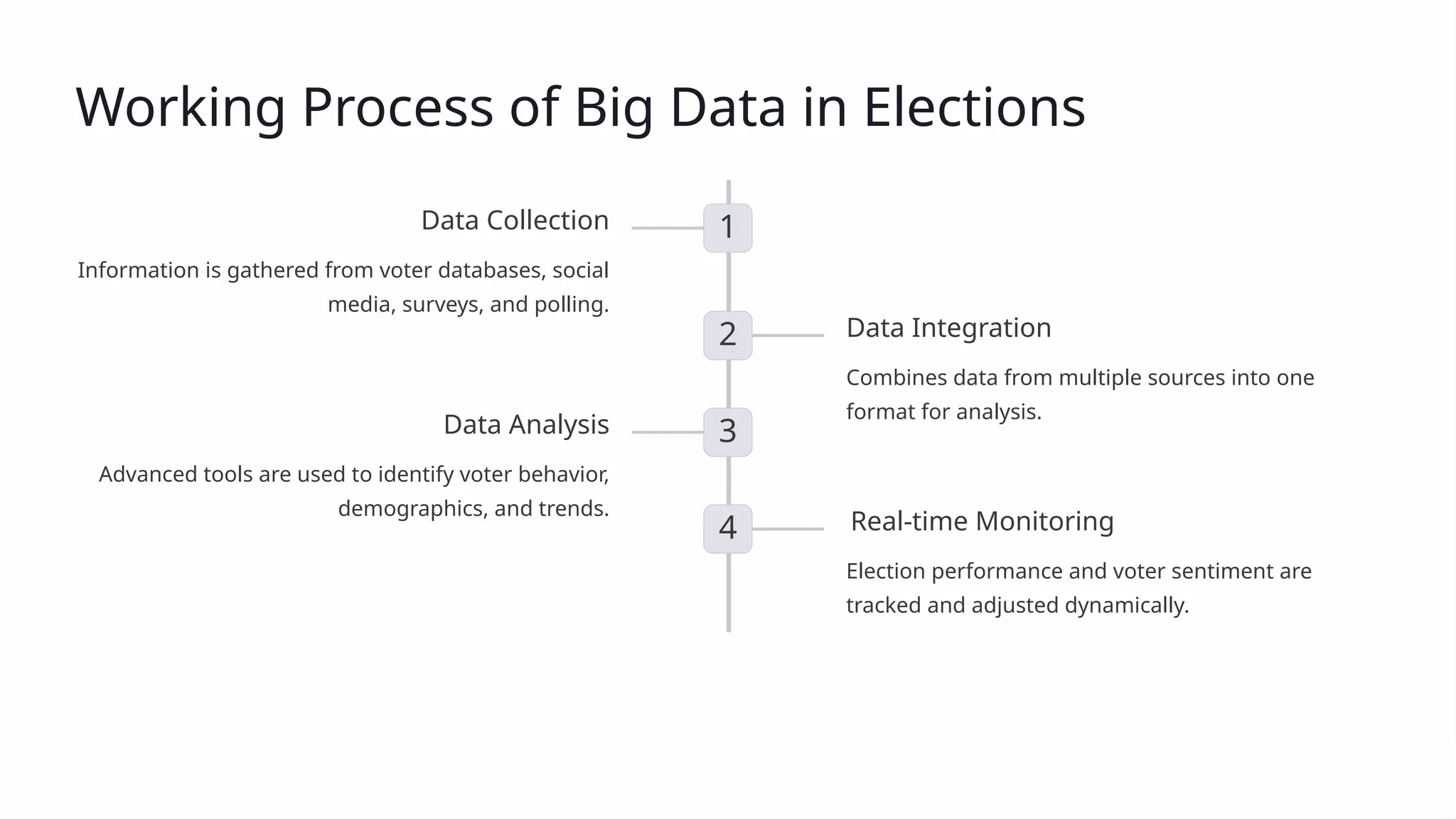
Working Process of Big Data in Elections
1
Data Collection
Information is gathered from voter databases, social
media, surveys, and polling.
2 Data Integration
Combines data from multiple sources into one
format for analysis.
3
Data Analysis
Advanced tools are used to identify voter behavior,
demographics, and trends.
4 Real-time Monitoring
Election performance and voter sentiment are
tracked and adjusted dynamically.
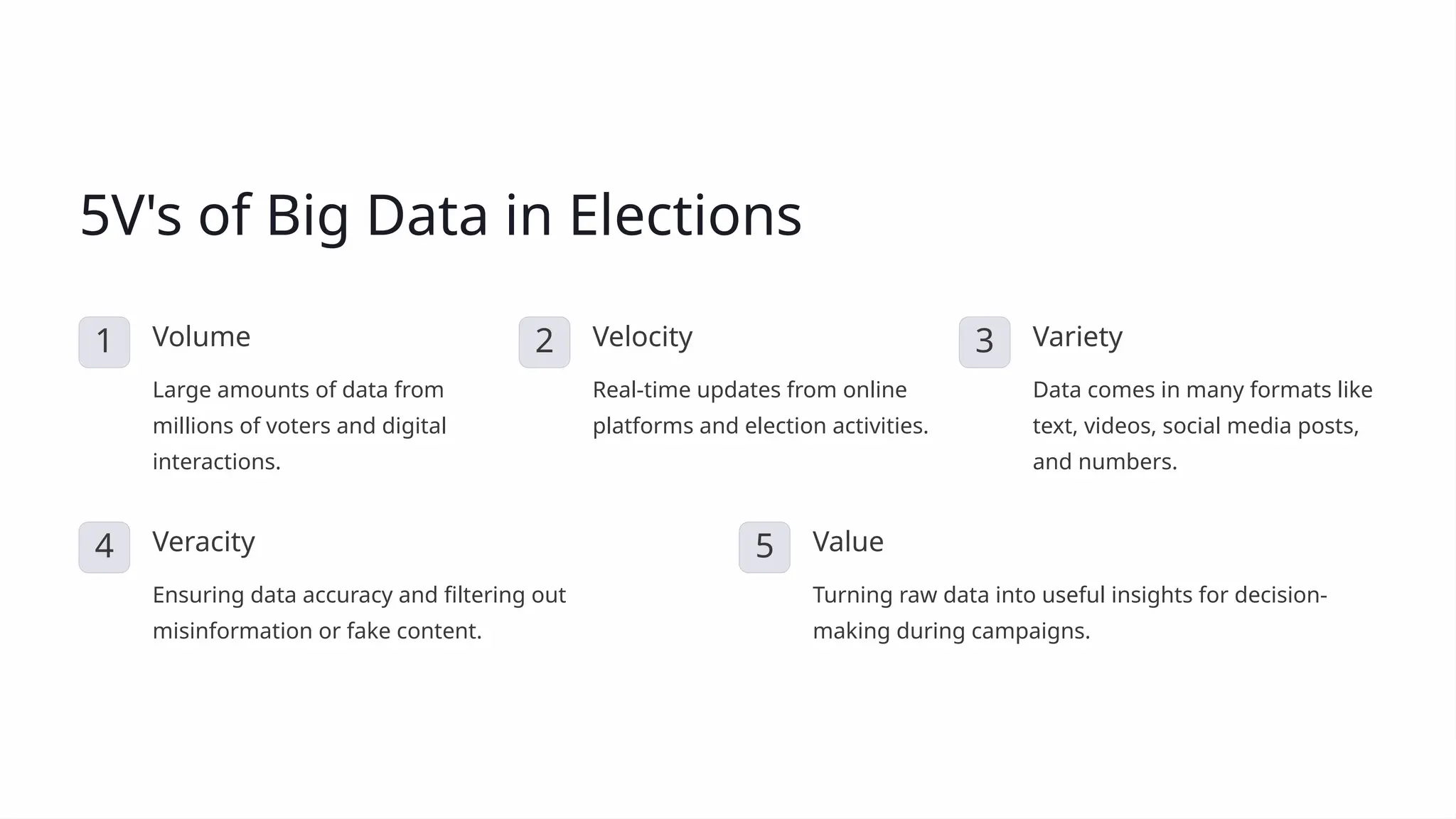
5V's of Big Data in Elections
1 Volume
Large amounts of data from
millions of voters and digital
interactions.
2 Velocity
Real-time updates from online
platforms and election activities.
3 Variety
Data comes in many formats like
text, videos, social media posts,
and numbers.
4 Veracity
Ensuring data accuracy and filtering out
misinformation or fake content.
5 Value
Turning raw data into useful insights for decision-
making during campaigns.
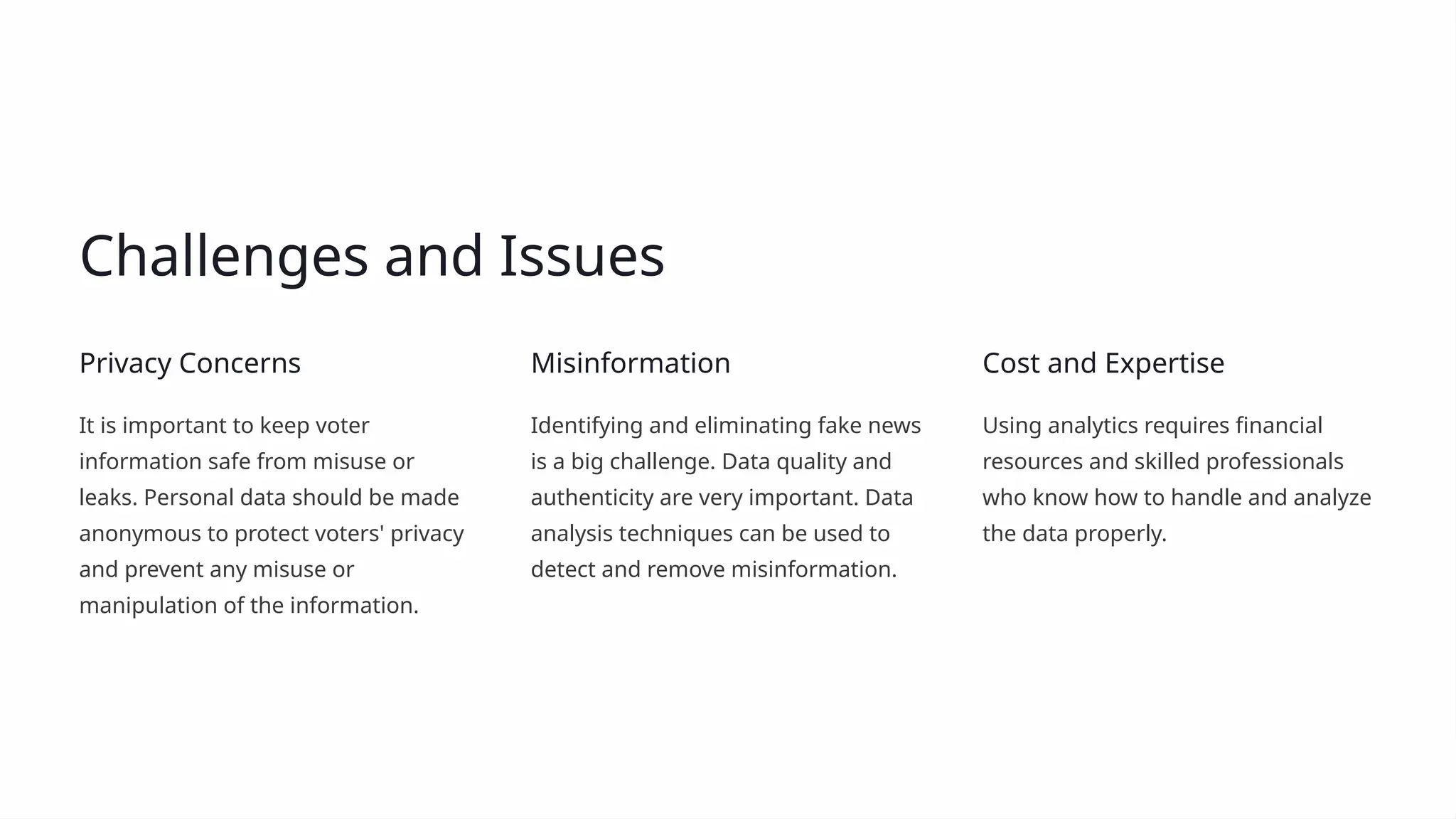
Challenges and Issues
Privacy Concerns
It is important to keep voter
information safe from misuse or
leaks. Personal data should be made
anonymous to protect voters' privacy
and prevent any misuse or
manipulation of the information.
Misinformation
Identifying and eliminating fake news
is a big challenge. Data quality and
authenticity are very important. Data
analysis techniques can be used to
detect and remove misinformation.
Cost and Expertise
Using analytics requires financial
resources and skilled professionals
who know how to handle and analyze
the data properly.
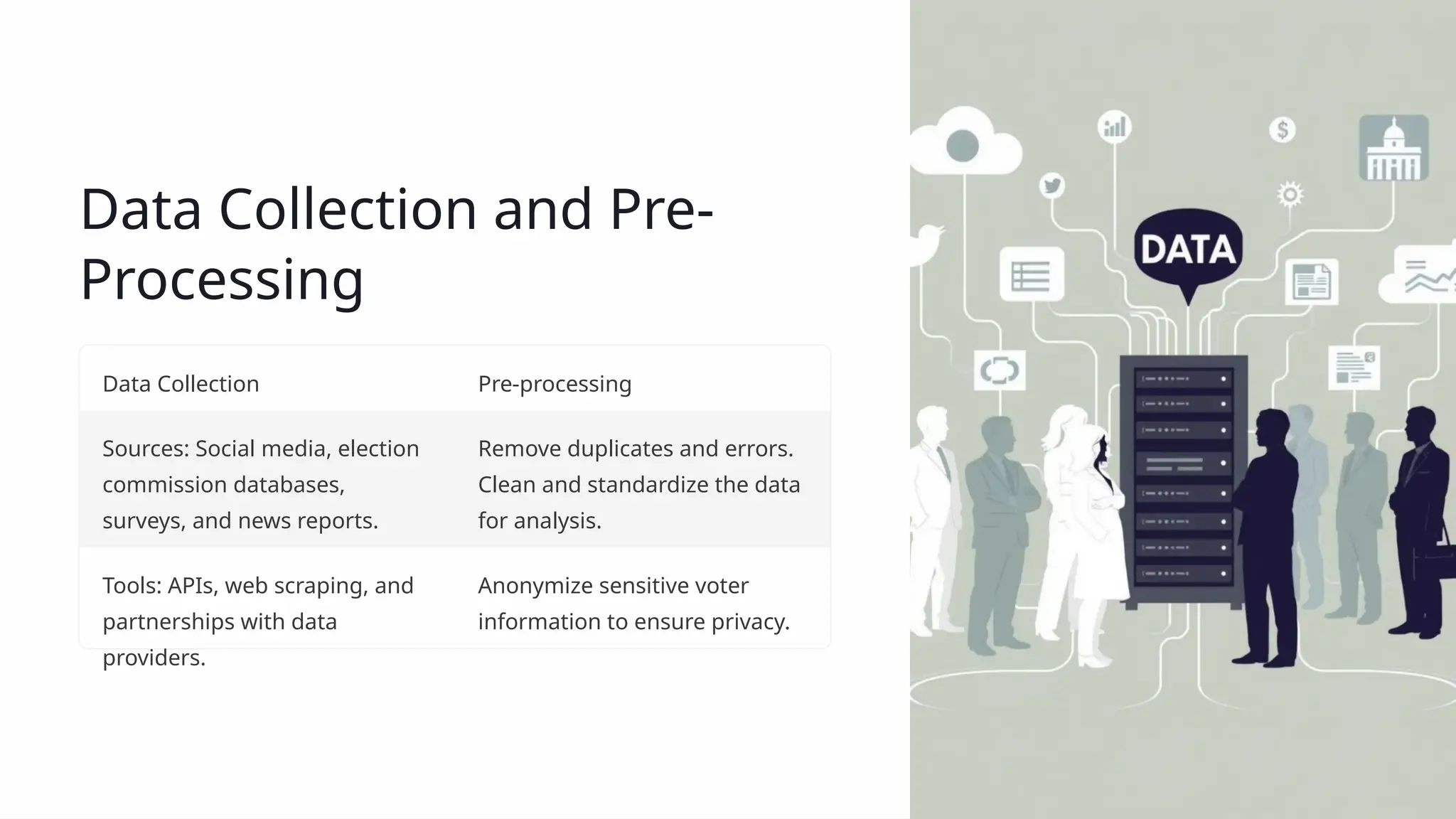
Data Collection and Pre-
Processing
Data Collection Pre-processing
Sources: Social media, election
commission databases,
surveys, and news reports.
Remove duplicates and errors.
Clean and standardize the data
for analysis.
Tools: APIs, web scraping, and
partnerships with data
providers.
Anonymize sensitive voter
information to ensure privacy.
How Big Data Helps in Analytics
Voter Profiling
Understand voter needs and preferences.
Targeted Outreach
Reach undecided voters with personalized messages.
Predictive Analysis
Forecast election outcomes using data trends.
Real-time Insights
Quickly adapt strategies based on live data.
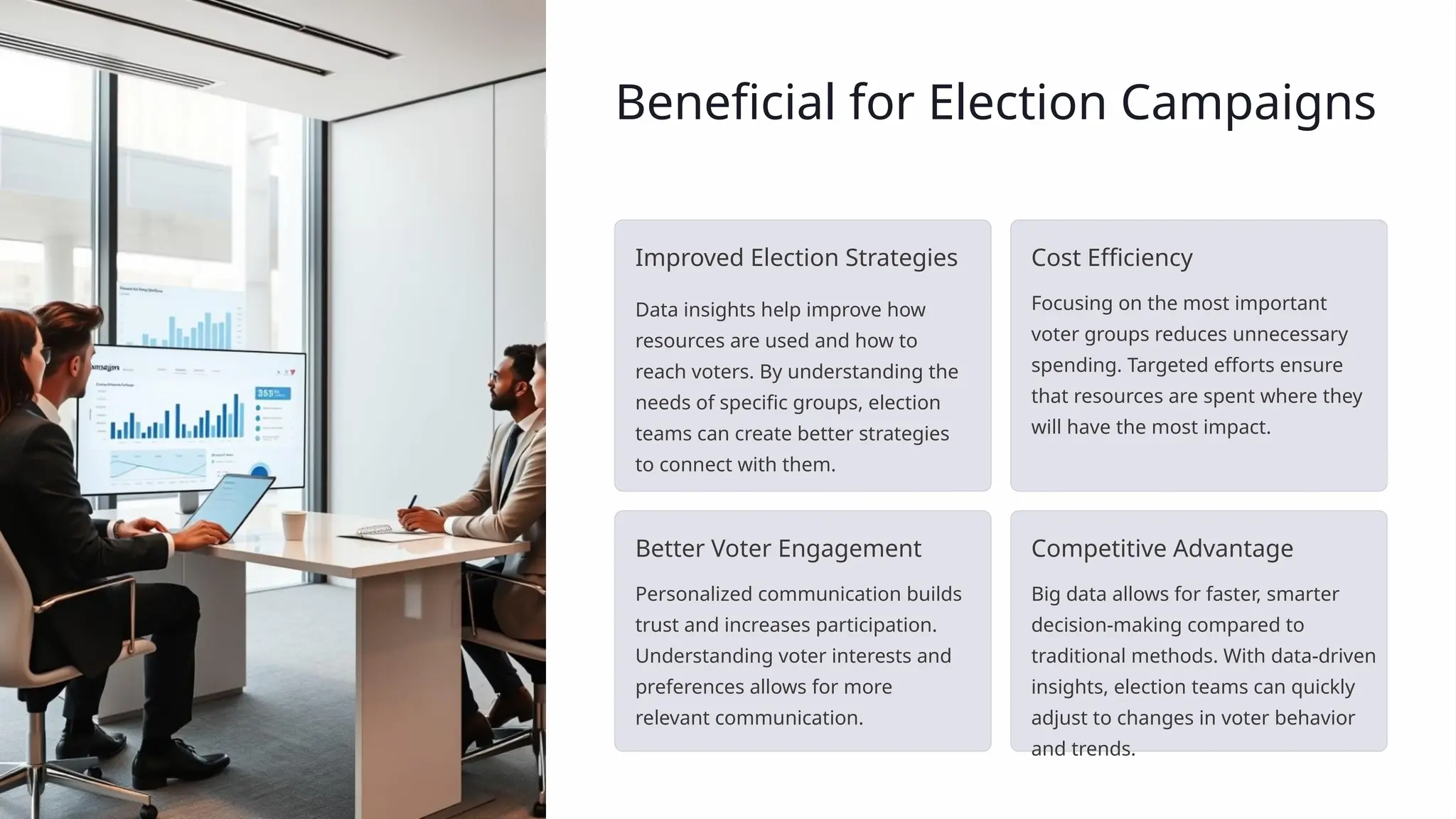
Beneficial for Election Campaigns
Improved Election Strategies
Data insights help improve how
resources are used and how to
reach voters. By understanding the
needs of specific groups, election
teams can create better strategies
to connect with them.
Cost Efficiency
Focusing on the most important
voter groups reduces unnecessary
spending. Targeted efforts ensure
that resources are spent where they
will have the most impact.
Better Voter Engagement
Personalized communication builds
trust and increases participation.
Understanding voter interests and
preferences allows for more
relevant communication.
Competitive Advantage
Big data allows for faster, smarter
decision-making compared to
traditional methods. With data-driven
insights, election teams can quickly
adjust to changes in voter behavior
and trends.
Tools for Big Data Analytics in Elections
Hadoop
A distributed file system for
storing and processing
massive data sets.
Apache Spark
A fast and general-purpose
cluster computing platform
for real-time data
processing.
Python
A versatile programming
language with extensive
libraries for data analysis
and machine learning.
R
A statistical programming
language commonly used
for data analysis and
visualization.
**How Big Data is Transforming Elections: Smarter Strategies and Improved Management**

**How Big Data is Transforming Elections: Smarter Strategies and Improved Management**

  • 1.
    Big Data inElections Big data is revolutionizing elections by enabling smarter decision- making. It helps election teams analyze voter preferences, predict outcomes, and design targeted strategies. This case study highlights how big data improves efficiency and impacts election management.
  • 2.
    Working Process ofBig Data in Elections 1 Data Collection Information is gathered from voter databases, social media, surveys, and polling. 2 Data Integration Combines data from multiple sources into one format for analysis. 3 Data Analysis Advanced tools are used to identify voter behavior, demographics, and trends. 4 Real-time Monitoring Election performance and voter sentiment are tracked and adjusted dynamically.
  • 3.
    5V's of BigData in Elections 1 Volume Large amounts of data from millions of voters and digital interactions. 2 Velocity Real-time updates from online platforms and election activities. 3 Variety Data comes in many formats like text, videos, social media posts, and numbers. 4 Veracity Ensuring data accuracy and filtering out misinformation or fake content. 5 Value Turning raw data into useful insights for decision- making during campaigns.
  • 4.
    Challenges and Issues PrivacyConcerns It is important to keep voter information safe from misuse or leaks. Personal data should be made anonymous to protect voters' privacy and prevent any misuse or manipulation of the information. Misinformation Identifying and eliminating fake news is a big challenge. Data quality and authenticity are very important. Data analysis techniques can be used to detect and remove misinformation. Cost and Expertise Using analytics requires financial resources and skilled professionals who know how to handle and analyze the data properly.
  • 5.
    Data Collection andPre- Processing Data Collection Pre-processing Sources: Social media, election commission databases, surveys, and news reports. Remove duplicates and errors. Clean and standardize the data for analysis. Tools: APIs, web scraping, and partnerships with data providers. Anonymize sensitive voter information to ensure privacy.
  • 6.
    How Big DataHelps in Analytics Voter Profiling Understand voter needs and preferences. Targeted Outreach Reach undecided voters with personalized messages. Predictive Analysis Forecast election outcomes using data trends. Real-time Insights Quickly adapt strategies based on live data.
  • 7.
    Beneficial for ElectionCampaigns Improved Election Strategies Data insights help improve how resources are used and how to reach voters. By understanding the needs of specific groups, election teams can create better strategies to connect with them. Cost Efficiency Focusing on the most important voter groups reduces unnecessary spending. Targeted efforts ensure that resources are spent where they will have the most impact. Better Voter Engagement Personalized communication builds trust and increases participation. Understanding voter interests and preferences allows for more relevant communication. Competitive Advantage Big data allows for faster, smarter decision-making compared to traditional methods. With data-driven insights, election teams can quickly adjust to changes in voter behavior and trends.
  • 8.
    Tools for BigData Analytics in Elections Hadoop A distributed file system for storing and processing massive data sets. Apache Spark A fast and general-purpose cluster computing platform for real-time data processing. Python A versatile programming language with extensive libraries for data analysis and machine learning. R A statistical programming language commonly used for data analysis and visualization.