Teacher Keys Effectiveness System 2012-2013
Formative Assessment
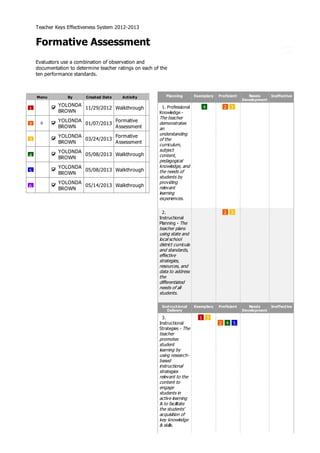
Evaluators use a combination of observation and
documentation to determine teacher ratings on each of the
ten performance standards.
Menu By Created Date Activity
1
YOLONDA
BROWN
11/29/2012 Walkthrough
2
YOLONDA
BROWN
01/07/2013 Formative
Assessment
3
YOLONDA
BROWN
03/24/2013 Formative
Assessment
4
YOLONDA
BROWN
05/08/2013 Walkthrough
5
YOLONDA
BROWN
05/08/2013 Walkthrough
6
YOLONDA
BROWN
05/14/2013 Walkthrough
Planning Exemplary Proficient Needs
Development
Ineffective
1. Professional
Knowledge -
The teacher
demonstrates
an
understanding
of the
curriculum,
subject
content,
pedagogical
knowledge, and
the needs of
students by
providing
relevant
learning
experiences.
4 2 3
2.
Instructional
Planning - The
teacher plans
using state and
local school
district curricula
and standards,
effective
strategies,
resources, and
data to address
the
differentiated
needs of all
students.
2 3
Instructional
Delivery
Exemplary Proficient Needs
Development
Ineffective
3.
Instructional
Strategies - The
teacher
promotes
student
learning by
using research-
based
instructional
strategies
relevant to the
content to
engage
students in
active learning
& to facilitate
the students'
acquisition of
key knowledge
& skills.
1 3
2 4 5
4.
Differentiated
Instruction -
The teacher
challenges and
supports each
student's
learning by
providing
appropriate
content and
developing skills
which address
individual
learning
differences.
5
1 2 3
Assessment of
and for
Learning
Exemplary Proficient Needs
Development
Ineffective
5. Assessment
Strategies - The
teacher
systematically
chooses a
variety of
diagnostic,
formative, and
summative
assessment
strategies and
instruments
that are valid
and
appropriate for
the content
and student
population.
2 3
6. Assessment
Uses - The
teacher
systematically
gathers,
analyzes, and
uses relevant
data to
measure
student
progress, to
inform
instructional
content and
delivery
methods, and
to provide
timely and
constructive
feedback to
both students
& parents.
2 3
Learning
Environment
Exemplary Proficient Needs
Development
Ineffective
7. Positive
Learning
Environment -
The teacher
provides a well-
managed, safe,
and orderly
environment
that is
conducive to
learning and
2 3 6
encourages
respect for all.
8.
Academically
Challenging
Environment -
The teacher
creates a
student-
centered,
academic
environment in
which teaching
and learning
occur at high
levels and
students are
self-directed
learners.
2 6 3
Professionalism
and
Communication
Exemplary Proficient Needs
Development
Ineffective
9.
Professionalism
- The teacher
exhibits a
commitment to
professional
ethics and the
school's
mission,
participates in
professional
growth
opportunities
to support
student
learning, and
contributes to
the profession.
2 3
10.
Communication
- The teacher
communicates
effectively with
students,
parents or
guardians,
district and
school
personnel, and
other
stakeholders in
ways that
enhance
student
learning.
2 3

2012 13teacherassessment

  • 1.
    Teacher Keys EffectivenessSystem 2012-2013 Formative Assessment Evaluators use a combination of observation and documentation to determine teacher ratings on each of the ten performance standards. Menu By Created Date Activity 1 YOLONDA BROWN 11/29/2012 Walkthrough 2 YOLONDA BROWN 01/07/2013 Formative Assessment 3 YOLONDA BROWN 03/24/2013 Formative Assessment 4 YOLONDA BROWN 05/08/2013 Walkthrough 5 YOLONDA BROWN 05/08/2013 Walkthrough 6 YOLONDA BROWN 05/14/2013 Walkthrough Planning Exemplary Proficient Needs Development Ineffective 1. Professional Knowledge - The teacher demonstrates an understanding of the curriculum, subject content, pedagogical knowledge, and the needs of students by providing relevant learning experiences. 4 2 3 2. Instructional Planning - The teacher plans using state and local school district curricula and standards, effective strategies, resources, and data to address the differentiated needs of all students. 2 3 Instructional Delivery Exemplary Proficient Needs Development Ineffective 3. Instructional Strategies - The teacher promotes student learning by using research- based instructional strategies relevant to the content to engage students in active learning & to facilitate the students' acquisition of key knowledge & skills. 1 3 2 4 5
  • 2.
    4. Differentiated Instruction - The teacher challengesand supports each student's learning by providing appropriate content and developing skills which address individual learning differences. 5 1 2 3 Assessment of and for Learning Exemplary Proficient Needs Development Ineffective 5. Assessment Strategies - The teacher systematically chooses a variety of diagnostic, formative, and summative assessment strategies and instruments that are valid and appropriate for the content and student population. 2 3 6. Assessment Uses - The teacher systematically gathers, analyzes, and uses relevant data to measure student progress, to inform instructional content and delivery methods, and to provide timely and constructive feedback to both students & parents. 2 3 Learning Environment Exemplary Proficient Needs Development Ineffective 7. Positive Learning Environment - The teacher provides a well- managed, safe, and orderly environment that is conducive to learning and 2 3 6
  • 3.
    encourages respect for all. 8. Academically Challenging Environment- The teacher creates a student- centered, academic environment in which teaching and learning occur at high levels and students are self-directed learners. 2 6 3 Professionalism and Communication Exemplary Proficient Needs Development Ineffective 9. Professionalism - The teacher exhibits a commitment to professional ethics and the school's mission, participates in professional growth opportunities to support student learning, and contributes to the profession. 2 3 10. Communication - The teacher communicates effectively with students, parents or guardians, district and school personnel, and other stakeholders in ways that enhance student learning. 2 3