FORMATIVE ASSESSMENT
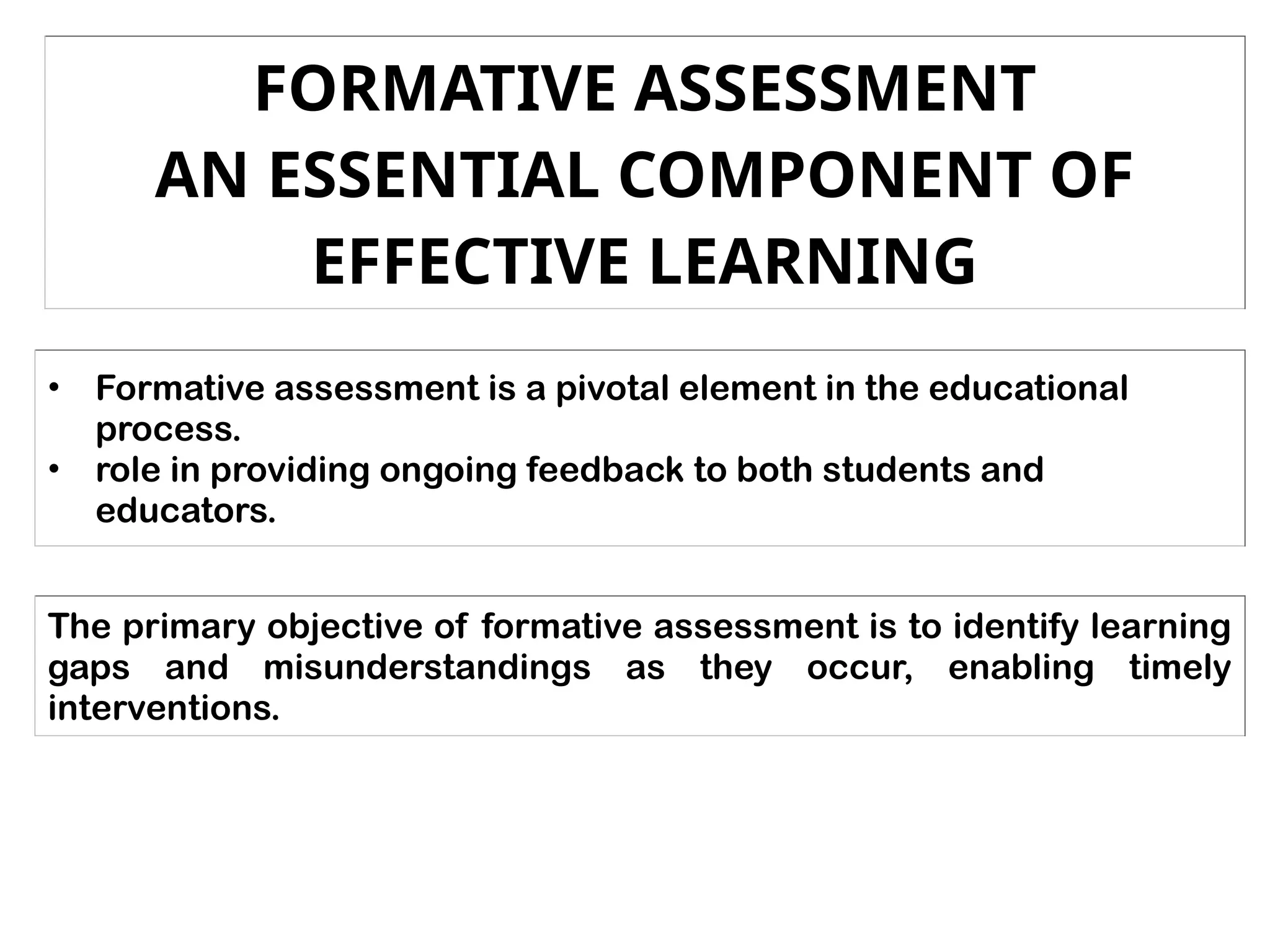
AN ESSENTIAL COMPONENT OF
EFFECTIVE LEARNING
• Formative assessment is a pivotal element in the educational
process.
• role in providing ongoing feedback to both students and
educators.
The primary objective of formative assessment is to identify learning
gaps and misunderstandings as they occur, enabling timely
interventions.
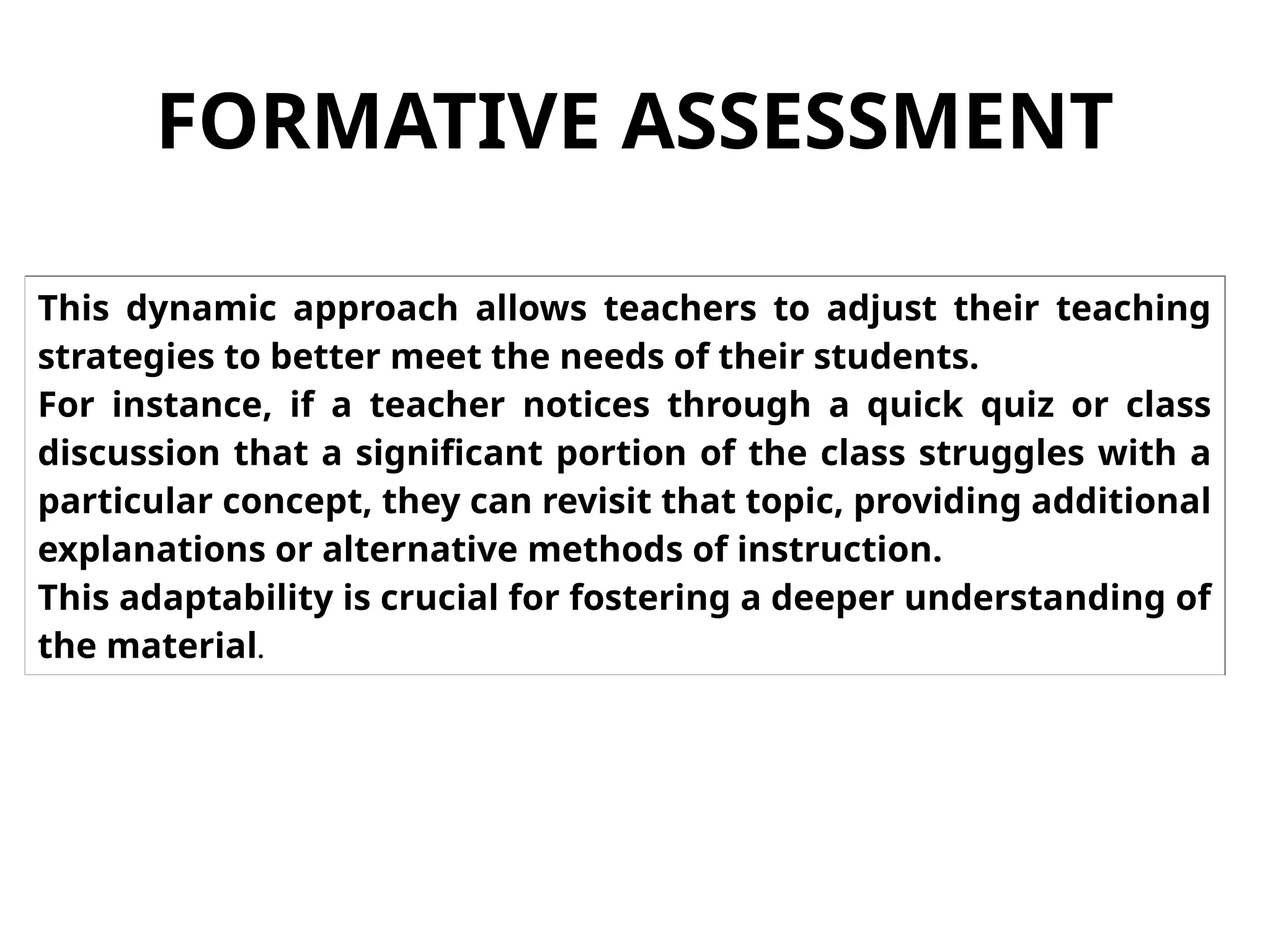
FORMATIVE ASSESSMENT
This dynamic approach allows teachers to adjust their teaching
strategies to better meet the needs of their students.
For instance, if a teacher notices through a quick quiz or class
discussion that a significant portion of the class struggles with a
particular concept, they can revisit that topic, providing additional
explanations or alternative methods of instruction.
This adaptability is crucial for fostering a deeper understanding of
the material.
FORMATIVE ASSESSMENT
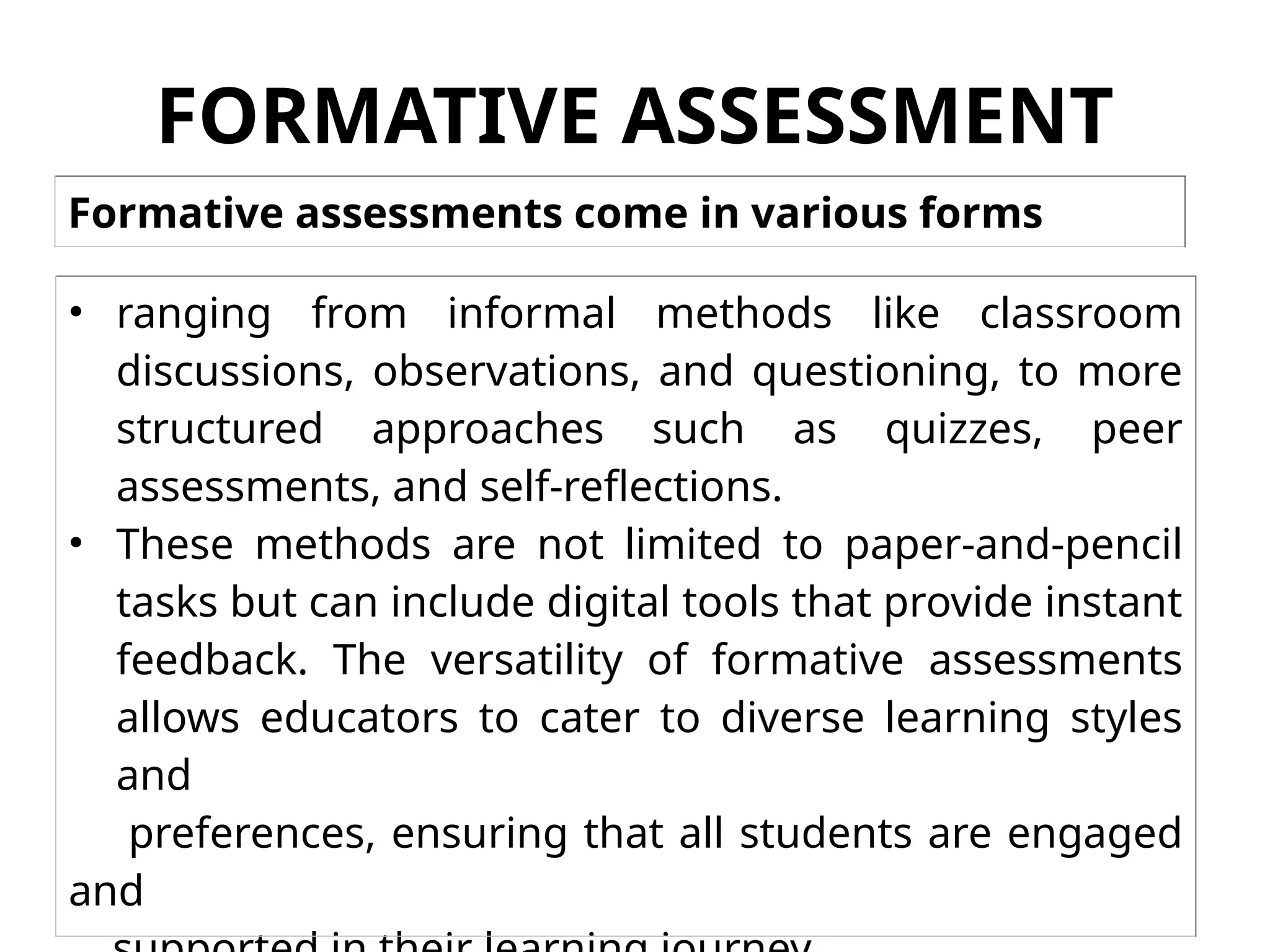
Formative assessments come in various forms
• ranging from informal methods like classroom
discussions, observations, and questioning, to more
structured approaches such as quizzes, peer
assessments, and self-reflections.
• These methods are not limited to paper-and-pencil
tasks but can include digital tools that provide instant
feedback. The versatility of formative assessments
allows educators to cater to diverse learning styles
and
preferences, ensuring that all students are engaged
and
FORMATIVE ASSESSMENT
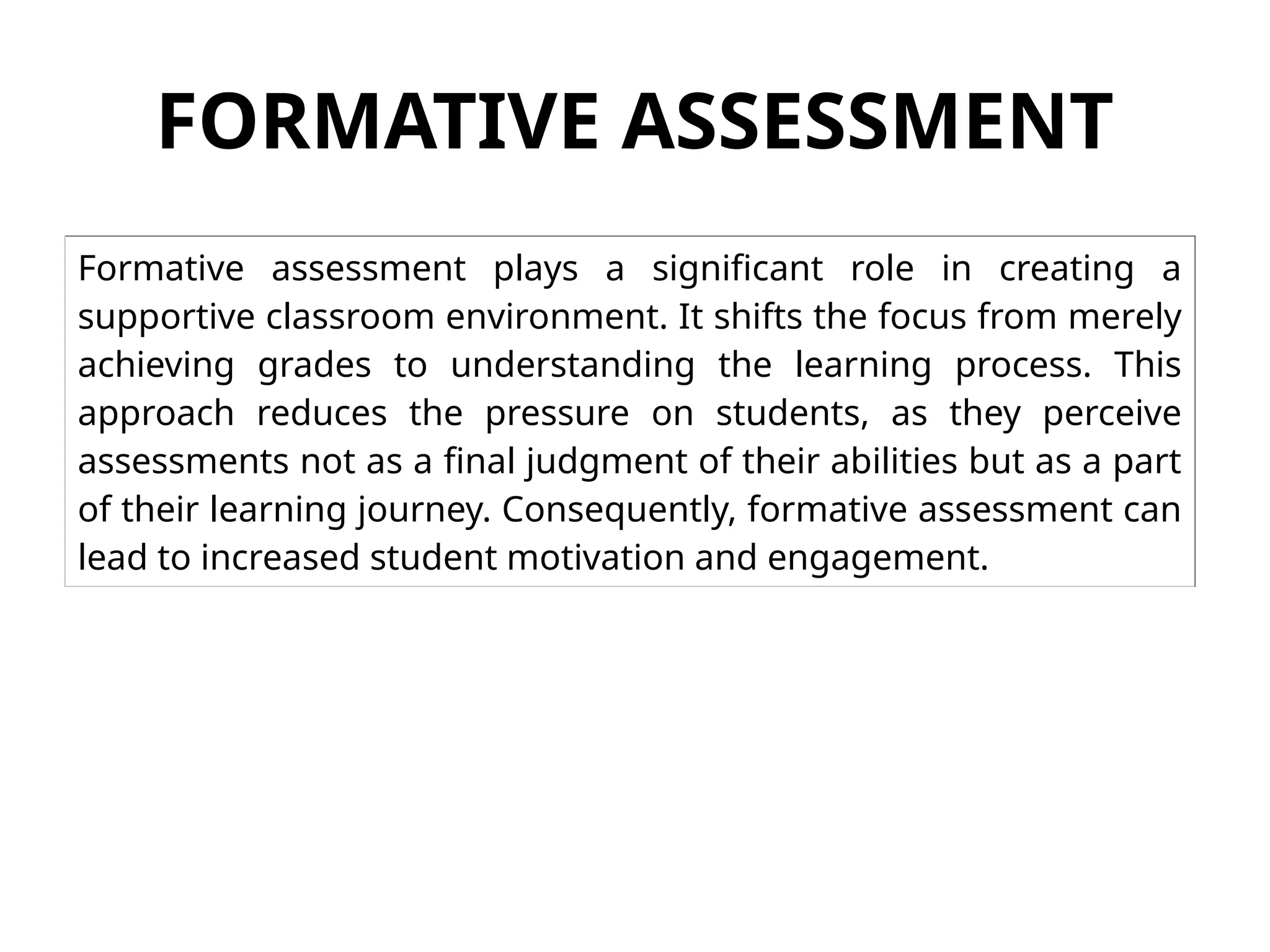
Formative assessment plays a significant role in creating a
supportive classroom environment. It shifts the focus from merely
achieving grades to understanding the learning process. This
approach reduces the pressure on students, as they perceive
assessments not as a final judgment of their abilities but as a part
of their learning journey. Consequently, formative assessment can
lead to increased student motivation and engagement.
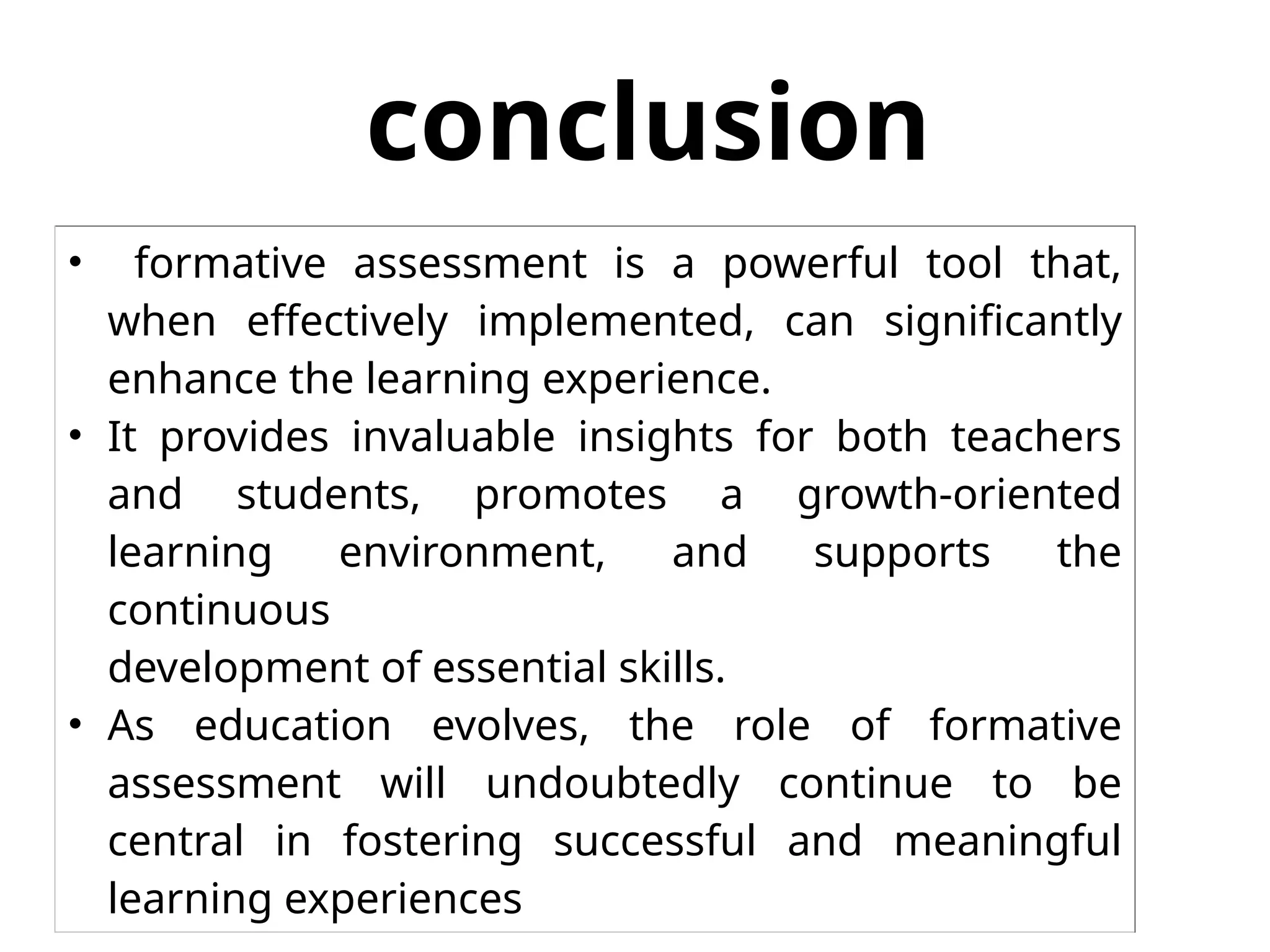
conclusion
• formative assessment is a powerful tool that,
when effectively implemented, can significantly
enhance the learning experience.
• It provides invaluable insights for both teachers
and students, promotes a growth-oriented
learning environment, and supports the
continuous
development of essential skills.
• As education evolves, the role of formative
assessment will undoubtedly continue to be
central in fostering successful and meaningful
learning experiences

Formative Assessment Instructional Period

  • 1.
    FORMATIVE ASSESSMENT AN ESSENTIALCOMPONENT OF EFFECTIVE LEARNING • Formative assessment is a pivotal element in the educational process. • role in providing ongoing feedback to both students and educators. The primary objective of formative assessment is to identify learning gaps and misunderstandings as they occur, enabling timely interventions.
  • 2.
    FORMATIVE ASSESSMENT This dynamicapproach allows teachers to adjust their teaching strategies to better meet the needs of their students. For instance, if a teacher notices through a quick quiz or class discussion that a significant portion of the class struggles with a particular concept, they can revisit that topic, providing additional explanations or alternative methods of instruction. This adaptability is crucial for fostering a deeper understanding of the material.
  • 3.
    FORMATIVE ASSESSMENT Formative assessmentscome in various forms • ranging from informal methods like classroom discussions, observations, and questioning, to more structured approaches such as quizzes, peer assessments, and self-reflections. • These methods are not limited to paper-and-pencil tasks but can include digital tools that provide instant feedback. The versatility of formative assessments allows educators to cater to diverse learning styles and preferences, ensuring that all students are engaged and
  • 4.
    FORMATIVE ASSESSMENT Formative assessmentplays a significant role in creating a supportive classroom environment. It shifts the focus from merely achieving grades to understanding the learning process. This approach reduces the pressure on students, as they perceive assessments not as a final judgment of their abilities but as a part of their learning journey. Consequently, formative assessment can lead to increased student motivation and engagement.
  • 5.
    conclusion • formative assessmentis a powerful tool that, when effectively implemented, can significantly enhance the learning experience. • It provides invaluable insights for both teachers and students, promotes a growth-oriented learning environment, and supports the continuous development of essential skills. • As education evolves, the role of formative assessment will undoubtedly continue to be central in fostering successful and meaningful learning experiences