Australian Institute for Teaching and I am looking for... School Leadership 
Self-Assessment Tool 
Jeremy Hawker's results - 13/09/2014 - 4:18pm 
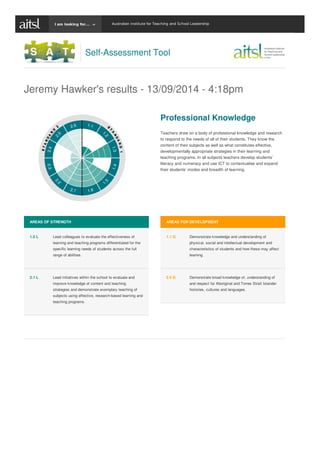
Professional Knowledge 
Teachers draw on a body of professional knowledge and research 
to respond to the needs of all of their students. They know the 
content of their subjects as well as what constitutes effective, 
developmentally appropriate strategies in their learning and 
teaching programs. In all subjects teachers develop students’ 
literacy and numeracy and use ICT to contextualise and expand 
their students’ modes and breadth of learning. 
AREAS OF STRENGTH 
1.3 
1.5 L Lead colleagues to evaluate the effectiveness of 
learning and teaching programs differentiated for the 
specific learning needs of students across the full 
range of abilities. 
2.1 L Lead initiatives within the school to evaluate and 
improve knowledge of content and teaching 
strategies and demonstrate exemplary teaching of 
subjects using effective, research-based learning and 
teaching programs. 
AREAS FOR DEVELOPMENT 
1.1 G Demonstrate knowledge and understanding of 
physical, social and intellectual development and 
characteristics of students and how these may affect 
learning. 
2.4 G Demonstrate broad knowledge of, understanding of 
and respect for Aboriginal and Torres Strait Islander 
histories, cultures and languages. 
2.6 
2.5 
2.4 
2.3 
2.2 
2.1 
1.6 
1.5 
1.4 
1.2 
1.1
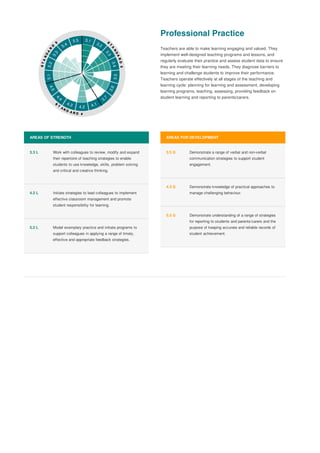
Professional Practice 
Teachers are able to make learning engaging and valued. They 
implement well-designed teaching programs and lessons, and 
regularly evaluate their practice and assess student data to ensure 
they are meeting their learning needs. They diagnose barriers to 
learning and challenge students to improve their performance. 
Teachers operate effectively at all stages of the teaching and 
learning cycle: planning for learning and assessment, developing 
learning programs, teaching, assessing, providing feedback on 
student learning and reporting to parents/carers. 
AREAS OF STRENGTH 
3.4 
3.6 
3.3 L Work with colleagues to review, modify and expand 
their repertoire of teaching strategies to enable 
students to use knowledge, skills, problem solving 
and critical and creative thinking. 
4.2 L Initiate strategies to lead colleagues to implement 
effective classroom management and promote 
student responsibility for learning. 
5.2 L Model exemplary practice and initiate programs to 
support colleagues in applying a range of timely, 
effective and appropriate feedback strategies. 
AREAS FOR DEVELOPMENT 
3.5 G Demonstrate a range of verbal and non-verbal 
communication strategies to support student 
engagement. 
4.3 G Demonstrate knowledge of practical approaches to 
manage challenging behaviour. 
5.5 G Demonstrate understanding of a range of strategies 
for reporting to students and parents/carers and the 
purpose of keeping accurate and reliable records of 
student achievement. 
5.5 
5.4 
5.3 
5.2 
5.1 
4.5 
4.4 
4.3 
4.2 
4.1 
3.7 
3.5 
3.3 
3.2 
3.1
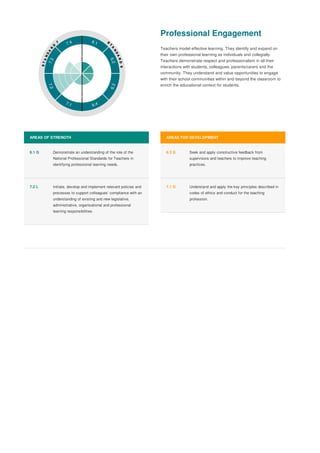
Professional Engagement 
Teachers model effective learning. They identify and expand on 
their own professional learning as individuals and collegially. 
Teachers demonstrate respect and professionalism in all their 
interactions with students, colleagues, parents/carers and the 
community. They understand and value opportunities to engage 
with their school communities within and beyond the classroom to 
enrich the educational context for students. 
AREAS OF STRENGTH 
6.2 
6.1 G Demonstrate an understanding of the role of the 
National Professional Standards for Teachers in 
identifying professional learning needs. 
7.2 L Initiate, develop and implement relevant policies and 
processes to support colleagues’ compliance with an 
understanding of existing and new legislative, 
administrative, organisational and professional 
learning responsibilities. 
AREAS FOR DEVELOPMENT 
6.3 G Seek and apply constructive feedback from 
supervisors and teachers to improve teaching 
practices. 
7.1 G Understand and apply the key principles described in 
codes of ethics and conduct for the teaching 
profession. 
7.4 
7.3 
7.2 
7.1 
6.4 
6.3 
6.1
Results

Results

  • 1.
    Australian Institute forTeaching and I am looking for... School Leadership Self-Assessment Tool Jeremy Hawker's results - 13/09/2014 - 4:18pm Professional Knowledge Teachers draw on a body of professional knowledge and research to respond to the needs of all of their students. They know the content of their subjects as well as what constitutes effective, developmentally appropriate strategies in their learning and teaching programs. In all subjects teachers develop students’ literacy and numeracy and use ICT to contextualise and expand their students’ modes and breadth of learning. AREAS OF STRENGTH 1.3 1.5 L Lead colleagues to evaluate the effectiveness of learning and teaching programs differentiated for the specific learning needs of students across the full range of abilities. 2.1 L Lead initiatives within the school to evaluate and improve knowledge of content and teaching strategies and demonstrate exemplary teaching of subjects using effective, research-based learning and teaching programs. AREAS FOR DEVELOPMENT 1.1 G Demonstrate knowledge and understanding of physical, social and intellectual development and characteristics of students and how these may affect learning. 2.4 G Demonstrate broad knowledge of, understanding of and respect for Aboriginal and Torres Strait Islander histories, cultures and languages. 2.6 2.5 2.4 2.3 2.2 2.1 1.6 1.5 1.4 1.2 1.1
  • 2.
    Professional Practice Teachersare able to make learning engaging and valued. They implement well-designed teaching programs and lessons, and regularly evaluate their practice and assess student data to ensure they are meeting their learning needs. They diagnose barriers to learning and challenge students to improve their performance. Teachers operate effectively at all stages of the teaching and learning cycle: planning for learning and assessment, developing learning programs, teaching, assessing, providing feedback on student learning and reporting to parents/carers. AREAS OF STRENGTH 3.4 3.6 3.3 L Work with colleagues to review, modify and expand their repertoire of teaching strategies to enable students to use knowledge, skills, problem solving and critical and creative thinking. 4.2 L Initiate strategies to lead colleagues to implement effective classroom management and promote student responsibility for learning. 5.2 L Model exemplary practice and initiate programs to support colleagues in applying a range of timely, effective and appropriate feedback strategies. AREAS FOR DEVELOPMENT 3.5 G Demonstrate a range of verbal and non-verbal communication strategies to support student engagement. 4.3 G Demonstrate knowledge of practical approaches to manage challenging behaviour. 5.5 G Demonstrate understanding of a range of strategies for reporting to students and parents/carers and the purpose of keeping accurate and reliable records of student achievement. 5.5 5.4 5.3 5.2 5.1 4.5 4.4 4.3 4.2 4.1 3.7 3.5 3.3 3.2 3.1
  • 3.
    Professional Engagement Teachersmodel effective learning. They identify and expand on their own professional learning as individuals and collegially. Teachers demonstrate respect and professionalism in all their interactions with students, colleagues, parents/carers and the community. They understand and value opportunities to engage with their school communities within and beyond the classroom to enrich the educational context for students. AREAS OF STRENGTH 6.2 6.1 G Demonstrate an understanding of the role of the National Professional Standards for Teachers in identifying professional learning needs. 7.2 L Initiate, develop and implement relevant policies and processes to support colleagues’ compliance with an understanding of existing and new legislative, administrative, organisational and professional learning responsibilities. AREAS FOR DEVELOPMENT 6.3 G Seek and apply constructive feedback from supervisors and teachers to improve teaching practices. 7.1 G Understand and apply the key principles described in codes of ethics and conduct for the teaching profession. 7.4 7.3 7.2 7.1 6.4 6.3 6.1