Download to read offline

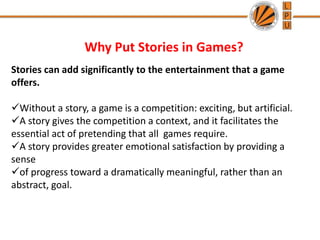
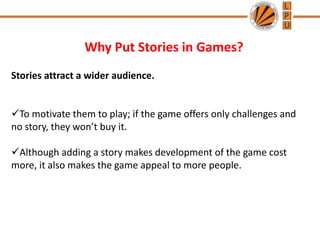

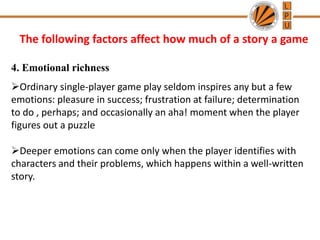

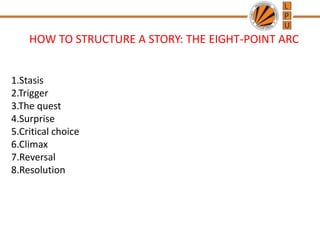
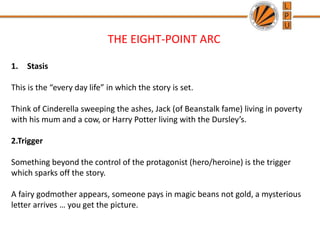
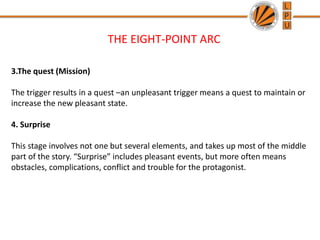


Stories are commonly included in video games to enhance entertainment value, keep players interested for longer games, and help sell games. Stories can add context and meaning to competitive gameplay. They attract a wider audience and motivate continued play, despite increasing development costs. The appropriate amount of story depends on factors like game length, presence of characters, realism, and emotional depth. Longer, character-focused, realistic games with potential for rich emotions usually benefit most from stories, which can be structured as an eight-point arc of stasis, trigger, quest, surprise, choice, climax, reversal, and resolution.


