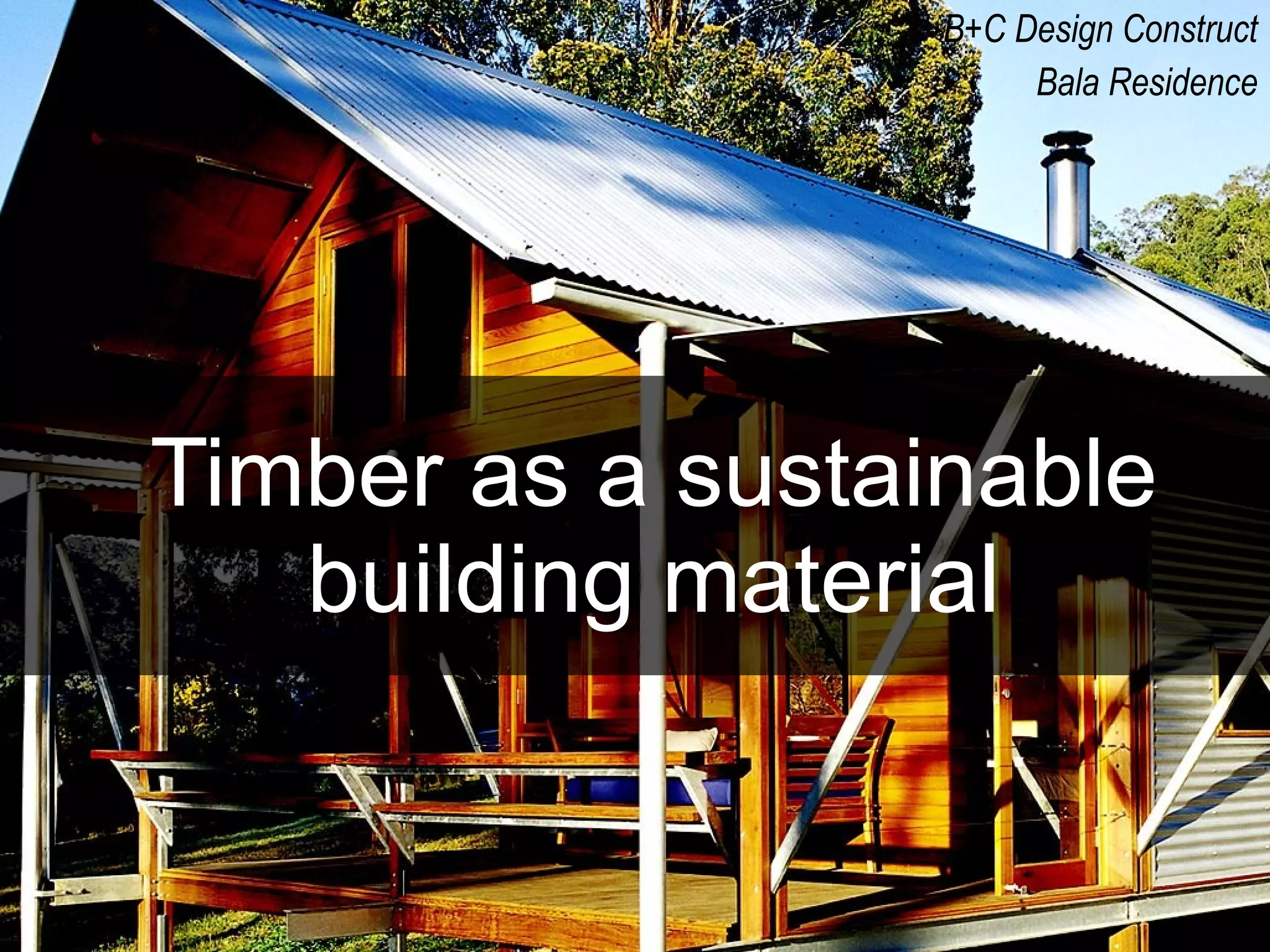
Timber as a sustainable building material B+C Design Construct Bala Residence
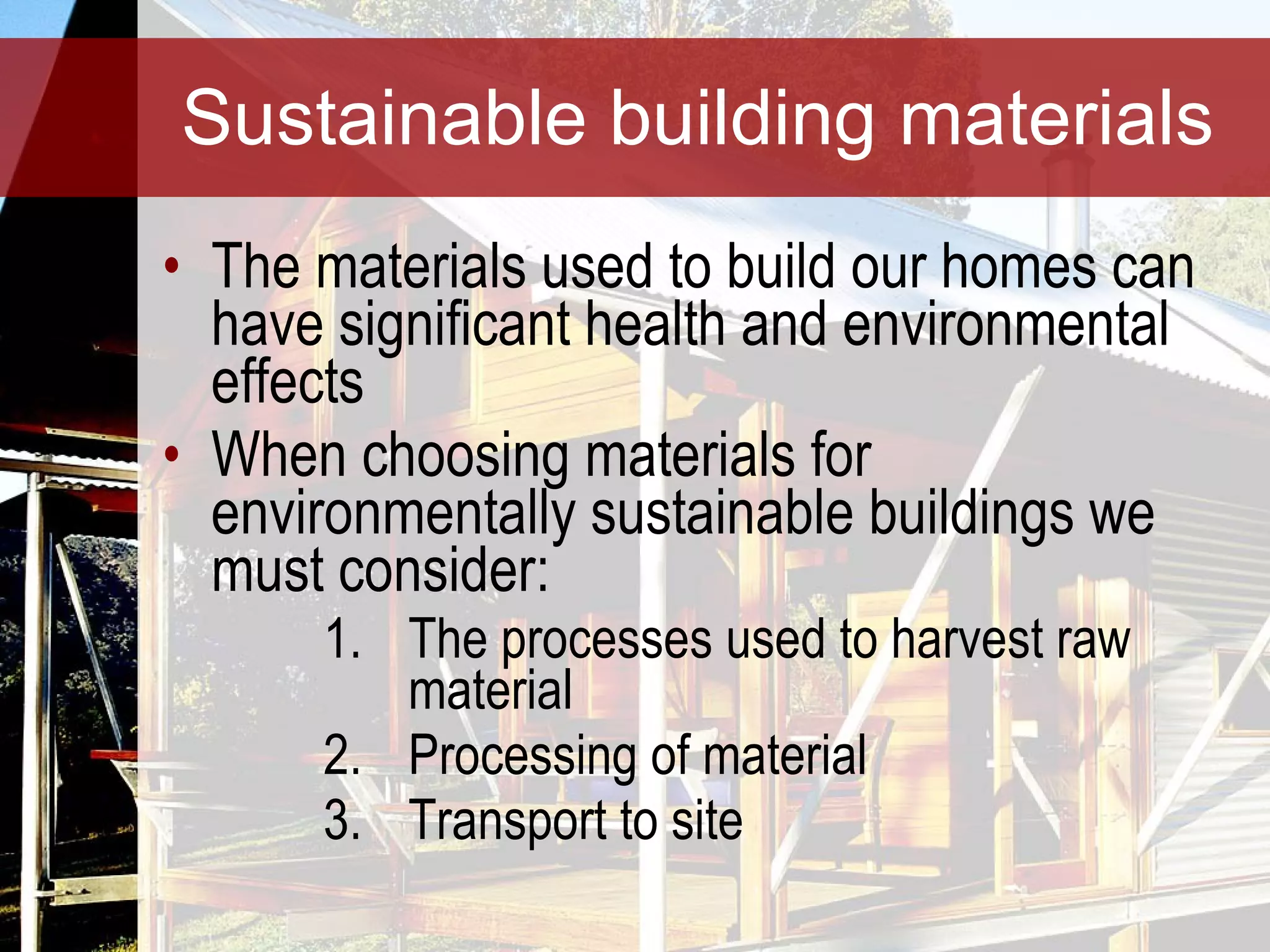
Sustainable building materials The materials used to build our homes can have significant health and environmental effects When choosing materials for environmentally sustainable buildings we must consider: The processes used to harvest raw material Processing of material Transport to site
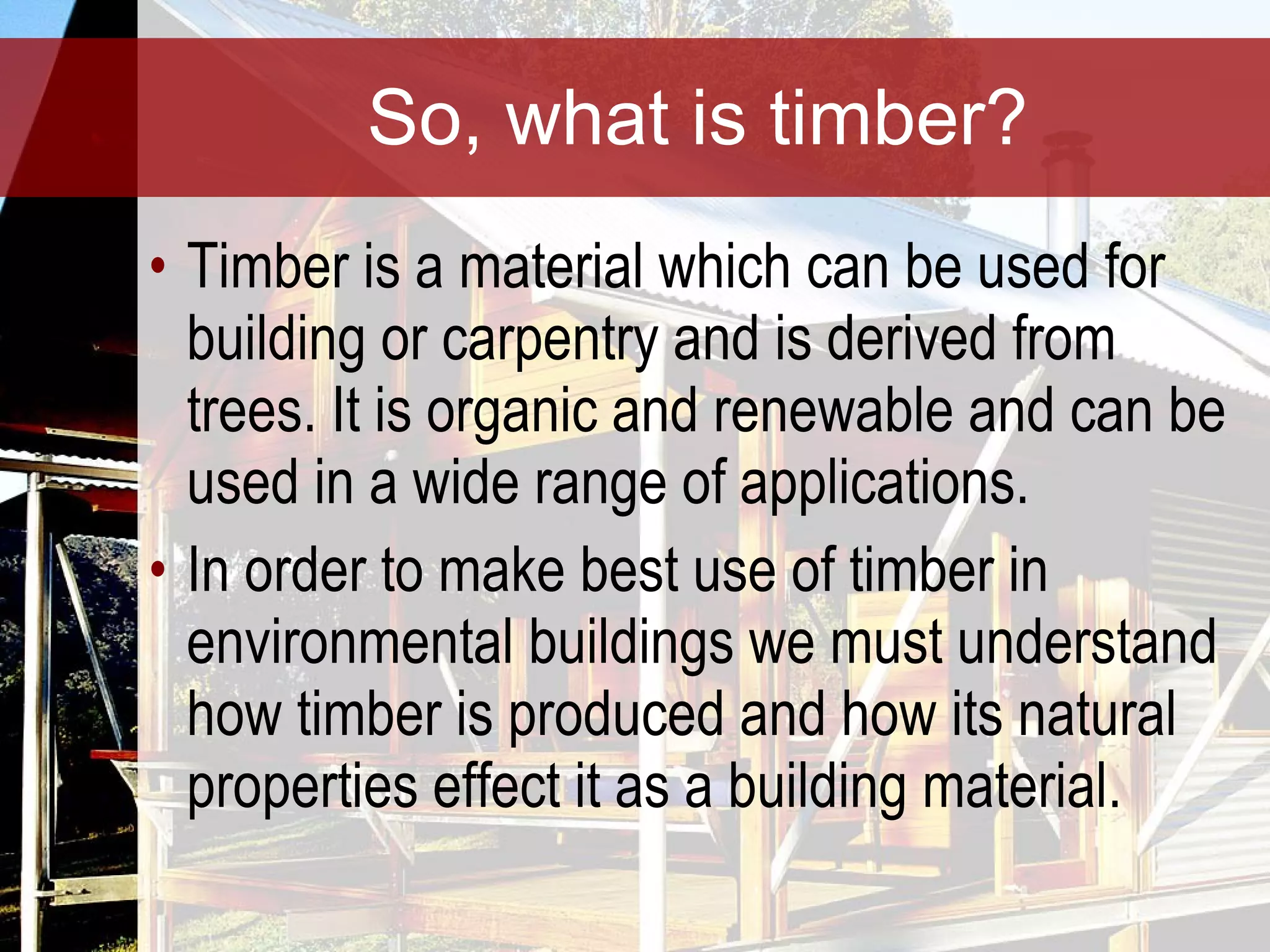
So, what is timber? Timber is a material which can be used for building or carpentry and is derived from trees. It is organic and renewable and can be used in a wide range of applications. In order to make best use of timber in environmental buildings we must understand how timber is produced and how its natural properties effect it as a building material.
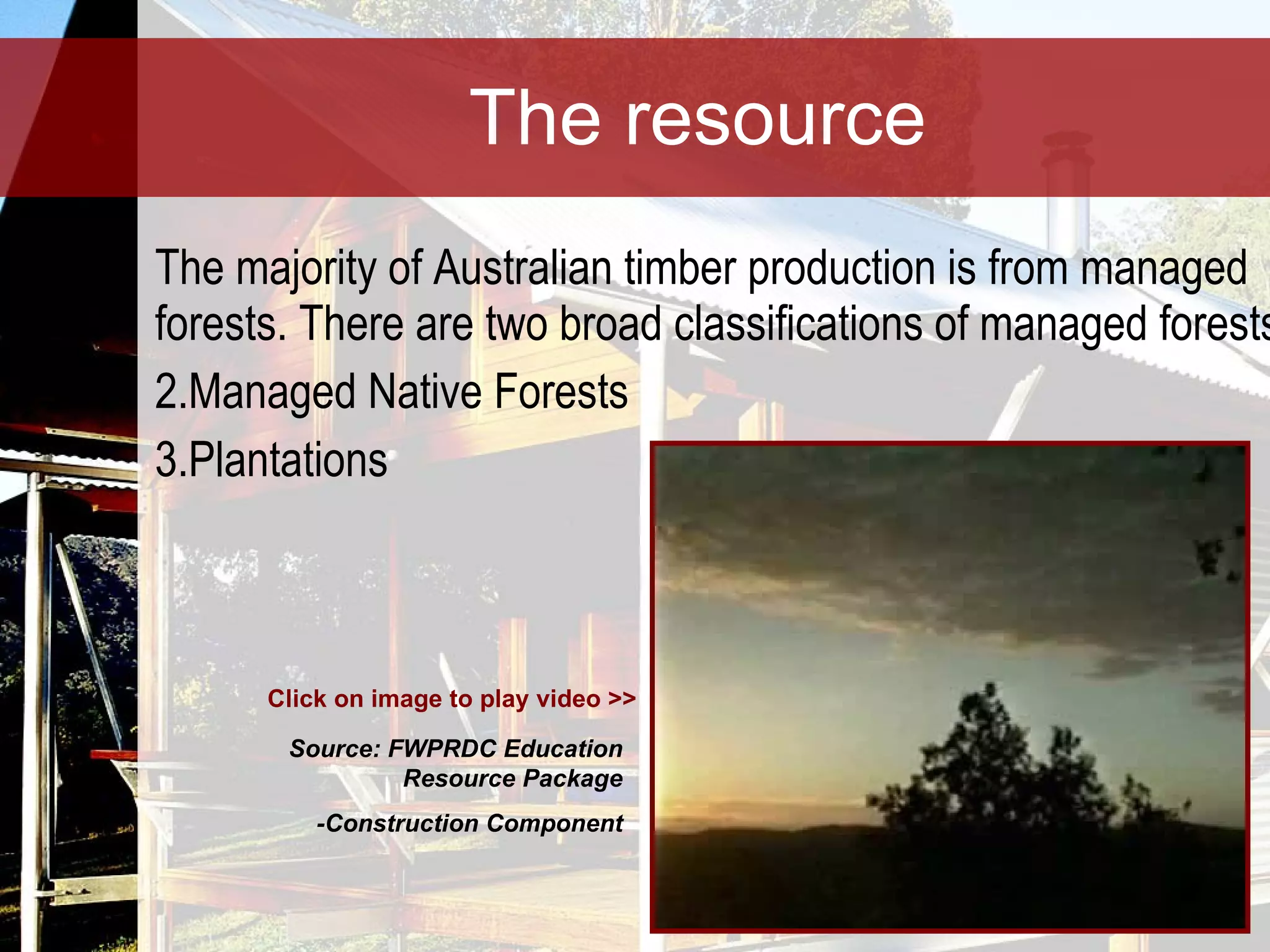
The resource The majority of Australian timber production is from managed forests. There are two broad classifications of managed forests: Managed Native Forests Plantations Click on image to play video >> Source: FWPRDC Education Resource Package -Construction Component
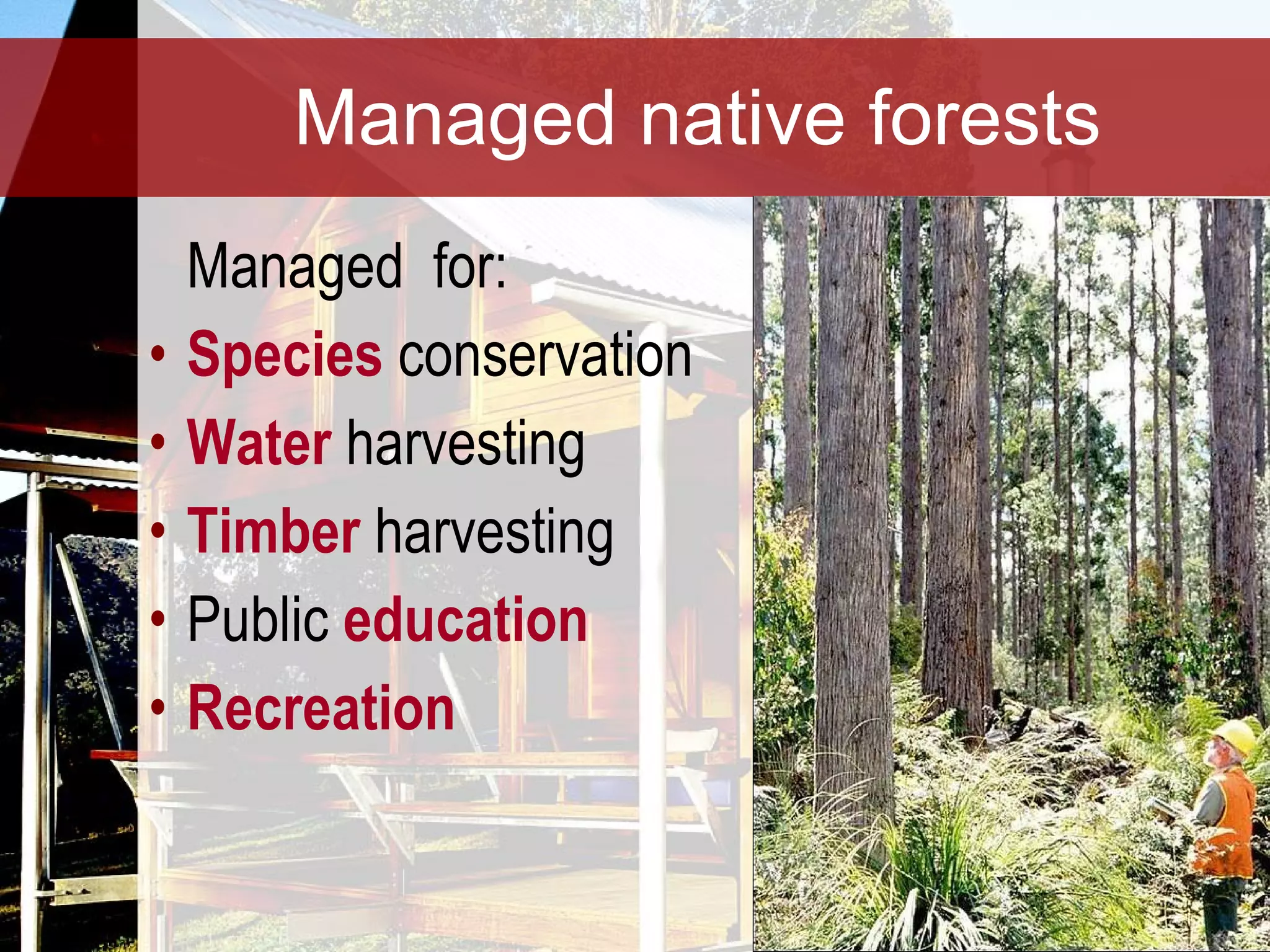
Managed native forests Managed  for: Species  conservation Water  harvesting Timber  harvesting Public  education Recreation
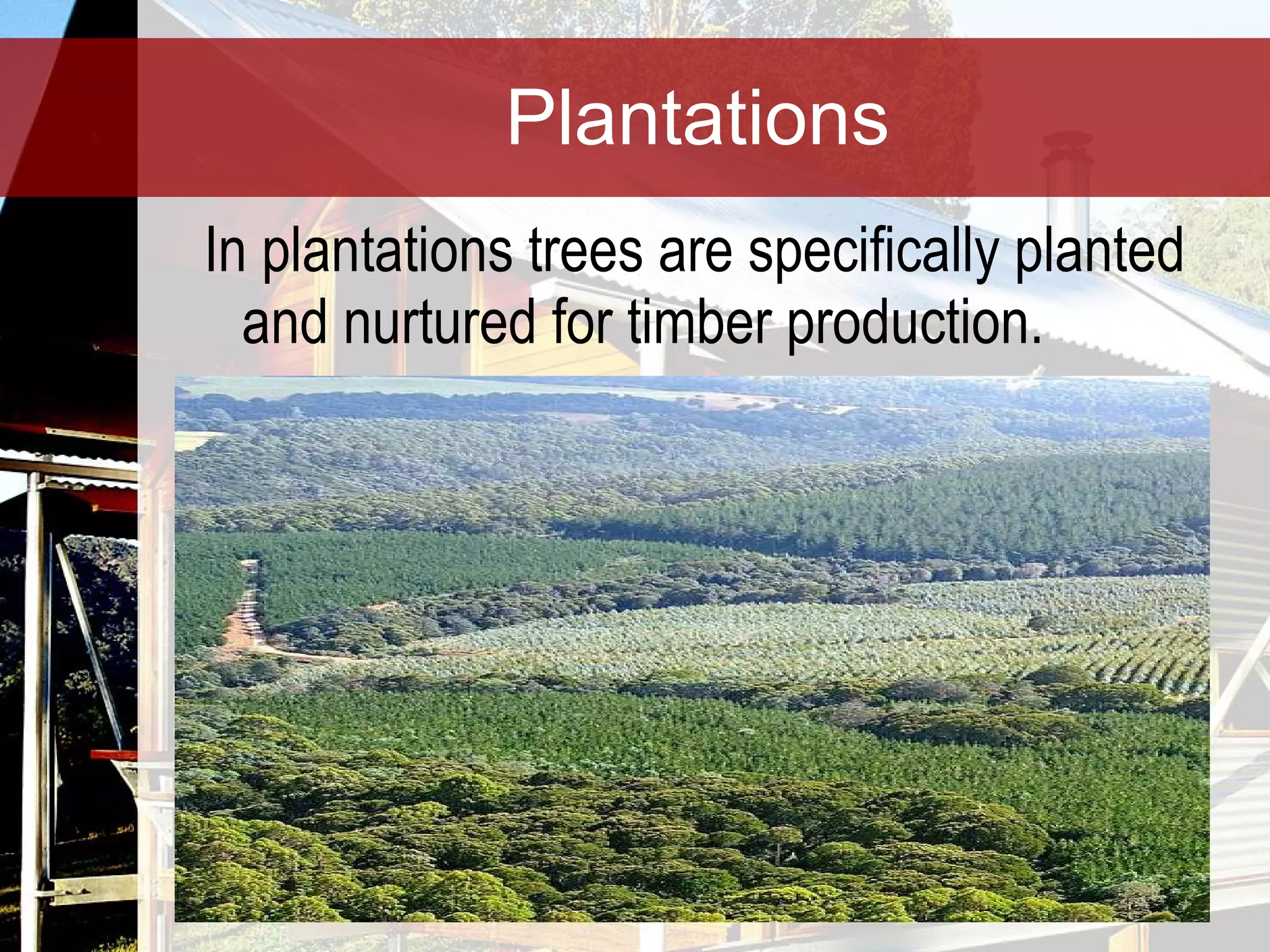
Plantations In plantations trees are specifically planted and nurtured for timber production.
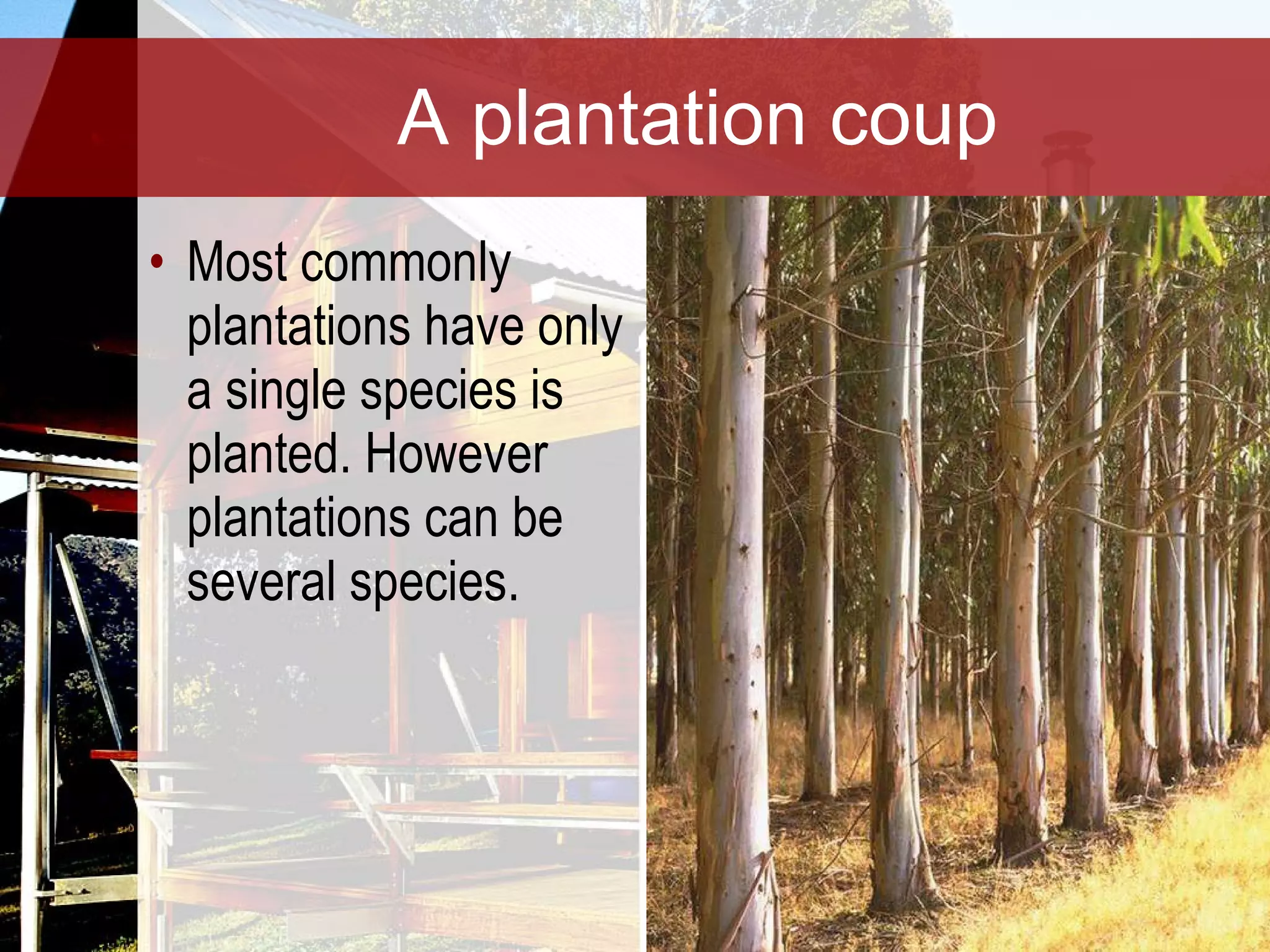
A plantation coup Most commonly plantations have only a single species is planted. However plantations can be several species.
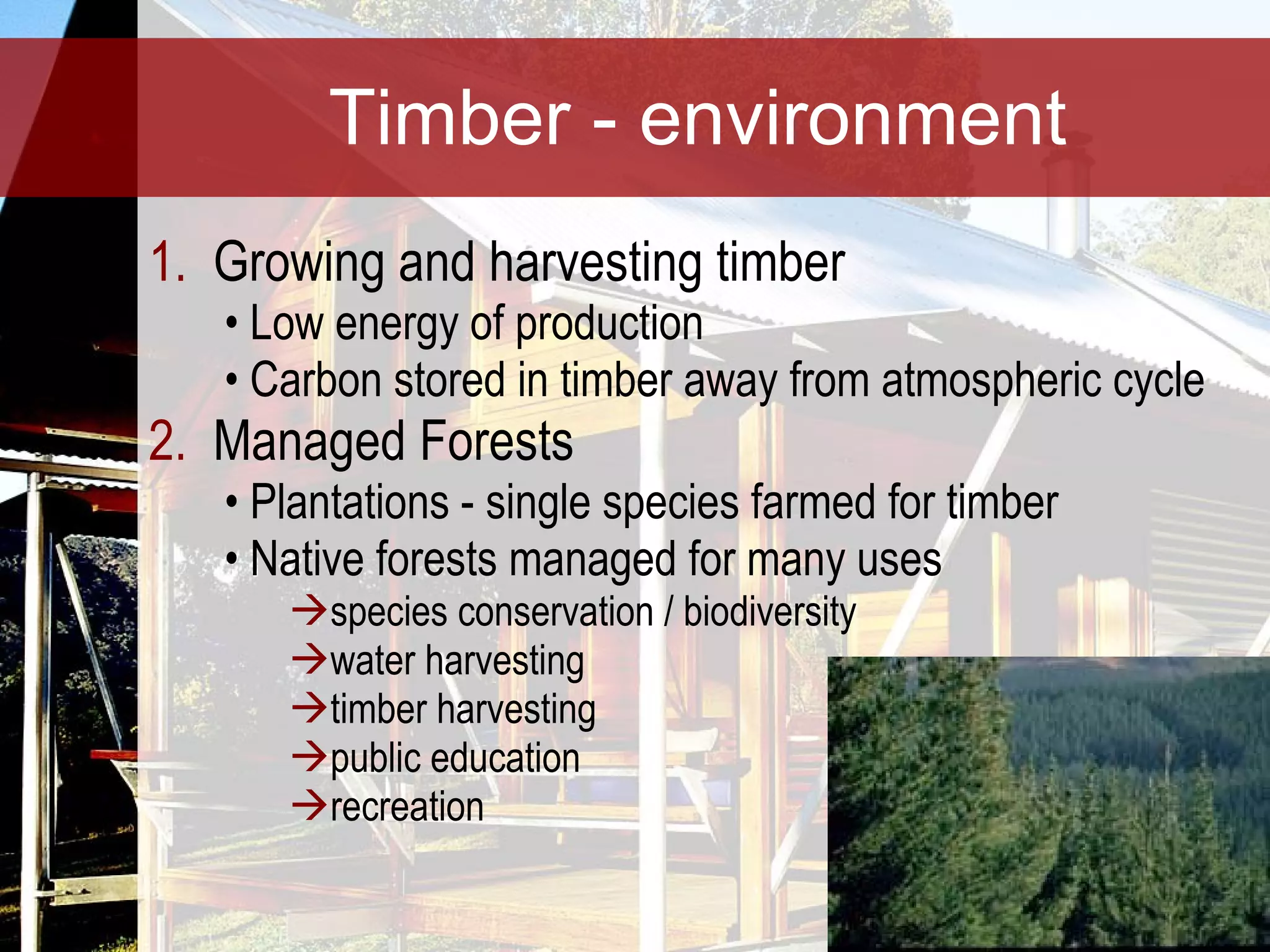
Timber - environment Growing and harvesting timber  Low energy of production Carbon stored in timber away from atmospheric cycle Managed Forests Plantations - single species farmed for timber Native forests managed for many uses species conservation / biodiversity water harvesting timber harvesting public education recreation
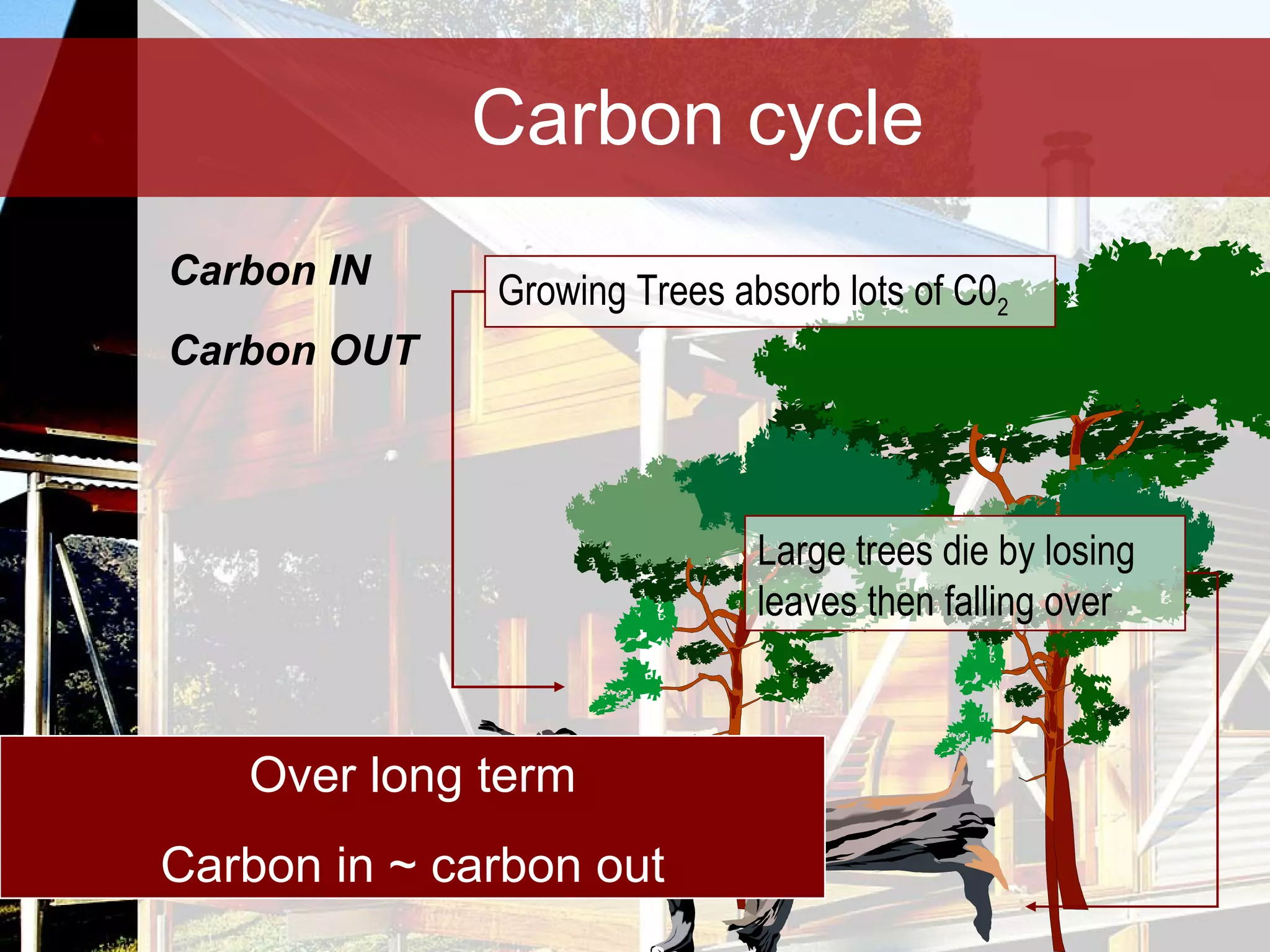
Carbon cycle Carbon IN Carbon OUT Over long term Carbon in ~ carbon out Growing Trees absorb lots of C0 2 Large trees die by losing leaves then falling over
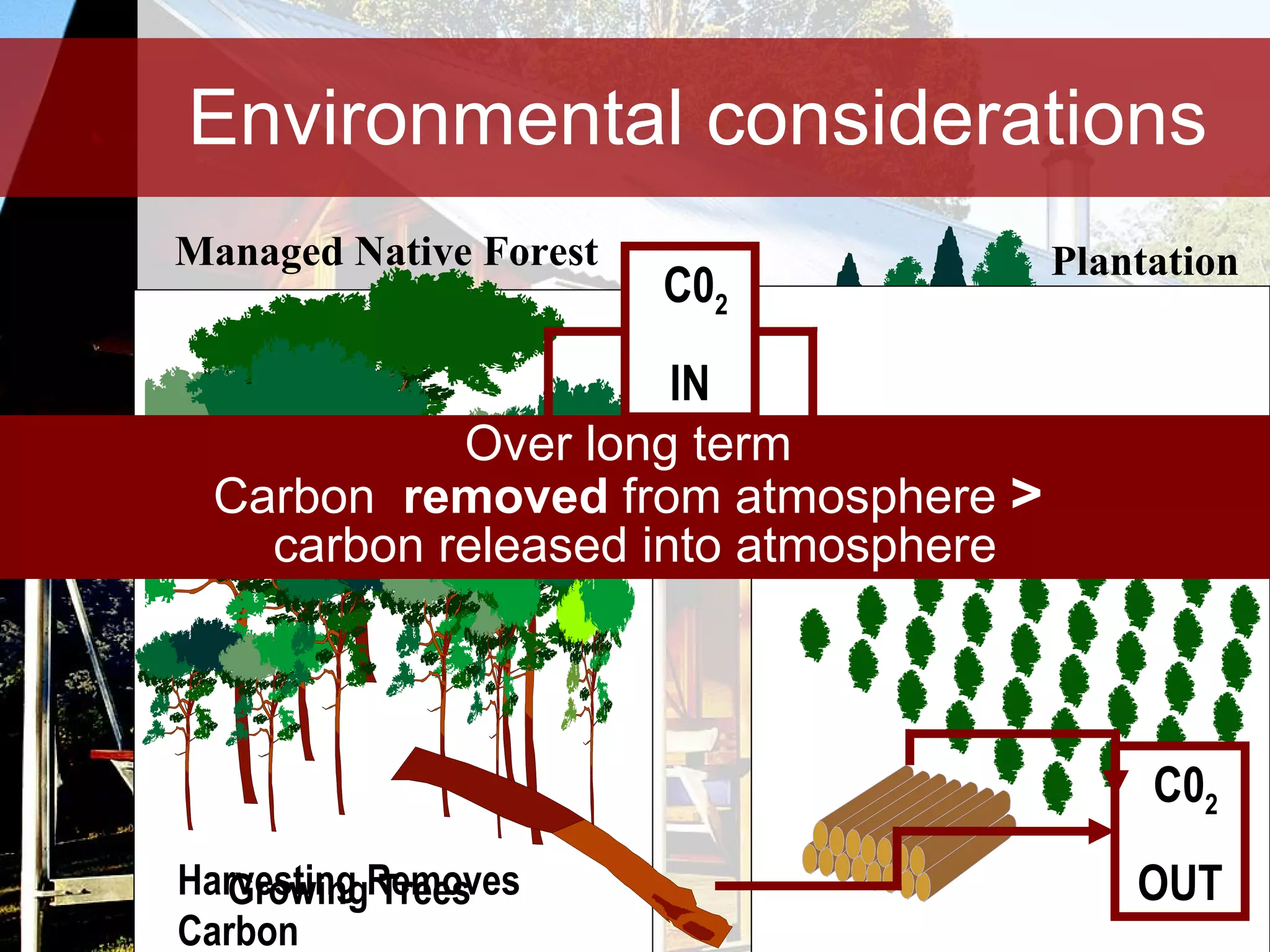
Environmental considerations Managed Native Forest Plantation Growing Trees Over long term  Carbon  removed  from atmosphere  >   carbon released into atmosphere New trees planted Harvesting Removes Carbon C0 2 IN C0 2 OUT
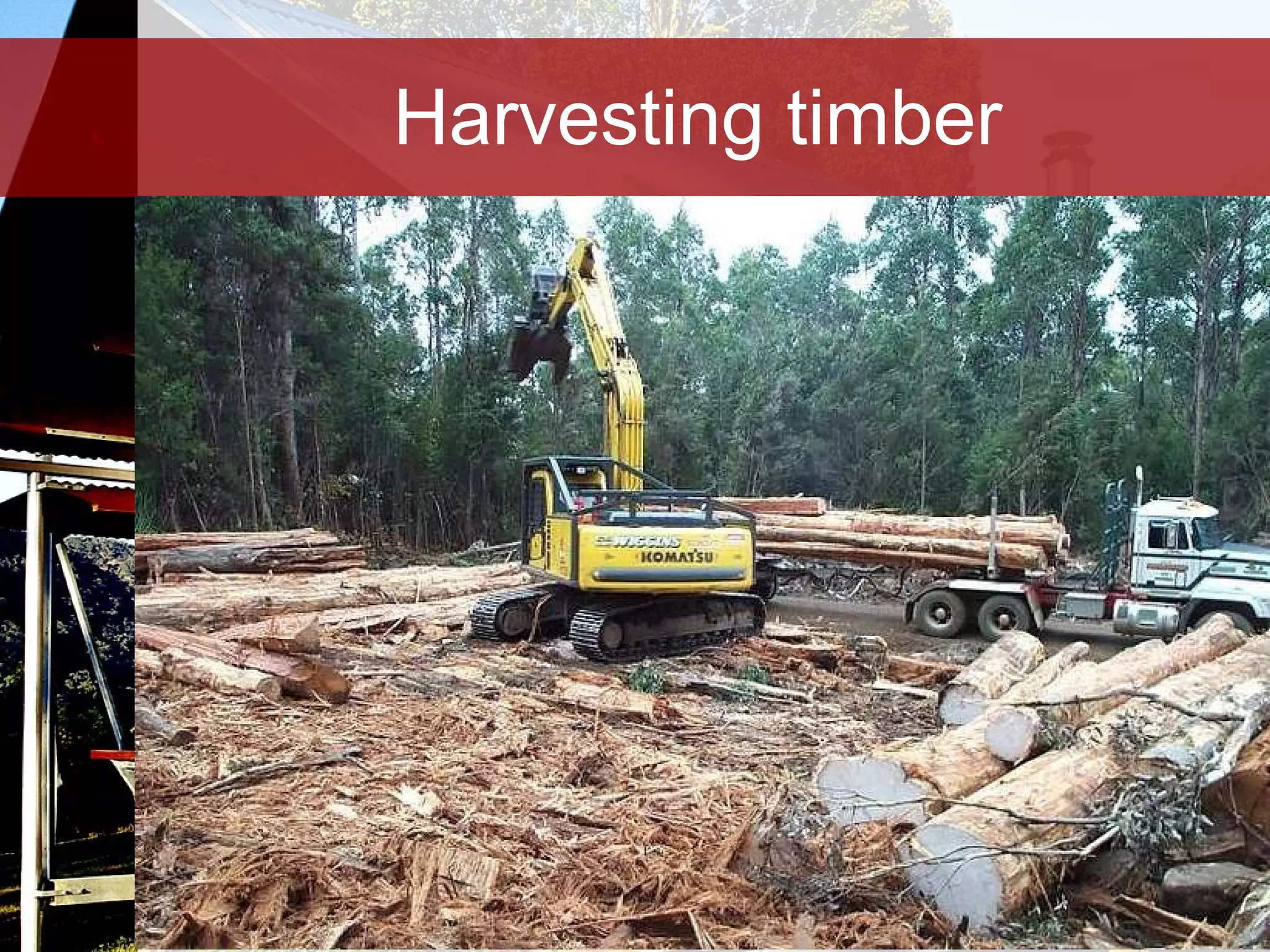
Harvesting timber
Timber grows on trees! “ All plant material consists of cells of various shapes and arrangements. The presence of the very complex organic substance known as lignin is an essential feature of those plants being described as woody. It bonds the various types of cell together, producing the degree of rigidity that is associated with wood, and enables woody plants to attain their large size”  (Wood in Australia, 1983)
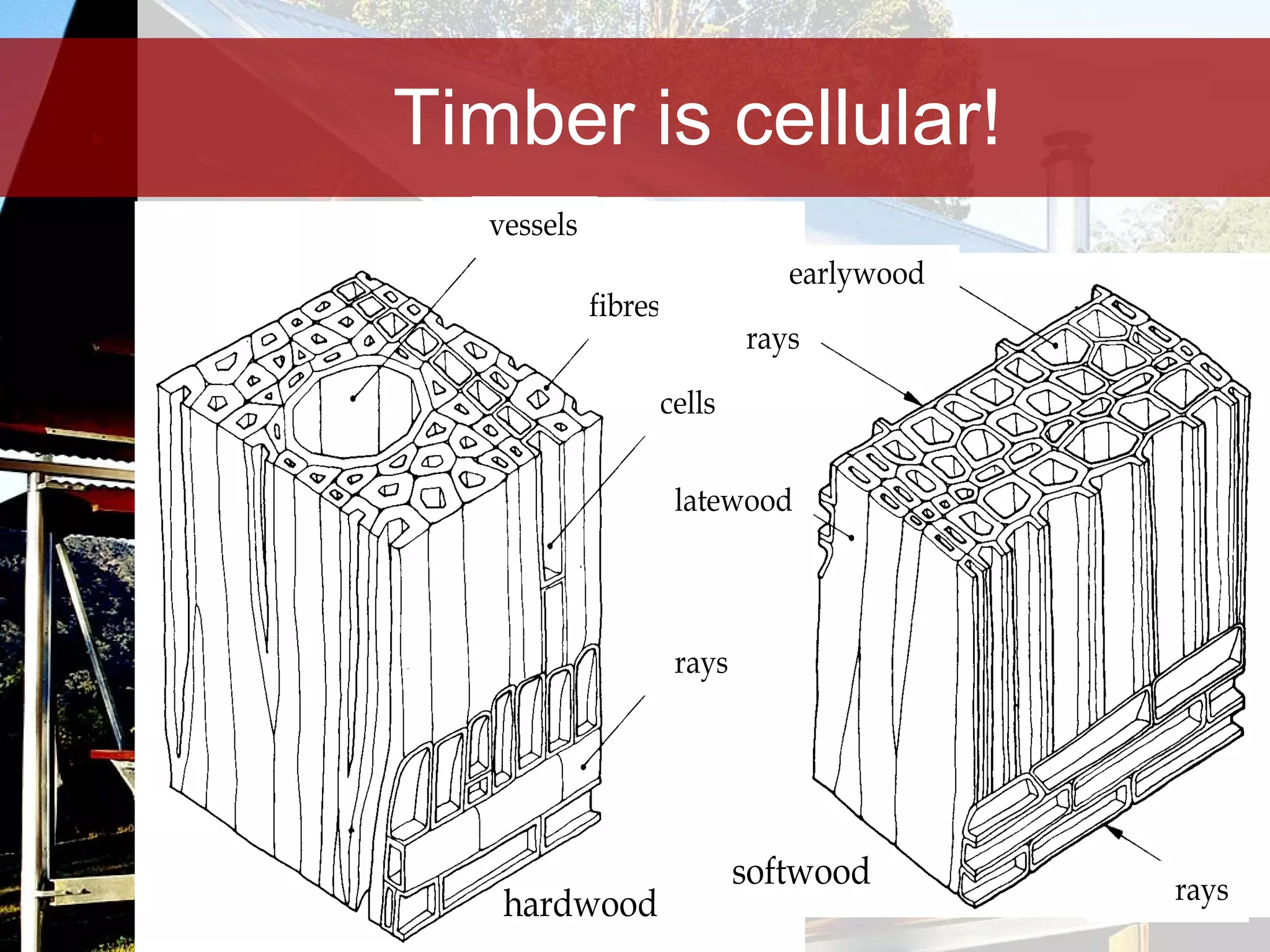
Timber is cellular!
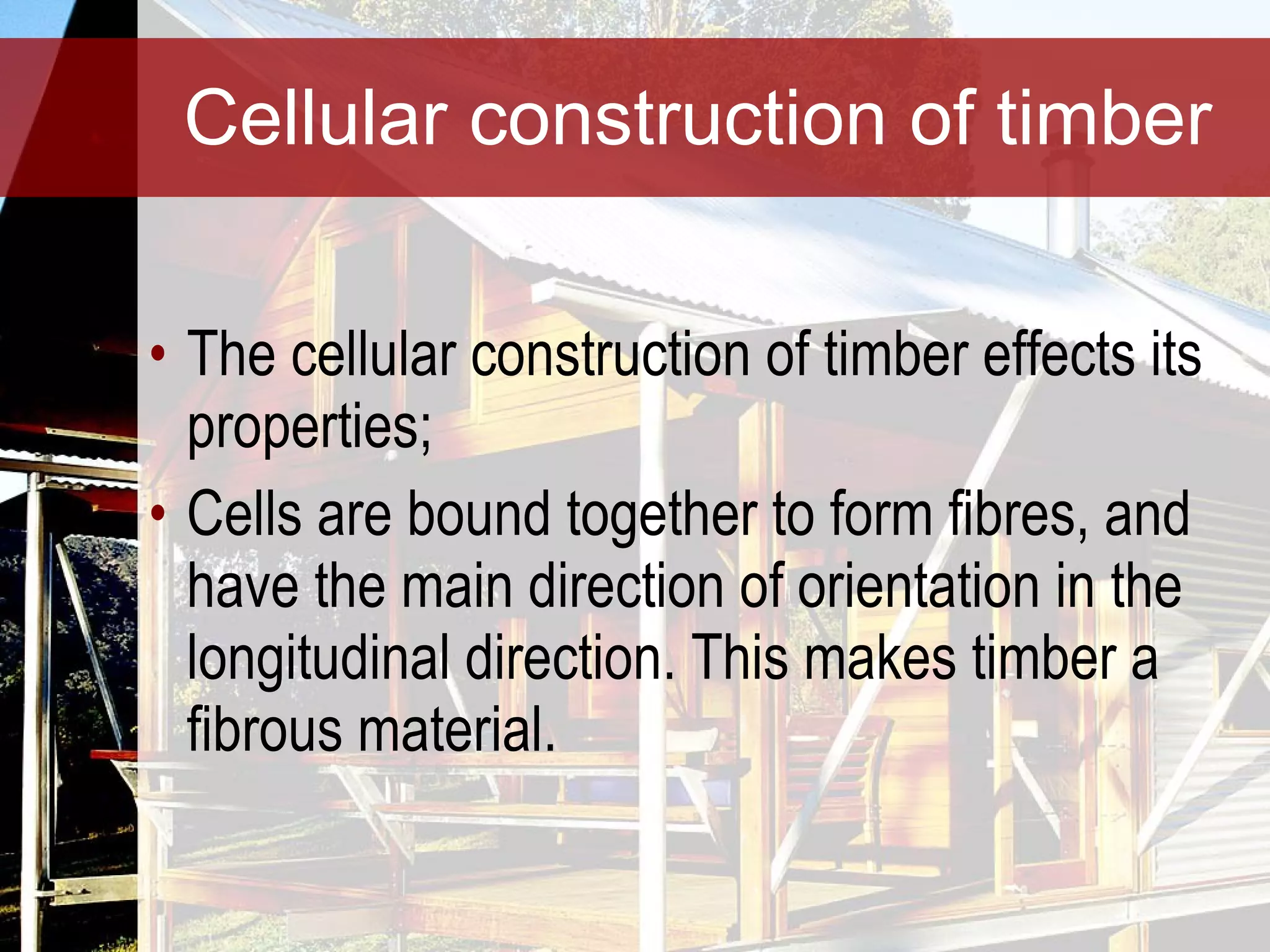
Cellular construction of timber The cellular construction of timber effects its properties; Cells are bound together to form fibres, and have the main direction of orientation in the longitudinal direction. This makes timber a fibrous material.
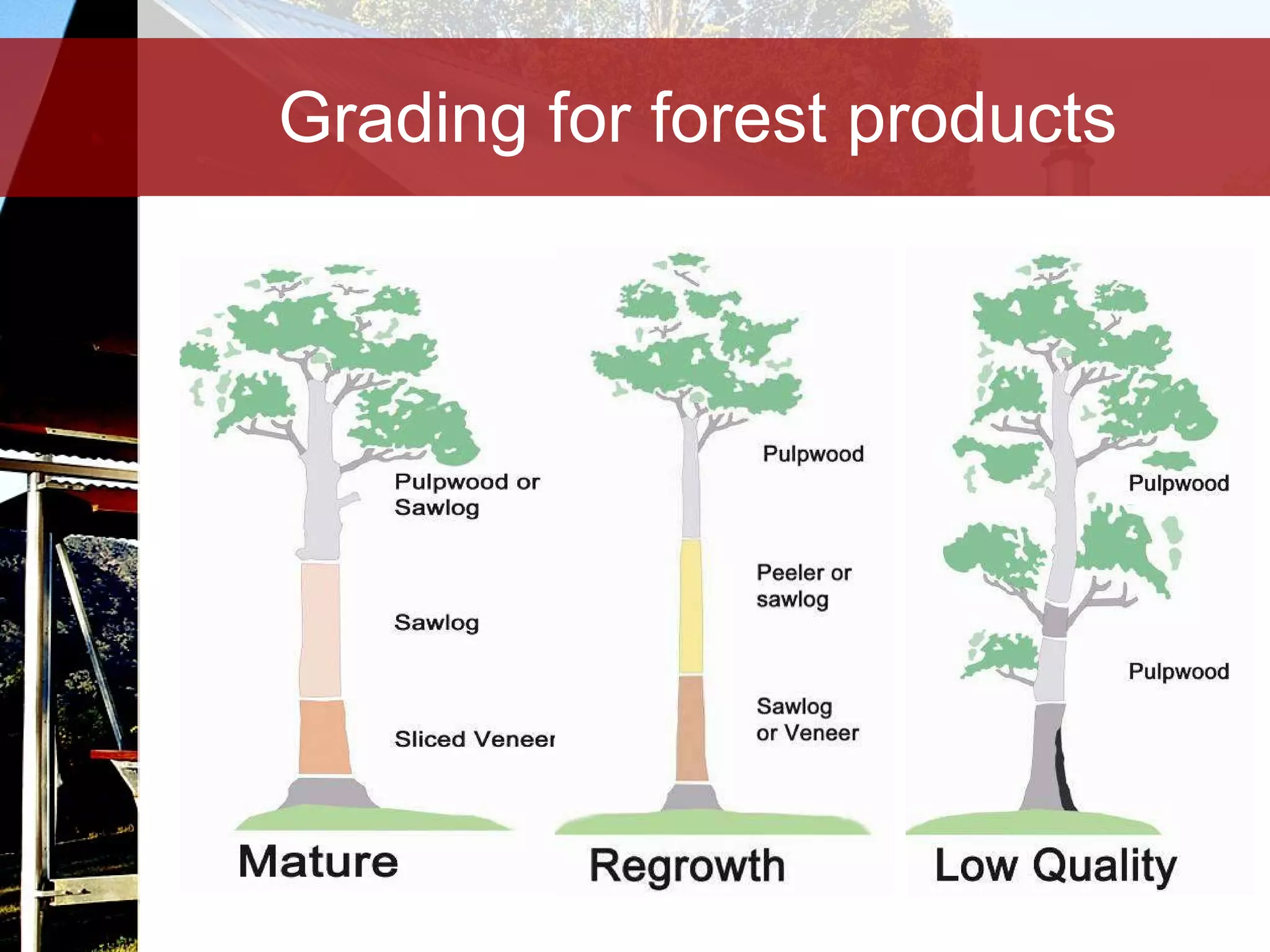
Grading for forest products
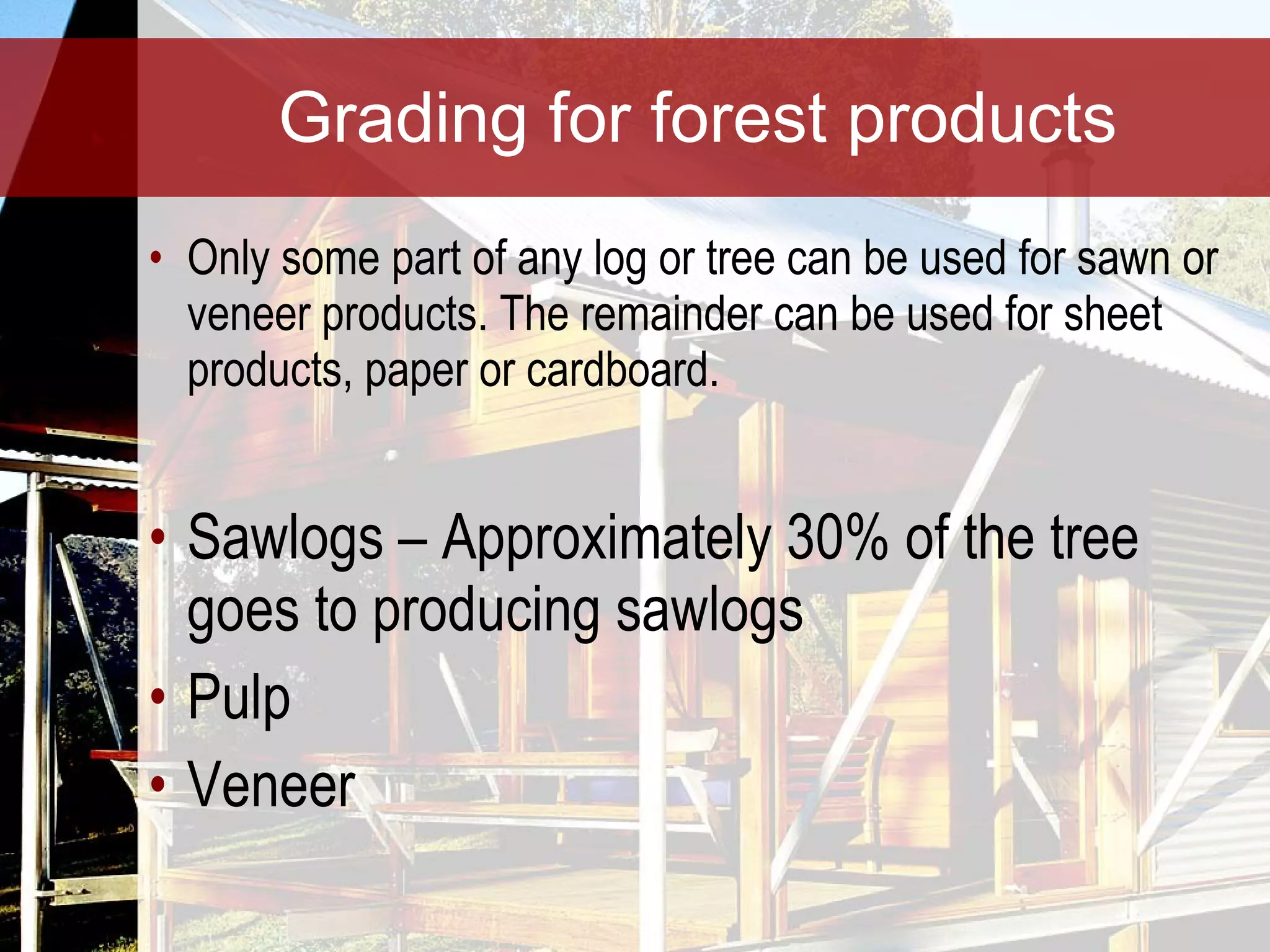
Grading for forest products Only some part of any log or tree can be used for sawn or veneer products. The remainder can be used for sheet products, paper or cardboard. Sawlogs – Approximately 30% of the tree goes to producing sawlogs Pulp Veneer
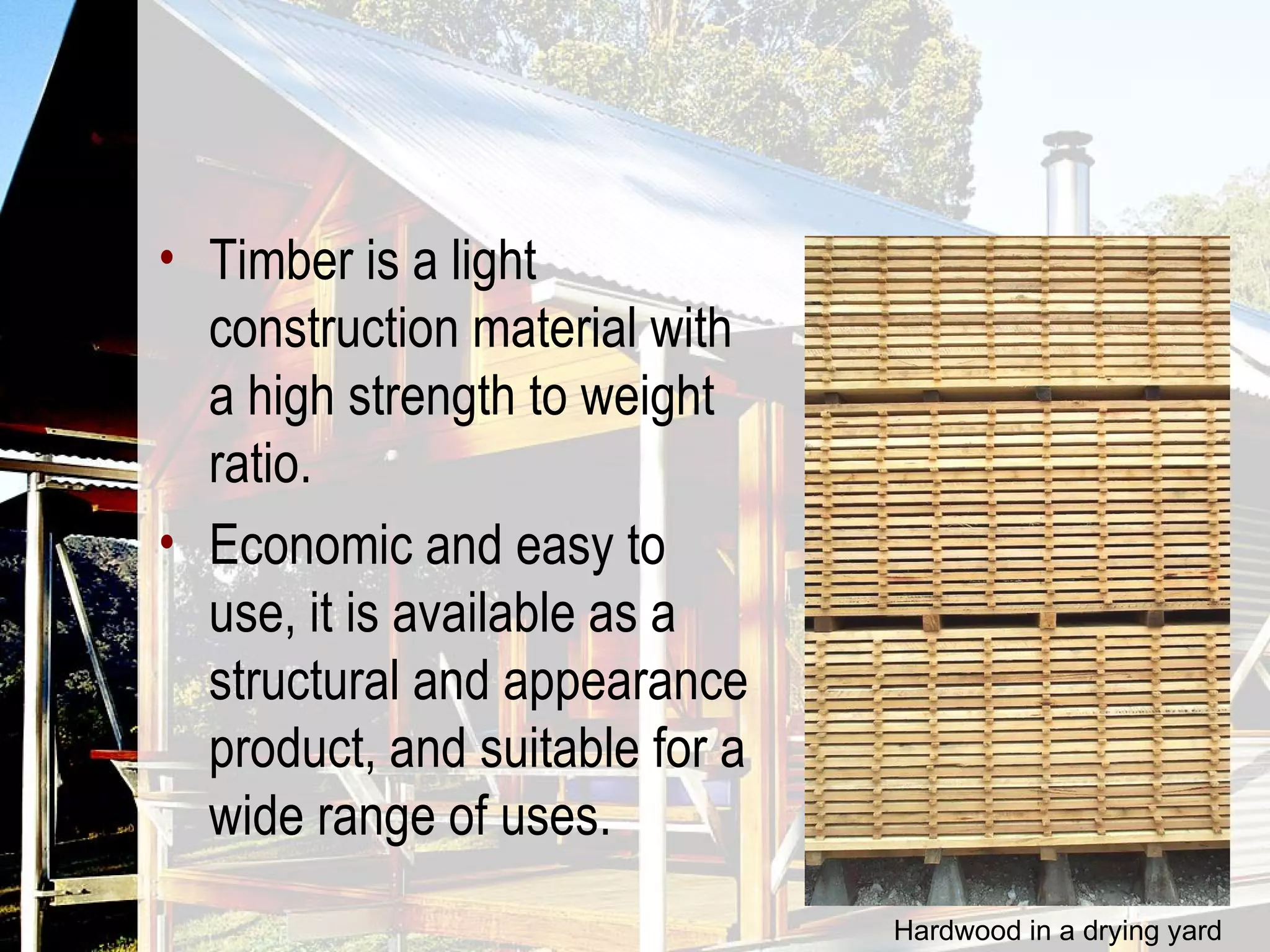
Timber is a light construction material with a high strength to weight ratio.  Economic and easy to use, it is available as a structural and appearance product, and suitable for a wide range of uses. Hardwood in a drying yard
Some considerations when selecting materials! Clean  materials Healthy  Materials Renewable  materials Natural  materials Abundant  materials Durable  materials Resource efficient  materials and material usage Reusable  and  recyclable  material Energy Efficient  material
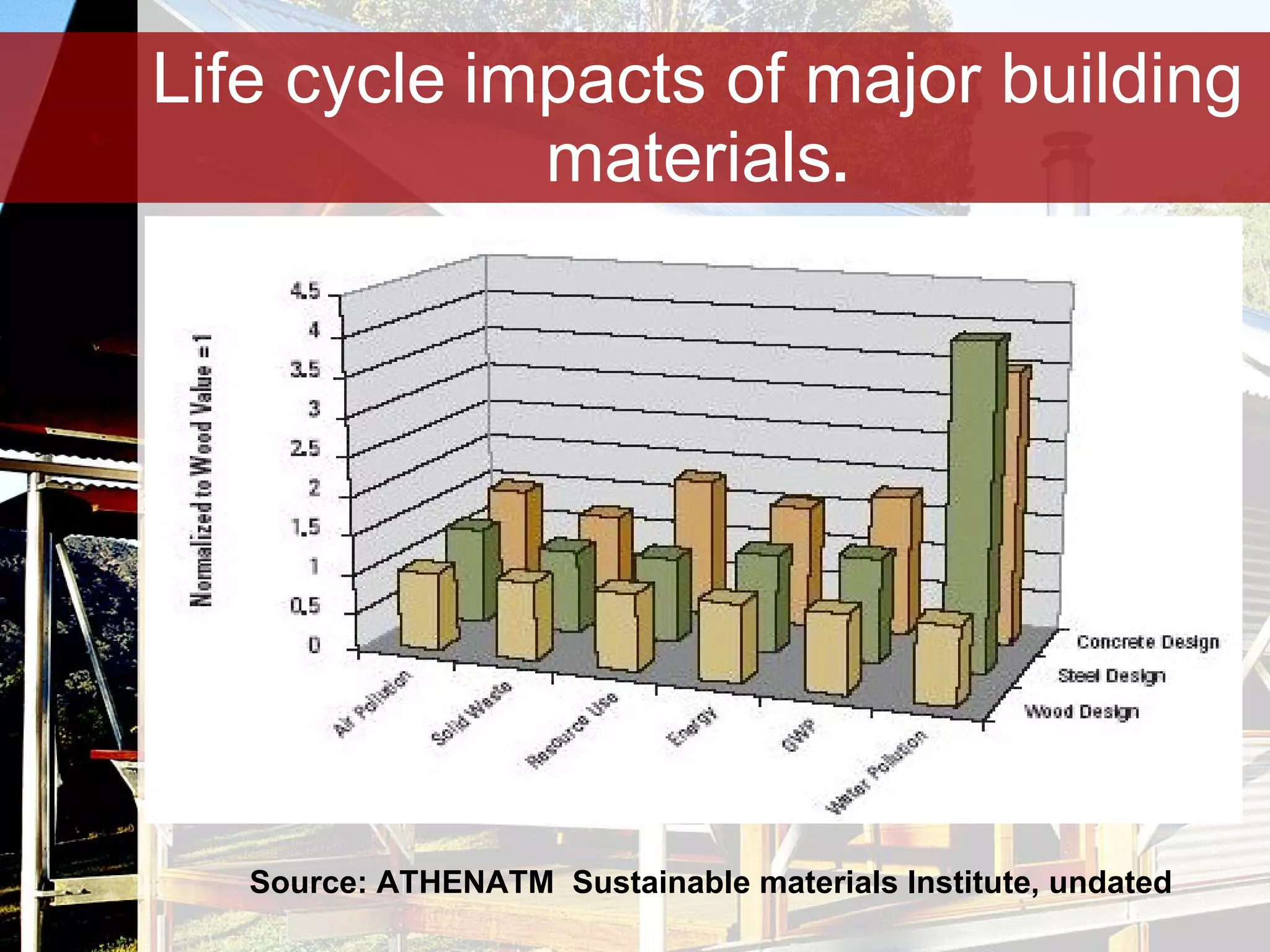
Timber is a clean material Using Life Cycle Assessment timber can be seen to be a clean material relative to other building products like concrete and steel.
Life cycle   impacts of major building materials . Source: ATHENATM  Sustainable materials Institute, undated
Timber is a healthy material Timber is a  natural ,  organic   and  healthy  material, and its production helps clean the environment. Timber can be  chemically treated to enhance performance  in some ways, (appearance, durability), in most cases only a small amount of this chemical is used.
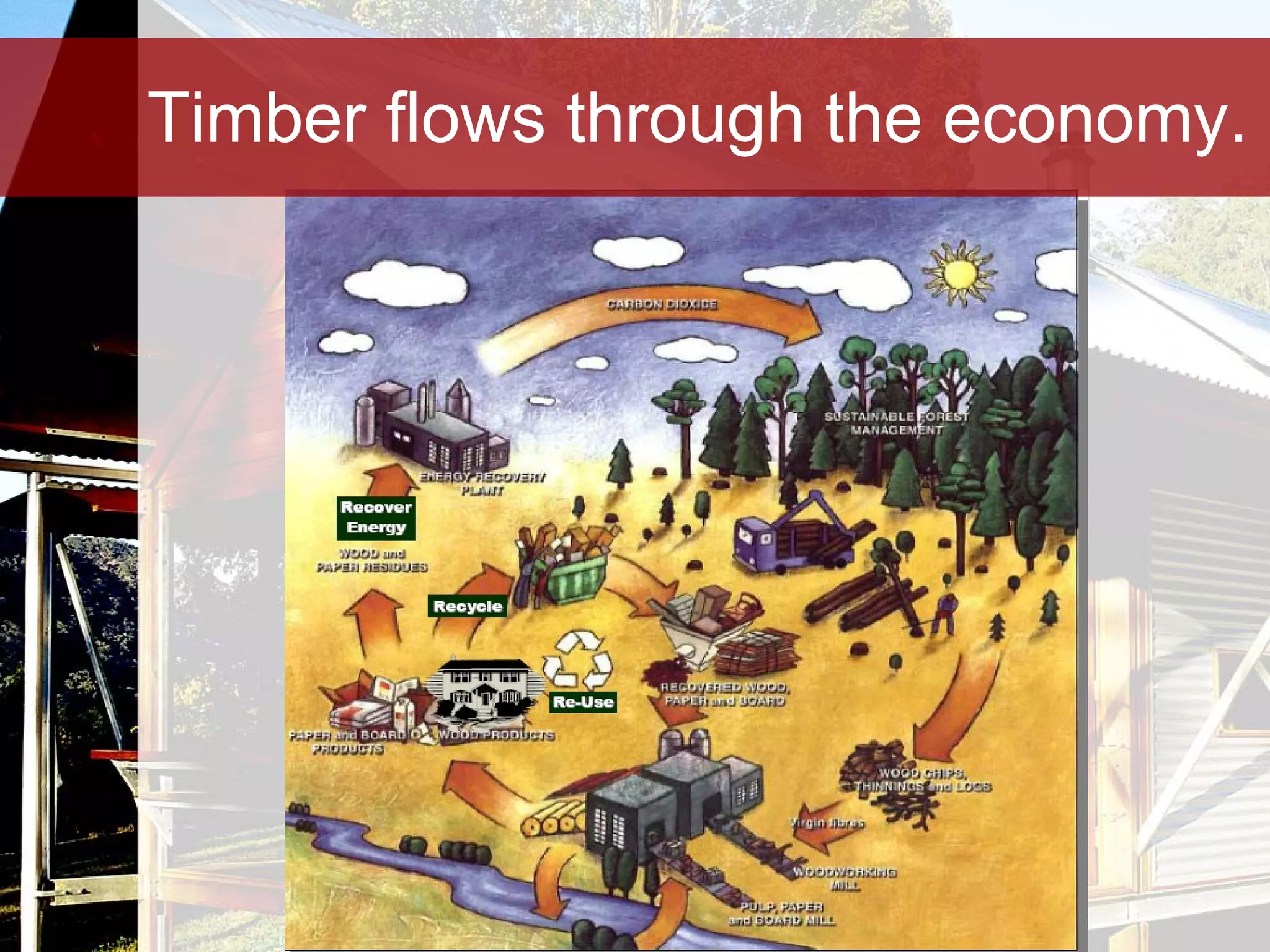
Timber is a renewable material Timber is grown and harvested in the natural environment,  flows through the economy  in many different applications and then  returns to the natural environment  at the end of its life.  Managed forests  ensure that timber remains in abundance as a building material.
Timber flows through the economy.
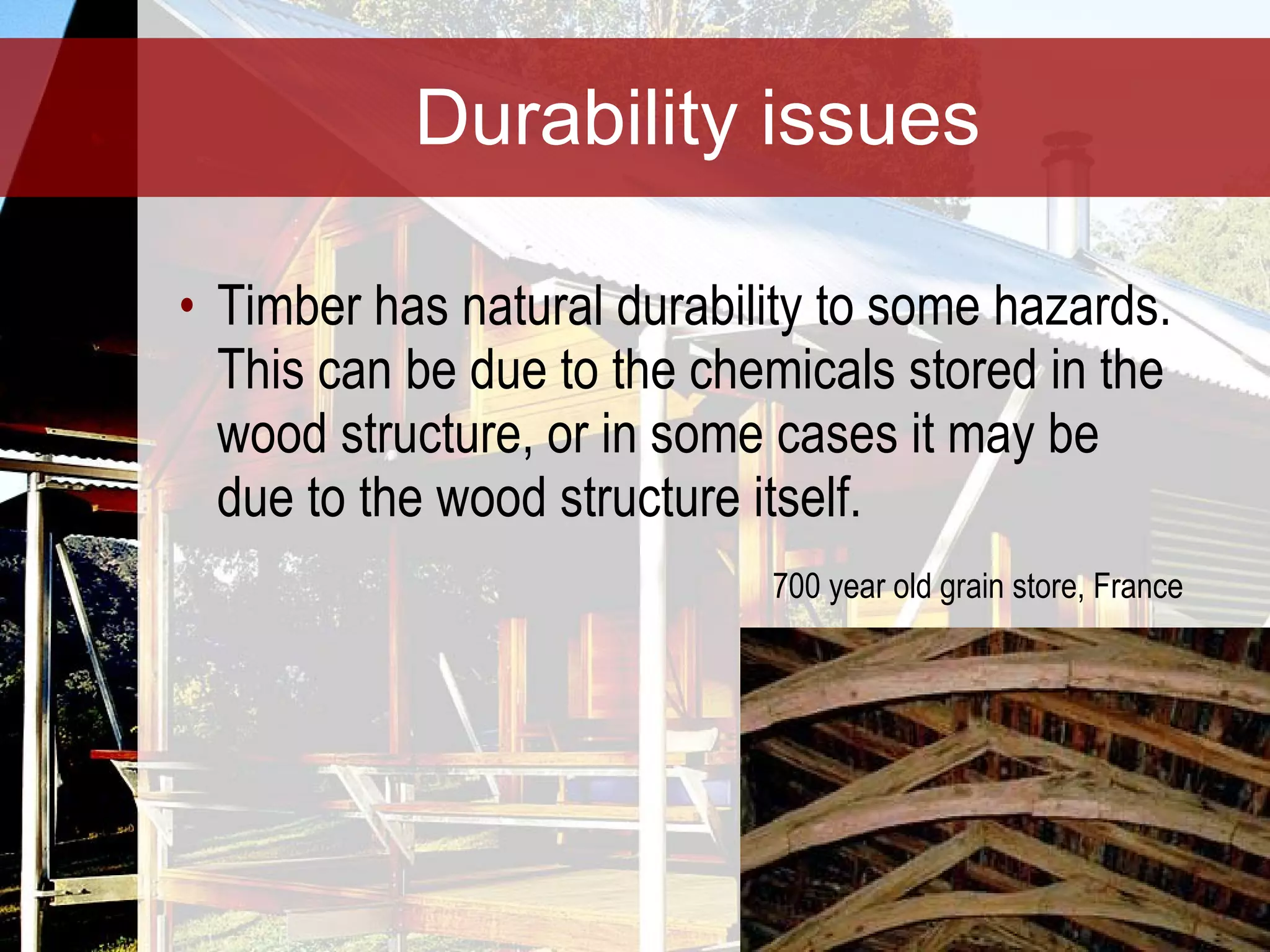
Durability issues Timber has natural durability to some hazards. This can be due to the chemicals stored in the wood structure, or in some cases it may be due to the wood structure itself. 700 year old grain store, France
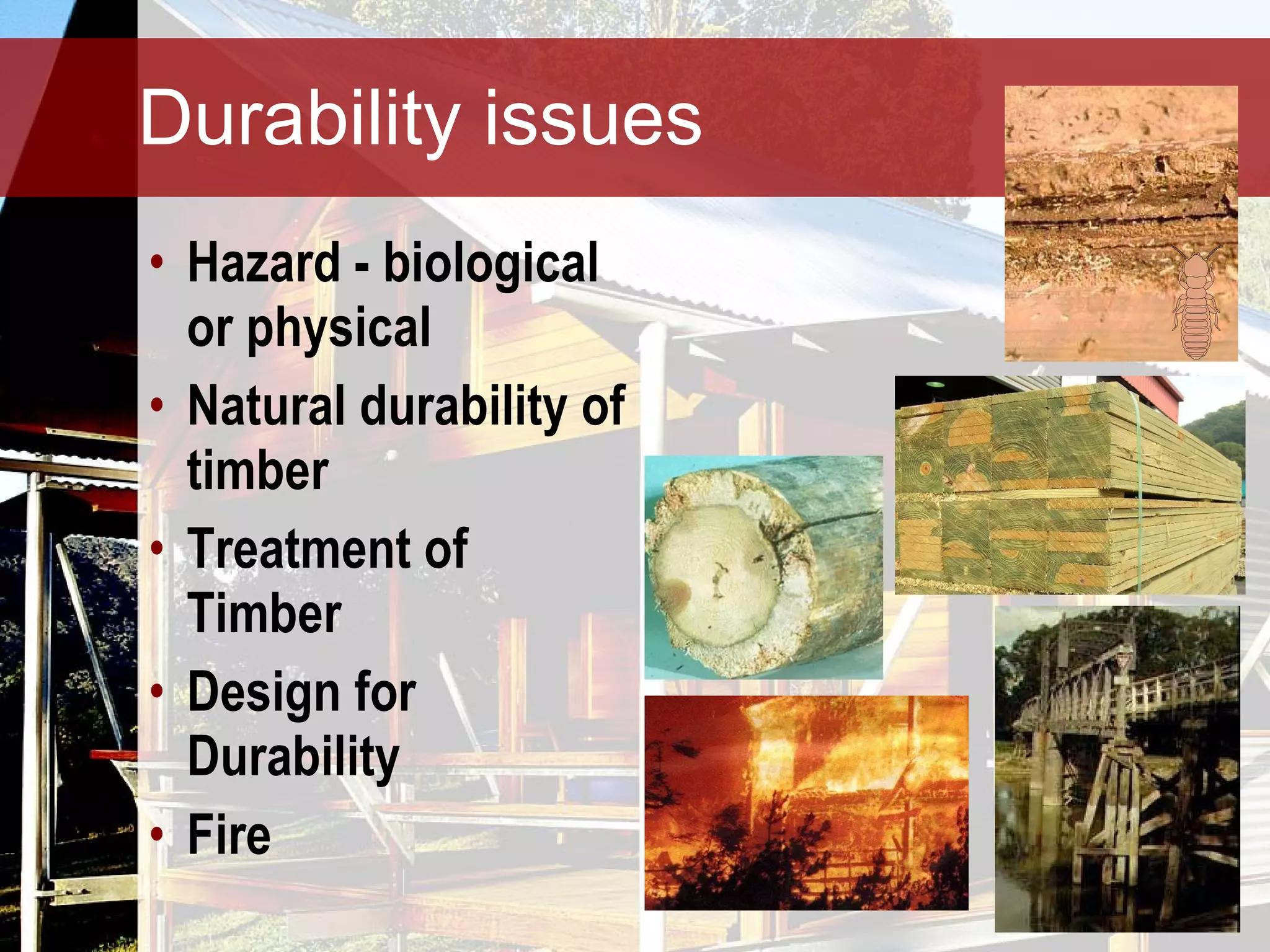
Durability issues Hazard - biological or physical Natural durability of timber Treatment of Timber Design for Durability Fire
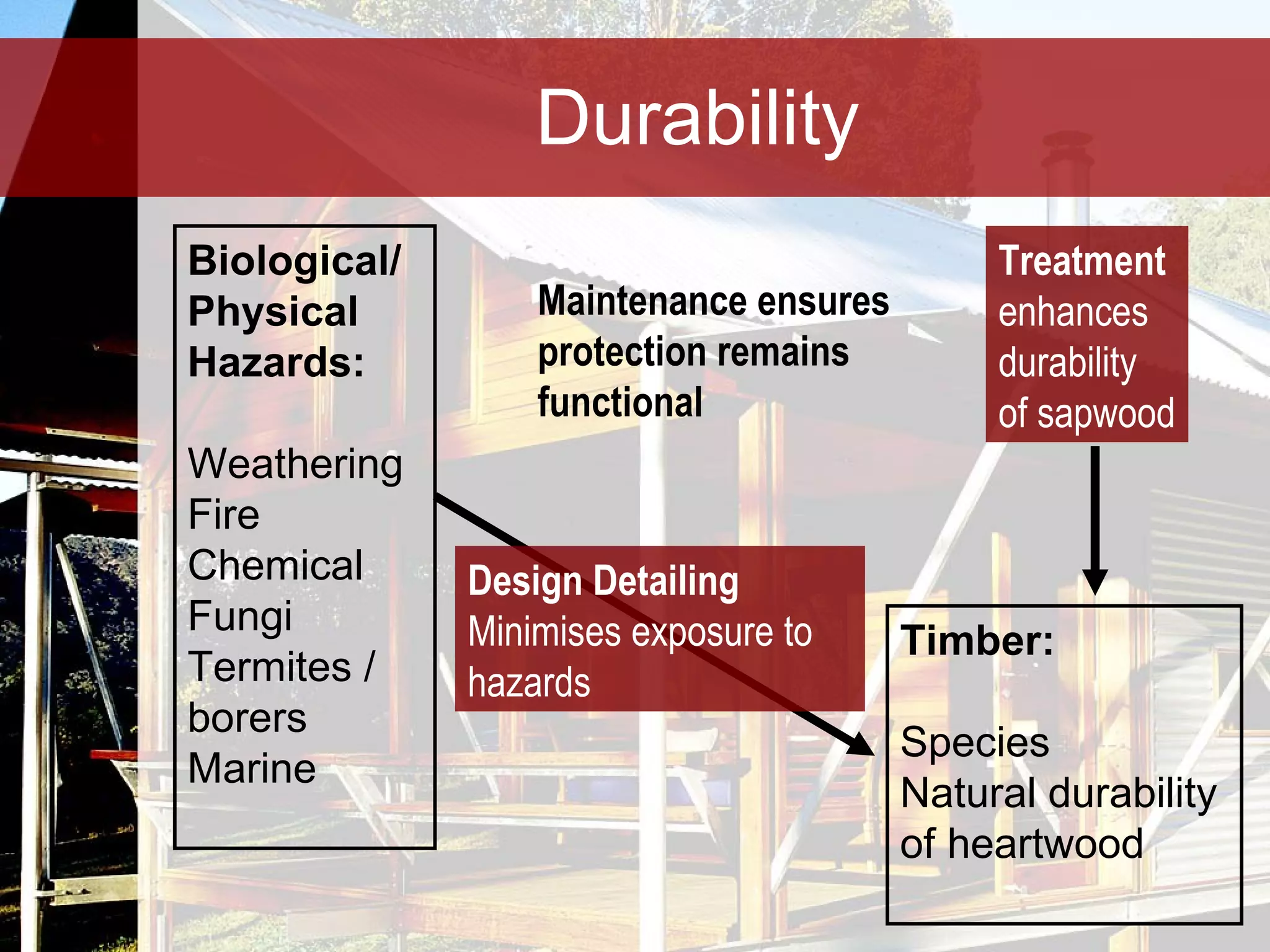
Durability Biological/  Physical  Hazards: Weathering Fire Chemical Fungi Termites / borers Marine Timber: Species Natural durability  of heartwood Design Detailing Minimises exposure to hazards Maintenance ensures  protection remains functional Treatment enhances  durability of sapwood
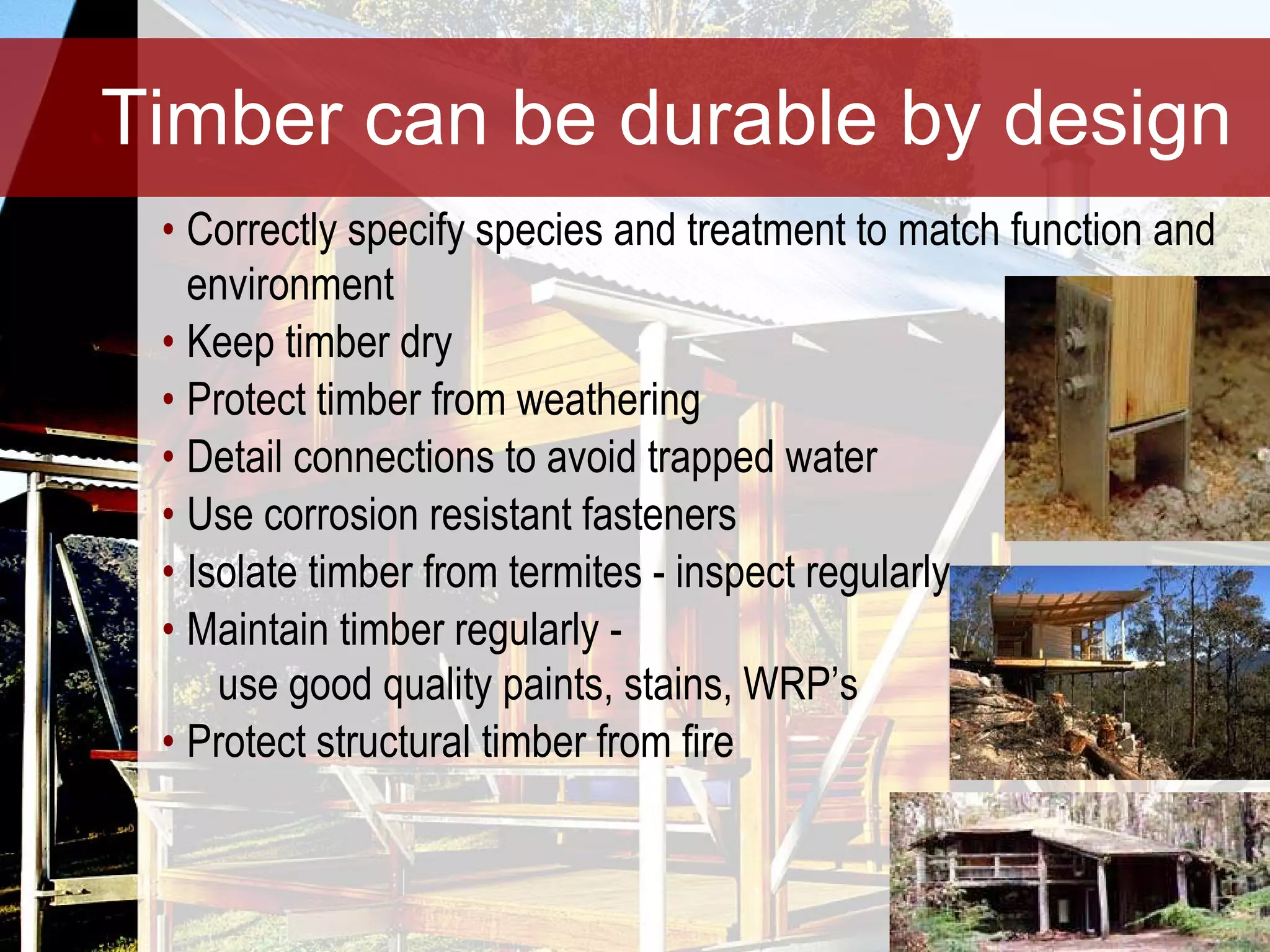
Timber can be durable by design Correctly specify species and treatment to match function and environment Keep timber dry Protect timber from weathering Detail connections to avoid trapped water Use corrosion resistant fasteners Isolate timber from termites - inspect regularly Maintain timber regularly -    use good quality paints, stains, WRP’s Protect structural timber from fire
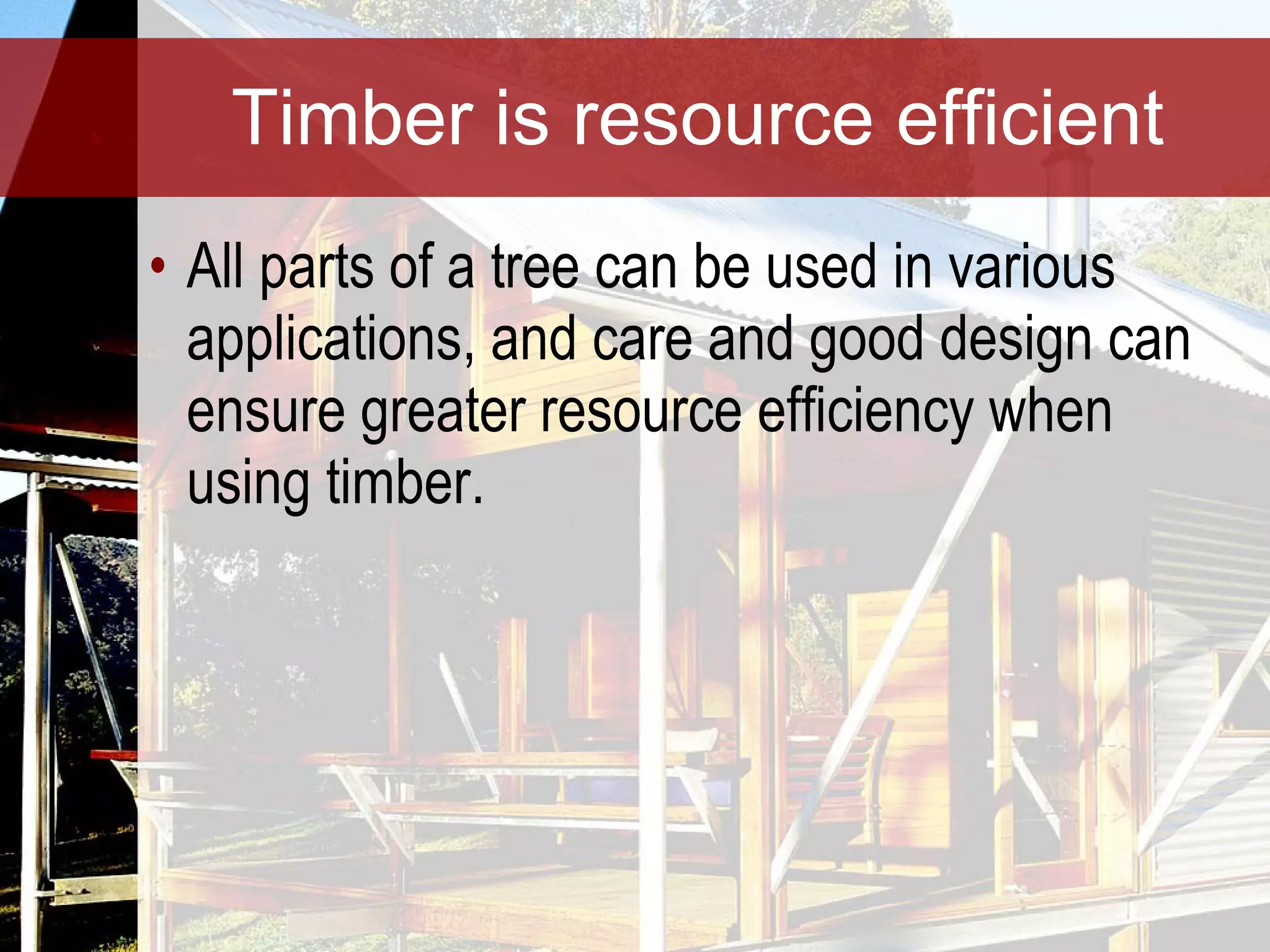
Timber is resource efficient All parts of a tree can be used in various applications, and care and good design can ensure greater resource efficiency when using timber.
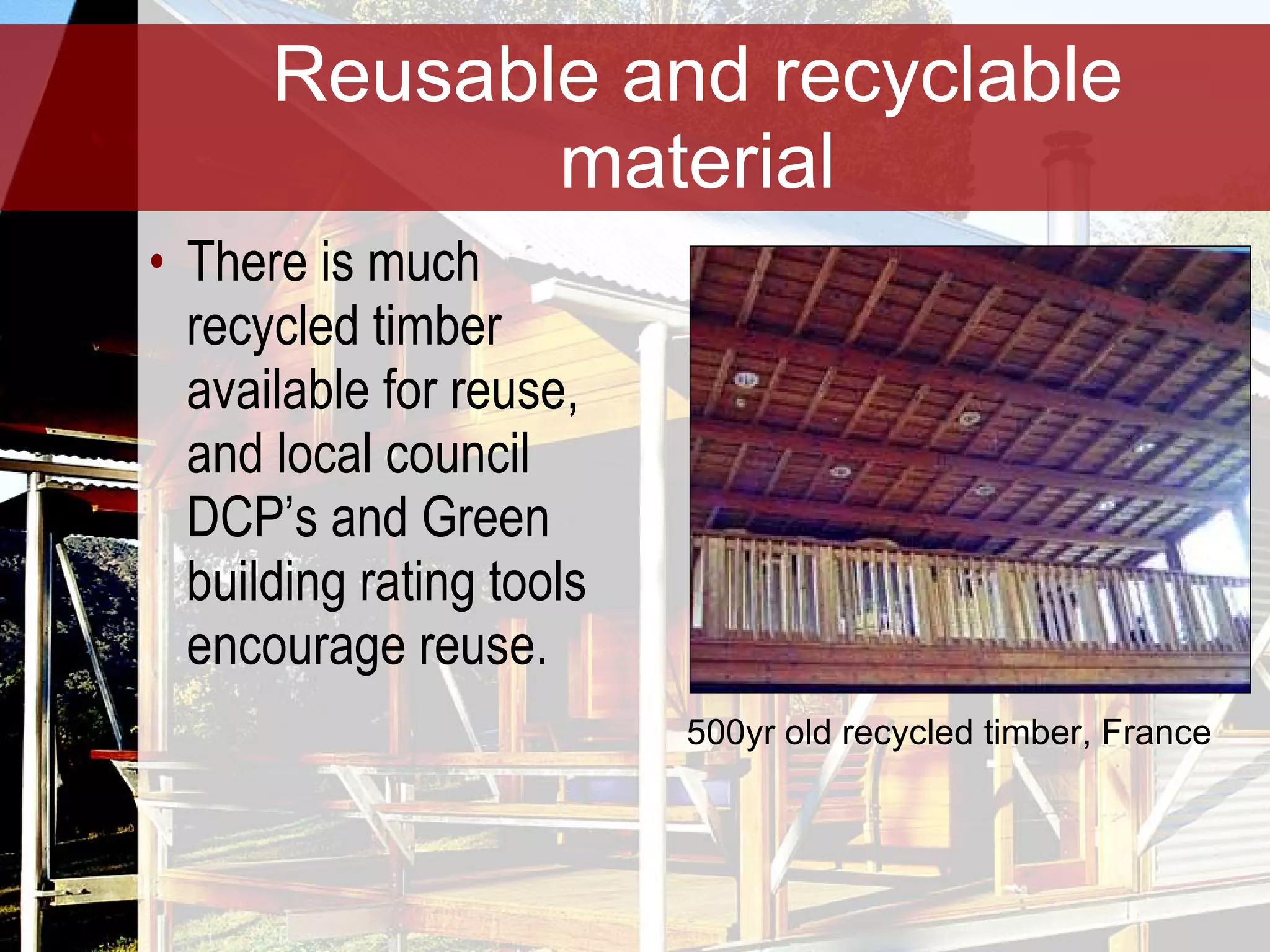
Reusable and recyclable material There is much recycled timber available for reuse, and local council DCP’s and Green building rating tools encourage reuse. 500yr old recycled timber, France
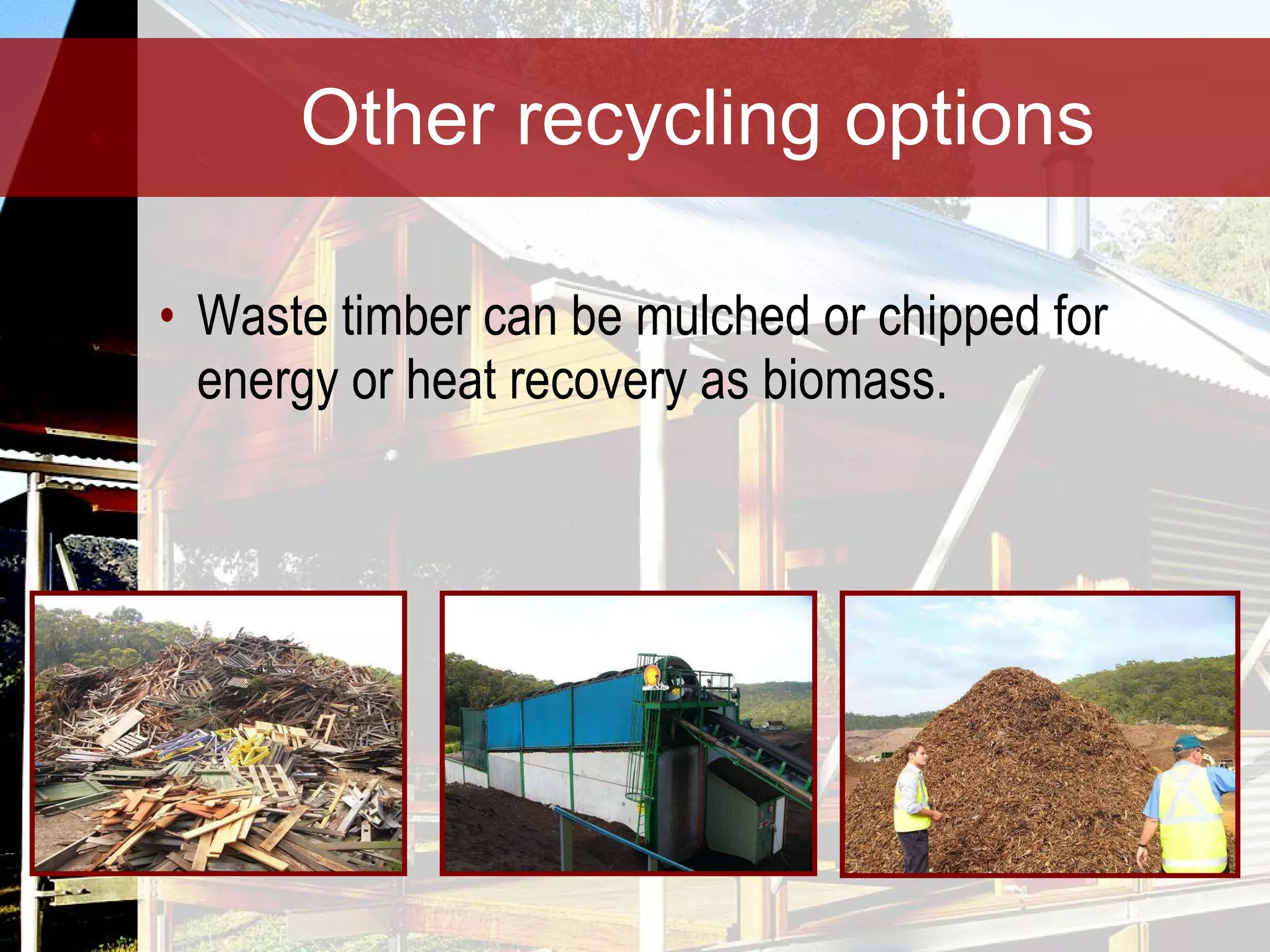
Other recycling options Waste timber can be mulched or chipped for energy or heat recovery as biomass.
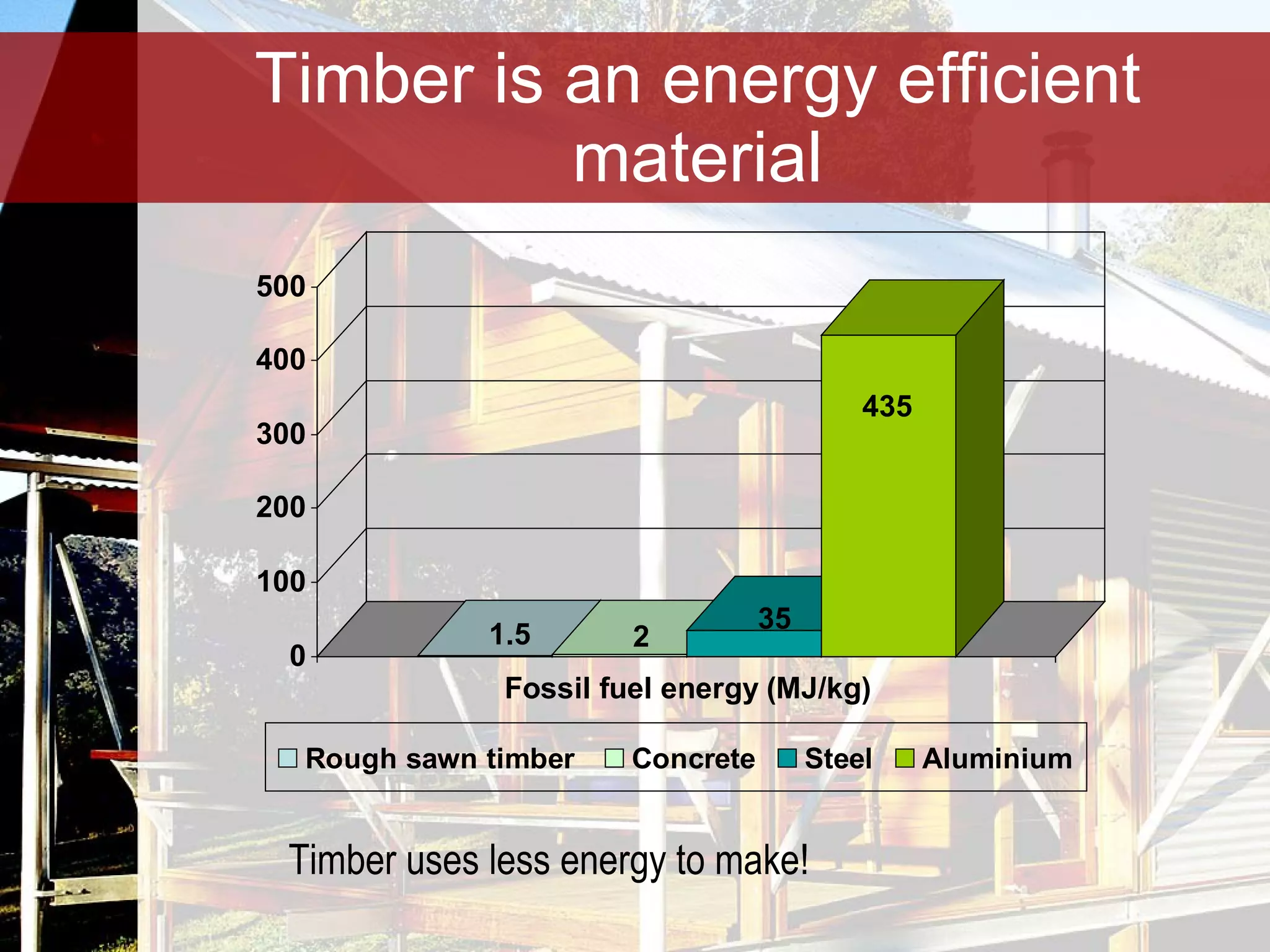
Timber is an energy efficient material Timber uses less energy to make!
Summary Timber is a  renewable  resource; Timber can be  made more durable  through good design and treatment; Timber is a  low embodied energy  material, with  low life cycle impacts ; There are various  reuse  and  recycle  options; Timber has an important role in a sustainable built environment .

2. timber as a sustainable building material

  • 1.
    Timber as asustainable building material B+C Design Construct Bala Residence
  • 2.
    Sustainable building materialsThe materials used to build our homes can have significant health and environmental effects When choosing materials for environmentally sustainable buildings we must consider: The processes used to harvest raw material Processing of material Transport to site
  • 3.
    So, what istimber? Timber is a material which can be used for building or carpentry and is derived from trees. It is organic and renewable and can be used in a wide range of applications. In order to make best use of timber in environmental buildings we must understand how timber is produced and how its natural properties effect it as a building material.
  • 4.
    The resource Themajority of Australian timber production is from managed forests. There are two broad classifications of managed forests: Managed Native Forests Plantations Click on image to play video >> Source: FWPRDC Education Resource Package -Construction Component
  • 5.
    Managed native forestsManaged for: Species conservation Water harvesting Timber harvesting Public education Recreation
  • 6.
    Plantations In plantationstrees are specifically planted and nurtured for timber production.
  • 7.
    A plantation coupMost commonly plantations have only a single species is planted. However plantations can be several species.
  • 8.
    Timber - environmentGrowing and harvesting timber Low energy of production Carbon stored in timber away from atmospheric cycle Managed Forests Plantations - single species farmed for timber Native forests managed for many uses species conservation / biodiversity water harvesting timber harvesting public education recreation
  • 9.
    Carbon cycle CarbonIN Carbon OUT Over long term Carbon in ~ carbon out Growing Trees absorb lots of C0 2 Large trees die by losing leaves then falling over
  • 10.
    Environmental considerations ManagedNative Forest Plantation Growing Trees Over long term Carbon removed from atmosphere > carbon released into atmosphere New trees planted Harvesting Removes Carbon C0 2 IN C0 2 OUT
  • 11.
  • 12.
    Timber grows ontrees! “ All plant material consists of cells of various shapes and arrangements. The presence of the very complex organic substance known as lignin is an essential feature of those plants being described as woody. It bonds the various types of cell together, producing the degree of rigidity that is associated with wood, and enables woody plants to attain their large size” (Wood in Australia, 1983)
  • 13.
  • 14.
    Cellular construction oftimber The cellular construction of timber effects its properties; Cells are bound together to form fibres, and have the main direction of orientation in the longitudinal direction. This makes timber a fibrous material.
  • 15.
  • 16.
    Grading for forestproducts Only some part of any log or tree can be used for sawn or veneer products. The remainder can be used for sheet products, paper or cardboard. Sawlogs – Approximately 30% of the tree goes to producing sawlogs Pulp Veneer
  • 17.
    Timber is alight construction material with a high strength to weight ratio. Economic and easy to use, it is available as a structural and appearance product, and suitable for a wide range of uses. Hardwood in a drying yard
  • 18.
    Some considerations whenselecting materials! Clean materials Healthy Materials Renewable materials Natural materials Abundant materials Durable materials Resource efficient materials and material usage Reusable and recyclable material Energy Efficient material
  • 19.
    Timber is aclean material Using Life Cycle Assessment timber can be seen to be a clean material relative to other building products like concrete and steel.
  • 20.
    Life cycle impacts of major building materials . Source: ATHENATM Sustainable materials Institute, undated
  • 21.
    Timber is ahealthy material Timber is a natural , organic and healthy material, and its production helps clean the environment. Timber can be chemically treated to enhance performance in some ways, (appearance, durability), in most cases only a small amount of this chemical is used.
  • 22.
    Timber is arenewable material Timber is grown and harvested in the natural environment, flows through the economy in many different applications and then returns to the natural environment at the end of its life. Managed forests ensure that timber remains in abundance as a building material.
  • 23.
  • 24.
    Durability issues Timberhas natural durability to some hazards. This can be due to the chemicals stored in the wood structure, or in some cases it may be due to the wood structure itself. 700 year old grain store, France
  • 25.
    Durability issues Hazard- biological or physical Natural durability of timber Treatment of Timber Design for Durability Fire
  • 26.
    Durability Biological/ Physical Hazards: Weathering Fire Chemical Fungi Termites / borers Marine Timber: Species Natural durability of heartwood Design Detailing Minimises exposure to hazards Maintenance ensures protection remains functional Treatment enhances durability of sapwood
  • 27.
    Timber can bedurable by design Correctly specify species and treatment to match function and environment Keep timber dry Protect timber from weathering Detail connections to avoid trapped water Use corrosion resistant fasteners Isolate timber from termites - inspect regularly Maintain timber regularly - use good quality paints, stains, WRP’s Protect structural timber from fire
  • 28.
    Timber is resourceefficient All parts of a tree can be used in various applications, and care and good design can ensure greater resource efficiency when using timber.
  • 29.
    Reusable and recyclablematerial There is much recycled timber available for reuse, and local council DCP’s and Green building rating tools encourage reuse. 500yr old recycled timber, France
  • 30.
    Other recycling optionsWaste timber can be mulched or chipped for energy or heat recovery as biomass.
  • 31.
    Timber is anenergy efficient material Timber uses less energy to make!
  • 32.
    Summary Timber isa renewable resource; Timber can be made more durable through good design and treatment; Timber is a low embodied energy material, with low life cycle impacts ; There are various reuse and recycle options; Timber has an important role in a sustainable built environment .