1. ORAL ROUTE
 Oral refers to two methods of
administration:
 Applying topically to the mouth
 Swallowing for absorption
along the gastrointestinal (GI)
tract into systemic circulation
 po (from the Latin per os) is
the abbreviation used to
indicate oral route of
medication administration
Advantages :
 Most commonly preferred and used route of drug
administration.
 Convenient - can be self- administered, pain free, easy
to take.
 It does not require any special skills.
 Absorption - takes place along the whole length of the
GI tract .
 Cheap - compared to most other parenteral or topical
routes.
Disadvantages :
 It can not be used in case of unconscious and in-
cooperative patients.
 Sometimes inefficient - only part of the drug may be
absorbed.
 First-pass effect - drugs absorbed orally are initially
transported to the liver via the portal vein .
 irritation to gastric mucosa - nausea and vomiting.
 Certain drugs like insulin undergo degradation in GI tract
to avoid this degradation by digestive juices it cannot be
given by oral route.
 Onset of action of drugs takes 3 – 4hrs so cannot be used
in medical emergency.
 unpleasant taste of some drugs.
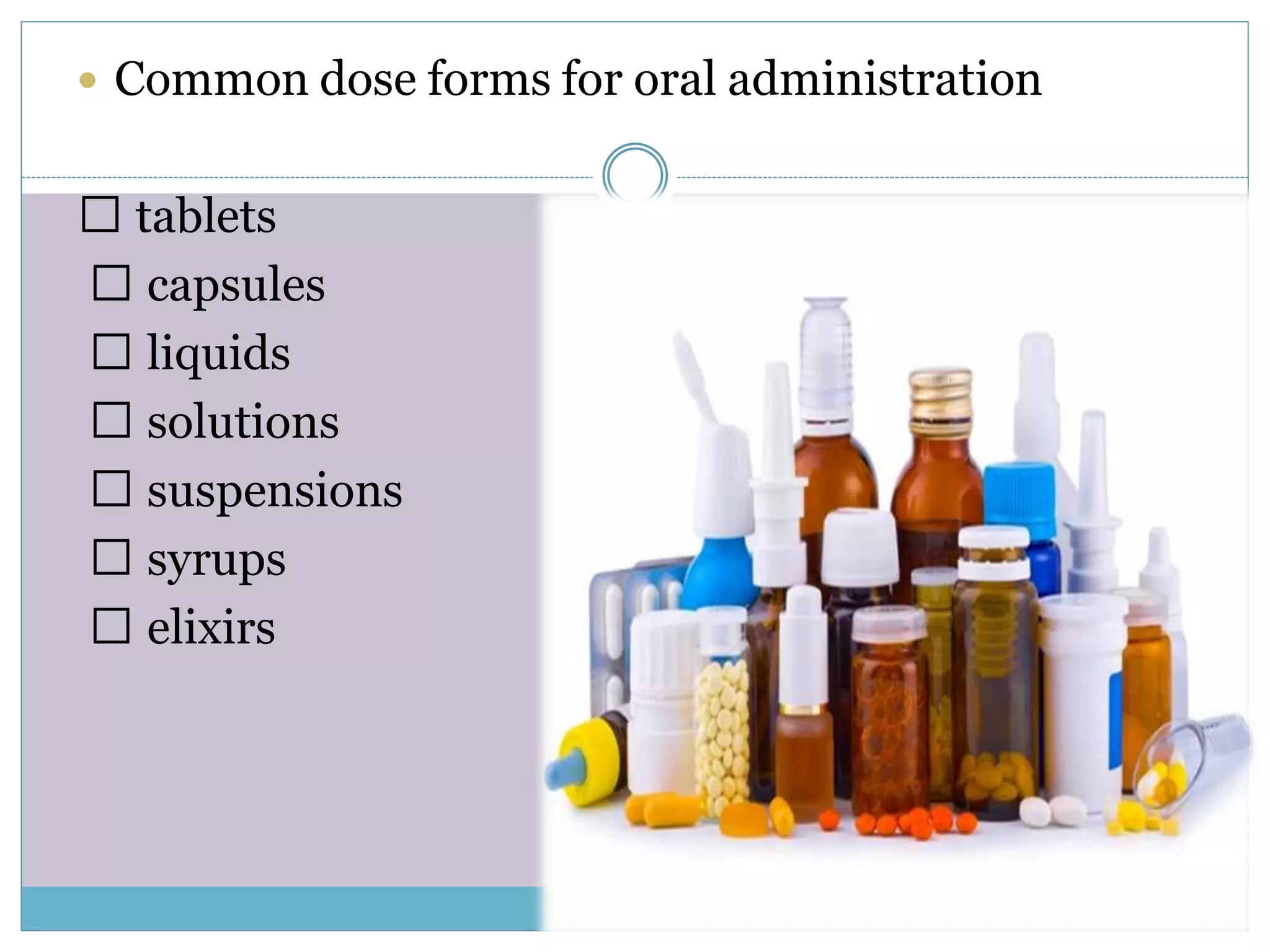
 Common dose forms for oral administration
tablets
capsules
liquids
solutions
suspensions
syrups
elixirs
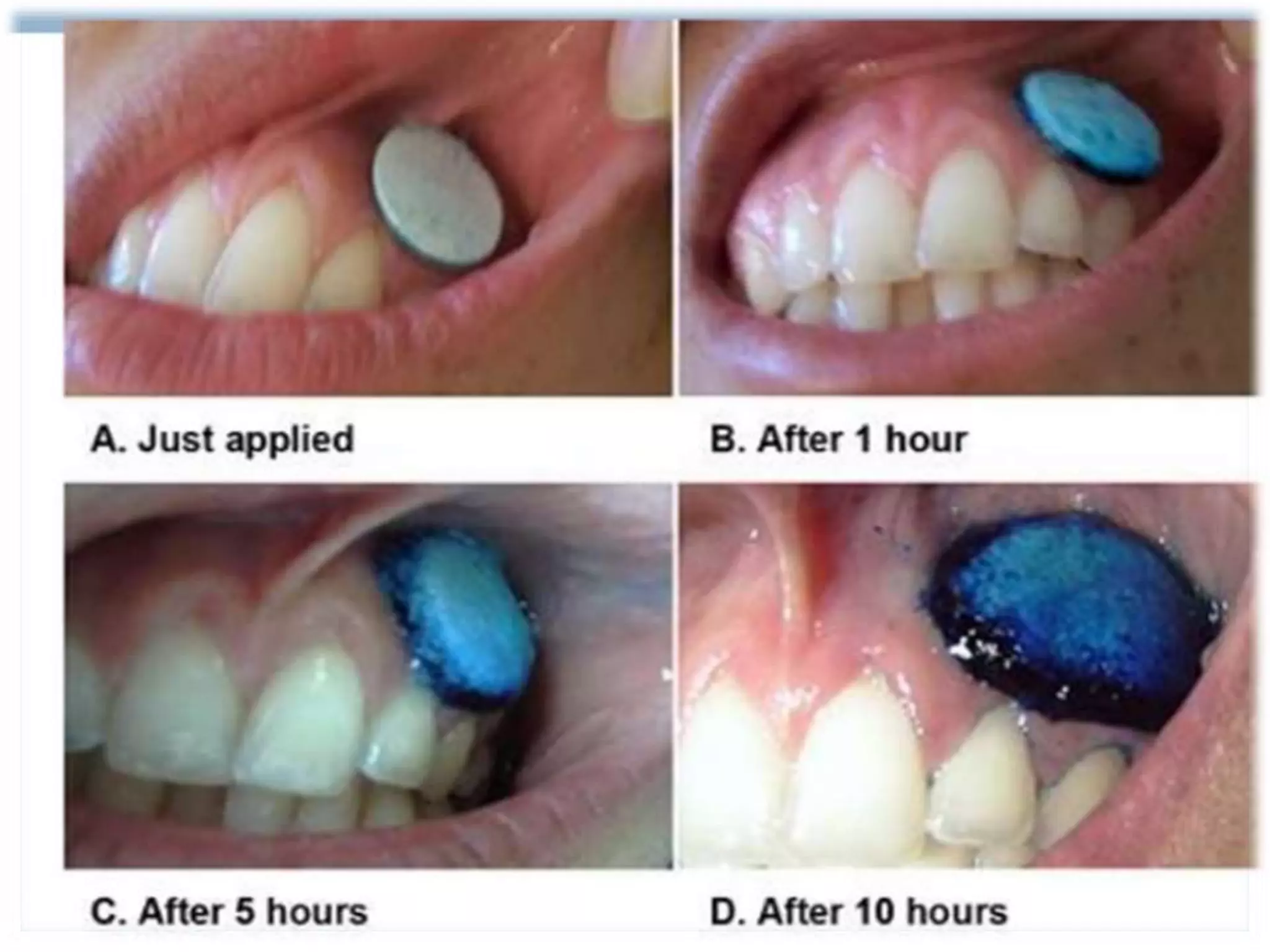
2. Buccal/sublingual route
Drugs are taken as smaller tablets which are held in
the mouth(buccal) or under the tongue (sublingual)
sublingual buccal
Advantages
 Havinng drug stability.Economical.
 Quick termination.
 FIRST-PASS effect is avoided .
 drug absorption is quick.
Disadvantages
 it is inconvenient to patient.
 Unpalatable & bitter taste of drugs may result in poor
patient compliances.
 Irritation of oral mucosa.
 Large quantities not given, may lead to toxicity.
 Few drugs are absorbed.
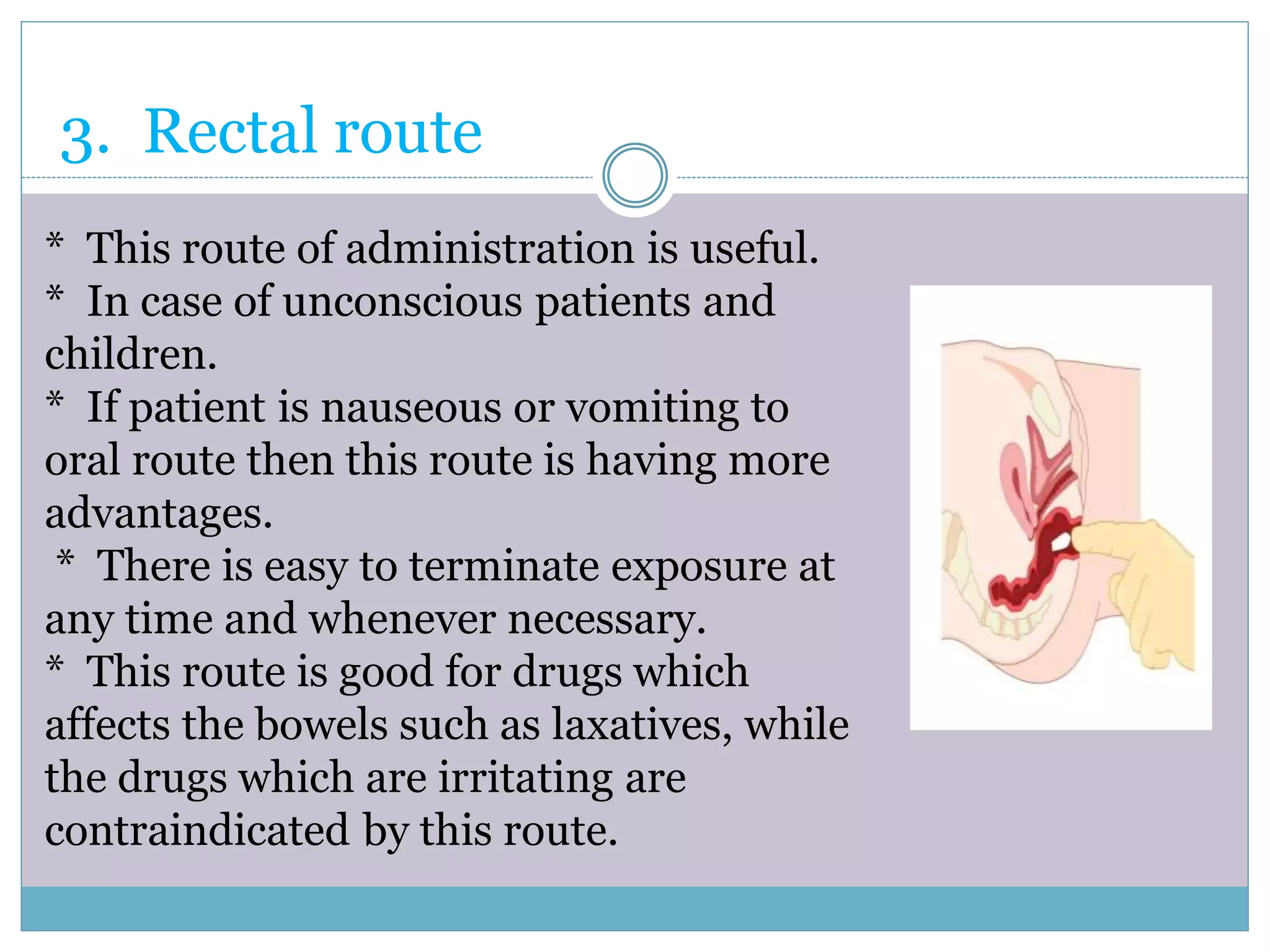
3. Rectal route
* This route of administration is useful.
* In case of unconscious patients and
children.
* If patient is nauseous or vomiting to
oral route then this route is having more
advantages.
* There is easy to terminate exposure at
any time and whenever necessary.
* This route is good for drugs which
affects the bowels such as laxatives, while
the drugs which are irritating are
contraindicated by this route.
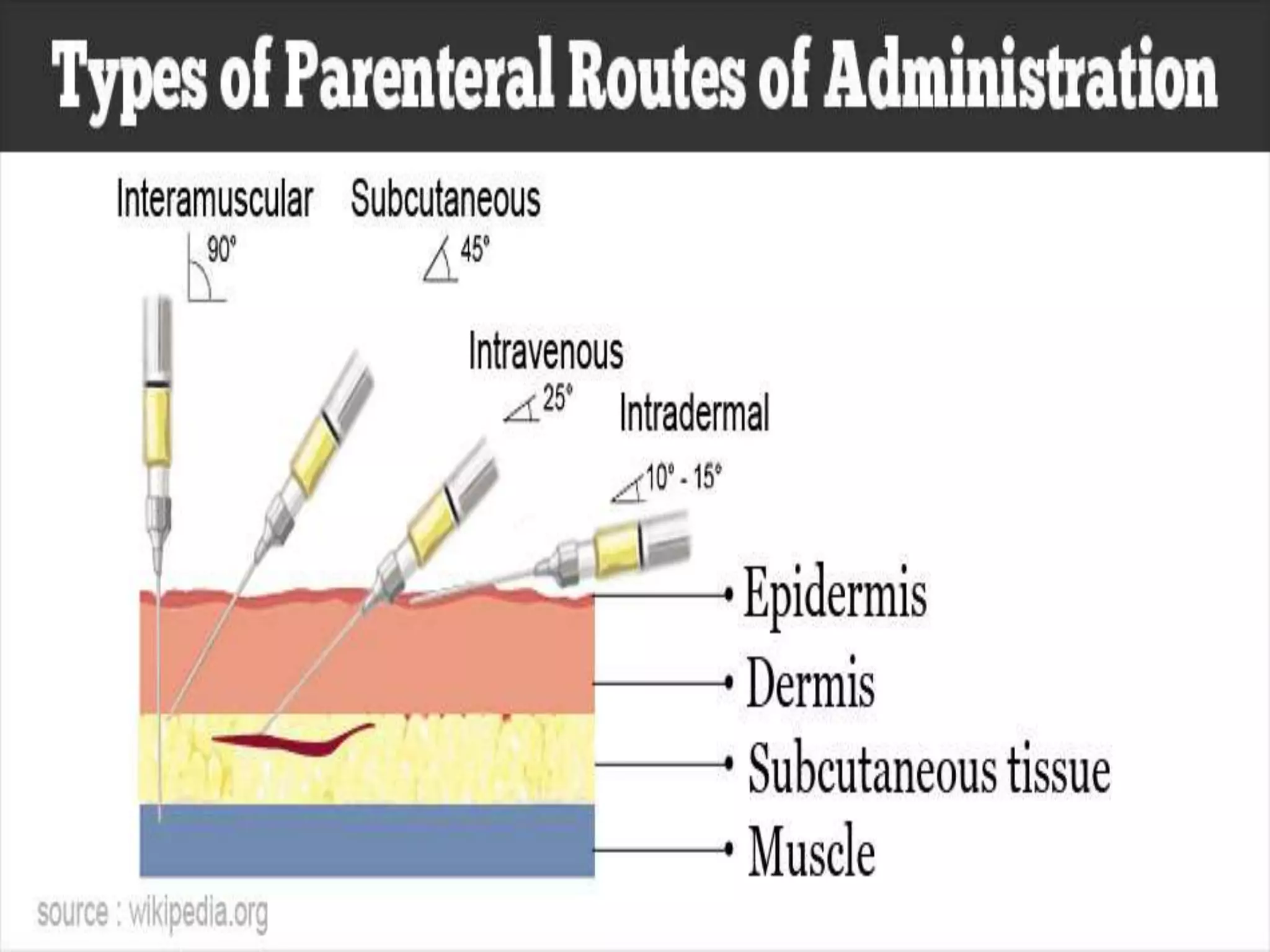
PARENTRAL ROUTES
Parenteral administration is the route where a drug
in the form of solution or suspension is injected
in the body with help of hollow needle and a
syringe/injection or in in some cases in the
vapour or fine droplets drugs are inhealed in the
respiratory tract(inhalation).
The term parenteral comes from Greek words:
Para - meaning outside
Enteron - meaning the intestine
This route of administration bypasses the
alimentary canal.
INJECTABLES
I. INTRAVENOUS
II. INTRAMUSCULAR
III. SUBCUTANEOUS
IV. INTRA-ARTERIAL
V. INTRA-ARTICULAR
VI. INTRATHECAL
VII. INTRADERMAL
INHALATION - Absorption through the lungs
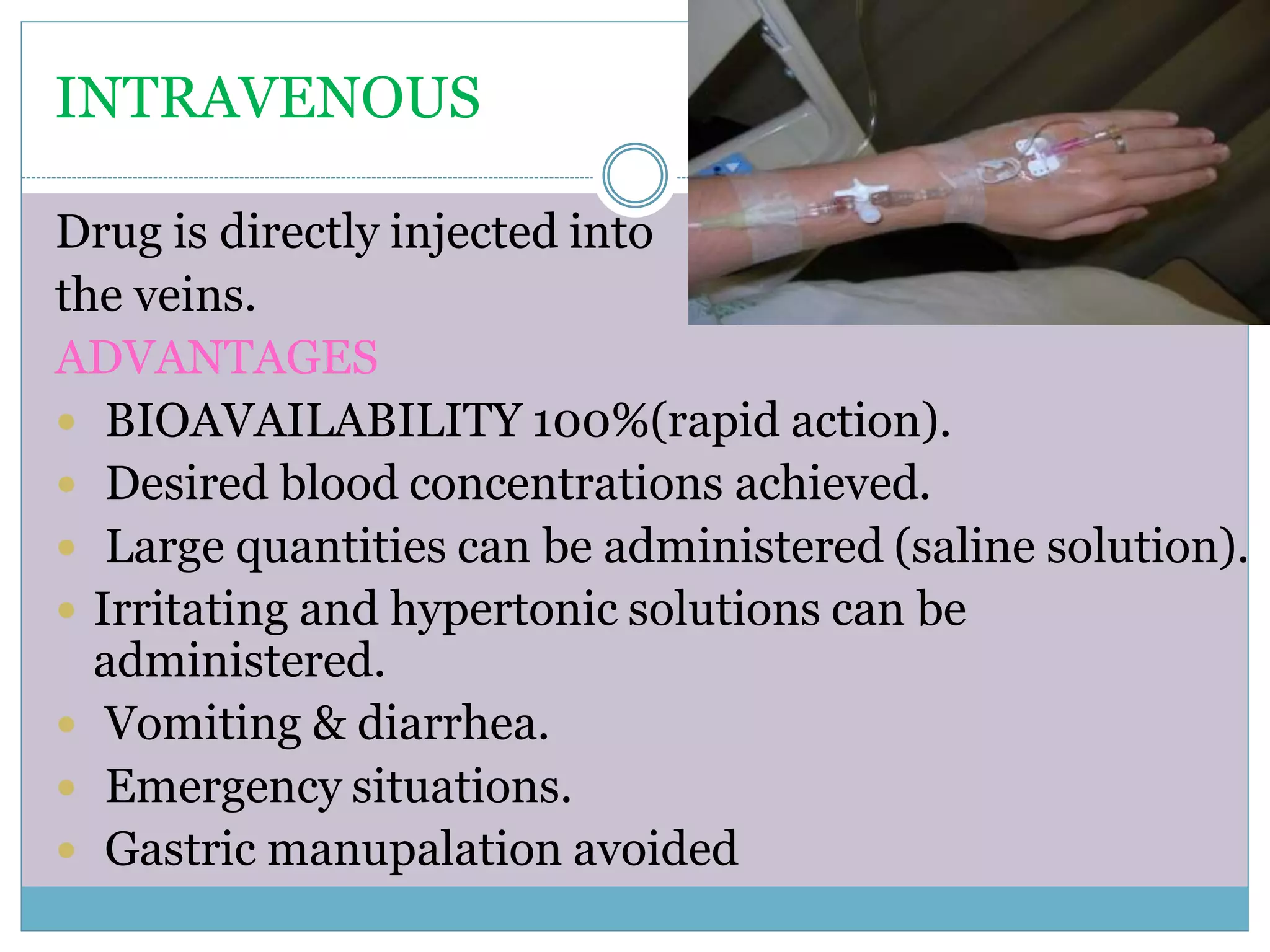
INTRAVENOUS
Drug is directly injected into
the veins.
ADVANTAGES
 BIOAVAILABILITY 100%(rapid action).
 Desired blood concentrations achieved.
 Large quantities can be administered (saline solution).
 Irritating and hypertonic solutions can be
administered.
 Vomiting & diarrhea.
 Emergency situations.
 Gastric manupalation avoided
DISADVANTAGES
 It may cause Irritation.
 Speed of the drug entering into the vein should be
controlled.
 Repeated injections not always feasible.
 Less safe .
 technical assistance required.
 Danger of infection.
 Expensive.
 Less convenient and painful.
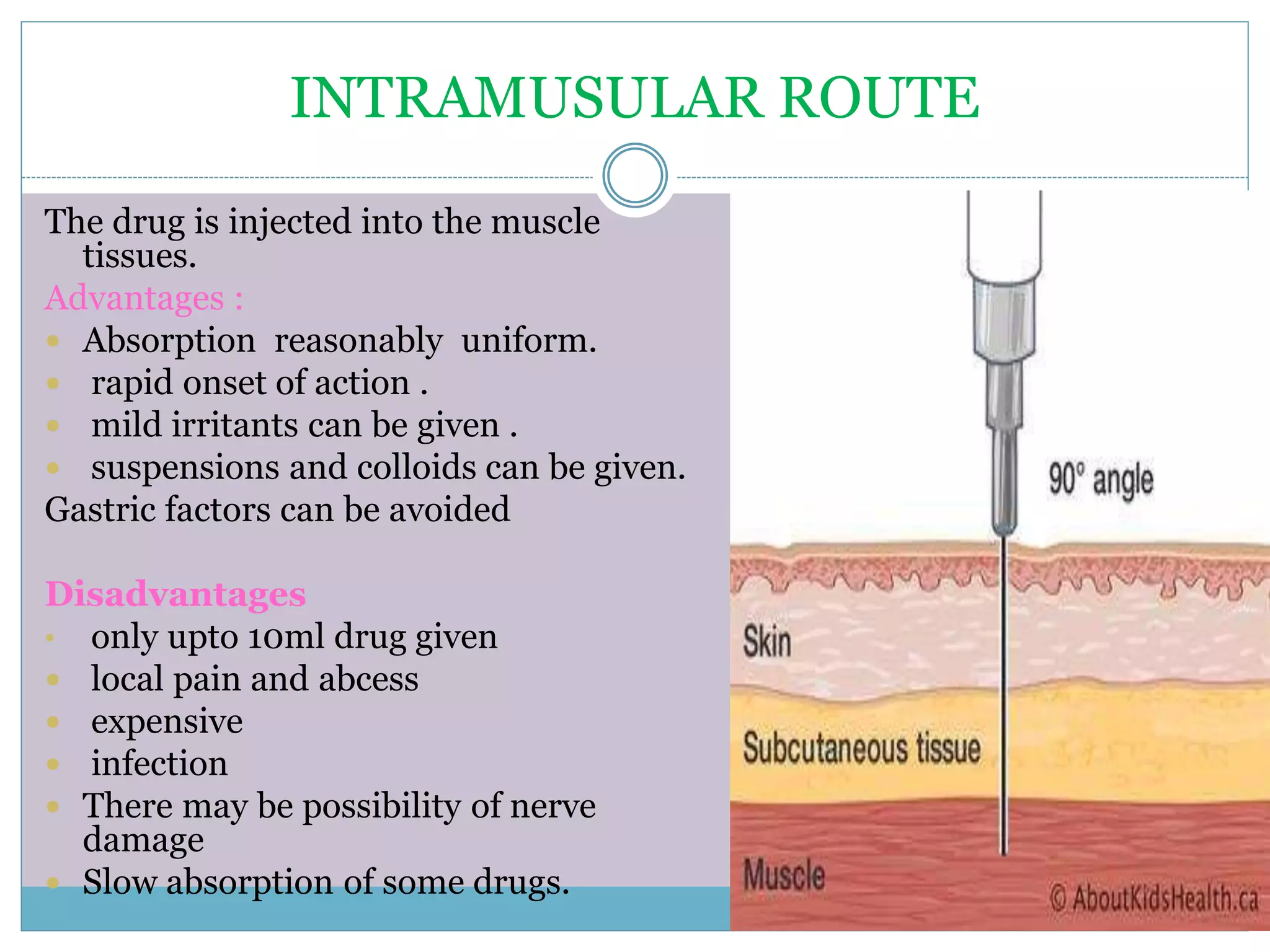
INTRAMUSULAR ROUTE
The drug is injected into the muscle
tissues.
Advantages :
 Absorption reasonably uniform.
 rapid onset of action .
 mild irritants can be given .
 suspensions and colloids can be given.
Gastric factors can be avoided
Disadvantages
• only upto 10ml drug given
 local pain and abcess
 expensive
 infection
 There may be possibility of nerve
damage
 Slow absorption of some drugs.
SUBCUTANEOUS
 Injected under the skin.
 Absorption is slow, so action is prolonged.
 Only the non irritant drugs can be administered.
 IMPLANT :a tablet or porous capsule is inserted into
the loose tissues by incision of the skin, which is then
stiched up. example : certain hormonal drugs
INTRA-ARTICULAR
 administered directly into the joints.
 injections of antibiotics and corticosteroids are
administered in inflammed joined cavities by
experts.
example: hydrocortisone in rheumatoid arthritis
INTRA-ARTERIAL
 Drug is administered directly into the artery.
 Rarely used
 Anticancer drugs are given for localized effects
 Drugs used for diagnosis of peripheral vascular
diseases
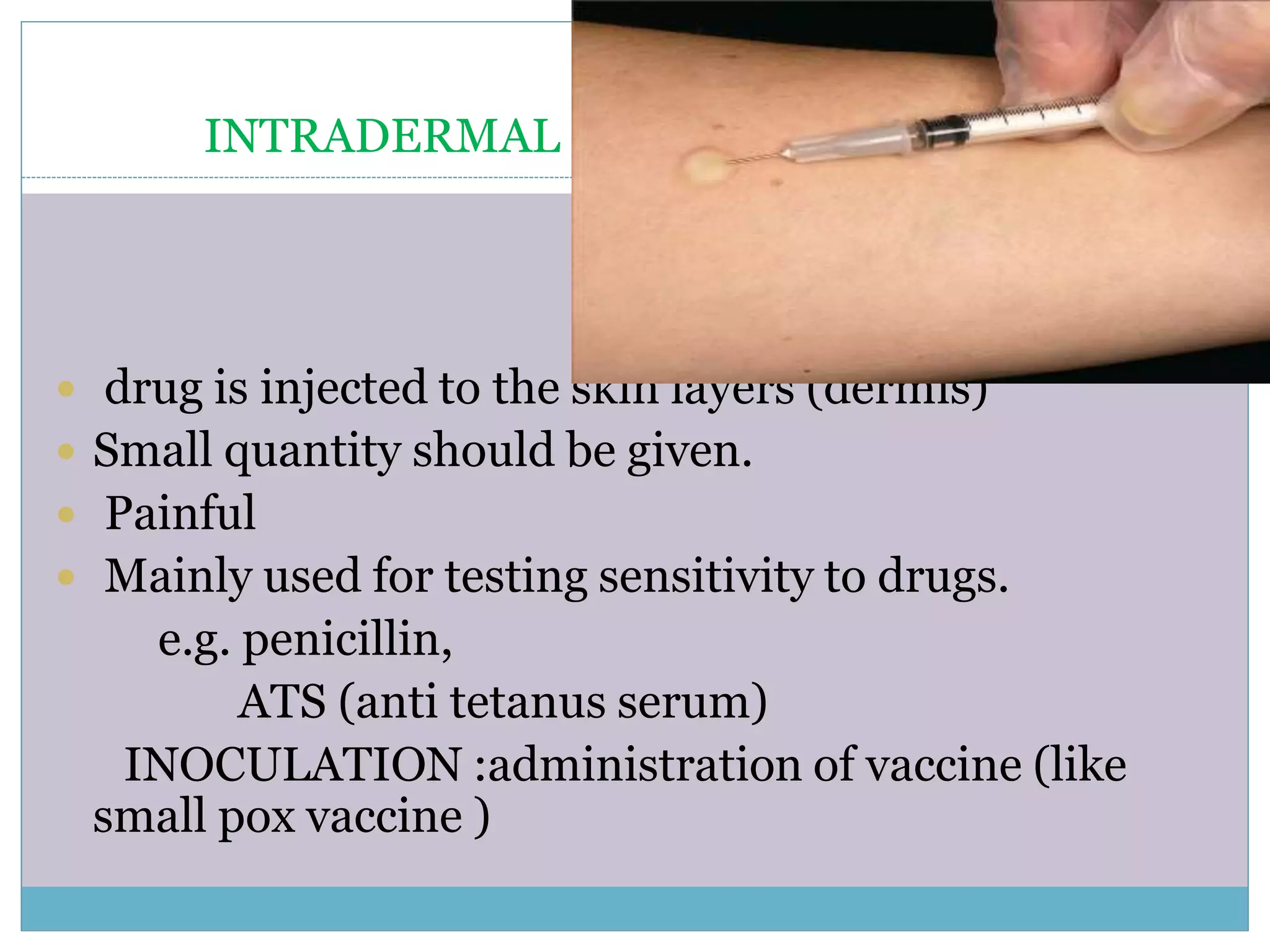
INTRADERMAL
 drug is injected to the skin layers (dermis)
 Small quantity should be given.
 Painful
 Mainly used for testing sensitivity to drugs.
e.g. penicillin,
ATS (anti tetanus serum)
INOCULATION :administration of vaccine (like
small pox vaccine )
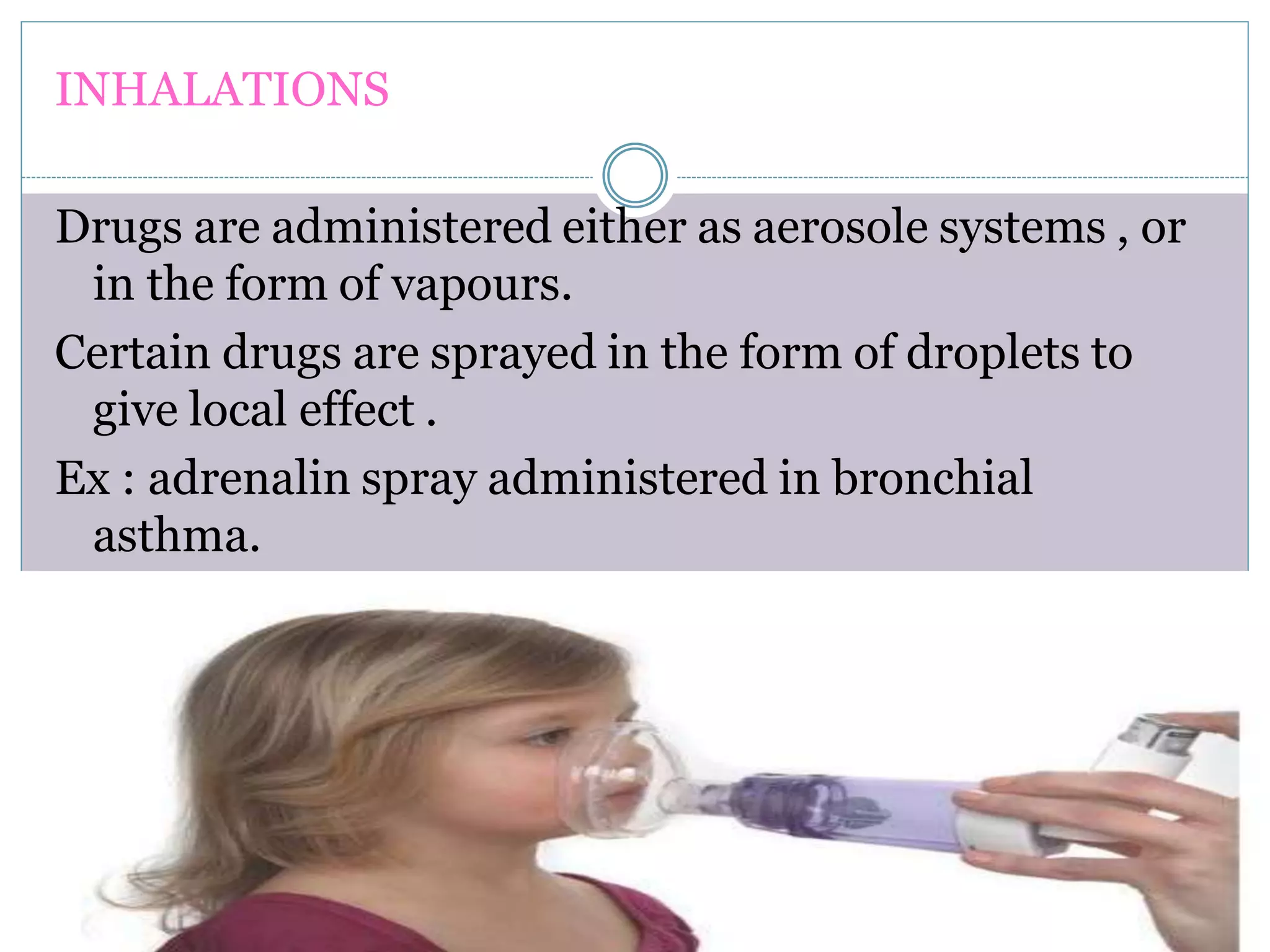
INHALATIONS
Drugs are administered either as aerosole systems , or
in the form of vapours.
Certain drugs are sprayed in the form of droplets to
give local effect .
Ex : adrenalin spray administered in bronchial
asthma.
.
Advantages :
 Absorption of drug is rapid and easy resulting in
rapid local and systemic effect of drug.
 Easy to administration
Disadvantages :
 Drugs directly enter into the left side of the heart ,
there is a danger of cardiac toxicity.
 Certain drugs producing local irritation may increase
respiratory tract secretion.
Topical Routes of Administration
 Topical administration is the application of a drug
directly to the surface of the skin
 Includes administration of drugs to any mucous
membrane
 eye
 nose
 vagina
 ears
 urethra
 colon
 lungs
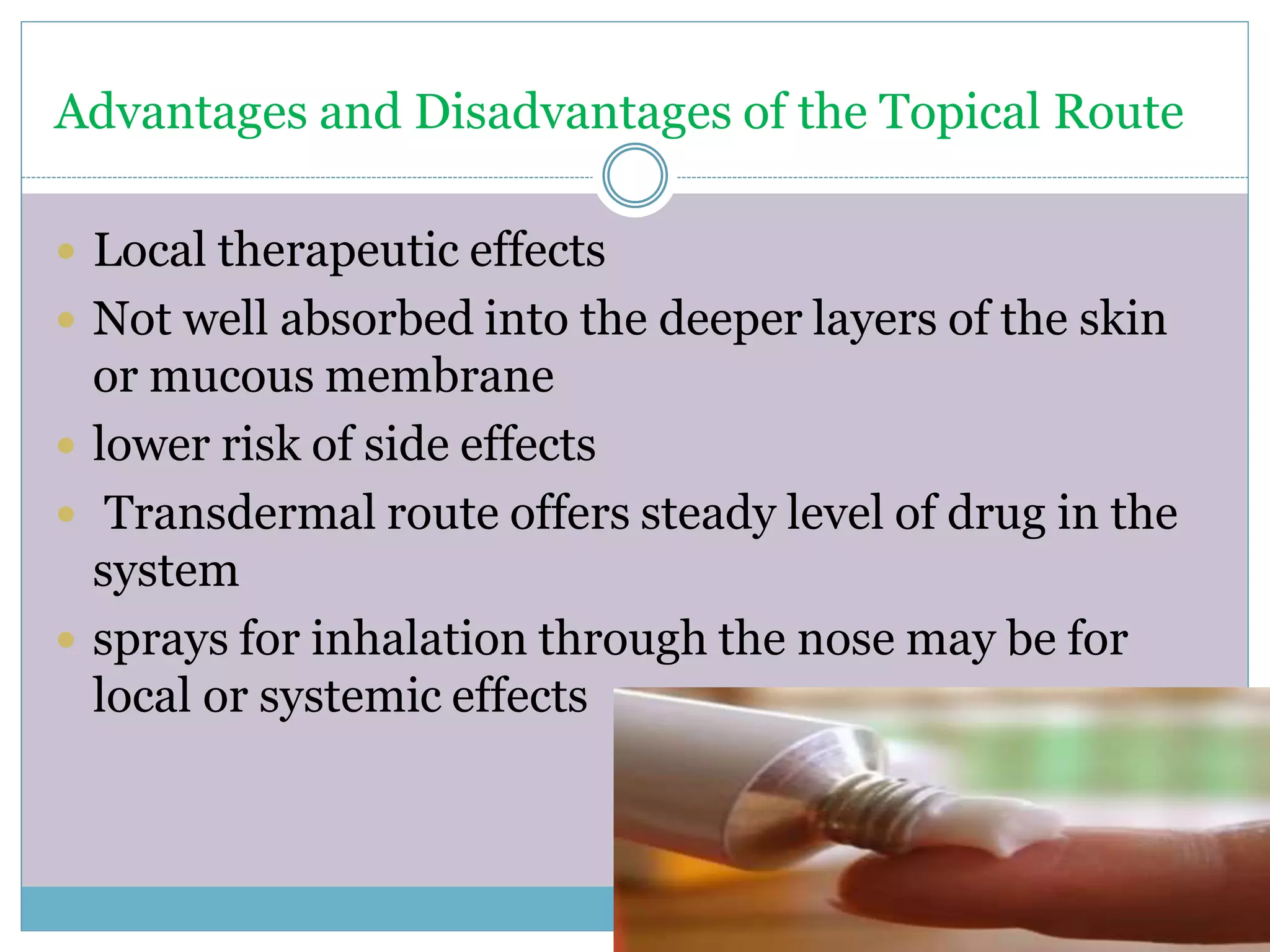
Advantages and Disadvantages of the Topical Route
 Local therapeutic effects
 Not well absorbed into the deeper layers of the skin
or mucous membrane
 lower risk of side effects
 Transdermal route offers steady level of drug in the
system
 sprays for inhalation through the nose may be for
local or systemic effects
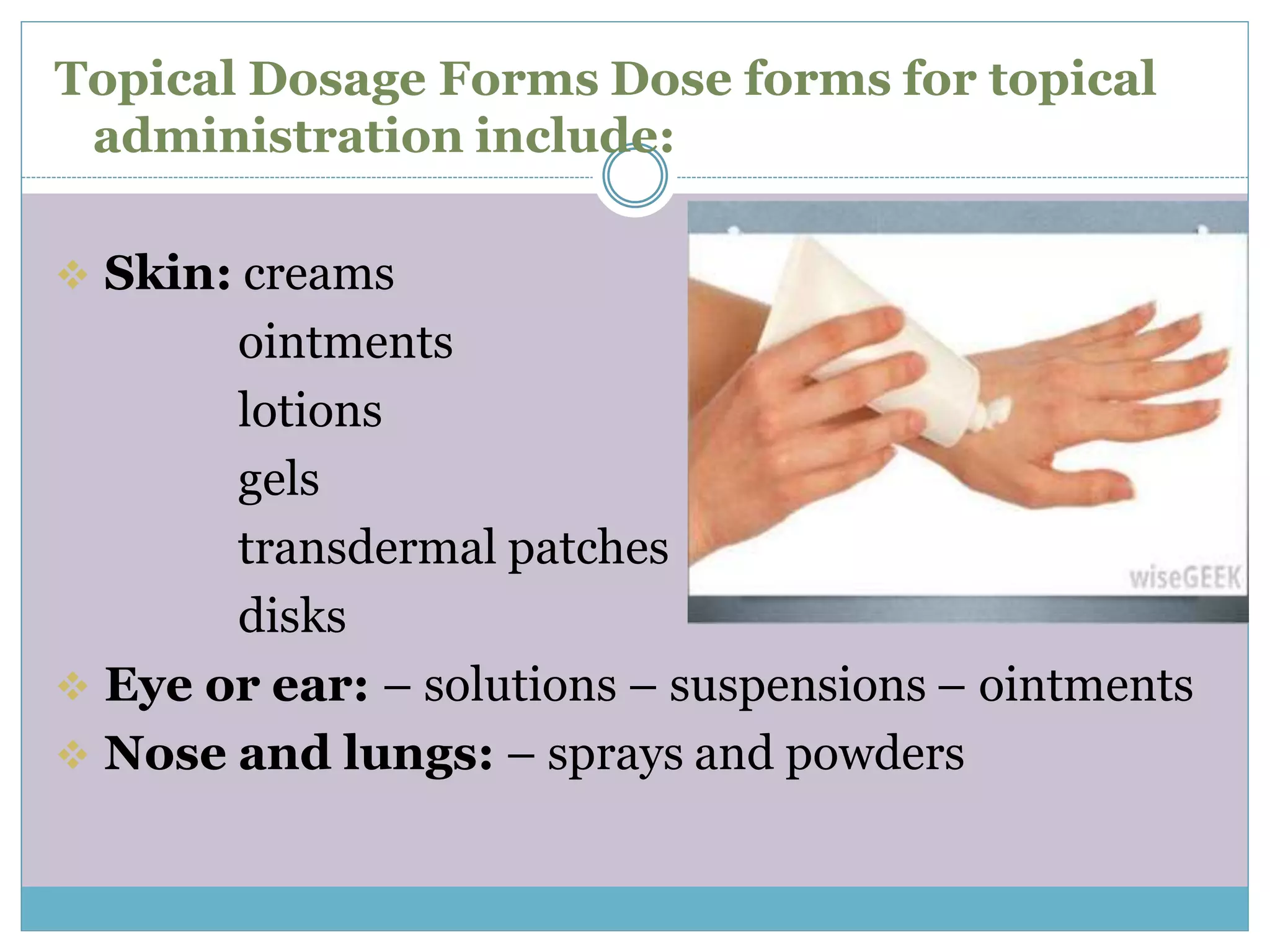
Topical Dosage Forms Dose forms for topical
administration include:
 Skin: creams
ointments
lotions
gels
transdermal patches
disks
 Eye or ear: – solutions – suspensions – ointments
 Nose and lungs: – sprays and powders
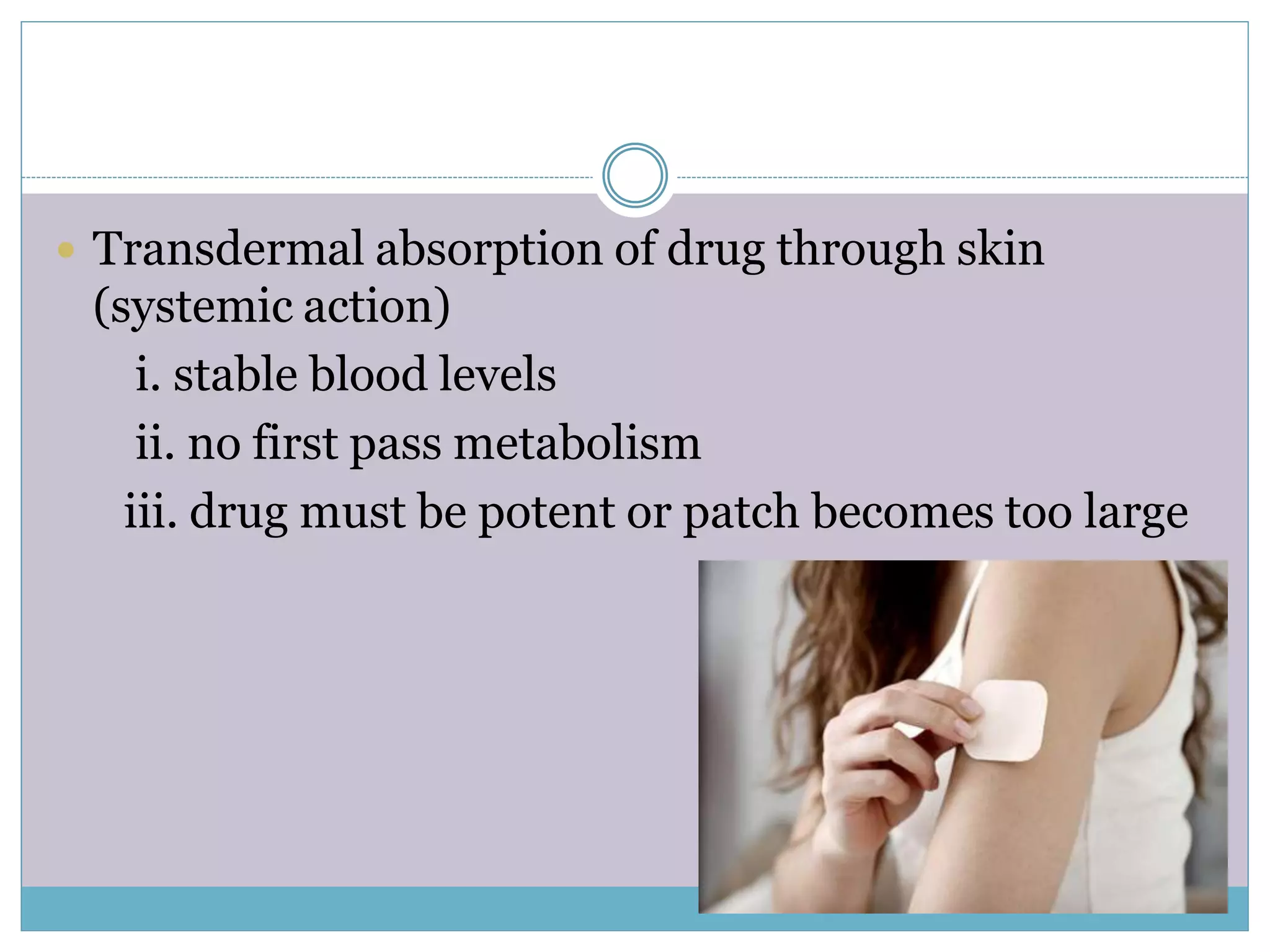
 Transdermal absorption of drug through skin
(systemic action)
i. stable blood levels
ii. no first pass metabolism
iii. drug must be potent or patch becomes too large
Route for administration -Time until effect-
 SELECTION OF ROUTE The ROA is determined by :
The physical characteristics of the drug.
The speed which the drug is absorbed and/ or
released .
the need to bypass hepatic metabolism.
To achieve high conc. At particular sites.
Accuracy of dosage.
Condition of the patient.
  routes of drug administration

routes of drug administration

  • 4.
    1. ORAL ROUTE Oral refers to two methods of administration:  Applying topically to the mouth  Swallowing for absorption along the gastrointestinal (GI) tract into systemic circulation  po (from the Latin per os) is the abbreviation used to indicate oral route of medication administration
  • 5.
    Advantages :  Mostcommonly preferred and used route of drug administration.  Convenient - can be self- administered, pain free, easy to take.  It does not require any special skills.  Absorption - takes place along the whole length of the GI tract .  Cheap - compared to most other parenteral or topical routes.
  • 6.
    Disadvantages :  Itcan not be used in case of unconscious and in- cooperative patients.  Sometimes inefficient - only part of the drug may be absorbed.  First-pass effect - drugs absorbed orally are initially transported to the liver via the portal vein .  irritation to gastric mucosa - nausea and vomiting.  Certain drugs like insulin undergo degradation in GI tract to avoid this degradation by digestive juices it cannot be given by oral route.  Onset of action of drugs takes 3 – 4hrs so cannot be used in medical emergency.  unpleasant taste of some drugs.
  • 7.
     Common doseforms for oral administration tablets capsules liquids solutions suspensions syrups elixirs
  • 8.
    2. Buccal/sublingual route Drugsare taken as smaller tablets which are held in the mouth(buccal) or under the tongue (sublingual) sublingual buccal
  • 10.
    Advantages  Havinng drugstability.Economical.  Quick termination.  FIRST-PASS effect is avoided .  drug absorption is quick. Disadvantages  it is inconvenient to patient.  Unpalatable & bitter taste of drugs may result in poor patient compliances.  Irritation of oral mucosa.  Large quantities not given, may lead to toxicity.  Few drugs are absorbed.
  • 11.
    3. Rectal route *This route of administration is useful. * In case of unconscious patients and children. * If patient is nauseous or vomiting to oral route then this route is having more advantages. * There is easy to terminate exposure at any time and whenever necessary. * This route is good for drugs which affects the bowels such as laxatives, while the drugs which are irritating are contraindicated by this route.
  • 12.
    PARENTRAL ROUTES Parenteral administrationis the route where a drug in the form of solution or suspension is injected in the body with help of hollow needle and a syringe/injection or in in some cases in the vapour or fine droplets drugs are inhealed in the respiratory tract(inhalation). The term parenteral comes from Greek words: Para - meaning outside Enteron - meaning the intestine This route of administration bypasses the alimentary canal.
  • 13.
    INJECTABLES I. INTRAVENOUS II. INTRAMUSCULAR III.SUBCUTANEOUS IV. INTRA-ARTERIAL V. INTRA-ARTICULAR VI. INTRATHECAL VII. INTRADERMAL INHALATION - Absorption through the lungs
  • 15.
    INTRAVENOUS Drug is directlyinjected into the veins. ADVANTAGES  BIOAVAILABILITY 100%(rapid action).  Desired blood concentrations achieved.  Large quantities can be administered (saline solution).  Irritating and hypertonic solutions can be administered.  Vomiting & diarrhea.  Emergency situations.  Gastric manupalation avoided
  • 16.
    DISADVANTAGES  It maycause Irritation.  Speed of the drug entering into the vein should be controlled.  Repeated injections not always feasible.  Less safe .  technical assistance required.  Danger of infection.  Expensive.  Less convenient and painful.
  • 17.
    INTRAMUSULAR ROUTE The drugis injected into the muscle tissues. Advantages :  Absorption reasonably uniform.  rapid onset of action .  mild irritants can be given .  suspensions and colloids can be given. Gastric factors can be avoided Disadvantages • only upto 10ml drug given  local pain and abcess  expensive  infection  There may be possibility of nerve damage  Slow absorption of some drugs.
  • 18.
    SUBCUTANEOUS  Injected underthe skin.  Absorption is slow, so action is prolonged.  Only the non irritant drugs can be administered.  IMPLANT :a tablet or porous capsule is inserted into the loose tissues by incision of the skin, which is then stiched up. example : certain hormonal drugs
  • 19.
    INTRA-ARTICULAR  administered directlyinto the joints.  injections of antibiotics and corticosteroids are administered in inflammed joined cavities by experts. example: hydrocortisone in rheumatoid arthritis
  • 20.
    INTRA-ARTERIAL  Drug isadministered directly into the artery.  Rarely used  Anticancer drugs are given for localized effects  Drugs used for diagnosis of peripheral vascular diseases
  • 21.
    INTRADERMAL  drug isinjected to the skin layers (dermis)  Small quantity should be given.  Painful  Mainly used for testing sensitivity to drugs. e.g. penicillin, ATS (anti tetanus serum) INOCULATION :administration of vaccine (like small pox vaccine )
  • 22.
    INHALATIONS Drugs are administeredeither as aerosole systems , or in the form of vapours. Certain drugs are sprayed in the form of droplets to give local effect . Ex : adrenalin spray administered in bronchial asthma. .
  • 23.
    Advantages :  Absorptionof drug is rapid and easy resulting in rapid local and systemic effect of drug.  Easy to administration Disadvantages :  Drugs directly enter into the left side of the heart , there is a danger of cardiac toxicity.  Certain drugs producing local irritation may increase respiratory tract secretion.
  • 24.
    Topical Routes ofAdministration  Topical administration is the application of a drug directly to the surface of the skin  Includes administration of drugs to any mucous membrane  eye  nose  vagina  ears  urethra  colon  lungs
  • 25.
    Advantages and Disadvantagesof the Topical Route  Local therapeutic effects  Not well absorbed into the deeper layers of the skin or mucous membrane  lower risk of side effects  Transdermal route offers steady level of drug in the system  sprays for inhalation through the nose may be for local or systemic effects
  • 26.
    Topical Dosage FormsDose forms for topical administration include:  Skin: creams ointments lotions gels transdermal patches disks  Eye or ear: – solutions – suspensions – ointments  Nose and lungs: – sprays and powders
  • 27.
     Transdermal absorptionof drug through skin (systemic action) i. stable blood levels ii. no first pass metabolism iii. drug must be potent or patch becomes too large
  • 28.
    Route for administration-Time until effect-
  • 29.
     SELECTION OFROUTE The ROA is determined by : The physical characteristics of the drug. The speed which the drug is absorbed and/ or released . the need to bypass hepatic metabolism. To achieve high conc. At particular sites. Accuracy of dosage. Condition of the patient.