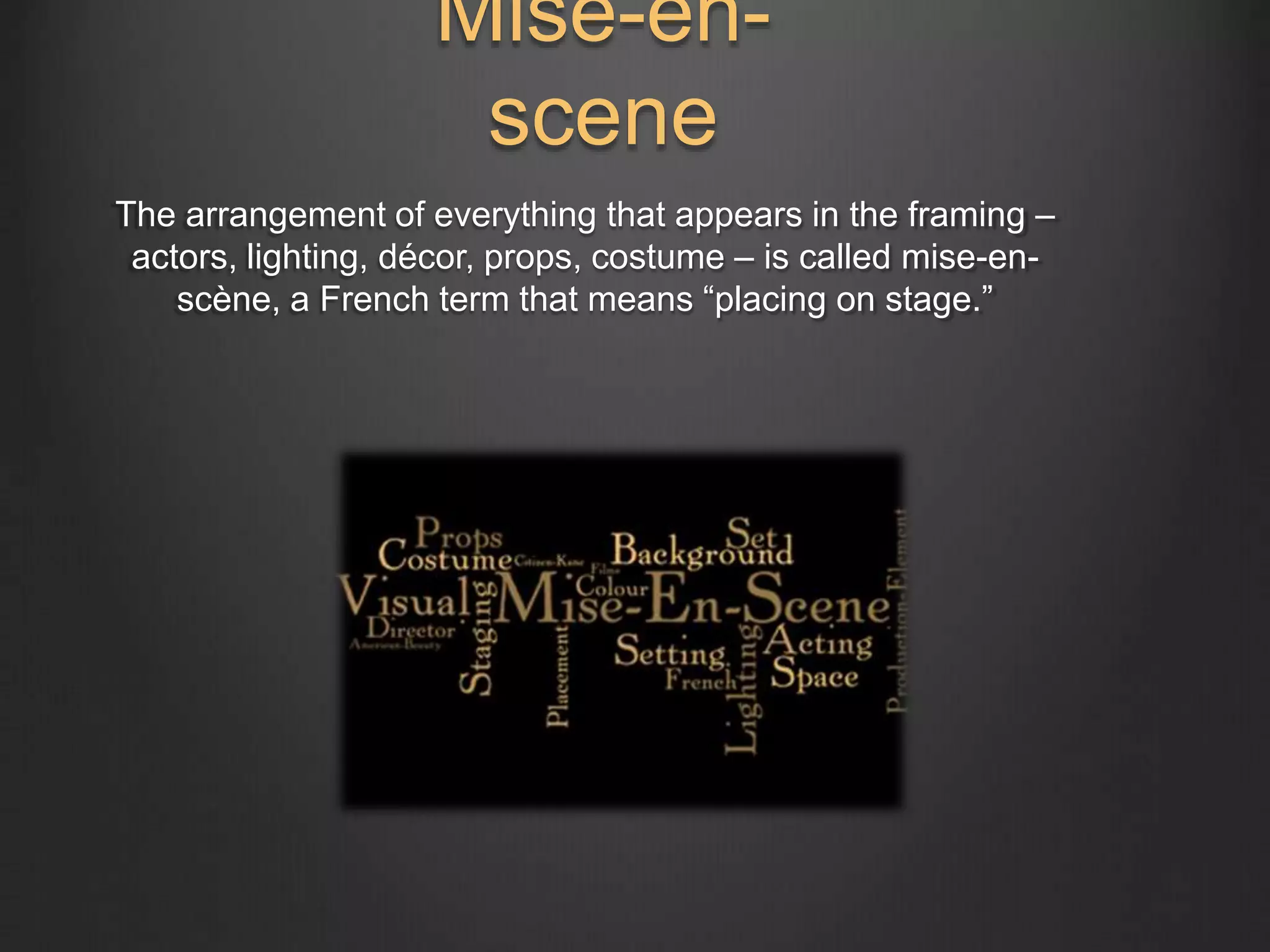
Mise-en-scene 
The arrangement of everything that appears in the framing – 
actors, lighting, décor, props, costume – is called mise-en-scène, 
a French term that means “placing on stage.”
Setting and Props 
Lighting and colour 
Costume hair and make-up 
Facial expressions and body 
Language 
Position and space 
Visual effects
Setting & 
Key things to look for 
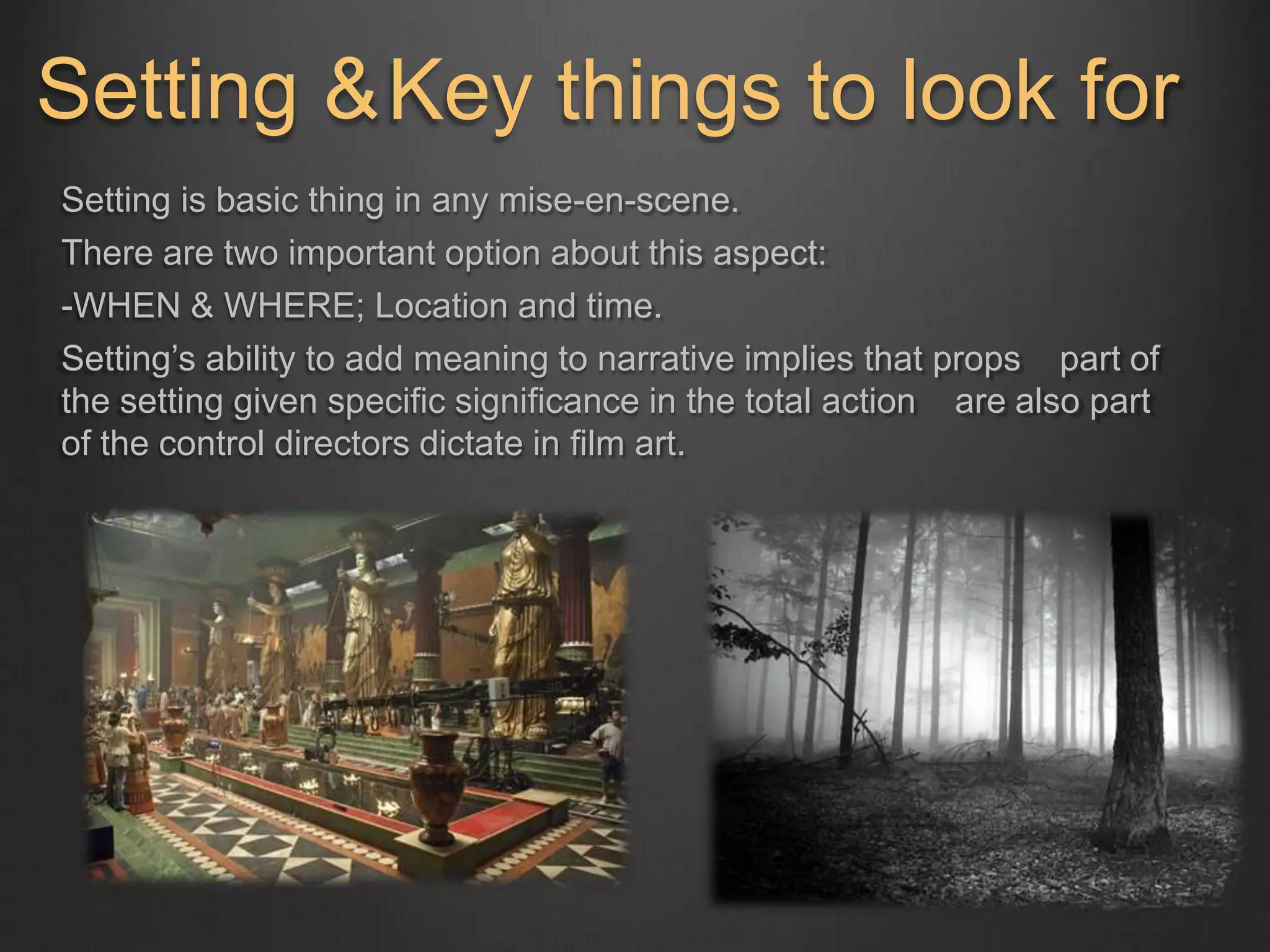
Setting is basic thing in any mise-en-scene. 
There are two important option about this aspect: 
-WHEN & WHERE; Location and time. 
Setting’s ability to add meaning to narrative implies that props part of 
the setting given specific significance in the total action are also part 
of the control directors dictate in film art.
Props 
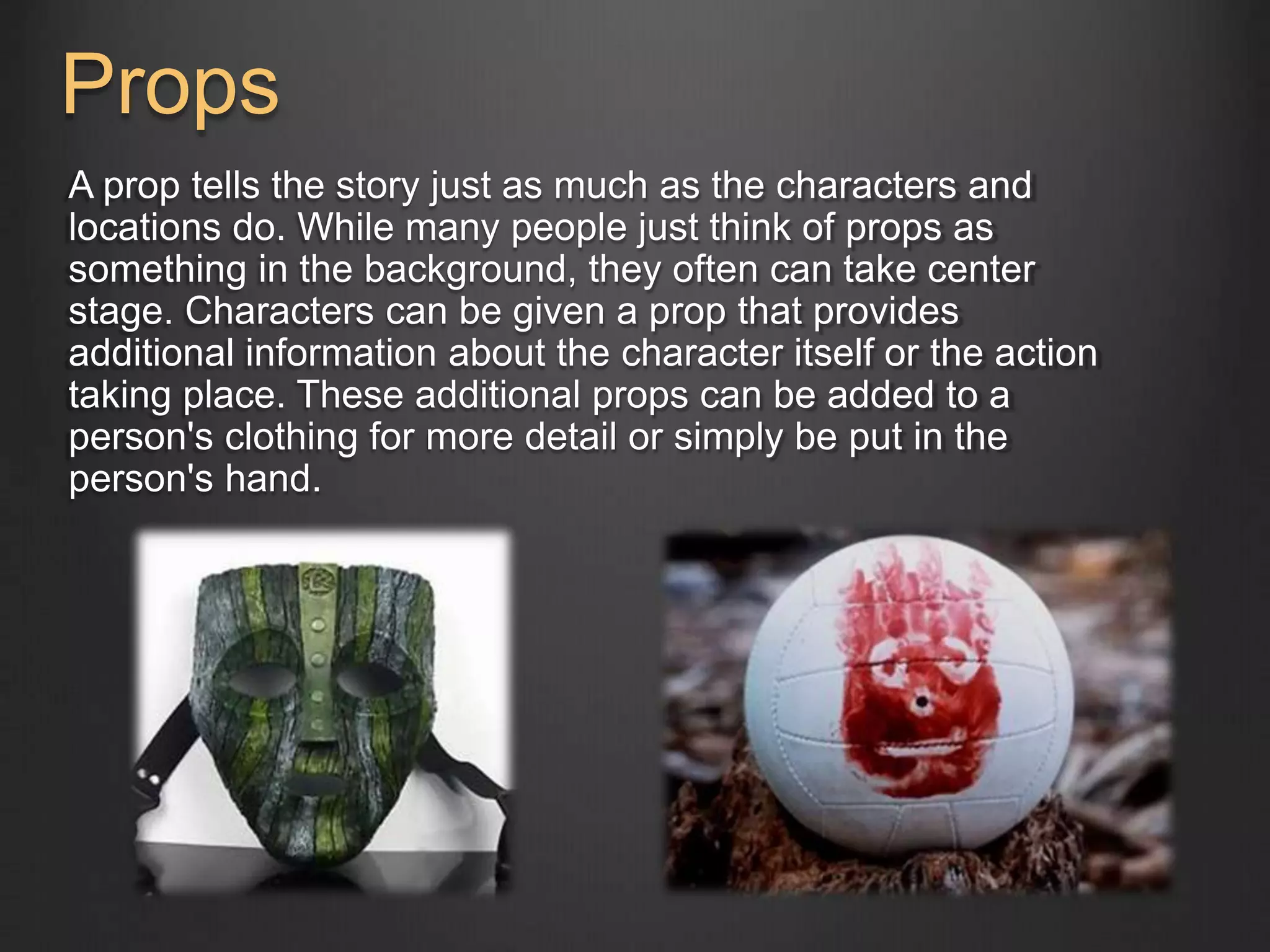
A prop tells the story just as much as the characters and 
locations do. While many people just think of props as 
something in the background, they often can take center 
stage. Characters can be given a prop that provides 
additional information about the character itself or the action 
taking place. These additional props can be added to a 
person's clothing for more detail or simply be put in the 
person's hand.
Lighting and colour 
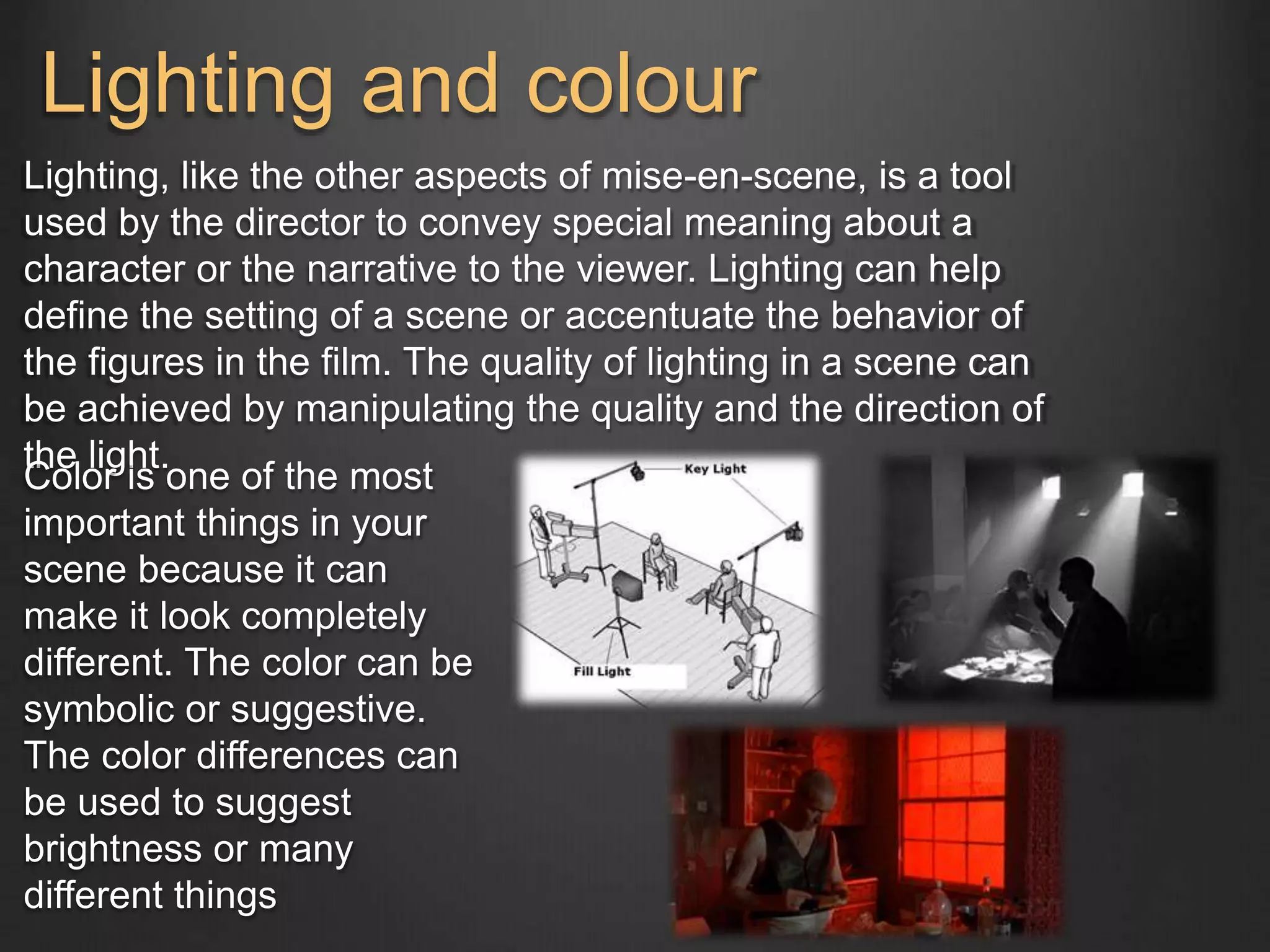
Lighting, like the other aspects of mise-en-scene, is a tool 
used by the director to convey special meaning about a 
character or the narrative to the viewer. Lighting can help 
define the setting of a scene or accentuate the behavior of 
the figures in the film. The quality of lighting in a scene can 
be achieved by manipulating the quality and the direction of 
the light. 
Color is one of the most 
important things in your 
scene because it can 
make it look completely 
different. The color can be 
symbolic or suggestive. 
The color differences can 
be used to suggest 
brightness or many 
different things
Costume hair and make-up 
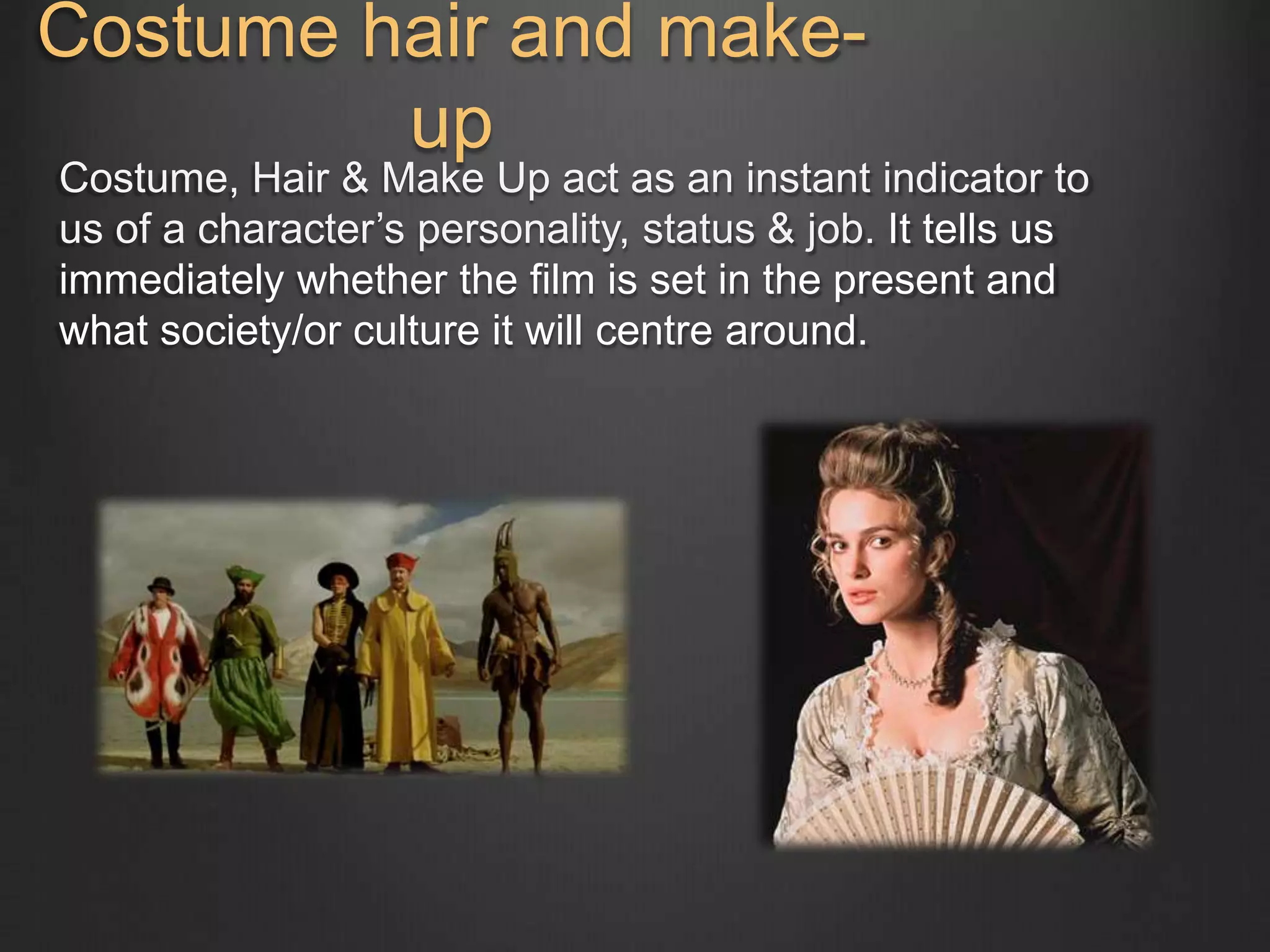
Costume, Hair & Make Up act as an instant indicator to 
us of a character’s personality, status & job. It tells us 
immediately whether the film is set in the present and 
what society/or culture it will centre around.
Facial expressions and body 
language 
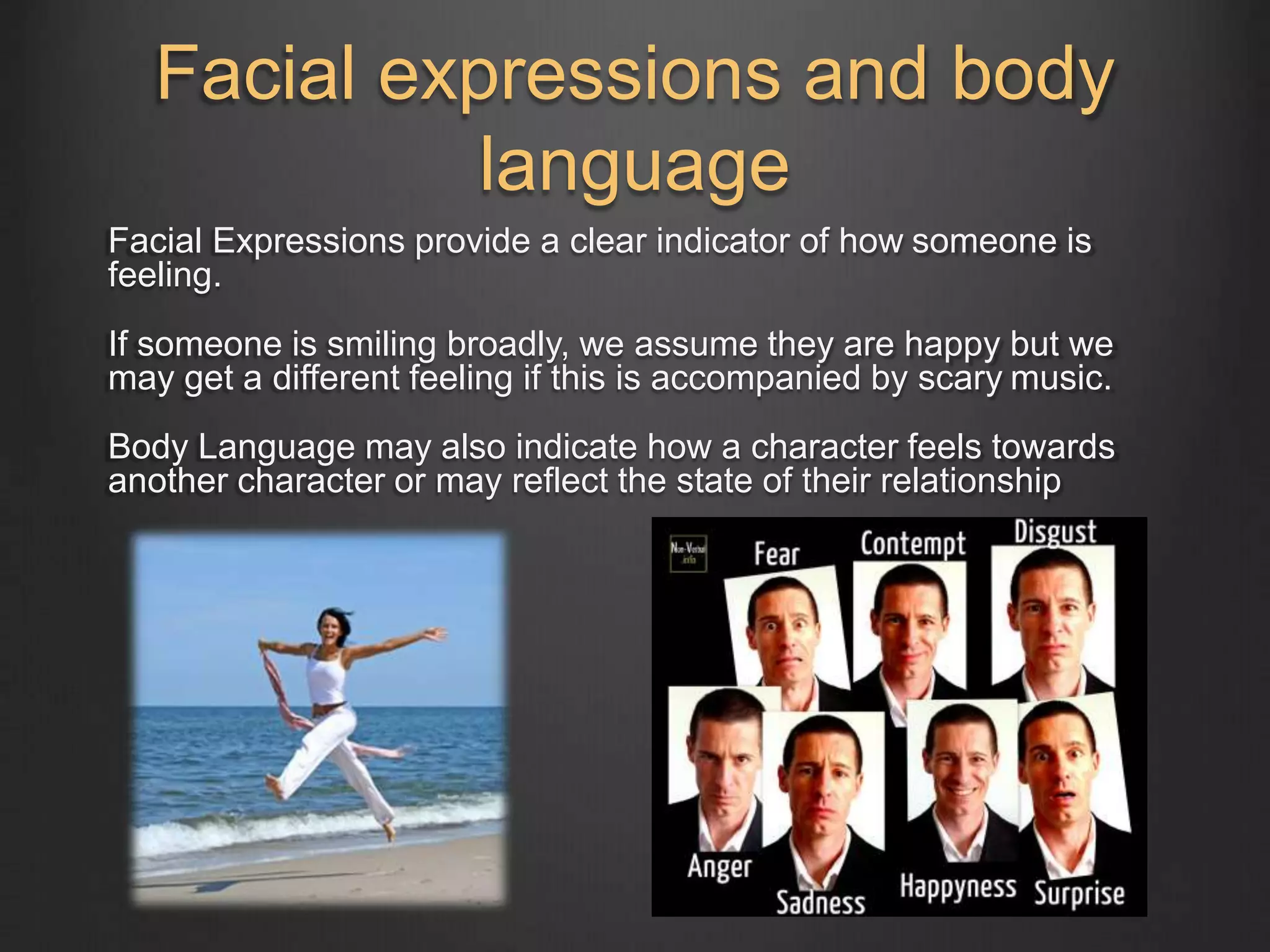
Facial Expressions provide a clear indicator of how someone is 
feeling. 
If someone is smiling broadly, we assume they are happy but we 
may get a different feeling if this is accompanied by scary music. 
Body Language may also indicate how a character feels towards 
another character or may reflect the state of their relationship
Position and space 
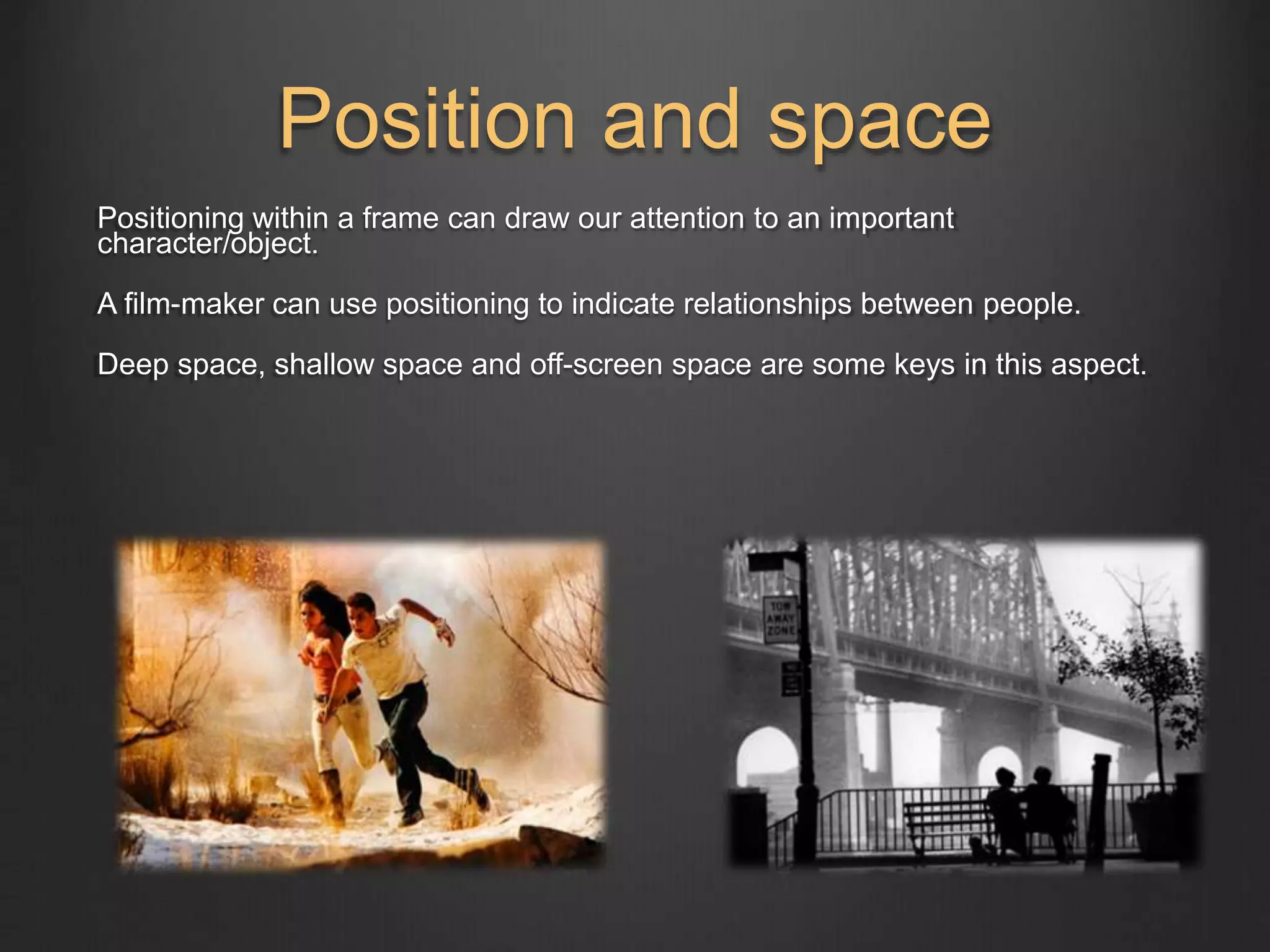
Positioning within a frame can draw our attention to an important 
character/object. 
A film-maker can use positioning to indicate relationships between people. 
Deep space, shallow space and off-screen space are some keys in this aspect.

Presentation1

  • 1.
    Mise-en-scene The arrangementof everything that appears in the framing – actors, lighting, décor, props, costume – is called mise-en-scène, a French term that means “placing on stage.”
  • 2.
    Setting and Props Lighting and colour Costume hair and make-up Facial expressions and body Language Position and space Visual effects
  • 3.
    Setting & Keythings to look for Setting is basic thing in any mise-en-scene. There are two important option about this aspect: -WHEN & WHERE; Location and time. Setting’s ability to add meaning to narrative implies that props part of the setting given specific significance in the total action are also part of the control directors dictate in film art.
  • 4.
    Props A proptells the story just as much as the characters and locations do. While many people just think of props as something in the background, they often can take center stage. Characters can be given a prop that provides additional information about the character itself or the action taking place. These additional props can be added to a person's clothing for more detail or simply be put in the person's hand.
  • 5.
    Lighting and colour Lighting, like the other aspects of mise-en-scene, is a tool used by the director to convey special meaning about a character or the narrative to the viewer. Lighting can help define the setting of a scene or accentuate the behavior of the figures in the film. The quality of lighting in a scene can be achieved by manipulating the quality and the direction of the light. Color is one of the most important things in your scene because it can make it look completely different. The color can be symbolic or suggestive. The color differences can be used to suggest brightness or many different things
  • 6.
    Costume hair andmake-up Costume, Hair & Make Up act as an instant indicator to us of a character’s personality, status & job. It tells us immediately whether the film is set in the present and what society/or culture it will centre around.
  • 7.
    Facial expressions andbody language Facial Expressions provide a clear indicator of how someone is feeling. If someone is smiling broadly, we assume they are happy but we may get a different feeling if this is accompanied by scary music. Body Language may also indicate how a character feels towards another character or may reflect the state of their relationship
  • 8.
    Position and space Positioning within a frame can draw our attention to an important character/object. A film-maker can use positioning to indicate relationships between people. Deep space, shallow space and off-screen space are some keys in this aspect.