Enlightenment
Aha!
Hobbes vs. Locke
Montesquieu

Spirit of the Laws (1748) -a criticism of French
absolutism by looking at the success of English
limited monarchy with checks and balances on
royal power

Persian Letters (1721) -a satirical look at modern
European society’s superstitions and traditions by
seeing them from a tourist’s perspective
Jonathan Swift
A Modest Proposal (1729)
-a satirical look at the poor
treatment of the Irish at the
hands of English landlords

Gulliver’s Travels (1726)
-a view of several fictional
societies, comparing
European traditions either
favorably or unfavorably to
them.
Voltaire    PASSIONATELY SUPPORTED
            FREEDOM OF SPEECH AND
                   RELIGION

             EXILED FROM FRANCE FOR
           INSULTING A NOBLE OF GREAT
           INFLUENCE, LIVED IN PRUSSIA
                  AND ENGLAND

              CORRESPONDED WITH
              CATHERINE THE GREAT,
              FREDERICK THE GREAT

           DEIST - “CRUSH THE TERRIBLE
                      THING!”
Candide (1759)
Inspired by Seven
Years War and the
Lisbon
Earthquake of
1755

Focuses on
cruelty and
intolerance in
society
Denis Diderot
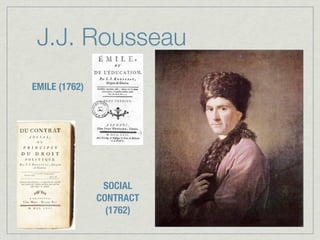
J.J. Rousseau
EMILE (1762)


                SOCIAL
               CONTRACT
                 (1762)
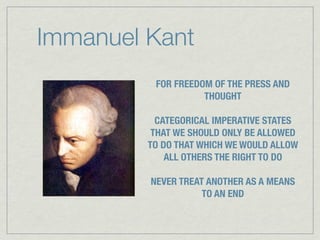
Immanuel Kant
          FOR FREEDOM OF THE PRESS AND
                    THOUGHT

           CATEGORICAL IMPERATIVE STATES
          THAT WE SHOULD ONLY BE ALLOWED
         TO DO THAT WHICH WE WOULD ALLOW
             ALL OTHERS THE RIGHT TO DO

         NEVER TREAT ANOTHER AS A MEANS
                    TO AN END
David Hume
             Historian, economist,
             skeptic, political
             scientist, atheist

             rejected the idea of
             divine wisdom

             Scottish friend of
             Adam Smith
Salons

Gatherings of the
literate classes to
discuss the
thinkers and their
works and their
implications for
society
Concorcet

Advocated public
education, a liberal
economy, a constitutional
government and equality for
women and people of
‘exotic’ ethnicity (abolition
of slavery)
Enlightened monarchs

Europhilosophes

  • 1.
  • 2.
  • 3.
    Montesquieu Spirit of theLaws (1748) -a criticism of French absolutism by looking at the success of English limited monarchy with checks and balances on royal power Persian Letters (1721) -a satirical look at modern European society’s superstitions and traditions by seeing them from a tourist’s perspective
  • 4.
    Jonathan Swift A ModestProposal (1729) -a satirical look at the poor treatment of the Irish at the hands of English landlords Gulliver’s Travels (1726) -a view of several fictional societies, comparing European traditions either favorably or unfavorably to them.
  • 5.
    Voltaire PASSIONATELY SUPPORTED FREEDOM OF SPEECH AND RELIGION EXILED FROM FRANCE FOR INSULTING A NOBLE OF GREAT INFLUENCE, LIVED IN PRUSSIA AND ENGLAND CORRESPONDED WITH CATHERINE THE GREAT, FREDERICK THE GREAT DEIST - “CRUSH THE TERRIBLE THING!”
  • 6.
    Candide (1759) Inspired bySeven Years War and the Lisbon Earthquake of 1755 Focuses on cruelty and intolerance in society
  • 7.
  • 8.
    J.J. Rousseau EMILE (1762) SOCIAL CONTRACT (1762)
  • 9.
    Immanuel Kant FOR FREEDOM OF THE PRESS AND THOUGHT CATEGORICAL IMPERATIVE STATES THAT WE SHOULD ONLY BE ALLOWED TO DO THAT WHICH WE WOULD ALLOW ALL OTHERS THE RIGHT TO DO NEVER TREAT ANOTHER AS A MEANS TO AN END
  • 10.
    David Hume Historian, economist, skeptic, political scientist, atheist rejected the idea of divine wisdom Scottish friend of Adam Smith
  • 11.
    Salons Gatherings of the literateclasses to discuss the thinkers and their works and their implications for society
  • 12.
    Concorcet Advocated public education, aliberal economy, a constitutional government and equality for women and people of ‘exotic’ ethnicity (abolition of slavery)
  • 13.