
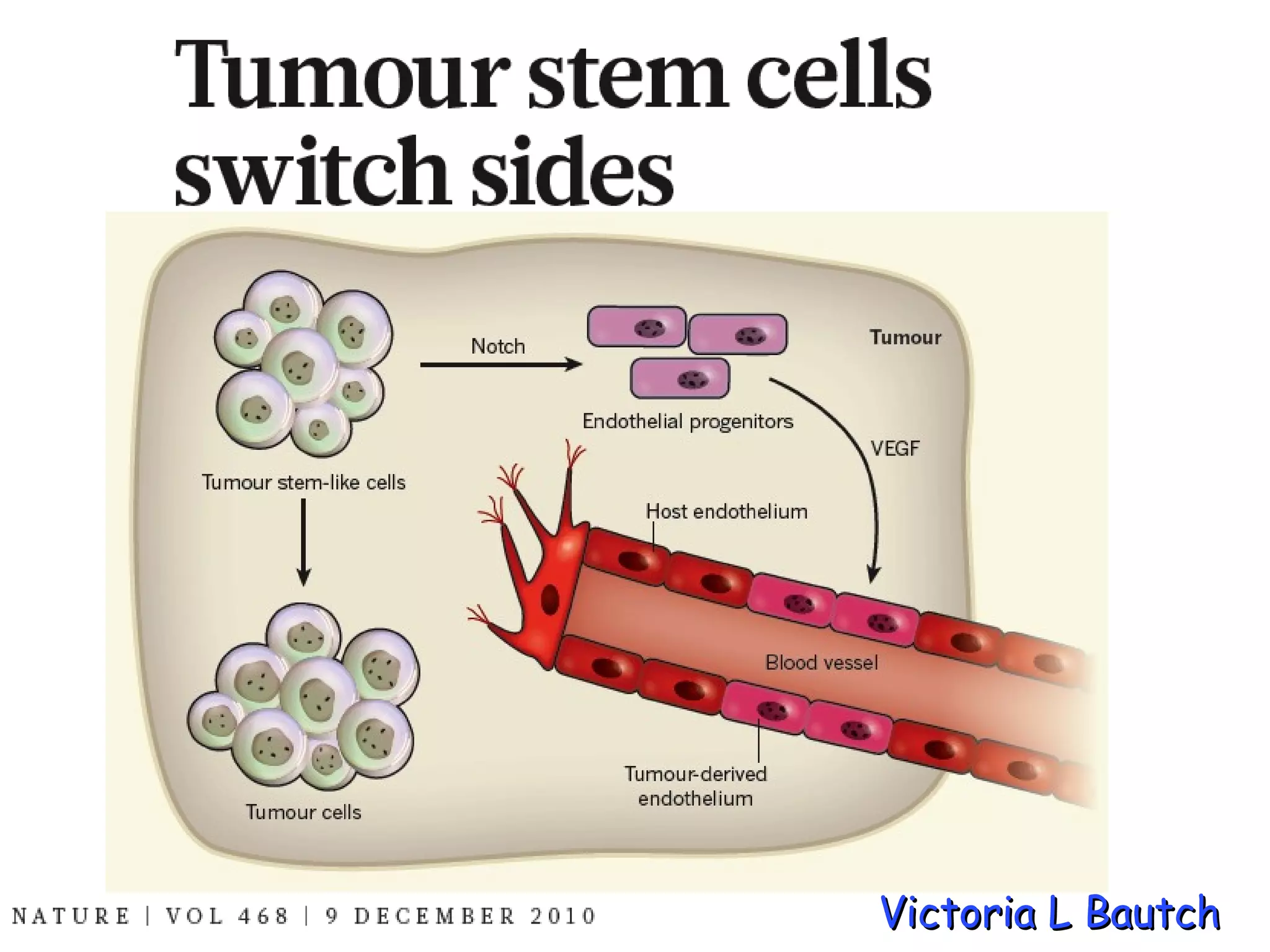

Cancer stem cells:  implications in the  clinical setting  Malcolm Alison; m.alison@qmul.ac.uk 4 th  April 2011


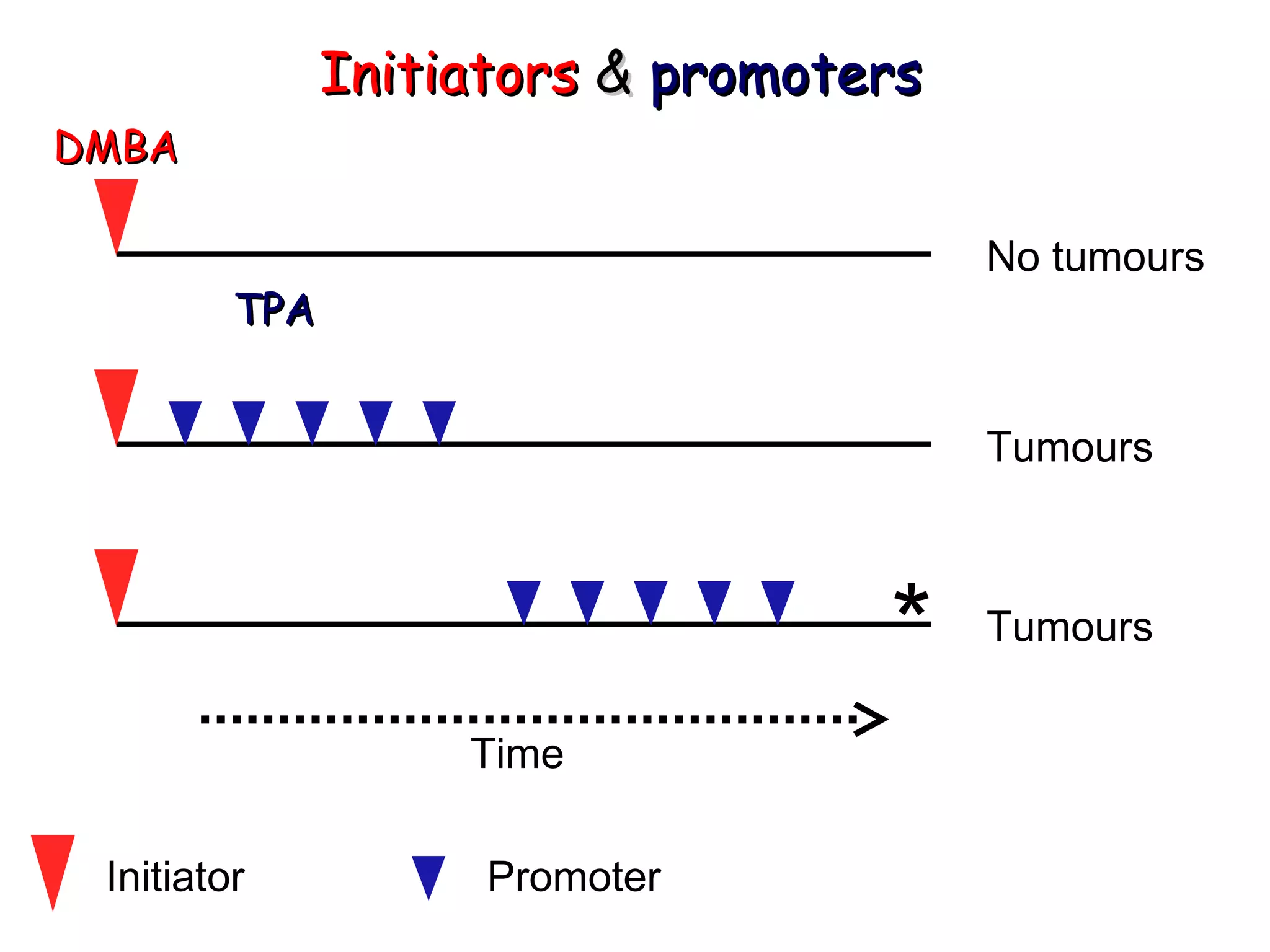
Time Initiator Promoter Initiators  &   promoters * Tumours Tumours No tumours DMBA TPA
 
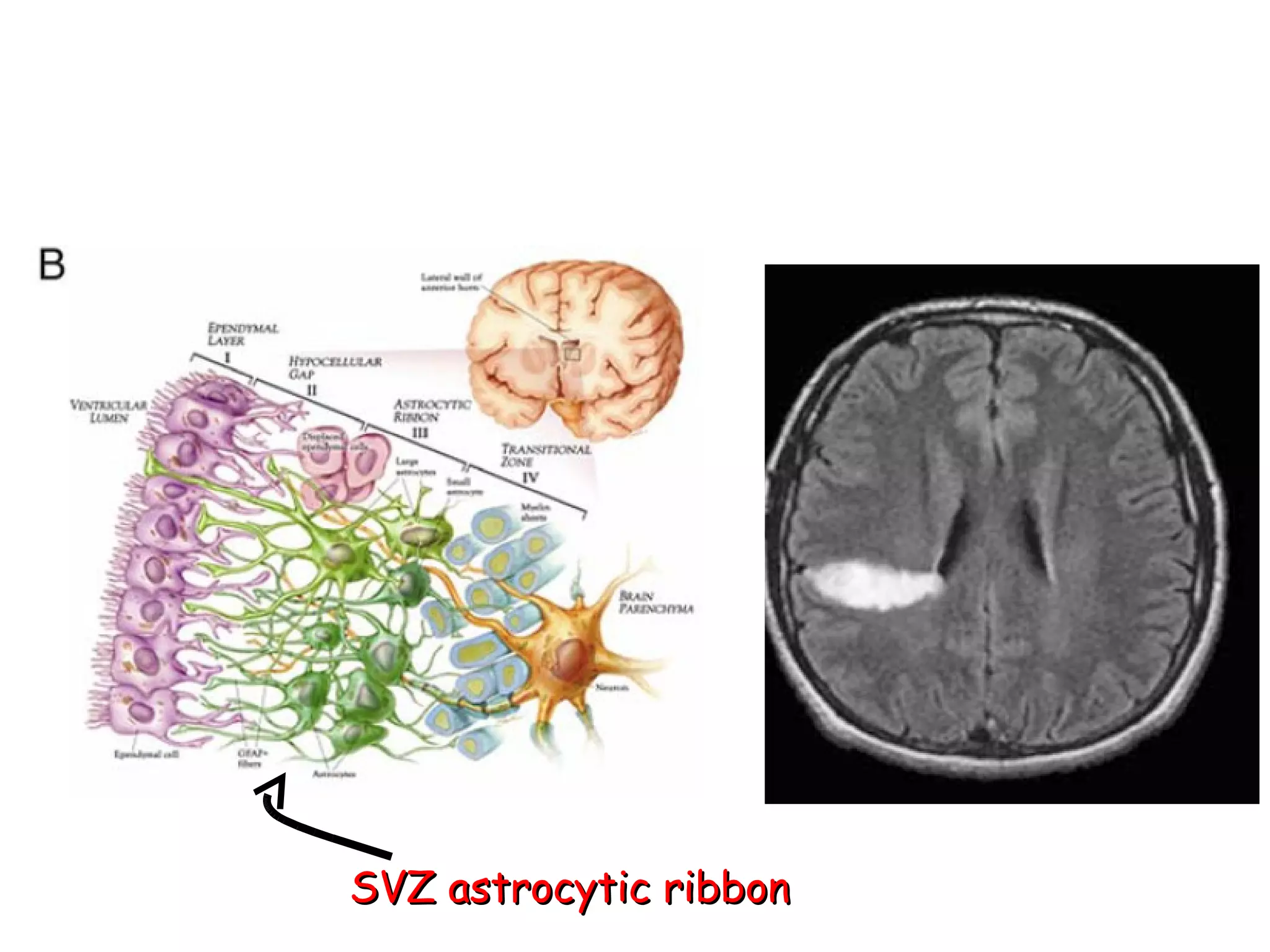
SVZ astrocytic ribbon
 
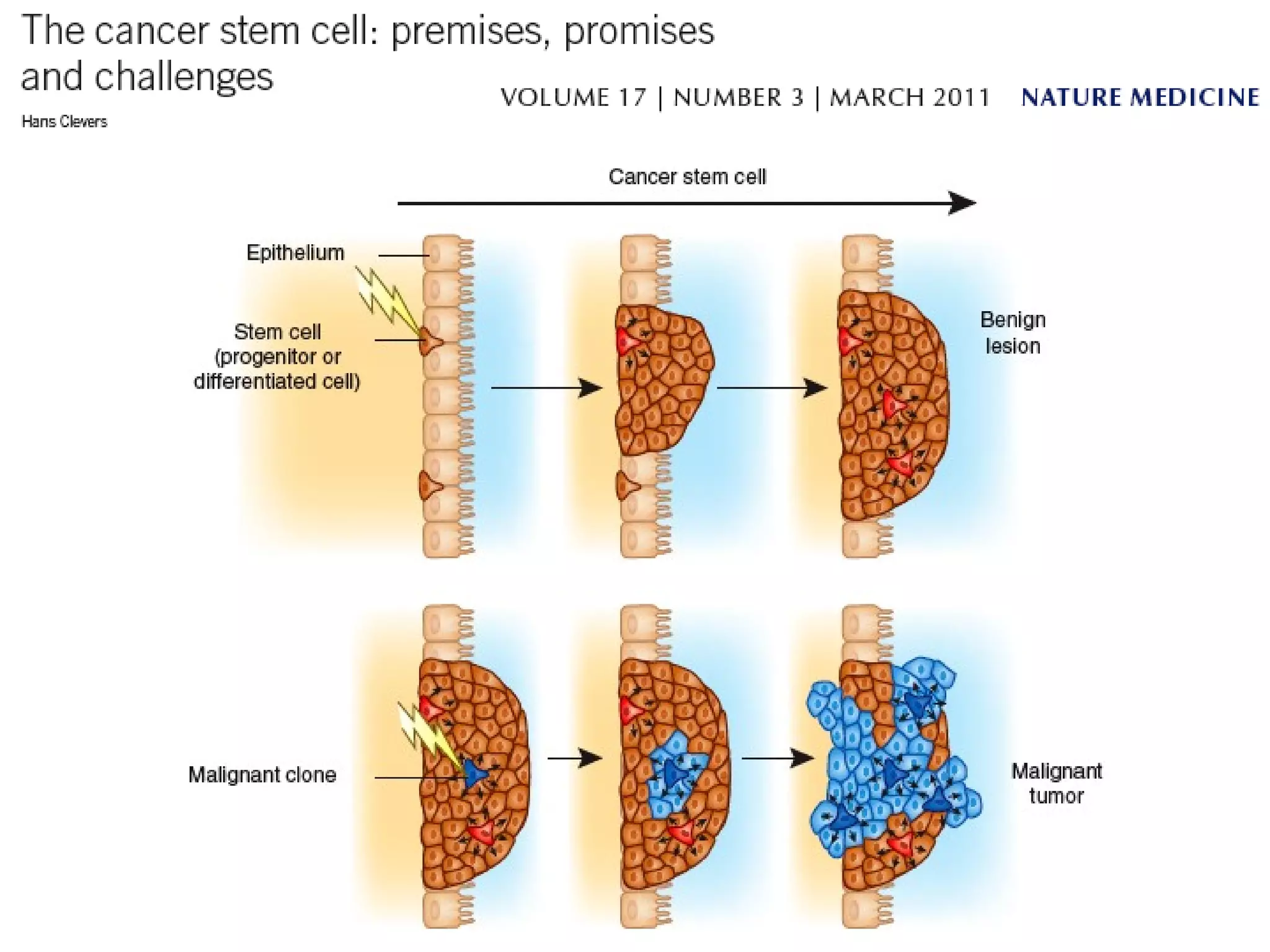
Cancer Stem Cells The idea is not new
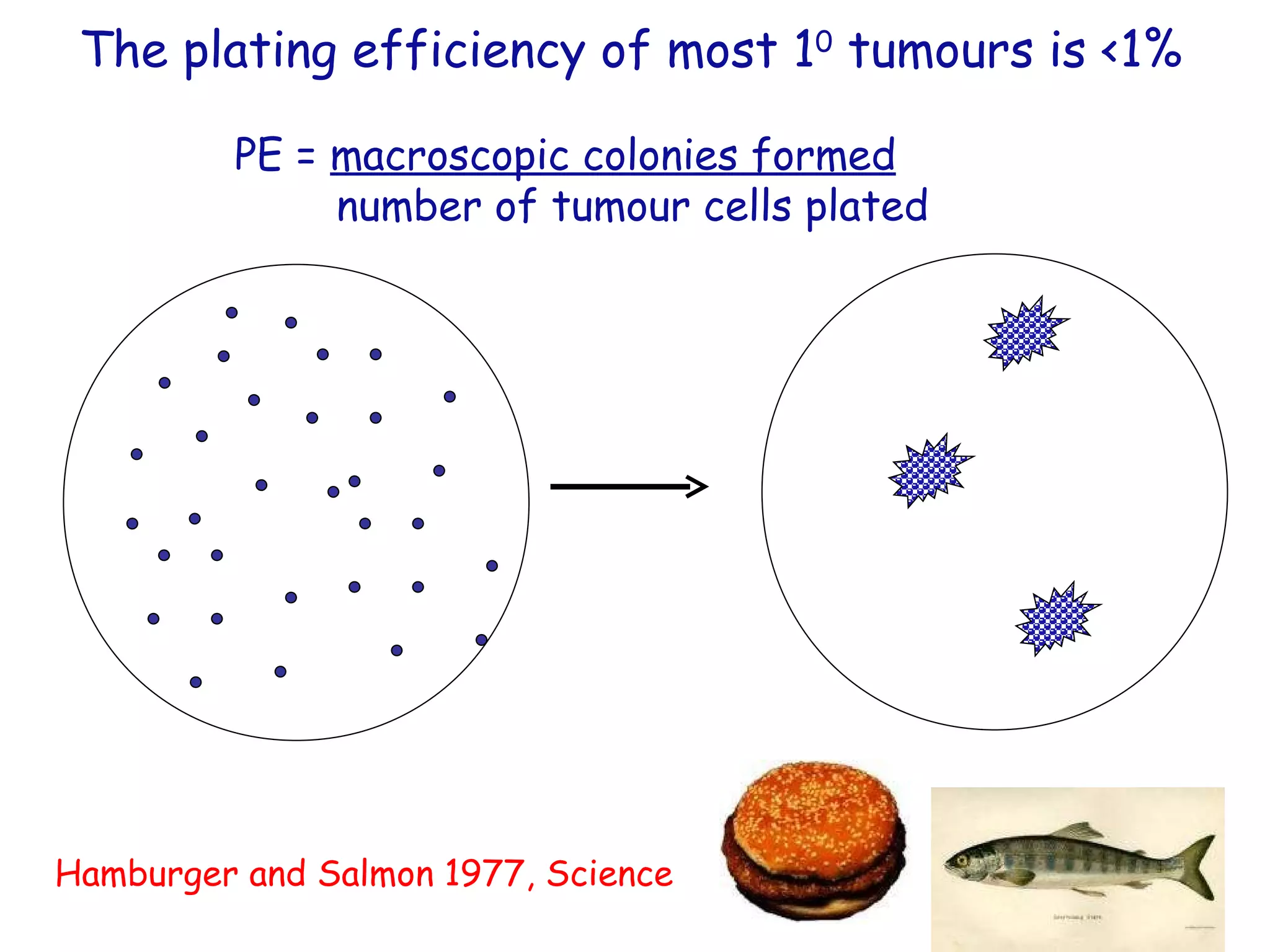
Hamburger and Salmon 1977, Science The plating efficiency of most 1 0  tumours is <1% PE =  macroscopic colonies formed number of tumour cells plated
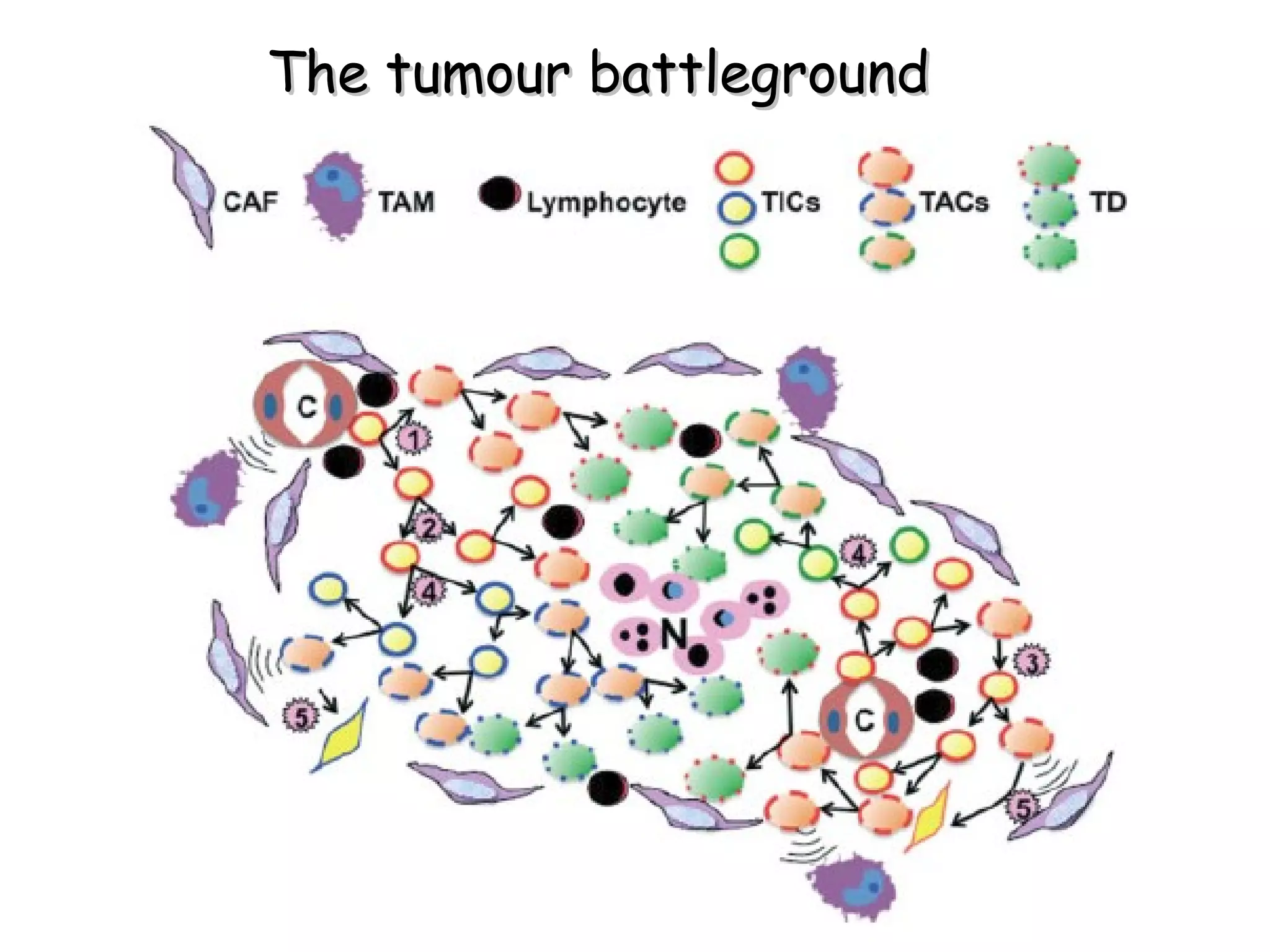
The tumour battleground
Markers Cancer stem cells
 
 
Flow Cytometry
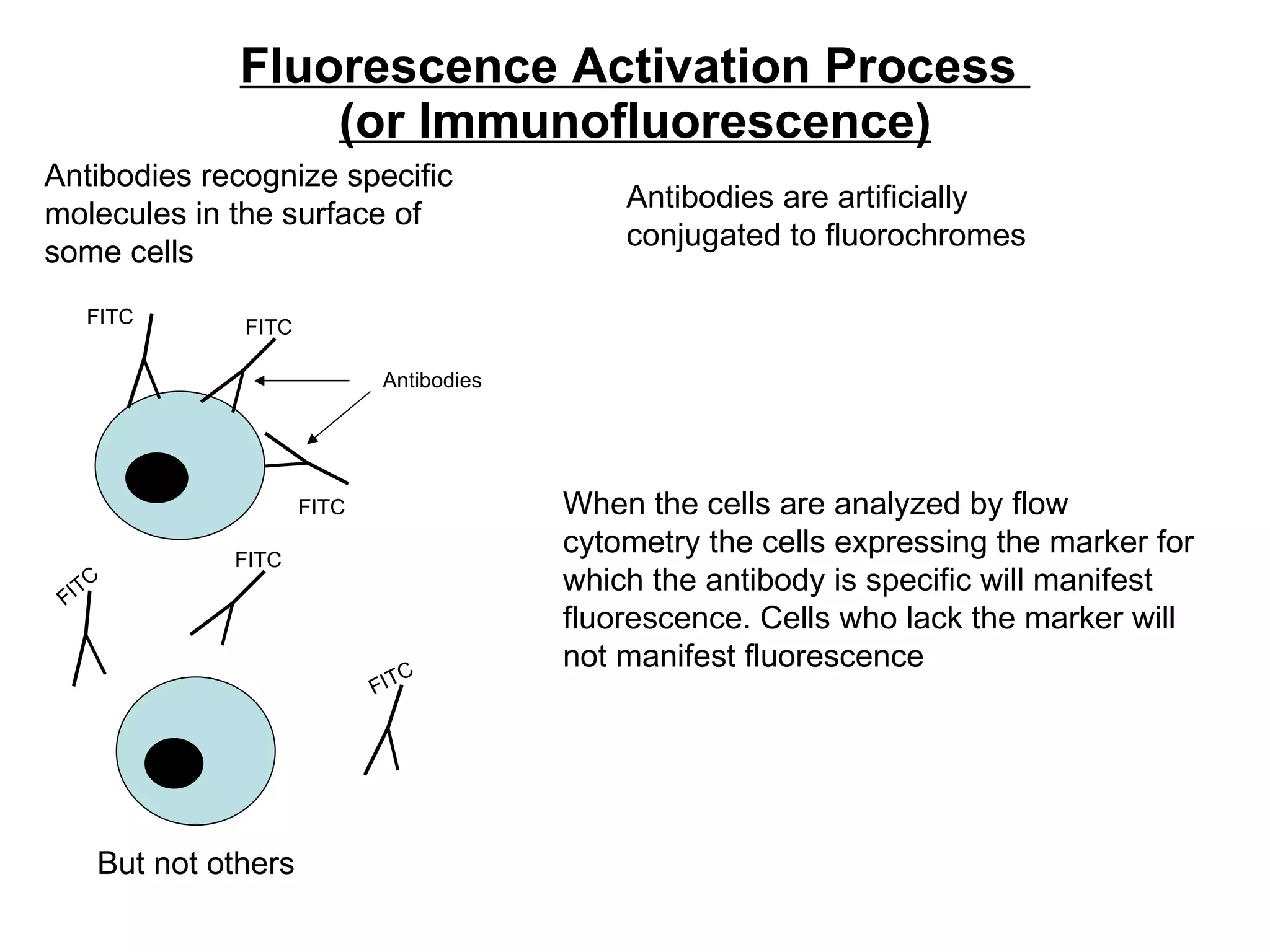
Fluorescence Activation Process  (or Immunofluorescence) FITC FITC Antibodies recognize specific molecules in the surface of some cells But not others When the cells are analyzed by flow cytometry the cells expressing the marker for which the antibody is specific will manifest fluorescence. Cells who lack the marker will not manifest fluorescence Antibodies are artificially conjugated to fluorochromes Antibodies FITC FITC FITC FITC
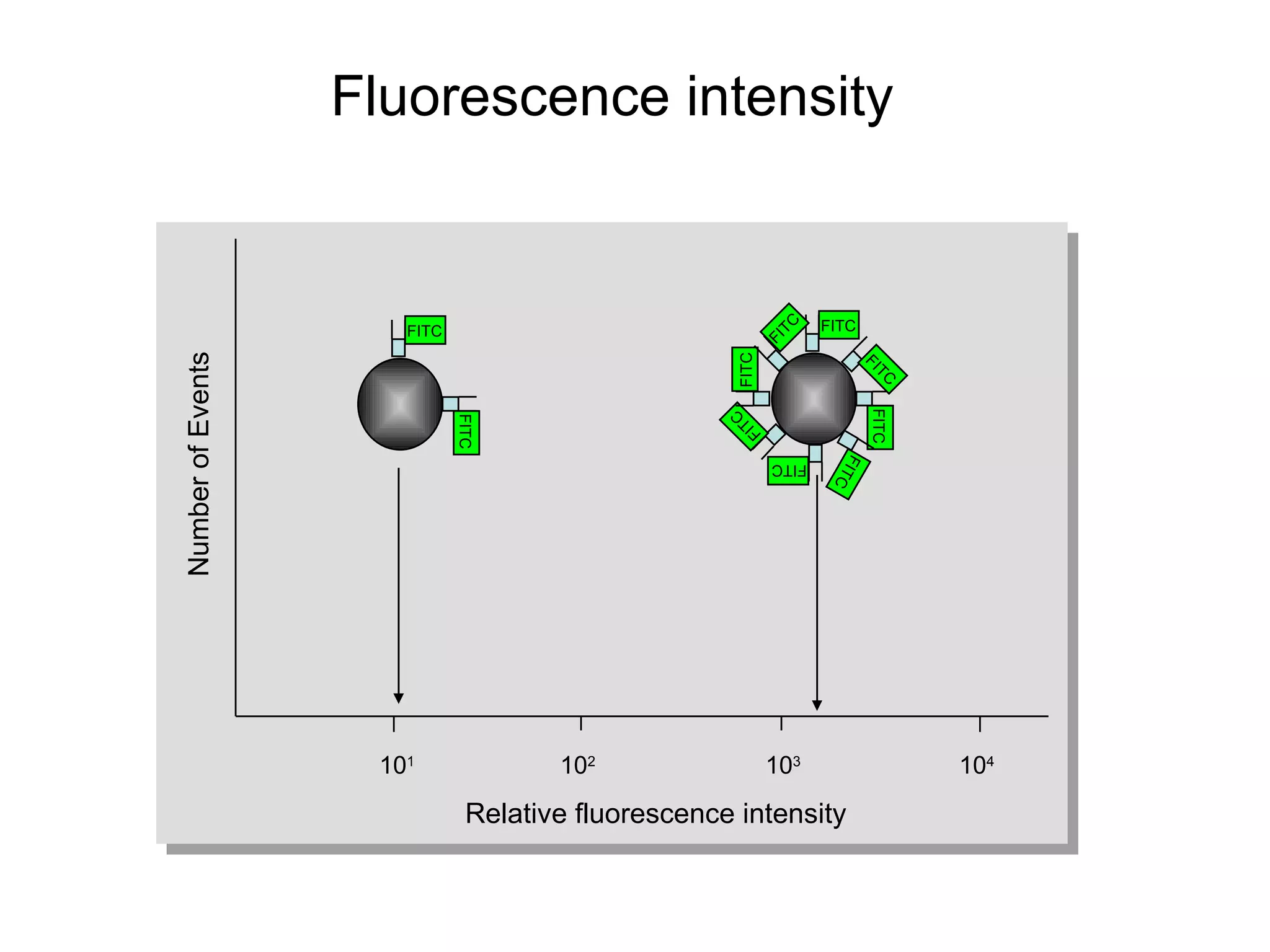
Fluorescence intensity 10 1 10 4 10 3 10 2 Relative fluorescence intensity Number of Events FITC FITC FITC FITC FITC FITC FITC FITC FITC FITC
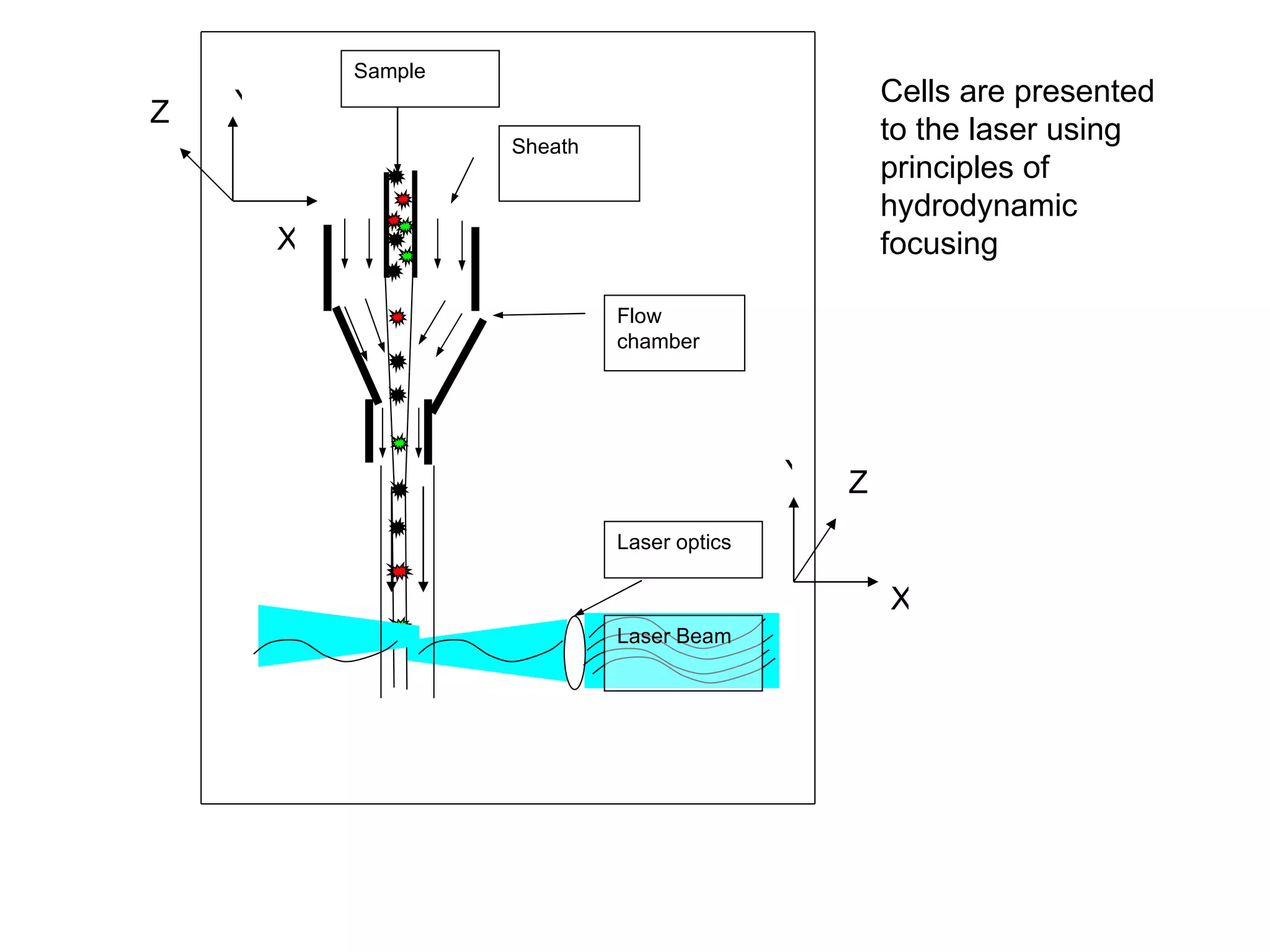
Y X Z Y Z X Cells are presented to the laser using principles of hydrodynamic focusing  Laser optics Laser Beam Flow chamber Sheath Sample
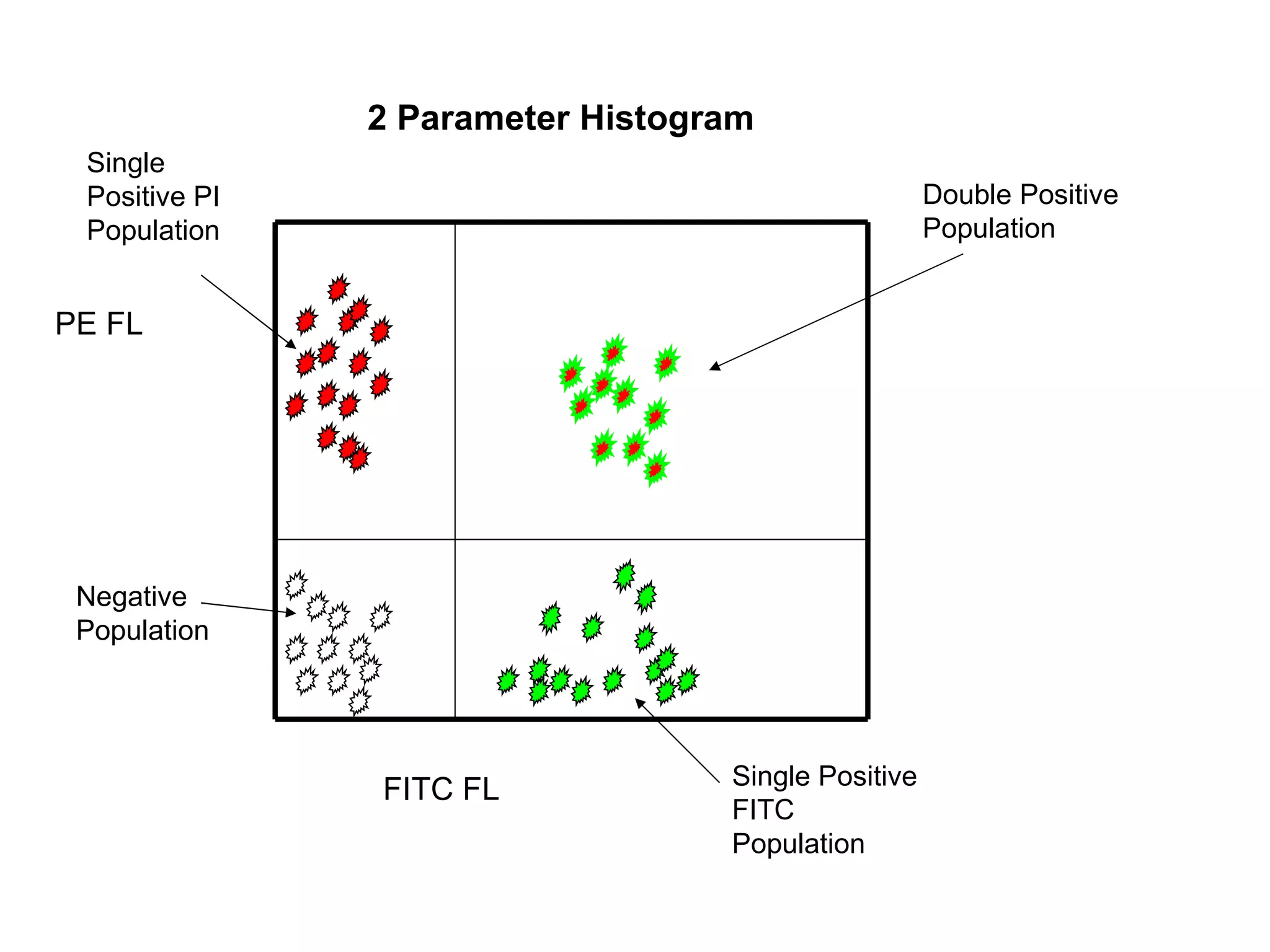
2 Parameter Histogram FITC FL PE FL Negative Population Single Positive FITC Population Single Positive PI Population Double Positive Population
 
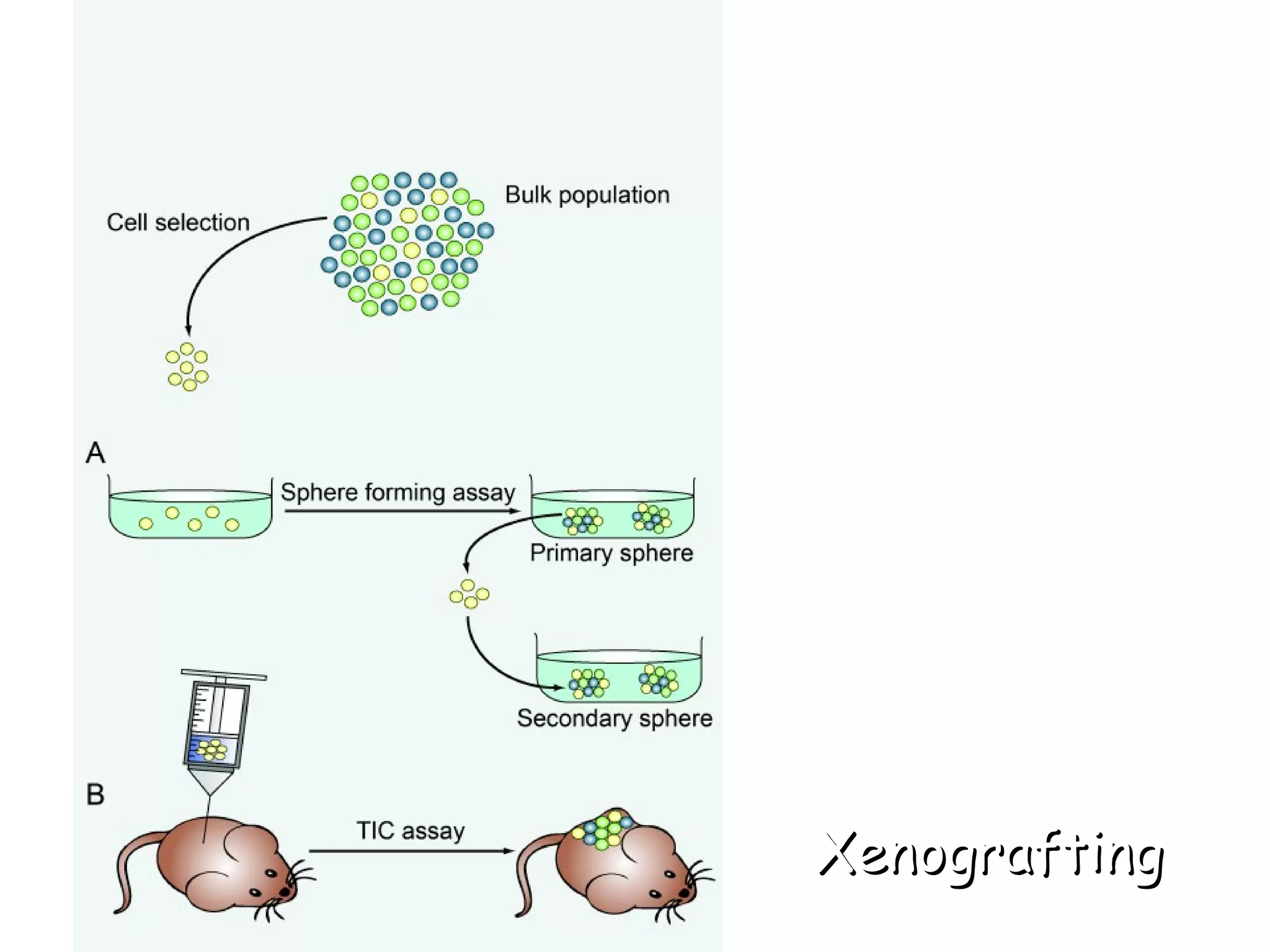
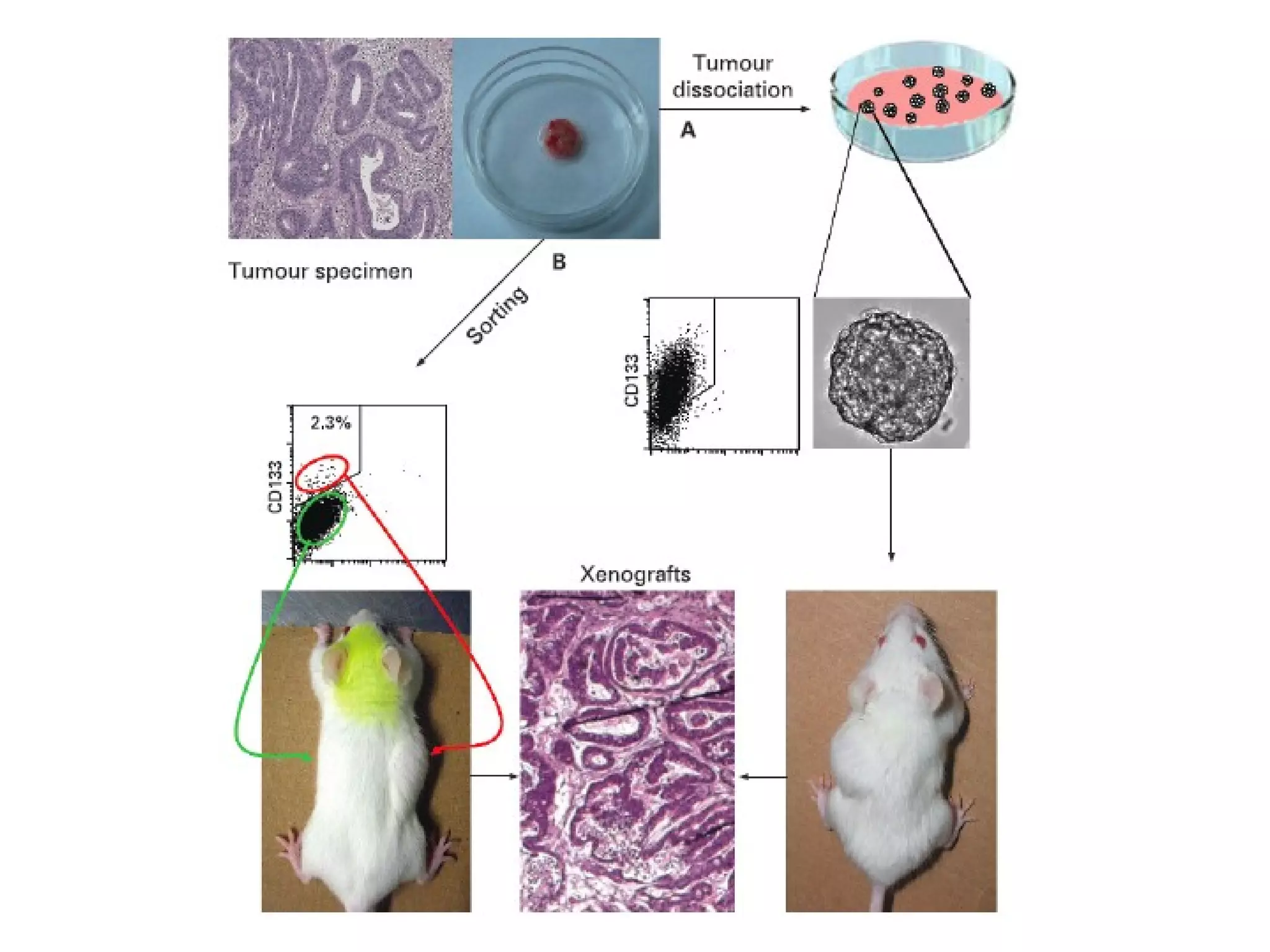
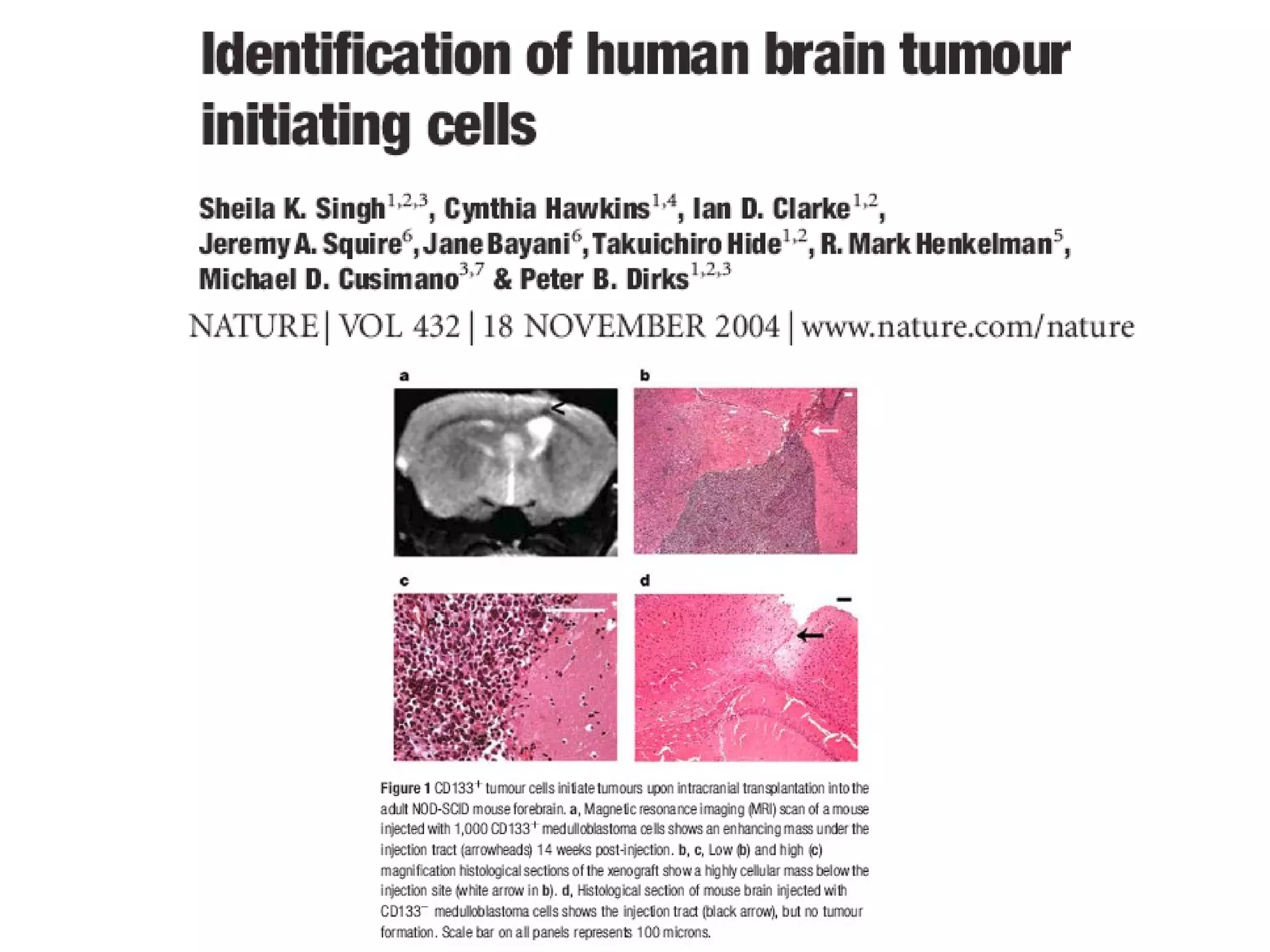
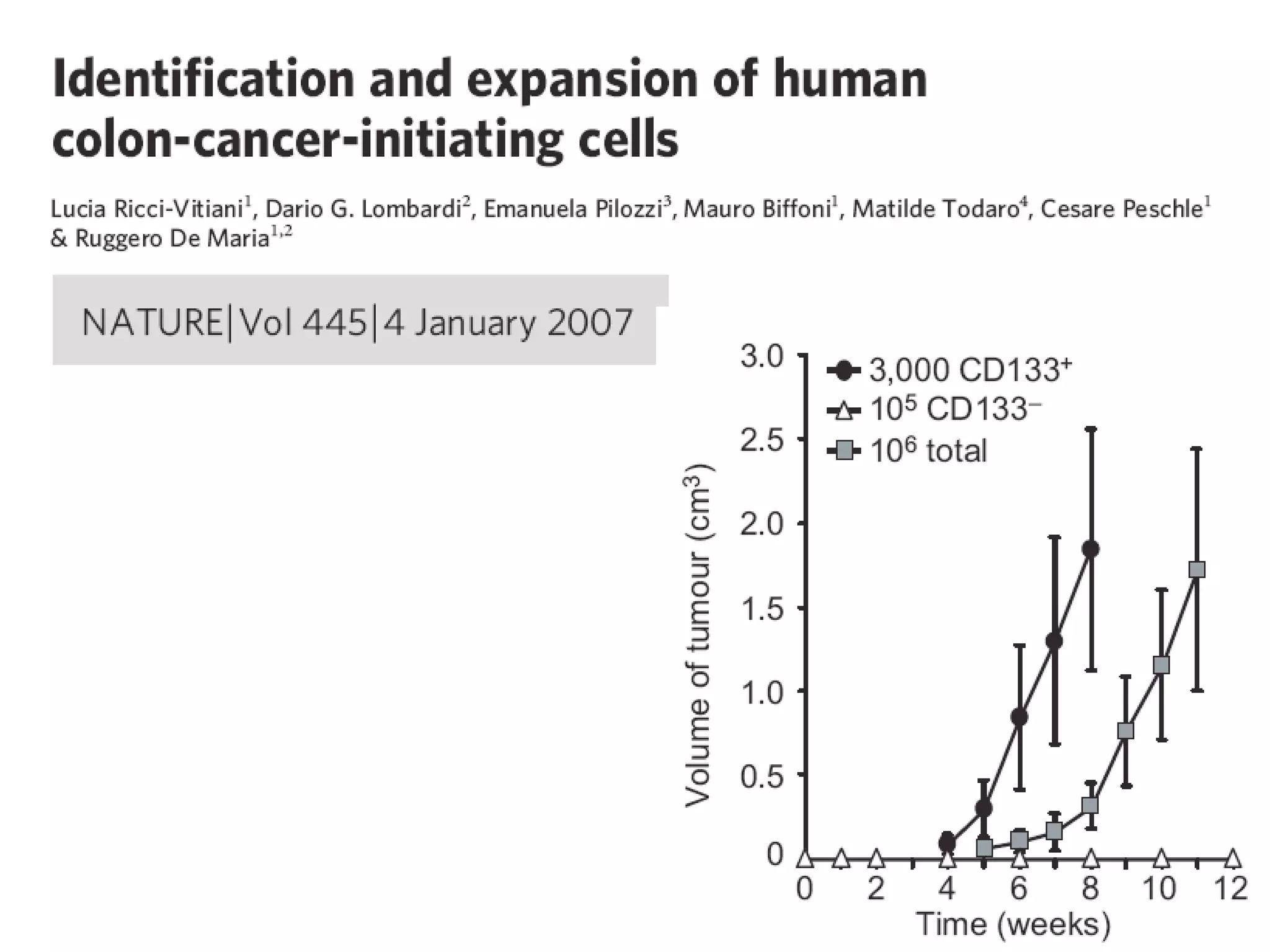
Xenografting


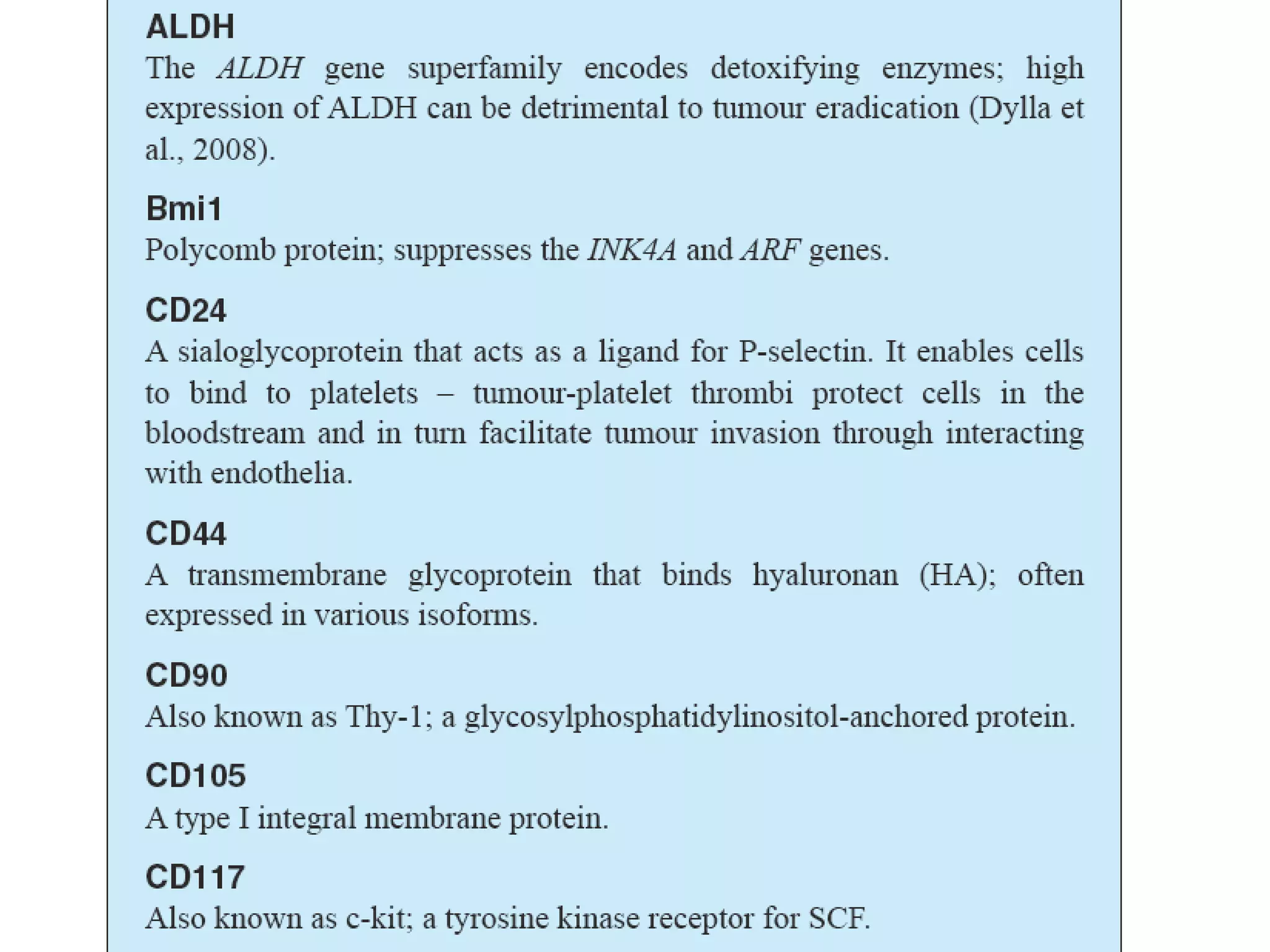
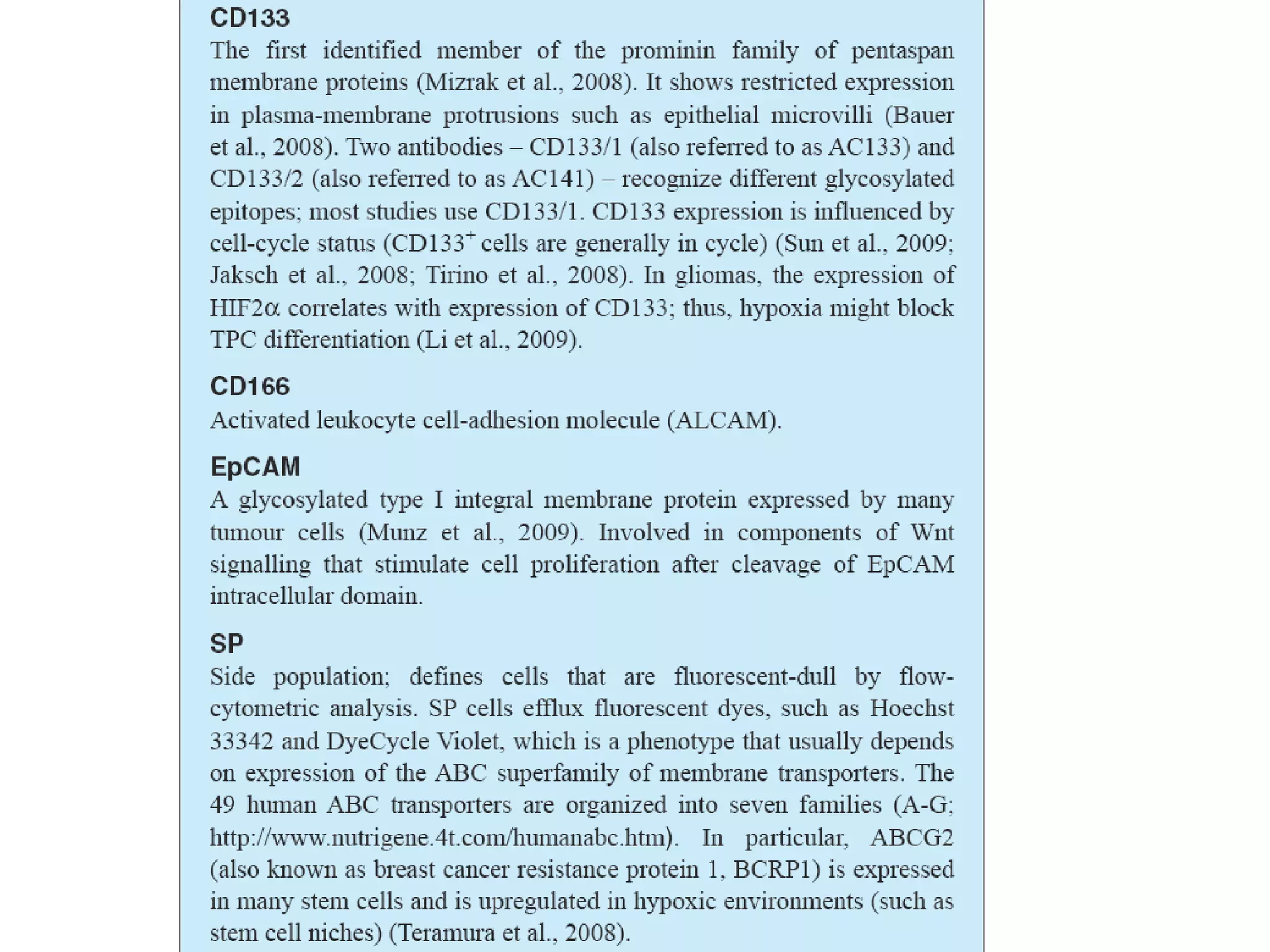
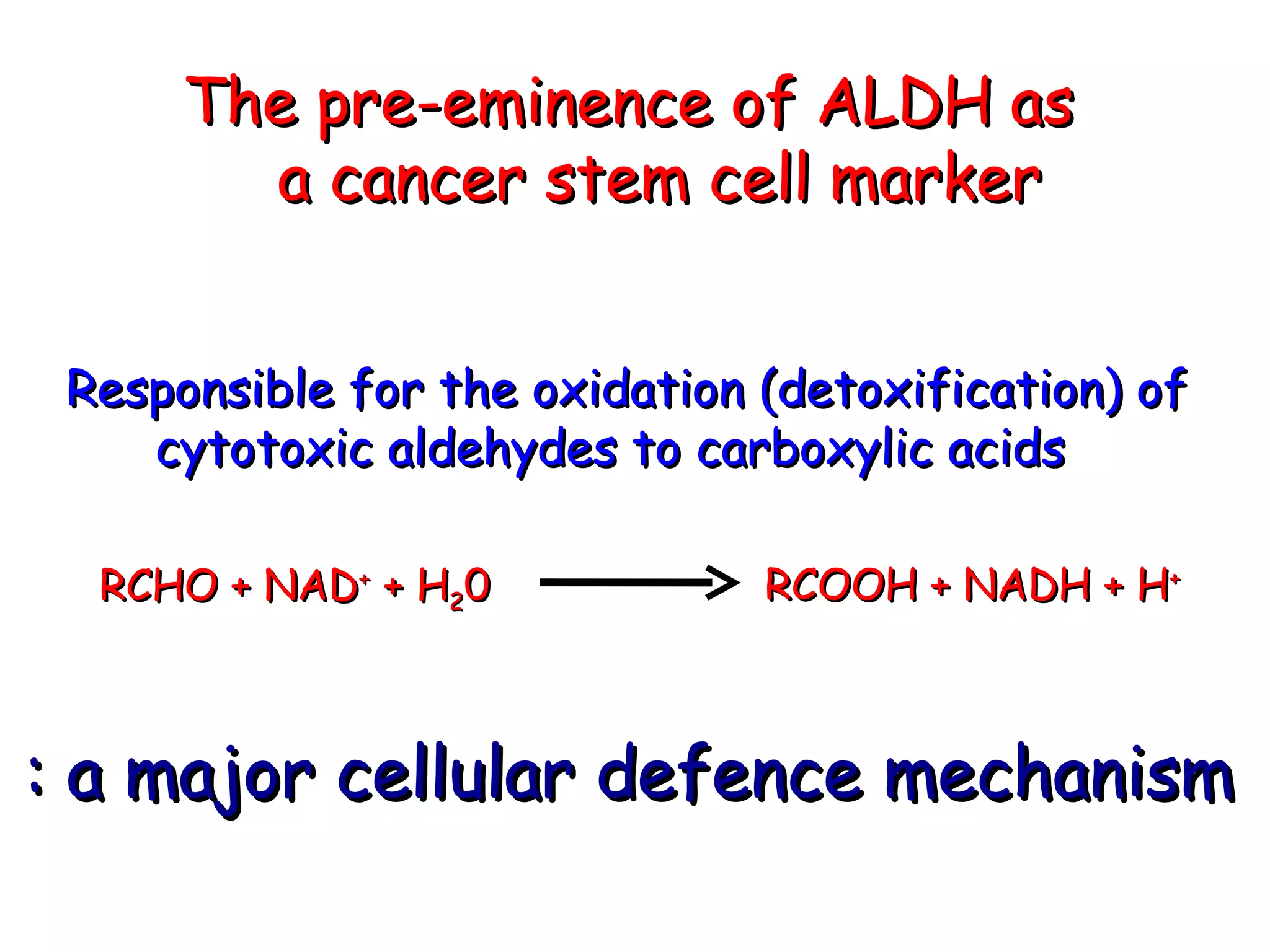
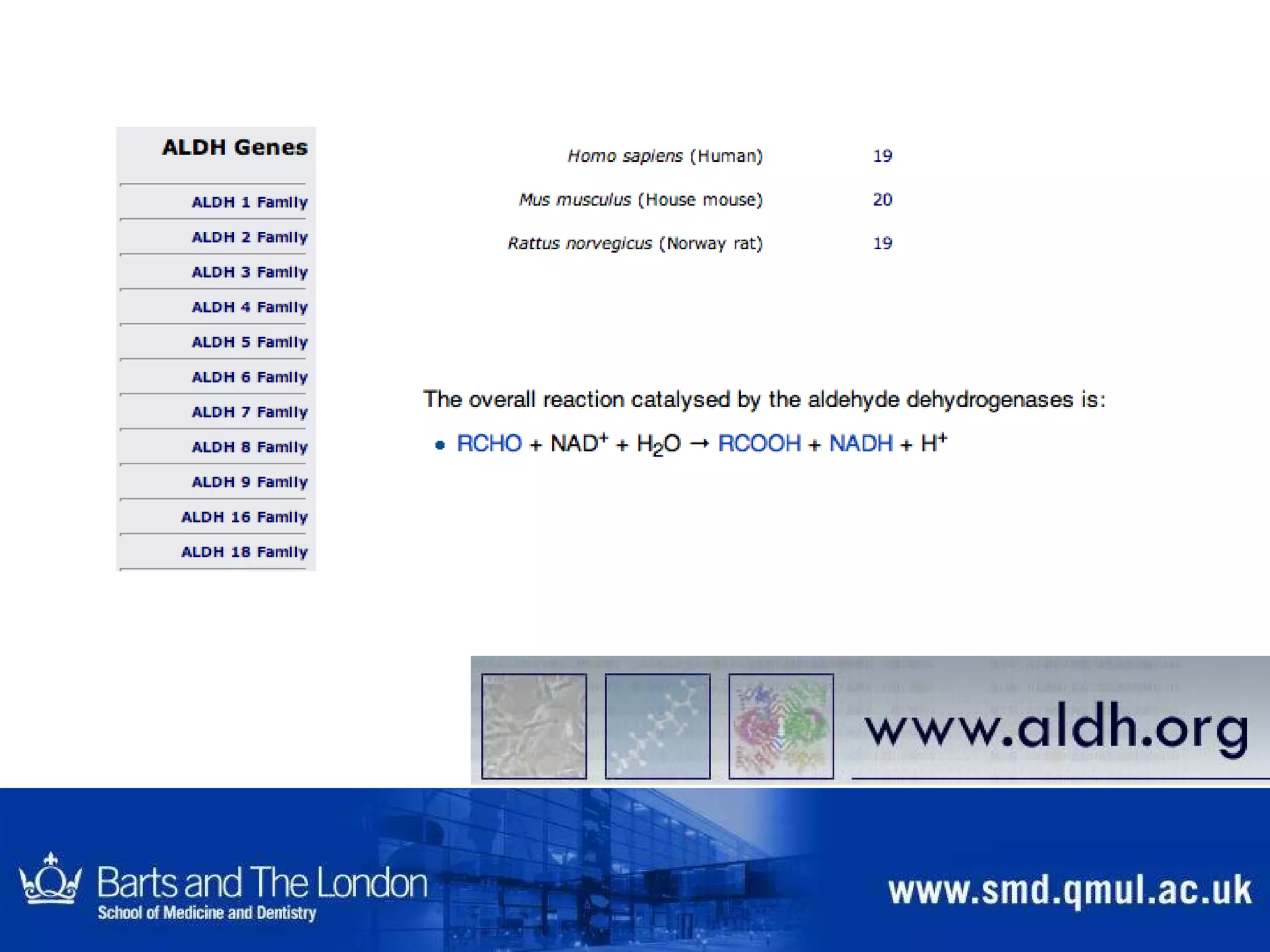
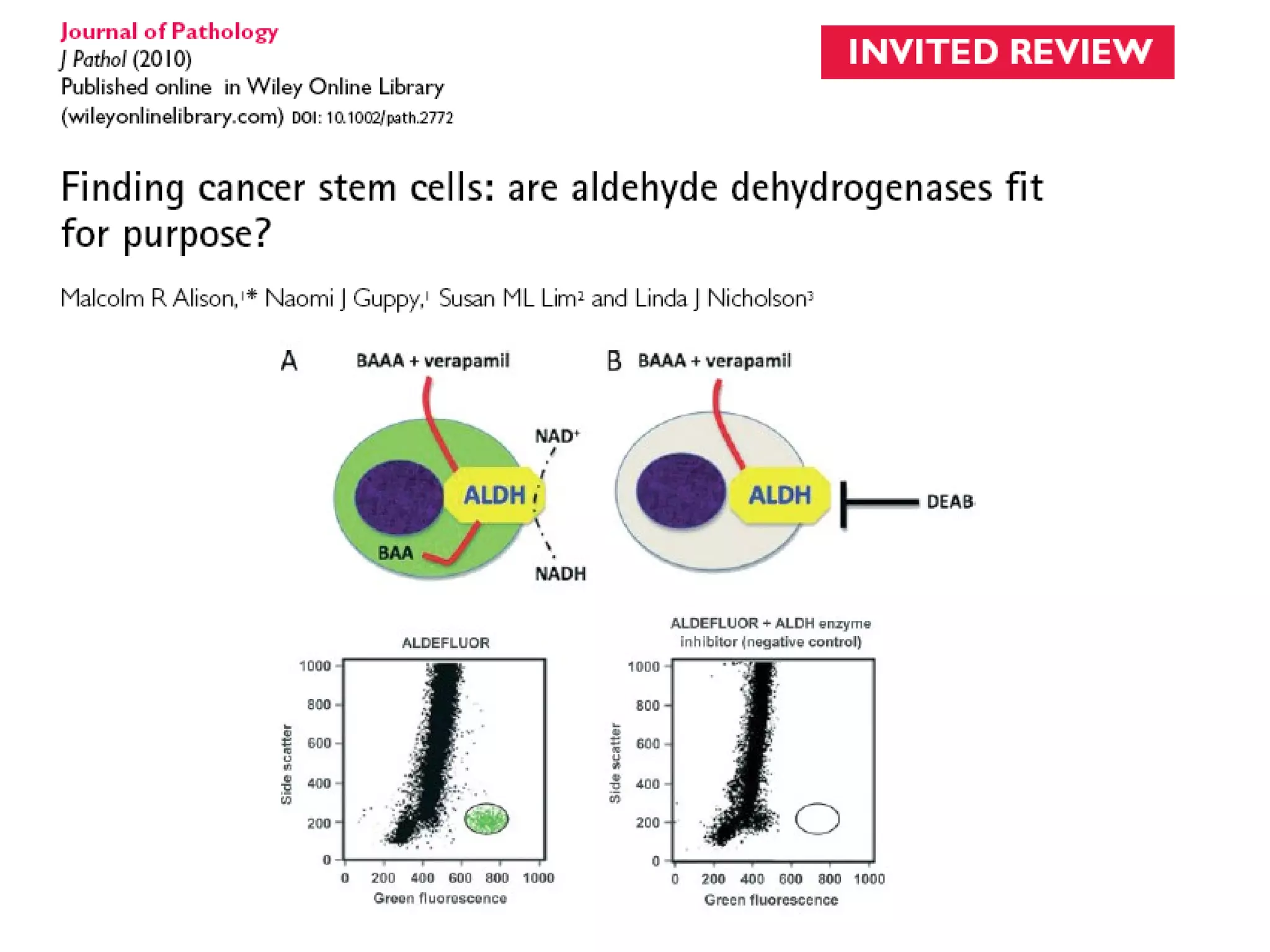
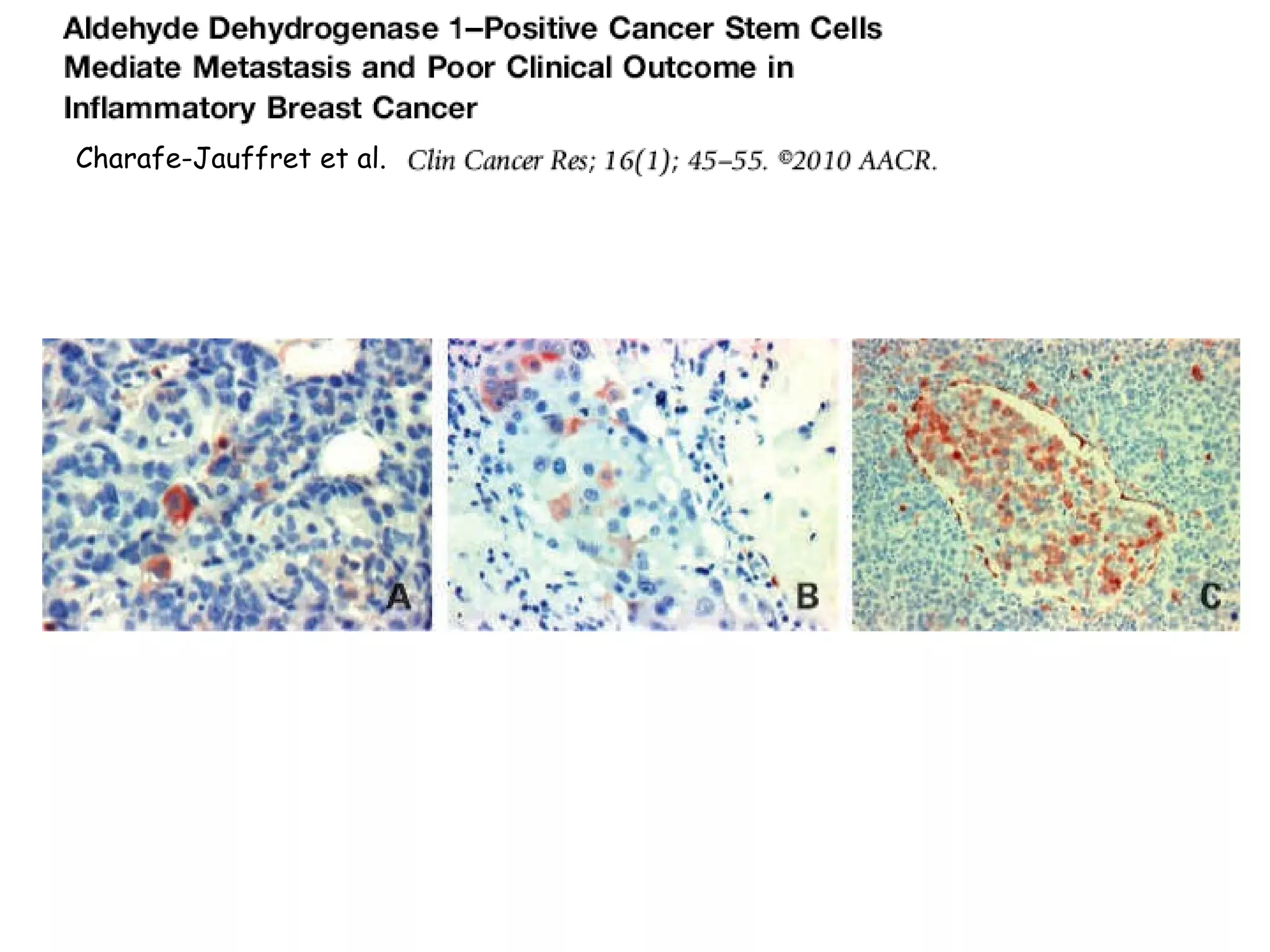
The pre-eminence of ALDH as  a cancer stem cell marker  Responsible for the oxidation (detoxification) of  cytotoxic aldehydes to carboxylic acids RCHO + NAD +  + H 2 0  RCOOH + NADH + H + : a major cellular defence mechanism
 
Vitamin A Differentiation
 
 
Charafe-Jauffret et al.
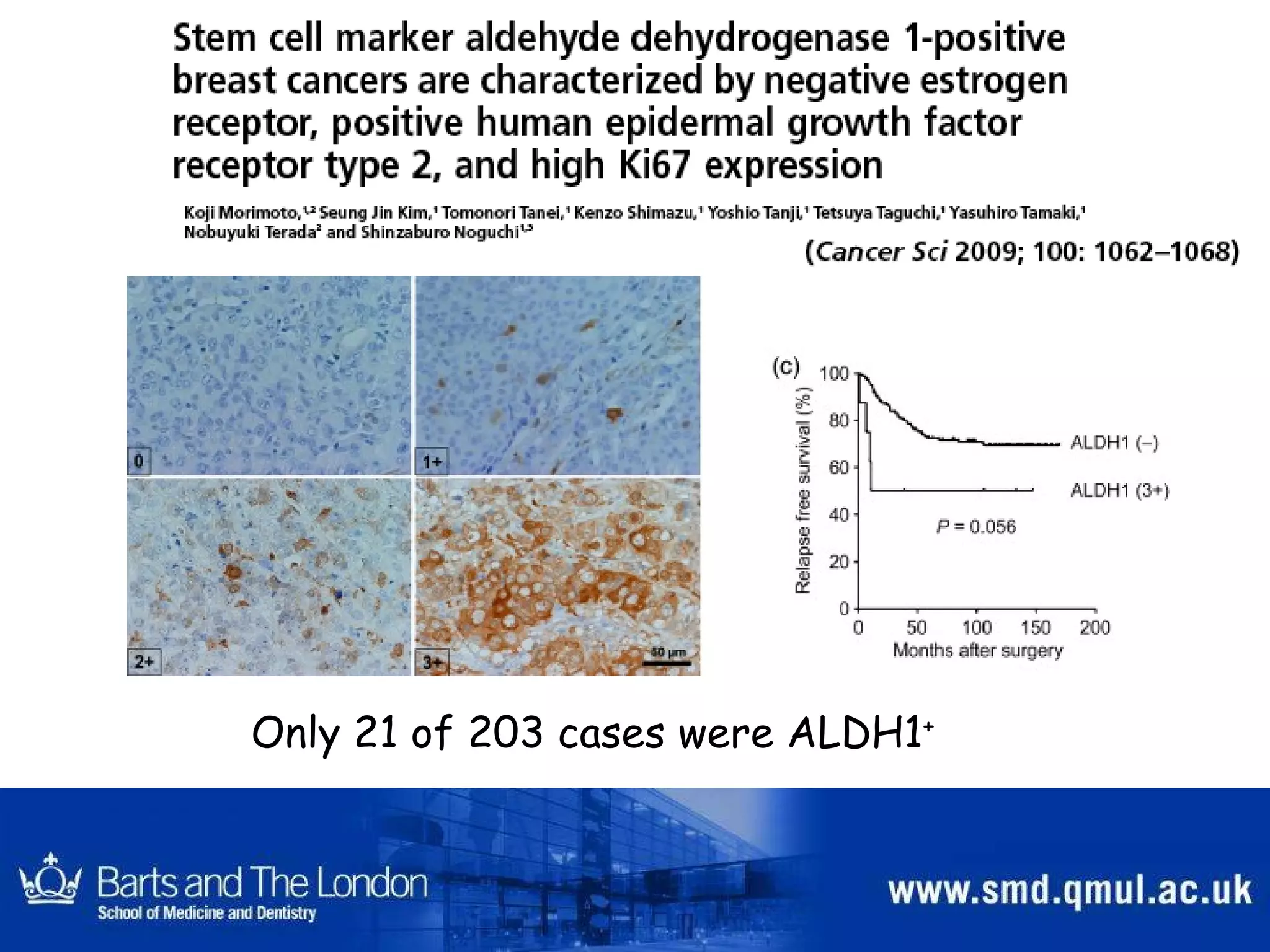
Only 21 of 203 cases were ALDH1 +
 
 
Victoria L Bautch
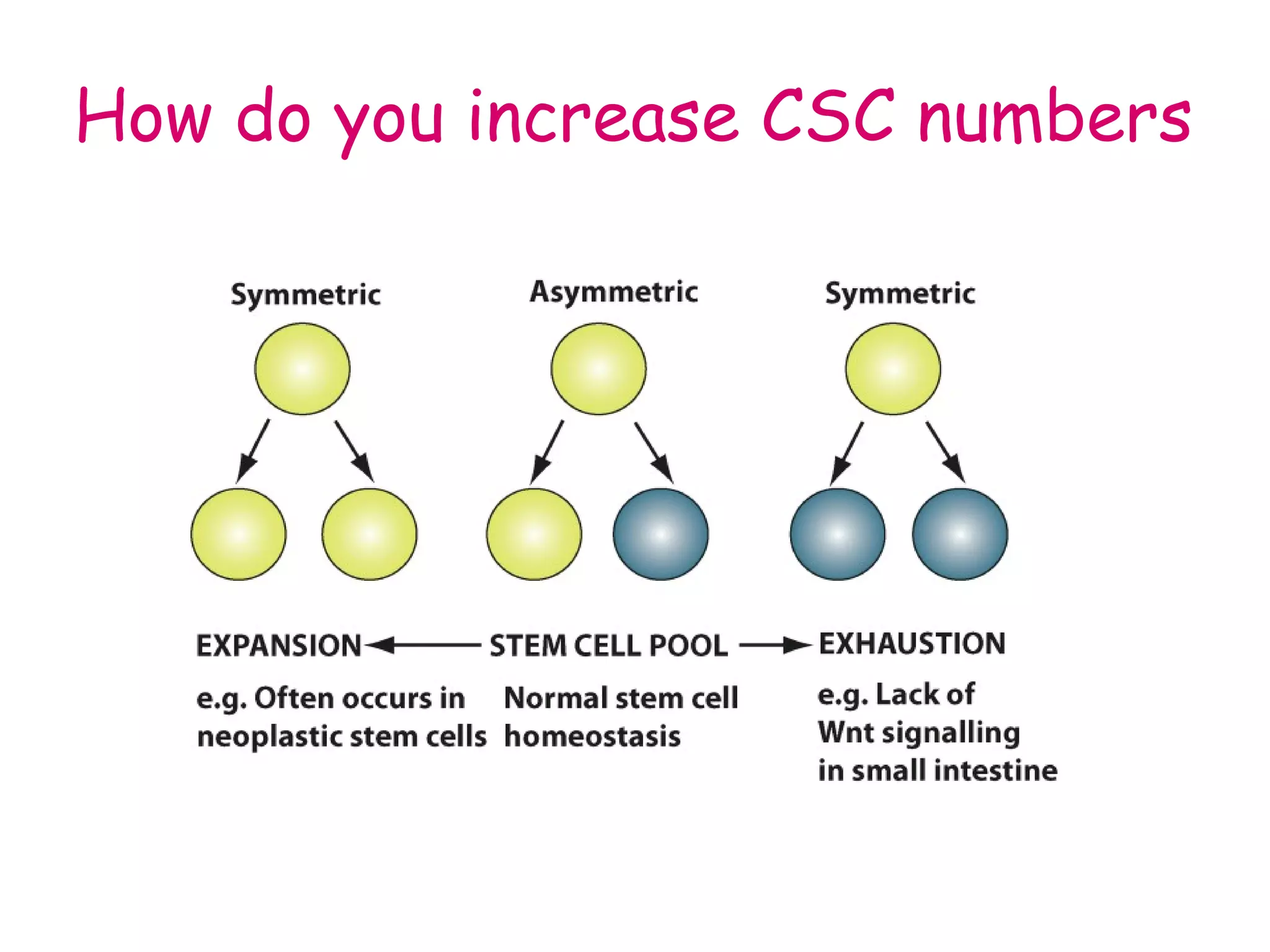
How do you increase CSC numbers
 
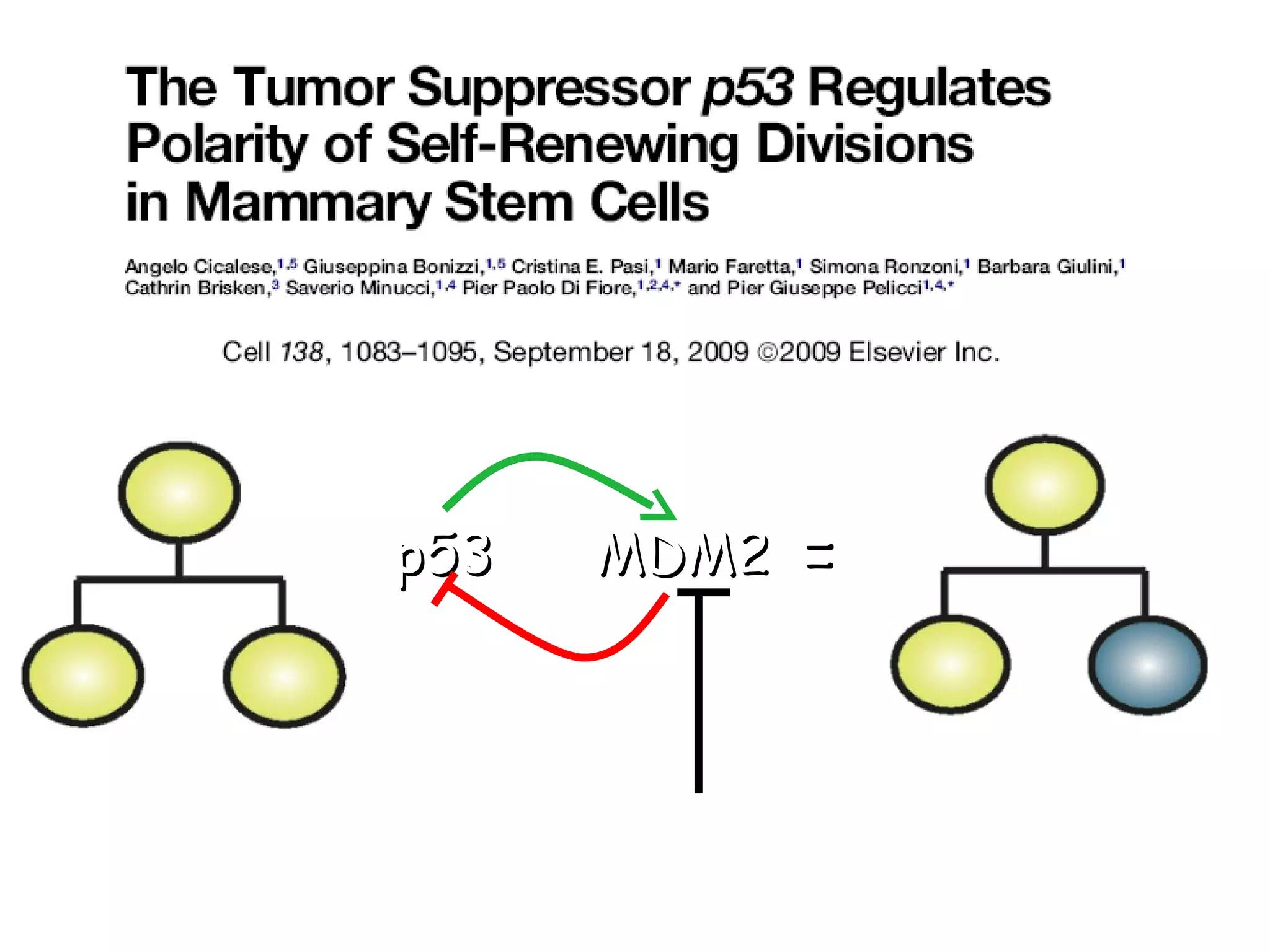
p53 MDM2 =
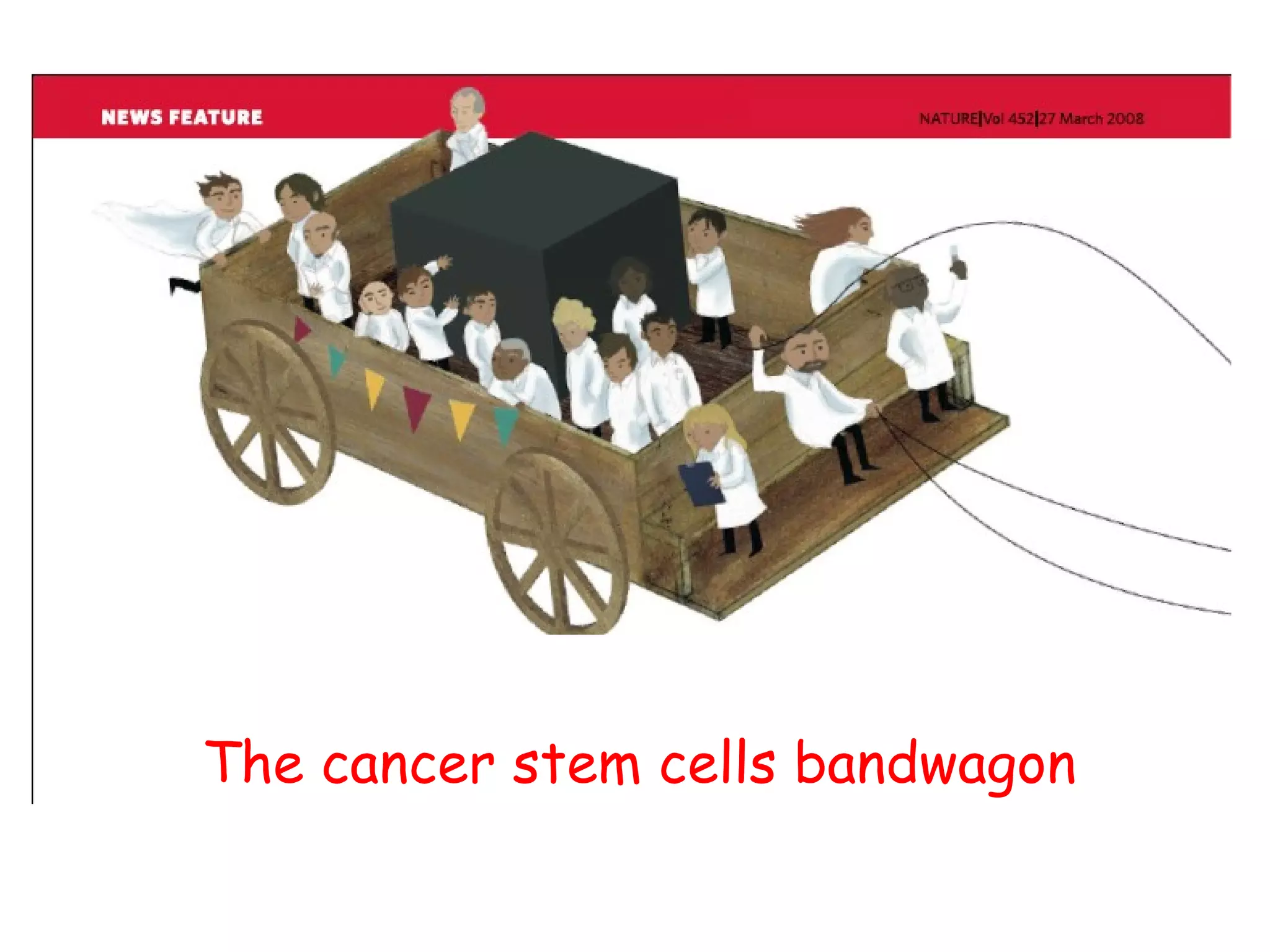
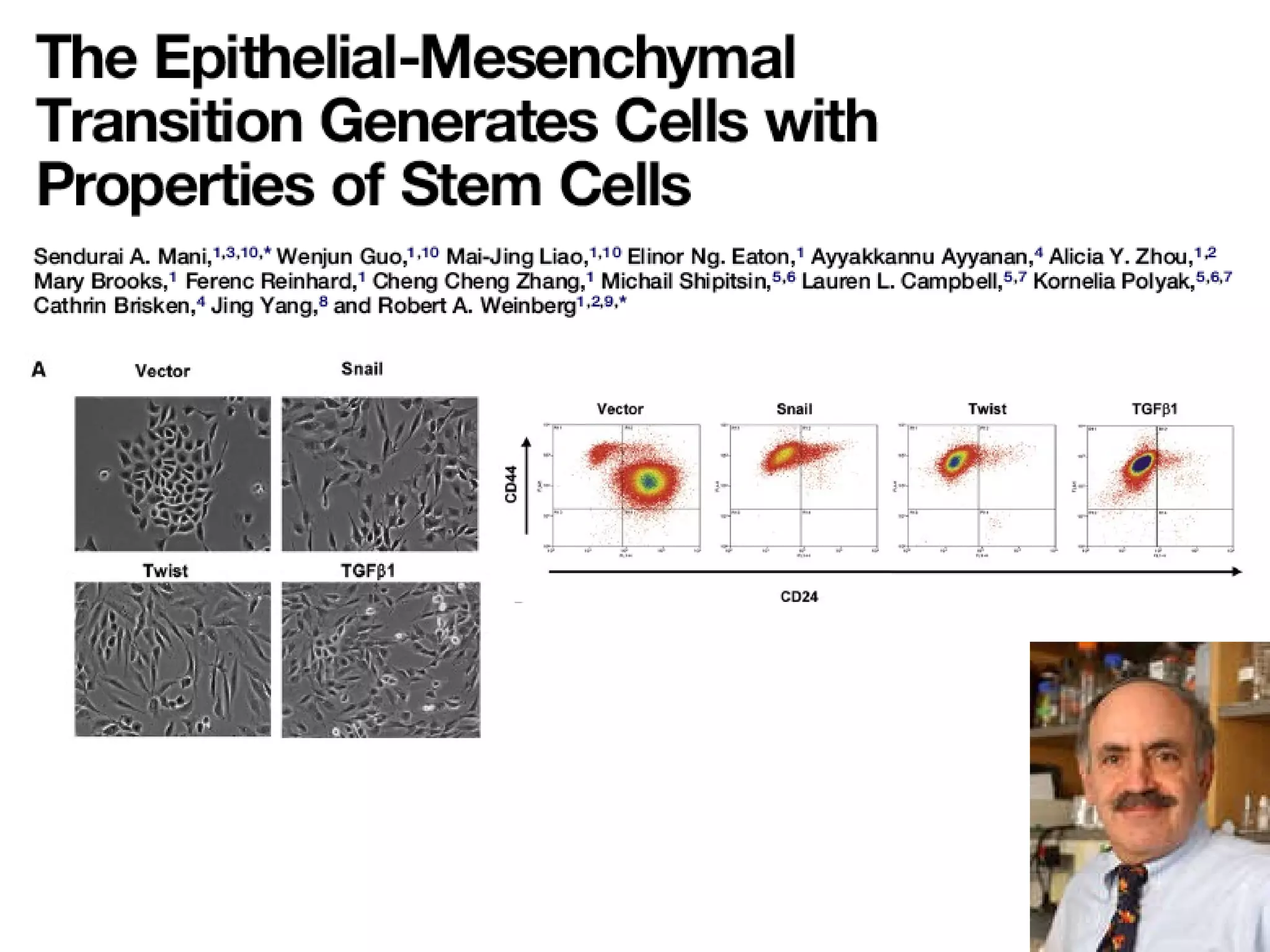
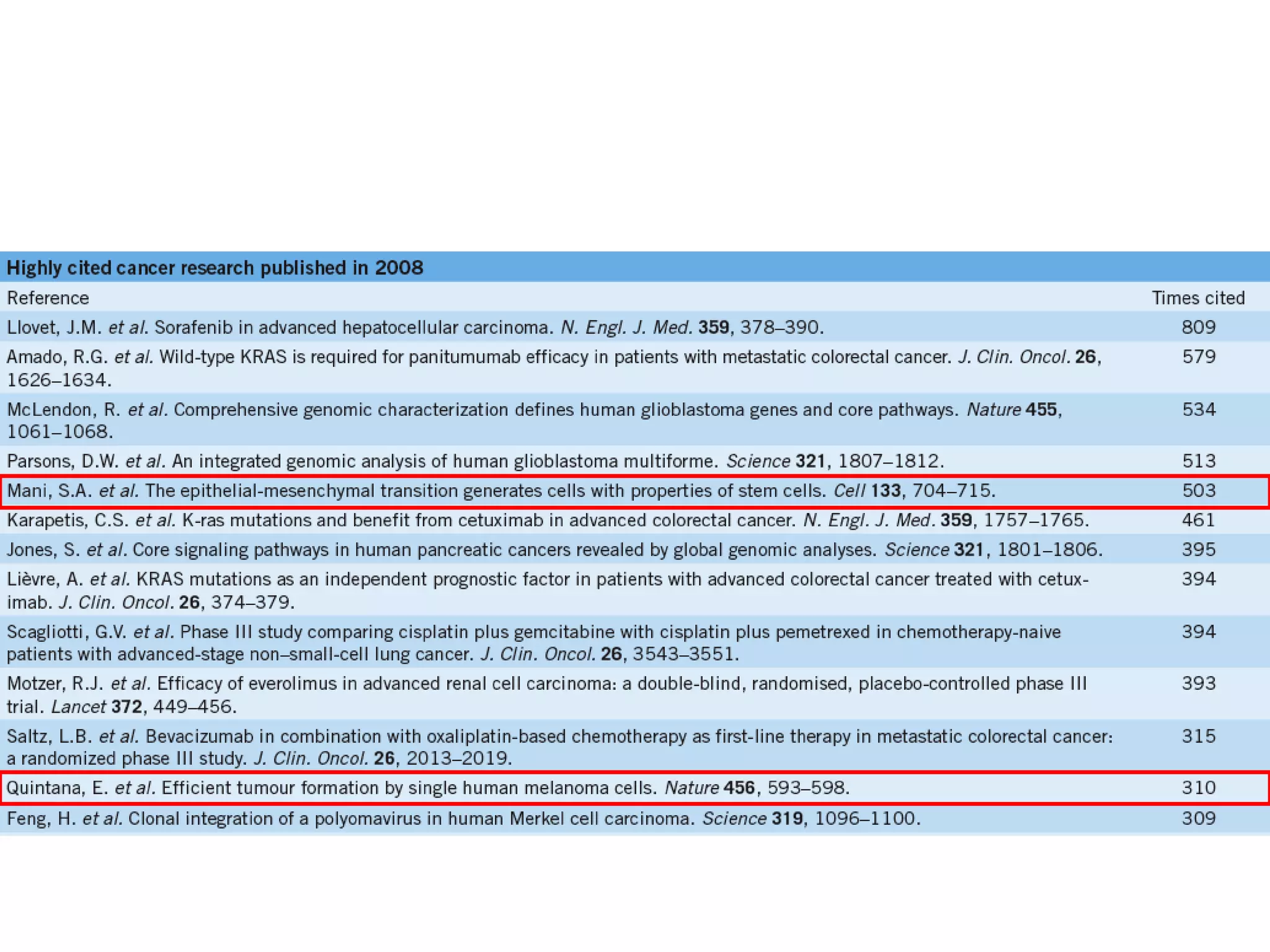
The cancer stem cells bandwagon
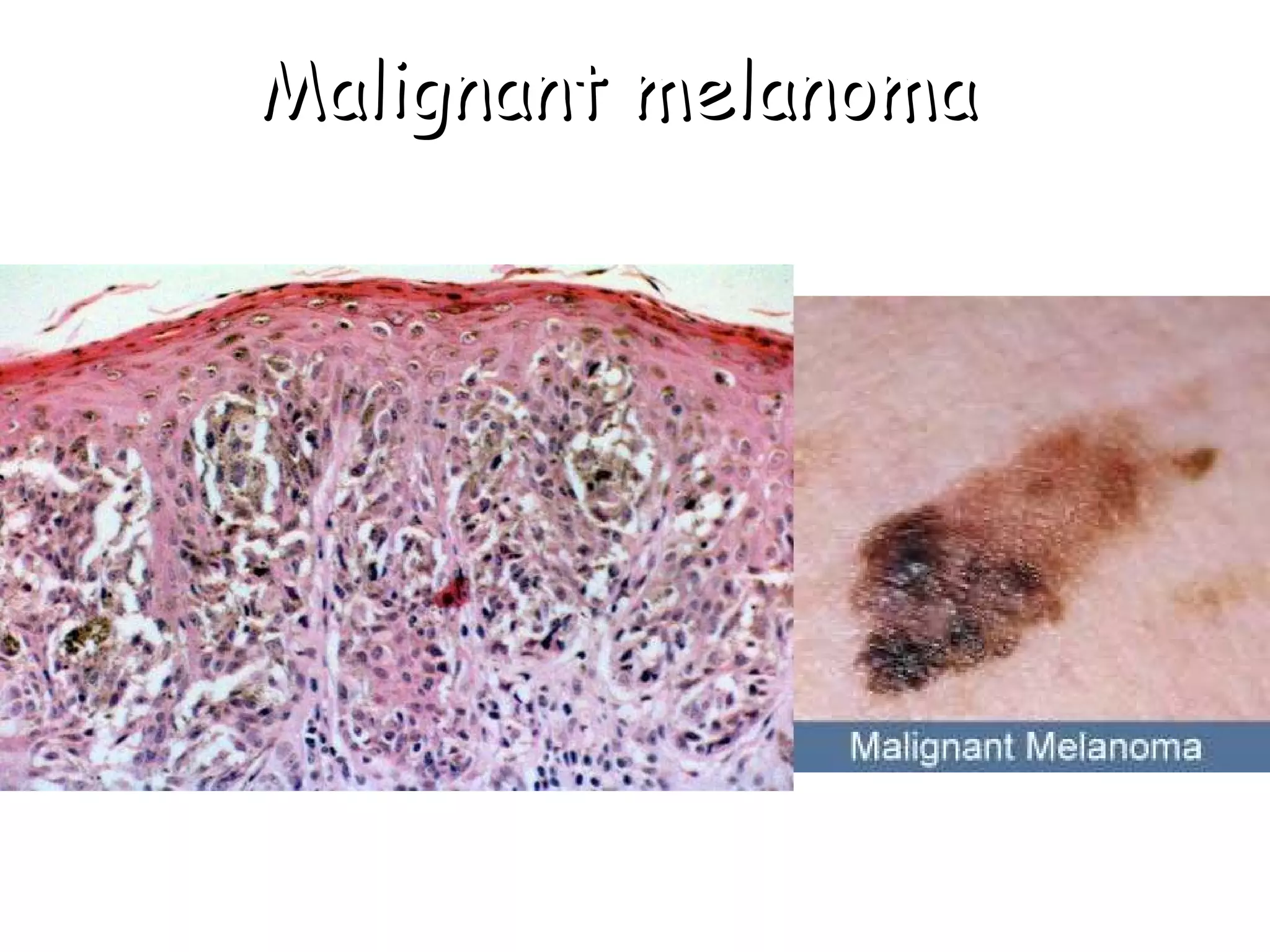
Malignant melanoma


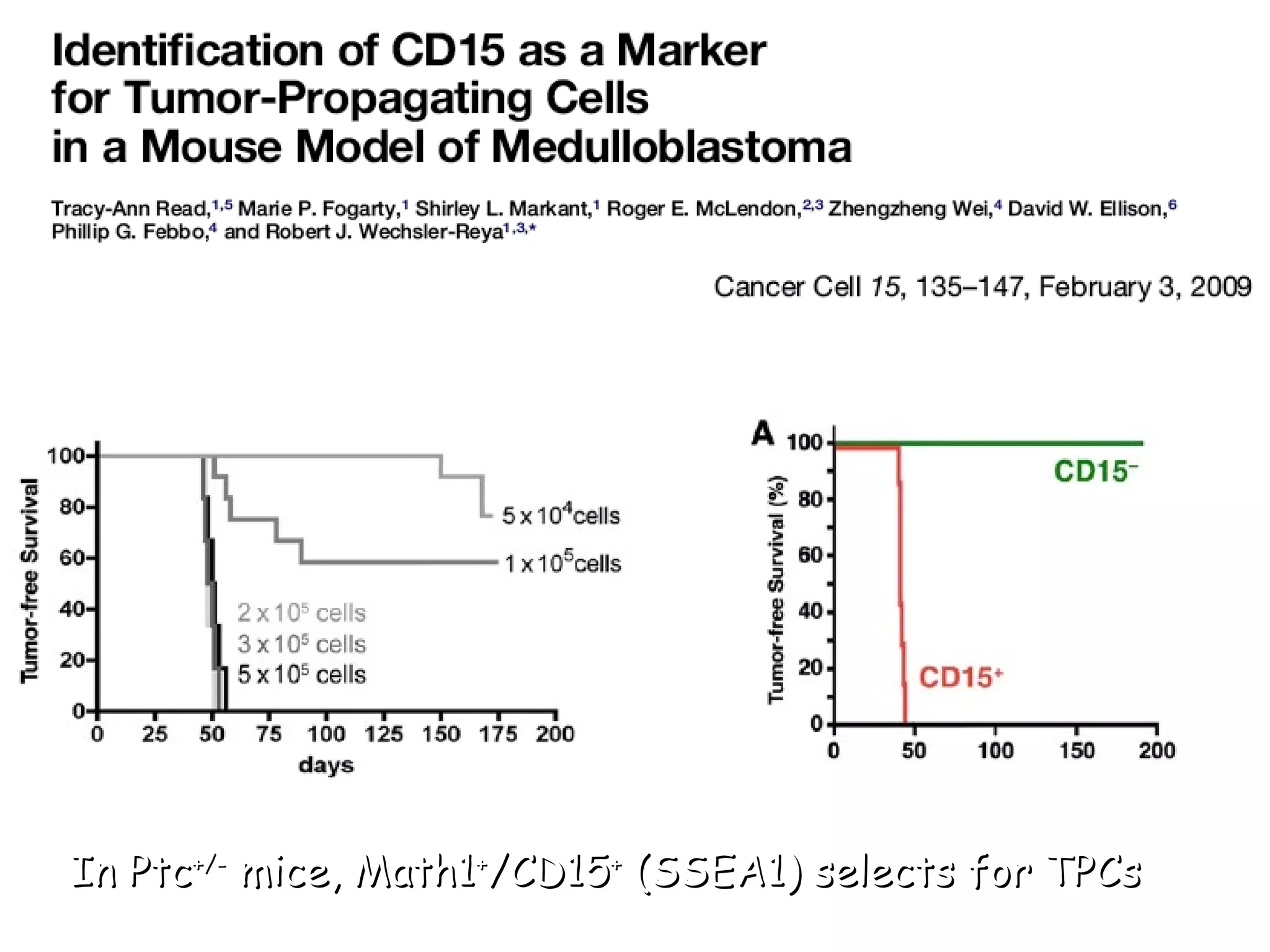
In Ptc +/-  mice, Math1 + /CD15 +  (SSEA1) selects for TPCs
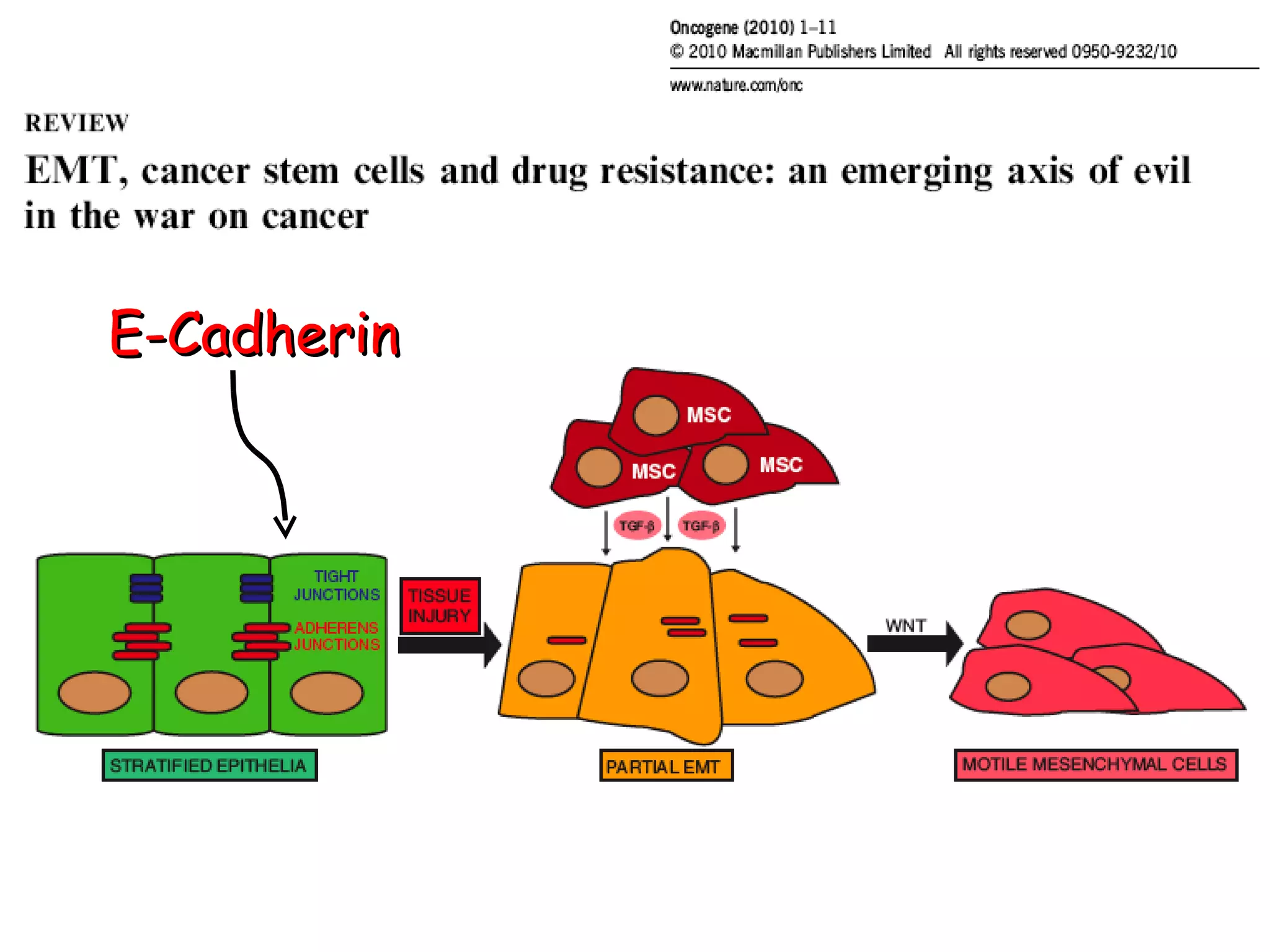
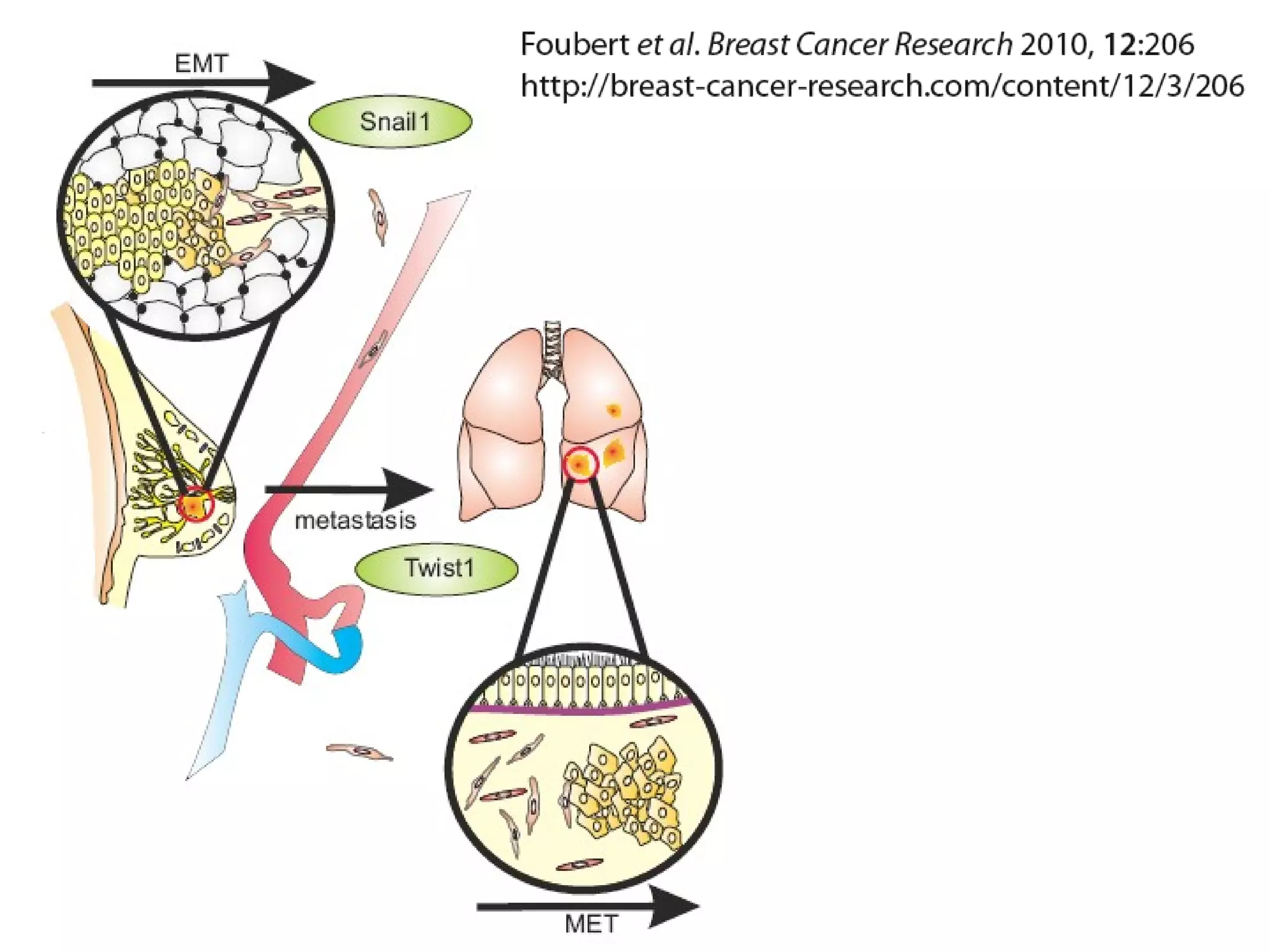
E-Cadherin


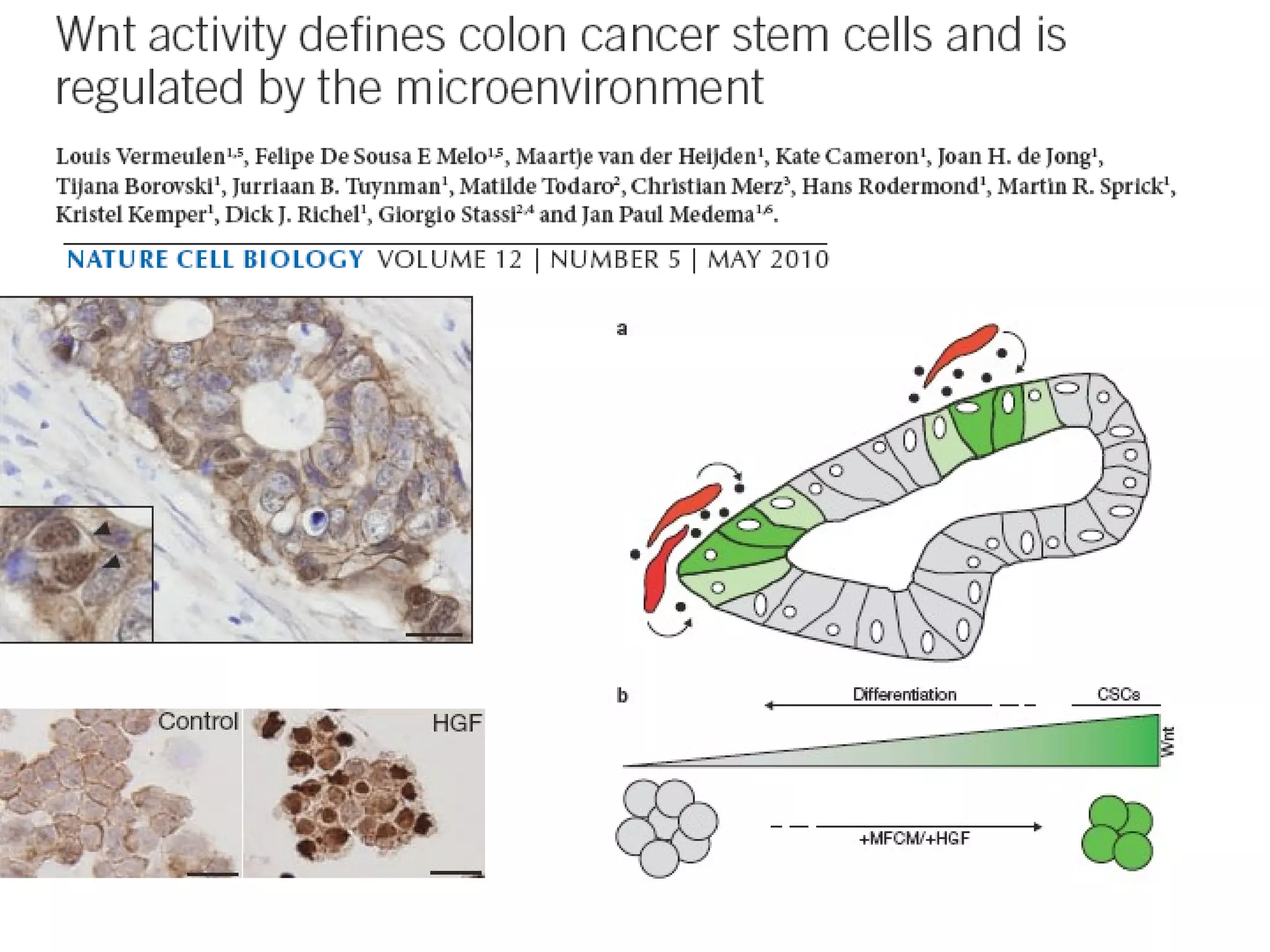
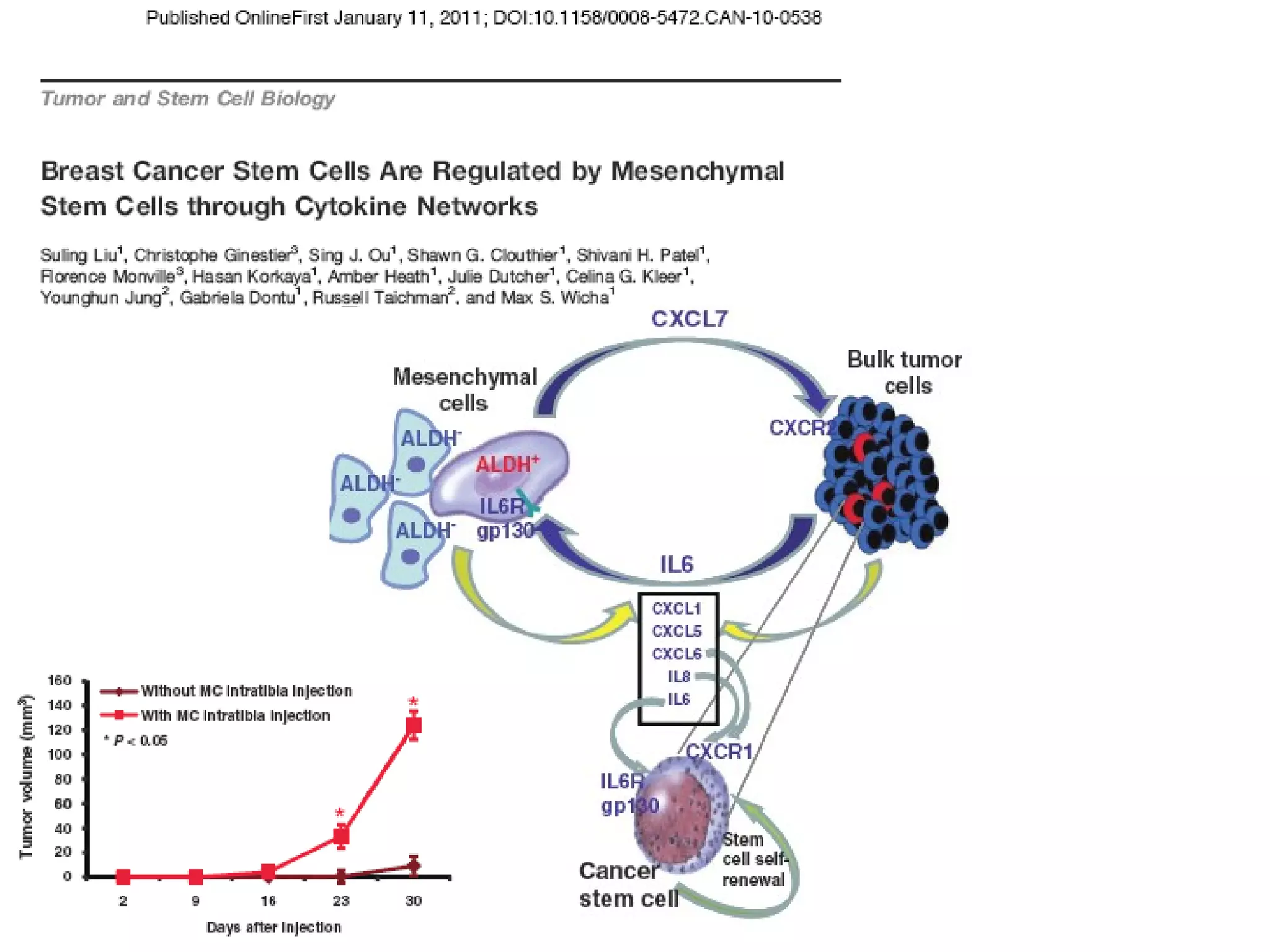
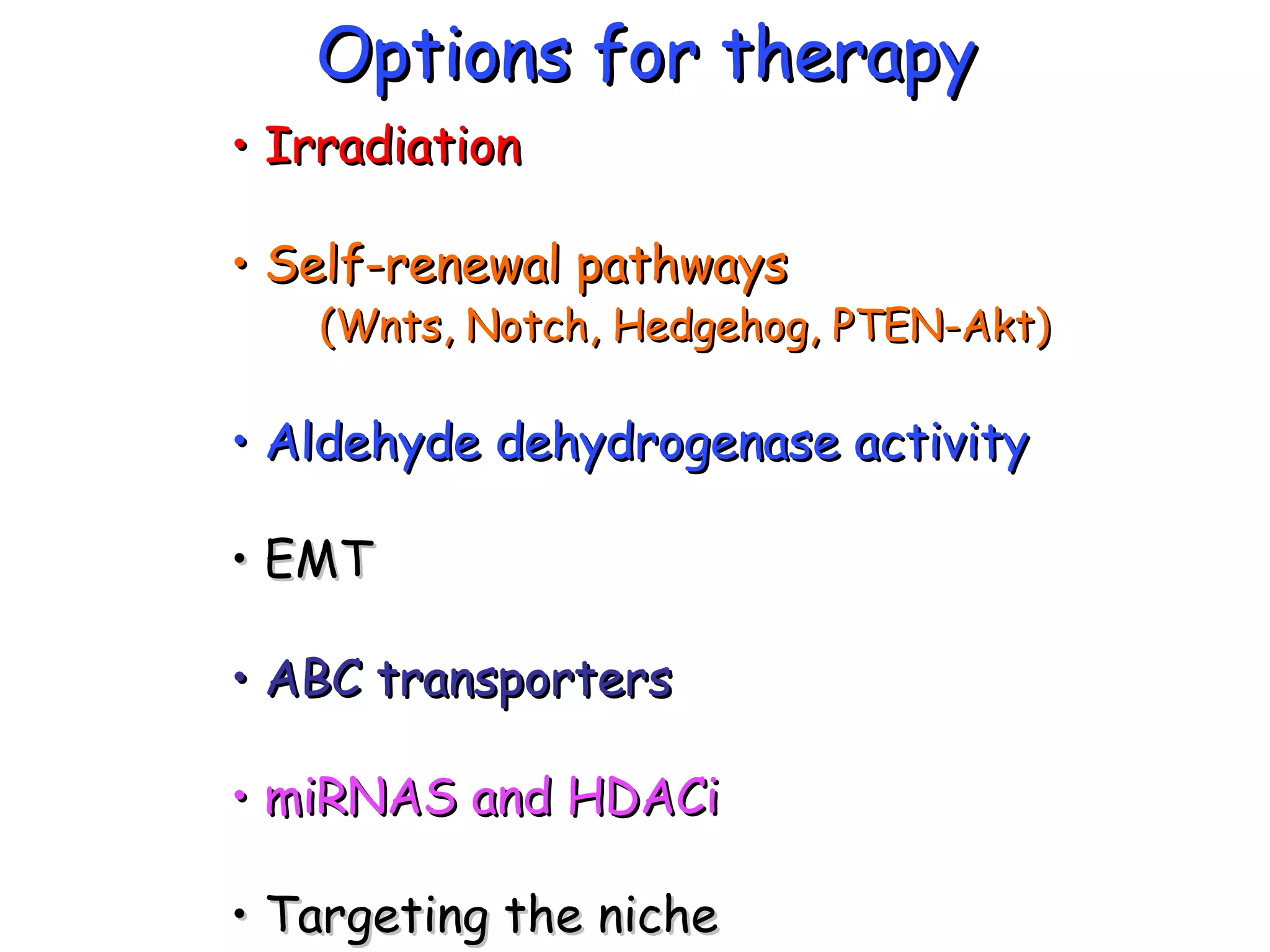
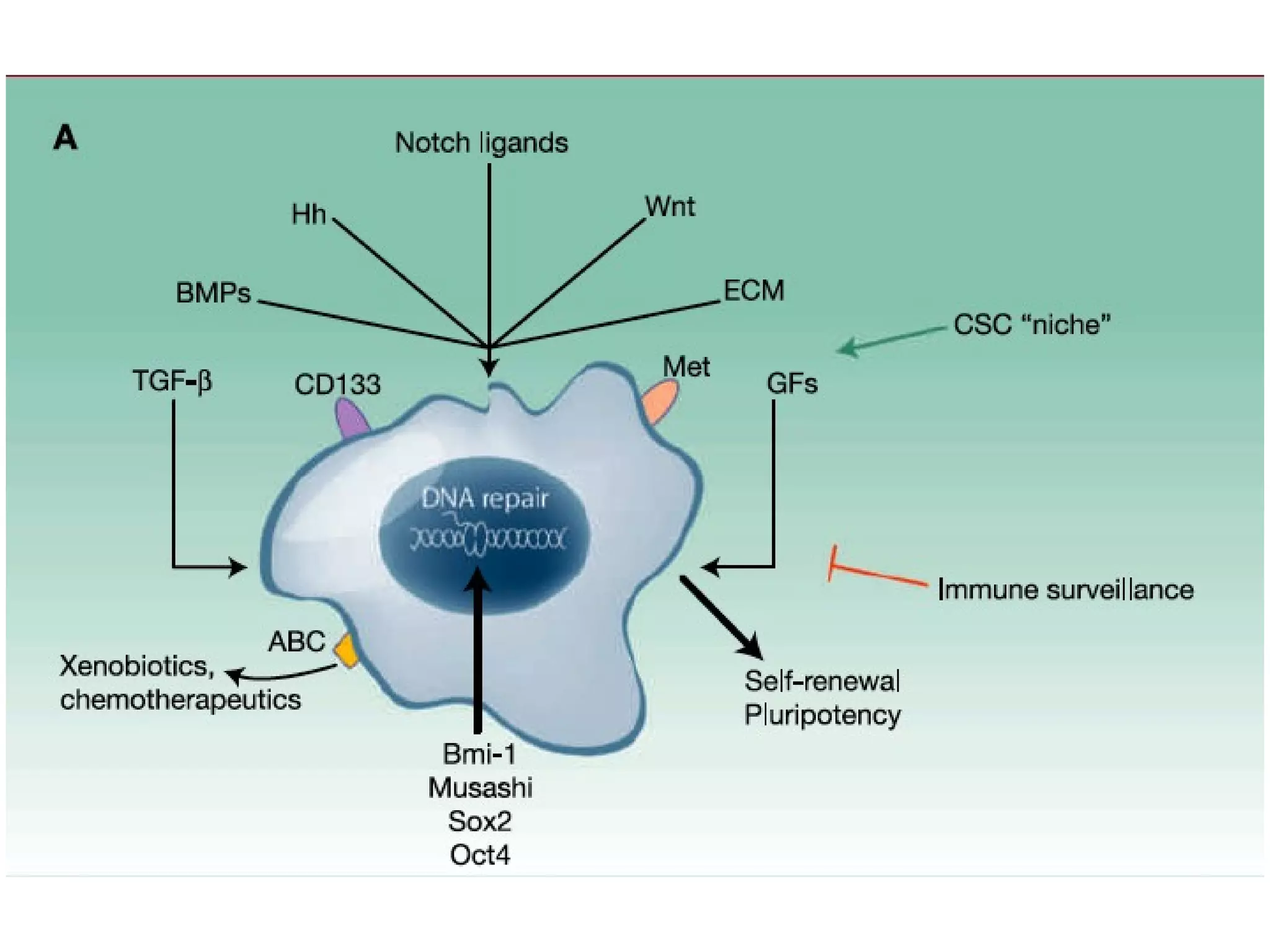
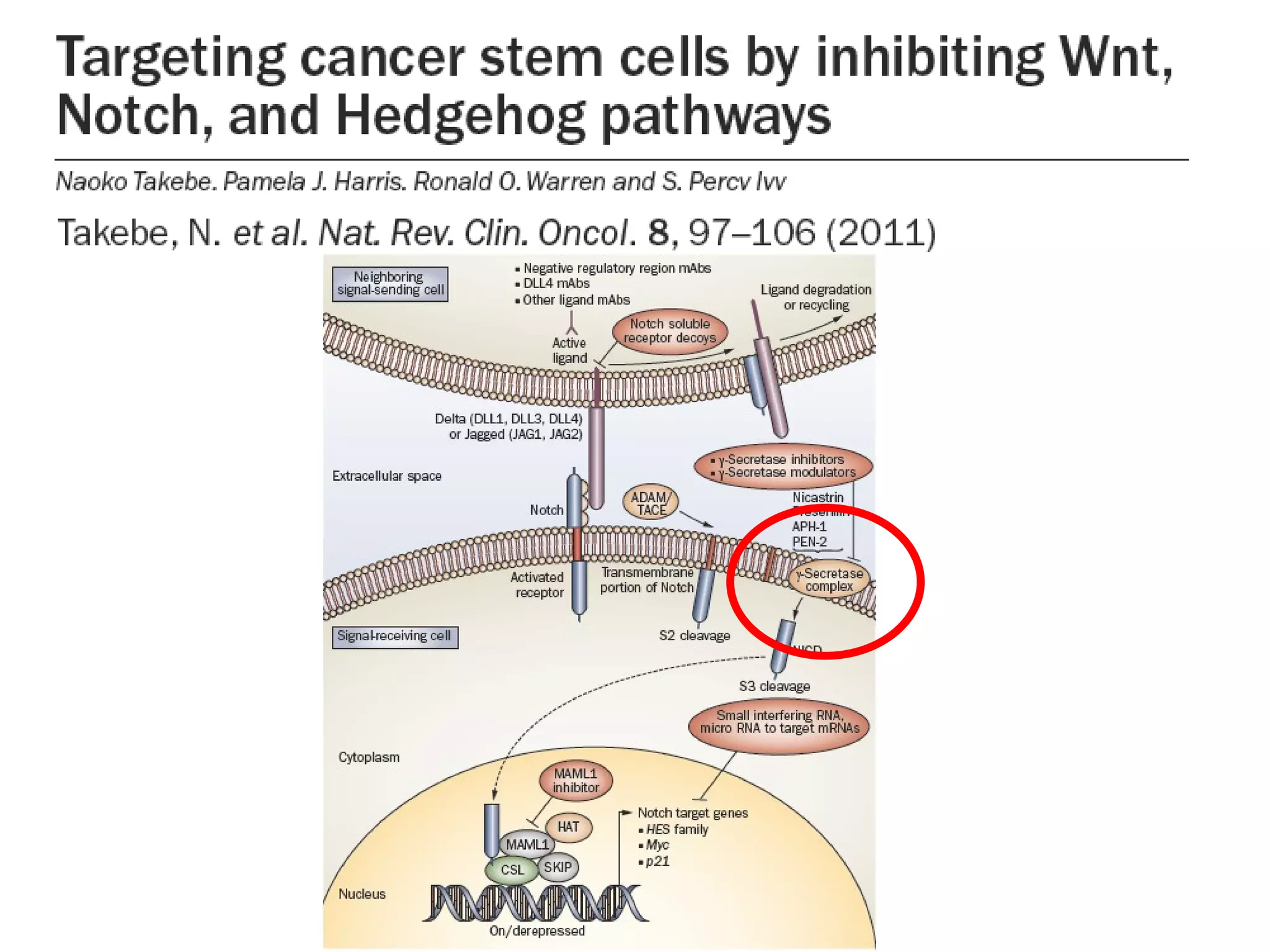
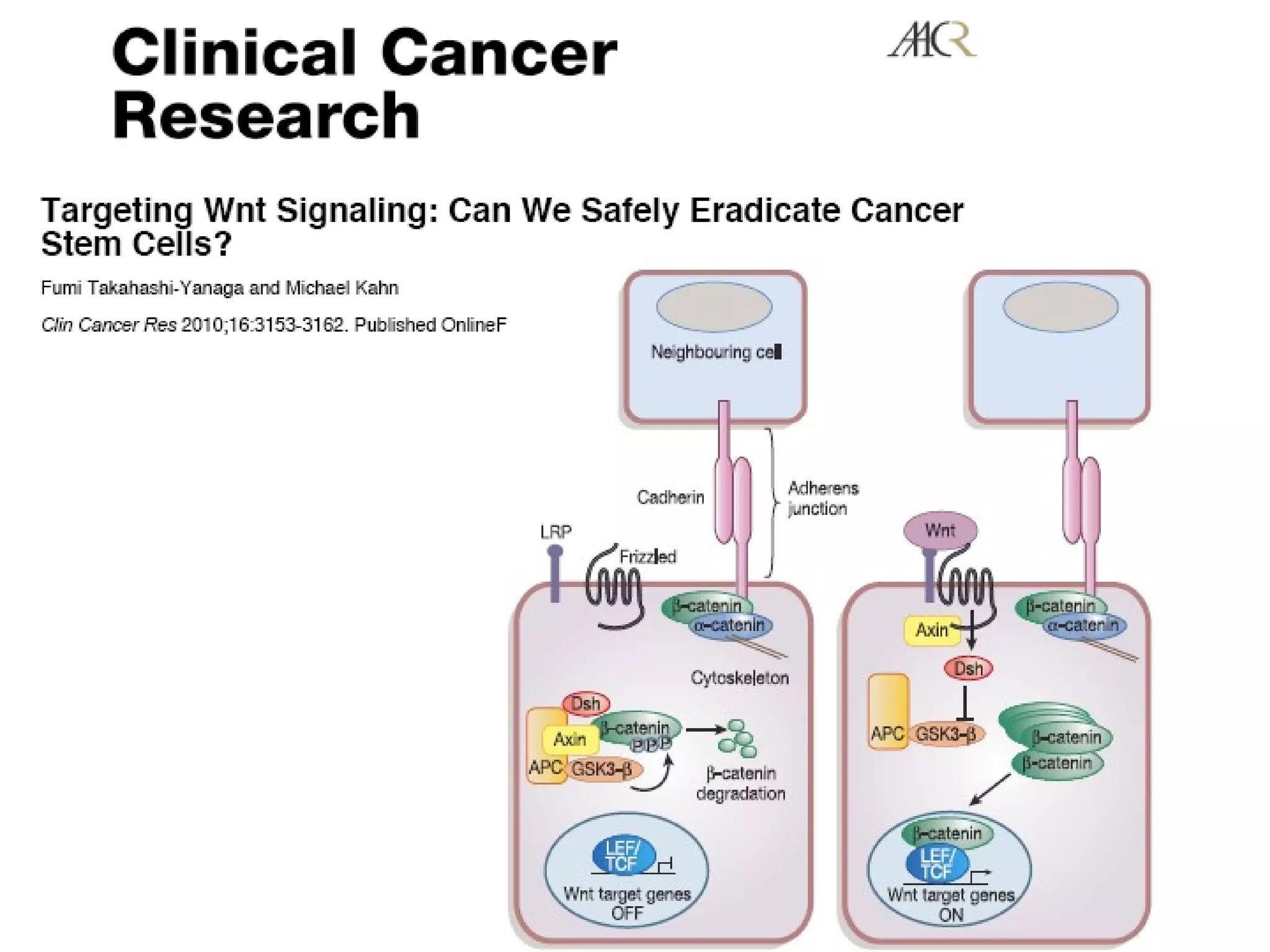
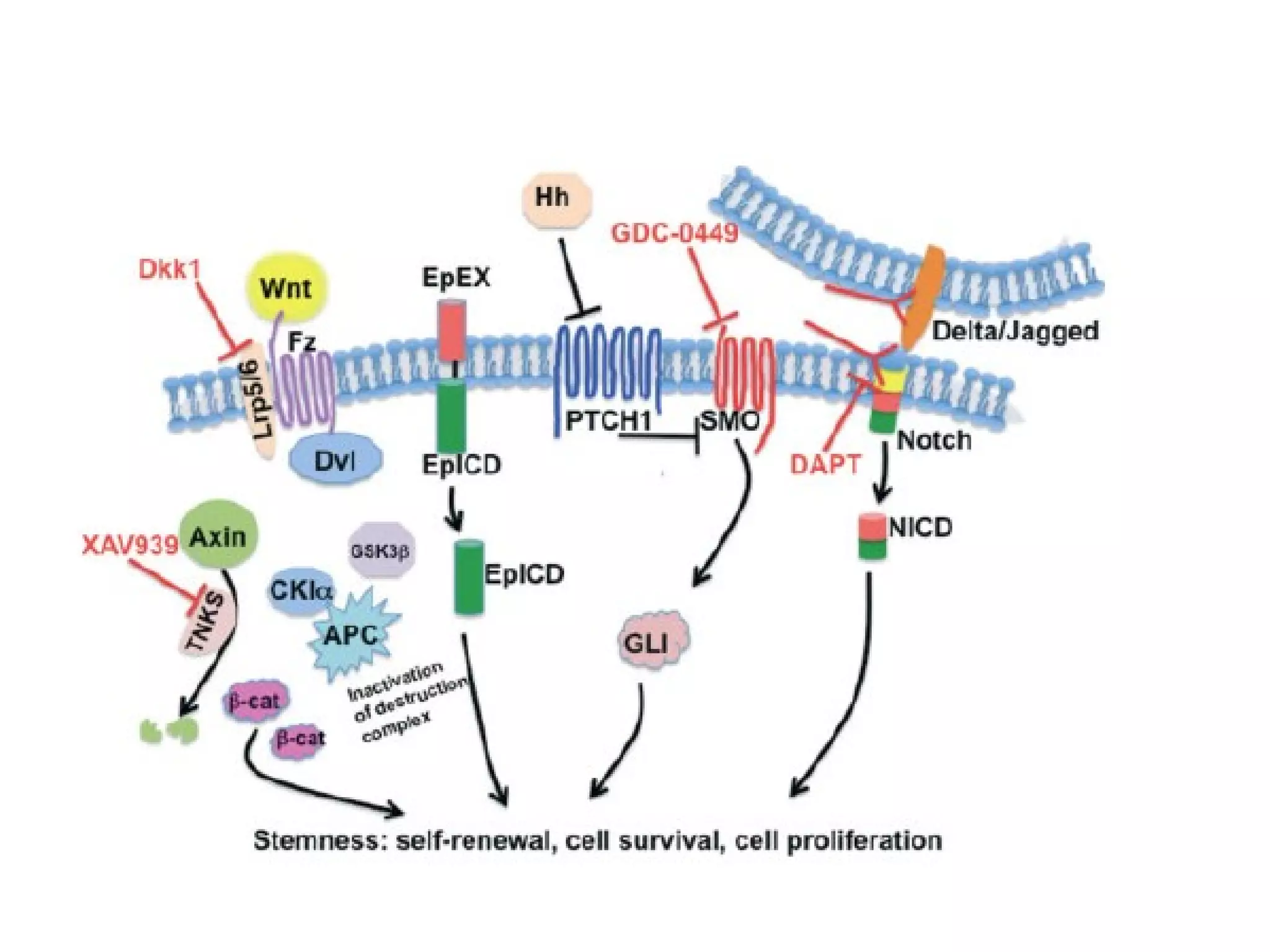
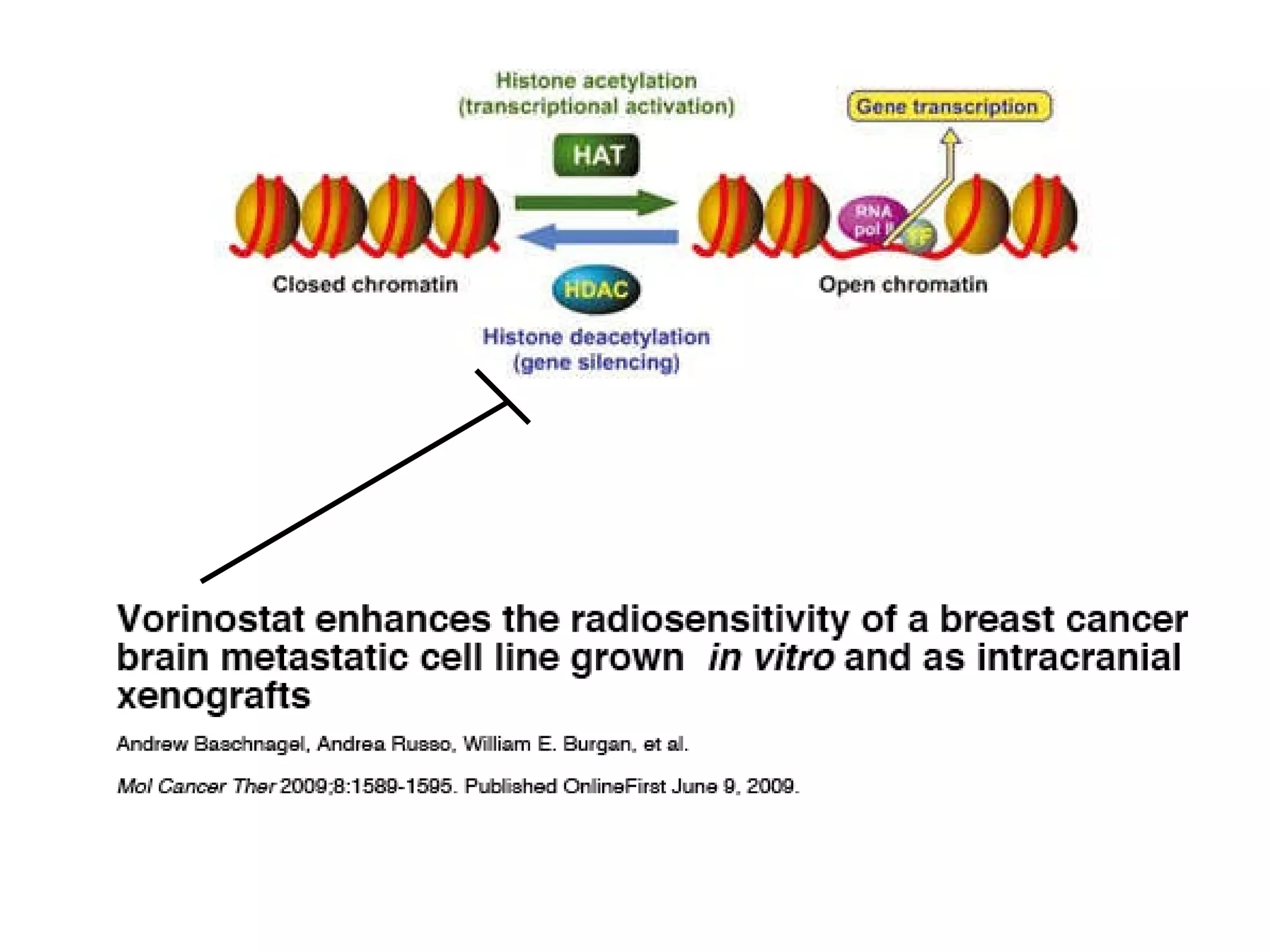
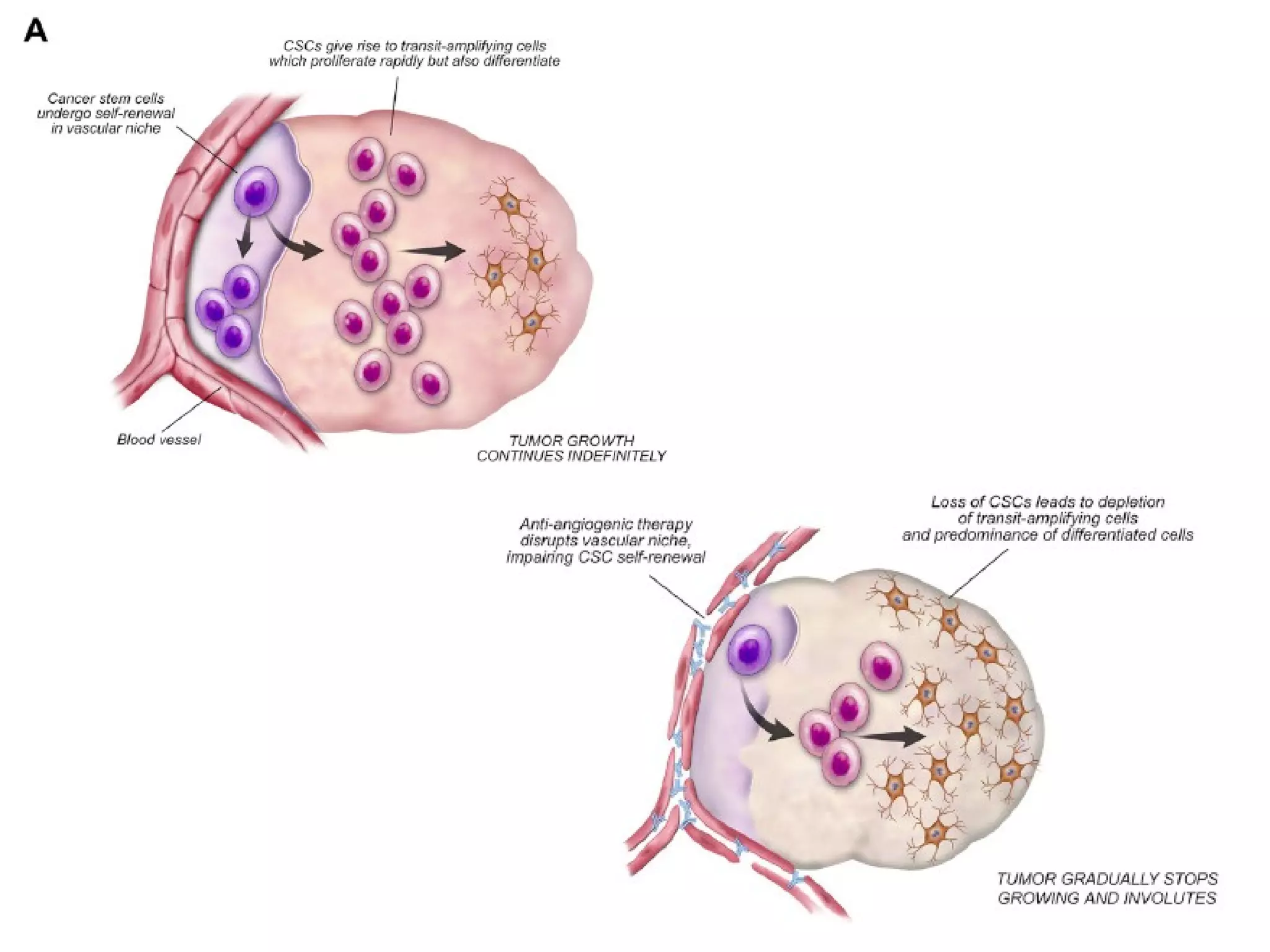
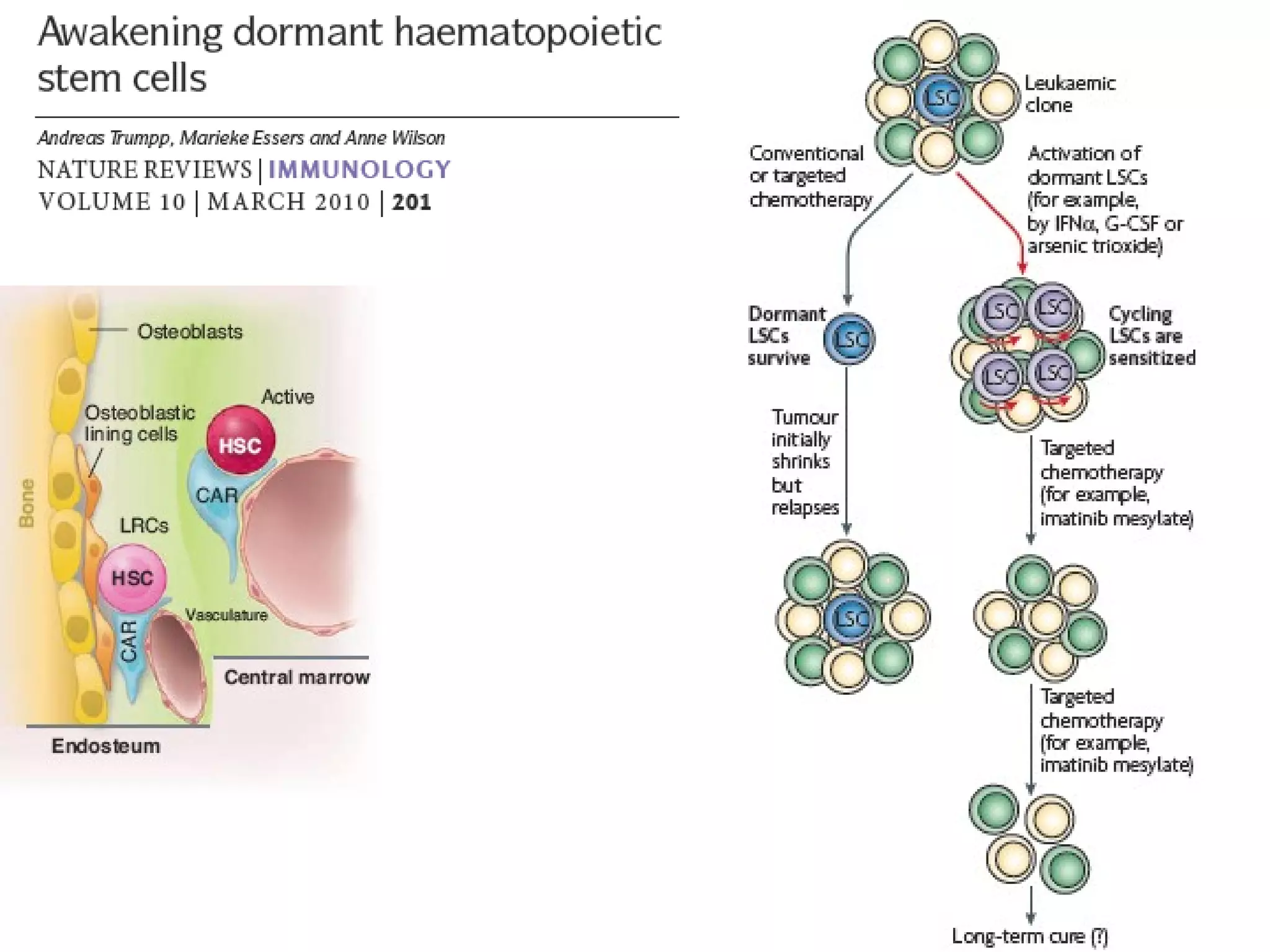
Options for therapy •  Irradiation •  Self-renewal pathways (Wnts, Notch, Hedgehog, PTEN-Akt) •  Aldehyde dehydrogenase activity •  EMT •  ABC transporters •  miRNAS and HDACi •  Targeting the niche
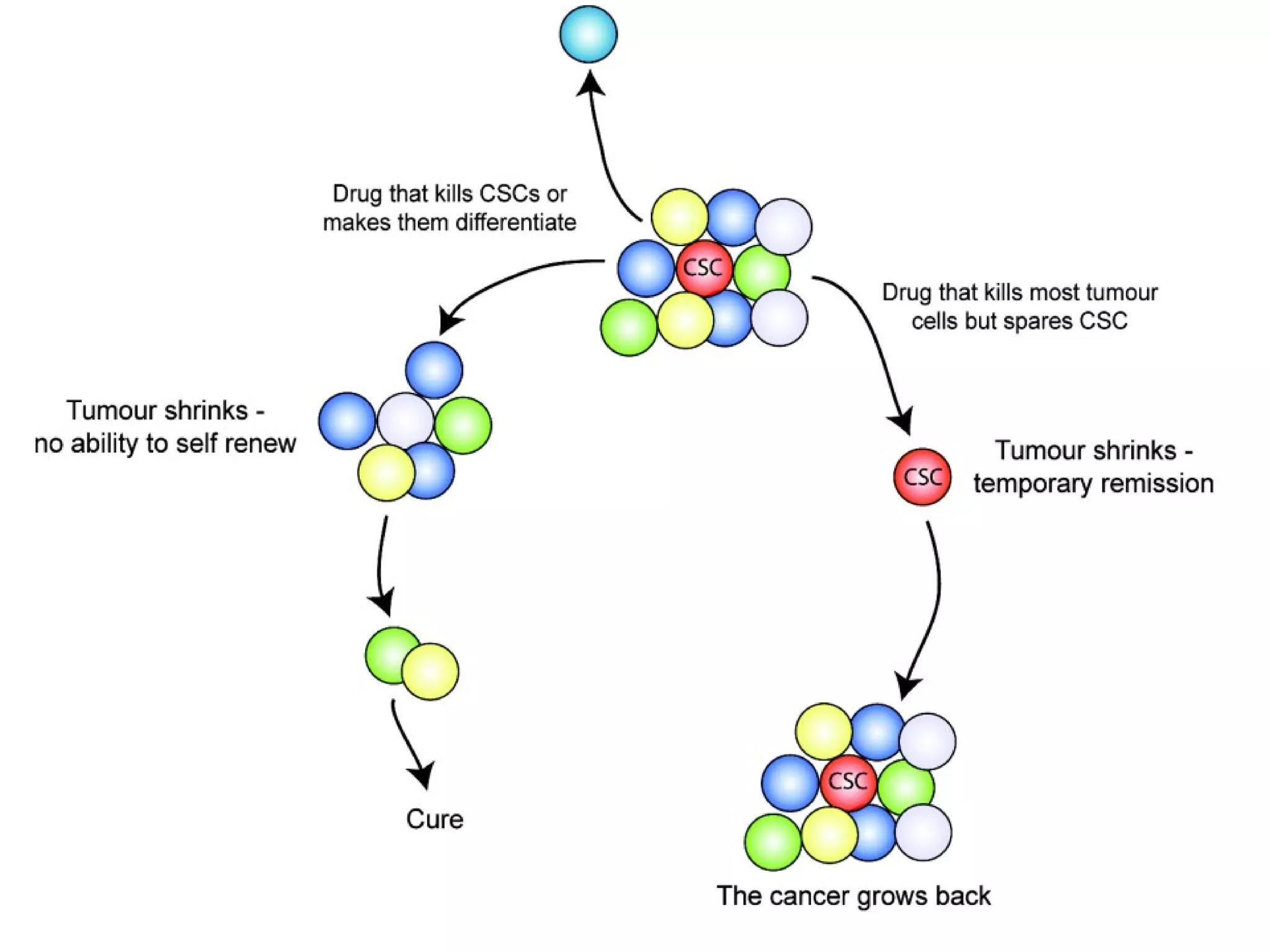
Cancer stem cells are very  chemoresistant and radioresistant
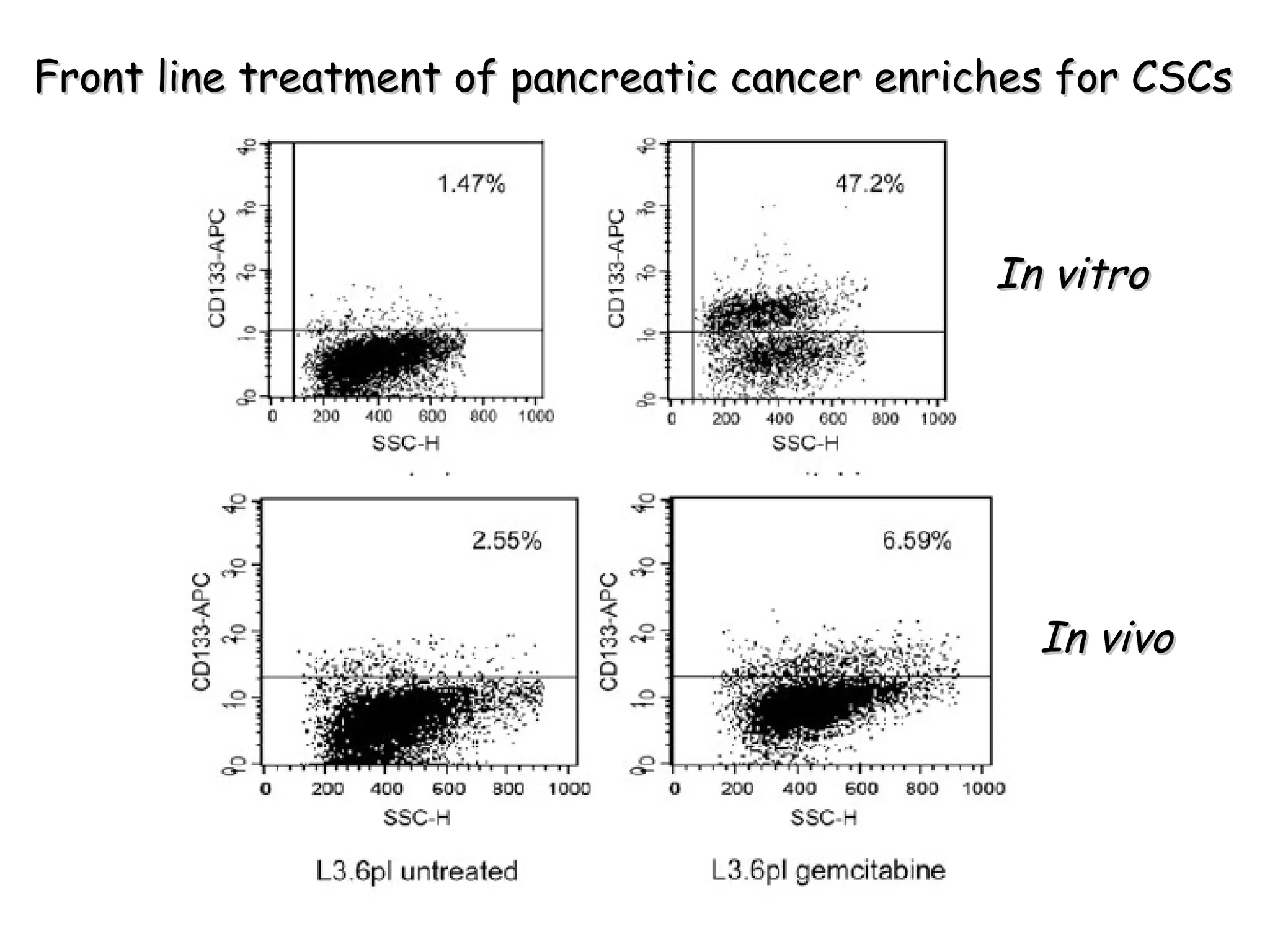
Front line treatment of pancreatic cancer enriches for CSCs In vitro In vivo
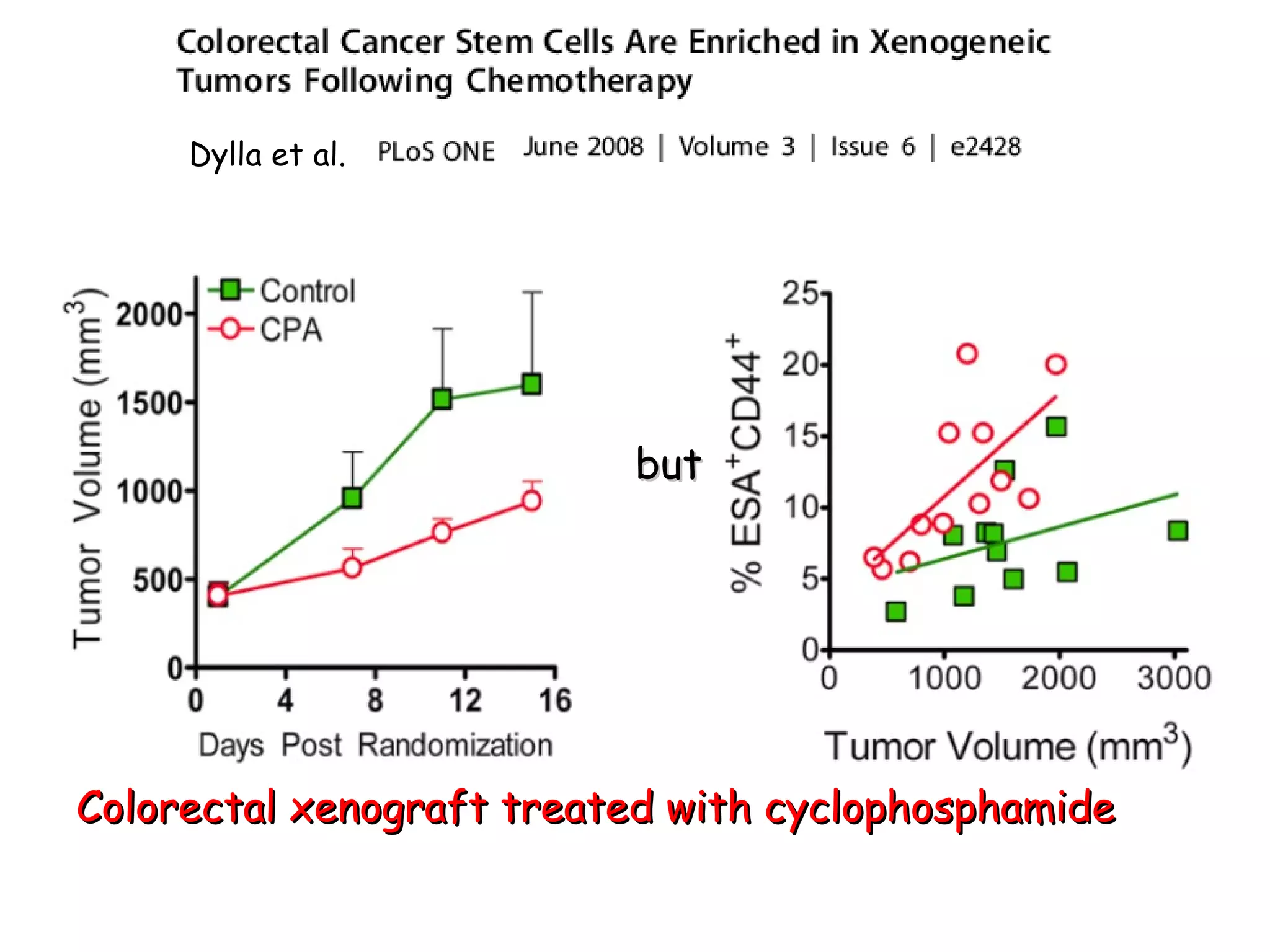
Colorectal xenograft treated with cyclophosphamide but  Dylla et al.
 
 
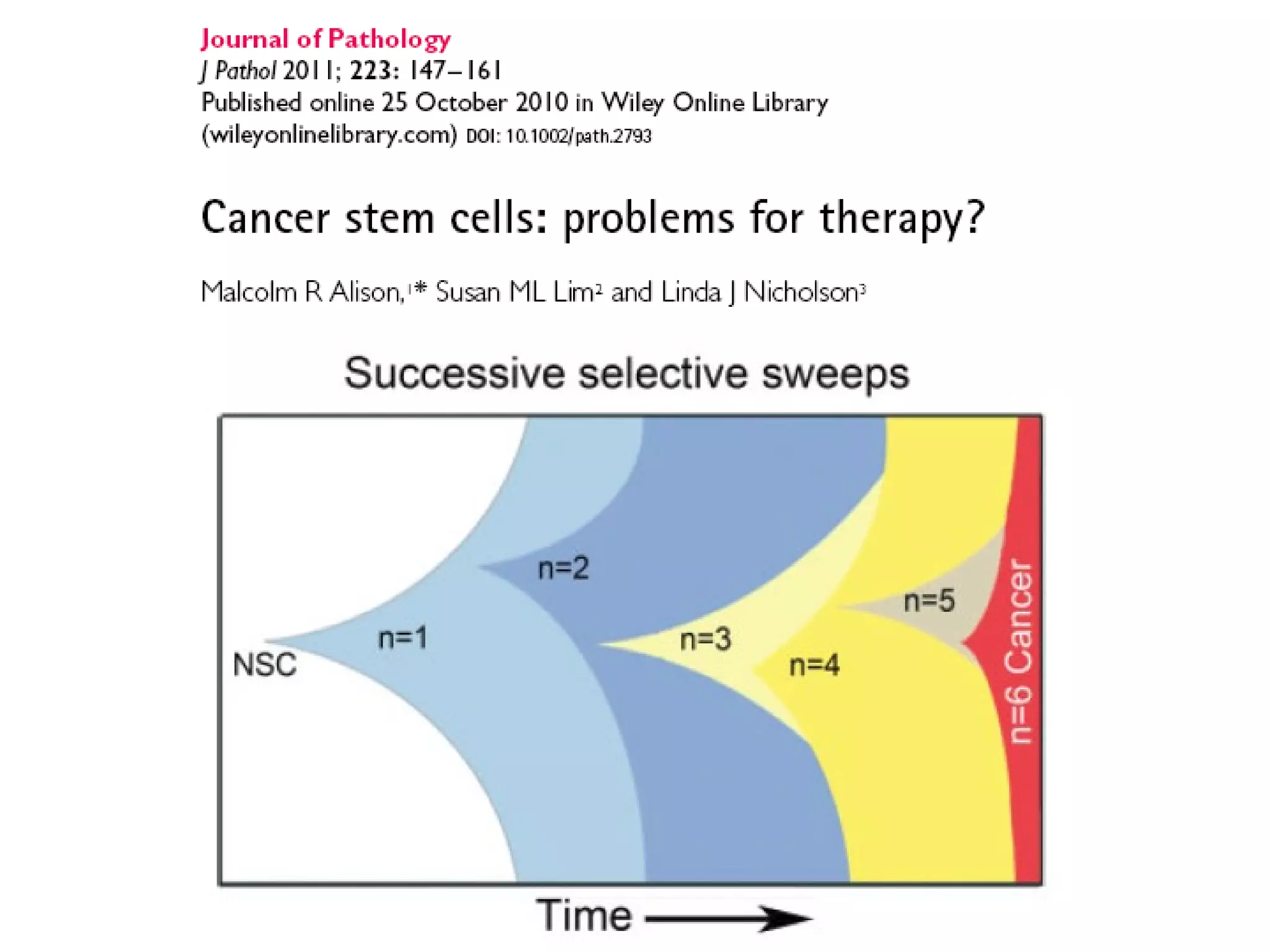
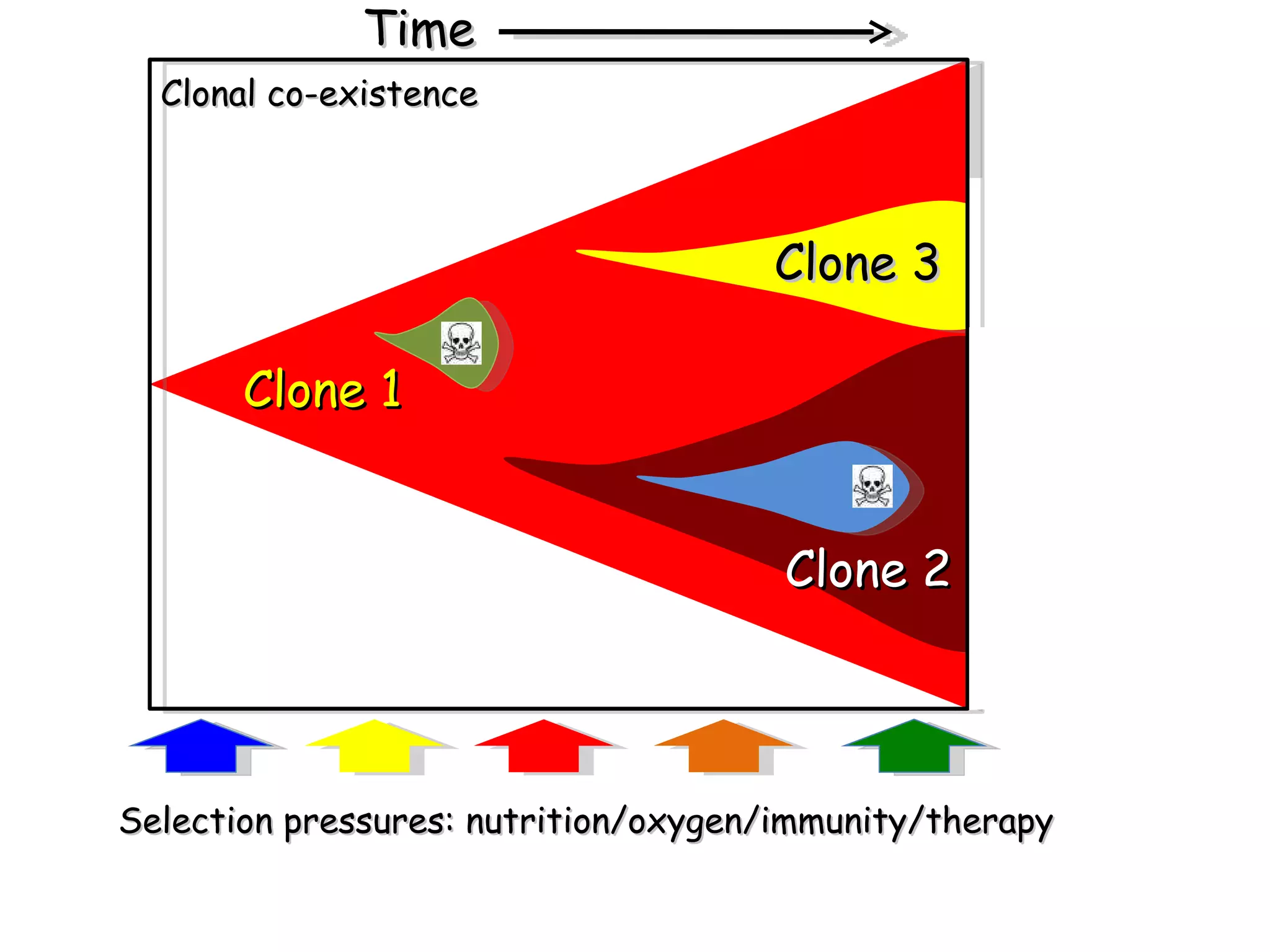
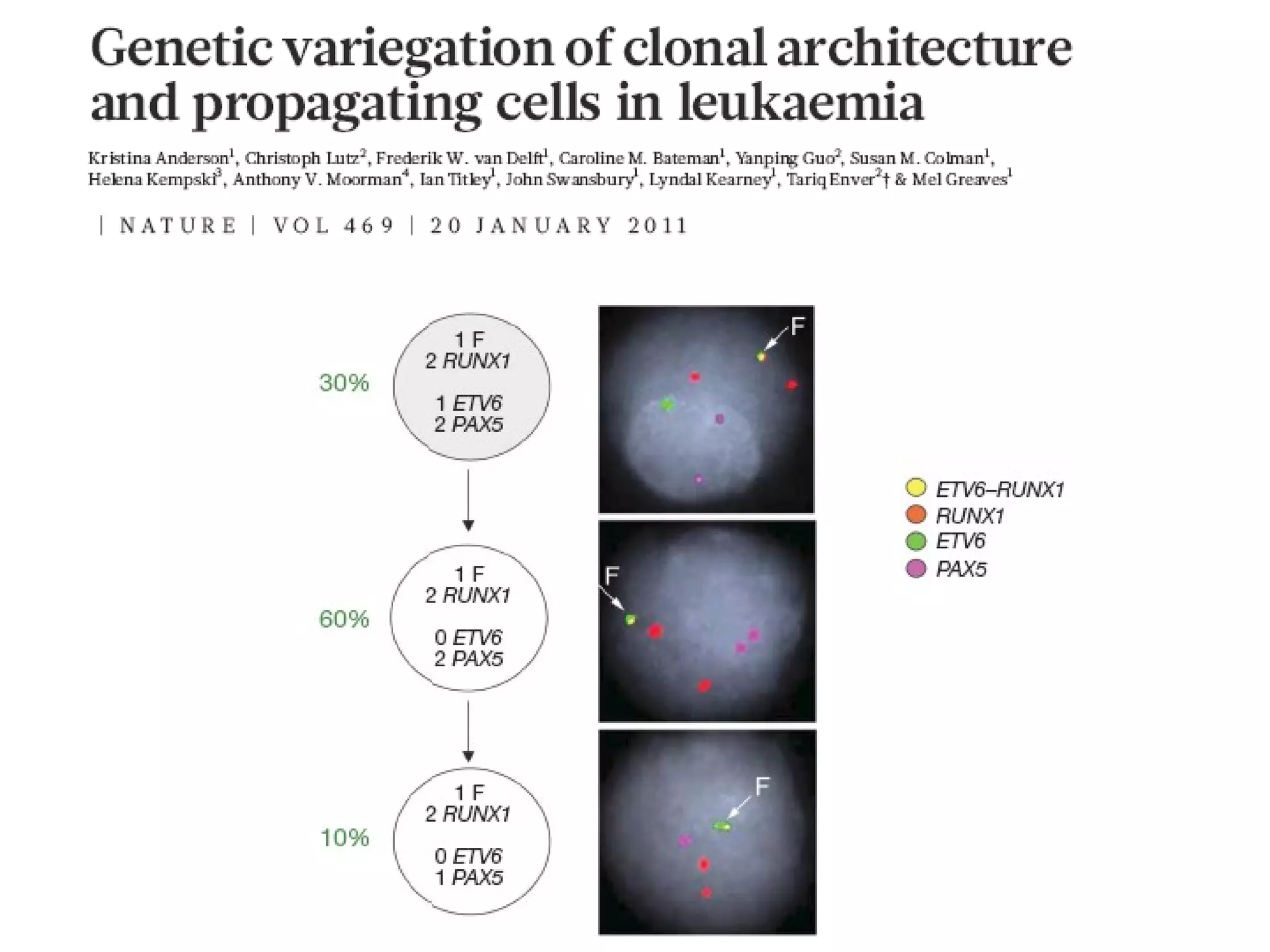
Time Selection pressures: nutrition/oxygen/immunity/therapy Clonal co-existence Clone 1 Clone 3 Clone 2
 
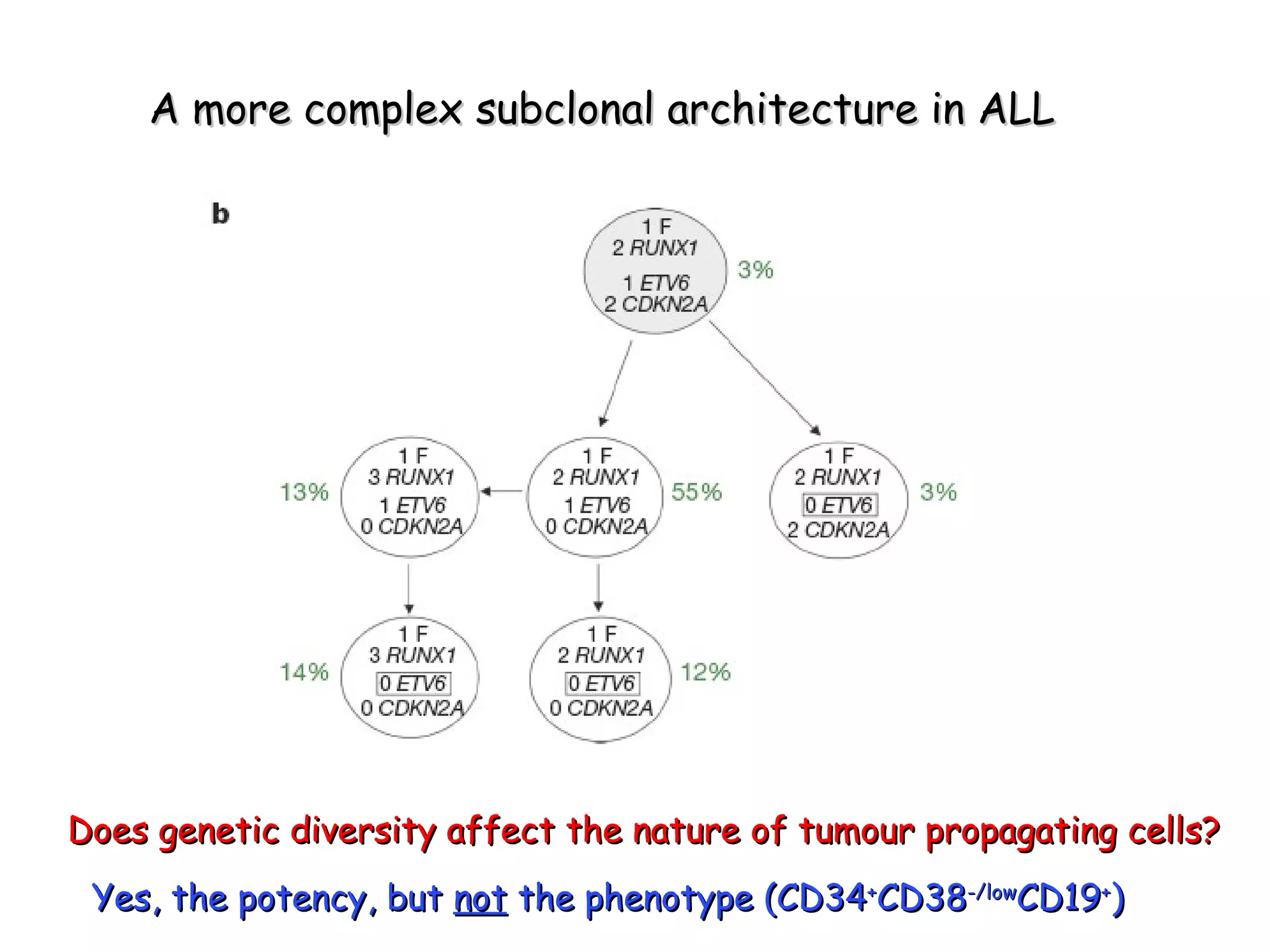
A more complex subclonal architecture in ALL Does genetic diversity affect the nature of tumour propagating cells? Yes, the potency, but  not  the phenotype (CD34 + CD38 -/low CD19 + )
 
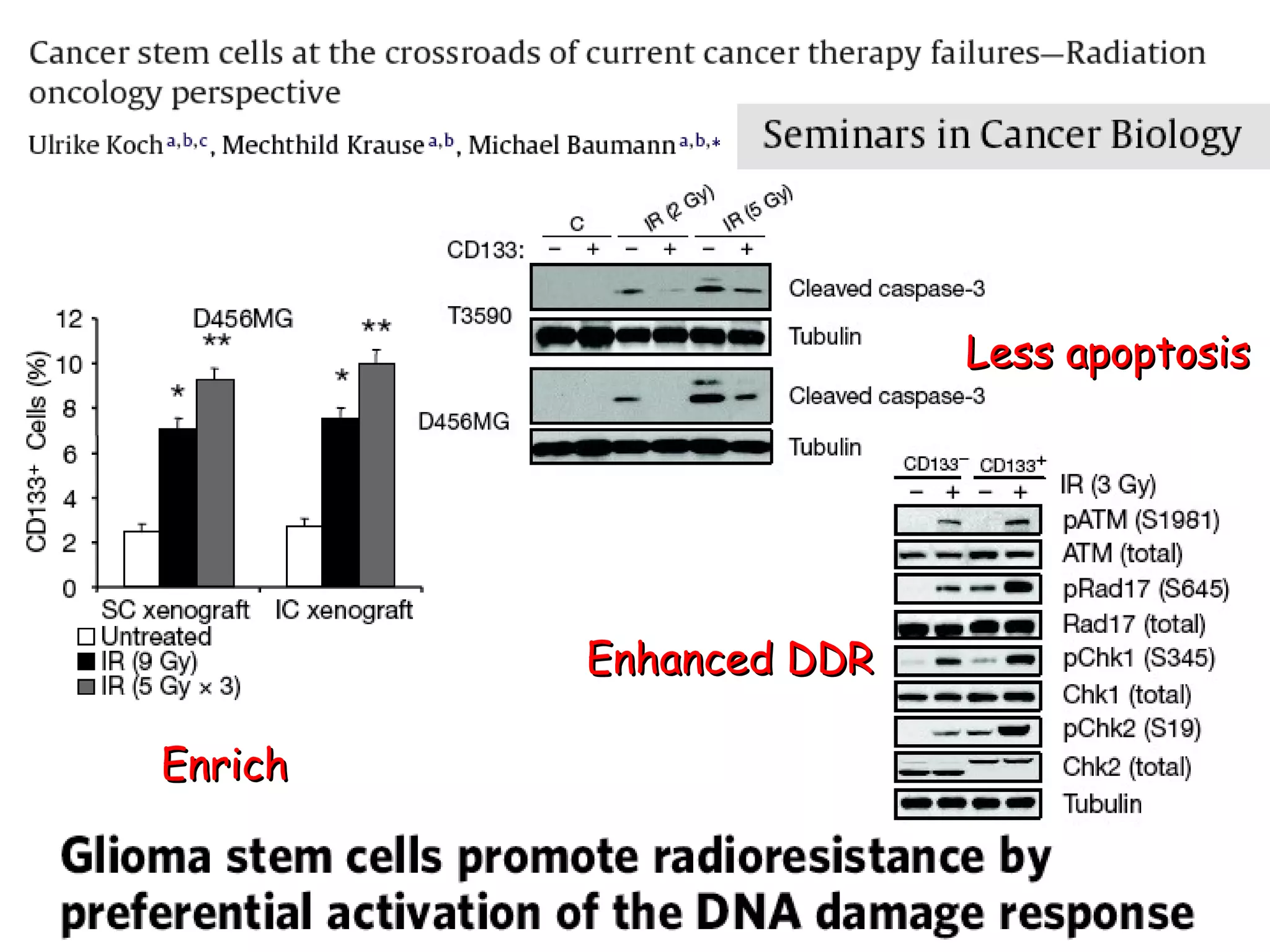
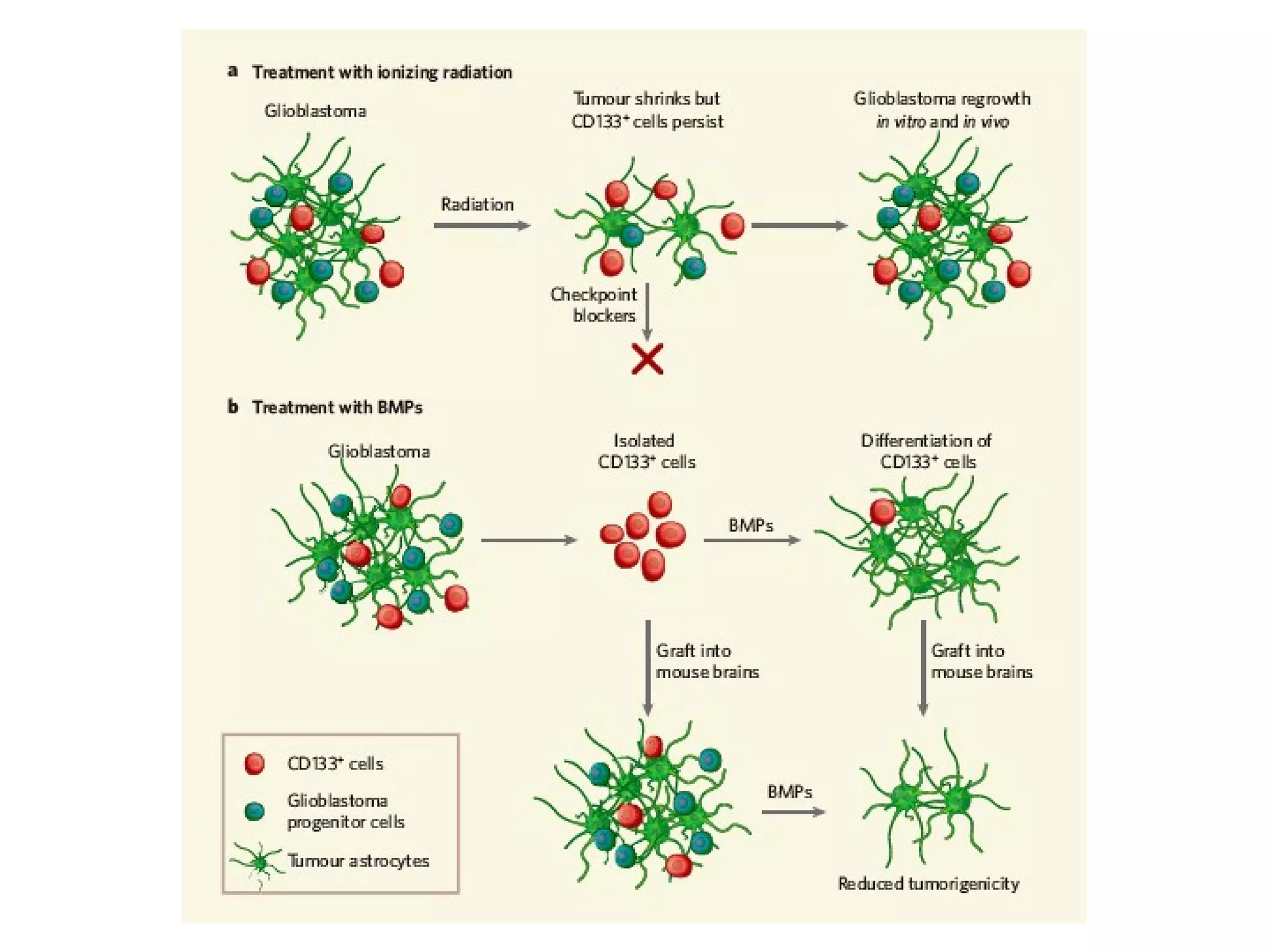
Enrich Less apoptosis Enhanced DDR
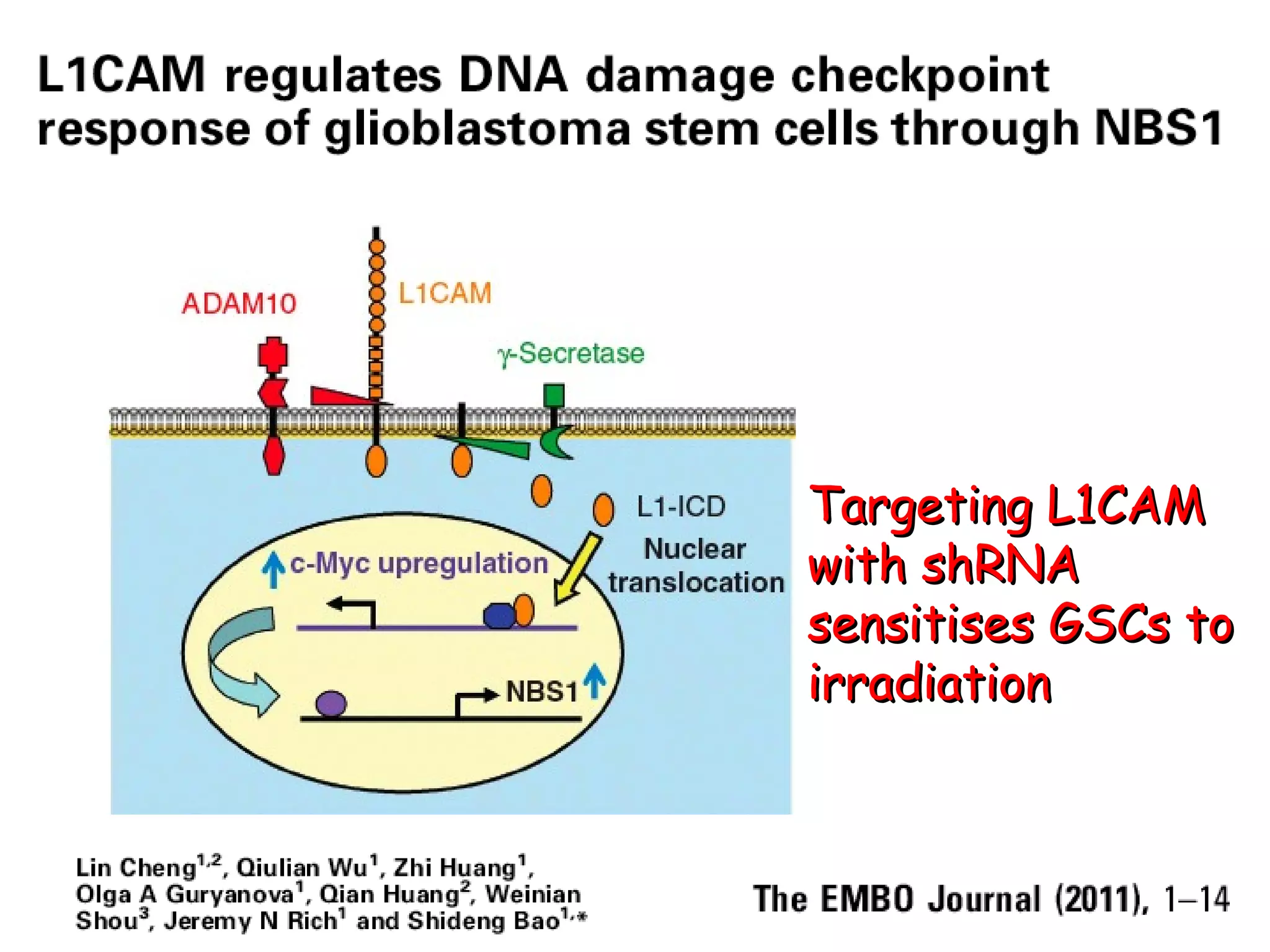
Targeting L1CAM with shRNA sensitises GSCs to irradiation
 
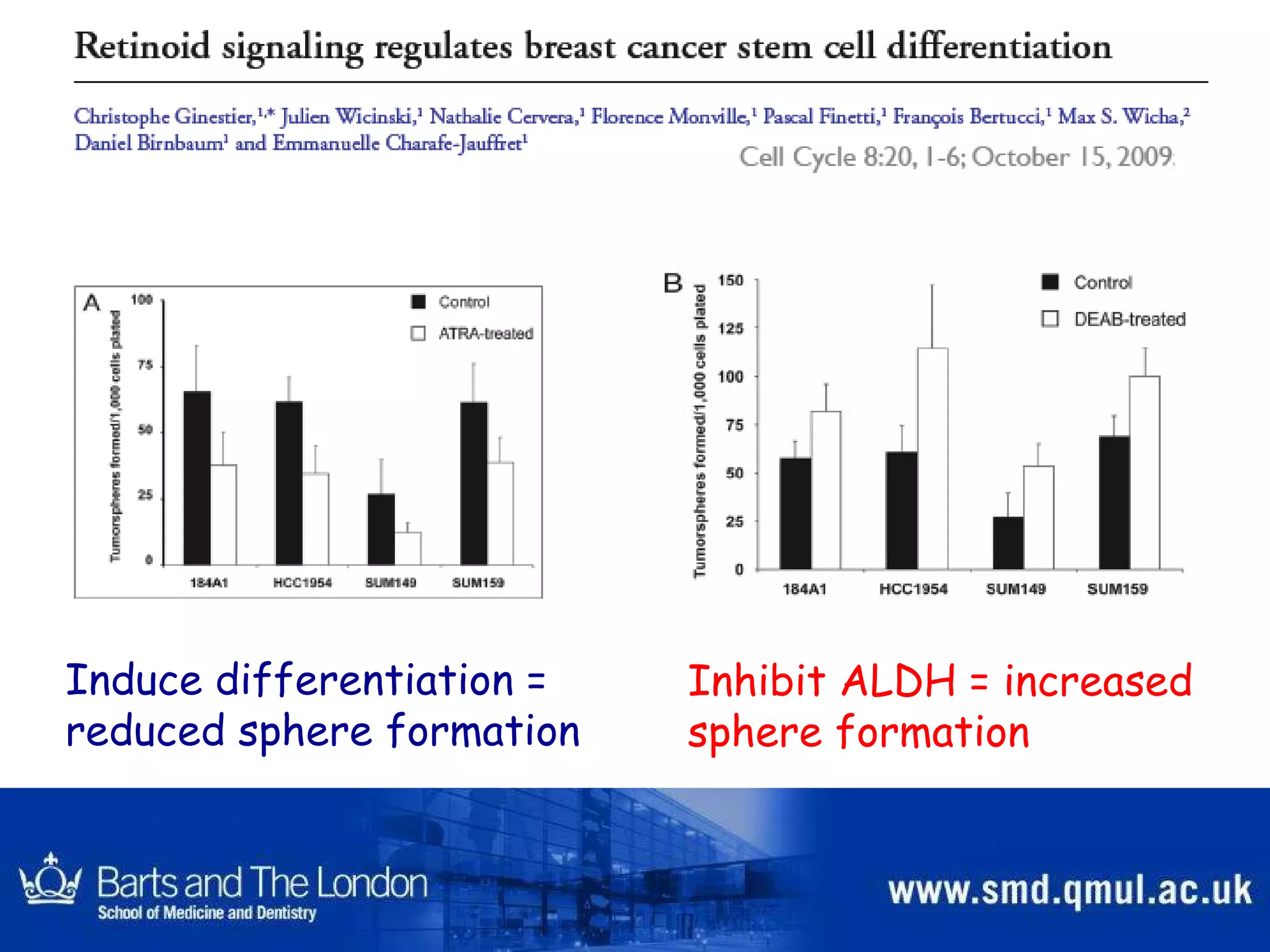
Induce differentiation = reduced sphere formation Inhibit ALDH = increased  sphere formation
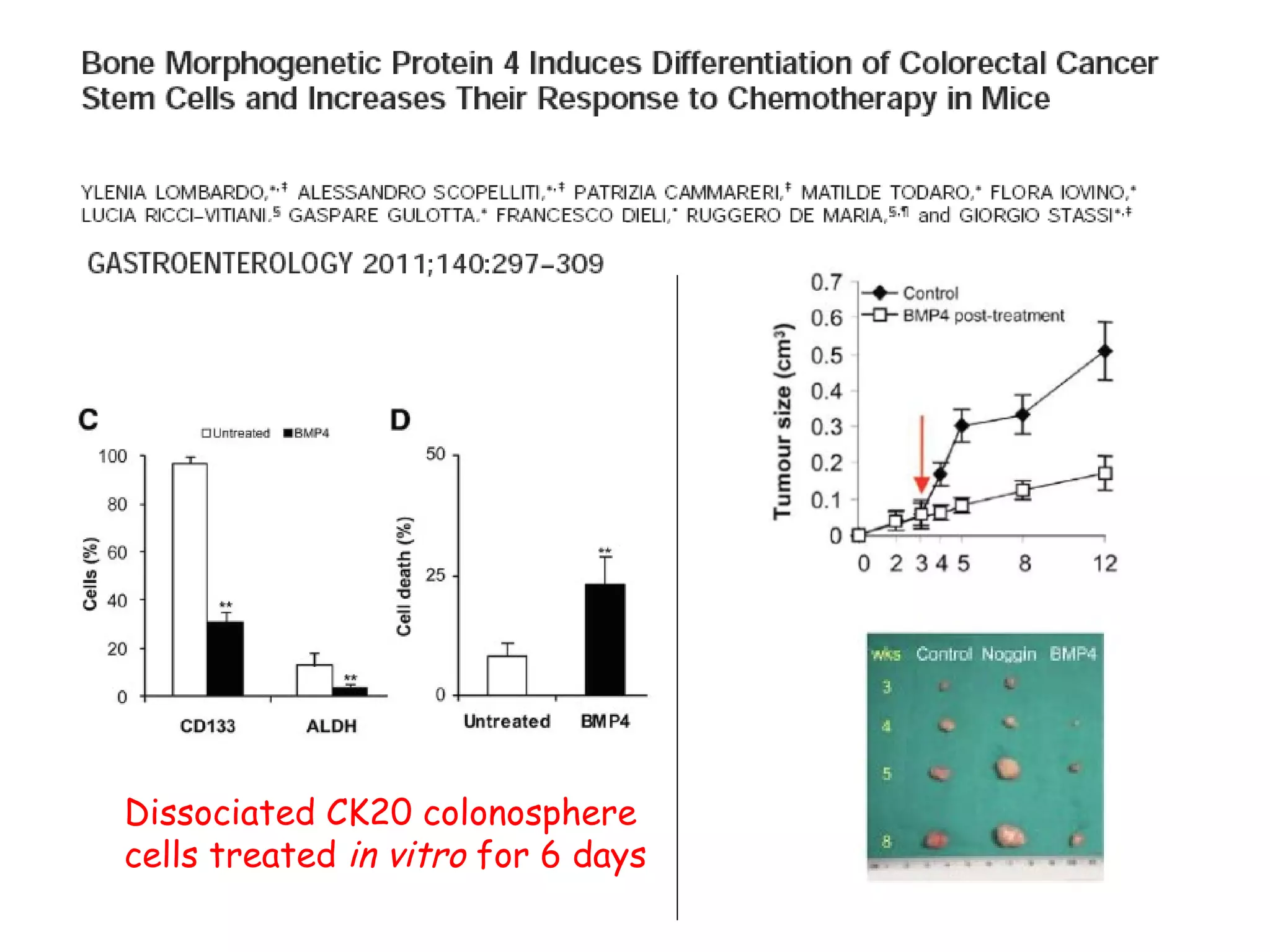
Dissociated CK20 colonosphere  cells treated  in vitro  for 6 days


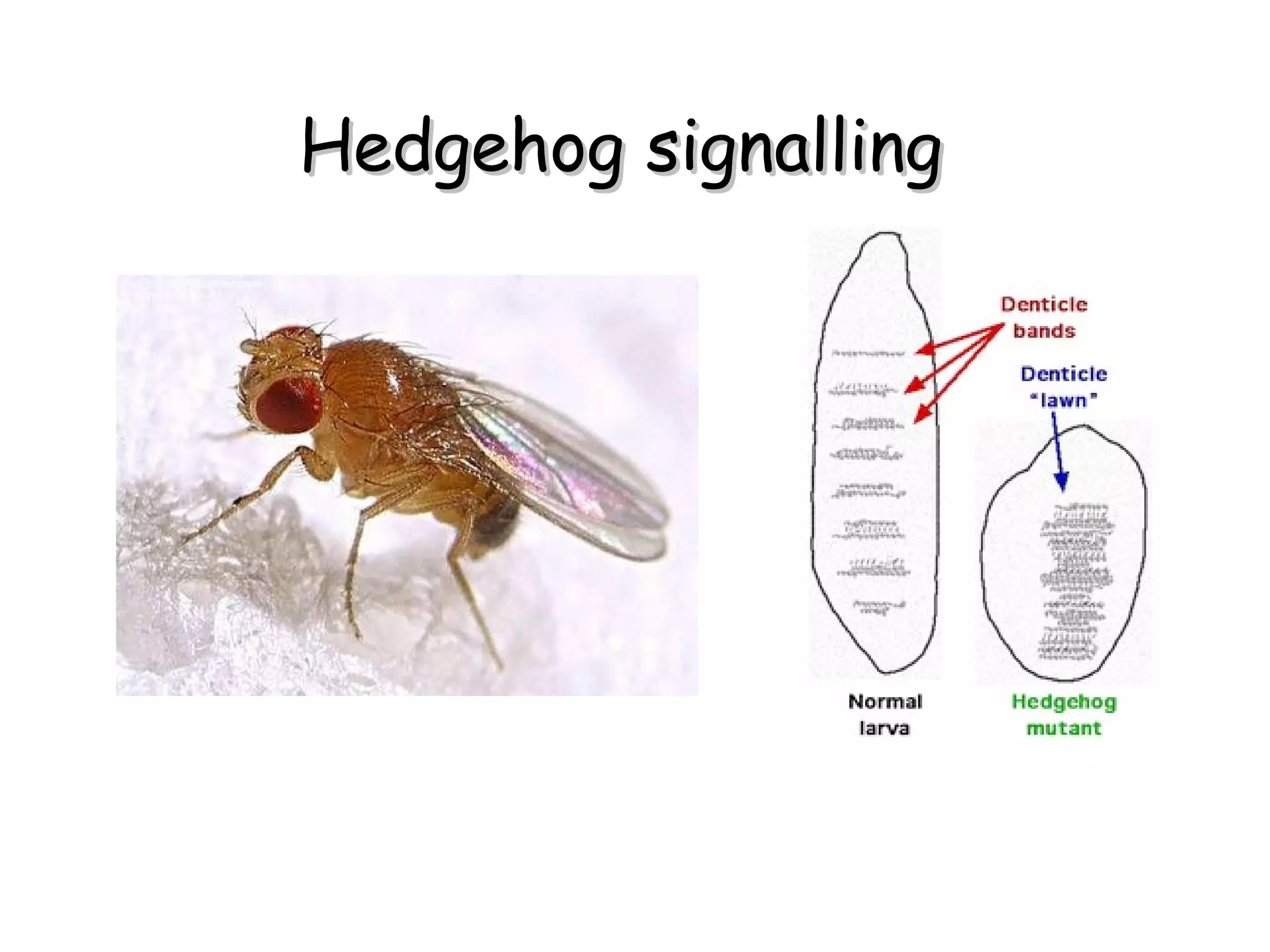
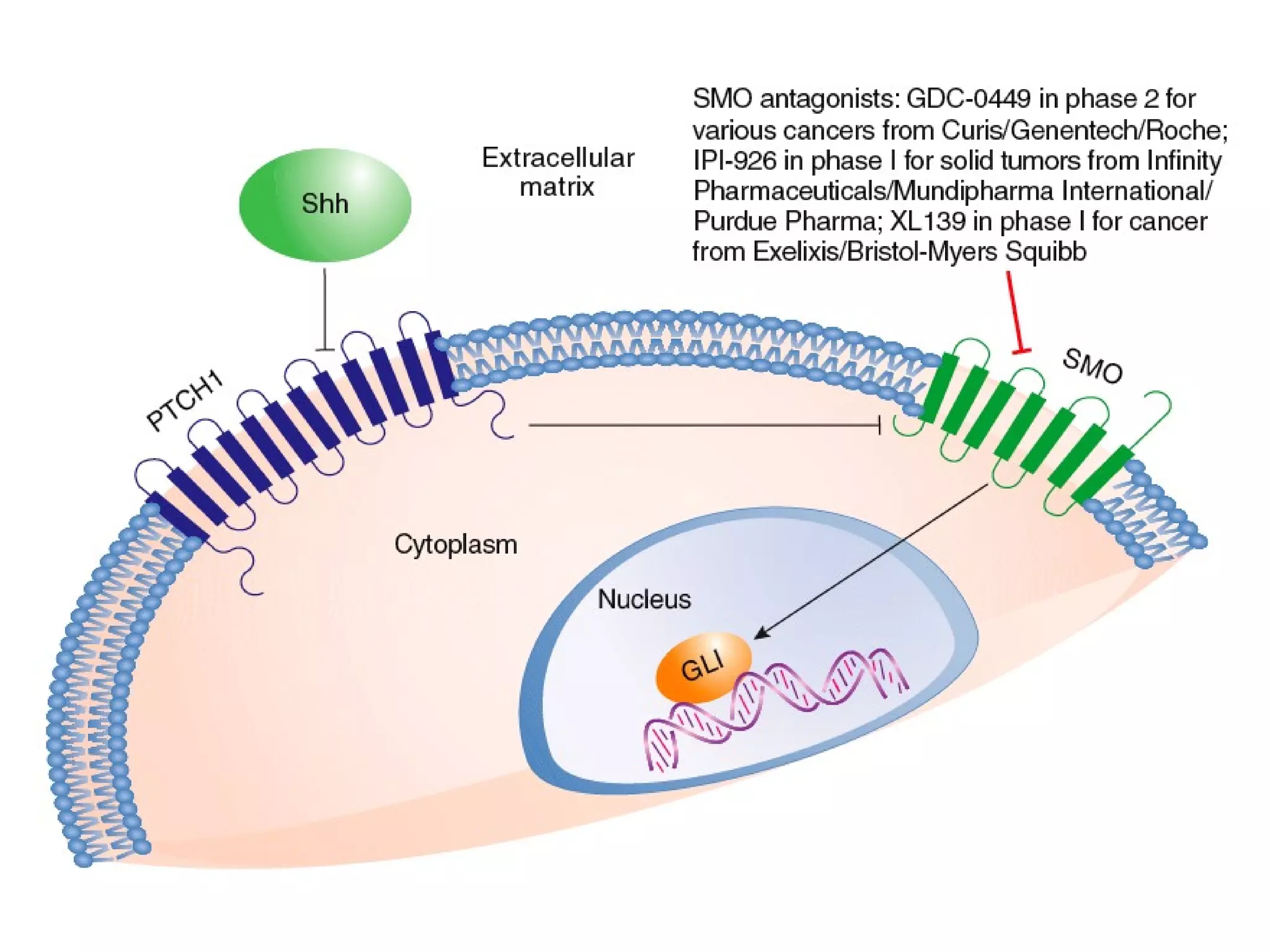
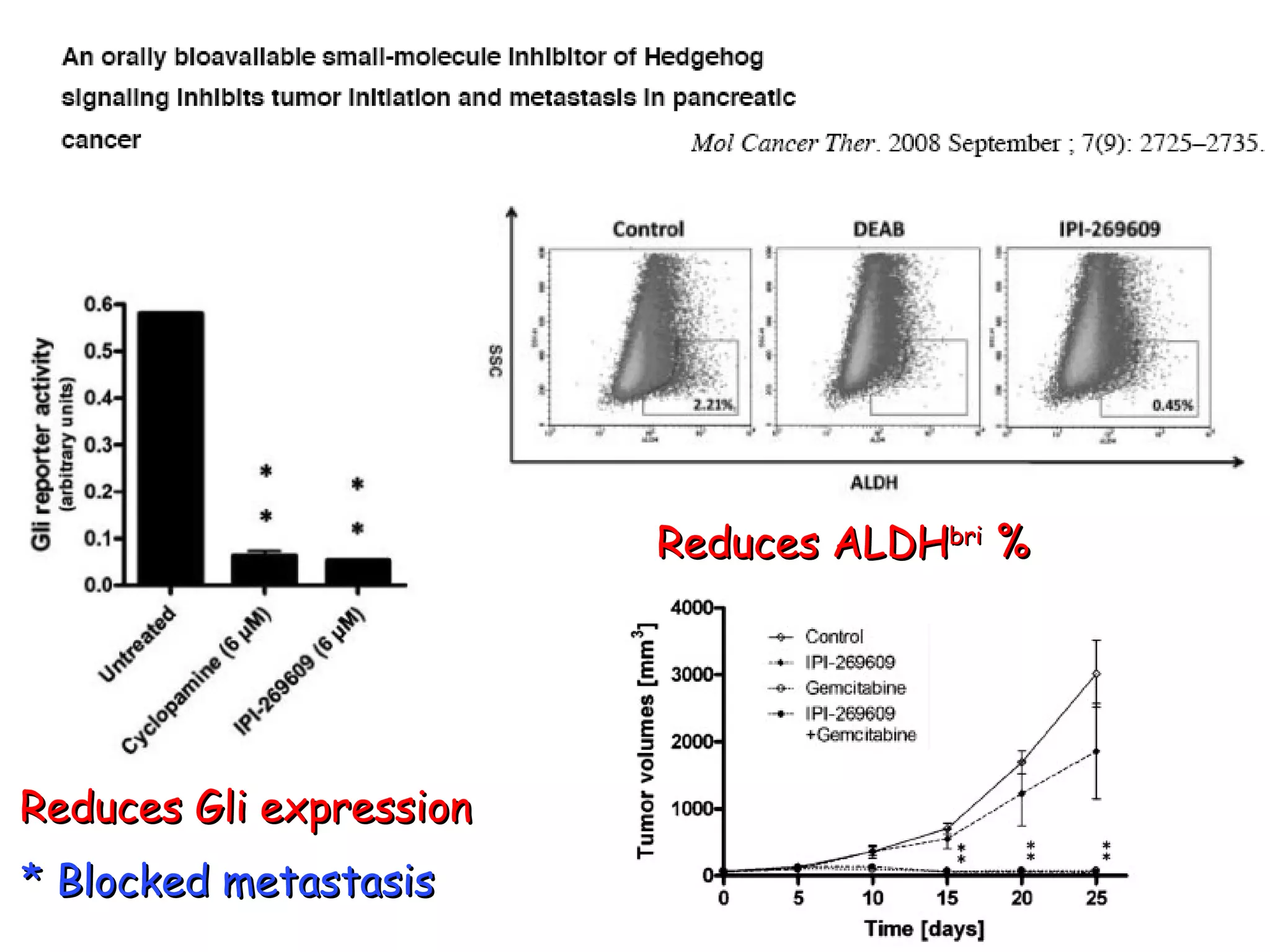
Hedgehog signalling
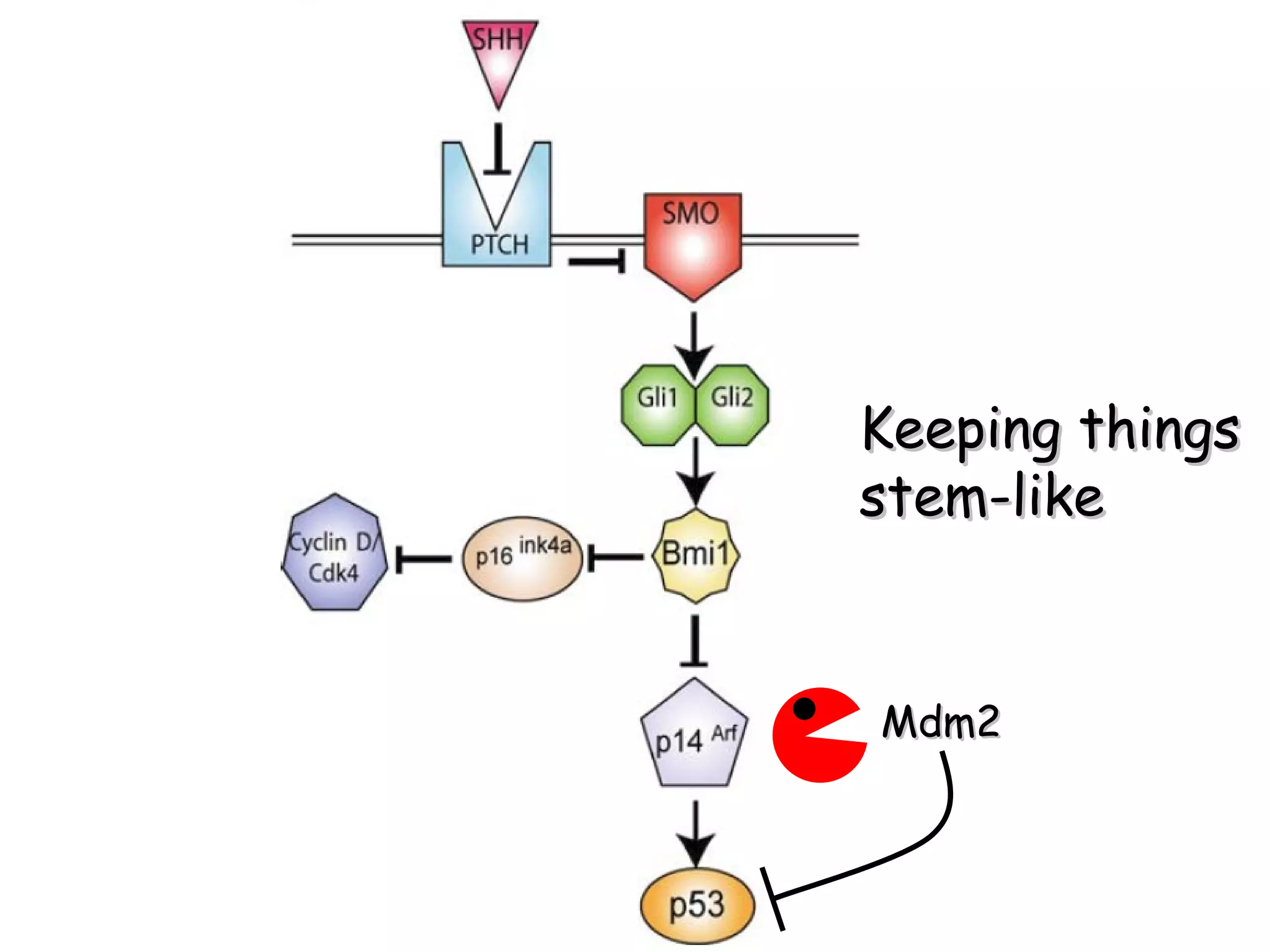
Keeping things stem-like Mdm2
 
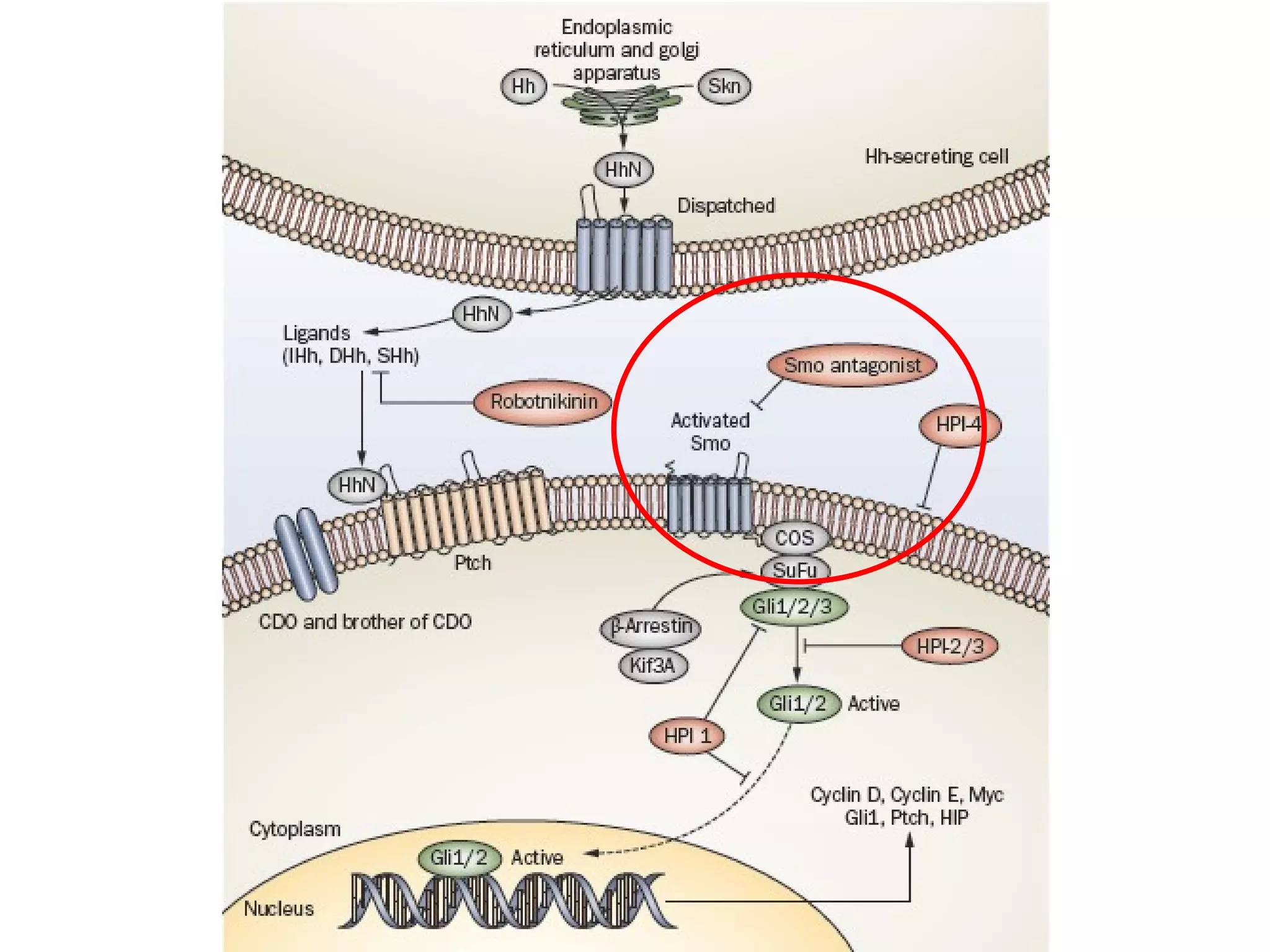
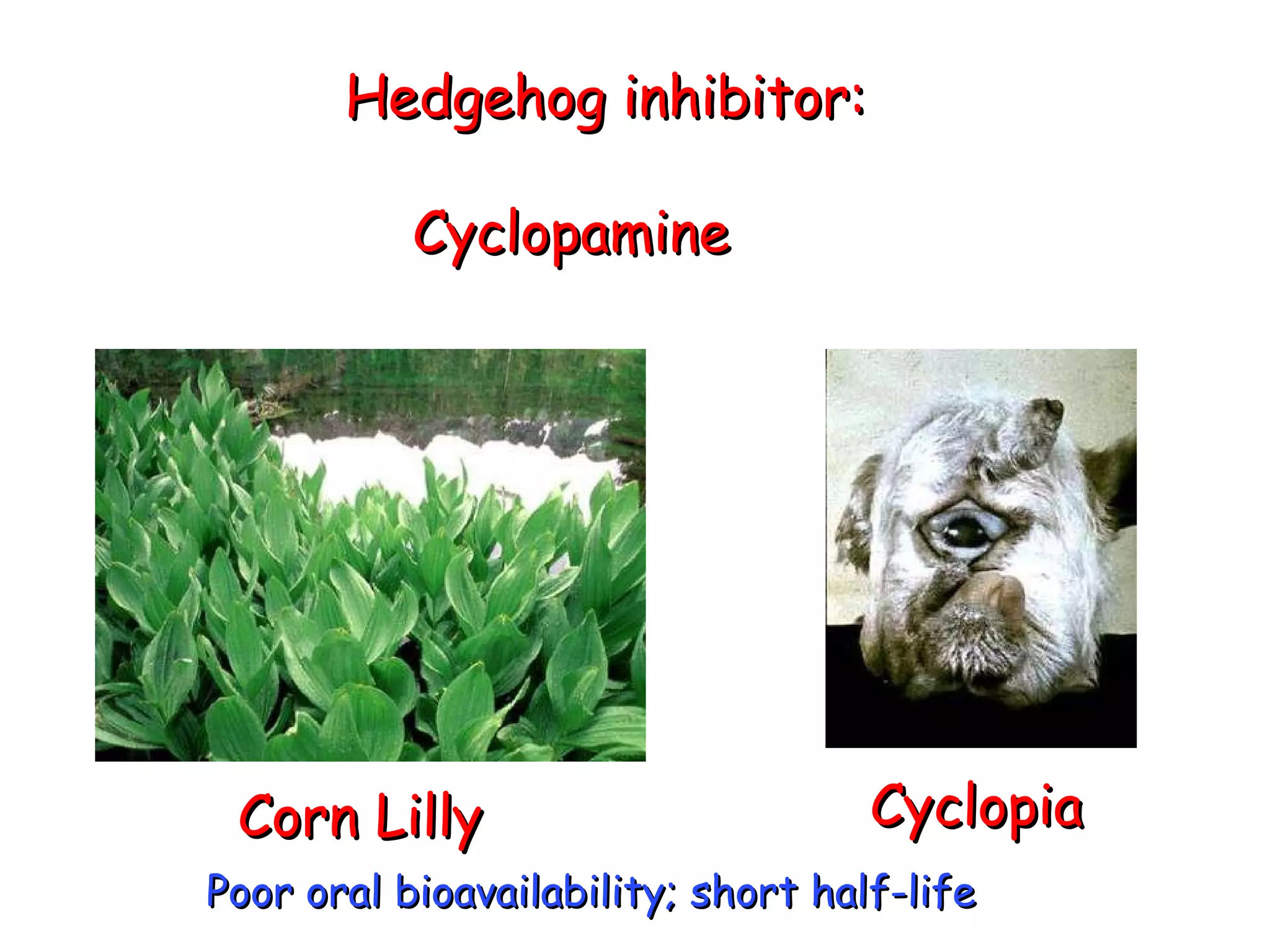
Hedgehog inhibitor: Cyclopamine Corn Lilly Cyclopia Poor oral bioavailability; short half-life


Reduces Gli expression Reduces ALDH bri  % * Blocked metastasis


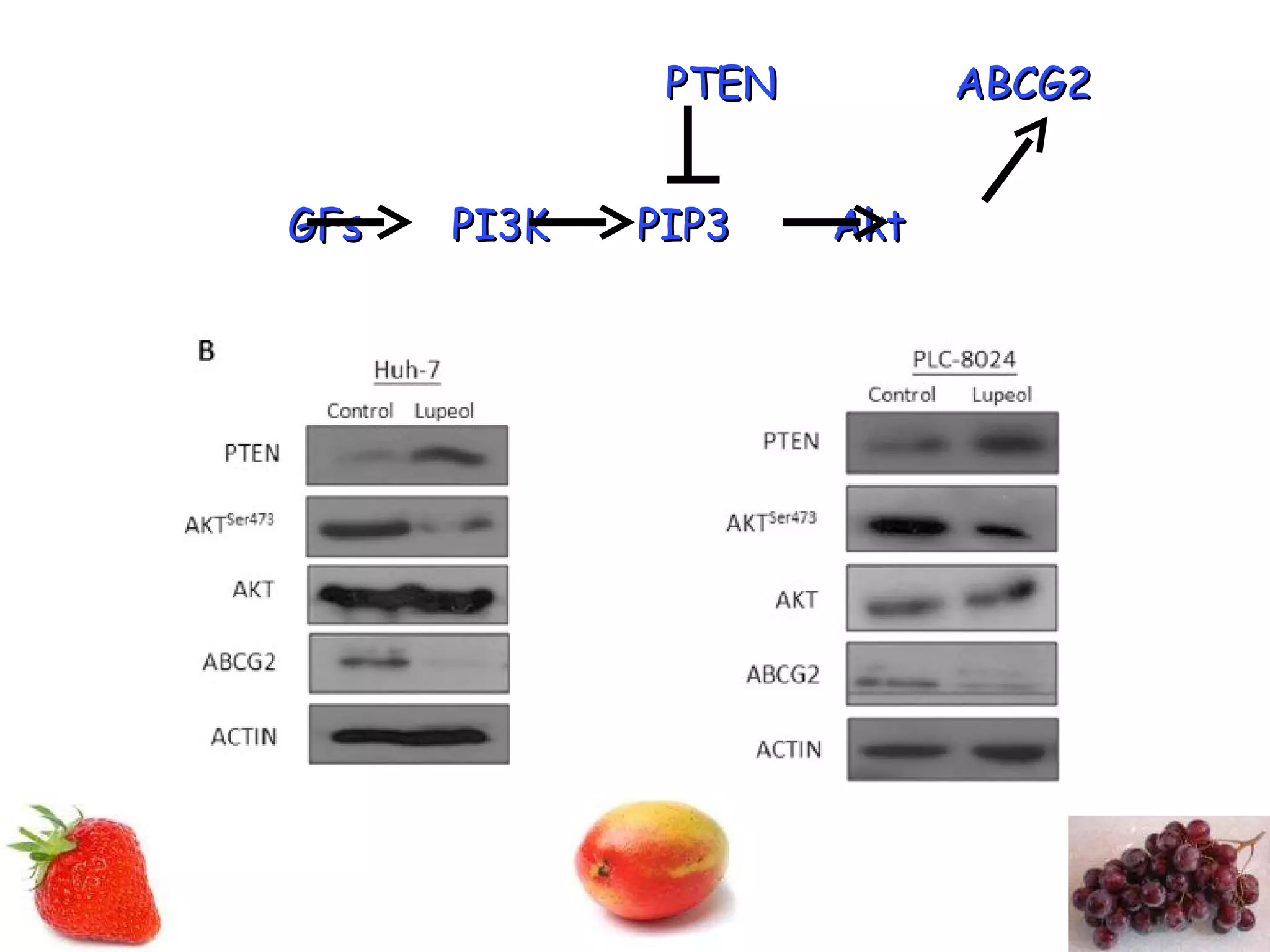
GFs  PI3K  PIP3  Akt PTEN  ABCG2
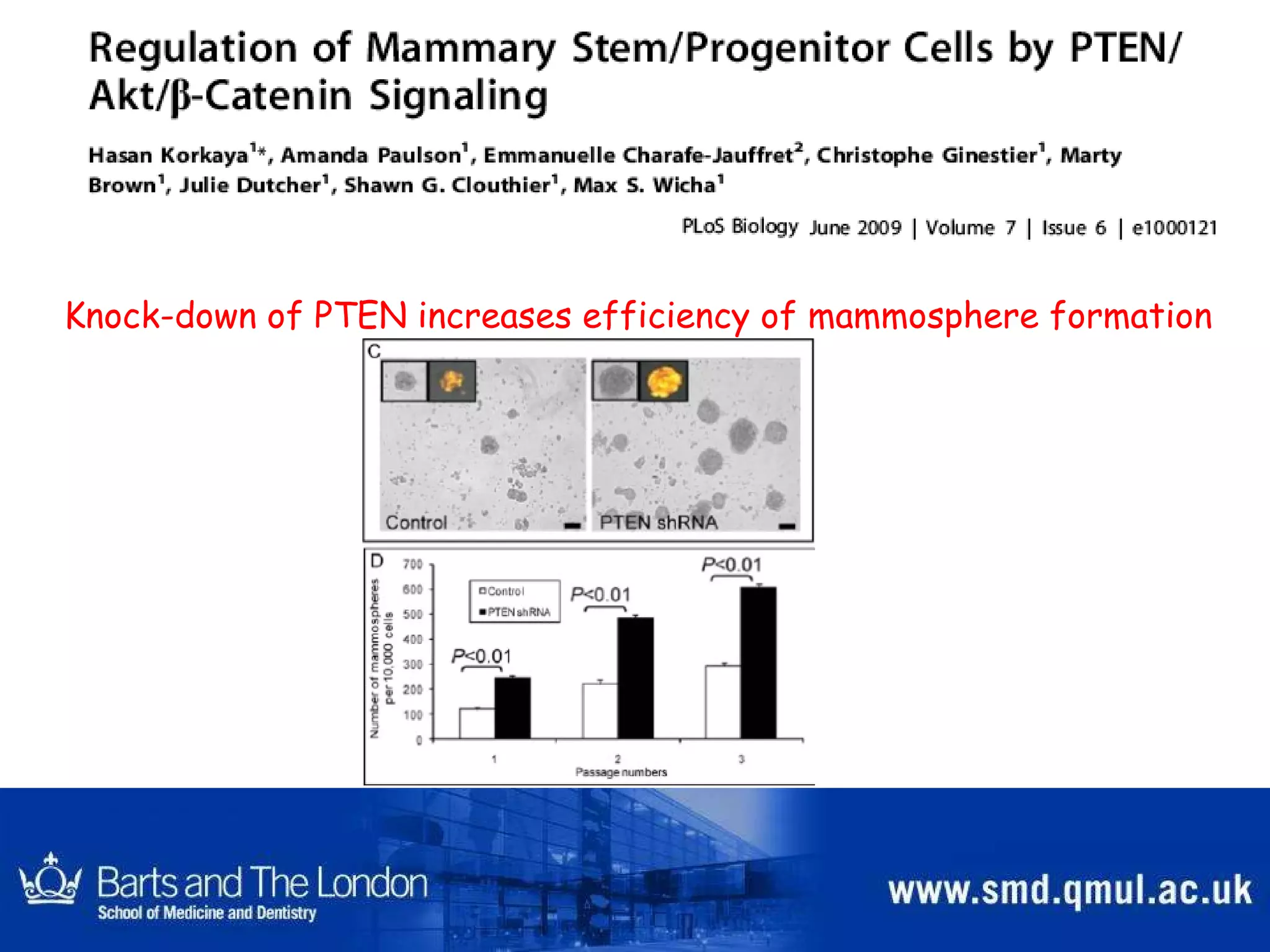
Knock-down of PTEN increases efficiency of mammosphere formation
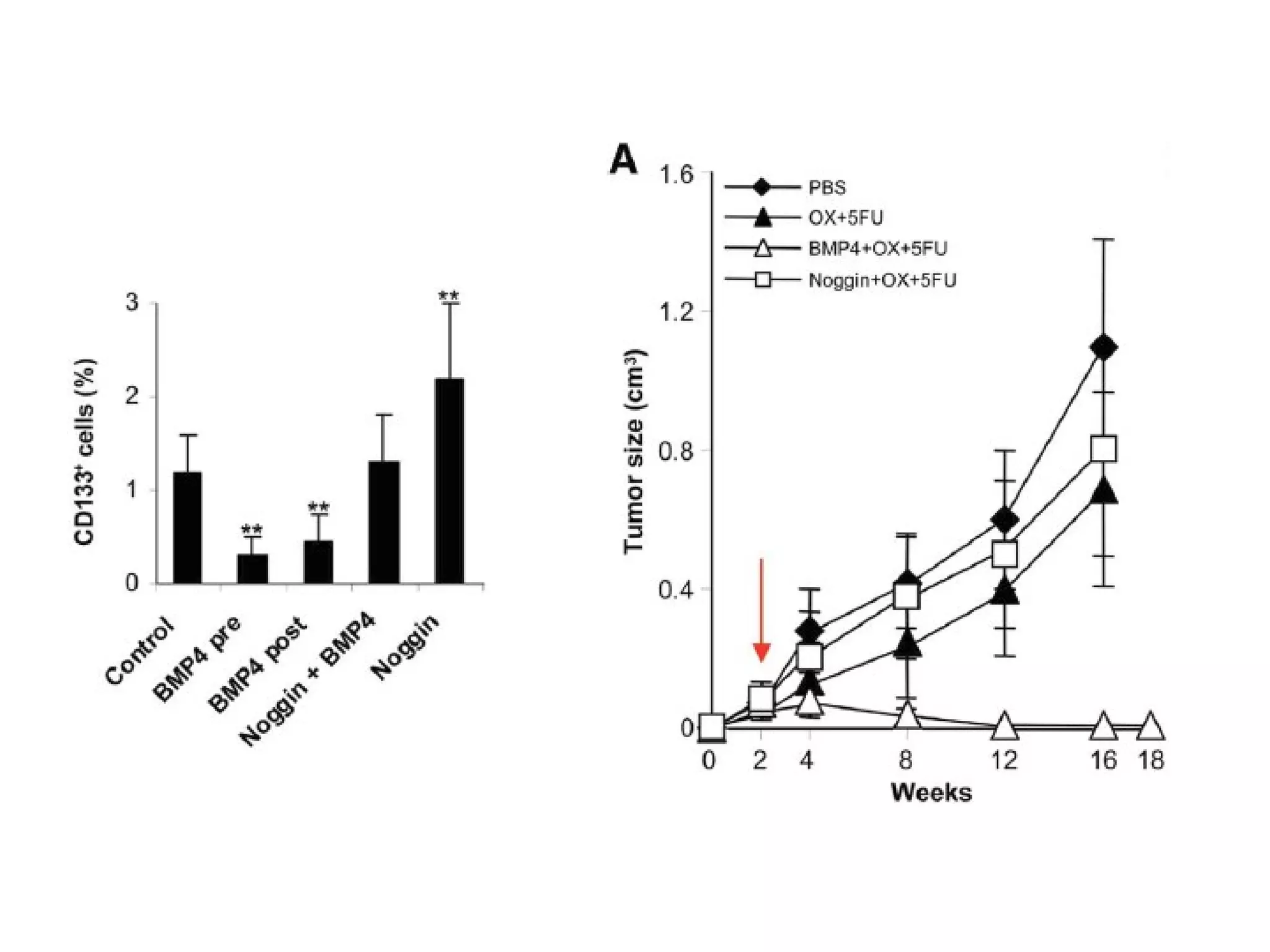
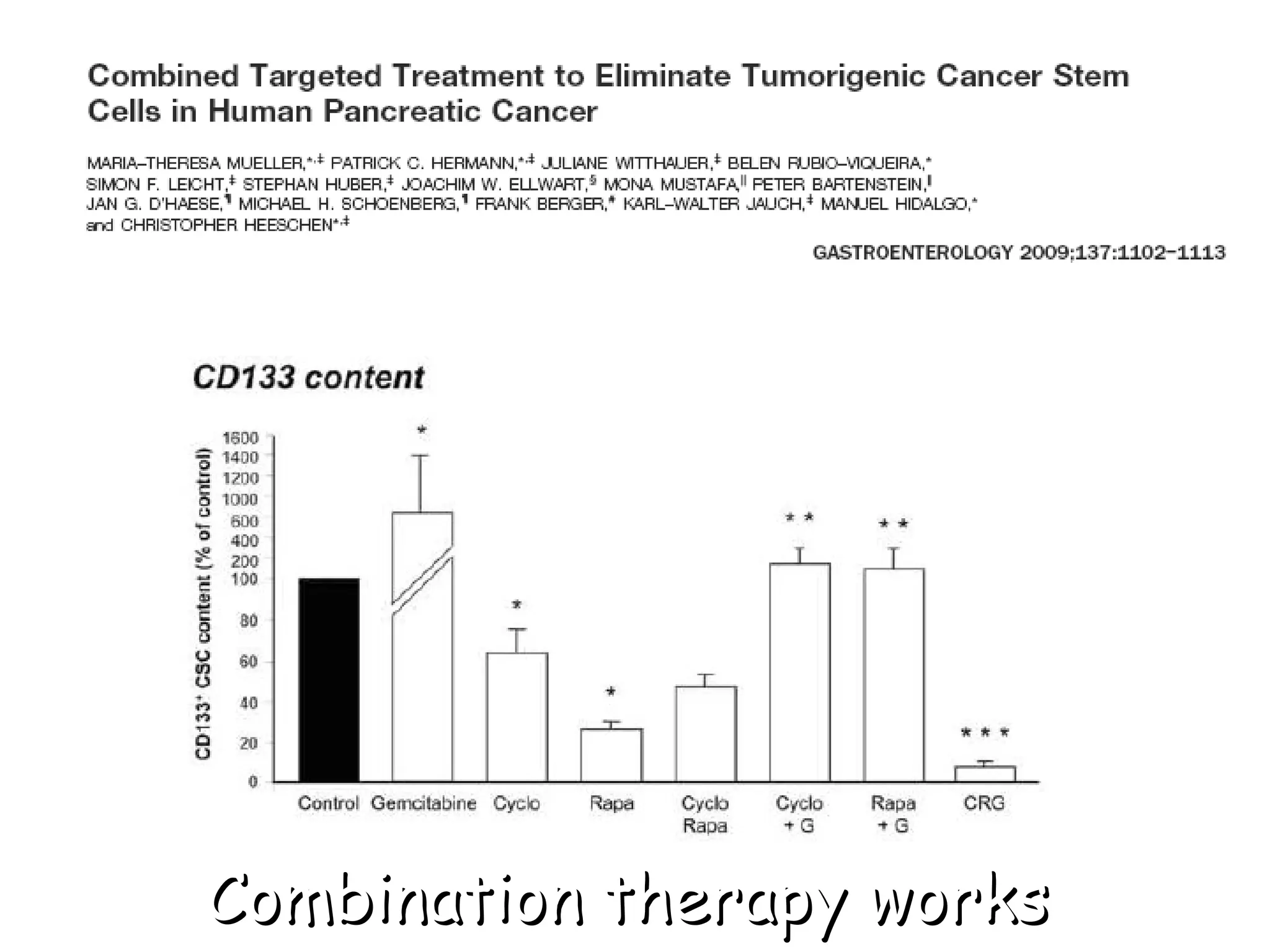
Combination therapy works


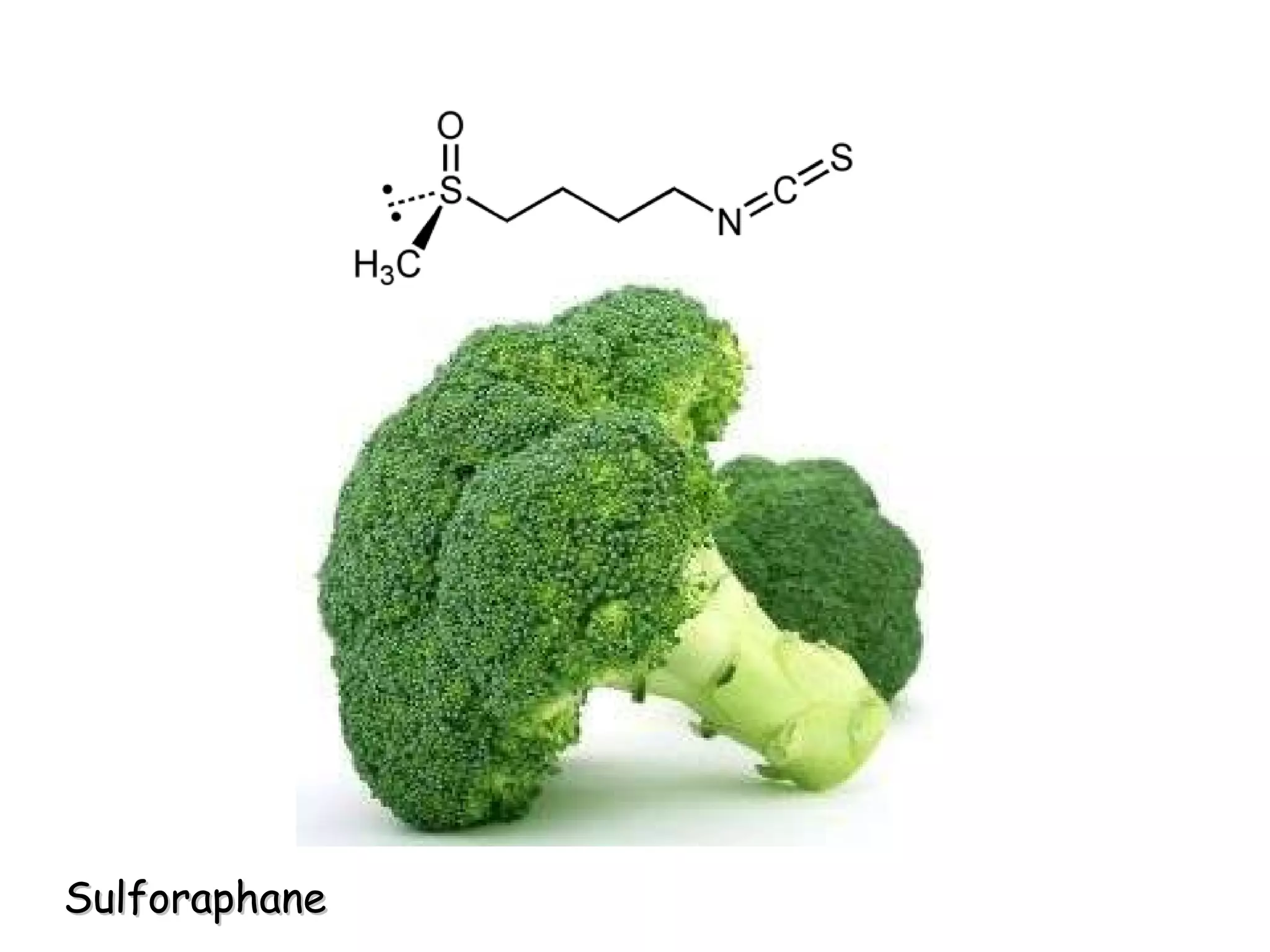
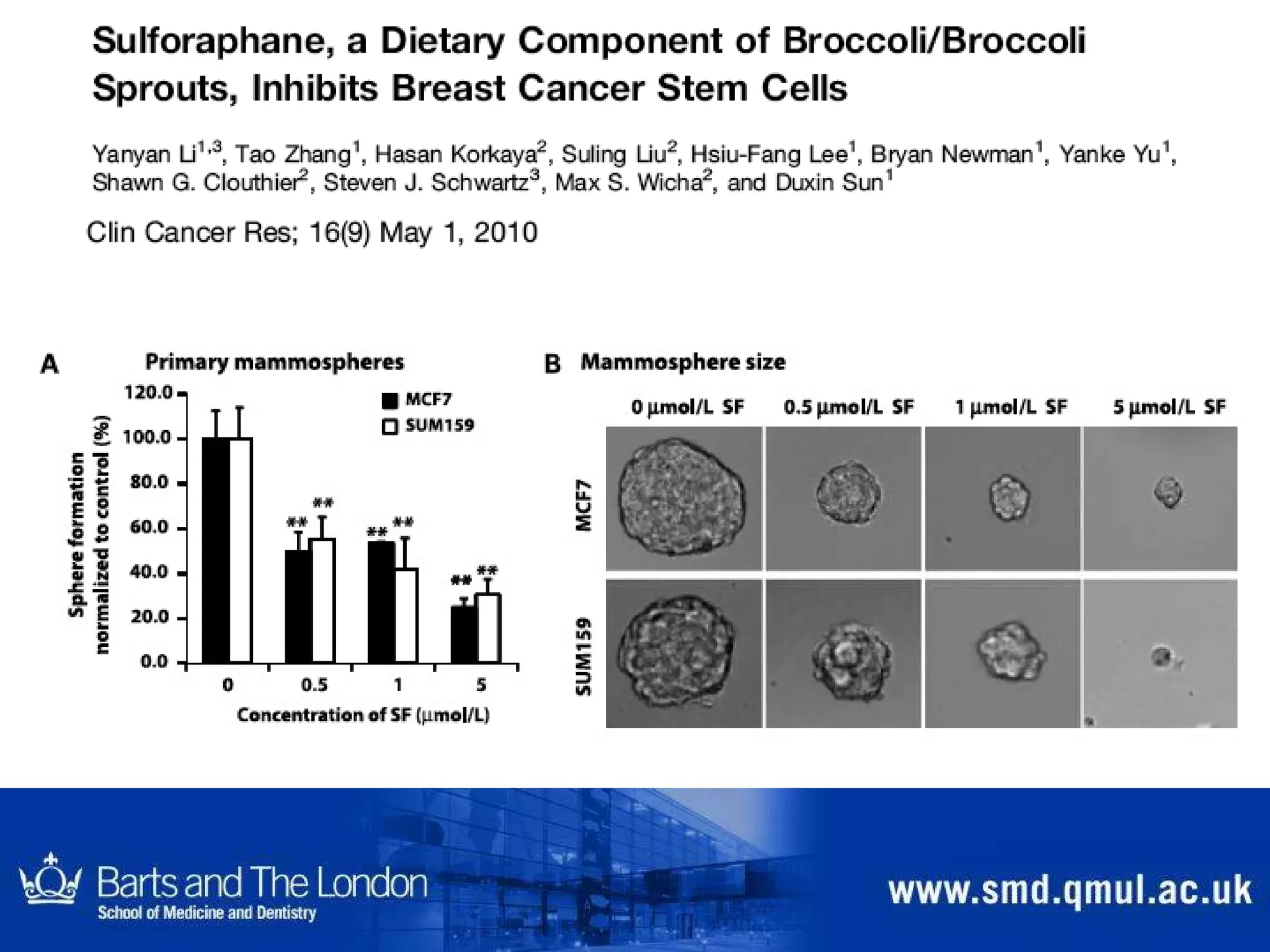
Sulforaphane
 
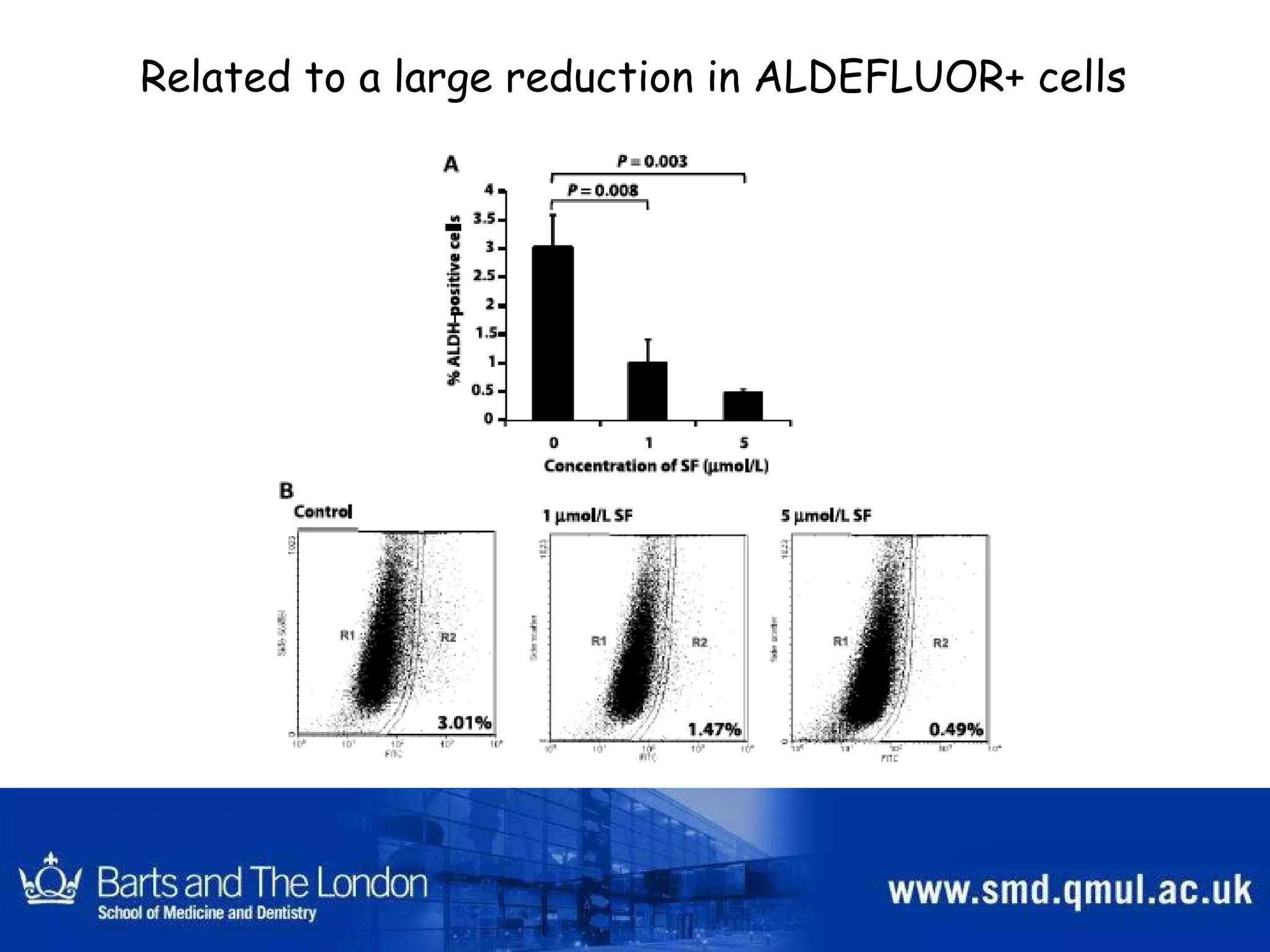
Related to a large reduction in ALDEFLUOR+ cells
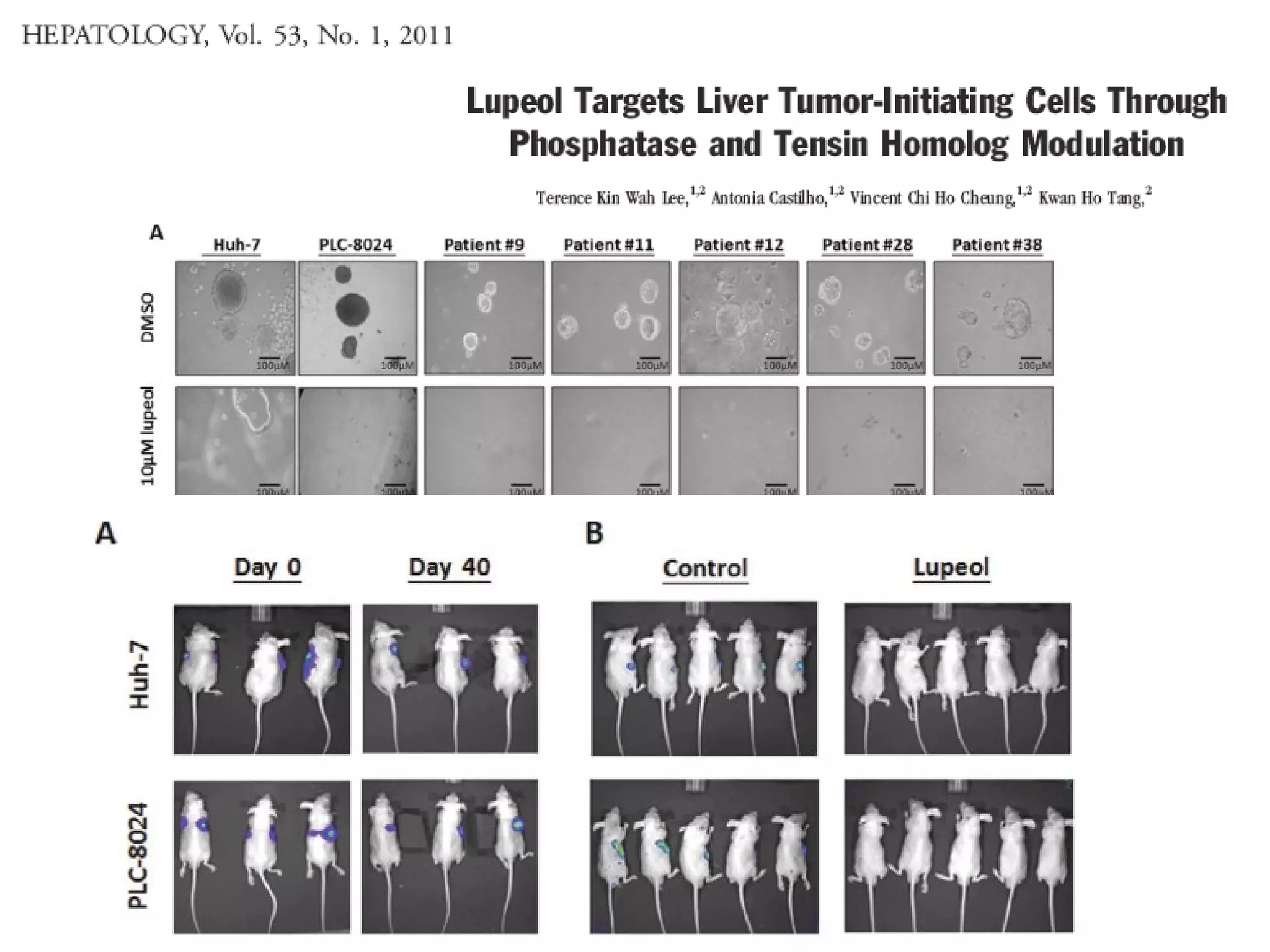
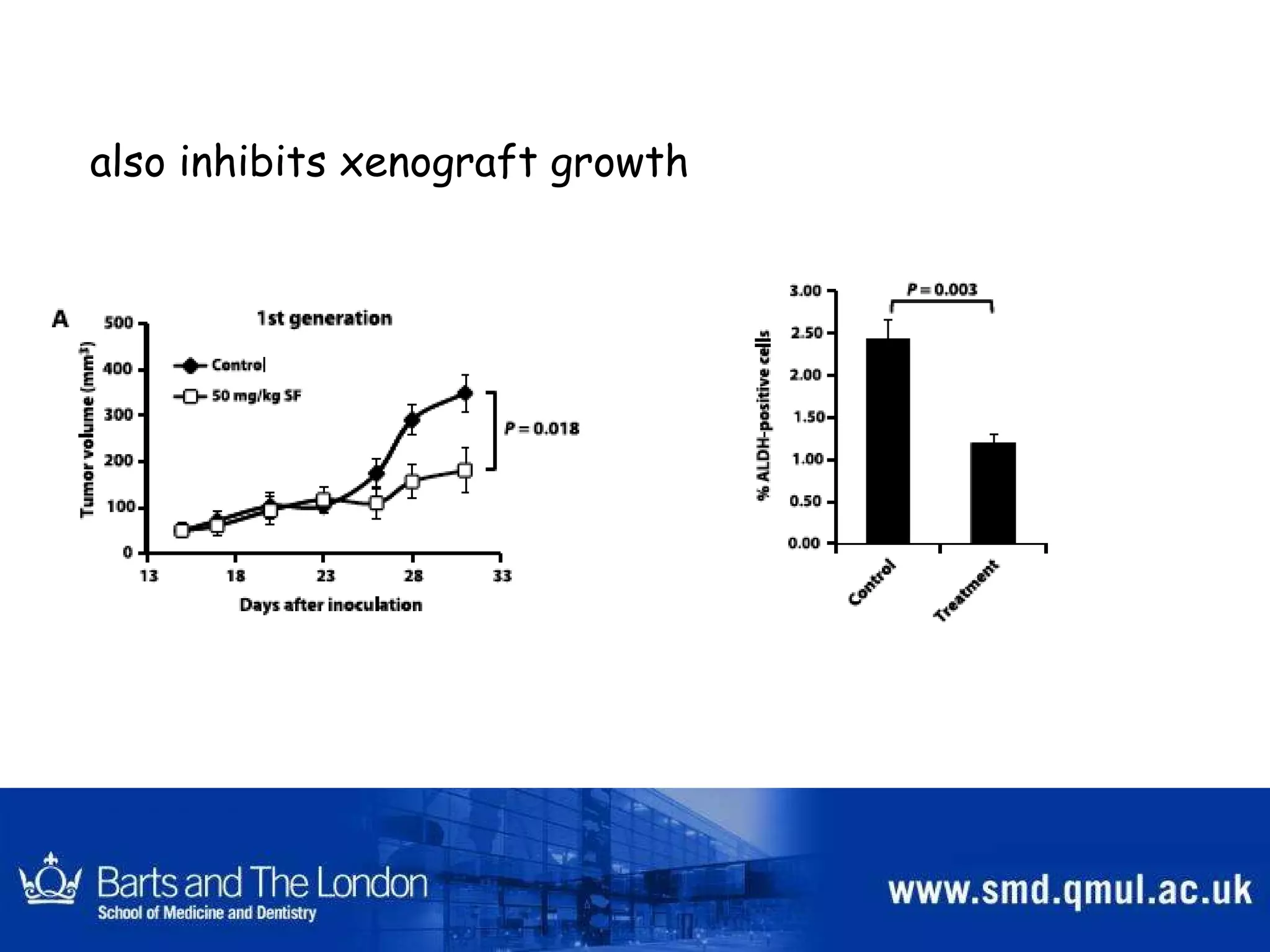
also inhibits xenograft growth
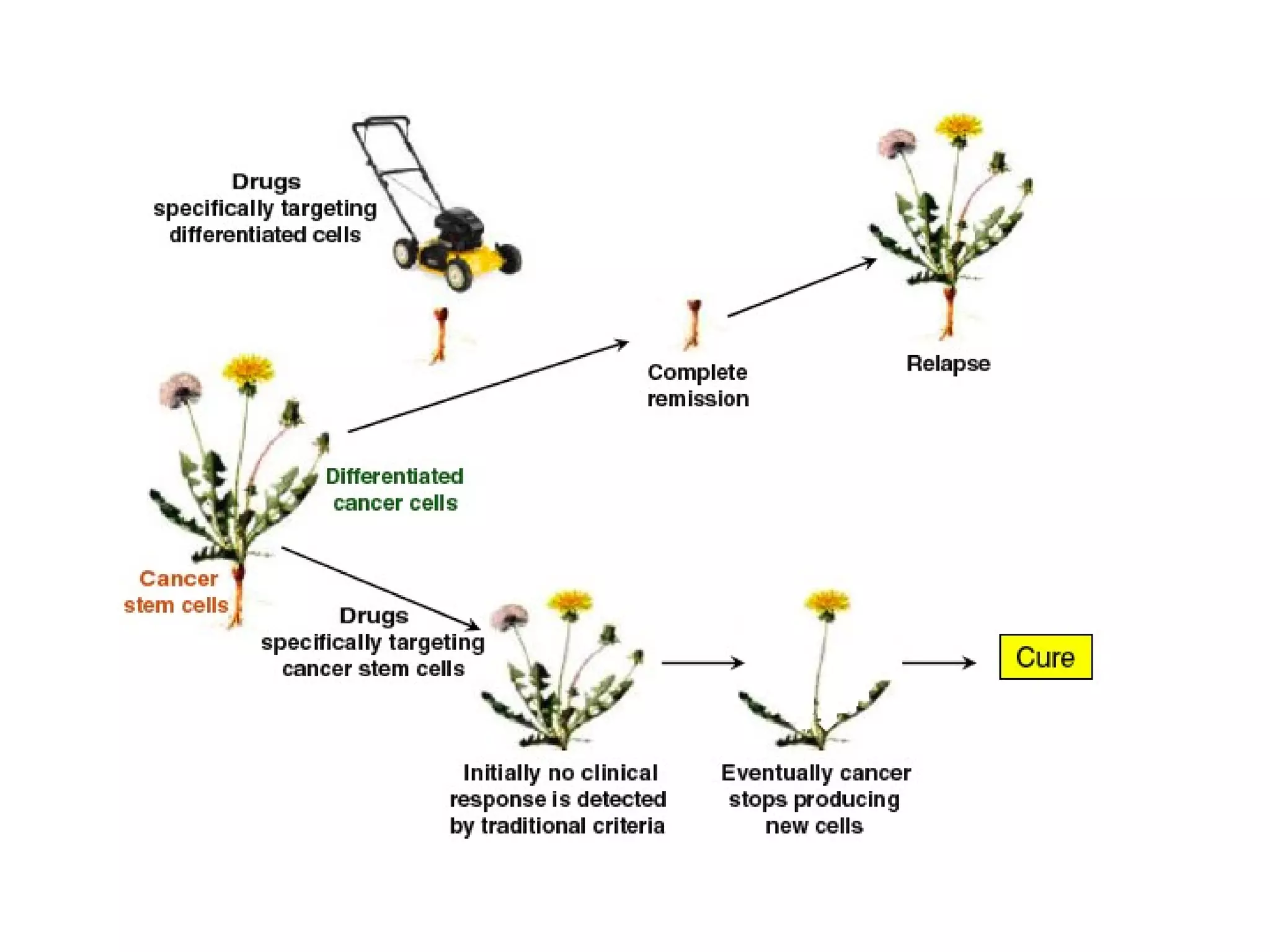
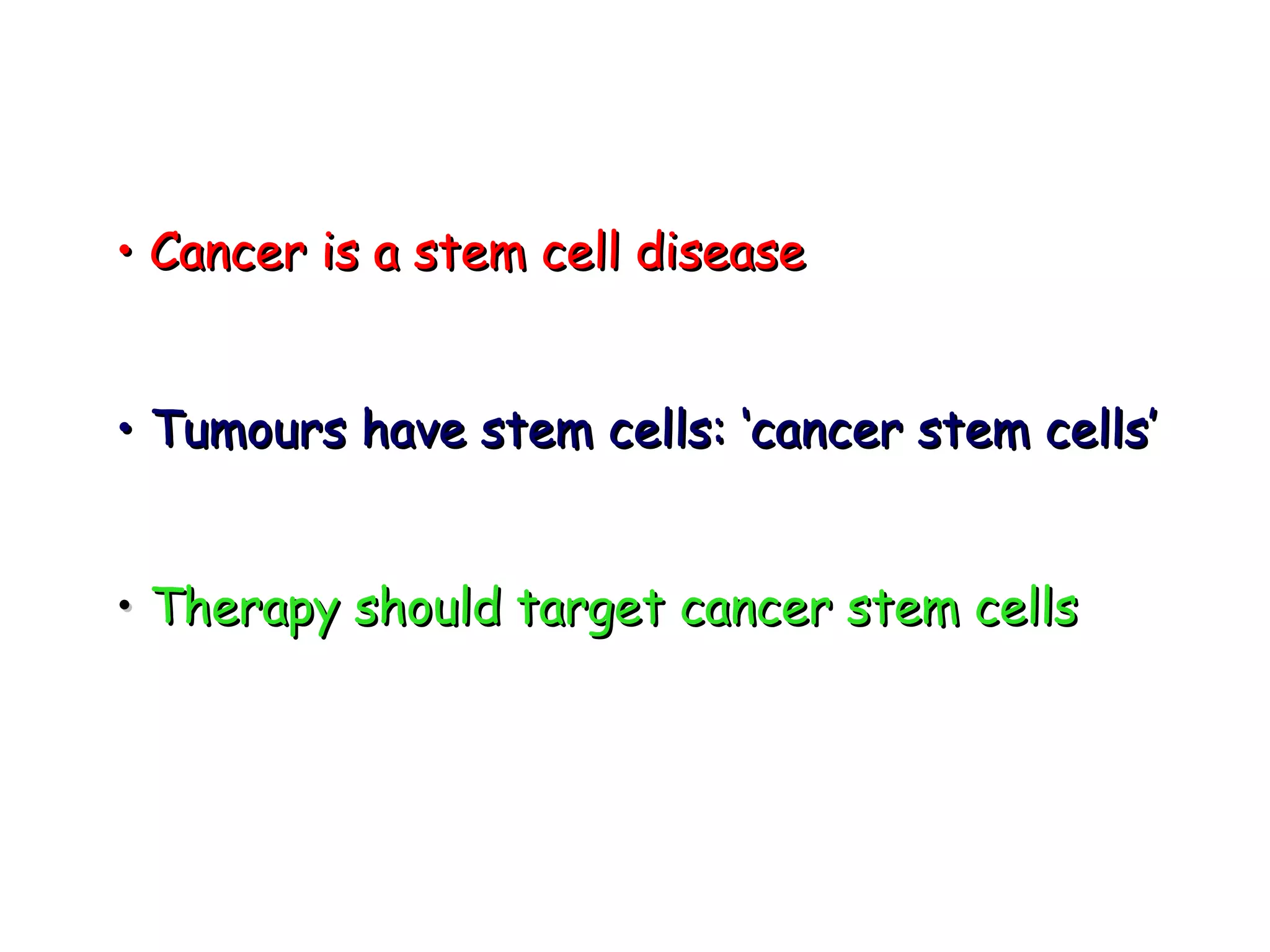
•  Cancer is a stem cell disease •  Tumours have stem cells: ‘cancer stem cells’ •  Therapy should target cancer stem cells


MCO 2011 - Slide 18 - M.R. Alison - Joint medics and nurses spotlight session - Recent developments in the field of cancer stem cells and implications in the clinical setting

Editor's Notes