CORRELATION BETWEEN STEM CELLS
& CANCER CELLS
BY
D.REIYA BOSCO
MSc. BIOTECHNOLOGY
ST. JOSEPH’S COLLEGE
TRICHY
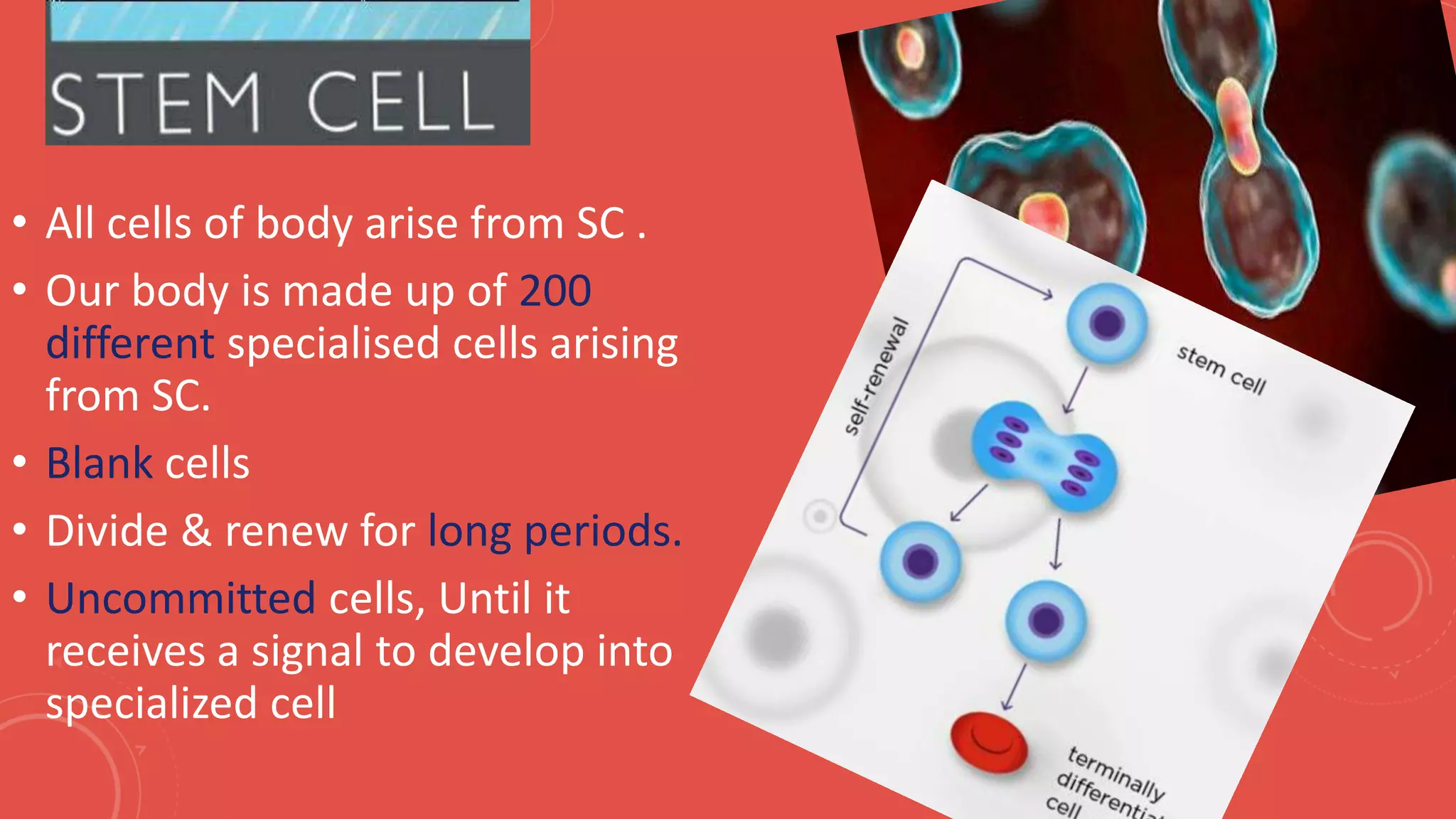
• All cells of body arise from SC .
• Our body is made up of 200
different specialised cells arising
from SC.
• Blank cells
• Divide & renew for long periods.
• Uncommitted cells, Until it
receives a signal to develop into
specialized cell
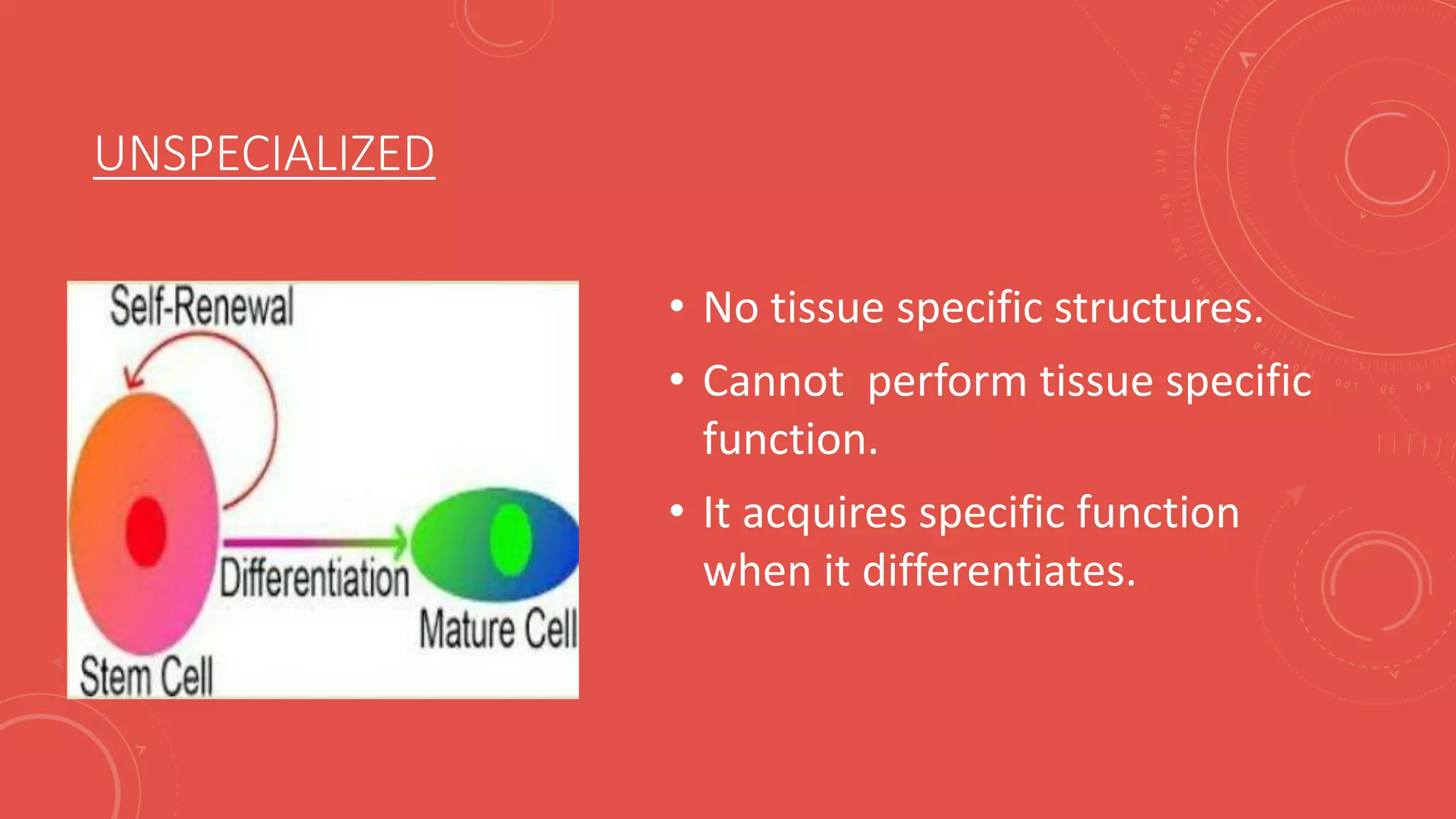
UNSPECIALIZED
• No tissue specific structures.
• Cannot perform tissue specific
function.
• It acquires specific function
when it differentiates.
PROLIFERATION
• They are capable of dividing &
renewing for long periods.
• They can maintain their stable
populations.
• They proliferate in a large number.
• The large mass of cells are difficult
to be cultured.
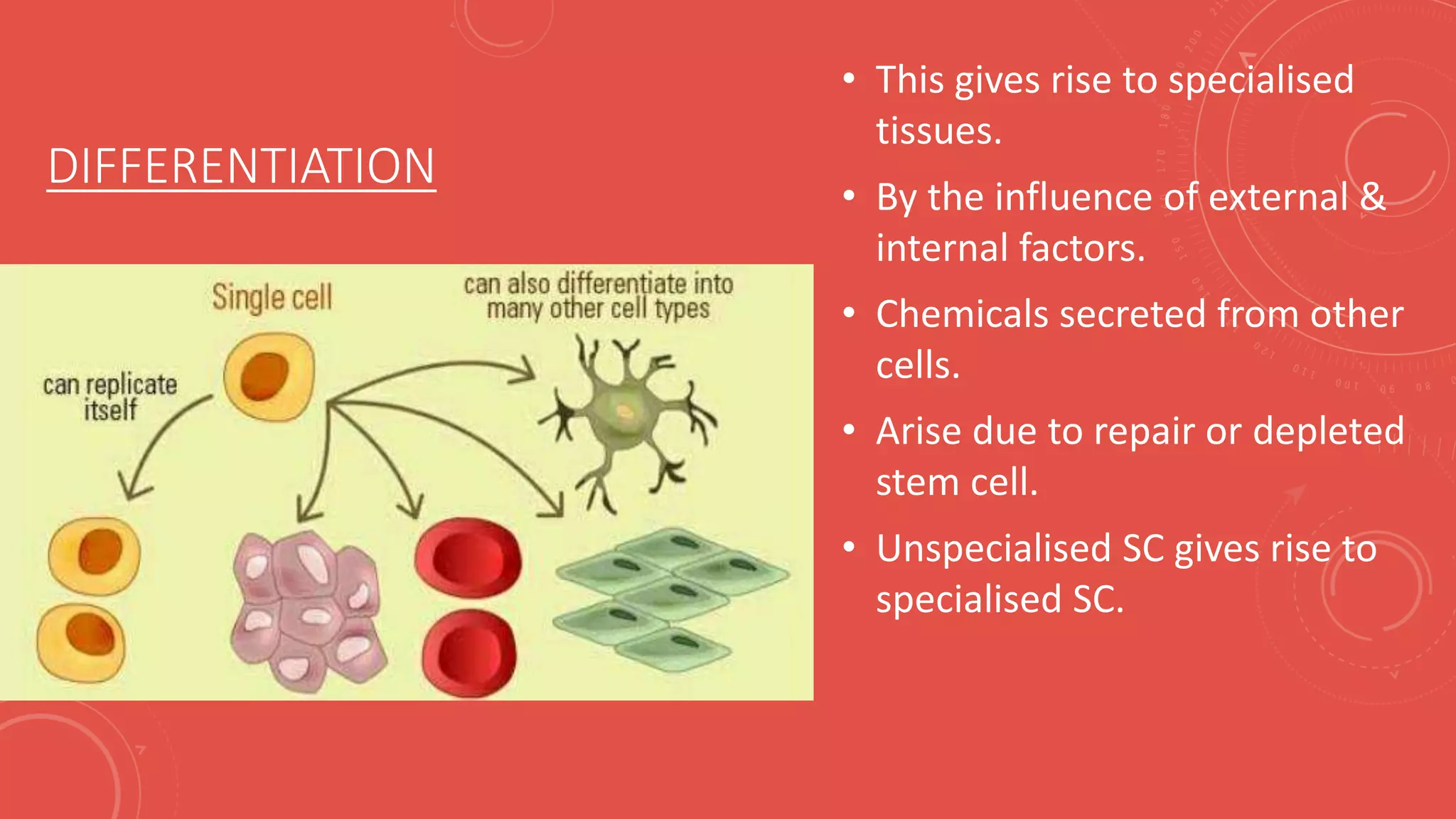
DIFFERENTIATION
• This gives rise to specialised
tissues.
• By the influence of external &
internal factors.
• Chemicals secreted from other
cells.
• Arise due to repair or depleted
stem cell.
• Unspecialised SC gives rise to
specialised SC.
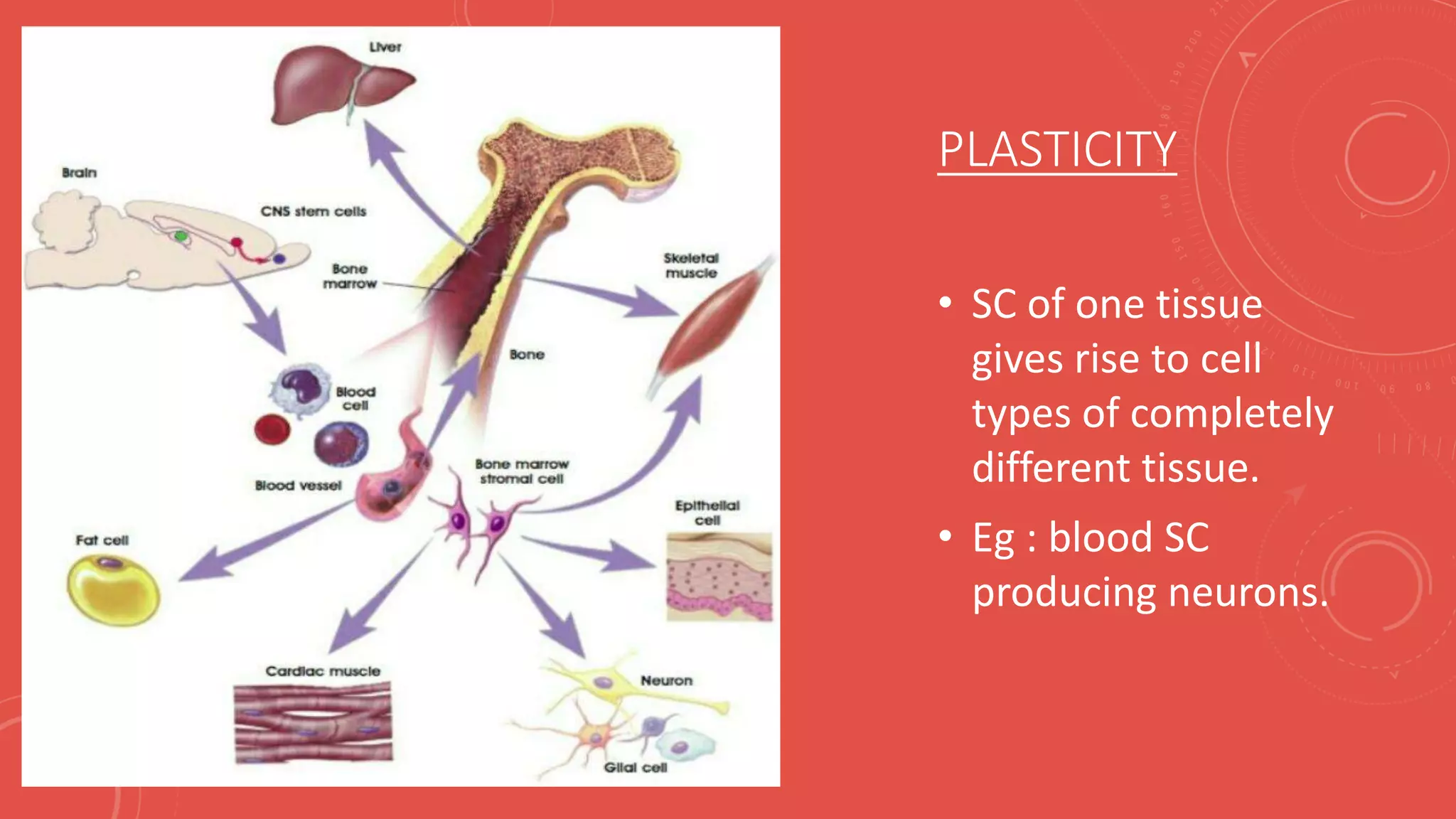
PLASTICITY
• SC of one tissue
gives rise to cell
types of completely
different tissue.
• Eg : blood SC
producing neurons.
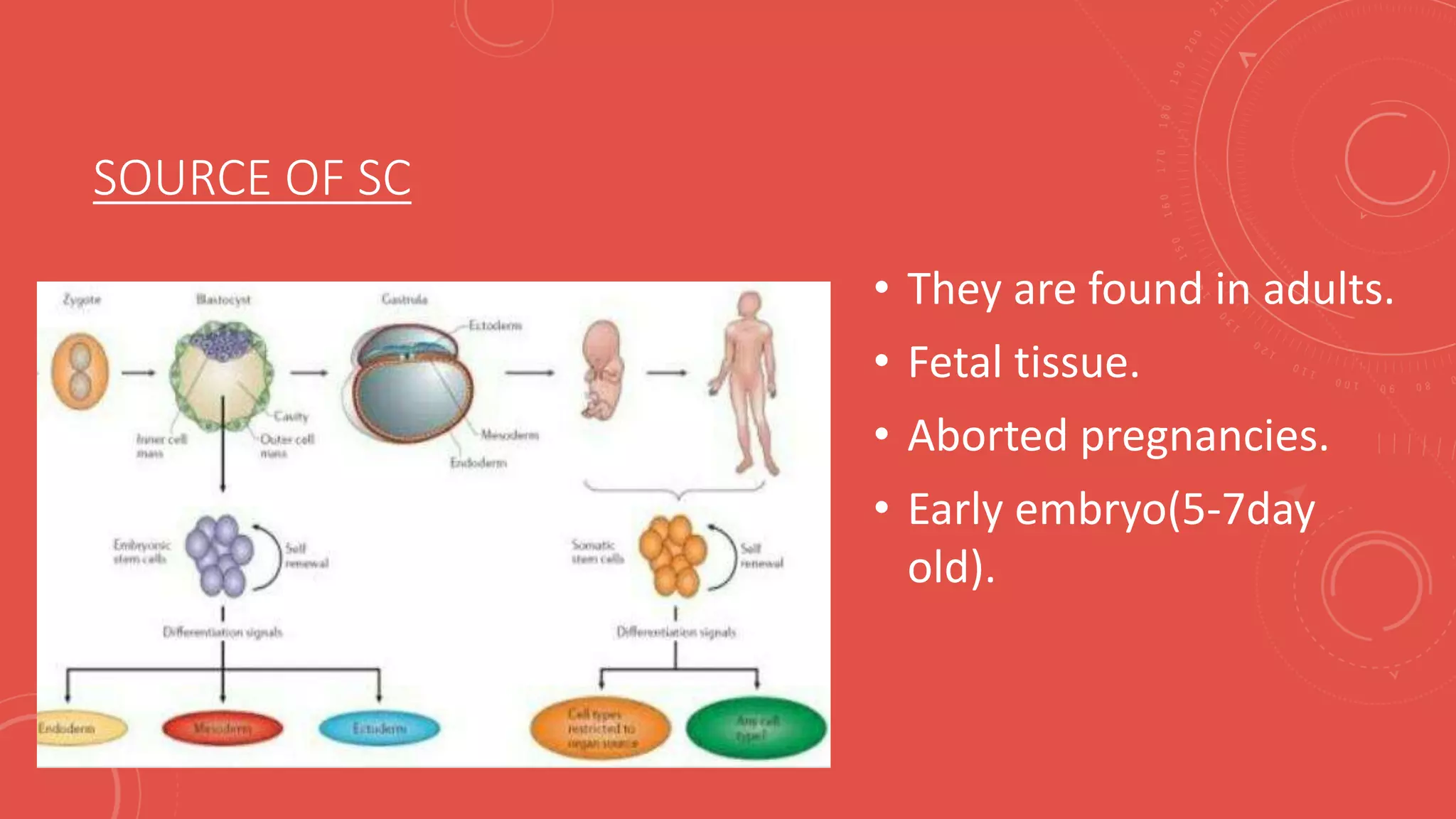
SOURCE OF SC
• They are found in adults.
• Fetal tissue.
• Aborted pregnancies.
• Early embryo(5-7day
old).
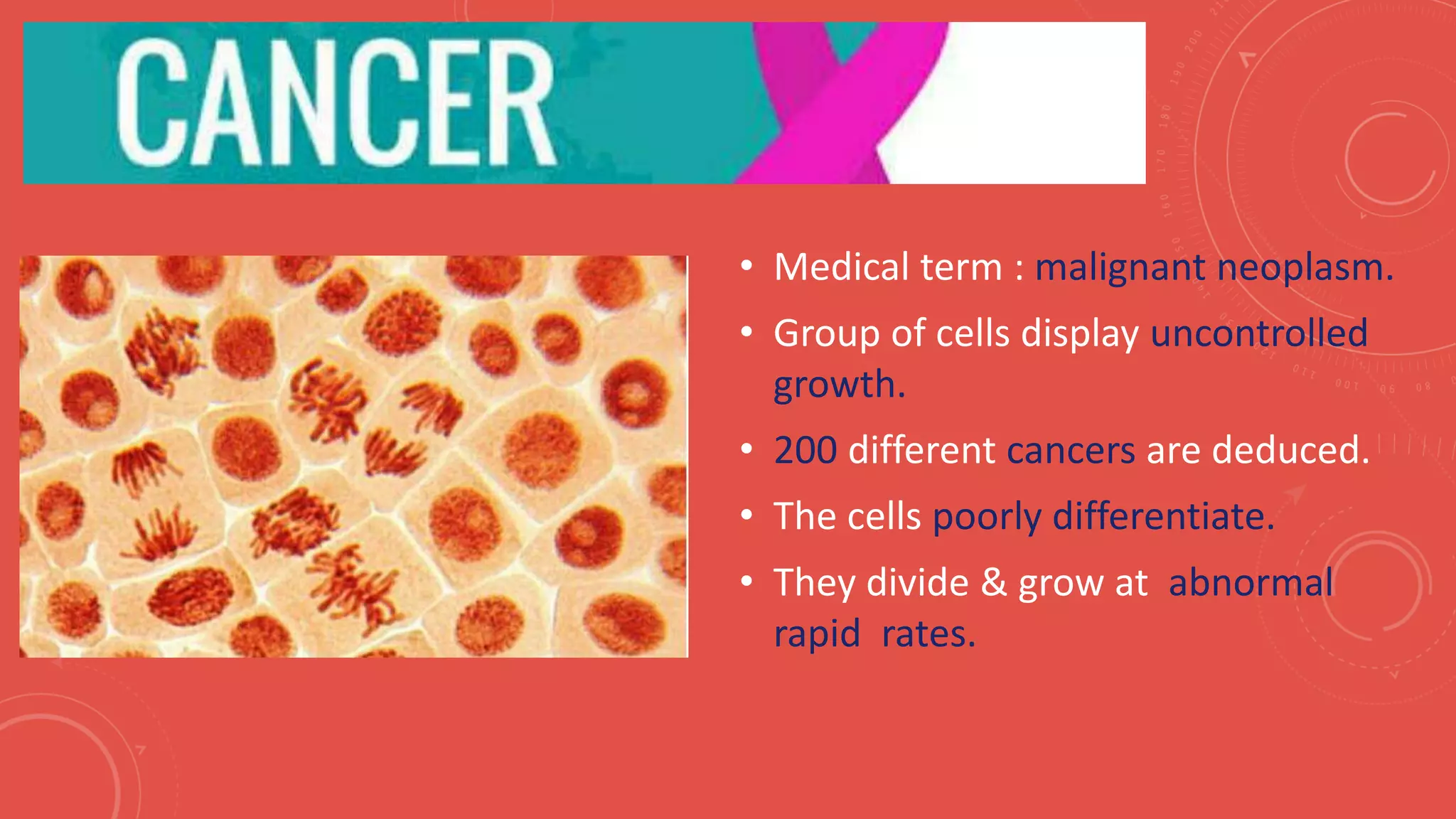
• Medical term : malignant neoplasm.
• Group of cells display uncontrolled
growth.
• 200 different cancers are deduced.
• The cells poorly differentiate.
• They divide & grow at abnormal
rapid rates.
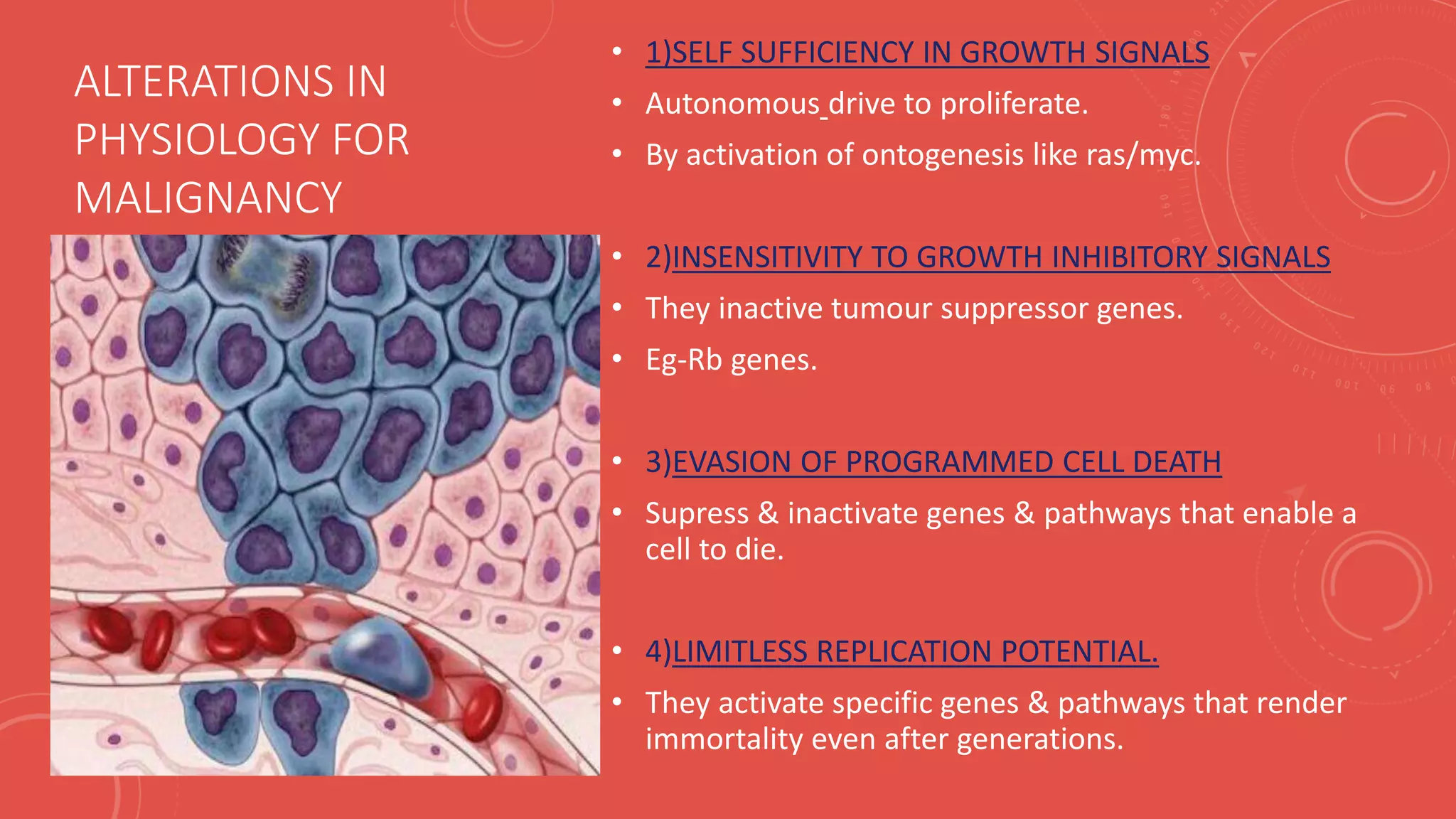
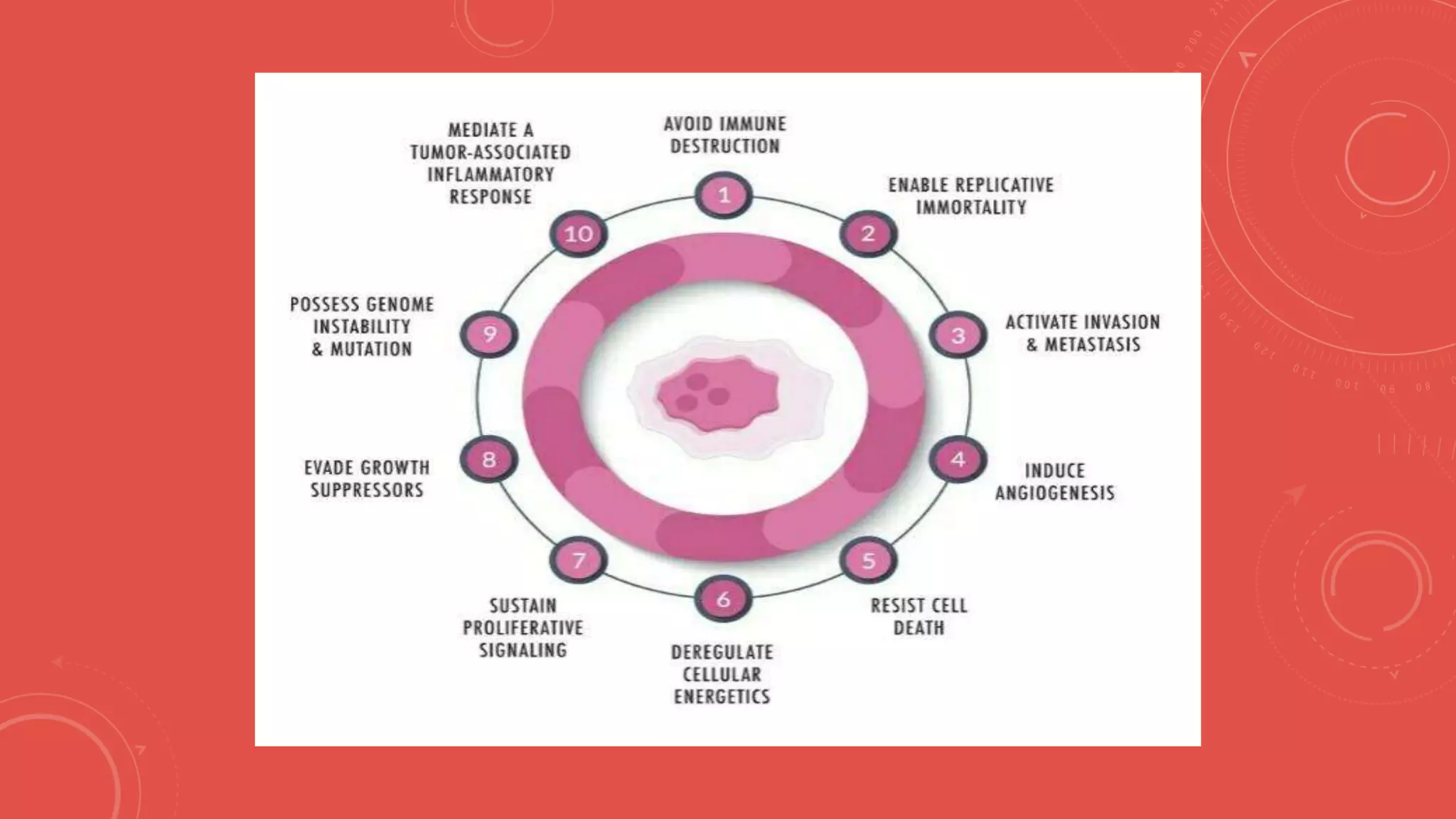
ALTERATIONS IN
PHYSIOLOGY FOR
MALIGNANCY
• 1)SELF SUFFICIENCY IN GROWTH SIGNALS
• Autonomous drive to proliferate.
• By activation of ontogenesis like ras/myc.
• 2)INSENSITIVITY TO GROWTH INHIBITORY SIGNALS
• They inactive tumour suppressor genes.
• Eg-Rb genes.
• 3)EVASION OF PROGRAMMED CELL DEATH
• Supress & inactivate genes & pathways that enable a
cell to die.
• 4)LIMITLESS REPLICATION POTENTIAL.
• They activate specific genes & pathways that render
immortality even after generations.
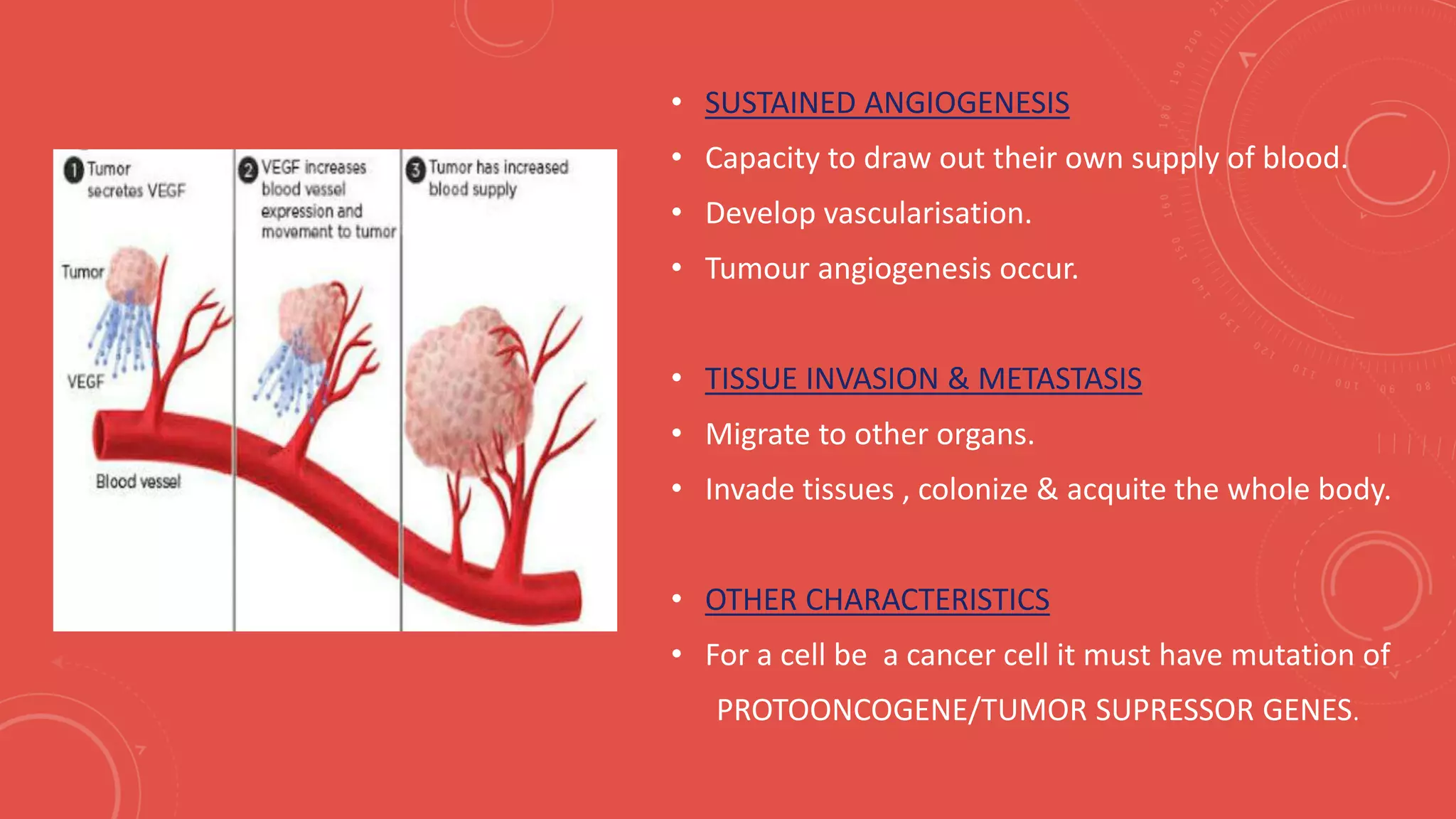
• SUSTAINED ANGIOGENESIS
• Capacity to draw out their own supply of blood.
• Develop vascularisation.
• Tumour angiogenesis occur.
• TISSUE INVASION & METASTASIS
• Migrate to other organs.
• Invade tissues , colonize & acquite the whole body.
• OTHER CHARACTERISTICS
• For a cell be a cancer cell it must have mutation of
PROTOONCOGENE/TUMOR SUPRESSOR GENES.
CANCER
STEM CELLS
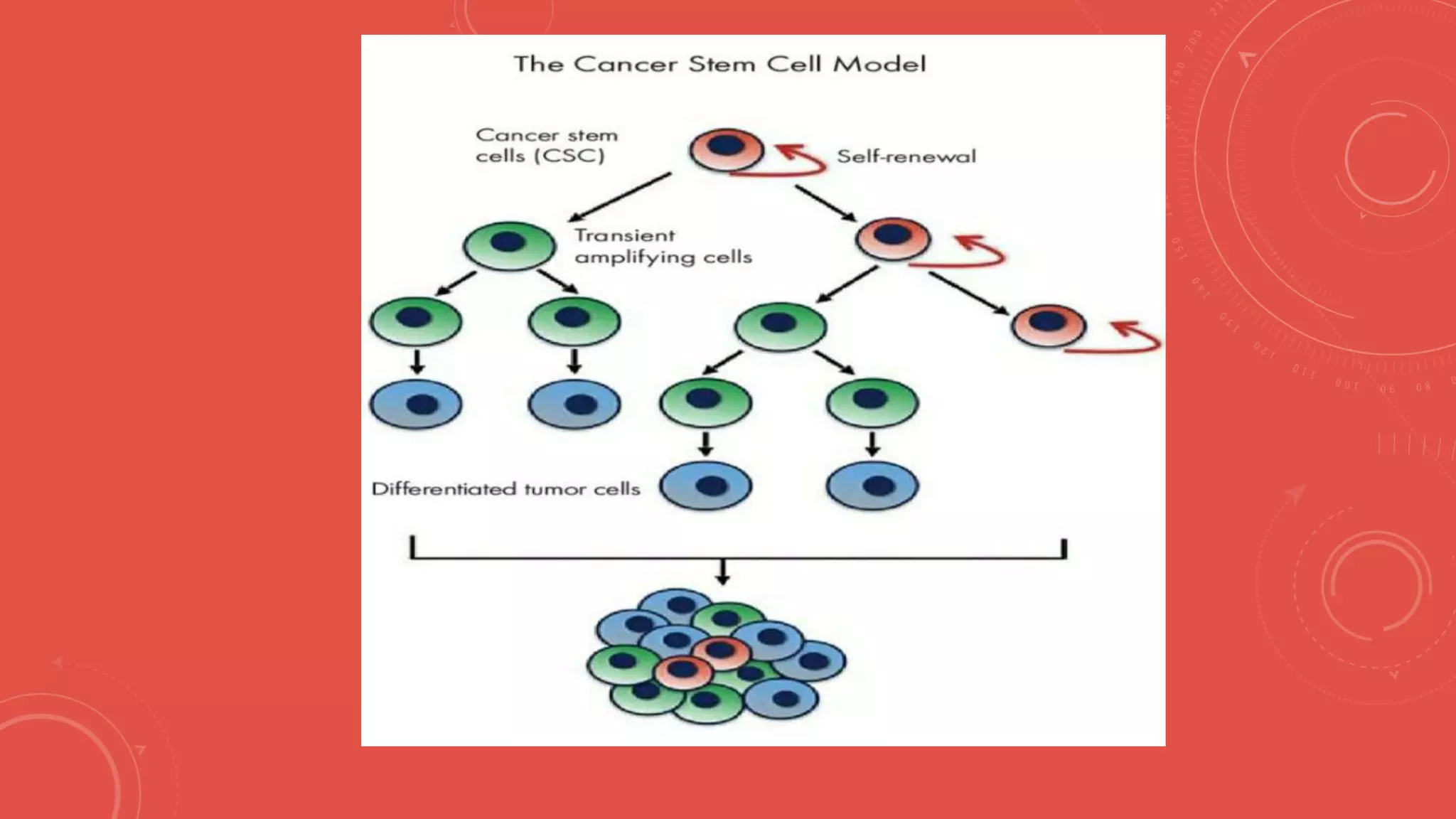
• Cell within a tumour that possess the capacity to self
renew & cause heterogeneous lineages of cancer cells that
comprise the tumour. CSC can only be defined
experimentally by their ability to recapitulate the
generations of continuously growing tumour.
• ORIGIN OF CSC
• Somatic SC
• Adult progenitor cells
• Adult Somatic cells.
CSC FEATURES
Self renewal
Diverse progeny
Immortality
Asymmetric mitosis
COMMON FEATURES OF NORMAL SC & CSC.
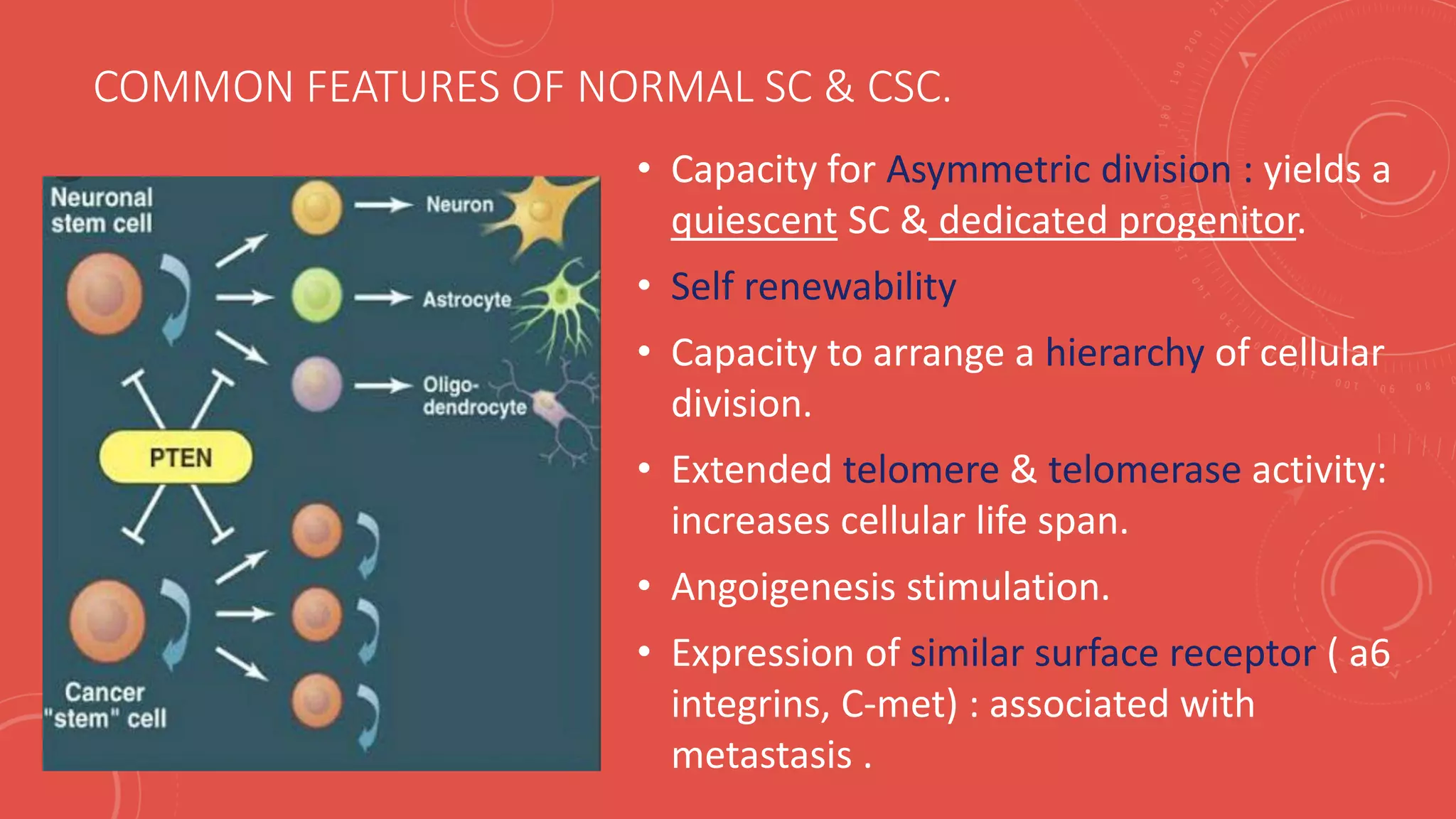
• Capacity for Asymmetric division : yields a
quiescent SC & dedicated progenitor.
• Self renewability
• Capacity to arrange a hierarchy of cellular
division.
• Extended telomere & telomerase activity:
increases cellular life span.
• Angoigenesis stimulation.
• Expression of similar surface receptor ( a6
integrins, C-met) : associated with
metastasis .
DIFFERENCE
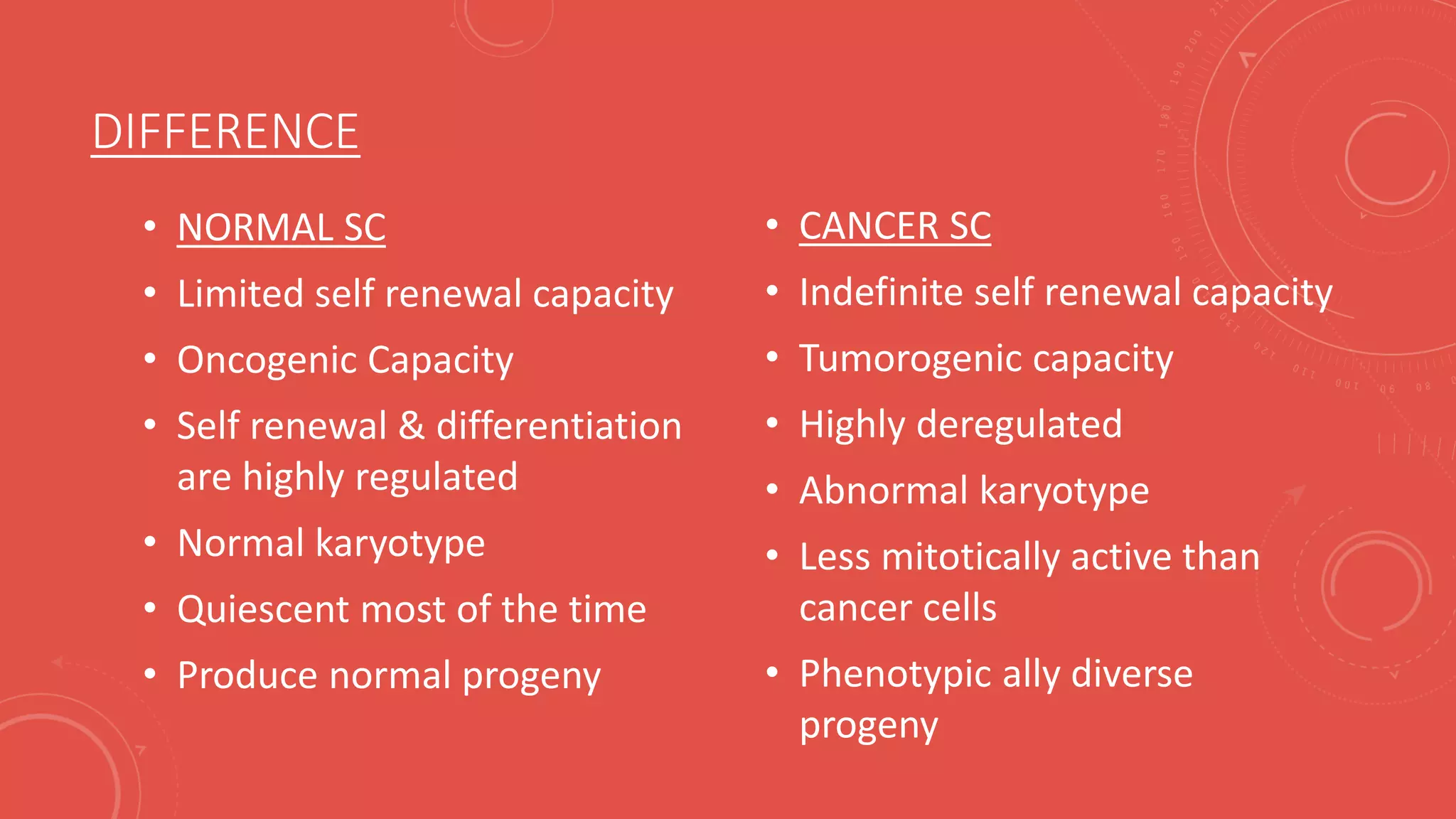
• NORMAL SC
• Limited self renewal capacity
• Oncogenic Capacity
• Self renewal & differentiation
are highly regulated
• Normal karyotype
• Quiescent most of the time
• Produce normal progeny
• CANCER SC
• Indefinite self renewal capacity
• Tumorogenic capacity
• Highly deregulated
• Abnormal karyotype
• Less mitotically active than
cancer cells
• Phenotypic ally diverse
progeny
TALE OF THE 2
CELLS
• Sc are vital for regeneration & repair.
• But the features of SC & the origin of
LEUKEMIA have headed scientists that
cancer may initiate from SC like cells.
• CSC are responsible for cancer initiation,
metastasis & recurrence.
• Single Cancer cell gives rise to a
heterogeneous mass of cells.
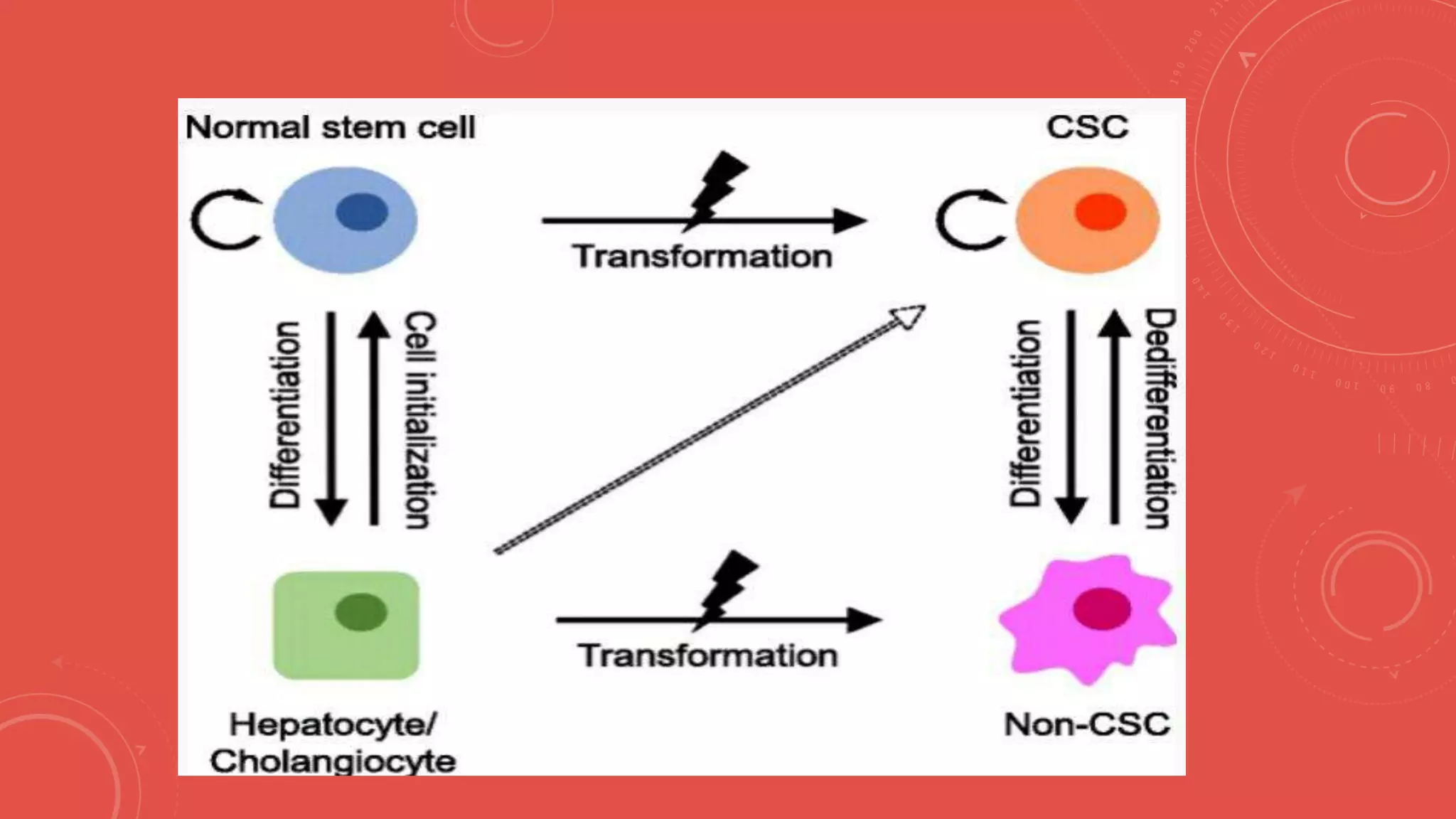
• When a differentiated cell gains the vital
component of SC it becomes
dedifferentiated & cancerous.
ORIGIN OF CSC • Transformation of SC in tissue.
• Transformation of native pool of early SC.
• Sequence of effective mutation.
• Amalgamation of BM derived SC with
tissue residing cells
• NICHE OF CSC.
• Niche with different molecular signals by
neighbouring connective tissue, vascular
tissue, mesenchymal SC & stromal cells.
THANK YOU

correlation between stem cells and cancer cells

  • 1.
    CORRELATION BETWEEN STEMCELLS & CANCER CELLS BY D.REIYA BOSCO MSc. BIOTECHNOLOGY ST. JOSEPH’S COLLEGE TRICHY
  • 2.
    • All cellsof body arise from SC . • Our body is made up of 200 different specialised cells arising from SC. • Blank cells • Divide & renew for long periods. • Uncommitted cells, Until it receives a signal to develop into specialized cell
  • 3.
    UNSPECIALIZED • No tissuespecific structures. • Cannot perform tissue specific function. • It acquires specific function when it differentiates.
  • 4.
    PROLIFERATION • They arecapable of dividing & renewing for long periods. • They can maintain their stable populations. • They proliferate in a large number. • The large mass of cells are difficult to be cultured.
  • 5.
    DIFFERENTIATION • This givesrise to specialised tissues. • By the influence of external & internal factors. • Chemicals secreted from other cells. • Arise due to repair or depleted stem cell. • Unspecialised SC gives rise to specialised SC.
  • 6.
    PLASTICITY • SC ofone tissue gives rise to cell types of completely different tissue. • Eg : blood SC producing neurons.
  • 7.
    SOURCE OF SC •They are found in adults. • Fetal tissue. • Aborted pregnancies. • Early embryo(5-7day old).
  • 8.
    • Medical term: malignant neoplasm. • Group of cells display uncontrolled growth. • 200 different cancers are deduced. • The cells poorly differentiate. • They divide & grow at abnormal rapid rates.
  • 9.
    ALTERATIONS IN PHYSIOLOGY FOR MALIGNANCY •1)SELF SUFFICIENCY IN GROWTH SIGNALS • Autonomous drive to proliferate. • By activation of ontogenesis like ras/myc. • 2)INSENSITIVITY TO GROWTH INHIBITORY SIGNALS • They inactive tumour suppressor genes. • Eg-Rb genes. • 3)EVASION OF PROGRAMMED CELL DEATH • Supress & inactivate genes & pathways that enable a cell to die. • 4)LIMITLESS REPLICATION POTENTIAL. • They activate specific genes & pathways that render immortality even after generations.
  • 10.
    • SUSTAINED ANGIOGENESIS •Capacity to draw out their own supply of blood. • Develop vascularisation. • Tumour angiogenesis occur. • TISSUE INVASION & METASTASIS • Migrate to other organs. • Invade tissues , colonize & acquite the whole body. • OTHER CHARACTERISTICS • For a cell be a cancer cell it must have mutation of PROTOONCOGENE/TUMOR SUPRESSOR GENES.
  • 12.
    CANCER STEM CELLS • Cellwithin a tumour that possess the capacity to self renew & cause heterogeneous lineages of cancer cells that comprise the tumour. CSC can only be defined experimentally by their ability to recapitulate the generations of continuously growing tumour. • ORIGIN OF CSC • Somatic SC • Adult progenitor cells • Adult Somatic cells. CSC FEATURES Self renewal Diverse progeny Immortality Asymmetric mitosis
  • 14.
    COMMON FEATURES OFNORMAL SC & CSC. • Capacity for Asymmetric division : yields a quiescent SC & dedicated progenitor. • Self renewability • Capacity to arrange a hierarchy of cellular division. • Extended telomere & telomerase activity: increases cellular life span. • Angoigenesis stimulation. • Expression of similar surface receptor ( a6 integrins, C-met) : associated with metastasis .
  • 15.
    DIFFERENCE • NORMAL SC •Limited self renewal capacity • Oncogenic Capacity • Self renewal & differentiation are highly regulated • Normal karyotype • Quiescent most of the time • Produce normal progeny • CANCER SC • Indefinite self renewal capacity • Tumorogenic capacity • Highly deregulated • Abnormal karyotype • Less mitotically active than cancer cells • Phenotypic ally diverse progeny
  • 16.
    TALE OF THE2 CELLS • Sc are vital for regeneration & repair. • But the features of SC & the origin of LEUKEMIA have headed scientists that cancer may initiate from SC like cells. • CSC are responsible for cancer initiation, metastasis & recurrence. • Single Cancer cell gives rise to a heterogeneous mass of cells. • When a differentiated cell gains the vital component of SC it becomes dedifferentiated & cancerous.
  • 18.
    ORIGIN OF CSC• Transformation of SC in tissue. • Transformation of native pool of early SC. • Sequence of effective mutation. • Amalgamation of BM derived SC with tissue residing cells • NICHE OF CSC. • Niche with different molecular signals by neighbouring connective tissue, vascular tissue, mesenchymal SC & stromal cells.
  • 19.