Terminal Learning Objective (TLO)
What is a Team?
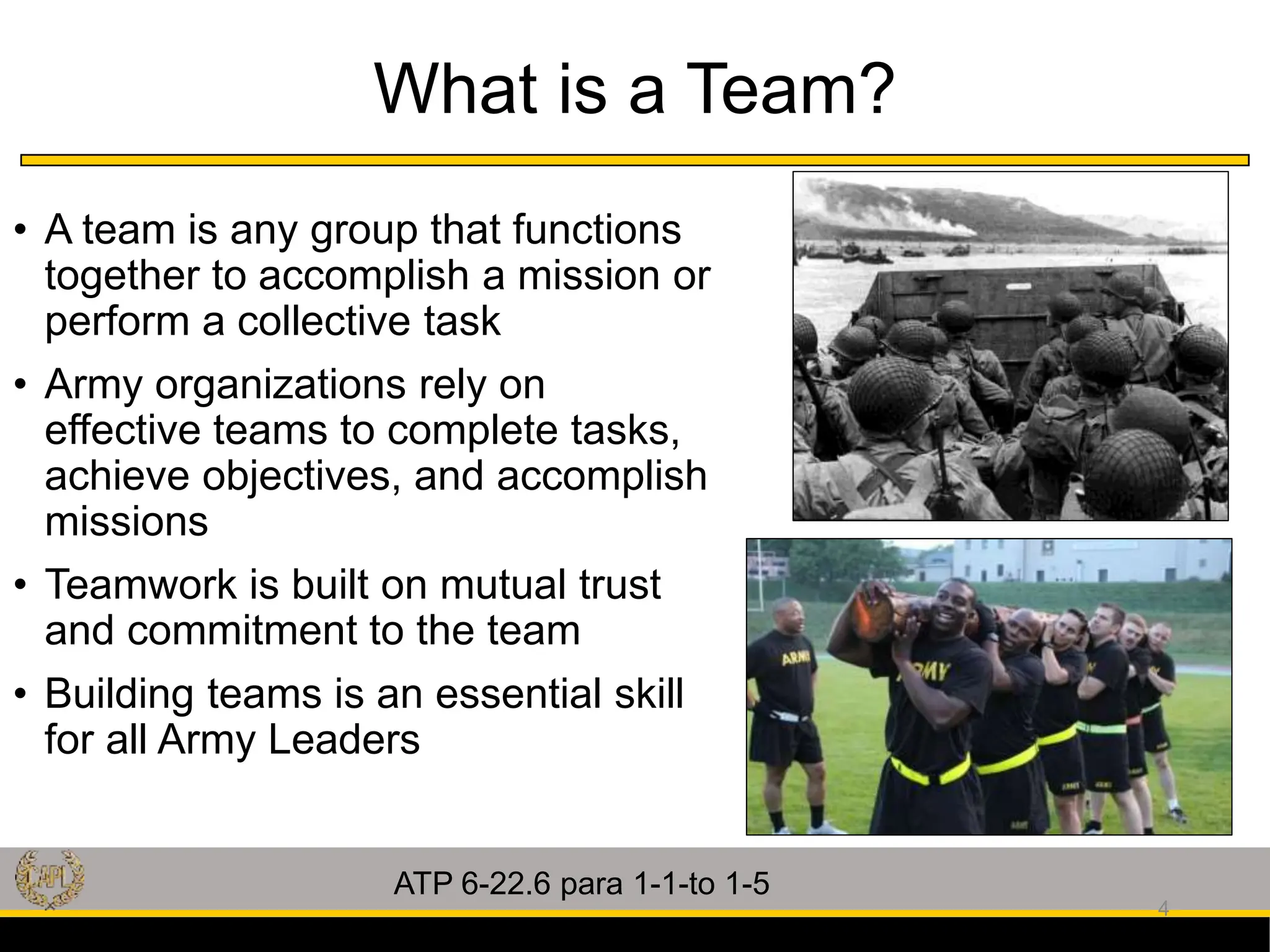
• A team is any group that functions
together to accomplish a mission or
perform a collective task
• Army organizations rely on
effective teams to complete tasks,
achieve objectives, and accomplish
missions
• Teamwork is built on mutual trust
and commitment to the team
• Building teams is an essential skill
for all Army Leaders
4
ATP 6-22.6 para 1-1-to 1-5
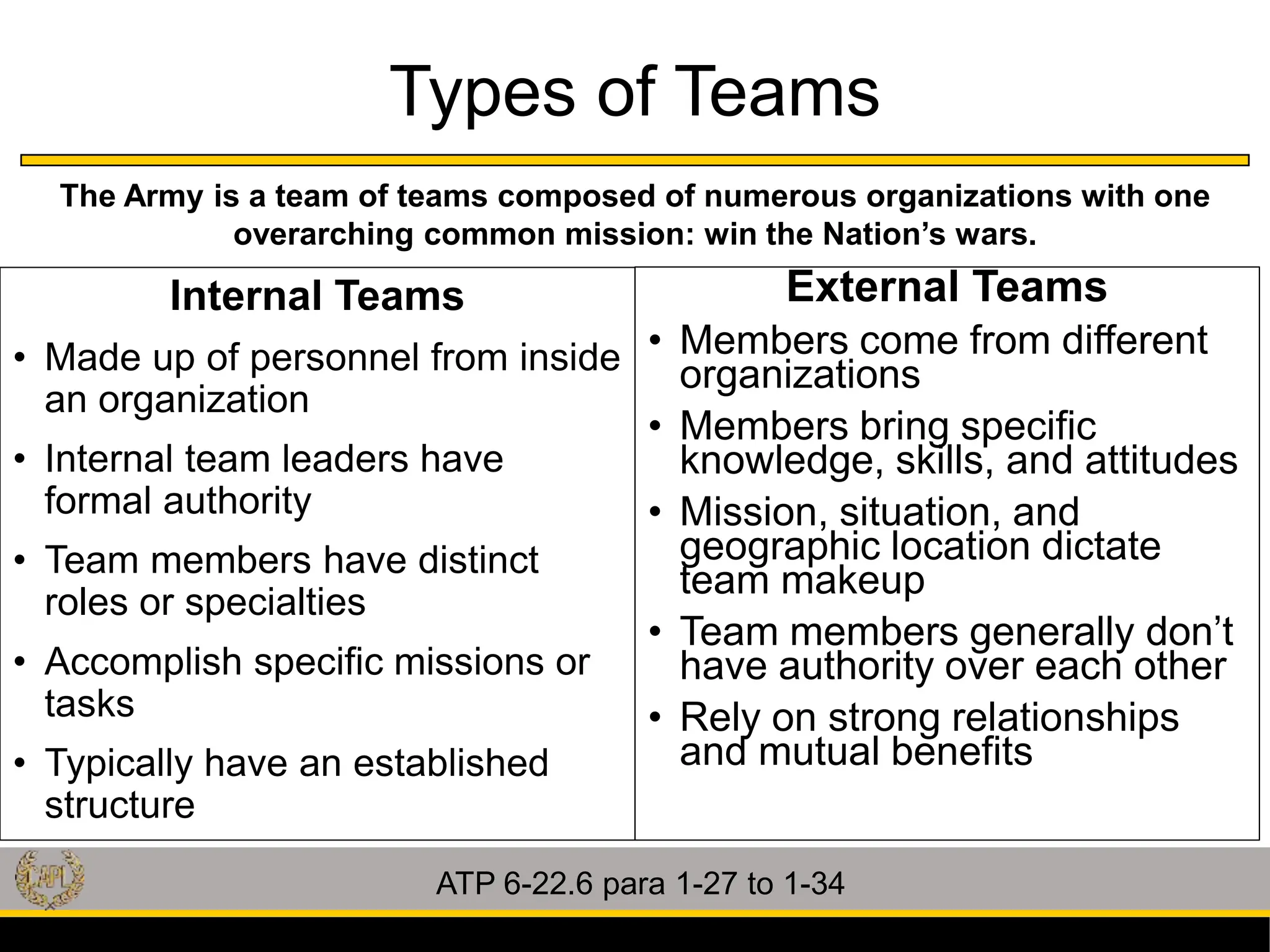
Types of Teams
Internal Teams
• Made up of personnel from inside
an organization
• Internal team leaders have
formal authority
• Team members have distinct
roles or specialties
• Accomplish specific missions or
tasks
• Typically have an established
structure
External Teams
• Members come from different
organizations
• Members bring specific
knowledge, skills, and attitudes
• Mission, situation, and
geographic location dictate
team makeup
• Team members generally don’t
have authority over each other
• Rely on strong relationships
and mutual benefits
ATP 6-22.6 para 1-27 to 1-34
The Army is a team of teams composed of numerous organizations with one
overarching common mission: win the Nation’s wars.
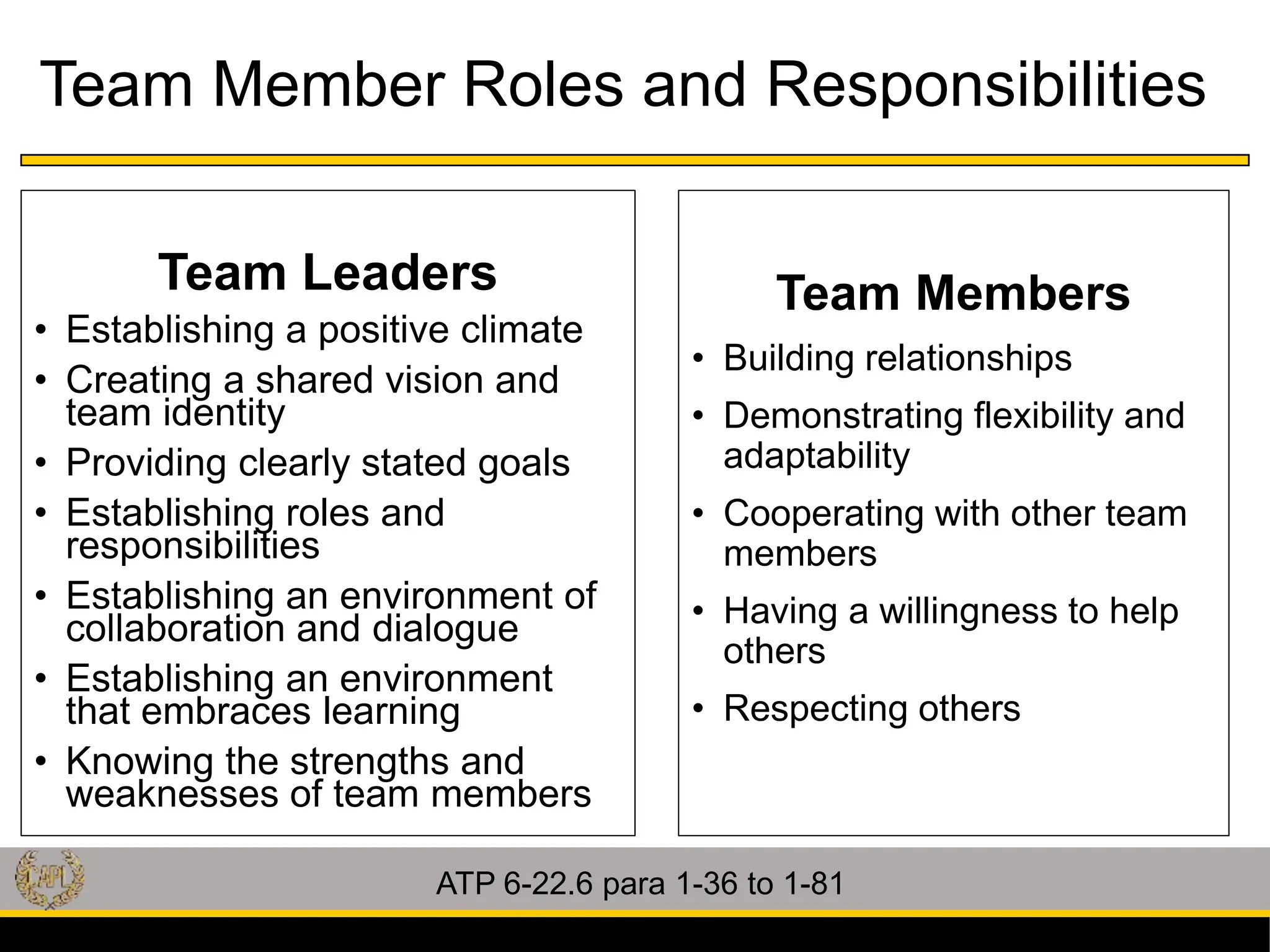
Team Member Roles and Responsibilities
Team Leaders
• Establishing a positive climate
• Creating a shared vision and
team identity
• Providing clearly stated goals
• Establishing roles and
responsibilities
• Establishing an environment of
collaboration and dialogue
• Establishing an environment
that embraces learning
• Knowing the strengths and
weaknesses of team members
Team Members
• Building relationships
• Demonstrating flexibility and
adaptability
• Cooperating with other team
members
• Having a willingness to help
others
• Respecting others
ATP 6-22.6 para 1-36 to 1-81
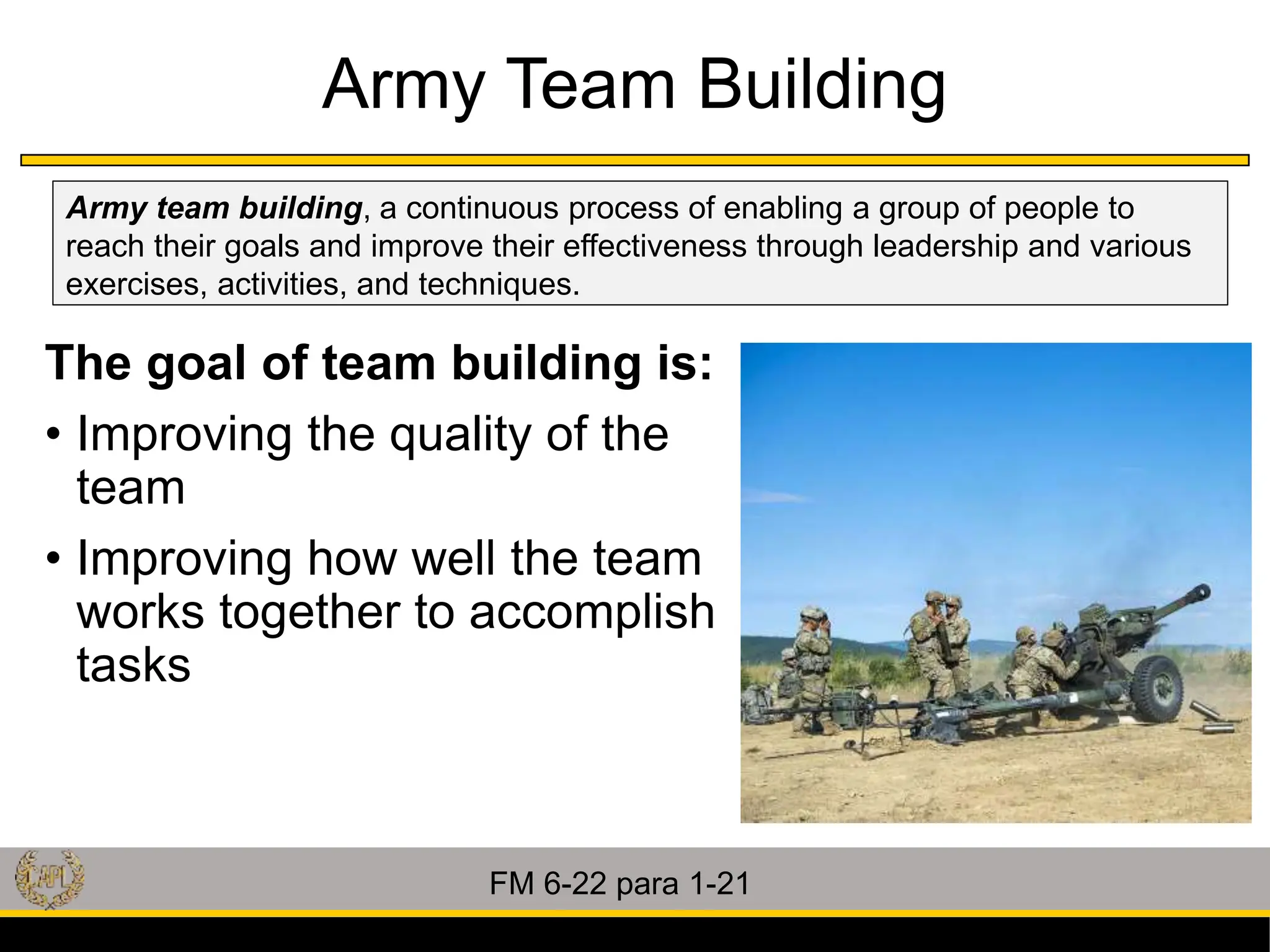
Army Team Building
The goal of team building is:
• Improving the quality of the
team
• Improving how well the team
works together to accomplish
tasks
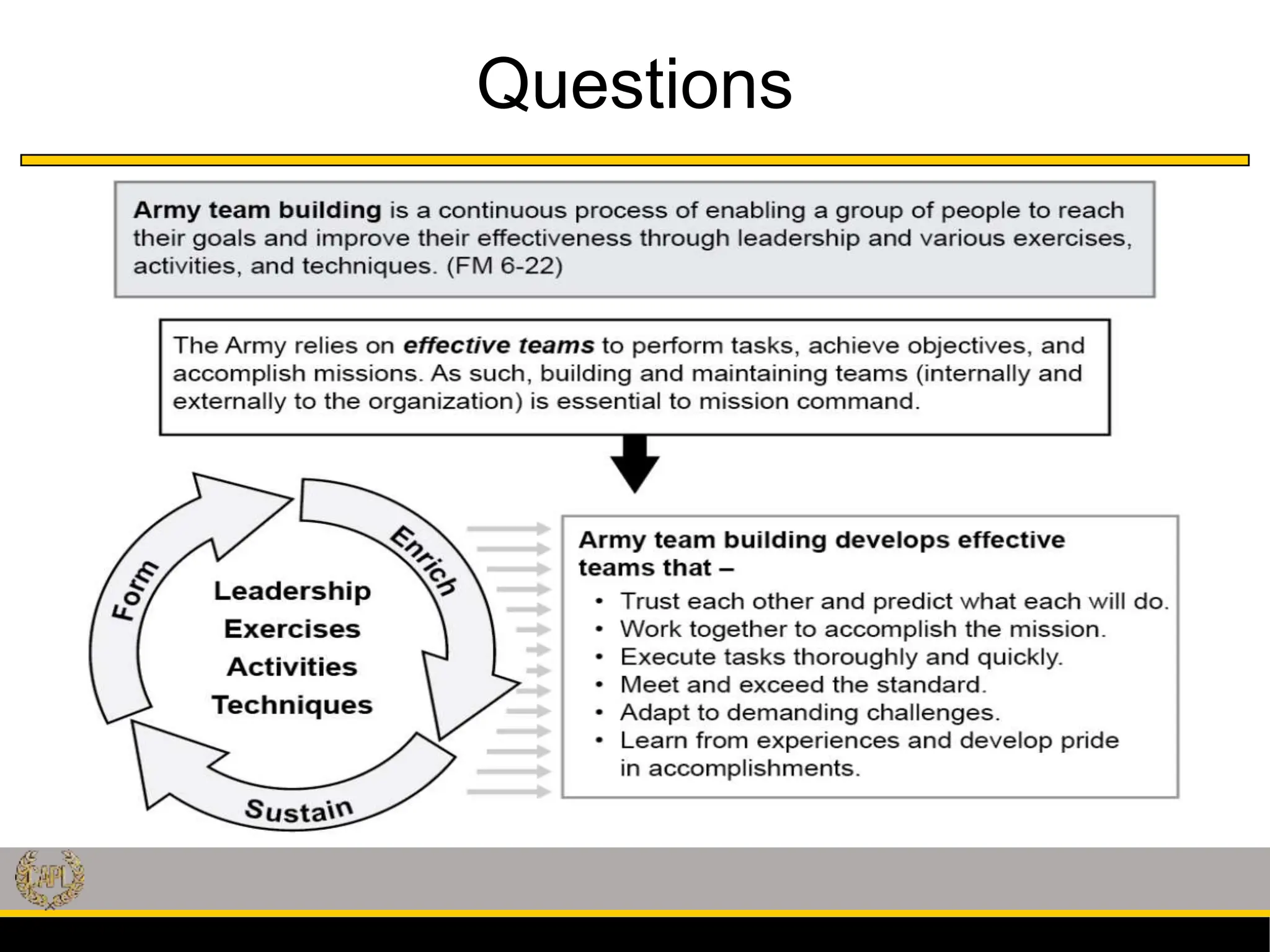
Army team building, a continuous process of enabling a group of people to
reach their goals and improve their effectiveness through leadership and various
exercises, activities, and techniques.
FM 6-22 para 1-21
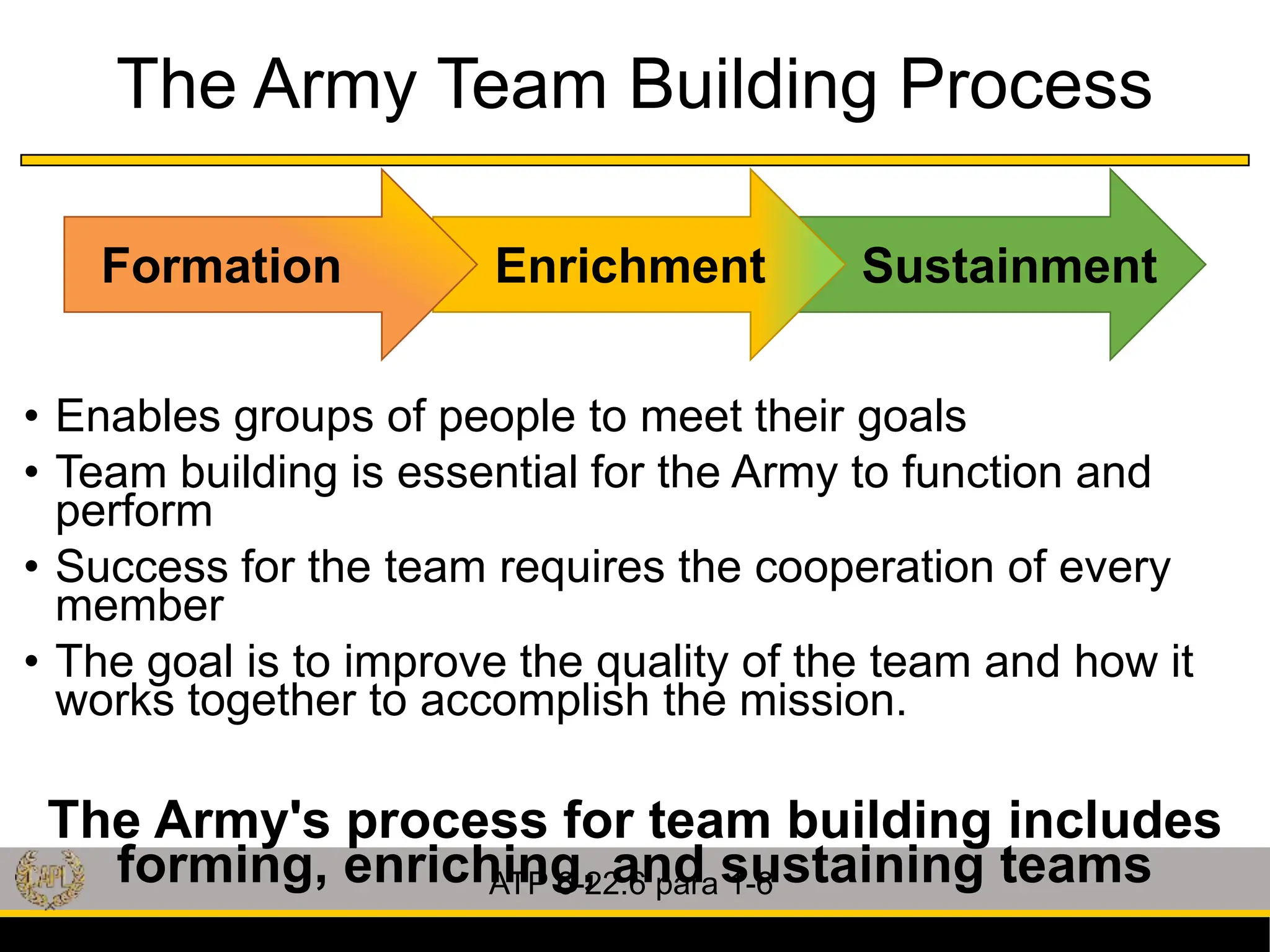
The Army Team Building Process
Formation Enrichment Sustainment
• Enables groups of people to meet their goals
• Team building is essential for the Army to function and
perform
• Success for the team requires the cooperation of every
member
• The goal is to improve the quality of the team and how it
works together to accomplish the mission.
The Army's process for team building includes
forming, enriching, and sustaining teams
ATP 6-22.6 para 1-6
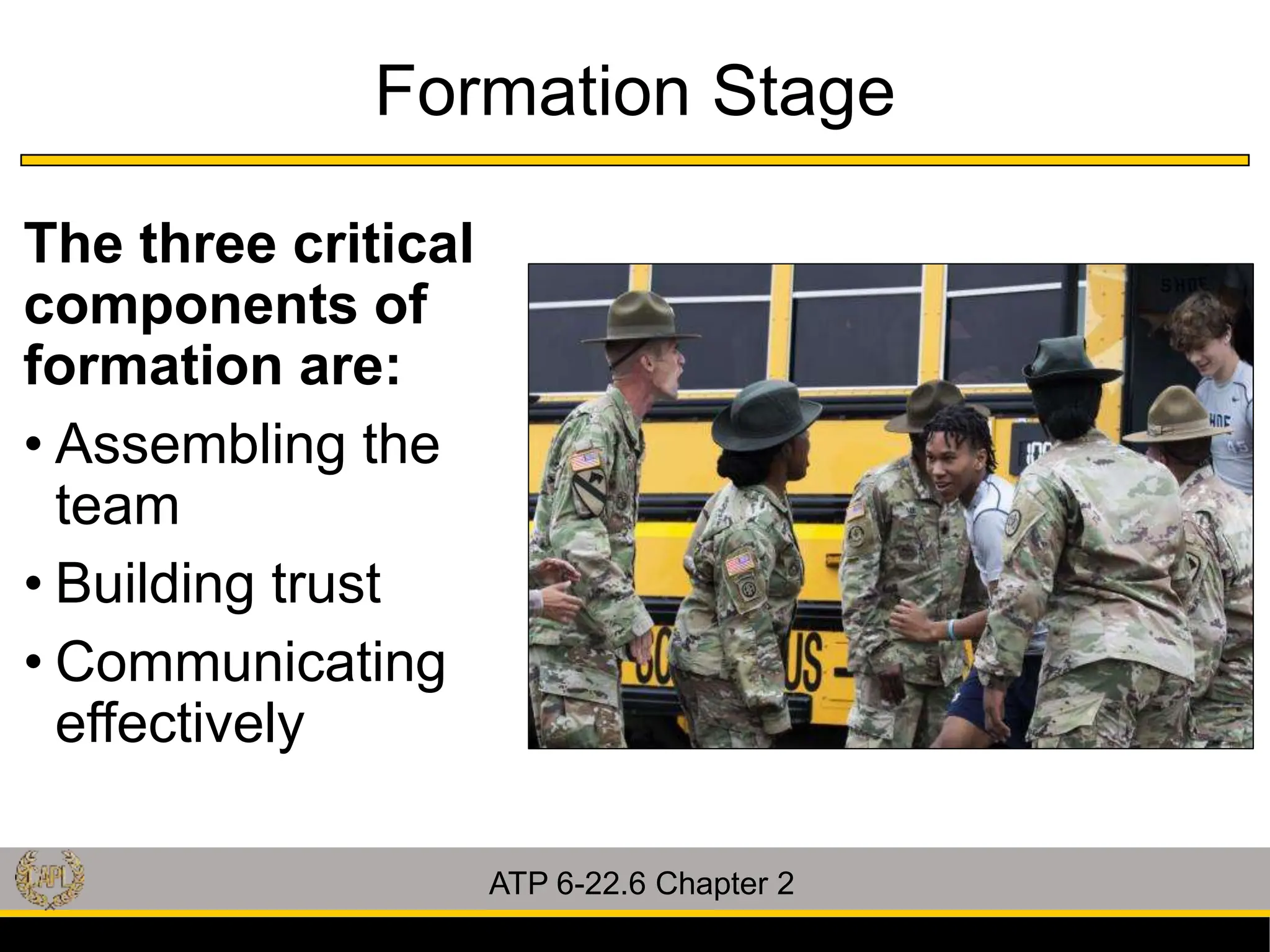
Formation Stage
The three critical
components of
formation are:
• Assembling the
team
• Building trust
• Communicating
effectively
ATP 6-22.6 Chapter 2
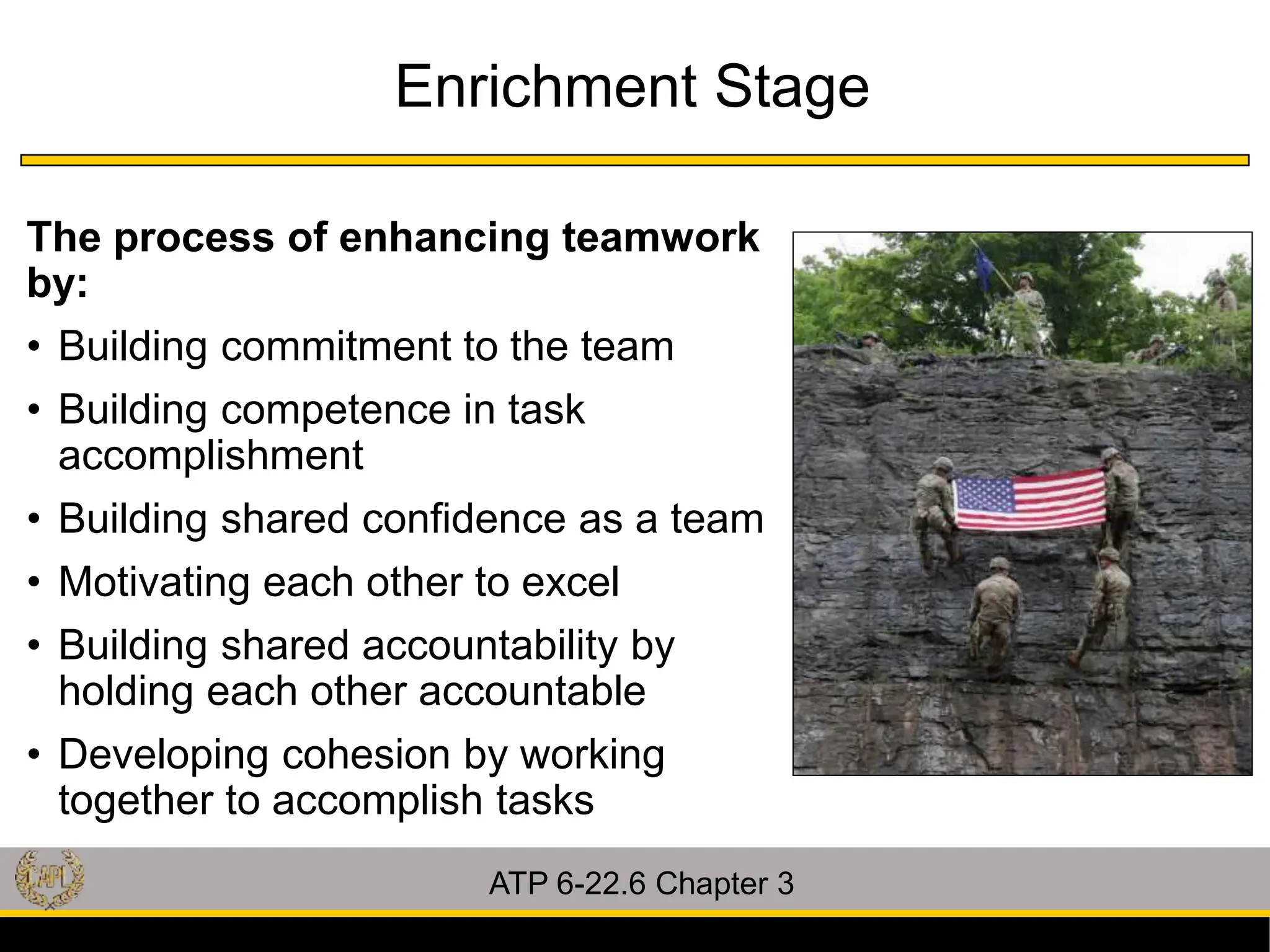
The process of enhancing teamwork
by:
• Building commitment to the team
• Building competence in task
accomplishment
• Building shared confidence as a team
• Motivating each other to excel
• Building shared accountability by
holding each other accountable
• Developing cohesion by working
together to accomplish tasks
10
Enrichment Stage
ATP 6-22.6 Chapter 3
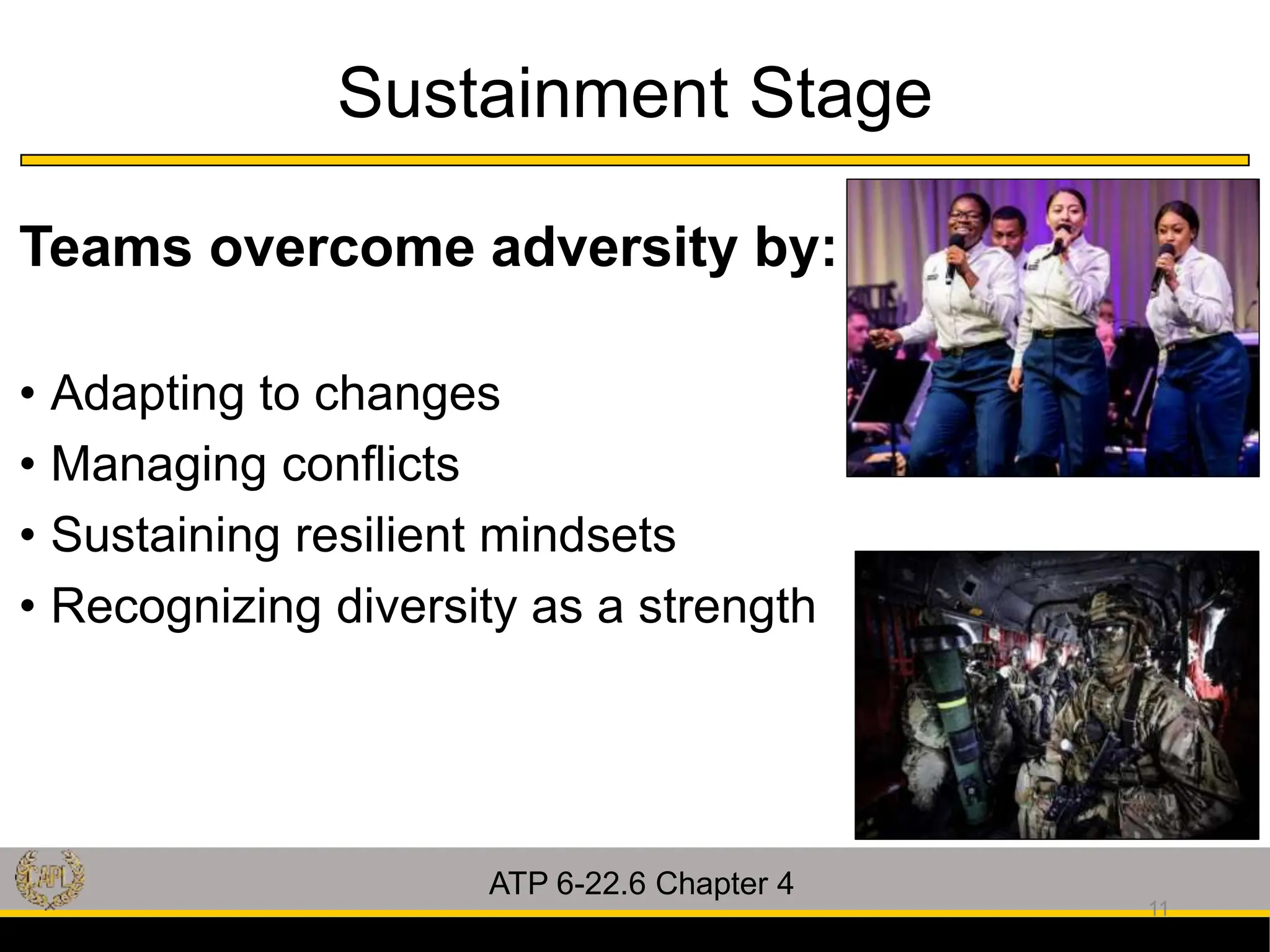
Sustainment Stage
11
ATP 6-22.6 Chapter 4
Teams overcome adversity by:
• Adapting to changes
• Managing conflicts
• Sustaining resilient mindsets
• Recognizing diversity as a strength
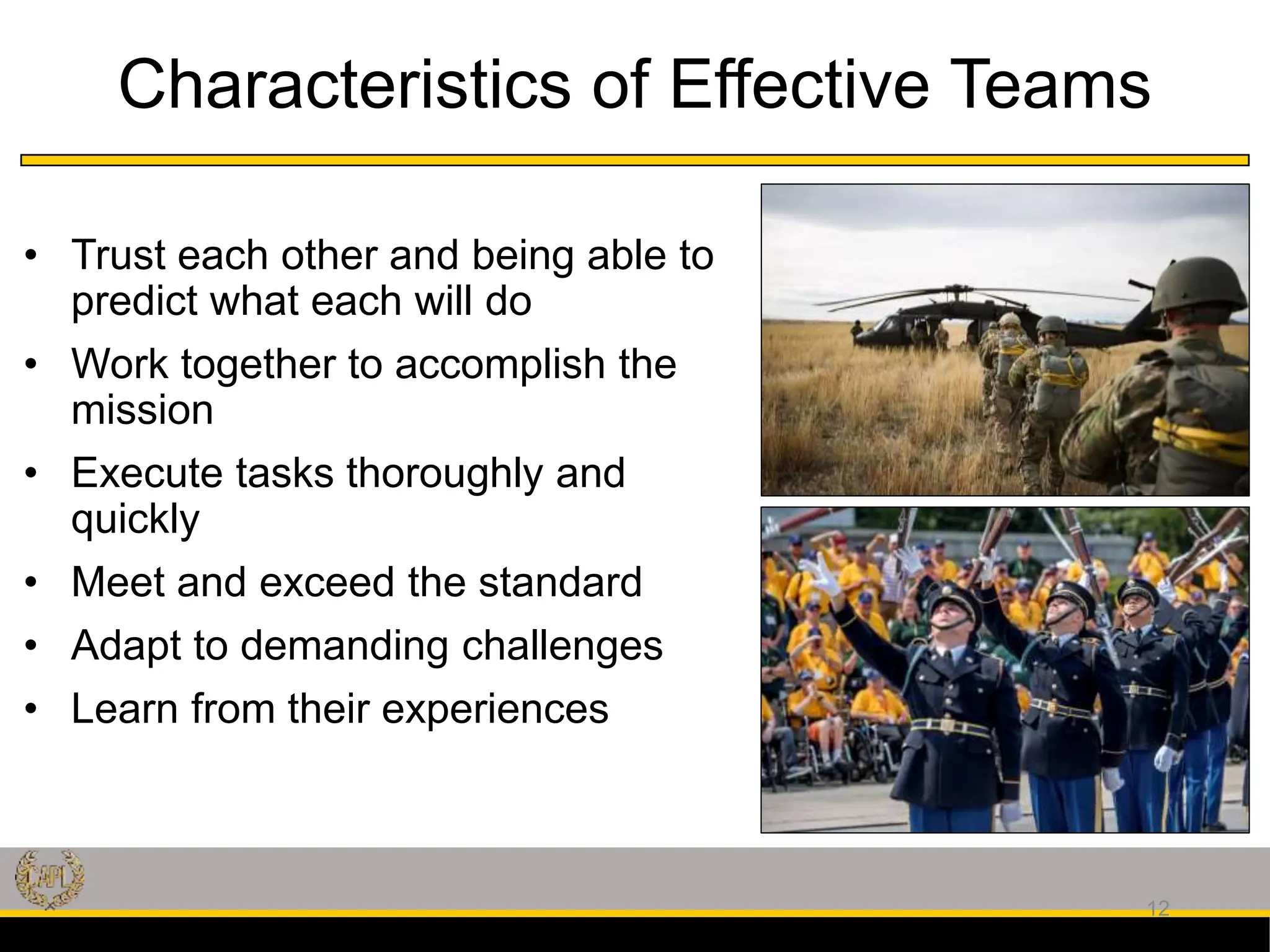
Characteristics of Effective Teams
• Trust each other and being able to
predict what each will do
• Work together to accomplish the
mission
• Execute tasks thoroughly and
quickly
• Meet and exceed the standard
• Adapt to demanding challenges
• Learn from their experiences
12
Indicators of Team Effectiveness
Ineffective Teams
• Fail to listen to relevant input of a team
member
• Speak despairingly about other members
• Fail to enforce or encourage discipline in
the team
• Compete, rather than cooperate with other
team members
• Argue with other team members in front of
counterparts or other individuals
• Fail to act to make decisions on issues that
implications on the team
• Focus more on self-interest than the well
being of the team
• Give less than full effort because of low
morale or lack of confidence in other team
members.
13
Effective Teams
• Emphasize what is common among members
rather than focus on characteristics that could
subgroups to form
• Hold a share vision about operating as a team
• Share information that may be useful to other
team members
• Ensure team members periodically engage in
group
• Act quickly to promote togetherness when
schisms in the group appears or morale drops
• Show appreciation and concern for other team
members
• Act as a team instead of individuals, take
pride in teams accomplishments
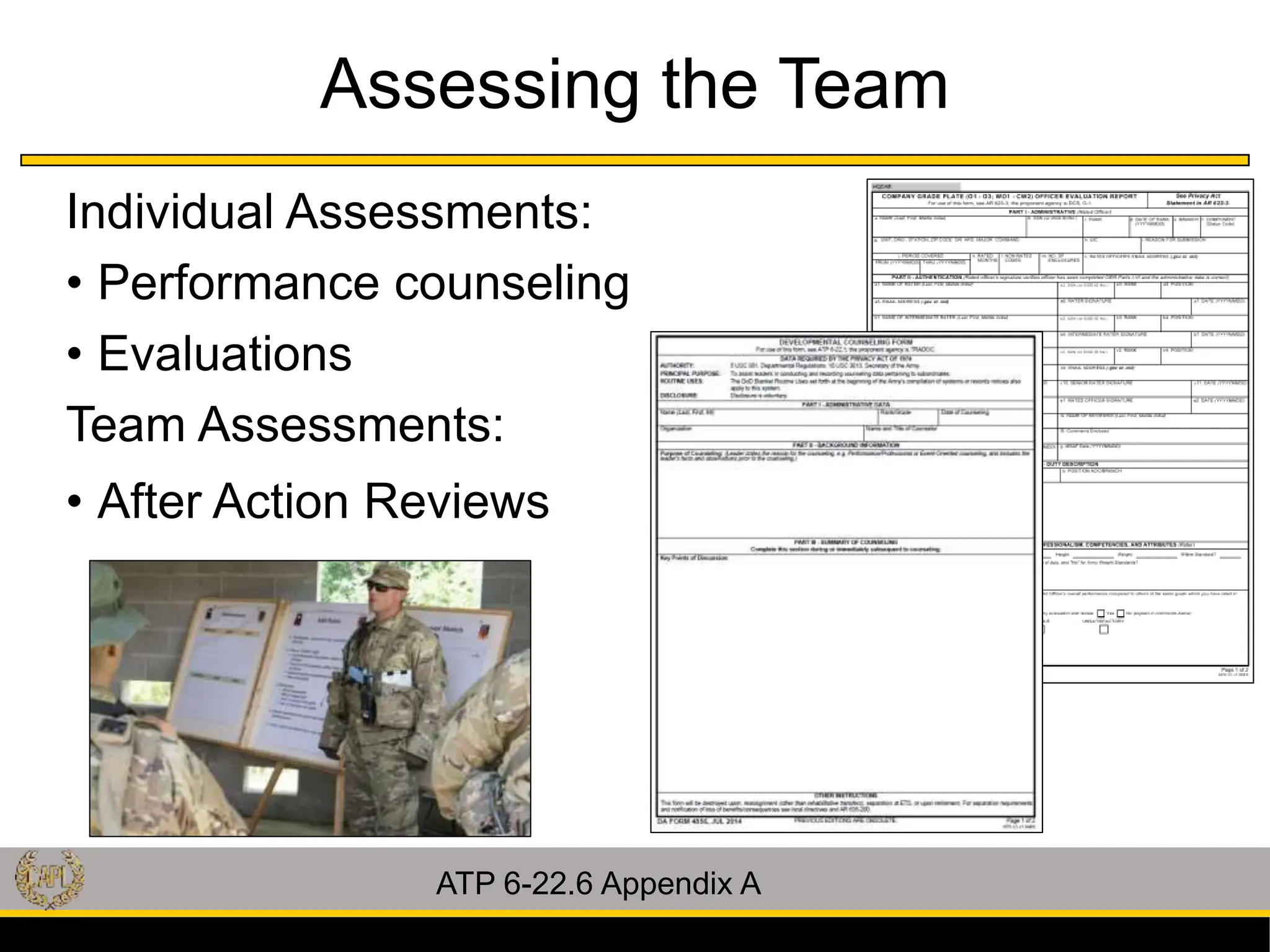
Assessing the Team
Individual Assessments:
• Performance counseling
• Evaluations
Team Assessments:
• After Action Reviews
ATP 6-22.6 Appendix A
Questions
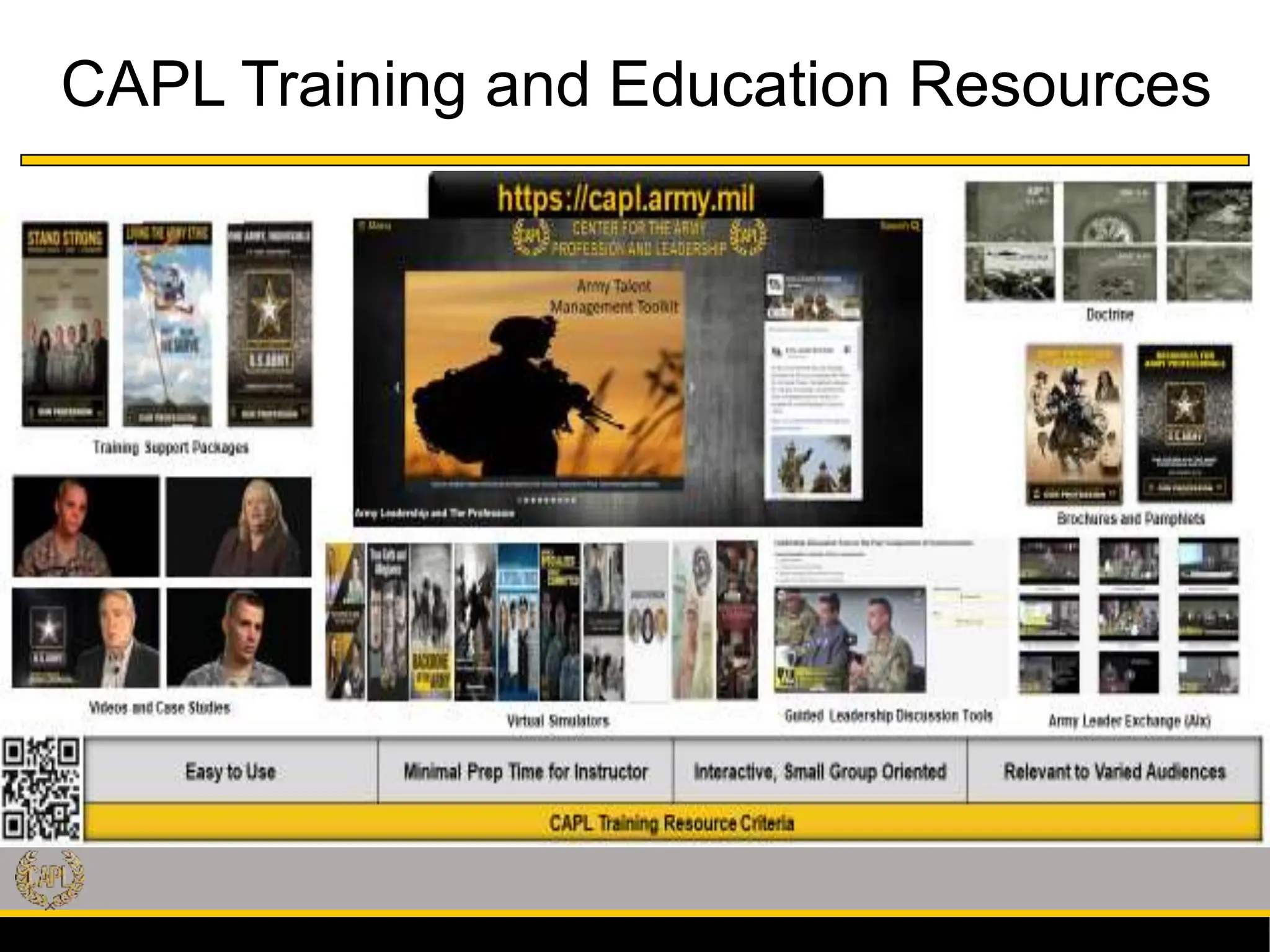
CAPL Training and Education Resources

158-IMT0005_Slides.pptx team management in army

  • 2.
  • 4.
    What is aTeam? • A team is any group that functions together to accomplish a mission or perform a collective task • Army organizations rely on effective teams to complete tasks, achieve objectives, and accomplish missions • Teamwork is built on mutual trust and commitment to the team • Building teams is an essential skill for all Army Leaders 4 ATP 6-22.6 para 1-1-to 1-5
  • 5.
    Types of Teams InternalTeams • Made up of personnel from inside an organization • Internal team leaders have formal authority • Team members have distinct roles or specialties • Accomplish specific missions or tasks • Typically have an established structure External Teams • Members come from different organizations • Members bring specific knowledge, skills, and attitudes • Mission, situation, and geographic location dictate team makeup • Team members generally don’t have authority over each other • Rely on strong relationships and mutual benefits ATP 6-22.6 para 1-27 to 1-34 The Army is a team of teams composed of numerous organizations with one overarching common mission: win the Nation’s wars.
  • 6.
    Team Member Rolesand Responsibilities Team Leaders • Establishing a positive climate • Creating a shared vision and team identity • Providing clearly stated goals • Establishing roles and responsibilities • Establishing an environment of collaboration and dialogue • Establishing an environment that embraces learning • Knowing the strengths and weaknesses of team members Team Members • Building relationships • Demonstrating flexibility and adaptability • Cooperating with other team members • Having a willingness to help others • Respecting others ATP 6-22.6 para 1-36 to 1-81
  • 7.
    Army Team Building Thegoal of team building is: • Improving the quality of the team • Improving how well the team works together to accomplish tasks Army team building, a continuous process of enabling a group of people to reach their goals and improve their effectiveness through leadership and various exercises, activities, and techniques. FM 6-22 para 1-21
  • 8.
    The Army TeamBuilding Process Formation Enrichment Sustainment • Enables groups of people to meet their goals • Team building is essential for the Army to function and perform • Success for the team requires the cooperation of every member • The goal is to improve the quality of the team and how it works together to accomplish the mission. The Army's process for team building includes forming, enriching, and sustaining teams ATP 6-22.6 para 1-6
  • 9.
    Formation Stage The threecritical components of formation are: • Assembling the team • Building trust • Communicating effectively ATP 6-22.6 Chapter 2
  • 10.
    The process ofenhancing teamwork by: • Building commitment to the team • Building competence in task accomplishment • Building shared confidence as a team • Motivating each other to excel • Building shared accountability by holding each other accountable • Developing cohesion by working together to accomplish tasks 10 Enrichment Stage ATP 6-22.6 Chapter 3
  • 11.
    Sustainment Stage 11 ATP 6-22.6Chapter 4 Teams overcome adversity by: • Adapting to changes • Managing conflicts • Sustaining resilient mindsets • Recognizing diversity as a strength
  • 12.
    Characteristics of EffectiveTeams • Trust each other and being able to predict what each will do • Work together to accomplish the mission • Execute tasks thoroughly and quickly • Meet and exceed the standard • Adapt to demanding challenges • Learn from their experiences 12
  • 13.
    Indicators of TeamEffectiveness Ineffective Teams • Fail to listen to relevant input of a team member • Speak despairingly about other members • Fail to enforce or encourage discipline in the team • Compete, rather than cooperate with other team members • Argue with other team members in front of counterparts or other individuals • Fail to act to make decisions on issues that implications on the team • Focus more on self-interest than the well being of the team • Give less than full effort because of low morale or lack of confidence in other team members. 13 Effective Teams • Emphasize what is common among members rather than focus on characteristics that could subgroups to form • Hold a share vision about operating as a team • Share information that may be useful to other team members • Ensure team members periodically engage in group • Act quickly to promote togetherness when schisms in the group appears or morale drops • Show appreciation and concern for other team members • Act as a team instead of individuals, take pride in teams accomplishments
  • 14.
    Assessing the Team IndividualAssessments: • Performance counseling • Evaluations Team Assessments: • After Action Reviews ATP 6-22.6 Appendix A
  • 15.
  • 16.
    CAPL Training andEducation Resources