What is Triangulation? “ Short-hand term” for synthesis and integrated analysis of data  from multiple sources  for program decision making A powerful tool that can be used to: Demonstrate program impact and areas of improvement Direct new programs and policy changes
Why Use Triangulation? Countries invest time and resources into collecting  data and Strategic Information (SI): Patient tracking data:  PMTCT & ARV program data Surveillance data:  ANC sentinel surveys, DHS+, incidence testing Birth and deaths:  Vital statistics Research studies:  Quantitative & qualitative However: Too much data Information goes up but rarely comes back Data rarely examined side-by-side Analysis of data used for program planning and improvement, and policy-making   is often overlooked
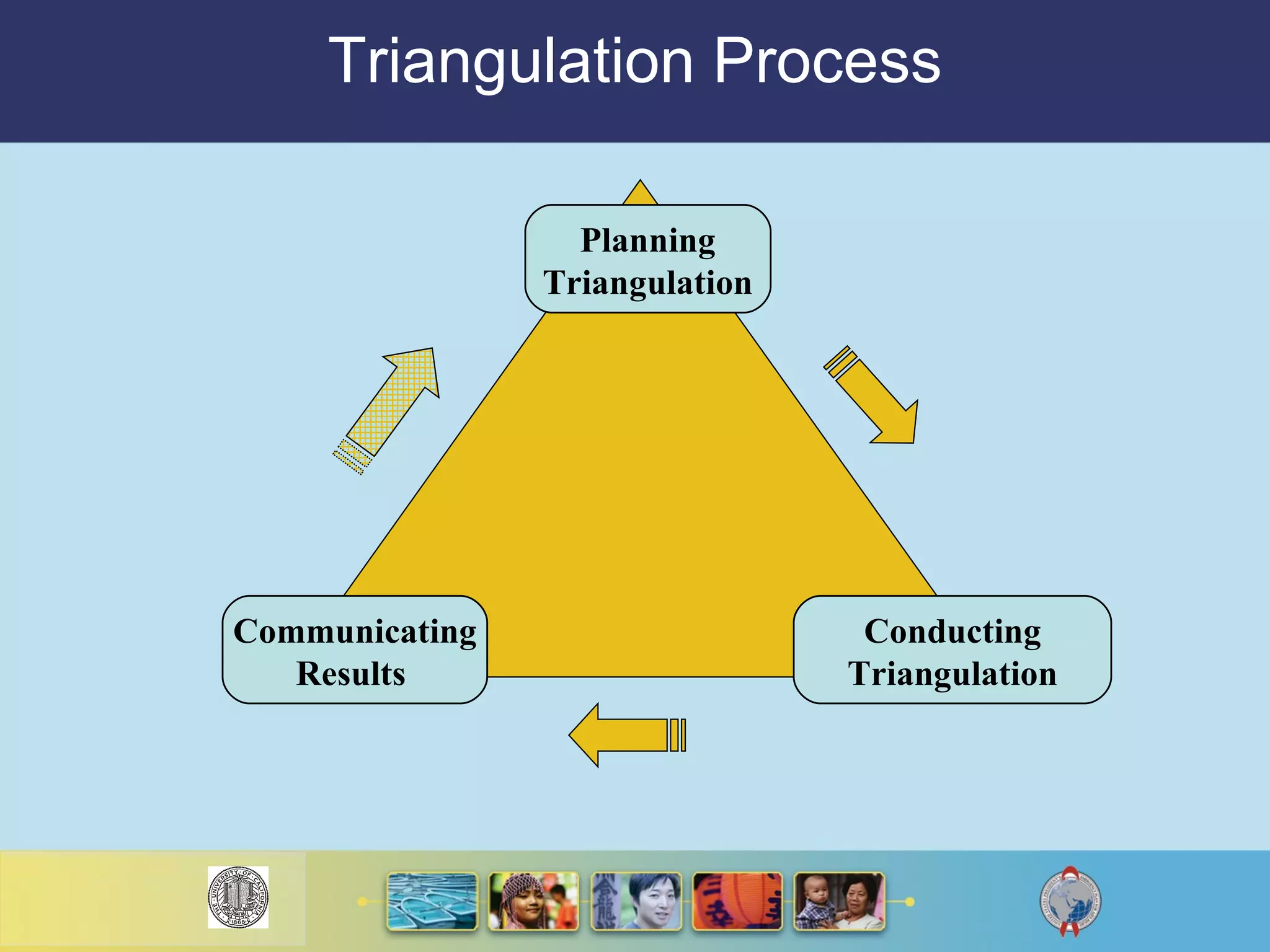
Triangulation Process Communicating Results   Planning Triangulation Conducting Triangulation
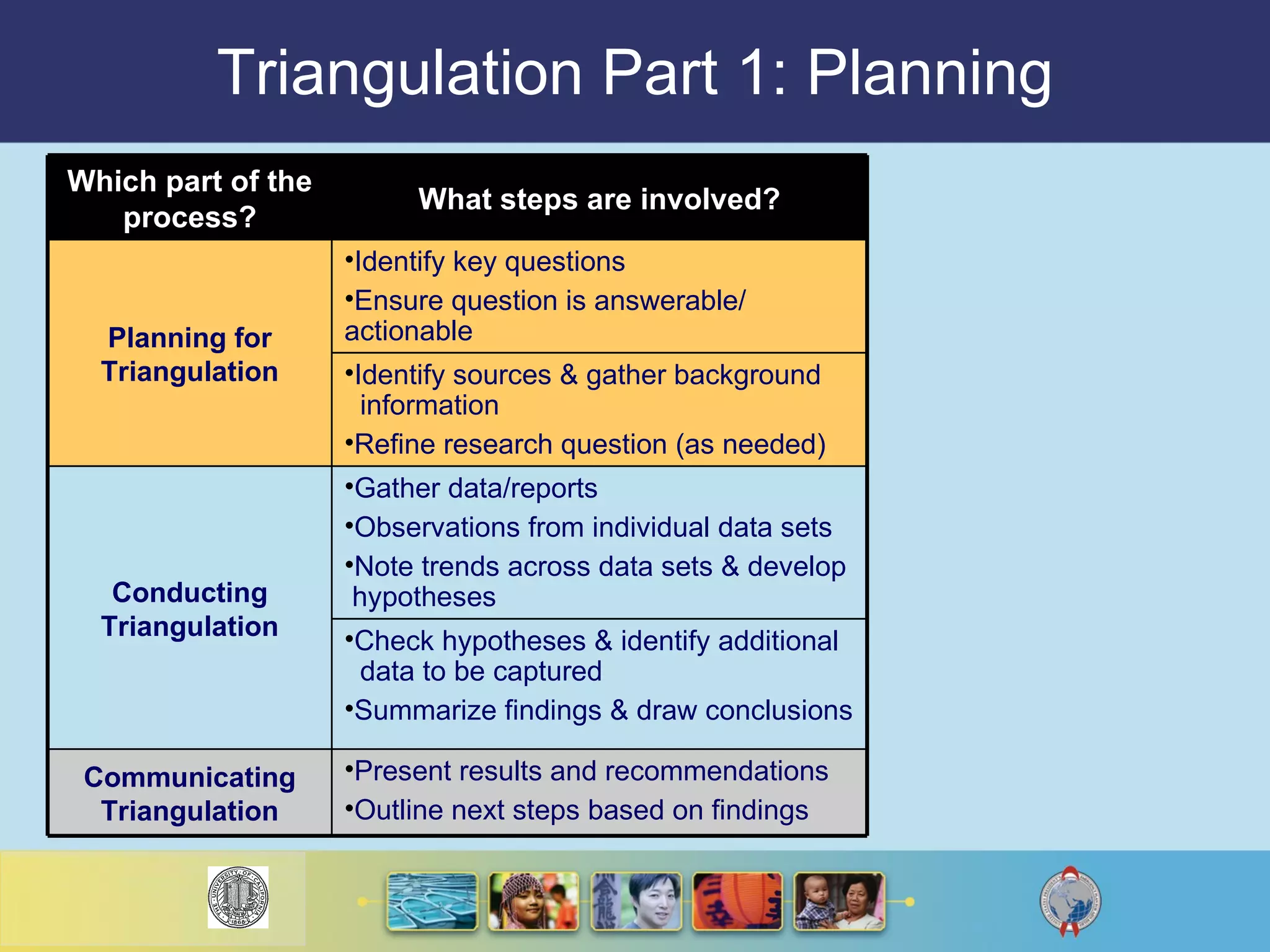
Triangulation Part 1: Planning Present results and recommendations Outline next steps based on findings Communicating Triangulation Check hypotheses & identify additional   data to be captured Summarize findings & draw conclusions Gather data/reports Observations from individual data sets Note trends across data sets & develop  hypotheses Conducting Triangulation Identify sources & gather background   information Refine research question (as needed) Identify key questions Ensure question is answerable/ actionable Planning for Triangulation What steps are involved? Which part of the process?
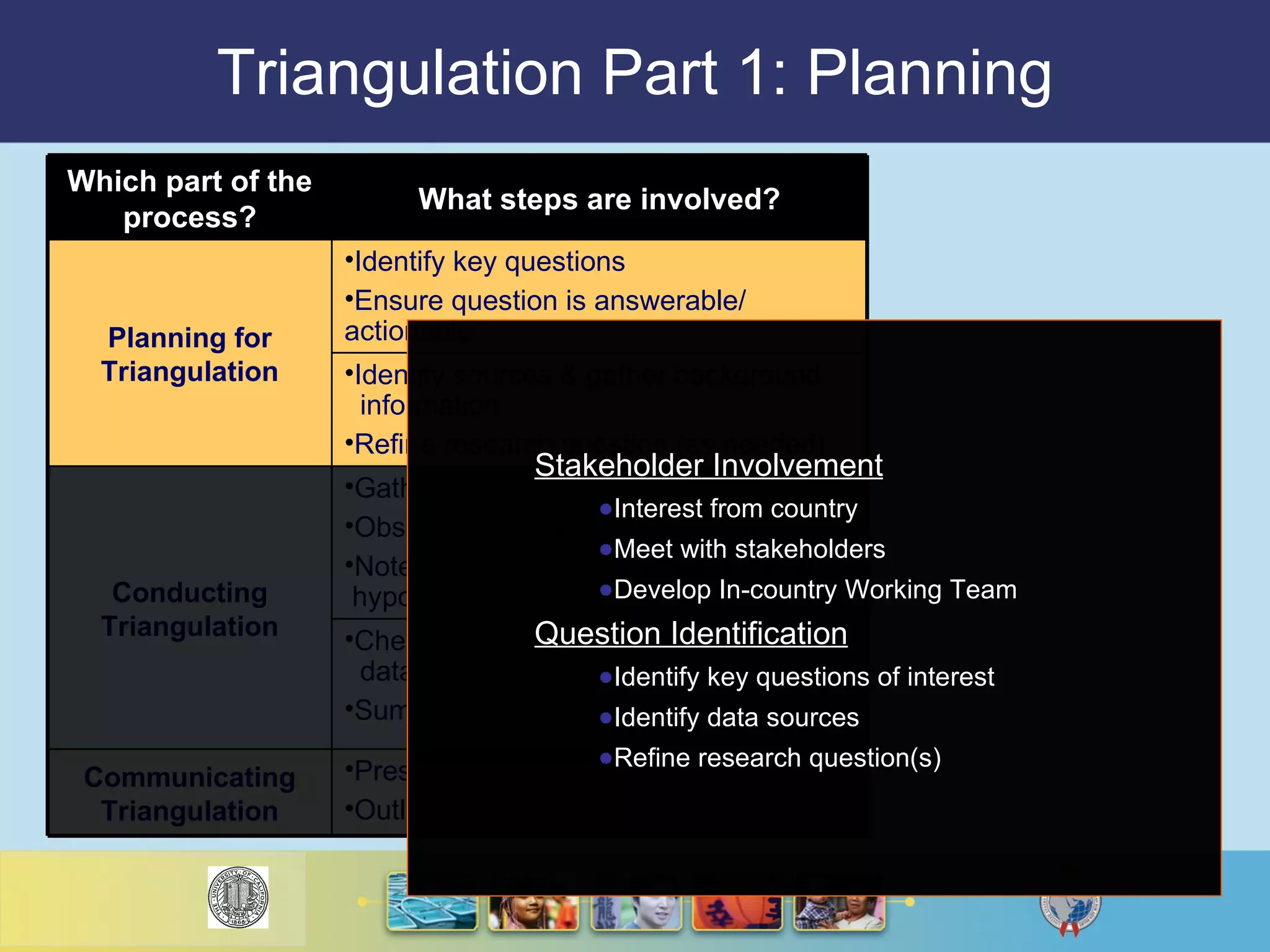
Triangulation Part 1: Planning Stakeholder Involvement Interest from country Meet with stakeholders Develop In-country Working Team Question Identification Identify key questions of interest Identify data sources Refine research question(s) Present results and recommendations Outline next steps based on findings Communicating Triangulation Check hypotheses & identify additional   data to be captured Summarize findings & draw conclusions Gather data/reports Observations from individual data sets Note trends across data sets & develop  hypotheses Conducting Triangulation Identify sources & gather background   information Refine research question (as needed) Identify key questions Ensure question is answerable/ actionable Planning for Triangulation What steps are involved? Which part of the process?
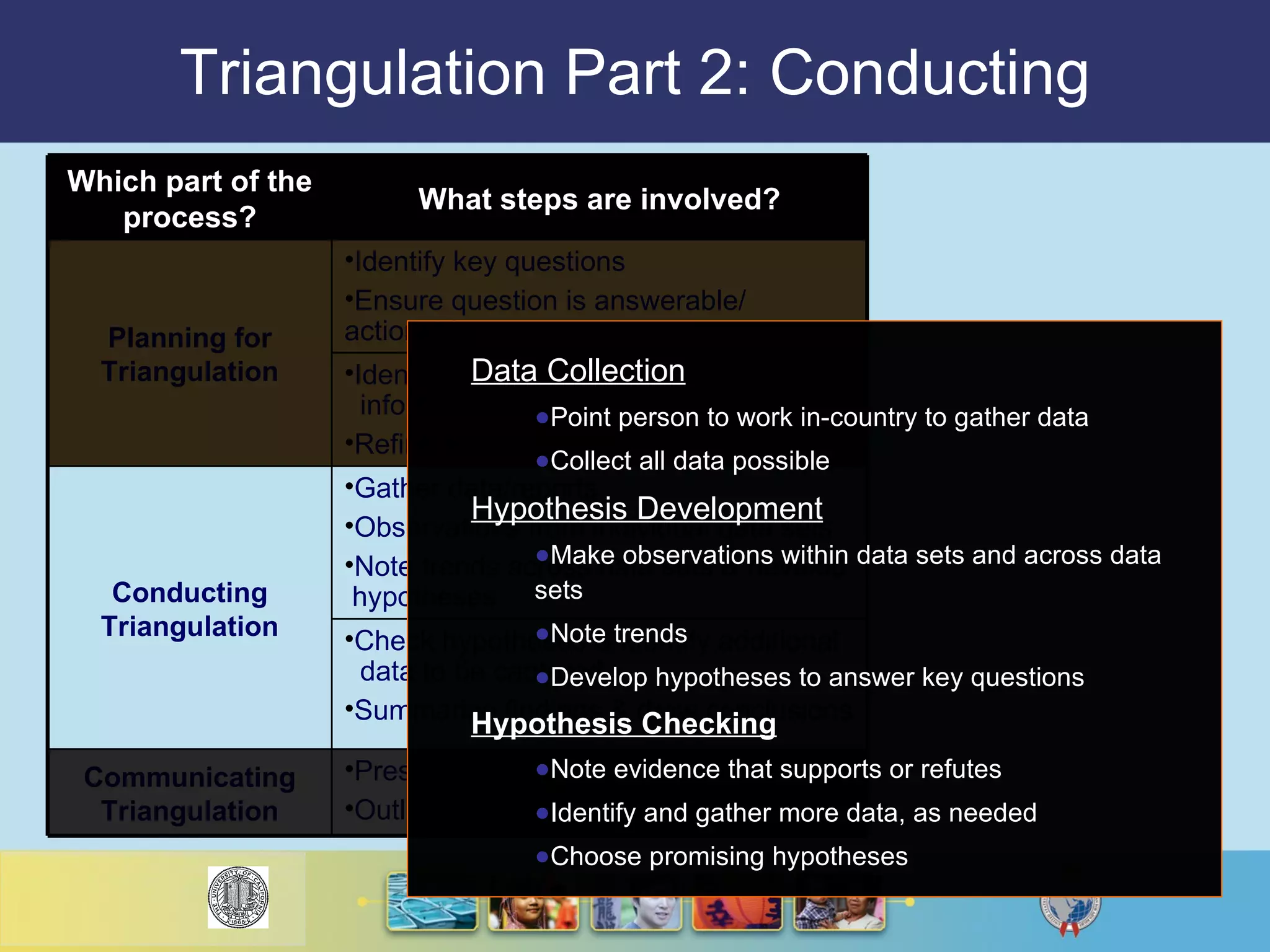
Triangulation Part 2: Conducting Data Collection Point person to work in-country to gather data  Collect all data possible  Hypothesis Development Make observations within data sets and across data sets Note trends  Develop hypotheses to answer key questions Hypothesis Checking Note evidence that supports or refutes Identify and gather more data, as needed Choose promising hypotheses Present results and recommendations Outline next steps based on findings Communicating Triangulation Check hypotheses & identify additional   data to be captured Summarize findings & draw conclusions Gather data/reports Observations from individual data sets Note trends across data sets & develop  hypotheses Conducting Triangulation Identify sources & gather background   information Refine research question (as needed) Identify key questions Ensure question is answerable/ actionable Planning for Triangulation What steps are involved? Which part of the process?
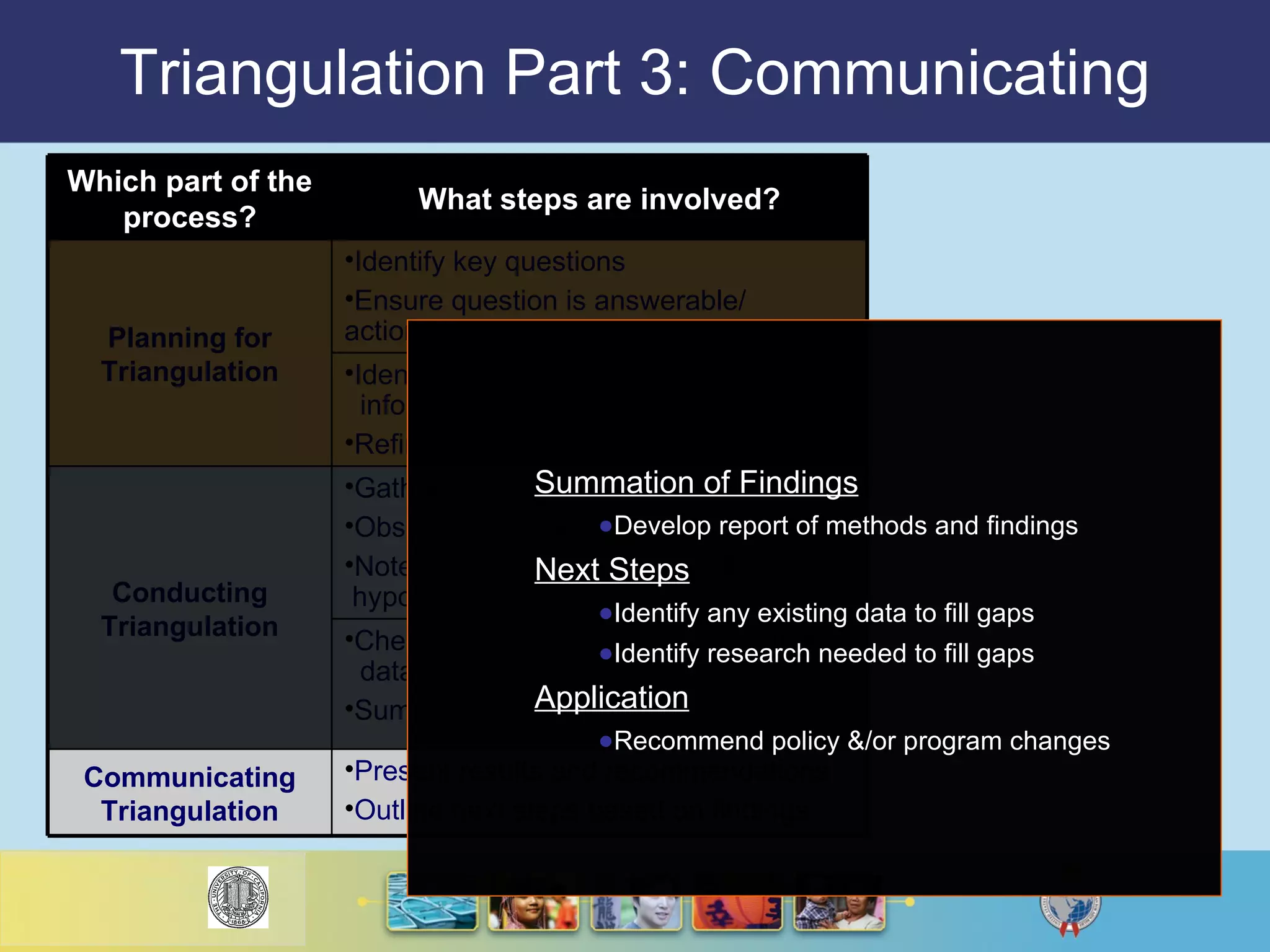
Triangulation Part 3: Communicating Summation of Findings Develop report of methods and findings Next Steps Identify any existing data to fill gaps Identify research needed to fill gaps Application Recommend policy &/or program changes Present results and recommendations Outline next steps based on findings Communicating Triangulation Check hypotheses & identify additional   data to be captured Summarize findings & draw conclusions Gather data/reports Observations from individual data sets Note trends across data sets & develop  hypotheses Conducting Triangulation Identify sources & gather background   information Refine research question (as needed) Identify key questions Ensure question is answerable/ actionable Planning for Triangulation What steps are involved? Which part of the process?
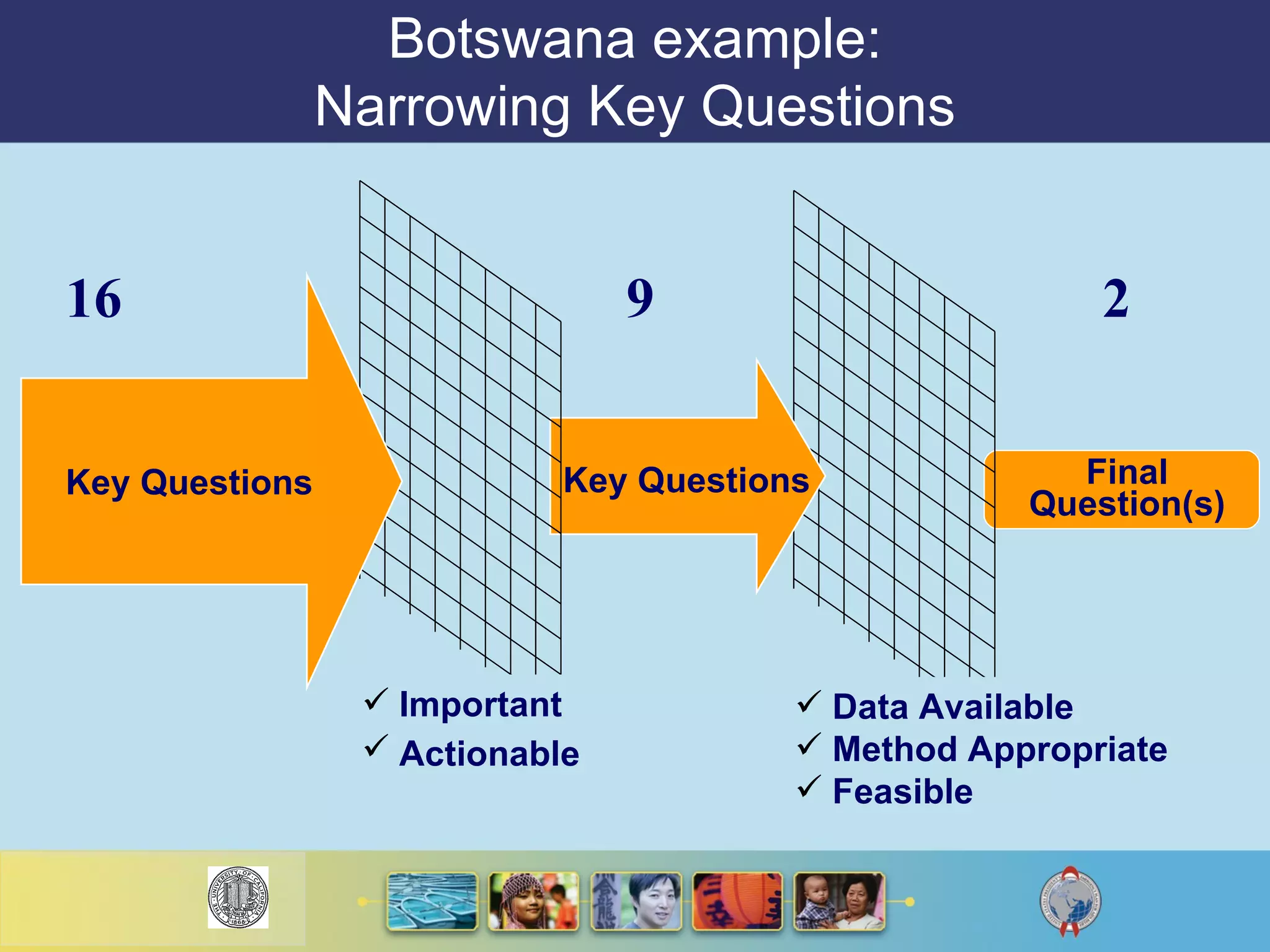
Botswana example: Narrowing Key Questions Final Question(s) Key Questions 16 9 2 Important Actionable   Data Available Method Appropriate Feasible Key Questions
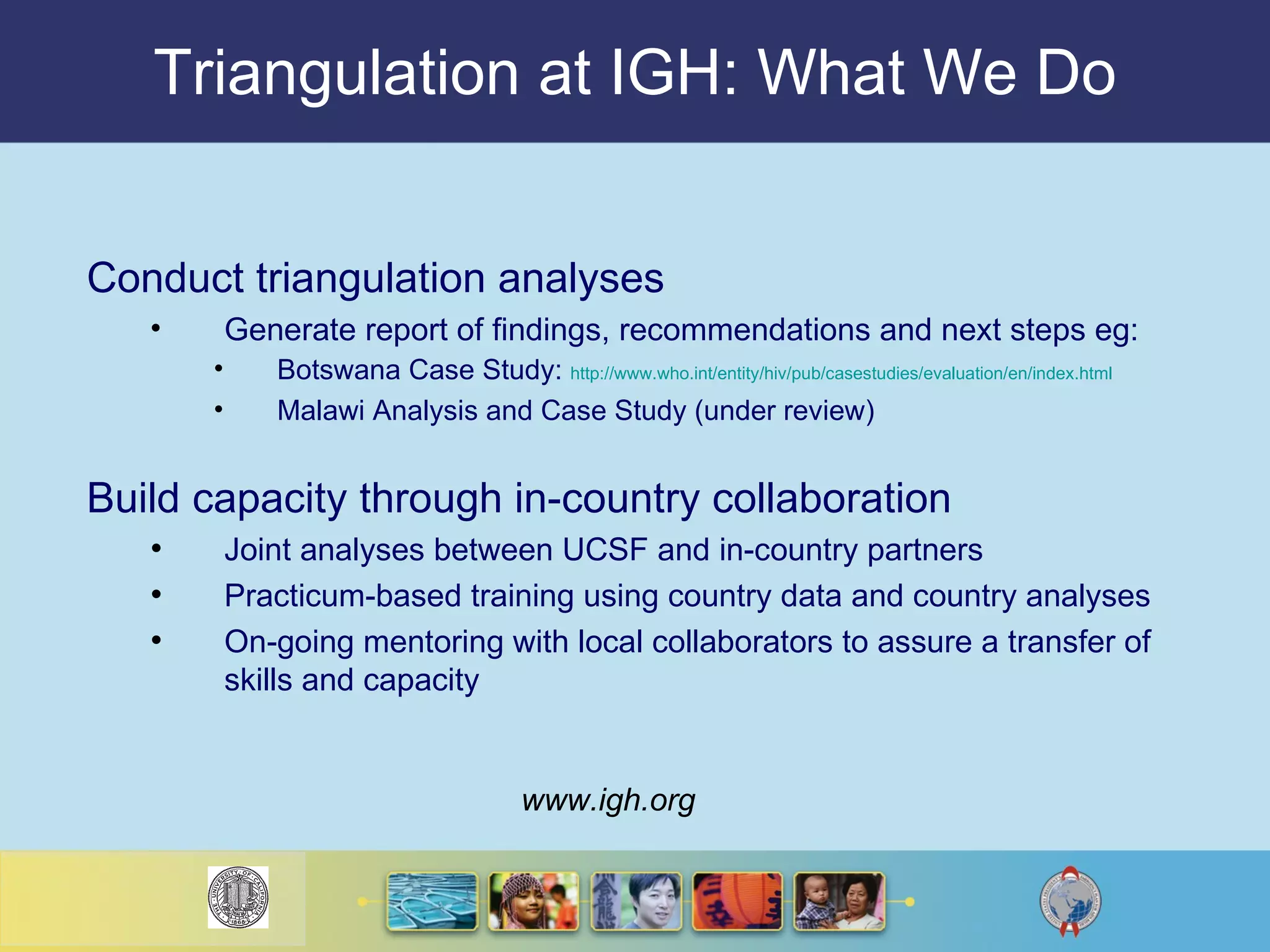
Triangulation at IGH: What We Do Conduct triangulation analyses Generate report of findings, recommendations and next steps eg: Botswana Case Study:  http://www.who. int/entity/hiv/pub/casestudies/evaluation/en/index .html Malawi Analysis and Case Study (under review) Build capacity through in-country collaboration Joint analyses between UCSF and in-country partners Practicum-based training using country data and country analyses  On-going mentoring with local collaborators to assure a transfer of skills and capacity www.igh.org
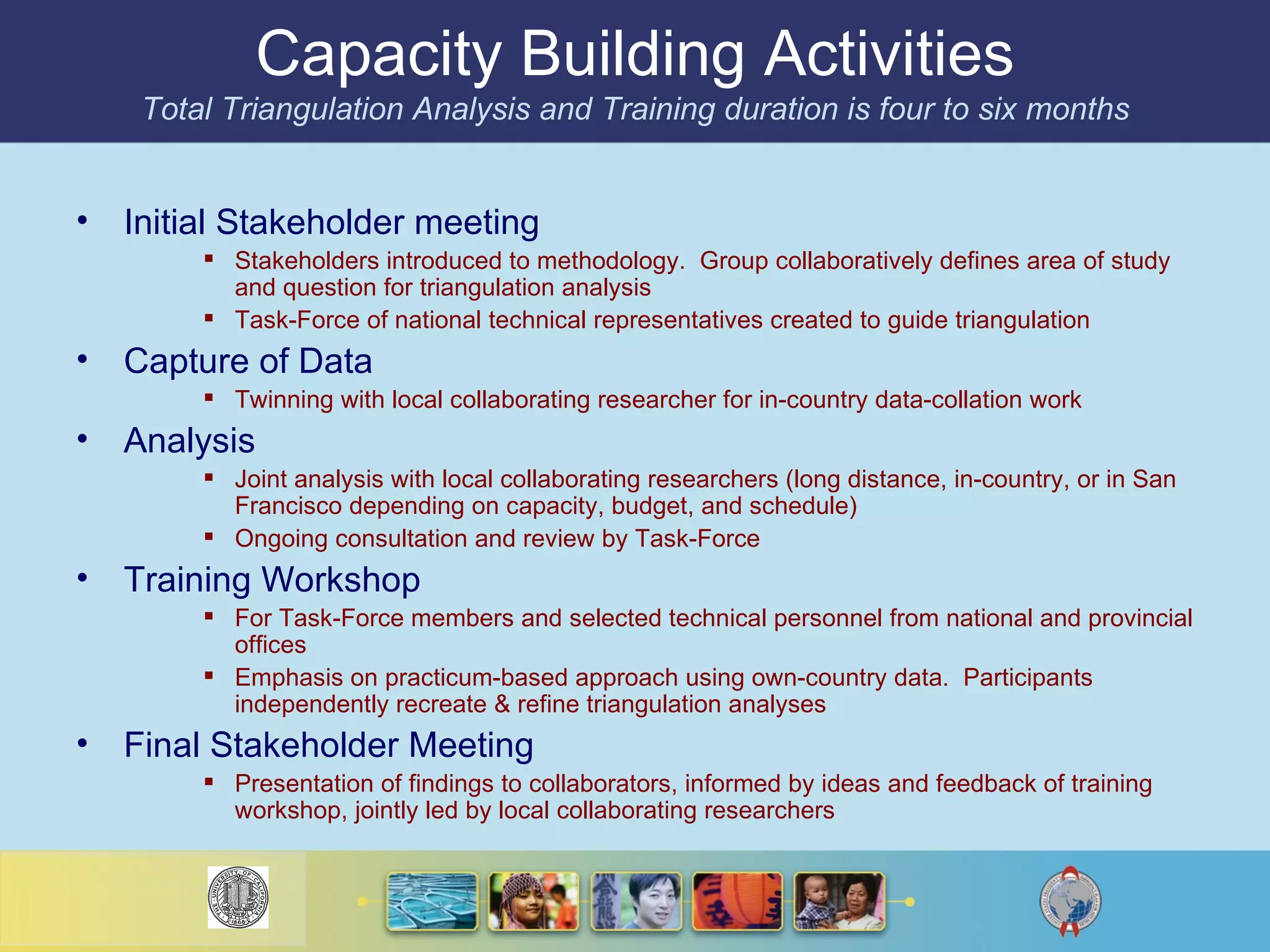
Capacity Building Activities Total Triangulation Analysis and Training duration is four to six months Initial Stakeholder meeting Stakeholders introduced to methodology.  Group collaboratively defines area of study and question for triangulation analysis Task-Force of national technical representatives created to guide triangulation Capture of Data Twinning with local collaborating researcher for in-country data-collation work Analysis Joint analysis with local collaborating researchers (long distance, in-country, or in San Francisco depending on capacity, budget, and schedule) Ongoing consultation and review by Task-Force Training Workshop For Task-Force members and selected technical personnel from national and provincial offices Emphasis on practicum-based approach using own-country data.  Participants independently recreate & refine triangulation analyses Final Stakeholder Meeting Presentation of findings to collaborators, informed by ideas and feedback of training workshop, jointly led by local collaborating researchers

1368 triangulation summary

  • 1.
    What is Triangulation?“ Short-hand term” for synthesis and integrated analysis of data from multiple sources for program decision making A powerful tool that can be used to: Demonstrate program impact and areas of improvement Direct new programs and policy changes
  • 2.
    Why Use Triangulation?Countries invest time and resources into collecting data and Strategic Information (SI): Patient tracking data: PMTCT & ARV program data Surveillance data: ANC sentinel surveys, DHS+, incidence testing Birth and deaths: Vital statistics Research studies: Quantitative & qualitative However: Too much data Information goes up but rarely comes back Data rarely examined side-by-side Analysis of data used for program planning and improvement, and policy-making is often overlooked
  • 3.
    Triangulation Process CommunicatingResults Planning Triangulation Conducting Triangulation
  • 4.
    Triangulation Part 1:Planning Present results and recommendations Outline next steps based on findings Communicating Triangulation Check hypotheses & identify additional data to be captured Summarize findings & draw conclusions Gather data/reports Observations from individual data sets Note trends across data sets & develop hypotheses Conducting Triangulation Identify sources & gather background information Refine research question (as needed) Identify key questions Ensure question is answerable/ actionable Planning for Triangulation What steps are involved? Which part of the process?
  • 5.
    Triangulation Part 1:Planning Stakeholder Involvement Interest from country Meet with stakeholders Develop In-country Working Team Question Identification Identify key questions of interest Identify data sources Refine research question(s) Present results and recommendations Outline next steps based on findings Communicating Triangulation Check hypotheses & identify additional data to be captured Summarize findings & draw conclusions Gather data/reports Observations from individual data sets Note trends across data sets & develop hypotheses Conducting Triangulation Identify sources & gather background information Refine research question (as needed) Identify key questions Ensure question is answerable/ actionable Planning for Triangulation What steps are involved? Which part of the process?
  • 6.
    Triangulation Part 2:Conducting Data Collection Point person to work in-country to gather data Collect all data possible Hypothesis Development Make observations within data sets and across data sets Note trends Develop hypotheses to answer key questions Hypothesis Checking Note evidence that supports or refutes Identify and gather more data, as needed Choose promising hypotheses Present results and recommendations Outline next steps based on findings Communicating Triangulation Check hypotheses & identify additional data to be captured Summarize findings & draw conclusions Gather data/reports Observations from individual data sets Note trends across data sets & develop hypotheses Conducting Triangulation Identify sources & gather background information Refine research question (as needed) Identify key questions Ensure question is answerable/ actionable Planning for Triangulation What steps are involved? Which part of the process?
  • 7.
    Triangulation Part 3:Communicating Summation of Findings Develop report of methods and findings Next Steps Identify any existing data to fill gaps Identify research needed to fill gaps Application Recommend policy &/or program changes Present results and recommendations Outline next steps based on findings Communicating Triangulation Check hypotheses & identify additional data to be captured Summarize findings & draw conclusions Gather data/reports Observations from individual data sets Note trends across data sets & develop hypotheses Conducting Triangulation Identify sources & gather background information Refine research question (as needed) Identify key questions Ensure question is answerable/ actionable Planning for Triangulation What steps are involved? Which part of the process?
  • 8.
    Botswana example: NarrowingKey Questions Final Question(s) Key Questions 16 9 2 Important Actionable Data Available Method Appropriate Feasible Key Questions
  • 9.
    Triangulation at IGH:What We Do Conduct triangulation analyses Generate report of findings, recommendations and next steps eg: Botswana Case Study: http://www.who. int/entity/hiv/pub/casestudies/evaluation/en/index .html Malawi Analysis and Case Study (under review) Build capacity through in-country collaboration Joint analyses between UCSF and in-country partners Practicum-based training using country data and country analyses On-going mentoring with local collaborators to assure a transfer of skills and capacity www.igh.org
  • 10.
    Capacity Building ActivitiesTotal Triangulation Analysis and Training duration is four to six months Initial Stakeholder meeting Stakeholders introduced to methodology. Group collaboratively defines area of study and question for triangulation analysis Task-Force of national technical representatives created to guide triangulation Capture of Data Twinning with local collaborating researcher for in-country data-collation work Analysis Joint analysis with local collaborating researchers (long distance, in-country, or in San Francisco depending on capacity, budget, and schedule) Ongoing consultation and review by Task-Force Training Workshop For Task-Force members and selected technical personnel from national and provincial offices Emphasis on practicum-based approach using own-country data. Participants independently recreate & refine triangulation analyses Final Stakeholder Meeting Presentation of findings to collaborators, informed by ideas and feedback of training workshop, jointly led by local collaborating researchers