Those re-sitting Sustainable
Decision Making Paper
• Re-sit help will start Tuesday 22nd
November at 3:10pm, with Mr Clark in his
room
• This time the subject is rivers
• All sessions will be after school
• You will updated with more sessions on
22nd
November
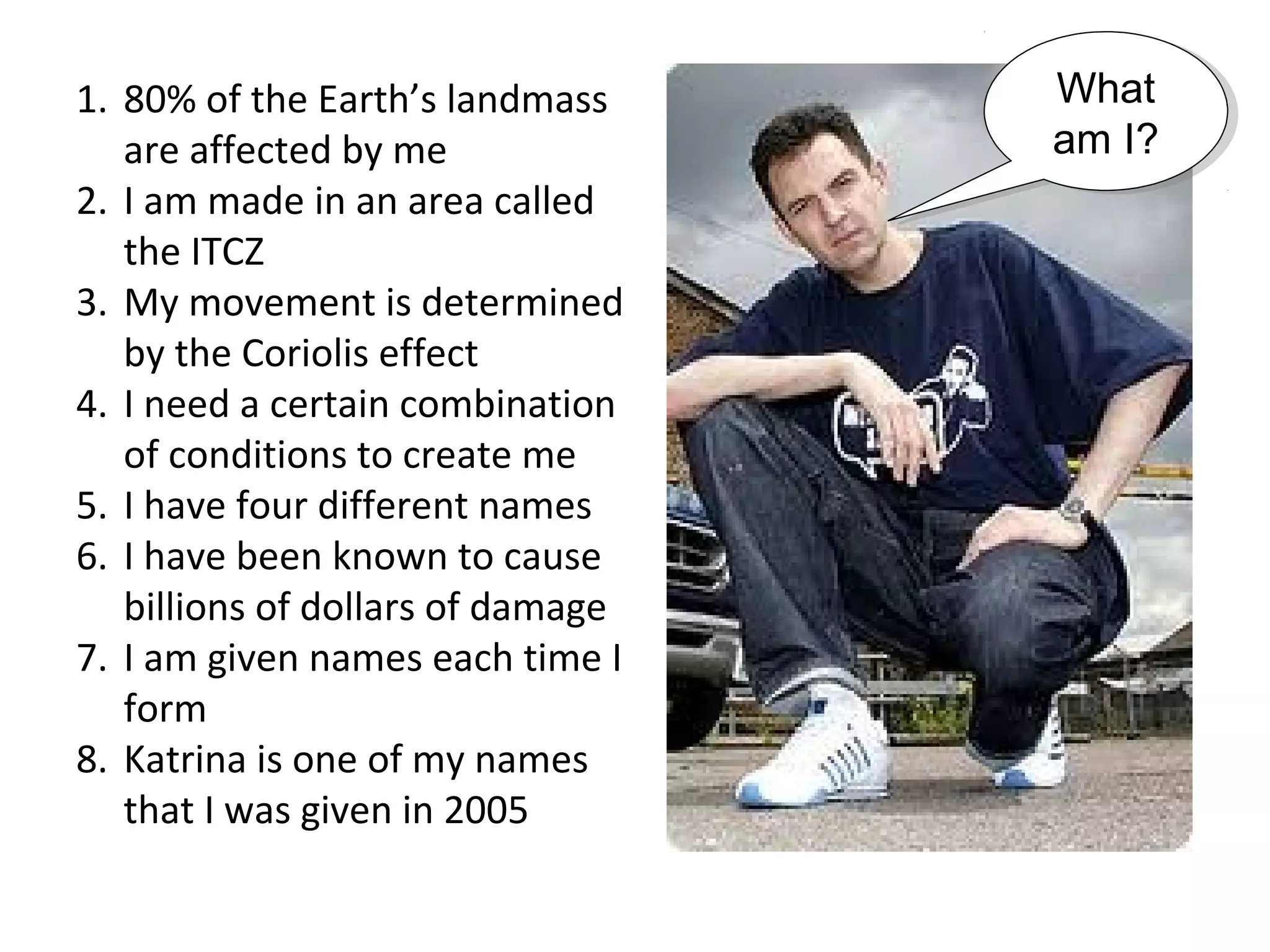
1. 80% of the Earth’s landmass
are affected by me
2. I am made in an area called
the ITCZ
3. My movement is determined
by the Coriolis effect
4. I need a certain combination
of conditions to create me
5. I have four different names
6. I have been known to cause
billions of dollars of damage
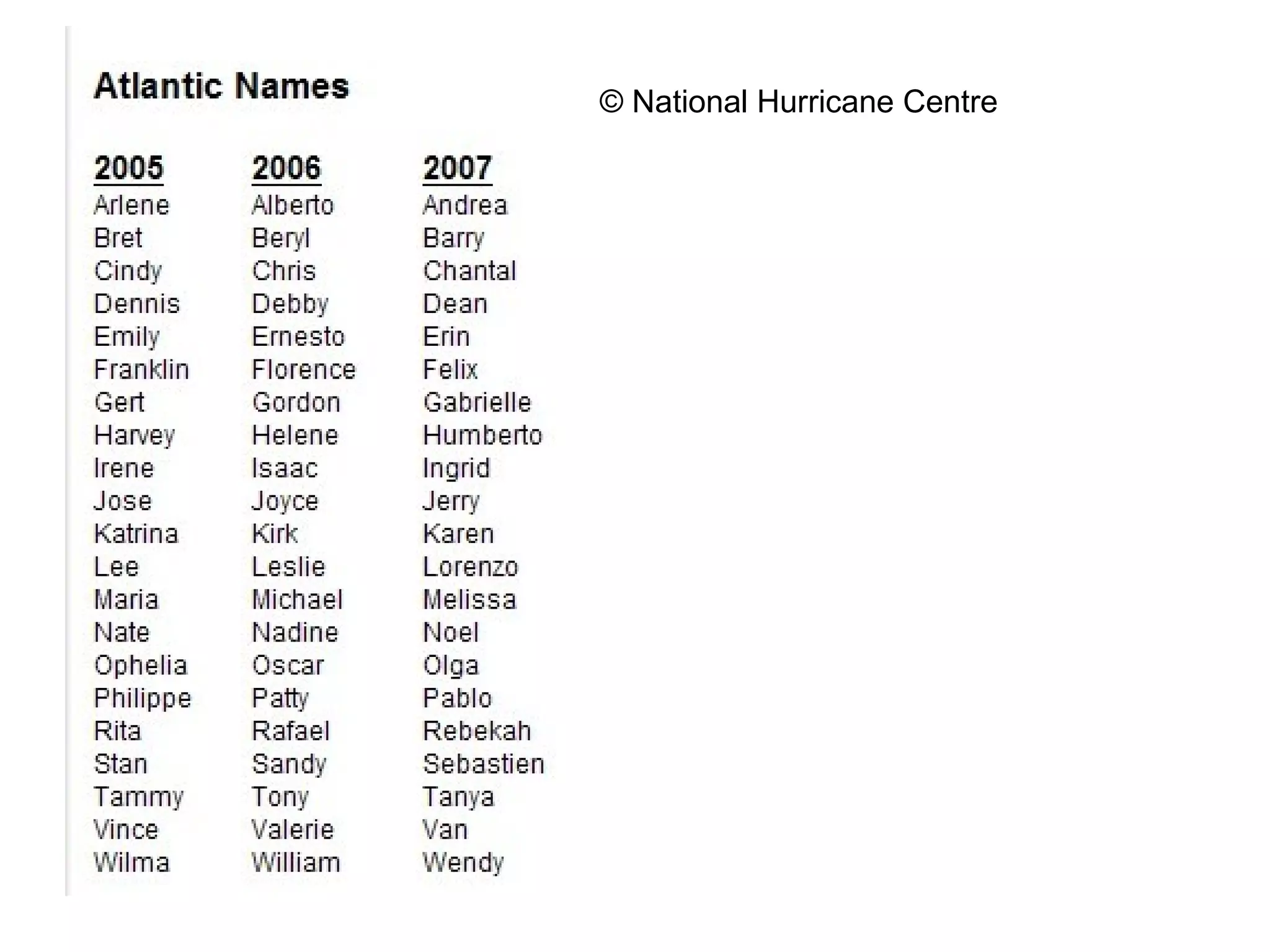
7. I am given names each time I
form
8. Katrina is one of my names
that I was given in 2005
What
am I?
What
am I?
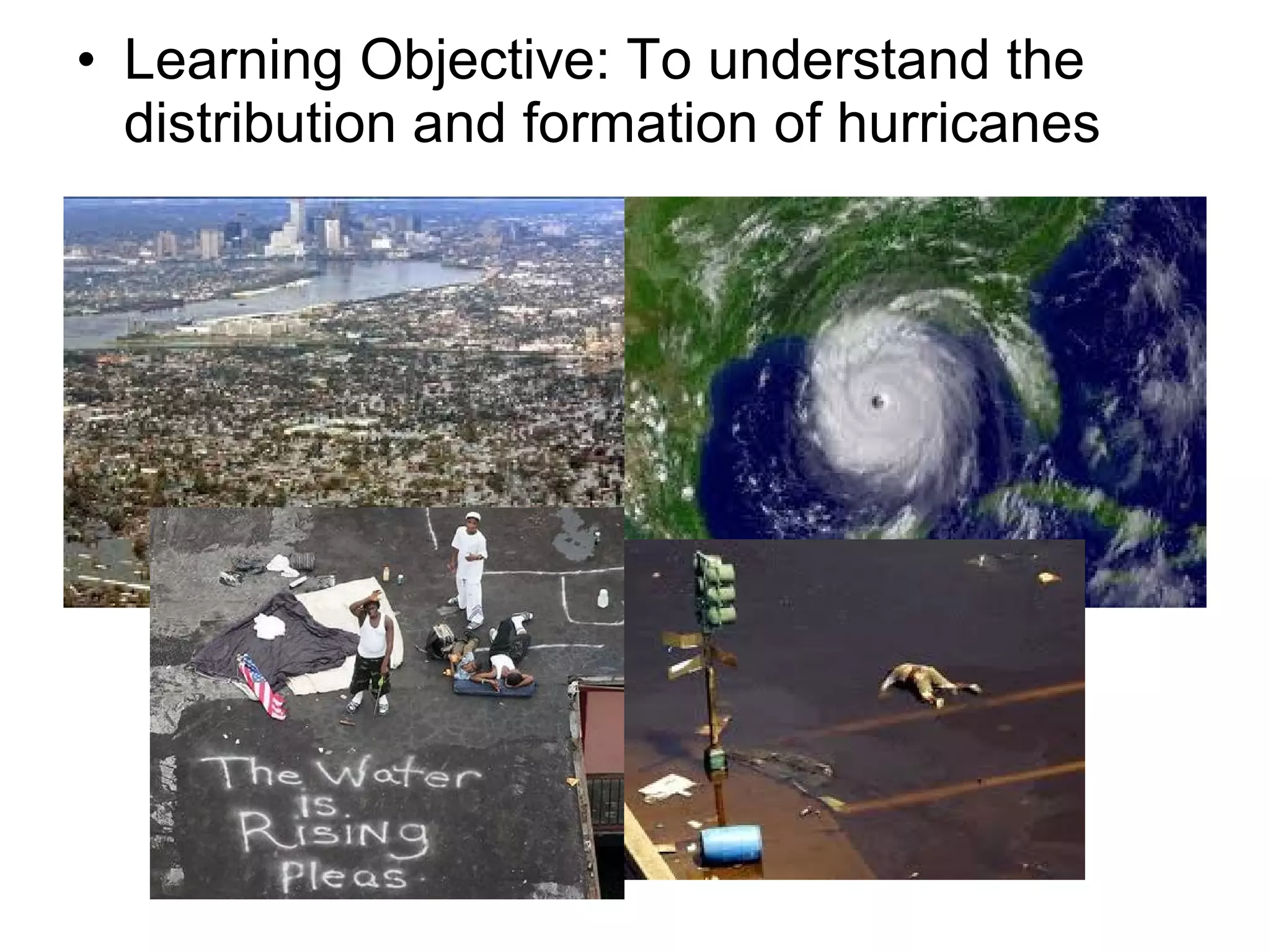
• Learning Objective: To understand the
distribution and formation of hurricanes
What are the 4 phrases used for
tropical cyclones?
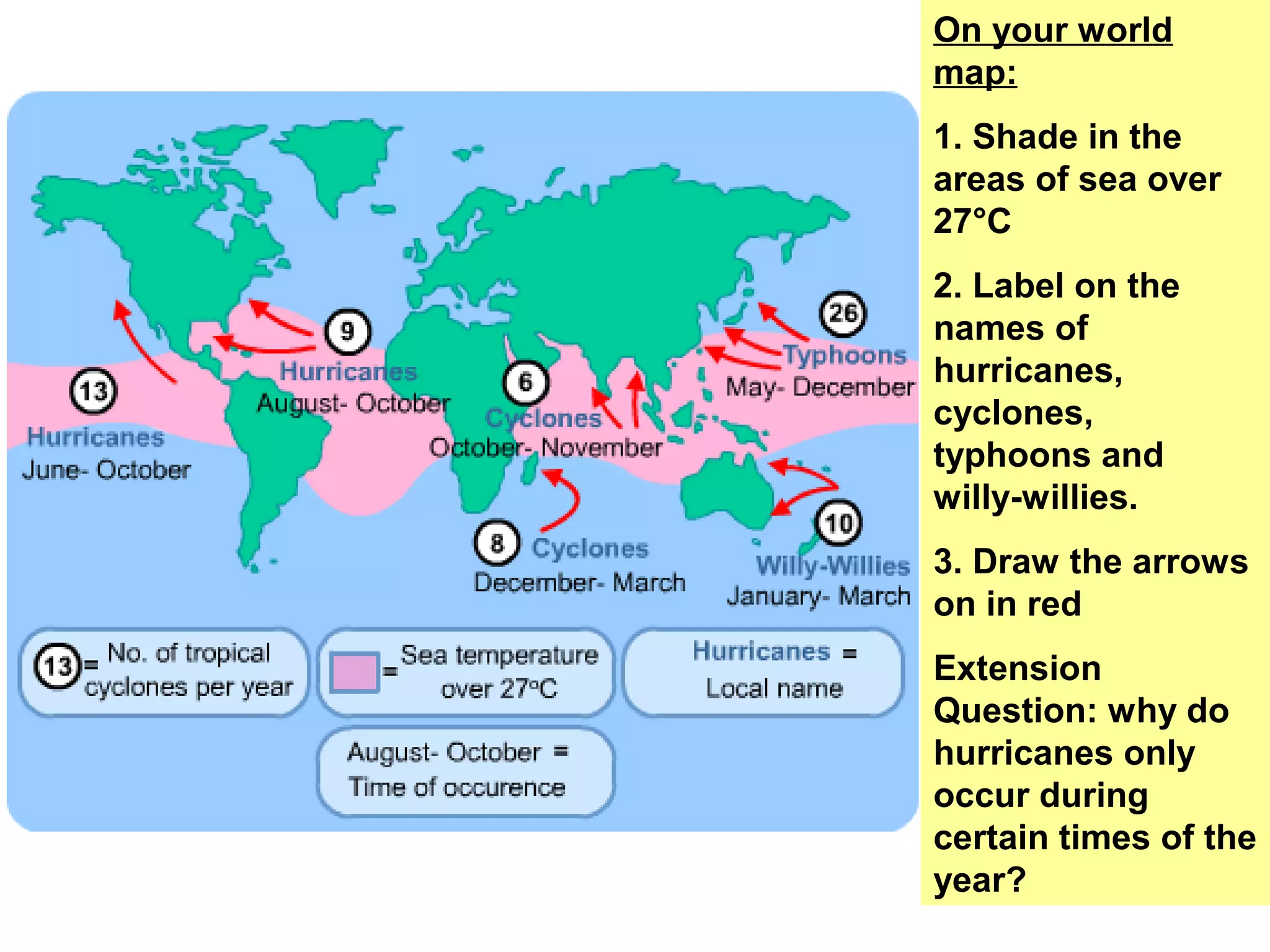
• Hurricanes (USA)
• Cyclones (India, parts of Asia, Africa)
• Typhoons (Japan, far east Asia)
• Willy Willies (Australia)
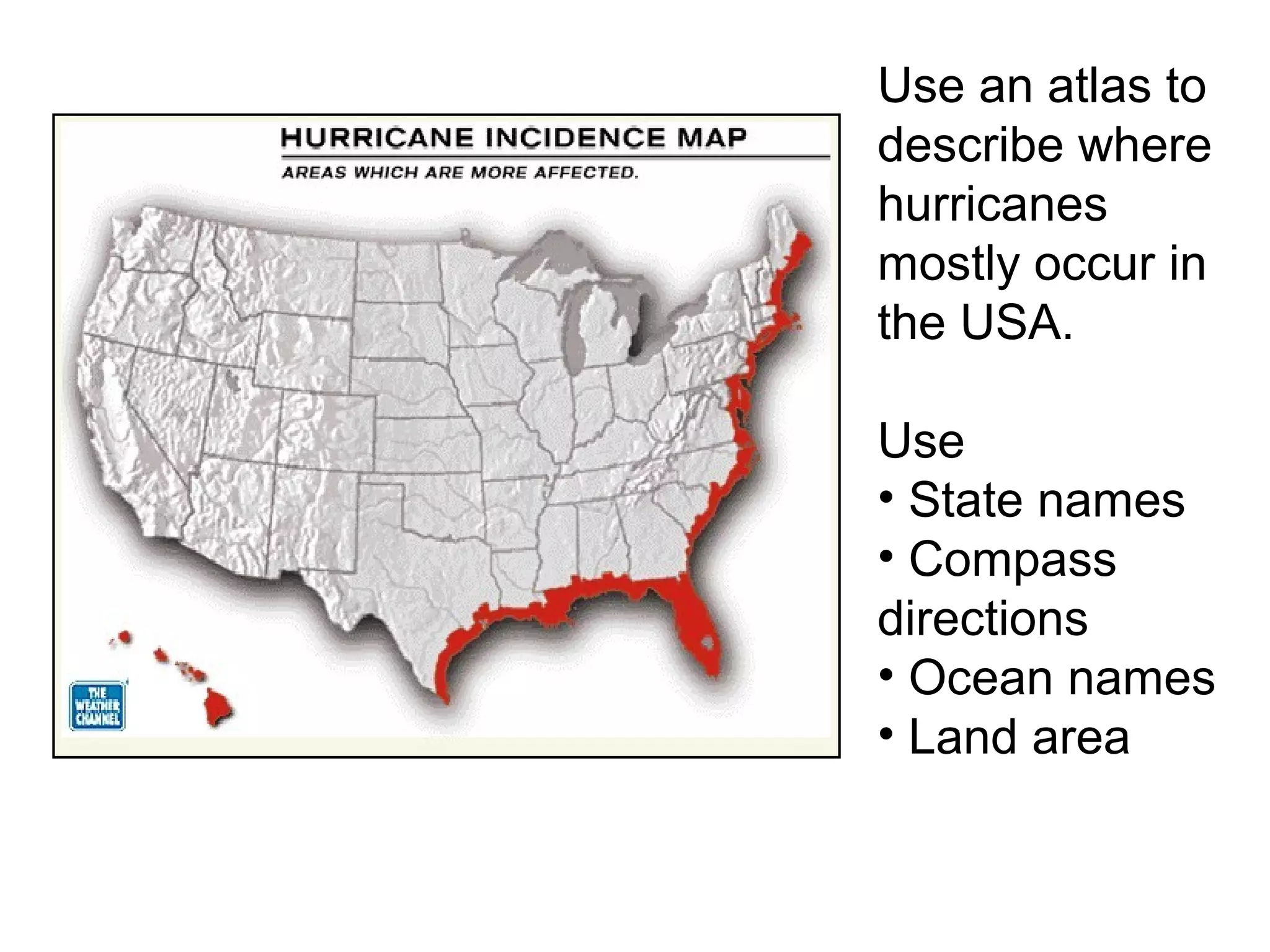
Use an atlas to
describe where
hurricanes
mostly occur in
the USA.
Use
• State names
• Compass
directions
• Ocean names
• Land area
Independent EnquirerIndependent Enquirer
• Watch this short video about tropical
storms.
• Write down any questions that you want
answered during the lesson about
hurricanes.
• Be ready to share these questions at the
end!
http://www.youtube.com/watch?v=H9VpwmtnOZ
Did you come up with any ofDid you come up with any of
these??these??
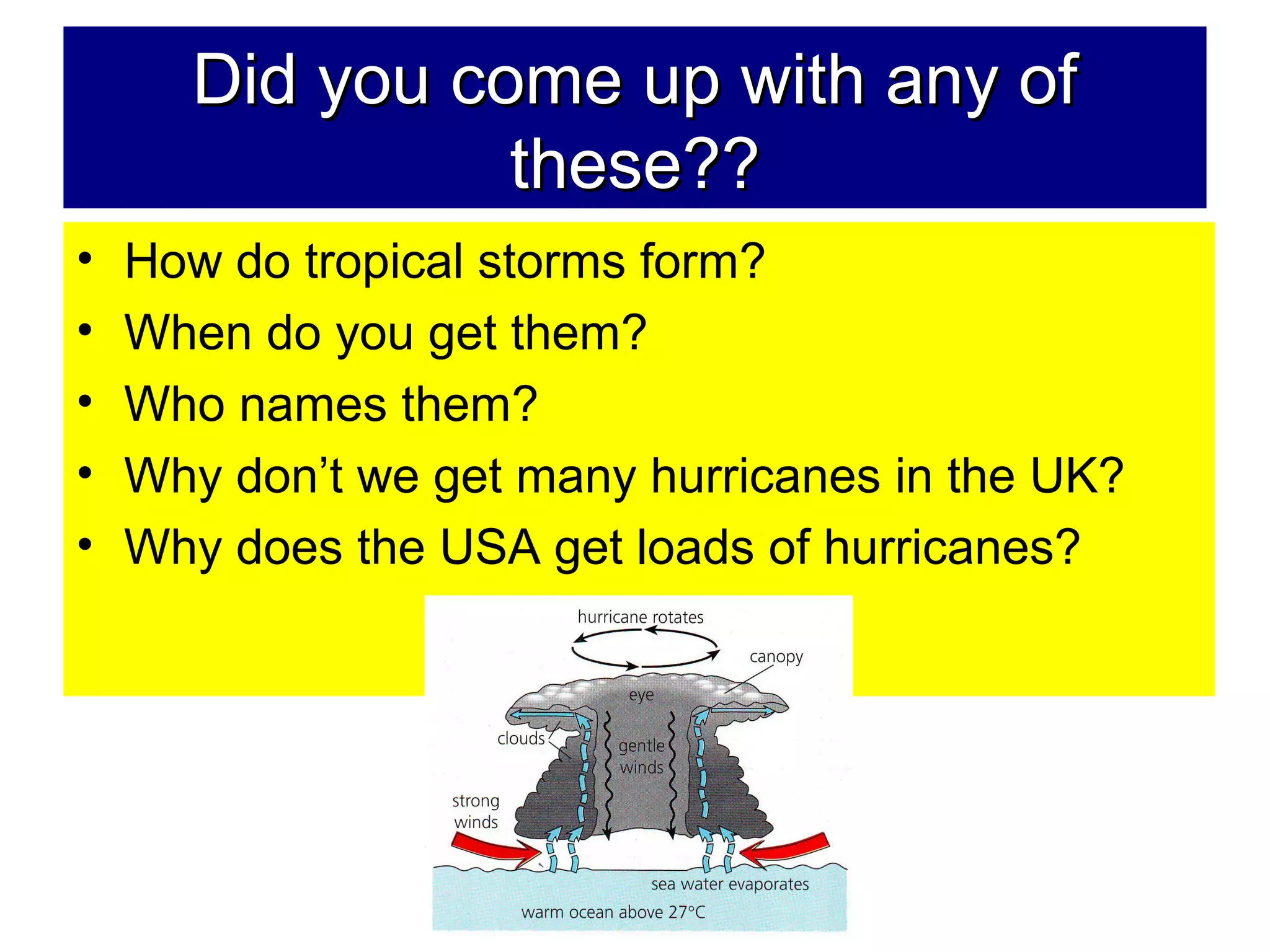
• How do tropical storms form?
• When do you get them?
• Who names them?
• Why don’t we get many hurricanes in the UK?
• Why does the USA get loads of hurricanes?
On your world
map:
1. Shade in the
areas of sea over
27°C
2. Label on the
names of
hurricanes,
cyclones,
typhoons and
willy-willies.
3. Draw the arrows
on in red
Extension
Question: why do
hurricanes only
occur during
certain times of the
year?
AnimationAnimation
• http://news.bbc.co.uk/1/hi/sci/tech/4588149.stm
• Watch closely and listen to the explanation
of a hurricane
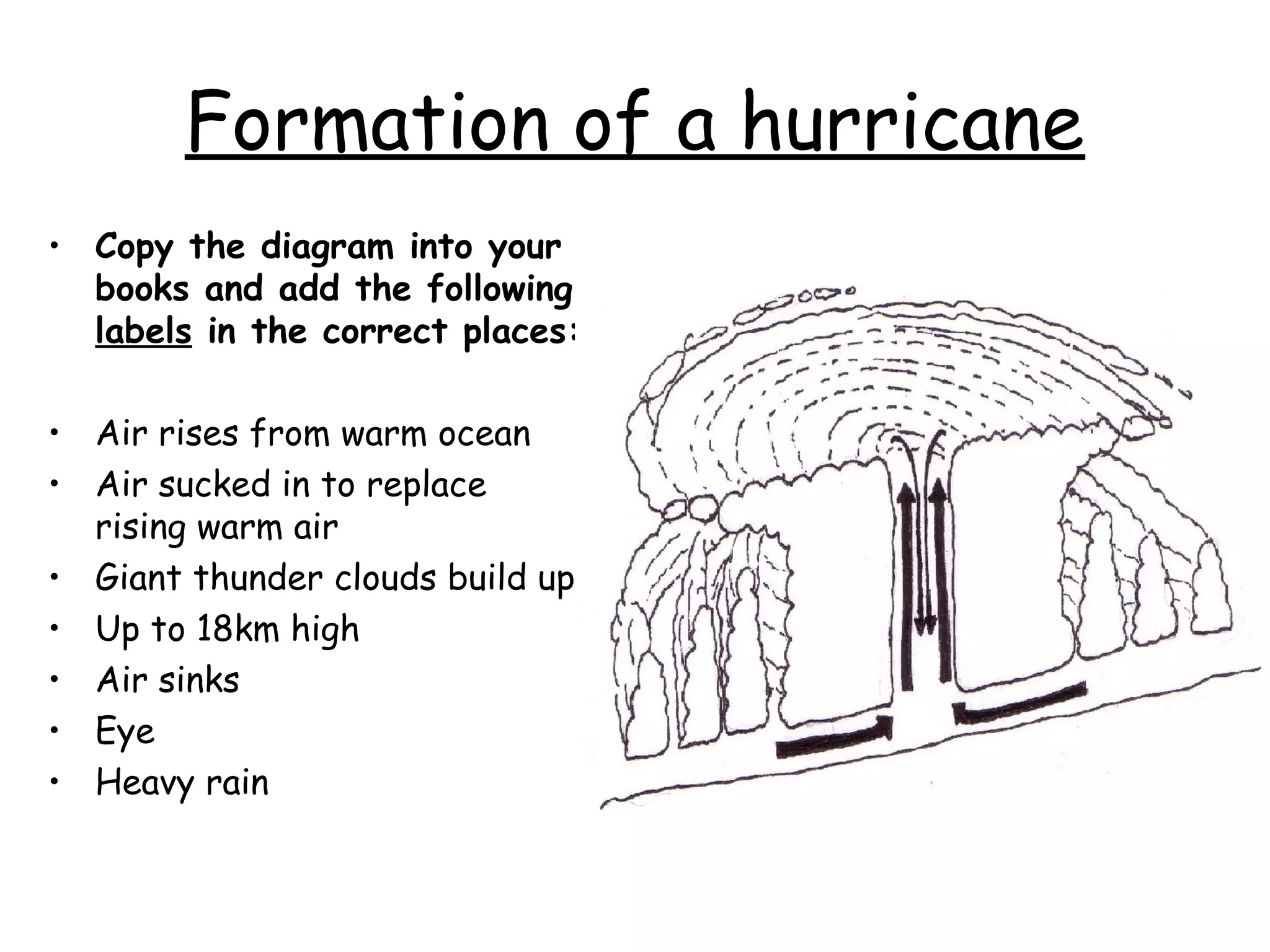
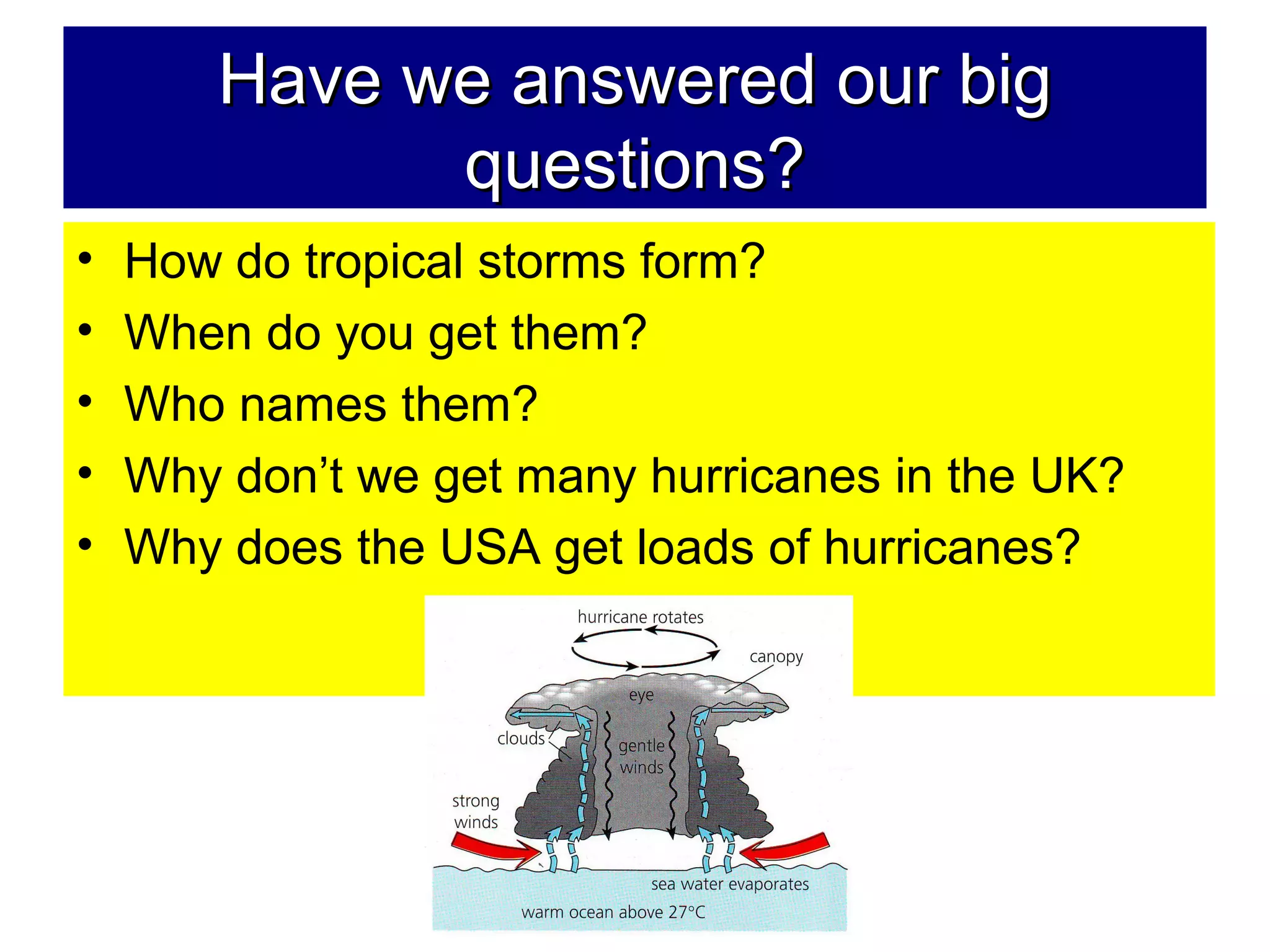
Formation of a hurricane
• Copy the diagram into your
books and add the following
labels in the correct places:
• Air rises from warm ocean
• Air sucked in to replace
rising warm air
• Giant thunder clouds build up
• Up to 18km high
• Air sinks
• Eye
• Heavy rain
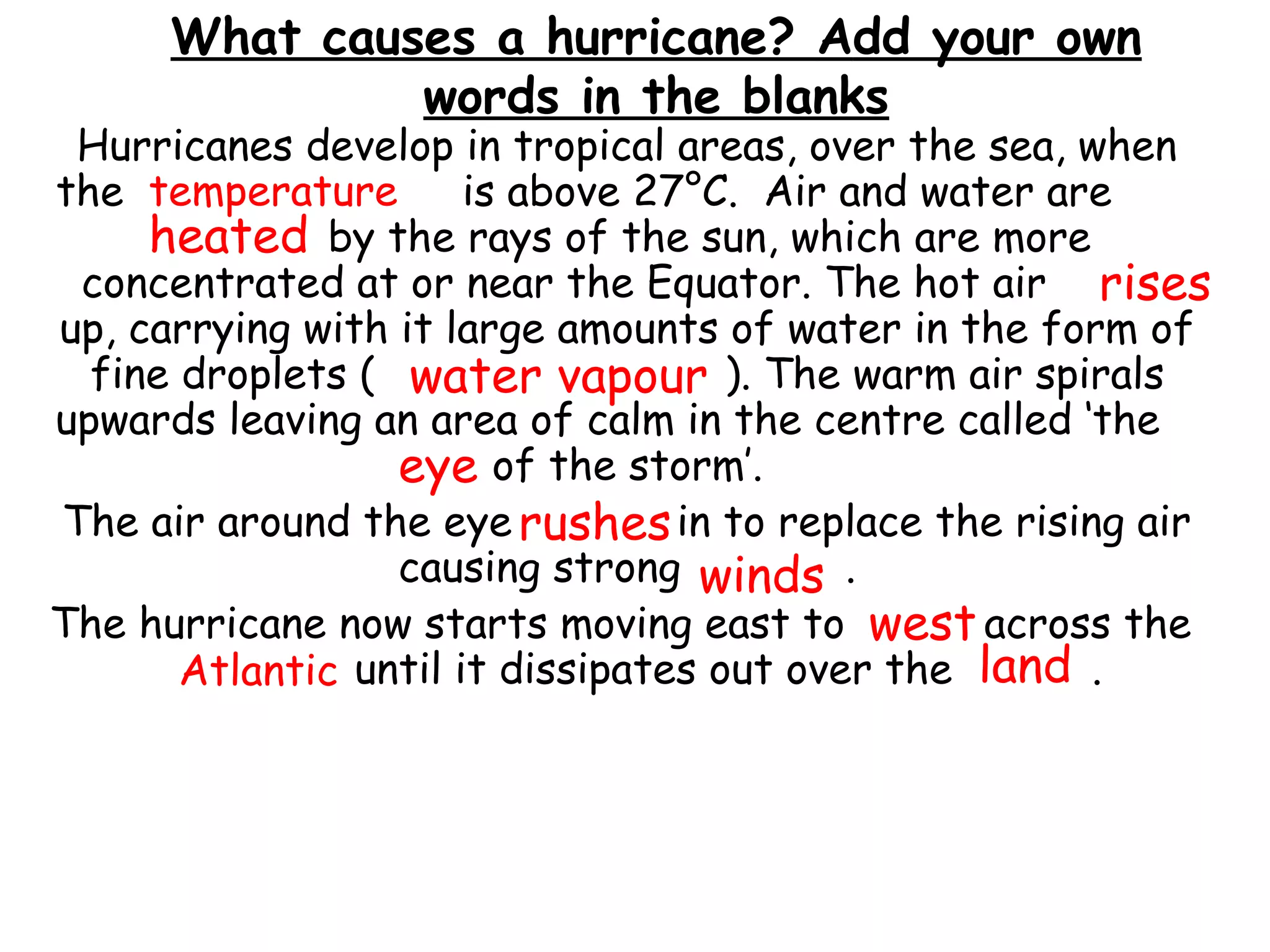
What causes a hurricane? Add your own
words in the blanks
Hurricanes develop in tropical areas, over the sea, when
the is above 27°C. Air and water are
by the rays of the sun, which are more
concentrated at or near the Equator. The hot air
up, carrying with it large amounts of water in the form of
fine droplets ( ). The warm air spirals
upwards leaving an area of calm in the centre called ‘the
of the storm’.
The air around the eye in to replace the rising air
causing strong .
The hurricane now starts moving east to across the
until it dissipates out over the .
temperature
heated
rises
water vapour
eye
rushes
winds
Atlantic land
west
© National Hurricane Centre
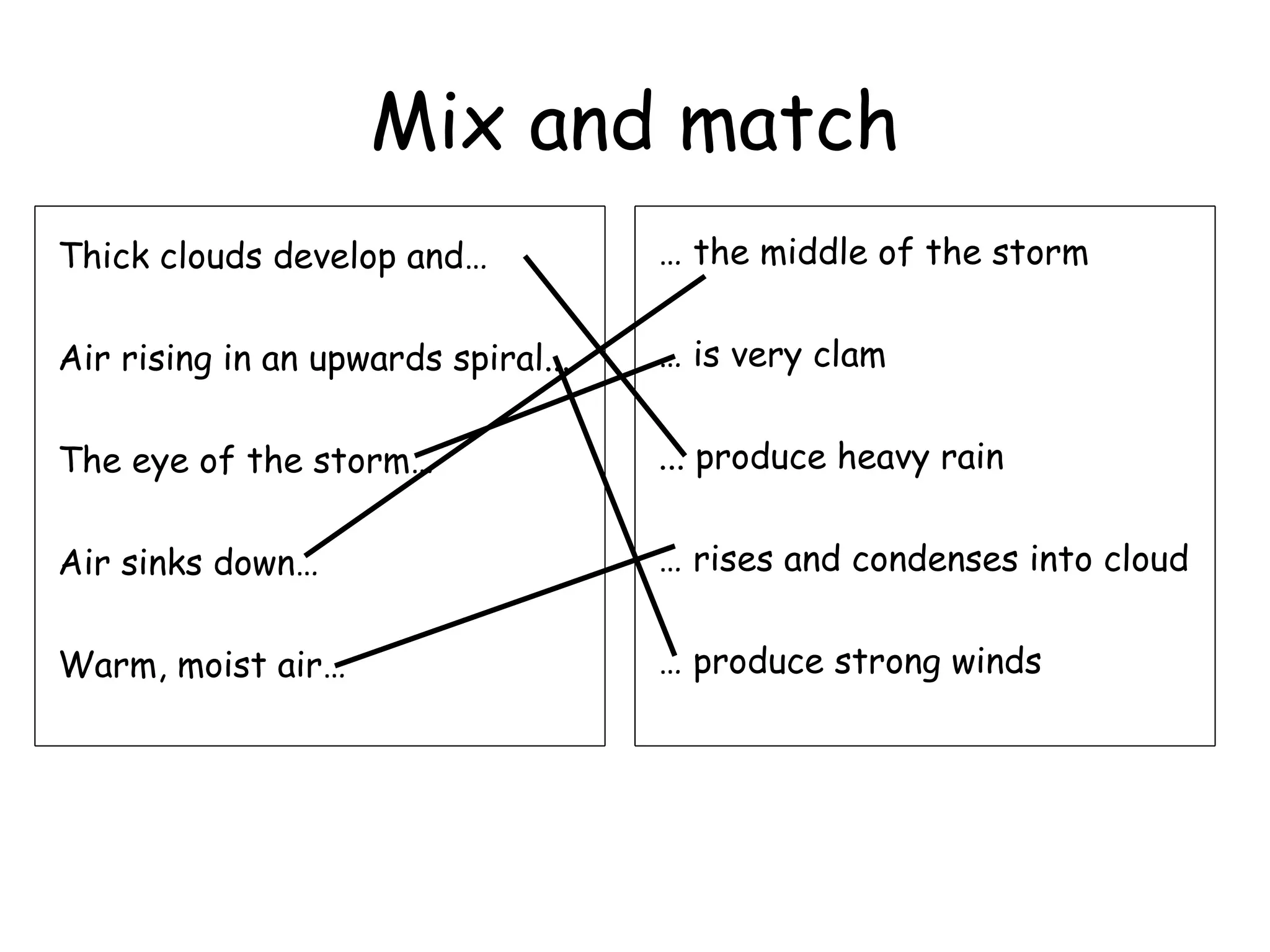
Mix and match
Thick clouds develop and…
Air rising in an upwards spiral...
The eye of the storm…
Air sinks down…
Warm, moist air…
… the middle of the storm
… is very clam
... produce heavy rain
… rises and condenses into cloud
… produce strong winds
Have we answered our bigHave we answered our big
questions?questions?
• How do tropical storms form?
• When do you get them?
• Who names them?
• Why don’t we get many hurricanes in the UK?
• Why does the USA get loads of hurricanes?
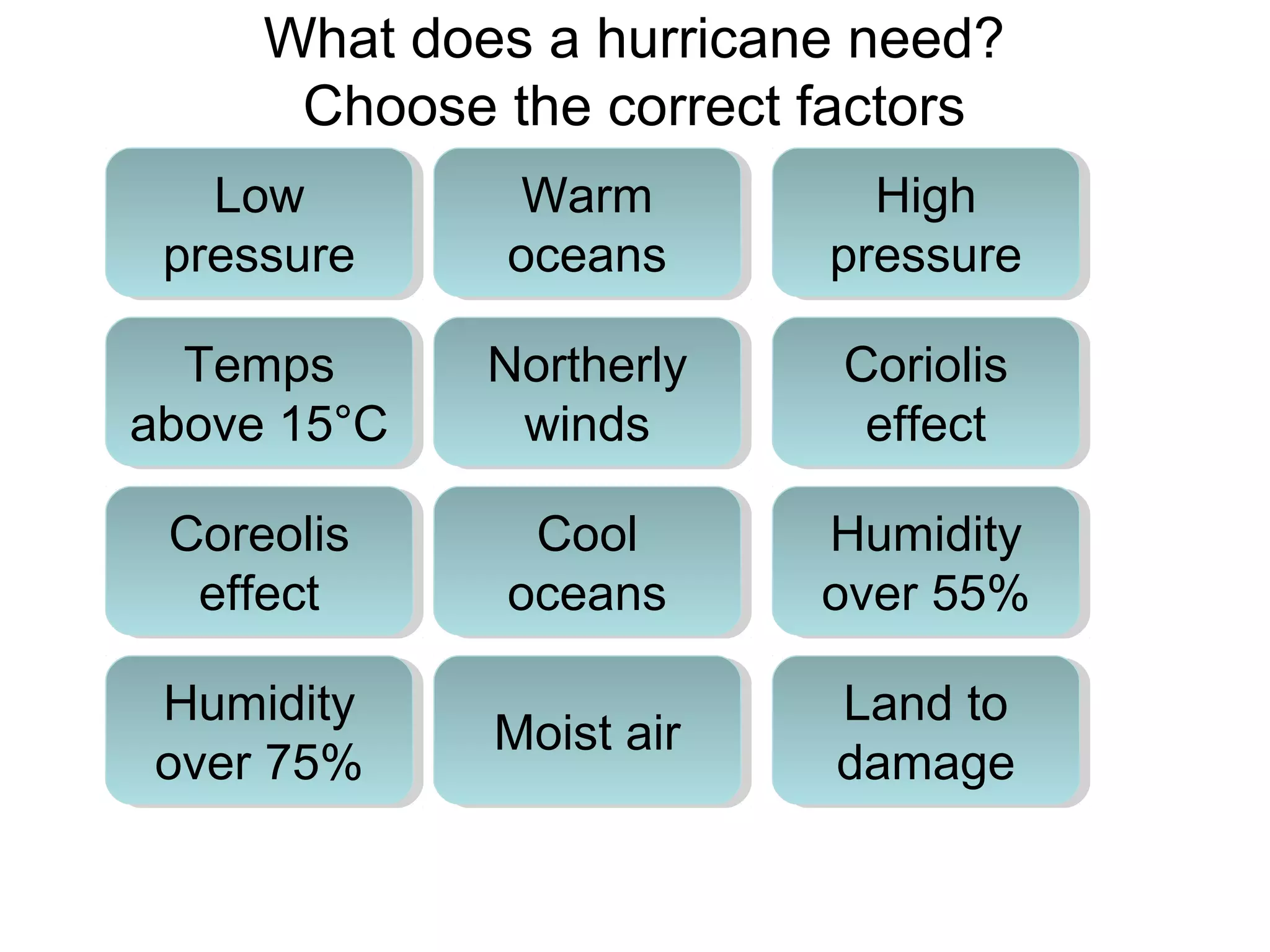
What does a hurricane need?
Choose the correct factors
Low
pressure
Low
pressure
Warm
oceans
Warm
oceans
High
pressure
High
pressure
Temps
above 15°C
Temps
above 15°C
Northerly
winds
Northerly
winds
Coriolis
effect
Coriolis
effect
Coreolis
effect
Coreolis
effect
Cool
oceans
Cool
oceans
Moist airMoist air
Humidity
over 75%
Humidity
over 75%
Humidity
over 55%
Humidity
over 55%
Land to
damage
Land to
damage
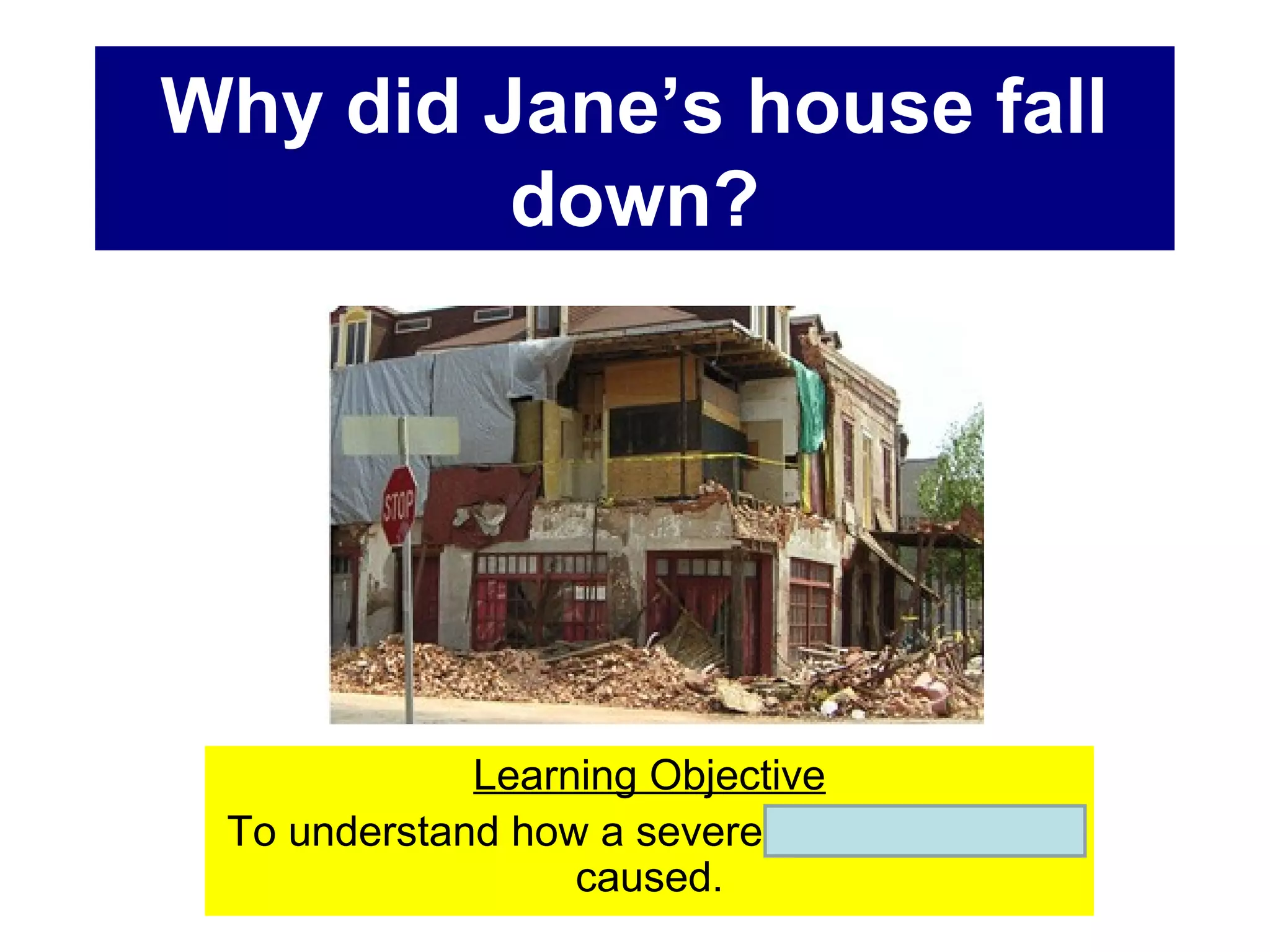
Why did Jane’s house fall
down?
Learning Objective
To understand how a severe tropical storm is
caused.
Learning Objective
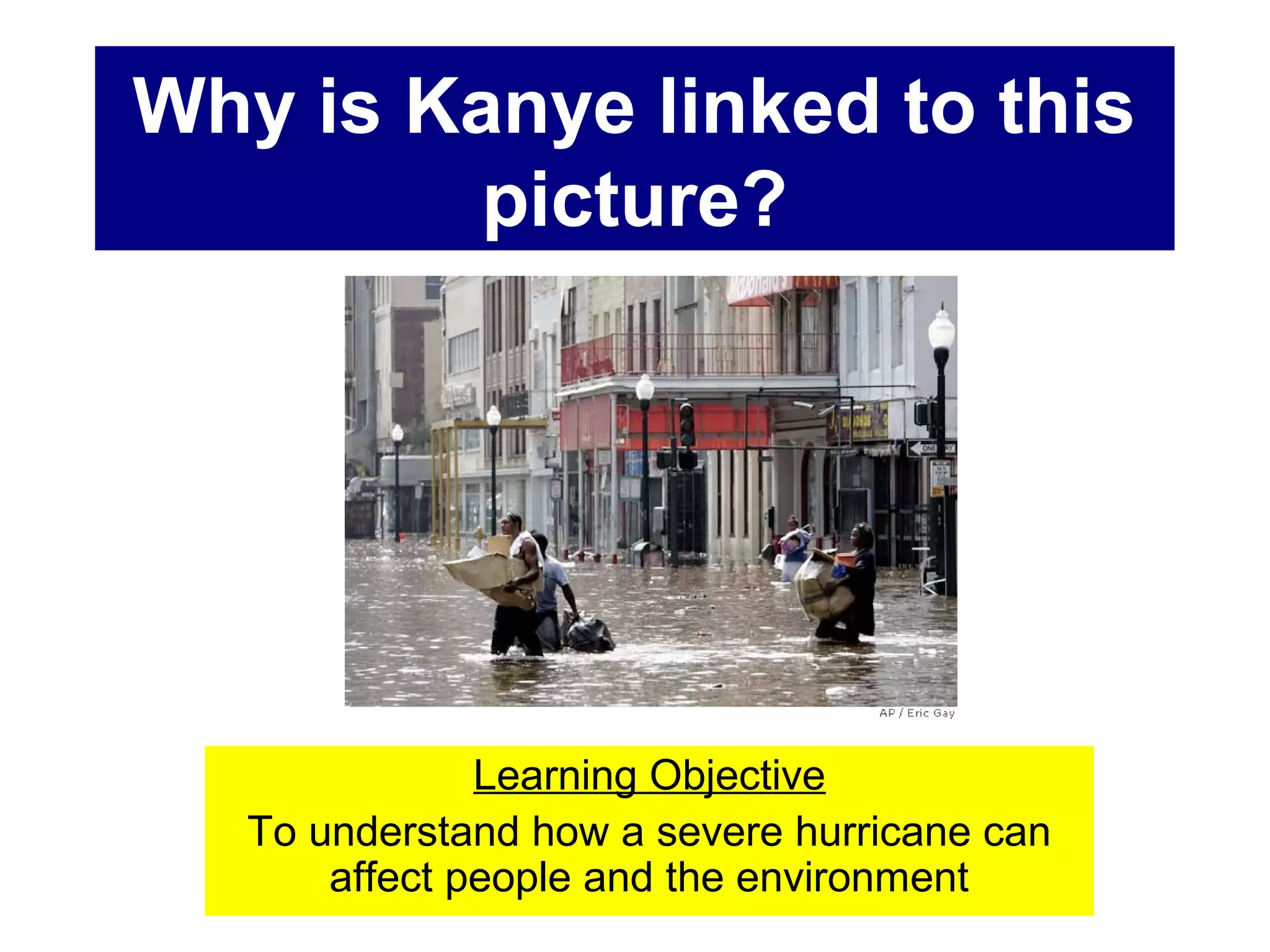
To understand how a severe hurricane can
affect people and the environment
Why is Kanye linked to this
picture?
Ask some questions….Ask some questions….
Where
When
What How
Who
Why
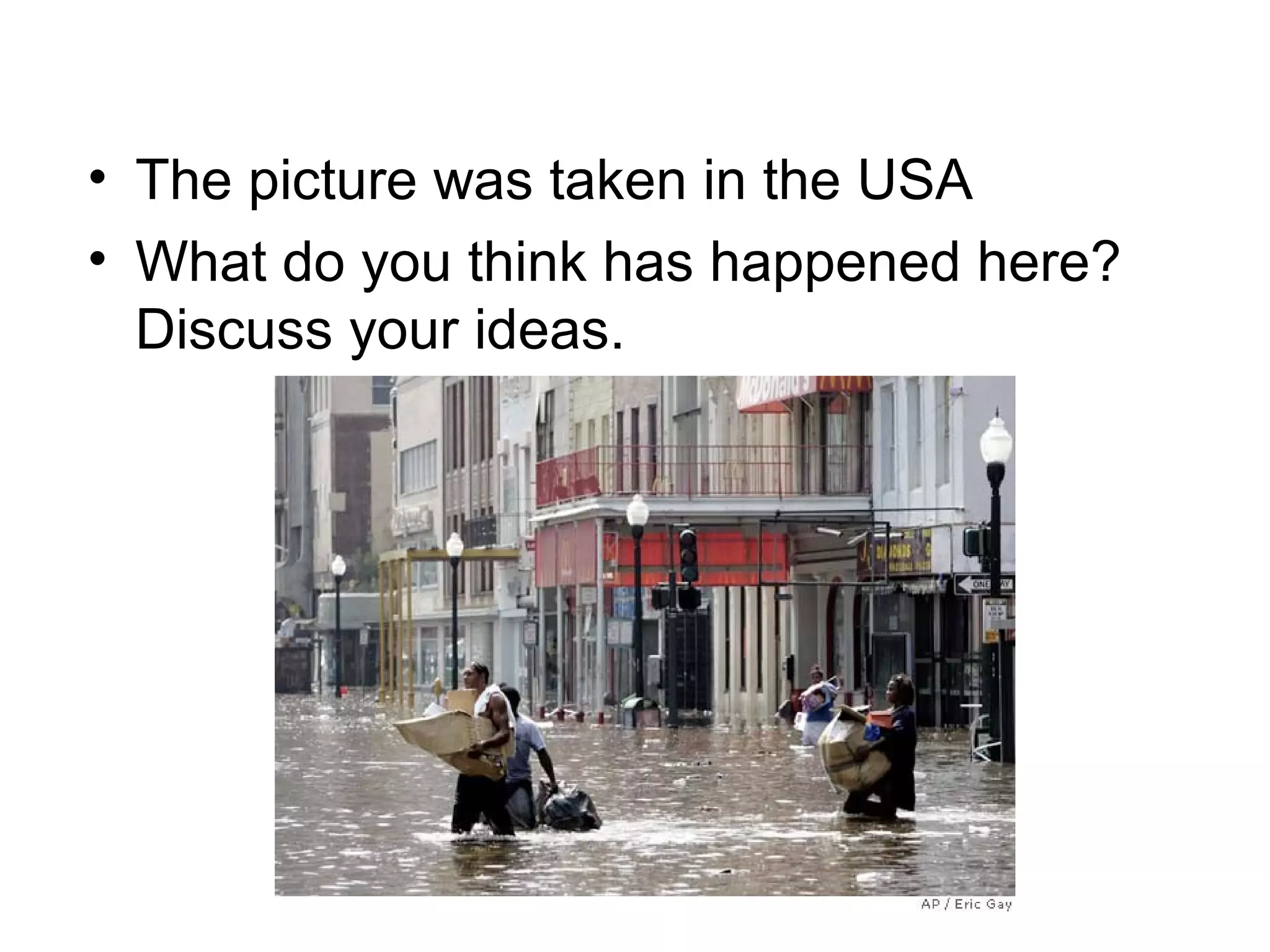
• The picture was taken in the USA
• What do you think has happened here?
Discuss your ideas.
Why the USA?
• http://www.youtube.com/watch?v=4f45jA5UxB
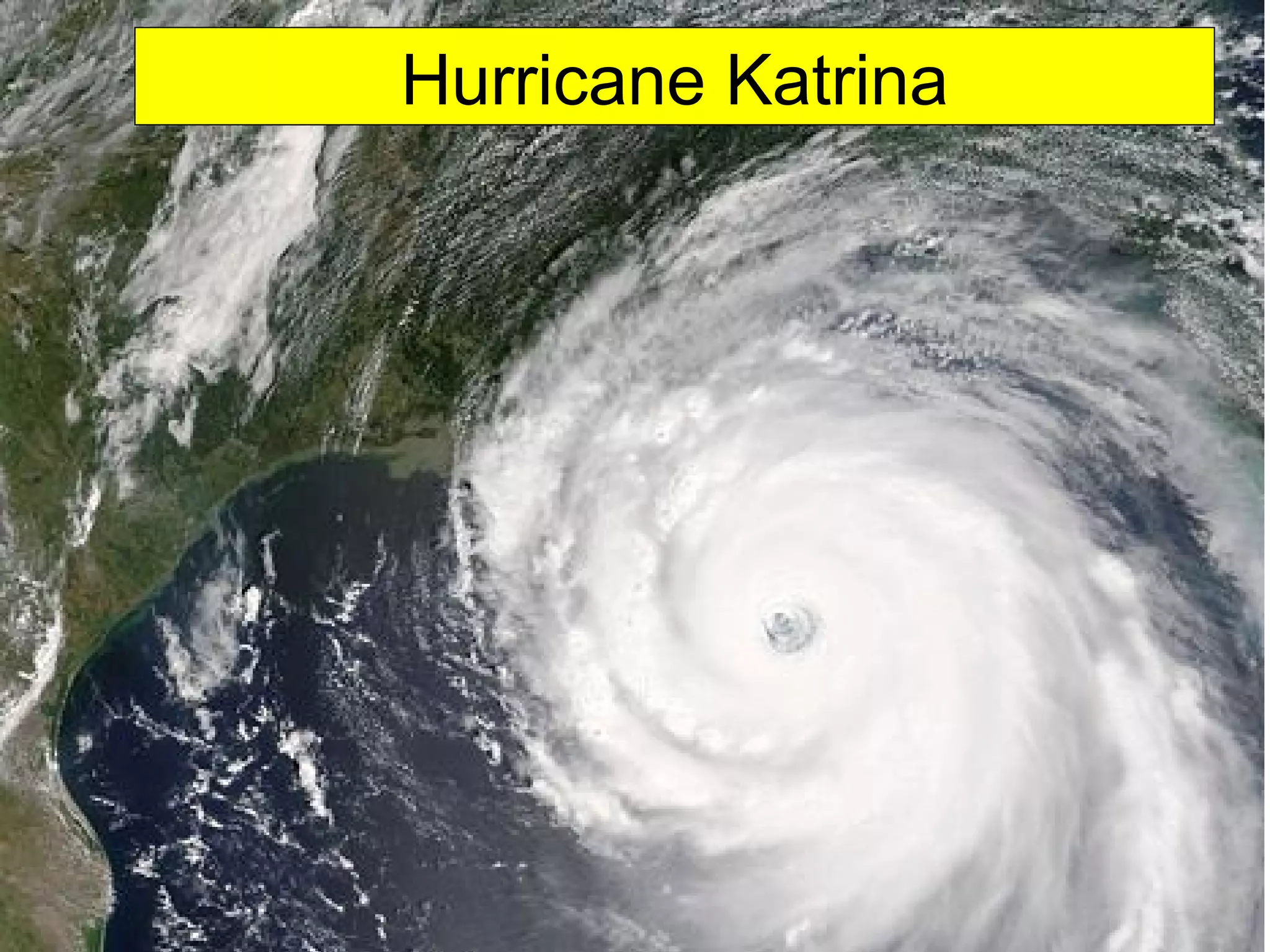
Hurricane Katrina
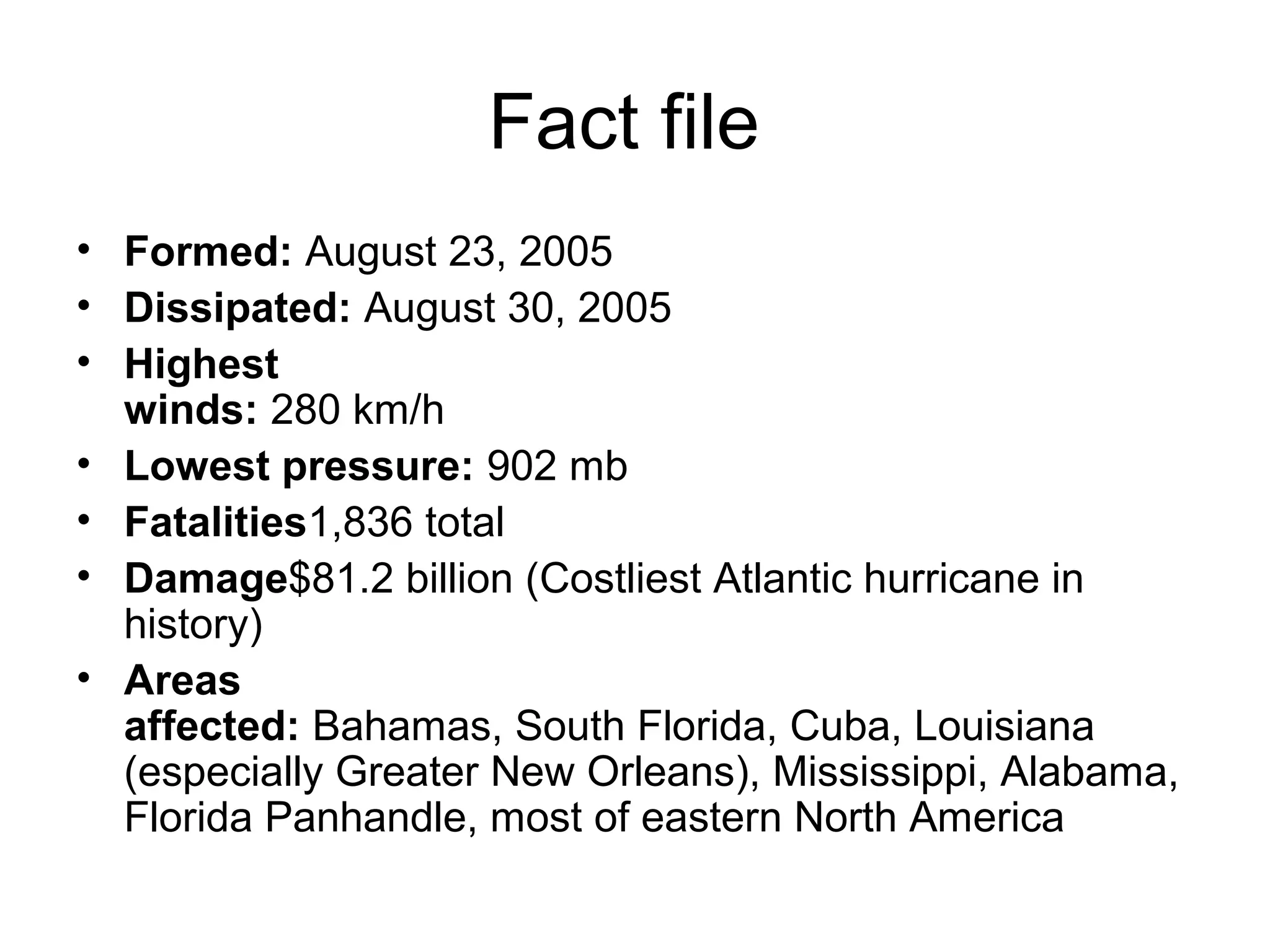
Fact file
• Formed: August 23, 2005
• Dissipated: August 30, 2005
• Highest
winds: 280 km/h
• Lowest pressure: 902 mb
• Fatalities1,836 total
• Damage$81.2 billion (Costliest Atlantic hurricane in
history)
• Areas
affected: Bahamas, South Florida, Cuba, Louisiana
(especially Greater New Orleans), Mississippi, Alabama,
Florida Panhandle, most of eastern North America
Where?
• http://news.bbc.co.uk/cbbcnews/hi/newsid_422
• On your map, draw the path of Hurricane
Katrina
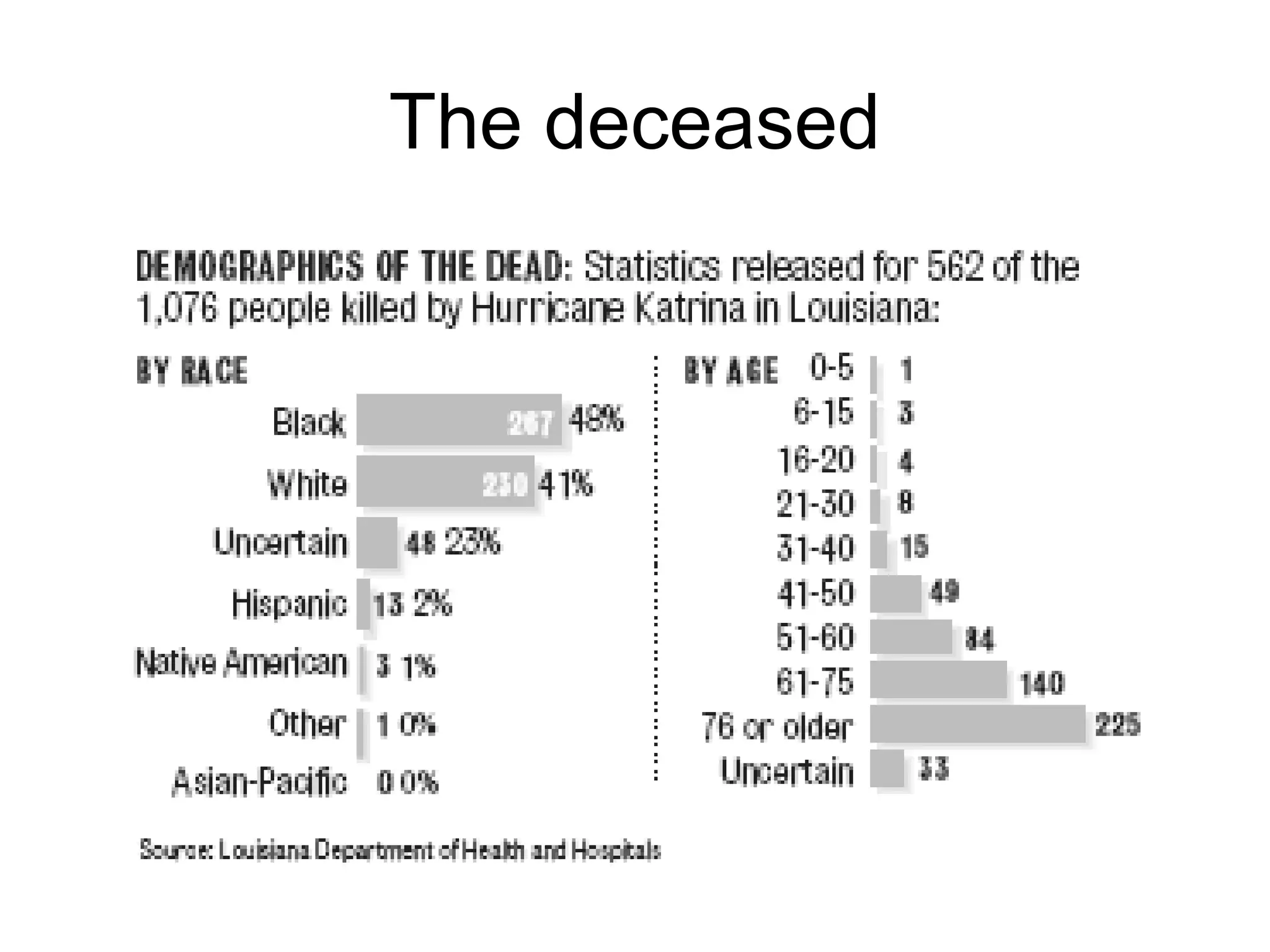
The deceased
Retirement of name
• Because of the large loss of life and
property along the Gulf Coast, the name
Katrina was officially retired on April 6,
2006 by the World Meteorological
Organization at the request of the U.S.
government. It was replaced by Katia on
List III of the Atlantic hurricane naming
lists, which will next be used in the 2011
Atlantic hurricane season
What is it like?
• http://www.youtube.com/watch?v=_yd5WreHx
What is a hurricane
like?
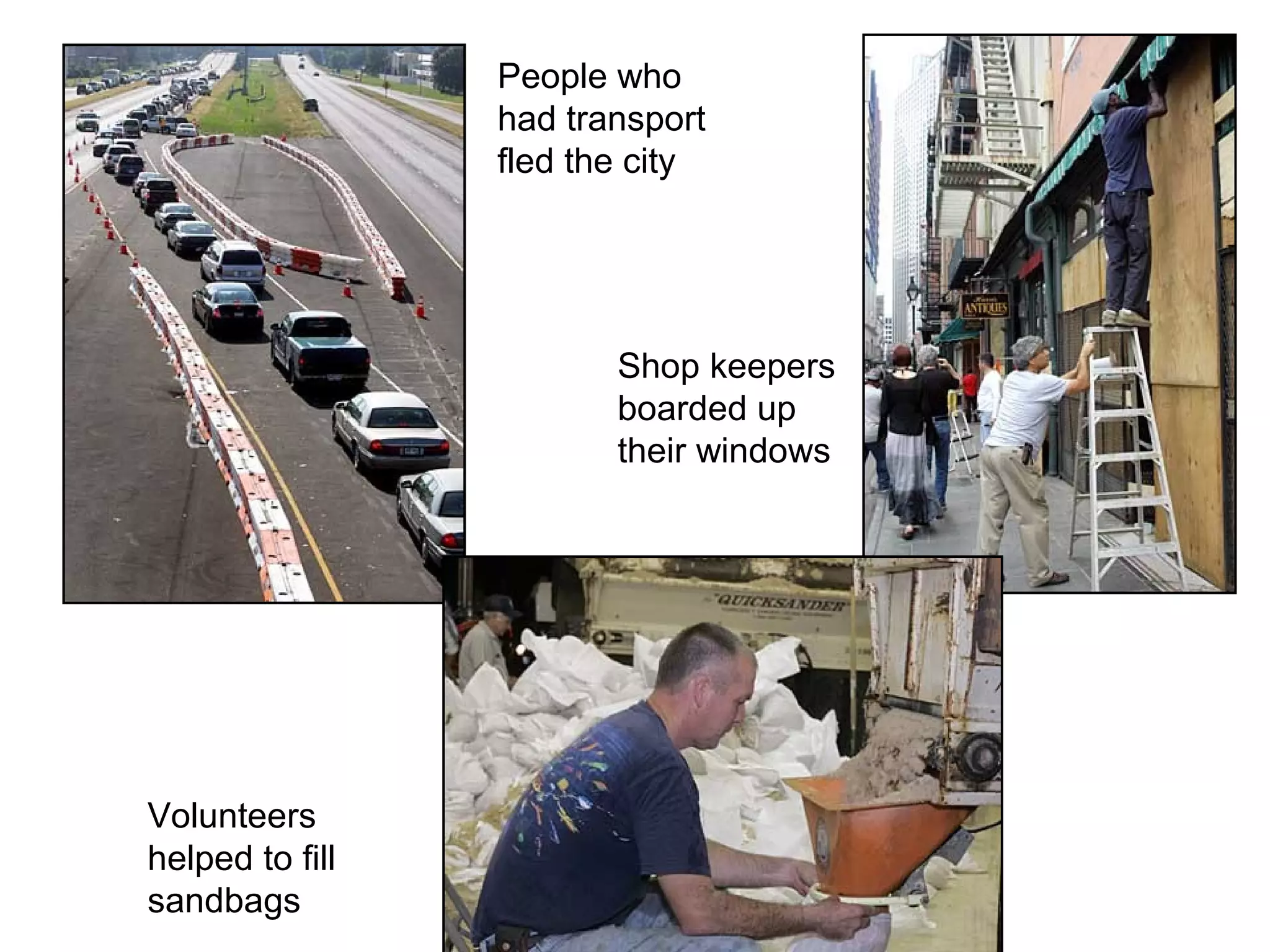
People who
had transport
fled the city
Shop keepers
boarded up
their windows
Volunteers
helped to fill
sandbags
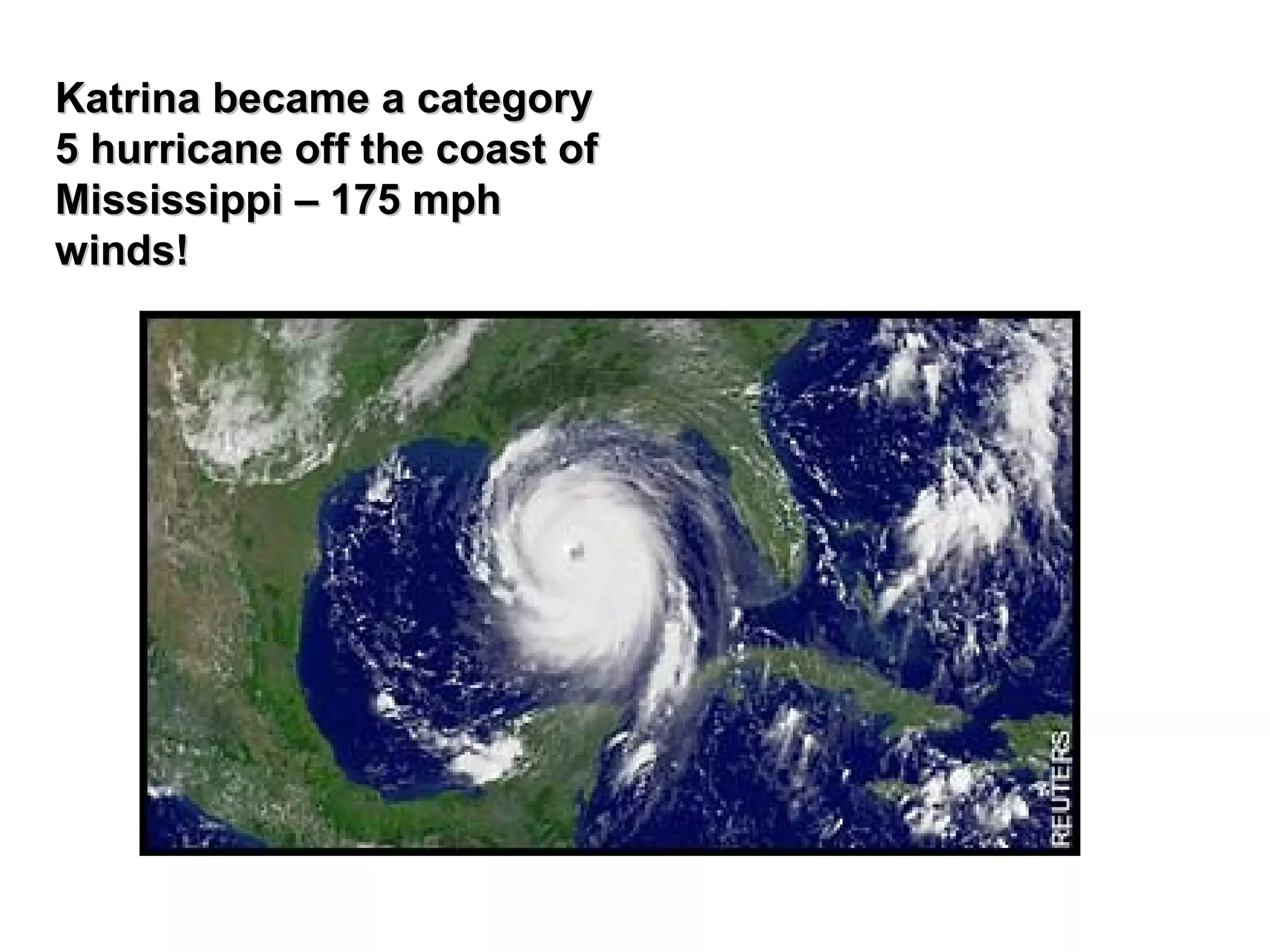
Katrina became a categoryKatrina became a category
5 hurricane off the coast of5 hurricane off the coast of
Mississippi – 175 mphMississippi – 175 mph
winds!winds!
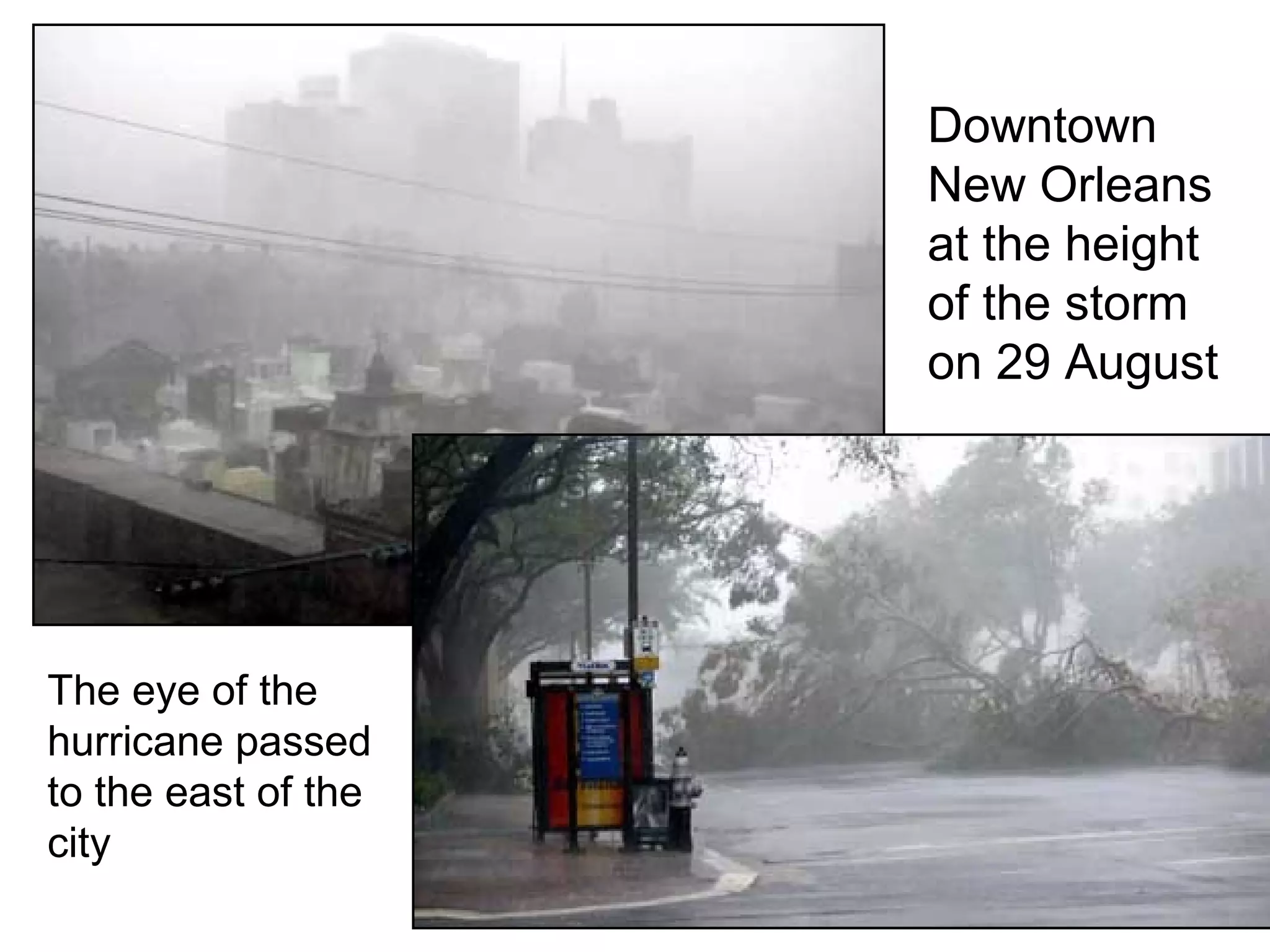
Downtown
New Orleans
at the height
of the storm
on 29 August
The eye of the
hurricane passed
to the east of the
city
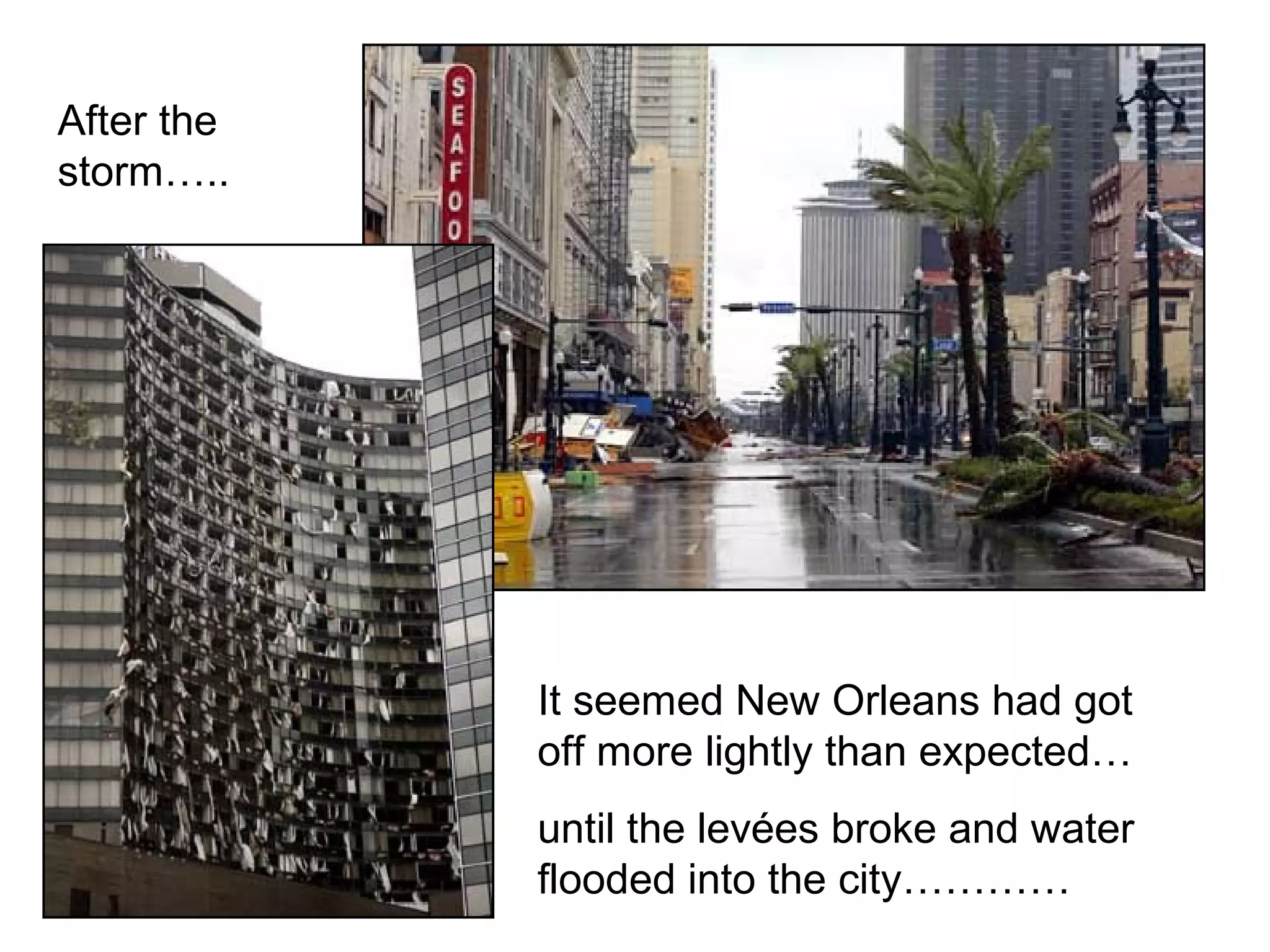
After the
storm…..
It seemed New Orleans had got
off more lightly than expected…
until the levées broke and water
flooded into the city…………
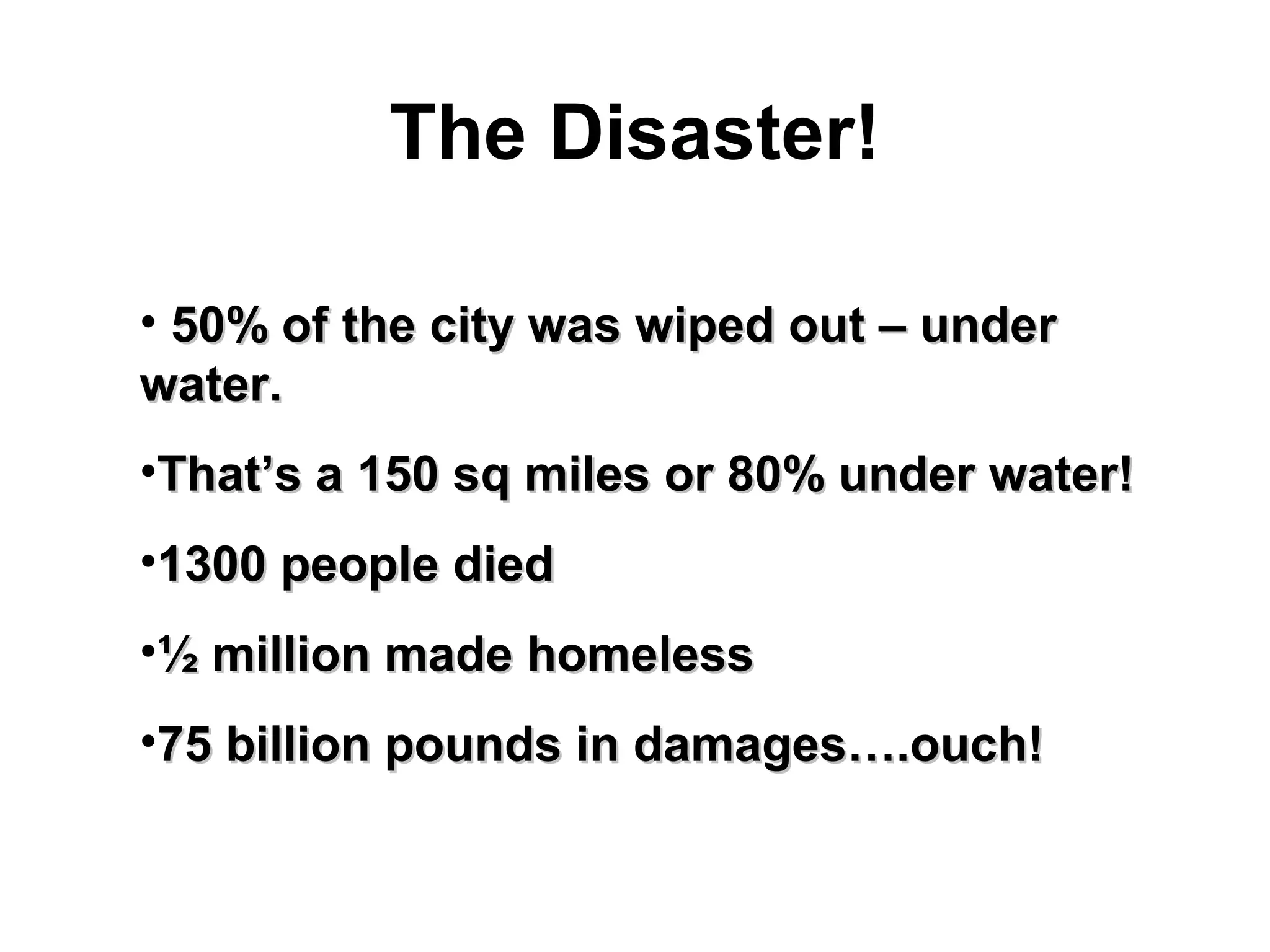
The Disaster!
• 50% of the city was wiped out – under50% of the city was wiped out – under
water.water.
•That’s a 150 sq miles or 80% under water!That’s a 150 sq miles or 80% under water!
•1300 people died1300 people died
•½ million made homeless½ million made homeless
•75 billion pounds in damages….ouch!75 billion pounds in damages….ouch!
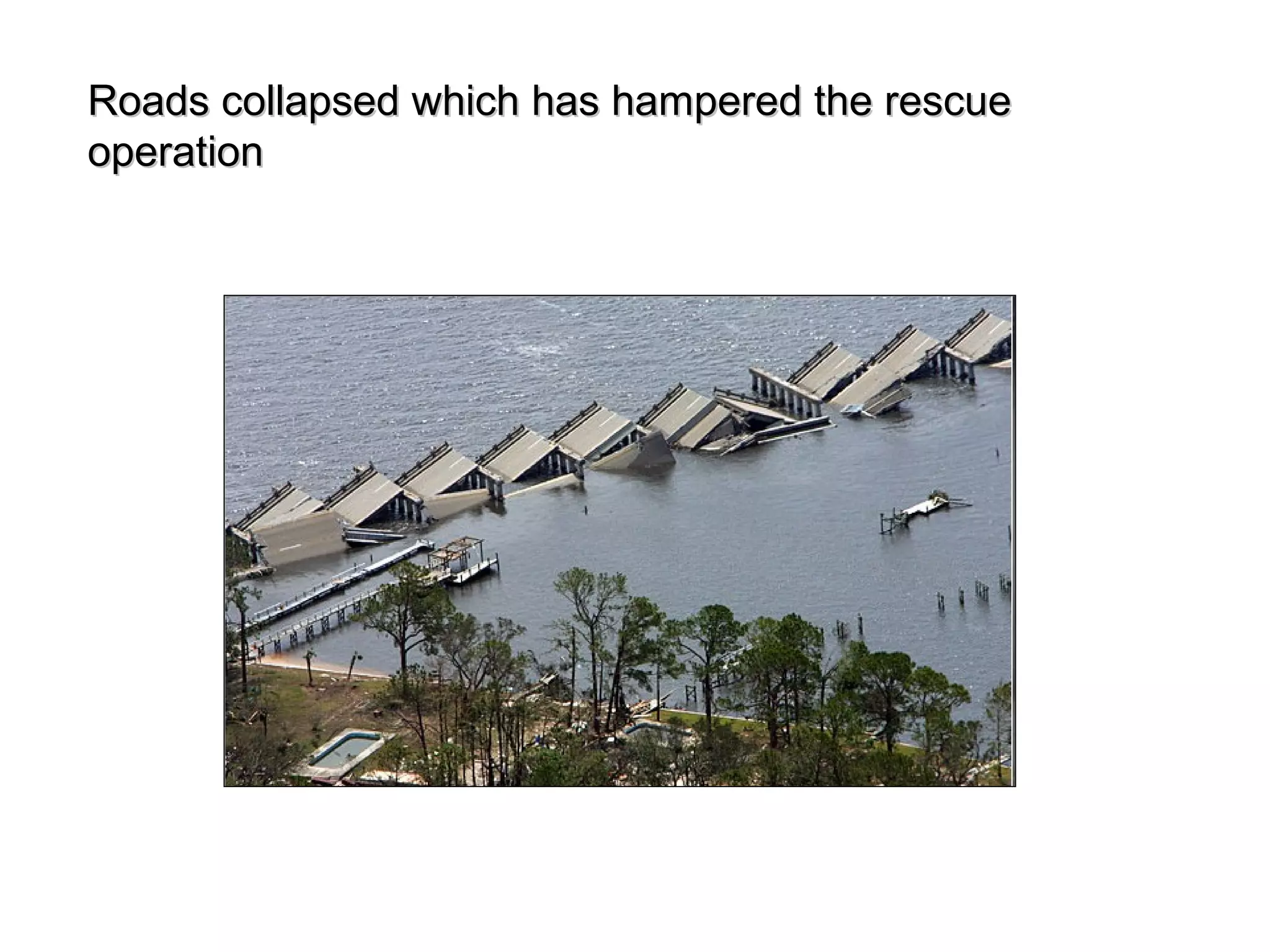
Roads collapsed which has hampered the rescueRoads collapsed which has hampered the rescue
operationoperation
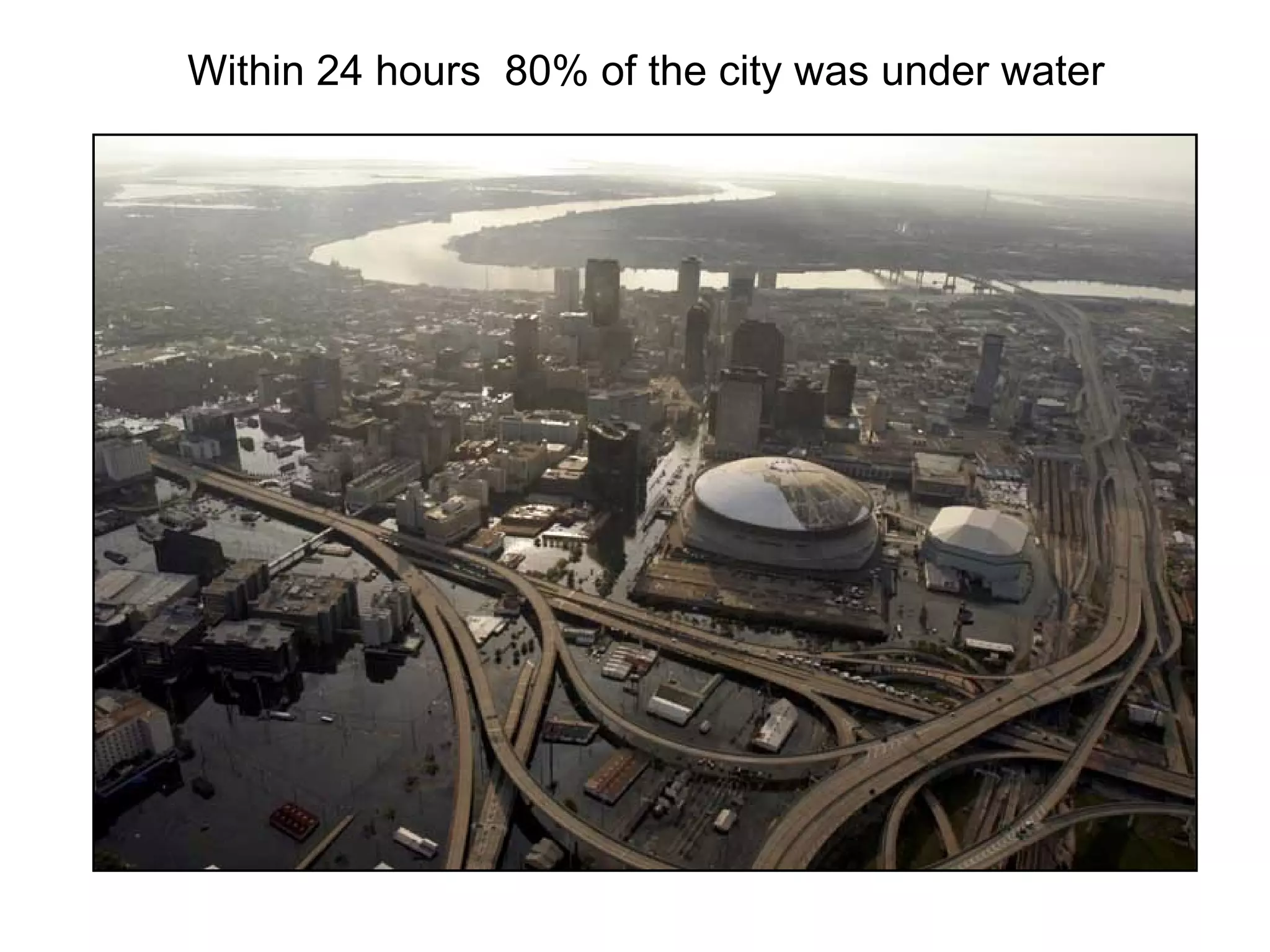
Within 24 hours 80% of the city was under water
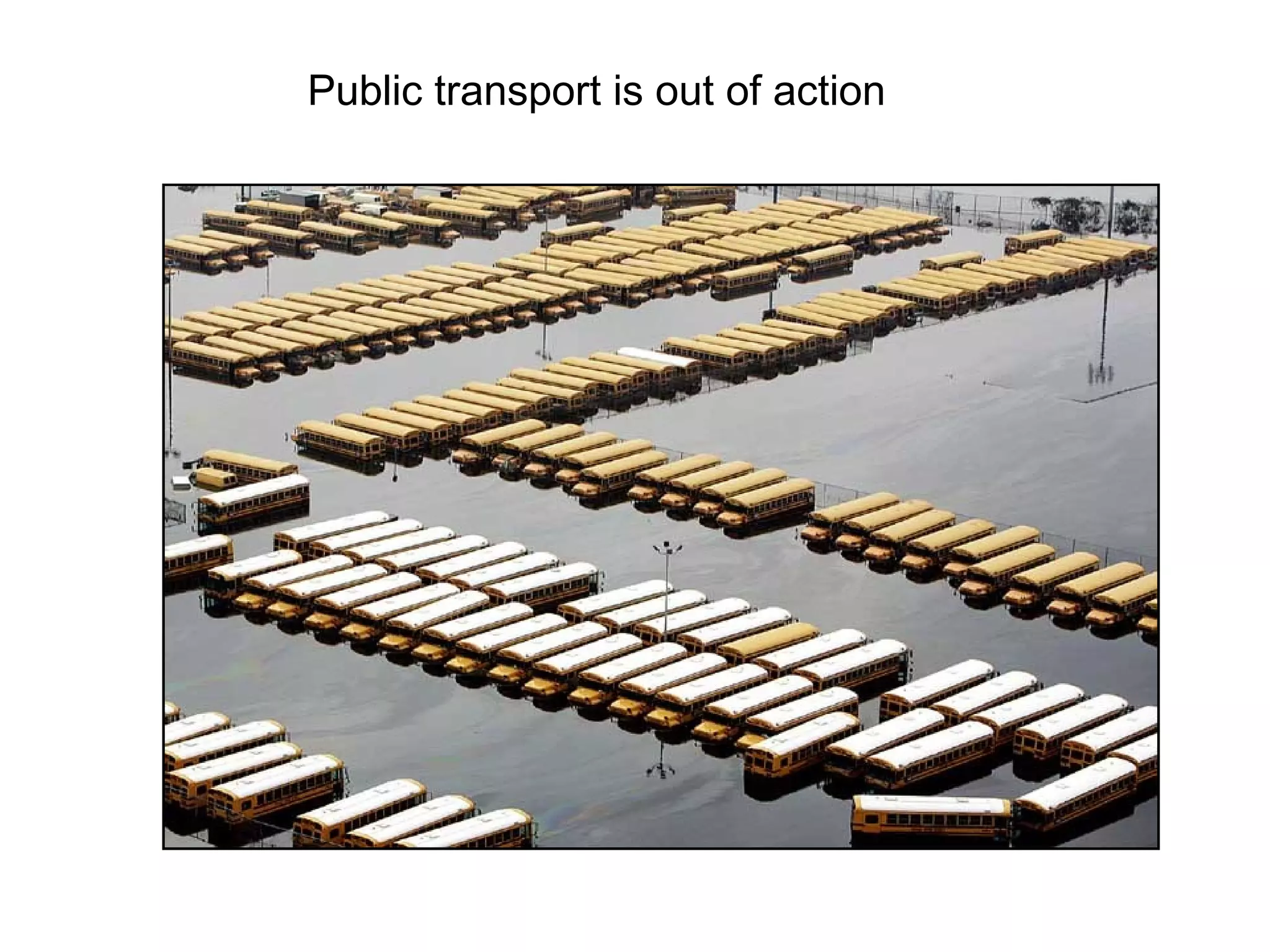
Public transport is out of action
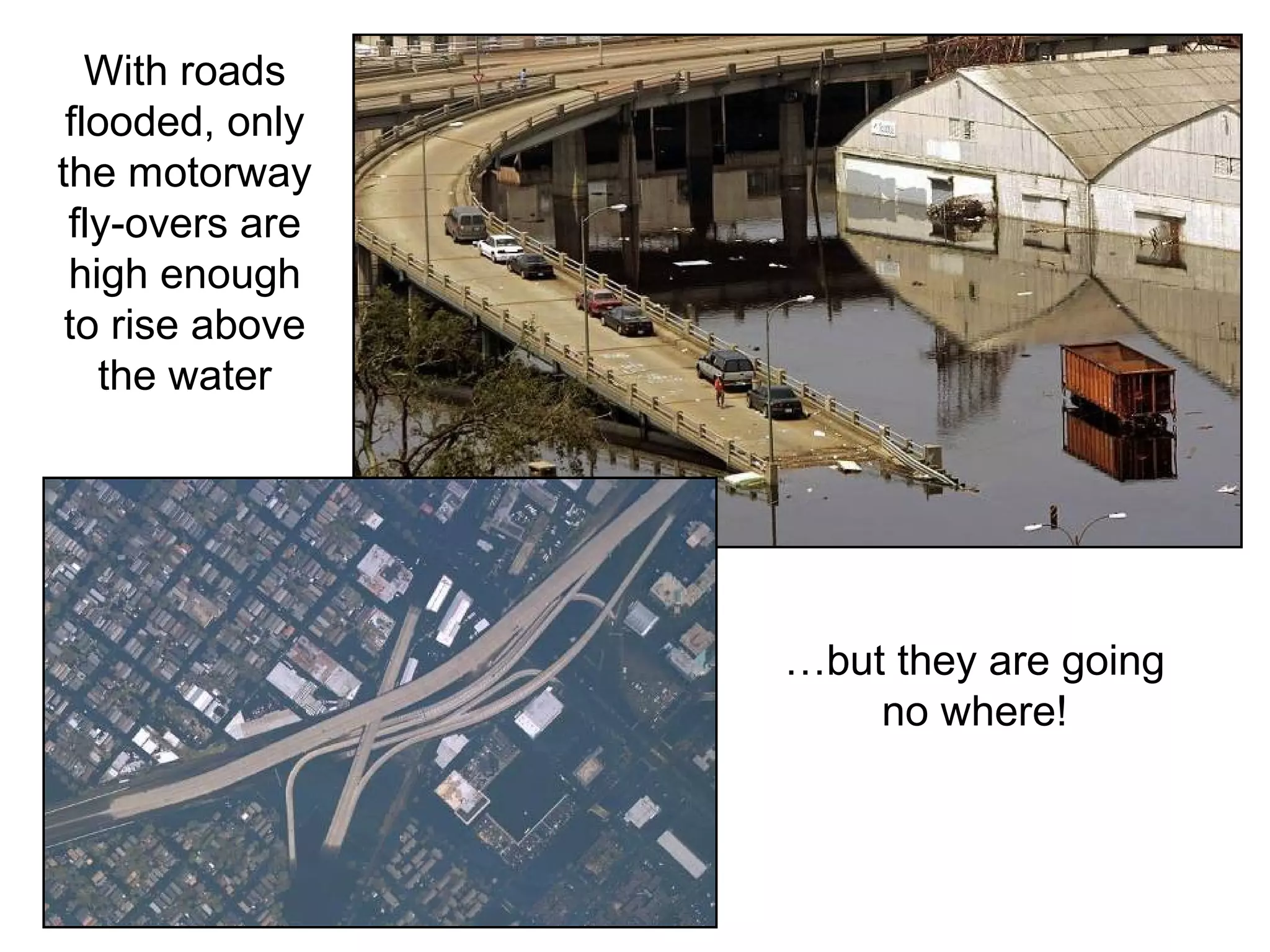
With roads
flooded, only
the motorway
fly-overs are
high enough
to rise above
the water
…but they are going
no where!
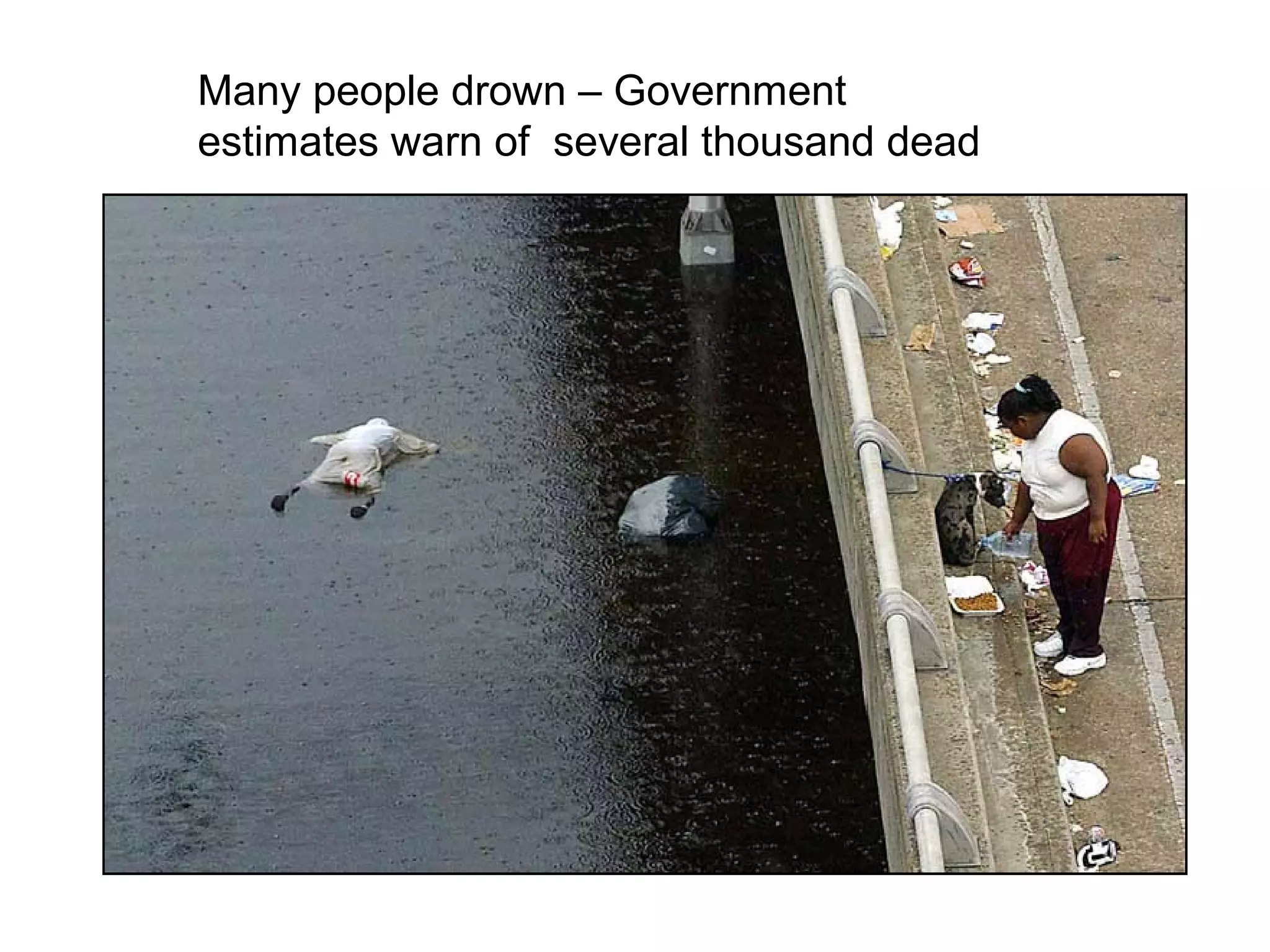
Many people drown – Government
estimates warn of several thousand dead
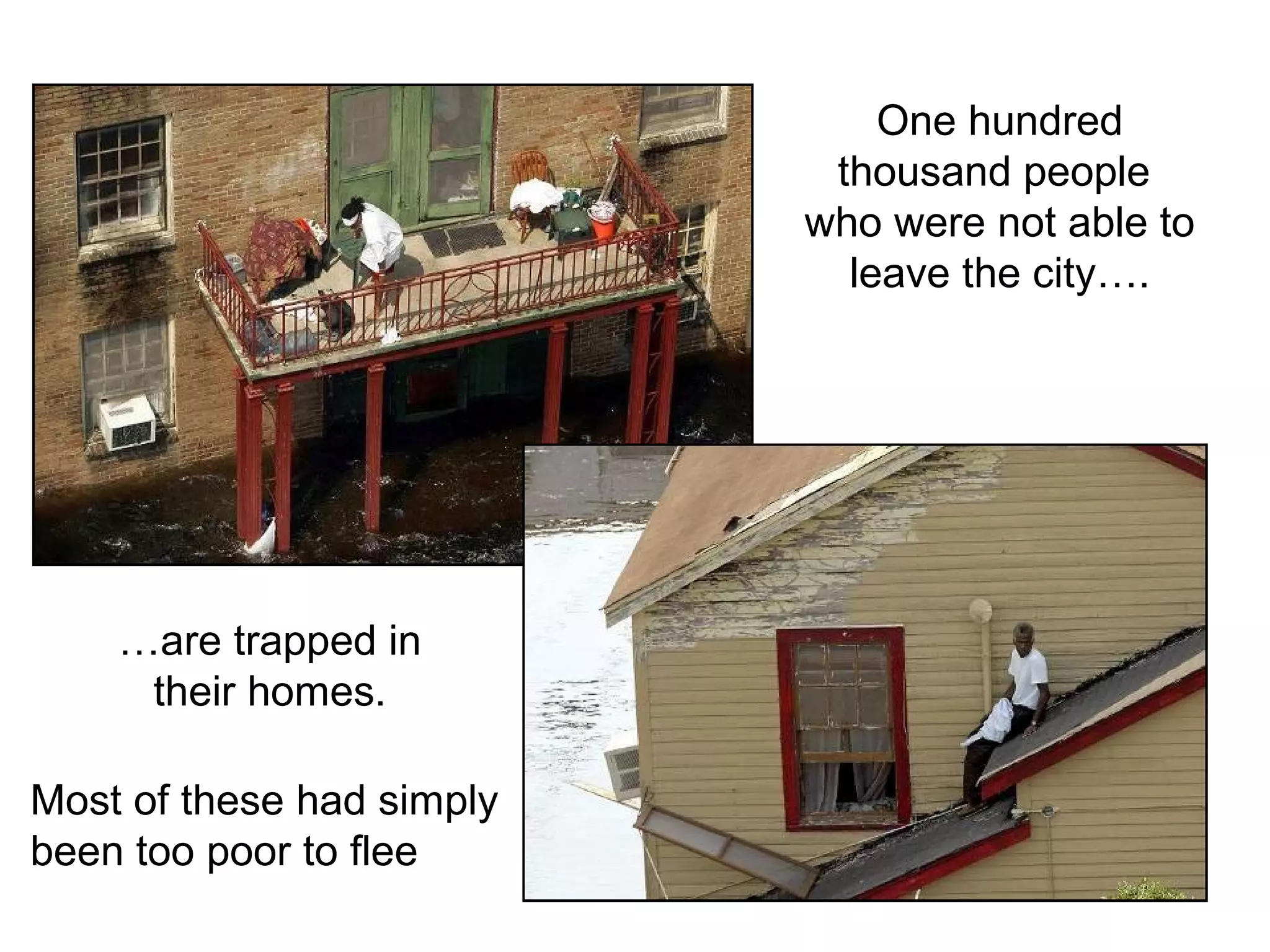
One hundred
thousand people
who were not able to
leave the city….
…are trapped in
their homes.
Most of these had simply
been too poor to flee
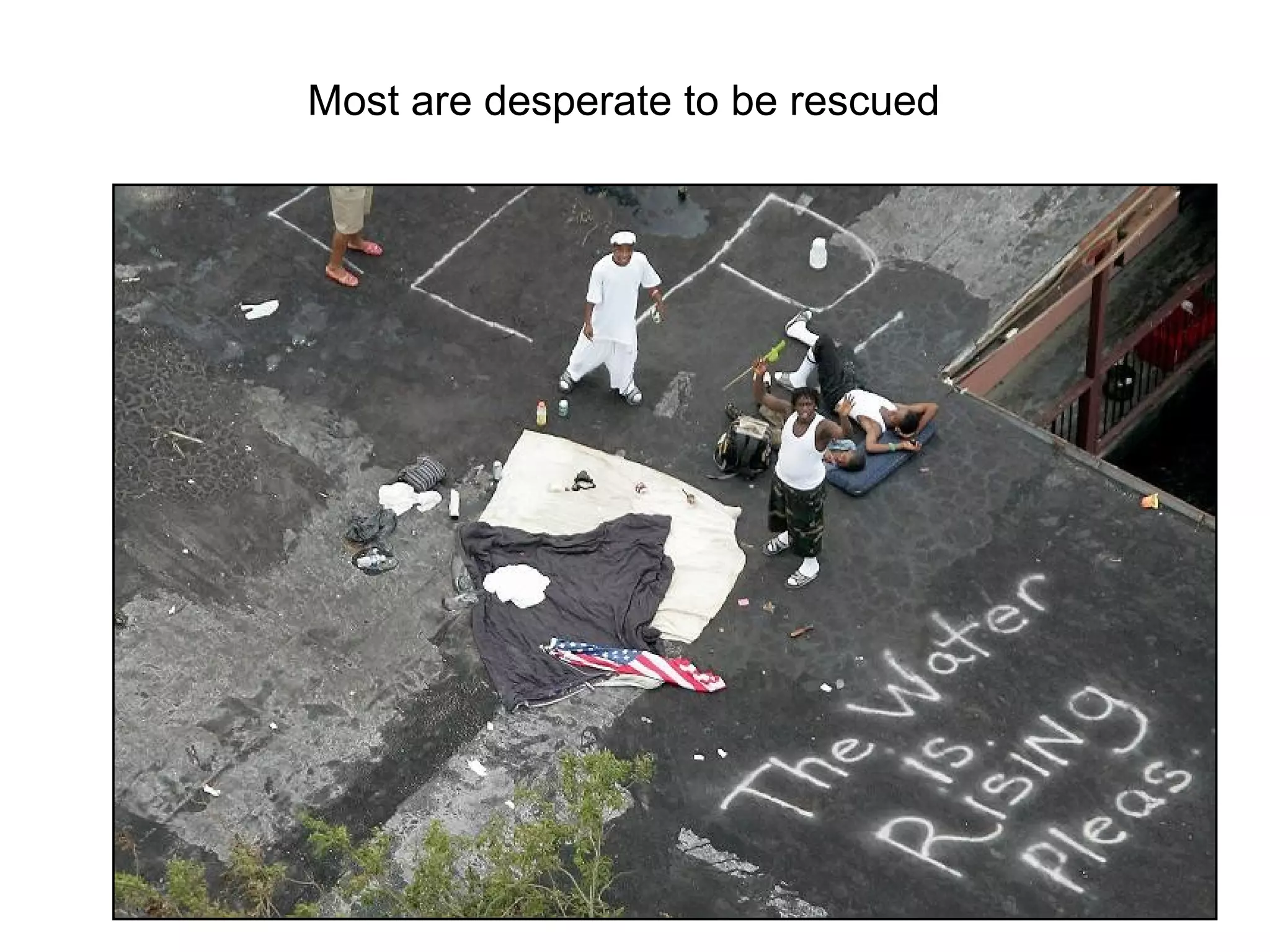
Most are desperate to be rescued
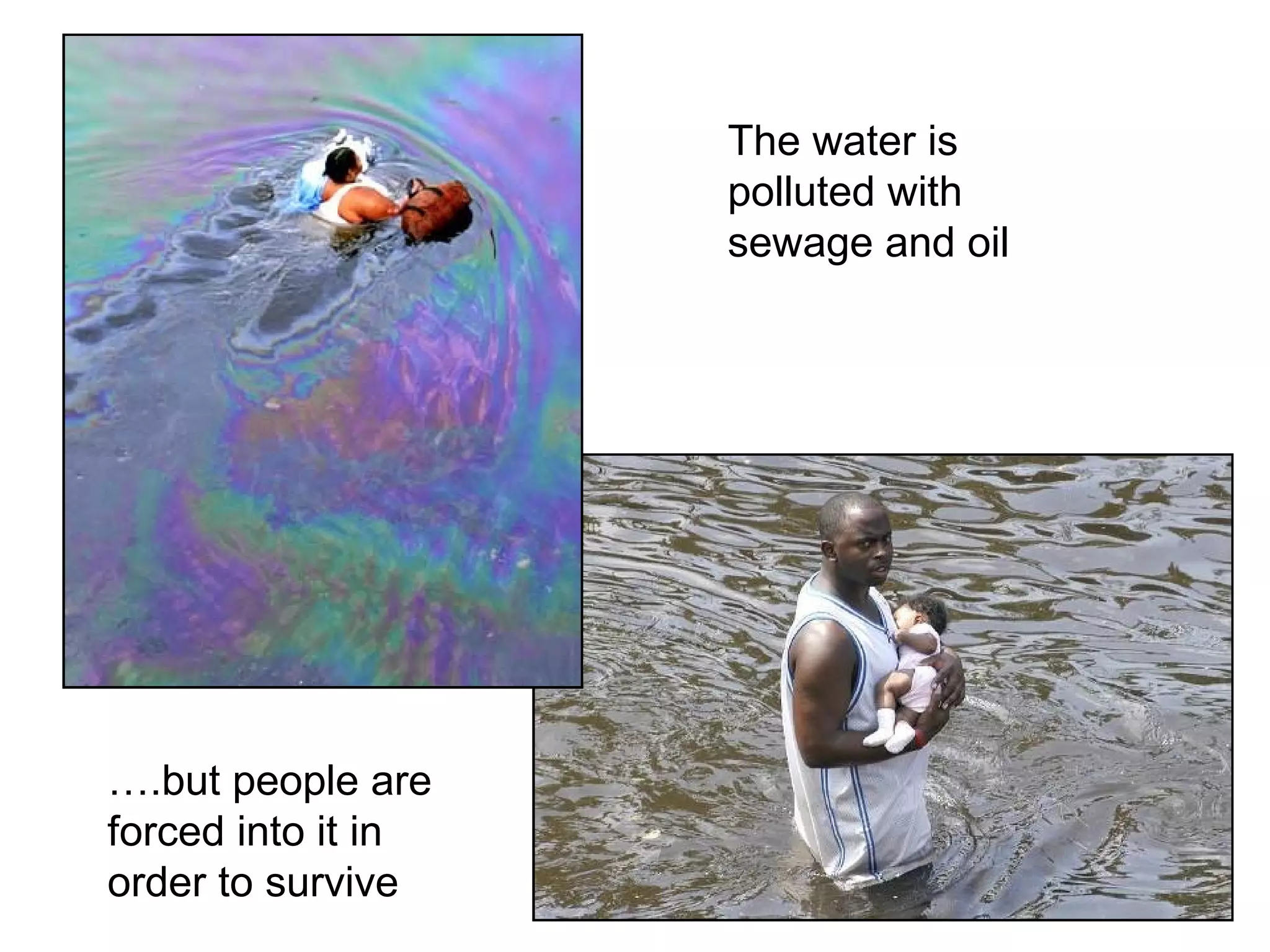
The water is
polluted with
sewage and oil
….but people are
forced into it in
order to survive
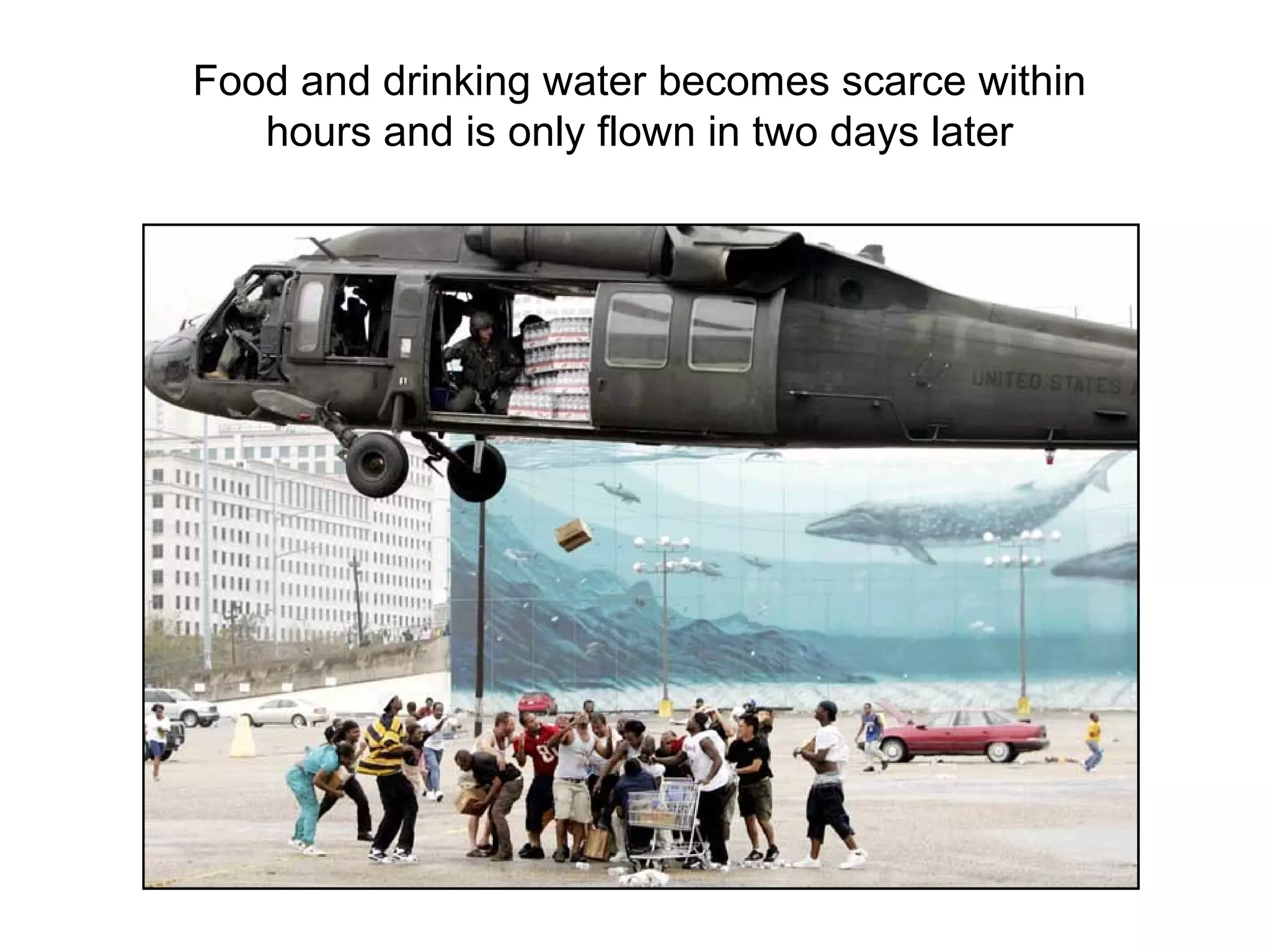
Food and drinking water becomes scarce within
hours and is only flown in two days later
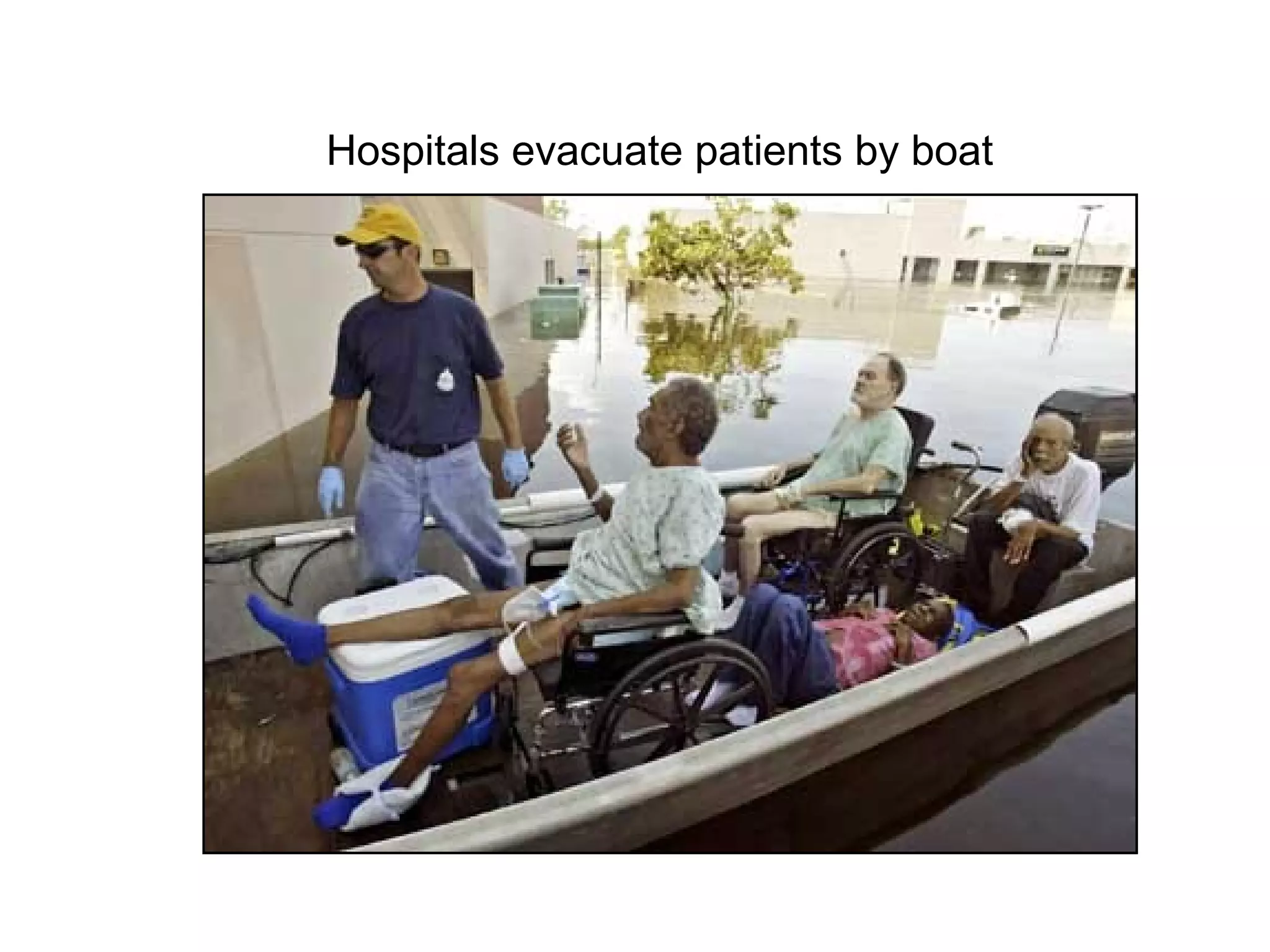
Hospitals evacuate patients by boat
As the story unfolds on TV screens
across the globe, the American
government seems slow to
respond to the scale of the disaster
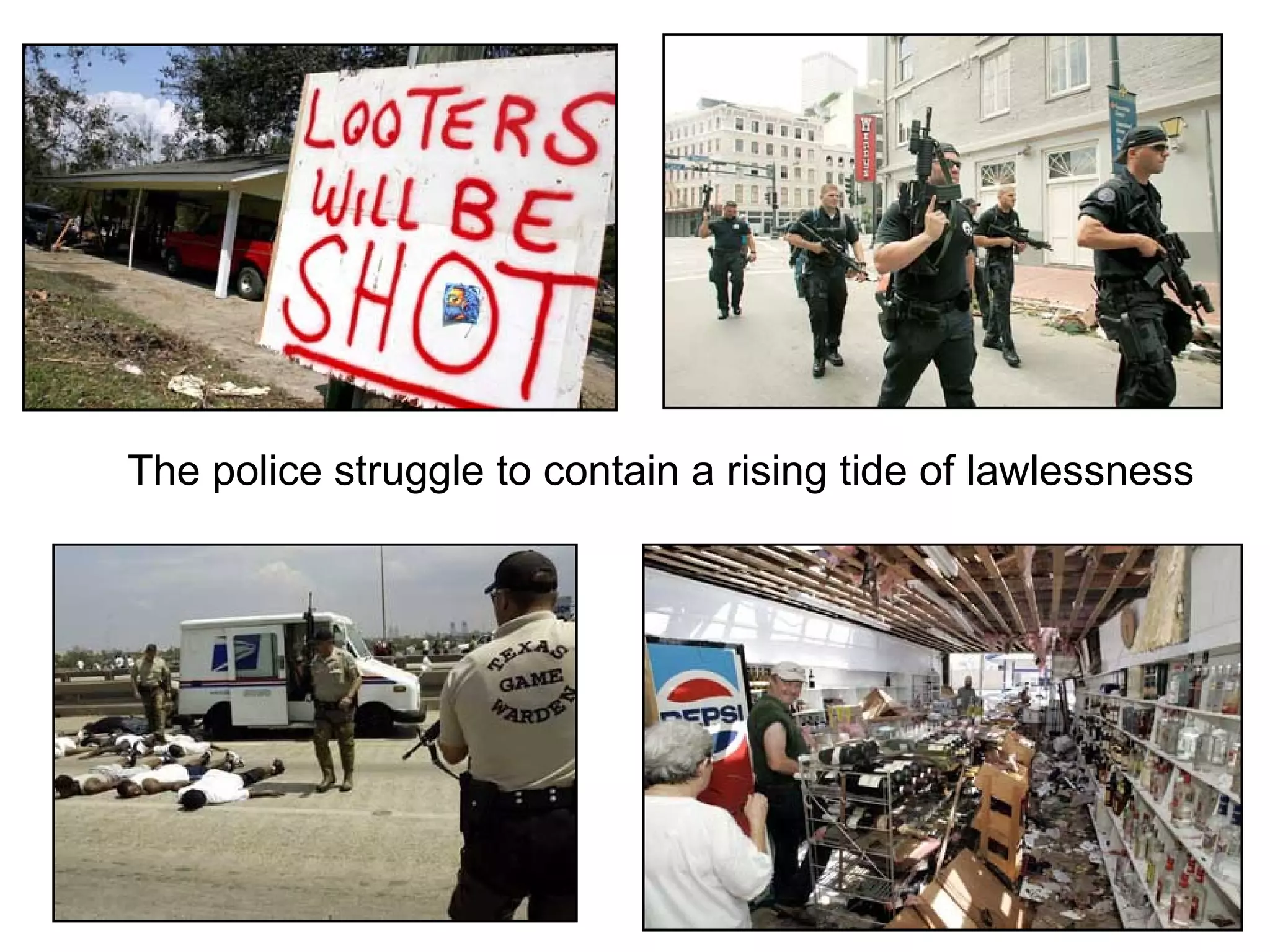
The police struggle to contain a rising tide of lawlessness
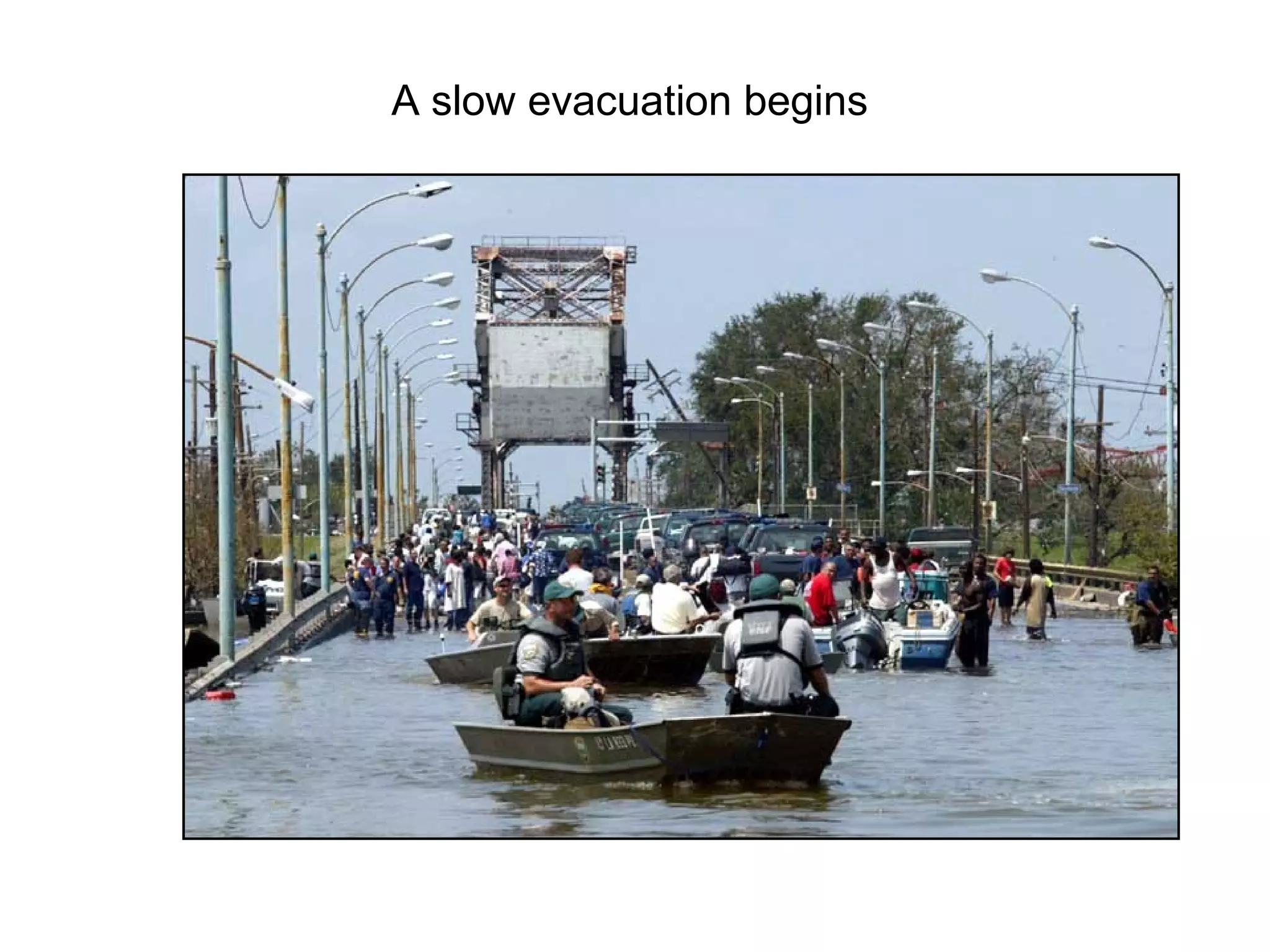
A slow evacuation begins
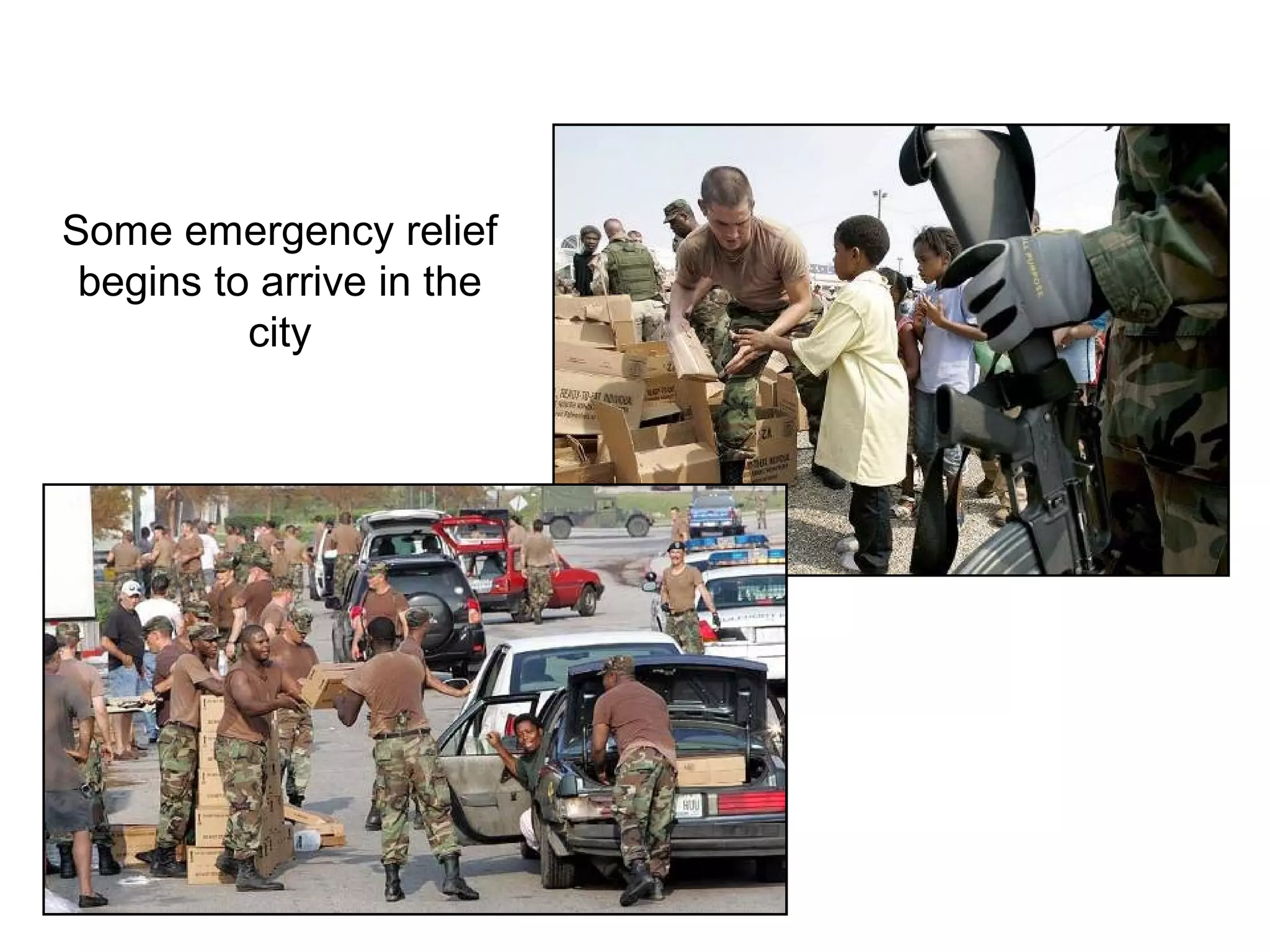
Some emergency relief
begins to arrive in the
city
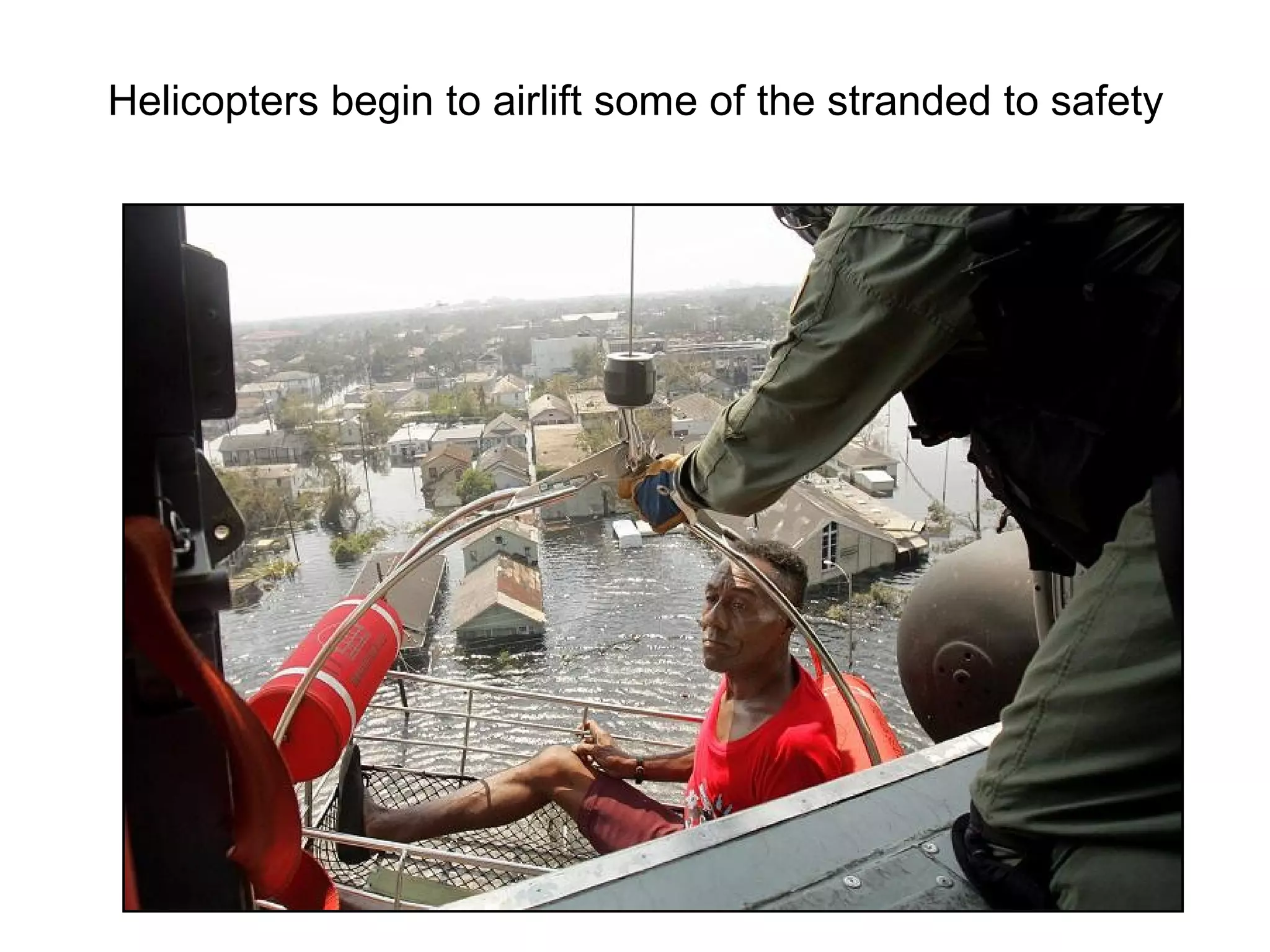
Helicopters begin to airlift some of the stranded to safety
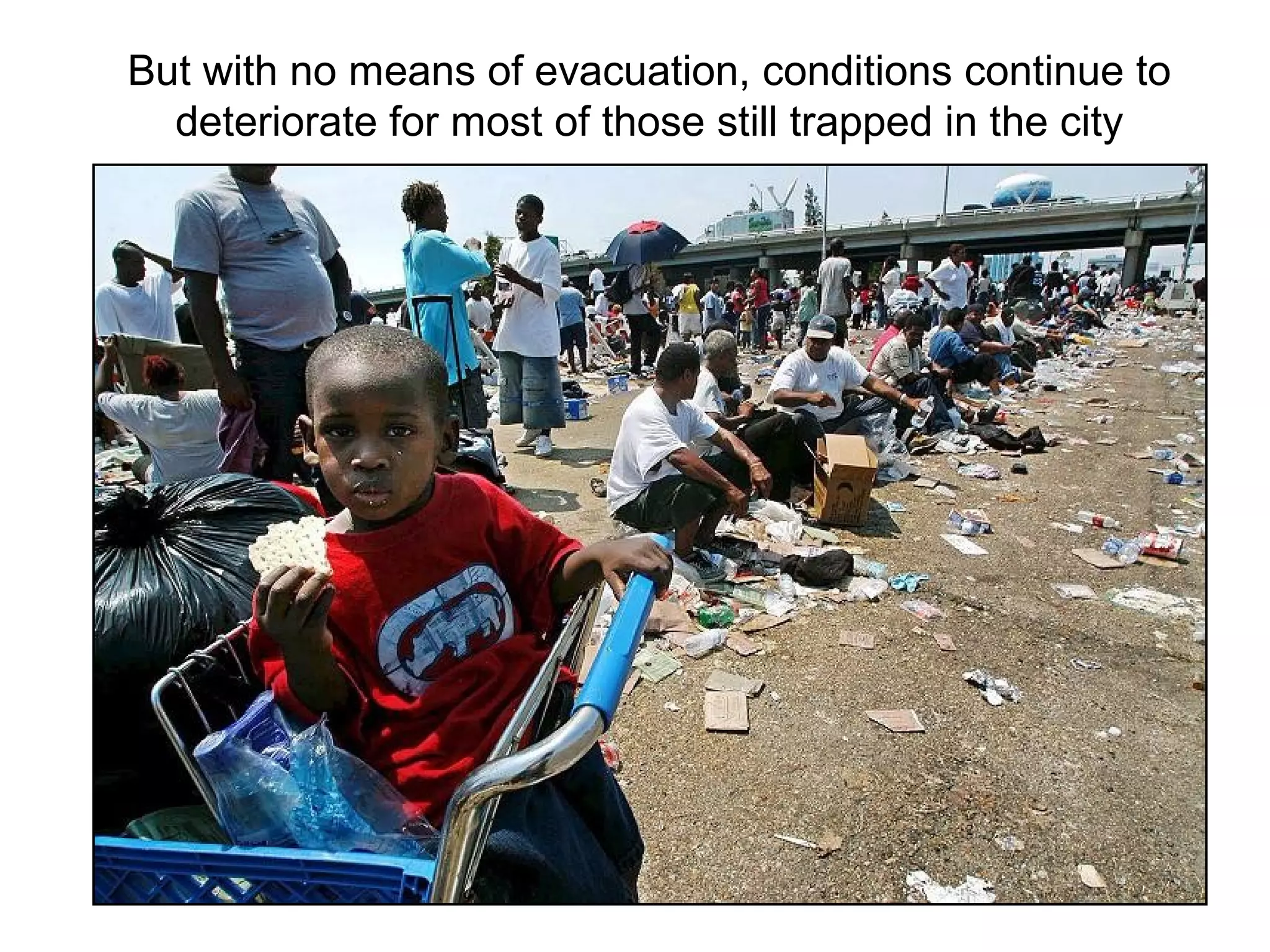
But with no means of evacuation, conditions continue to
deteriorate for most of those still trapped in the city
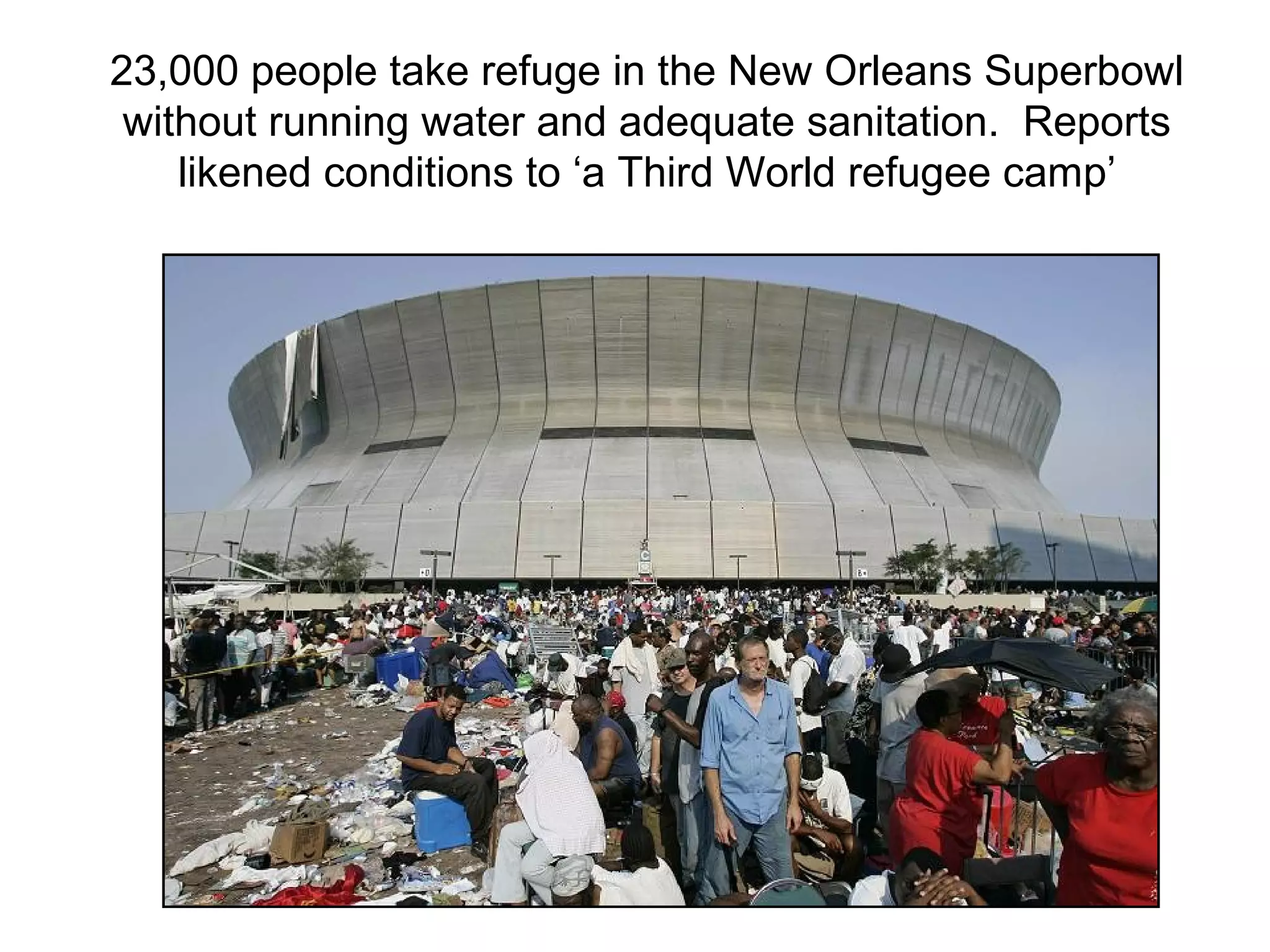
23,000 people take refuge in the New Orleans Superbowl
without running water and adequate sanitation. Reports
likened conditions to ‘a Third World refugee camp’
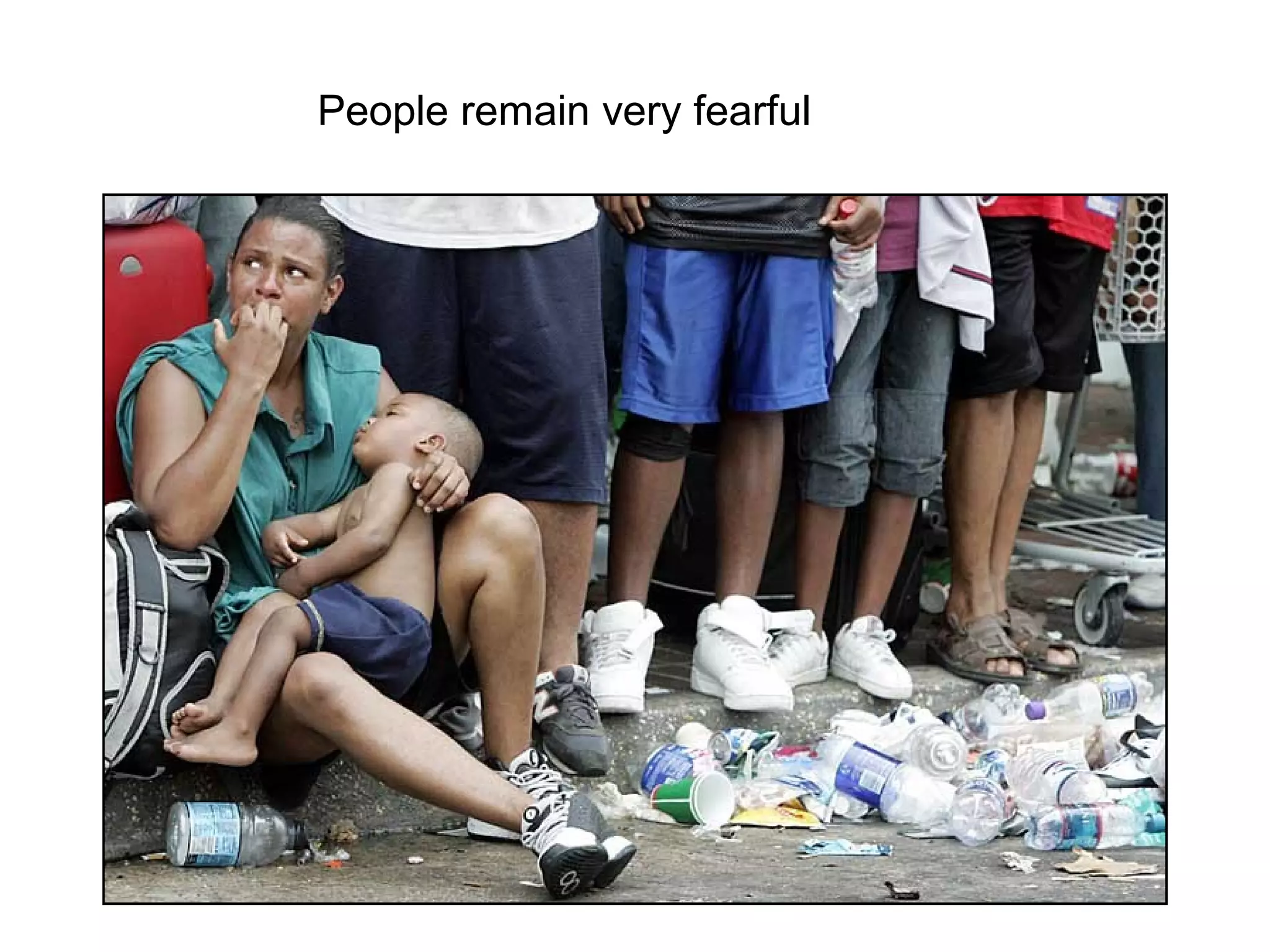
People remain very fearful
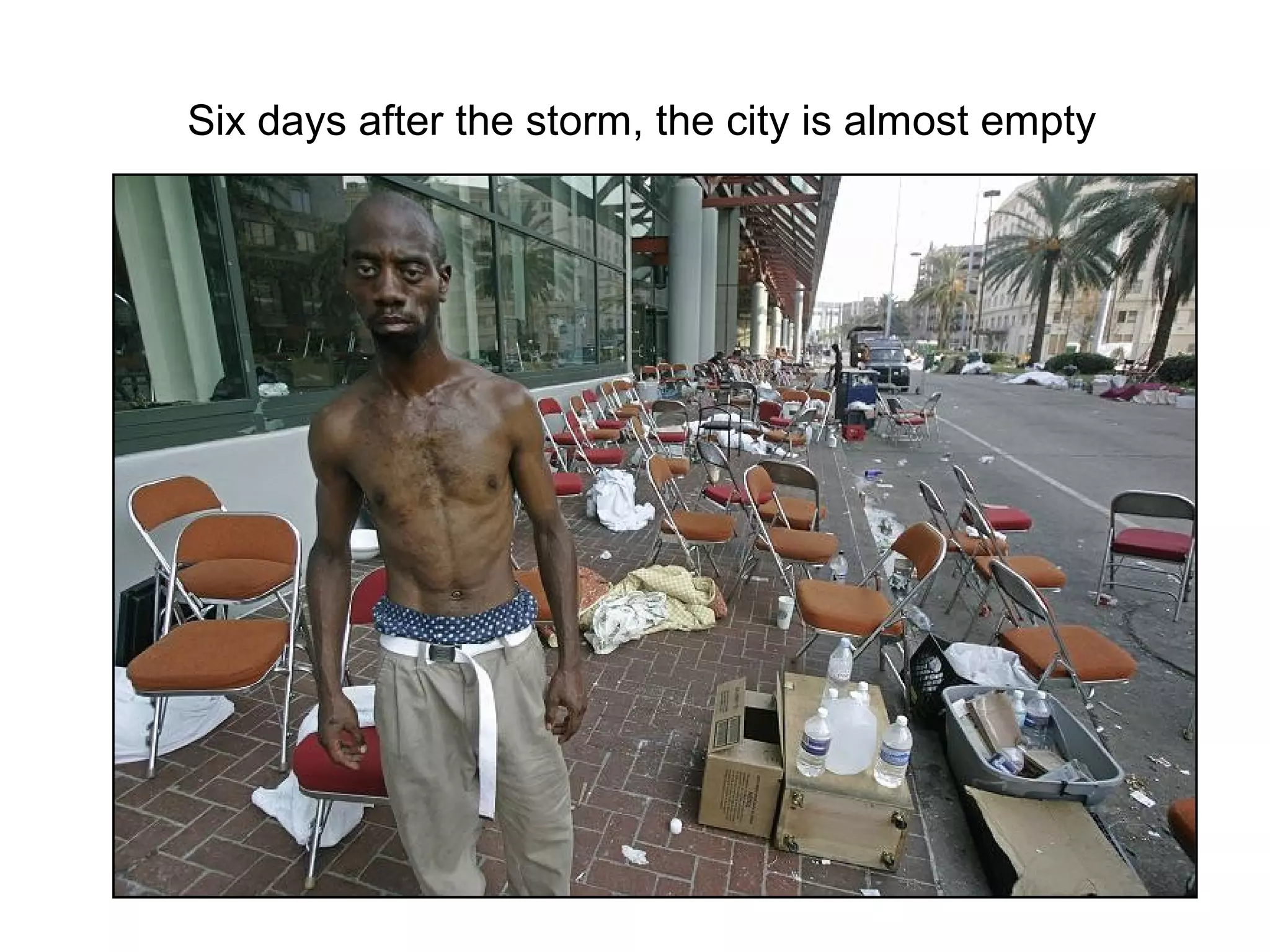
Six days after the storm, the city is almost empty
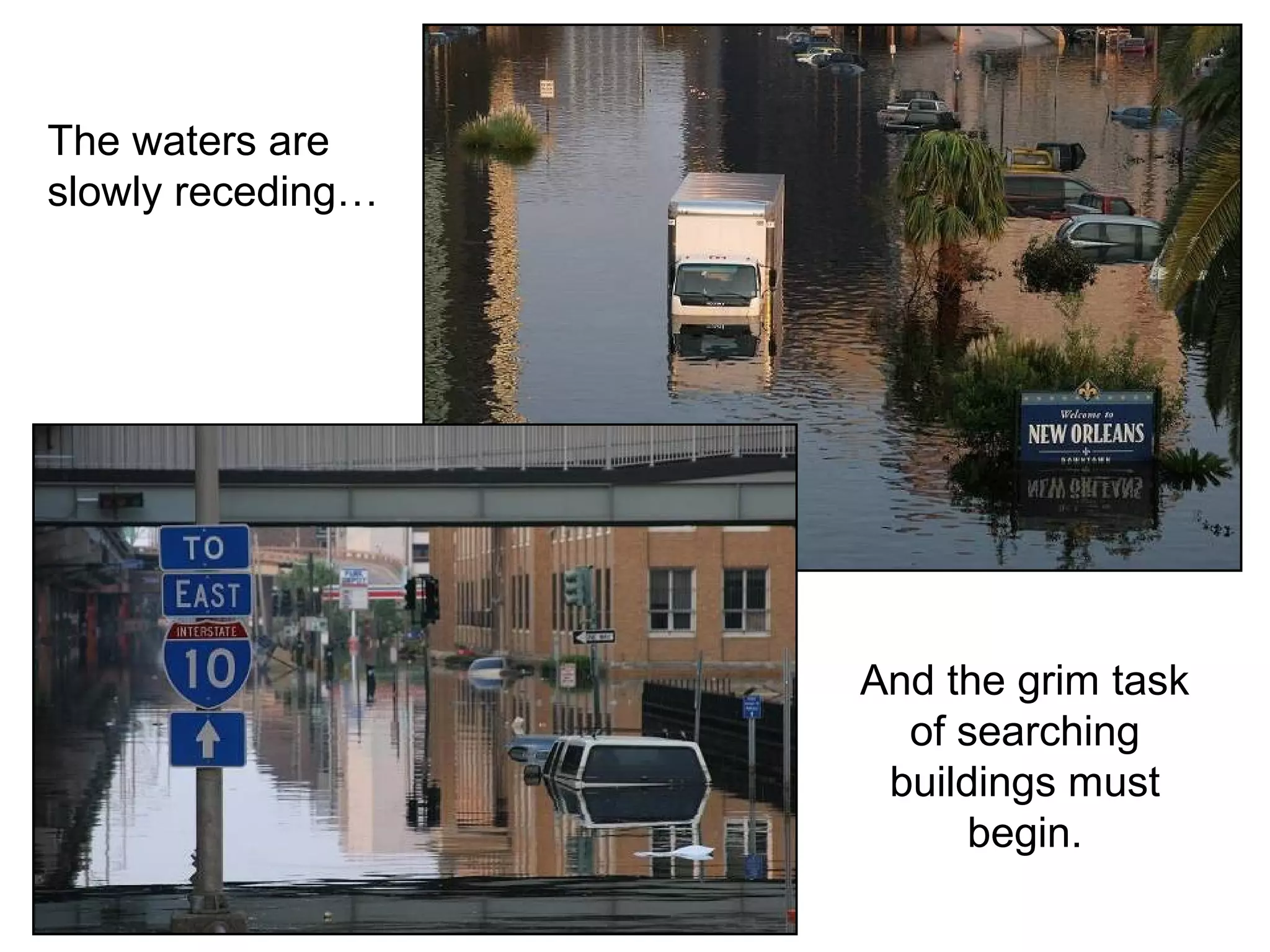
The waters are
slowly receding…
And the grim task
of searching
buildings must
begin.
MEDC or LEDC? Who can cope
the best?
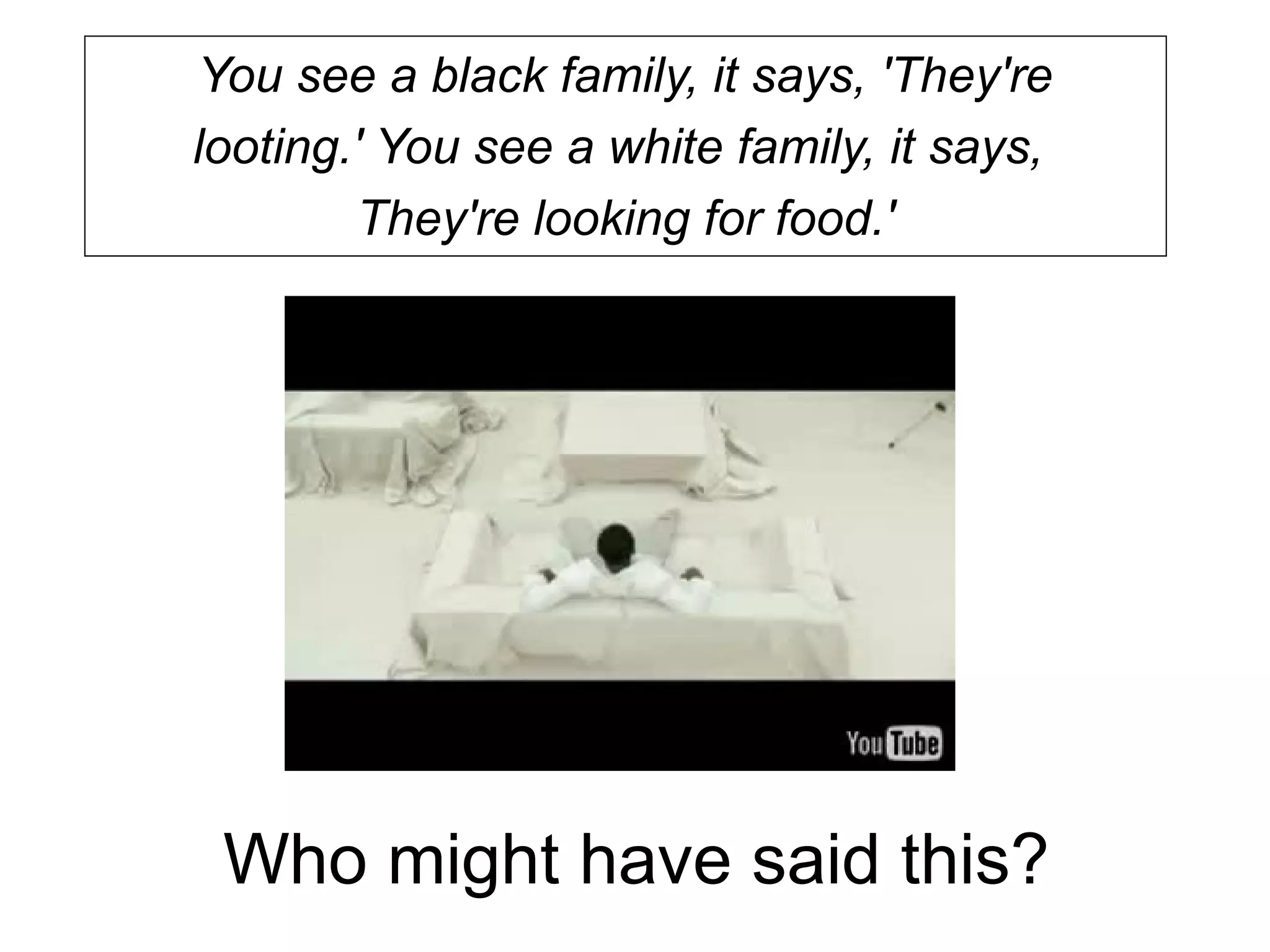
Who might have said this?
You see a black family, it says, 'They're
looting.' You see a white family, it says,
They're looking for food.'
Who might have said this?
‘I hate the way they portray us in the media.
You see a black family, it says, 'They're
looting.' You see a white family, it says,
'They're looking for food.' And, you know,
it's been five days [waiting for federal help]
because most of the people are black.’
Kanye West

12. causes of hurricanes

  • 1.
    Those re-sitting Sustainable DecisionMaking Paper • Re-sit help will start Tuesday 22nd November at 3:10pm, with Mr Clark in his room • This time the subject is rivers • All sessions will be after school • You will updated with more sessions on 22nd November
  • 2.
    1. 80% ofthe Earth’s landmass are affected by me 2. I am made in an area called the ITCZ 3. My movement is determined by the Coriolis effect 4. I need a certain combination of conditions to create me 5. I have four different names 6. I have been known to cause billions of dollars of damage 7. I am given names each time I form 8. Katrina is one of my names that I was given in 2005 What am I? What am I?
  • 3.
    • Learning Objective:To understand the distribution and formation of hurricanes
  • 4.
    What are the4 phrases used for tropical cyclones? • Hurricanes (USA) • Cyclones (India, parts of Asia, Africa) • Typhoons (Japan, far east Asia) • Willy Willies (Australia)
  • 5.
    Use an atlasto describe where hurricanes mostly occur in the USA. Use • State names • Compass directions • Ocean names • Land area
  • 6.
    Independent EnquirerIndependent Enquirer •Watch this short video about tropical storms. • Write down any questions that you want answered during the lesson about hurricanes. • Be ready to share these questions at the end! http://www.youtube.com/watch?v=H9VpwmtnOZ
  • 7.
    Did you comeup with any ofDid you come up with any of these??these?? • How do tropical storms form? • When do you get them? • Who names them? • Why don’t we get many hurricanes in the UK? • Why does the USA get loads of hurricanes?
  • 8.
    On your world map: 1.Shade in the areas of sea over 27°C 2. Label on the names of hurricanes, cyclones, typhoons and willy-willies. 3. Draw the arrows on in red Extension Question: why do hurricanes only occur during certain times of the year?
  • 9.
  • 10.
    Formation of ahurricane • Copy the diagram into your books and add the following labels in the correct places: • Air rises from warm ocean • Air sucked in to replace rising warm air • Giant thunder clouds build up • Up to 18km high • Air sinks • Eye • Heavy rain
  • 11.
    What causes ahurricane? Add your own words in the blanks Hurricanes develop in tropical areas, over the sea, when the is above 27°C. Air and water are by the rays of the sun, which are more concentrated at or near the Equator. The hot air up, carrying with it large amounts of water in the form of fine droplets ( ). The warm air spirals upwards leaving an area of calm in the centre called ‘the of the storm’. The air around the eye in to replace the rising air causing strong . The hurricane now starts moving east to across the until it dissipates out over the . temperature heated rises water vapour eye rushes winds Atlantic land west
  • 12.
  • 13.
    Mix and match Thickclouds develop and… Air rising in an upwards spiral... The eye of the storm… Air sinks down… Warm, moist air… … the middle of the storm … is very clam ... produce heavy rain … rises and condenses into cloud … produce strong winds
  • 14.
    Have we answeredour bigHave we answered our big questions?questions? • How do tropical storms form? • When do you get them? • Who names them? • Why don’t we get many hurricanes in the UK? • Why does the USA get loads of hurricanes?
  • 15.
    What does ahurricane need? Choose the correct factors Low pressure Low pressure Warm oceans Warm oceans High pressure High pressure Temps above 15°C Temps above 15°C Northerly winds Northerly winds Coriolis effect Coriolis effect Coreolis effect Coreolis effect Cool oceans Cool oceans Moist airMoist air Humidity over 75% Humidity over 75% Humidity over 55% Humidity over 55% Land to damage Land to damage
  • 16.
    Why did Jane’shouse fall down? Learning Objective To understand how a severe tropical storm is caused.
  • 17.
    Learning Objective To understandhow a severe hurricane can affect people and the environment Why is Kanye linked to this picture?
  • 18.
    Ask some questions….Asksome questions…. Where When What How Who Why
  • 19.
    • The picturewas taken in the USA • What do you think has happened here? Discuss your ideas.
  • 20.
    Why the USA? •http://www.youtube.com/watch?v=4f45jA5UxB
  • 21.
  • 22.
    Fact file • Formed:August 23, 2005 • Dissipated: August 30, 2005 • Highest winds: 280 km/h • Lowest pressure: 902 mb • Fatalities1,836 total • Damage$81.2 billion (Costliest Atlantic hurricane in history) • Areas affected: Bahamas, South Florida, Cuba, Louisiana (especially Greater New Orleans), Mississippi, Alabama, Florida Panhandle, most of eastern North America
  • 23.
    Where? • http://news.bbc.co.uk/cbbcnews/hi/newsid_422 • Onyour map, draw the path of Hurricane Katrina
  • 24.
  • 25.
    Retirement of name •Because of the large loss of life and property along the Gulf Coast, the name Katrina was officially retired on April 6, 2006 by the World Meteorological Organization at the request of the U.S. government. It was replaced by Katia on List III of the Atlantic hurricane naming lists, which will next be used in the 2011 Atlantic hurricane season
  • 26.
    What is itlike? • http://www.youtube.com/watch?v=_yd5WreHx What is a hurricane like?
  • 27.
    People who had transport fledthe city Shop keepers boarded up their windows Volunteers helped to fill sandbags
  • 28.
    Katrina became acategoryKatrina became a category 5 hurricane off the coast of5 hurricane off the coast of Mississippi – 175 mphMississippi – 175 mph winds!winds!
  • 29.
    Downtown New Orleans at theheight of the storm on 29 August The eye of the hurricane passed to the east of the city
  • 30.
    After the storm….. It seemedNew Orleans had got off more lightly than expected… until the levées broke and water flooded into the city…………
  • 31.
    The Disaster! • 50%of the city was wiped out – under50% of the city was wiped out – under water.water. •That’s a 150 sq miles or 80% under water!That’s a 150 sq miles or 80% under water! •1300 people died1300 people died •½ million made homeless½ million made homeless •75 billion pounds in damages….ouch!75 billion pounds in damages….ouch!
  • 32.
    Roads collapsed whichhas hampered the rescueRoads collapsed which has hampered the rescue operationoperation
  • 33.
    Within 24 hours80% of the city was under water
  • 34.
    Public transport isout of action
  • 35.
    With roads flooded, only themotorway fly-overs are high enough to rise above the water …but they are going no where!
  • 36.
    Many people drown– Government estimates warn of several thousand dead
  • 37.
    One hundred thousand people whowere not able to leave the city…. …are trapped in their homes. Most of these had simply been too poor to flee
  • 38.
    Most are desperateto be rescued
  • 39.
    The water is pollutedwith sewage and oil ….but people are forced into it in order to survive
  • 40.
    Food and drinkingwater becomes scarce within hours and is only flown in two days later
  • 41.
  • 42.
    As the storyunfolds on TV screens across the globe, the American government seems slow to respond to the scale of the disaster
  • 43.
    The police struggleto contain a rising tide of lawlessness
  • 44.
  • 45.
    Some emergency relief beginsto arrive in the city
  • 46.
    Helicopters begin toairlift some of the stranded to safety
  • 47.
    But with nomeans of evacuation, conditions continue to deteriorate for most of those still trapped in the city
  • 48.
    23,000 people takerefuge in the New Orleans Superbowl without running water and adequate sanitation. Reports likened conditions to ‘a Third World refugee camp’
  • 49.
  • 50.
    Six days afterthe storm, the city is almost empty
  • 51.
    The waters are slowlyreceding… And the grim task of searching buildings must begin.
  • 52.
    MEDC or LEDC?Who can cope the best?
  • 53.
    Who might havesaid this? You see a black family, it says, 'They're looting.' You see a white family, it says, They're looking for food.'
  • 54.
    Who might havesaid this? ‘I hate the way they portray us in the media. You see a black family, it says, 'They're looting.' You see a white family, it says, 'They're looking for food.' And, you know, it's been five days [waiting for federal help] because most of the people are black.’ Kanye West