Y1 ICT Lecture 5
   March 2013
“Children use and apply their ICT knowledge,
skills and understanding confidently and
competently in their learning and in everyday
contexts. They become independent and
discerning users of technology, recognising
opportunities and risks and using strategies
to stay safe.”
                                      (QCDA, 2009)
A high-quality computing education equips pupils to
understand and change the world through
computational thinking. It develops and requires logical
thinking and precision. It combines creativity with
rigour: pupils apply underlying principles to understand
real-world systems, and to create purposeful and usable
artefacts. More broadly, it provides a lens through
which to understand both natural and artificial systems,
and has substantial links with the teaching of
mathematics, science, and design and technology.
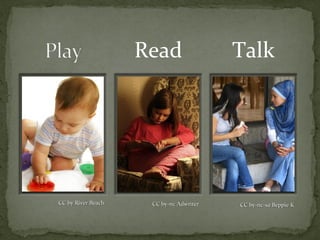
Read                 Talk


CC by River Beach    CC by-nc Adwriter   CC by-nc-sa Beppie K
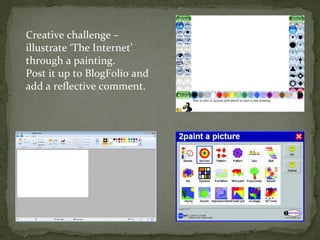
Creative challenge –
illustrate ‘The Internet’
through a painting.
Post it up to BlogFolio and
add a reflective comment.
“Experience of objects plays,
naturally, a very important role in
the establishment of dynamic
structures”
                From Piaget (1961) A genetic approach to the psychology of thought
 Children learn through first hand experience in
    activities they have chosen
   Play allows children to test their ideas
   Play lets children learn from mistakes
   Play fosters imagination and flexibility of mind
   Rich, enabling environments are provided
   Allow children to dictate the pace, length and
    focus; interventions should be supportive
   Recognise children’s fascination with and
    curiosity about what is going on in their worlds.
                          EYFS: Effective practice: play and exploration
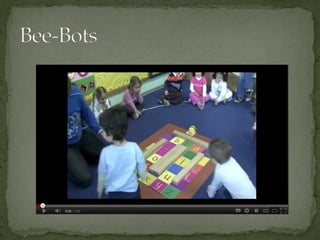
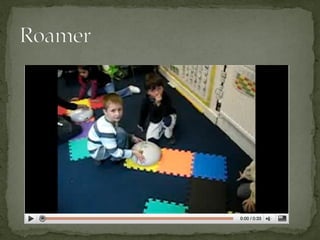
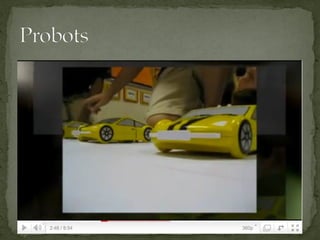
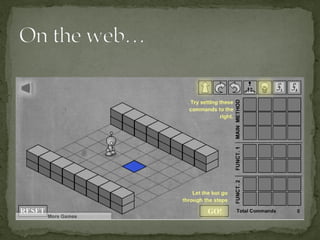
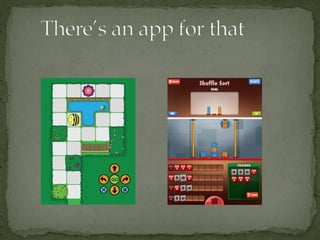
Play with one of the programmable toys or video
 games discussed during the session. Post a
 reflection to your blog, focussing on what children
 might learn through this or similar technology.
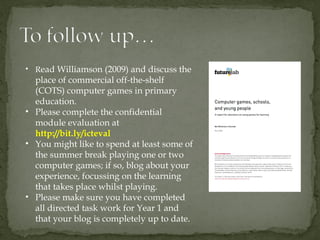
• Read Williamson (2009) and discuss the
  place of commercial off-the-shelf
  (COTS) computer games in primary
  education.
• Please complete the confidential
  module evaluation at
  http://bit.ly/icteval
• You might like to spend at least some of
  the summer break playing one or two
  computer games; if so, blog about your
  experience, focussing on the learning
  that takes place whilst playing.
• Please make sure you have completed
  all directed task work for Year 1 and
  that your blog is completely up to date.

Toys, play and games : Y1 ICT, Lecture 5

  • 1.
    Y1 ICT Lecture5 March 2013
  • 2.
    “Children use andapply their ICT knowledge, skills and understanding confidently and competently in their learning and in everyday contexts. They become independent and discerning users of technology, recognising opportunities and risks and using strategies to stay safe.” (QCDA, 2009)
  • 3.
    A high-quality computingeducation equips pupils to understand and change the world through computational thinking. It develops and requires logical thinking and precision. It combines creativity with rigour: pupils apply underlying principles to understand real-world systems, and to create purposeful and usable artefacts. More broadly, it provides a lens through which to understand both natural and artificial systems, and has substantial links with the teaching of mathematics, science, and design and technology.
  • 6.
    Read Talk CC by River Beach CC by-nc Adwriter CC by-nc-sa Beppie K
  • 8.
    Creative challenge – illustrate‘The Internet’ through a painting. Post it up to BlogFolio and add a reflective comment.
  • 9.
    “Experience of objectsplays, naturally, a very important role in the establishment of dynamic structures” From Piaget (1961) A genetic approach to the psychology of thought
  • 10.
     Children learnthrough first hand experience in activities they have chosen  Play allows children to test their ideas  Play lets children learn from mistakes  Play fosters imagination and flexibility of mind  Rich, enabling environments are provided  Allow children to dictate the pace, length and focus; interventions should be supportive  Recognise children’s fascination with and curiosity about what is going on in their worlds. EYFS: Effective practice: play and exploration
  • 17.
    Play with oneof the programmable toys or video games discussed during the session. Post a reflection to your blog, focussing on what children might learn through this or similar technology.
  • 18.
    • Read Williamson(2009) and discuss the place of commercial off-the-shelf (COTS) computer games in primary education. • Please complete the confidential module evaluation at http://bit.ly/icteval • You might like to spend at least some of the summer break playing one or two computer games; if so, blog about your experience, focussing on the learning that takes place whilst playing. • Please make sure you have completed all directed task work for Year 1 and that your blog is completely up to date.