
Y3 BA PRIMARY EDUCATION
2012-2013
ICT AND A FOUNDATION SUBJECT


LECTURE 4

USING ICT IN
ASSESSMENT
AND EVALUATION
Be able to justify the selection
and use of ICT in relation to
aspects of your planning,
teaching, assessment and class
management, as well as be able
to monitor, evaluate and assess
your own teaching and pupils'
learning when using ICT
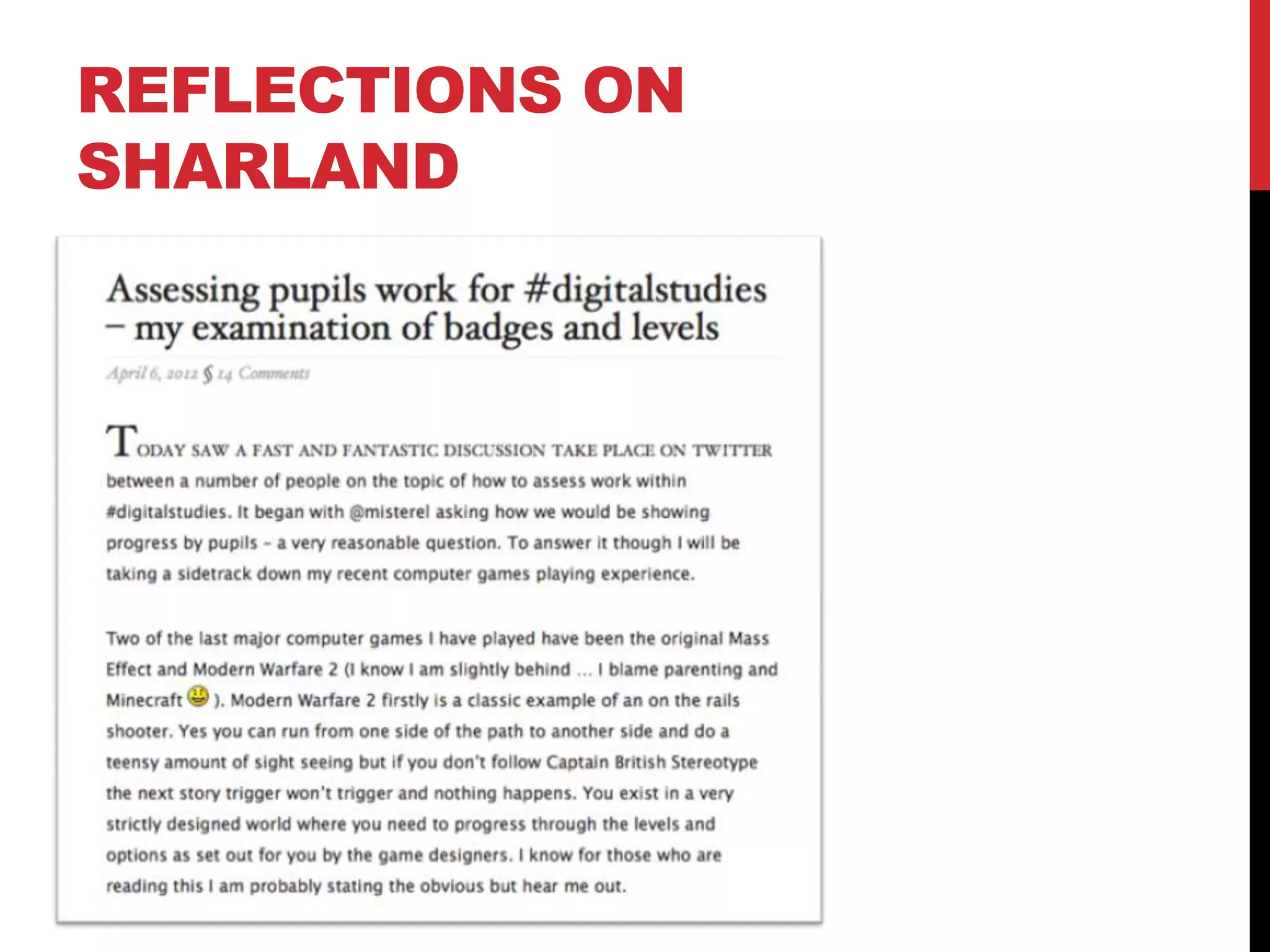
REFLECTIONS ON
SHARLAND
OFSTED ON ASSESSMENT

The use of assessment was judged to be
no better than satisfactory in 53 of the 86
primary schools visited for which this was
observed, and 42 of the secondary
schools, suggesting that the weaknesses
identified previously persisted to a large
extent in many schools.
OFSTED ON ASSESSMENT

The headteacher of one school in which ICT was
judged to be inadequate commented that there was no
incentive to collect information on ICT levels or to
monitor outcomes. In other schools some teachers had
little understanding of what was required for a pupil to
reach a certain level. In several schools no assessment
of what pupils had achieved in ICT took place at all. In
many schools performance in ICT was only assessed in
specific ICT classes. This meant that pupils’
considerable use of ICT in other subjects was not
monitored or built into planned development.
THE CHALLENGES OF
ASSESSING ICT

• embedded ICT

• paired work

• task vs process


• no levels!
BECTA:
ICT MARK ASSESSMENT
The assessment and recording of ICT capability
are reliable and consistent. They are informed by
the use of ICT in other curriculum areas and by
moderation within the school. Statutory
requirements for reporting to parents are met.
Pupils regularly assess their own and other
pupils’ ICT capability based on criteria they have
identified and developed. This contributes to their
understanding of what constitutes good quality
and helps them to improve.
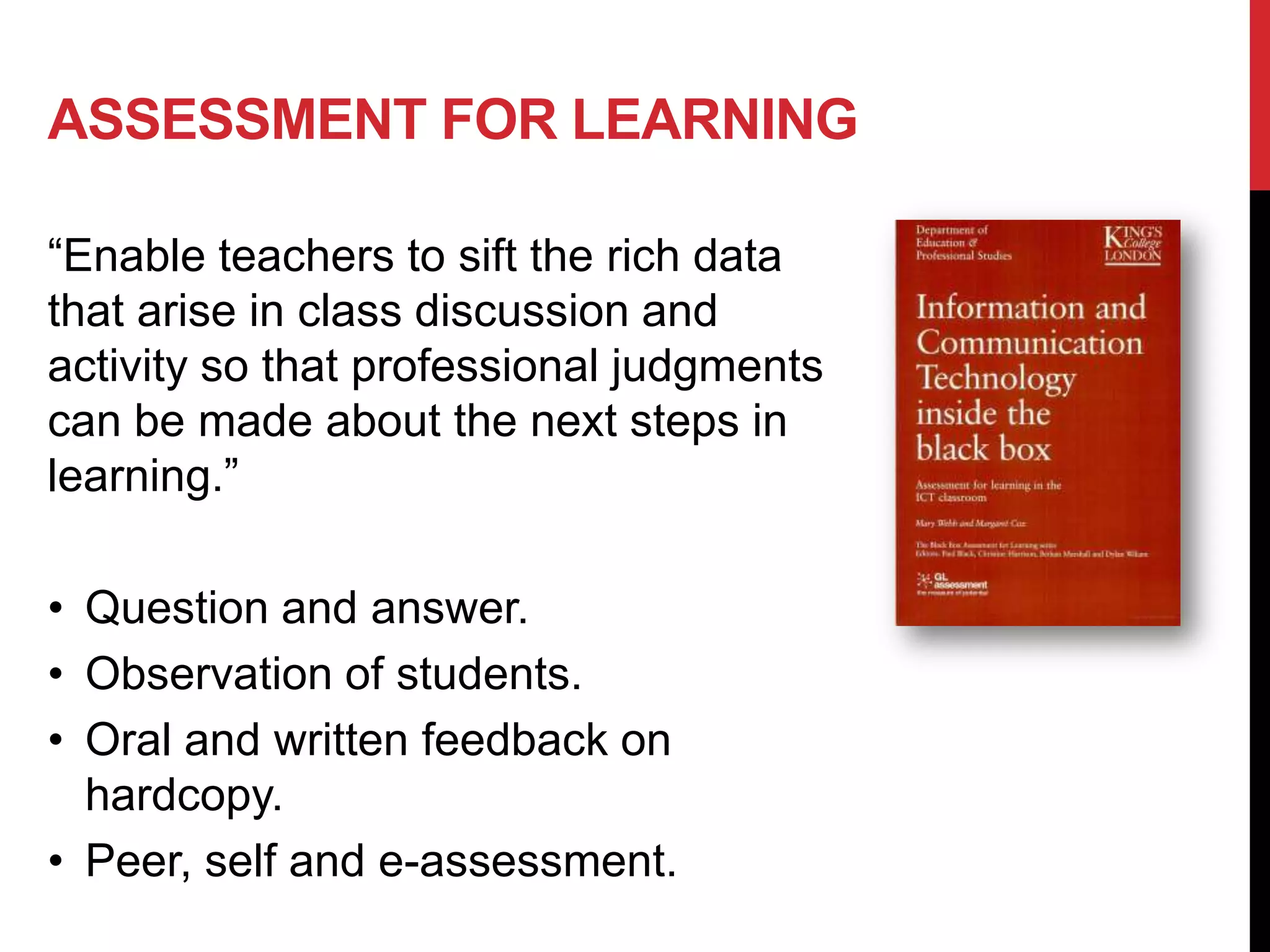
ASSESSMENT FOR LEARNING

“Enable teachers to sift the rich data
that arise in class discussion and
activity so that professional judgments
can be made about the next steps in
learning.”

• Question and answer.
• Observation of students.
• Oral and written feedback on
  hardcopy.
• Peer, self and e-assessment.
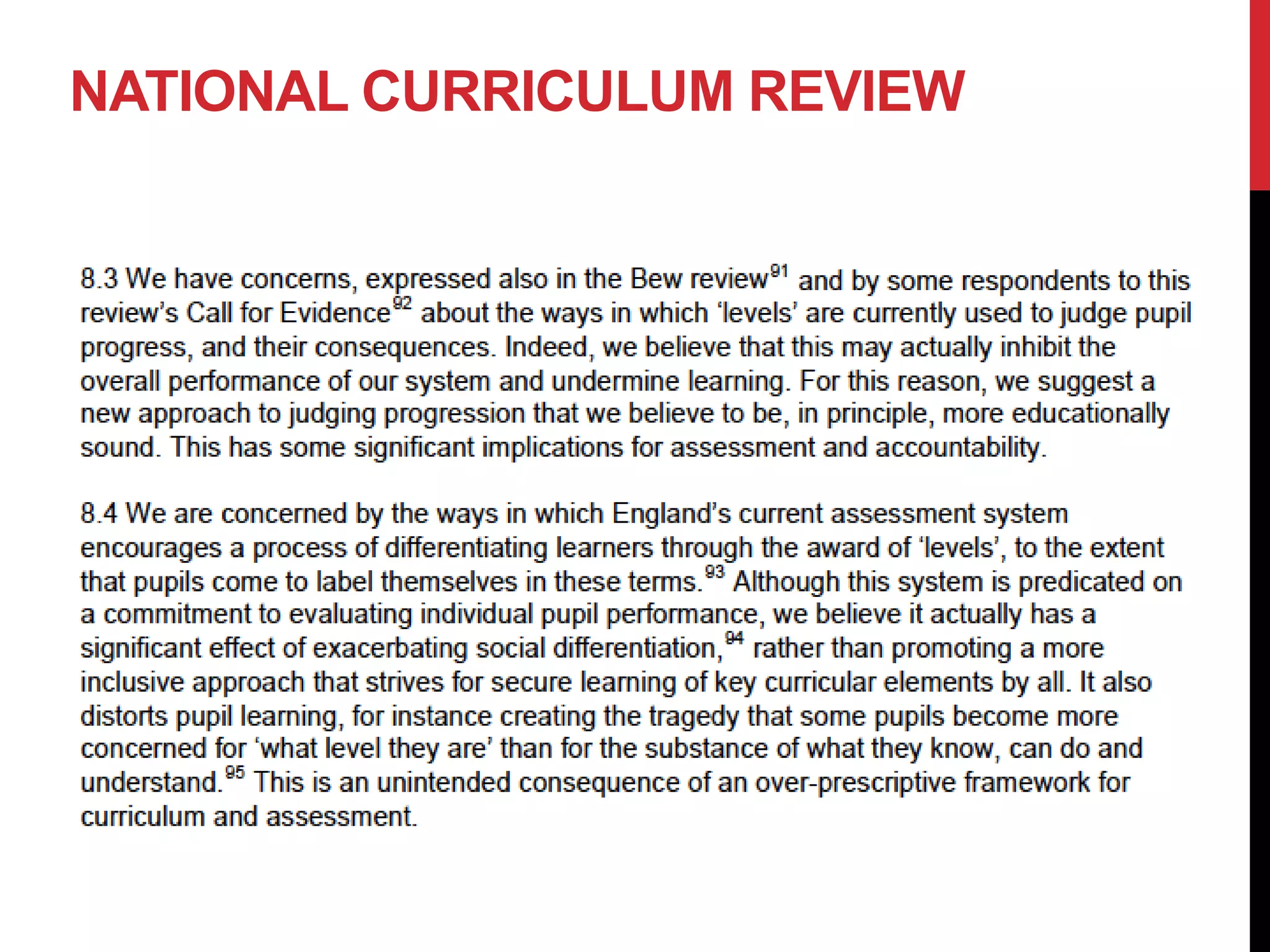
NATIONAL CURRICULUM REVIEW
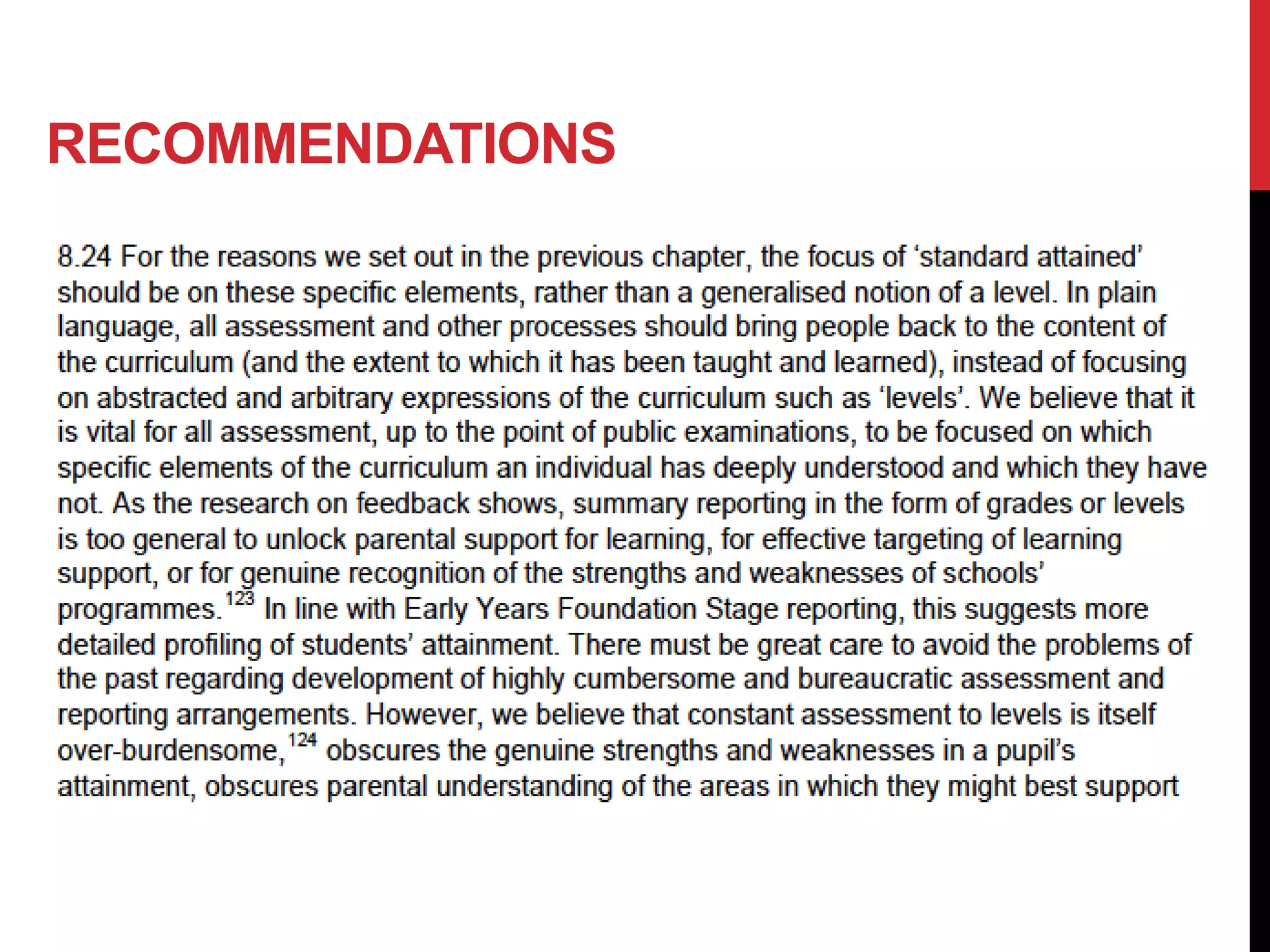
RECOMMENDATIONS
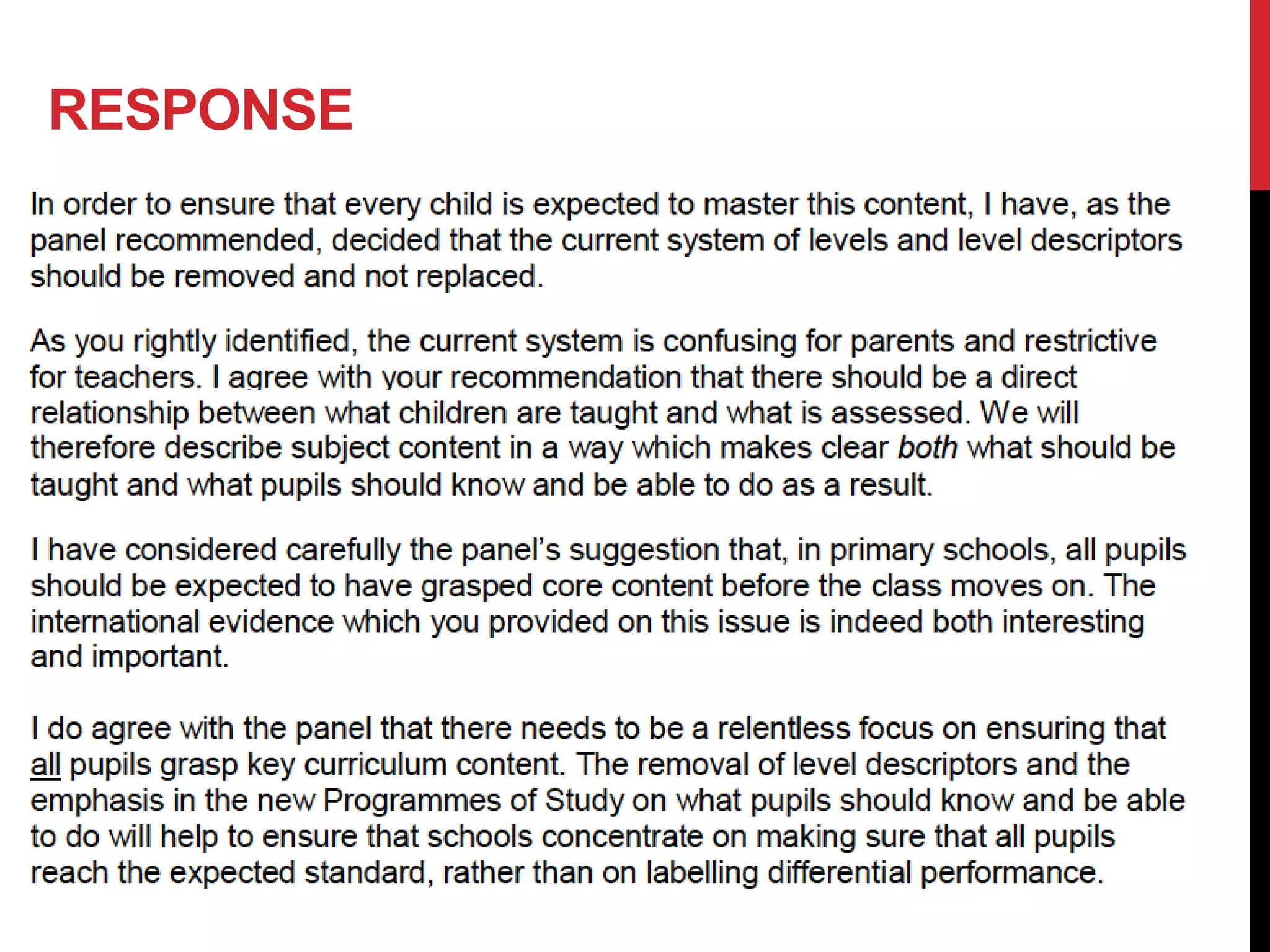
RESPONSE
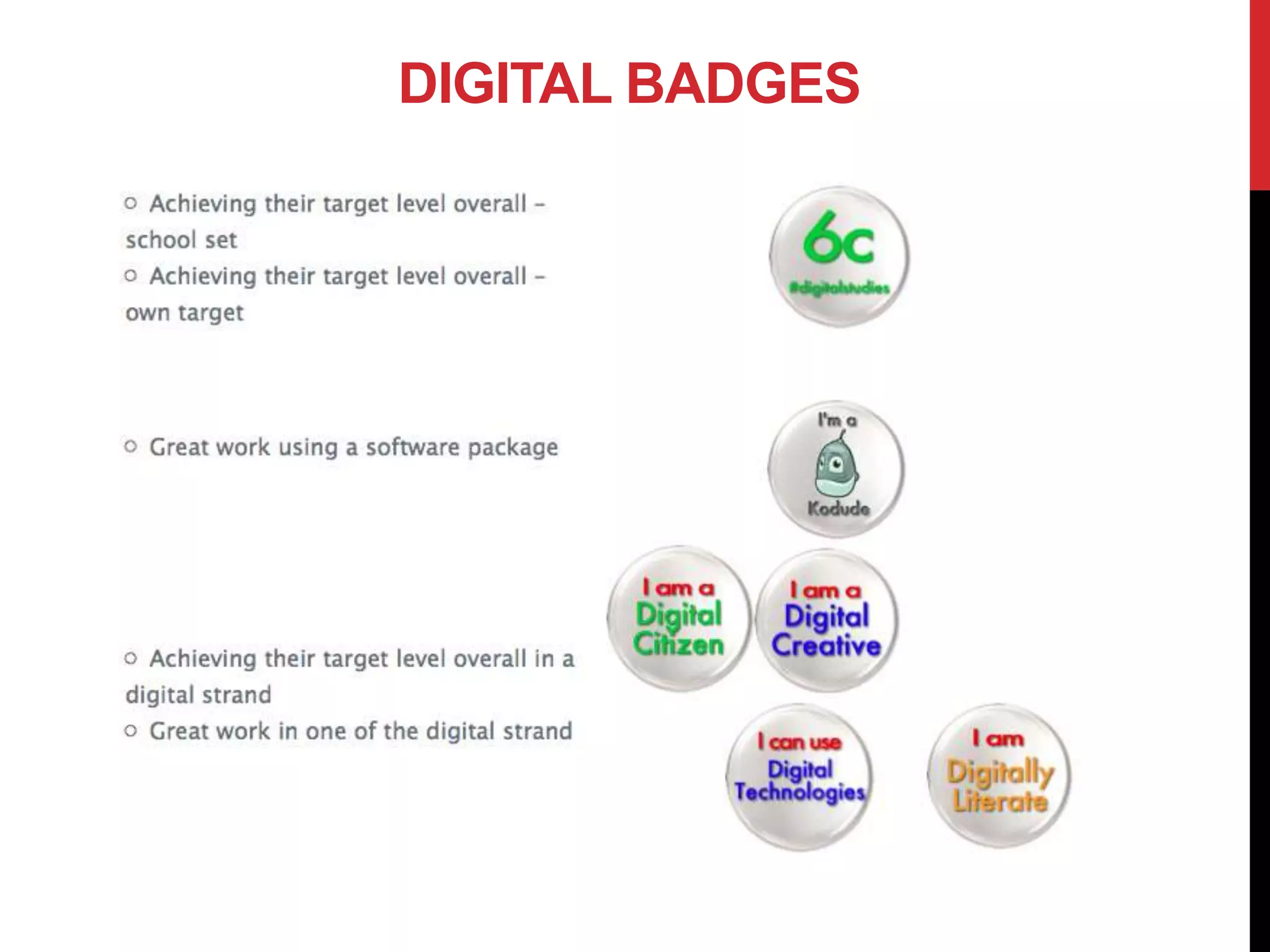
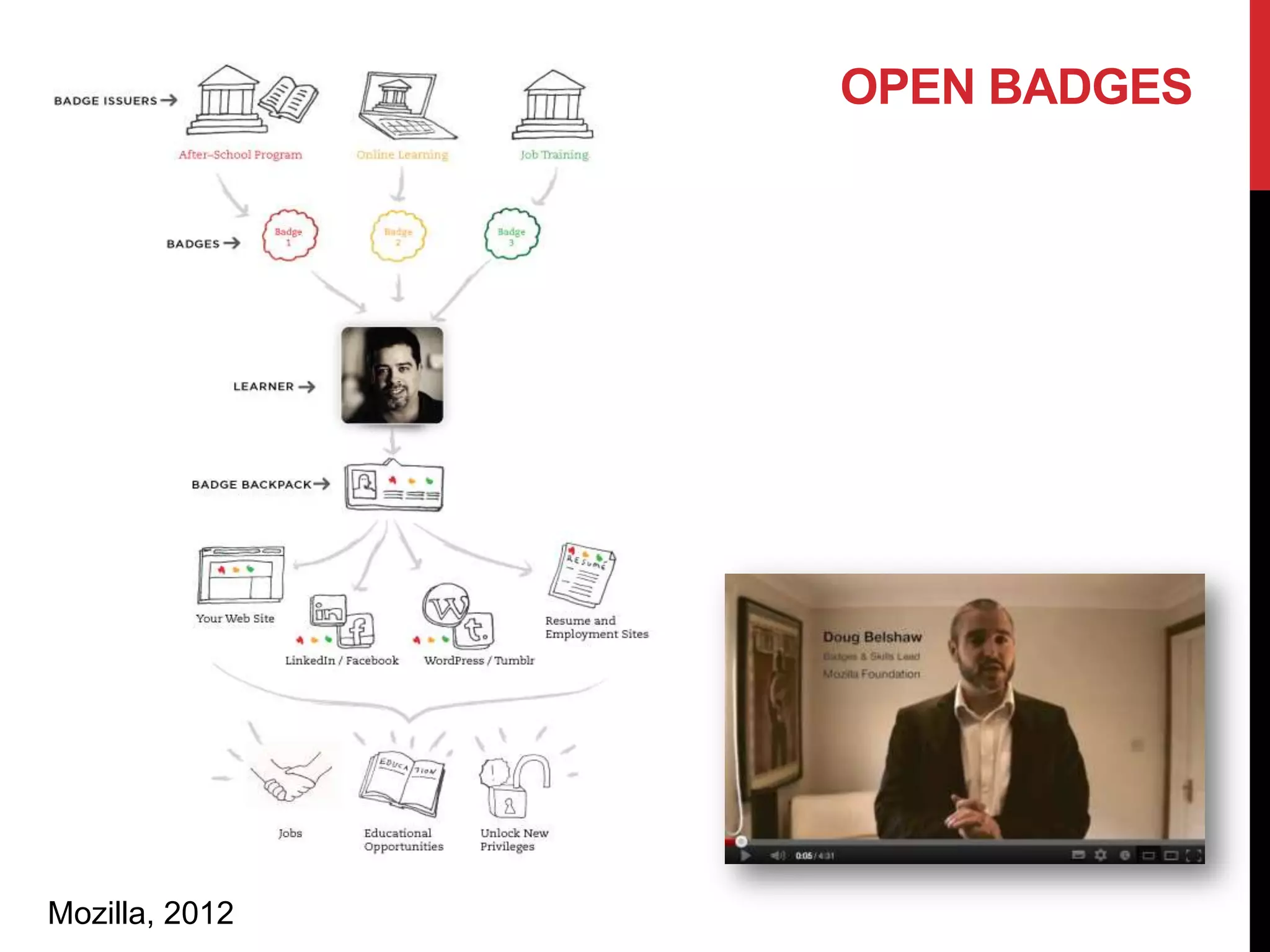
DIGITAL BADGES
ALTERNATIVES

• Portfolios
• Projects
• Problem finding
• Hackdays
• Web 2.0
What particular opportunities
and challenges does ICT
present to assessment for
learning?
ICT FOR ASSESSMENT

•   e-portfolios

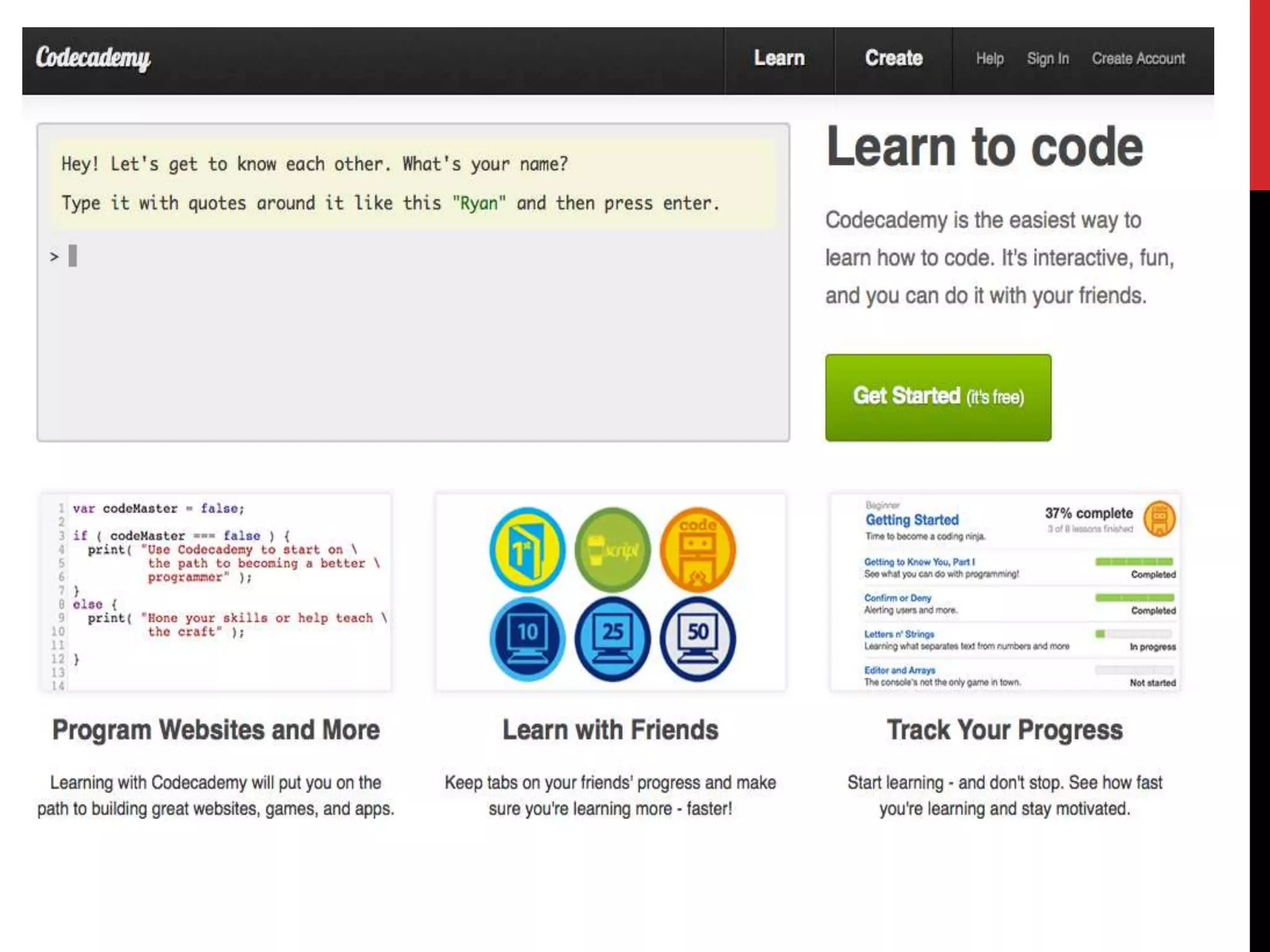
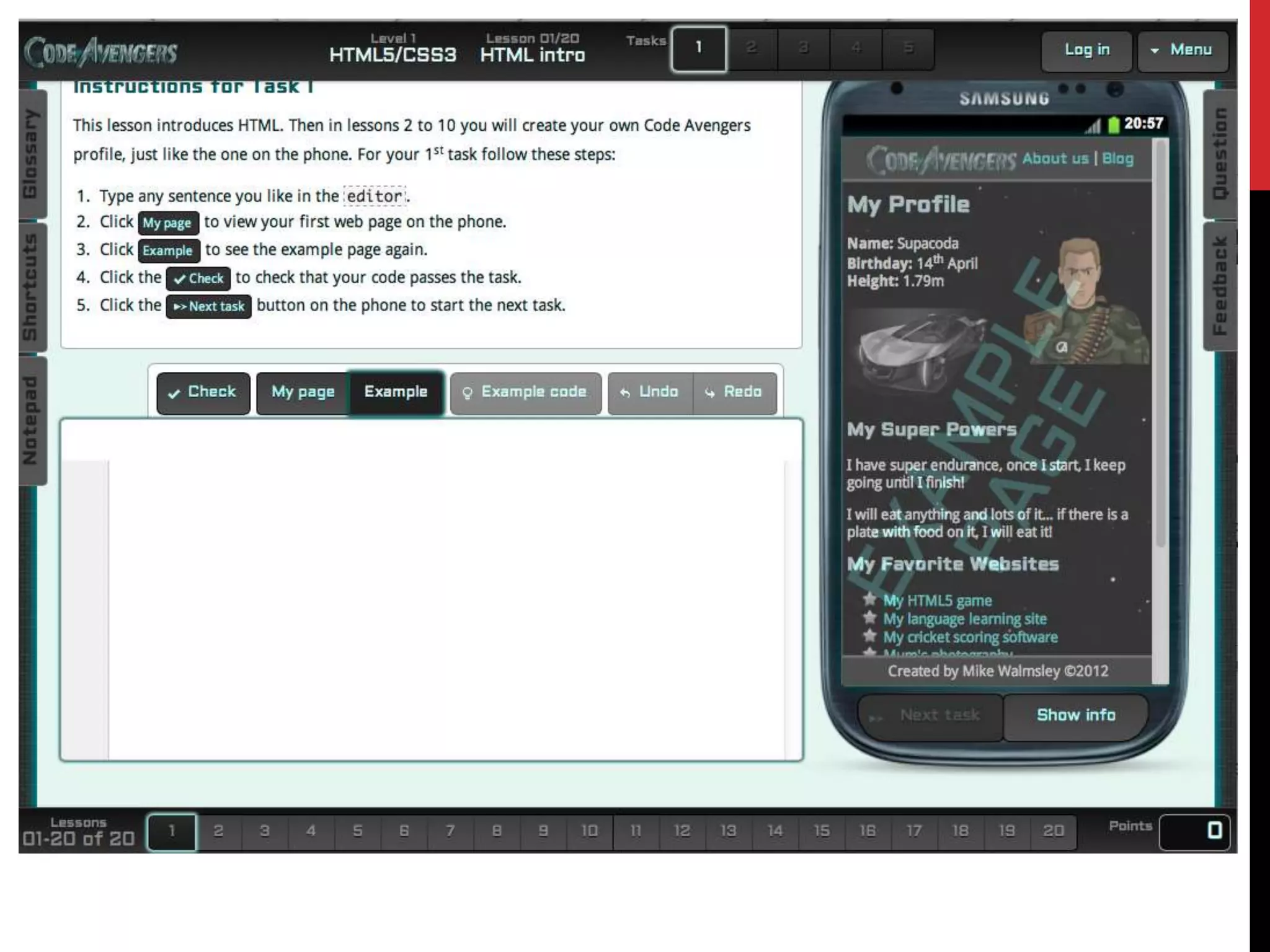
•   gamification

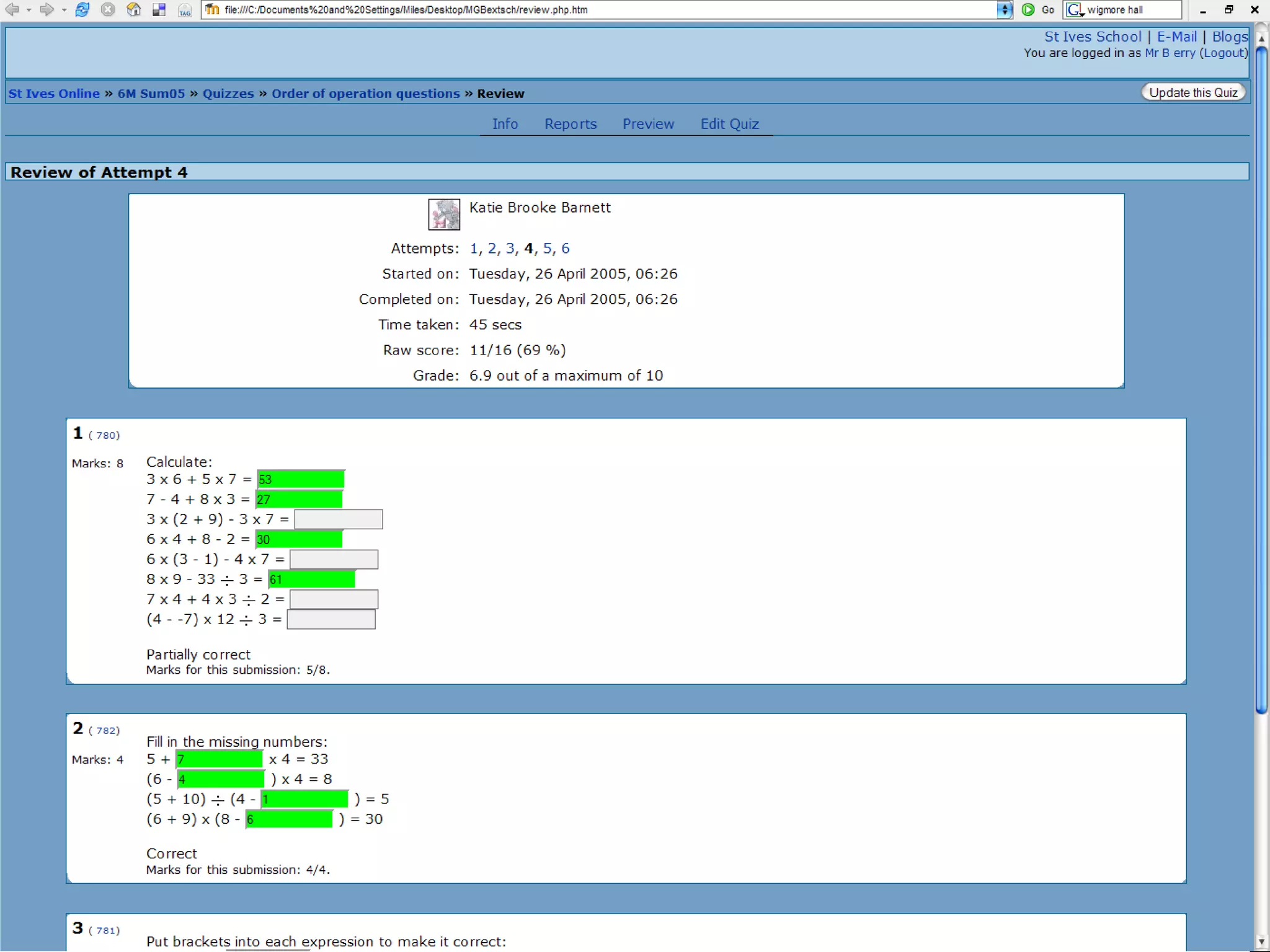
•   peer review, peer assessment

•   computer assisted assessment

•   learning analytics
GAMES


   Goal
              Interactivity   Feedback
 oriented


              Problems /
Progression                     Flow
              Challenge
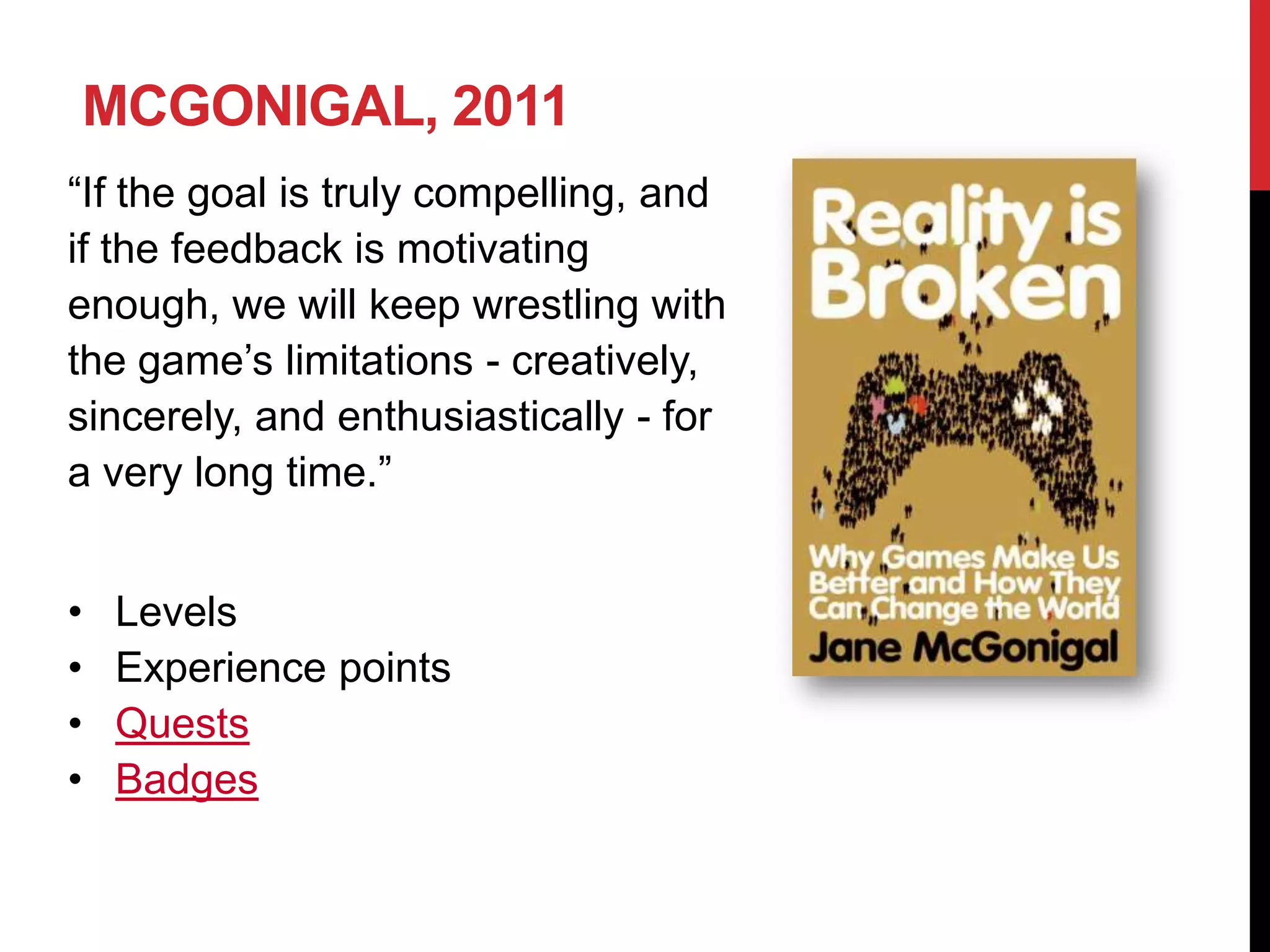
MCGONIGAL, 2011
“If the goal is truly compelling, and
if the feedback is motivating
enough, we will keep wrestling with
the game’s limitations - creatively,
sincerely, and enthusiastically - for
a very long time.”


•   Levels
•   Experience points
•   Quests
•   Badges
OPEN BADGES


Mozilla, 2012
PEER REVIEW
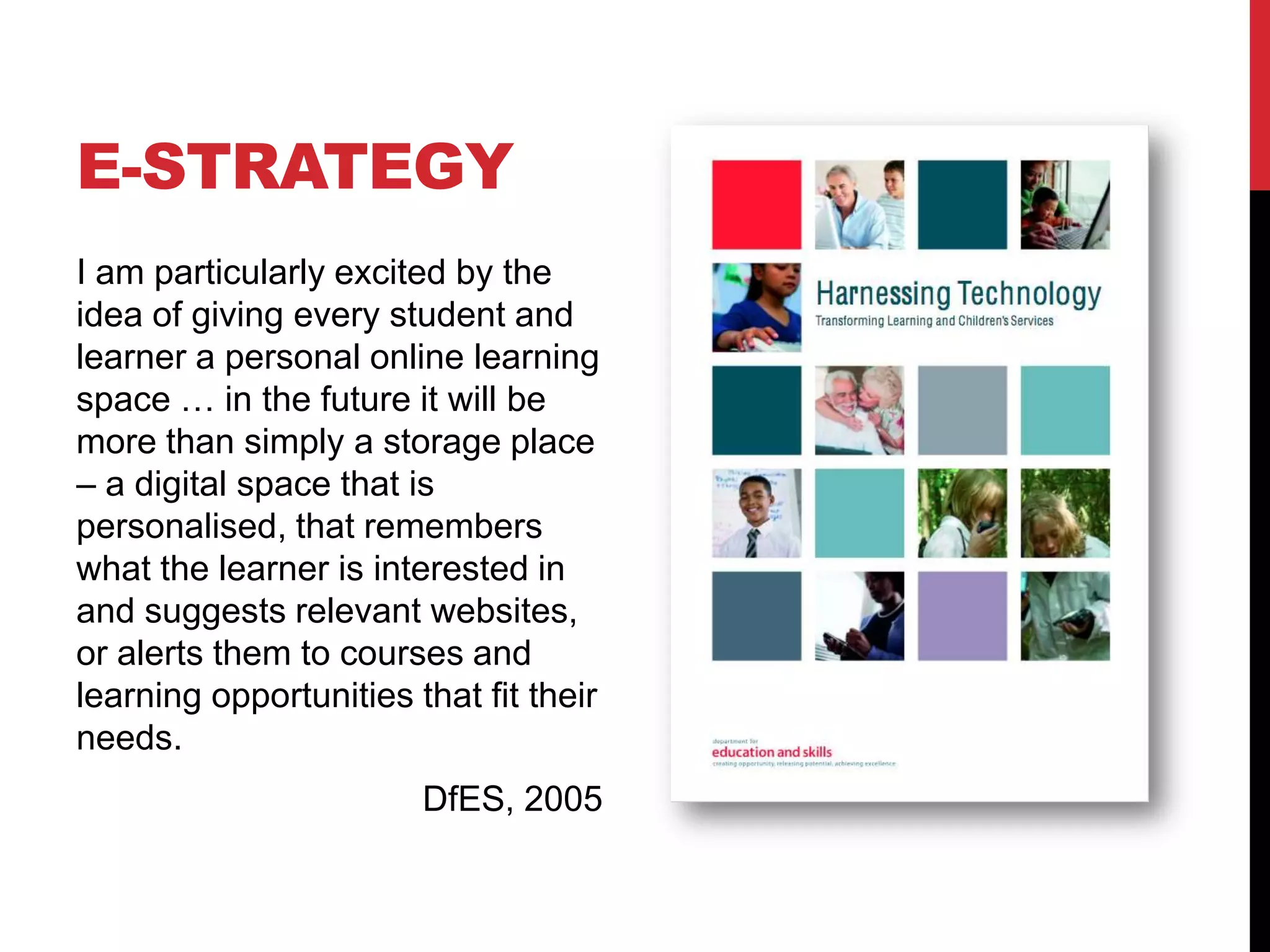
E-STRATEGY
I am particularly excited by the
idea of giving every student and
learner a personal online learning
space … in the future it will be
more than simply a storage place
– a digital space that is
personalised, that remembers
what the learner is interested in
and suggests relevant websites,
or alerts them to courses and
learning opportunities that fit their
needs.
                        DfES, 2005
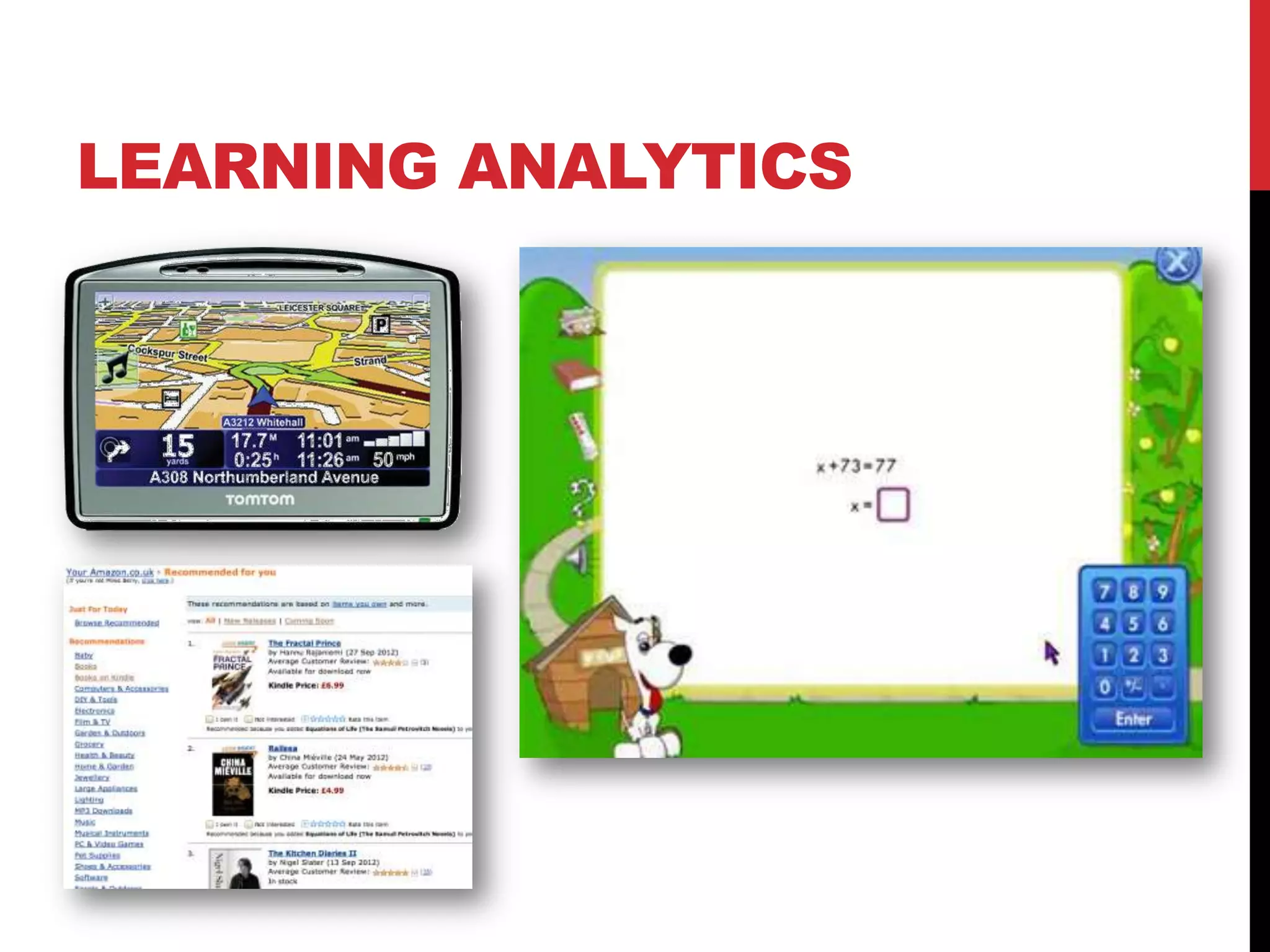
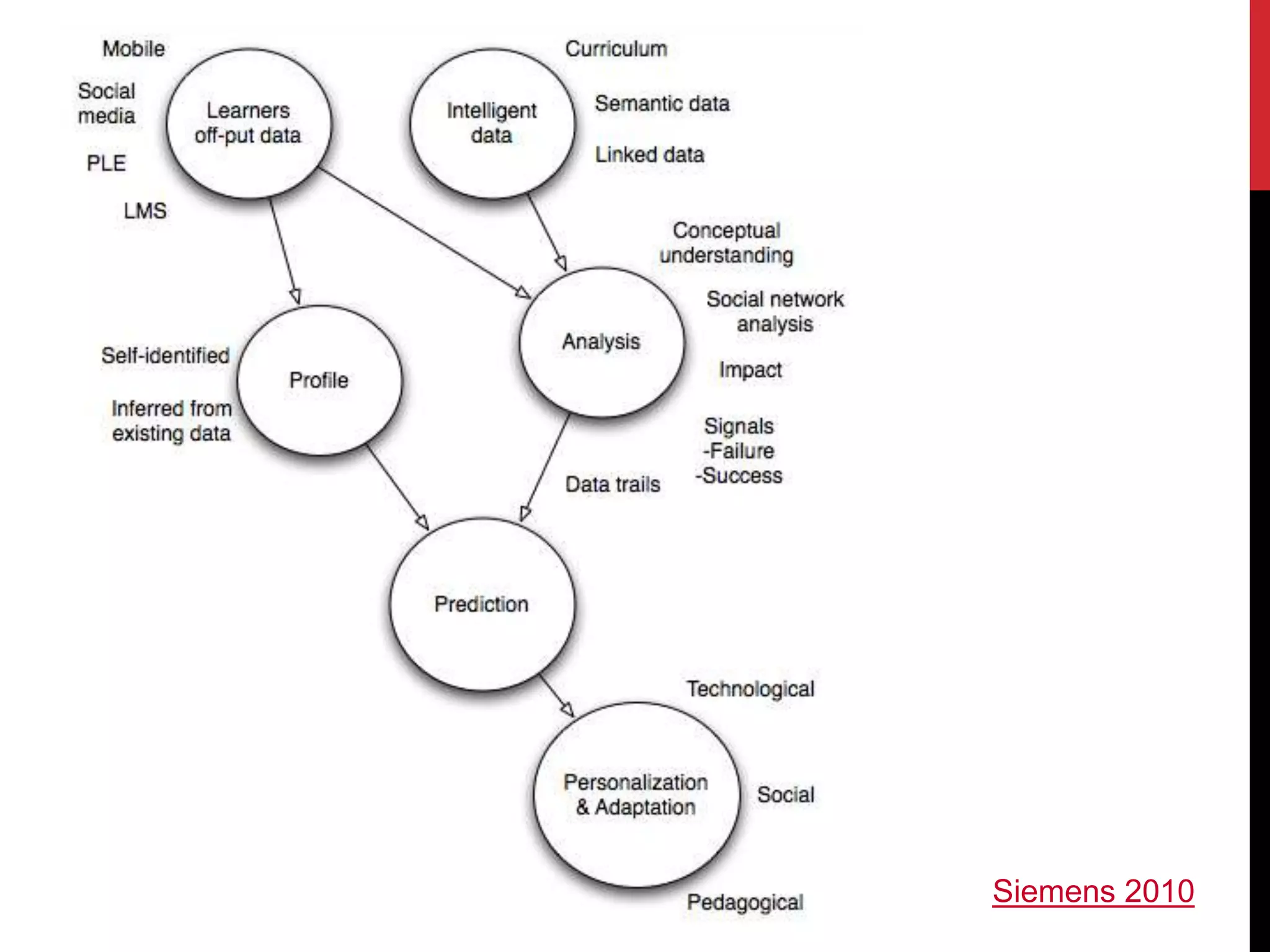
LEARNING ANALYTICS
Siemens 2010
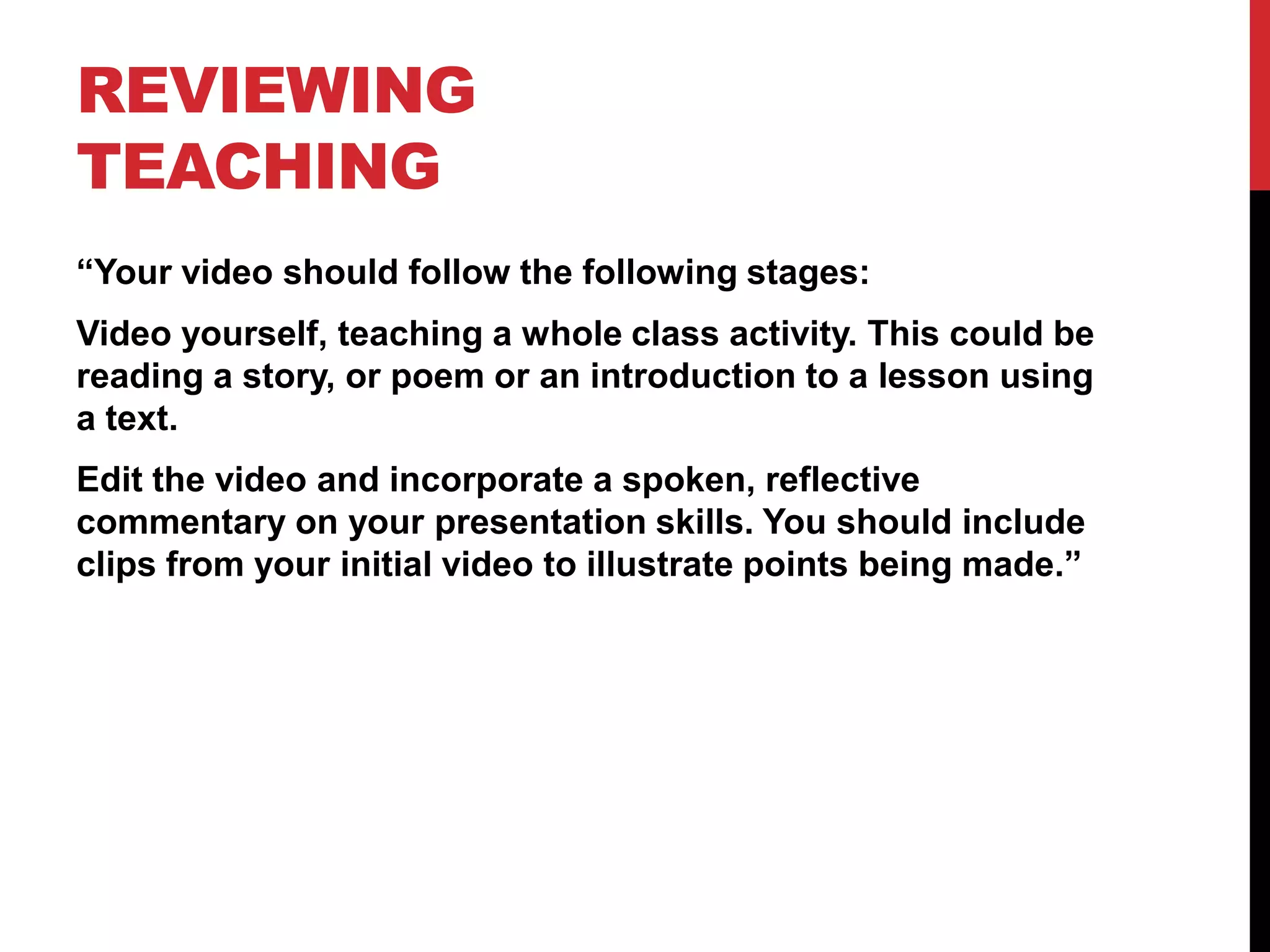
REVIEWING
TEACHING
“Your video should follow the following stages:
Video yourself, teaching a whole class activity. This could be
reading a story, or poem or an introduction to a lesson using
a text.
Edit the video and incorporate a spoken, reflective
commentary on your presentation skills. You should include
clips from your initial video to illustrate points being made.”
IRIS CONNECT
Review a piece of work done using
ICT in your chosen foundation
subject.
Analyse the ICT use, provide
feedback to the pupil and set targets.
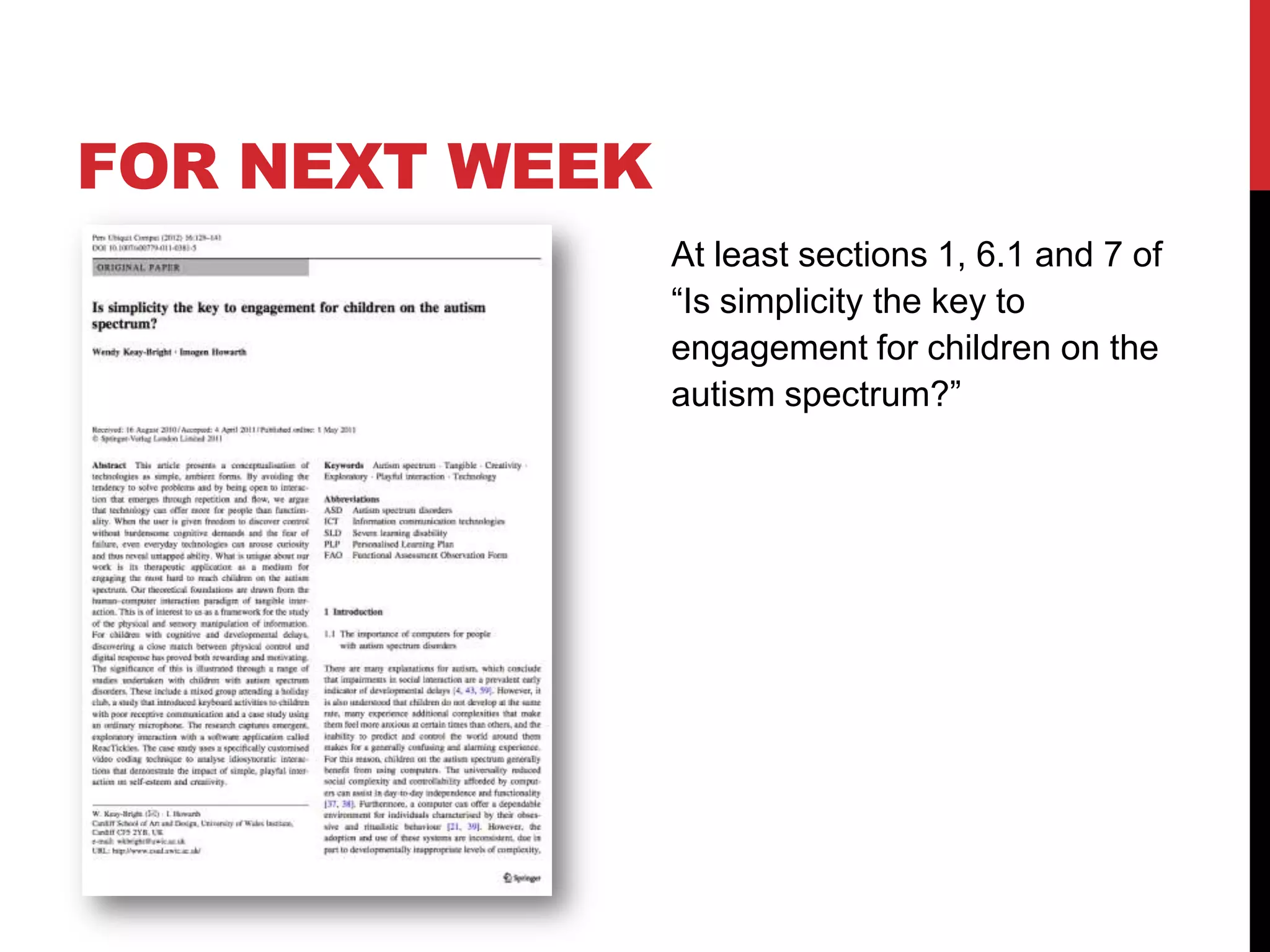
FOR NEXT WEEK
                At least sections 1, 6.1 and 7 of
                “Is simplicity the key to
                engagement for children on the
                autism spectrum?”

Y3 ICT and the foundation subjects - Lecture 4, Assessment

  • 1.
    Y3 BA PRIMARYEDUCATION 2012-2013 ICT AND A FOUNDATION SUBJECT LECTURE 4 USING ICT IN ASSESSMENT AND EVALUATION
  • 2.
    Be able tojustify the selection and use of ICT in relation to aspects of your planning, teaching, assessment and class management, as well as be able to monitor, evaluate and assess your own teaching and pupils' learning when using ICT
  • 3.
  • 4.
    OFSTED ON ASSESSMENT Theuse of assessment was judged to be no better than satisfactory in 53 of the 86 primary schools visited for which this was observed, and 42 of the secondary schools, suggesting that the weaknesses identified previously persisted to a large extent in many schools.
  • 5.
    OFSTED ON ASSESSMENT Theheadteacher of one school in which ICT was judged to be inadequate commented that there was no incentive to collect information on ICT levels or to monitor outcomes. In other schools some teachers had little understanding of what was required for a pupil to reach a certain level. In several schools no assessment of what pupils had achieved in ICT took place at all. In many schools performance in ICT was only assessed in specific ICT classes. This meant that pupils’ considerable use of ICT in other subjects was not monitored or built into planned development.
  • 6.
    THE CHALLENGES OF ASSESSINGICT • embedded ICT • paired work • task vs process • no levels!
  • 7.
    BECTA: ICT MARK ASSESSMENT Theassessment and recording of ICT capability are reliable and consistent. They are informed by the use of ICT in other curriculum areas and by moderation within the school. Statutory requirements for reporting to parents are met. Pupils regularly assess their own and other pupils’ ICT capability based on criteria they have identified and developed. This contributes to their understanding of what constitutes good quality and helps them to improve.
  • 8.
    ASSESSMENT FOR LEARNING “Enableteachers to sift the rich data that arise in class discussion and activity so that professional judgments can be made about the next steps in learning.” • Question and answer. • Observation of students. • Oral and written feedback on hardcopy. • Peer, self and e-assessment.
  • 9.
  • 10.
  • 11.
  • 12.
  • 13.
    ALTERNATIVES • Portfolios • Projects •Problem finding • Hackdays • Web 2.0
  • 14.
    What particular opportunities andchallenges does ICT present to assessment for learning?
  • 15.
    ICT FOR ASSESSMENT • e-portfolios • gamification • peer review, peer assessment • computer assisted assessment • learning analytics
  • 16.
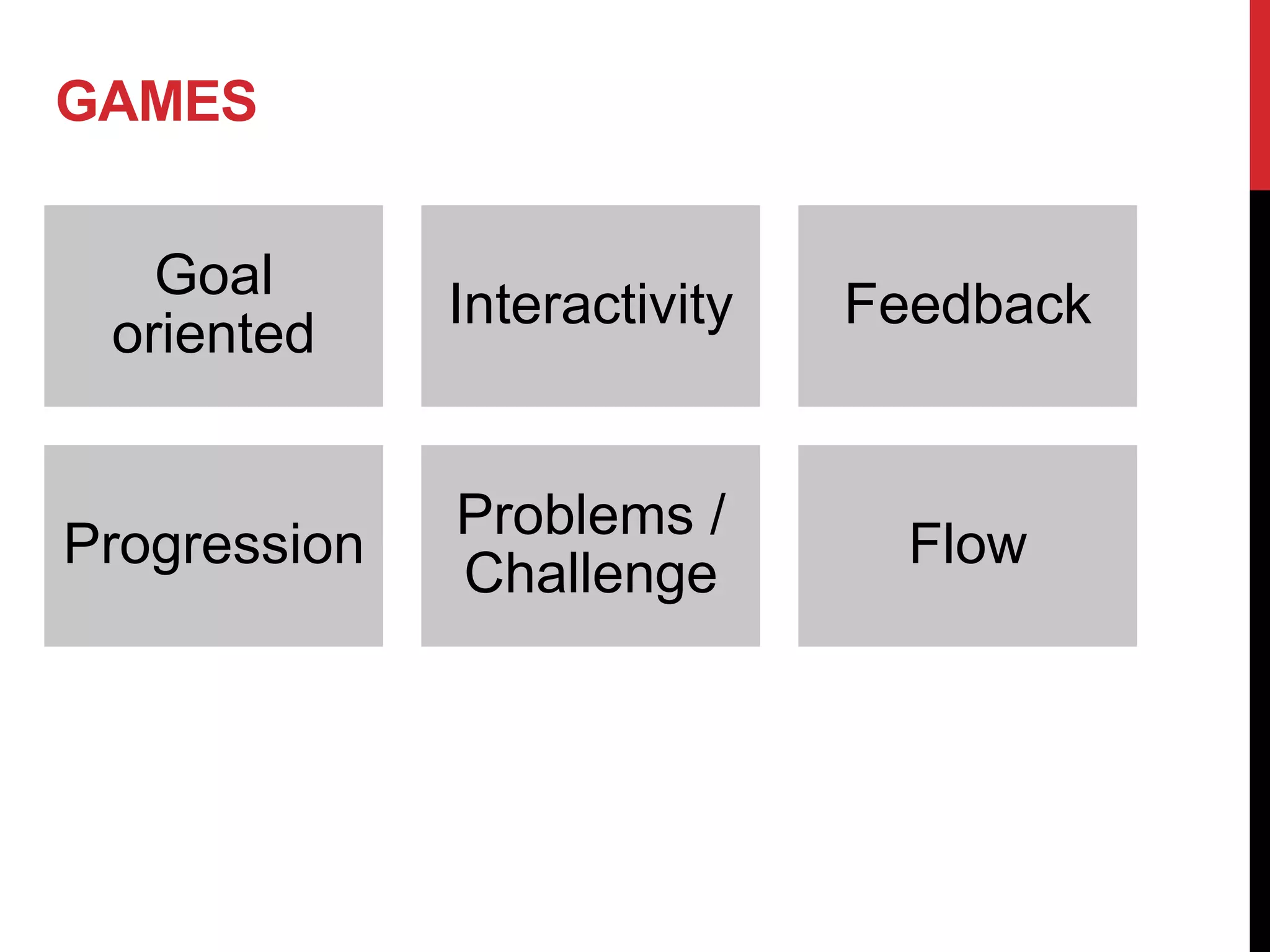
    GAMES Goal Interactivity Feedback oriented Problems / Progression Flow Challenge
  • 17.
    MCGONIGAL, 2011 “If thegoal is truly compelling, and if the feedback is motivating enough, we will keep wrestling with the game’s limitations - creatively, sincerely, and enthusiastically - for a very long time.” • Levels • Experience points • Quests • Badges
  • 20.
  • 21.
  • 23.
    E-STRATEGY I am particularlyexcited by the idea of giving every student and learner a personal online learning space … in the future it will be more than simply a storage place – a digital space that is personalised, that remembers what the learner is interested in and suggests relevant websites, or alerts them to courses and learning opportunities that fit their needs. DfES, 2005
  • 24.
  • 25.
  • 26.
    REVIEWING TEACHING “Your video shouldfollow the following stages: Video yourself, teaching a whole class activity. This could be reading a story, or poem or an introduction to a lesson using a text. Edit the video and incorporate a spoken, reflective commentary on your presentation skills. You should include clips from your initial video to illustrate points being made.”
  • 27.
  • 28.
    Review a pieceof work done using ICT in your chosen foundation subject. Analyse the ICT use, provide feedback to the pupil and set targets.
  • 29.
    FOR NEXT WEEK At least sections 1, 6.1 and 7 of “Is simplicity the key to engagement for children on the autism spectrum?”