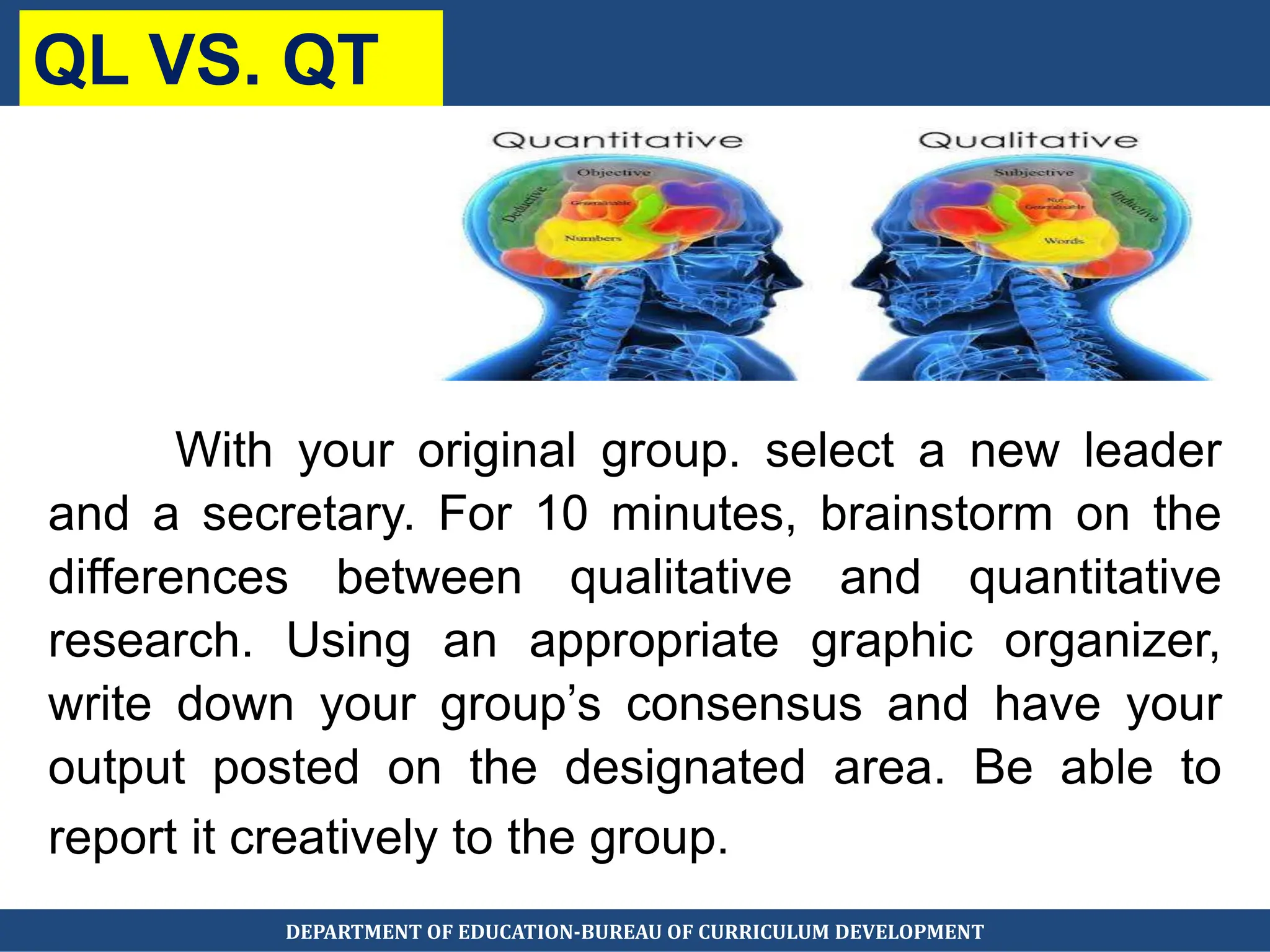
Here are the key differences between qualitative and quantitative research approaches:
Qualitative research is focused on understanding experiences and perspectives through open-ended questions and in-depth discussions, while quantitative research relies on standardized measures that can be statistically analyzed.
Some additional differences include:
- Qualitative research aims to gather non-numerical data like words, pictures or objects to understand meanings, experiences and views. Quantitative research gathers numerical data to test hypotheses.
- Qualitative methods are more flexible and exploratory, while quantitative methods have a fixed design to test hypotheses.
- Data analysis in qualitative research involves identifying themes and patterns, while quantitative analysis uses statistical techniques.
- Sample sizes are typically smaller in qualitative research to
Overview and objectives of Practical Research I, focusing on analyzing curriculum components and pedagogy.
Interactive guessing game with images, engaging participants in a fun and creative way.
Arthur Ashe's quote on achieving greatness through effort and resourcefulness.
Collaborative activity analyzing the curriculum guide, assessing congruency and key concepts.
Details on content, standards, competencies, and their alignment in educational settings.
Examples illustrating the distinctions between content and performance standards in research.
Activity focused on evaluating and commenting on the selection and arrangement of curriculum topics.
Discussion on how research enhances life quality, teaching, learning, and addresses daily needs.
Qualities of research: systematic, objective, comprehensive, critical, rigorous, valid, and verifiable.
Detailed explanation of various phases in the research process from idea generation to communication.
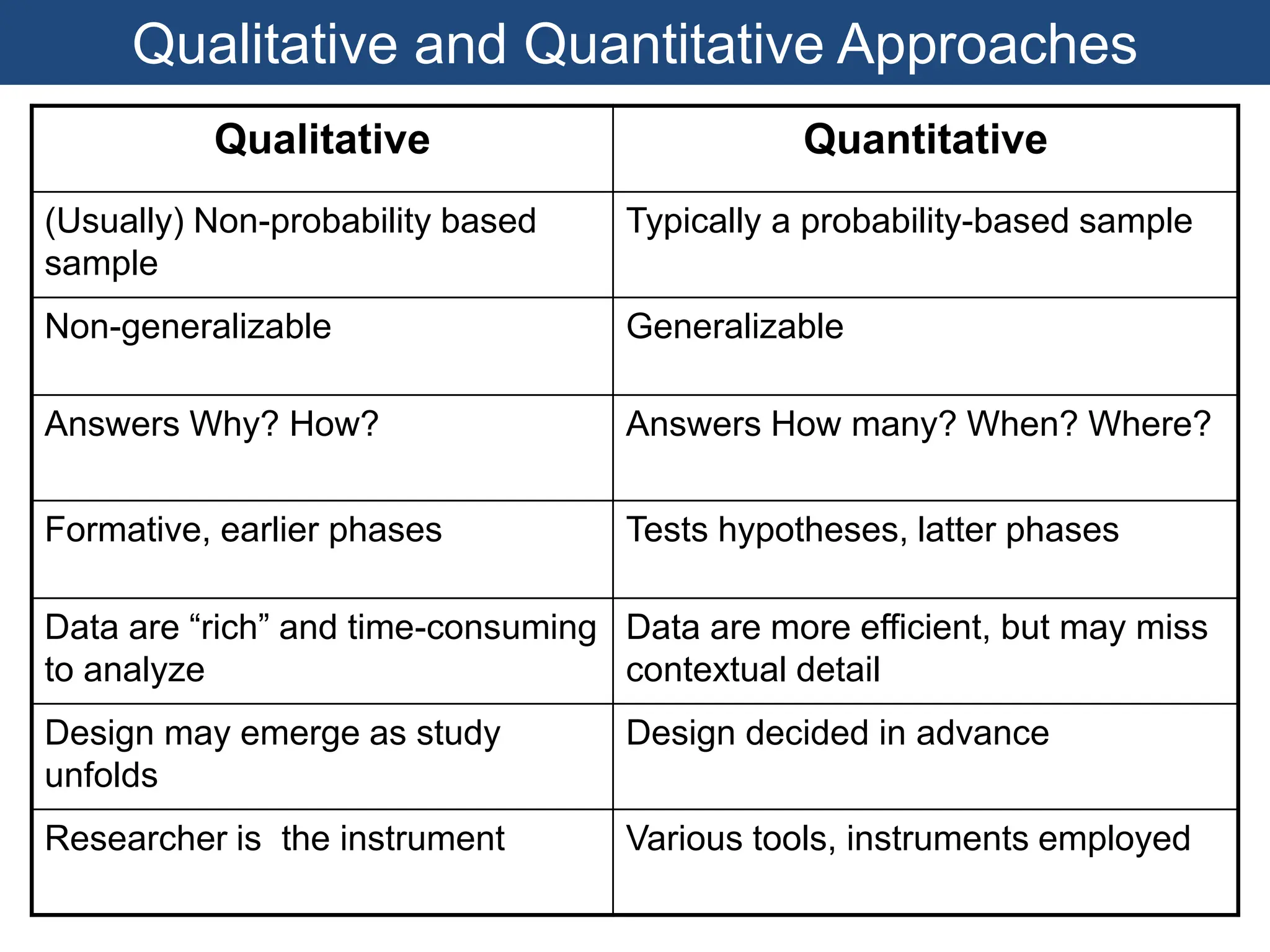
Fundamental ethical guidelines in research including honesty, objectivity, openness, and confidentiality.Contrasting qualitative and quantitative methodologies regarding sampling, data, and approaches.
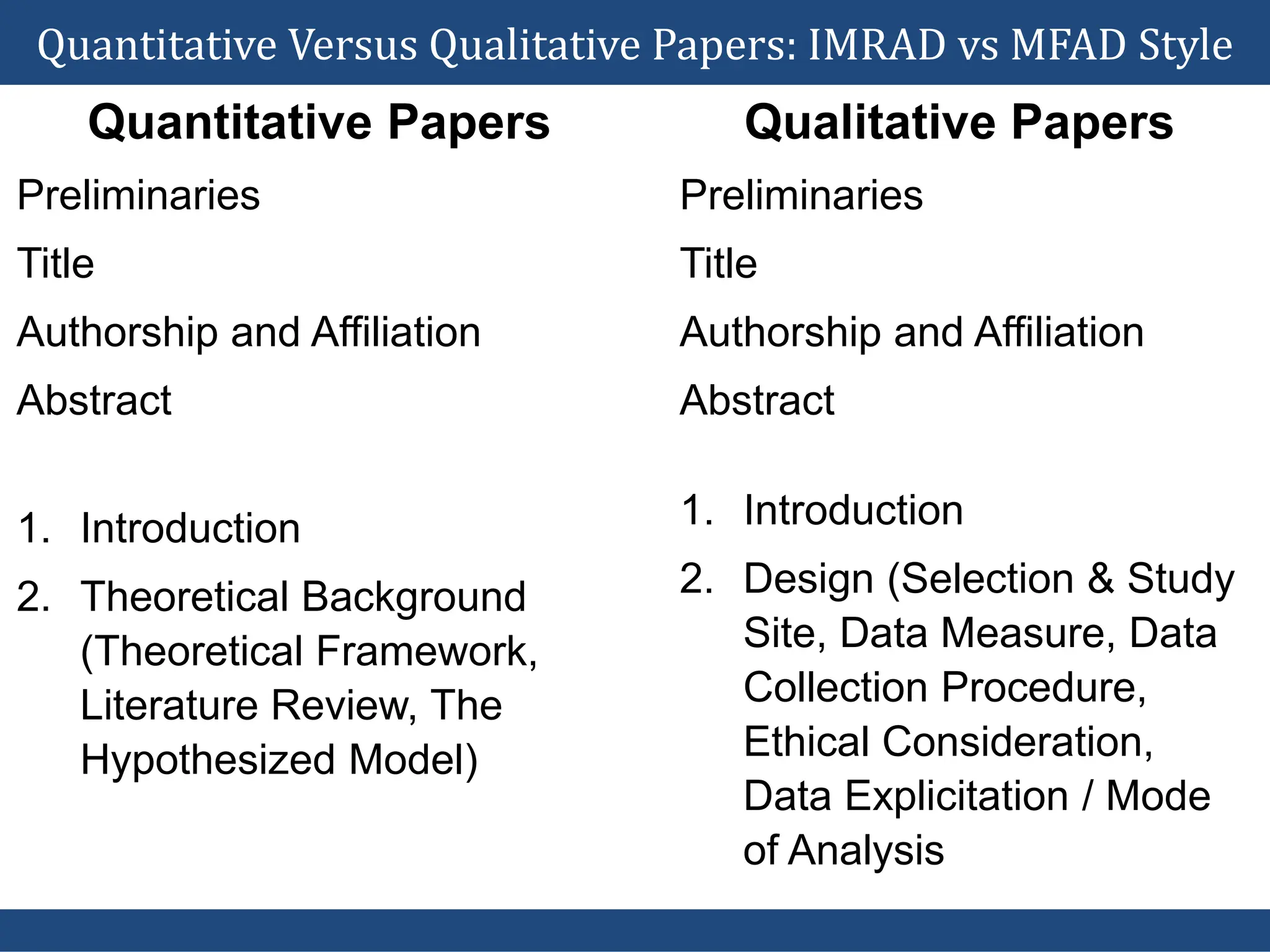
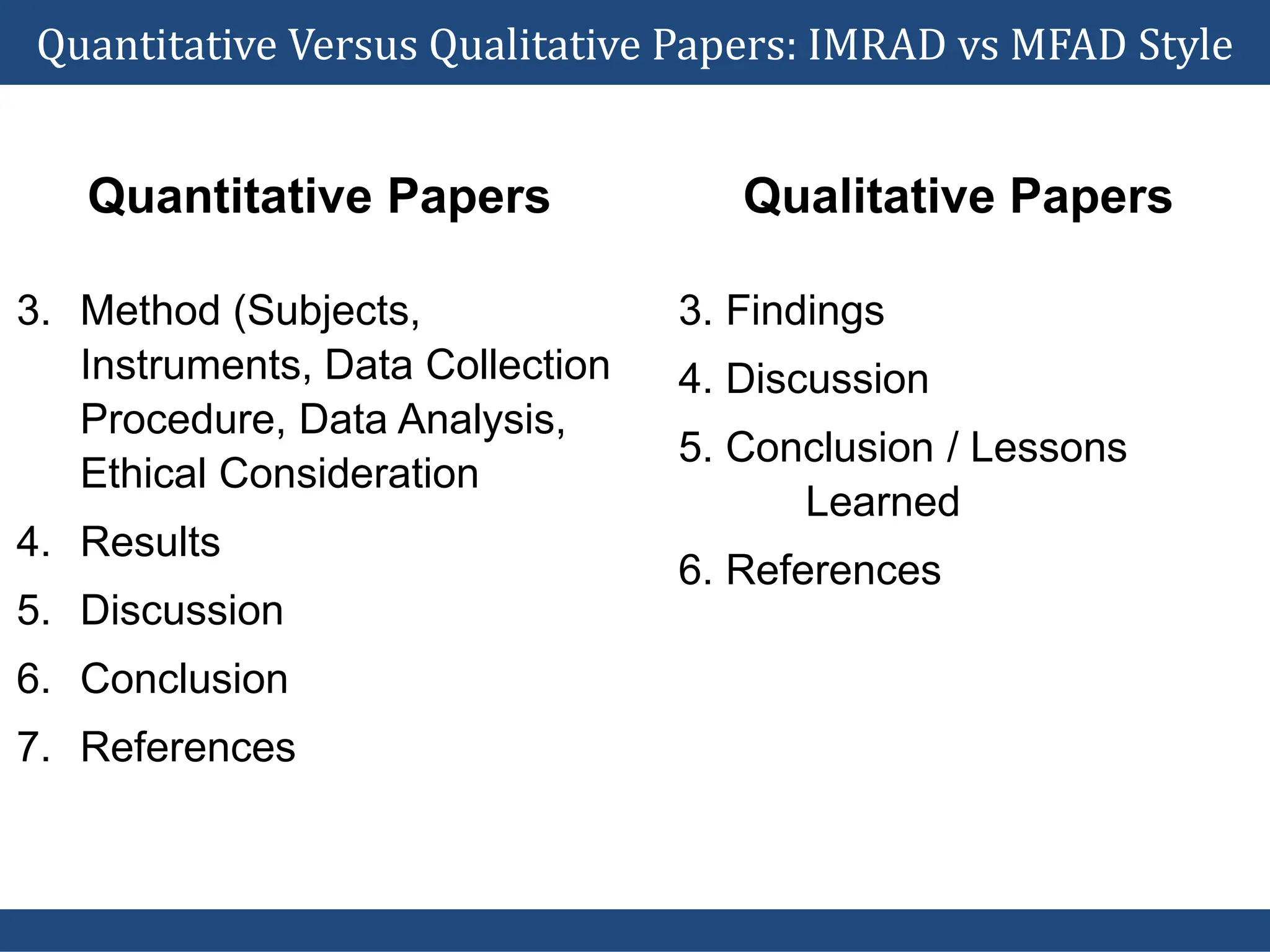
Differences in structure and focus between quantitative and qualitative research papers.
Discussing essential traits of researchers including honesty, skepticism, creativity, and patience.
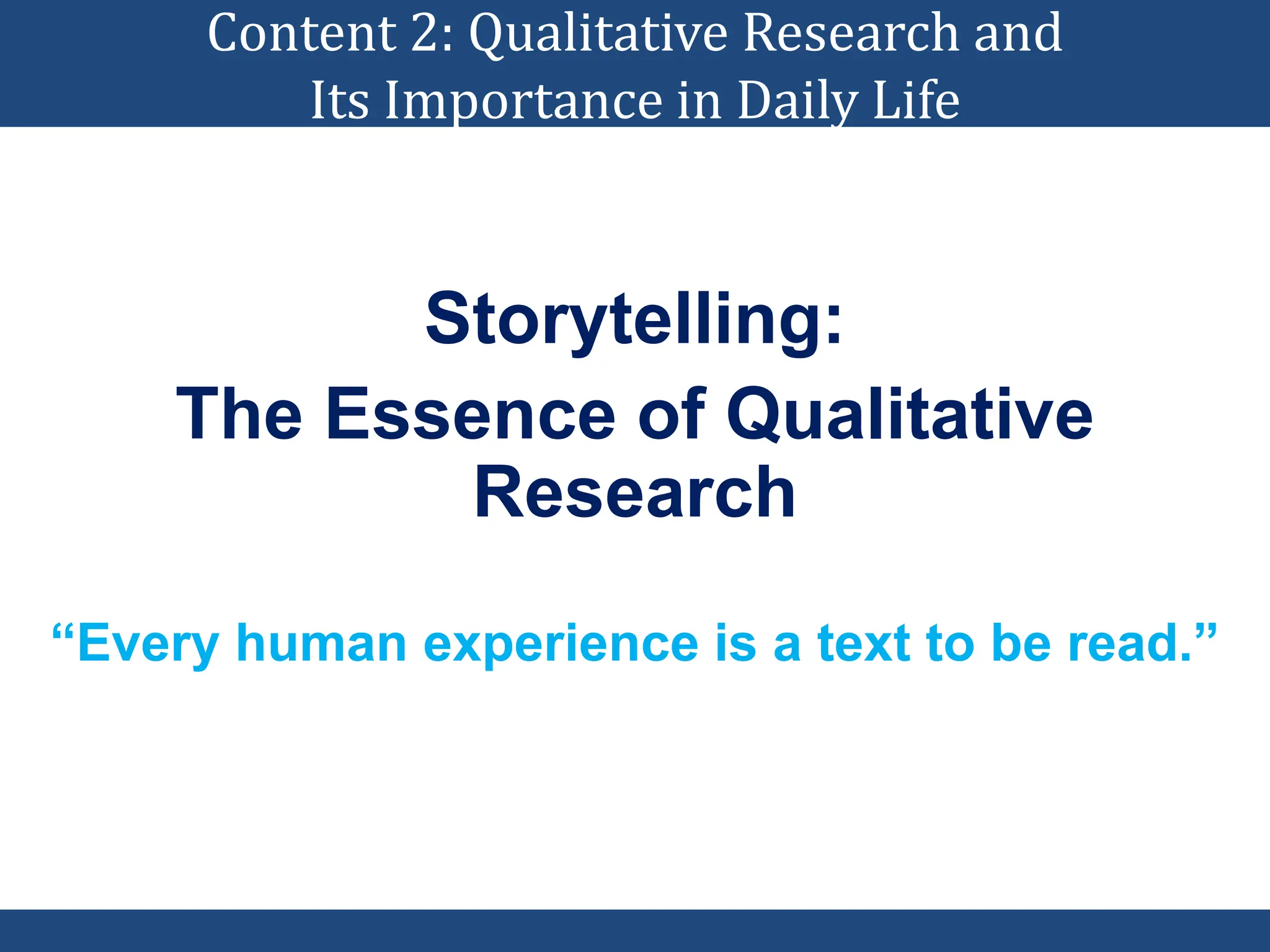
Exploration of qualitative research emphasizing narrative, human experiences and societal context.
Overview of the strengths and weaknesses of qualitative research and its exploratory nature.
Different types of qualitative research and when it is appropriate to conduct such studies.
Focus on defining research problems and conducting workshops for brainstorming research topics.
Importance of proper research titles and criteria for developing good research proposals.
Guidelines for formulating qualitative research questions, emphasizing open-ended and exploratory nature.
Discussion on research scope, limitations, and crafting a clear problem statement.
At the endof the session, the participants
are expected to:
1. Analyze the components of the Curriculum
Guide such as content, content standards,
performance standards, learning competencies
and coding
2. Determine the appropriate pedagogy in
translating learning competencies
3. Prepare proper assessment activities for
teaching learning across competencies
“To achieve greatness,start
where you are,
use what you have and
DO WHAT YOU CAN.”-
Arthur Ashe
17.
Setting the Ground(Unpacking )
Form 8 groups and assign a leader, a
scribe and a reporter. Go over your copy of the
Curriculum Guide. Using the prescribed
template, write down the content standard, the
performance standard, the learning
competencies and the appropriate assessment
for Practical Research I. Analyze the
congruency between and among each
component.
DEPARTMENT OF EDUCATION-BUREAU OF CURRICULUM DEVELOPMENT
19.
Processing:
What observations didyou get out of the
activity?
Is there a congruency between and among the
parts of the curriculum guide?
What are the key concepts and skills to be
developed?
What are the assessment criteria that need to
be considered? Are they attainable?
20.
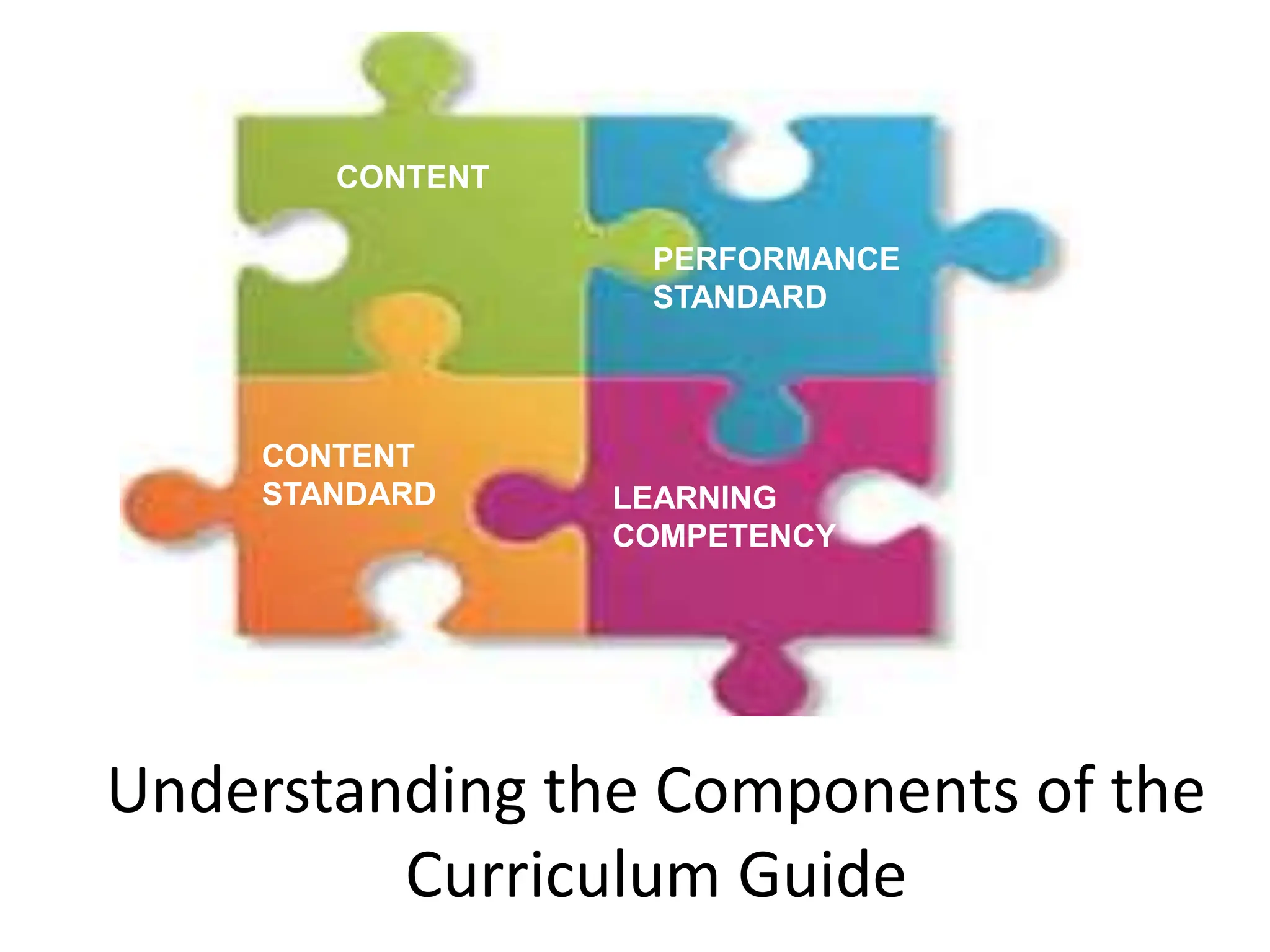
Understanding the Componentsof the
Curriculum Guide
CONTENT
LEARNING
COMPETENCY
CONTENT
STANDARD
PERFORMANCE
STANDARD
21.
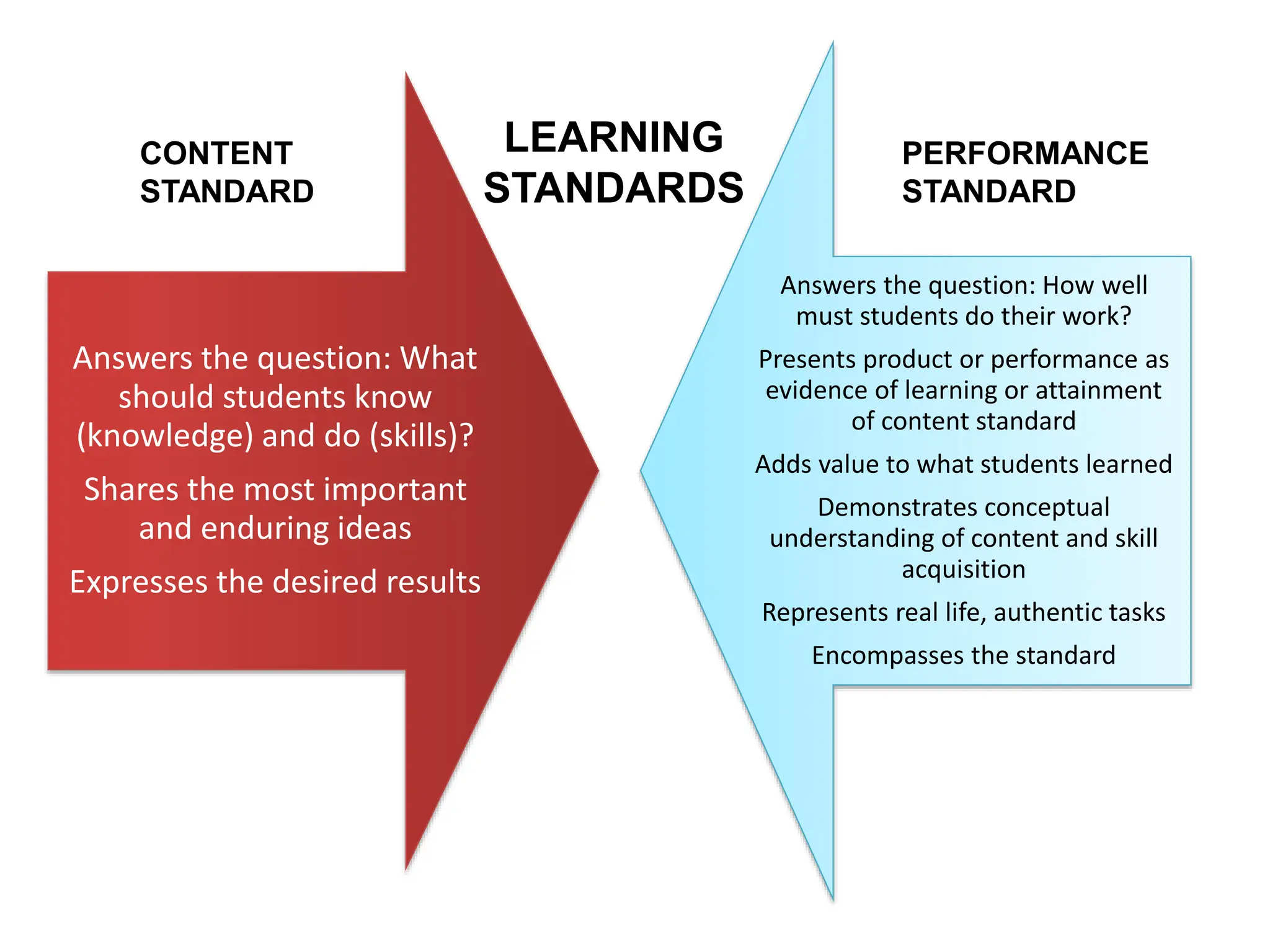
Answers the question:What
should students know
(knowledge) and do (skills)?
Shares the most important
and enduring ideas
Expresses the desired results
Answers the question: How well
must students do their work?
Presents product or performance as
evidence of learning or attainment
of content standard
Adds value to what students learned
Demonstrates conceptual
understanding of content and skill
acquisition
Represents real life, authentic tasks
Encompasses the standard
CONTENT
STANDARD
PERFORMANCE
STANDARD
LEARNING
STANDARDS
22.
Examples of ContentStandard and
Performance Standard
Content Standard Performance Standard
The learner demonstrates
understanding of:
1. Qualitative research designs
2. The description of sample
3. Data collection and analysis
procedures such as survey,
interview, and observation
4. The application of creative
design principles for
execution
The learner is able to:
1. Describe qualitative research
designs, sample and data
collection and analysis
procedures
2. Apply imaginatively
art/design principles to
create artwork
Scan the topicsincluded in Practical Research
I. Comment on the way the topics are selected
and arranged.
Are the topics properly selected and
arranged?
What are your observations on the topics
included and the way they are sequenced?
Are there other topics that need to be
included?
Activity
DEPARTMENT OF EDUCATION-BUREAU OF CURRICULUM DEVELOPMENT
25.
How important is
researchin our
daily life?
Presentation Flow
Content 1: Nature of Inquiry &
Research
DEPARTMENT OF EDUCATION-BUREAU OF CURRICULUM DEVELOPMENT
26.
It’s a PracticalWorld!
DEPARTMENT OF EDUCATION-BUREAU OF CURRICULUM DEVELOPMENT
27.
Research . ..
. . . improves the quality of life
. . . improves the teaching and learning process
. . . improves students’ achievement
. . . satisfies man’s needs
. . . reduces the burden of work
. . . has deep-seated psychological aspects
. . . improves the exportation of food products
Importance of Research
28.
SYSTEMATIC
It is systematicas there are interrelated steps or
procedures a researcher has to observe in solving a
problem.
OBJECTIVE
It is not based on guesswork. This is because
empirical data have to be gathered by the researcher
before making any conclusion or proposing any
solution to an identified difficulty or problem.
Characteristics of Research
29.
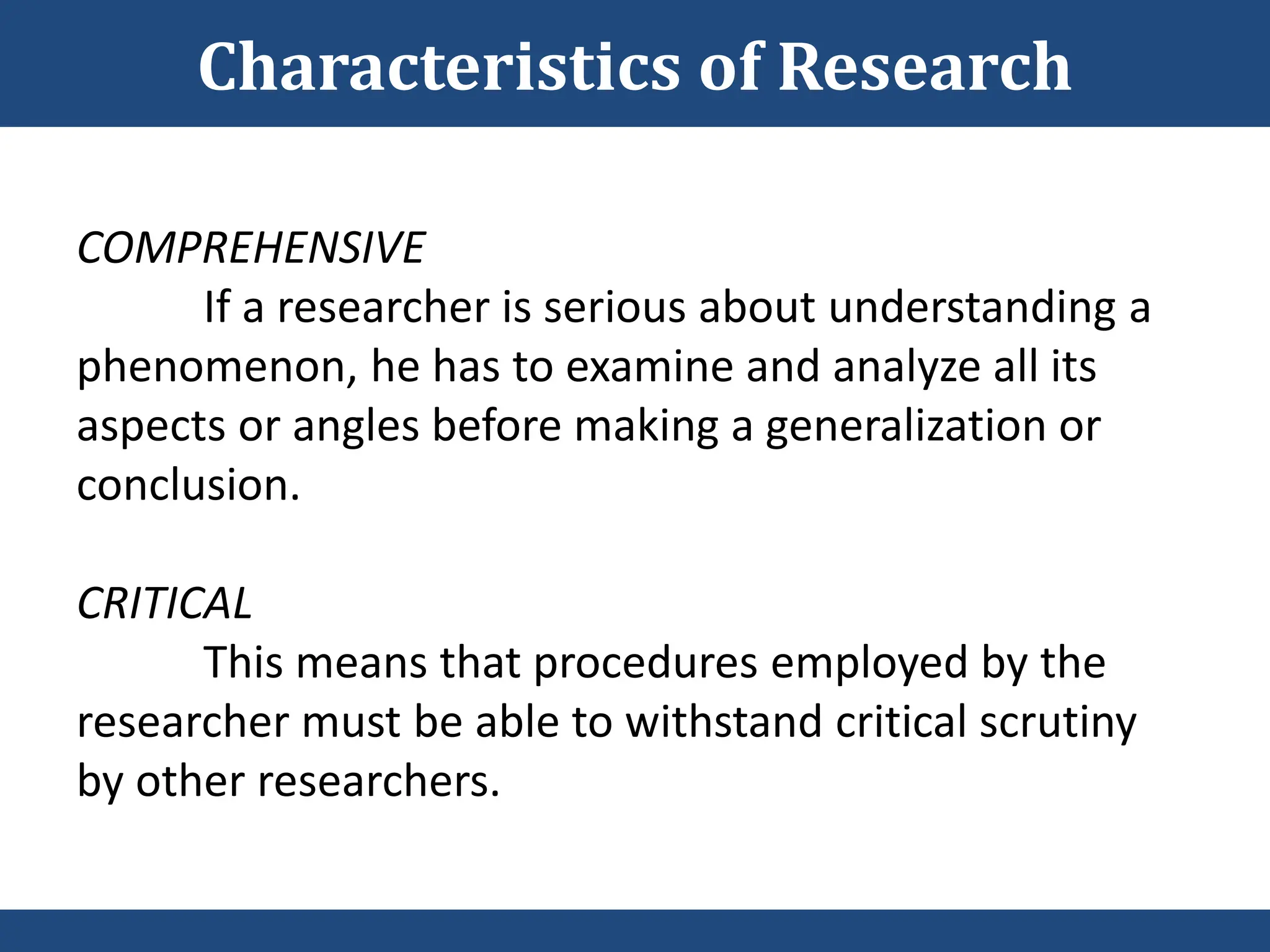
COMPREHENSIVE
If a researcheris serious about understanding a
phenomenon, he has to examine and analyze all its
aspects or angles before making a generalization or
conclusion.
CRITICAL
This means that procedures employed by the
researcher must be able to withstand critical scrutiny
by other researchers.
Characteristics of Research
30.
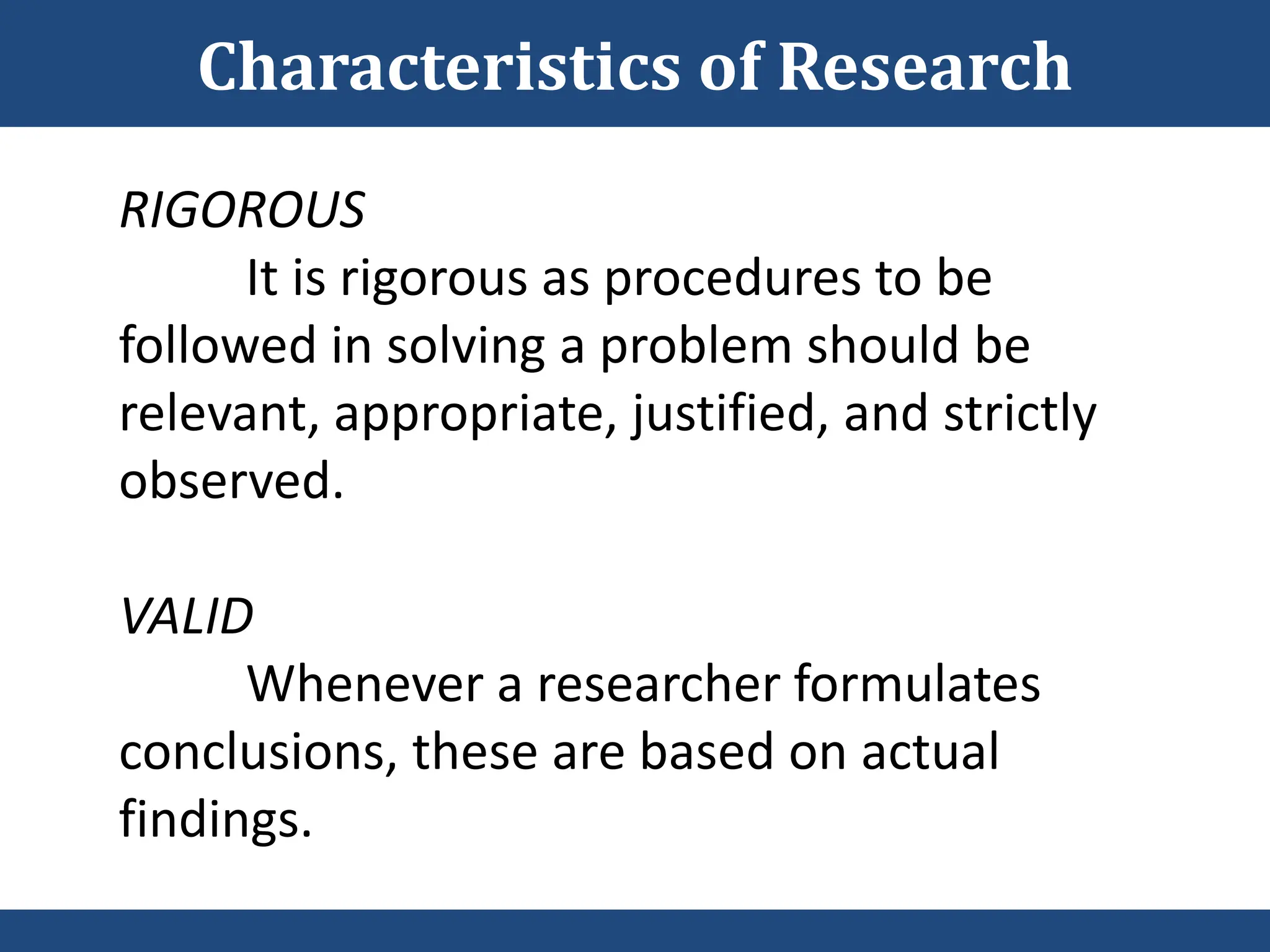
RIGOROUS
It is rigorousas procedures to be
followed in solving a problem should be
relevant, appropriate, justified, and strictly
observed.
VALID
Whenever a researcher formulates
conclusions, these are based on actual
findings.
Characteristics of Research
31.
VERIFIABLE
Research is saidto be verifiable as other
researchers can check on the correctness of
its results by replicating the study, based on
the methods and procedures employed by the
researcher.
EMPIRICAL
Research is empirical as generalization
drawn by a researcher is rooted upon hard
evidence gathered from information collected
from real life experiences or observations.
Characteristics of Research
32.
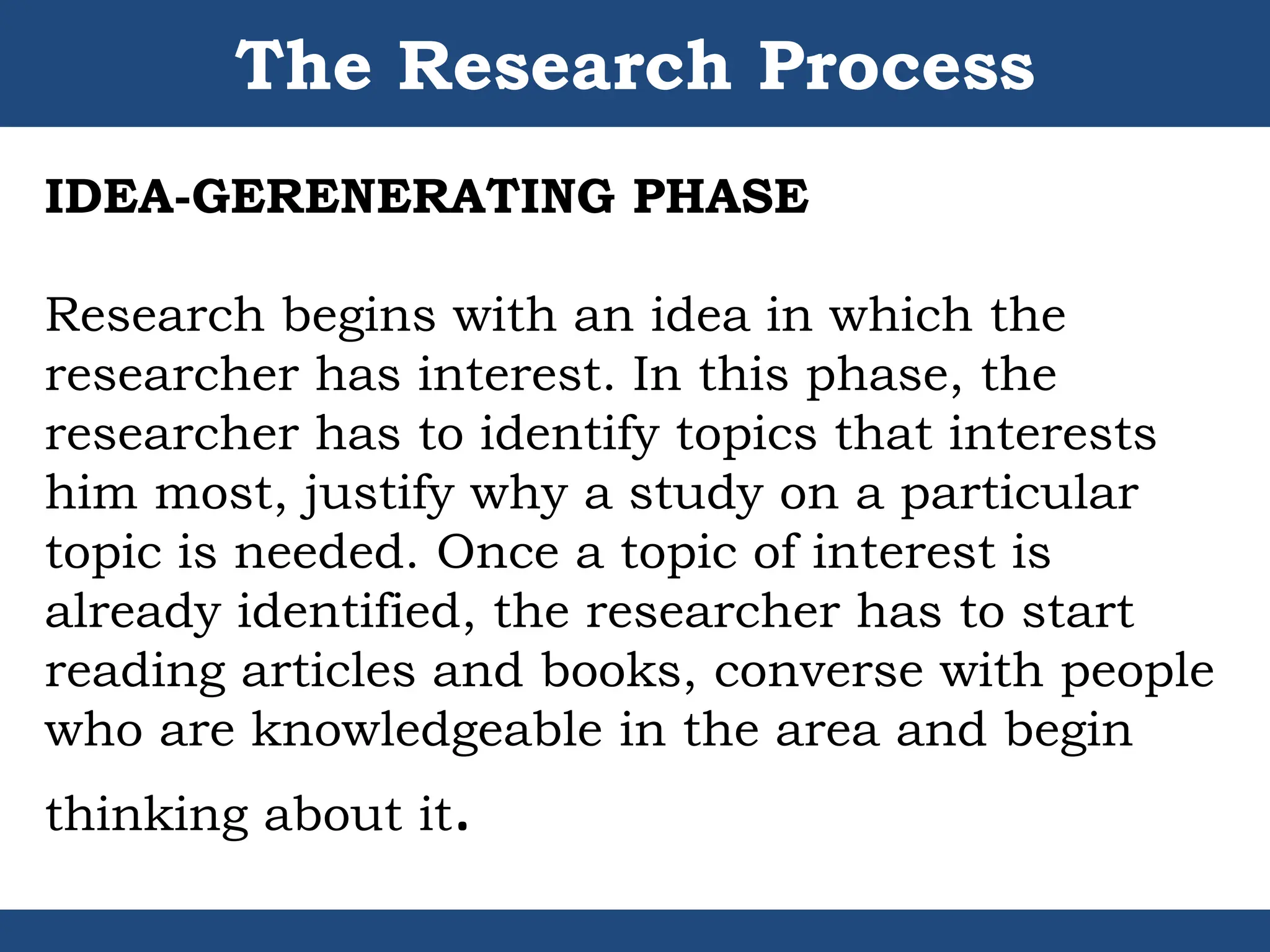
The Research Process
IDEA-GERENERATINGPHASE
Research begins with an idea in which the
researcher has interest. In this phase, the
researcher has to identify topics that interests
him most, justify why a study on a particular
topic is needed. Once a topic of interest is
already identified, the researcher has to start
reading articles and books, converse with people
who are knowledgeable in the area and begin
thinking about it.
33.
The Research Process
PROBLEM-DEFINITIONPHASE
A phase where the researcher has to
refine the ideas generated in the first phase.
It involves the following activities:
identification and definition of the
variables to be studied; development of the
conceptual and theoretical framework; the
formulation of the major and specific
problems and the formulation of
hypothesis.
34.
The Research Process
PROCEDURES-DESIGNPHASE
It includes the following activities:
decision on what research methodology
to employ; selection of research
participants; development and
validation of data gathering tools;
specification of the procedures to be
observed in the actual collection of
data and planning the analysis of data
gathered.
35.
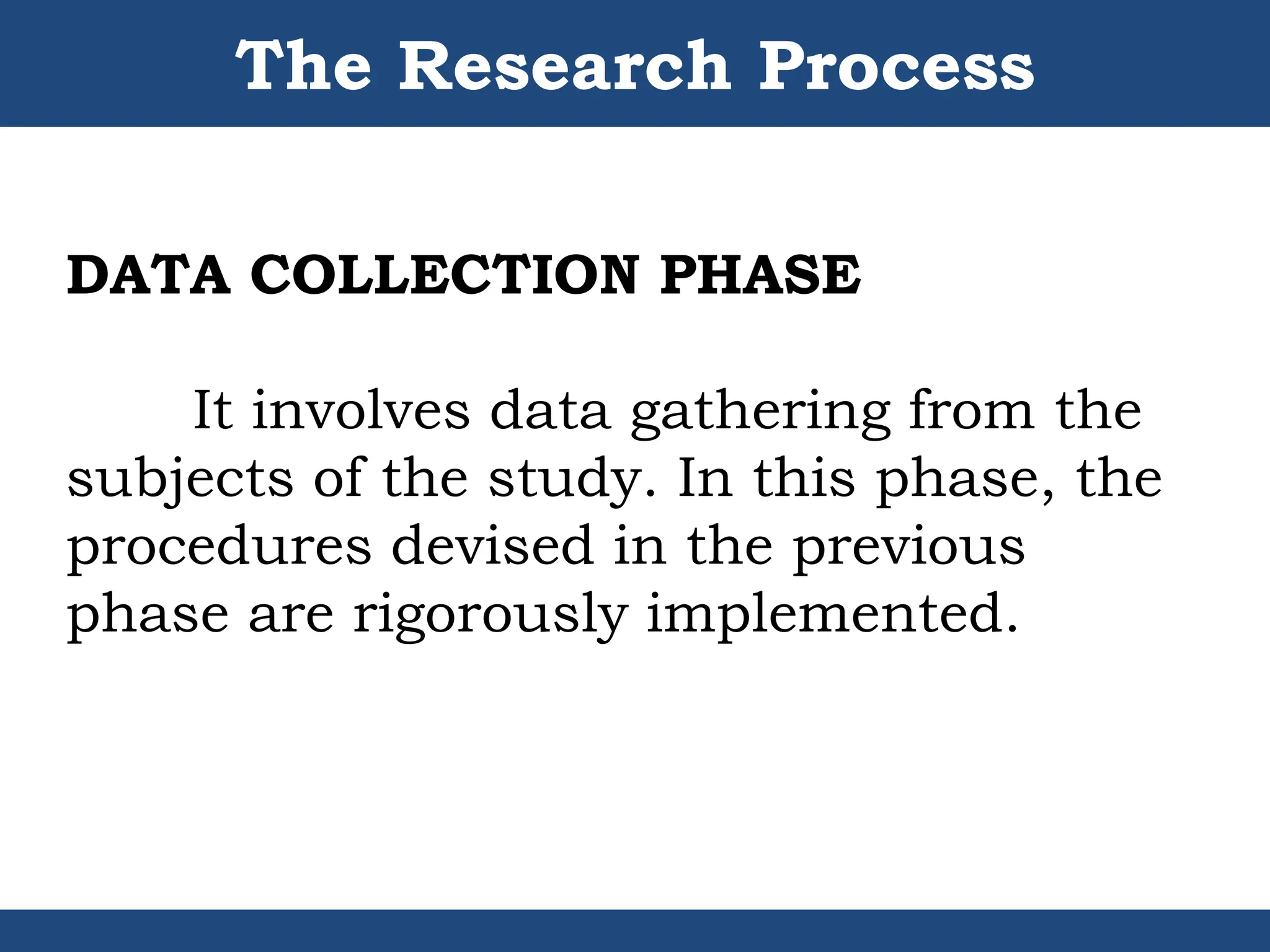
The Research Process
DATACOLLECTION PHASE
It involves data gathering from the
subjects of the study. In this phase, the
procedures devised in the previous
phase are rigorously implemented.
36.
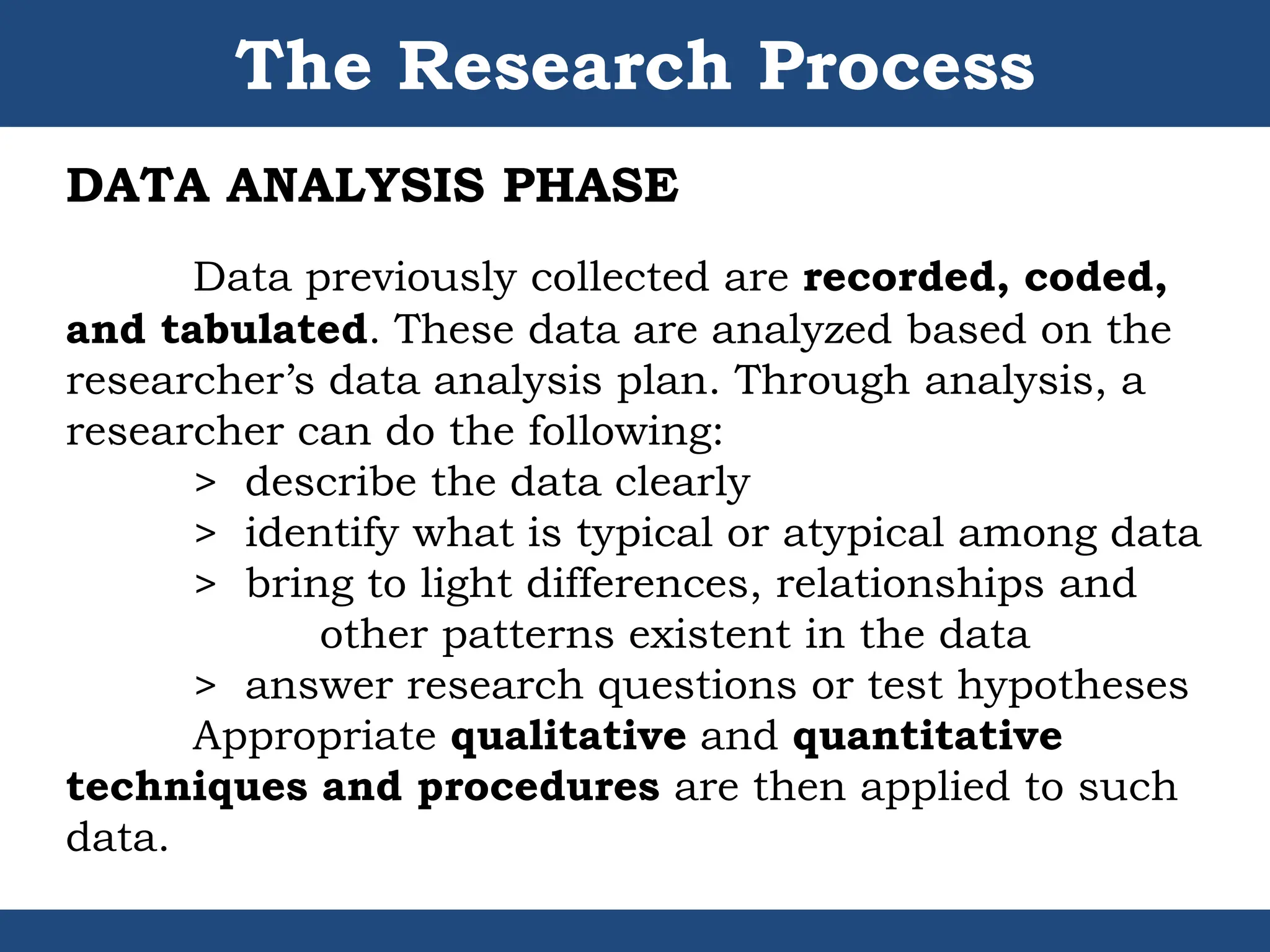
The Research Process
DATAANALYSIS PHASE
Data previously collected are recorded, coded,
and tabulated. These data are analyzed based on the
researcher’s data analysis plan. Through analysis, a
researcher can do the following:
> describe the data clearly
> identify what is typical or atypical among data
> bring to light differences, relationships and
other patterns existent in the data
> answer research questions or test hypotheses
Appropriate qualitative and quantitative
techniques and procedures are then applied to such
data.
37.
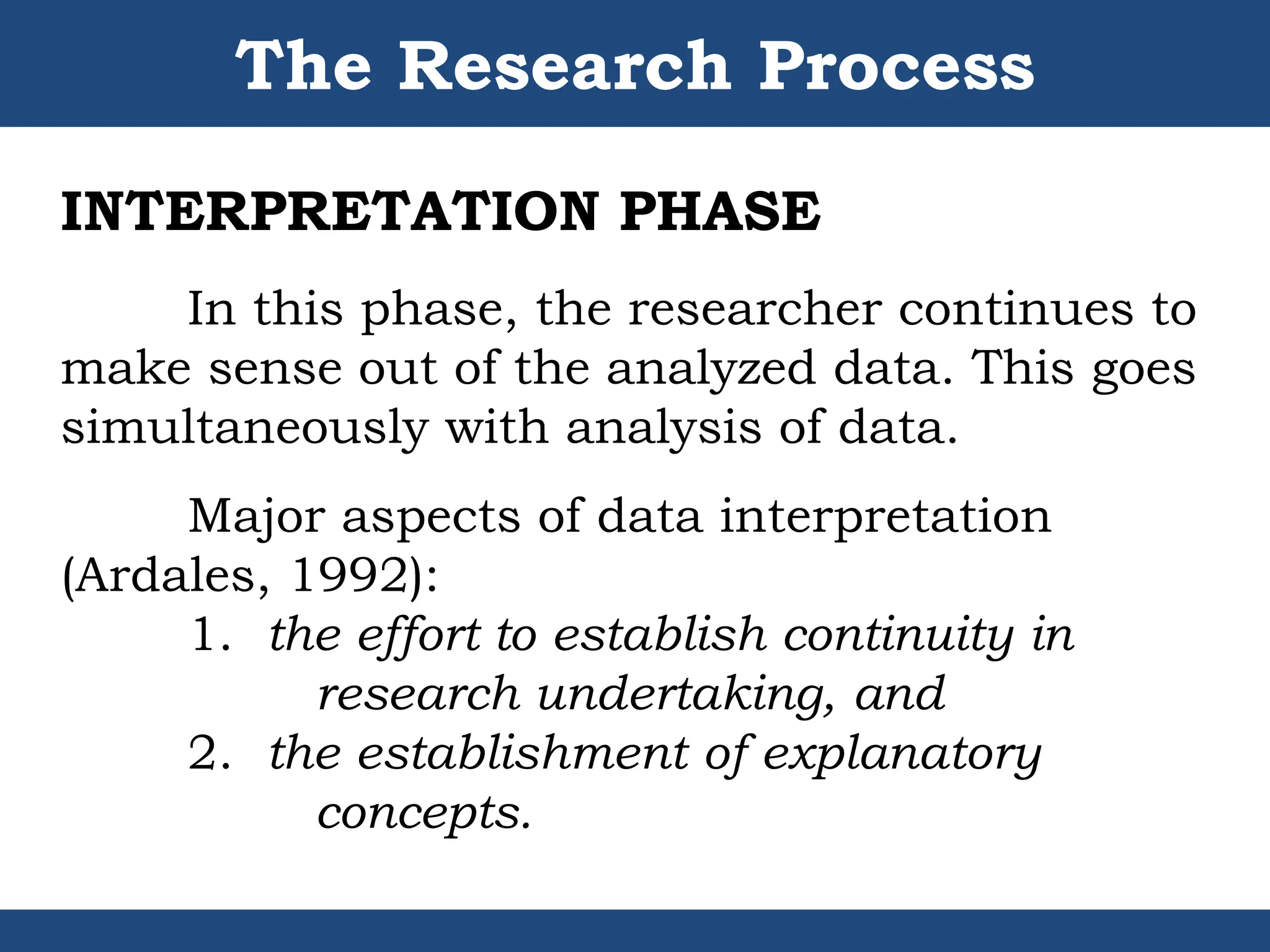
The Research Process
INTERPRETATIONPHASE
In this phase, the researcher continues to
make sense out of the analyzed data. This goes
simultaneously with analysis of data.
Major aspects of data interpretation
(Ardales, 1992):
1. the effort to establish continuity in
research undertaking, and
2. the establishment of explanatory
concepts.
38.
The Research Process
(1)the effort to establish continuity in research
undertaking
– the researcher relates the results of the
study with those of other studies
- the researcher has to indicate whether
the results of the study jibe with or run
counter to the results of previous studies
on the same topic or variable
39.
The Research Process
(2)the establishment of explanatory concepts
– this means providing explanation as
to the status of a phenomenon, situation,
environment, people, event or object that was
studied.
40.
The Research Process
COMMUNICATIONPHASE
The researcher has to prepare a written or
oral report of the study conducted, either for
publication or presentation to colleagues or a
panel of experts.
A research undertaking does not
contribute to the fund of knowledge if it is not
shared with the public.
41.
The Research Process
COMMUNICATIONPHASE
There are three important issues to be
addressed by the researcher in the preparation
of the report:
- to whom is the research report directed;
- what is the content of the report; and
- what is the style of the presentation of
the report.
42.
How can therights and privacy of
participants in a study be
protected?
Research Ethics
DEPARTMENT OF EDUCATION-BUREAU OF CURRICULUM DEVELOPMENT
How will data gathered be
safeguarded for possible
contamination?
43.
1. Honesty: Honestlyreport data,
results, methods and procedure
used, and publication status.
Does not fabricate, falsify, or
misrepresent data.
Research Ethics
DEPARTMENT OF EDUCATION-BUREAU OF CURRICULUM DEVELOPMENT
2. Objectivity: Avoid bias in design,
data analysis, data interpretation
and peer review.
44.
3. Openness: Sharedata, results,
ideas, tools, resources and open
to criticism and new ideas.
4. Respect for intellectual property:
Honor patents, copyrights, and
other forms of intellectual
property. Give proper
acknowledgement for all
contributions to research.
Research Ethics
DEPARTMENT OF EDUCATION-BUREAU OF CURRICULUM DEVELOPMENT
45.
5. Confidentiality: Protect
confidentialcommunications,
such as papers or grants submitted
for publication personnel records
and patent records.
6. Social Responsibility: Strive to
promote social good and prevent or
mitigate social harms through
research, public education, and
advocacy.
Research Ethics
DEPARTMENT OF EDUCATION-BUREAU OF CURRICULUM DEVELOPMENT
46.
7. Don’t plagiarize:Observance on
the sanctity and inviolate
candidness or originality of
data. Do not fabricate or falsify
data.
Research Ethics
DEPARTMENT OF EDUCATION-BUREAU OF CURRICULUM DEVELOPMENT
47.
With your originalgroup. select a new leader
and a secretary. For 10 minutes, brainstorm on the
differences between qualitative and quantitative
research. Using an appropriate graphic organizer,
write down your group’s consensus and have your
output posted on the designated area. Be able to
report it creatively to the group.
DEPARTMENT OF EDUCATION-BUREAU OF CURRICULUM DEVELOPMENT
QL VS. QT
Qualitative Quantitative
(Usually) Non-probabilitybased
sample
Typically a probability-based sample
Non-generalizable Generalizable
Answers Why? How? Answers How many? When? Where?
Formative, earlier phases Tests hypotheses, latter phases
Data are “rich” and time-consuming
to analyze
Data are more efficient, but may miss
contextual detail
Design may emerge as study
unfolds
Design decided in advance
Researcher is the instrument Various tools, instruments employed
Qualitative and Quantitative Approaches
Quantitative Versus QualitativePapers: IMRAD vs MFAD Style
Expository
Research requires on
the average 4000 to
6000 words
Exploratory
Research requires on
the average 1500 to
3000 words
52.
Quantitative Versus QualitativePapers: IMRAD vs MFAD Style
Quantitative Papers
Preliminaries
Title
Authorship and Affiliation
Abstract
1. Introduction
2. Theoretical Background
(Theoretical Framework,
Literature Review, The
Hypothesized Model)
Qualitative Papers
Preliminaries
Title
Authorship and Affiliation
Abstract
1. Introduction
2. Design (Selection & Study
Site, Data Measure, Data
Collection Procedure,
Ethical Consideration,
Data Explicitation / Mode
of Analysis
Activity
Brainstorm on the
qualitiesof a good researcher
especially in the
technologically driven
landscape of the 21st century.
After which, choose one trait
and perform a short skit or
scenario portraying/
embodying the chosen trait/
characteristic.
DEPARTMENT OF EDUCATION-BUREAU OF CURRICULUM DEVELOPMENT
55.
Characteristics of aResearcher
• Honesty. A good researcher is one who reports all
the information gathered on the topic being
investigated.
• Skepticism. As a researcher, one should always
adopt a questioning mind with regard to the
truthfulness of the method, results, and interpretation
of the data gathered. At every step of the research
process, the search for truth prevails.
• Openness to criticism. A good researcher is one
who is open to suggestions of others to improve
his/her methodology, findings, and analysis.
56.
Characteristics of aResearcher
• Creative imagination. This is an important attribute
for a researcher as it enables one to package the
most appropriate combination of approaches and
methodologies for gathering information.
• Resourcefulness. A good researcher is one who
explores many sources of information.
• Logical mind. A researcher must be logical. To be
logical is to be able to apply sound reasoning to
arguments raised in the conduct of research.
• Patience. It is another virtue that a researcher must
have. It takes patience to be able to go through the
several processes of research.
57.
Content 2: QualitativeResearch and
Its Importance in Daily Life
Storytelling:
The Essence of Qualitative
Research
“Every human experience is a text to be read.”
58.
• Not measurements,but WORDS!
–Instead of asking how many times someone
purchased an item, you ask "WHY...?"
–Typically the samples are small, and not
"random"
QUALITATIVE RESEARCH
DEPARTMENT OF EDUCATION-BUREAU OF CURRICULUM DEVELOPMENT
59.
• Perspectival (Subjective)versus objective
views
• Discovery versus proof
- Qualitative research aims to discover
patterns which emerge after close
observation, careful documentation,
and thoughtful analysis of the
topic/issue.
- Generates not sweeping generalizations
but contextual findings.
QUALITATIVE RESEARCH
60.
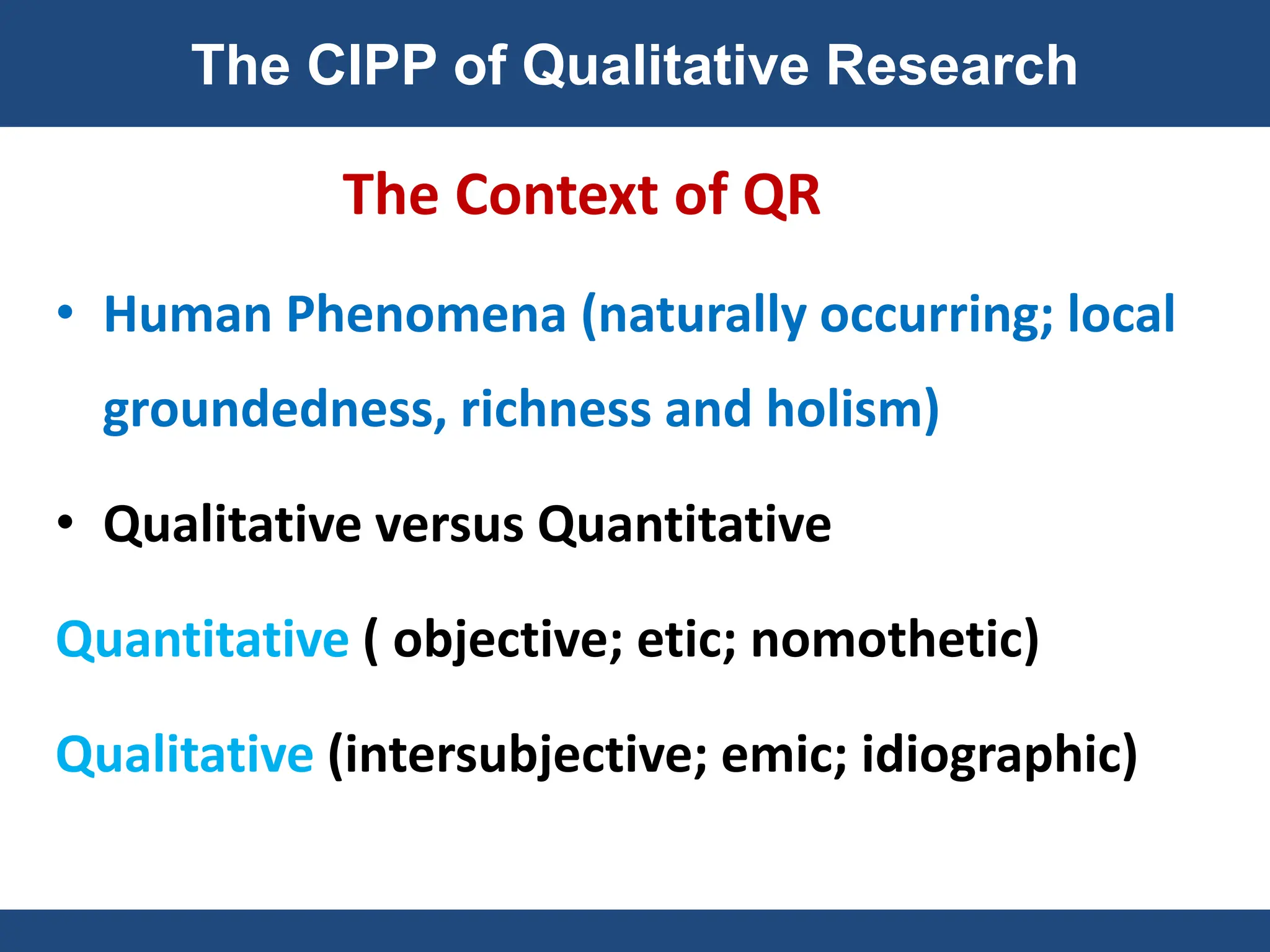
The Context ofQR
• Human Phenomena (naturally occurring; local
groundedness, richness and holism)
• Qualitative versus Quantitative
Quantitative ( objective; etic; nomothetic)
Qualitative (intersubjective; emic; idiographic)
The CIPP of Qualitative Research
61.
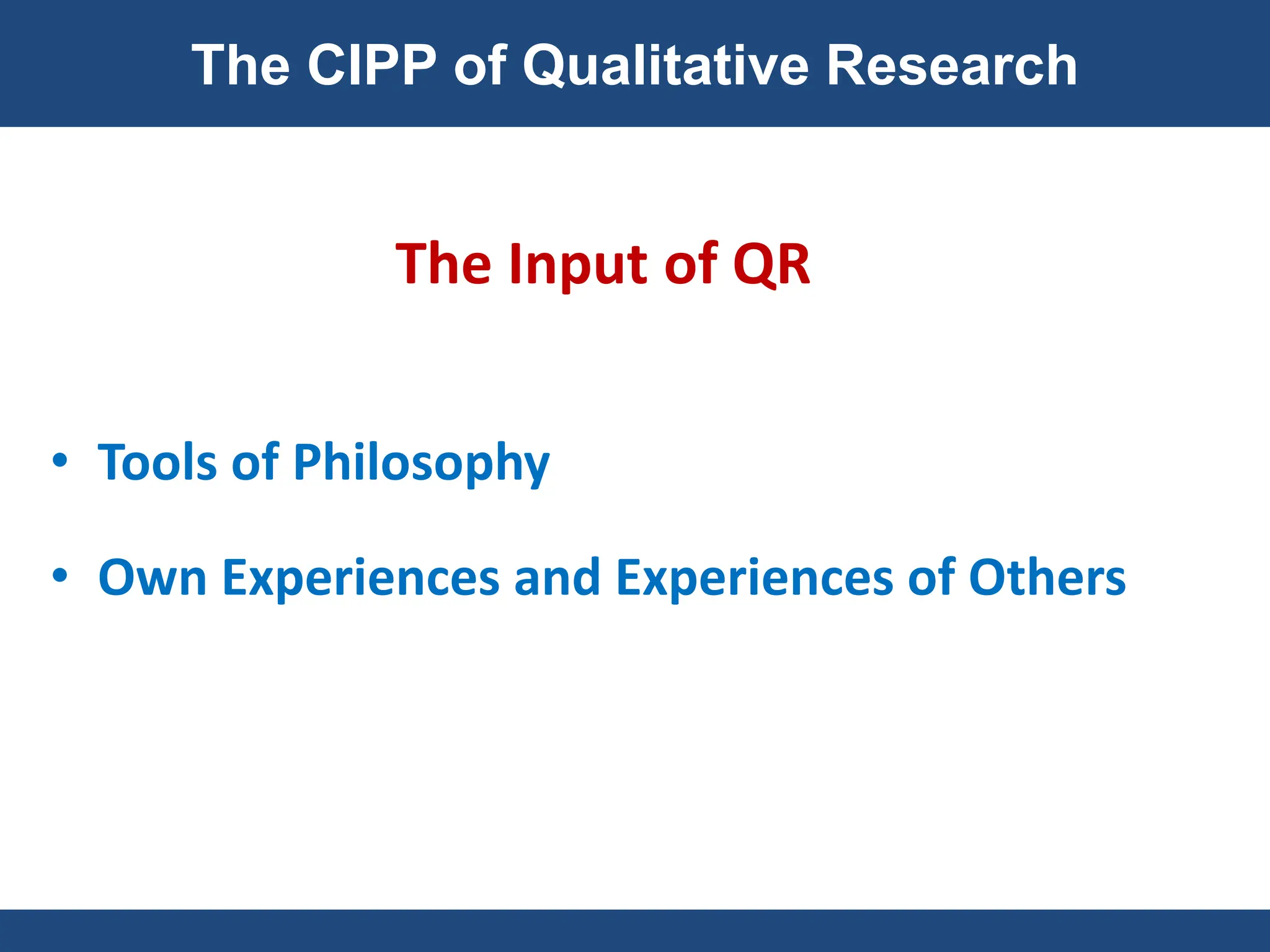
The Input ofQR
• Tools of Philosophy
• Own Experiences and Experiences of Others
The CIPP of Qualitative Research
62.
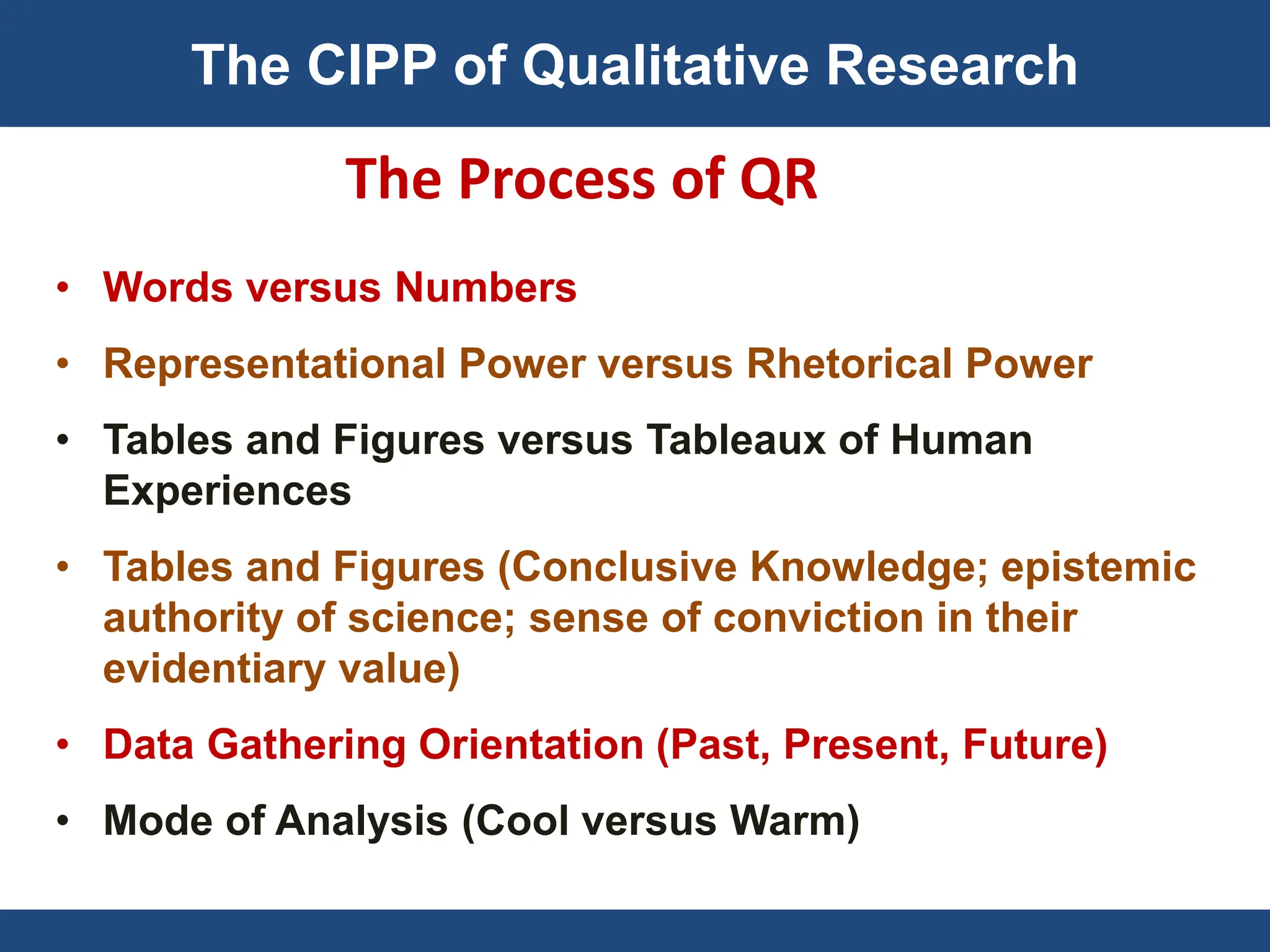
The Process ofQR
• Words versus Numbers
• Representational Power versus Rhetorical Power
• Tables and Figures versus Tableaux of Human
Experiences
• Tables and Figures (Conclusive Knowledge; epistemic
authority of science; sense of conviction in their
evidentiary value)
• Data Gathering Orientation (Past, Present, Future)
• Mode of Analysis (Cool versus Warm)
The CIPP of Qualitative Research
63.
The Product ofQR
• Better understanding
The CIPP of Qualitative Research
64.
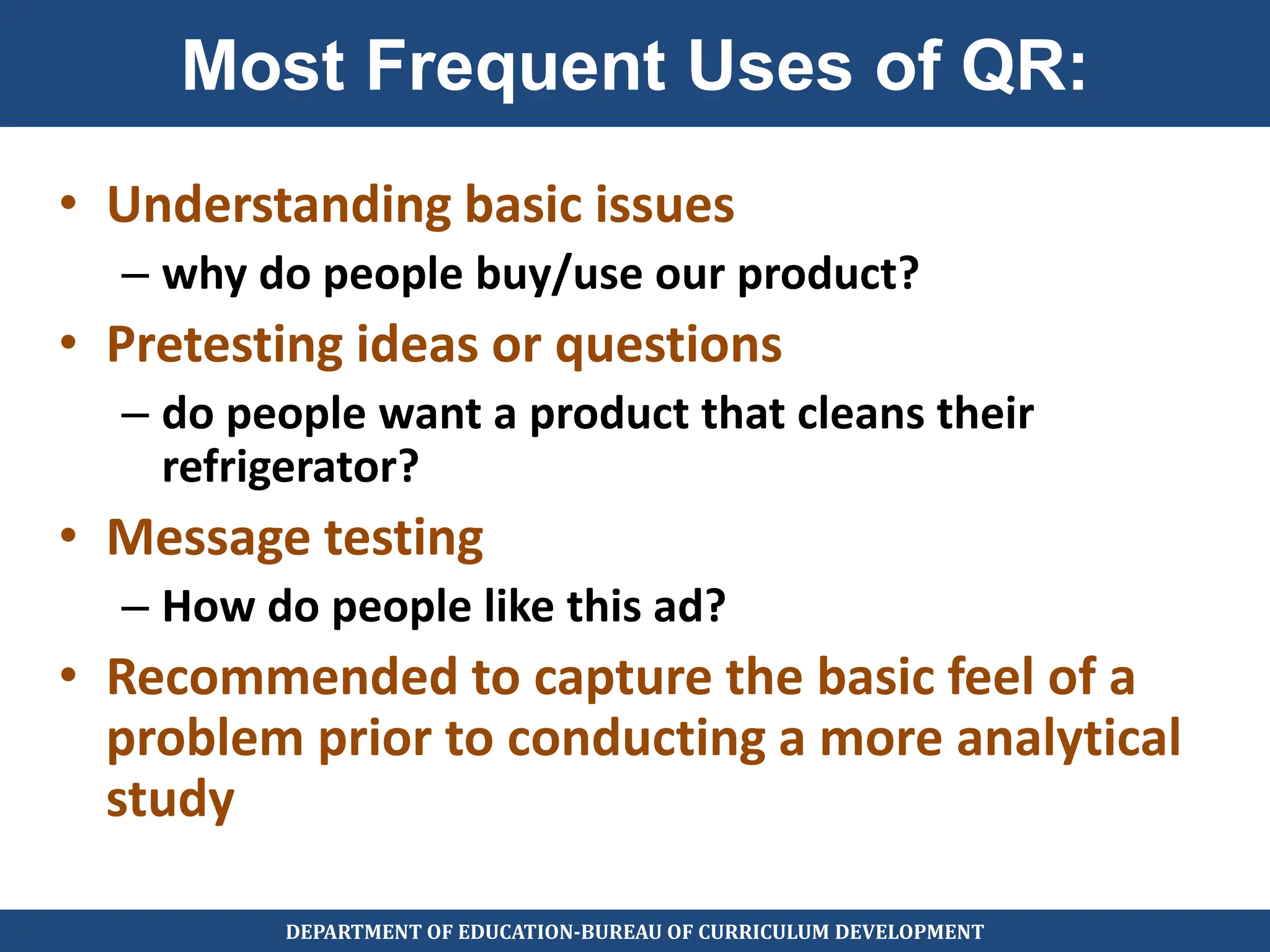
• Understanding basicissues
– why do people buy/use our product?
• Pretesting ideas or questions
– do people want a product that cleans their
refrigerator?
• Message testing
– How do people like this ad?
• Recommended to capture the basic feel of a
problem prior to conducting a more analytical
study
Most Frequent Uses of QR:
DEPARTMENT OF EDUCATION-BUREAU OF CURRICULUM DEVELOPMENT
65.
Strengths
• Can’t extrapolateto the whole population
• Volume of data
• Complexity of analysis
• Time-consuming nature of the clerical efforts required
•Good for examining feelings and motivations
•Allows for complexity and depth of issues
•Provides insights
Weaknesses
S and W of Qualitative Research
DEPARTMENT OF EDUCATION-BUREAU OF CURRICULUM DEVELOPMENT
66.
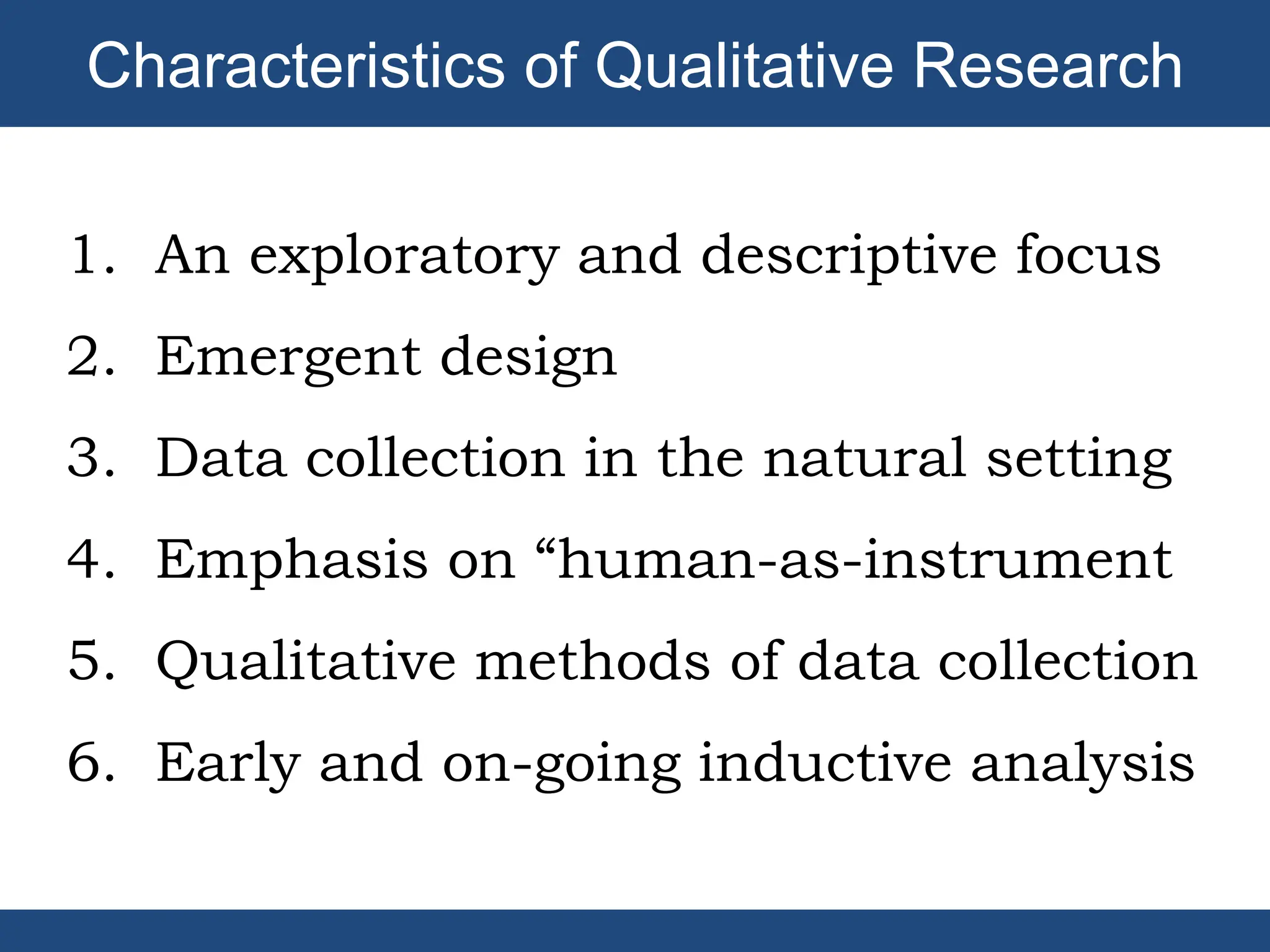
1. An exploratoryand descriptive focus
2. Emergent design
3. Data collection in the natural setting
4. Emphasis on “human-as-instrument
5. Qualitative methods of data collection
6. Early and on-going inductive analysis
Characteristics of Qualitative Research
67.
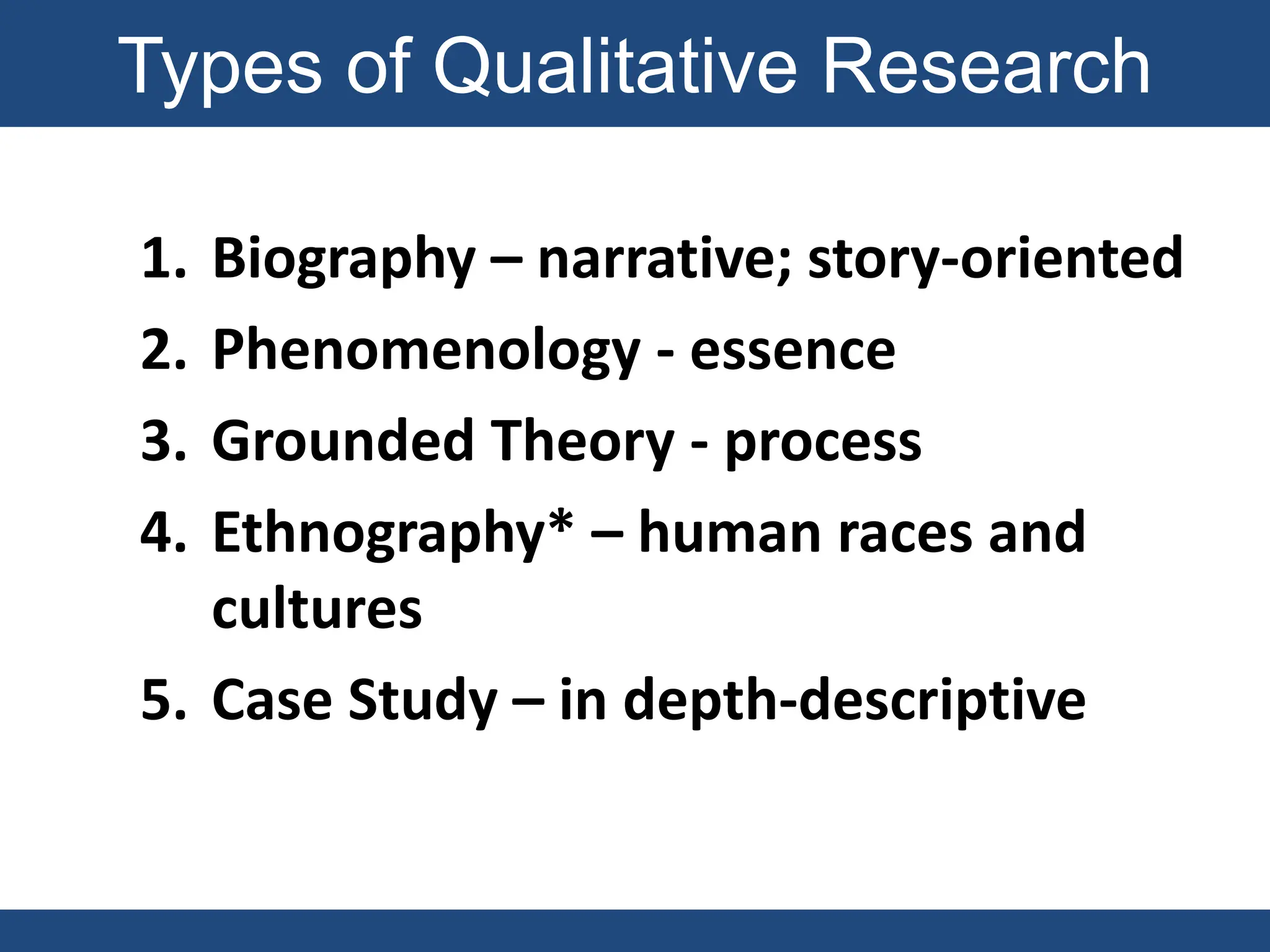
1. Biography –narrative; story-oriented
2. Phenomenology - essence
3. Grounded Theory - process
4. Ethnography* – human races and
cultures
5. Case Study – in depth-descriptive
Types of Qualitative Research
68.
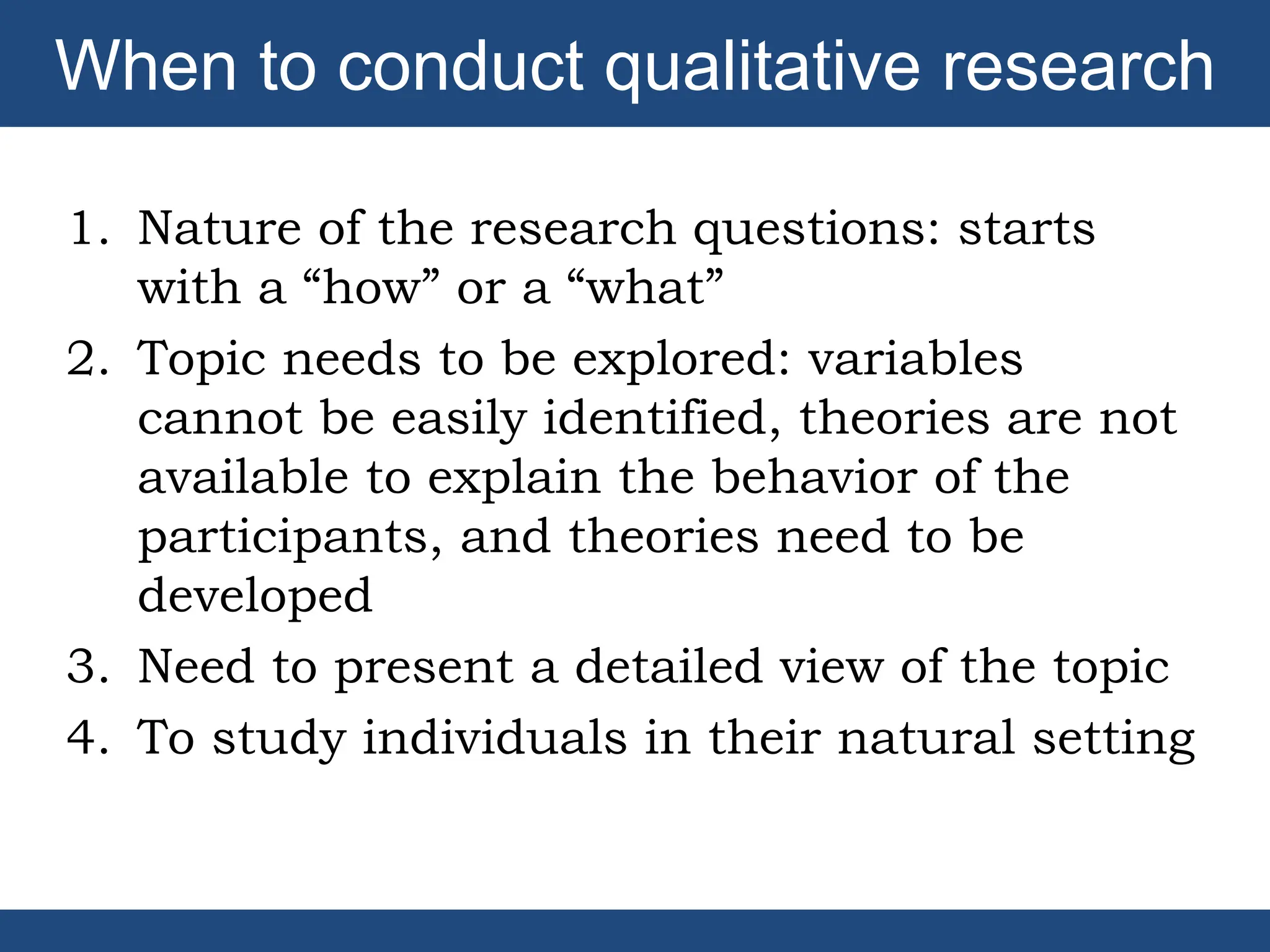
1. Nature ofthe research questions: starts
with a “how” or a “what”
2. Topic needs to be explored: variables
cannot be easily identified, theories are not
available to explain the behavior of the
participants, and theories need to be
developed
3. Need to present a detailed view of the topic
4. To study individuals in their natural setting
When to conduct qualitative research
69.
5. Interest inwriting in a literary style: engages
in a storytelling form of narration
6. Sufficient time and resources to spend on
extensive data collection in the field and
detailed data analysis of text information
7. Because audiences are receptive to
qualitative research
8. To emphasize the researcher’s role as an
active learner who can tell the story from the
participants’ view rather than as an expert
who passes judgment on participants.
When to conduct qualitative research
70.
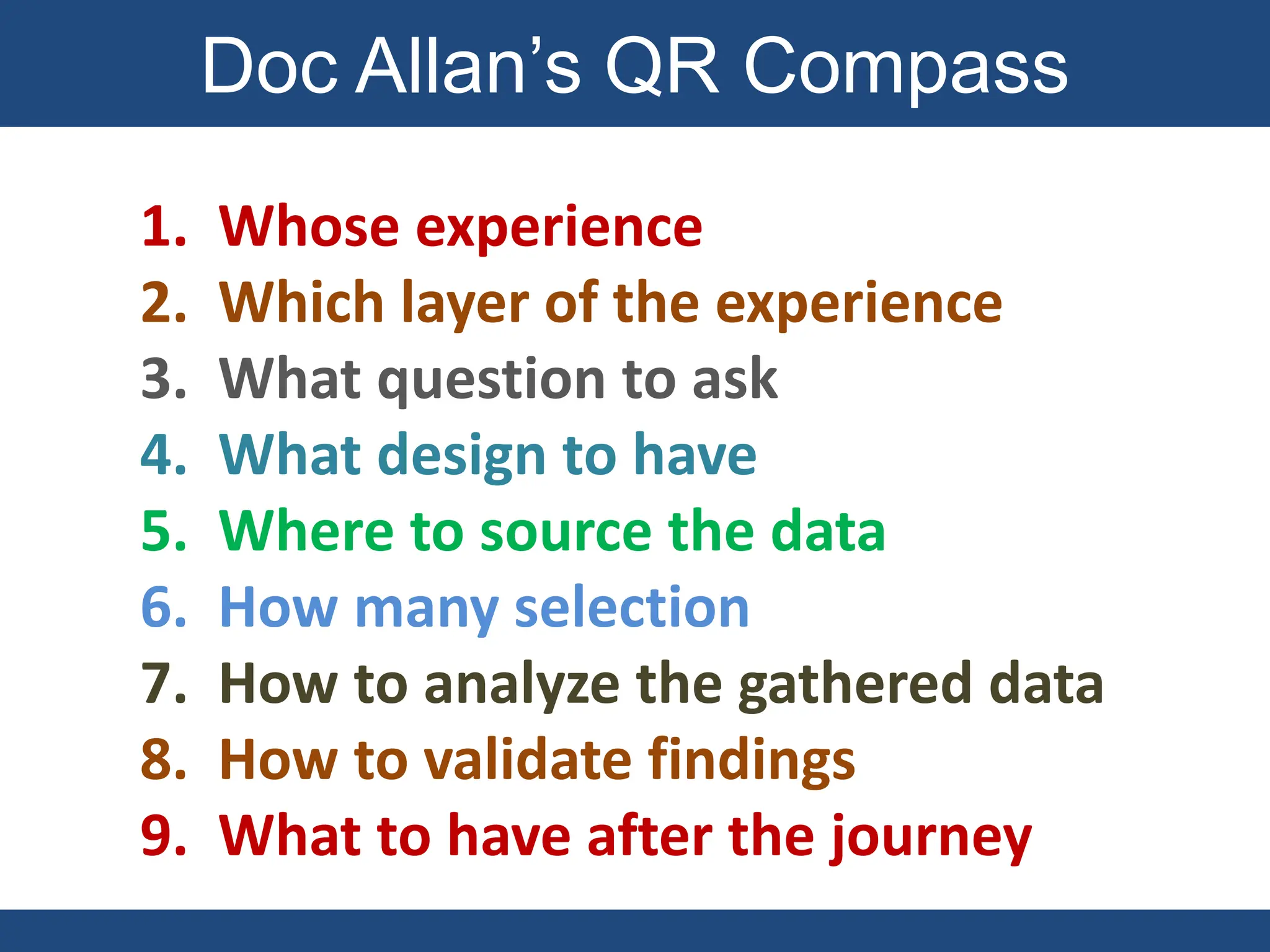
1. Whose experience
2.Which layer of the experience
3. What question to ask
4. What design to have
5. Where to source the data
6. How many selection
7. How to analyze the gathered data
8. How to validate findings
9. What to have after the journey
Doc Allan’s QR Compass
Work with yourgroup. Choose a
leader and a scribe. For 10 minutes,
brainstorm on a social or community
issue that interests you the most. Using
a bubble map, write down the chosen
issue at the center and around it fill in
the reasons for choosing that particular
issue as a research topic. Be ready to
present this to the group.
REEL
TIME
DEPARTMENT OF EDUCATION-BUREAU OF CURRICULUM DEVELOPMENT
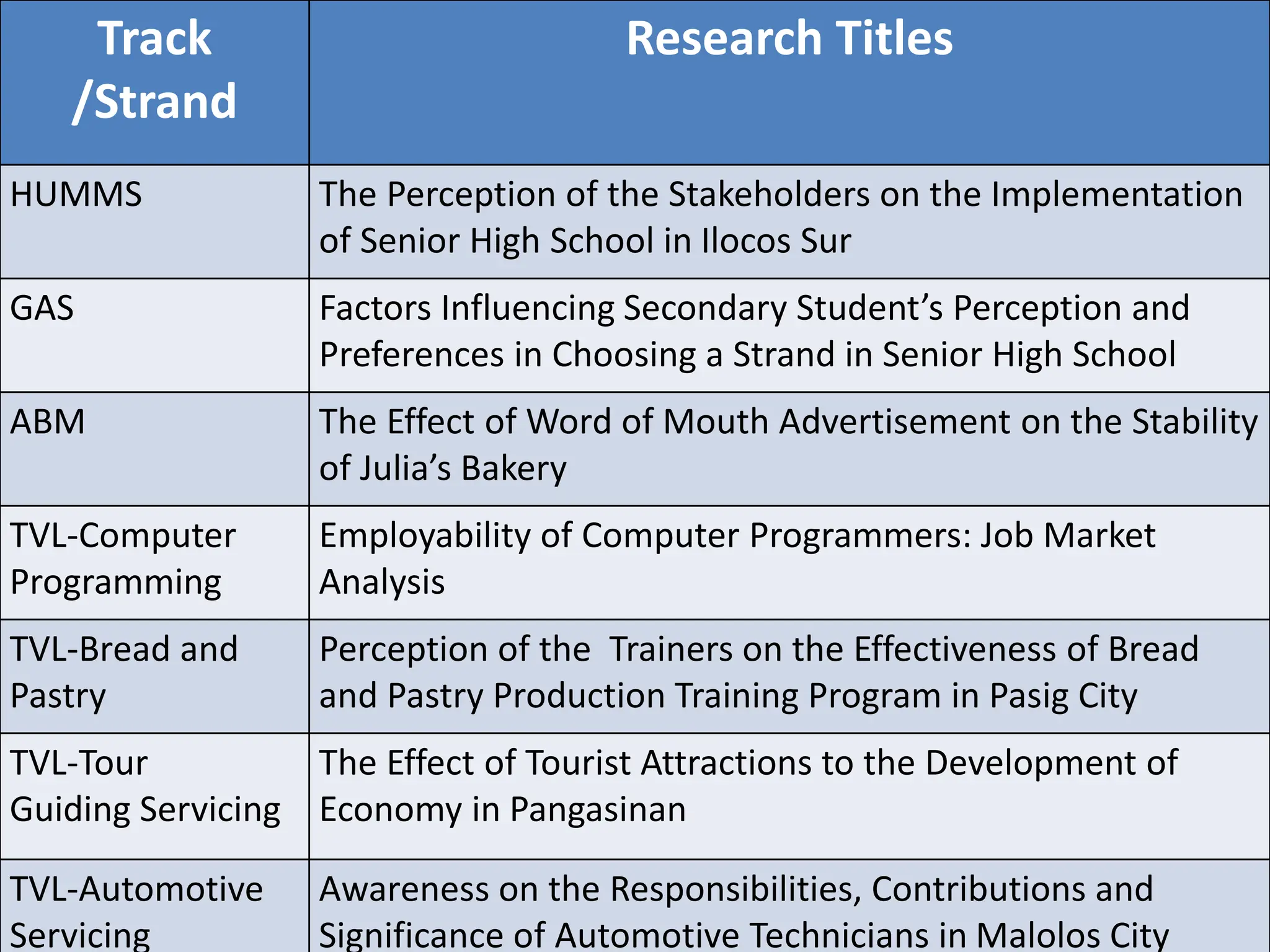
Track
/Strand
Research Titles
HUMMS ThePerception of the Stakeholders on the Implementation
of Senior High School in Ilocos Sur
GAS Factors Influencing Secondary Student’s Perception and
Preferences in Choosing a Strand in Senior High School
ABM The Effect of Word of Mouth Advertisement on the Stability
of Julia’s Bakery
TVL-Computer
Programming
Employability of Computer Programmers: Job Market
Analysis
TVL-Bread and
Pastry
Perception of the Trainers on the Effectiveness of Bread
and Pastry Production Training Program in Pasig City
TVL-Tour
Guiding Servicing
The Effect of Tourist Attractions to the Development of
Economy in Pangasinan
TVL-Automotive
Servicing
Awareness on the Responsibilities, Contributions and
Significance of Automotive Technicians in Malolos City
77.
Track
/Strand
Research Titles
HUMMS DoThey Really Practice What They Preach: A
Phenomenography of the Health Beliefs and Practices of
Elderly Cultural Group in the Philippines
STEM Direct From the Horses’ Mouth: Understanding the Needs,
Preferences, Moods and Frustrations of Filipino Elderly with
Alzheimer’s Disease: Implications to Disease Literacy
Among Caregivers
GAS University Teachers’ Experiences in Courseware
Development
ABM Switching Barriers in Business-to-Business Services: A
Qualitative Study
ABM Deconstructing the Notion of Blame in Corporate Failure
STEM Mathematics Anxiety: One Size Does Not Fit All
What are thecriteria
to be considered in
formulating good
research titles?
DEPARTMENT OF EDUCATION-BUREAU OF CURRICULUM DEVELOPMENT
80.
Activity
Return to yourgroup.
Formulate three research titles
out of the social or community
issue you have chosen. Post your
output on the designated area.
DEPARTMENT OF EDUCATION-BUREAU OF CURRICULUM DEVELOPMENT
81.
LRT (Look-React- Transcribe)Station
Assign other group to critique the
work of others utilizing the checklist/
rubrics made in the previous activity. Let
each group roam around each station
(designated group area) and write down
comments and suggestions for
improvements.
DEPARTMENT OF EDUCATION-BUREAU OF CURRICULUM DEVELOPMENT
82.
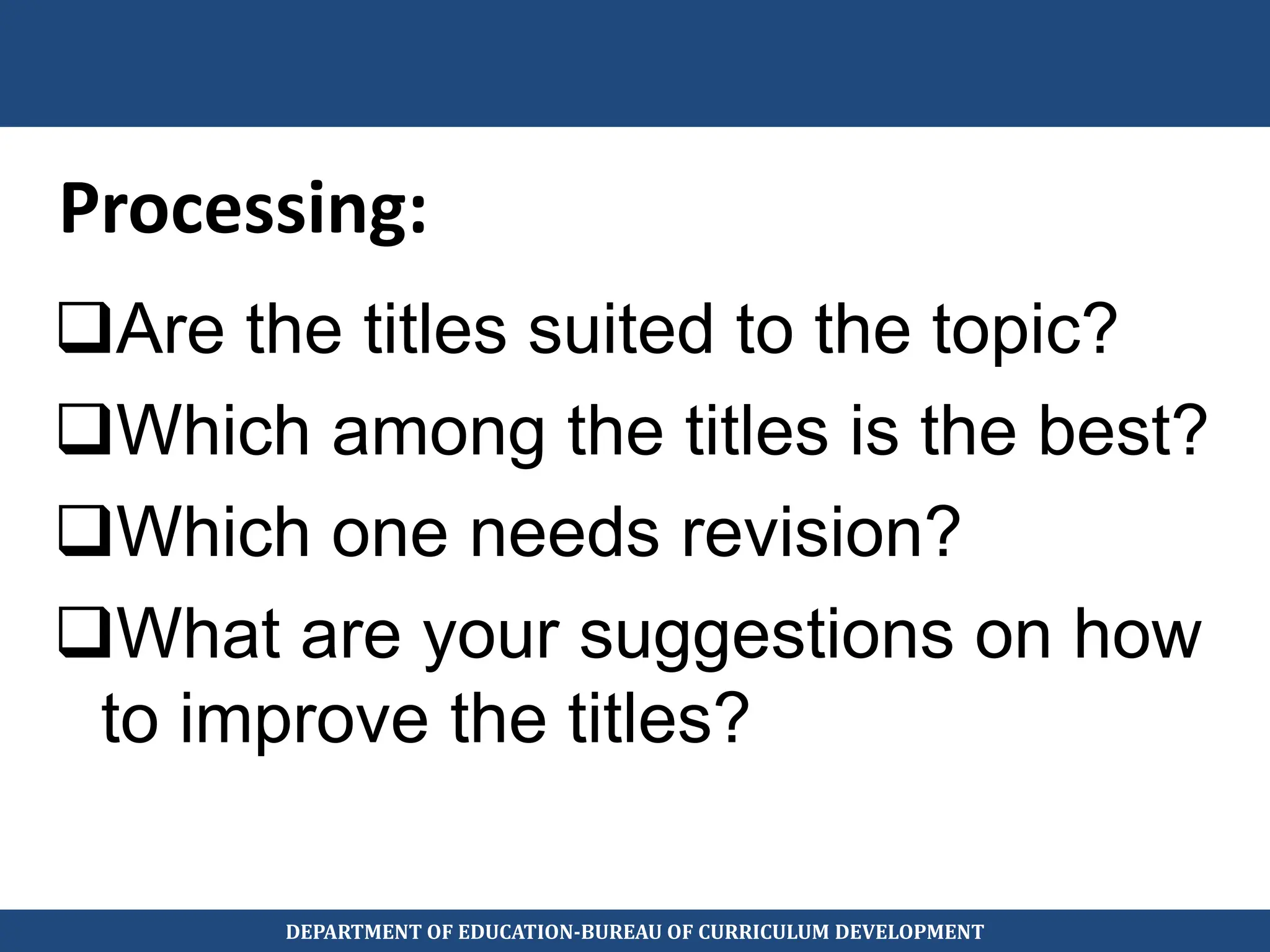
Processing:
Are the titlessuited to the topic?
Which among the titles is the best?
Which one needs revision?
What are your suggestions on how
to improve the titles?
DEPARTMENT OF EDUCATION-BUREAU OF CURRICULUM DEVELOPMENT
83.
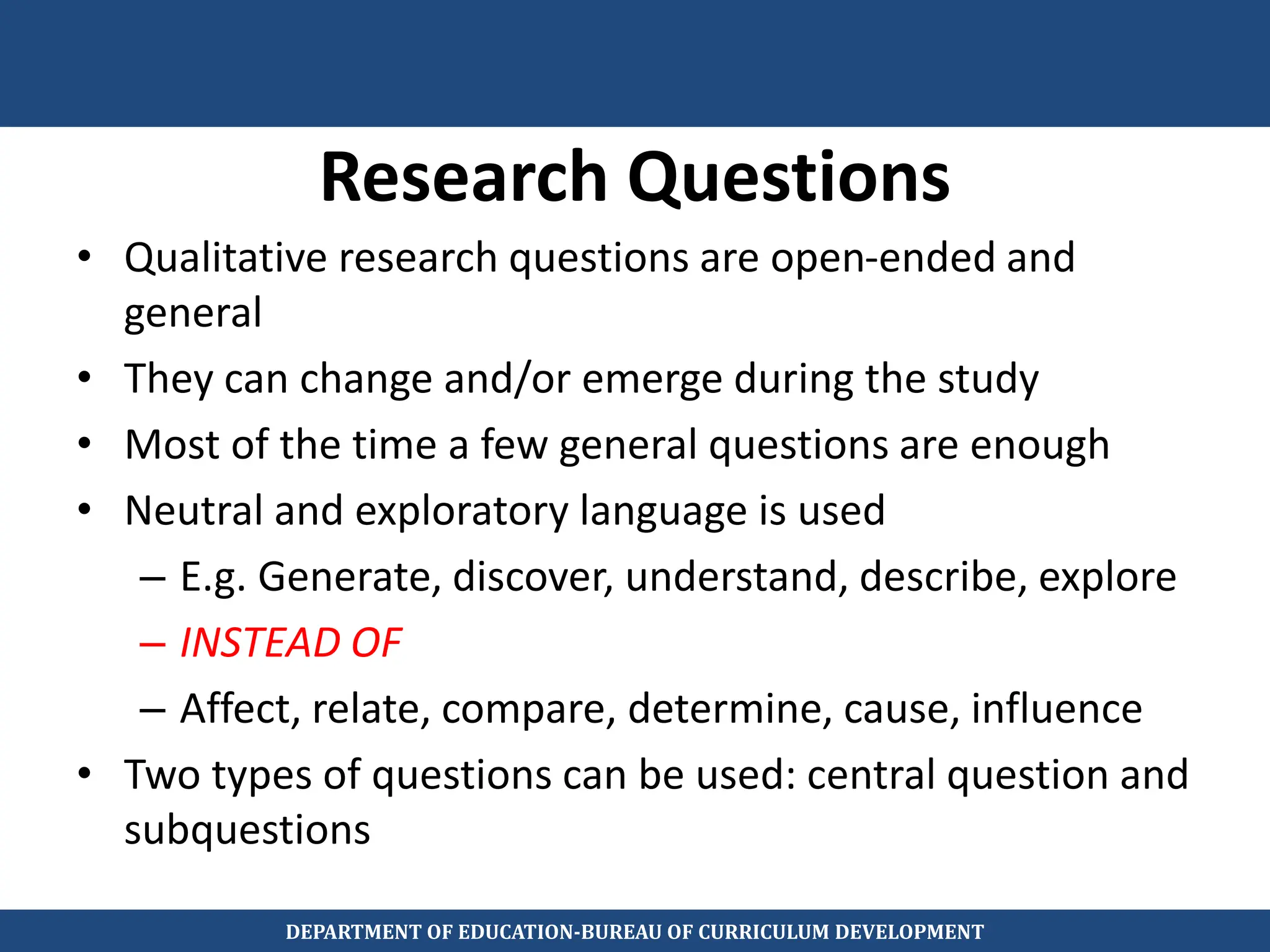
Research Questions
• Qualitativeresearch questions are open-ended and
general
• They can change and/or emerge during the study
• Most of the time a few general questions are enough
• Neutral and exploratory language is used
– E.g. Generate, discover, understand, describe, explore
– INSTEAD OF
– Affect, relate, compare, determine, cause, influence
• Two types of questions can be used: central question and
subquestions
DEPARTMENT OF EDUCATION-BUREAU OF CURRICULUM DEVELOPMENT
84.
Central Questions
• Itis the overarching question we want to explore.
• We consider the most general question we can ask
• There are some strategies to be used while designing this
quesiton:
• A) Begin with How or What (not Why) so you suggest
exploration
• B) Specify the central phenomenon
• C) Identify the participants
• D) Mention the resarch site
DEPARTMENT OF EDUCATION-BUREAU OF CURRICULUM DEVELOPMENT
85.
A Sample Script
•What is (the central phenomenon) for
(participants) at (research site)?
Example
• What is the effect of social media on the
study habits of HUMMS students at Pedro
Guevarra NHS?
DEPARTMENT OF EDUCATION-BUREAU OF CURRICULUM DEVELOPMENT
86.
Typologies of QuestionsAsked in
Qualitative Research
Questions Concern
What stories does a
school principal tell us
about the accreditation
process?
Question about the life
experiences of an
individual and how
they unfold over time
How do four principals
share problems of
teacher non-
cooperation in the
accreditation activity?
Question about
developing an in-depth
understanding about
how different cases
provide insights into an
issue or a unique case
87.
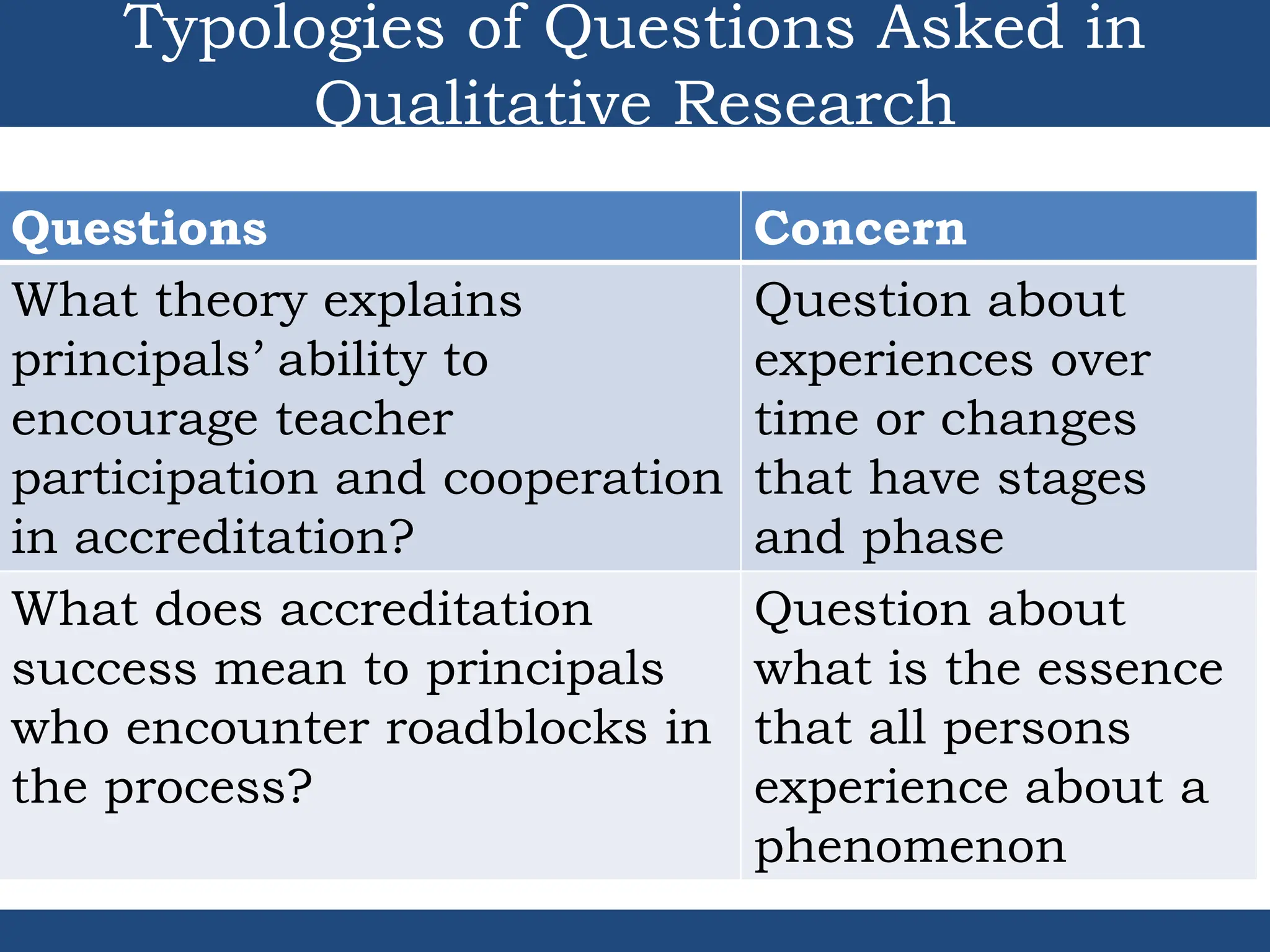
Typologies of QuestionsAsked in
Qualitative Research
Questions Concern
What theory explains
principals’ ability to
encourage teacher
participation and cooperation
in accreditation?
Question about
experiences over
time or changes
that have stages
and phase
What does accreditation
success mean to principals
who encounter roadblocks in
the process?
Question about
what is the essence
that all persons
experience about a
phenomenon
88.
Qualitative Research
Research
Design
Nature of
Question
Asked
Focusof
Question
Asked
Product
Realized
Narrative Story
oriented
Story Moderatum
Generalization
Case Study In-depth
Descriptive
Issue Lessons
Learned
Grounded
Theory
Process Process Theory
Phenomenology Essence Meaning Collaborative
Description
89.
Moderatum Generalization isa
modest, practical generalization based on
personal experience that makes daily life
possible through semblance of order and
consistency to social interaction. (Payne &
Williams, 2005)
DEPARTMENT OF EDUCATION-BUREAU OF CURRICULUM DEVELOPMENT
90.
With the samegroup, discuss among
members the scope and limitation of the
study in the previous activity. Then,
formulate your group’s statement of the
problem and write it down in a manila
paper. Report your finished output to the
group (plenary).
ACTIVITY
DEPARTMENT OF EDUCATION-BUREAU OF CURRICULUM DEVELOPMENT