Art Aesthetics &
    Criticism
   How to “Read” Art
4 steps of art criticism
                                     •   Description

                                     •   Analysis

                                     •   Interpretation

                                     •   Judgment


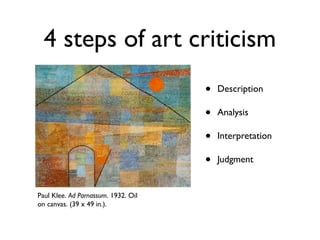
Paul Klee. Ad Parnassum. 1932. Oil
on canvas. (39 x 49 in.).
step 1: description
Gathering Facts...


•   What is the name of the artist?

•   What kind of artwork is it?

•   What is the name of the artwork?

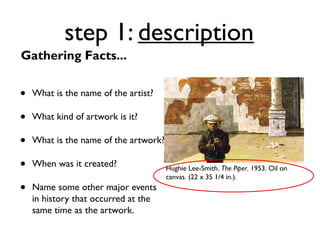
•   When was it created?               Hughie Lee-Smith. The Piper. 1953. Oil on
                                       canvas. (22 x 35 1/4 in.).
•   Name some other major events
    in history that occurred at the
    same time as the artwork.
step 1: description
•   List the literal objects in the
    painting (trees, people, animals,
    mountains, rivers, etc.)

•   Consider the significant art
    elements that are present in the
    artwork and describe them.

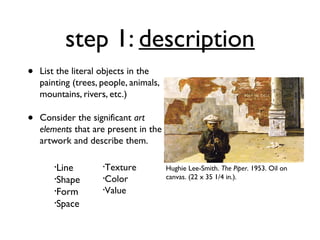
        •Line        •Texture           Hughie Lee-Smith. The Piper. 1953. Oil on
        •Shape       •Color             canvas. (22 x 35 1/4 in.).
        •Form        •Value

        •Space
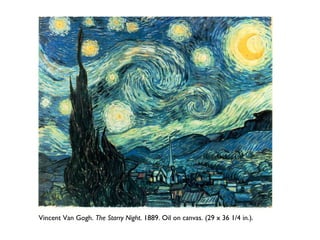
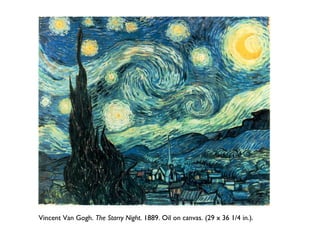
Vincent Van Gogh. The Starry Night. 1889. Oil on canvas. (29 x 36 1/4 in.).
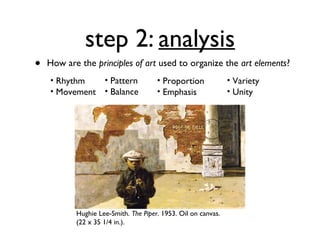
step 2: analysis
•   How are the principles of art used to organize the art elements?
    • Rhythm        • Pattern         • Proportion             • Variety
    • Movement      • Balance         • Emphasis               • Unity


           Hughie Lee-Smith. The Piper. 1953. Oil on canvas.
           (22 x 35 1/4 in.).
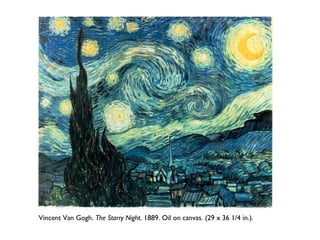
Vincent Van Gogh. The Starry Night. 1889. Oil on canvas. (29 x 36 1/4 in.).
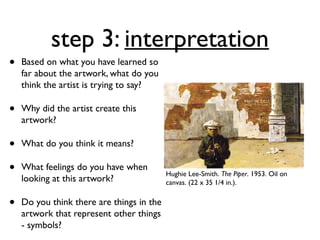
step 3: interpretation
•   Based on what you have learned so
    far about the artwork, what do you
    think the artist is trying to say?

•   Why did the artist create this
    artwork?

•   What do you think it means?

•   What feelings do you have when
                                           Hughie Lee-Smith. The Piper. 1953. Oil on
    looking at this artwork?               canvas. (22 x 35 1/4 in.).


•   Do you think there are things in the
    artwork that represent other things
    - symbols?
Vincent Van Gogh. The Starry Night. 1889. Oil on canvas. (29 x 36 1/4 in.).
step 4: judgment
•   Do you like the artwork?

•   Do you think it is an important
    artwork?

•   Would you display it at home?

•   Is it “good” enough for a museum?

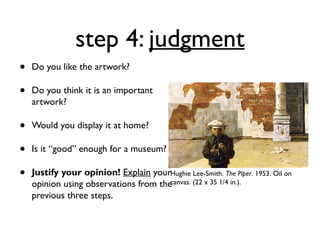
•   Justify your opinion! Explain yourHughie Lee-Smith. The Piper. 1953. Oil on
    opinion using observations from thecanvas. (22 x 35 1/4 in.).
    previous three steps.
Aesthetic Qualities
     Which of the following Qualities did the artist give to the artwork?


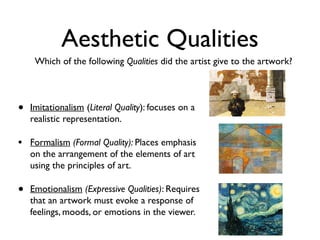
•   Imitationalism (Literal Quality): focuses on a
    realistic representation.

• Formalism (Formal Quality): Places emphasis
    on the arrangement of the elements of art
    using the principles of art.

•   Emotionalism (Expressive Qualities): Requires
    that an artwork must evoke a response of
    feelings, moods, or emotions in the viewer.
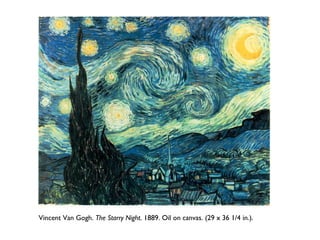
Vincent Van Gogh. The Starry Night. 1889. Oil on canvas. (29 x 36 1/4 in.).

Introduction to Aesthetics

  • 1.
    Art Aesthetics & Criticism How to “Read” Art
  • 2.
    4 steps ofart criticism • Description • Analysis • Interpretation • Judgment Paul Klee. Ad Parnassum. 1932. Oil on canvas. (39 x 49 in.).
  • 3.
    step 1: description GatheringFacts... • What is the name of the artist? • What kind of artwork is it? • What is the name of the artwork? • When was it created? Hughie Lee-Smith. The Piper. 1953. Oil on canvas. (22 x 35 1/4 in.). • Name some other major events in history that occurred at the same time as the artwork.
  • 4.
    step 1: description • List the literal objects in the painting (trees, people, animals, mountains, rivers, etc.) • Consider the significant art elements that are present in the artwork and describe them. •Line •Texture Hughie Lee-Smith. The Piper. 1953. Oil on •Shape •Color canvas. (22 x 35 1/4 in.). •Form •Value •Space
  • 5.
    Vincent Van Gogh.The Starry Night. 1889. Oil on canvas. (29 x 36 1/4 in.).
  • 6.
    step 2: analysis • How are the principles of art used to organize the art elements? • Rhythm • Pattern • Proportion • Variety • Movement • Balance • Emphasis • Unity Hughie Lee-Smith. The Piper. 1953. Oil on canvas. (22 x 35 1/4 in.).
  • 7.
    Vincent Van Gogh.The Starry Night. 1889. Oil on canvas. (29 x 36 1/4 in.).
  • 8.
    step 3: interpretation • Based on what you have learned so far about the artwork, what do you think the artist is trying to say? • Why did the artist create this artwork? • What do you think it means? • What feelings do you have when Hughie Lee-Smith. The Piper. 1953. Oil on looking at this artwork? canvas. (22 x 35 1/4 in.). • Do you think there are things in the artwork that represent other things - symbols?
  • 9.
    Vincent Van Gogh.The Starry Night. 1889. Oil on canvas. (29 x 36 1/4 in.).
  • 10.
    step 4: judgment • Do you like the artwork? • Do you think it is an important artwork? • Would you display it at home? • Is it “good” enough for a museum? • Justify your opinion! Explain yourHughie Lee-Smith. The Piper. 1953. Oil on opinion using observations from thecanvas. (22 x 35 1/4 in.). previous three steps.
  • 11.
    Aesthetic Qualities Which of the following Qualities did the artist give to the artwork? • Imitationalism (Literal Quality): focuses on a realistic representation. • Formalism (Formal Quality): Places emphasis on the arrangement of the elements of art using the principles of art. • Emotionalism (Expressive Qualities): Requires that an artwork must evoke a response of feelings, moods, or emotions in the viewer.
  • 12.
    Vincent Van Gogh.The Starry Night. 1889. Oil on canvas. (29 x 36 1/4 in.).