How to be an Art Critic(thinking about art)
The Four StepsDescribelook and tell aboutAnalyzehow do the parts relate?Interpretwhat is the artist saying?Evaluatehow do you feel about it?
Art criticism means looking closely at art, learning as much as we can from it, and deciding what we think about it.Let’s choose a couple of images to practice on.  Here’s one -
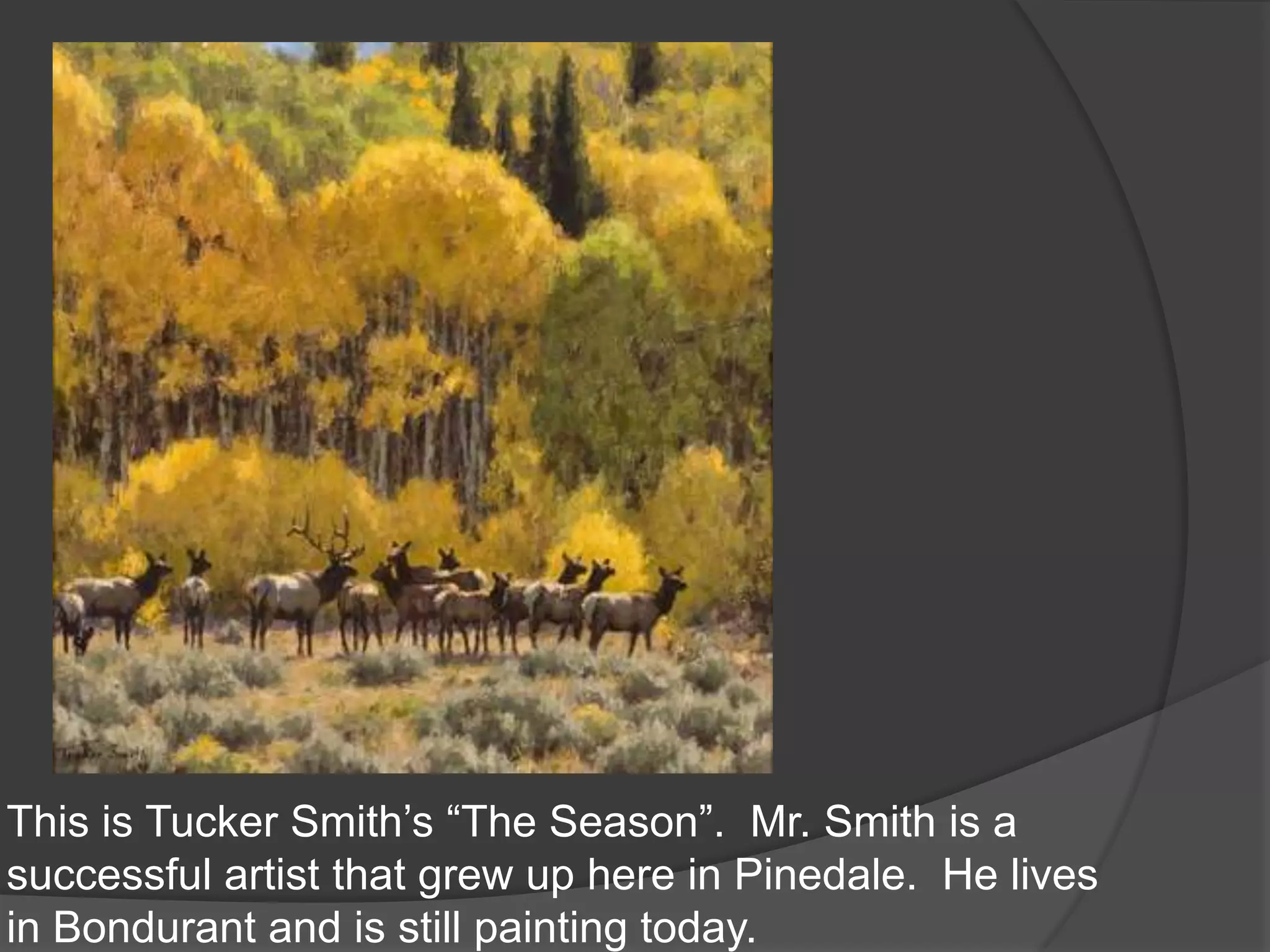
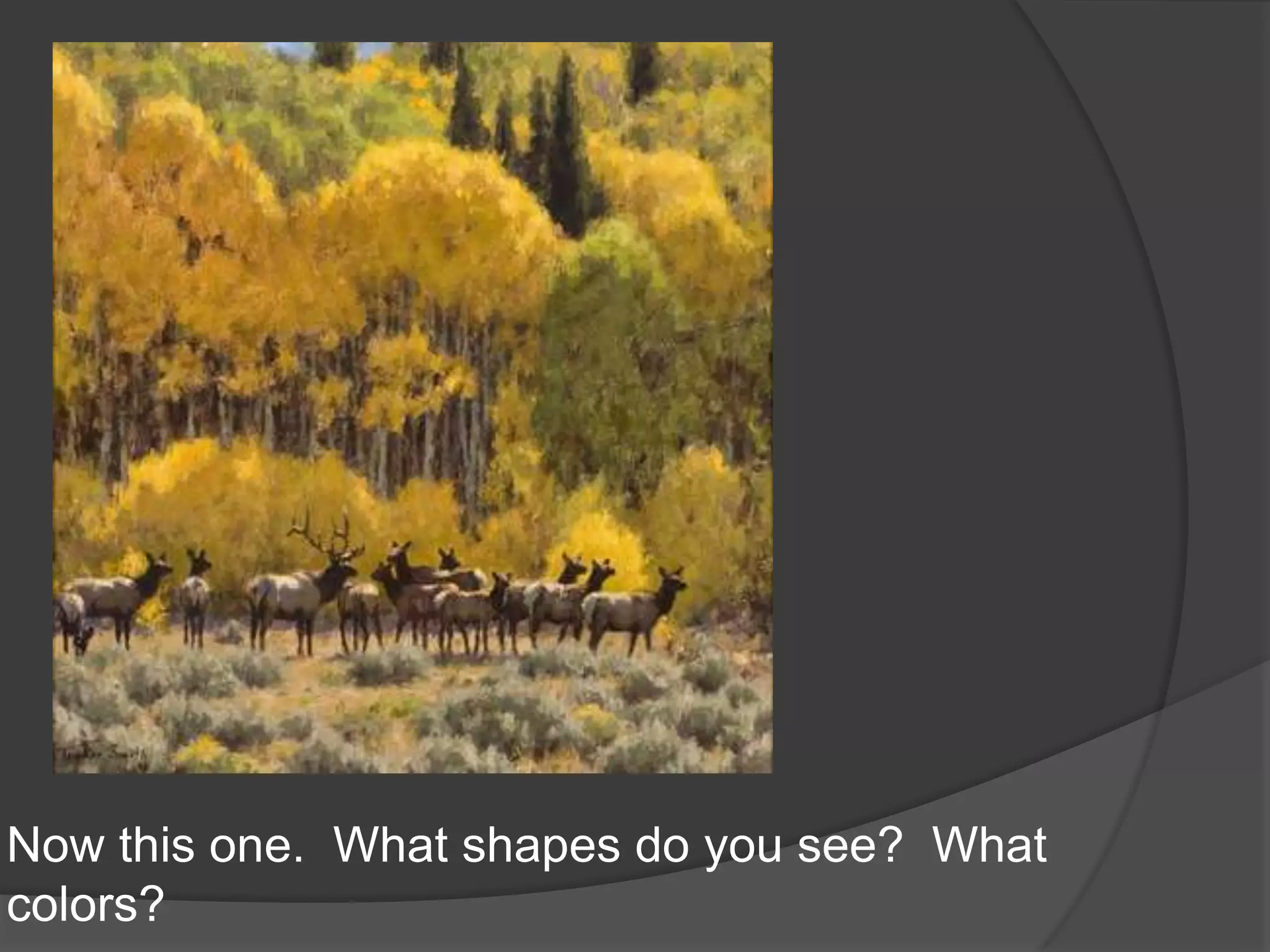
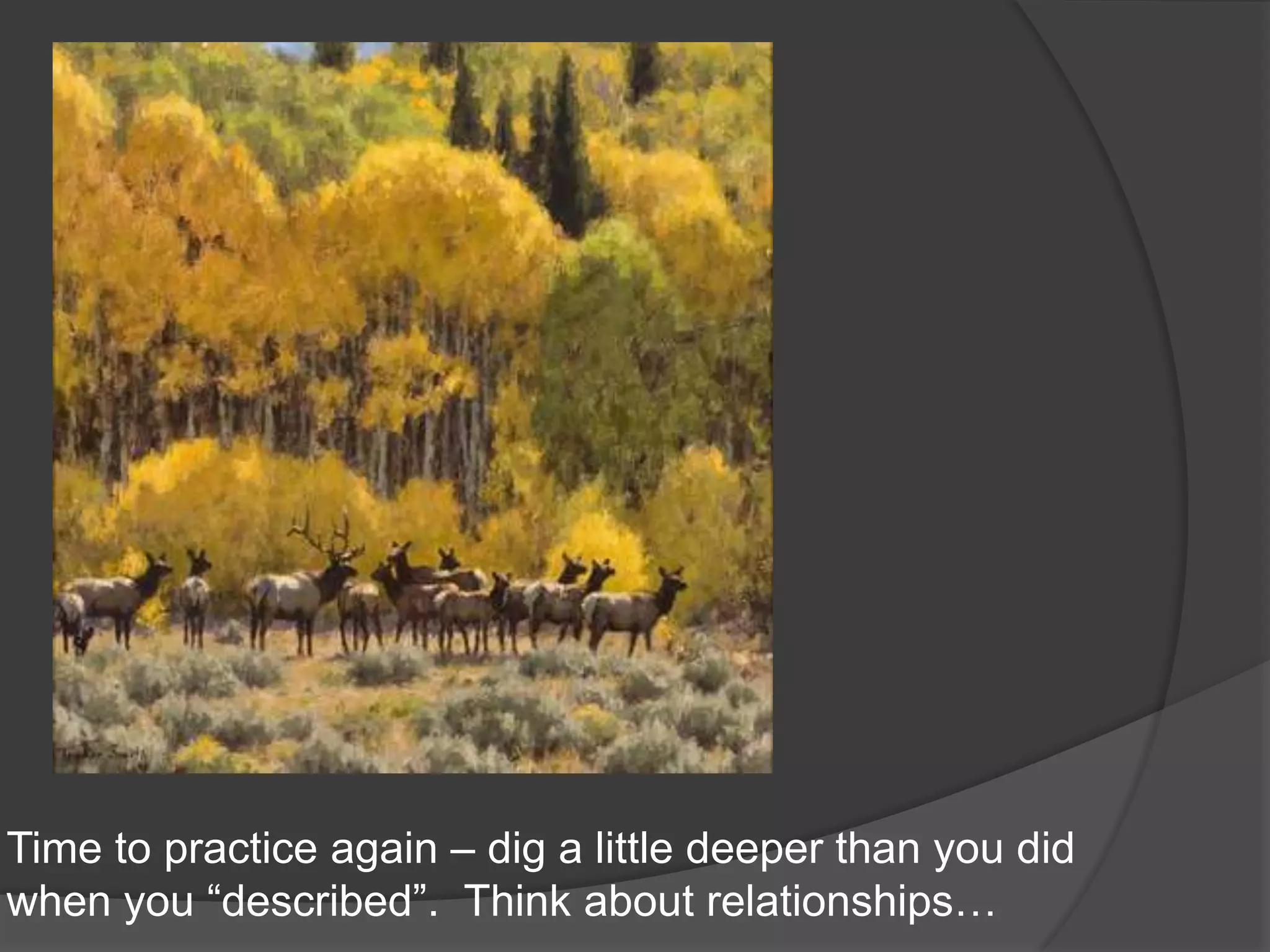
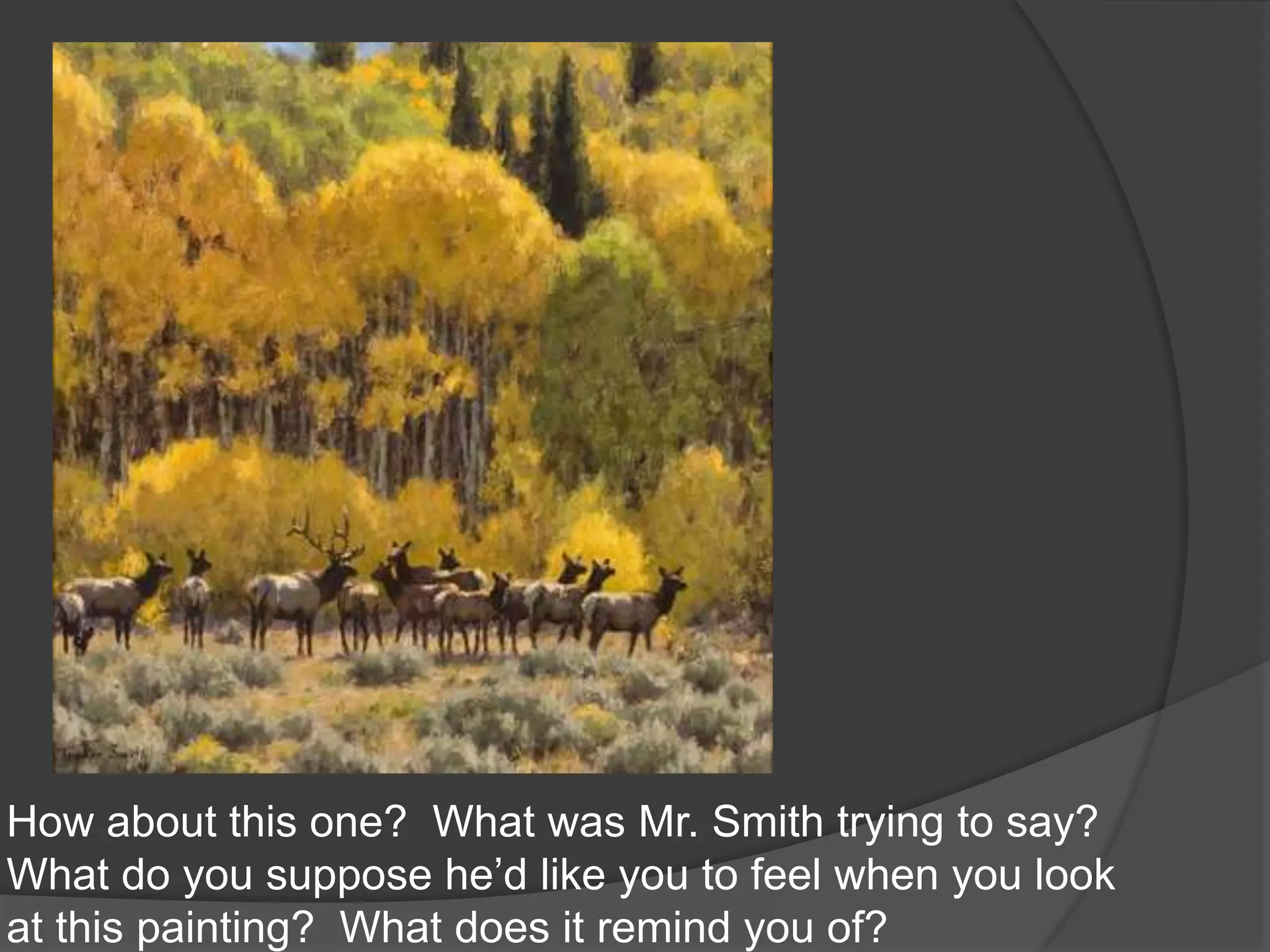
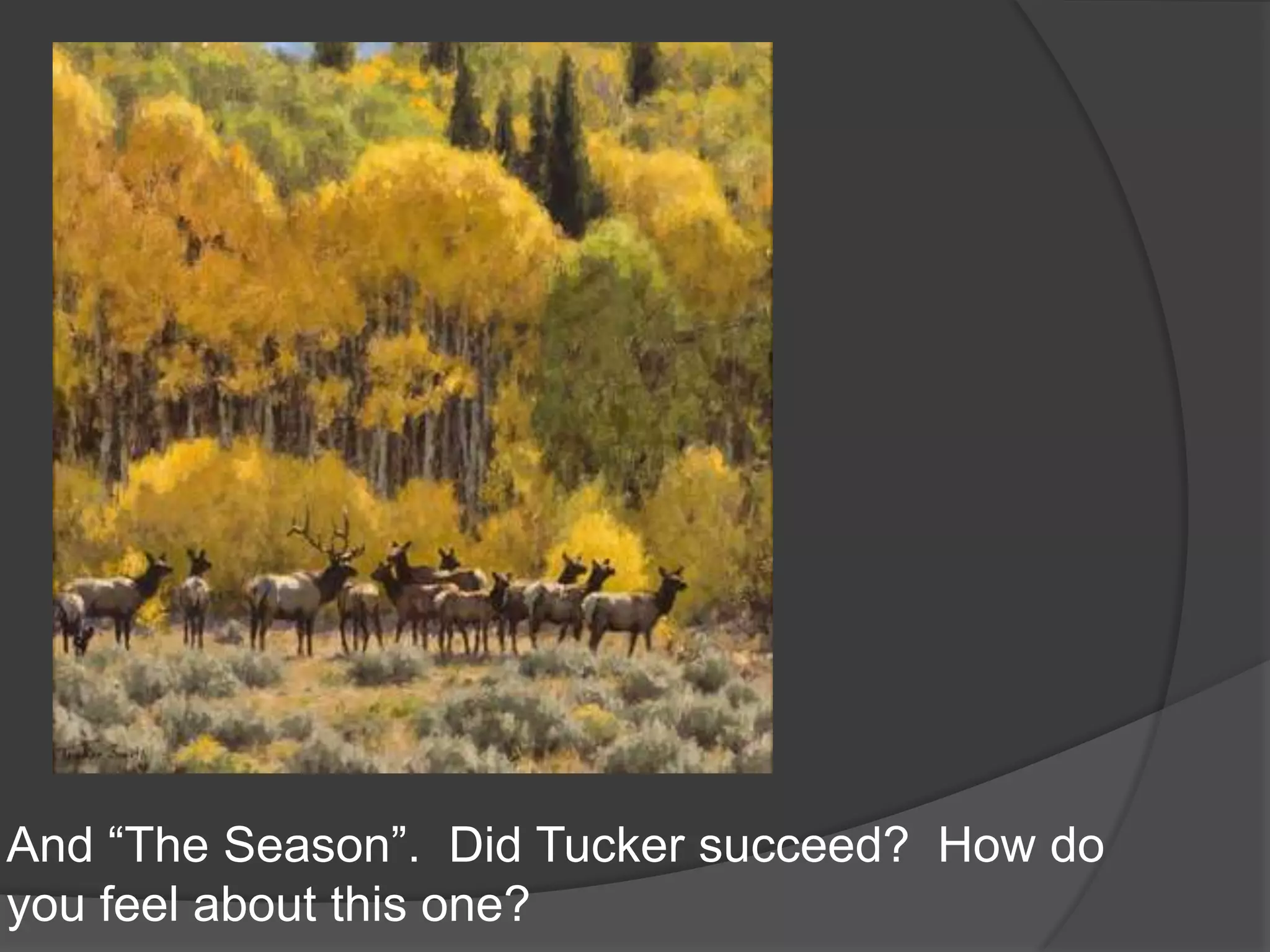
This is Tucker Smith’s “The Season”.  Mr. Smith is a successful artist that grew up here in Pinedale.  He lives in Bondurant and is still painting today.
Now let’s try a different one.Make it really different!
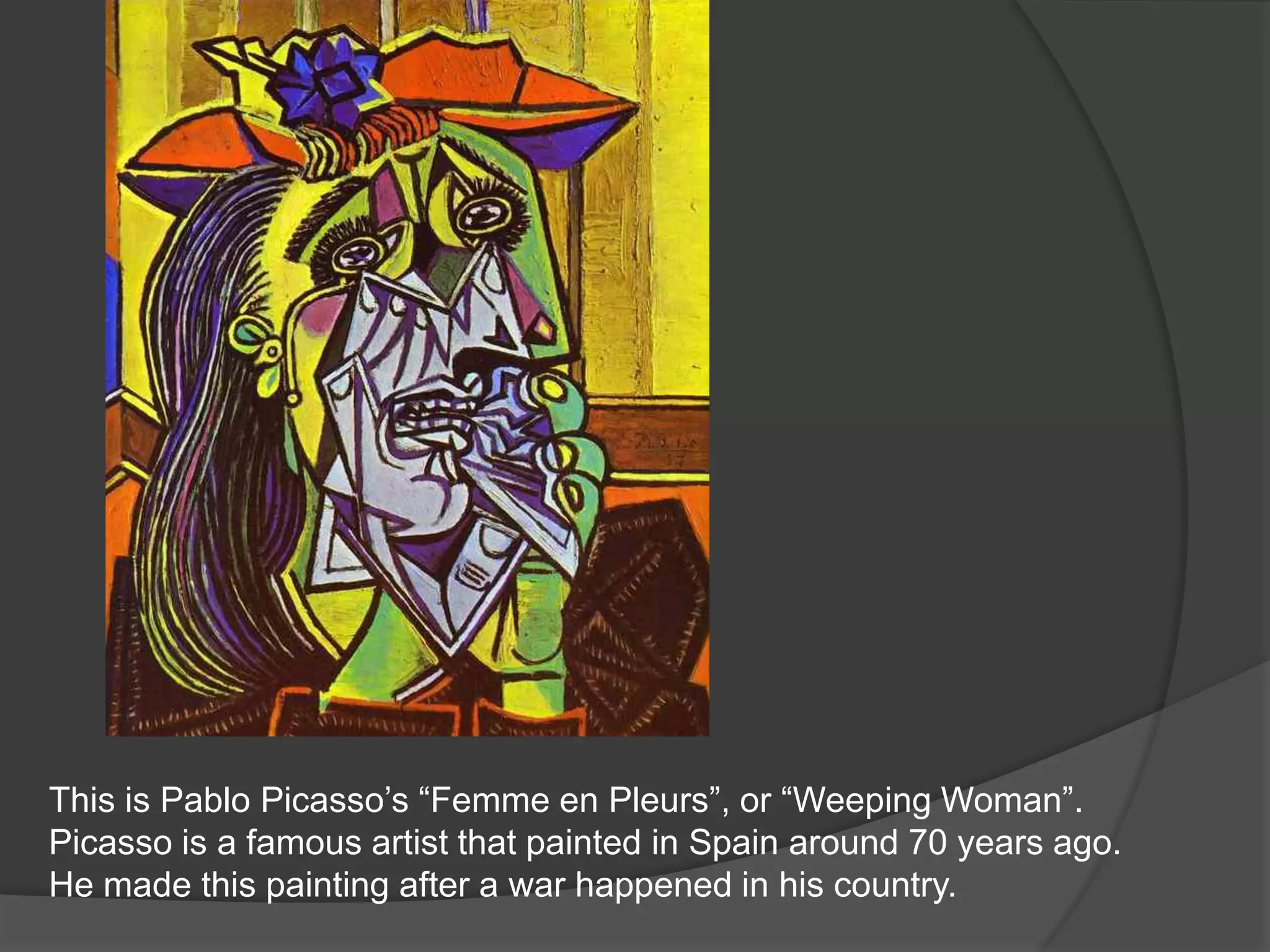
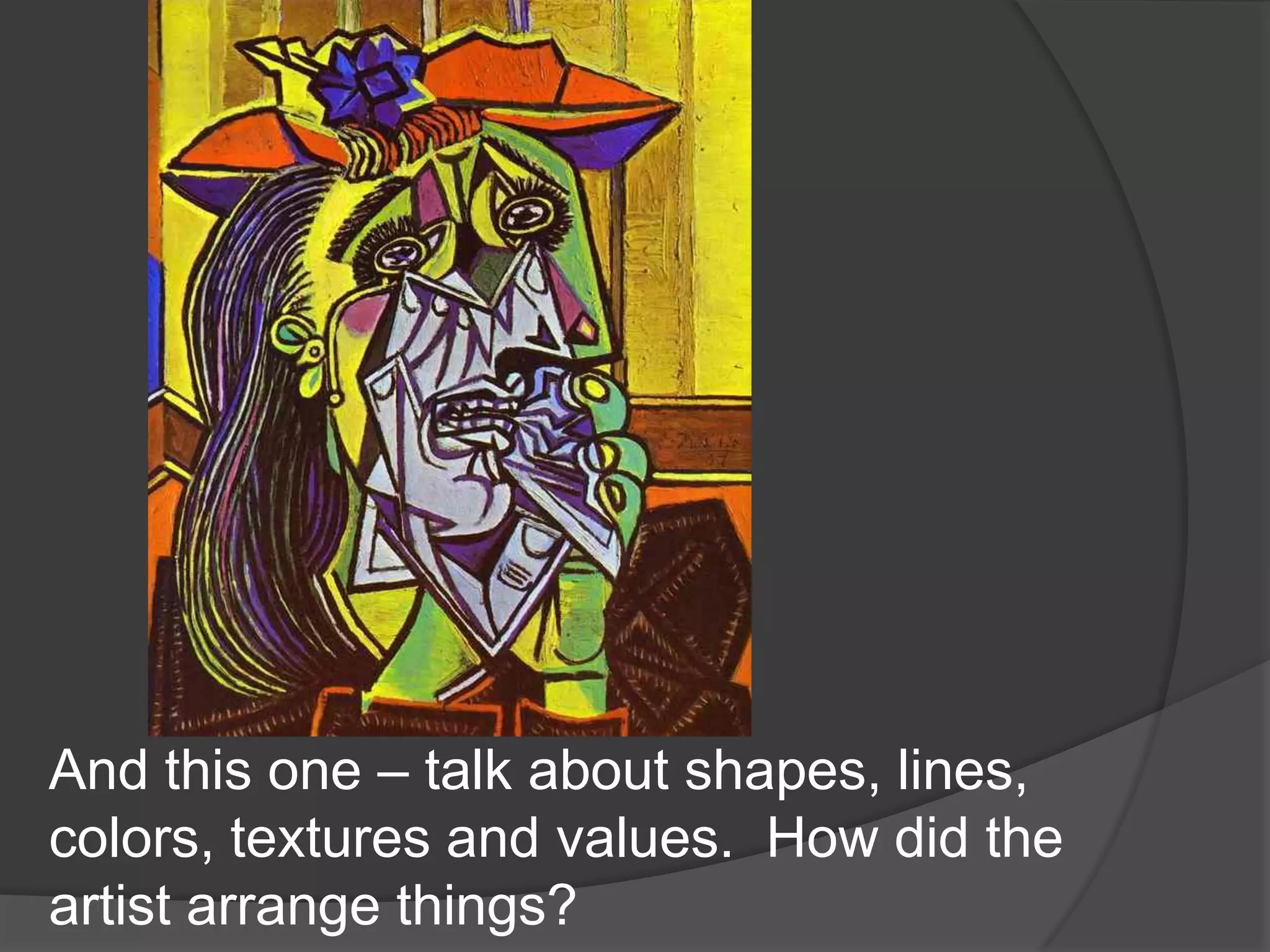
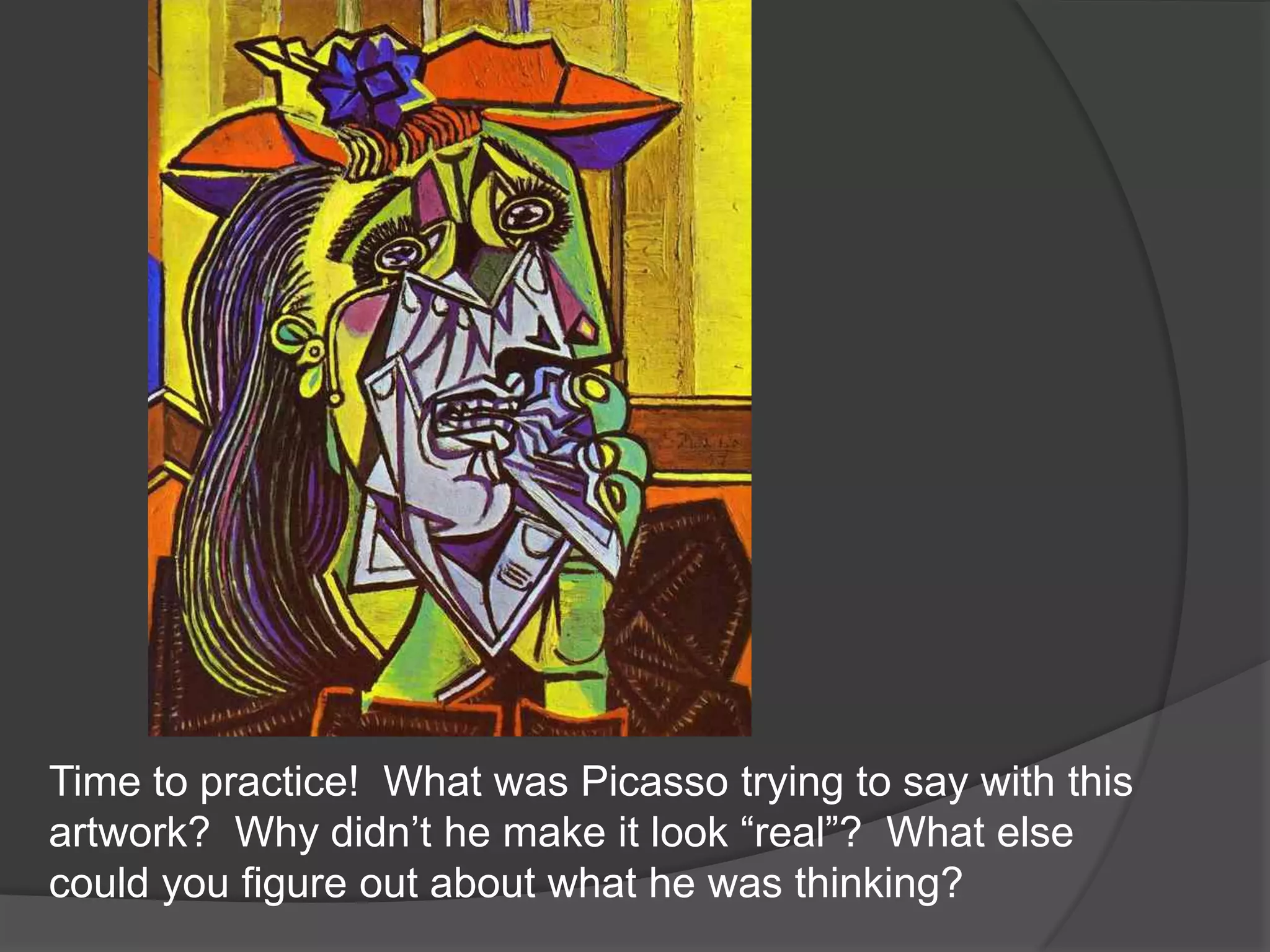
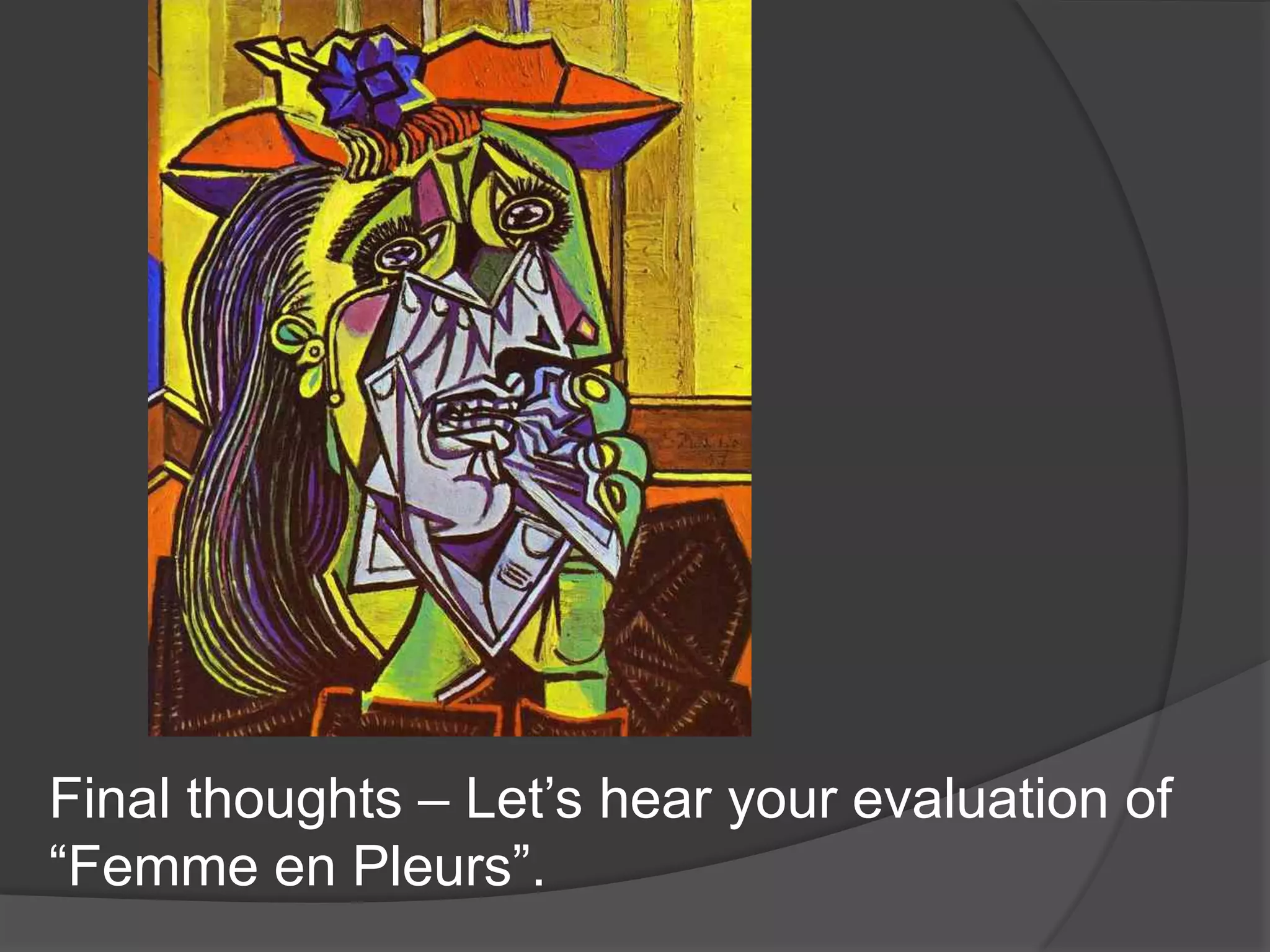
This is Pablo Picasso’s “Femme en Pleurs”, or “Weeping Woman”.   Picasso is a famous artist that painted in Spain around 70 years ago.  He made this painting after a war happened in his country.
DescribeDescribe means tell what you see…What can you learn by looking?  Talk about what you notice.
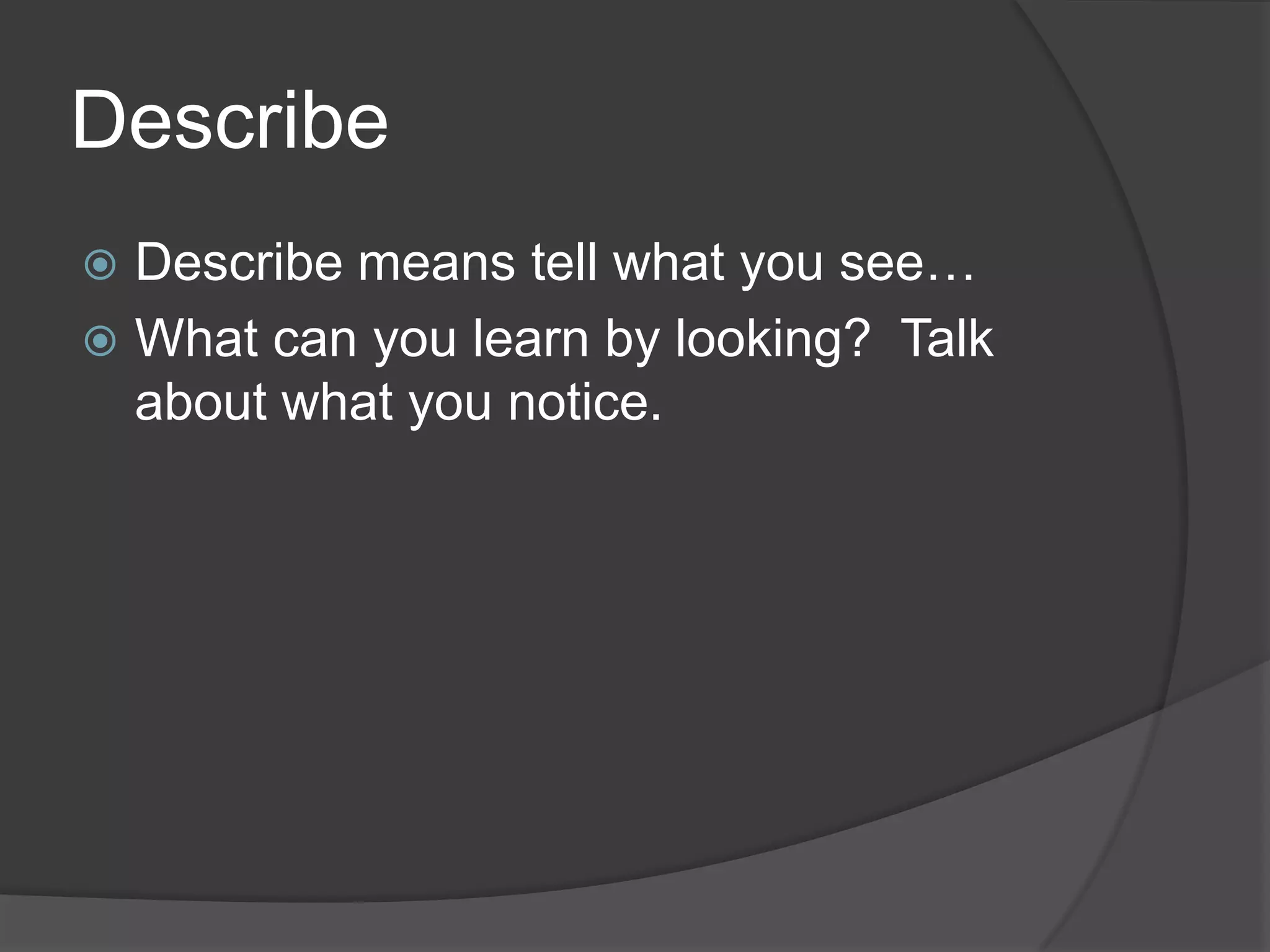
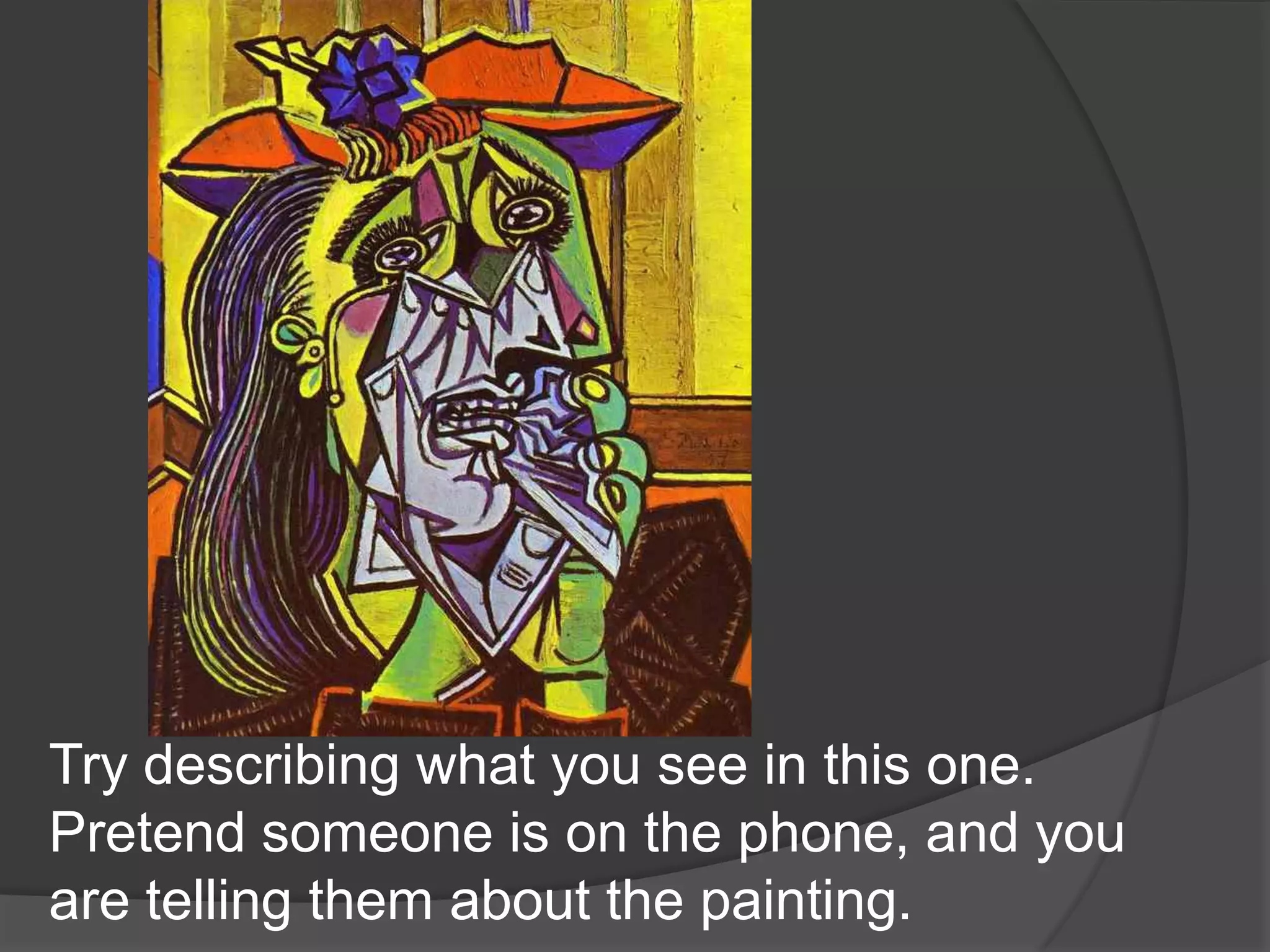
Try describing what you see in this one.  Pretend someone is on the phone, and you are telling them about the painting.
Now this one.  What shapes do you see?  What colors?
AnalyzeAnalyze means to think about how the artist made, or arranged things.Talk about line, shape, color, form, texture, and valueHow do the parts relate to each other?  What techniques was the artist using?
Time to practice again – dig a little deeper than you did when you “described”.  Think about relationships…
And this one – talk about shapes, lines, colors, textures and values.  How did the artist arrange things?
InterpretInterpret means to try to “get inside the artist’s head”.Why did he or she make the choices you just analyzed?What do you think is the meaning, or purpose behind this work?  Why did the artist make it like this?What does the artwork say to YOU?
Time to practice!  What was Picasso trying to say with this artwork?  Why didn’t he make it look “real”?  What else could you figure out about what he was thinking?
How about this one?  What was Mr. Smith trying to say?  What do you suppose he’d like you to feel when you look at this painting?  What does it remind you of?
EvaluateThis is the part where you get to use your opinion.  Evaluation is a sort of a judgment.  “Good” or “Bad” aren’t descriptive enough.  Tell what you do or don’t like about the artwork.Did the artist succeed in what he was trying to do?  Why do you say so?
Final thoughts – Let’s hear your evaluation of “Femme en Pleurs”.
And “The Season”.  Did Tucker succeed?  How do you feel about this one?
Now you’re an art critic!Don’t forget the four steps:DescribeAnalyzeInterpretEvaluatePractice on your own!

How to be an art critic

  • 1.
    How to bean Art Critic(thinking about art)
  • 2.
    The Four StepsDescribelookand tell aboutAnalyzehow do the parts relate?Interpretwhat is the artist saying?Evaluatehow do you feel about it?
  • 3.
    Art criticism meanslooking closely at art, learning as much as we can from it, and deciding what we think about it.Let’s choose a couple of images to practice on. Here’s one -
  • 4.
    This is TuckerSmith’s “The Season”. Mr. Smith is a successful artist that grew up here in Pinedale. He lives in Bondurant and is still painting today.
  • 5.
    Now let’s trya different one.Make it really different!
  • 6.
    This is PabloPicasso’s “Femme en Pleurs”, or “Weeping Woman”. Picasso is a famous artist that painted in Spain around 70 years ago. He made this painting after a war happened in his country.
  • 7.
    DescribeDescribe means tellwhat you see…What can you learn by looking? Talk about what you notice.
  • 8.
    Try describing whatyou see in this one. Pretend someone is on the phone, and you are telling them about the painting.
  • 9.
    Now this one. What shapes do you see? What colors?
  • 10.
    AnalyzeAnalyze means tothink about how the artist made, or arranged things.Talk about line, shape, color, form, texture, and valueHow do the parts relate to each other? What techniques was the artist using?
  • 11.
    Time to practiceagain – dig a little deeper than you did when you “described”. Think about relationships…
  • 12.
    And this one– talk about shapes, lines, colors, textures and values. How did the artist arrange things?
  • 13.
    InterpretInterpret means totry to “get inside the artist’s head”.Why did he or she make the choices you just analyzed?What do you think is the meaning, or purpose behind this work? Why did the artist make it like this?What does the artwork say to YOU?
  • 14.
    Time to practice! What was Picasso trying to say with this artwork? Why didn’t he make it look “real”? What else could you figure out about what he was thinking?
  • 15.
    How about thisone? What was Mr. Smith trying to say? What do you suppose he’d like you to feel when you look at this painting? What does it remind you of?
  • 16.
    EvaluateThis is thepart where you get to use your opinion. Evaluation is a sort of a judgment. “Good” or “Bad” aren’t descriptive enough. Tell what you do or don’t like about the artwork.Did the artist succeed in what he was trying to do? Why do you say so?
  • 17.
    Final thoughts –Let’s hear your evaluation of “Femme en Pleurs”.
  • 18.
    And “The Season”. Did Tucker succeed? How do you feel about this one?
  • 19.
    Now you’re anart critic!Don’t forget the four steps:DescribeAnalyzeInterpretEvaluatePractice on your own!