


Turning an Idea into
a Business…

10 Things for the
Founder to remember.   Dr. Michael R. Burcham

                       e.   michael@michaelburcham.com
                       w.   www.michaelburcham.com
                       t.   www.twitter.com/michaelrburcham
                       f.   www.facebook.com/michael.r.burcham
                       l.   www.linkedin/in/michaelburcham
Launching a Venture is Hard!


• Most startup companies fail.
• Even those entrepreneurs who have achieved success have
  stories of challenges and failures.
1   The Idea


.
Get the Idea
Out of Your

Head
and into a Picture!
Most people think that the ingredient for
a great startup is an awesome, world-
changing idea. Most of the time, this is
completely wrong…
2   Execution


.
The First Hurdle:

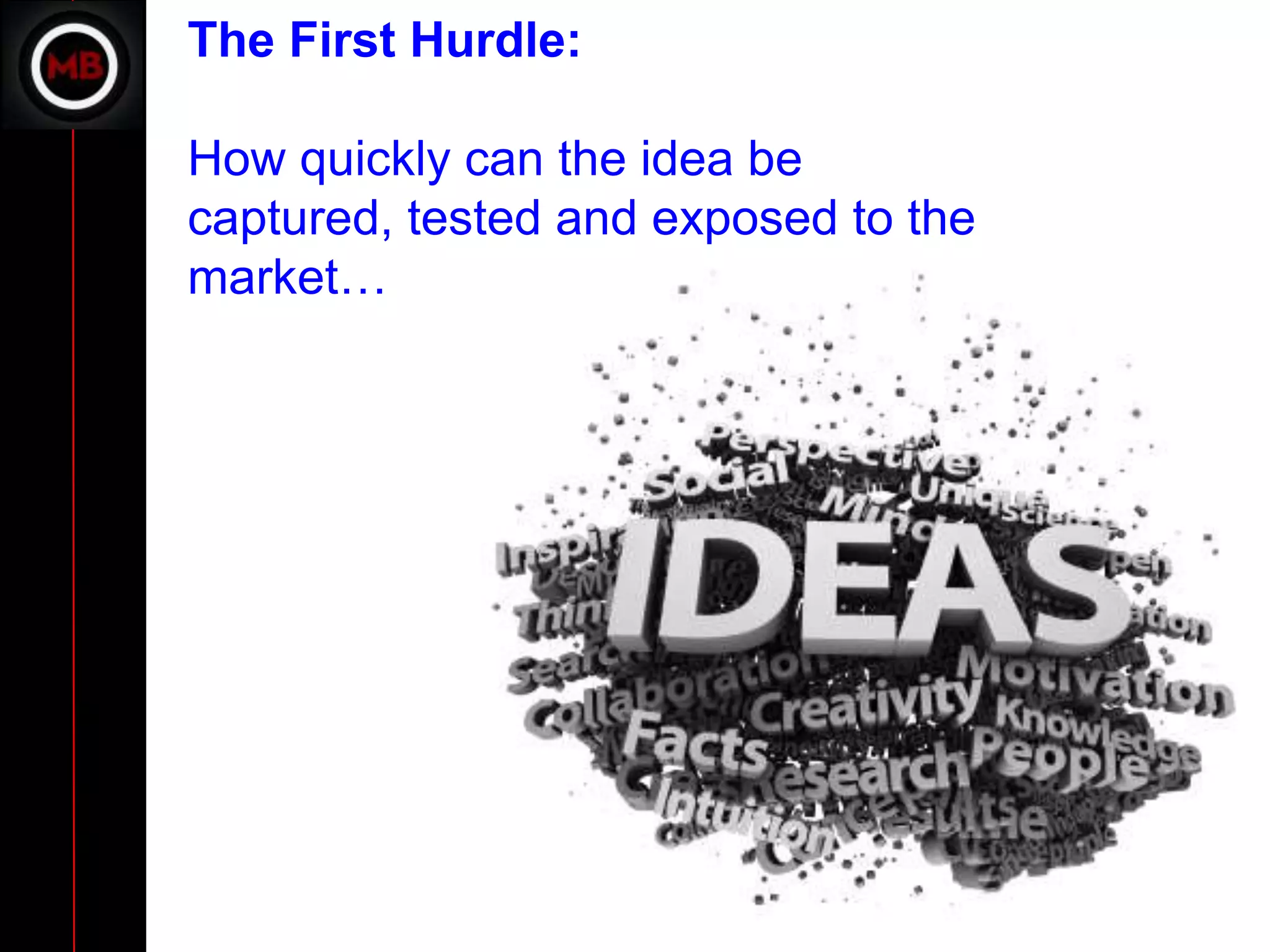
How quickly can the idea be
captured, tested and exposed to the
market…
The First Hurdle:

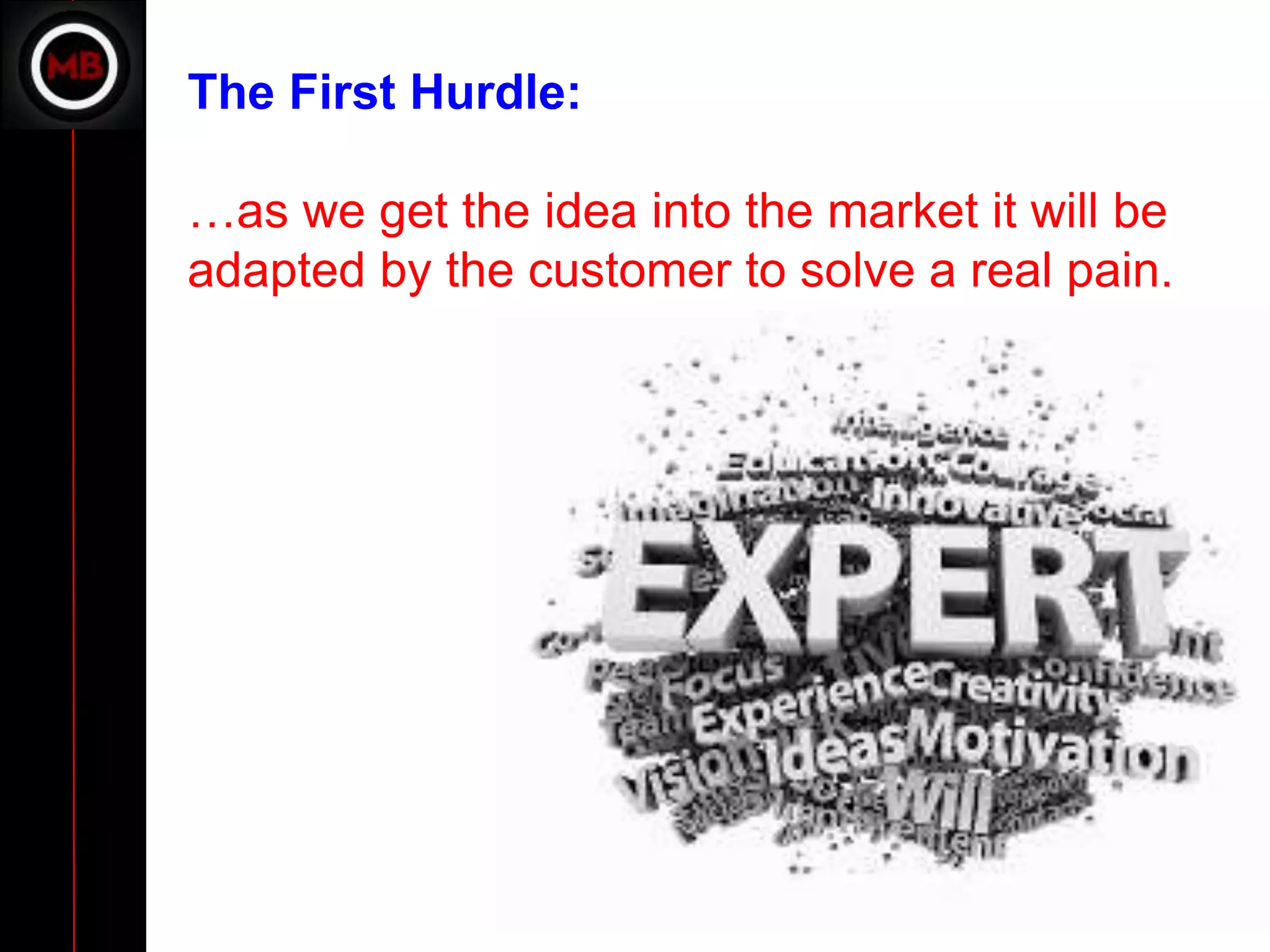
…as we get the idea into the market it will be
adapted by the customer to solve a real pain.
Execution Involves…


• Passion for the problem
  they are trying to solve.
• Understanding of what
  has to be done to make it
  happen.
• Will, determination, and
  focus to make it happen
  with a healthy sense of
  urgency.
• Perspective that things
  rarely go as planned.
3   Product


.
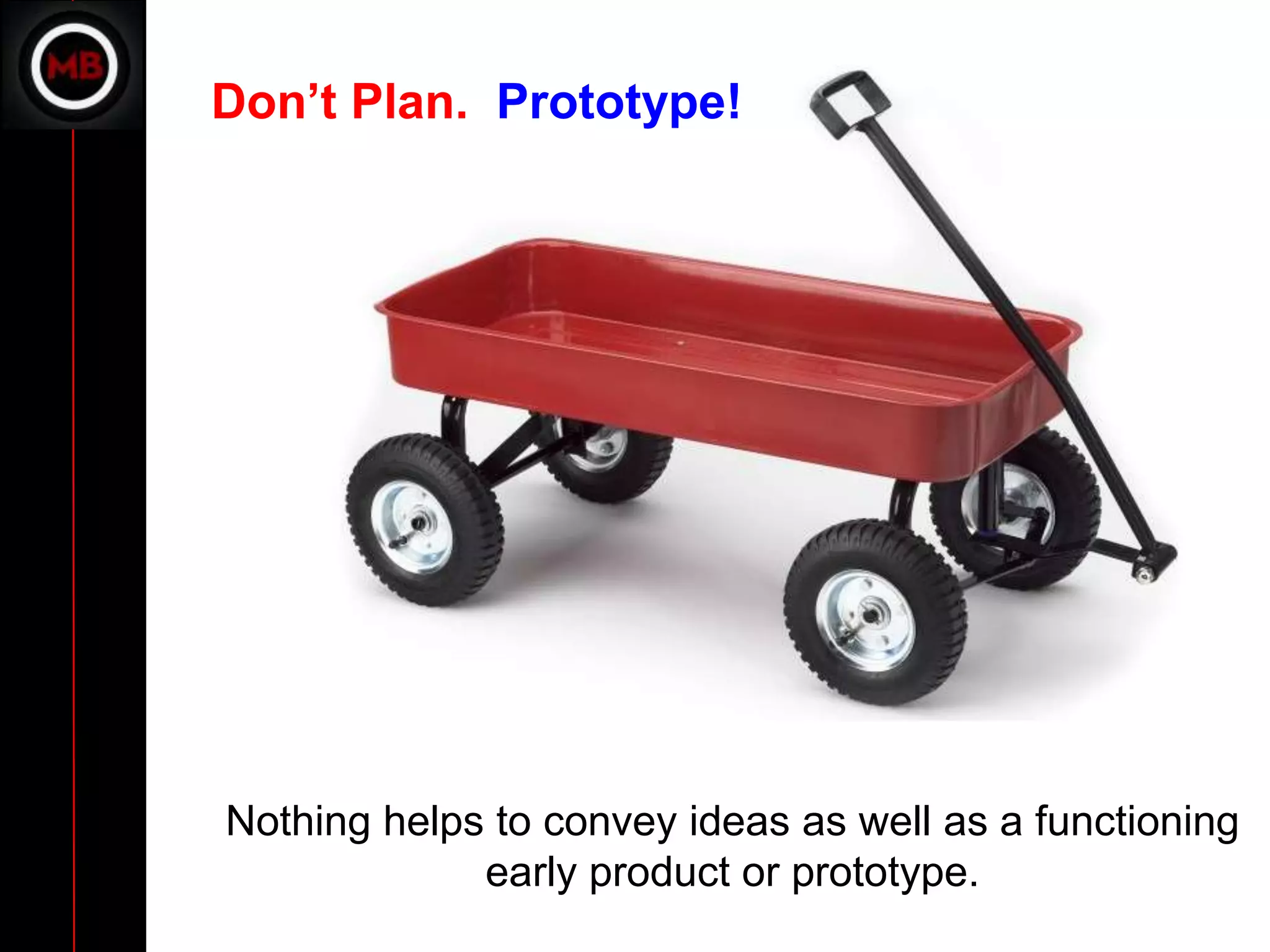
Don’t Plan. Prototype!


Nothing helps to convey ideas as well as a functioning
             early product or prototype.
Startups are about testing
ideas & quickly adapting
based on customer
feedback and data.
4   Biz Model


.
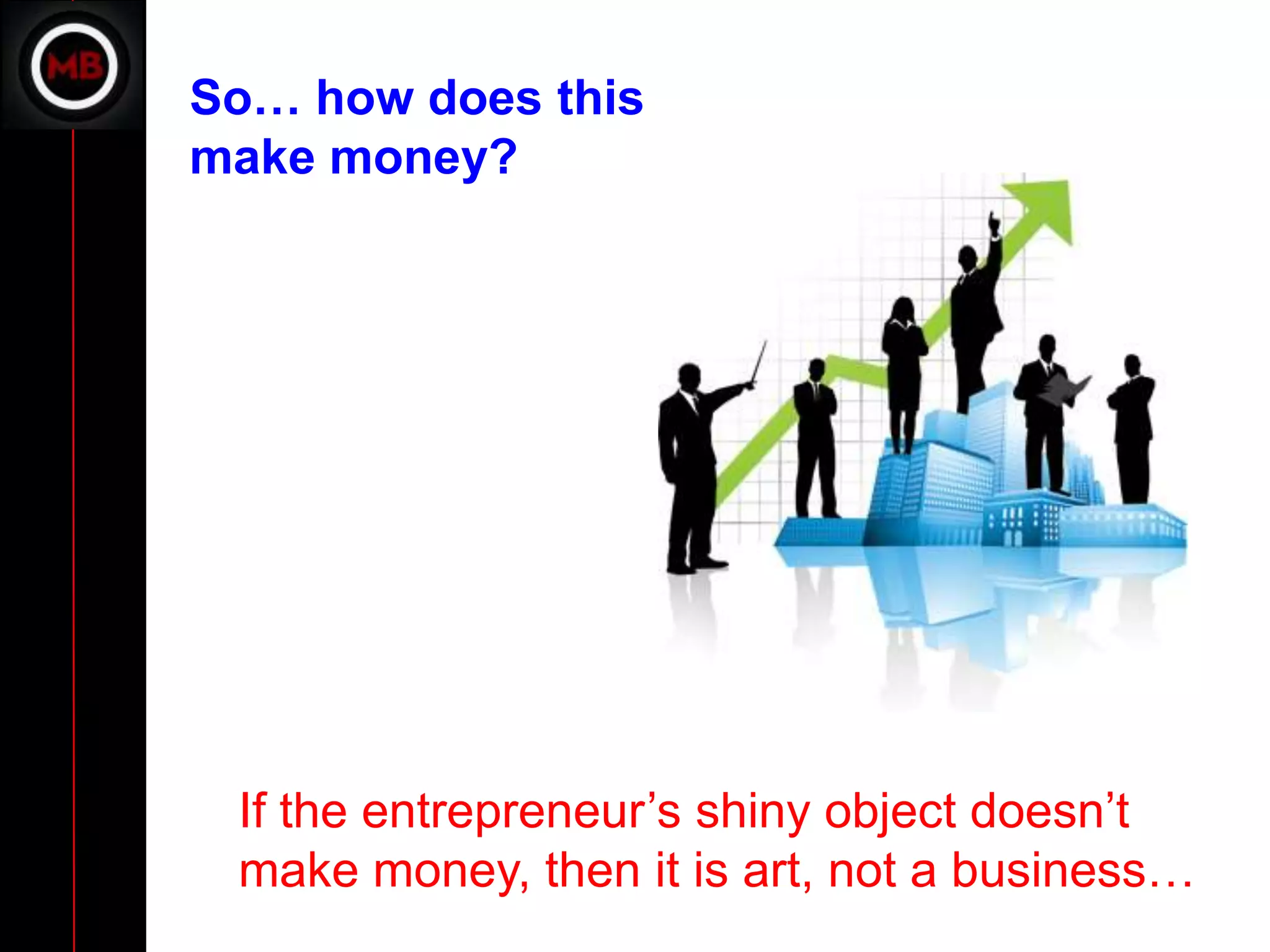
So… how does this
make money?


 If the entrepreneur’s shiny object doesn’t
 make money, then it is art, not a business…
Tips for Exploring the Business Model


• The Elevator Pitch – What is the story in 2-3 sentences?
• Identify the Revenue Stream(s) for your concept?
• What type of Business Model – Subscription, etc.
• How does this make money?
• What company is most like you?
• Who are the competitors?
• What makes these competitors successful? What makes
  them vulnerable?
• How big is this opportunity?
5   Technology


.
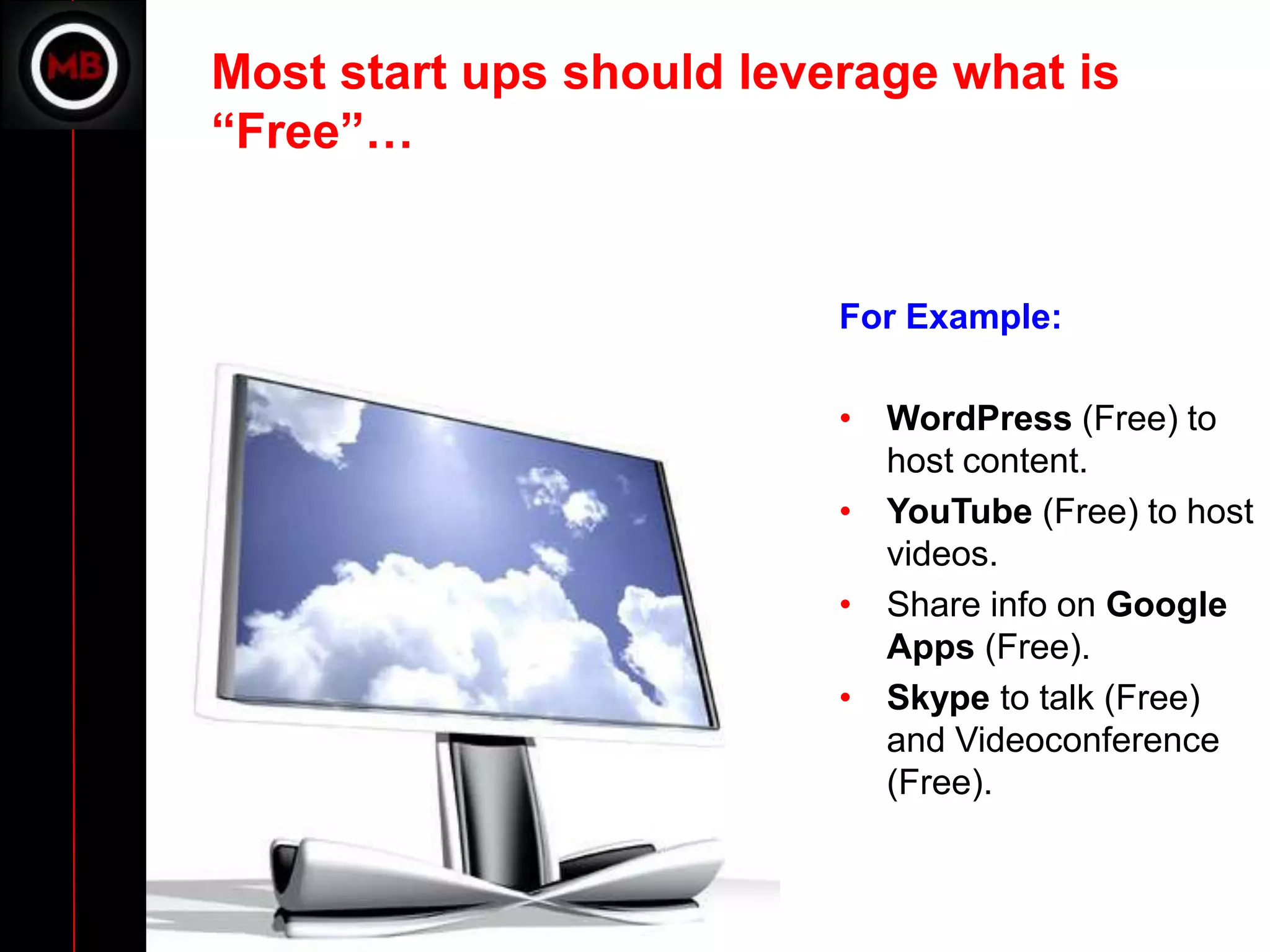
Most start ups should leverage what is
“Free”…


                          For Example:

                          • WordPress (Free) to
                            host content.
                          • YouTube (Free) to host
                            videos.
                          • Share info on Google
                            Apps (Free).
                          • Skype to talk (Free)
                            and Videoconference
                            (Free).
Technology Questions


• Are there enabling technologies that help the
  entrepreneur’s business to be better, faster, cheaper?
• How might the firm use new or emerging technologies that
  would be disruptive to the industry and create opportunity
  in the space (cloud computing, for example)?
• What new technology can the entrepreneur leverage that
  the current industry players cannot?
• How might social media be used to attract new customers
  and communicate the brand?
6   The Team


.
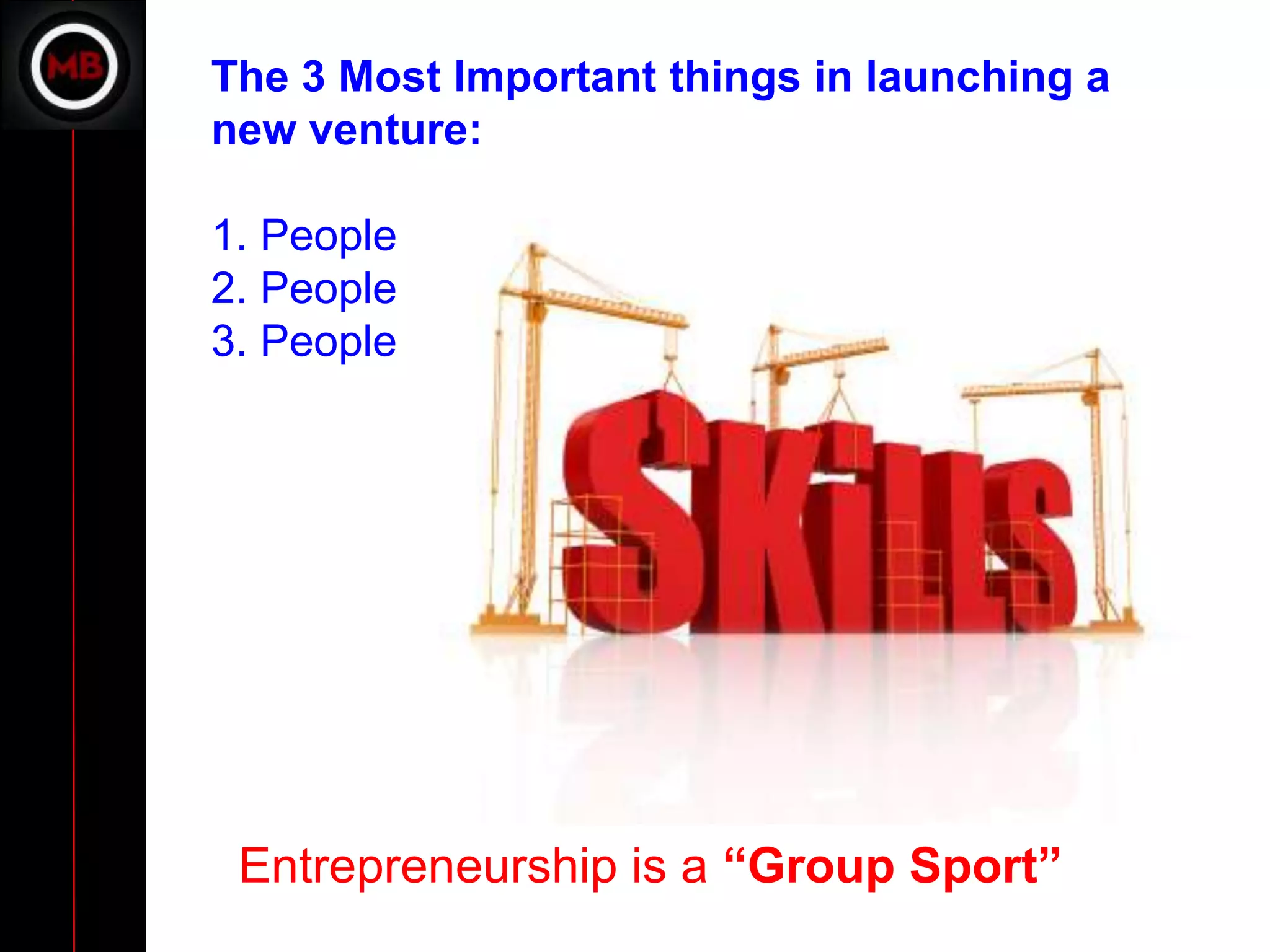
The 3 Most Important things in launching a
new venture:

1. People
2. People
3. People


 Entrepreneurship is a “Group Sport”
What are the Key Roles?
Questions About the Team


• For the CEO / Founder: Have you identified your own
  competencies (strengths and weaknesses)?
• How do you leverage your strengths and deal with your
  weaknesses?
• What are the core team roles that need to be filled?
• What type of individual should fill these roles?
• Is there anyone on the team who has done a startup before?
  If no, why not?
• Can this team work together to create success? How do you
  know?
Things to Remember


• Startups have less money than competitors.
• They have fewer employees.
• There are fewer people focused on things like marketing,
  sales, and product development.
• Resources are scarce!


The right team doing the right things in the right
        structural alignment is essential
7   Marketing


.
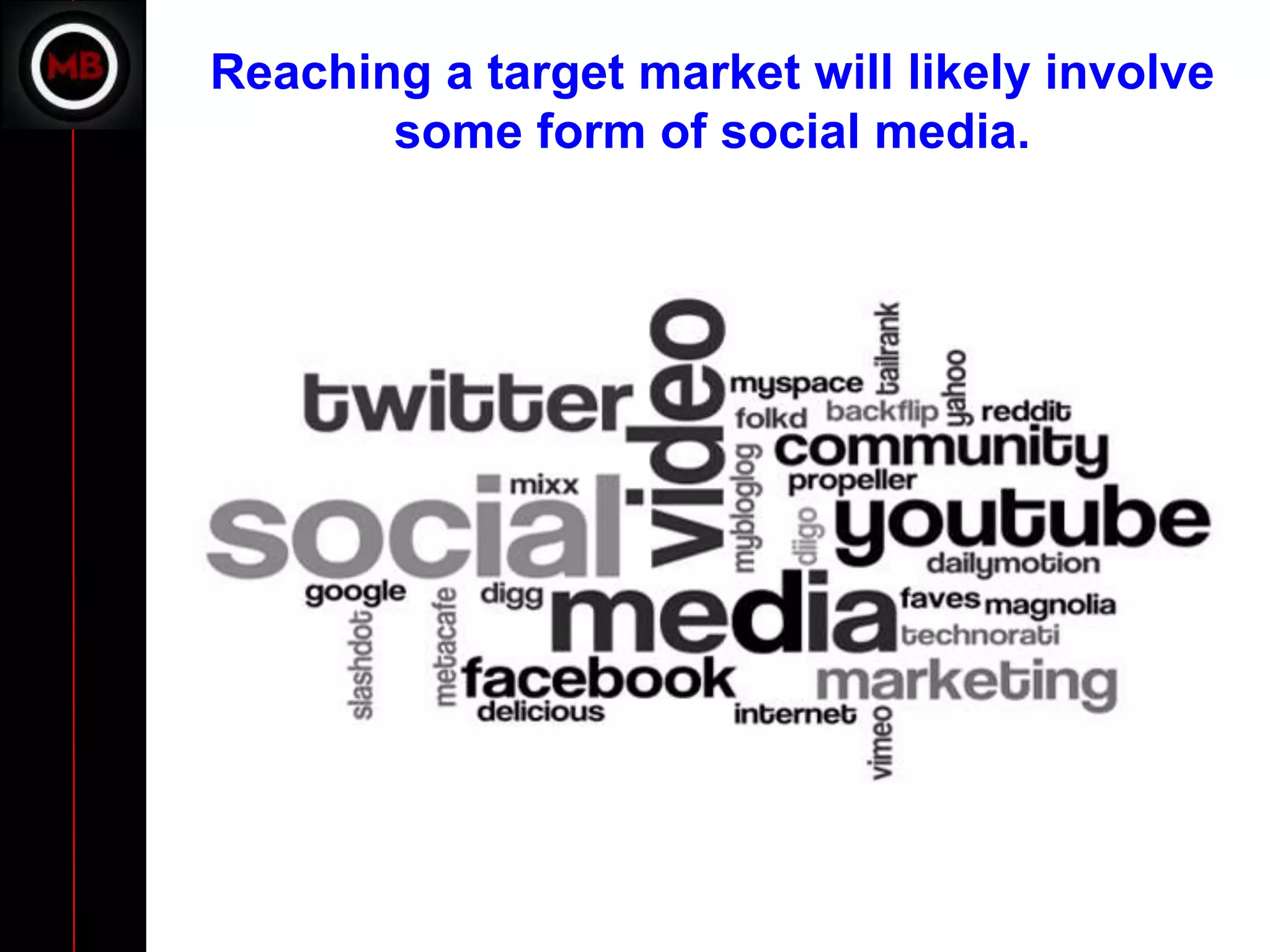
Reaching a target market will likely involve
       some form of social media.
Marketing Questions


• What is the pain you are solving and for whom?
• What are your Top 3 Market Segments?
• For Each Segment:
   – What do they look like? (Demographic Profile)
   – How do they think (Psychographic Profile)
   – How do they act? (Behavioral Profile)
• What are you offering your customers (Your Unique Selling
  Proposition)?
• What makes it Rare, Valuable and Sustainable
8   Operations


.
Operations Questions


• Can you draw a picture of how your business will work (flow
  chart)?
• Have you eliminated unnecessary complexity and kept the
  operating plan as cost effective as possible?
• Where will this business likely break down first? Where is the
  operating model most fragile?
• How do you know this business concept will scale?
• Can you grow this concept quickly?
9   Sales


.
Selling in today’s market
is a whole different
game!
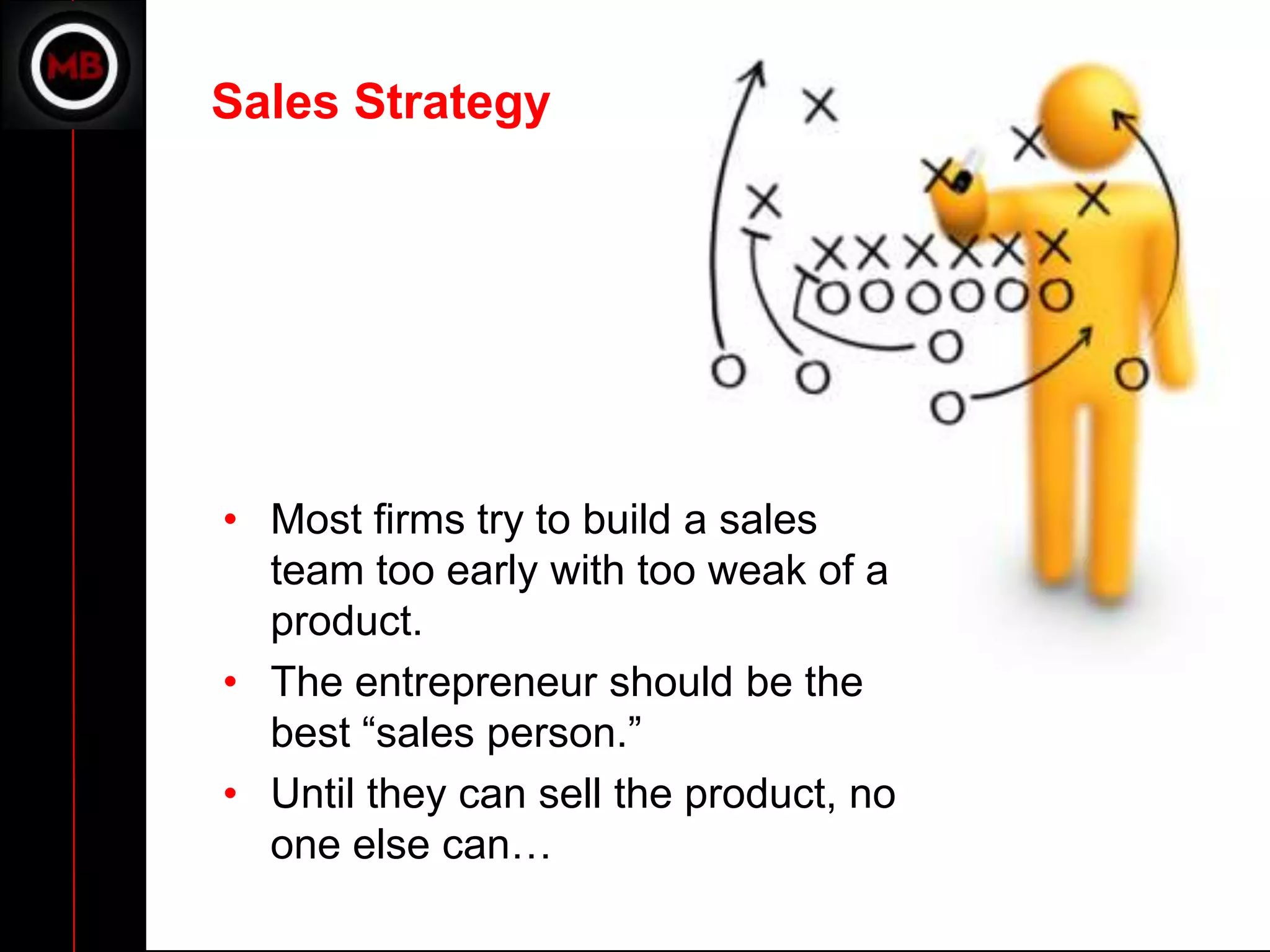
Sales Strategy


• Most firms try to build a sales
  team too early with too weak of a
  product.
• The entrepreneur should be the
  best “sales person.”
• Until they can sell the product, no
  one else can…
Thinking About Sales


• Is this a one step or two step sale (are there intermediaries)?
• Can you define and draw the sales process (sales cycle)?
• What are the selling milestones that move a customer to a
  “yes”?
• How will you prospect for customers?
• What is the sales message?
• How will you create Awareness, Interest, Desire and Action
  among customers?
• How will you (or what will) close the sale?
• How long is the sales cycle? How do you know?
• Are there trusted referral sources you can leverage in the
  space to create sales?
Financing
10.
  Plan
Where is the Break Even Point?

Careful cash management
is essential for success.
Evaluating the Financial Plan

• Have you set targets for each of the key indicators that drive
  business success?
   – Monthly & Quarterly Revenue?
   – Cost of Goods Sold?
   – Gross Margin (Sales – Cost of Goods Sold)?
   – SG&A? Operating Margin? EBITDA?
• How do these metrics compare to the best in the industry?
• What are the cash needs of the business to achieve BEP?
• When or how do you achieve BEP? How do you know?
• What are the biggest operating costs? Any alternatives?
• What type of capital (investment) do you really need to start or
  launch this business?
• What is the exit for investors?

10 things to keep in mind

  • 1.
    Turning an Ideainto a Business… 10 Things for the Founder to remember. Dr. Michael R. Burcham e. michael@michaelburcham.com w. www.michaelburcham.com t. www.twitter.com/michaelrburcham f. www.facebook.com/michael.r.burcham l. www.linkedin/in/michaelburcham
  • 2.
    Launching a Ventureis Hard! • Most startup companies fail. • Even those entrepreneurs who have achieved success have stories of challenges and failures.
  • 3.
    1 The Idea .
  • 4.
    Get the Idea Outof Your Head and into a Picture!
  • 5.
    Most people thinkthat the ingredient for a great startup is an awesome, world- changing idea. Most of the time, this is completely wrong…
  • 6.
    2 Execution .
  • 7.
    The First Hurdle: Howquickly can the idea be captured, tested and exposed to the market…
  • 8.
    The First Hurdle: …aswe get the idea into the market it will be adapted by the customer to solve a real pain.
  • 9.
    Execution Involves… • Passionfor the problem they are trying to solve. • Understanding of what has to be done to make it happen. • Will, determination, and focus to make it happen with a healthy sense of urgency. • Perspective that things rarely go as planned.
  • 10.
    3 Product .
  • 11.
    Don’t Plan. Prototype! Nothinghelps to convey ideas as well as a functioning early product or prototype.
  • 12.
    Startups are abouttesting ideas & quickly adapting based on customer feedback and data.
  • 13.
    4 Biz Model .
  • 14.
    So… how doesthis make money? If the entrepreneur’s shiny object doesn’t make money, then it is art, not a business…
  • 15.
    Tips for Exploringthe Business Model • The Elevator Pitch – What is the story in 2-3 sentences? • Identify the Revenue Stream(s) for your concept? • What type of Business Model – Subscription, etc. • How does this make money? • What company is most like you? • Who are the competitors? • What makes these competitors successful? What makes them vulnerable? • How big is this opportunity?
  • 16.
    5 Technology .
  • 17.
    Most start upsshould leverage what is “Free”… For Example: • WordPress (Free) to host content. • YouTube (Free) to host videos. • Share info on Google Apps (Free). • Skype to talk (Free) and Videoconference (Free).
  • 18.
    Technology Questions • Arethere enabling technologies that help the entrepreneur’s business to be better, faster, cheaper? • How might the firm use new or emerging technologies that would be disruptive to the industry and create opportunity in the space (cloud computing, for example)? • What new technology can the entrepreneur leverage that the current industry players cannot? • How might social media be used to attract new customers and communicate the brand?
  • 19.
    6 The Team .
  • 20.
    The 3 MostImportant things in launching a new venture: 1. People 2. People 3. People Entrepreneurship is a “Group Sport”
  • 21.
    What are theKey Roles?
  • 22.
    Questions About theTeam • For the CEO / Founder: Have you identified your own competencies (strengths and weaknesses)? • How do you leverage your strengths and deal with your weaknesses? • What are the core team roles that need to be filled? • What type of individual should fill these roles? • Is there anyone on the team who has done a startup before? If no, why not? • Can this team work together to create success? How do you know?
  • 23.
    Things to Remember •Startups have less money than competitors. • They have fewer employees. • There are fewer people focused on things like marketing, sales, and product development. • Resources are scarce! The right team doing the right things in the right structural alignment is essential
  • 24.
    7 Marketing .
  • 25.
    Reaching a targetmarket will likely involve some form of social media.
  • 26.
    Marketing Questions • Whatis the pain you are solving and for whom? • What are your Top 3 Market Segments? • For Each Segment: – What do they look like? (Demographic Profile) – How do they think (Psychographic Profile) – How do they act? (Behavioral Profile) • What are you offering your customers (Your Unique Selling Proposition)? • What makes it Rare, Valuable and Sustainable
  • 27.
    8 Operations .
  • 29.
    Operations Questions • Canyou draw a picture of how your business will work (flow chart)? • Have you eliminated unnecessary complexity and kept the operating plan as cost effective as possible? • Where will this business likely break down first? Where is the operating model most fragile? • How do you know this business concept will scale? • Can you grow this concept quickly?
  • 30.
    9 Sales .
  • 31.
    Selling in today’smarket is a whole different game!
  • 32.
    Sales Strategy • Mostfirms try to build a sales team too early with too weak of a product. • The entrepreneur should be the best “sales person.” • Until they can sell the product, no one else can…
  • 33.
    Thinking About Sales •Is this a one step or two step sale (are there intermediaries)? • Can you define and draw the sales process (sales cycle)? • What are the selling milestones that move a customer to a “yes”? • How will you prospect for customers? • What is the sales message? • How will you create Awareness, Interest, Desire and Action among customers? • How will you (or what will) close the sale? • How long is the sales cycle? How do you know? • Are there trusted referral sources you can leverage in the space to create sales?
  • 34.
  • 35.
    Where is theBreak Even Point? Careful cash management is essential for success.
  • 36.
    Evaluating the FinancialPlan • Have you set targets for each of the key indicators that drive business success? – Monthly & Quarterly Revenue? – Cost of Goods Sold? – Gross Margin (Sales – Cost of Goods Sold)? – SG&A? Operating Margin? EBITDA? • How do these metrics compare to the best in the industry? • What are the cash needs of the business to achieve BEP? • When or how do you achieve BEP? How do you know? • What are the biggest operating costs? Any alternatives? • What type of capital (investment) do you really need to start or launch this business? • What is the exit for investors?

Editor's Notes

  • #2 Good afternoon. Thank you to the Rotary Club for this opportunity.Your interests, hobbies, travel, a little of your personal story -- small town boy; find ways to be playful, funny, and make a personal connection.I am Michael BurchamI am a Serial EntrepreneurAnd I AM MUSIC CITY