













Startup: dall'idea all'exit
Augusto Coppola
Tutto quello che avreste voluto sapere,
ma non avete mai osato chiedere
Roma, 23.09.2015
2
Comunicazione social
#call4startups
@5anatre
@enlabs
Idea
4
Business idea initial structure
4
Vision
Mission
5
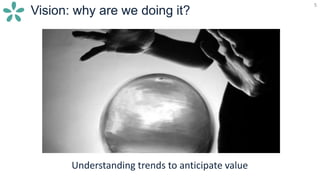
Vision: why are we doing it?
5
Understanding trends to anticipate value
6
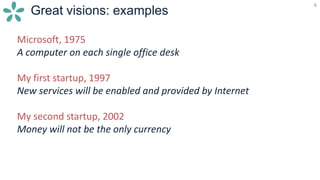
Great visions: examples
6
Microsoft, 1975
A computer on each single office desk
My first startup, 1997
New services will be enabled and provided by Internet
My second startup, 2002
Money will not be the only currency
7
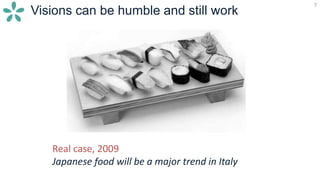
Visions can be humble and still work
7
Real case, 2009
Japanese food will be a major trend in Italy
8
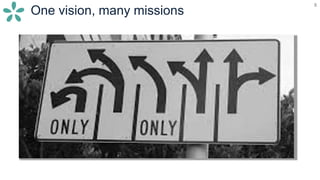
One vision, many missions
8
9
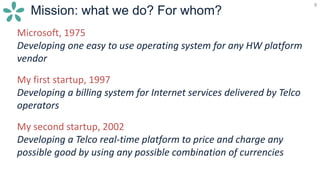
Mission: what we do? For whom?
9
Microsoft, 1975
Developing one easy to use operating system for any HW platform
vendor
My first startup, 1997
Developing a billing system for Internet services delivered by Telco
operators
My second startup, 2002
Developing a Telco real-time platform to price and charge any
possible good by using any possible combination of currencies
10
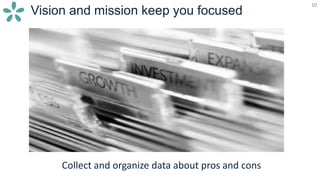
Vision and mission keep you focused
10
Collect and organize data about pros and cons
11
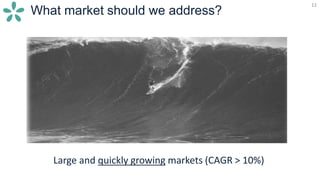
What market should we address?
11
Large and quickly growing markets (CAGR > 10%)
12
Jot down your initial business idea
12
1. What are the emerging trends we are noticing?
2. What does our product/service do?
3. Who will buy it?
4. Why will they buy it?
5. What is the forecasted size of our market?
6. How will our opportunity window last?
Jot down everything in less than 200 words and
start pitching your targets
13
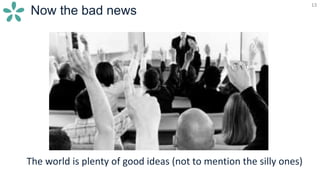
Now the bad news
13
The world is plenty of good ideas (not to mention the silly ones)
14
Turning ideas into profitable businesses
14
3. Team
2. Team
1. Team
To do it, you need 3 key elements
Team
16
The fundamental question
16
Can we do it?
17
Spotting the weak element in your team
17
You
18
The key quality of a great entrepreneur
18
Discipline
Discipline is the refining fire by which talent becomes ability
(R.L. Smith)
19
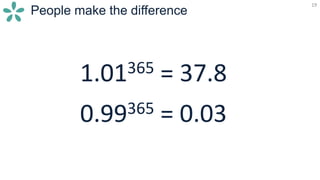
People make the difference
1.01365 = 37.8
0.99365 = 0.03
1.01
0.99
20
Most critical discipline
20
Learning
21
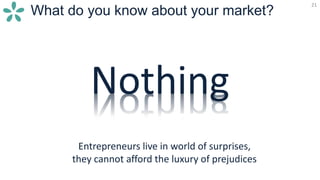
What do you know about your market?
21
Entrepreneurs live in world of surprises,
they cannot afford the luxury of prejudices
Nothing
22
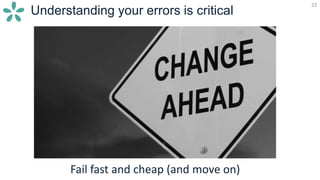
Understanding your errors is critical
22
Fail fast and cheap (and move on)
23
Second most critical discipline
23
Team Making
24
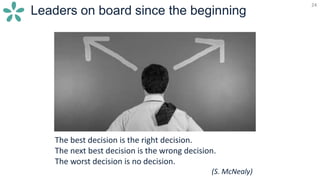
Leaders on board since the beginning
24
The best decision is the right decision.
The next best decision is the wrong decision.
The worst decision is no decision.
(S. McNealy)
25
Questions about your teammates
25
• Is every team member 100% committed?
• Do you have agreed roles and duties?
• What is each person going to do all day?
• Are you the right team to do it?
• How are you going to divide equity?
• Who is going to take a salary? How much?
• What if you run out of money?
• What if they are offered a full time job?
26
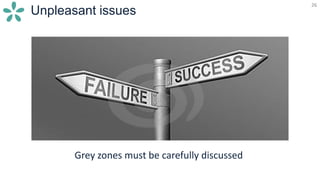
Unpleasant issues
26
Grey zones must be carefully discussed
27
Working in a team means also...
27
...be sure of what you know, but actively looking for
different points of views to challenge your...
28
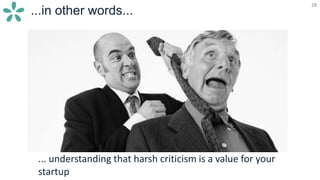
...in other words...
28
... understanding that harsh criticism is a value for your
startup
29
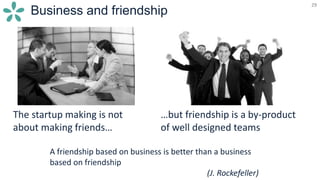
Business and friendship
29
The startup making is not
about making friends…
…but friendship is a by-product
of well designed teams
A friendship based on business is better than a business
based on friendship
(J. Rockefeller)
30
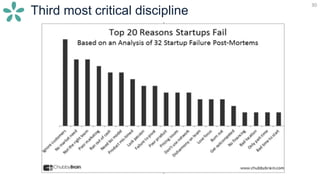
Third most critical discipline
Market Focus
32
What do you know about your market?
32
You don’t know what your market will be BUT
you perfectly know what your market is
Everything
33
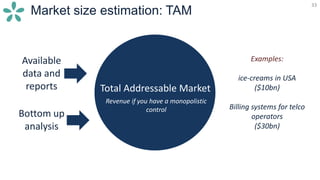
Market size estimation: TAM
33
Total Addressable Market
Available
data and
reports
Bottom up
analysis
Revenue if you have a monopolistic
control
Examples:
ice-creams in USA
($10bn)
Billing systems for telco
operators
($30bn)
34
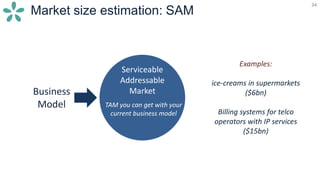
Market size estimation: SAM
34
Serviceable
Addressable
Market
TAM you can get with your
current business model
Examples:
ice-creams in supermarkets
($6bn)
Billing systems for telco
operators with IP services
($15bn)
Business
Model
35
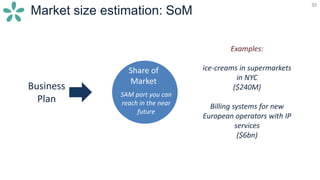
Market size estimation: SoM
35
Share of
Market
SAM part you can
reach in the near
future
Examples:
ice-creams in supermarkets
in NYC
($240M)
Billing systems for new
European operators with IP
services
($6bn)
Business
Plan
36
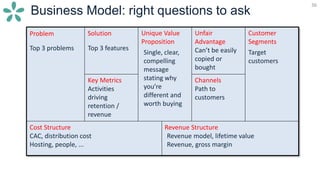
Business Model: right questions to ask
Problem Solution
Key Metrics
Unique Value
Proposition
Unfair
Advantage
Channels
Customer
Segments
Cost Structure Revenue Structure
Top 3 problems Top 3 features
Activities
driving
retention /
revenue
Single, clear,
compelling
message
stating why
you’re
different and
worth buying
Can’t be easily
copied or
bought
Path to
customers
Target
customers
Revenue model, lifetime value
Revenue, gross margin
CAC, distribution cost
Hosting, people, ...
37
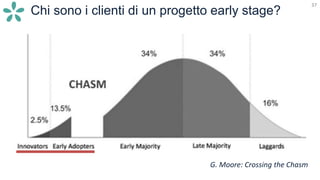
Chi sono i clienti di un progetto early stage?
37
G. Moore: Crossing the Chasm
38
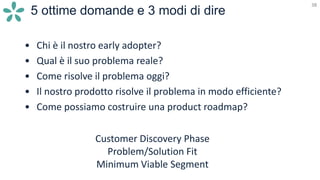
5 ottime domande e 3 modi di dire
38
• Chi è il nostro early adopter?
• Qual è il suo problema reale?
• Come risolve il problema oggi?
• Il nostro prodotto risolve il problema in modo efficiente?
• Come possiamo costruire una product roadmap?
Customer Discovery Phase
Problem/Solution Fit
Minimum Viable Segment
39
Case study: Moovenda
codice sconto: call4startups
40
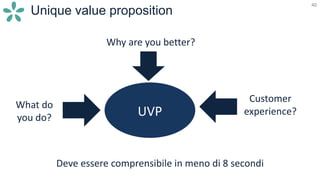
Unique value proposition
40
UVP
What do
you do?
Why are you better?
Customer
experience?
Deve essere comprensibile in meno di 8 secondi
41
Case study: Whoosnap
42
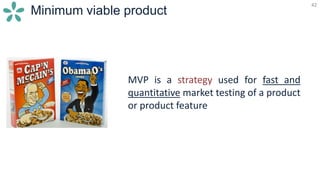
Minimum viable product
42
MVP is a strategy used for fast and
quantitative market testing of a product
or product feature
43
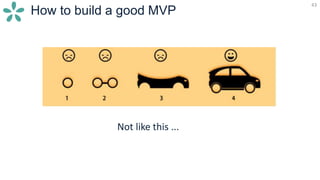
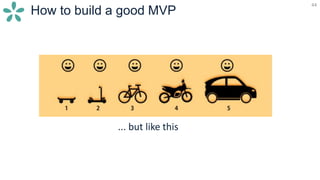
How to build a good MVP
Not like this ...
44
How to build a good MVP
... but like this
45
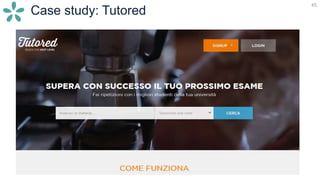
Case study: Tutored
46
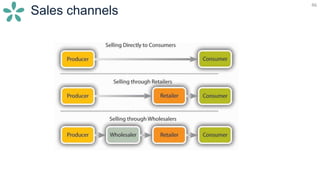
Sales channels
47
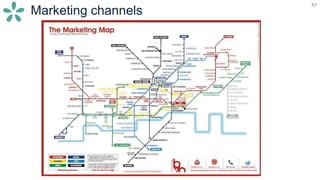
Marketing channels
47
48
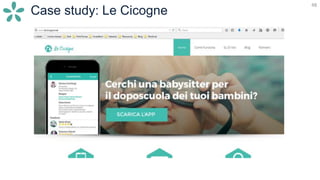
Case study: Le Cicogne
49
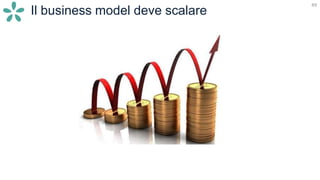
Il business model deve scalare
50
Ma la prima fase della customer acquisition no!
51
Growth Hacking
Growth hacking è l'insieme di pratiche e di tattiche
adottate per ottenere un miglioramento delle metriche
52
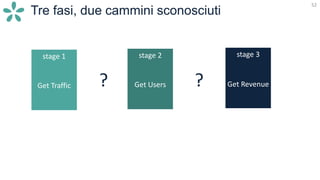
Tre fasi, due cammini sconosciuti
stage 1
Get Traffic
stage 2
Get Users
stage 3
Get Revenue? ?
53
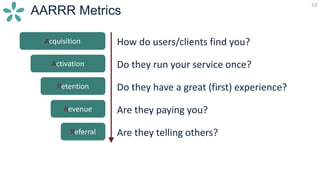
AARRR Metrics
Acquisition
Activation
Retention
Revenue
Referral
How do users/clients find you?
Do they run your service once?
Do they have a great (first) experience?
Are they paying you?
Are they telling others?
54
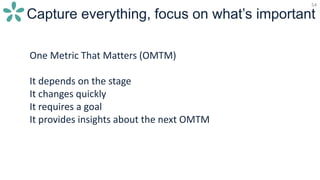
Capture everything, focus on what’s important
One Metric That Matters (OMTM)
It depends on the stage
It changes quickly
It requires a goal
It provides insights about the next OMTM
55
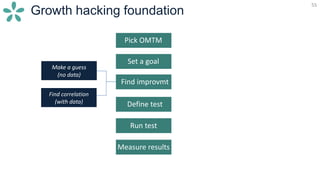
Growth hacking foundation
Pick OMTM
Set a goal
Find improvmt
Make a guess
(no data)
Find correlation
(with data) Define test
Run test
Measure results
56
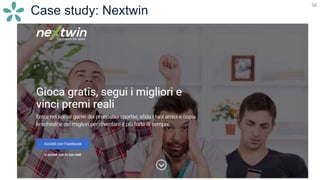
Case study: Nextwin
57
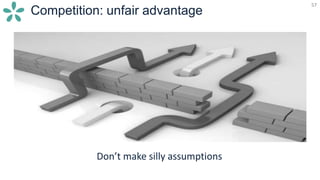
Competition: unfair advantage
57
Don’t make silly assumptions
58
A key concept
Wasting time is worse than wasting money
59
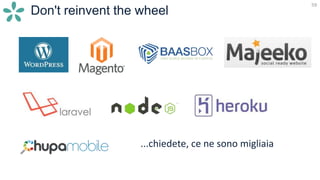
Don't reinvent the wheel
...chiedete, ce ne sono migliaia
60
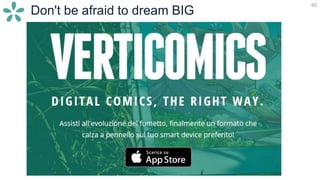
Don't be afraid to dream BIG
Undestanding Investors
62
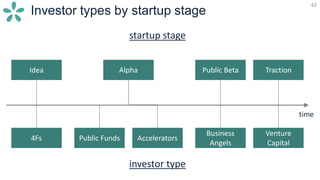
Investor types by startup stage
62
time
Idea Public Beta TractionAlpha
4Fs Public Funds Accelerators
Business
Angels
Venture
Capital
startup stage
investor type
63
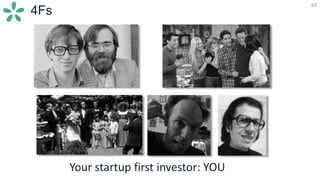
4Fs
63
Your startup first investor: YOU
64
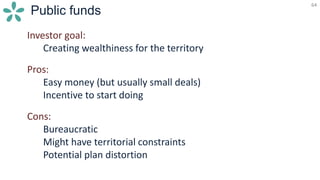
Public funds
64
Investor goal:
Creating wealthiness for the territory
Pros:
Easy money (but usually small deals)
Incentive to start doing
Cons:
Bureaucratic
Might have territorial constraints
Potential plan distortion
65
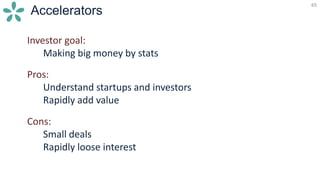
Accelerators
65
Investor goal:
Making big money by stats
Pros:
Understand startups and investors
Rapidly add value
Cons:
Small deals
Rapidly loose interest
66
Is this concept clear enough?
Exits are a must
67
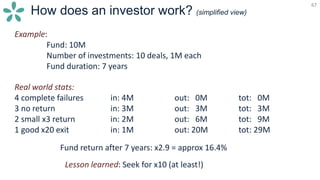
How does an investor work? (simplified view)
67
Lesson learned: Seek for x10 (at least!)
Example:
Fund: 10M
Number of investments: 10 deals, 1M each
Fund duration: 7 years
Real world stats:
4 complete failures in: 4M out: 0M tot: 0M
3 no return in: 3M out: 3M tot: 3M
2 small x3 return in: 2M out: 6M tot: 9M
1 good x20 exit in: 1M out: 20M tot: 29M
Fund return after 7 years: x2.9 = approx 16.4%
68
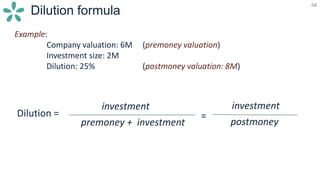
Dilution formula
68
Example:
Company valuation: 6M (premoney valuation)
Investment size: 2M
Dilution: 25% (postmoney valuation: 8M)
Dilution =
investment
premoney + investment
investment
postmoney
=
69
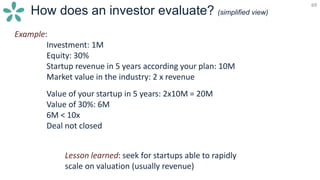
How does an investor evaluate? (simplified view)
69
Lesson learned: seek for startups able to rapidly
scale on valuation (usually revenue)
Example:
Investment: 1M
Equity: 30%
Startup revenue in 5 years according your plan: 10M
Market value in the industry: 2 x revenue
Value of your startup in 5 years: 2x10M = 20M
Value of 30%: 6M
6M < 10x
Deal not closed
70
Overwhelmed
70
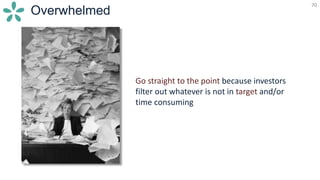
Go straight to the point because investors
filter out whatever is not in target and/or
time consuming
71
How does an investor take decisions? (realistic view)
71
basics + gut instinct + a little know how +
a network of experts you can hardly imagine
72
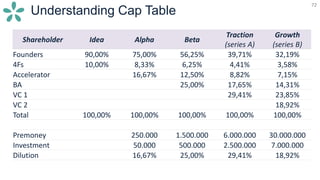
Understanding Cap Table
72
Shareholder Idea Alpha Beta
Traction
(series A)
Growth
(series B)
Founders 90,00% 75,00% 56,25% 39,71% 32,19%
4Fs 10,00% 8,33% 6,25% 4,41% 3,58%
Accelerator 16,67% 12,50% 8,82% 7,15%
BA 25,00% 17,65% 14,31%
VC 1 29,41% 23,85%
VC 2 18,92%
Total 100,00% 100,00% 100,00% 100,00% 100,00%
Premoney 250.000 1.500.000 6.000.000 30.000.000
Investment 50.000 500.000 2.500.000 7.000.000
Dilution 16,67% 25,00% 29,41% 18,92%
73
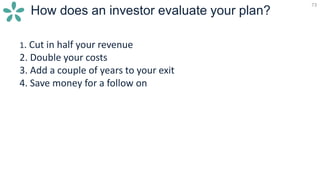
How does an investor evaluate your plan?
1. Cut in half your revenue
2. Double your costs
3. Add a couple of years to your exit
4. Save money for a follow on
74
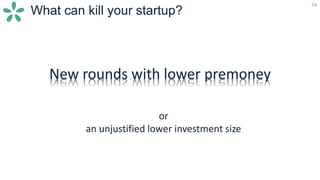
What can kill your startup?
74
New rounds with lower premoney
or
an unjustified lower investment size
Stupid errors
76
Don’t know the fundamentals
NDA
Term Sheet
Exit is a must
77
Competitors: you have to perfectly know them
No excuses
78
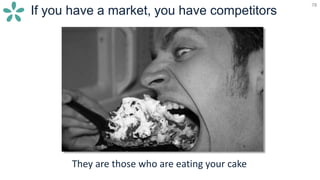
If you have a market, you have competitors
They are those who are eating your cake
79
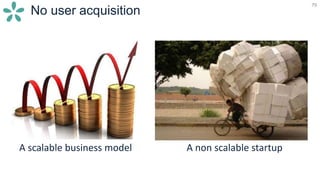
No user acquisition
A scalable business model A non scalable startup
80
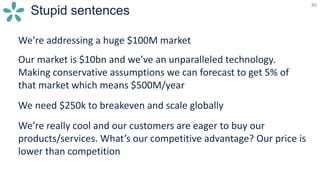
Stupid sentences
We’re addressing a huge $100M market
Our market is $10bn and we’ve an unparalleled technology.
Making conservative assumptions we can forecast to get 5% of
that market which means $500M/year
We need $250k to breakeven and scale globally
We’re really cool and our customers are eager to buy our
products/services. What’s our competitive advantage? Our price is
lower than competition
81
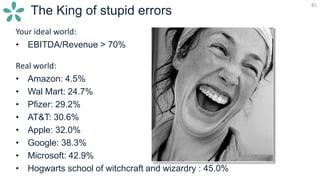
The King of stupid errors
Your ideal world:
• EBITDA/Revenue > 70%
Real world:
• Amazon: 4.5%
• Wal Mart: 24.7%
• Pfizer: 29.2%
• AT&T: 30.6%
• Apple: 32.0%
• Google: 38.3%
• Microsoft: 42.9%
• Hogwarts school of witchcraft and wizardry : 45.0%
Call to Action
83
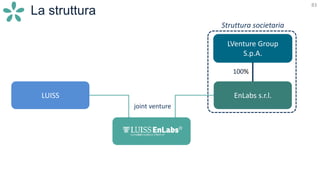
La struttura
LVenture Group
S.p.A.
EnLabs s.r.l.LUISS
100%
Struttura societaria
joint venture
84
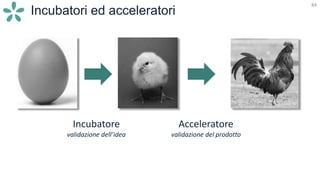
Incubatori ed acceleratori
Incubatore
validazione dell’idea
Acceleratore
validazione del prodotto
85
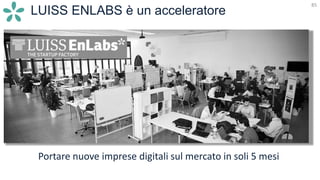
LUISS ENLABS è un acceleratore
Portare nuove imprese digitali sul mercato in soli 5 mesi
86
Investment target
early stage ICT
team + prototipo + mercato
87
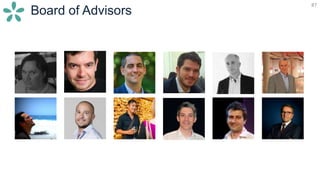
Board of Advisors
88
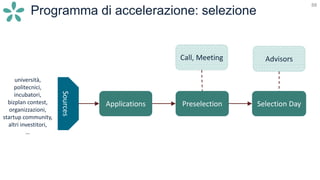
Programma di accelerazione: selezione
Preselection
Advisors
Applications Selection Day
Call, MeetingSources
università,
politecnici,
incubatori,
bizplan contest,
organizzazioni,
startup community,
altri investitori,
…
89
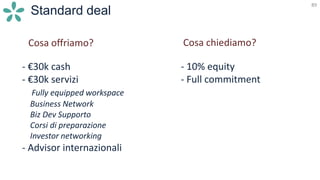
Standard deal
Cosa offriamo?
- €30k cash
- €30k servizi
Fully equipped workspace
Business Network
Biz Dev Supporto
Corsi di preparazione
Investor networking
- Advisor internazionali
Cosa chiediamo?
- 10% equity
- Full commitment
90
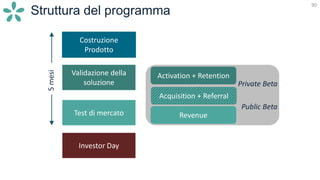
Struttura del programma
5mesi
Costruzione
Prodotto
Validazione della
soluzione
Test di mercato
Activation + Retention
Acquisition + Referral
Revenue
Private Beta
Public Beta
Investor Day
91
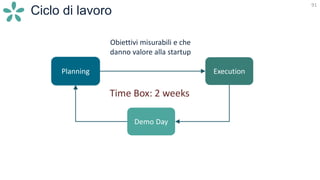
Ciclo di lavoro
Obiettivi misurabili e che
danno valore alla startup
Planning
Demo Day
Execution
Time Box: 2 weeks
92
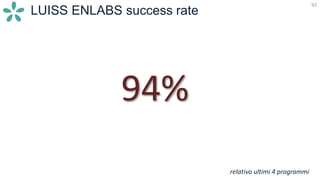
LUISS ENLABS success rate
94%
relativo ultimi 4 programmi
93
Domande
Cosa cerchiamo?
Come fare ad applicare?
Cosa avviene la selezione?
Qual è il deal?
Che succede se venite selezionati?
Funziona?
94
Founders: l’aspetto fondamentale
Video di max 60 secondi (no password!)
Domande su founder e team
Chi siete, quali esperienze avete fatto
Portfolio (developer e designer)
(tutto in inglese)
95
Product
Demo (link o video)
Traction (nessuna traction non è un problema)
96
Company
Twitter description
Circa mezza pagina di descrizione
Come suddividete (o suddividerete) le quote
Il pitch da 4 minuti (max 240 secondi)
L’executive summary o il pitch deck
97
Plan
Come userete i €30k del programma nei 5 mesi
98
Concetto
Ho imparato che le grandi aziende hanno a cuore l'estetica
perché trasmette un messaggio su come l'azienda
percepisce se stessa, sul senso di disciplina dei suoi progetti
e su come è gestita
(Steve Jobs)
99
Feedback
Più andrete avanti nel processo e
più riceverete feedback dettagliati
100
Grazie
www.luissenlabs.com
www.facebook.com/luissenlabs
@enlabs
Augusto Coppola
@5anatre
www.facebook.com/augusto.coppola

Dall'idea all'exit - Augusto Coppola