1
Morphology & Microscopy of Fennel
ashokababu.pc.ph@msruas.ac.in
2
Content
Fennel
3
Objectives
At the end of this lecture, student will be able to
• Discuss source, family, chemical constituents and uses
• Discuss the macroscopical and microscopical characters of fennel
4
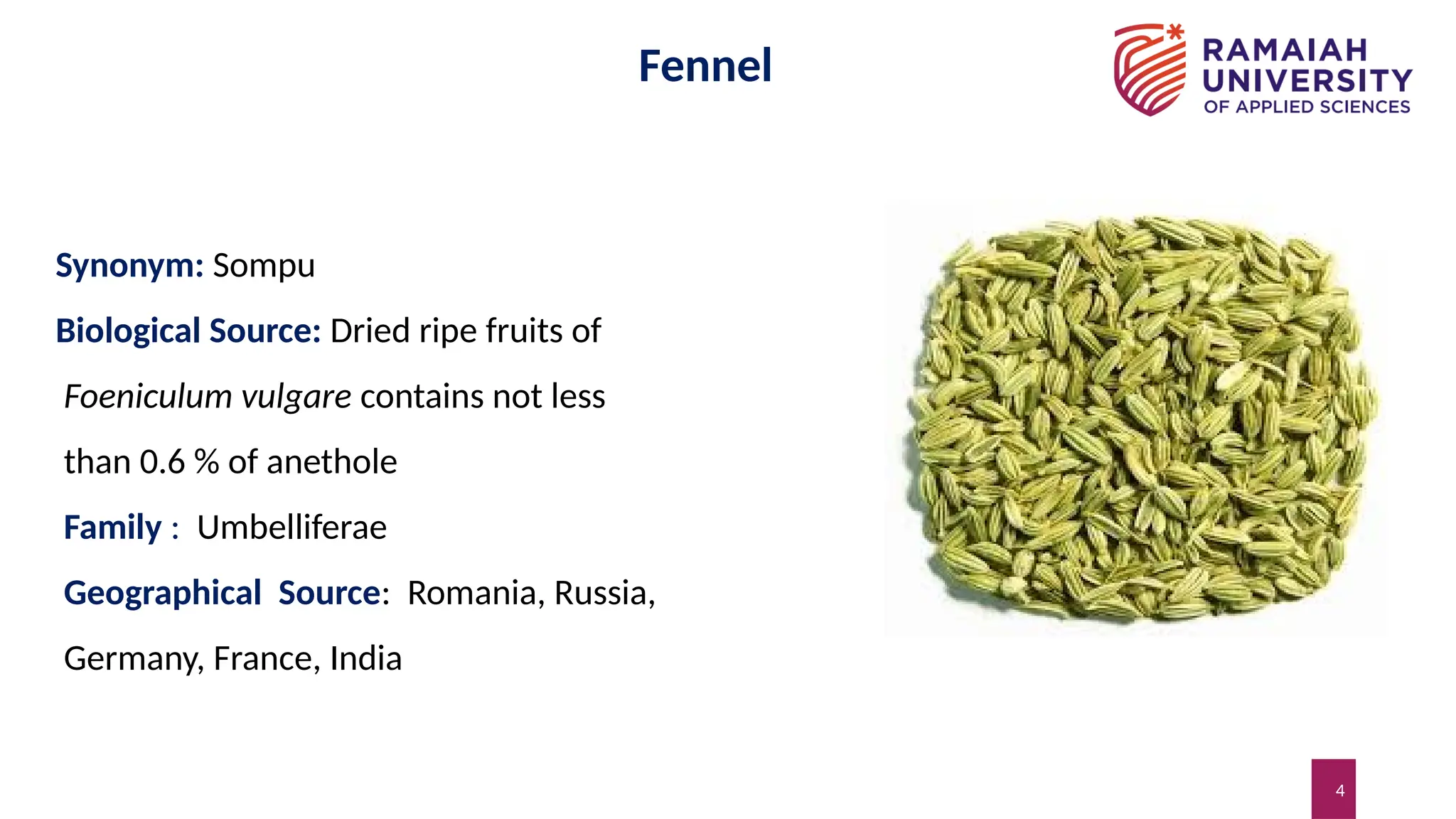
Fennel
Synonym: Sompu
Biological Source: Dried ripe fruits of
Foeniculum vulgare contains not less
than 0.6 % of anethole
Family : Umbelliferae
Geographical Source: Romania, Russia,
Germany, France, India
5
5
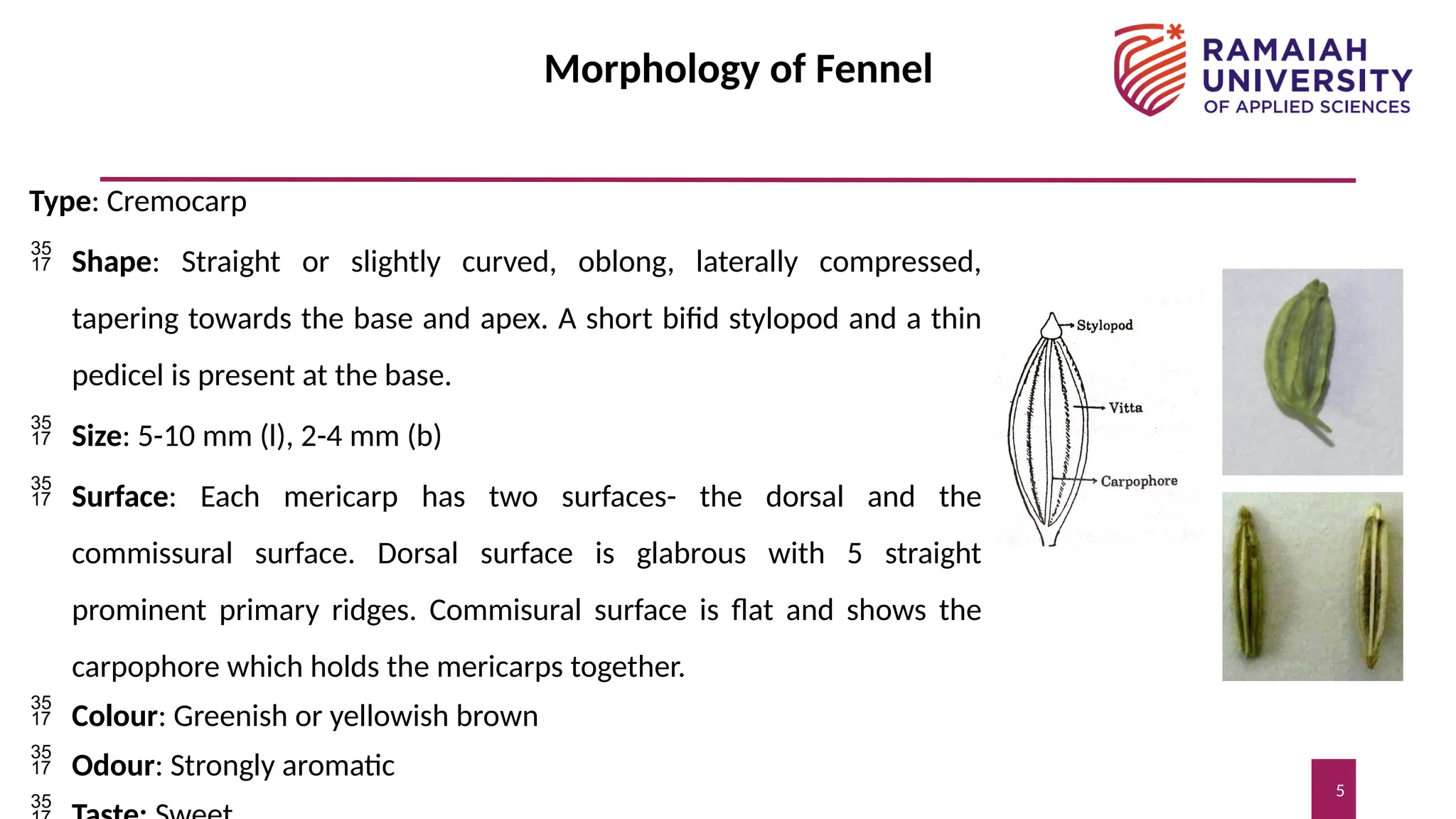
Type: Cremocarp
 Shape: Straight or slightly curved, oblong, laterally compressed,
tapering towards the base and apex. A short bifid stylopod and a thin
pedicel is present at the base.
 Size: 5-10 mm (l), 2-4 mm (b)
 Surface: Each mericarp has two surfaces- the dorsal and the
commissural surface. Dorsal surface is glabrous with 5 straight
prominent primary ridges. Commisural surface is flat and shows the
carpophore which holds the mericarps together.
 Colour: Greenish or yellowish brown
 Odour: Strongly aromatic
Morphology of Fennel
6
Microscopy of Fennel
 Pericarp
Epicarp
Mesocarp
• Vascular bundle
• Reticulate parenchyma
• Vittae
Endocarp
 Testa
 Endosperm
7
Microscopy of Fennel
8
9
Microscopy of Fennel
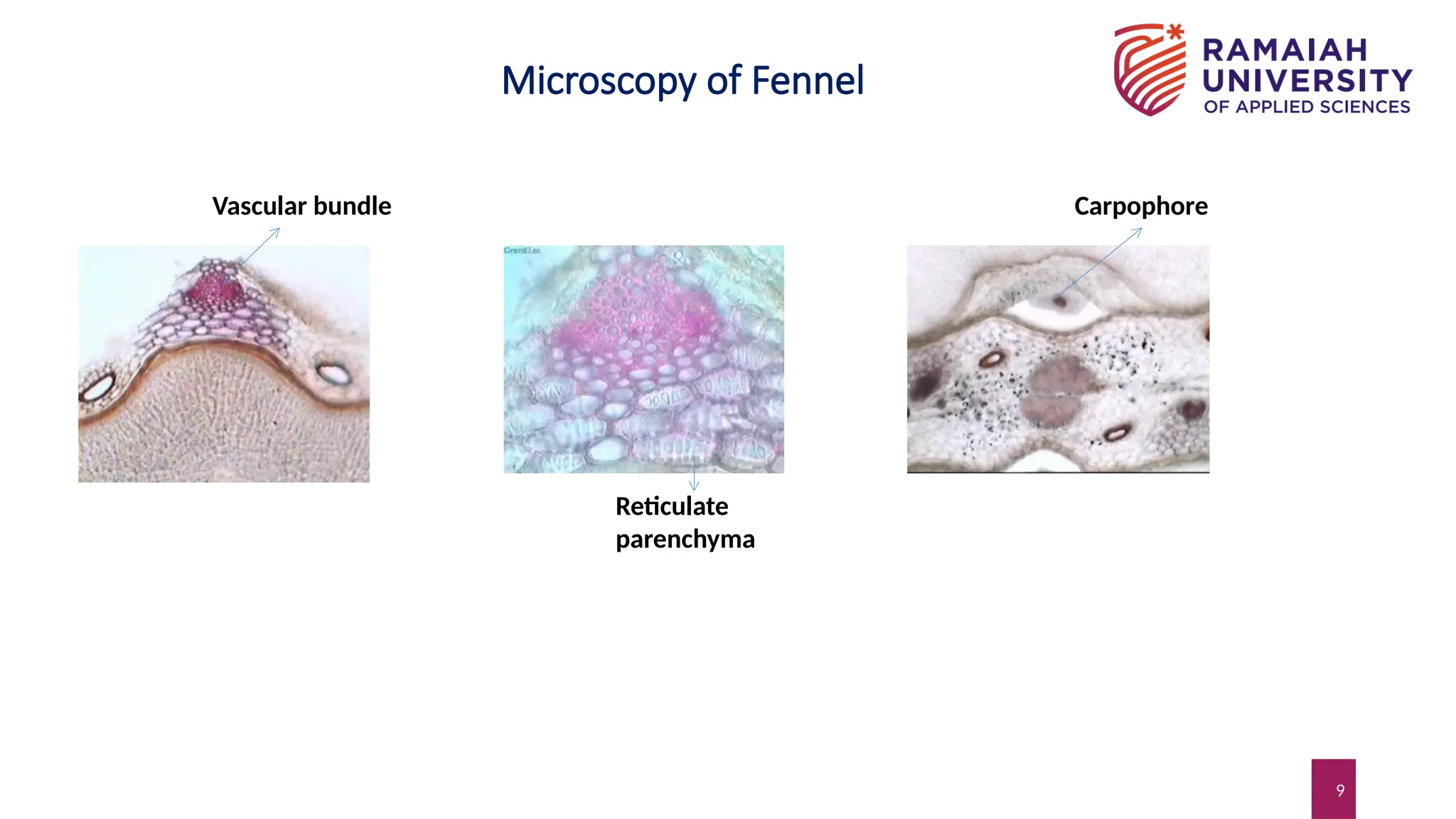
Vascular bundle
Reticulate
parenchyma
Carpophore
10
10
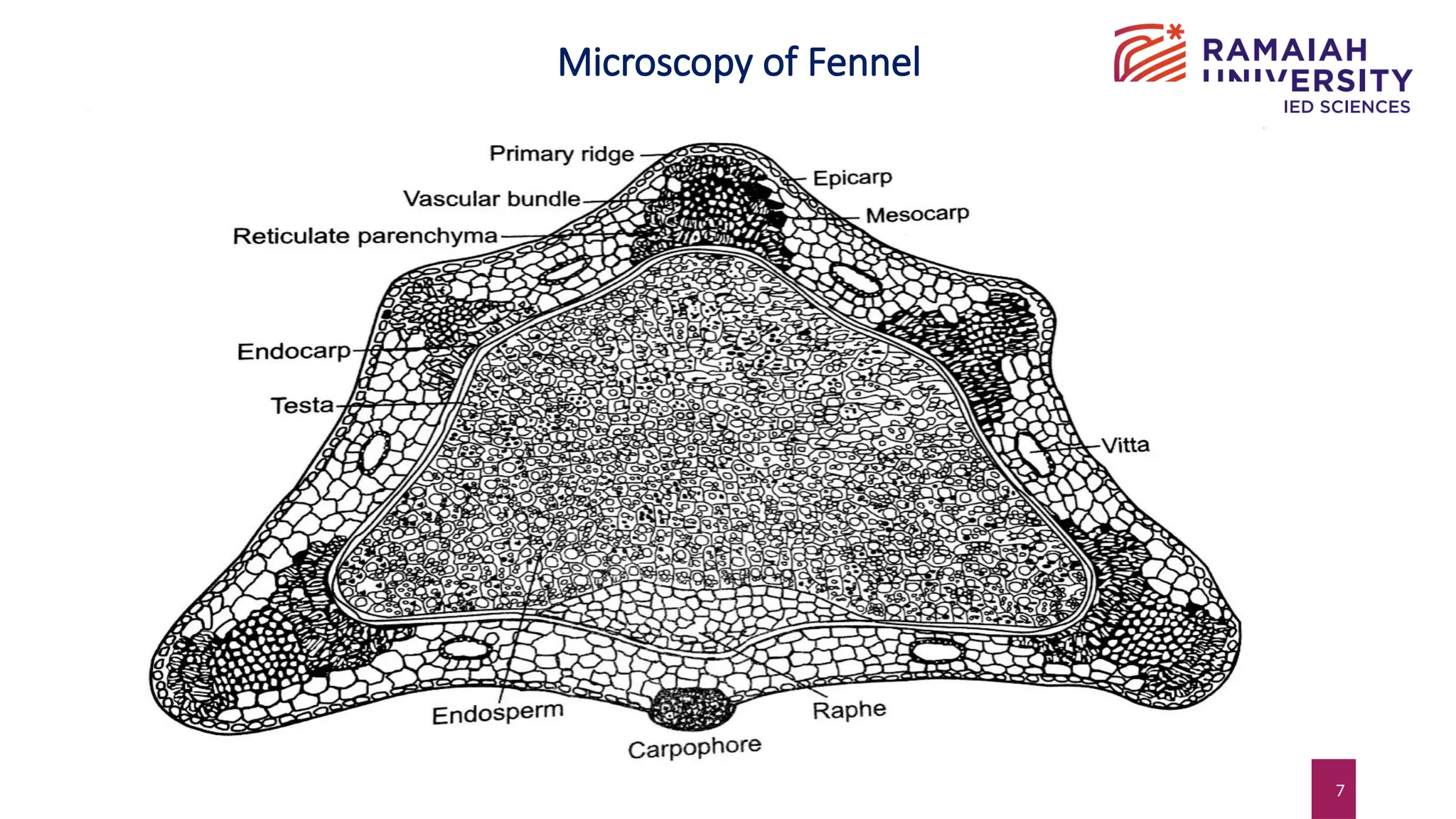
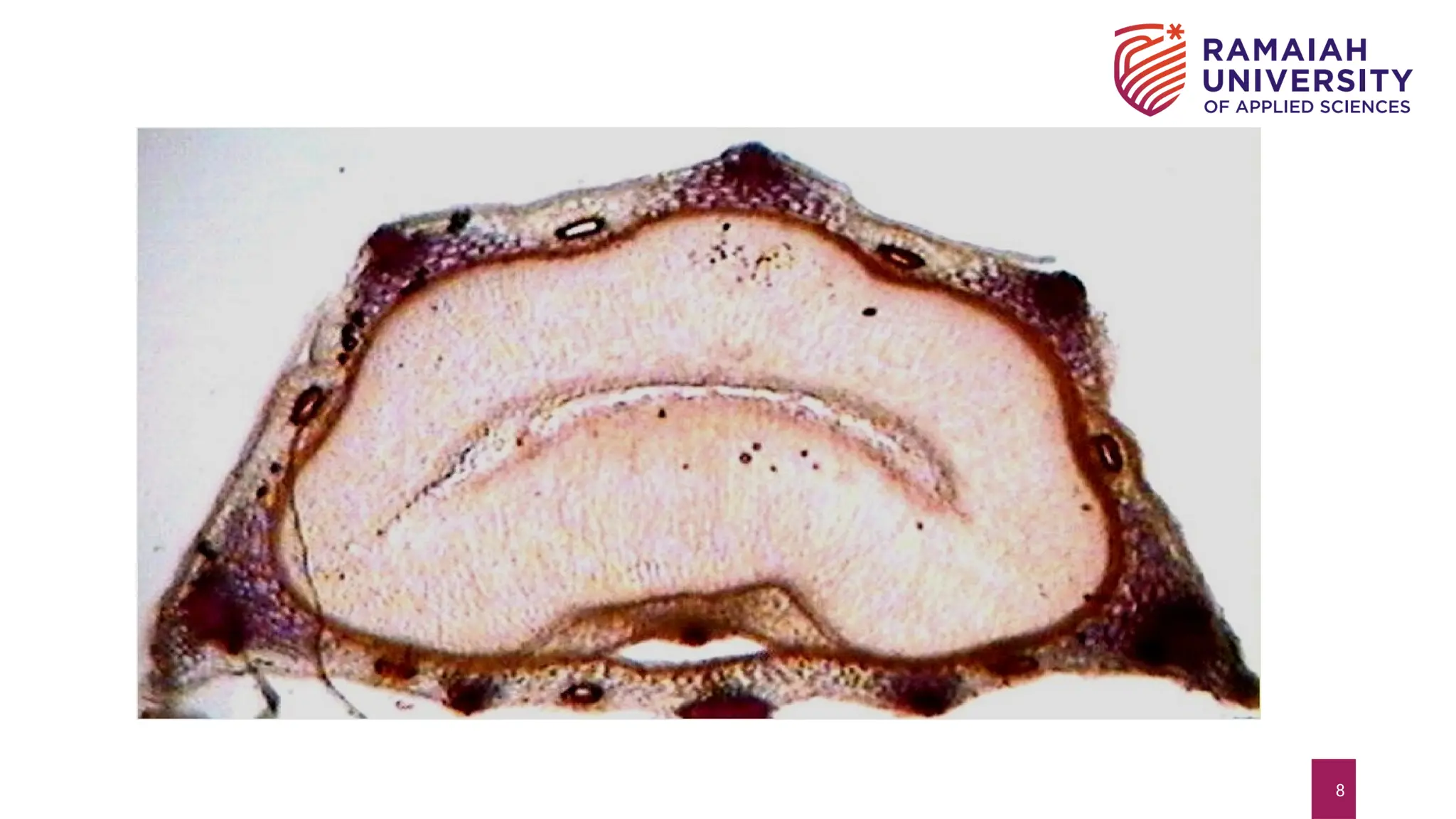
Pericarp
o Epicarp: It consists of layer of polygonal, tangentially elongated cells with smooth cuticle
o Mesocarp: The bulk of mesocarp is made up of parenchyma. Bicollateral vascular bundles
appear in the mesocarp below the primary ridges. Reticulate and lignified parenchyma, a
characteristric feature of fennel appears in the mesocarp surrounding the vascular bundles.
Besides, yellowish brown and elliptical vittae (schizogenous oil ducts), 4 on the dorsal
surface between the ridges and two on the commissural surface are seen
o Endocarp: It is seen as a single layer between testa and mesocarp in the form of parquetry
layer
Microscopy of Fennel
11
11
 Testa: It is single layered and yellowish in colour
 Endosperm: It is thick walled, polygonal colourless parenchyma containing oil
globules and aleurone grains. Raphae, a ridge of vascular strand appears in the
middle of commissural surface just in front of the carpophore
Microscopy of Fennel
12
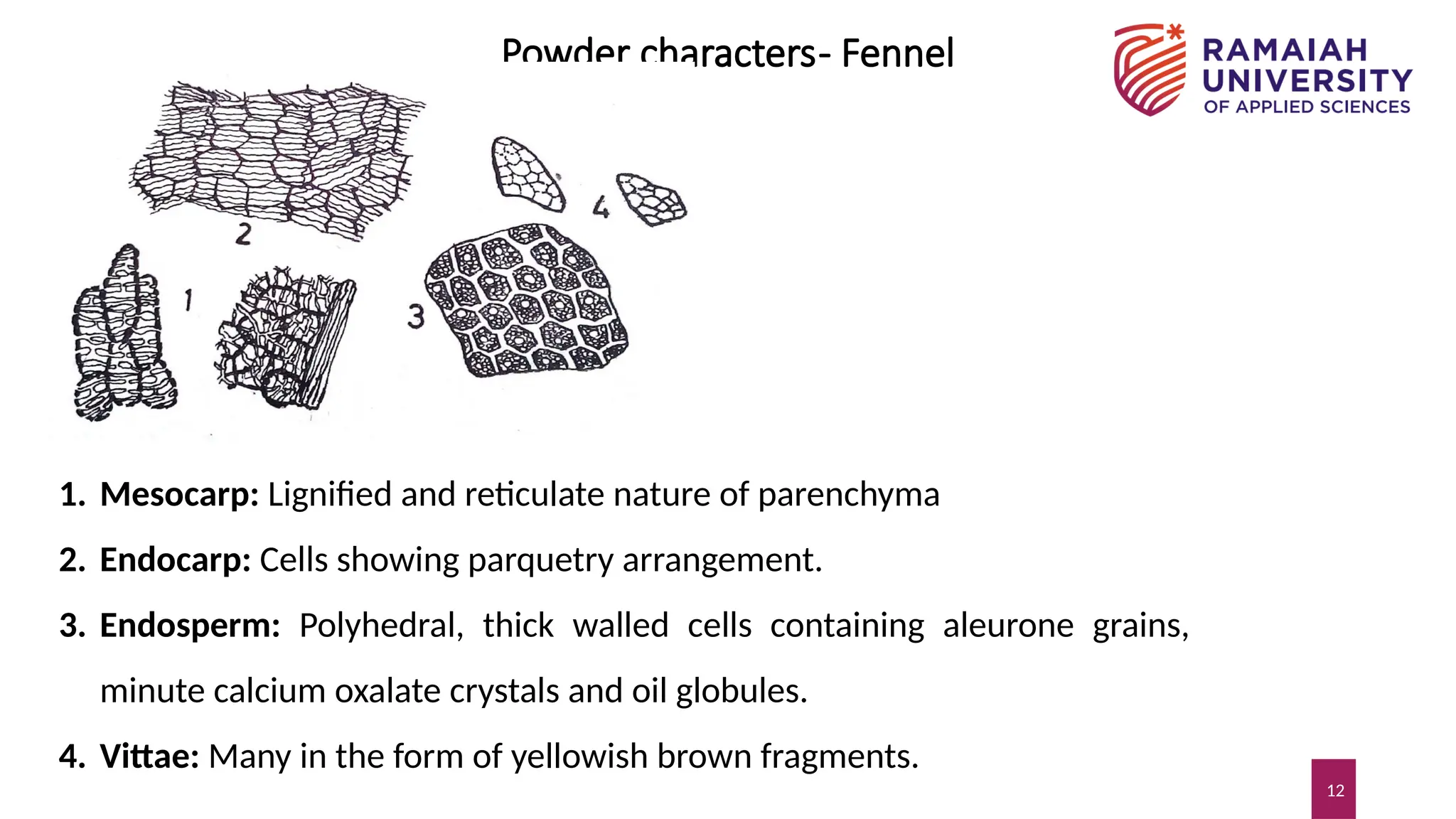
Powder characters- Fennel
1. Mesocarp: Lignified and reticulate nature of parenchyma
2. Endocarp: Cells showing parquetry arrangement.
3. Endosperm: Polyhedral, thick walled cells containing aleurone grains,
minute calcium oxalate crystals and oil globules.
4. Vittae: Many in the form of yellowish brown fragments.
13
Chemical constituents:
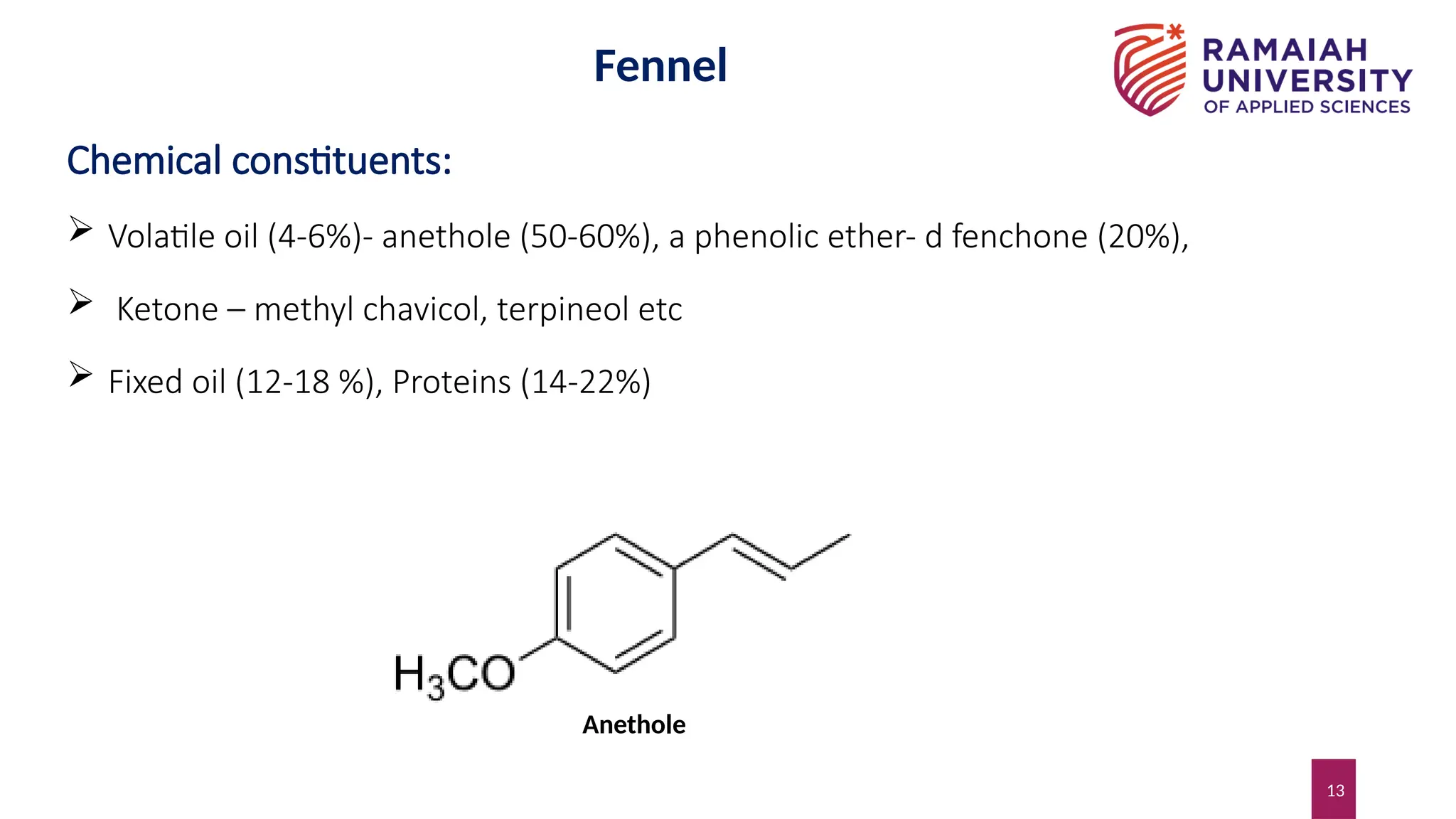
 Volatile oil (4-6%)- anethole (50-60%), a phenolic ether- d fenchone (20%),
 Ketone – methyl chavicol, terpineol etc
 Fixed oil (12-18 %), Proteins (14-22%)
Anethole
Fennel
14
Uses:
 Carminative
 Stomachic
 Appetizer
 Galactagogue
 Comforts belly ache in infants
Fennel
15
Fennel:
Summary
 Dried ripe fruits of Foeniculum vulgare, Umbelliferae
 Straight or curved, commissural surface, dorsal surface, Primary
ridges, carpophore
 Pericarp, epicarp, mesocarp, endocarp, testa and endosperm
 Fenchone and anethole
 Carminative, appetizer, galactagogue, eye wash and stomachic
16
16
Disclaimer
All data and content provided in the presentation are taken from the reference books,
internet-websites and links for informational purpose only

10-morphology and microscopy of Fennel .pptx

  • 1.
    1 Morphology & Microscopyof Fennel ashokababu.pc.ph@msruas.ac.in
  • 2.
  • 3.
    3 Objectives At the endof this lecture, student will be able to • Discuss source, family, chemical constituents and uses • Discuss the macroscopical and microscopical characters of fennel
  • 4.
    4 Fennel Synonym: Sompu Biological Source:Dried ripe fruits of Foeniculum vulgare contains not less than 0.6 % of anethole Family : Umbelliferae Geographical Source: Romania, Russia, Germany, France, India
  • 5.
    5 5 Type: Cremocarp  Shape:Straight or slightly curved, oblong, laterally compressed, tapering towards the base and apex. A short bifid stylopod and a thin pedicel is present at the base.  Size: 5-10 mm (l), 2-4 mm (b)  Surface: Each mericarp has two surfaces- the dorsal and the commissural surface. Dorsal surface is glabrous with 5 straight prominent primary ridges. Commisural surface is flat and shows the carpophore which holds the mericarps together.  Colour: Greenish or yellowish brown  Odour: Strongly aromatic Morphology of Fennel
  • 6.
    6 Microscopy of Fennel Pericarp Epicarp Mesocarp • Vascular bundle • Reticulate parenchyma • Vittae Endocarp  Testa  Endosperm
  • 7.
  • 8.
  • 9.
    9 Microscopy of Fennel Vascularbundle Reticulate parenchyma Carpophore
  • 10.
    10 10 Pericarp o Epicarp: Itconsists of layer of polygonal, tangentially elongated cells with smooth cuticle o Mesocarp: The bulk of mesocarp is made up of parenchyma. Bicollateral vascular bundles appear in the mesocarp below the primary ridges. Reticulate and lignified parenchyma, a characteristric feature of fennel appears in the mesocarp surrounding the vascular bundles. Besides, yellowish brown and elliptical vittae (schizogenous oil ducts), 4 on the dorsal surface between the ridges and two on the commissural surface are seen o Endocarp: It is seen as a single layer between testa and mesocarp in the form of parquetry layer Microscopy of Fennel
  • 11.
    11 11  Testa: Itis single layered and yellowish in colour  Endosperm: It is thick walled, polygonal colourless parenchyma containing oil globules and aleurone grains. Raphae, a ridge of vascular strand appears in the middle of commissural surface just in front of the carpophore Microscopy of Fennel
  • 12.
    12 Powder characters- Fennel 1.Mesocarp: Lignified and reticulate nature of parenchyma 2. Endocarp: Cells showing parquetry arrangement. 3. Endosperm: Polyhedral, thick walled cells containing aleurone grains, minute calcium oxalate crystals and oil globules. 4. Vittae: Many in the form of yellowish brown fragments.
  • 13.
    13 Chemical constituents:  Volatileoil (4-6%)- anethole (50-60%), a phenolic ether- d fenchone (20%),  Ketone – methyl chavicol, terpineol etc  Fixed oil (12-18 %), Proteins (14-22%) Anethole Fennel
  • 14.
    14 Uses:  Carminative  Stomachic Appetizer  Galactagogue  Comforts belly ache in infants Fennel
  • 15.
    15 Fennel: Summary  Dried ripefruits of Foeniculum vulgare, Umbelliferae  Straight or curved, commissural surface, dorsal surface, Primary ridges, carpophore  Pericarp, epicarp, mesocarp, endocarp, testa and endosperm  Fenchone and anethole  Carminative, appetizer, galactagogue, eye wash and stomachic
  • 16.
    16 16 Disclaimer All data andcontent provided in the presentation are taken from the reference books, internet-websites and links for informational purpose only