Where is Statistics
Used, and Why
Should We Study It?
(Aside from sports!)
What is Statistics?
•Statistics is the mathematics of collecting and
analyzing data to draw conclusions and make
predictions.
•In essence, it can help us separate the ‘signal’
from the ‘noise’.
Where do we use Statistics?
• Statistics is used everywhere, in just about any field
you can think of.
• On the following slides, I will give some examples, but
this list is in no way complete or meant to be a
representative sample…
• …just some places where Statistics is used to get you
thinking.
Stock Market and
the Economy
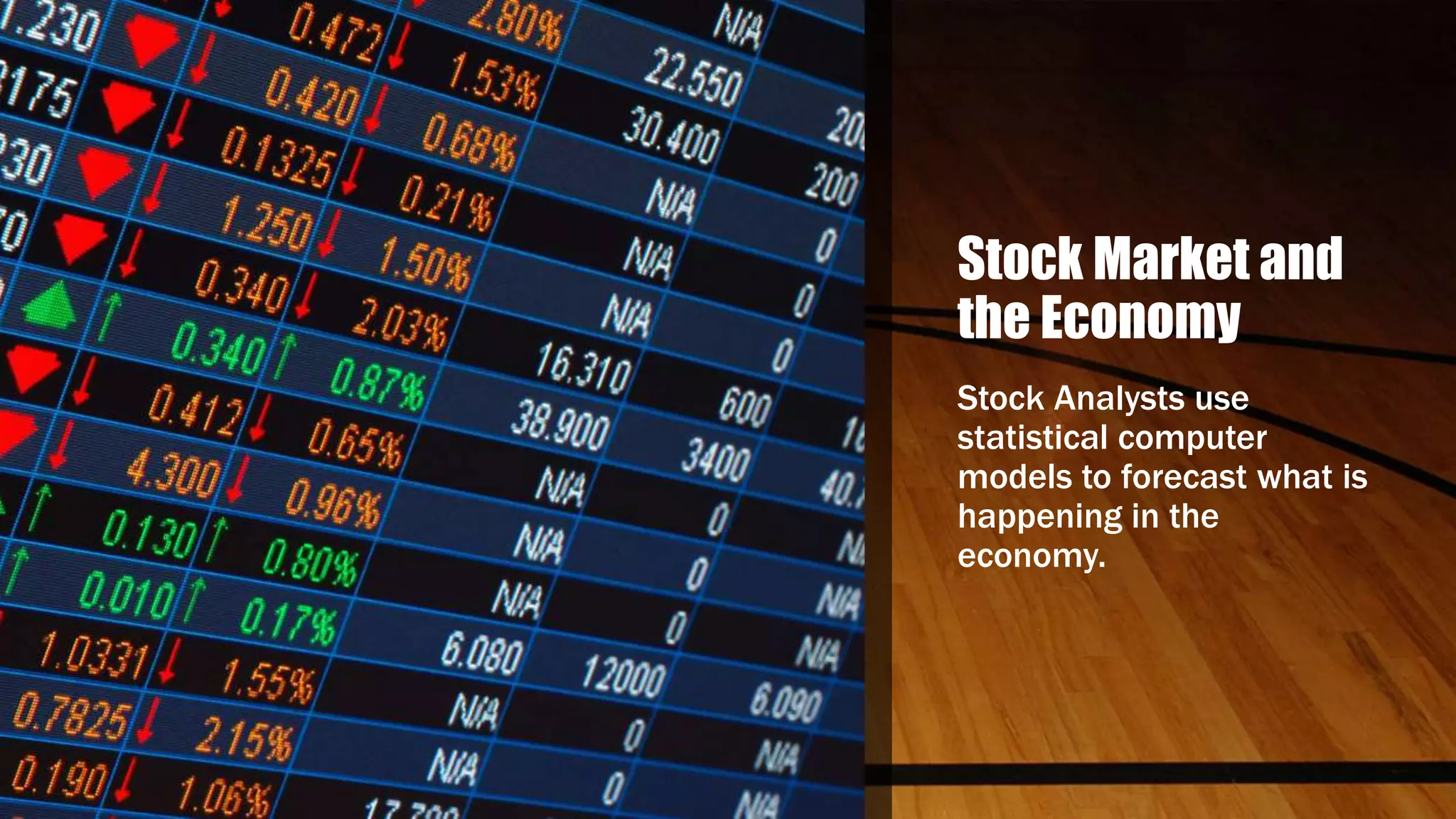
Stock Analysts use
statistical computer
models to forecast what is
happening in the
economy.
Quality Assurance
• Companies make thousands of products every day and each company
must make sure that a good quality item is sold.
• However, a company cannot test each and every item that they ship.
• Thus, a company uses statistics to test just a few, called a sample, of
what they make.
• If the sample passes quality tests, then the company assumes that all items made in
the group, called a batch, are good.
Consumer Goods
Retailers keep track of
everything they sell and
use statistics to calculate
what to ship to each store,
or warehouse, and when.
From analyzing their vast
store of information, Wal-
Mart decided that people
buy strawberry Pop Tarts
when a hurricane is
predicted in Florida…
…so, they increase their
shipment of this product to
Florida stores based upon
the weather forecast.
Insurance
You know that in order to
drive your care you are
required by law to have
car insurance;
The rate that an insurance
company charges you is
based upon statistics from
all drivers where you live.
Political
Campaigns
Candidates consult voter
polls to determine where
and how they campaign.
News Organizations
consult their models when
they try to predict who the
winner is.
Genetic
Engineering
Many people are afflicted
with diseases that come
from their genetic make-
up and these diseases can
be passed on to their
children.
Genetic Engineering offers
the possibility of cures for
disease and countless
material improvements to
daily life.
Medical Studies
• Scientists must show a statistically valid rate of effectiveness before any
drug can be prescribed.
• Statistics are behind every medical study you hear about.
Predicting Disease
• Often, statistics about disease are reported via various media.
• If the report simply shows the number of people who have the disease or
who have died from it, it’s an interesting fact but it might not mean much
to your life.
• When statistics become involved, you have a better idea of how that
disease may affect you.
• For example, studies have shown that 85 to 95 percent of lung cancers
are smoking related.
• The statistic should tell you that almost all lung cancers are related to
smoking and that if you want to have a good chance of avoiding lung
cancer, you shouldn’t smoke.
Weather
Forecasts
Do you watch the weather forecast sometime during
the day (or look it up on an app/website?)
Forecasters use statistics to create computer models
to compare prior weather conditions with current
weather to predict future weather.
Emergency
Preparedness
What happens if the
forecast indicates that a
hurricane is imminent or
that tornadoes are likely
to occur?
Emergency management
agencies move into high
gear to be ready to rescue
people.
Emergency teams rely on
statistics to tell them
when danger may occur.
However, the most important reasons for you to take Statistics:
include recognizing when data is being manipulated.
Or, to understand why correlation does not imply causation.
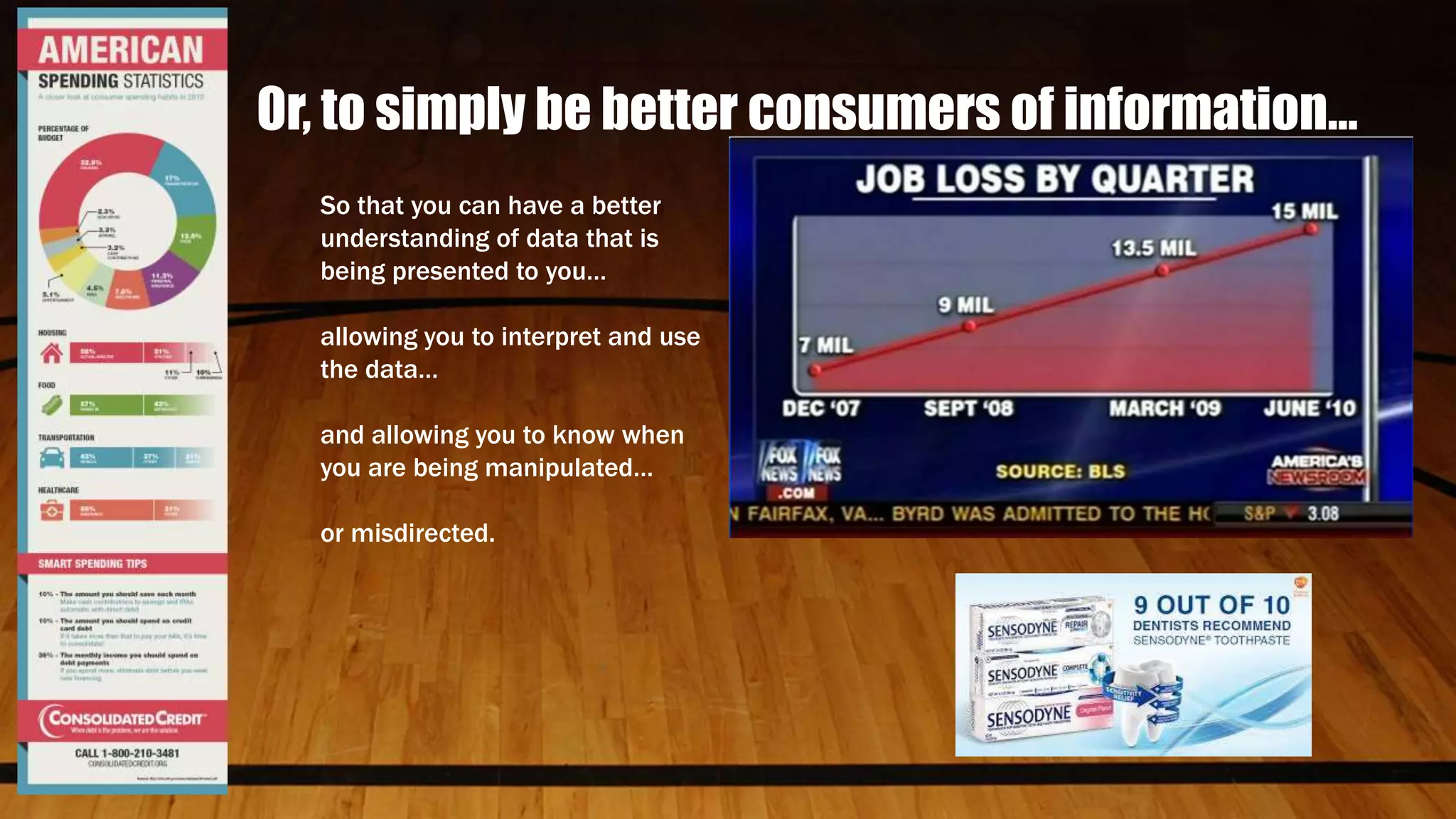
Or, to simply be better consumers of information…
So that you can have a better
understanding of data that is
being presented to you…
allowing you to interpret and use
the data…
and allowing you to know when
you are being manipulated…
or misdirected.

10 everyday reasons why statistics are important

  • 1.
    Where is Statistics Used,and Why Should We Study It? (Aside from sports!)
  • 2.
    What is Statistics? •Statisticsis the mathematics of collecting and analyzing data to draw conclusions and make predictions. •In essence, it can help us separate the ‘signal’ from the ‘noise’.
  • 3.
    Where do weuse Statistics? • Statistics is used everywhere, in just about any field you can think of. • On the following slides, I will give some examples, but this list is in no way complete or meant to be a representative sample… • …just some places where Statistics is used to get you thinking.
  • 4.
    Stock Market and theEconomy Stock Analysts use statistical computer models to forecast what is happening in the economy.
  • 5.
    Quality Assurance • Companiesmake thousands of products every day and each company must make sure that a good quality item is sold. • However, a company cannot test each and every item that they ship. • Thus, a company uses statistics to test just a few, called a sample, of what they make. • If the sample passes quality tests, then the company assumes that all items made in the group, called a batch, are good.
  • 6.
    Consumer Goods Retailers keeptrack of everything they sell and use statistics to calculate what to ship to each store, or warehouse, and when. From analyzing their vast store of information, Wal- Mart decided that people buy strawberry Pop Tarts when a hurricane is predicted in Florida… …so, they increase their shipment of this product to Florida stores based upon the weather forecast.
  • 7.
    Insurance You know thatin order to drive your care you are required by law to have car insurance; The rate that an insurance company charges you is based upon statistics from all drivers where you live.
  • 8.
    Political Campaigns Candidates consult voter pollsto determine where and how they campaign. News Organizations consult their models when they try to predict who the winner is.
  • 9.
    Genetic Engineering Many people areafflicted with diseases that come from their genetic make- up and these diseases can be passed on to their children. Genetic Engineering offers the possibility of cures for disease and countless material improvements to daily life.
  • 10.
    Medical Studies • Scientistsmust show a statistically valid rate of effectiveness before any drug can be prescribed. • Statistics are behind every medical study you hear about.
  • 11.
    Predicting Disease • Often,statistics about disease are reported via various media. • If the report simply shows the number of people who have the disease or who have died from it, it’s an interesting fact but it might not mean much to your life. • When statistics become involved, you have a better idea of how that disease may affect you. • For example, studies have shown that 85 to 95 percent of lung cancers are smoking related. • The statistic should tell you that almost all lung cancers are related to smoking and that if you want to have a good chance of avoiding lung cancer, you shouldn’t smoke.
  • 12.
    Weather Forecasts Do you watchthe weather forecast sometime during the day (or look it up on an app/website?) Forecasters use statistics to create computer models to compare prior weather conditions with current weather to predict future weather.
  • 13.
    Emergency Preparedness What happens ifthe forecast indicates that a hurricane is imminent or that tornadoes are likely to occur? Emergency management agencies move into high gear to be ready to rescue people. Emergency teams rely on statistics to tell them when danger may occur.
  • 14.
    However, the mostimportant reasons for you to take Statistics:
  • 15.
    include recognizing whendata is being manipulated.
  • 16.
    Or, to understandwhy correlation does not imply causation.
  • 17.
    Or, to understandwhy correlation does not imply causation.
  • 18.
    Or, to understandwhy correlation does not imply causation.
  • 19.
    Or, to simplybe better consumers of information… So that you can have a better understanding of data that is being presented to you… allowing you to interpret and use the data… and allowing you to know when you are being manipulated… or misdirected.