10. Customer Retention Strategies
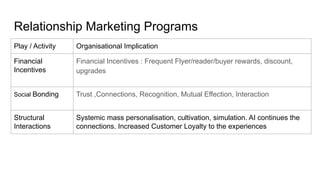
Relationship Marketing Programs
Play / Activity Organisational Implication
Financial
Incentives
Financial Incentives : Frequent Flyer/reader/buyer rewards, discount,
upgrades
Social Bonding Trust ,Connections, Recognition, Mutual Effection, Interaction
Structural
Interactions
Systemic mass personalisation, cultivation, simulation. AI continues the
connections. Increased Customer Loyalty to the experiences
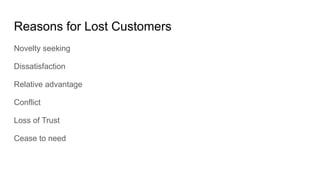
Reasons for Lost Customers
Novelty seeking
Dissatisfaction
Relative advantage
Conflict
Loss of Trust
Cease to need
CRM for Retaining Customers
Customer retention refers to the activities and actions companies and
organizations take to reduce the number of customer defections. The goal of
customer retention programs is to help companies retain as many customers as
possible, often through customer loyalty and brand loyalty initiatives
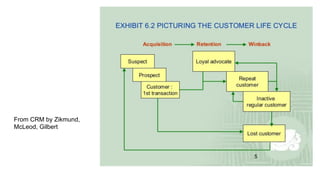
Customer Life Cycle : The customer lifecycle is a term that describes the different
steps a customer goes through when they are considering, buying, using, and
remaining loyal to a particular product or service. This lifecycle has been broken
down into five distinct stages: reach, acquisition, conversion, retention, and loyalty.
From CRM by Zikmund,
McLeod, Gilbert
Welcome a Customer
It acknowledges the organization’s appreciation for the initiation of a relationship
or for the exchange, in essence, a thank you cognitive dissonance— a
psychologically uncomfortable post- purchase feeling or "buyers remorse," that
can follow a commitment to purchase
Cognitive dissonance : Uncomfortable post purchase emotion
Reinforce purchase decision
What is survey, information to be asked ?
Customer Retention Strategy
Reliability— the organization can repeat the exchange time and time again with the same
satisfying results
Responsiveness— the organization shows customers it really cares about their needs and feelings
internal marketing— public relations efforts aimed at employees who have contact with the ultimate
consumer or who have a direct effect on the consumer’s satisfaction with the product
Recognition— special attention or appreciation that identifies someone as having been known
before
Personalization— the organization can use its CRM system to tailor promotions and products to
the specific customer, often using offer engines to use customer data to create an offer or message
that is appropriate to the individual
Access Strategy and Customer Initiated Communication
Rewards program— provides the best customers with preferential treatment or
special incentives such as priority access, thank you gifts, or other incentives
Partnership management programs— customers can earn additional points by
making purchases from other organizations, such as linkages between airlines,
hotels, and rental car companies
Switching Costs — financial penalties, time loss, or psychological barriers to exit a
program
Problem Identification and management
Proactive approach to allowing customers to voice concerns to the organization
through surveys, mystery shoppers, or other means
Conflicts and Customer Complaint Management
● levels of dissatisfaction-- range from a mild displeasure to ranging anger
● attribution theory— people look for explanations for events and occurrences that they
experience—why did this occur?
● cost/benefit perception— when the expected benefits of complaining are high and the
expected costs are low, organizations are more likely to hear from dissatisfied
customers
● Personal characteristics
What to do when Customers Complain
● Be Customer-Centric
○ understand the situation from the customer’s point of view
● Express Regret apology—
○ I am truly sorry this problem occurred
Resolve Conflict
○ conflict— a disagreement between customer and the organization
○ accommodation— a settlement of a conflict that emphasizes cooperative behavior
○ compromise— an attempt to find a mutually acceptable middle ground
○ termination— the organization or the customer ends the relationship and sees no hope of
resolving the conflict
○ Follow-Up and Prevent Recurrence Feedback- the training of employees and strategy input
for managers
● KEEPING IN TOUCH AND LISTENING TO VOICE OF CUSTOMERS
@AjitGJoshi

10. Customer Retention Strategies

  • 1.
  • 2.
    Relationship Marketing Programs Play/ Activity Organisational Implication Financial Incentives Financial Incentives : Frequent Flyer/reader/buyer rewards, discount, upgrades Social Bonding Trust ,Connections, Recognition, Mutual Effection, Interaction Structural Interactions Systemic mass personalisation, cultivation, simulation. AI continues the connections. Increased Customer Loyalty to the experiences
  • 3.
    Reasons for LostCustomers Novelty seeking Dissatisfaction Relative advantage Conflict Loss of Trust Cease to need
  • 4.
    CRM for RetainingCustomers Customer retention refers to the activities and actions companies and organizations take to reduce the number of customer defections. The goal of customer retention programs is to help companies retain as many customers as possible, often through customer loyalty and brand loyalty initiatives Customer Life Cycle : The customer lifecycle is a term that describes the different steps a customer goes through when they are considering, buying, using, and remaining loyal to a particular product or service. This lifecycle has been broken down into five distinct stages: reach, acquisition, conversion, retention, and loyalty.
  • 5.
    From CRM byZikmund, McLeod, Gilbert
  • 6.
    Welcome a Customer Itacknowledges the organization’s appreciation for the initiation of a relationship or for the exchange, in essence, a thank you cognitive dissonance— a psychologically uncomfortable post- purchase feeling or "buyers remorse," that can follow a commitment to purchase Cognitive dissonance : Uncomfortable post purchase emotion Reinforce purchase decision What is survey, information to be asked ?
  • 7.
    Customer Retention Strategy Reliability—the organization can repeat the exchange time and time again with the same satisfying results Responsiveness— the organization shows customers it really cares about their needs and feelings internal marketing— public relations efforts aimed at employees who have contact with the ultimate consumer or who have a direct effect on the consumer’s satisfaction with the product Recognition— special attention or appreciation that identifies someone as having been known before Personalization— the organization can use its CRM system to tailor promotions and products to the specific customer, often using offer engines to use customer data to create an offer or message that is appropriate to the individual
  • 8.
    Access Strategy andCustomer Initiated Communication Rewards program— provides the best customers with preferential treatment or special incentives such as priority access, thank you gifts, or other incentives Partnership management programs— customers can earn additional points by making purchases from other organizations, such as linkages between airlines, hotels, and rental car companies Switching Costs — financial penalties, time loss, or psychological barriers to exit a program
  • 9.
    Problem Identification andmanagement Proactive approach to allowing customers to voice concerns to the organization through surveys, mystery shoppers, or other means Conflicts and Customer Complaint Management ● levels of dissatisfaction-- range from a mild displeasure to ranging anger ● attribution theory— people look for explanations for events and occurrences that they experience—why did this occur? ● cost/benefit perception— when the expected benefits of complaining are high and the expected costs are low, organizations are more likely to hear from dissatisfied customers ● Personal characteristics
  • 10.
    What to dowhen Customers Complain ● Be Customer-Centric ○ understand the situation from the customer’s point of view ● Express Regret apology— ○ I am truly sorry this problem occurred Resolve Conflict ○ conflict— a disagreement between customer and the organization ○ accommodation— a settlement of a conflict that emphasizes cooperative behavior ○ compromise— an attempt to find a mutually acceptable middle ground ○ termination— the organization or the customer ends the relationship and sees no hope of resolving the conflict ○ Follow-Up and Prevent Recurrence Feedback- the training of employees and strategy input for managers ● KEEPING IN TOUCH AND LISTENING TO VOICE OF CUSTOMERS
  • 11.