CUSTOMER
RELATIONSHIP
MANAGEMENT
CRM: Is It Right For Your Company?
Chapter 2 - The Case of Customer Relationship Management
Judith W. Kincaid
Common CRM obstacles
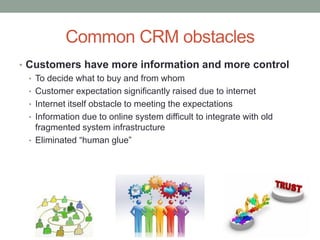
• Customers have more information and more control
• To decide what to buy and from whom
• Customer expectation significantly raised due to internet
• Internet itself obstacle to meeting the expectations
• Information due to online system difficult to integrate with old
fragmented system infrastructure
• Eliminated “human glue”
Common CRM obstacles
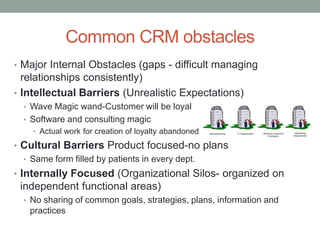
• Major Internal Obstacles (gaps - difficult managing
relationships consistently)
• Intellectual Barriers (Unrealistic Expectations)
• Wave Magic wand-Customer will be loyal
• Software and consulting magic
• Actual work for creation of loyalty abandoned
• Cultural Barriers Product focused-no plans
• Same form filled by patients in every dept.
• Internally Focused (Organizational Silos- organized on
independent functional areas)
• No sharing of common goals, strategies, plans, information and
practices
Common CRM obstacles
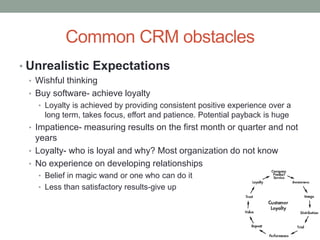
• Unrealistic Expectations
• Wishful thinking
• Buy software- achieve loyalty
• Loyalty is achieved by providing consistent positive experience over a
long term, takes focus, effort and patience. Potential payback is huge
• Impatience- measuring results on the first month or quarter and not
years
• Loyalty- who is loyal and why? Most organization do not know
• No experience on developing relationships
• Belief in magic wand or one who can do it
• Less than satisfactory results-give up
Common CRM obstacles
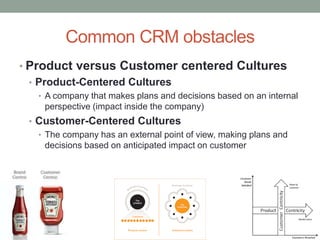
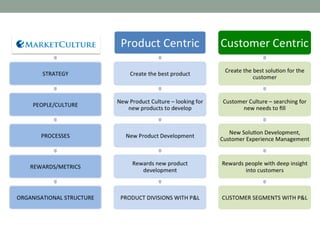
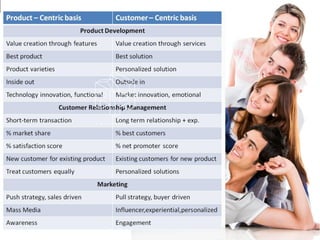
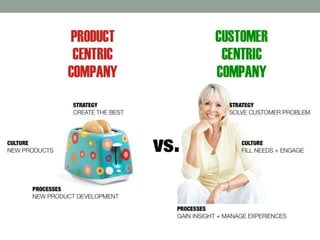
• Product versus Customer centered Cultures
• Product-Centered Cultures
• A company that makes plans and decisions based on an internal
perspective (impact inside the company)
• Customer-Centered Cultures
• The company has an external point of view, making plans and
decisions based on anticipated impact on customer
Common CRM obstacles
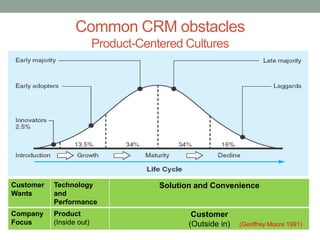
Product-Centered Cultures
Customer
Wants
Technology
and
Performance
Solution and Convenience
Company
Focus
Product
(Inside out)
Customer
(Outside in) (Geoffrey Moore 1991)
Common CRM obstacles
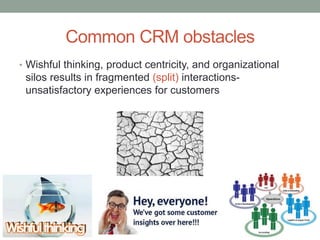
• Wishful thinking, product centricity, and organizational
silos results in fragmented (split) interactions-
unsatisfactory experiences for customers
Common CRM obstacles
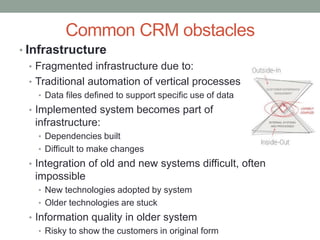
• Infrastructure
• Fragmented infrastructure due to:
• Traditional automation of vertical processes
• Data files defined to support specific use of data
• Implemented system becomes part of
infrastructure:
• Dependencies built
• Difficult to make changes
• Integration of old and new systems difficult, often
impossible
• New technologies adopted by system
• Older technologies are stuck
• Information quality in older system
• Risky to show the customers in original form
Common CRM obstacles
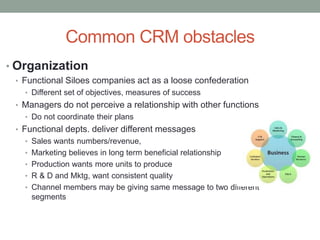
• Organization
• Functional Siloes companies act as a loose confederation
• Different set of objectives, measures of success
• Managers do not perceive a relationship with other functions
• Do not coordinate their plans
• Functional depts. deliver different messages
• Sales wants numbers/revenue,
• Marketing believes in long term beneficial relationship
• Production wants more units to produce
• R & D and Mktg, want consistent quality
• Channel members may be giving same message to two different
segments
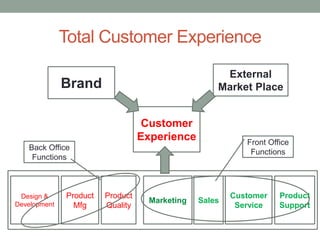
Total Customer Experience
Brand
Customer
Experience
External
Market Place
Design &
Development
Product
Mfg
Product
Quality
Marketing Sales
Customer
Service
Product
Support
Front Office
Functions
Back Office
Functions
How Does this Ad Appeal to
One’s Goals?
Copyright 2010 Pearson Education, Inc. publishing as Prentice Hall
It Appeals to Several Physical
Appearance-related goals.
Copyright 2010 Pearson Education, Inc. publishing as Prentice Hall
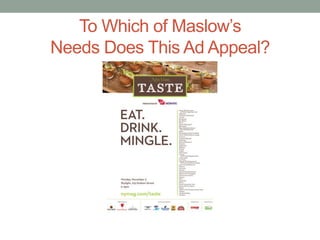
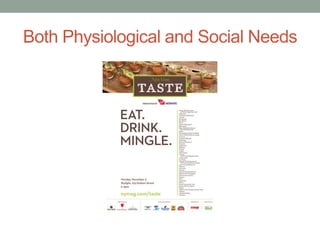
To Which of Maslow’s
Needs Does This Ad Appeal?
Copyright 2010 Pearson Education, Inc. publishing as Prentice Hall
Both Physiological and Social Needs
Copyright 2010 Pearson Education, Inc. publishing as Prentice Hall
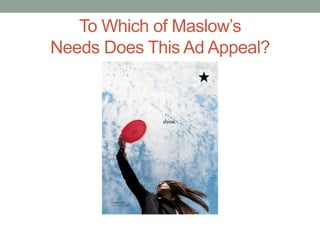
To Which of Maslow’s
Needs Does This Ad Appeal?
Copyright 2010 Pearson Education, Inc. publishing as Prentice Hall
Self-Actualization
Copyright 2010 Pearson Education, Inc. publishing as Prentice Hall
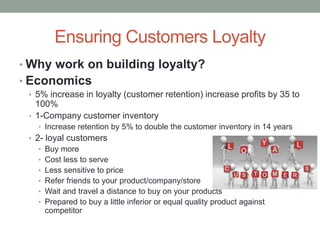
Ensuring Customers Loyalty
• Why work on building loyalty?
• Economics
• 5% increase in loyalty (customer retention) increase profits by 35 to
100%
• 1-Company customer inventory
• Increase retention by 5% to double the customer inventory in 14 years
• 2- loyal customers
• Buy more
• Cost less to serve
• Less sensitive to price
• Refer friends to your product/company/store
• Wait and travel a distance to buy on your products
• Prepared to buy a little inferior or equal quality product against
competitor
Ensuring Customers Loyalty
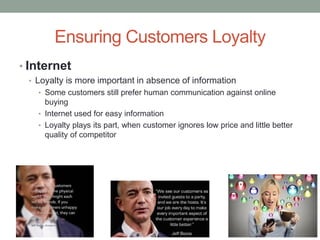
• Internet
• Loyalty is more important in absence of information
• Some customers still prefer human communication against online
buying
• Internet used for easy information
• Loyalty plays its part, when customer ignores low price and little better
quality of competitor
Ensuring Customers Loyalty
Building Loyalty
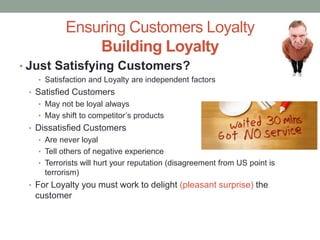
• Just Satisfying Customers?
• Satisfaction and Loyalty are independent factors
• Satisfied Customers
• May not be loyal always
• May shift to competitor’s products
• Dissatisfied Customers
• Are never loyal
• Tell others of negative experience
• Terrorists will hurt your reputation (disagreement from US point is
terrorism)
• For Loyalty you must work to delight (pleasant surprise) the
customer
Ensuring Customers Loyalty
Building Loyalty
• Just Under standing Customer?
• Understanding customer, the demography, psychography etc. does
not create loyalty
• Customer knowledge must help us to devise products and
strategies to make customer loyal
• Just Automating Processes and customer
interactions?
• Time and cost saver
• Helps in devising strategies and implementation faster
Defining Customer Relationship Management
• Customer Relationship Management (CRM) is a discipline
that covers all the elements needed to build successful
relationships with customers.
• CRM includes the following elements:
• The information needed to understand customer better
• The process management needed to deliver efficient and appropriate
experiences to customers
• The software tools that allow us to use that knowledge
• The training and change management elements so our people and
organizations understand and are capable o delivering experiences that
build stronger relationships and increase loyalty

Crm2

  • 1.
    CUSTOMER RELATIONSHIP MANAGEMENT CRM: Is ItRight For Your Company? Chapter 2 - The Case of Customer Relationship Management Judith W. Kincaid
  • 2.
    Common CRM obstacles •Customers have more information and more control • To decide what to buy and from whom • Customer expectation significantly raised due to internet • Internet itself obstacle to meeting the expectations • Information due to online system difficult to integrate with old fragmented system infrastructure • Eliminated “human glue”
  • 3.
    Common CRM obstacles •Major Internal Obstacles (gaps - difficult managing relationships consistently) • Intellectual Barriers (Unrealistic Expectations) • Wave Magic wand-Customer will be loyal • Software and consulting magic • Actual work for creation of loyalty abandoned • Cultural Barriers Product focused-no plans • Same form filled by patients in every dept. • Internally Focused (Organizational Silos- organized on independent functional areas) • No sharing of common goals, strategies, plans, information and practices
  • 4.
    Common CRM obstacles •Unrealistic Expectations • Wishful thinking • Buy software- achieve loyalty • Loyalty is achieved by providing consistent positive experience over a long term, takes focus, effort and patience. Potential payback is huge • Impatience- measuring results on the first month or quarter and not years • Loyalty- who is loyal and why? Most organization do not know • No experience on developing relationships • Belief in magic wand or one who can do it • Less than satisfactory results-give up
  • 5.
    Common CRM obstacles •Product versus Customer centered Cultures • Product-Centered Cultures • A company that makes plans and decisions based on an internal perspective (impact inside the company) • Customer-Centered Cultures • The company has an external point of view, making plans and decisions based on anticipated impact on customer
  • 7.
    Common CRM obstacles Product-CenteredCultures Customer Wants Technology and Performance Solution and Convenience Company Focus Product (Inside out) Customer (Outside in) (Geoffrey Moore 1991)
  • 8.
    Common CRM obstacles •Wishful thinking, product centricity, and organizational silos results in fragmented (split) interactions- unsatisfactory experiences for customers
  • 9.
    Common CRM obstacles •Infrastructure • Fragmented infrastructure due to: • Traditional automation of vertical processes • Data files defined to support specific use of data • Implemented system becomes part of infrastructure: • Dependencies built • Difficult to make changes • Integration of old and new systems difficult, often impossible • New technologies adopted by system • Older technologies are stuck • Information quality in older system • Risky to show the customers in original form
  • 10.
    Common CRM obstacles •Organization • Functional Siloes companies act as a loose confederation • Different set of objectives, measures of success • Managers do not perceive a relationship with other functions • Do not coordinate their plans • Functional depts. deliver different messages • Sales wants numbers/revenue, • Marketing believes in long term beneficial relationship • Production wants more units to produce • R & D and Mktg, want consistent quality • Channel members may be giving same message to two different segments
  • 11.
    Total Customer Experience Brand Customer Experience External MarketPlace Design & Development Product Mfg Product Quality Marketing Sales Customer Service Product Support Front Office Functions Back Office Functions
  • 13.
    How Does thisAd Appeal to One’s Goals? Copyright 2010 Pearson Education, Inc. publishing as Prentice Hall
  • 14.
    It Appeals toSeveral Physical Appearance-related goals. Copyright 2010 Pearson Education, Inc. publishing as Prentice Hall
  • 15.
    To Which ofMaslow’s Needs Does This Ad Appeal? Copyright 2010 Pearson Education, Inc. publishing as Prentice Hall
  • 16.
    Both Physiological andSocial Needs Copyright 2010 Pearson Education, Inc. publishing as Prentice Hall
  • 17.
    To Which ofMaslow’s Needs Does This Ad Appeal? Copyright 2010 Pearson Education, Inc. publishing as Prentice Hall
  • 18.
    Self-Actualization Copyright 2010 PearsonEducation, Inc. publishing as Prentice Hall
  • 19.
    Ensuring Customers Loyalty •Why work on building loyalty? • Economics • 5% increase in loyalty (customer retention) increase profits by 35 to 100% • 1-Company customer inventory • Increase retention by 5% to double the customer inventory in 14 years • 2- loyal customers • Buy more • Cost less to serve • Less sensitive to price • Refer friends to your product/company/store • Wait and travel a distance to buy on your products • Prepared to buy a little inferior or equal quality product against competitor
  • 21.
    Ensuring Customers Loyalty •Internet • Loyalty is more important in absence of information • Some customers still prefer human communication against online buying • Internet used for easy information • Loyalty plays its part, when customer ignores low price and little better quality of competitor
  • 22.
    Ensuring Customers Loyalty BuildingLoyalty • Just Satisfying Customers? • Satisfaction and Loyalty are independent factors • Satisfied Customers • May not be loyal always • May shift to competitor’s products • Dissatisfied Customers • Are never loyal • Tell others of negative experience • Terrorists will hurt your reputation (disagreement from US point is terrorism) • For Loyalty you must work to delight (pleasant surprise) the customer
  • 23.
    Ensuring Customers Loyalty BuildingLoyalty • Just Under standing Customer? • Understanding customer, the demography, psychography etc. does not create loyalty • Customer knowledge must help us to devise products and strategies to make customer loyal • Just Automating Processes and customer interactions? • Time and cost saver • Helps in devising strategies and implementation faster
  • 24.
    Defining Customer RelationshipManagement • Customer Relationship Management (CRM) is a discipline that covers all the elements needed to build successful relationships with customers. • CRM includes the following elements: • The information needed to understand customer better • The process management needed to deliver efficient and appropriate experiences to customers • The software tools that allow us to use that knowledge • The training and change management elements so our people and organizations understand and are capable o delivering experiences that build stronger relationships and increase loyalty