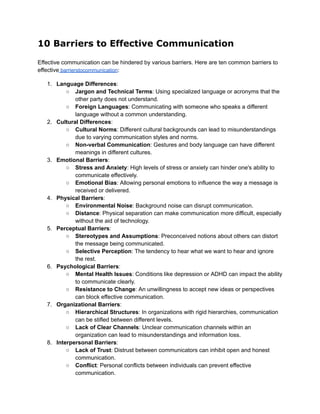
10 Barriers to Effective Communication
Effective communication can be hindered by various barriers. Here are ten common barriers to
effective barrierstocommunication:
1. Language Differences:
â—‹ Jargon and Technical Terms: Using specialized language or acronyms that the
other party does not understand.
â—‹ Foreign Languages: Communicating with someone who speaks a different
language without a common understanding.
2. Cultural Differences:
â—‹ Cultural Norms: Different cultural backgrounds can lead to misunderstandings
due to varying communication styles and norms.
â—‹ Non-verbal Communication: Gestures and body language can have different
meanings in different cultures.
3. Emotional Barriers:
â—‹ Stress and Anxiety: High levels of stress or anxiety can hinder one's ability to
communicate effectively.
â—‹ Emotional Bias: Allowing personal emotions to influence the way a message is
received or delivered.
4. Physical Barriers:
â—‹ Environmental Noise: Background noise can disrupt communication.
â—‹ Distance: Physical separation can make communication more difficult, especially
without the aid of technology.
5. Perceptual Barriers:
â—‹ Stereotypes and Assumptions: Preconceived notions about others can distort
the message being communicated.
â—‹ Selective Perception: The tendency to hear what we want to hear and ignore
the rest.
6. Psychological Barriers:
â—‹ Mental Health Issues: Conditions like depression or ADHD can impact the ability
to communicate clearly.
â—‹ Resistance to Change: An unwillingness to accept new ideas or perspectives
can block effective communication.
7. Organizational Barriers:
â—‹ Hierarchical Structures: In organizations with rigid hierarchies, communication
can be stifled between different levels.
â—‹ Lack of Clear Channels: Unclear communication channels within an
organization can lead to misunderstandings and information loss.
8. Interpersonal Barriers:
â—‹ Lack of Trust: Distrust between communicators can inhibit open and honest
communication.
â—‹ Conflict: Personal conflicts between individuals can prevent effective
communication.
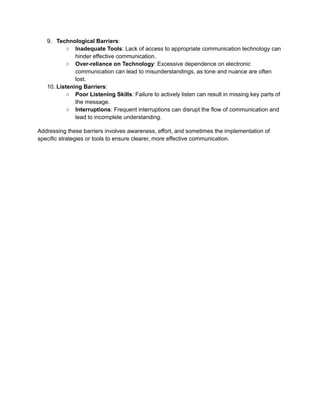
9. Technological Barriers:
â—‹ Inadequate Tools: Lack of access to appropriate communication technology can
hinder effective communication.
â—‹ Over-reliance on Technology: Excessive dependence on electronic
communication can lead to misunderstandings, as tone and nuance are often
lost.
10. Listening Barriers:
â—‹ Poor Listening Skills: Failure to actively listen can result in missing key parts of
the message.
â—‹ Interruptions: Frequent interruptions can disrupt the flow of communication and
lead to incomplete understanding.
Addressing these barriers involves awareness, effort, and sometimes the implementation of
specific strategies or tools to ensure clearer, more effective communication.

10 Barriers to Effective Communications.

  • 1.
    10 Barriers toEffective Communication Effective communication can be hindered by various barriers. Here are ten common barriers to effective barrierstocommunication: 1. Language Differences: â—‹ Jargon and Technical Terms: Using specialized language or acronyms that the other party does not understand. â—‹ Foreign Languages: Communicating with someone who speaks a different language without a common understanding. 2. Cultural Differences: â—‹ Cultural Norms: Different cultural backgrounds can lead to misunderstandings due to varying communication styles and norms. â—‹ Non-verbal Communication: Gestures and body language can have different meanings in different cultures. 3. Emotional Barriers: â—‹ Stress and Anxiety: High levels of stress or anxiety can hinder one's ability to communicate effectively. â—‹ Emotional Bias: Allowing personal emotions to influence the way a message is received or delivered. 4. Physical Barriers: â—‹ Environmental Noise: Background noise can disrupt communication. â—‹ Distance: Physical separation can make communication more difficult, especially without the aid of technology. 5. Perceptual Barriers: â—‹ Stereotypes and Assumptions: Preconceived notions about others can distort the message being communicated. â—‹ Selective Perception: The tendency to hear what we want to hear and ignore the rest. 6. Psychological Barriers: â—‹ Mental Health Issues: Conditions like depression or ADHD can impact the ability to communicate clearly. â—‹ Resistance to Change: An unwillingness to accept new ideas or perspectives can block effective communication. 7. Organizational Barriers: â—‹ Hierarchical Structures: In organizations with rigid hierarchies, communication can be stifled between different levels. â—‹ Lack of Clear Channels: Unclear communication channels within an organization can lead to misunderstandings and information loss. 8. Interpersonal Barriers: â—‹ Lack of Trust: Distrust between communicators can inhibit open and honest communication. â—‹ Conflict: Personal conflicts between individuals can prevent effective communication.
  • 2.
    9. Technological Barriers: â—‹Inadequate Tools: Lack of access to appropriate communication technology can hinder effective communication. â—‹ Over-reliance on Technology: Excessive dependence on electronic communication can lead to misunderstandings, as tone and nuance are often lost. 10. Listening Barriers: â—‹ Poor Listening Skills: Failure to actively listen can result in missing key parts of the message. â—‹ Interruptions: Frequent interruptions can disrupt the flow of communication and lead to incomplete understanding. Addressing these barriers involves awareness, effort, and sometimes the implementation of specific strategies or tools to ensure clearer, more effective communication.