CA -1
TOPIC : BARRIERS TO COMMUNICATION
NAME : ANIMESH KARMAKAR
BARRIERS TO
COMMUNICATION
Communication is the lifeblood of any successful relationship, whether
personal or professional. However, communication can be a complex
process, and often, barriers arise that can hinder our ability to effectively
convey our thoughts and feelings. These barriers can range from physical
distractions to psychological biases, and understanding them is crucial for
overcoming them.
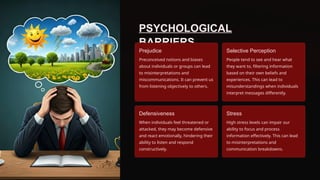
PSYCHOLOGICAL
BARRIERS
Prejudice
Preconceived notions and biases
about individuals or groups can lead
to misinterpretations and
miscommunications. It can prevent us
from listening objectively to others.
Selective Perception
People tend to see and hear what
they want to, filtering information
based on their own beliefs and
experiences. This can lead to
misunderstandings when individuals
interpret messages differently.
Defensiveness
When individuals feel threatened or
attacked, they may become defensive
and react emotionally, hindering their
ability to listen and respond
constructively.
Stress
High stress levels can impair our
ability to focus and process
information effectively. This can lead
to misinterpretations and
communication breakdowns.
PHYSICAL BARRIERS
Noise
Background noise, such as traffic,
construction, or conversations can
make it difficult to hear and
understand the message being
conveyed.
Distance
Physical distance can make it difficult
to see non-verbal cues and can create a
sense of detachment. This can make it
harder to build rapport and understand
the nuances of communication.
Technology Malfunctions
Technical issues with phones,
computers, or internet connections can
disrupt the flow of communication and
lead to frustration and
misunderstanding.
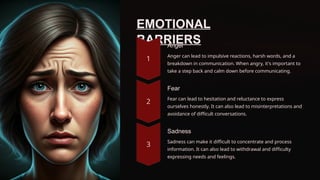
EMOTIONAL
BARRIERS
Anger
Anger can lead to impulsive reactions, harsh words, and a
breakdown in communication. When angry, it's important to
take a step back and calm down before communicating.
Fear
Fear can lead to hesitation and reluctance to express
ourselves honestly. It can also lead to misinterpretations and
avoidance of difficult conversations.
Sadness
Sadness can make it difficult to concentrate and process
information. It can also lead to withdrawal and difficulty
expressing needs and feelings.
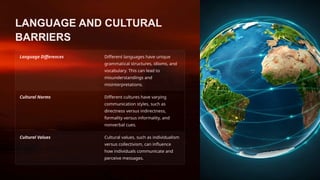
LANGUAGE AND CULTURAL
BARRIERS
Language Differences Different languages have unique
grammatical structures, idioms, and
vocabulary. This can lead to
misunderstandings and
misinterpretations.
Cultural Norms Different cultures have varying
communication styles, such as
directness versus indirectness,
formality versus informality, and
nonverbal cues.
Cultural Values Cultural values, such as individualism
versus collectivism, can influence
how individuals communicate and
perceive messages.
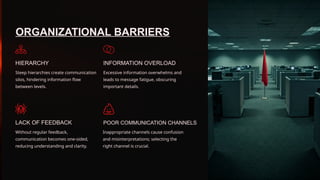
ORGANIZATIONAL BARRIERS
HIERARCHY
Steep hierarchies create communication
silos, hindering information flow
between levels.
INFORMATION OVERLOAD
Excessive information overwhelms and
leads to message fatigue, obscuring
important details.
LACK OF FEEDBACK
Without regular feedback,
communication becomes one-sided,
reducing understanding and clarity.
POOR COMMUNICATION CHANNELS
Inappropriate channels cause confusion
and misinterpretations; selecting the
right channel is crucial.
COMMON OBSTACLES TO EFFECTIVE COMMUNICATION
1 Physical Barriers
These are obstacles that interfere with the physical transmission of a
message. Examples include noise, distance, and technology
malfunctions.
2 Psychological Barriers
These are internal obstacles that hinder our ability to receive, process,
and understand information. They include biases, prejudices, and
emotional states.
3 Language and Cultural Barriers
These barriers arise when individuals from different cultural
backgrounds or who speak different languages attempt to
communicate. Different cultures have different norms and values,
which can lead to misunderstandings.
4 Emotional Barriers
Emotions like anger, fear, or sadness can cloud our judgment and make
it difficult to communicate effectively. They can also lead to
misinterpretations and miscommunications.
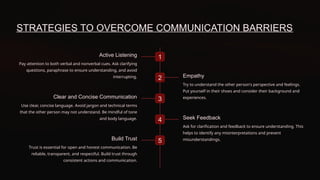
STRATEGIES TO OVERCOME COMMUNICATION BARRIERS
1
Active Listening
Pay attention to both verbal and nonverbal cues. Ask clarifying
questions, paraphrase to ensure understanding, and avoid
interrupting. 2 Empathy
Try to understand the other person's perspective and feelings.
Put yourself in their shoes and consider their background and
experiences.
3
Clear and Concise Communication
Use clear, concise language. Avoid jargon and technical terms
that the other person may not understand. Be mindful of tone
and body language. 4 Seek Feedback
Ask for clarification and feedback to ensure understanding. This
helps to identify any misinterpretations and prevent
misunderstandings.
5
Build Trust
Trust is essential for open and honest communication. Be
reliable, transparent, and respectful. Build trust through
consistent actions and communication.
CONCLUSION
Barriers to communication can hinder the effective exchange of information, leading to misunderstandings, conflicts, and
inefficiencies. These barriers may arise from physical, psychological, linguistic, or cultural factors, as well as technological limitations
or personal biases. Overcoming these obstacles requires active listening, clear expression, empathy, and an open-minded approach.
By addressing communication barriers, individuals and organizations can foster stronger relationships, improve collaboration, and
ensure that messages are accurately conveyed and understood.
THANK YOU
- ANIMESH KARMAKAR

Barriers to Effective Communication.pptx

  • 1.
    CA -1 TOPIC :BARRIERS TO COMMUNICATION NAME : ANIMESH KARMAKAR
  • 2.
    BARRIERS TO COMMUNICATION Communication isthe lifeblood of any successful relationship, whether personal or professional. However, communication can be a complex process, and often, barriers arise that can hinder our ability to effectively convey our thoughts and feelings. These barriers can range from physical distractions to psychological biases, and understanding them is crucial for overcoming them.
  • 3.
    PSYCHOLOGICAL BARRIERS Prejudice Preconceived notions andbiases about individuals or groups can lead to misinterpretations and miscommunications. It can prevent us from listening objectively to others. Selective Perception People tend to see and hear what they want to, filtering information based on their own beliefs and experiences. This can lead to misunderstandings when individuals interpret messages differently. Defensiveness When individuals feel threatened or attacked, they may become defensive and react emotionally, hindering their ability to listen and respond constructively. Stress High stress levels can impair our ability to focus and process information effectively. This can lead to misinterpretations and communication breakdowns.
  • 4.
    PHYSICAL BARRIERS Noise Background noise,such as traffic, construction, or conversations can make it difficult to hear and understand the message being conveyed. Distance Physical distance can make it difficult to see non-verbal cues and can create a sense of detachment. This can make it harder to build rapport and understand the nuances of communication. Technology Malfunctions Technical issues with phones, computers, or internet connections can disrupt the flow of communication and lead to frustration and misunderstanding.
  • 5.
    EMOTIONAL BARRIERS Anger Anger can leadto impulsive reactions, harsh words, and a breakdown in communication. When angry, it's important to take a step back and calm down before communicating. Fear Fear can lead to hesitation and reluctance to express ourselves honestly. It can also lead to misinterpretations and avoidance of difficult conversations. Sadness Sadness can make it difficult to concentrate and process information. It can also lead to withdrawal and difficulty expressing needs and feelings.
  • 6.
    LANGUAGE AND CULTURAL BARRIERS LanguageDifferences Different languages have unique grammatical structures, idioms, and vocabulary. This can lead to misunderstandings and misinterpretations. Cultural Norms Different cultures have varying communication styles, such as directness versus indirectness, formality versus informality, and nonverbal cues. Cultural Values Cultural values, such as individualism versus collectivism, can influence how individuals communicate and perceive messages.
  • 7.
    ORGANIZATIONAL BARRIERS HIERARCHY Steep hierarchiescreate communication silos, hindering information flow between levels. INFORMATION OVERLOAD Excessive information overwhelms and leads to message fatigue, obscuring important details. LACK OF FEEDBACK Without regular feedback, communication becomes one-sided, reducing understanding and clarity. POOR COMMUNICATION CHANNELS Inappropriate channels cause confusion and misinterpretations; selecting the right channel is crucial.
  • 8.
    COMMON OBSTACLES TOEFFECTIVE COMMUNICATION 1 Physical Barriers These are obstacles that interfere with the physical transmission of a message. Examples include noise, distance, and technology malfunctions. 2 Psychological Barriers These are internal obstacles that hinder our ability to receive, process, and understand information. They include biases, prejudices, and emotional states. 3 Language and Cultural Barriers These barriers arise when individuals from different cultural backgrounds or who speak different languages attempt to communicate. Different cultures have different norms and values, which can lead to misunderstandings. 4 Emotional Barriers Emotions like anger, fear, or sadness can cloud our judgment and make it difficult to communicate effectively. They can also lead to misinterpretations and miscommunications.
  • 9.
    STRATEGIES TO OVERCOMECOMMUNICATION BARRIERS 1 Active Listening Pay attention to both verbal and nonverbal cues. Ask clarifying questions, paraphrase to ensure understanding, and avoid interrupting. 2 Empathy Try to understand the other person's perspective and feelings. Put yourself in their shoes and consider their background and experiences. 3 Clear and Concise Communication Use clear, concise language. Avoid jargon and technical terms that the other person may not understand. Be mindful of tone and body language. 4 Seek Feedback Ask for clarification and feedback to ensure understanding. This helps to identify any misinterpretations and prevent misunderstandings. 5 Build Trust Trust is essential for open and honest communication. Be reliable, transparent, and respectful. Build trust through consistent actions and communication.
  • 10.
    CONCLUSION Barriers to communicationcan hinder the effective exchange of information, leading to misunderstandings, conflicts, and inefficiencies. These barriers may arise from physical, psychological, linguistic, or cultural factors, as well as technological limitations or personal biases. Overcoming these obstacles requires active listening, clear expression, empathy, and an open-minded approach. By addressing communication barriers, individuals and organizations can foster stronger relationships, improve collaboration, and ensure that messages are accurately conveyed and understood.
  • 11.