• Products: nata de coco, vinegar, tuba, lambanog 
• Substrates: coconut sap/water/milk, nipa sap, 
kaong sap, and buri sap
Nata de coco Glucoacetobacter xylinus 
(formerly Acetobacter xylinum) 
Vinegar – Acetobacter spp. and Gluconobacter 
spp. 
Tuba – Saccharomyces cerevisiae, other 
Saccharomyces species; LAB and AAB 
Lambanog bubod, a mixed microflora of molds, 
yeasts and bacteria
Nata de Coco 
• A chewy, translucent, jellylike foodstuff produced by 
the fermentation of coconut water by acetic acid 
bacteria specifically Gluconacetobacter xylinus 
• “Nata” is a Spanish word derived from the Latin word 
natare” meaning “to float” 
• Highly regarded for its high 
dietary fiber, low fat content, 
and zero cholesterol content 
• Was started in Pagsanjan, Laguna 
from juice of pineapple parings 
used in bleaching pinya cloth
Nata de Coco Production 
• Extraction of coconut water 
• Fermentation of coconut water with a bacterial 
culture 
• Separation and cutting of the produced mat of 
nata de coco 
• Cleaning and washing off the acetic acid 
produced 
• Cutting and packaging
Vinegar 
• Product of the alcoholic fermentation 
of starchy or saccharine materials 
followed by the acetification of the 
fermented liquor by acetic acid 
bacteria 
• Acetic acid produced by the bacterial 
fermentation of ethanol 
• Now mainly used as a cooking 
ingredient for flavoring and preserving 
food, but historically as the most easily 
available mild acid for industrial, 
medical and domestic uses
Etymology 
• From the French words vin meaning wine 
and aigre meaning sour 
So vinegar is simply 
“SOUR WINE”
Chemical Process of Vinegar 
Production 
1. Fermentation of sugar to ethanol 
2. Partial oxidation of ethanol to acetaldehyde 
3. Conversion of acetaldehyde to acetic acid 
(acetification) 
yeast 
acetic acid bacteria 
CHO  CH3CH2OH  2 HCH3CHO  2 CH3COOH
Points in Vinegar Production 
1. Alcoholic fermentation 
• Favorable temperature: 24-27°C 
• Best to add yeast as a starter culture 
• Generates an anaerobic or partially 
anaerobic environment to produce alcohol 
• Normal fermentation period: 7-10 days 
• Optimum alcohol content: 10-13% 
2. Acetification 
• Right strain of acetic acid bacteria 
• Right choice of raw materials 
• Acidity of the substrate should not exceed 
pH 5.0 
• Generates an aerobic condition
Methods of Vinegar Production 
1. Natural or spontaneous fermentation 
• Occurs in nature 
• Requires no culture inoculation 
• Substrate undergoes simultaneous 
alcoholic fermentation followed by natural 
acetate fermentation
2. French Orleans process 
• Also called the continuous method 
• Fresh alcoholic substrate is added to bring 
the volume to ~1/2 of the barrel and 
acidified with fresh vinegar 
• Under aerobic condition, Acetobacter spp. 
grow as a thin film on the surface of the 
alcoholic substrate and oxidize ethanol to 
acetate. As the substrate turns to vinegar, it 
is withdrawn and fresh alcoholic liquor is 
added.
3. Submerged fermentation method 
• Commonly used in wine vinegar production 
• Requires the use of large stainless steel 
tanks called acetators, which are fitted with 
centrifugal pumps at the bottom for pumping 
air bubbles. As the bubbles stir the alcohol, 
acetozym nutrients are piped into the tank, 
spurring the growth of acetobacter species on 
the oxygen bubbles, which convert the 
alcohol to vinegar, which is then piped to a 
filtering machine and then to a dilution station. 
• Tank temperature: 26-38°C
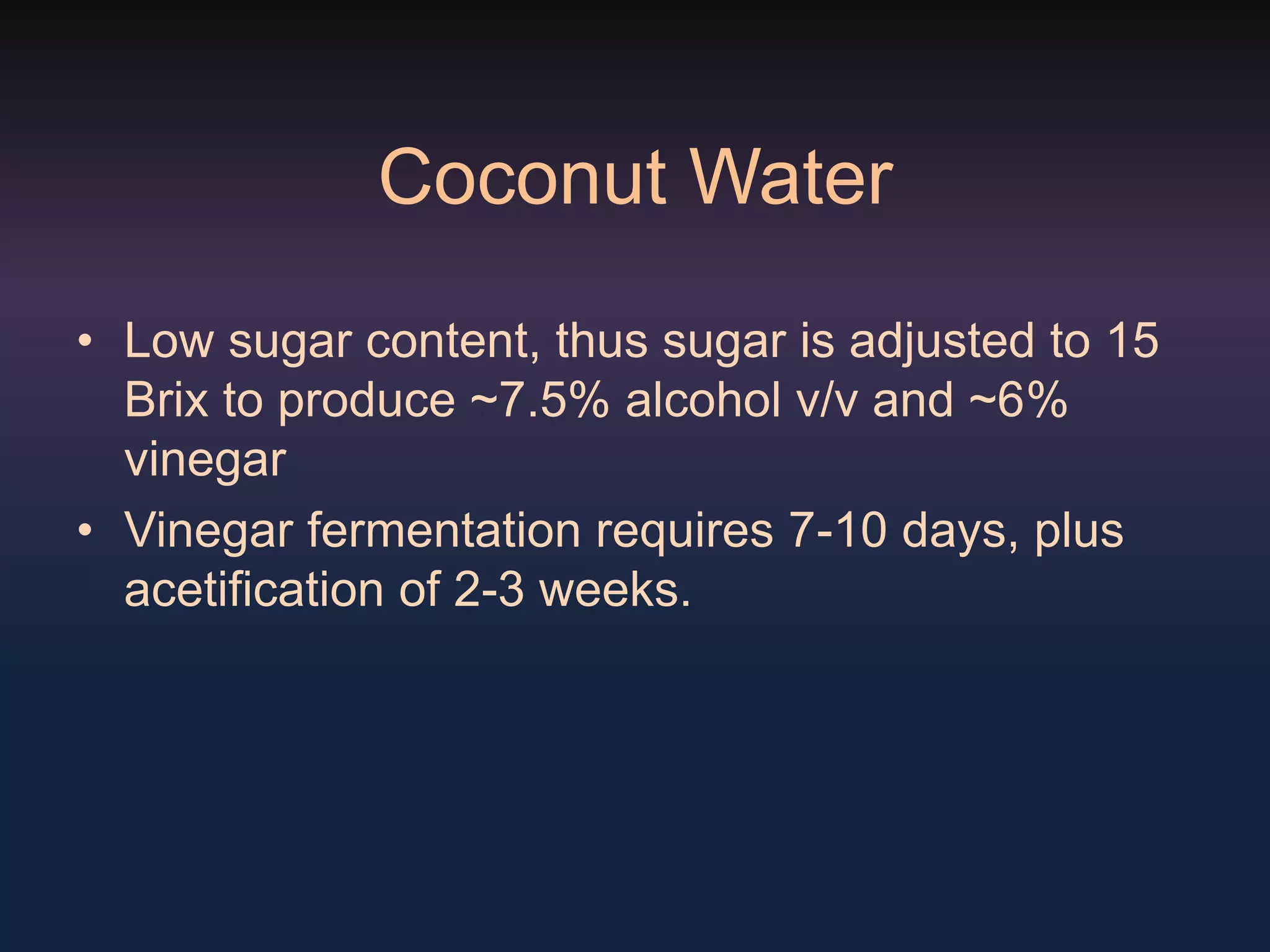
4. Highly sophisticated rapid vinegar fermentation 
• Use of Fring’s generator, which has automatic 
controls for temperature, aeration, and 
recirculation of substrate 
• A fine mist of Acetobacter and alcoholic 
solutions are sprayed 
into the chamber until 
ethanol is completely 
oxidized to acetate.
Kinds of Vinegar 
1. Cider vinegar - from apple juice 
2. Wine vinegar - from wine 
3. Balsamic vinegar - from Trebbiano and 
Lambrusco grapes 
4. Malt vinegar - from barley malt or cereals 
5. Sugar vinegar - from sugar syrup, molasses, 
or refined sugar 
6. Glucose vinegar - from glucose solution 
7. Spirit/distilled/grain vinegar - from dilute 
distilled alcohol (by acetous fermentation)
Philippine Vinegar 
• Substrates: fruit juices (particularly pineapple), 
sugar cane, coconut water, nipa, buri, and kaong 
sap 
• Uses: condiment, for manufacture of pickles, 
tomato catsup, chili sauces, and sauces for 
canning fish.
Coconut Water 
• Low sugar content, thus sugar is adjusted to 15 
Brix to produce ~7.5% alcohol v/v and ~6% 
vinegar 
• Vinegar fermentation requires 7-10 days, plus 
acetification of 2-3 weeks.
Coconut/Palm Sap Vinegar 
• A cloudy white liquid with a particularly sharp, 
acidic taste with a slightly yeasty note 
• Produced by collecting palm sap and placing it 
in earthen jars, allowing it to ferment 
spontaneously 
• Used extensively in Southeast Asian cuisine
Iloko Vinegar (Sukang Iloko) 
• Prepared from sugarcane wine (basi) 
• Fermentation requires a year; final acidity of 
vinegar is 6% and has excellent quality 
• Dark yellow to golden brown; has a mellow 
flavor similar to 
rice vinegar 
• Has no residual 
sugar 
• Often labeled as 
“sukang maasim”
Quality Control 
Growing Acetobacter spp. requires vigilance. 
• In the Orleans method, bungholes must be 
routinely checked to ensure that insects have not 
penetrated the netting. 
• In the generator method, great care is taken to 
keep the temperature inside the tank in the 26- 
38°C range. Thermostats on the tanks are 
routinely checked. 
• Because a loss of electricity can kill Acetobacter 
spp. within seconds, many vinegar plants have 
backup systems to generate electric power in the 
event of a blackout.

1 rich fermented coconut palm sap products

  • 2.
    • Products: natade coco, vinegar, tuba, lambanog • Substrates: coconut sap/water/milk, nipa sap, kaong sap, and buri sap
  • 3.
    Nata de cocoGlucoacetobacter xylinus (formerly Acetobacter xylinum) Vinegar – Acetobacter spp. and Gluconobacter spp. Tuba – Saccharomyces cerevisiae, other Saccharomyces species; LAB and AAB Lambanog bubod, a mixed microflora of molds, yeasts and bacteria
  • 4.
    Nata de Coco • A chewy, translucent, jellylike foodstuff produced by the fermentation of coconut water by acetic acid bacteria specifically Gluconacetobacter xylinus • “Nata” is a Spanish word derived from the Latin word natare” meaning “to float” • Highly regarded for its high dietary fiber, low fat content, and zero cholesterol content • Was started in Pagsanjan, Laguna from juice of pineapple parings used in bleaching pinya cloth
  • 5.
    Nata de CocoProduction • Extraction of coconut water • Fermentation of coconut water with a bacterial culture • Separation and cutting of the produced mat of nata de coco • Cleaning and washing off the acetic acid produced • Cutting and packaging
  • 6.
    Vinegar • Productof the alcoholic fermentation of starchy or saccharine materials followed by the acetification of the fermented liquor by acetic acid bacteria • Acetic acid produced by the bacterial fermentation of ethanol • Now mainly used as a cooking ingredient for flavoring and preserving food, but historically as the most easily available mild acid for industrial, medical and domestic uses
  • 7.
    Etymology • Fromthe French words vin meaning wine and aigre meaning sour So vinegar is simply “SOUR WINE”
  • 8.
    Chemical Process ofVinegar Production 1. Fermentation of sugar to ethanol 2. Partial oxidation of ethanol to acetaldehyde 3. Conversion of acetaldehyde to acetic acid (acetification) yeast acetic acid bacteria CHO  CH3CH2OH  2 HCH3CHO  2 CH3COOH
  • 9.
    Points in VinegarProduction 1. Alcoholic fermentation • Favorable temperature: 24-27°C • Best to add yeast as a starter culture • Generates an anaerobic or partially anaerobic environment to produce alcohol • Normal fermentation period: 7-10 days • Optimum alcohol content: 10-13% 2. Acetification • Right strain of acetic acid bacteria • Right choice of raw materials • Acidity of the substrate should not exceed pH 5.0 • Generates an aerobic condition
  • 10.
    Methods of VinegarProduction 1. Natural or spontaneous fermentation • Occurs in nature • Requires no culture inoculation • Substrate undergoes simultaneous alcoholic fermentation followed by natural acetate fermentation
  • 11.
    2. French Orleansprocess • Also called the continuous method • Fresh alcoholic substrate is added to bring the volume to ~1/2 of the barrel and acidified with fresh vinegar • Under aerobic condition, Acetobacter spp. grow as a thin film on the surface of the alcoholic substrate and oxidize ethanol to acetate. As the substrate turns to vinegar, it is withdrawn and fresh alcoholic liquor is added.
  • 12.
    3. Submerged fermentationmethod • Commonly used in wine vinegar production • Requires the use of large stainless steel tanks called acetators, which are fitted with centrifugal pumps at the bottom for pumping air bubbles. As the bubbles stir the alcohol, acetozym nutrients are piped into the tank, spurring the growth of acetobacter species on the oxygen bubbles, which convert the alcohol to vinegar, which is then piped to a filtering machine and then to a dilution station. • Tank temperature: 26-38°C
  • 13.
    4. Highly sophisticatedrapid vinegar fermentation • Use of Fring’s generator, which has automatic controls for temperature, aeration, and recirculation of substrate • A fine mist of Acetobacter and alcoholic solutions are sprayed into the chamber until ethanol is completely oxidized to acetate.
  • 14.
    Kinds of Vinegar 1. Cider vinegar - from apple juice 2. Wine vinegar - from wine 3. Balsamic vinegar - from Trebbiano and Lambrusco grapes 4. Malt vinegar - from barley malt or cereals 5. Sugar vinegar - from sugar syrup, molasses, or refined sugar 6. Glucose vinegar - from glucose solution 7. Spirit/distilled/grain vinegar - from dilute distilled alcohol (by acetous fermentation)
  • 15.
    Philippine Vinegar •Substrates: fruit juices (particularly pineapple), sugar cane, coconut water, nipa, buri, and kaong sap • Uses: condiment, for manufacture of pickles, tomato catsup, chili sauces, and sauces for canning fish.
  • 16.
    Coconut Water •Low sugar content, thus sugar is adjusted to 15 Brix to produce ~7.5% alcohol v/v and ~6% vinegar • Vinegar fermentation requires 7-10 days, plus acetification of 2-3 weeks.
  • 17.
    Coconut/Palm Sap Vinegar • A cloudy white liquid with a particularly sharp, acidic taste with a slightly yeasty note • Produced by collecting palm sap and placing it in earthen jars, allowing it to ferment spontaneously • Used extensively in Southeast Asian cuisine
  • 18.
    Iloko Vinegar (SukangIloko) • Prepared from sugarcane wine (basi) • Fermentation requires a year; final acidity of vinegar is 6% and has excellent quality • Dark yellow to golden brown; has a mellow flavor similar to rice vinegar • Has no residual sugar • Often labeled as “sukang maasim”
  • 19.
    Quality Control GrowingAcetobacter spp. requires vigilance. • In the Orleans method, bungholes must be routinely checked to ensure that insects have not penetrated the netting. • In the generator method, great care is taken to keep the temperature inside the tank in the 26- 38°C range. Thermostats on the tanks are routinely checked. • Because a loss of electricity can kill Acetobacter spp. within seconds, many vinegar plants have backup systems to generate electric power in the event of a blackout.