Computer
Organization
Lectured by:
ung yean
Master of Computer Science
American University, Wash. DC. USA
TABLE OF CONTENTS
1. Objectives
2. A Brief History of Computer
3. Computer Programs
4. Number Representation in Computer System
5. Computer Organization Model
6. Central processing Unit
7. Input/output
8. Program Execution
9. Architectures
OBJECTIVES
 Distinguish between the three components of a computer hardware.
 List the functionality of each component
 Understand memory addressing and calculate the number of bytes
for a specified purpose.
 Distinguish between different types of memories
 Understand how each input/output device works.
3
OBJECTIVE(CONT.)
 Understand the systems used to connect different
 components together.
 Understand the addressing system for input/output
devices.
 Understand the program execution and machine cycles.
 Distinguish between programmed I/O, interrupt-driven I/O and direct
memory access (DMA).
 Understand the two major architectures used to define
 the instruction sets of a computer: CISC and RISC.
4
A BRIEF HISTORY of COMPUTER
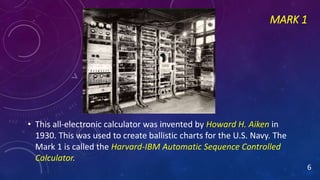
MARK 1
• This all-electronic calculator was invented by Howard H. Aiken in
1930. This was used to create ballistic charts for the U.S. Navy. The
Mark 1 is called the Harvard-IBM Automatic Sequence Controlled
Calculator.
6
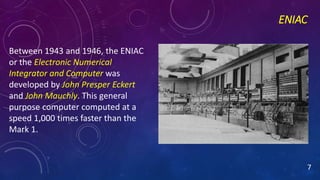
ENIAC
Between 1943 and 1946, the ENIAC
or the Electronic Numerical
Integrator and Computer was
developed by John Presper Eckert
and John Mauchly. This general
purpose computer computed at a
speed 1,000 times faster than the
Mark 1.
7
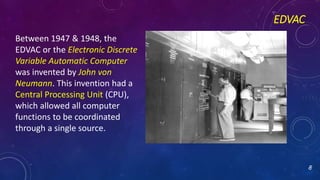
EDVAC
Between 1947 & 1948, the
EDVAC or the Electronic Discrete
Variable Automatic Computer
was invented by John von
Neumann. This invention had a
Central Processing Unit (CPU),
which allowed all computer
functions to be coordinated
through a single source.
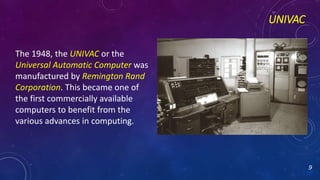
UNIVAC
The 1948, the UNIVAC or the
Universal Automatic Computer was
manufactured by Remington Rand
Corporation. This became one of
the first commercially available
computers to benefit from the
various advances in computing.
COMPUTER TODAY
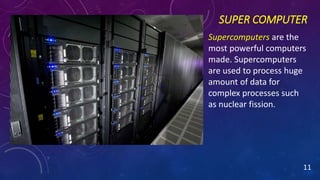
SUPER COMPUTER
Supercomputers are the
most powerful computers
made. Supercomputers
are used to process huge
amount of data for
complex processes such
as nuclear fission.
11
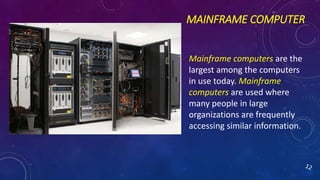
MAINFRAME COMPUTER
Mainframe computers are the
largest among the computers
in use today. Mainframe
computers are used where
many people in large
organizations are frequently
accessing similar information.
PERSONAL COMPUTERS
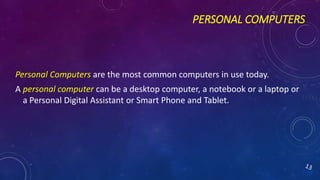
Personal Computers are the most common computers in use today.
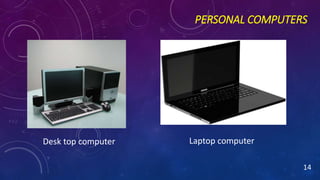
A personal computer can be a desktop computer, a notebook or a laptop or
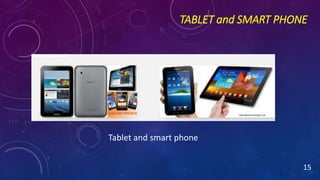
a Personal Digital Assistant or Smart Phone and Tablet.
PERSONAL COMPUTERS
Desk top computer
14
Laptop computer
TABLET and SMART PHONE
Tablet and smart phone
15

1 computer organization

  • 1.
    Computer Organization Lectured by: ung yean Masterof Computer Science American University, Wash. DC. USA
  • 2.
    TABLE OF CONTENTS 1.Objectives 2. A Brief History of Computer 3. Computer Programs 4. Number Representation in Computer System 5. Computer Organization Model 6. Central processing Unit 7. Input/output 8. Program Execution 9. Architectures
  • 3.
    OBJECTIVES  Distinguish betweenthe three components of a computer hardware.  List the functionality of each component  Understand memory addressing and calculate the number of bytes for a specified purpose.  Distinguish between different types of memories  Understand how each input/output device works. 3
  • 4.
    OBJECTIVE(CONT.)  Understand thesystems used to connect different  components together.  Understand the addressing system for input/output devices.  Understand the program execution and machine cycles.  Distinguish between programmed I/O, interrupt-driven I/O and direct memory access (DMA).  Understand the two major architectures used to define  the instruction sets of a computer: CISC and RISC. 4
  • 5.
    A BRIEF HISTORYof COMPUTER
  • 6.
    MARK 1 • Thisall-electronic calculator was invented by Howard H. Aiken in 1930. This was used to create ballistic charts for the U.S. Navy. The Mark 1 is called the Harvard-IBM Automatic Sequence Controlled Calculator. 6
  • 7.
    ENIAC Between 1943 and1946, the ENIAC or the Electronic Numerical Integrator and Computer was developed by John Presper Eckert and John Mauchly. This general purpose computer computed at a speed 1,000 times faster than the Mark 1. 7
  • 8.
    EDVAC Between 1947 &1948, the EDVAC or the Electronic Discrete Variable Automatic Computer was invented by John von Neumann. This invention had a Central Processing Unit (CPU), which allowed all computer functions to be coordinated through a single source.
  • 9.
    UNIVAC The 1948, theUNIVAC or the Universal Automatic Computer was manufactured by Remington Rand Corporation. This became one of the first commercially available computers to benefit from the various advances in computing.
  • 10.
  • 11.
    SUPER COMPUTER Supercomputers arethe most powerful computers made. Supercomputers are used to process huge amount of data for complex processes such as nuclear fission. 11
  • 12.
    MAINFRAME COMPUTER Mainframe computersare the largest among the computers in use today. Mainframe computers are used where many people in large organizations are frequently accessing similar information.
  • 13.
    PERSONAL COMPUTERS Personal Computersare the most common computers in use today. A personal computer can be a desktop computer, a notebook or a laptop or a Personal Digital Assistant or Smart Phone and Tablet.
  • 14.
    PERSONAL COMPUTERS Desk topcomputer 14 Laptop computer
  • 15.
    TABLET and SMARTPHONE Tablet and smart phone 15