








DATA STRUCTURES
Dr. P. Subathra
Professor
Dept. of Information Technology
KAMARAJ College of Engineering & Technology
CS8391 – DATA STRUCTURES
ONLINE CLASSES – CLASS NO. 4
21.08.2020
(10:00 AM – 11:00 AM
&
11:30 AM – 12:30 PM)
UNIT 1
SINGLY LINKED LIST
DELETION OPERATIONS
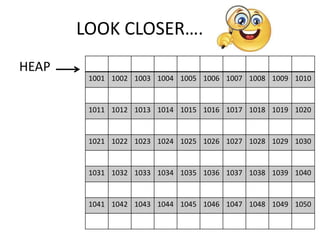
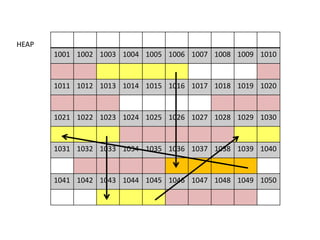
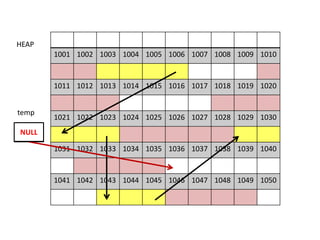
HEAP
1001 1002 1003 1004 1005 1006 1007 1008 1009 1010
1011 1012 1013 1014 1015 1016 1017 1018 1019 1020
1021 1022 1023 1024 1025 1026 1027 1028 1029 1030
1031 1032 1033 1034 1035 1036 1037 1038 1039 1040
1041 1042 1043 1044 1045 1046 1047 1048 1049 1050
LOOK CLOSER……
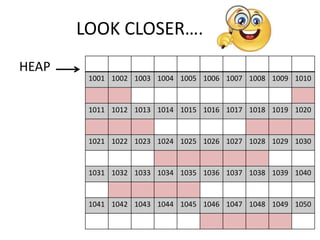
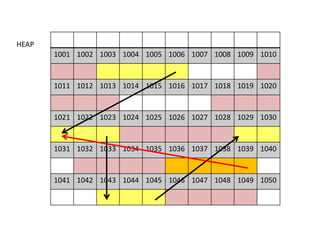
HEAP
1001 1002 1003 1004 1005 1006 1007 1008 1009 1010
1011 1012 1013 1014 1015 1016 1017 1018 1019 1020
1021 1022 1023 1024 1025 1026 1027 1028 1029 1030
1031 1032 1033 1034 1035 1036 1037 1038 1039 1040
1041 1042 1043 1044 1045 1046 1047 1048 1049 1050
LOOK CLOSER……
1001 1002 1003 1004 1005 1006 1007 1008 1009 1010
1011 1012 1013 1014 1015 1016 1017 1018 1019 1020
1021 1022 1023 1024 1025 1026 1027 1028 1029 1030
1031 1032 1033 1034 1035 1036 1037 1038 1039 1040
1041 1042 1043 1044 1045 1046 1047 1048 1049 1050
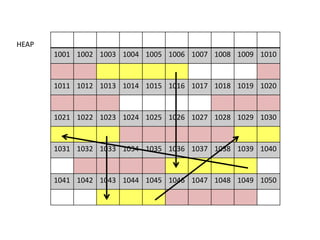
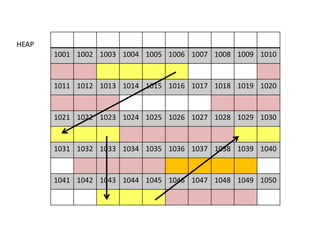
HEAP
1001 1002 1003 1004 1005 1006 1007 1008 1009 1010
1011 1012 1013 1014 1015 1016 1017 1018 1019 1020
1021 1022 1023 1024 1025 1026 1027 1028 1029 1030
1031 1032 1033 1034 1035 1036 1037 1038 1039 1040
1041 1042 1043 1044 1045 1046 1047 1048 1049 1050
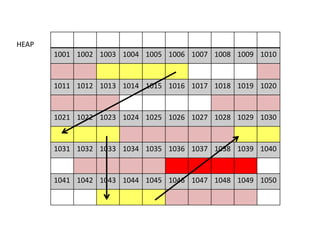
HEAP
1001 1002 1003 1004 1005 1006 1007 1008 1009 1010
1011 1012 1013 1014 1015 1016 1017 1018 1019 1020
1021 1022 1023 1024 1025 1026 1027 1028 1029 1030
1031 1032 1033 1034 1035 1036 1037 1038 1039 1040
1041 1042 1043 1044 1045 1046 1047 1048 1049 1050
HEAP
1001 1002 1003 1004 1005 1006 1007 1008 1009 1010
1011 1012 1013 1014 1015 1016 1017 1018 1019 1020
1021 1022 1023 1024 1025 1026 1027 1028 1029 1030
1031 1032 1033 1034 1035 1036 1037 1038 1039 1040
1041 1042 1043 1044 1045 1046 1047 1048 1049 1050
HEAP
1001 1002 1003 1004 1005 1006 1007 1008 1009 1010
1011 1012 1013 1014 1015 1016 1017 1018 1019 1020
1021 1022 1023 1024 1025 1026 1027 1028 1029 1030
1031 1032 1033 1034 1035 1036 1037 1038 1039 1040
1041 1042 1043 1044 1045 1046 1047 1048 1049 1050
HEAP
1001 1002 1003 1004 1005 1006 1007 1008 1009 1010
1011 1012 1013 1014 1015 1016 1017 1018 1019 1020
1021 1022 1023 1024 1025 1026 1027 1028 1029 1030
1031 1032 1033 1034 1035 1036 1037 1038 1039 1040
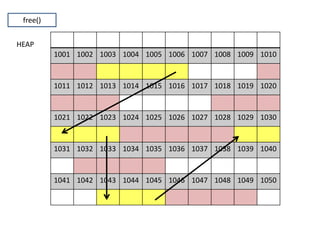
1041 1042 1043 1044 1045 1046 1047 1048 1049 1050
free()
HEAP
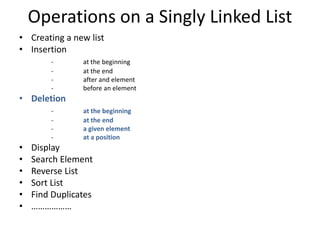
Operations on a Singly Linked List
• Creating a new list
• Insertion
- at the beginning
- at the end
- after and element
- before an element
• Deletion
- at the beginning
- at the end
- a given element
- at a position
• Display
• Search Element
• Reverse List
• Sort List
• Find Duplicates
• ………………
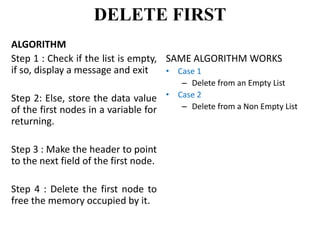
DELETE FIRST
ALGORITHM
Step 1 : Check if the list is empty,
if so, display a message and exit
Step 2: Else, store the data value
of the first nodes in a variable for
returning.
Step 3 : Make the header to point
to the next field of the first node.
Step 4 : Delete the first node to
free the memory occupied by it.
SAME ALGORITHM WORKS
• Case 1
– Delete from an Empty List
• Case 2
– Delete from a Non Empty List
DELETE FIRST
ALGORITHM & CODE
Step 1 : Check if the list is
empty, if so, display a message
and exit
ILLUSTRATION
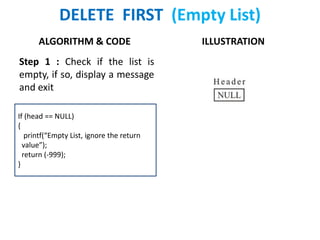
DELETE FIRST (Empty List)
If (head == NULL)
{
printf(“Empty List, ignore the return
value”);
return (-999);
}
ALGORITHM & CODE
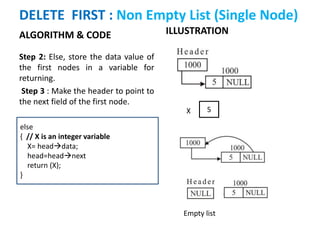
Step 2: Else, store the data value of
the first nodes in a variable for
returning.
Step 3 : Make the header to point to
the next field of the first node.
ILLUSTRATION
DELETE FIRST : Non Empty List (Single Node)
else
{ // X is an integer variable
X= headdata;
head=headnext
return (X);
}
Empty list
5X
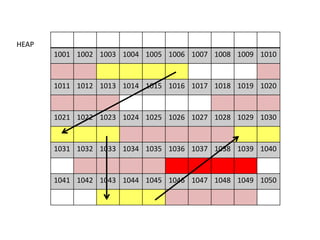
1001 1002 1003 1004 1005 1006 1007 1008 1009 1010
1011 1012 1013 1014 1015 1016 1017 1018 1019 1020
1021 1022 1023 1024 1025 1026 1027 1028 1029 1030
1031 1032 1033 1034 1035 1036 1037 1038 1039 1040
1041 1042 1043 1044 1045 1046 1047 1048 1049 1050
HEAP
ALGORITHM & CODE
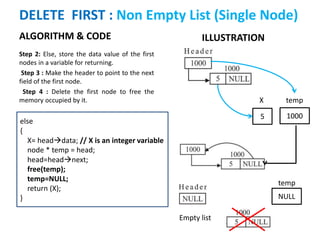
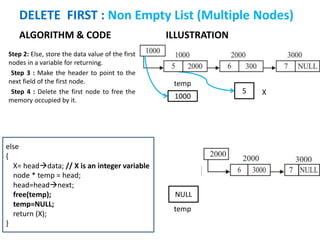
Step 2: Else, store the data value of the first
nodes in a variable for returning.
Step 3 : Make the header to point to the next
field of the first node.
Step 4 : Delete the first node to free the
memory occupied by it.
ILLUSTRATION
else
{
X= headdata; // X is an integer variable
node * temp = head;
head=headnext;
free(temp);
temp=NULL;
return (X);
}
Empty list
5
X
temp
1000
NULL
temp
DELETE FIRST : Non Empty List (Single Node)
1001 1002 1003 1004 1005 1006 1007 1008 1009 1010
1011 1012 1013 1014 1015 1016 1017 1018 1019 1020
1021 1022 1023 1024 1025 1026 1027 1028 1029 1030
1031 1032 1033 1034 1035 1036 1037 1038 1039 1040
1041 1042 1043 1044 1045 1046 1047 1048 1049 1050
HEAP
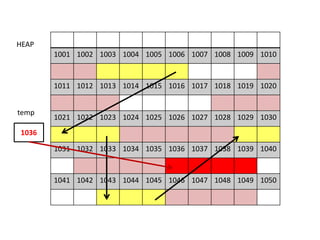
1036
temp
1001 1002 1003 1004 1005 1006 1007 1008 1009 1010
1011 1012 1013 1014 1015 1016 1017 1018 1019 1020
1021 1022 1023 1024 1025 1026 1027 1028 1029 1030
1031 1032 1033 1034 1035 1036 1037 1038 1039 1040
1041 1042 1043 1044 1045 1046 1047 1048 1049 1050
HEAP
1036
temp
NULL
ALGORITHM & CODE
Step 2: Else, store the data value of the first
nodes in a variable for returning.
Step 3 : Make the header to point to the
next field of the first node.
Step 4 : Delete the first node to free the
memory occupied by it.
ILLUSTRATION
DELETE FIRST : Non Empty List (Multiple Nodes)
else
{
X= headdata; // X is an integer variable
node * temp = head;
head=headnext;
free(temp);
temp=NULL;
return (X);
}
5 X
temp
1000
NULL
temp
DELETE LAST
DELETE LAST
Step 1 : Check if the list is empty,
if so, display a message and exit
Step 2: Else, if only one node
available in the list, store the
data value of that nodes in a
variable for returning.
Step 3 : Make the header NULL
Step 4 : Delete the first node to
free the memory occupied by it.
SAME ALGORITHM WORKS
• Case 1
– Delete an Empty List
• Case 2
– Delete from a Non Empty List
Operations on a Singly Linked List
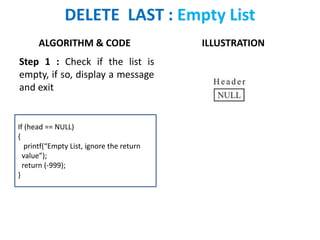
ALGORITHM & CODE
Step 1 : Check if the list is
empty, if so, display a message
and exit
ILLUSTRATION
DELETE LAST : Empty List
If (head == NULL)
{
printf(“Empty List, ignore the return
value”);
return (-999);
}
ALGORITHM & CODE
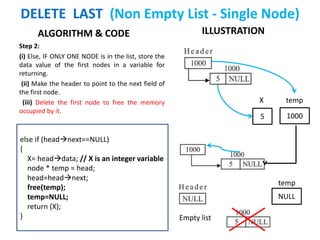
Step 2:
(i) Else, IF ONLY ONE NODE is in the list, store the
data value of the first nodes in a variable for
returning.
(ii) Make the header to point to the next field of
the first node.
(iii) Delete the first node to free the memory
occupied by it.
ILLUSTRATION
DELETE LAST (Non Empty List - Single Node)
else if (headnext==NULL)
{
X= headdata; // X is an integer variable
node * temp = head;
head=headnext;
free(temp);
temp=NULL;
return (X);
} Empty list
5
X
temp
1000
NULL
temp
ALGORITHM & CODE
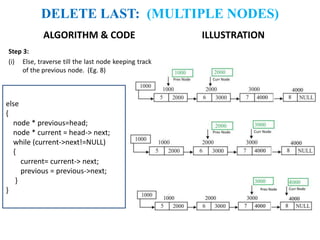
Step 3:
(i) Else, traverse till the last node keeping track
of the previous node. (Eg. 8)
ILLUSTRATION
else
{
node * previous=head;
node * current = head-> next;
while (current->next!=NULL)
{
current= current-> next;
previous = previous->next;
}
}
DELETE LAST: (MULTIPLE NODES)
ALGORITHM & CODE
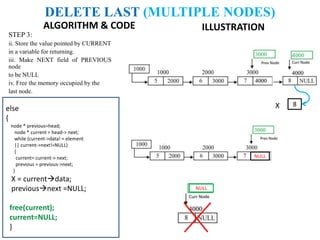
STEP 3:
ii. Store the value pointed by CURRENT
in a variable for returning.
iii. Make NEXT field of PREVIOUS
node
to be NULL
iv. Free the memory occupied by the
last node.
ILLUSTRATION
DELETE LAST (MULTIPLE NODES)
else
{
node * previous=head;
node * current = head-> next;
while (current->data! = element
|| current->next!=NULL)
{
current= current-> next;
previous = previous->next;
}
X = currentdata;
previousnext =NULL;
free(current);
current=NULL;
}
8X
NULL
NULL
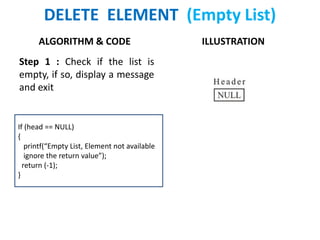
DELETE ELEMENT
ALGORITHM & CODE
Step 1 : Check if the list is
empty, if so, display a message
and exit
ILLUSTRATION
DELETE ELEMENT (Empty List)
If (head == NULL)
{
printf(“Empty List, Element not available
ignore the return value”);
return (-1);
}
ALGORITHM & CODE
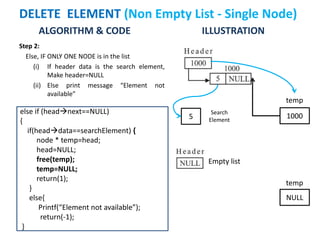
Step 2:
Else, IF ONLY ONE NODE is in the list
(i) If header data is the search element,
Make header=NULL
(ii) Else print message “Element not
available”
ILLUSTRATION
DELETE ELEMENT (Non Empty List - Single Node)
else if (headnext==NULL)
{
if(headdata==searchElement) {
node * temp=head;
head=NULL;
free(temp);
temp=NULL;
return(1);
}
else{
Printf(“Element not available”);
return(-1);
}
Empty list
5
Search
Element
temp
1000
NULL
temp
ALGORITHM & CODE
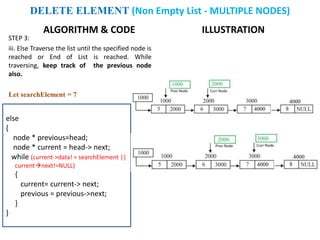
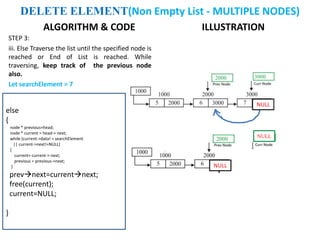
STEP 3:
iii. Else Traverse the list until the specified node is
reached or End of List is reached. While
traversing, keep track of the previous node
also.
Let searchElement = 7
ILLUSTRATION
else
{
node * previous=head;
node * current = head-> next;
while (current->data! = searchElement ||
currentnext!=NULL)
{
current= current-> next;
previous = previous->next;
}
}
DELETE ELEMENT (Non Empty List - MULTIPLE NODES)
ALGORITHM & CODE
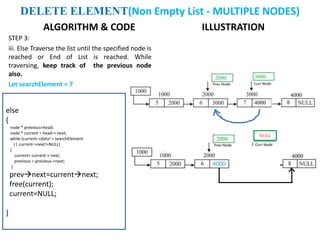
STEP 3:
iii. Else Traverse the list until the specified node is
reached or End of List is reached. While
traversing, keep track of the previous node
also.
Let searchElement = 7
ILLUSTRATION
else
{
node * previous=head;
node * current = head-> next;
while (current->data! = searchElement
|| current->next!=NULL)
{
current= current-> next;
previous = previous->next;
}
prevnext=currentnext;
free(current);
current=NULL;
}
DELETE ELEMENT(Non Empty List - MULTIPLE NODES)
NULL
ALGORITHM & CODE
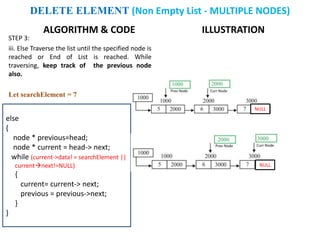
STEP 3:
iii. Else Traverse the list until the specified node is
reached or End of List is reached. While
traversing, keep track of the previous node
also.
Let searchElement = 7
ILLUSTRATION
else
{
node * previous=head;
node * current = head-> next;
while (current->data! = searchElement ||
currentnext!=NULL)
{
current= current-> next;
previous = previous->next;
}
}
DELETE ELEMENT (Non Empty List - MULTIPLE NODES)
NULL
NULL
ALGORITHM & CODE
STEP 3:
iii. Else Traverse the list until the specified node is
reached or End of List is reached. While
traversing, keep track of the previous node
also.
Let searchElement = 7
ILLUSTRATION
else
{
node * previous=head;
node * current = head-> next;
while (current->data! = searchElement
|| current->next!=NULL)
{
current= current-> next;
previous = previous->next;
}
prevnext=currentnext;
free(current);
current=NULL;
}
DELETE ELEMENT(Non Empty List - MULTIPLE NODES)
NULL
NULL
NULL NULL
DELETE GIVEN POSITION
ALGORITHM & CODE
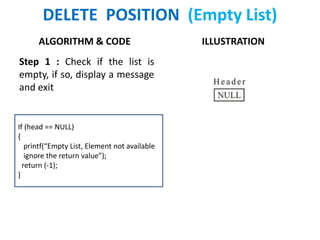
Step 1 : Check if the list is
empty, if so, display a message
and exit
ILLUSTRATION
DELETE POSITION (Empty List)
If (head == NULL)
{
printf(“Empty List, Element not available
ignore the return value”);
return (-1);
}
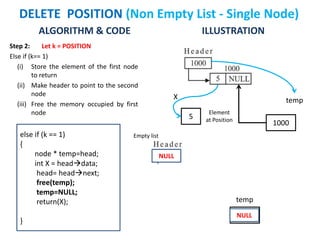
ALGORITHM & CODE ILLUSTRATION
DELETE POSITION (Non Empty List - Single Node)
else if (k == 1)
{
node * temp=head;
int X = headdata;
head= headnext;
free(temp);
temp=NULL;
return(X);
}
Empty list
5
Element
at Position
1000
tempX
Step 2: Let k = POSITION
Else if (k== 1)
(i) Store the element of the first node
to return
(ii) Make header to point to the second
node
(iii) Free the memory occupied by first
node
1000
temp
NULL
NULL
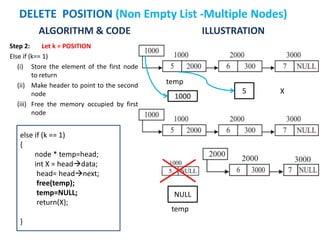
ALGORITHM & CODE
Step 2: Let k = POSITION
Else if (k== 1)
(i) Store the element of the first node
to return
(ii) Make header to point to the second
node
(iii) Free the memory occupied by first
node
ILLUSTRATION
DELETE POSITION (Non Empty List -Multiple Nodes)
else if (k == 1)
{
node * temp=head;
int X = headdata;
head= headnext;
free(temp);
temp=NULL;
return(X);
}
5
1000
X
temp
temp
NULL
ALGORITHM & CODE
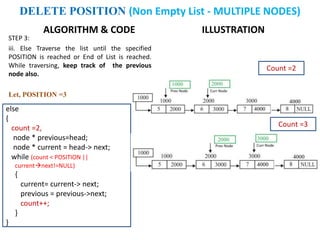
STEP 3:
iii. Else Traverse the list until the specified
POSITION is reached or End of List is reached.
While traversing, keep track of the previous
node also.
Let, POSITION =3
ILLUSTRATION
else
{
count =2,
node * previous=head;
node * current = head-> next;
while (count < POSITION ||
currentnext!=NULL)
{
current= current-> next;
previous = previous->next;
count++;
}
}
DELETE POSITION (Non Empty List - MULTIPLE NODES)
Count =2
Count =3
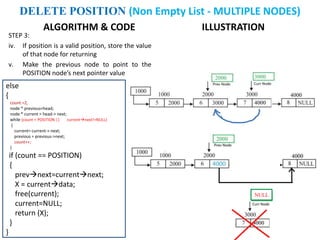
STEP 3:
iv. If position is a valid position, store the value
of that node for returning
v. Make the previous node to point to the
POSITION node’s next pointer value
ILLUSTRATION
else
{
count =2,
node * previous=head;
node * current = head-> next;
while (count < POSITION || currentnext!=NULL)
{
current= current-> next;
previous = previous->next;
count++;
}
if (count == POSITION)
{
prevnext=currentnext;
X = currentdata;
free(current);
current=NULL;
return (X);
}
}
DELETE POSITION (Non Empty List - MULTIPLE NODES)
NULL
ALGORITHM & CODE
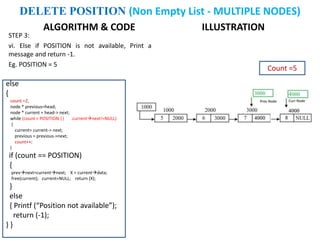
STEP 3:
vi. Else if POSITION is not available, Print a
message and return -1.
Eg. POSITION = 5
ILLUSTRATION
else
{
count =2,
node * previous=head;
node * current = head-> next;
while (count < POSITION || currentnext!=NULL)
{
current= current-> next;
previous = previous->next;
count++;
}
if (count == POSITION)
{
prevnext=currentnext; X = currentdata;
free(current); current=NULL; return (X);
}
else
{ Printf (“Position not available”);
return (-1);
} }
DELETE POSITION (Non Empty List - MULTIPLE NODES)
ALGORITHM & CODE
Count =5
END OF
DELETION OPERATIONS
PRINT THE LIST

1. 4 Singly linked list deletion

  • 1.
    DATA STRUCTURES Dr. P.Subathra Professor Dept. of Information Technology KAMARAJ College of Engineering & Technology
  • 2.
    CS8391 – DATASTRUCTURES ONLINE CLASSES – CLASS NO. 4 21.08.2020 (10:00 AM – 11:00 AM & 11:30 AM – 12:30 PM)
  • 3.
  • 4.
  • 5.
    HEAP 1001 1002 10031004 1005 1006 1007 1008 1009 1010 1011 1012 1013 1014 1015 1016 1017 1018 1019 1020 1021 1022 1023 1024 1025 1026 1027 1028 1029 1030 1031 1032 1033 1034 1035 1036 1037 1038 1039 1040 1041 1042 1043 1044 1045 1046 1047 1048 1049 1050 LOOK CLOSER……
  • 6.
    HEAP 1001 1002 10031004 1005 1006 1007 1008 1009 1010 1011 1012 1013 1014 1015 1016 1017 1018 1019 1020 1021 1022 1023 1024 1025 1026 1027 1028 1029 1030 1031 1032 1033 1034 1035 1036 1037 1038 1039 1040 1041 1042 1043 1044 1045 1046 1047 1048 1049 1050 LOOK CLOSER……
  • 7.
    1001 1002 10031004 1005 1006 1007 1008 1009 1010 1011 1012 1013 1014 1015 1016 1017 1018 1019 1020 1021 1022 1023 1024 1025 1026 1027 1028 1029 1030 1031 1032 1033 1034 1035 1036 1037 1038 1039 1040 1041 1042 1043 1044 1045 1046 1047 1048 1049 1050 HEAP
  • 8.
    1001 1002 10031004 1005 1006 1007 1008 1009 1010 1011 1012 1013 1014 1015 1016 1017 1018 1019 1020 1021 1022 1023 1024 1025 1026 1027 1028 1029 1030 1031 1032 1033 1034 1035 1036 1037 1038 1039 1040 1041 1042 1043 1044 1045 1046 1047 1048 1049 1050 HEAP
  • 9.
    1001 1002 10031004 1005 1006 1007 1008 1009 1010 1011 1012 1013 1014 1015 1016 1017 1018 1019 1020 1021 1022 1023 1024 1025 1026 1027 1028 1029 1030 1031 1032 1033 1034 1035 1036 1037 1038 1039 1040 1041 1042 1043 1044 1045 1046 1047 1048 1049 1050 HEAP
  • 10.
    1001 1002 10031004 1005 1006 1007 1008 1009 1010 1011 1012 1013 1014 1015 1016 1017 1018 1019 1020 1021 1022 1023 1024 1025 1026 1027 1028 1029 1030 1031 1032 1033 1034 1035 1036 1037 1038 1039 1040 1041 1042 1043 1044 1045 1046 1047 1048 1049 1050 HEAP
  • 11.
    1001 1002 10031004 1005 1006 1007 1008 1009 1010 1011 1012 1013 1014 1015 1016 1017 1018 1019 1020 1021 1022 1023 1024 1025 1026 1027 1028 1029 1030 1031 1032 1033 1034 1035 1036 1037 1038 1039 1040 1041 1042 1043 1044 1045 1046 1047 1048 1049 1050 HEAP
  • 12.
    1001 1002 10031004 1005 1006 1007 1008 1009 1010 1011 1012 1013 1014 1015 1016 1017 1018 1019 1020 1021 1022 1023 1024 1025 1026 1027 1028 1029 1030 1031 1032 1033 1034 1035 1036 1037 1038 1039 1040 1041 1042 1043 1044 1045 1046 1047 1048 1049 1050 free() HEAP
  • 13.
    Operations on aSingly Linked List • Creating a new list • Insertion - at the beginning - at the end - after and element - before an element • Deletion - at the beginning - at the end - a given element - at a position • Display • Search Element • Reverse List • Sort List • Find Duplicates • ………………
  • 14.
  • 15.
    ALGORITHM Step 1 :Check if the list is empty, if so, display a message and exit Step 2: Else, store the data value of the first nodes in a variable for returning. Step 3 : Make the header to point to the next field of the first node. Step 4 : Delete the first node to free the memory occupied by it. SAME ALGORITHM WORKS • Case 1 – Delete from an Empty List • Case 2 – Delete from a Non Empty List DELETE FIRST
  • 16.
    ALGORITHM & CODE Step1 : Check if the list is empty, if so, display a message and exit ILLUSTRATION DELETE FIRST (Empty List) If (head == NULL) { printf(“Empty List, ignore the return value”); return (-999); }
  • 17.
    ALGORITHM & CODE Step2: Else, store the data value of the first nodes in a variable for returning. Step 3 : Make the header to point to the next field of the first node. ILLUSTRATION DELETE FIRST : Non Empty List (Single Node) else { // X is an integer variable X= headdata; head=headnext return (X); } Empty list 5X
  • 18.
    1001 1002 10031004 1005 1006 1007 1008 1009 1010 1011 1012 1013 1014 1015 1016 1017 1018 1019 1020 1021 1022 1023 1024 1025 1026 1027 1028 1029 1030 1031 1032 1033 1034 1035 1036 1037 1038 1039 1040 1041 1042 1043 1044 1045 1046 1047 1048 1049 1050 HEAP
  • 19.
    ALGORITHM & CODE Step2: Else, store the data value of the first nodes in a variable for returning. Step 3 : Make the header to point to the next field of the first node. Step 4 : Delete the first node to free the memory occupied by it. ILLUSTRATION else { X= headdata; // X is an integer variable node * temp = head; head=headnext; free(temp); temp=NULL; return (X); } Empty list 5 X temp 1000 NULL temp DELETE FIRST : Non Empty List (Single Node)
  • 20.
    1001 1002 10031004 1005 1006 1007 1008 1009 1010 1011 1012 1013 1014 1015 1016 1017 1018 1019 1020 1021 1022 1023 1024 1025 1026 1027 1028 1029 1030 1031 1032 1033 1034 1035 1036 1037 1038 1039 1040 1041 1042 1043 1044 1045 1046 1047 1048 1049 1050 HEAP 1036 temp
  • 21.
    1001 1002 10031004 1005 1006 1007 1008 1009 1010 1011 1012 1013 1014 1015 1016 1017 1018 1019 1020 1021 1022 1023 1024 1025 1026 1027 1028 1029 1030 1031 1032 1033 1034 1035 1036 1037 1038 1039 1040 1041 1042 1043 1044 1045 1046 1047 1048 1049 1050 HEAP 1036 temp NULL
  • 22.
    ALGORITHM & CODE Step2: Else, store the data value of the first nodes in a variable for returning. Step 3 : Make the header to point to the next field of the first node. Step 4 : Delete the first node to free the memory occupied by it. ILLUSTRATION DELETE FIRST : Non Empty List (Multiple Nodes) else { X= headdata; // X is an integer variable node * temp = head; head=headnext; free(temp); temp=NULL; return (X); } 5 X temp 1000 NULL temp
  • 23.
  • 24.
    DELETE LAST Step 1: Check if the list is empty, if so, display a message and exit Step 2: Else, if only one node available in the list, store the data value of that nodes in a variable for returning. Step 3 : Make the header NULL Step 4 : Delete the first node to free the memory occupied by it. SAME ALGORITHM WORKS • Case 1 – Delete an Empty List • Case 2 – Delete from a Non Empty List Operations on a Singly Linked List
  • 25.
    ALGORITHM & CODE Step1 : Check if the list is empty, if so, display a message and exit ILLUSTRATION DELETE LAST : Empty List If (head == NULL) { printf(“Empty List, ignore the return value”); return (-999); }
  • 26.
    ALGORITHM & CODE Step2: (i) Else, IF ONLY ONE NODE is in the list, store the data value of the first nodes in a variable for returning. (ii) Make the header to point to the next field of the first node. (iii) Delete the first node to free the memory occupied by it. ILLUSTRATION DELETE LAST (Non Empty List - Single Node) else if (headnext==NULL) { X= headdata; // X is an integer variable node * temp = head; head=headnext; free(temp); temp=NULL; return (X); } Empty list 5 X temp 1000 NULL temp
  • 27.
    ALGORITHM & CODE Step3: (i) Else, traverse till the last node keeping track of the previous node. (Eg. 8) ILLUSTRATION else { node * previous=head; node * current = head-> next; while (current->next!=NULL) { current= current-> next; previous = previous->next; } } DELETE LAST: (MULTIPLE NODES)
  • 28.
    ALGORITHM & CODE STEP3: ii. Store the value pointed by CURRENT in a variable for returning. iii. Make NEXT field of PREVIOUS node to be NULL iv. Free the memory occupied by the last node. ILLUSTRATION DELETE LAST (MULTIPLE NODES) else { node * previous=head; node * current = head-> next; while (current->data! = element || current->next!=NULL) { current= current-> next; previous = previous->next; } X = currentdata; previousnext =NULL; free(current); current=NULL; } 8X NULL NULL
  • 29.
  • 30.
    ALGORITHM & CODE Step1 : Check if the list is empty, if so, display a message and exit ILLUSTRATION DELETE ELEMENT (Empty List) If (head == NULL) { printf(“Empty List, Element not available ignore the return value”); return (-1); }
  • 31.
    ALGORITHM & CODE Step2: Else, IF ONLY ONE NODE is in the list (i) If header data is the search element, Make header=NULL (ii) Else print message “Element not available” ILLUSTRATION DELETE ELEMENT (Non Empty List - Single Node) else if (headnext==NULL) { if(headdata==searchElement) { node * temp=head; head=NULL; free(temp); temp=NULL; return(1); } else{ Printf(“Element not available”); return(-1); } Empty list 5 Search Element temp 1000 NULL temp
  • 32.
    ALGORITHM & CODE STEP3: iii. Else Traverse the list until the specified node is reached or End of List is reached. While traversing, keep track of the previous node also. Let searchElement = 7 ILLUSTRATION else { node * previous=head; node * current = head-> next; while (current->data! = searchElement || currentnext!=NULL) { current= current-> next; previous = previous->next; } } DELETE ELEMENT (Non Empty List - MULTIPLE NODES)
  • 33.
    ALGORITHM & CODE STEP3: iii. Else Traverse the list until the specified node is reached or End of List is reached. While traversing, keep track of the previous node also. Let searchElement = 7 ILLUSTRATION else { node * previous=head; node * current = head-> next; while (current->data! = searchElement || current->next!=NULL) { current= current-> next; previous = previous->next; } prevnext=currentnext; free(current); current=NULL; } DELETE ELEMENT(Non Empty List - MULTIPLE NODES) NULL
  • 34.
    ALGORITHM & CODE STEP3: iii. Else Traverse the list until the specified node is reached or End of List is reached. While traversing, keep track of the previous node also. Let searchElement = 7 ILLUSTRATION else { node * previous=head; node * current = head-> next; while (current->data! = searchElement || currentnext!=NULL) { current= current-> next; previous = previous->next; } } DELETE ELEMENT (Non Empty List - MULTIPLE NODES) NULL NULL
  • 35.
    ALGORITHM & CODE STEP3: iii. Else Traverse the list until the specified node is reached or End of List is reached. While traversing, keep track of the previous node also. Let searchElement = 7 ILLUSTRATION else { node * previous=head; node * current = head-> next; while (current->data! = searchElement || current->next!=NULL) { current= current-> next; previous = previous->next; } prevnext=currentnext; free(current); current=NULL; } DELETE ELEMENT(Non Empty List - MULTIPLE NODES) NULL NULL NULL NULL
  • 36.
  • 37.
    ALGORITHM & CODE Step1 : Check if the list is empty, if so, display a message and exit ILLUSTRATION DELETE POSITION (Empty List) If (head == NULL) { printf(“Empty List, Element not available ignore the return value”); return (-1); }
  • 38.
    ALGORITHM & CODEILLUSTRATION DELETE POSITION (Non Empty List - Single Node) else if (k == 1) { node * temp=head; int X = headdata; head= headnext; free(temp); temp=NULL; return(X); } Empty list 5 Element at Position 1000 tempX Step 2: Let k = POSITION Else if (k== 1) (i) Store the element of the first node to return (ii) Make header to point to the second node (iii) Free the memory occupied by first node 1000 temp NULL NULL
  • 39.
    ALGORITHM & CODE Step2: Let k = POSITION Else if (k== 1) (i) Store the element of the first node to return (ii) Make header to point to the second node (iii) Free the memory occupied by first node ILLUSTRATION DELETE POSITION (Non Empty List -Multiple Nodes) else if (k == 1) { node * temp=head; int X = headdata; head= headnext; free(temp); temp=NULL; return(X); } 5 1000 X temp temp NULL
  • 40.
    ALGORITHM & CODE STEP3: iii. Else Traverse the list until the specified POSITION is reached or End of List is reached. While traversing, keep track of the previous node also. Let, POSITION =3 ILLUSTRATION else { count =2, node * previous=head; node * current = head-> next; while (count < POSITION || currentnext!=NULL) { current= current-> next; previous = previous->next; count++; } } DELETE POSITION (Non Empty List - MULTIPLE NODES) Count =2 Count =3
  • 41.
    STEP 3: iv. Ifposition is a valid position, store the value of that node for returning v. Make the previous node to point to the POSITION node’s next pointer value ILLUSTRATION else { count =2, node * previous=head; node * current = head-> next; while (count < POSITION || currentnext!=NULL) { current= current-> next; previous = previous->next; count++; } if (count == POSITION) { prevnext=currentnext; X = currentdata; free(current); current=NULL; return (X); } } DELETE POSITION (Non Empty List - MULTIPLE NODES) NULL ALGORITHM & CODE
  • 42.
    STEP 3: vi. Elseif POSITION is not available, Print a message and return -1. Eg. POSITION = 5 ILLUSTRATION else { count =2, node * previous=head; node * current = head-> next; while (count < POSITION || currentnext!=NULL) { current= current-> next; previous = previous->next; count++; } if (count == POSITION) { prevnext=currentnext; X = currentdata; free(current); current=NULL; return (X); } else { Printf (“Position not available”); return (-1); } } DELETE POSITION (Non Empty List - MULTIPLE NODES) ALGORITHM & CODE Count =5
  • 43.
  • 44.