The Planning Function
Steps in Planning
Why Do We Plan?
 We plan because we want to avoid failures and
uncertainty
 The better the planning, the more chances for
success
 Common sayings about planning:
 “Think before you speak”
 “Look before you leap”
 “Think 100 times, cut once”
 “Proper planning prevent poor performance” 5Ps
 “Poor planning produces poor performance”
How things should be done?
Thinking
Before
Doing
Doing the
Things
Evaluating
What we did
F e e d b a c k
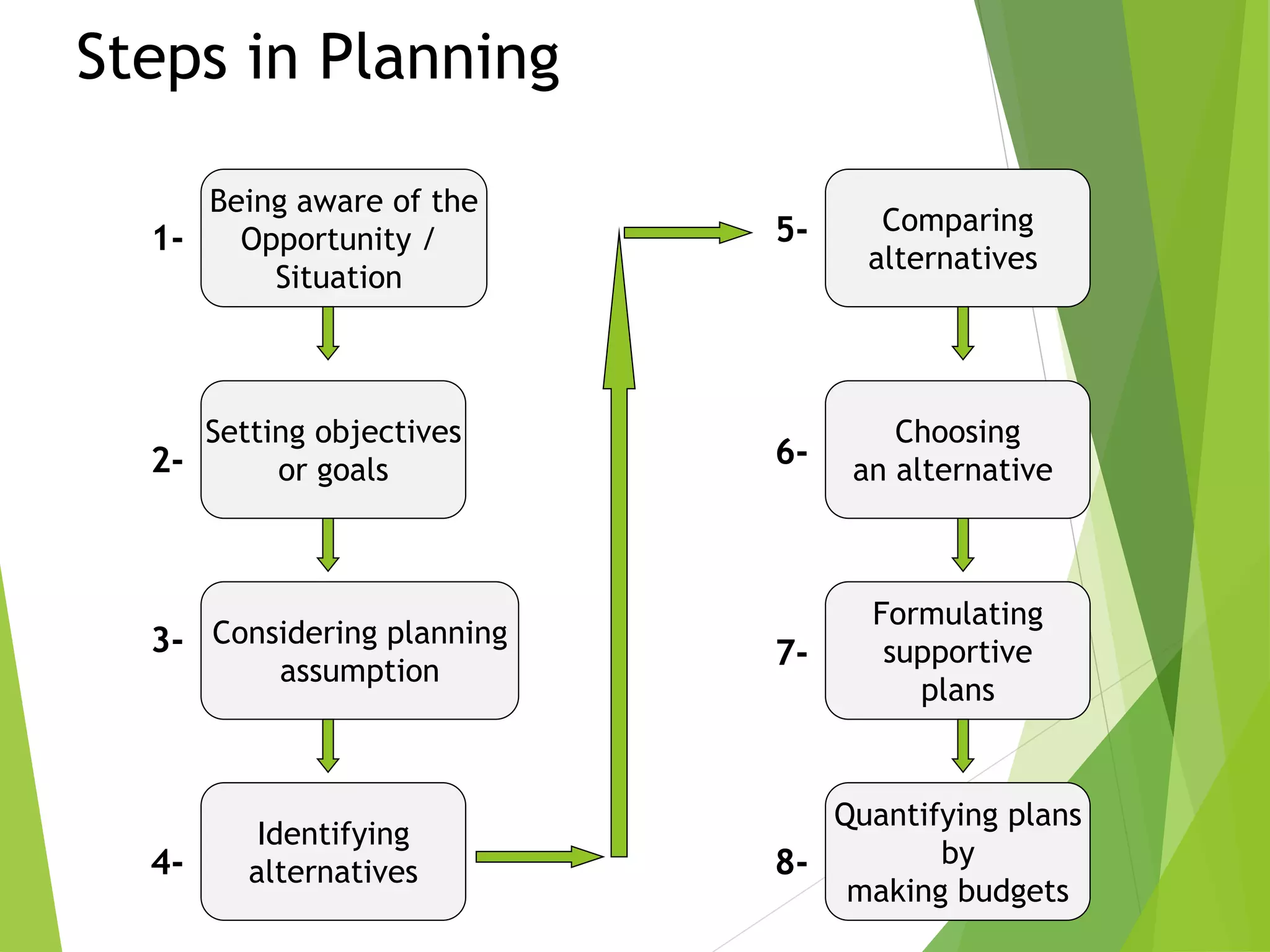
Steps in Planning
Being aware of the
Opportunity /
Situation
Setting objectives
or goals
Considering planning
assumption
Identifying
alternatives
Comparing
alternatives
Choosing
an alternative
Formulating
supportive
plans
Quantifying plans
by
making budgets
1-
2-
3-
5-
4- 8-
7-
6-
1- Being Aware of Opportunities
 Opportunity is an unmet need or an area of
dissatisfaction
 One person’s need is an opportunity for another
person
 It already exists in the external environment
 We need to do some research to find the
opportunities
Being Aware of Opportunities
 We do research in light of:
 The market
 Competition
 Customer wants
 Our strengths and weaknesses (SWOT analysis)
 While planning you must consider the social, political and
economical conditions of your environment
2- Setting Objectives or Goals
 Where we want to be and what we want to
achieve and when (SMART objectives)
 Objectives may be long term or short term
 Objectives or Goals may be set at all levels
 In light of the organization’s objectives, we can
define objectives for the departments and units
we are working in
Setting SMART Objectives
 To make a
reasonable profit
 To improve
communication
 To increase
productivity
 To develop
better managers
 To achieve an ROI of 12% at
the end of this year
 To start a monthly
newsletter from Nov 1st
 To increase output by 5% by
Dec 31without increasing the
current cost of production
 To design and conduct a
training course on leadership
skills for all front line
managers by Nov 31
Levels of Goals
Strategic
goals
Tactical Goals
Operational Goals
Top Management
Middle management
Low levelMgt
Strategic, tactical and Operational goals
 Strategic Goals are linked to the strategic
planning of the organization and mark the future
that is expected for the company in the next 5 or
10 years.
 Tactical Goals or planning is an action plan to be
undertaken within 1-3 years and must be fully
aligned with strategic planning.
 Operational Goals are closely linked to the
processes and operation of the company as a
whole. These are assigned to people, that he or
she actively contributes to the organization’s
strategic objectives.
3- Considering Planning Premises
 Premises are assumptions about the environment
in which the plan is to be carried out
 In what environment internal or external will our
plans operate?
 Forecasting is important in premising i.e. what
kinds of market will there be?, what products?,
what new machines, skills and technology? etc.
4- Identifying Alternatives
 Looking for all the available alternatives
 Also search for alternatives which are not
apparent at first sight
 Reducing the number of alternatives
 Finding out the most promising alternatives
to accomplish our plans
5- Comparing Alternatives
 After short listing the alternatives, we
evaluate the selected alternatives in light
of the organizational objectives and
planning premises
 Every alternative may have its own
strengths and weaknesses
6- Choosing an Alternative
 This is the point of decision making
 We chose the alternative which is most
relevant to the organizational objectives,
require less resources and bears minimum risk
 Sometimes, more than one courses of action
can be adopted at the same time
7- Formulating Supportive Plans
 Planning does not completes with choosing the
best alternative only
 We need to formulate supportive plans to
arrange resources for turning our main plans into
actions
 Example of supportive plans could be planning
for traveling arrangements, planning for
acquiring financial resources etc.
8- Quantifying Plans by Making Budgets
 Budget is a quantified plan
 It is a written statement of what sales volume we
expect, how much to spend on purchase of
equipment, what will be operating expenses,
human resource cost and other expenses
 Budget also tells us what profits we are expecting
at the end of operation
 Each department or unit can make its own budgets
in accordance with the corporate budget

04- Steps in Planning.ppt

  • 1.
  • 2.
    Why Do WePlan?  We plan because we want to avoid failures and uncertainty  The better the planning, the more chances for success  Common sayings about planning:  “Think before you speak”  “Look before you leap”  “Think 100 times, cut once”  “Proper planning prevent poor performance” 5Ps  “Poor planning produces poor performance”
  • 3.
    How things shouldbe done? Thinking Before Doing Doing the Things Evaluating What we did F e e d b a c k
  • 4.
    Steps in Planning Beingaware of the Opportunity / Situation Setting objectives or goals Considering planning assumption Identifying alternatives Comparing alternatives Choosing an alternative Formulating supportive plans Quantifying plans by making budgets 1- 2- 3- 5- 4- 8- 7- 6-
  • 5.
    1- Being Awareof Opportunities  Opportunity is an unmet need or an area of dissatisfaction  One person’s need is an opportunity for another person  It already exists in the external environment  We need to do some research to find the opportunities
  • 6.
    Being Aware ofOpportunities  We do research in light of:  The market  Competition  Customer wants  Our strengths and weaknesses (SWOT analysis)  While planning you must consider the social, political and economical conditions of your environment
  • 7.
    2- Setting Objectivesor Goals  Where we want to be and what we want to achieve and when (SMART objectives)  Objectives may be long term or short term  Objectives or Goals may be set at all levels  In light of the organization’s objectives, we can define objectives for the departments and units we are working in
  • 8.
    Setting SMART Objectives To make a reasonable profit  To improve communication  To increase productivity  To develop better managers  To achieve an ROI of 12% at the end of this year  To start a monthly newsletter from Nov 1st  To increase output by 5% by Dec 31without increasing the current cost of production  To design and conduct a training course on leadership skills for all front line managers by Nov 31
  • 9.
    Levels of Goals Strategic goals TacticalGoals Operational Goals Top Management Middle management Low levelMgt
  • 10.
    Strategic, tactical andOperational goals  Strategic Goals are linked to the strategic planning of the organization and mark the future that is expected for the company in the next 5 or 10 years.  Tactical Goals or planning is an action plan to be undertaken within 1-3 years and must be fully aligned with strategic planning.  Operational Goals are closely linked to the processes and operation of the company as a whole. These are assigned to people, that he or she actively contributes to the organization’s strategic objectives.
  • 11.
    3- Considering PlanningPremises  Premises are assumptions about the environment in which the plan is to be carried out  In what environment internal or external will our plans operate?  Forecasting is important in premising i.e. what kinds of market will there be?, what products?, what new machines, skills and technology? etc.
  • 12.
    4- Identifying Alternatives Looking for all the available alternatives  Also search for alternatives which are not apparent at first sight  Reducing the number of alternatives  Finding out the most promising alternatives to accomplish our plans
  • 13.
    5- Comparing Alternatives After short listing the alternatives, we evaluate the selected alternatives in light of the organizational objectives and planning premises  Every alternative may have its own strengths and weaknesses
  • 14.
    6- Choosing anAlternative  This is the point of decision making  We chose the alternative which is most relevant to the organizational objectives, require less resources and bears minimum risk  Sometimes, more than one courses of action can be adopted at the same time
  • 15.
    7- Formulating SupportivePlans  Planning does not completes with choosing the best alternative only  We need to formulate supportive plans to arrange resources for turning our main plans into actions  Example of supportive plans could be planning for traveling arrangements, planning for acquiring financial resources etc.
  • 16.
    8- Quantifying Plansby Making Budgets  Budget is a quantified plan  It is a written statement of what sales volume we expect, how much to spend on purchase of equipment, what will be operating expenses, human resource cost and other expenses  Budget also tells us what profits we are expecting at the end of operation  Each department or unit can make its own budgets in accordance with the corporate budget