Downloaded 21 times


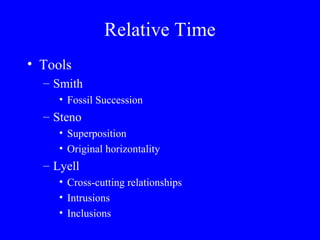





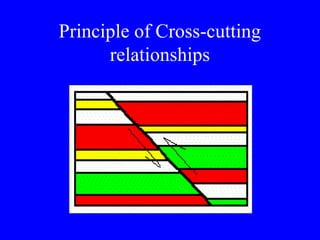

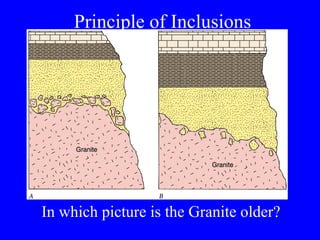



















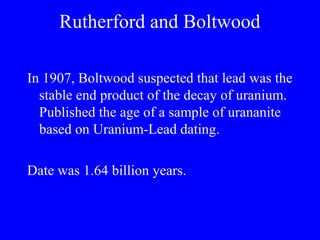


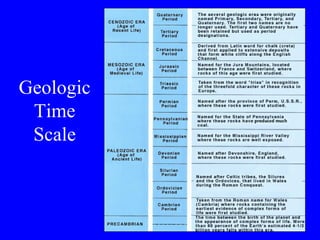






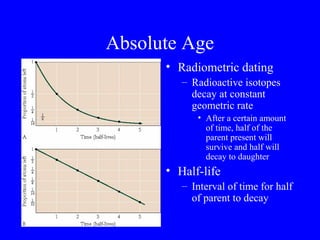






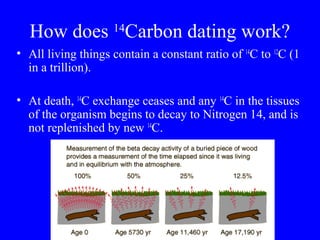
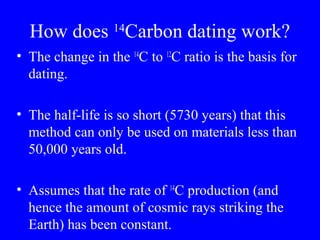
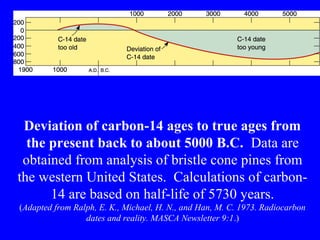
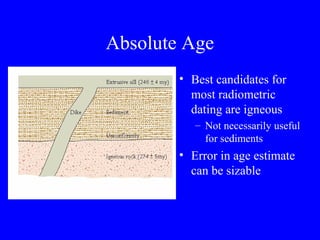

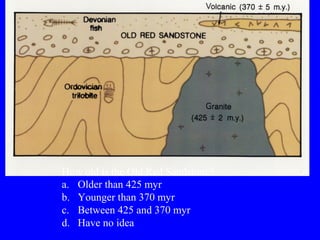

Geologic time can be determined through both relative and absolute dating methods. Relative dating relies on principles like fossil succession, cross-cutting relationships, and inclusions to determine the sequence of geological events. Absolute dating uses radioactive isotopes and their known decay rates to quantify the ages of rocks and fossils in numerical years. The development of radiometric dating techniques in the early 20th century revealed that the Earth is approximately 4.6 billion years old, much older than previously thought.


