Organizational Strategies
and The Sales Function
Module Three
Organizational Strategy Levels
Corporate Strategy
Development Process
• Analyze corporate performance and
identify opportunities and threats
• Determine corporate mission and objectives
• Define strategic business units
• Set objectives for each strategic business
unit
Strategic Business Units (SBUs)
Cravens (1991)
An SBU is a single product or brand, a
line of products, or a mix of related
products that meets a common market
need or a group of related needs, and the
unit's management is responsible for all
(or most) of the basic business
functions."
Dilemma
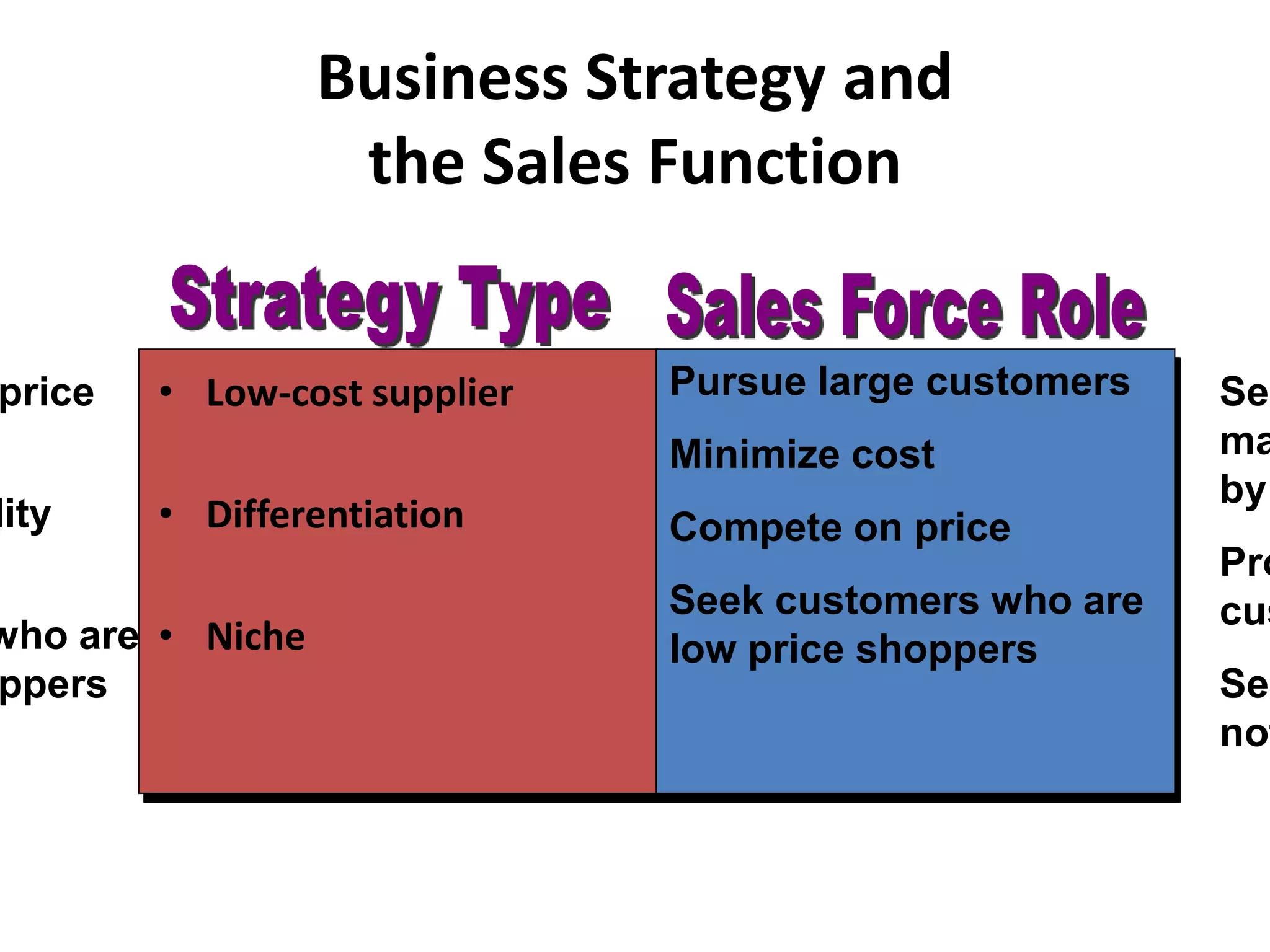
Business Strategy and
the Sales Function
• Low-cost supplier
• Differentiation
• Niche
Pursue large customers
Minimize cost
Compete on price
Seek customers who are
low price shoppers
price
lity
who are
ppers
Ser
ma
by
Pro
cus
See
not
Personal Selling-Driven vs. Advertising-Driven
Marketing Communications Strategies
When Message Flexibility is Important
When Message Timing is Important
When Reaction Speed is Important
When Message Credibility is Important
When Trying to Close the Sale
When Low Cost per Contact is Important
When Repetitive Contact is Important
When Control of Message is Important
When Audience is Large
Personal Selling
Advertising
Target Market Situations and
Personal Selling
Target Market:
A definition of the specific market segment to be served
Personal Selling-Driven Promotional Strategies are
appropriate when:
– The market consists of only a few buyers that tend to be
concentrated in location
– The buyer needs a great deal of information
– The purchase is important
– The product is complex
– Service after the sale is important
Integrated Marketing
Communications
The strategic integration of multiple
marketing communications tools
communicating a consistent
message in the most effective and
efficient manner.
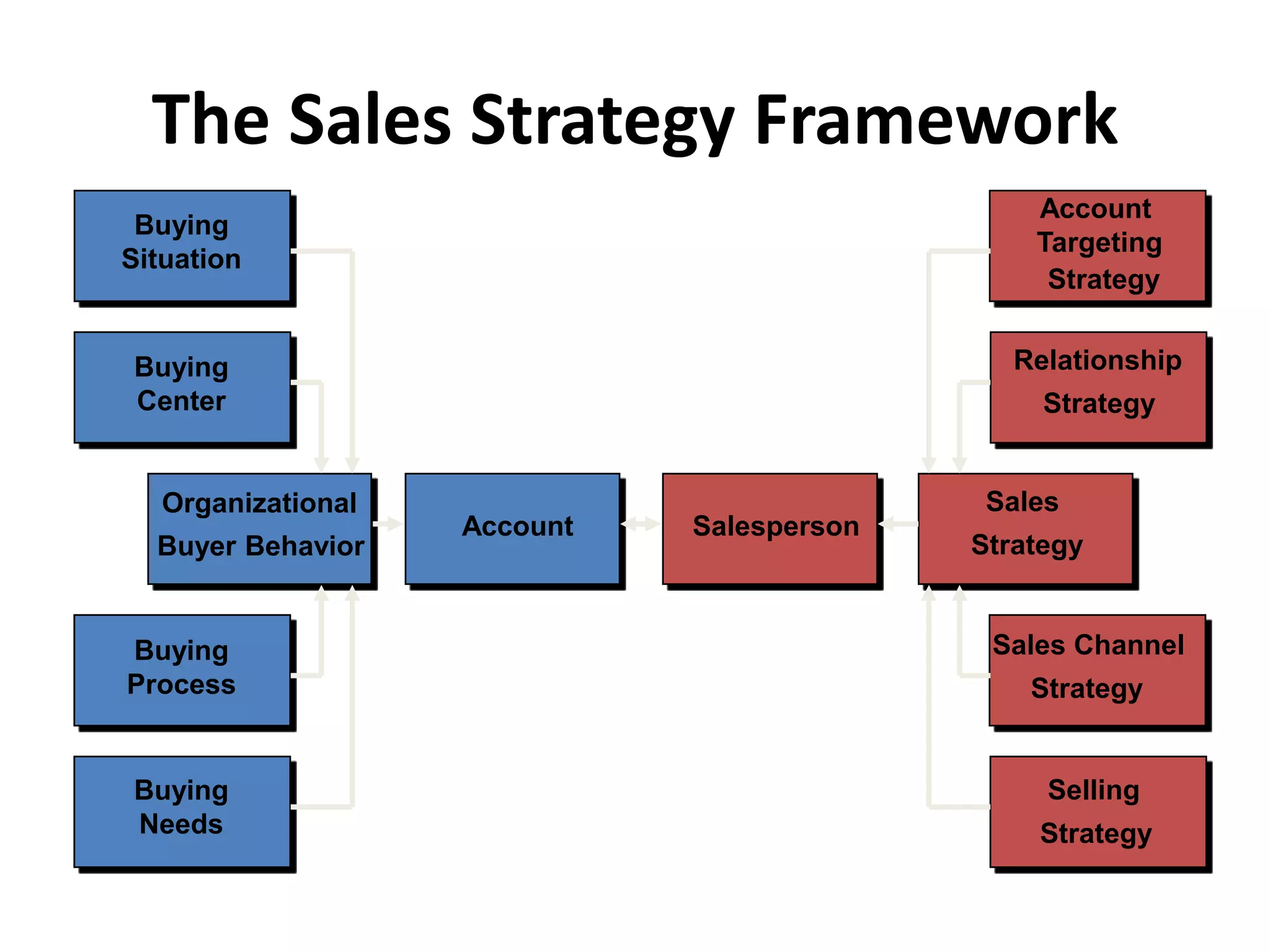
Buying
Situation
Buying
Center
Organizational
Buyer Behavior
Account
Buying
Process
Buying
Needs
Account
Targeting
Strategy
Relationship
Strategy
Salesperson
Sales
Strategy
Sales Channel
Strategy
Selling
Strategy
The Sales Strategy Framework
Business or
Industrial
Organizations
Major Category Types
Users: purchase products
and services to produce
other products and services
Organizational Buyer Behavior:
Types of Organizations
Original Equipment
Manufacturers (OEM):
purchase products to
incorporate into products
Resellers: purchase
products to sell
Major Category Types
Government
Organizations
Federal, State, and
Local Government
Agencies
Organizational Buyer Behavior:
Types of Organizations
Public and
Private Institutions
Institutions
Organizational Buyer Behavior:
Buying Situations
Straight Rebuy Buying Situation
– Routinized Response Behavior
Modified Rebuy Buying Situation
– Limited Problem Solving
New Task Buying Situation
– Extensive Problem Solving
Organizational Buyer Behavior:
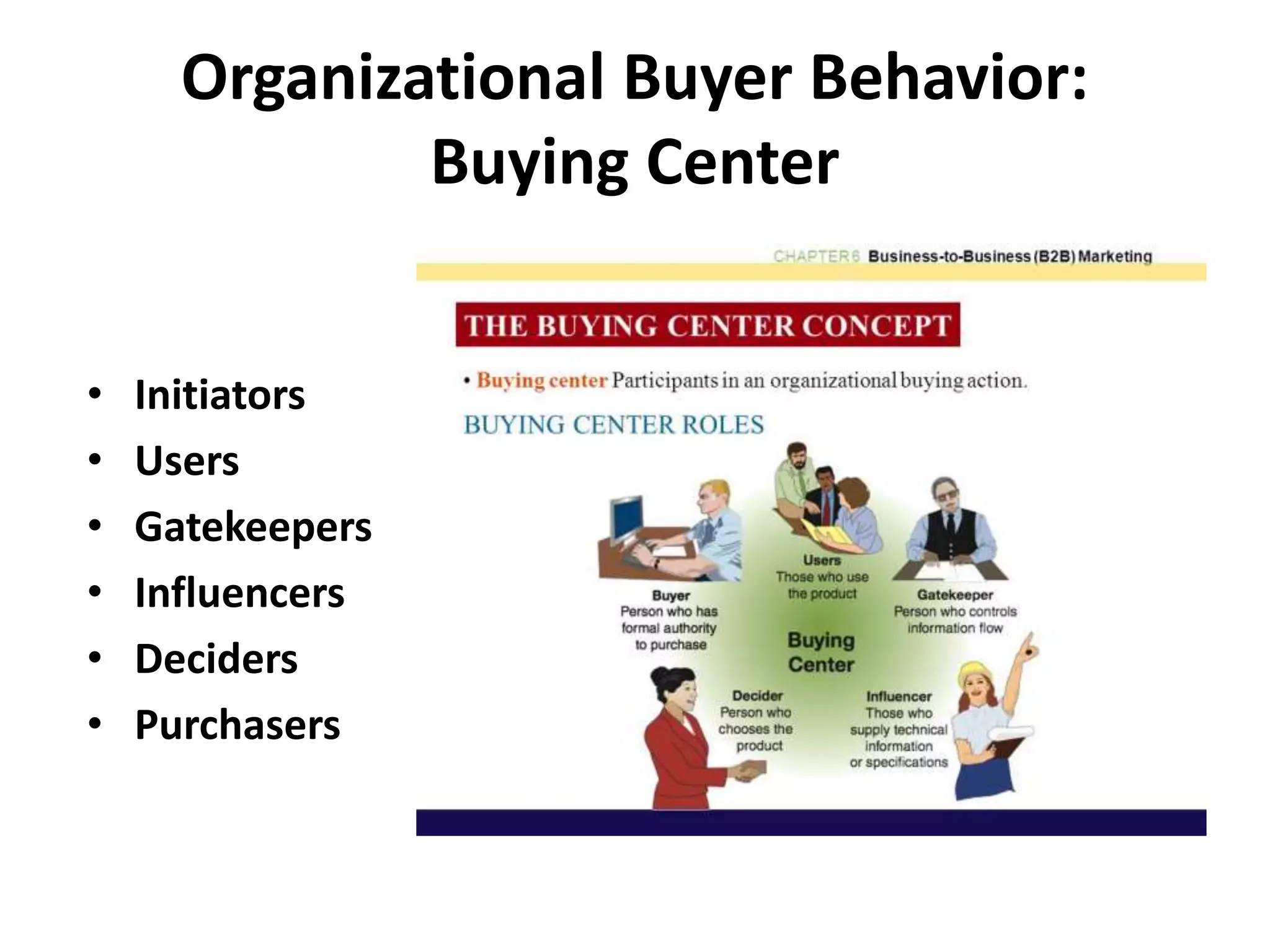
Buying Center
• Initiators
• Users
• Gatekeepers
• Influencers
• Deciders
• Purchasers
Organizational Buyer Behavior:
Buying Process
Phase 1: Recognize Problem/Need
Phase 2: Determine Item Specs/Quantity Needed
Phase 3: Specify Item Specs/Quantity Needed
Phase 4: Identify and Qualify Potential Sources
Phase 5: Acquire and Analyze Proposals
Phase 6: Evaluate Proposals/Select Suppliers
Phase 7: Selection of Order Routine
Phase 8: Performance Feedback/Evaluation
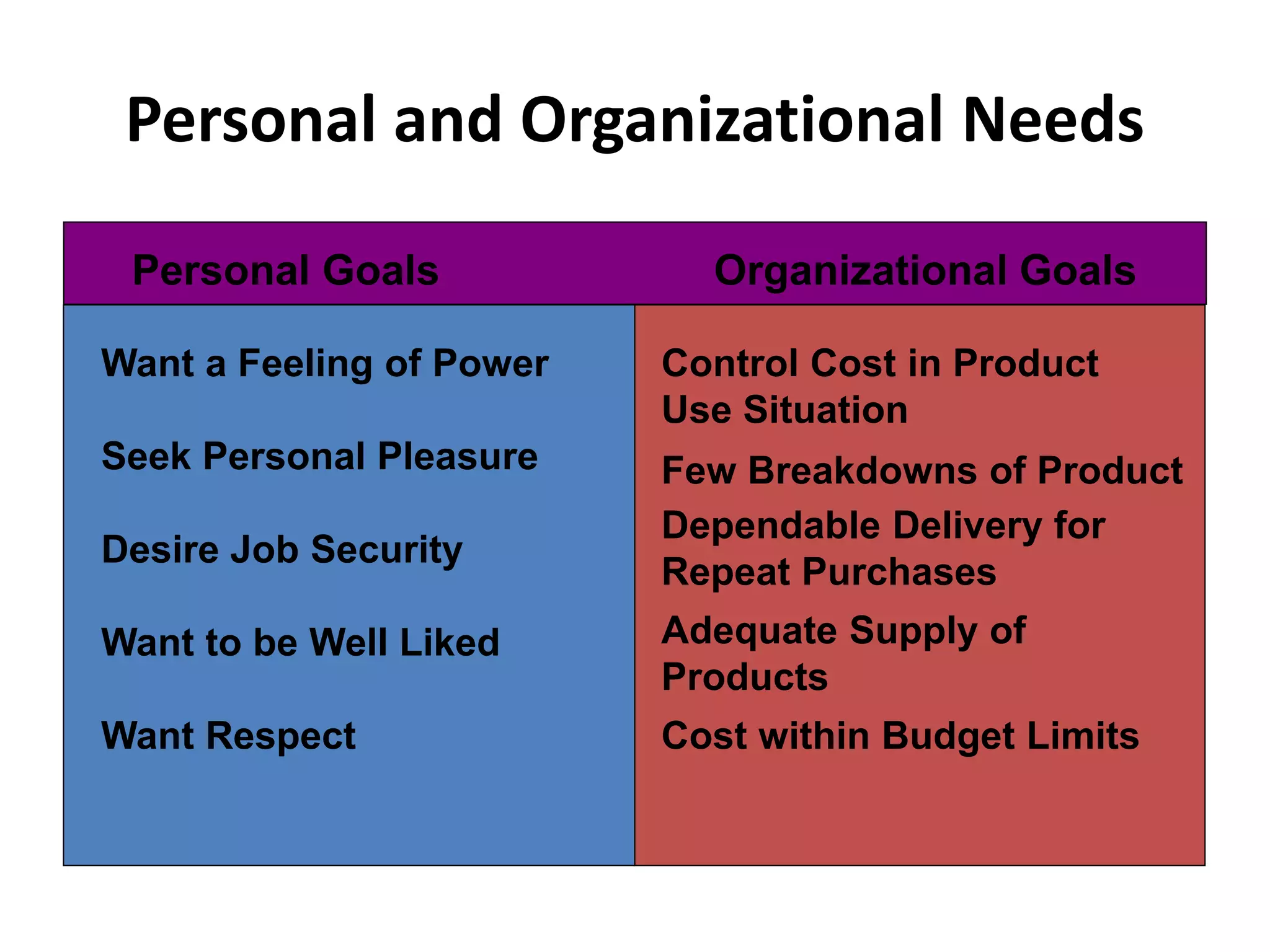
Control Cost in Product
Use Situation
Few Breakdowns of Product
Dependable Delivery for
Repeat Purchases
Adequate Supply of
Products
Cost within Budget Limits
Want a Feeling of Power
Seek Personal Pleasure
Desire Job Security
Want to be Well Liked
Want Respect
Personal Goals Organizational Goals
Personal and Organizational Needs
Sales Strategy:
Account-Targeting Strategy
The classification of accounts within
a target market into categories for
the purpose of developing strategic
approaches for selling to each account or
account group.
Sales Strategy:
Relationship Strategy
A determination of the type of relationship to
be developed with different account groups.
Transaction Solutions Partnership Collaborative
Characteristics of
Relationship Strategies
Goal Sell Products Add Value
Time
Frame
Short Long
Offering Standardized Customized
Number of
Customers
Many Few
Sales Strategy:
Selling Strategy
A planned selling approach for each relationship
strategy. Developing efficient and effective selling
strategies is an important sales management task.
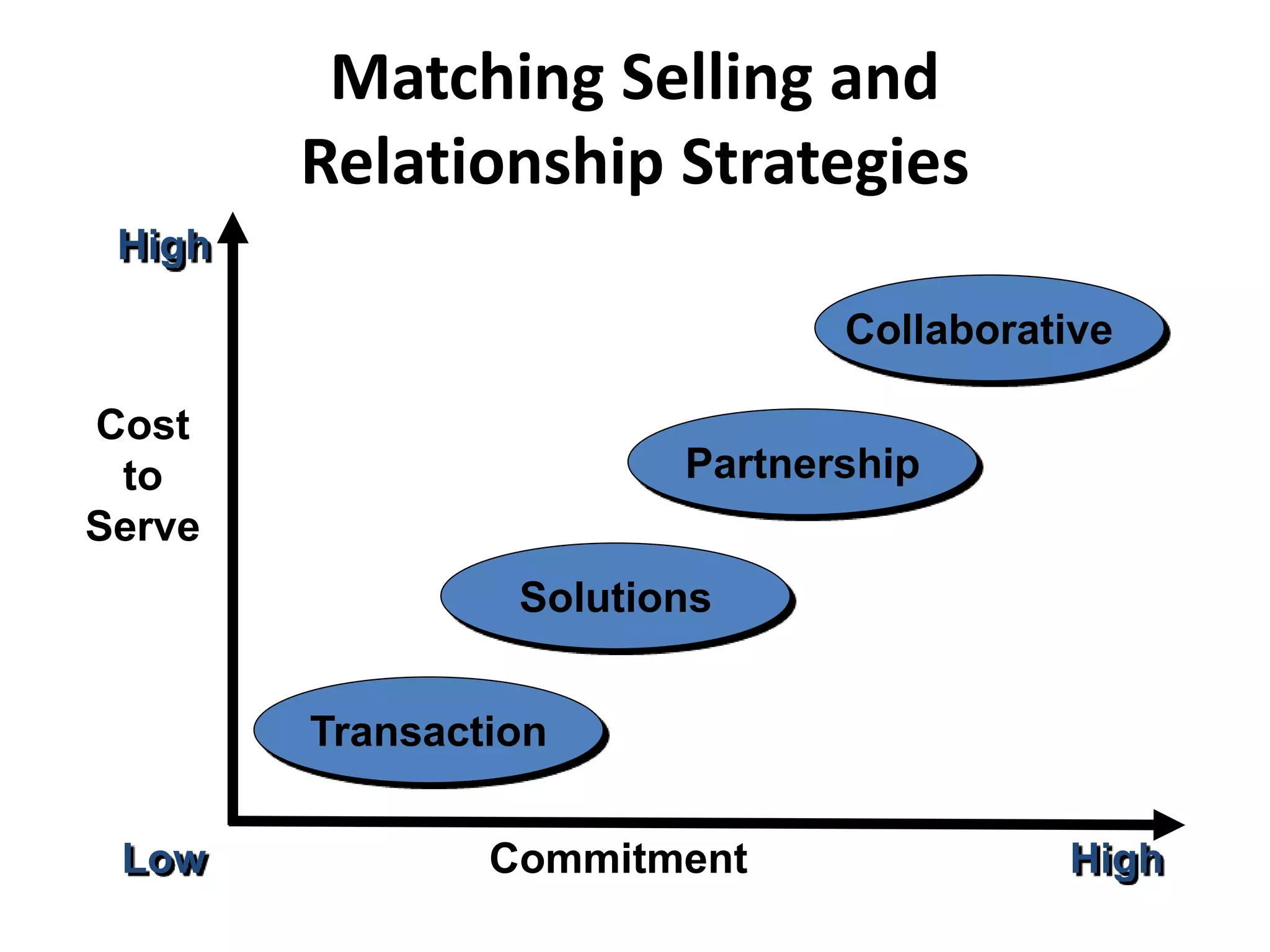
Matching Selling and
Relationship Strategies
Transaction
Solutions
Partnership
Collaborative
Commitment
Cost
to
Serve
High
High
Low
Sales Strategy:
Sales Channel Strategy
Ensuring that accounts receive selling effort
coverage in an effective and efficient manner.
Sales channel options include:
– The Internet
– Industrial Distributors
– Independent Representatives
– Team Selling
– Telemarketing
– Trade Shows
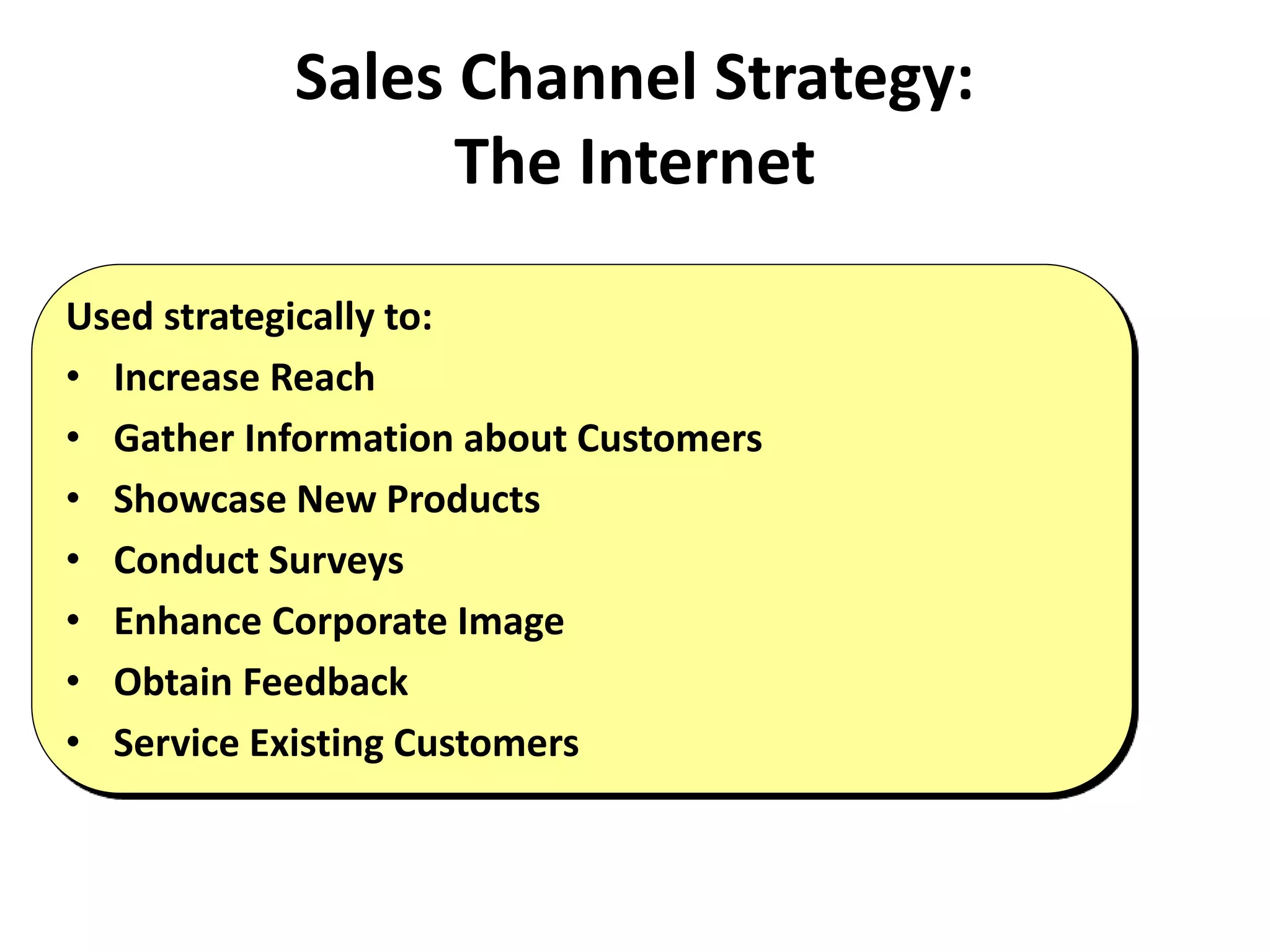
Sales Channel Strategy:
The Internet
Used strategically to:
• Increase Reach
• Gather Information about Customers
• Showcase New Products
• Conduct Surveys
• Enhance Corporate Image
• Obtain Feedback
• Service Existing Customers
Sales Channel Strategy:
Industrial Distributors
Essentially, channel intermediaries that:
• Have Their Own Sales Force
• May Represent One Manufacturer; Several
Non-competing Manufacturers; Several
Competing Manufacturers
• Take Title to the Goods and Normally Carry
Inventory
Sales Channel Strategy:
Independent or Manufacturers’ Reps
Outsourcing the selling effort to individuals or
organizations that:
• Sell complimentary products from non-competing
manufacturers.
• Do Not Take Title to the Goods or Carry Inventory
• Are Paid for Performance
• Have Control over the Selling Effort
• May Control Access to Customer Information
Sales Channel Strategy:
Team Selling
Multiple individuals from the selling organization working
together to develop and expand relationships with one or
more accounts. The salesperson typically coordinates the
team’s selling efforts.
Sales Channel Strategy:
Telemarketing
Using the telephone as a means of customer contact. This low-
cost method of customer relationship management may replace
field sales force for certain accounts. When integrated with field
sales force, activities include:
– Prospecting, Qualifying Leads, Conducting Surveys
– Taking Orders, Checking on Order Status, Handling Order
Problems
– Following Up for Repeat Business
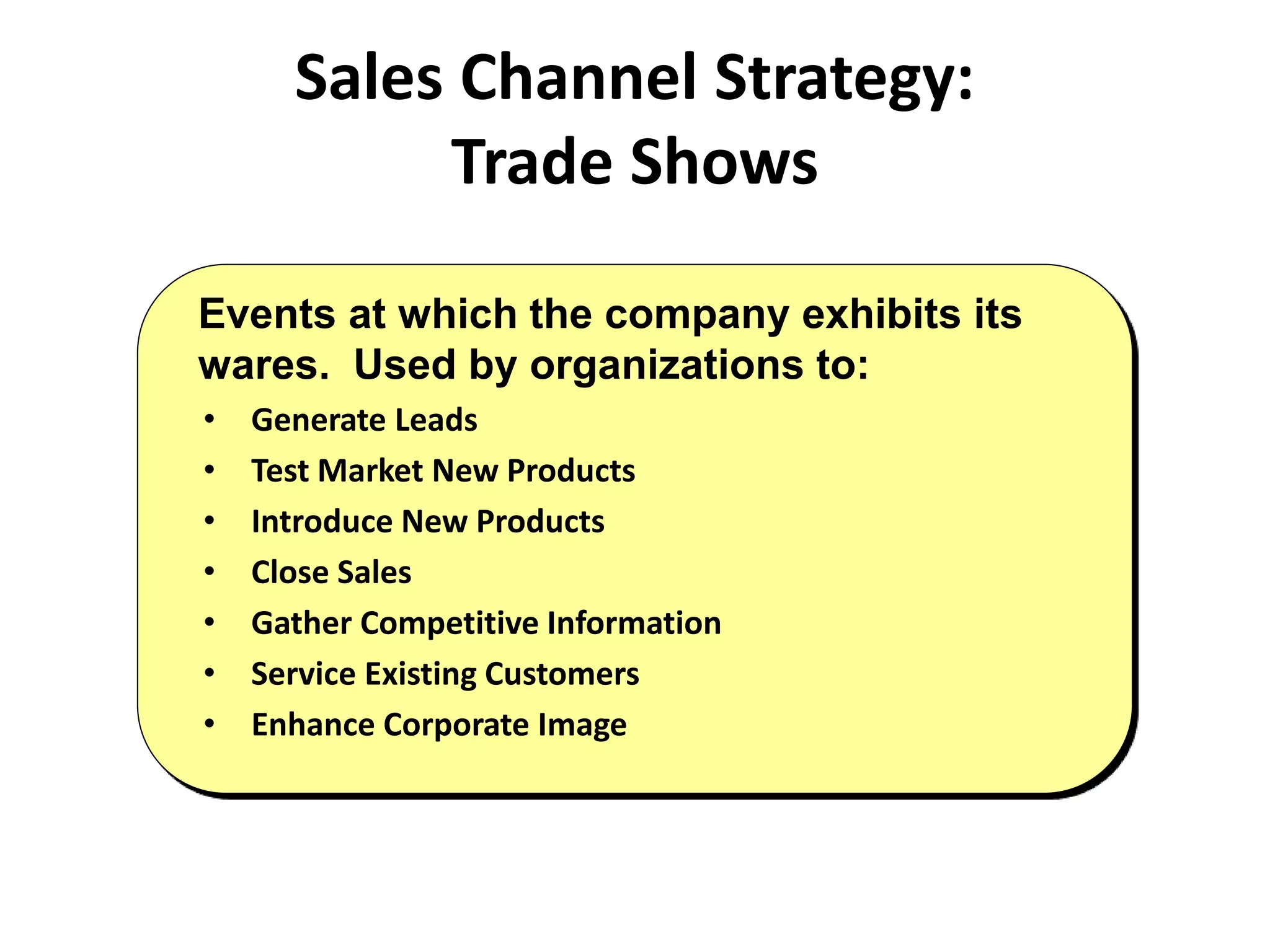
Sales Channel Strategy:
Trade Shows
• Generate Leads
• Test Market New Products
• Introduce New Products
• Close Sales
• Gather Competitive Information
• Service Existing Customers
• Enhance Corporate Image
Events at which the company exhibits its
wares. Used by organizations to:

03 6e Sale Management5 module03

  • 1.
    Organizational Strategies and TheSales Function Module Three
  • 2.
  • 3.
    Corporate Strategy Development Process •Analyze corporate performance and identify opportunities and threats • Determine corporate mission and objectives • Define strategic business units • Set objectives for each strategic business unit
  • 4.
    Strategic Business Units(SBUs) Cravens (1991) An SBU is a single product or brand, a line of products, or a mix of related products that meets a common market need or a group of related needs, and the unit's management is responsible for all (or most) of the basic business functions."
  • 6.
  • 7.
    Business Strategy and theSales Function • Low-cost supplier • Differentiation • Niche Pursue large customers Minimize cost Compete on price Seek customers who are low price shoppers price lity who are ppers Ser ma by Pro cus See not
  • 9.
    Personal Selling-Driven vs.Advertising-Driven Marketing Communications Strategies When Message Flexibility is Important When Message Timing is Important When Reaction Speed is Important When Message Credibility is Important When Trying to Close the Sale When Low Cost per Contact is Important When Repetitive Contact is Important When Control of Message is Important When Audience is Large Personal Selling Advertising
  • 10.
    Target Market Situationsand Personal Selling Target Market: A definition of the specific market segment to be served Personal Selling-Driven Promotional Strategies are appropriate when: – The market consists of only a few buyers that tend to be concentrated in location – The buyer needs a great deal of information – The purchase is important – The product is complex – Service after the sale is important
  • 11.
    Integrated Marketing Communications The strategicintegration of multiple marketing communications tools communicating a consistent message in the most effective and efficient manner.
  • 12.
  • 13.
    Business or Industrial Organizations Major CategoryTypes Users: purchase products and services to produce other products and services Organizational Buyer Behavior: Types of Organizations Original Equipment Manufacturers (OEM): purchase products to incorporate into products Resellers: purchase products to sell
  • 14.
    Major Category Types Government Organizations Federal,State, and Local Government Agencies Organizational Buyer Behavior: Types of Organizations Public and Private Institutions Institutions
  • 15.
    Organizational Buyer Behavior: BuyingSituations Straight Rebuy Buying Situation – Routinized Response Behavior Modified Rebuy Buying Situation – Limited Problem Solving New Task Buying Situation – Extensive Problem Solving
  • 16.
    Organizational Buyer Behavior: BuyingCenter • Initiators • Users • Gatekeepers • Influencers • Deciders • Purchasers
  • 17.
    Organizational Buyer Behavior: BuyingProcess Phase 1: Recognize Problem/Need Phase 2: Determine Item Specs/Quantity Needed Phase 3: Specify Item Specs/Quantity Needed Phase 4: Identify and Qualify Potential Sources Phase 5: Acquire and Analyze Proposals Phase 6: Evaluate Proposals/Select Suppliers Phase 7: Selection of Order Routine Phase 8: Performance Feedback/Evaluation
  • 18.
    Control Cost inProduct Use Situation Few Breakdowns of Product Dependable Delivery for Repeat Purchases Adequate Supply of Products Cost within Budget Limits Want a Feeling of Power Seek Personal Pleasure Desire Job Security Want to be Well Liked Want Respect Personal Goals Organizational Goals Personal and Organizational Needs
  • 19.
    Sales Strategy: Account-Targeting Strategy Theclassification of accounts within a target market into categories for the purpose of developing strategic approaches for selling to each account or account group.
  • 20.
    Sales Strategy: Relationship Strategy Adetermination of the type of relationship to be developed with different account groups.
  • 21.
    Transaction Solutions PartnershipCollaborative Characteristics of Relationship Strategies Goal Sell Products Add Value Time Frame Short Long Offering Standardized Customized Number of Customers Many Few
  • 22.
    Sales Strategy: Selling Strategy Aplanned selling approach for each relationship strategy. Developing efficient and effective selling strategies is an important sales management task.
  • 23.
    Matching Selling and RelationshipStrategies Transaction Solutions Partnership Collaborative Commitment Cost to Serve High High Low
  • 24.
    Sales Strategy: Sales ChannelStrategy Ensuring that accounts receive selling effort coverage in an effective and efficient manner. Sales channel options include: – The Internet – Industrial Distributors – Independent Representatives – Team Selling – Telemarketing – Trade Shows
  • 25.
    Sales Channel Strategy: TheInternet Used strategically to: • Increase Reach • Gather Information about Customers • Showcase New Products • Conduct Surveys • Enhance Corporate Image • Obtain Feedback • Service Existing Customers
  • 26.
    Sales Channel Strategy: IndustrialDistributors Essentially, channel intermediaries that: • Have Their Own Sales Force • May Represent One Manufacturer; Several Non-competing Manufacturers; Several Competing Manufacturers • Take Title to the Goods and Normally Carry Inventory
  • 27.
    Sales Channel Strategy: Independentor Manufacturers’ Reps Outsourcing the selling effort to individuals or organizations that: • Sell complimentary products from non-competing manufacturers. • Do Not Take Title to the Goods or Carry Inventory • Are Paid for Performance • Have Control over the Selling Effort • May Control Access to Customer Information
  • 28.
    Sales Channel Strategy: TeamSelling Multiple individuals from the selling organization working together to develop and expand relationships with one or more accounts. The salesperson typically coordinates the team’s selling efforts.
  • 29.
    Sales Channel Strategy: Telemarketing Usingthe telephone as a means of customer contact. This low- cost method of customer relationship management may replace field sales force for certain accounts. When integrated with field sales force, activities include: – Prospecting, Qualifying Leads, Conducting Surveys – Taking Orders, Checking on Order Status, Handling Order Problems – Following Up for Repeat Business
  • 30.
    Sales Channel Strategy: TradeShows • Generate Leads • Test Market New Products • Introduce New Products • Close Sales • Gather Competitive Information • Service Existing Customers • Enhance Corporate Image Events at which the company exhibits its wares. Used by organizations to: