Key Account
Management
The critical new interfaces for sales
Marketing Strategy
Large
Customer
Sales Level/
Potential
Small
Low
Customer Service/Relationship
High
Requirements
Key/Global
Account
The shrinking
Management
domain for the
traditional
salesforce?
Direct
channels/
Internet-based
sales
Customer power
• Big customers are getting bigger
• Customers are rationalising their supplier base
• Customers have become more sophisticated
• Customers want tailor-made solutions
• The cost of serving customers is increasing
• Suppliers and customers are developing new
together
ways of working
Key Account Management
• Key account management is a strategic
business approach with the objective of
ensuring long-term and sustainable
business development through profitable
partnerships with strategically important
customers
• Key account management is not an
isolated business process. It is an
integrative element of the business
strategy
Key Account Management
• Recognize that KAM is an organizational
change, not a sales technique
• Get high-level buy-in
• Appoint a KAM champion
• Identify your key accounts very carefully
• Appoint and train your key account
managers
• Set the right metrics.
• Benchmark and build.
What is a Key Account
• Purchases a significant volume, both in absolute
dollars and as a percent of a supplier’s total sales
• Involves several people (perhaps several
functional areas) in the purchasing process
• Buys for a number of geographically dispersed
organizational units, e.g., stores, branches.
• Expects specialized attention and services
• Expects a long term cooperative relationship
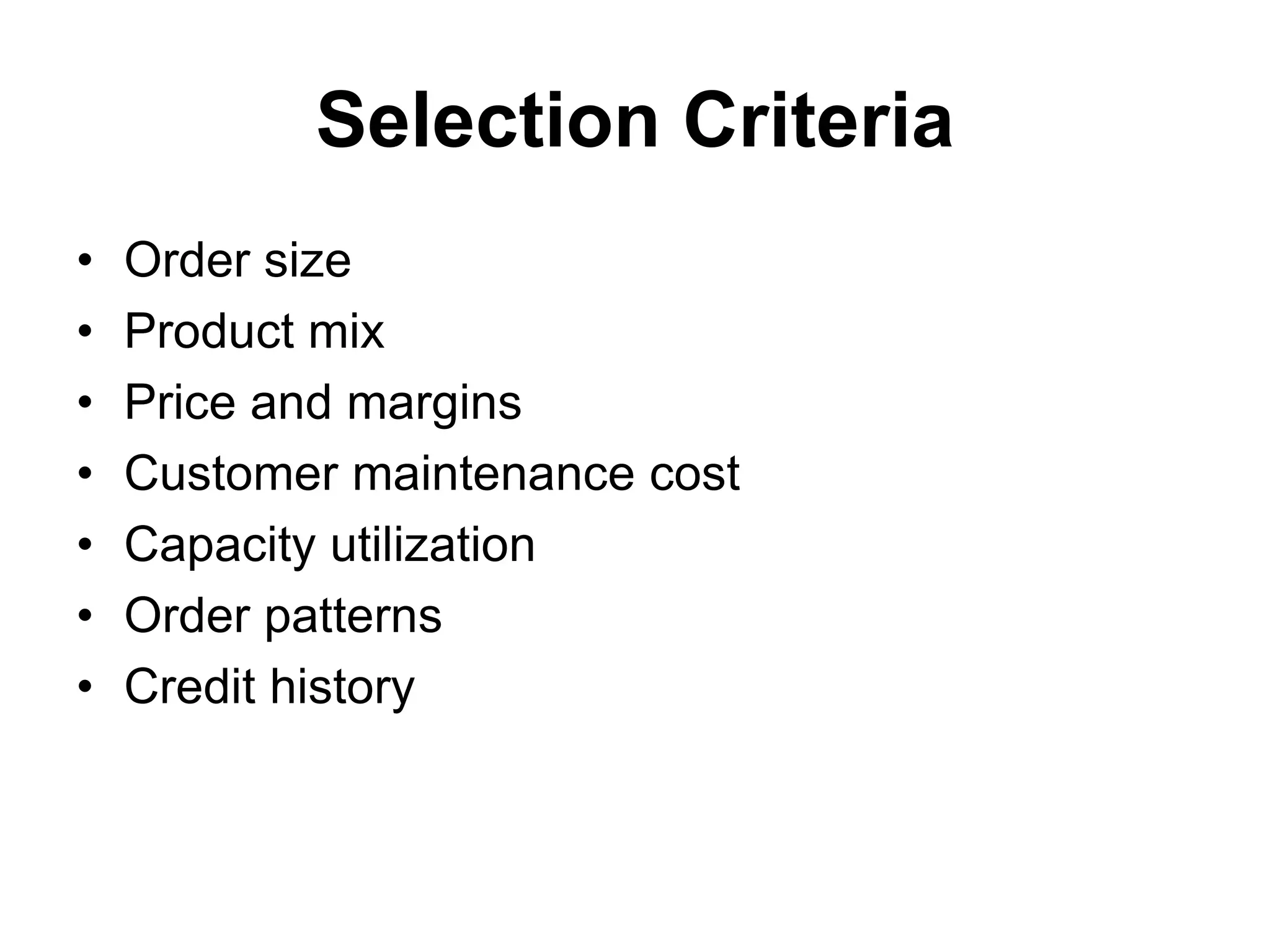
Selection Criteria
• Order size
• Product mix
• Price and margins
• Customer maintenance cost
• Capacity utilization
• Order patterns
• Credit history
Buyer Seller Relations Evolution
• Awareness
• Exploration
• Expansion
• Commitment
• Dissolution
Managing the Major Account Boundary

12___key accounts management

  • 1.
  • 2.
    The critical newinterfaces for sales Marketing Strategy Large Customer Sales Level/ Potential Small Low Customer Service/Relationship High Requirements Key/Global Account The shrinking Management domain for the traditional salesforce? Direct channels/ Internet-based sales
  • 3.
    Customer power • Bigcustomers are getting bigger • Customers are rationalising their supplier base • Customers have become more sophisticated • Customers want tailor-made solutions • The cost of serving customers is increasing • Suppliers and customers are developing new together ways of working
  • 4.
    Key Account Management •Key account management is a strategic business approach with the objective of ensuring long-term and sustainable business development through profitable partnerships with strategically important customers • Key account management is not an isolated business process. It is an integrative element of the business strategy
  • 5.
    Key Account Management •Recognize that KAM is an organizational change, not a sales technique • Get high-level buy-in • Appoint a KAM champion • Identify your key accounts very carefully • Appoint and train your key account managers • Set the right metrics. • Benchmark and build.
  • 6.
    What is aKey Account • Purchases a significant volume, both in absolute dollars and as a percent of a supplier’s total sales • Involves several people (perhaps several functional areas) in the purchasing process • Buys for a number of geographically dispersed organizational units, e.g., stores, branches. • Expects specialized attention and services • Expects a long term cooperative relationship
  • 7.
    Selection Criteria • Ordersize • Product mix • Price and margins • Customer maintenance cost • Capacity utilization • Order patterns • Credit history
  • 8.
    Buyer Seller RelationsEvolution • Awareness • Exploration • Expansion • Commitment • Dissolution
  • 9.
    Managing the MajorAccount Boundary