Chapter 16 Personal Selling and Sales Management PRINCIPLES OF MARKETING Eighth Edition Philip Kotler and Gary Armstrong
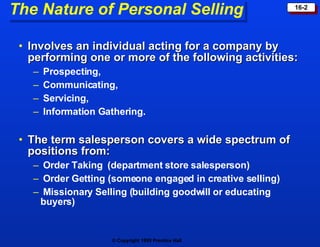
The Nature of Personal Selling Involves an individual acting for a company by performing one or more of the following activities: Prospecting, Communicating, Servicing,  Information Gathering. The term salesperson covers a wide spectrum of positions from: Order Taking  (department store salesperson) Order Getting (someone engaged in creative selling) Missionary Selling (building goodwill or educating buyers)
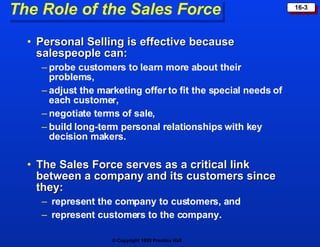
The Role of the Sales Force Personal Selling is effective because salespeople can: probe customers to learn more about their  problems, adjust the marketing offer to fit the special needs of each customer, negotiate terms of sale, build long-term personal relationships with key decision makers. The Sales Force serves as a critical link between a company and its customers since they: represent the company to customers, and represent customers to the company.
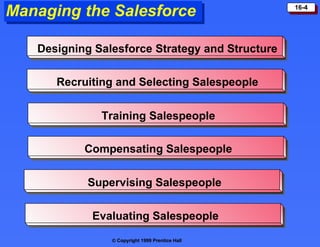
Managing the Salesforce  Designing Salesforce Strategy and Structure Recruiting and Selecting Salespeople Training Salespeople Compensating Salespeople Supervising Salespeople Evaluating Salespeople
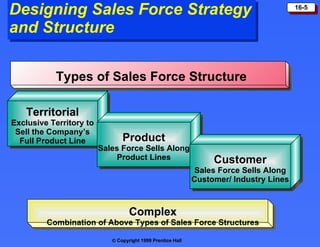
Designing Sales Force Strategy and Structure  Types of Sales Force Structure Complex Combination of Above Types of Sales Force Structures Territorial Exclusive Territory to Sell the Company’s Full Product Line Product Sales Force Sells Along Product Lines Customer Sales Force Sells Along Customer/ Industry Lines
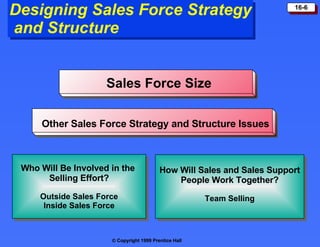
How Will Sales and Sales Support People Work Together? Team Selling Designing Sales Force Strategy  and Structure Sales Force Size Who Will Be Involved in the  Selling Effort? Outside Sales Force Inside Sales Force Other Sales Force Strategy and Structure Issues
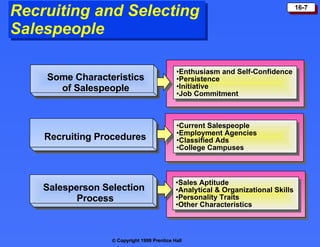
Some Characteristics of Salespeople Recruiting Procedures Salesperson Selection  Process Enthusiasm and Self-Confidence Persistence Initiative Job Commitment Recruiting and Selecting  Salespeople Current Salespeople Employment Agencies Classified Ads College Campuses Sales Aptitude Analytical & Organizational Skills Personality Traits Other Characteristics
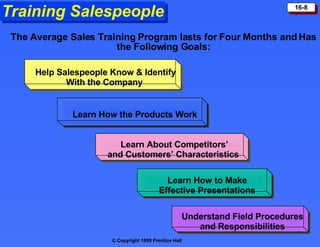
Training Salespeople Help Salespeople Know & Identify With the Company  Learn How the Products Work Learn About Competitors’ and Customers’ Characteristics  Learn How to Make Effective Presentations Understand Field Procedures and Responsibilities The Average Sales Training Program lasts for Four Months and Has the Following Goals:
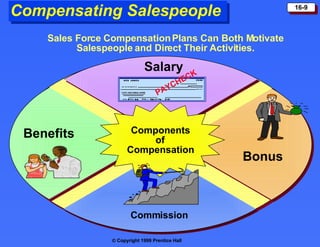
Compensating Salespeople  Components of Compensation PAYCHECK Sales Force Compensation Plans Can Both Motivate Salespeople and Direct Their Activities. Benefits Bonus Salary Commission
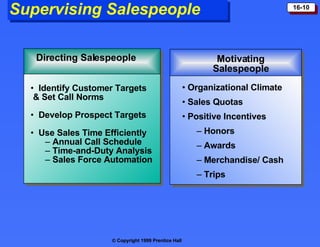
Supervising Salespeople Directing Salespeople Motivating Salespeople Identify Customer Targets  & Set Call Norms Develop Prospect Targets Use Sales Time Efficiently Annual Call Schedule Time-and-Duty Analysis Sales Force Automation Organizational Climate Sales Quotas Positive Incentives Honors Awards Merchandise/ Cash Trips
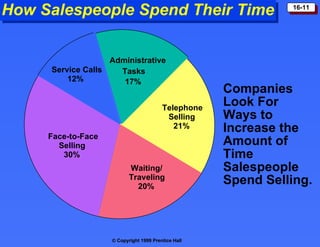
How Salespeople Spend Their Time Administrative  Tasks 17% Telephone Selling 21% Waiting/  Traveling 20% Service Calls 12% Face-to-Face  Selling 30% Companies Look For Ways to Increase the Amount of Time Salespeople Spend Selling.
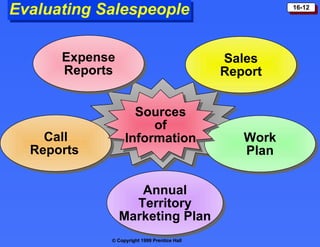
Evaluating Salespeople Annual Territory Marketing Plan Call Reports   Expense Reports Work Plan Sales Report Sources of Information
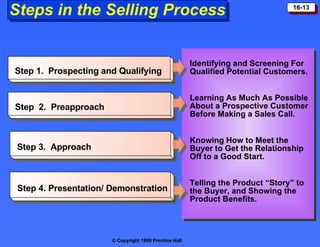
Step 1.  Prospecting and Qualifying Step  2.  Preapproach Step 3.  Approach Step 4. Presentation/ Demonstration Identifying and Screening For Qualified Potential Customers. Learning As Much As Possible About a Prospective Customer Before Making a Sales Call. Knowing How to Meet the Buyer to Get the Relationship Off to a Good Start. Telling the Product “Story” to the Buyer, and Showing the Product Benefits. Steps in the Selling Process
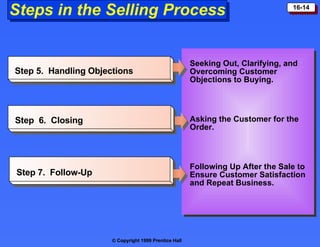
Step 5.  Handling Objections Step  6.  Closing Step 7.  Follow-Up Seeking Out, Clarifying, and Overcoming Customer Objections to Buying. Asking the Customer for the Order. Following Up After the Sale to Ensure Customer Satisfaction and Repeat Business. Steps in the Selling Process
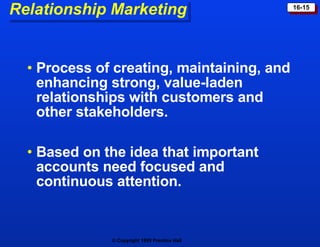
Relationship Marketing Process of creating, maintaining, and enhancing strong, value-laden relationships with customers and other stakeholders. Based on the idea that important accounts need focused and continuous attention.

4604437

  • 1.
    Chapter 16 PersonalSelling and Sales Management PRINCIPLES OF MARKETING Eighth Edition Philip Kotler and Gary Armstrong
  • 2.
    The Nature ofPersonal Selling Involves an individual acting for a company by performing one or more of the following activities: Prospecting, Communicating, Servicing, Information Gathering. The term salesperson covers a wide spectrum of positions from: Order Taking (department store salesperson) Order Getting (someone engaged in creative selling) Missionary Selling (building goodwill or educating buyers)
  • 3.
    The Role ofthe Sales Force Personal Selling is effective because salespeople can: probe customers to learn more about their problems, adjust the marketing offer to fit the special needs of each customer, negotiate terms of sale, build long-term personal relationships with key decision makers. The Sales Force serves as a critical link between a company and its customers since they: represent the company to customers, and represent customers to the company.
  • 4.
    Managing the Salesforce Designing Salesforce Strategy and Structure Recruiting and Selecting Salespeople Training Salespeople Compensating Salespeople Supervising Salespeople Evaluating Salespeople
  • 5.
    Designing Sales ForceStrategy and Structure Types of Sales Force Structure Complex Combination of Above Types of Sales Force Structures Territorial Exclusive Territory to Sell the Company’s Full Product Line Product Sales Force Sells Along Product Lines Customer Sales Force Sells Along Customer/ Industry Lines
  • 6.
    How Will Salesand Sales Support People Work Together? Team Selling Designing Sales Force Strategy and Structure Sales Force Size Who Will Be Involved in the Selling Effort? Outside Sales Force Inside Sales Force Other Sales Force Strategy and Structure Issues
  • 7.
    Some Characteristics ofSalespeople Recruiting Procedures Salesperson Selection Process Enthusiasm and Self-Confidence Persistence Initiative Job Commitment Recruiting and Selecting Salespeople Current Salespeople Employment Agencies Classified Ads College Campuses Sales Aptitude Analytical & Organizational Skills Personality Traits Other Characteristics
  • 8.
    Training Salespeople HelpSalespeople Know & Identify With the Company Learn How the Products Work Learn About Competitors’ and Customers’ Characteristics Learn How to Make Effective Presentations Understand Field Procedures and Responsibilities The Average Sales Training Program lasts for Four Months and Has the Following Goals:
  • 9.
    Compensating Salespeople Components of Compensation PAYCHECK Sales Force Compensation Plans Can Both Motivate Salespeople and Direct Their Activities. Benefits Bonus Salary Commission
  • 10.
    Supervising Salespeople DirectingSalespeople Motivating Salespeople Identify Customer Targets & Set Call Norms Develop Prospect Targets Use Sales Time Efficiently Annual Call Schedule Time-and-Duty Analysis Sales Force Automation Organizational Climate Sales Quotas Positive Incentives Honors Awards Merchandise/ Cash Trips
  • 11.
    How Salespeople SpendTheir Time Administrative Tasks 17% Telephone Selling 21% Waiting/ Traveling 20% Service Calls 12% Face-to-Face Selling 30% Companies Look For Ways to Increase the Amount of Time Salespeople Spend Selling.
  • 12.
    Evaluating Salespeople AnnualTerritory Marketing Plan Call Reports Expense Reports Work Plan Sales Report Sources of Information
  • 13.
    Step 1. Prospecting and Qualifying Step 2. Preapproach Step 3. Approach Step 4. Presentation/ Demonstration Identifying and Screening For Qualified Potential Customers. Learning As Much As Possible About a Prospective Customer Before Making a Sales Call. Knowing How to Meet the Buyer to Get the Relationship Off to a Good Start. Telling the Product “Story” to the Buyer, and Showing the Product Benefits. Steps in the Selling Process
  • 14.
    Step 5. Handling Objections Step 6. Closing Step 7. Follow-Up Seeking Out, Clarifying, and Overcoming Customer Objections to Buying. Asking the Customer for the Order. Following Up After the Sale to Ensure Customer Satisfaction and Repeat Business. Steps in the Selling Process
  • 15.
    Relationship Marketing Processof creating, maintaining, and enhancing strong, value-laden relationships with customers and other stakeholders. Based on the idea that important accounts need focused and continuous attention.