DR NIPON POOMTHANAWIT
 The topic will include
 Anatomic change after delivery
 Care of the postpartum patient
 Complication in the post partum period
 Patient educations
 Discharge instructions
Puerperium
 Puerperium is defined as the time from the delivery of
the placenta through the first few weeks after the
delivery.
 This period is usually considered to be 6 weeks in
duration.
 By 6 weeks after delivery, most of the changes of
pregnancy, labor, and delivery have resolved and the
body has reverted to the nonpregnant state
Introduction
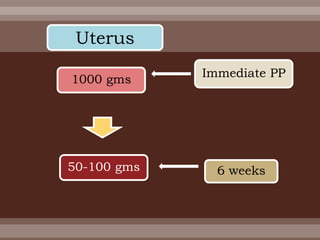
Uterus
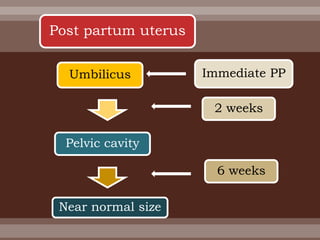
Immediate PP
6 weeks50-100 gms
1000 gms
Immediate PPUmbilicus
2 weeks
Pelvic cavity
Near normal size
6 weeks
Post partum uterus
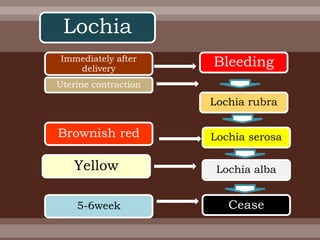
Immediately after
delivery
Lochia
Lochia alba
Cease
Bleeding
Lochia rubra
Lochia serosa
Uterine contraction
Yellow
Brownish red
5-6week
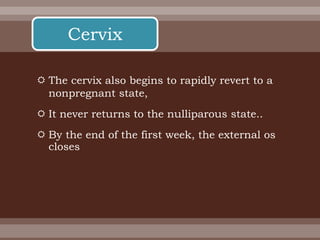
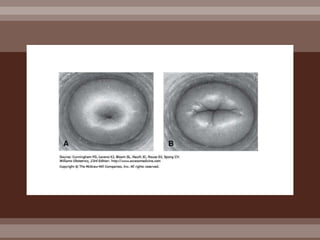
 The cervix also begins to rapidly revert to a
nonpregnant state,
 It never returns to the nulliparous state..
 By the end of the first week, the external os
closes
Cervix
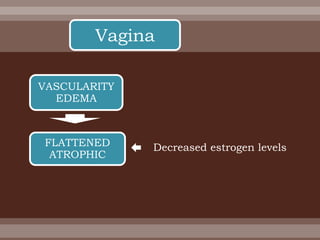
Vagina
VASCULARITY
EDEMA
FLATTENED
ATROPHIC
Decreased estrogen levels
RETURN TO PRE PREGNANT STATE WHEN
OVARIAN FUNCTION RESUME
DELAY IN PROLONGED BREAST FEEDING
Perineum
SWOLLEN & ENGORGED VULVA
Resolves within 1-2 weeks
The abdominal wall remains soft and
poorly toned for many weeks.
The return to a prepregnant state
depends greatly on maternal exercise
Abdominal wall
Ovarian function
Greatly influenced by breastfeeding
Caused by the suppression of ovulation
due to the elevation in prolactin.
The mother who does not breastfeed
may ovulate as early as 27 days after
delivery.
Most women have a menstrual period
by 12 weeks; the mean time to first
menses is 7-9 weeks.
Ovaries (continue)
 The changes to the breasts that prepare the
body for breastfeeding occur throughout
pregnancy.
 If delivery ensues, lactation can be
established as early as 16 weeks' gestation.
Breasts
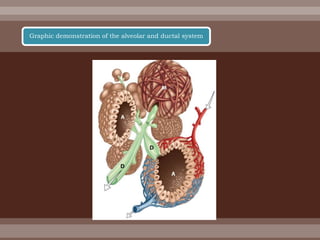
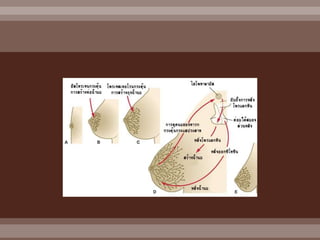
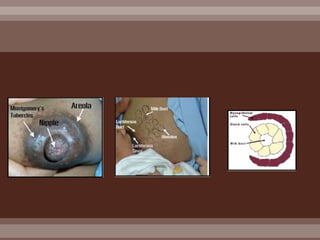
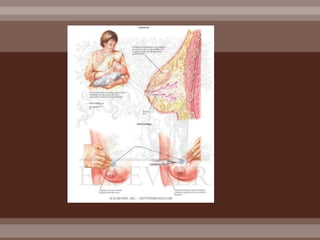
Graphic demonstration of the alveolar and ductal system
 The colostrum is the liquid that is initially
released by the breasts during the first 2-4
days after delivery.
 High in protein content, this liquid is
protective for the newborn.
Colostrum
 The colostrum, which the baby receives in
the first few days postpartum, is already
present in the breasts, and suckling by the
newborn triggers its release.
 The process, which begins as an endocrine
process, switches to an autocrine process;
the removal of milk from the breast
stimulates more milk production.
Colostrum
(continue)
 Over the first 7 days, the milk matures and
contains all necessary nutrients in the
neonatal period
 The milk continues to change throughout
the period of breastfeeding to meet the
changing demands of the baby.
Colostrum
(continue)
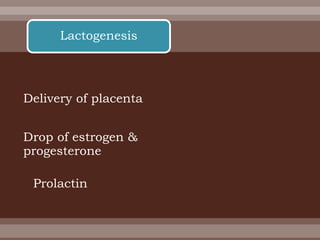
 Lactogenesis is initially triggered by the
delivery of the placenta, which results in
falling levels of estrogen and progesterone,
with the continued presence of prolactin.
 If the mother is not breastfeeding, the
prolactin levels decrease and return to
normal within 2-3 weeks
Lactogenesis
Lactogenesis
Delivery of placenta
Drop of estrogen &
progesterone
Prolactin
The immediate postpartum period
most often occurs in the hospital
setting, where the majority of women
remain for approximately 2 days after
a vaginal delivery and 3-5 days after a
cesarean delivery.
Routine Postpartum Care
 During this time, women are recovering from
their delivery and are beginning to care for
the newborn.
 This period is used to make sure the mother
is stable and to educate her in the care of
her baby (especially the first-time mother).
Routine Postpartum Care
(continue)
 While still in the hospital, the mother is
monitored for
 Blood loss,
 Signs of infection,
 Abnormal blood pressure,
 Contraction of the uterus,
 Ability to void.
Routine Postpartum Care
(continue)
 Routine practices include a check of the baby's blood
type and administration of the RhoGAM vaccine to
the Rh-negative mother if her baby has an Rh-
positive blood type.
 At minimum, the mother's hematocrit level is checked
on the first postpartum day.
 Women are encouraged to ambulate and to eat a
regular diet.
Routine Postpartum Care
(continue)
 After a vaginal delivery, most women
experience swelling of the perineum and
consequent pain. This is intensified if the
woman has had an episiotomy or a
laceration.
 Routine care of this area includes ice applied
to the perineum to reduce the swelling and
to help with pain relief
Vaginal delivery
 Conventional treatment is to use ice for the
first 24 hours after delivery and then switch
to warm sitz baths.
 However, little evidence supports this
method over other methods of postpartum
perineum treatment.
Vaginal delivery(continue)
 Pain medications are helpful both
systemically as nonsteroidal anti-
inflammatory drugs (NSAIDs) or narcotics
and as local anesthetic spray to the
perineum
Vaginal delivery(continue)
 Hemorrhoids are another postpartum issue likely to
affect women who have vaginal deliveries.
 Symptomatic relief is the best treatment during this
immediate postpartum period because hemorrhoids
often resolve as the perineum recovers.
 This can be achieved by the use of corticosteroid
creams, witch hazel compresses, and local anesthetic
spray to the perineum
Hemorrhoids
 Tampon use can be resumed when the patient is
comfortable inserting the tampon and can wear it
without discomfort. This takes longer for the woman
who has had an episiotomy or a laceration than for
one who has not.
 The vagina and perineum should first be fully
healed, which takes about 3 weeks. Tampons must
be changed frequently to prevent infection.
Tampon
 The woman who has had a cesarean delivery usually
does not experience pain and discomfort from her
perineum but rather from her abdominal incision.
 This, too, can be treated with ice to the incision and
with the use of systemic pain medication.
 Women who have had a cesarean delivery are often
slower to begin ambulating, eating, and voiding;
however, encourage them to quickly resume these
and other normal activities
Cesarean delivery
 Sexual intercourse may resume when bright red
bleeding ceases, the vagina and vulva are healed, and
the woman is physically comfortable and emotionally
ready.
 Physical readiness usually takes about 3 weeks.
 Birth control is important to protect against
pregnancy because the first ovulation is very
unpredictable
Sexual intercourse
 Substantial education takes place during the hospital
stay, especially for the first-time mother.
 The mother (and often the father) is taught routine
care of the baby, including feeding, diapering, and
bathing, as well as what can be expected from the
baby in terms of sleep, urination, bowel movements,
and eating.
Patient education
 In women who choose not to breastfeed, the care of
the breasts is quite different.
 Care should be taken not to stimulate the breasts in
any way in order to prevent milk production.
Women who choose not to breastfeed
 Ice packs applied to the breasts and the use of a tight
brassiere or a binder can also help to prevent breast
engorgement.
 Acetaminophen or NSAIDs can alleviate the
symptoms of breast engorgement (eg, tenderness,
swelling, fever) if it occurs.
 Bromocriptine was formerly administered to suppress
milk production; however, its use has diminished
because it requires 2 weeks of administration, does
not always work, and can produce adverse reactions
 The most important information is who and where to
call if she has problems or questions.
 She also needs details about resuming her normal
activity.
 Instructions vary, depending on whether the mother
has had a vaginal or a cesarean delivery.
Discharge instructions
 The woman who has had a vaginal delivery may
resume all physical activity, including using stairs,
riding or driving in a car, and performing muscle-
toning exercises, as long as she experiences no pain
or discomfort.
 The key to resuming normal activity is not to overdo
it on one day to the point that the mother is
completely exhausted the next day.
Resuming normal activity.
 Pregnancy, labor, delivery, and care of the newborn
are strenuous and stressful, and the mother needs
sufficient rest to recover.
 The woman who has had a cesarean delivery must be
more careful about resuming some of her activities.
 She must avoid overuse of her abdomen until her
incision is well healed in order to prevent an early
dehiscence or a hernia later on.
Resuming normal activity.
(continue)
 Women typically return for their postpartum visit at
approximately 6 weeks after delivery.
 No sound reason for this exists; the time has
probably become the standard so that women who
are returning to work can be medically cleared to
return.
Return for postpartum visit
 Anything that must be done at a 6-weeks'
postpartum visit can be done earlier or later than 6
weeks.
 An earlier visit can often aid a new mother in
resolving problems she may be having or in providing
a time to answer her questions.
Return for postpartum visit
(continue)
 The mother must be counseled about birth control
options before she leaves the hospital.
 She may not be ready to decide about a method, but
she needs to know the options.
Birth control
 Her decision will be based on a number of factors,
 including her motivation in using a particular method,
 how many children she has,
 and whether she is breastfeeding.
 Many options are available, as follows:
 Natural methods
 Barrier method
 Hormonal contraceptives
 IUD
 Permanent method
 Natural methods can be used in highly motivated
couples, to include
 the use of monitoring the basal body temperature
 and the quality and quantity of the cervical mucus to
determine what phase of the menstrual cycle the
woman is in and if it is safe to have intercourse.
Natural methods
 Barrier methods of contraception,
 condoms,
 vaginal spermicides
 diaphragms and
 cervical caps
Barrier methods of contraception
 Hormonal methods of contraception are numerous.
 Combined estrogen-progestin agents are taken daily by
mouth or monthly by injection.
 Progestin-only agents are available for daily intake
 long-acting injections that are effective for 12 weeks
Hormonal methods of
contraception
 Intrauterine devices can be placed a few weeks after
delivery.
Intrauterine devices
 Permanent methods of birth control (ie,
tubal ligation, vasectomy) are best for the
couple who has more than one child and
who are sure that they do not want more.
Permanent methods of
birth control
 Postpartum hemorrhage
 Immediate PPH
 Late PPH
 Wound complication
 Episiotomy wound
 Perineal tear
 Cesarean wound
Complications in postpartum period
 Infections
 Endometritis
 Pelvic thrombophlebitis
 Mastitis
 Endocrine disorder
 Thyroid
 Sheehan
 Psychiatric disorders
Complications in postpartum period
(continue)
 Postpartum hemorrhage is defined as
excessive blood loss during or after the third
stage of labor
 The average blood loss is 500 mL at vaginal
delivery and 1000 mL at cesarean delivery.
 Since diagnosis is based on subjective
observation, it is difficult to define clinically.
Postpartum hemorrhage
Subjective observation
 Objectively, postpartum hemorrhage is
defined as a 10% change in hematocrit level
between admission and the postpartum
period or the need for transfusion after
delivery secondary to blood loss.[3 ]
10% change in hematocrit
Postpartum hemorrhage
(continue)
Early postpartum hemorrhage is
described as that occurring within the
first 24 hours after delivery.
Early postpartum hemorrhage
Late postpartum hemorrhage most
frequently occurs 1-2 weeks after
delivery but may occur up to 6 weeks
postpartum.
Late postpartum hemorrhage
 Early postpartum hemorrhage may result from
 Uterine atony
 Retained products of conception
 Uterine rupture
 Uterine inversion
 Placenta accreta
 Lower genital tract lacerations
 Coagulopathy, and hematoma.
Postpartum hemorrhage
(continue)
 Causes of late postpartum hemorrhage include
 Retained products of conception
 Infection
 Subinvolution of placental site
 Coagulopathy
Postpartum hemorrhage
(continue)
 Are the most common causes of postpartum
hemorrhage.
Uterine atony &
lower genital tract
lacerations
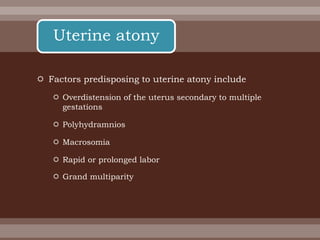
 Factors predisposing to uterine atony include
 Overdistension of the uterus secondary to multiple
gestations
 Polyhydramnios
 Macrosomia
 Rapid or prolonged labor
 Grand multiparity
Uterine atony
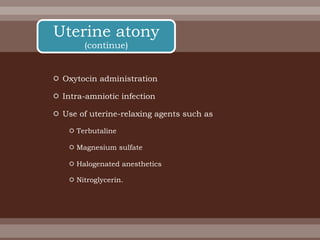
 Oxytocin administration
 Intra-amniotic infection
 Use of uterine-relaxing agents such as
 Terbutaline
 Magnesium sulfate
 Halogenated anesthetics
 Nitroglycerin.
Uterine atony
(continue)
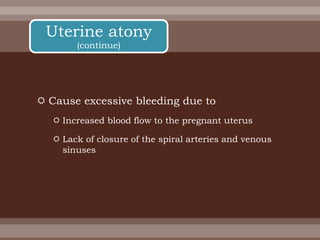
 Cause excessive bleeding due to
 Increased blood flow to the pregnant uterus
 Lack of closure of the spiral arteries and venous
sinuses
Uterine atony
(continue)
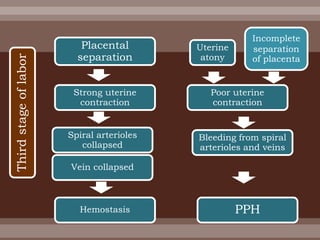
Placental
separation
Strong uterine
contraction
Spiral arterioles
collapsed
Vein collapsed
Hemostasis
Poor uterine
contraction
Bleeding from spiral
arterioles and veins
PPH
Uterine
atony
Incomplete
separation
of placenta
Thirdstageoflabor
 Active management of the third stage of labor have
proven to reduce blood loss and decrease the rate of
postpartum hemorrhage
 Administration of uterotonics before the placenta is
delivered (oxytocin still being the agent of choice )
 Early clamping and cutting of the umbilical cord
 Traction on the umbilical cord
Postpartum hemorrhage
(continue)
 Lower genital tract lacerations, including cervical and
vaginal lacerations are the result of obstetrical
trauma and are more common with
 Operative vaginal deliveries, such as with forceps or
vacuum extraction.
 Macrosomia
 Precipitous delivery
 Episiotomy.
Lower genital tract
lacerations
 Vaginal delivery is associated with a 3.9%
incidence of postpartum hemorrhage.
 Cesarean delivery is associated with a 6.4%
incidence of postpartum hemorrhage.
 Delayed postpartum hemorrhage occurs in
1-2% of patients
Incidence
 In the United States, postpartum
hemorrhage is responsible for 5% of
maternal deaths.
 Other causes of morbidity include the need
for blood transfusions or surgical
intervention that may lead to future
infertility.
Morbidity and mortality
 The antepartum or early intrapartum
identification of risk factors for postpartum
hemorrhage allows for advanced preparation
and possible avoidance of severe sequelae.
History
 Every patient must be interviewed upon admission to
the labor floor.
 Request information about parity, multiple gestation,
polyhydramnios, previous episodes of postpartum
hemorrhage, history of bleeding disorders, and desire
for future fertility.
History
 Note the use of prolonged oxytocin
administration, as well as the use of
magnesium sulfate during the patient's
labor course.
History
 Physical examination is performed simultaneously
with resuscitative measures. Perform a vigorous
bimanual examination, which may reveal a retained
placenta or a hematoma of the perineum or pelvis,
and which also allows for uterine massage.
 Closely inspect the lower genital tract in order to
identify lacerations. Closely examine the placenta to
determine if any fragments are missing.
Physical examination
The onset of postpartum hemorrhage
is acute, intervention is immediate,
and resolution is generally within
minutes; consequently, laboratory
studies or imaging in the management
of the immediate course of this
process has little role.
Workup
However, it is important to check a
patient's CBC count and prothrombin
time/activated partial thromboplastin
time (PT/aPTT) to exclude resulting
anemia or coagulopathy, which may
require further treatment.
Upon admission of each patient to the
labor ward, obtain ABO and D blood
type determinations, and acquire
adequate intravenous access.
Initial therapy includes
Oxygen
Bimanual massage
Removal of any blood clots from the
uterus
Emptying of the bladder
Treatment
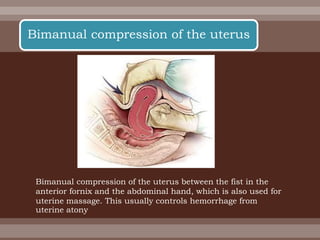
Bimanual compression of the uterus between the fist in the
anterior fornix and the abdominal hand, which is also used for
uterine massage. This usually controls hemorrhage from
uterine atony
Bimanual compression of the uterus
Oxytocin infusion (10-40 U in 1000 mL of
RLS/NSS
If retained products of conception are
noted, perform manual removal or uterine
curettage.
Syntocinon
 Methylergonovine 0.2mg IV/IM
 This agent may cause transient
hypertension, it is contraindicated in
patients with hypertensive disease.
Methergine
 Misoprostol has been used clinically for the treatment
of postpartum hemorrhage.
Cytotec
 When postpartum hemorrhage is not responsive to
pharmacological therapy and no vaginal or cervical
lacerations have been identified, consider the
following more invasive treatment methods:
 Uterine packing is now considered safe and effective
therapy for the treatment of postpartum hemorrhage.
 Use prophylactic antibiotics and concomitant
oxytocin with this technique.
Uterine packing
 The timing of removal of the packing is controversial,
but most physicians favor 24-36 hours.
 This treatment is successful in half of patients
 If unsuccessful, it still provides time in which the
patient can be stabilized before other surgical
techniques are employed
 A Foley catheter with a large bulb (24F) can be used
as an alternative to uterine packing.This technique
can be highly effective, is inexpensive, requires no
special training, and may prevent the need for
surgery.
Foley catheter
 Uterine artery embolization, which is performed
under local anesthesia, is a minimally invasive
technique.
 The success rate is greater than 90%
 This procedure is believed to preserve fertility
Uterine artery embolization
 Complications are rare (6-7%) and include fever,
infection, and nontarget embolization.
 In patients at high risk for postpartum hemorrhage,
such as those with placenta previa, placenta accreta,
coagulopathy, or cervical pregnancy, the catheter can
be placed prophylactically.
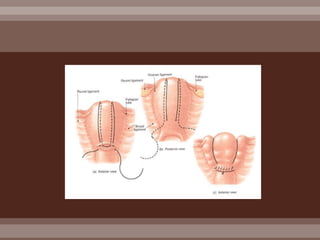
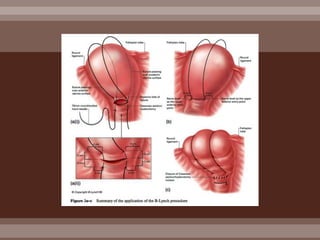
 A suture is passed through the anterior uterine wall
in the lower uterine segment approximately 3 cm
medial to the lateral edge of the uterus.
 The suture is wrapped over the fundus 3–4 cm medial
to the cornual and inserted into the posterior uterine
wall again in the lower uterine segment
approximately 3 cm medial to the lateral edge of the
uterus and brought out 3 cm medial to the other edge
of the uterus.
The B-Lynch suture
technique
 The suture is wrapped over the fundus and directed
into and out of the anterior uterine wall parallel to
the previous anterior sutures.
 The uterus is compressed in an accordionlike fashion
and the suture is tied across the lower uterine
segment.
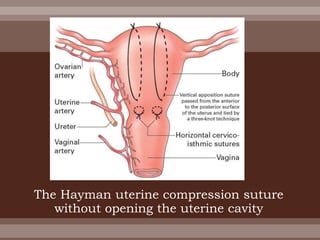
The Hayman uterine compression suture
without opening the uterine cavity
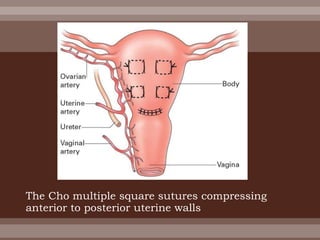
The Cho multiple square sutures compressing
anterior to posterior uterine walls
 The B-Lynch suture technique and other
compression suture techniques are operative
approaches to postpartum hemorrhage that have
proven to preserve fertility.
 As practitioners become proficient in this technique,
it may be considered before uterine artery or
hypogastric artery ligation and hysterectomy
 When conservative therapy fails, the next step is
surgery with either bilateral uterine artery ligation or
hypogastric artery ligation.
 Uterine artery ligation is thought to be successful in
80-95% of patients.
 If this therapy fails, hypogastric artery ligation is an
option. However, this approach is technically difficult
and is only successful in 42-50% of patients.[14 ]
 Instead, stepwise devascularization of the uterus is
now thought to be the next best approach, with
possible ligation of the utero-ovarian and
infundibulopelvic vessels.
Stepwise devascularization
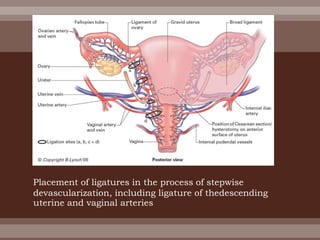
Placement of ligatures in the process of stepwise
devascularization, including ligature of thedescending
uterine and vaginal arteries
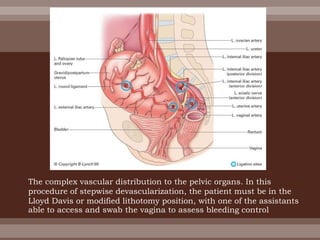
The complex vascular distribution to the pelvic organs. In this
procedure of stepwise devascularization, the patient must be in the
Lloyd Davis or modified lithotomy position, with one of the assistants
able to access and swab the vagina to assess bleeding control
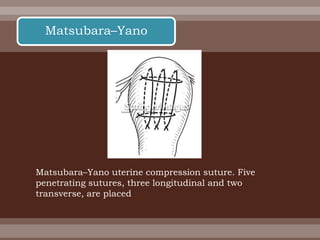
Matsubara–Yano uterine compression suture. Five
penetrating sutures, three longitudinal and two
transverse, are placed
Matsubara–Yano
 When all other therapies fail, emergency
hysterectomy is often a necessary and lifesaving
procedure
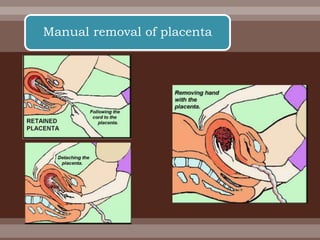
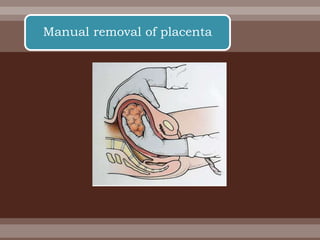
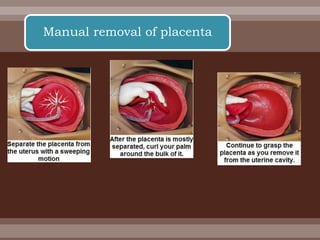
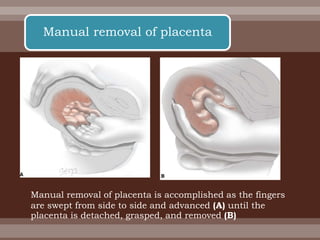
Manual removal of placenta
Manual removal of placenta is accomplished as the fingers
are swept from side to side and advanced (A) until the
placenta is detached, grasped, and removed (B)
Manual removal of placenta
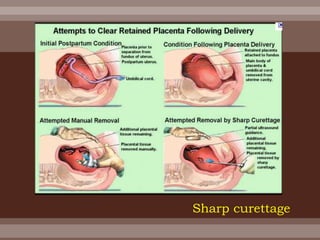
Sharp curettage
Puerperal infection is a general term
used to describe any bacterial
infection of the genital tract after
delivery
Puerperal infection
Along with preeclampsia and
obstetrical hemorrhage, puerperal
infection formed the lethal triad of
causes of maternal deaths for many
decades of the 20th century
Fortunately, because of effective
antimicrobials, maternal deaths from
infection have become uncommon.
A temperature of 38.0°C (100.4°F) or
higher—in the puerperium
Most persistent fevers after childbirth
are caused by genital tract infection
Puerperal Fever
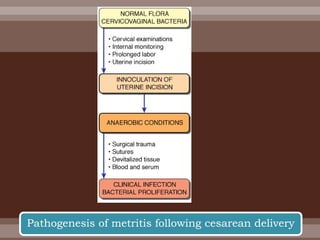
Pathogenesis of metritis following cesarean delivery
 Endometritis is an ascending polymicrobial
infection.
 The causative agents are usually normal
vaginal flora or enteric bacteria.
Infections
Endometritis
Endometritis is the primary cause of
postpartum infection.
Etiology
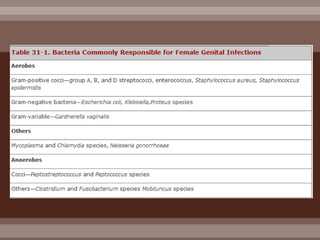
The most common organisms are
divided into 4 groups:
aerobic gram-negative bacilli,
anaerobic gram-negative bacilli,
aerobic streptococci
anaerobic gram-positive cocci.
Specifically, Escherichia coli, Klebsiella
pneumoniae, and Proteus species are the
most frequently identified organisms.
Escherichia coli
Proteus
Klebsiella pneumoniae
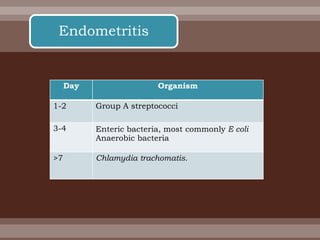
Endometritis
Day Organism
1-2 Group A streptococci
3-4 Enteric bacteria, most commonly E coli
Anaerobic bacteria
>7 Chlamydia trachomatis.
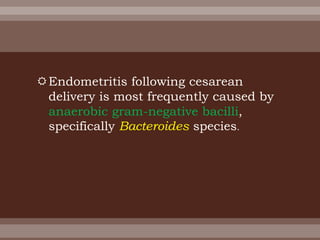
Endometritis following cesarean
delivery is most frequently caused by
anaerobic gram-negative bacilli,
specifically Bacteroides species.
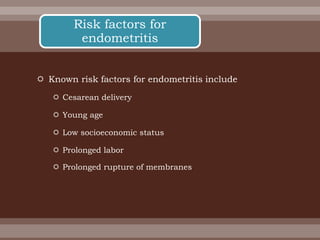
 Known risk factors for endometritis include
 Cesarean delivery
 Young age
 Low socioeconomic status
 Prolonged labor
 Prolonged rupture of membranes
Risk factors for
endometritis
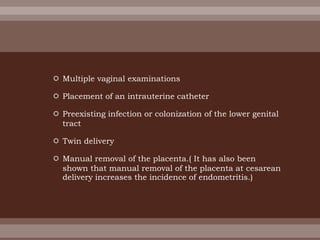
 Multiple vaginal examinations
 Placement of an intrauterine catheter
 Preexisting infection or colonization of the lower genital
tract
 Twin delivery
 Manual removal of the placenta.( It has also been
shown that manual removal of the placenta at cesarean
delivery increases the incidence of endometritis.)
 Endometritis complicates 1-3% of all vaginal deliveries
 5-15% of scheduled cesarean deliveries.
 The incidence of endometritis in patients who undergo
cesarean delivery after an extended period of labor is
 30-50% without prophylactic antibiotic
 15-20% with prophylactic antibiotics.
Incidence
 Following 48-72 hours of intravenous
antibiotic therapy, 90% of women recover.
 Fewer than 2% of patients develop life-
threatening complications such as septic
shock, pelvic abscess, or septic pelvic
thrombophlebitis.
Morbidity and mortality
 A patient may report any of the following symptoms:
 Fever, chills
 Lower abdominal pain
 Malodorous lochia
 Increased vaginal bleeding
 Anorexia, and malaise
History
 Vital signs
 Respiratory system
 Breasts
 Abdomen /fundus
 Perineum
 Lower extremities
Physical examination
 A patient with endometritis typically has
 Fever of 38°C,
 Tachycardia,
 Fundal tenderness
 Vaginal discharge,
Mucopurulent
Foul/odorless
 Urinary tract infection
 Acute pyelonephritis
 Lower genital tract
infection
 Wound infection
Differential diagnosis
 Atelectasis
 Pneumonia
 Thrombophlebitis
 Mastitis
 Appendicitis
Workup
 CBC
 UA
 Hemoculture
 Urine culture
 Chest X-ray as needed
 Treatment of endometritis is with intravenous antibiotics
 Parenteral antibiotics are usually stopped
 Afebrile for 24-48 hours,
 Tolerating a regular diet,
 Ambulating without difficulty
 In general, an extended course of oral antibiotics has not
been found to be beneficial
Treatment
 Extended antibiotics:
 In patients who respond quickly to intravenous
antibiotics and who desire early discharge, a short
course of oral antibiotics may be substituted for
continued intravenous therapy.
 The other exception includes patients with
staphylococcal bacteremia requiring an extended period
of treatment
 No consensus exists regarding the antibiotic regimen for
treatment of endometritis,
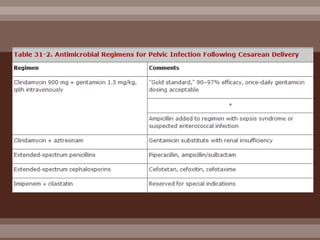
 Standard regimen------GENTAMICIN + CLINDAMYCIN
 Gentamicin and clindamycin have a cure rate of
approximately 90%
 A once daily dose of gentamicin and clindamycin
antibiotics has a similar success rate to the standard
every 8 hour dose schedule
 This combination is not effective against Enterococcus
faecalis, which may be the cause in up to 25% of
these infections.
 The addition of ampicillin (or vancomycin for patients
with a penicillin allergy), is considered when the
patient does not respond to the initial therapy of
gentamicin and clindamycin to cover this organism. ]
Ampicillin
Vancomycin
Enterococcus faecalis
 Alternatively, broad-spectrum second- and third-
generation cephalosporins, extended spectrum
penicillins, and combination beta-lactamase
inhibitors with penicillins have been used in an
attempt to avoid polypharmacy and its associated
toxicities.
 In general, these alternative therapies have a cure
rate of 80-90%.
 The most accepted among this category of drugs are
cefoxitin or moxalactam
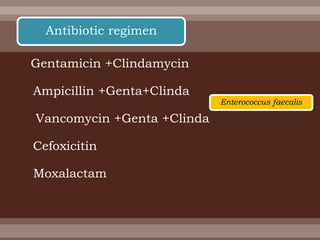
Gentamicin +Clindamycin
Ampicillin +Genta+Clinda
Vancomycin +Genta +Clinda
Cefoxicitin
Moxalactam
Antibiotic regimen
Enterococcus faecalis
 The high rate of endometritis following cesarean
delivery
 In emergency cesarean deliveries, use of prophylactic
cefazolin has been shown to reduce the rate of
postpartum endometritis and wound infection
 Ampicillin /sulbactam, cefazolin, and cefotetan are
all acceptable choices for single-dose antibiotic
prophylaxis
Endometritis following cesarean
 Controversy still exists with regard to the need for
prophylactic antibiotics during elective deliveries.
 The Cochrane Database demonstrated a two-thirds
reduction in endometritis in women undergoing
elective or nonelective cesarean delivery who receive
prophylactic antibiotics
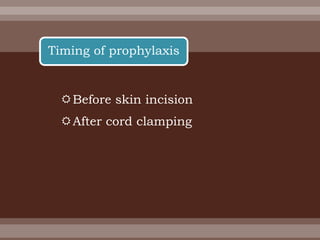
 The timing of prophylaxis is also an issue; 2 recent
studies showed lower rates of infection when
antimicrobial prophylaxis occurred before skin
incision vs after cord clamping.[27,28
 ]However, another trial that studied the same timing
issue found that the timing of prophylaxis did not
affect maternal infectious morbidity.[29 ]
Before skin incision
After cord clamping
Timing of prophylaxis
 A urinary tract infection (UTI) is defined as a bacterial
inflammation of the bladder or urethra.
 >100,000 colony-forming units from a clean-catch
urine specimen
 >10,000 colony-forming units on a catheterized
specimen
Urinary Tract Infections
 Risk factors for postpartum UTI
 Cesarean delivery
 Forceps delivery
 Vacuum delivery
 Tocolysis
 Induction of labor
 Maternal renal disease
Etiology
 Preeclampsia
 Eclampsia
 Epidural anesthesia
 Bladder catheterization
 Length of hospital stay
 Previous UTI during
pregnancy
 The most common pathogen is E coli.
 In pregnancy, group B streptococci are a major
pathogen.
 Other causative organisms include Staphylococcus
saprophyticus, E faecalis, Proteus, and K pneumoniae.
 Postpartum bacteruria occurs in 3-34% of patients,
resulting in a symptomatic infection in approximately
2% of these patients.
Incidence
 A patient may report frequency, urgency, dysuria,
hematuria, suprapubic or lower abdominal pain, or
no symptoms at all
History
 On examination, vital signs are stable and the patient
is afebrile. Suprapubic tenderness may be elicited on
abdominal examination.
Physical examination
 Acute cystitis
 Acute pyelonephritis
Differential diagnosis
 UA
 Urine culture from a clean-catch / catheterized specimen
 CBC
Workup
 Treatment is started empirically in uncomplicated
infection because the usual organisms have
predictable susceptibility profiles.
 When sensitivities are available, use them to guide
antimicrobial selection.
 Treatment is with a 3- or 7-day antibiotic regimen.
Treatment
 Commonly used antibiotics include
trimethoprim/sulfamethoxazole, ciprofloxacin, and
norfloxacin.
 Amoxicillin is often still used, but it has lower cure
rates secondary to increasing resistance of E coli.
 The quinolones are very effective but should not be
used in breastfeeding mothers.
 Women who do not breast feed may experience
engorgement, milk leakage, and breast pain, which
peaks at 3 to 5 days after delivery (Spitz and
associates, 1998).
 As many as half require analgesia for breast-pain
relief. Up to 10 percent of women report severe pain
up to 14 days.
Breast Engorgement
 Breasts should be supported with a well-fitting
brassiere.
 Pharmacological or hormonal agents are not
recommended to suppress lactation.
 Instead, ice packs and oral analgesics for 12 to 24
hours can be used to relieve discomfort.
 A breast binder
Breast Binder
 Puerperal fever from breast engorgement is
common.
 Before breast feeding was commonplace,
Almeida and Kitay (1986) reported that 13
percent of postpartum women had fever that
ranged from 37.8 to 39°C from engorgement.
Milk Fever
 Fever seldom persisted for longer than 4 to
16 hours.
 The incidence and severity of engorgement,
and fever associated with it, are much lower
if women breast feed.
 Other causes of fever, especially those due
to infection, must be excluded.
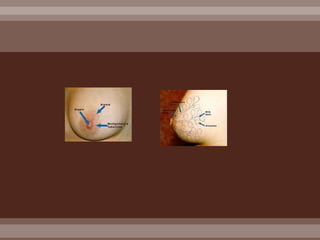
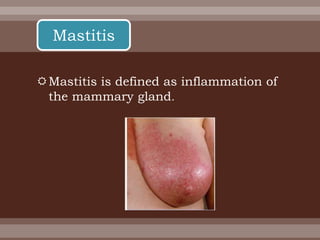
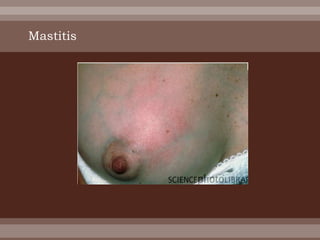
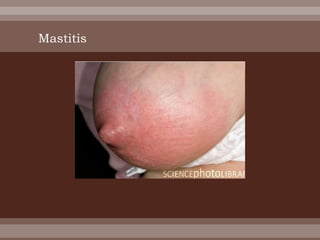
Mastitis is defined as inflammation of
the mammary gland.
Mastitis
Mastitis
Mastitis
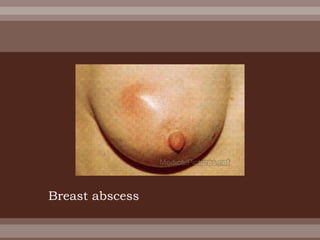
Breast abscess
 Milk stasis and cracked nipples, which
contribute to the influx of skin flora, are the
underlying factors associated with the
development of mastitis.
 Mastitis is also associated with primiparity,
incomplete emptying of the breast, and
improper nursing technique
Etiology
 The most common causative organism,
isolated in approximately half of all cases, is
Staphylococcus aureus.[32 ]
 Other common pathogens include
Staphylococcus epidermidis, S saprophyticus,
Streptococcus viridans, and E coli.
 In the United States, the incidence of
postpartum mastitis is 2.5-3%.[33,32 ]
 Mastitis typically develops during the first 3
months postpartum, with the highest
incidence in the first few weeks after
delivery.
Incidence
 Neglected, resistant, or recurrent infections
can lead to the development of an abscess,
requiring parenteral antibiotics and surgical
drainage
 Abscess development complicates 5-11% of
the cases of postpartum mastitis and should
be suspected when antibiotic therapy fails
Morbidity and mortality
 Mastitis and breast abscess also increase
the risk of viral transmission from mother to
infant.
 The diagnosis of mastitis is solely based on
the clinical picture.
 Symptoms of suppurative mastitis seldom
appearbefore the end of the first week postpartum
and as a rule, not until the third or fourth week.
 Infection almost invariably is unilateral, and marked
engorgement usually precedes inflammation.
 Symptoms include chills or actual rigor, which are
soon followed by fever and tachycardia.
History
 Fever, chills, myalgias, erythema, warmth, swelling,
and breast tenderness characterize this disease.
 The breast becomes hard and reddened, and there is
severe pain.
 About 10 percent of women with mastitis develop an
abscess. Detection of fluctuation may be difficult, and
sonography may be helpful to detect an abscess.
 Focus examination on vital signs, review of systems,
and a complete examination to look for other sources
of infection.
 Typical findings include an area of the breast that is
warm, red, and tender.
 When the exam reveals a tender, hard, possibly
fluctuant mass with overlying erythema, a breast
abscess should be considered.
Physical examination
 Mastitis
 Breast abscess
 Cellulitis
Differential diagnosis
 No laboratory tests are required.
 Expressed milk can be sent for analysis, but the
accuracy and reliability of these results are
controversial and aid little in the diagnosis and
treatment of mastitis.
Workup
 Milk stasis sets the stage for the development of
mastitis, which can be treated with
 moist heat,
 massage,
 fluids,
 rest,
 proper positioning of the infant during nursing,
 nursing or manual expression of milk,
 and analgesics.
Treatment
 When mastitis develops, penicillinase-resistant
penicillins and cephalosporins, such as dicloxacillin
or cephalexin, are the drugs of choice.
 Erythromycin, clindamycin, and vancomycin may be
used for infections that are resistant to penicillin.
 Resolution usually occurs 48 hours after the onset of
antimicrobial therapy
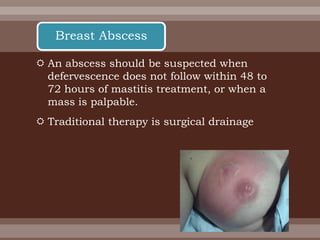
 An abscess should be suspected when
defervescence does not follow within 48 to
72 hours of mastitis treatment, or when a
mass is palpable.
 Traditional therapy is surgical drainage
Breast Abscess
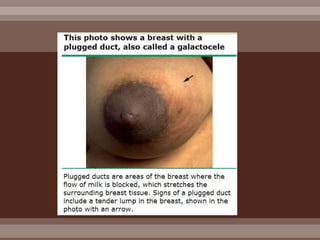
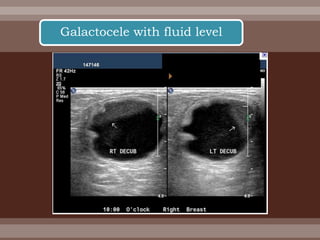
 Occasionally a milk duct becomes obstructed by
inspissated secretions, and milk may accumulate in
one or more mammary lobes.
 The amount is ordinarily limited, but an excess may
form a fluctuant mass—a galactocele—that may
cause pressure symptoms and have the appearance
of an abscess.
 It may resolve spontaneously or require aspiration.
Galactocele
Galactocele with fluid level
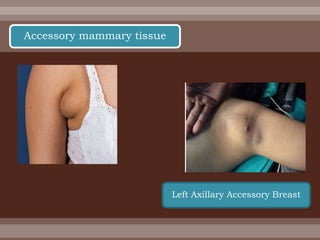
Accessory mammary tissue
Left Axillary Accessory Breast
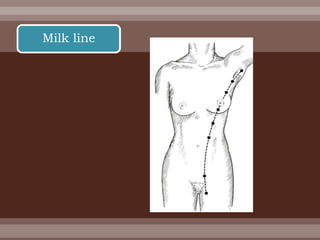
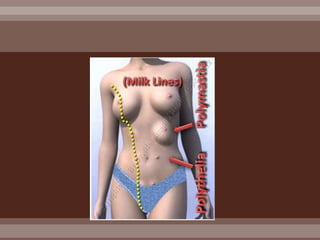
Milk line
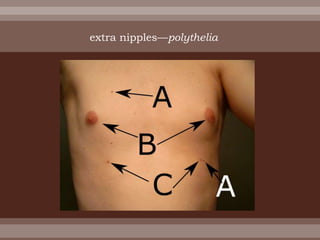
extra nipples—polythelia
 Wound infections in the postpartum period
include
 Infections of the perineum developing at the site of
an episiotomy or laceration
 Infection of the abdominal incision after a
cesarean birth
Wound Infection
 Wound infections are diagnosed on the basis of
erythema, induration, warmth, tenderness, and
purulent drainage from the incision site, with or
without fever.
 . This definition can be applied both to the perineum
and to abdominal incisions
 : Infections of the perineum are rare.
 In general, they become apparent on the third or
fourth postpartum day.
 Known risk factors include infected lochia, fecal
contamination of the wound, and poor hygiene.
 These infections are generally polymicrobial, arising
from the vaginal flora.
Perineal infections
 : Abdominal wound infections are most frequently the
result of contamination with vaginal flora.
 However, S aureus, either from the skin or from an
exogenous source, is isolated in 25% of these
infections.[34 ]
 Genital Mycoplasma species are commonly isolated
from infected wounds that are resistant to treatment
with penicillins.[35 ]
Abdominal wound infections
 Known risk factors include diabetes, hypertension,
obesity, treatment with corticosteroids,
immunosuppression, anemia, development of a
hematoma, chorioamnionitis, prolonged labor,
prolonged rupture of membranes, prolonged
operating time, abdominal twin delivery, and
excessive blood loss
Risk factors
 The incidence of perineal infections is 0.35-10%.
 The incidence of incisional abdominal wound
infections is 3-15% and can be decreased to
approximately 2% with the use of prophylactic
antibiotics
Incidence
 The most common consequence of wound infection is
increased length of hospital stay.
 About 7% of abdominal wound infections are further
complicated by wound dehiscence.
 More serious sequelae, such as necrotizing fasciitis,
are rare, but patients with such conditions have a
high mortality rate.
Morbidity and mortality
 Perineal infection
 Hematoma
 Hemorrhoids
 Perineal cellulitis
 Necrotizing fasciitis
 Abdominal wound infection
 Cellulitis
 Wound dehiscence
Differential diagnosis
 Patients with perineal infections may
complain of an inordinate amount of pain,
malodorous discharge, or vulvar edema.
History
 Abdominal wound infections develop around
postoperative day 4 and are often preceded by
endometritis.
 These patients present with persistent fever despite
antibiotic treatment.
 Perineal infections: An infected perineum
often looks erythematous and edematous
and may be accompanied by purulent
discharge.
 Perform an inspection to identify hematoma,
perineal abscess, or stitch abscess.
Physical examination
 Abdominal wound infections: Infected incisions may
be erythematous, warm, tender, and indurated.
 Purulent drainage may or may not be obvious.
 A fluid collection may be appreciated near the wound,
which, when entered, may release serosanguinous or
purulent fluid.
 The diagnosis of wound infection is often made based
on the clinical findings.
 Serial CBC counts with differentials may be helpful,
especially if a patient does not respond to therapy as
anticipated.
Workup
 Treatment of perineal infections includes
symptomatic relief with NSAIDs, local anesthetic
spray, and sitz baths.
 Identified abscesses must be drained, and broad-
spectrum antibiotics may be initiated.
Treatment
 Abdominal wound infections: These infections are
treated with drainage and inspection of the fascia to
ensure that it is intact. Antibiotics may be used if the
patient is afebrile.
 in depth.[36,37
 Most patients respond quickly to the antibiotic once
the wound is drained.
 Antibiotics are generally continued until the patient
has been afebrile for 24-48 hours.
 Patients do not require long-term antibiotics unless
cellulitis has developed.
 Studies have shown that closed suction drainage or
suturing of the subcutaneous fat decreases the
incidence of wound infection when the subcutaneous
tissue is greater than 2 cm
 Septic pelvic thrombophlebitis is defined as
venous inflammation with thrombus
formation in association with fevers
unresponsive to antibiotic therapy.
Septic Pelvic Thrombophlebitis
 Bacterial infection of the endometrium seeds
organisms into the venous circulation,
which damages the vascular endothelium
and in turn results in thrombus formation.
 The thrombus acts as a suitable medium for
proliferation of anaerobic bacteria.
Etiology
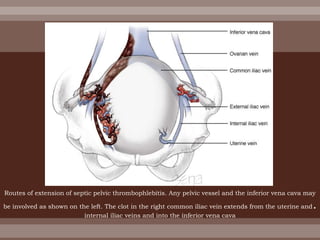
 Ovarian veins are often involved because they
drain the upper half of the uterus.
 When the ovarian veins are involved, the infection is
most often unilateral, involving the right more
frequently than the left.
Routes of extension of septic pelvic thrombophlebitis. Any pelvic vessel and the inferior vena cava may
be involved as shown on the left. The clot in the right common iliac vein extends from the uterine and.
internal iliac veins and into the inferior vena cava
 Occasionally, the thrombus has been noted to extend
to the vena cava or to the left renal vein.
 Ovarian vein involvement usually manifests within a
few days postpartum.
 Disease with later onset more commonly involves the
iliofemoral vein.
 Risk factors include low socioeconomic status,
cesarean birth prolonged rupture of membranes, and
excessive blood loss
 Septic pelvic thrombophlebitis occurs in 1 of every
2000-3000 pregnancies and is
 10 times more common after cesarean birth (1 per
800) than after vaginal delivery (1 per 9000).[38 ]
 The condition affects less than 1% of patients with
endometritis.
Incidence
 Septic thrombophlebitis may result in the migration
of small septic thrombi into the pulmonary
circulation, resulting in effusions, infections, and
abscesses.
 Only rarely is a thrombus large enough to cause
death.
Morbidity and mortality
 Septic pelvic thrombophlebitis usually accompanies
endometritis.
 Patients report initial improvement after an
intravenous antibiotic is initiated for treatment of the
endometritis.
 The patient does not appear ill.
History
 Patients with ovarian vein thrombosis may describe
lower abdominal pain, with or without radiation to
the flank, groin, or upper abdomen.
 Other symptoms include nausea, vomiting, and
bloating. Frequently, patients with enigmatic fever are
asymptomatic except for chills.
 Vital signs demonstrate fever greater than 38°C and
resting tachycardia.
 If pulmonary involvement is significant, the patient
may be tachypneic and stridulous.
 On abdominal examination, 50-70% of patients with
ovarian vein thrombosis have a tender, palpable,
ropelike mass extending cephalad beyond the uterine
cornu.
Physical examination
 Differential diagnosis
 Ovarian vein syndrome
 Pyelonephritis
 Appendicitis
 Broad ligament hematoma
 Adnexal torsion
Differential diagnosis
 Pelvic abscess
 Enigmatic fever
 Drug fever
 Viral syndrome
 Collagen vascular disease
 Pelvic abscess
 Important laboratory studies included urinalysis,
urine culture, and CBC count with differential.
Workup
 Imaging: CT scan and MRI are the studies of choice
for the diagnosis of septic pelvic thrombophlebitis.
 MRI has 92% sensitivity and 100% specificity, and
 CT imaging has a 100% sensitivity and specificity for
identifying ovarian vein thrombosis.
 These imaging modalities are capable of identifying
both ovarian vein and iliofemoral involvement.
 The standard therapy after diagnosis of septic pelvic
thrombophlebitis includes anticoagulation with
intravenous heparin to an aPTT that is twice normal
and continued antibiotic therapy.
 A therapeutic aPTT is usually reached within 24
hours, and heparin is continued for 7-10 days.
Treatment
 In general, long-term anticoagulation is not required.
 Antibiotic therapy is most commonly with gentamicin
and clindamycin.
 Other choices include a second- or third-generation
cephalosporin, imipenem, cilastin, or ampicillin and
sulbactam. All of these antibiotics have a cure rate of
greater than 90%.
 Initially, it was thought that patients defervesce
within 24-28 hours.[40 ]More recent studies show that
it takes 5-6 days for the fevers to resolve.[40,41 ]
 In a 1999 prospective randomized study, women who
were treated with heparin in addition to antibiotics
responded no faster than patients treated with
antibiotics alone.[38 ]
 These findings do not support the empiric practice of
heparin therapy for septic pelvic thrombophlebitis
and raise the question of whether a new standard
protocol should be developed
Postpartum thyroid dysfunction
Sheehan syndrome
 Prevalence and Types Postpartum thyroid
dysfunction can occur any time in the first
postpartum year.
 Clinical or laboratory dysfunction occurs in 5-10% of
postpartum women and may be caused by primary
disorders of the thyroid, such as postpartum
thyroiditis (PPT) and Graves disease, or by secondary
disorders of the hypothalamic-pituitary axis, such as
Sheehan syndrome and lymphocytic hypophysitis.[42 ]
Endocrine Disorders
 PPT is a transient destructive lymphocytic thyroiditis
occurring within the first year after delivery.
 PPT develops 1-8 months postpartum and is an
autoimmune disorder in which microsomal
antibodies of the thyroid play a central role.
 PPT has 2 phases: thyrotoxicosis and
hypothyroidism
Postpartum Thyroiditis
 Thyrotoxicosis occurs 1-4 months postpartum and is
always self-limited. The condition is caused by the
increase release of stored hormone as a result of
disruption of the thyroid gland.
 Hypothyroidism arises between the fourth and eighth
month postpartum.
 Approximately 4% of women develop transient
thyrotoxicosis in the postpartum period.
 Of these, 66-90% return to a euthyroid state; 33%
progress to hypothyroid. Approximately 2-8% of
women develop hypothyroidism in the postpartum
period. A third of these patients experience transient
thyrotoxicosis, whereas 10-30% go on to develop
permanent thyroid dysfunction
Incidence
 Patients with high antithyroid antibody levels during
pregnancy, multiparity, and history of spontaneous
abortions are at high risk for permanent
hypothyroidism.
 Having developed PPT, these women are at significant
risk for recurrent disease after subsequent
pregnancies.
Morbidity and mortality
 Patients with thyrotoxicosis may report fatigue,
palpitations, heat intolerance, tremulousness,
nervousness, and emotional lability.
 Patients in the hypothyroid phase often complain of
fatigue, dry skin, coarse hair, cold intolerance,
depression, and memory and concentration
impairment.
History
 Because many of these symptoms are mild
and nonspecific and are often associated
with the normal postpartum state, PPT may
go undiagnosed.
 On examination, a patient may have
tachycardia, mild exophthalmos, and a
painless goiter.
 The first laboratory test to be performed should be
the thyroid-stimulating hormone (TSH) test.[44 ]
 TSH is decreased during the thyrotoxicosis stage and
increased during the hypothyroid phase
 If the TSH level is abnormal, check thyroid
stimulating antibodies, free thyroxine index (FTI), and
radioactive iodine uptake (RIU) in order to distinguish
this disorder from Graves disease.
Workup
 In PPT, RIU is low, thyroid-stimulating antibodies are
undetectable, and FTI is high.
 Thorough, cost-effective screening test for PPT does
not exist; therefore, limit screening to high-risk
patients such as those with previous PPT or other
autoimmune disorders.[45 ]
No treatment is available to prevent
PPT.[45 ]
Treatment
 Thyrotoxicosis phase: No treatment is
required for the thyrotoxicosis phase unless
the patient's symptoms are severe.
Thyrotoxicosis phase
 In this case, a beta-blocker is useful. For example,
propranolol can be started at 20 mg every 8 hours
and can be doubled if the patient remains
symptomatic.
 Propylthiouracil (PTU) has no role in the treatment of
PPT because the disorder is caused by the release of
hormone from the damaged thyroid and is not
secondary to increased synthesis and secretion.
 Hypothyroid phase: Since the hypothyroid phase of
PPT is often transient, no treatment is required
unless necessitated by the patient's symptoms.
 Treatment is with thyroxine (T4) replacement.
 T4 is most often given for 12-18 months, then
gradually withdrawn.
 The starting dose is 0.05-0.075 mg, which may be
increased by 0.025 mg every 4-8 weeks until a
therapeutic level is achieved.
Hypothyroid phase
 Postpartum Graves disease is not as
common as PPT, but it accounts for 15% of
postpartum thyrotoxicosis.
Postpartum Graves Disease
 Similar to classic Graves disease,
postpartum Graves disease is an
autoimmune disorder characterized by
diffuse hyperplasia of the thyroid gland
caused by the production of antibodies to
the thyroid TSH receptor, resulting in
increased thyroid hormone production and
release.
 No clinical features distinguish postpartum
Graves disease from Graves disease in other
settings; therefore, diagnosis and
management of this disorder is beyond the
scope of this article (see Graves Disease).
 Lymphocytic hypophysitis is a rare autoimmune
disorder causing pituitary enlargement and
hypopituitarism, leading to a decrease in TSH and to
hypothyroidism.
 Symptoms include headache, visual field deficits,
difficulty lactating, and amenorrhea.
 Diagnosis requires histopathologic examination.
Lymphocytic Hypophysitis
 Most patients do not require transsphenoidal
hypophysectomy, so diagnosis is based on history,
physical, diagnostic imaging, and the temporal
relationship to pregnancy.
 Identification of the disorder becomes clearer as the
pituitary reverts to its normal size and recovers some
of its normal function.
 During the acute phase of this disease, hormone
replacement is often necessary.
 Sheehan syndrome is the result of ischemia,
congestion, and infarction of the pituitary gland,
resulting in panhypopituitarism caused by severe
blood loss at the time of delivery.
 Patients have trouble lactating and develop
amenorrhea, as well as symptoms of cortisol and
thyroid hormone deficiency.
 Treatment is with hormone replacement in order to
maintain normal metabolism and response to stress.
Sheehan Syndrome
Psychiatric
Disorders
 Three psychiatric disorders may arise in the
postpartum period:
Postpartum blues
Postpartum depression (PPD)
Postpartum psychosis
.
Psychiatric Disorders
Postpartum blues is a transient
disorder the lasts hours to weeks
It is characterized by bouts of crying
and sadness.
Postpartum blues
 PPD is a more prolonged affective disorder
that lasts for weeks to months.
 PPD is not well defined in terms of
diagnostic criteria,
 The signs and symptoms do not differ from
depression in other settings.
Postpartum depression
 Postpartum psychosis occurs in the first
postpartum year
 A group of severe and varied disorders that elicit
psychotic symptoms
Postpartum psychosis
 The specific etiology of these disorders is unknown.
 The current view is based on a multifactorial
model.
 Psychologically, these disorders are thought to result
from the stress of the peripartum period and
the responsibilities of child rearing.
Etiology
 Other authorities ascribe the symptoms to the
sudden decrease in the endorphins of labor and the
sudden fall in estrogen and progesterone levels that
occur after delivery.
 Low free serum tryptophan levels have been observed,
which is consistent with findings in major depression
in other settings
 Postpartum thyroid dysfunction has also been
correlated with postpartum psychiatric disorders.
 undesired pregnancy,
 feeling unloved by mate,
 age younger than 20 years,
 unmarried status,
 medical indigence,
 low self-esteem,
Risk factors
 dissatisfaction with extent of education,
 economic problems with housing or income,
 poor relationship with husband or boyfriend,
 being part of a family with 6 or more siblings,
 limited parental support (either as a child or as an
adult),
 and past or present evidence of emotional problems.
 Women with a history of PPD and
postpartum psychosis have a 50% chance of
recurrence.
 Women with a previous history of depression
unrelated to childbirth have a 30% chance of
developing PPD
 Approximately 50-70% of women who have given
birth develop symptoms of postpartum blues.
 PPD occurs in 10-15% of new mothers.[46 ]
 The incidence of postpartum or puerperal psychosis
is 0.14-0.26%.
Incidence
 Psychiatric disorders can have deleterious
effects on the social, cognitive, and
emotional development of the newborn.[47
]These ailments can also lead to marital
difficulties.
Morbidity and mortality
 Postpartum blues is a mild, transient, self-
limited disorder that usually develops when the
patient returns home.
 It commonly arises during the first 2 weeks after
delivery and is characterized by bouts of
sadness, crying, anxiety, irritation, restlessness,
mood lability, headache, confusion,
forgetfulness, and insomnia.
History
 : Patients suffering from PPD report
insomnia, lethargy, loss of libido, diminished
appetite, pessimism, incapacity for familial
love, feelings of inadequacy, ambivalence or
negative feelings toward the infant, and an
inability to cope.
PPD
Consult a psychiatrist when PPD is
associated with comorbid drug abuse, lack
of interest in the infant, excessive concern
for the infant's health, suicidal or homicidal
ideations, hallucinations, psychotic
behavior, overall impairment of function, or
failure to respond to therapeutic trial
PPD
 : The signs and symptoms of postpartum
psychosis typically do not differ from those
of acute psychosis in other settings.
Postpartum psychosis
 Patients with postpartum psychosis usually present
with schizophrenia or manic depression, which
signals the emergence of preexisting mental illness
induced by the physical and emotional stresses of
pregnancy and delivery.
schizophrenia
manic depression
 Postpartum blues, which has little effect on
a patient's ability to function, often resolves
by postpartum day 10; therefore, no
pharmacotherapy is indicated. Providing
support and education has been shown to
have a positive effect.
Treatment
 PPD generally lasts for 3-6 months with 25%
of patients still affected at 1 year.
 PPD greatly affects the patient's ability to
complete activities associated with daily
living.
PPD
 Supportive care and reassurance from healthcare
professionals and the patient's family is the first-line
therapy for patients with PPD.
 Empirically, the standard treatment modalities for
major depression have been applied to PPD
PPD
 First-line agents include selective serotonin
reuptake inhibitors (SSRIs) or secondary amines.
Studies on these drugs show that they can be
used by nursing mothers without adverse effects
on the infant.
 Consider electroconvulsive therapy for patients
with PPD because it is one of the most effective
treatments available for major depression.
 Treatment is recommended for 9-12 months
beyond remission of symptoms, with tapering over
the last 1-2 months.
PPD
 Treatment of postpartum psychosis should
be supervised by a psychiatrist and should
involve hospitalization.
 Specific therapy is controversial and should
be targeted to the patient's specific
symptoms.
Postpartum psychosis
psychiatrist
 Patients with postpartum psychosis are
thought to have a better prognosis
than those with nonpuerperal psychosis.
 Postpartum psychosis generally lasts only 2-
3 months.
Postpartum psychosis
 Definition of puerperal fever
 A temperature rise above 100.0 °F (38°C) maintained
over 24 hours or recurring during the period from the
end of the first to the end of the 10th day after
childbirth or abortion. (ICD-10)
 Oral temperature of 100.0 °F (38°C) or more on any
two of the first ten days postpartum. (USJCMW)[6]
 Terminology
 Puerperal fever is no longer favored as a diagnostic category.
Instead, contemporary terminology specifies:[1]
 the specific target of infection: endometritis (inflammation of
the inner lining of the uterus), metrophlebitis (inflammation of
the veins of the uterus), and peritonitis (inflammation of the
membrane lining of the abdomen)
 the severity of the infection: (relatively) uncomplicated infection
(contained multiplication of microbes), and possibly life-
threatening sepsis (uncontrolled and uncontained
multiplication of microbes throughout the blood stream).
020 normal and abnormal puerperium 2

020 normal and abnormal puerperium 2

  • 1.
  • 2.
     The topicwill include  Anatomic change after delivery  Care of the postpartum patient  Complication in the post partum period  Patient educations  Discharge instructions Puerperium
  • 3.
     Puerperium isdefined as the time from the delivery of the placenta through the first few weeks after the delivery.  This period is usually considered to be 6 weeks in duration.  By 6 weeks after delivery, most of the changes of pregnancy, labor, and delivery have resolved and the body has reverted to the nonpregnant state Introduction
  • 4.
  • 5.
    Immediate PPUmbilicus 2 weeks Pelviccavity Near normal size 6 weeks Post partum uterus
  • 6.
    Immediately after delivery Lochia Lochia alba Cease Bleeding Lochiarubra Lochia serosa Uterine contraction Yellow Brownish red 5-6week
  • 7.
     The cervixalso begins to rapidly revert to a nonpregnant state,  It never returns to the nulliparous state..  By the end of the first week, the external os closes Cervix
  • 9.
  • 10.
    RETURN TO PREPREGNANT STATE WHEN OVARIAN FUNCTION RESUME DELAY IN PROLONGED BREAST FEEDING
  • 11.
    Perineum SWOLLEN & ENGORGEDVULVA Resolves within 1-2 weeks
  • 12.
    The abdominal wallremains soft and poorly toned for many weeks. The return to a prepregnant state depends greatly on maternal exercise Abdominal wall
  • 13.
    Ovarian function Greatly influencedby breastfeeding Caused by the suppression of ovulation due to the elevation in prolactin.
  • 14.
    The mother whodoes not breastfeed may ovulate as early as 27 days after delivery. Most women have a menstrual period by 12 weeks; the mean time to first menses is 7-9 weeks. Ovaries (continue)
  • 15.
     The changesto the breasts that prepare the body for breastfeeding occur throughout pregnancy.  If delivery ensues, lactation can be established as early as 16 weeks' gestation. Breasts
  • 16.
    Graphic demonstration ofthe alveolar and ductal system
  • 17.
     The colostrumis the liquid that is initially released by the breasts during the first 2-4 days after delivery.  High in protein content, this liquid is protective for the newborn. Colostrum
  • 18.
     The colostrum,which the baby receives in the first few days postpartum, is already present in the breasts, and suckling by the newborn triggers its release.  The process, which begins as an endocrine process, switches to an autocrine process; the removal of milk from the breast stimulates more milk production. Colostrum (continue)
  • 19.
     Over thefirst 7 days, the milk matures and contains all necessary nutrients in the neonatal period  The milk continues to change throughout the period of breastfeeding to meet the changing demands of the baby. Colostrum (continue)
  • 20.
     Lactogenesis isinitially triggered by the delivery of the placenta, which results in falling levels of estrogen and progesterone, with the continued presence of prolactin.  If the mother is not breastfeeding, the prolactin levels decrease and return to normal within 2-3 weeks Lactogenesis
  • 21.
    Lactogenesis Delivery of placenta Dropof estrogen & progesterone Prolactin
  • 25.
    The immediate postpartumperiod most often occurs in the hospital setting, where the majority of women remain for approximately 2 days after a vaginal delivery and 3-5 days after a cesarean delivery. Routine Postpartum Care
  • 26.
     During thistime, women are recovering from their delivery and are beginning to care for the newborn.  This period is used to make sure the mother is stable and to educate her in the care of her baby (especially the first-time mother). Routine Postpartum Care (continue)
  • 27.
     While stillin the hospital, the mother is monitored for  Blood loss,  Signs of infection,  Abnormal blood pressure,  Contraction of the uterus,  Ability to void. Routine Postpartum Care (continue)
  • 28.
     Routine practicesinclude a check of the baby's blood type and administration of the RhoGAM vaccine to the Rh-negative mother if her baby has an Rh- positive blood type.  At minimum, the mother's hematocrit level is checked on the first postpartum day.  Women are encouraged to ambulate and to eat a regular diet. Routine Postpartum Care (continue)
  • 29.
     After avaginal delivery, most women experience swelling of the perineum and consequent pain. This is intensified if the woman has had an episiotomy or a laceration.  Routine care of this area includes ice applied to the perineum to reduce the swelling and to help with pain relief Vaginal delivery
  • 30.
     Conventional treatmentis to use ice for the first 24 hours after delivery and then switch to warm sitz baths.  However, little evidence supports this method over other methods of postpartum perineum treatment. Vaginal delivery(continue)
  • 31.
     Pain medicationsare helpful both systemically as nonsteroidal anti- inflammatory drugs (NSAIDs) or narcotics and as local anesthetic spray to the perineum Vaginal delivery(continue)
  • 32.
     Hemorrhoids areanother postpartum issue likely to affect women who have vaginal deliveries.  Symptomatic relief is the best treatment during this immediate postpartum period because hemorrhoids often resolve as the perineum recovers.  This can be achieved by the use of corticosteroid creams, witch hazel compresses, and local anesthetic spray to the perineum Hemorrhoids
  • 33.
     Tampon usecan be resumed when the patient is comfortable inserting the tampon and can wear it without discomfort. This takes longer for the woman who has had an episiotomy or a laceration than for one who has not.  The vagina and perineum should first be fully healed, which takes about 3 weeks. Tampons must be changed frequently to prevent infection. Tampon
  • 34.
     The womanwho has had a cesarean delivery usually does not experience pain and discomfort from her perineum but rather from her abdominal incision.  This, too, can be treated with ice to the incision and with the use of systemic pain medication.  Women who have had a cesarean delivery are often slower to begin ambulating, eating, and voiding; however, encourage them to quickly resume these and other normal activities Cesarean delivery
  • 35.
     Sexual intercoursemay resume when bright red bleeding ceases, the vagina and vulva are healed, and the woman is physically comfortable and emotionally ready.  Physical readiness usually takes about 3 weeks.  Birth control is important to protect against pregnancy because the first ovulation is very unpredictable Sexual intercourse
  • 36.
     Substantial educationtakes place during the hospital stay, especially for the first-time mother.  The mother (and often the father) is taught routine care of the baby, including feeding, diapering, and bathing, as well as what can be expected from the baby in terms of sleep, urination, bowel movements, and eating. Patient education
  • 37.
     In womenwho choose not to breastfeed, the care of the breasts is quite different.  Care should be taken not to stimulate the breasts in any way in order to prevent milk production. Women who choose not to breastfeed
  • 38.
     Ice packsapplied to the breasts and the use of a tight brassiere or a binder can also help to prevent breast engorgement.  Acetaminophen or NSAIDs can alleviate the symptoms of breast engorgement (eg, tenderness, swelling, fever) if it occurs.
  • 39.
     Bromocriptine wasformerly administered to suppress milk production; however, its use has diminished because it requires 2 weeks of administration, does not always work, and can produce adverse reactions
  • 40.
     The mostimportant information is who and where to call if she has problems or questions.  She also needs details about resuming her normal activity.  Instructions vary, depending on whether the mother has had a vaginal or a cesarean delivery. Discharge instructions
  • 41.
     The womanwho has had a vaginal delivery may resume all physical activity, including using stairs, riding or driving in a car, and performing muscle- toning exercises, as long as she experiences no pain or discomfort.  The key to resuming normal activity is not to overdo it on one day to the point that the mother is completely exhausted the next day. Resuming normal activity.
  • 42.
     Pregnancy, labor,delivery, and care of the newborn are strenuous and stressful, and the mother needs sufficient rest to recover.  The woman who has had a cesarean delivery must be more careful about resuming some of her activities.  She must avoid overuse of her abdomen until her incision is well healed in order to prevent an early dehiscence or a hernia later on. Resuming normal activity. (continue)
  • 43.
     Women typicallyreturn for their postpartum visit at approximately 6 weeks after delivery.  No sound reason for this exists; the time has probably become the standard so that women who are returning to work can be medically cleared to return. Return for postpartum visit
  • 44.
     Anything thatmust be done at a 6-weeks' postpartum visit can be done earlier or later than 6 weeks.  An earlier visit can often aid a new mother in resolving problems she may be having or in providing a time to answer her questions. Return for postpartum visit (continue)
  • 45.
     The mothermust be counseled about birth control options before she leaves the hospital.  She may not be ready to decide about a method, but she needs to know the options. Birth control
  • 46.
     Her decisionwill be based on a number of factors,  including her motivation in using a particular method,  how many children she has,  and whether she is breastfeeding.
  • 47.
     Many optionsare available, as follows:  Natural methods  Barrier method  Hormonal contraceptives  IUD  Permanent method
  • 48.
     Natural methodscan be used in highly motivated couples, to include  the use of monitoring the basal body temperature  and the quality and quantity of the cervical mucus to determine what phase of the menstrual cycle the woman is in and if it is safe to have intercourse. Natural methods
  • 49.
     Barrier methodsof contraception,  condoms,  vaginal spermicides  diaphragms and  cervical caps Barrier methods of contraception
  • 50.
     Hormonal methodsof contraception are numerous.  Combined estrogen-progestin agents are taken daily by mouth or monthly by injection.  Progestin-only agents are available for daily intake  long-acting injections that are effective for 12 weeks Hormonal methods of contraception
  • 51.
     Intrauterine devicescan be placed a few weeks after delivery. Intrauterine devices
  • 52.
     Permanent methodsof birth control (ie, tubal ligation, vasectomy) are best for the couple who has more than one child and who are sure that they do not want more. Permanent methods of birth control
  • 54.
     Postpartum hemorrhage Immediate PPH  Late PPH  Wound complication  Episiotomy wound  Perineal tear  Cesarean wound Complications in postpartum period
  • 55.
     Infections  Endometritis Pelvic thrombophlebitis  Mastitis  Endocrine disorder  Thyroid  Sheehan  Psychiatric disorders Complications in postpartum period (continue)
  • 56.
     Postpartum hemorrhageis defined as excessive blood loss during or after the third stage of labor  The average blood loss is 500 mL at vaginal delivery and 1000 mL at cesarean delivery.  Since diagnosis is based on subjective observation, it is difficult to define clinically. Postpartum hemorrhage Subjective observation
  • 57.
     Objectively, postpartumhemorrhage is defined as a 10% change in hematocrit level between admission and the postpartum period or the need for transfusion after delivery secondary to blood loss.[3 ] 10% change in hematocrit Postpartum hemorrhage (continue)
  • 58.
    Early postpartum hemorrhageis described as that occurring within the first 24 hours after delivery. Early postpartum hemorrhage
  • 59.
    Late postpartum hemorrhagemost frequently occurs 1-2 weeks after delivery but may occur up to 6 weeks postpartum. Late postpartum hemorrhage
  • 60.
     Early postpartumhemorrhage may result from  Uterine atony  Retained products of conception  Uterine rupture  Uterine inversion  Placenta accreta  Lower genital tract lacerations  Coagulopathy, and hematoma. Postpartum hemorrhage (continue)
  • 61.
     Causes oflate postpartum hemorrhage include  Retained products of conception  Infection  Subinvolution of placental site  Coagulopathy Postpartum hemorrhage (continue)
  • 62.
     Are themost common causes of postpartum hemorrhage. Uterine atony & lower genital tract lacerations
  • 63.
     Factors predisposingto uterine atony include  Overdistension of the uterus secondary to multiple gestations  Polyhydramnios  Macrosomia  Rapid or prolonged labor  Grand multiparity Uterine atony
  • 64.
     Oxytocin administration Intra-amniotic infection  Use of uterine-relaxing agents such as  Terbutaline  Magnesium sulfate  Halogenated anesthetics  Nitroglycerin. Uterine atony (continue)
  • 65.
     Cause excessivebleeding due to  Increased blood flow to the pregnant uterus  Lack of closure of the spiral arteries and venous sinuses Uterine atony (continue)
  • 66.
    Placental separation Strong uterine contraction Spiral arterioles collapsed Veincollapsed Hemostasis Poor uterine contraction Bleeding from spiral arterioles and veins PPH Uterine atony Incomplete separation of placenta Thirdstageoflabor
  • 67.
     Active managementof the third stage of labor have proven to reduce blood loss and decrease the rate of postpartum hemorrhage  Administration of uterotonics before the placenta is delivered (oxytocin still being the agent of choice )  Early clamping and cutting of the umbilical cord  Traction on the umbilical cord Postpartum hemorrhage (continue)
  • 68.
     Lower genitaltract lacerations, including cervical and vaginal lacerations are the result of obstetrical trauma and are more common with  Operative vaginal deliveries, such as with forceps or vacuum extraction.  Macrosomia  Precipitous delivery  Episiotomy. Lower genital tract lacerations
  • 69.
     Vaginal deliveryis associated with a 3.9% incidence of postpartum hemorrhage.  Cesarean delivery is associated with a 6.4% incidence of postpartum hemorrhage.  Delayed postpartum hemorrhage occurs in 1-2% of patients Incidence
  • 70.
     In theUnited States, postpartum hemorrhage is responsible for 5% of maternal deaths.  Other causes of morbidity include the need for blood transfusions or surgical intervention that may lead to future infertility. Morbidity and mortality
  • 71.
     The antepartumor early intrapartum identification of risk factors for postpartum hemorrhage allows for advanced preparation and possible avoidance of severe sequelae. History
  • 72.
     Every patientmust be interviewed upon admission to the labor floor.  Request information about parity, multiple gestation, polyhydramnios, previous episodes of postpartum hemorrhage, history of bleeding disorders, and desire for future fertility. History
  • 73.
     Note theuse of prolonged oxytocin administration, as well as the use of magnesium sulfate during the patient's labor course. History
  • 74.
     Physical examinationis performed simultaneously with resuscitative measures. Perform a vigorous bimanual examination, which may reveal a retained placenta or a hematoma of the perineum or pelvis, and which also allows for uterine massage.  Closely inspect the lower genital tract in order to identify lacerations. Closely examine the placenta to determine if any fragments are missing. Physical examination
  • 75.
    The onset ofpostpartum hemorrhage is acute, intervention is immediate, and resolution is generally within minutes; consequently, laboratory studies or imaging in the management of the immediate course of this process has little role. Workup
  • 76.
    However, it isimportant to check a patient's CBC count and prothrombin time/activated partial thromboplastin time (PT/aPTT) to exclude resulting anemia or coagulopathy, which may require further treatment.
  • 77.
    Upon admission ofeach patient to the labor ward, obtain ABO and D blood type determinations, and acquire adequate intravenous access.
  • 78.
    Initial therapy includes Oxygen Bimanualmassage Removal of any blood clots from the uterus Emptying of the bladder Treatment
  • 79.
    Bimanual compression ofthe uterus between the fist in the anterior fornix and the abdominal hand, which is also used for uterine massage. This usually controls hemorrhage from uterine atony Bimanual compression of the uterus
  • 80.
    Oxytocin infusion (10-40U in 1000 mL of RLS/NSS If retained products of conception are noted, perform manual removal or uterine curettage. Syntocinon
  • 81.
     Methylergonovine 0.2mgIV/IM  This agent may cause transient hypertension, it is contraindicated in patients with hypertensive disease. Methergine
  • 82.
     Misoprostol hasbeen used clinically for the treatment of postpartum hemorrhage. Cytotec
  • 83.
     When postpartumhemorrhage is not responsive to pharmacological therapy and no vaginal or cervical lacerations have been identified, consider the following more invasive treatment methods:
  • 84.
     Uterine packingis now considered safe and effective therapy for the treatment of postpartum hemorrhage.  Use prophylactic antibiotics and concomitant oxytocin with this technique. Uterine packing
  • 85.
     The timingof removal of the packing is controversial, but most physicians favor 24-36 hours.  This treatment is successful in half of patients  If unsuccessful, it still provides time in which the patient can be stabilized before other surgical techniques are employed
  • 86.
     A Foleycatheter with a large bulb (24F) can be used as an alternative to uterine packing.This technique can be highly effective, is inexpensive, requires no special training, and may prevent the need for surgery. Foley catheter
  • 87.
     Uterine arteryembolization, which is performed under local anesthesia, is a minimally invasive technique.  The success rate is greater than 90%  This procedure is believed to preserve fertility Uterine artery embolization
  • 88.
     Complications arerare (6-7%) and include fever, infection, and nontarget embolization.  In patients at high risk for postpartum hemorrhage, such as those with placenta previa, placenta accreta, coagulopathy, or cervical pregnancy, the catheter can be placed prophylactically.
  • 89.
     A sutureis passed through the anterior uterine wall in the lower uterine segment approximately 3 cm medial to the lateral edge of the uterus.  The suture is wrapped over the fundus 3–4 cm medial to the cornual and inserted into the posterior uterine wall again in the lower uterine segment approximately 3 cm medial to the lateral edge of the uterus and brought out 3 cm medial to the other edge of the uterus. The B-Lynch suture technique
  • 90.
     The sutureis wrapped over the fundus and directed into and out of the anterior uterine wall parallel to the previous anterior sutures.  The uterus is compressed in an accordionlike fashion and the suture is tied across the lower uterine segment.
  • 93.
    The Hayman uterinecompression suture without opening the uterine cavity
  • 94.
    The Cho multiplesquare sutures compressing anterior to posterior uterine walls
  • 95.
     The B-Lynchsuture technique and other compression suture techniques are operative approaches to postpartum hemorrhage that have proven to preserve fertility.  As practitioners become proficient in this technique, it may be considered before uterine artery or hypogastric artery ligation and hysterectomy
  • 96.
     When conservativetherapy fails, the next step is surgery with either bilateral uterine artery ligation or hypogastric artery ligation.  Uterine artery ligation is thought to be successful in 80-95% of patients.  If this therapy fails, hypogastric artery ligation is an option. However, this approach is technically difficult and is only successful in 42-50% of patients.[14 ]
  • 97.
     Instead, stepwisedevascularization of the uterus is now thought to be the next best approach, with possible ligation of the utero-ovarian and infundibulopelvic vessels. Stepwise devascularization
  • 98.
    Placement of ligaturesin the process of stepwise devascularization, including ligature of thedescending uterine and vaginal arteries
  • 99.
    The complex vasculardistribution to the pelvic organs. In this procedure of stepwise devascularization, the patient must be in the Lloyd Davis or modified lithotomy position, with one of the assistants able to access and swab the vagina to assess bleeding control
  • 100.
    Matsubara–Yano uterine compressionsuture. Five penetrating sutures, three longitudinal and two transverse, are placed Matsubara–Yano
  • 101.
     When allother therapies fail, emergency hysterectomy is often a necessary and lifesaving procedure
  • 102.
  • 103.
  • 104.
  • 105.
    Manual removal ofplacenta is accomplished as the fingers are swept from side to side and advanced (A) until the placenta is detached, grasped, and removed (B) Manual removal of placenta
  • 106.
  • 107.
    Puerperal infection isa general term used to describe any bacterial infection of the genital tract after delivery Puerperal infection
  • 108.
    Along with preeclampsiaand obstetrical hemorrhage, puerperal infection formed the lethal triad of causes of maternal deaths for many decades of the 20th century Fortunately, because of effective antimicrobials, maternal deaths from infection have become uncommon.
  • 109.
    A temperature of38.0°C (100.4°F) or higher—in the puerperium Most persistent fevers after childbirth are caused by genital tract infection Puerperal Fever
  • 110.
    Pathogenesis of metritisfollowing cesarean delivery
  • 111.
     Endometritis isan ascending polymicrobial infection.  The causative agents are usually normal vaginal flora or enteric bacteria. Infections Endometritis
  • 112.
    Endometritis is theprimary cause of postpartum infection. Etiology
  • 113.
    The most commonorganisms are divided into 4 groups: aerobic gram-negative bacilli, anaerobic gram-negative bacilli, aerobic streptococci anaerobic gram-positive cocci.
  • 115.
    Specifically, Escherichia coli,Klebsiella pneumoniae, and Proteus species are the most frequently identified organisms. Escherichia coli Proteus Klebsiella pneumoniae
  • 116.
    Endometritis Day Organism 1-2 GroupA streptococci 3-4 Enteric bacteria, most commonly E coli Anaerobic bacteria >7 Chlamydia trachomatis.
  • 117.
    Endometritis following cesarean deliveryis most frequently caused by anaerobic gram-negative bacilli, specifically Bacteroides species.
  • 118.
     Known riskfactors for endometritis include  Cesarean delivery  Young age  Low socioeconomic status  Prolonged labor  Prolonged rupture of membranes Risk factors for endometritis
  • 119.
     Multiple vaginalexaminations  Placement of an intrauterine catheter  Preexisting infection or colonization of the lower genital tract  Twin delivery  Manual removal of the placenta.( It has also been shown that manual removal of the placenta at cesarean delivery increases the incidence of endometritis.)
  • 120.
     Endometritis complicates1-3% of all vaginal deliveries  5-15% of scheduled cesarean deliveries.  The incidence of endometritis in patients who undergo cesarean delivery after an extended period of labor is  30-50% without prophylactic antibiotic  15-20% with prophylactic antibiotics. Incidence
  • 121.
     Following 48-72hours of intravenous antibiotic therapy, 90% of women recover.  Fewer than 2% of patients develop life- threatening complications such as septic shock, pelvic abscess, or septic pelvic thrombophlebitis. Morbidity and mortality
  • 122.
     A patientmay report any of the following symptoms:  Fever, chills  Lower abdominal pain  Malodorous lochia  Increased vaginal bleeding  Anorexia, and malaise History
  • 123.
     Vital signs Respiratory system  Breasts  Abdomen /fundus  Perineum  Lower extremities Physical examination
  • 124.
     A patientwith endometritis typically has  Fever of 38°C,  Tachycardia,  Fundal tenderness  Vaginal discharge, Mucopurulent Foul/odorless
  • 125.
     Urinary tractinfection  Acute pyelonephritis  Lower genital tract infection  Wound infection Differential diagnosis  Atelectasis  Pneumonia  Thrombophlebitis  Mastitis  Appendicitis
  • 126.
    Workup  CBC  UA Hemoculture  Urine culture  Chest X-ray as needed
  • 127.
     Treatment ofendometritis is with intravenous antibiotics  Parenteral antibiotics are usually stopped  Afebrile for 24-48 hours,  Tolerating a regular diet,  Ambulating without difficulty  In general, an extended course of oral antibiotics has not been found to be beneficial Treatment
  • 128.
     Extended antibiotics: In patients who respond quickly to intravenous antibiotics and who desire early discharge, a short course of oral antibiotics may be substituted for continued intravenous therapy.  The other exception includes patients with staphylococcal bacteremia requiring an extended period of treatment
  • 129.
     No consensusexists regarding the antibiotic regimen for treatment of endometritis,  Standard regimen------GENTAMICIN + CLINDAMYCIN  Gentamicin and clindamycin have a cure rate of approximately 90%  A once daily dose of gentamicin and clindamycin antibiotics has a similar success rate to the standard every 8 hour dose schedule
  • 130.
     This combinationis not effective against Enterococcus faecalis, which may be the cause in up to 25% of these infections.  The addition of ampicillin (or vancomycin for patients with a penicillin allergy), is considered when the patient does not respond to the initial therapy of gentamicin and clindamycin to cover this organism. ] Ampicillin Vancomycin Enterococcus faecalis
  • 131.
     Alternatively, broad-spectrumsecond- and third- generation cephalosporins, extended spectrum penicillins, and combination beta-lactamase inhibitors with penicillins have been used in an attempt to avoid polypharmacy and its associated toxicities.  In general, these alternative therapies have a cure rate of 80-90%.  The most accepted among this category of drugs are cefoxitin or moxalactam
  • 132.
    Gentamicin +Clindamycin Ampicillin +Genta+Clinda Vancomycin+Genta +Clinda Cefoxicitin Moxalactam Antibiotic regimen Enterococcus faecalis
  • 133.
     The highrate of endometritis following cesarean delivery  In emergency cesarean deliveries, use of prophylactic cefazolin has been shown to reduce the rate of postpartum endometritis and wound infection  Ampicillin /sulbactam, cefazolin, and cefotetan are all acceptable choices for single-dose antibiotic prophylaxis Endometritis following cesarean
  • 134.
     Controversy stillexists with regard to the need for prophylactic antibiotics during elective deliveries.  The Cochrane Database demonstrated a two-thirds reduction in endometritis in women undergoing elective or nonelective cesarean delivery who receive prophylactic antibiotics
  • 135.
     The timingof prophylaxis is also an issue; 2 recent studies showed lower rates of infection when antimicrobial prophylaxis occurred before skin incision vs after cord clamping.[27,28  ]However, another trial that studied the same timing issue found that the timing of prophylaxis did not affect maternal infectious morbidity.[29 ]
  • 136.
    Before skin incision Aftercord clamping Timing of prophylaxis
  • 138.
     A urinarytract infection (UTI) is defined as a bacterial inflammation of the bladder or urethra.  >100,000 colony-forming units from a clean-catch urine specimen  >10,000 colony-forming units on a catheterized specimen Urinary Tract Infections
  • 139.
     Risk factorsfor postpartum UTI  Cesarean delivery  Forceps delivery  Vacuum delivery  Tocolysis  Induction of labor  Maternal renal disease Etiology  Preeclampsia  Eclampsia  Epidural anesthesia  Bladder catheterization  Length of hospital stay  Previous UTI during pregnancy
  • 140.
     The mostcommon pathogen is E coli.  In pregnancy, group B streptococci are a major pathogen.  Other causative organisms include Staphylococcus saprophyticus, E faecalis, Proteus, and K pneumoniae.
  • 141.
     Postpartum bacteruriaoccurs in 3-34% of patients, resulting in a symptomatic infection in approximately 2% of these patients. Incidence
  • 142.
     A patientmay report frequency, urgency, dysuria, hematuria, suprapubic or lower abdominal pain, or no symptoms at all History
  • 143.
     On examination,vital signs are stable and the patient is afebrile. Suprapubic tenderness may be elicited on abdominal examination. Physical examination
  • 144.
     Acute cystitis Acute pyelonephritis Differential diagnosis
  • 145.
     UA  Urineculture from a clean-catch / catheterized specimen  CBC Workup
  • 146.
     Treatment isstarted empirically in uncomplicated infection because the usual organisms have predictable susceptibility profiles.  When sensitivities are available, use them to guide antimicrobial selection.  Treatment is with a 3- or 7-day antibiotic regimen. Treatment
  • 147.
     Commonly usedantibiotics include trimethoprim/sulfamethoxazole, ciprofloxacin, and norfloxacin.  Amoxicillin is often still used, but it has lower cure rates secondary to increasing resistance of E coli.  The quinolones are very effective but should not be used in breastfeeding mothers.
  • 149.
     Women whodo not breast feed may experience engorgement, milk leakage, and breast pain, which peaks at 3 to 5 days after delivery (Spitz and associates, 1998).  As many as half require analgesia for breast-pain relief. Up to 10 percent of women report severe pain up to 14 days. Breast Engorgement
  • 151.
     Breasts shouldbe supported with a well-fitting brassiere.  Pharmacological or hormonal agents are not recommended to suppress lactation.  Instead, ice packs and oral analgesics for 12 to 24 hours can be used to relieve discomfort.  A breast binder
  • 153.
  • 154.
     Puerperal feverfrom breast engorgement is common.  Before breast feeding was commonplace, Almeida and Kitay (1986) reported that 13 percent of postpartum women had fever that ranged from 37.8 to 39°C from engorgement. Milk Fever
  • 155.
     Fever seldompersisted for longer than 4 to 16 hours.  The incidence and severity of engorgement, and fever associated with it, are much lower if women breast feed.  Other causes of fever, especially those due to infection, must be excluded.
  • 156.
    Mastitis is definedas inflammation of the mammary gland. Mastitis
  • 157.
  • 158.
  • 159.
  • 160.
     Milk stasisand cracked nipples, which contribute to the influx of skin flora, are the underlying factors associated with the development of mastitis.  Mastitis is also associated with primiparity, incomplete emptying of the breast, and improper nursing technique Etiology
  • 161.
     The mostcommon causative organism, isolated in approximately half of all cases, is Staphylococcus aureus.[32 ]  Other common pathogens include Staphylococcus epidermidis, S saprophyticus, Streptococcus viridans, and E coli.
  • 162.
     In theUnited States, the incidence of postpartum mastitis is 2.5-3%.[33,32 ]  Mastitis typically develops during the first 3 months postpartum, with the highest incidence in the first few weeks after delivery. Incidence
  • 163.
     Neglected, resistant,or recurrent infections can lead to the development of an abscess, requiring parenteral antibiotics and surgical drainage  Abscess development complicates 5-11% of the cases of postpartum mastitis and should be suspected when antibiotic therapy fails Morbidity and mortality
  • 164.
     Mastitis andbreast abscess also increase the risk of viral transmission from mother to infant.  The diagnosis of mastitis is solely based on the clinical picture.
  • 165.
     Symptoms ofsuppurative mastitis seldom appearbefore the end of the first week postpartum and as a rule, not until the third or fourth week.  Infection almost invariably is unilateral, and marked engorgement usually precedes inflammation.  Symptoms include chills or actual rigor, which are soon followed by fever and tachycardia. History
  • 166.
     Fever, chills,myalgias, erythema, warmth, swelling, and breast tenderness characterize this disease.  The breast becomes hard and reddened, and there is severe pain.  About 10 percent of women with mastitis develop an abscess. Detection of fluctuation may be difficult, and sonography may be helpful to detect an abscess.
  • 167.
     Focus examinationon vital signs, review of systems, and a complete examination to look for other sources of infection.  Typical findings include an area of the breast that is warm, red, and tender.  When the exam reveals a tender, hard, possibly fluctuant mass with overlying erythema, a breast abscess should be considered. Physical examination
  • 168.
     Mastitis  Breastabscess  Cellulitis Differential diagnosis
  • 169.
     No laboratorytests are required.  Expressed milk can be sent for analysis, but the accuracy and reliability of these results are controversial and aid little in the diagnosis and treatment of mastitis. Workup
  • 170.
     Milk stasissets the stage for the development of mastitis, which can be treated with  moist heat,  massage,  fluids,  rest,  proper positioning of the infant during nursing,  nursing or manual expression of milk,  and analgesics. Treatment
  • 171.
     When mastitisdevelops, penicillinase-resistant penicillins and cephalosporins, such as dicloxacillin or cephalexin, are the drugs of choice.  Erythromycin, clindamycin, and vancomycin may be used for infections that are resistant to penicillin.  Resolution usually occurs 48 hours after the onset of antimicrobial therapy
  • 172.
     An abscessshould be suspected when defervescence does not follow within 48 to 72 hours of mastitis treatment, or when a mass is palpable.  Traditional therapy is surgical drainage Breast Abscess
  • 173.
     Occasionally amilk duct becomes obstructed by inspissated secretions, and milk may accumulate in one or more mammary lobes.  The amount is ordinarily limited, but an excess may form a fluctuant mass—a galactocele—that may cause pressure symptoms and have the appearance of an abscess.  It may resolve spontaneously or require aspiration. Galactocele
  • 177.
  • 178.
    Accessory mammary tissue LeftAxillary Accessory Breast
  • 179.
  • 180.
  • 182.
     Wound infectionsin the postpartum period include  Infections of the perineum developing at the site of an episiotomy or laceration  Infection of the abdominal incision after a cesarean birth Wound Infection
  • 183.
     Wound infectionsare diagnosed on the basis of erythema, induration, warmth, tenderness, and purulent drainage from the incision site, with or without fever.  . This definition can be applied both to the perineum and to abdominal incisions
  • 184.
     : Infectionsof the perineum are rare.  In general, they become apparent on the third or fourth postpartum day.  Known risk factors include infected lochia, fecal contamination of the wound, and poor hygiene.  These infections are generally polymicrobial, arising from the vaginal flora. Perineal infections
  • 185.
     : Abdominalwound infections are most frequently the result of contamination with vaginal flora.  However, S aureus, either from the skin or from an exogenous source, is isolated in 25% of these infections.[34 ]  Genital Mycoplasma species are commonly isolated from infected wounds that are resistant to treatment with penicillins.[35 ] Abdominal wound infections
  • 186.
     Known riskfactors include diabetes, hypertension, obesity, treatment with corticosteroids, immunosuppression, anemia, development of a hematoma, chorioamnionitis, prolonged labor, prolonged rupture of membranes, prolonged operating time, abdominal twin delivery, and excessive blood loss Risk factors
  • 187.
     The incidenceof perineal infections is 0.35-10%.  The incidence of incisional abdominal wound infections is 3-15% and can be decreased to approximately 2% with the use of prophylactic antibiotics Incidence
  • 188.
     The mostcommon consequence of wound infection is increased length of hospital stay.  About 7% of abdominal wound infections are further complicated by wound dehiscence.  More serious sequelae, such as necrotizing fasciitis, are rare, but patients with such conditions have a high mortality rate. Morbidity and mortality
  • 189.
     Perineal infection Hematoma  Hemorrhoids  Perineal cellulitis  Necrotizing fasciitis  Abdominal wound infection  Cellulitis  Wound dehiscence Differential diagnosis
  • 190.
     Patients withperineal infections may complain of an inordinate amount of pain, malodorous discharge, or vulvar edema. History
  • 191.
     Abdominal woundinfections develop around postoperative day 4 and are often preceded by endometritis.  These patients present with persistent fever despite antibiotic treatment.
  • 192.
     Perineal infections:An infected perineum often looks erythematous and edematous and may be accompanied by purulent discharge.  Perform an inspection to identify hematoma, perineal abscess, or stitch abscess. Physical examination
  • 193.
     Abdominal woundinfections: Infected incisions may be erythematous, warm, tender, and indurated.  Purulent drainage may or may not be obvious.  A fluid collection may be appreciated near the wound, which, when entered, may release serosanguinous or purulent fluid.
  • 194.
     The diagnosisof wound infection is often made based on the clinical findings.  Serial CBC counts with differentials may be helpful, especially if a patient does not respond to therapy as anticipated. Workup
  • 195.
     Treatment ofperineal infections includes symptomatic relief with NSAIDs, local anesthetic spray, and sitz baths.  Identified abscesses must be drained, and broad- spectrum antibiotics may be initiated. Treatment
  • 196.
     Abdominal woundinfections: These infections are treated with drainage and inspection of the fascia to ensure that it is intact. Antibiotics may be used if the patient is afebrile.  in depth.[36,37
  • 197.
     Most patientsrespond quickly to the antibiotic once the wound is drained.  Antibiotics are generally continued until the patient has been afebrile for 24-48 hours.
  • 198.
     Patients donot require long-term antibiotics unless cellulitis has developed.  Studies have shown that closed suction drainage or suturing of the subcutaneous fat decreases the incidence of wound infection when the subcutaneous tissue is greater than 2 cm
  • 200.
     Septic pelvicthrombophlebitis is defined as venous inflammation with thrombus formation in association with fevers unresponsive to antibiotic therapy. Septic Pelvic Thrombophlebitis
  • 201.
     Bacterial infectionof the endometrium seeds organisms into the venous circulation, which damages the vascular endothelium and in turn results in thrombus formation.  The thrombus acts as a suitable medium for proliferation of anaerobic bacteria. Etiology
  • 202.
     Ovarian veinsare often involved because they drain the upper half of the uterus.  When the ovarian veins are involved, the infection is most often unilateral, involving the right more frequently than the left.
  • 203.
    Routes of extensionof septic pelvic thrombophlebitis. Any pelvic vessel and the inferior vena cava may be involved as shown on the left. The clot in the right common iliac vein extends from the uterine and. internal iliac veins and into the inferior vena cava
  • 204.
     Occasionally, thethrombus has been noted to extend to the vena cava or to the left renal vein.  Ovarian vein involvement usually manifests within a few days postpartum.  Disease with later onset more commonly involves the iliofemoral vein.
  • 205.
     Risk factorsinclude low socioeconomic status, cesarean birth prolonged rupture of membranes, and excessive blood loss
  • 206.
     Septic pelvicthrombophlebitis occurs in 1 of every 2000-3000 pregnancies and is  10 times more common after cesarean birth (1 per 800) than after vaginal delivery (1 per 9000).[38 ]  The condition affects less than 1% of patients with endometritis. Incidence
  • 207.
     Septic thrombophlebitismay result in the migration of small septic thrombi into the pulmonary circulation, resulting in effusions, infections, and abscesses.  Only rarely is a thrombus large enough to cause death. Morbidity and mortality
  • 208.
     Septic pelvicthrombophlebitis usually accompanies endometritis.  Patients report initial improvement after an intravenous antibiotic is initiated for treatment of the endometritis.  The patient does not appear ill. History
  • 209.
     Patients withovarian vein thrombosis may describe lower abdominal pain, with or without radiation to the flank, groin, or upper abdomen.  Other symptoms include nausea, vomiting, and bloating. Frequently, patients with enigmatic fever are asymptomatic except for chills.
  • 210.
     Vital signsdemonstrate fever greater than 38°C and resting tachycardia.  If pulmonary involvement is significant, the patient may be tachypneic and stridulous.  On abdominal examination, 50-70% of patients with ovarian vein thrombosis have a tender, palpable, ropelike mass extending cephalad beyond the uterine cornu. Physical examination
  • 211.
     Differential diagnosis Ovarian vein syndrome  Pyelonephritis  Appendicitis  Broad ligament hematoma  Adnexal torsion Differential diagnosis
  • 212.
     Pelvic abscess Enigmatic fever  Drug fever  Viral syndrome  Collagen vascular disease  Pelvic abscess
  • 213.
     Important laboratorystudies included urinalysis, urine culture, and CBC count with differential. Workup
  • 214.
     Imaging: CTscan and MRI are the studies of choice for the diagnosis of septic pelvic thrombophlebitis.  MRI has 92% sensitivity and 100% specificity, and  CT imaging has a 100% sensitivity and specificity for identifying ovarian vein thrombosis.  These imaging modalities are capable of identifying both ovarian vein and iliofemoral involvement.
  • 215.
     The standardtherapy after diagnosis of septic pelvic thrombophlebitis includes anticoagulation with intravenous heparin to an aPTT that is twice normal and continued antibiotic therapy.  A therapeutic aPTT is usually reached within 24 hours, and heparin is continued for 7-10 days. Treatment
  • 216.
     In general,long-term anticoagulation is not required.  Antibiotic therapy is most commonly with gentamicin and clindamycin.  Other choices include a second- or third-generation cephalosporin, imipenem, cilastin, or ampicillin and sulbactam. All of these antibiotics have a cure rate of greater than 90%.
  • 217.
     Initially, itwas thought that patients defervesce within 24-28 hours.[40 ]More recent studies show that it takes 5-6 days for the fevers to resolve.[40,41 ]
  • 218.
     In a1999 prospective randomized study, women who were treated with heparin in addition to antibiotics responded no faster than patients treated with antibiotics alone.[38 ]  These findings do not support the empiric practice of heparin therapy for septic pelvic thrombophlebitis and raise the question of whether a new standard protocol should be developed
  • 219.
  • 220.
     Prevalence andTypes Postpartum thyroid dysfunction can occur any time in the first postpartum year.  Clinical or laboratory dysfunction occurs in 5-10% of postpartum women and may be caused by primary disorders of the thyroid, such as postpartum thyroiditis (PPT) and Graves disease, or by secondary disorders of the hypothalamic-pituitary axis, such as Sheehan syndrome and lymphocytic hypophysitis.[42 ] Endocrine Disorders
  • 221.
     PPT isa transient destructive lymphocytic thyroiditis occurring within the first year after delivery.  PPT develops 1-8 months postpartum and is an autoimmune disorder in which microsomal antibodies of the thyroid play a central role.  PPT has 2 phases: thyrotoxicosis and hypothyroidism Postpartum Thyroiditis
  • 222.
     Thyrotoxicosis occurs1-4 months postpartum and is always self-limited. The condition is caused by the increase release of stored hormone as a result of disruption of the thyroid gland.  Hypothyroidism arises between the fourth and eighth month postpartum.
  • 223.
     Approximately 4%of women develop transient thyrotoxicosis in the postpartum period.  Of these, 66-90% return to a euthyroid state; 33% progress to hypothyroid. Approximately 2-8% of women develop hypothyroidism in the postpartum period. A third of these patients experience transient thyrotoxicosis, whereas 10-30% go on to develop permanent thyroid dysfunction Incidence
  • 224.
     Patients withhigh antithyroid antibody levels during pregnancy, multiparity, and history of spontaneous abortions are at high risk for permanent hypothyroidism.  Having developed PPT, these women are at significant risk for recurrent disease after subsequent pregnancies. Morbidity and mortality
  • 225.
     Patients withthyrotoxicosis may report fatigue, palpitations, heat intolerance, tremulousness, nervousness, and emotional lability.  Patients in the hypothyroid phase often complain of fatigue, dry skin, coarse hair, cold intolerance, depression, and memory and concentration impairment. History
  • 226.
     Because manyof these symptoms are mild and nonspecific and are often associated with the normal postpartum state, PPT may go undiagnosed.  On examination, a patient may have tachycardia, mild exophthalmos, and a painless goiter.
  • 227.
     The firstlaboratory test to be performed should be the thyroid-stimulating hormone (TSH) test.[44 ]  TSH is decreased during the thyrotoxicosis stage and increased during the hypothyroid phase  If the TSH level is abnormal, check thyroid stimulating antibodies, free thyroxine index (FTI), and radioactive iodine uptake (RIU) in order to distinguish this disorder from Graves disease. Workup
  • 228.
     In PPT,RIU is low, thyroid-stimulating antibodies are undetectable, and FTI is high.  Thorough, cost-effective screening test for PPT does not exist; therefore, limit screening to high-risk patients such as those with previous PPT or other autoimmune disorders.[45 ]
  • 229.
    No treatment isavailable to prevent PPT.[45 ] Treatment
  • 230.
     Thyrotoxicosis phase:No treatment is required for the thyrotoxicosis phase unless the patient's symptoms are severe. Thyrotoxicosis phase
  • 231.
     In thiscase, a beta-blocker is useful. For example, propranolol can be started at 20 mg every 8 hours and can be doubled if the patient remains symptomatic.  Propylthiouracil (PTU) has no role in the treatment of PPT because the disorder is caused by the release of hormone from the damaged thyroid and is not secondary to increased synthesis and secretion.
  • 232.
     Hypothyroid phase:Since the hypothyroid phase of PPT is often transient, no treatment is required unless necessitated by the patient's symptoms.  Treatment is with thyroxine (T4) replacement.  T4 is most often given for 12-18 months, then gradually withdrawn.  The starting dose is 0.05-0.075 mg, which may be increased by 0.025 mg every 4-8 weeks until a therapeutic level is achieved. Hypothyroid phase
  • 233.
     Postpartum Gravesdisease is not as common as PPT, but it accounts for 15% of postpartum thyrotoxicosis. Postpartum Graves Disease
  • 234.
     Similar toclassic Graves disease, postpartum Graves disease is an autoimmune disorder characterized by diffuse hyperplasia of the thyroid gland caused by the production of antibodies to the thyroid TSH receptor, resulting in increased thyroid hormone production and release.
  • 235.
     No clinicalfeatures distinguish postpartum Graves disease from Graves disease in other settings; therefore, diagnosis and management of this disorder is beyond the scope of this article (see Graves Disease).
  • 236.
     Lymphocytic hypophysitisis a rare autoimmune disorder causing pituitary enlargement and hypopituitarism, leading to a decrease in TSH and to hypothyroidism.  Symptoms include headache, visual field deficits, difficulty lactating, and amenorrhea.  Diagnosis requires histopathologic examination. Lymphocytic Hypophysitis
  • 237.
     Most patientsdo not require transsphenoidal hypophysectomy, so diagnosis is based on history, physical, diagnostic imaging, and the temporal relationship to pregnancy.  Identification of the disorder becomes clearer as the pituitary reverts to its normal size and recovers some of its normal function.  During the acute phase of this disease, hormone replacement is often necessary.
  • 238.
     Sheehan syndromeis the result of ischemia, congestion, and infarction of the pituitary gland, resulting in panhypopituitarism caused by severe blood loss at the time of delivery.  Patients have trouble lactating and develop amenorrhea, as well as symptoms of cortisol and thyroid hormone deficiency.  Treatment is with hormone replacement in order to maintain normal metabolism and response to stress. Sheehan Syndrome
  • 239.
  • 240.
     Three psychiatricdisorders may arise in the postpartum period: Postpartum blues Postpartum depression (PPD) Postpartum psychosis . Psychiatric Disorders
  • 241.
    Postpartum blues isa transient disorder the lasts hours to weeks It is characterized by bouts of crying and sadness. Postpartum blues
  • 242.
     PPD isa more prolonged affective disorder that lasts for weeks to months.  PPD is not well defined in terms of diagnostic criteria,  The signs and symptoms do not differ from depression in other settings. Postpartum depression
  • 243.
     Postpartum psychosisoccurs in the first postpartum year  A group of severe and varied disorders that elicit psychotic symptoms Postpartum psychosis
  • 244.
     The specificetiology of these disorders is unknown.  The current view is based on a multifactorial model.  Psychologically, these disorders are thought to result from the stress of the peripartum period and the responsibilities of child rearing. Etiology
  • 245.
     Other authoritiesascribe the symptoms to the sudden decrease in the endorphins of labor and the sudden fall in estrogen and progesterone levels that occur after delivery.  Low free serum tryptophan levels have been observed, which is consistent with findings in major depression in other settings  Postpartum thyroid dysfunction has also been correlated with postpartum psychiatric disorders.
  • 246.
     undesired pregnancy, feeling unloved by mate,  age younger than 20 years,  unmarried status,  medical indigence,  low self-esteem, Risk factors
  • 247.
     dissatisfaction withextent of education,  economic problems with housing or income,  poor relationship with husband or boyfriend,  being part of a family with 6 or more siblings,  limited parental support (either as a child or as an adult),  and past or present evidence of emotional problems.
  • 248.
     Women witha history of PPD and postpartum psychosis have a 50% chance of recurrence.  Women with a previous history of depression unrelated to childbirth have a 30% chance of developing PPD
  • 249.
     Approximately 50-70%of women who have given birth develop symptoms of postpartum blues.  PPD occurs in 10-15% of new mothers.[46 ]  The incidence of postpartum or puerperal psychosis is 0.14-0.26%. Incidence
  • 250.
     Psychiatric disorderscan have deleterious effects on the social, cognitive, and emotional development of the newborn.[47 ]These ailments can also lead to marital difficulties. Morbidity and mortality
  • 251.
     Postpartum bluesis a mild, transient, self- limited disorder that usually develops when the patient returns home.  It commonly arises during the first 2 weeks after delivery and is characterized by bouts of sadness, crying, anxiety, irritation, restlessness, mood lability, headache, confusion, forgetfulness, and insomnia. History
  • 252.
     : Patientssuffering from PPD report insomnia, lethargy, loss of libido, diminished appetite, pessimism, incapacity for familial love, feelings of inadequacy, ambivalence or negative feelings toward the infant, and an inability to cope. PPD
  • 253.
    Consult a psychiatristwhen PPD is associated with comorbid drug abuse, lack of interest in the infant, excessive concern for the infant's health, suicidal or homicidal ideations, hallucinations, psychotic behavior, overall impairment of function, or failure to respond to therapeutic trial PPD
  • 254.
     : Thesigns and symptoms of postpartum psychosis typically do not differ from those of acute psychosis in other settings. Postpartum psychosis
  • 255.
     Patients withpostpartum psychosis usually present with schizophrenia or manic depression, which signals the emergence of preexisting mental illness induced by the physical and emotional stresses of pregnancy and delivery. schizophrenia manic depression
  • 256.
     Postpartum blues,which has little effect on a patient's ability to function, often resolves by postpartum day 10; therefore, no pharmacotherapy is indicated. Providing support and education has been shown to have a positive effect. Treatment
  • 257.
     PPD generallylasts for 3-6 months with 25% of patients still affected at 1 year.  PPD greatly affects the patient's ability to complete activities associated with daily living. PPD
  • 258.
     Supportive careand reassurance from healthcare professionals and the patient's family is the first-line therapy for patients with PPD.  Empirically, the standard treatment modalities for major depression have been applied to PPD PPD
  • 259.
     First-line agentsinclude selective serotonin reuptake inhibitors (SSRIs) or secondary amines. Studies on these drugs show that they can be used by nursing mothers without adverse effects on the infant.  Consider electroconvulsive therapy for patients with PPD because it is one of the most effective treatments available for major depression.  Treatment is recommended for 9-12 months beyond remission of symptoms, with tapering over the last 1-2 months. PPD
  • 260.
     Treatment ofpostpartum psychosis should be supervised by a psychiatrist and should involve hospitalization.  Specific therapy is controversial and should be targeted to the patient's specific symptoms. Postpartum psychosis psychiatrist
  • 261.
     Patients withpostpartum psychosis are thought to have a better prognosis than those with nonpuerperal psychosis.  Postpartum psychosis generally lasts only 2- 3 months. Postpartum psychosis
  • 262.
     Definition ofpuerperal fever  A temperature rise above 100.0 °F (38°C) maintained over 24 hours or recurring during the period from the end of the first to the end of the 10th day after childbirth or abortion. (ICD-10)  Oral temperature of 100.0 °F (38°C) or more on any two of the first ten days postpartum. (USJCMW)[6]
  • 263.
     Terminology  Puerperalfever is no longer favored as a diagnostic category. Instead, contemporary terminology specifies:[1]  the specific target of infection: endometritis (inflammation of the inner lining of the uterus), metrophlebitis (inflammation of the veins of the uterus), and peritonitis (inflammation of the membrane lining of the abdomen)  the severity of the infection: (relatively) uncomplicated infection (contained multiplication of microbes), and possibly life- threatening sepsis (uncontrolled and uncontained multiplication of microbes throughout the blood stream).