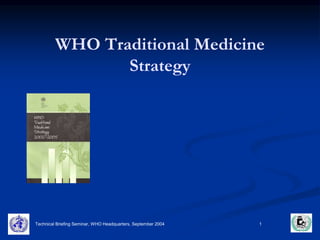
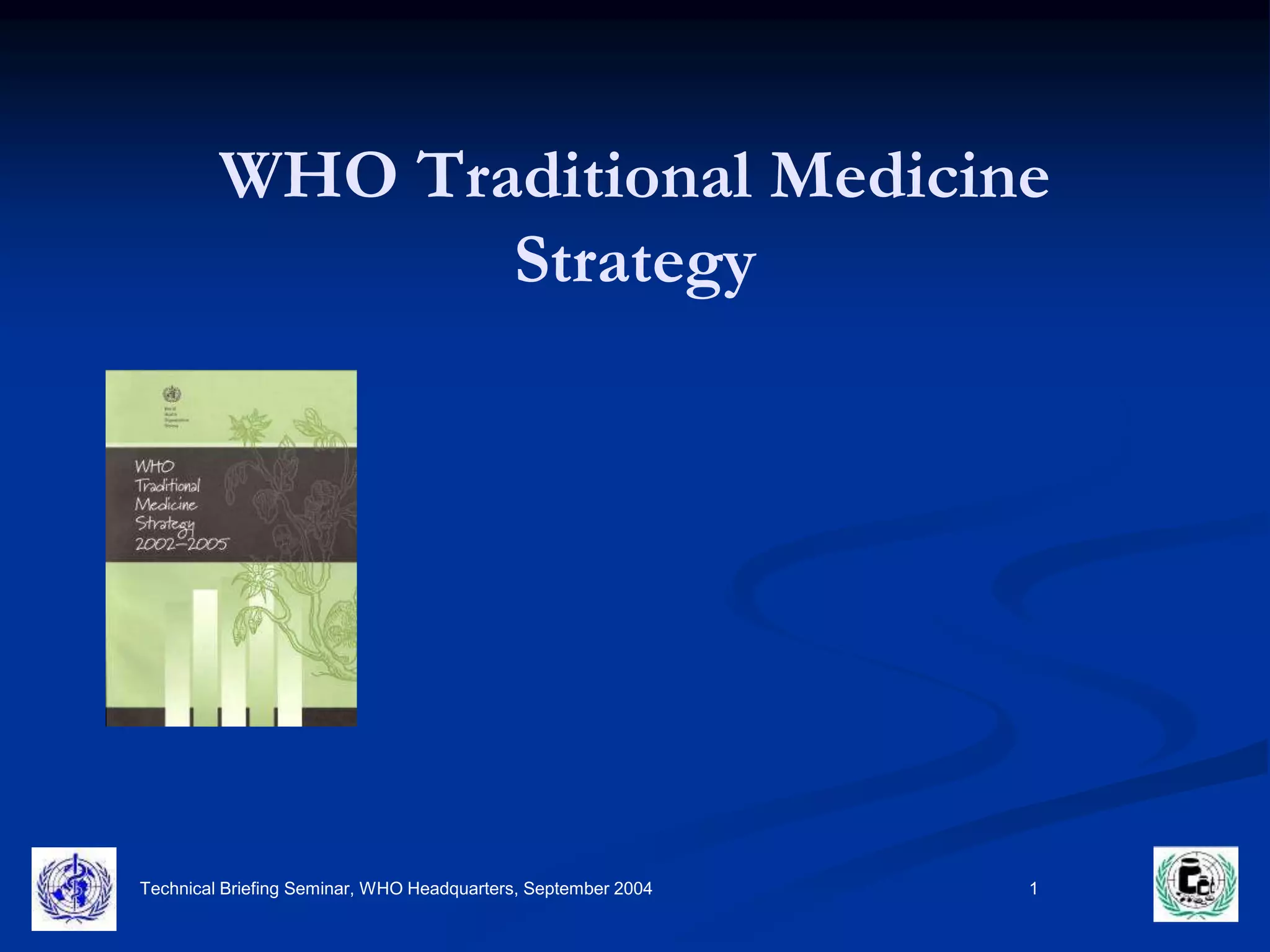
WHO Traditional Medicine 
Strategy 
Technical Briefing Seminar, WHO Headquarters, September 2004 1
What is traditional medicine? 
WHO defines traditional medicine as 
including diverse health practices, 
approaches, knowledge and beliefs 
incorporating plant, animal, and/or mineral 
based medicines, spiritual therapies, manual 
techniques and exercises which can be used 
to maintain well-being, as well as to treat, 
diagnose or prevent illness. 
Technical Briefing Seminar, WHO Headquarters, September 2004 2
 Traditional medicine (TM) is an important and 
often underestimated part of health services. 
In some countries, traditional medicine or 
non-conventional medicine may be termed 
complementary medicine (CM). 
 TM has a long history of use in health 
maintenance and in disease prevention and 
treatment, particularly for chronic disease.
Complementary/alternative medicine (CAM) 
 The terms "complementary medicine" or 
"alternative medicine" are used inter-changeably 
with traditional medicine in some 
countries. They refer to a broad set of health 
care practices that are not part of that 
country's own tradition and are not integrated 
into the dominant health care system.
Traditional and Complementary/ 
Alternative Medicine 
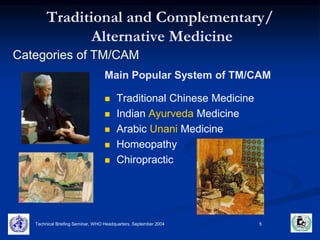
Categories of TM/CAM 
Main Popular System of TM/CAM 
 Traditional Chinese Medicine 
 Indian Ayurveda Medicine 
 Arabic Unani Medicine 
 Homeopathy 
 Chiropractic 
Technical Briefing Seminar, WHO Headquarters, September 2004 5
Traditional and Complementary/ 
Alternative Medicine 
Categories of TM/CAM 
Medication 
 Medicinal plants 
 Mineral materials 
 Animal materials 
Non-medication 
 Acupuncture 
 Chiropractic 
 Osteopathy 
 Manual therapies 
 Qigong, Taiji, Yoga 
 Physical, mental and 
spiritual therapies 
Technical Briefing Seminar, WHO Headquarters, September 2004 6
Herbal medicines 
 Herbal medicines include herbs, herbal 
materials, herbal preparations and finished 
herbal products, that contain as active 
ingredients parts of plants, or other plant 
materials, or combinations.
Herbal medicine 
1- Cinnamon ( )القرفة 
2-Anchusa Strigosa ( )الورد الماوي 
3-Foeniculum vulgare ( )حبة الحلوة 
4-camellia sinensis ( )الشاي الاخضر 
5- Ziziphus jujuba ( )العناب 
6- Ginger ( )الزنجبيل 
7- Matricaria chmomilla ( )البابونج
Why traditional medicine? 
An alternative approach to health care in 
developed countries 
 concern about the adverse effects of 
"chemical drugs", 
 questioning of the approaches and 
assumptions of allopathic medicine, and 
 greater public access to health 
information. 
Technical Briefing Seminar, WHO Headquarters, September 2004 9
General considerations 
 Despite its existence and use over 
centuries, traditional medicine has not been 
officially recognized in most countries. 
 The safety and efficacy data on traditional 
medicine are far from sufficient. 
 Lack of research data are mostly due to a 
lack of adequate or accepted research 
methodology for evaluating traditional 
medicine. 
Technical Briefing Seminar, WHO Headquarters, September 2004 10
Uncritical enthusiasm versus 
uninformed scepticism 
 strong reservations and often frank disbelief 
about the benefits of TM. 
 demand has grown for evidence on the safety, 
efficacy and quality of TM products and 
practices. 
Increased use of TM/CAM has not been 
accompanied by an increase in the quantity, 
quality and accessibility of clinical evidence to 
support claims of TM/CAM. 
Technical Briefing Seminar, WHO Headquarters, September 2004 11
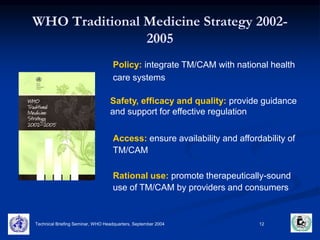
WHO Traditional Medicine Strategy 2002- 
2005 
Policy: integrate TM/CAM with national health 
care systems 
Safety, efficacy and quality: provide guidance 
and support for effective regulation 
Access: ensure availability and affordability of 
TM/CAM 
Rational use: promote therapeutically-sound 
use of TM/CAM by providers and consumers 
Technical Briefing Seminar, WHO Headquarters, September 2004 12
Safety, Efficacy and Quality 
Quality control 
 Good Agricultural and Collection Practices for medicinal 
plants 
 Updating Quality Control Methods for Raw Materials of 
Medicinal Plants 
 Updating GMP guidelines for herbal medicines 
 Contaminants and residues 
Safety 
 Developing Guidelines for Safety 
Monitoring and pharmacovigilance of 
Herbal Medicines 
Technical Briefing Seminar, WHO Headquarters, September 2004 13
Access 
Technical Briefing Seminar, WHO Headquarters, September 2004 14 
 
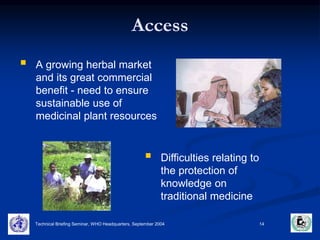
A growing herbal market 
and its great commercial 
benefit - need to ensure 
sustainable use of 
medicinal plant resources 
 
Difficulties relating to 
the protection of 
knowledge on 
traditional medicine
Rational Use 
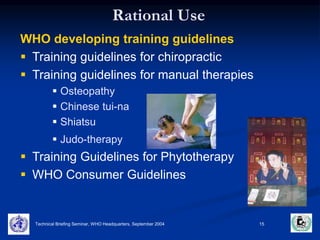
WHO developing training guidelines 
 Training guidelines for chiropractic 
 Training guidelines for manual therapies 
 Osteopathy 
 Chinese tui-na 
 Shiatsu 
 Judo-therapy 
 Training Guidelines for Phytotherapy 
 WHO Consumer Guidelines 
Technical Briefing Seminar, WHO Headquarters, September 2004 15
Conclusion 
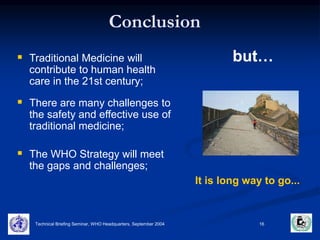
 Traditional Medicine will but… 
It is long way to go... 
contribute to human health 
care in the 21st century; 
 There are many challenges to 
the safety and effective use of 
traditional medicine; 
 The WHO Strategy will meet 
the gaps and challenges; 
Technical Briefing Seminar, WHO Headquarters, September 2004 16

019 traditional medicine

  • 1.
    WHO Traditional Medicine Strategy Technical Briefing Seminar, WHO Headquarters, September 2004 1
  • 2.
    What is traditionalmedicine? WHO defines traditional medicine as including diverse health practices, approaches, knowledge and beliefs incorporating plant, animal, and/or mineral based medicines, spiritual therapies, manual techniques and exercises which can be used to maintain well-being, as well as to treat, diagnose or prevent illness. Technical Briefing Seminar, WHO Headquarters, September 2004 2
  • 3.
     Traditional medicine(TM) is an important and often underestimated part of health services. In some countries, traditional medicine or non-conventional medicine may be termed complementary medicine (CM).  TM has a long history of use in health maintenance and in disease prevention and treatment, particularly for chronic disease.
  • 4.
    Complementary/alternative medicine (CAM)  The terms "complementary medicine" or "alternative medicine" are used inter-changeably with traditional medicine in some countries. They refer to a broad set of health care practices that are not part of that country's own tradition and are not integrated into the dominant health care system.
  • 5.
    Traditional and Complementary/ Alternative Medicine Categories of TM/CAM Main Popular System of TM/CAM  Traditional Chinese Medicine  Indian Ayurveda Medicine  Arabic Unani Medicine  Homeopathy  Chiropractic Technical Briefing Seminar, WHO Headquarters, September 2004 5
  • 6.
    Traditional and Complementary/ Alternative Medicine Categories of TM/CAM Medication  Medicinal plants  Mineral materials  Animal materials Non-medication  Acupuncture  Chiropractic  Osteopathy  Manual therapies  Qigong, Taiji, Yoga  Physical, mental and spiritual therapies Technical Briefing Seminar, WHO Headquarters, September 2004 6
  • 7.
    Herbal medicines Herbal medicines include herbs, herbal materials, herbal preparations and finished herbal products, that contain as active ingredients parts of plants, or other plant materials, or combinations.
  • 8.
    Herbal medicine 1-Cinnamon ( )القرفة 2-Anchusa Strigosa ( )الورد الماوي 3-Foeniculum vulgare ( )حبة الحلوة 4-camellia sinensis ( )الشاي الاخضر 5- Ziziphus jujuba ( )العناب 6- Ginger ( )الزنجبيل 7- Matricaria chmomilla ( )البابونج
  • 9.
    Why traditional medicine? An alternative approach to health care in developed countries  concern about the adverse effects of "chemical drugs",  questioning of the approaches and assumptions of allopathic medicine, and  greater public access to health information. Technical Briefing Seminar, WHO Headquarters, September 2004 9
  • 10.
    General considerations Despite its existence and use over centuries, traditional medicine has not been officially recognized in most countries.  The safety and efficacy data on traditional medicine are far from sufficient.  Lack of research data are mostly due to a lack of adequate or accepted research methodology for evaluating traditional medicine. Technical Briefing Seminar, WHO Headquarters, September 2004 10
  • 11.
    Uncritical enthusiasm versus uninformed scepticism  strong reservations and often frank disbelief about the benefits of TM.  demand has grown for evidence on the safety, efficacy and quality of TM products and practices. Increased use of TM/CAM has not been accompanied by an increase in the quantity, quality and accessibility of clinical evidence to support claims of TM/CAM. Technical Briefing Seminar, WHO Headquarters, September 2004 11
  • 12.
    WHO Traditional MedicineStrategy 2002- 2005 Policy: integrate TM/CAM with national health care systems Safety, efficacy and quality: provide guidance and support for effective regulation Access: ensure availability and affordability of TM/CAM Rational use: promote therapeutically-sound use of TM/CAM by providers and consumers Technical Briefing Seminar, WHO Headquarters, September 2004 12
  • 13.
    Safety, Efficacy andQuality Quality control  Good Agricultural and Collection Practices for medicinal plants  Updating Quality Control Methods for Raw Materials of Medicinal Plants  Updating GMP guidelines for herbal medicines  Contaminants and residues Safety  Developing Guidelines for Safety Monitoring and pharmacovigilance of Herbal Medicines Technical Briefing Seminar, WHO Headquarters, September 2004 13
  • 14.
    Access Technical BriefingSeminar, WHO Headquarters, September 2004 14  A growing herbal market and its great commercial benefit - need to ensure sustainable use of medicinal plant resources  Difficulties relating to the protection of knowledge on traditional medicine
  • 15.
    Rational Use WHOdeveloping training guidelines  Training guidelines for chiropractic  Training guidelines for manual therapies  Osteopathy  Chinese tui-na  Shiatsu  Judo-therapy  Training Guidelines for Phytotherapy  WHO Consumer Guidelines Technical Briefing Seminar, WHO Headquarters, September 2004 15
  • 16.
    Conclusion  TraditionalMedicine will but… It is long way to go... contribute to human health care in the 21st century;  There are many challenges to the safety and effective use of traditional medicine;  The WHO Strategy will meet the gaps and challenges; Technical Briefing Seminar, WHO Headquarters, September 2004 16