COMPLEX AMALGAM RESTORATION
1
COMPLEX AMALGAM RESTORATION
• Complex amalgam restoration refers to one
that involves three or more surfaces of the
tooth.
• In recent years refer to an amalgam
restoration that replaces one or more cusps.
2
INDICATIONS
• They are used:
a. To replace missing tooth structure due to
fracture or caries or existing restorative
material.
b. When one or more cusps needs capping.
c. When increased resistance and retention
forms are needed.
3
INDICATIONS
• Used as an alternative to indirect restoration.
• For periodontal and orthodontic patients.
• Affordability.
• For old patients
• Used in tooth that have questionable pulpal
prognosis.
• Can act as a foundation for crown.
4
• If conventional retention features are not
adequate pins, slots and bonded amalgam are
used to enhance retention.
• As more tooth is lost more auxiliary retentive
features required.
5
CONTRAINDICATIONS
• If patient has occlusal problems.
• If the tooth cannot be restored properly with
direct restoration because of anatomic or
functional considerations.
• If the area to be restored is esthetically
important to the patient.
6
ADVANTAGES
• Conserves tooth structure.(less cutting)
• Less time required.
• Resistance and retentive forms significantly
increased by pins and slots.
• Economics.
7
DISADVANTAGES
• Dentinal micro fractures.
• Microleakage.
• Decreased tensile strength of amalgam.
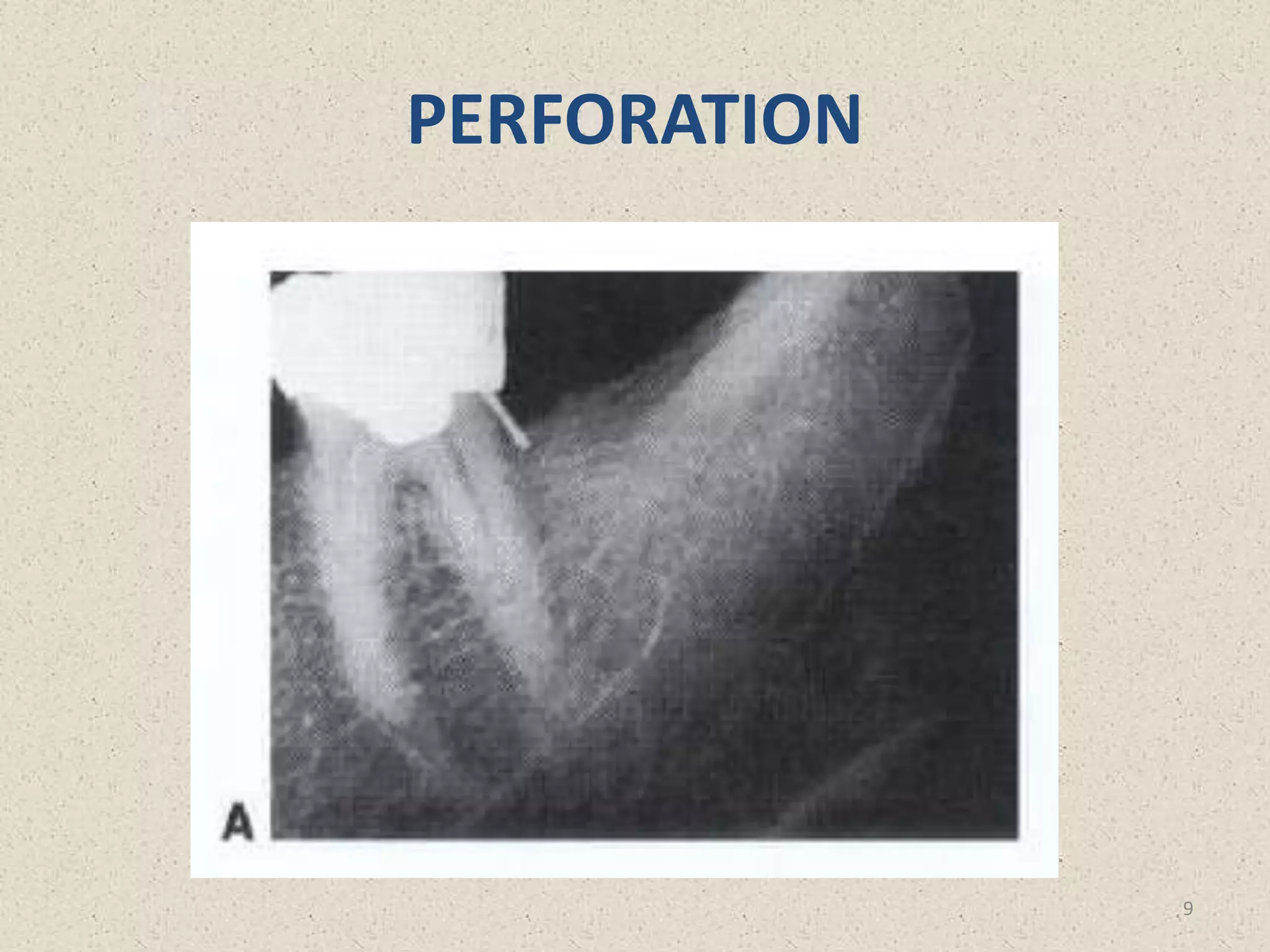
• Penetration and perforation.
• Tooth anatomy cannot be replicated like that
in indirect restoration.
8
PERFORATION
9
RETENTION AND RESISTANCE FORM
• Non pin mechanical features
• Pins
• Amalgam bonding
10
NON PIN MECHANICAL FEATURES
• Parallel or convergent walls.
• Box form.
• Flat pulpal and gingival floors.
• Grooves in proximal line angles.
• Dovetails.
• Reduction of undermined cusps.
• Coves/locks.
• Amalgapins.
• Slots.
11
12
13
14
15
PIN
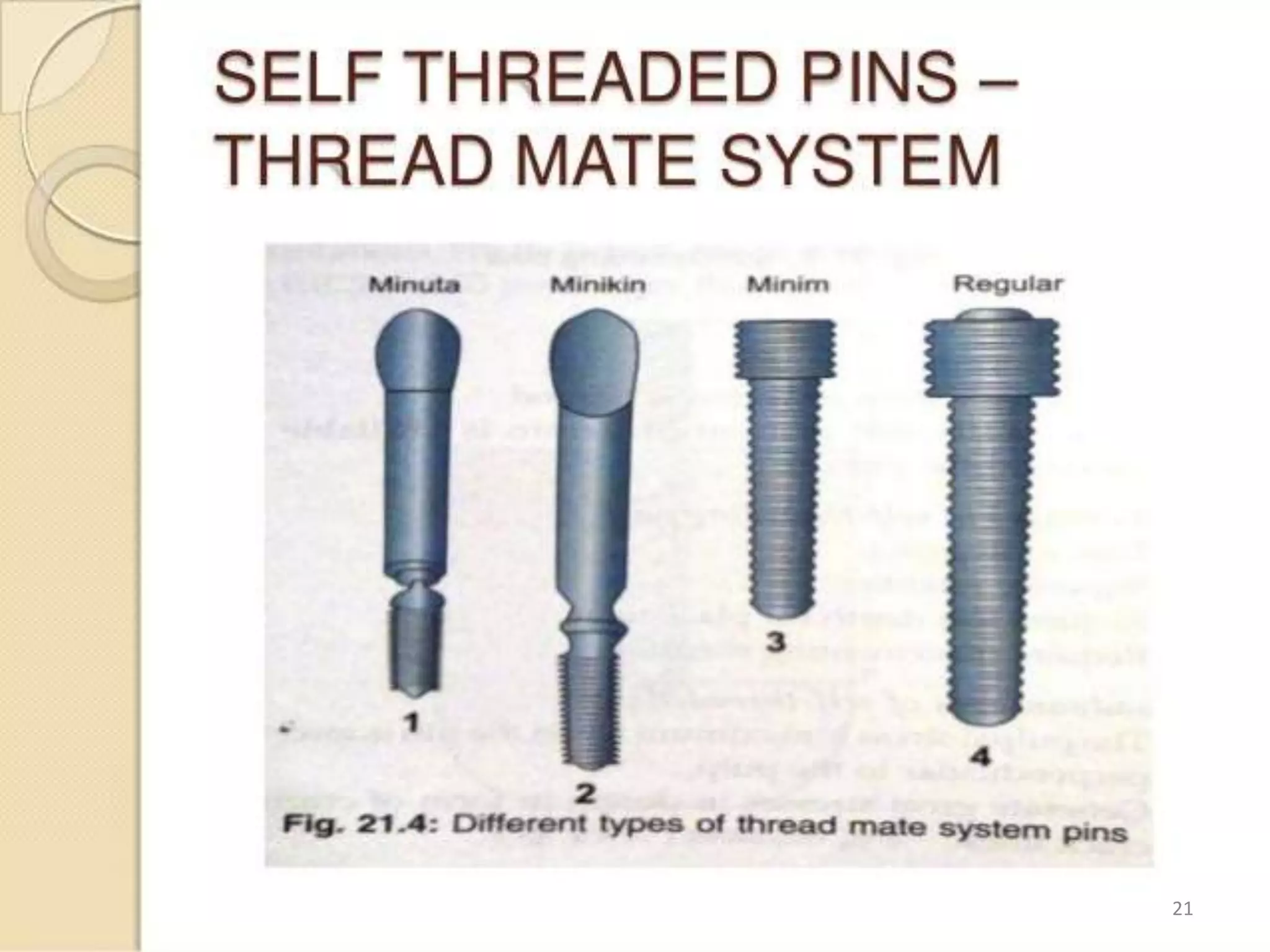
• 3 types of pins:
1.Self threading pins.
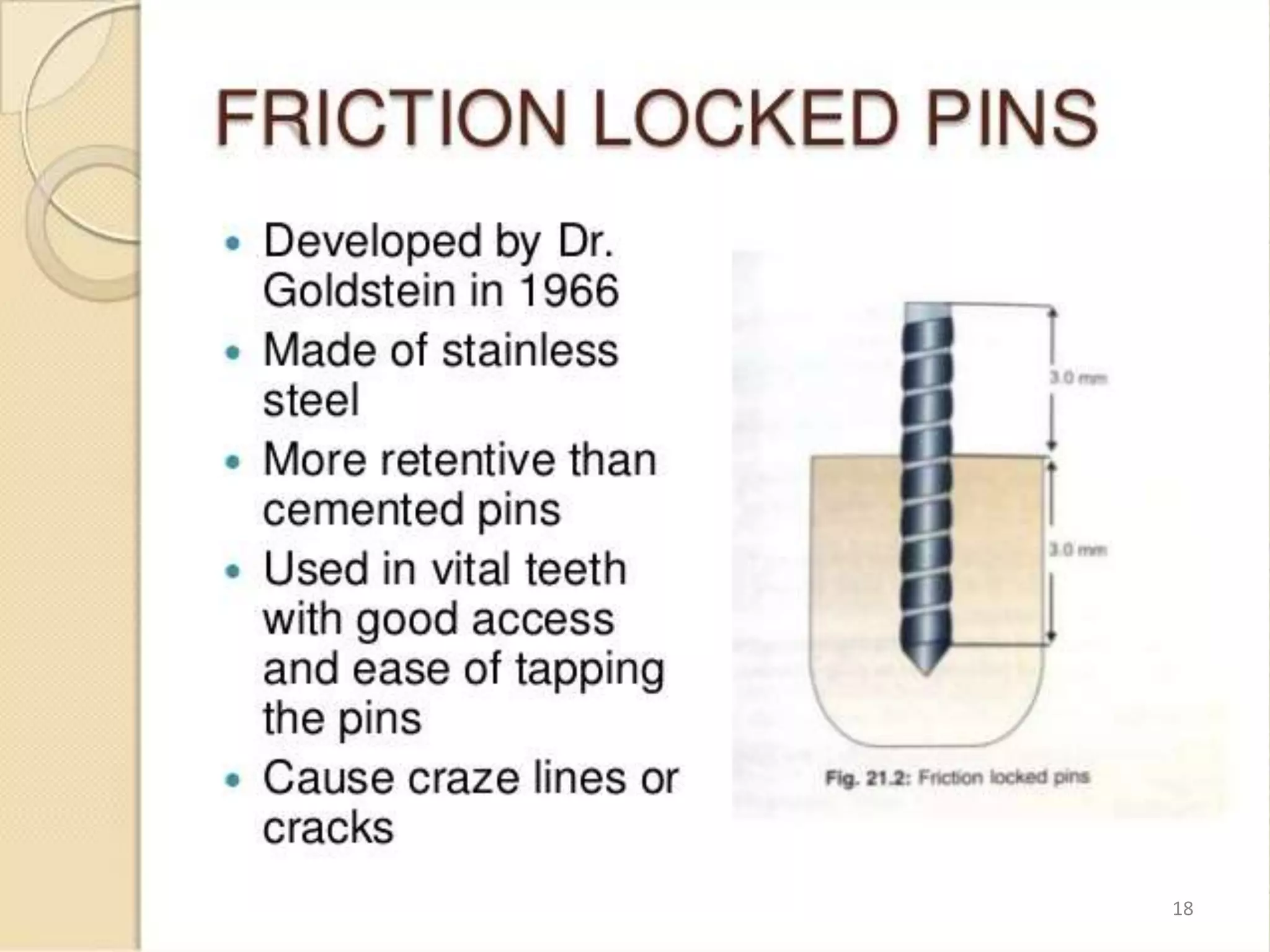
2.Friction locked pins.
3.Cemented pins.
16
17
18
19
20
21
22
PRINCIPLES FOR PLACEMENT OF PINS
• Pinhole made the diameter of pinhole smaller
then diameter of the pin being placed in
threaded and friction locked.
• Craze lines created in dentine (the more the
diameter of the pin the more the dentinal
craze lines).
• Depth of the varies from 1.3 to 2 mm
depending on the diameter of pin used.
• Used in addition to non pin retentive features.
23
SELF THREADING PINS
• Self threading pins commonly used cause of
its retentiveness.
• Threads engages the dentine as it is inserted
into the dentine due to elasticity of dentine.
24
25
FACTORS AFFECTING RETENTION OF
THE PIN IN DENTIN AND AMALGAM
• Type
• Surface characteristics.
• Orientation number and diameter.
• Extension into the dentin and amalgam.
26
TYPE
• Self threading are the most retentive followed
by friction locked and then cemented.
27
SURFACE CHARACTERISTICS
• The number and dept of elevations (serrations
or threads)on the pin influence retention of
the pin in the amalgam restoration.
28
ORIENTATION
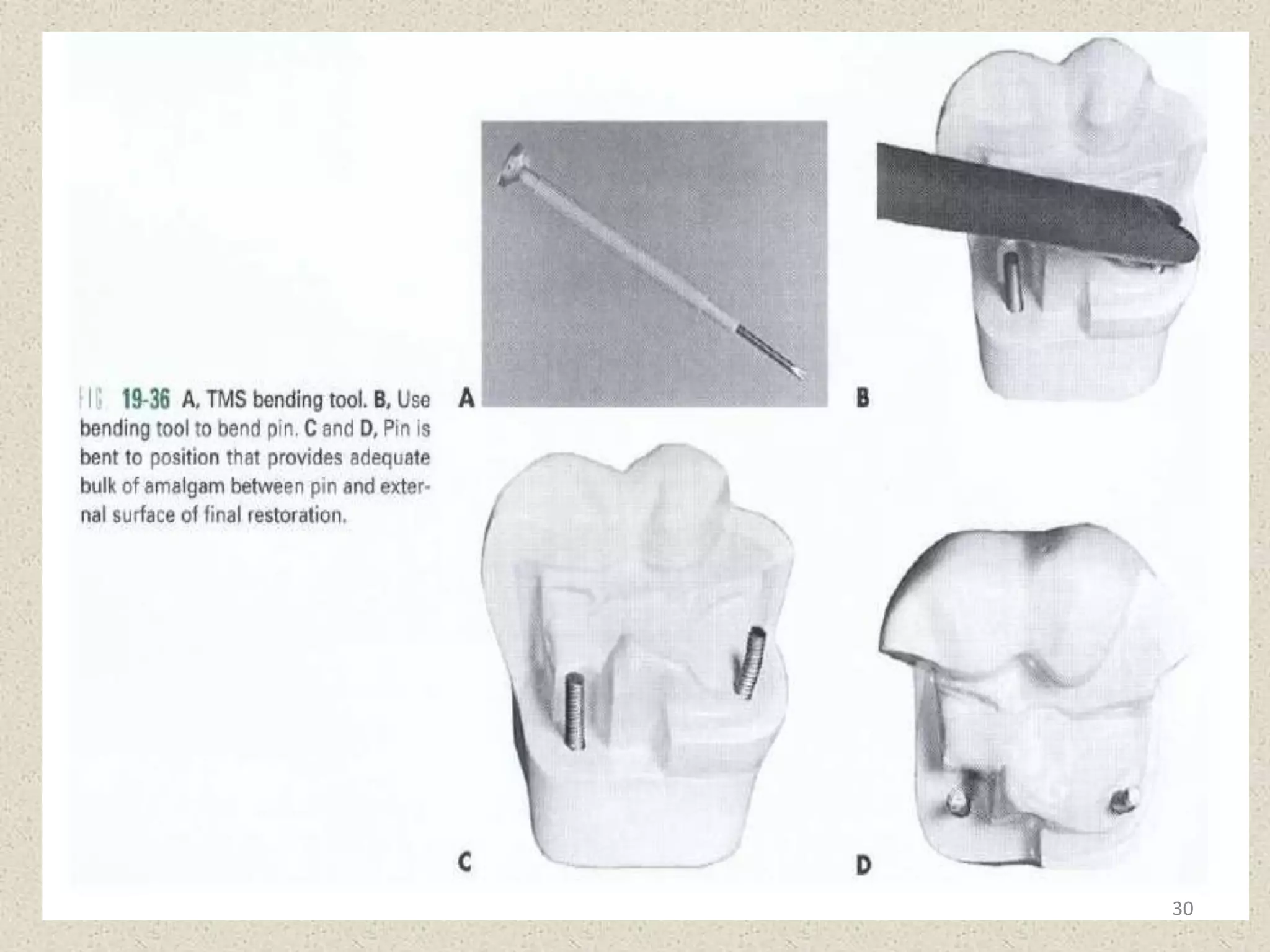
• Should be placed in non parallel fashion to
increase retentiveness.
• Bending pins in amalgam is not desirable if
bending of the pin is done it should be done
with a proper tool and at least 1mm of bulk of
amalgam should be there between the pin
and external surface of the finished
restoration.
29
30
NUMBER
• As the number of pins increases, the retention
in dentin and amalgam increases but the
problems created also increases. Chances of
1.Crazing of dentin increases.
2.The amount of available dentin between the
pins decreases.
3.The strength of amalgam restoration
decreases.
Increasing the diameter also increases retention.
31
EXTENSION INTO THE DENTIN AND
AMALGAM
• Pin extension into the dentin and amalgam
greater then 2mm is unnecessary for pin
retention and is contraindicated to preserve
the strength of the dentin and the amalgam.
• If more the 2mm amalgam or dentin is
involved the chances of fracturing of pin
increases.
32
PIN PLACEMENT FACTORS AND
TECHNIQUES
1.Pin size.
2.Number of pins.
3.location.
4.Pinhole preparation.
5.Pin design.
6.Pin insertion.
33
PIN SIZE
• Minikin and minim pins are used for severely
involved posterior teeth.
• Minim pins used as a backup if the pinhole is
overprepared.
34
NUMBER OF PINS
• Factors considered when deciding how many pins
are required
1.The amount of missing tooth structure.
2.The amount of dentin available to receive pins
safely.
3.The amount of retention required.
4.The size of the pins.
As a rule, one pin per missing axial line angle should
be used.
35
LOCATION
• Several factors aid in determining pin hole
location:
1.Knowledge of the normal pulp anatomy and
external tooth contours.
2.A current radiograph of the tooth.
3.A periodontal probe.
4.The patient`s age.
36
LOCATION
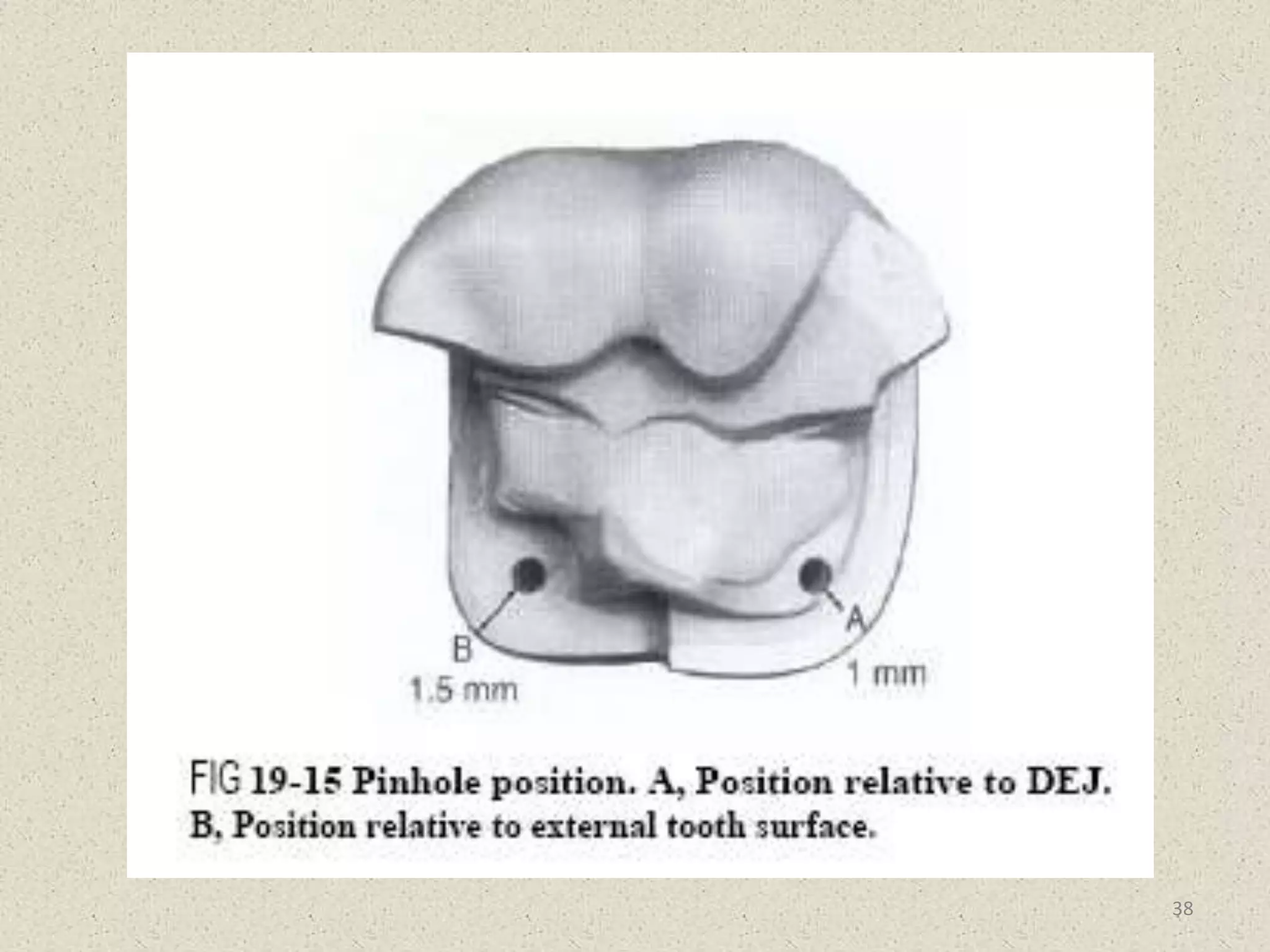
• Pins should not be placed directly under areas of contact
with the opposing teeth as the restoration would fracture
under the occlusal load.
• Occlusal clearance should be sufficient to provide 2mm of
amalgam over the pin.
• Pinhole should be positioned no closer than 0.5 to 1mm to
the DEJ or no closer than 1 to 1.5mm to the external
surface of the tooth.
• Pinhole should not be positioned very close to vertical wall
as it would make condensation of amalgam difficult.
• Interpin distance should be more for a pin with larger
diameter.
37
38
PIN PLACED CLOSE TO THE VERTICAL
WALL
39
PINHOLE PREPARATION(STEP 1)
40
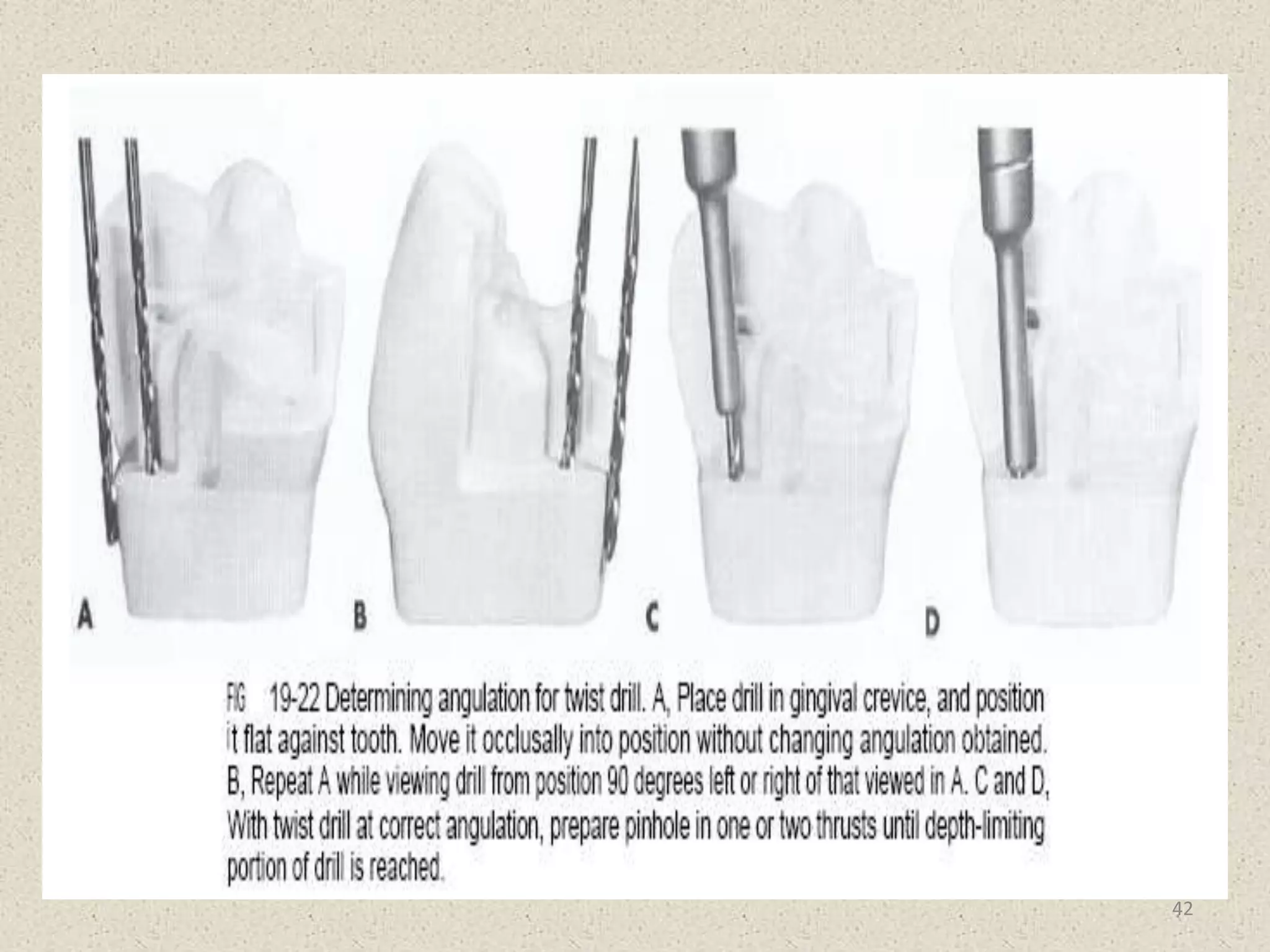
TWIST DRILLS FOR DRILLING A
PINHOLE
41
42
PIN INSERTION
• Can be done with conventional latch type
contra angle hand piece or TMS hand
wrenches.
43
PIN INSERTION
44
CEMENTED PINHOLE
45
BONDED AMALGAM RESTORATION
• Amalgam hydrophobic while dentine and
enamel is hydrophilic.
• 4 meta based resin is used which has hydro
philic and hydrophobic ends
46
47
48

010.complex amalgam restoration

  • 1.
  • 2.
    COMPLEX AMALGAM RESTORATION •Complex amalgam restoration refers to one that involves three or more surfaces of the tooth. • In recent years refer to an amalgam restoration that replaces one or more cusps. 2
  • 3.
    INDICATIONS • They areused: a. To replace missing tooth structure due to fracture or caries or existing restorative material. b. When one or more cusps needs capping. c. When increased resistance and retention forms are needed. 3
  • 4.
    INDICATIONS • Used asan alternative to indirect restoration. • For periodontal and orthodontic patients. • Affordability. • For old patients • Used in tooth that have questionable pulpal prognosis. • Can act as a foundation for crown. 4
  • 5.
    • If conventionalretention features are not adequate pins, slots and bonded amalgam are used to enhance retention. • As more tooth is lost more auxiliary retentive features required. 5
  • 6.
    CONTRAINDICATIONS • If patienthas occlusal problems. • If the tooth cannot be restored properly with direct restoration because of anatomic or functional considerations. • If the area to be restored is esthetically important to the patient. 6
  • 7.
    ADVANTAGES • Conserves toothstructure.(less cutting) • Less time required. • Resistance and retentive forms significantly increased by pins and slots. • Economics. 7
  • 8.
    DISADVANTAGES • Dentinal microfractures. • Microleakage. • Decreased tensile strength of amalgam. • Penetration and perforation. • Tooth anatomy cannot be replicated like that in indirect restoration. 8
  • 9.
  • 10.
    RETENTION AND RESISTANCEFORM • Non pin mechanical features • Pins • Amalgam bonding 10
  • 11.
    NON PIN MECHANICALFEATURES • Parallel or convergent walls. • Box form. • Flat pulpal and gingival floors. • Grooves in proximal line angles. • Dovetails. • Reduction of undermined cusps. • Coves/locks. • Amalgapins. • Slots. 11
  • 12.
  • 13.
  • 14.
  • 15.
  • 16.
    PIN • 3 typesof pins: 1.Self threading pins. 2.Friction locked pins. 3.Cemented pins. 16
  • 17.
  • 18.
  • 19.
  • 20.
  • 21.
  • 22.
  • 23.
    PRINCIPLES FOR PLACEMENTOF PINS • Pinhole made the diameter of pinhole smaller then diameter of the pin being placed in threaded and friction locked. • Craze lines created in dentine (the more the diameter of the pin the more the dentinal craze lines). • Depth of the varies from 1.3 to 2 mm depending on the diameter of pin used. • Used in addition to non pin retentive features. 23
  • 24.
    SELF THREADING PINS •Self threading pins commonly used cause of its retentiveness. • Threads engages the dentine as it is inserted into the dentine due to elasticity of dentine. 24
  • 25.
  • 26.
    FACTORS AFFECTING RETENTIONOF THE PIN IN DENTIN AND AMALGAM • Type • Surface characteristics. • Orientation number and diameter. • Extension into the dentin and amalgam. 26
  • 27.
    TYPE • Self threadingare the most retentive followed by friction locked and then cemented. 27
  • 28.
    SURFACE CHARACTERISTICS • Thenumber and dept of elevations (serrations or threads)on the pin influence retention of the pin in the amalgam restoration. 28
  • 29.
    ORIENTATION • Should beplaced in non parallel fashion to increase retentiveness. • Bending pins in amalgam is not desirable if bending of the pin is done it should be done with a proper tool and at least 1mm of bulk of amalgam should be there between the pin and external surface of the finished restoration. 29
  • 30.
  • 31.
    NUMBER • As thenumber of pins increases, the retention in dentin and amalgam increases but the problems created also increases. Chances of 1.Crazing of dentin increases. 2.The amount of available dentin between the pins decreases. 3.The strength of amalgam restoration decreases. Increasing the diameter also increases retention. 31
  • 32.
    EXTENSION INTO THEDENTIN AND AMALGAM • Pin extension into the dentin and amalgam greater then 2mm is unnecessary for pin retention and is contraindicated to preserve the strength of the dentin and the amalgam. • If more the 2mm amalgam or dentin is involved the chances of fracturing of pin increases. 32
  • 33.
    PIN PLACEMENT FACTORSAND TECHNIQUES 1.Pin size. 2.Number of pins. 3.location. 4.Pinhole preparation. 5.Pin design. 6.Pin insertion. 33
  • 34.
    PIN SIZE • Minikinand minim pins are used for severely involved posterior teeth. • Minim pins used as a backup if the pinhole is overprepared. 34
  • 35.
    NUMBER OF PINS •Factors considered when deciding how many pins are required 1.The amount of missing tooth structure. 2.The amount of dentin available to receive pins safely. 3.The amount of retention required. 4.The size of the pins. As a rule, one pin per missing axial line angle should be used. 35
  • 36.
    LOCATION • Several factorsaid in determining pin hole location: 1.Knowledge of the normal pulp anatomy and external tooth contours. 2.A current radiograph of the tooth. 3.A periodontal probe. 4.The patient`s age. 36
  • 37.
    LOCATION • Pins shouldnot be placed directly under areas of contact with the opposing teeth as the restoration would fracture under the occlusal load. • Occlusal clearance should be sufficient to provide 2mm of amalgam over the pin. • Pinhole should be positioned no closer than 0.5 to 1mm to the DEJ or no closer than 1 to 1.5mm to the external surface of the tooth. • Pinhole should not be positioned very close to vertical wall as it would make condensation of amalgam difficult. • Interpin distance should be more for a pin with larger diameter. 37
  • 38.
  • 39.
    PIN PLACED CLOSETO THE VERTICAL WALL 39
  • 40.
  • 41.
    TWIST DRILLS FORDRILLING A PINHOLE 41
  • 42.
  • 43.
    PIN INSERTION • Canbe done with conventional latch type contra angle hand piece or TMS hand wrenches. 43
  • 44.
  • 45.
  • 46.
    BONDED AMALGAM RESTORATION •Amalgam hydrophobic while dentine and enamel is hydrophilic. • 4 meta based resin is used which has hydro philic and hydrophobic ends 46
  • 47.
  • 48.