Indonesian Journal of Electrical Engineering and Computer Science
Vol. 7, No. 1, July 2017, pp. 1 ~ 8
DOI: 10.11591/ijeecs.v7.i1.pp1-8  1
Received March 7, 2017; Revised May 17, 2017; Accepted June 4, 2017
Multiple DG Planning Considering Distribution Loss
and Penetration Level using EMEFA-ANN Method
S. R. A. Rahim*
1
, I. Musirin
2
, M. M. Othman
3
, M. H. Hussain
4
1,4
School of Electrical System Engineering, Universiti Malaysia Perlis (UniMAP), 02600, Arau, Perlis,
Malaysia
2,3
Center for Electrical Power Engineering Studies, Faculty of Electrical Engineering, Universiti Teknologi
MARA, 40450 Shah Alam, Malaysia
Corresponding author, e-mail: rafidah@unimap.edu.my*
1
, ismailbm@salam.uitm.edu.my
2
,
mamat505my@yahoo.com
3
, muhdhatta@unimap.edu.my
4
Abstract
This paper presents the implementation of multiple distributed generations planning in distribution
system using computational intelligence technique. A pre-developed computational intelligence
optimization technique named as Embedded Meta EP-Firefly Algorithm (EMEFA) was utilized to determine
distribution loss and penetration level for the purpose of distributed generation (DG) installation. In this
study, the Artificial Neural Network (ANN) was used in order to solve the complexity of the multiple DG
concepts. EMEFA-ANN was developed to optimize the weight of the ANN to minimize the mean squared
error. The proposed method was validated on IEEE 69 Bus distribution system with several load variations
scenario. The case study was conducted based on the multiple unit of DG in distribution system by
considering the DGs are modeled as type I which is capable of injecting real power. Results obtained from
the study could be utilized by the utility and energy commission for loss reduction scheme in distribution
system.
Keywords: artificial neural network, DG planning, distributed generation, embedded Meta EP-firefly
algorithm, penetration level, distribution loss
Copyright © 2017 Institute of Advanced Engineering and Science. All rights reserved.
1. Introduction
DG is an emerging approach that is well known in electric power system recently.
Nevertheless, the researcher and utility engineer have a lot of problem that need to be
concerned in the DG allocation problem. DG units need to be strategically placed in distribution
systems in order to obtain the maximum output from the DG installation. Improper sizing and
placement of DG may result overcompensation or under compensation [1-2]. Consequently, the
factors of the best location and sizing are among the crucial issues in the implementation of
distributed generation in the distribution system. Therefore, it is necessary to develop an
optimization or heuristic technique based methodology to identify the optimal placement of
distributed renewable generation for a given system that can provide economic, environmental
and technical advantages [3-5]. There are several researches that study on the optimal
distributed renewable generation location by their imposed constraints and objectives. However,
the systematic principle for this issue is still an unsolved problem [6]. The integration of multiple-
DG units cannot be handled simply as well as single-DG because of the complex structures of
power networks, despite of these different techniques. Consequently, researchers have started
to use intelligent techniques such as Genetic Algorithm [7], Evolutionary Programming (EP) [8],
Particle Swarm Optimization [9] and Firefly Algorithm (FA) [10], fuzzy logic [11] and ANN [12] to
solve the problem.
This paper presents the effect of multiple DG installation considering loss minimization
and the penetration level in distribution system. The proposed EMEFA-ANN was utilized to
optimize the weight of the ANN to minimize the mean squared error (MSE). Results indicated
that the proposed EMEFA-ANN has achieved better MSE error. The loss equation is used to
determine the optimal size of DG by using the computational intelligence technique and it is
necessary to consider the reduction of I
2
R loss in order to obtain the efficient power delivery in
 ISSN: 2502-4752
IJEECS Vol. 7, No. 1, July 2017 : 1 – 8
2
the distribution system. The loss associated with the active and reactive power components of
branch currents is given by (1).
 
     sincos
1 1
 







 









n
i
n
j
jiji
ji
jiij
jiji
ji
iij
loss QPPQ
VV
R
QQPP
VV
R
P

(1)
Where Pi and Qi are the real and reactive power of bus i respectively, Pj and Qj are the
real and reactive power of bus j respectively, Rij is the line resistance between bus i and bus j, Vi
and Vj are the voltage magnitude of bus i and bus j respectively, and δi and δj are the voltage
angle of bus i and bus j respectively. Table 1 indicates the DG type and the variable of the DG
modelling for optimization. Equation (2) and (3) shows the setting of voltage limit and loss
reduction limit respectively. The results of power losses must be less than without DG sources
or in base case.
upVup .05.1.95.0 min  (2)
(3)
(4)
P
Max
DGloss
nDG
i
p 
(5)

nbus
i
i
demand
Max
DG PP %80
(6)
Table 1. DG Type and The Variable Of The DG Modelling For Optimization
The proposed technique was tested on the IEEE 69 bus test systems in order to
validate the technique. The case study was conducted based on the multiple unit of DG in
distribution system by considering the DGs are modelled as type I. The power factor of the
system was set to be 0.85 based on IEEE standard and energy commission [13]. The analysis
was done by setting the voltage limit to an acceptable value. The Ploss is also refer as δloss to
demonstrate the total loss in the system. With regard to DG penetration, the total amount of DG
active power in the network must not exceed 0.8 times the total system demand. In this study,
the variation of active and reactive load as shown in (7) and (8) with respect to the load factor k.
The penetration level sensitivity index (PLSI) was derived from the loss equation and
penetration level calculated in the system. Penetration level refers to the capacity of DG to be
installed with respect to the total load in the system. The general mathematical equation is given
by (9). Equation (10) shows the formulation of the penetration level of DG at bus n. In this study,
DGwithoutDGwith
lossloss PP 
lossloss P
DG Type DG Modelling
Type I:
DG capable of injecting real power only, like photovoltaic, fuel cells etc. is the
good examples of type-I DG.
xi = Pg (MW)
Type II: DG capable of injecting reactive power only to improve the voltage
profile fall in type-II DG, e.g. kvar compensator, synchronous compensator,
capacitors etc.
xi = Qg (MVAr)
Type III:
DG capable of injecting both real and reactive power, e.g. synchronous
machines.
xi = Pg (MW)
Qg = Pg × tan-1
θ (MVAr)
Type IV:
DG capable of injecting real but consuming reactive power, e.g. induction
generators used in the wind farms.
xi = Pg (MW)
Qg = - Pg × tan-1
θ (MVAr)
IJEECS ISSN: 2502-4752 
Multiple DG Planning Considering Distribution Loss and Penetration… (S. R. A. Rahim)
3
the new penetration level sensitivity index (PLSI) was derived from the loss equation and
penetration level calculated in the system. The PLSI index is shown in (12). The objective
function is to minimize the PLSI value in (13). A penetration level sensitivity index (PLSI) was
developed in order to determine the proper location for the distributed generation planning. This
index was calculated based on the change in total losses with respect to the changes in
penetration level in the entire system.
(7)
(8)
(for i=1,2,3,..,nbus no and load factor,k=0.6,0.8,1.0,1.2,1.4)
LoadTotal
DGInstalled
P Power
L  (9)
Q+P nn DGDG
LoadTotalLoadTotal
n
QP
PL

 (10)
)n.,1,2,3,....nfor( bus
n
n
PL
loss
nPLSI


 (11)




















 




 

LoadTotal
Q
LoadTotal
P
n
i
n
j
j
Q
i
P
j
P
i
Q
ij
B
j
Q
i
Q
j
P
i
P
ij
A
n
PLSI
n
DG
Q+
n
DG
P
1 1
(12)



1
1
n
n
PLSIMinimizeOf (13)
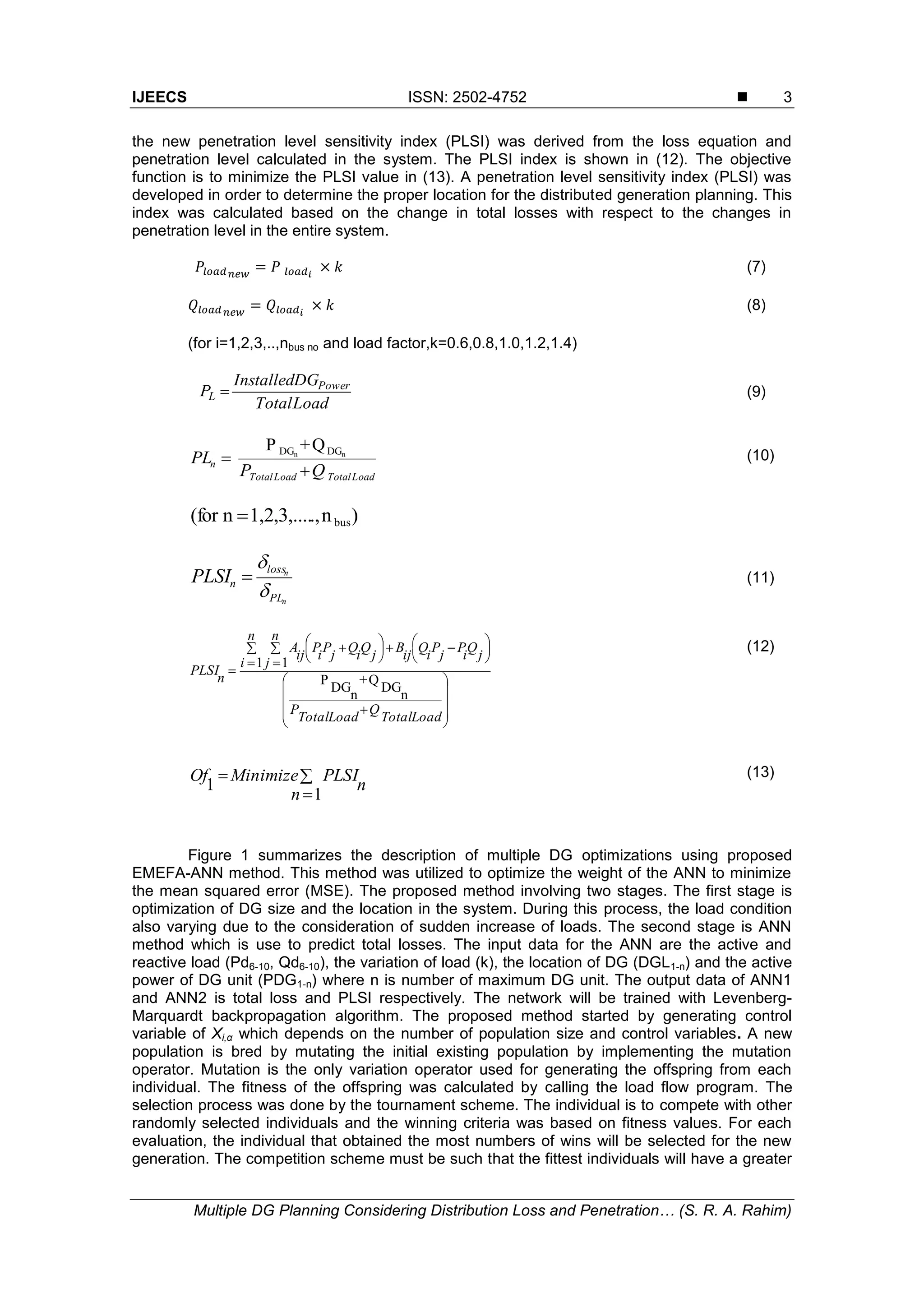
Figure 1 summarizes the description of multiple DG optimizations using proposed
EMEFA-ANN method. This method was utilized to optimize the weight of the ANN to minimize
the mean squared error (MSE). The proposed method involving two stages. The first stage is
optimization of DG size and the location in the system. During this process, the load condition
also varying due to the consideration of sudden increase of loads. The second stage is ANN
method which is use to predict total losses. The input data for the ANN are the active and
reactive load (Pd6-10, Qd6-10), the variation of load (k), the location of DG (DGL1-n) and the active
power of DG unit (PDG1-n) where n is number of maximum DG unit. The output data of ANN1
and ANN2 is total loss and PLSI respectively. The network will be trained with Levenberg-
Marquardt backpropagation algorithm. The proposed method started by generating control
variable of Xi,α which depends on the number of population size and control variables. A new
population is bred by mutating the initial existing population by implementing the mutation
operator. Mutation is the only variation operator used for generating the offspring from each
individual. The fitness of the offspring was calculated by calling the load flow program. The
selection process was done by the tournament scheme. The individual is to compete with other
randomly selected individuals and the winning criteria was based on fitness values. For each
evaluation, the individual that obtained the most numbers of wins will be selected for the new
generation. The competition scheme must be such that the fittest individuals will have a greater
 ISSN: 2502-4752
IJEECS Vol. 7, No. 1, July 2017 : 1 – 8
4
chance to survive, while weaker individuals will be eliminated. Through this, the population
evolves towards the global optimal solution. Based on the sorted fitness value, the current best
value is selected from the first half value and set as the initial locations of fireflies.
Consequently, the FA operation was embedded in this method by comparing the initial location
of ith solution with its jth neighboring solution. The value of β0, γ and r are the predefined
attractiveness, light absorption coefficient, and distance respectively [14].
Set Max Load location
(Setmax_counter2=6)
Setpop_size=20
Initialization
Generate control variable
(parent),
DG_Size= X1,X2, ,XK
DG_Location=DGL1-n
Mutation
Calculate offspring Xm1, Xm2
Calculate new fitness, F2
Record mutation data
Combination
Combine=
[dataA ; dataB]
Selection
Sortpopulation and
rank fitness value
Converge ?
Select the 1st
best
population of DataFA
(Record data)
Counter=
Max_counter2?
End
Embedded Firefly
Algorithm
Datacollection,
DataFA
Setload condition
(K=0.6,0.8,1.0,1.2,1.4)
Counter2=0
Start
Counter1=
Max_counter1?
Yes
No
Counter2 =
Counter2 + 1
Yes
No
SetMax_counter1=n
Counter1=0
(n setof DG)
Setno of DG:
1 DG unit m
Max m=4
Store Data 1
Store Data 2
Yes
No
ANN 1Input
Pd6-10
Qd6-10
Load
DGL 1-n
X 1-n
Output
Total Loss
Output
PLSI
LOOP 1
LOOP 2
LOOP 3
ANN 2
Figure 1. Flowchart for Multiple DG optimization using EMEFA-ANN Method
2. Results and Discussion
The proposed EMEFA-ANN technique was simulated and tested on the IEEE 69-bus
test system. Firstly, the effect of the multi-DG installation using different types of DG is observed
by setting the location for DG1 at bus 61. The location of DG2-DGn is dependent upon the
selected location from random number. The idea is to minimize distribution losses with the
proposed EMEFA. In the simulations, two conditions are addressed which are without DG and
with DG installed in the system. The analysis was conducted based on two cases which are
discussed below. The total losses before DG installation is tabulated in Table 2 for various
loading condition. Table 3 list the number of sample for training, validation and testing for the
study.
IJEECS ISSN: 2502-4752 
Multiple DG Planning Considering Distribution Loss and Penetration… (S. R. A. Rahim)
5
Table 2. Total Losses Before Dg Installation
Loading,k (%) Ploss(MW) Qloss (MVAR) Vmin (P.U)
0.6 0.0755 0.0344 0.9476
0.8 0.1389 0.0632 0.9288
1 0.2249 0.1021 0.9092
1.2 0.3366 0.1525 0.8887
1.4 0.4776 0.2158 0.8672
Table 3. Number Of Samples For
Training, Validation And Testing
Samples
Training 70
Validation 15
Testing 15
2.1. Effect of Multiple DG for ANN1
The effect of DG type I for the output ANN1 which is total loss was analyzed in this section. The
analysis was conducted by looking into variation in loading conditions at the load buses ranging
from 60% to 140%of the base load condition. In this study, the total loss was calculated while
optimal output of DGs is determined using EMEFA technique. Table 4 shows the results for
output power, total losses, PLSI index and the minimum voltage for different loading condition.
The output data of ANN method which is total loss is collected and used as target data for ANN
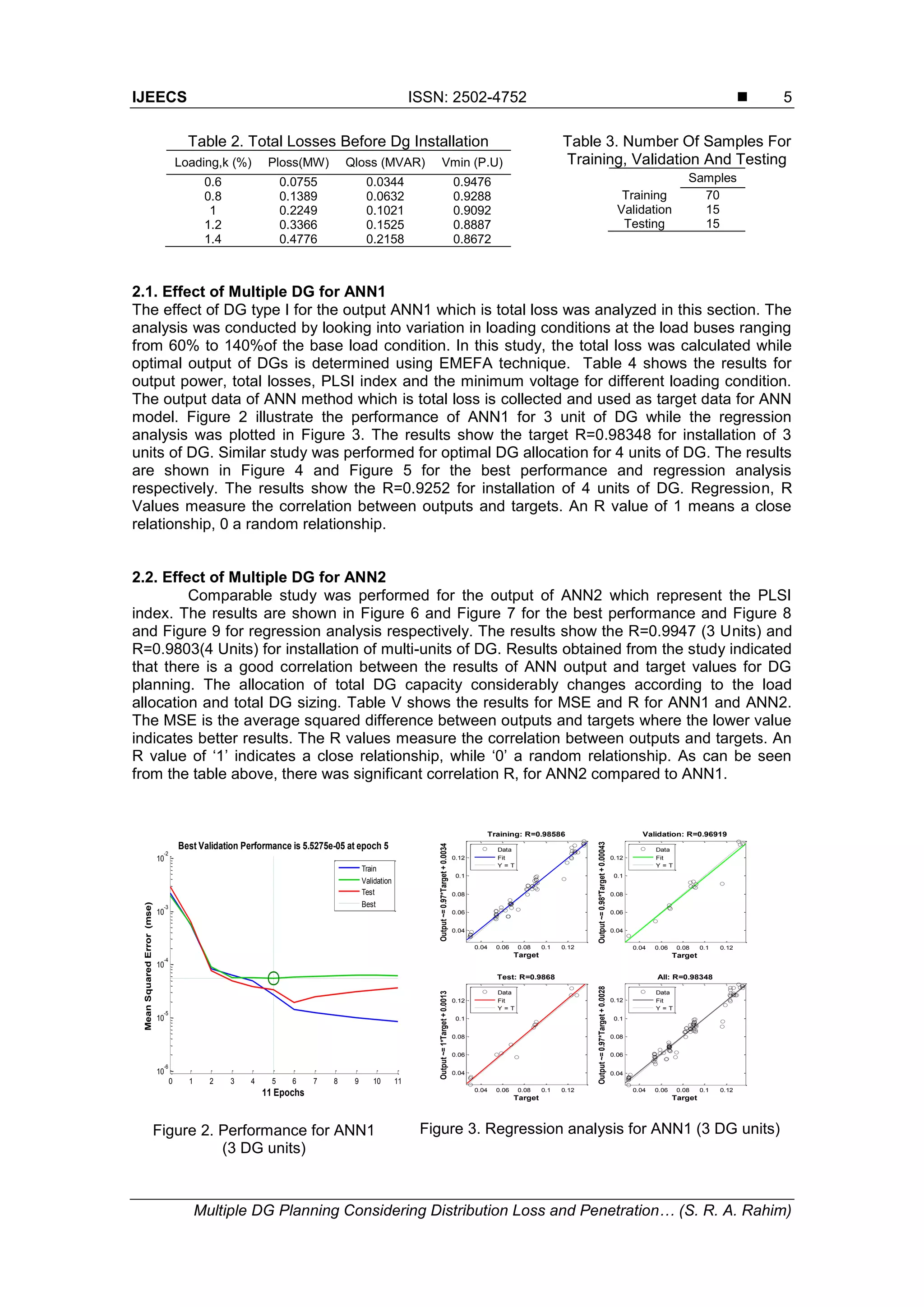
model. Figure 2 illustrate the performance of ANN1 for 3 unit of DG while the regression
analysis was plotted in Figure 3. The results show the target R=0.98348 for installation of 3
units of DG. Similar study was performed for optimal DG allocation for 4 units of DG. The results
are shown in Figure 4 and Figure 5 for the best performance and regression analysis
respectively. The results show the R=0.9252 for installation of 4 units of DG. Regression, R
Values measure the correlation between outputs and targets. An R value of 1 means a close
relationship, 0 a random relationship.
2.2. Effect of Multiple DG for ANN2
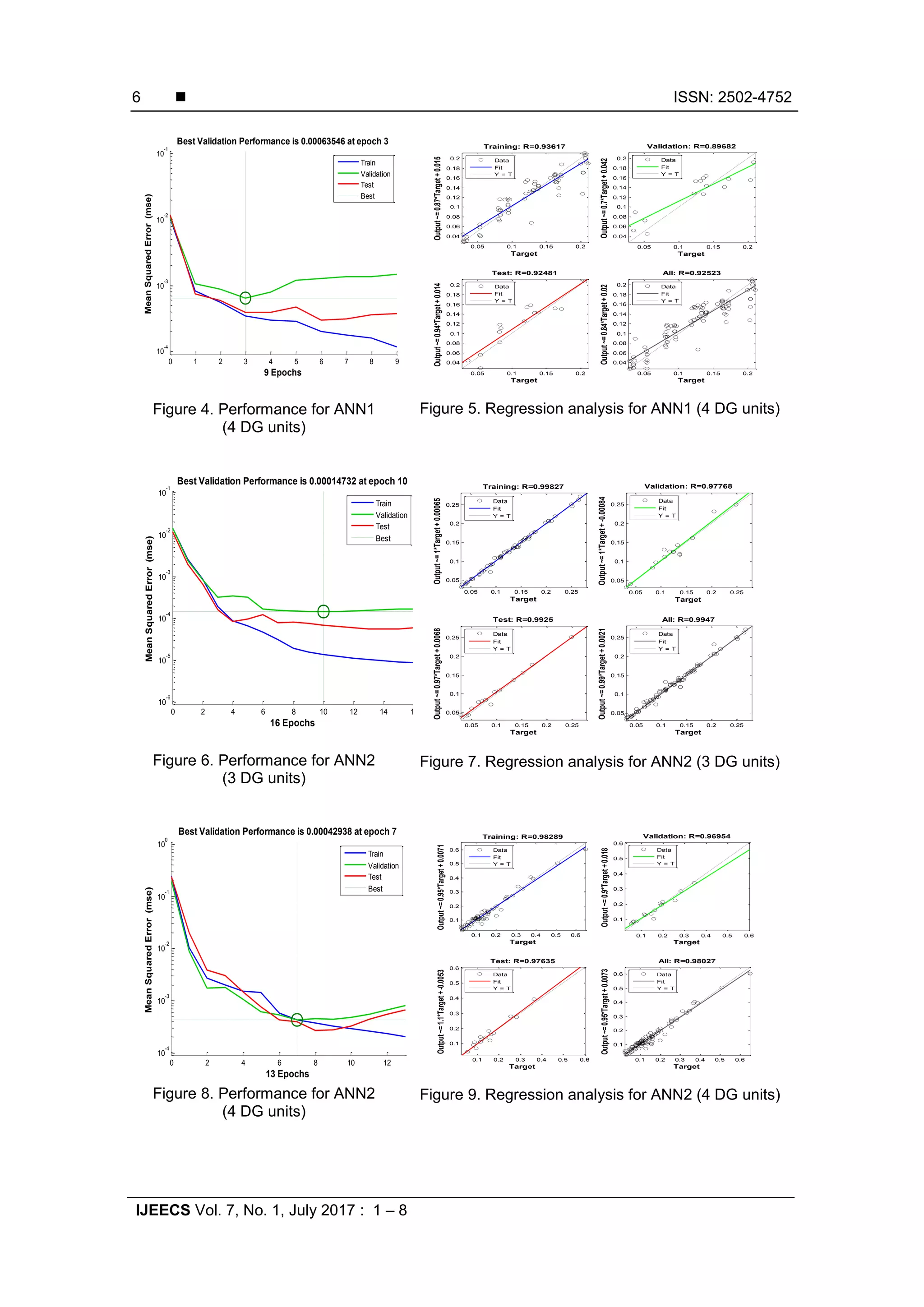
Comparable study was performed for the output of ANN2 which represent the PLSI
index. The results are shown in Figure 6 and Figure 7 for the best performance and Figure 8
and Figure 9 for regression analysis respectively. The results show the R=0.9947 (3 Units) and
R=0.9803(4 Units) for installation of multi-units of DG. Results obtained from the study indicated
that there is a good correlation between the results of ANN output and target values for DG
planning. The allocation of total DG capacity considerably changes according to the load
allocation and total DG sizing. Table V shows the results for MSE and R for ANN1 and ANN2.
The MSE is the average squared difference between outputs and targets where the lower value
indicates better results. The R values measure the correlation between outputs and targets. An
R value of „1‟ indicates a close relationship, while „0‟ a random relationship. As can be seen
from the table above, there was significant correlation R, for ANN2 compared to ANN1.
Figure 2. Performance for ANN1
(3 DG units)
Figure 3. Regression analysis for ANN1 (3 DG units)
0 1 2 3 4 5 6 7 8 9 10 11
10
-6
10
-5
10
-4
10
-3
10
-2
Best Validation Performance is 5.5275e-05 at epoch 5
MeanSquaredError(mse)
11 Epochs
Train
Validation
Test
Best
0.04 0.06 0.08 0.1 0.12
0.04
0.06
0.08
0.1
0.12
Target
Output~=0.97*Target+0.0034
Training: R=0.98586
Data
Fit
Y = T
0.04 0.06 0.08 0.1 0.12
0.04
0.06
0.08
0.1
0.12
Target
Output~=0.98*Target+0.00043
Validation: R=0.96919
Data
Fit
Y = T
0.04 0.06 0.08 0.1 0.12
0.04
0.06
0.08
0.1
0.12
Target
Output~=1*Target+0.0013
Test: R=0.9868
Data
Fit
Y = T
0.04 0.06 0.08 0.1 0.12
0.04
0.06
0.08
0.1
0.12
Target
Output~=0.97*Target+0.0028
All: R=0.98348
Data
Fit
Y = T
 ISSN: 2502-4752
IJEECS Vol. 7, No. 1, July 2017 : 1 – 8
6
Figure 4. Performance for ANN1
(4 DG units)
Figure 5. Regression analysis for ANN1 (4 DG units)
Figure 6. Performance for ANN2
(3 DG units)
Figure 7. Regression analysis for ANN2 (3 DG units)
Figure 8. Performance for ANN2
(4 DG units)
Figure 9. Regression analysis for ANN2 (4 DG units)
0 1 2 3 4 5 6 7 8 9
10
-4
10
-3
10
-2
10
-1
Best Validation Performance is 0.00063546 at epoch 3
MeanSquaredError(mse)
9 Epochs
Train
Validation
Test
Best
0.05 0.1 0.15 0.2
0.04
0.06
0.08
0.1
0.12
0.14
0.16
0.18
0.2
Target
Output~=0.87*Target+0.015
Training: R=0.93617
Data
Fit
Y = T
0.05 0.1 0.15 0.2
0.04
0.06
0.08
0.1
0.12
0.14
0.16
0.18
0.2
Target
Output~=0.7*Target+0.042
Validation: R=0.89682
Data
Fit
Y = T
0.05 0.1 0.15 0.2
0.04
0.06
0.08
0.1
0.12
0.14
0.16
0.18
0.2
Target
Output~=0.94*Target+0.014
Test: R=0.92481
Data
Fit
Y = T
0.05 0.1 0.15 0.2
0.04
0.06
0.08
0.1
0.12
0.14
0.16
0.18
0.2
Target
Output~=0.84*Target+0.02
All: R=0.92523
Data
Fit
Y = T
0 2 4 6 8 10 12 14 16
10
-6
10
-5
10
-4
10
-3
10
-2
10
-1
Best Validation Performance is 0.00014732 at epoch 10
MeanSquaredError(mse)
16 Epochs
Train
Validation
Test
Best
0.05 0.1 0.15 0.2 0.25
0.05
0.1
0.15
0.2
0.25
Target
Output~=1*Target+0.00065
Training: R=0.99827
Data
Fit
Y = T
0.05 0.1 0.15 0.2 0.25
0.05
0.1
0.15
0.2
0.25
TargetOutput~=1*Target+-0.00084
Validation: R=0.97768
Data
Fit
Y = T
0.05 0.1 0.15 0.2 0.25
0.05
0.1
0.15
0.2
0.25
Target
Output~=0.97*Target+0.0068
Test: R=0.9925
Data
Fit
Y = T
0.05 0.1 0.15 0.2 0.25
0.05
0.1
0.15
0.2
0.25
Target
Output~=0.99*Target+0.0021
All: R=0.9947
Data
Fit
Y = T
0 2 4 6 8 10 12
10
-4
10
-3
10
-2
10
-1
10
0
Best Validation Performance is 0.00042938 at epoch 7
MeanSquaredError(mse)
13 Epochs
Train
Validation
Test
Best
0.1 0.2 0.3 0.4 0.5 0.6
0.1
0.2
0.3
0.4
0.5
0.6
Target
Output~=0.95*Target+0.0071
Training: R=0.98289
Data
Fit
Y = T
0.1 0.2 0.3 0.4 0.5 0.6
0.1
0.2
0.3
0.4
0.5
0.6
Target
Output~=0.9*Target+0.018
Validation: R=0.96954
Data
Fit
Y = T
0.1 0.2 0.3 0.4 0.5 0.6
0.1
0.2
0.3
0.4
0.5
0.6
Target
Output~=1.1*Target+-0.0053
Test: R=0.97635
Data
Fit
Y = T
0.1 0.2 0.3 0.4 0.5 0.6
0.1
0.2
0.3
0.4
0.5
0.6
Target
Output~=0.95*Target+0.0073
All: R=0.98027
Data
Fit
Y = T
IJEECS ISSN: 2502-4752 
Multiple DG Planning Considering Distribution Loss and Penetration… (S. R. A. Rahim)
7
Table 4. Result For Optimal DG Type 1
3DG
k PDG1 PDG2 PDG3 PDG4
PLoss
(MW)
QLoss
(MVAr
)
Vmin
(p.u)
PLSI
DGLOC
1
DGLOC
1
DGLOC
1
DGLOC
1
0.
6
1.020
4
0.448
6
1.476
1
0
0.031
5
0.017
1
0.980
7
0.029
9
61 50 39 26
0.
8
1.442
9
1.158
8
1.075
5
0
0.054
0
0.027
6
0.974
5
0.054
7
61 50 39 26
1
1.761
7
0.605
4
0.120
4
0
0.082
1
0.037
2
0.967
7
0.153
8
61 50 39 26
1.
2
2.137
3
2.046
0
1.865
5
0
0.127
0
0.069
5
0.961
1
0.117
4
61 50 39 26
1.
4
2.504
6
1.690
2
2.185
5
0
0.170
5
0.085
2
0.954
3
0.174
3
61 50 39 26
4DG
k PDG1 PDG2 PDG3 PDG4
PLoss
(MW)
QLoss
(MVAr
)
Vmin
(p.u)
PLSI
DGLOC
1
DGLOC
1
DGLOC
1
DGLOC
1
0.
6
1.653
9
0.054
5
1.611
2
1.611
2
0.053
0
0.035
3
0.984
6
0.030
0
61 52 41 35
0.
8
1.749
8
1.662
6
0.460
5
0.460
5
0.069
2
0.033
4
0.985
4
0.059
5
61 52 41 35
1
1.836
8
0.737
9
0.433
1
0.433
1
0.080
4
0.039
2
0.972
2
0.108
8
61 52 41 35
1.
2
1.780
9
1.994
5
0.984
0
0.984
0
0.131
5
0.066
8
0.969
1
0.128
1
61 52 41 35
1.
4
2.103
9
1.232
9
0.211
6
0.211
6
0.163
5
0.078
6
0.958
3
0.283
8
61 52 41 35
Table 5. Results for MSE and R for ANN1
ANN1 ANN2
3 DG 4 DG 3 DG 4 DG
MSE R MSE R MSE R MSE R
Training 2.6858x10
-5
0.9859 3.4702 x10
-4
0.9362 1.3650x10⁻⁵
0.9983 4.2557 x10⁻⁴
0.9829
Validation 5.5275 x10
-4
0.9619 1.3546 x10
-4
0.8968 1.4732 x10⁻⁵
0.9777 4.2938 x10⁻⁴
0.9695
Testing 3.3579x10
-5
0.9868 3.8622 x10
-4
0.9248 6.9178x10⁻⁵
0.9925 3.8885 x10⁻⁴
0.9763
3. Conclusion
In conclusion, the penetration level for multi-DG installation for DG planning in
distribution system using EMEFA-ANN technique was successfully implemented and tested on
69 bus test system. Results obtained from the study indicated that there is a good correlation
between the results of ANN2 output and target values for DG planning compared to ANN1. The
allocation of total DG capacity considerably changes according to the load allocation and total
DG sizing. The result shows the capability of the technique to perform DG planning and to
ensure the proper placement and sizing of the DG unit by considering the penetration level.
Results from the study would be beneficial for the energy commission and utility in ensuring the
proper placement and sizing for the benefit of powerful system utility as a compensating
technique as well as to support the green agenda and clean energy.
Acknowledgment
The authors would like to acknowledge School of Electrical System Engineering, UniMAP,
Ministry of Higher Education Malaysia (MOHE) and Universiti Malaysia Perlis for the financial
support of this research. This research is supported by MOHE under the Fundamental
Research Grant Scheme (FRGS) with project code: (File No: UniMAP/RMIC/FRGS/9003-
00594).
 ISSN: 2502-4752
IJEECS Vol. 7, No. 1, July 2017 : 1 – 8
8
References
[1] P. Prakash and D. K. Khatod, “Optimal sizing and siting techniques for distributed
generation in distribution systems: A review,” Renew. Sustain. Energy Rev., vol. 57, pp.
111–130, 2016.
[2] K. Muthukumar and S. Jayalalitha, “Optimal placement and sizing of distributed generators
and shunt capacitors for power loss minimization in radial distribution networks using hybrid
heuristic search optimization technique,” Int. J. Electr. Power Energy Syst., vol. 78, pp. 299–
319, 2016.
[3] O. P. Mahela, A. G. Shaik, and N. Gupta, “A critical review of detection and classification of
power quality events,” Renew. Sustain. Energy Rev., vol. 41, pp. 495–505, Jan. 2015.
[4] M. N. Muhtazaruddin et al., “Distribution Power Loss Minimization via Distributed
Generation , Capacitor and Network Reconfiguration,” Int. Conf. Electr. Electron. Commun.
Control Eng., vol. 5, no. 3, pp. 1–7, 2016.
[5] S. Dorahaki, “Optimal DG placement with the aim of profits maximization,” Indones. J.
Electr. Eng. Comput. Sci., vol. 1, no. 2, pp. 249–254, 2016.
[6] W.-S. Tan, M. Y. Hassan, M. S. Majid, and H. Abdul Rahman, “Optimal distributed
renewable generation planning: A review of different approaches,” Renew. Sustain. Energy
Rev., vol. 18, pp. 626–645, Feb. 2013.
[7] M. Kotb and K. Sheb, “Genetic Algorithm for Optimum Siting and Sizing of Distributed
Generation,” 10th MEPCON, pp. 433–440, 2010.
[8] M. Bavafa and N. Branch, “A new Method of Evolutionary Programming in DG Planning,” in
International Conference on Energy, Automation, and Signal (ICEAS), 2011, no. x.
[9] A. Kaviani-Arani, “Optimal Placement and Sizing of Distributed Generation Units Using Co-
Evolutionary Particle Swarm Optimization Algorithms,” TELKOMNIKA Indones. J. Electr.
Eng., vol. 13, no. 2, 2015.
[10]M. M. Wazir, A. Omar, and A. S. Rafidah, “Optimal allocation and sizing of distributed
generation in distribution system via firefly algorithm,” no. June, pp. 6–7, 2012.
[11]T. J. Hashim and A. Mohamed, “Fuzzy Logic Based Coordinated Voltage Control for
Distribution Network with Distributed Generations,” World Acad. Sci. Eng. Technol., vol. 7,
no. 7, pp. 24–29, 2013.
[12]M. A. Alotaibi and M. M. A. Salama, “An efficient probabilistic-chronological matching
modeling for DG planning and reliability assessment in power distribution systems,” Renew.
Energy, vol. 99, pp. 158–169, 2016.
[13]A. Ellis et al., “Review of existing reactive power requirements for variable generation,”
IEEE Power Energy Soc. Gen. Meet., pp. 1–7, 2012.
[14]S. R. A. Rahim, I. Musirin, M. H. Hussain, and M. M. Othman, “EMEFA Approach for DG
Installation in Distribution System,” Int. Rev. Model. Simulations, vol. 5, no. 6, pp. 2546–
2553, 2012.

01 16286 32182-1-sm multiple (edit)

  • 1.
    Indonesian Journal ofElectrical Engineering and Computer Science Vol. 7, No. 1, July 2017, pp. 1 ~ 8 DOI: 10.11591/ijeecs.v7.i1.pp1-8  1 Received March 7, 2017; Revised May 17, 2017; Accepted June 4, 2017 Multiple DG Planning Considering Distribution Loss and Penetration Level using EMEFA-ANN Method S. R. A. Rahim* 1 , I. Musirin 2 , M. M. Othman 3 , M. H. Hussain 4 1,4 School of Electrical System Engineering, Universiti Malaysia Perlis (UniMAP), 02600, Arau, Perlis, Malaysia 2,3 Center for Electrical Power Engineering Studies, Faculty of Electrical Engineering, Universiti Teknologi MARA, 40450 Shah Alam, Malaysia Corresponding author, e-mail: rafidah@unimap.edu.my* 1 , ismailbm@salam.uitm.edu.my 2 , mamat505my@yahoo.com 3 , muhdhatta@unimap.edu.my 4 Abstract This paper presents the implementation of multiple distributed generations planning in distribution system using computational intelligence technique. A pre-developed computational intelligence optimization technique named as Embedded Meta EP-Firefly Algorithm (EMEFA) was utilized to determine distribution loss and penetration level for the purpose of distributed generation (DG) installation. In this study, the Artificial Neural Network (ANN) was used in order to solve the complexity of the multiple DG concepts. EMEFA-ANN was developed to optimize the weight of the ANN to minimize the mean squared error. The proposed method was validated on IEEE 69 Bus distribution system with several load variations scenario. The case study was conducted based on the multiple unit of DG in distribution system by considering the DGs are modeled as type I which is capable of injecting real power. Results obtained from the study could be utilized by the utility and energy commission for loss reduction scheme in distribution system. Keywords: artificial neural network, DG planning, distributed generation, embedded Meta EP-firefly algorithm, penetration level, distribution loss Copyright © 2017 Institute of Advanced Engineering and Science. All rights reserved. 1. Introduction DG is an emerging approach that is well known in electric power system recently. Nevertheless, the researcher and utility engineer have a lot of problem that need to be concerned in the DG allocation problem. DG units need to be strategically placed in distribution systems in order to obtain the maximum output from the DG installation. Improper sizing and placement of DG may result overcompensation or under compensation [1-2]. Consequently, the factors of the best location and sizing are among the crucial issues in the implementation of distributed generation in the distribution system. Therefore, it is necessary to develop an optimization or heuristic technique based methodology to identify the optimal placement of distributed renewable generation for a given system that can provide economic, environmental and technical advantages [3-5]. There are several researches that study on the optimal distributed renewable generation location by their imposed constraints and objectives. However, the systematic principle for this issue is still an unsolved problem [6]. The integration of multiple- DG units cannot be handled simply as well as single-DG because of the complex structures of power networks, despite of these different techniques. Consequently, researchers have started to use intelligent techniques such as Genetic Algorithm [7], Evolutionary Programming (EP) [8], Particle Swarm Optimization [9] and Firefly Algorithm (FA) [10], fuzzy logic [11] and ANN [12] to solve the problem. This paper presents the effect of multiple DG installation considering loss minimization and the penetration level in distribution system. The proposed EMEFA-ANN was utilized to optimize the weight of the ANN to minimize the mean squared error (MSE). Results indicated that the proposed EMEFA-ANN has achieved better MSE error. The loss equation is used to determine the optimal size of DG by using the computational intelligence technique and it is necessary to consider the reduction of I 2 R loss in order to obtain the efficient power delivery in
  • 2.
     ISSN: 2502-4752 IJEECSVol. 7, No. 1, July 2017 : 1 – 8 2 the distribution system. The loss associated with the active and reactive power components of branch currents is given by (1).        sincos 1 1                     n i n j jiji ji jiij jiji ji iij loss QPPQ VV R QQPP VV R P  (1) Where Pi and Qi are the real and reactive power of bus i respectively, Pj and Qj are the real and reactive power of bus j respectively, Rij is the line resistance between bus i and bus j, Vi and Vj are the voltage magnitude of bus i and bus j respectively, and δi and δj are the voltage angle of bus i and bus j respectively. Table 1 indicates the DG type and the variable of the DG modelling for optimization. Equation (2) and (3) shows the setting of voltage limit and loss reduction limit respectively. The results of power losses must be less than without DG sources or in base case. upVup .05.1.95.0 min  (2) (3) (4) P Max DGloss nDG i p  (5)  nbus i i demand Max DG PP %80 (6) Table 1. DG Type and The Variable Of The DG Modelling For Optimization The proposed technique was tested on the IEEE 69 bus test systems in order to validate the technique. The case study was conducted based on the multiple unit of DG in distribution system by considering the DGs are modelled as type I. The power factor of the system was set to be 0.85 based on IEEE standard and energy commission [13]. The analysis was done by setting the voltage limit to an acceptable value. The Ploss is also refer as δloss to demonstrate the total loss in the system. With regard to DG penetration, the total amount of DG active power in the network must not exceed 0.8 times the total system demand. In this study, the variation of active and reactive load as shown in (7) and (8) with respect to the load factor k. The penetration level sensitivity index (PLSI) was derived from the loss equation and penetration level calculated in the system. Penetration level refers to the capacity of DG to be installed with respect to the total load in the system. The general mathematical equation is given by (9). Equation (10) shows the formulation of the penetration level of DG at bus n. In this study, DGwithoutDGwith lossloss PP  lossloss P DG Type DG Modelling Type I: DG capable of injecting real power only, like photovoltaic, fuel cells etc. is the good examples of type-I DG. xi = Pg (MW) Type II: DG capable of injecting reactive power only to improve the voltage profile fall in type-II DG, e.g. kvar compensator, synchronous compensator, capacitors etc. xi = Qg (MVAr) Type III: DG capable of injecting both real and reactive power, e.g. synchronous machines. xi = Pg (MW) Qg = Pg × tan-1 θ (MVAr) Type IV: DG capable of injecting real but consuming reactive power, e.g. induction generators used in the wind farms. xi = Pg (MW) Qg = - Pg × tan-1 θ (MVAr)
  • 3.
    IJEECS ISSN: 2502-4752 Multiple DG Planning Considering Distribution Loss and Penetration… (S. R. A. Rahim) 3 the new penetration level sensitivity index (PLSI) was derived from the loss equation and penetration level calculated in the system. The PLSI index is shown in (12). The objective function is to minimize the PLSI value in (13). A penetration level sensitivity index (PLSI) was developed in order to determine the proper location for the distributed generation planning. This index was calculated based on the change in total losses with respect to the changes in penetration level in the entire system. (7) (8) (for i=1,2,3,..,nbus no and load factor,k=0.6,0.8,1.0,1.2,1.4) LoadTotal DGInstalled P Power L  (9) Q+P nn DGDG LoadTotalLoadTotal n QP PL   (10) )n.,1,2,3,....nfor( bus n n PL loss nPLSI    (11)                              LoadTotal Q LoadTotal P n i n j j Q i P j P i Q ij B j Q i Q j P i P ij A n PLSI n DG Q+ n DG P 1 1 (12)    1 1 n n PLSIMinimizeOf (13) Figure 1 summarizes the description of multiple DG optimizations using proposed EMEFA-ANN method. This method was utilized to optimize the weight of the ANN to minimize the mean squared error (MSE). The proposed method involving two stages. The first stage is optimization of DG size and the location in the system. During this process, the load condition also varying due to the consideration of sudden increase of loads. The second stage is ANN method which is use to predict total losses. The input data for the ANN are the active and reactive load (Pd6-10, Qd6-10), the variation of load (k), the location of DG (DGL1-n) and the active power of DG unit (PDG1-n) where n is number of maximum DG unit. The output data of ANN1 and ANN2 is total loss and PLSI respectively. The network will be trained with Levenberg- Marquardt backpropagation algorithm. The proposed method started by generating control variable of Xi,α which depends on the number of population size and control variables. A new population is bred by mutating the initial existing population by implementing the mutation operator. Mutation is the only variation operator used for generating the offspring from each individual. The fitness of the offspring was calculated by calling the load flow program. The selection process was done by the tournament scheme. The individual is to compete with other randomly selected individuals and the winning criteria was based on fitness values. For each evaluation, the individual that obtained the most numbers of wins will be selected for the new generation. The competition scheme must be such that the fittest individuals will have a greater
  • 4.
     ISSN: 2502-4752 IJEECSVol. 7, No. 1, July 2017 : 1 – 8 4 chance to survive, while weaker individuals will be eliminated. Through this, the population evolves towards the global optimal solution. Based on the sorted fitness value, the current best value is selected from the first half value and set as the initial locations of fireflies. Consequently, the FA operation was embedded in this method by comparing the initial location of ith solution with its jth neighboring solution. The value of β0, γ and r are the predefined attractiveness, light absorption coefficient, and distance respectively [14]. Set Max Load location (Setmax_counter2=6) Setpop_size=20 Initialization Generate control variable (parent), DG_Size= X1,X2, ,XK DG_Location=DGL1-n Mutation Calculate offspring Xm1, Xm2 Calculate new fitness, F2 Record mutation data Combination Combine= [dataA ; dataB] Selection Sortpopulation and rank fitness value Converge ? Select the 1st best population of DataFA (Record data) Counter= Max_counter2? End Embedded Firefly Algorithm Datacollection, DataFA Setload condition (K=0.6,0.8,1.0,1.2,1.4) Counter2=0 Start Counter1= Max_counter1? Yes No Counter2 = Counter2 + 1 Yes No SetMax_counter1=n Counter1=0 (n setof DG) Setno of DG: 1 DG unit m Max m=4 Store Data 1 Store Data 2 Yes No ANN 1Input Pd6-10 Qd6-10 Load DGL 1-n X 1-n Output Total Loss Output PLSI LOOP 1 LOOP 2 LOOP 3 ANN 2 Figure 1. Flowchart for Multiple DG optimization using EMEFA-ANN Method 2. Results and Discussion The proposed EMEFA-ANN technique was simulated and tested on the IEEE 69-bus test system. Firstly, the effect of the multi-DG installation using different types of DG is observed by setting the location for DG1 at bus 61. The location of DG2-DGn is dependent upon the selected location from random number. The idea is to minimize distribution losses with the proposed EMEFA. In the simulations, two conditions are addressed which are without DG and with DG installed in the system. The analysis was conducted based on two cases which are discussed below. The total losses before DG installation is tabulated in Table 2 for various loading condition. Table 3 list the number of sample for training, validation and testing for the study.
  • 5.
    IJEECS ISSN: 2502-4752 Multiple DG Planning Considering Distribution Loss and Penetration… (S. R. A. Rahim) 5 Table 2. Total Losses Before Dg Installation Loading,k (%) Ploss(MW) Qloss (MVAR) Vmin (P.U) 0.6 0.0755 0.0344 0.9476 0.8 0.1389 0.0632 0.9288 1 0.2249 0.1021 0.9092 1.2 0.3366 0.1525 0.8887 1.4 0.4776 0.2158 0.8672 Table 3. Number Of Samples For Training, Validation And Testing Samples Training 70 Validation 15 Testing 15 2.1. Effect of Multiple DG for ANN1 The effect of DG type I for the output ANN1 which is total loss was analyzed in this section. The analysis was conducted by looking into variation in loading conditions at the load buses ranging from 60% to 140%of the base load condition. In this study, the total loss was calculated while optimal output of DGs is determined using EMEFA technique. Table 4 shows the results for output power, total losses, PLSI index and the minimum voltage for different loading condition. The output data of ANN method which is total loss is collected and used as target data for ANN model. Figure 2 illustrate the performance of ANN1 for 3 unit of DG while the regression analysis was plotted in Figure 3. The results show the target R=0.98348 for installation of 3 units of DG. Similar study was performed for optimal DG allocation for 4 units of DG. The results are shown in Figure 4 and Figure 5 for the best performance and regression analysis respectively. The results show the R=0.9252 for installation of 4 units of DG. Regression, R Values measure the correlation between outputs and targets. An R value of 1 means a close relationship, 0 a random relationship. 2.2. Effect of Multiple DG for ANN2 Comparable study was performed for the output of ANN2 which represent the PLSI index. The results are shown in Figure 6 and Figure 7 for the best performance and Figure 8 and Figure 9 for regression analysis respectively. The results show the R=0.9947 (3 Units) and R=0.9803(4 Units) for installation of multi-units of DG. Results obtained from the study indicated that there is a good correlation between the results of ANN output and target values for DG planning. The allocation of total DG capacity considerably changes according to the load allocation and total DG sizing. Table V shows the results for MSE and R for ANN1 and ANN2. The MSE is the average squared difference between outputs and targets where the lower value indicates better results. The R values measure the correlation between outputs and targets. An R value of „1‟ indicates a close relationship, while „0‟ a random relationship. As can be seen from the table above, there was significant correlation R, for ANN2 compared to ANN1. Figure 2. Performance for ANN1 (3 DG units) Figure 3. Regression analysis for ANN1 (3 DG units) 0 1 2 3 4 5 6 7 8 9 10 11 10 -6 10 -5 10 -4 10 -3 10 -2 Best Validation Performance is 5.5275e-05 at epoch 5 MeanSquaredError(mse) 11 Epochs Train Validation Test Best 0.04 0.06 0.08 0.1 0.12 0.04 0.06 0.08 0.1 0.12 Target Output~=0.97*Target+0.0034 Training: R=0.98586 Data Fit Y = T 0.04 0.06 0.08 0.1 0.12 0.04 0.06 0.08 0.1 0.12 Target Output~=0.98*Target+0.00043 Validation: R=0.96919 Data Fit Y = T 0.04 0.06 0.08 0.1 0.12 0.04 0.06 0.08 0.1 0.12 Target Output~=1*Target+0.0013 Test: R=0.9868 Data Fit Y = T 0.04 0.06 0.08 0.1 0.12 0.04 0.06 0.08 0.1 0.12 Target Output~=0.97*Target+0.0028 All: R=0.98348 Data Fit Y = T
  • 6.
     ISSN: 2502-4752 IJEECSVol. 7, No. 1, July 2017 : 1 – 8 6 Figure 4. Performance for ANN1 (4 DG units) Figure 5. Regression analysis for ANN1 (4 DG units) Figure 6. Performance for ANN2 (3 DG units) Figure 7. Regression analysis for ANN2 (3 DG units) Figure 8. Performance for ANN2 (4 DG units) Figure 9. Regression analysis for ANN2 (4 DG units) 0 1 2 3 4 5 6 7 8 9 10 -4 10 -3 10 -2 10 -1 Best Validation Performance is 0.00063546 at epoch 3 MeanSquaredError(mse) 9 Epochs Train Validation Test Best 0.05 0.1 0.15 0.2 0.04 0.06 0.08 0.1 0.12 0.14 0.16 0.18 0.2 Target Output~=0.87*Target+0.015 Training: R=0.93617 Data Fit Y = T 0.05 0.1 0.15 0.2 0.04 0.06 0.08 0.1 0.12 0.14 0.16 0.18 0.2 Target Output~=0.7*Target+0.042 Validation: R=0.89682 Data Fit Y = T 0.05 0.1 0.15 0.2 0.04 0.06 0.08 0.1 0.12 0.14 0.16 0.18 0.2 Target Output~=0.94*Target+0.014 Test: R=0.92481 Data Fit Y = T 0.05 0.1 0.15 0.2 0.04 0.06 0.08 0.1 0.12 0.14 0.16 0.18 0.2 Target Output~=0.84*Target+0.02 All: R=0.92523 Data Fit Y = T 0 2 4 6 8 10 12 14 16 10 -6 10 -5 10 -4 10 -3 10 -2 10 -1 Best Validation Performance is 0.00014732 at epoch 10 MeanSquaredError(mse) 16 Epochs Train Validation Test Best 0.05 0.1 0.15 0.2 0.25 0.05 0.1 0.15 0.2 0.25 Target Output~=1*Target+0.00065 Training: R=0.99827 Data Fit Y = T 0.05 0.1 0.15 0.2 0.25 0.05 0.1 0.15 0.2 0.25 TargetOutput~=1*Target+-0.00084 Validation: R=0.97768 Data Fit Y = T 0.05 0.1 0.15 0.2 0.25 0.05 0.1 0.15 0.2 0.25 Target Output~=0.97*Target+0.0068 Test: R=0.9925 Data Fit Y = T 0.05 0.1 0.15 0.2 0.25 0.05 0.1 0.15 0.2 0.25 Target Output~=0.99*Target+0.0021 All: R=0.9947 Data Fit Y = T 0 2 4 6 8 10 12 10 -4 10 -3 10 -2 10 -1 10 0 Best Validation Performance is 0.00042938 at epoch 7 MeanSquaredError(mse) 13 Epochs Train Validation Test Best 0.1 0.2 0.3 0.4 0.5 0.6 0.1 0.2 0.3 0.4 0.5 0.6 Target Output~=0.95*Target+0.0071 Training: R=0.98289 Data Fit Y = T 0.1 0.2 0.3 0.4 0.5 0.6 0.1 0.2 0.3 0.4 0.5 0.6 Target Output~=0.9*Target+0.018 Validation: R=0.96954 Data Fit Y = T 0.1 0.2 0.3 0.4 0.5 0.6 0.1 0.2 0.3 0.4 0.5 0.6 Target Output~=1.1*Target+-0.0053 Test: R=0.97635 Data Fit Y = T 0.1 0.2 0.3 0.4 0.5 0.6 0.1 0.2 0.3 0.4 0.5 0.6 Target Output~=0.95*Target+0.0073 All: R=0.98027 Data Fit Y = T
  • 7.
    IJEECS ISSN: 2502-4752 Multiple DG Planning Considering Distribution Loss and Penetration… (S. R. A. Rahim) 7 Table 4. Result For Optimal DG Type 1 3DG k PDG1 PDG2 PDG3 PDG4 PLoss (MW) QLoss (MVAr ) Vmin (p.u) PLSI DGLOC 1 DGLOC 1 DGLOC 1 DGLOC 1 0. 6 1.020 4 0.448 6 1.476 1 0 0.031 5 0.017 1 0.980 7 0.029 9 61 50 39 26 0. 8 1.442 9 1.158 8 1.075 5 0 0.054 0 0.027 6 0.974 5 0.054 7 61 50 39 26 1 1.761 7 0.605 4 0.120 4 0 0.082 1 0.037 2 0.967 7 0.153 8 61 50 39 26 1. 2 2.137 3 2.046 0 1.865 5 0 0.127 0 0.069 5 0.961 1 0.117 4 61 50 39 26 1. 4 2.504 6 1.690 2 2.185 5 0 0.170 5 0.085 2 0.954 3 0.174 3 61 50 39 26 4DG k PDG1 PDG2 PDG3 PDG4 PLoss (MW) QLoss (MVAr ) Vmin (p.u) PLSI DGLOC 1 DGLOC 1 DGLOC 1 DGLOC 1 0. 6 1.653 9 0.054 5 1.611 2 1.611 2 0.053 0 0.035 3 0.984 6 0.030 0 61 52 41 35 0. 8 1.749 8 1.662 6 0.460 5 0.460 5 0.069 2 0.033 4 0.985 4 0.059 5 61 52 41 35 1 1.836 8 0.737 9 0.433 1 0.433 1 0.080 4 0.039 2 0.972 2 0.108 8 61 52 41 35 1. 2 1.780 9 1.994 5 0.984 0 0.984 0 0.131 5 0.066 8 0.969 1 0.128 1 61 52 41 35 1. 4 2.103 9 1.232 9 0.211 6 0.211 6 0.163 5 0.078 6 0.958 3 0.283 8 61 52 41 35 Table 5. Results for MSE and R for ANN1 ANN1 ANN2 3 DG 4 DG 3 DG 4 DG MSE R MSE R MSE R MSE R Training 2.6858x10 -5 0.9859 3.4702 x10 -4 0.9362 1.3650x10⁻⁵ 0.9983 4.2557 x10⁻⁴ 0.9829 Validation 5.5275 x10 -4 0.9619 1.3546 x10 -4 0.8968 1.4732 x10⁻⁵ 0.9777 4.2938 x10⁻⁴ 0.9695 Testing 3.3579x10 -5 0.9868 3.8622 x10 -4 0.9248 6.9178x10⁻⁵ 0.9925 3.8885 x10⁻⁴ 0.9763 3. Conclusion In conclusion, the penetration level for multi-DG installation for DG planning in distribution system using EMEFA-ANN technique was successfully implemented and tested on 69 bus test system. Results obtained from the study indicated that there is a good correlation between the results of ANN2 output and target values for DG planning compared to ANN1. The allocation of total DG capacity considerably changes according to the load allocation and total DG sizing. The result shows the capability of the technique to perform DG planning and to ensure the proper placement and sizing of the DG unit by considering the penetration level. Results from the study would be beneficial for the energy commission and utility in ensuring the proper placement and sizing for the benefit of powerful system utility as a compensating technique as well as to support the green agenda and clean energy. Acknowledgment The authors would like to acknowledge School of Electrical System Engineering, UniMAP, Ministry of Higher Education Malaysia (MOHE) and Universiti Malaysia Perlis for the financial support of this research. This research is supported by MOHE under the Fundamental Research Grant Scheme (FRGS) with project code: (File No: UniMAP/RMIC/FRGS/9003- 00594).
  • 8.
     ISSN: 2502-4752 IJEECSVol. 7, No. 1, July 2017 : 1 – 8 8 References [1] P. Prakash and D. K. Khatod, “Optimal sizing and siting techniques for distributed generation in distribution systems: A review,” Renew. Sustain. Energy Rev., vol. 57, pp. 111–130, 2016. [2] K. Muthukumar and S. Jayalalitha, “Optimal placement and sizing of distributed generators and shunt capacitors for power loss minimization in radial distribution networks using hybrid heuristic search optimization technique,” Int. J. Electr. Power Energy Syst., vol. 78, pp. 299– 319, 2016. [3] O. P. Mahela, A. G. Shaik, and N. Gupta, “A critical review of detection and classification of power quality events,” Renew. Sustain. Energy Rev., vol. 41, pp. 495–505, Jan. 2015. [4] M. N. Muhtazaruddin et al., “Distribution Power Loss Minimization via Distributed Generation , Capacitor and Network Reconfiguration,” Int. Conf. Electr. Electron. Commun. Control Eng., vol. 5, no. 3, pp. 1–7, 2016. [5] S. Dorahaki, “Optimal DG placement with the aim of profits maximization,” Indones. J. Electr. Eng. Comput. Sci., vol. 1, no. 2, pp. 249–254, 2016. [6] W.-S. Tan, M. Y. Hassan, M. S. Majid, and H. Abdul Rahman, “Optimal distributed renewable generation planning: A review of different approaches,” Renew. Sustain. Energy Rev., vol. 18, pp. 626–645, Feb. 2013. [7] M. Kotb and K. Sheb, “Genetic Algorithm for Optimum Siting and Sizing of Distributed Generation,” 10th MEPCON, pp. 433–440, 2010. [8] M. Bavafa and N. Branch, “A new Method of Evolutionary Programming in DG Planning,” in International Conference on Energy, Automation, and Signal (ICEAS), 2011, no. x. [9] A. Kaviani-Arani, “Optimal Placement and Sizing of Distributed Generation Units Using Co- Evolutionary Particle Swarm Optimization Algorithms,” TELKOMNIKA Indones. J. Electr. Eng., vol. 13, no. 2, 2015. [10]M. M. Wazir, A. Omar, and A. S. Rafidah, “Optimal allocation and sizing of distributed generation in distribution system via firefly algorithm,” no. June, pp. 6–7, 2012. [11]T. J. Hashim and A. Mohamed, “Fuzzy Logic Based Coordinated Voltage Control for Distribution Network with Distributed Generations,” World Acad. Sci. Eng. Technol., vol. 7, no. 7, pp. 24–29, 2013. [12]M. A. Alotaibi and M. M. A. Salama, “An efficient probabilistic-chronological matching modeling for DG planning and reliability assessment in power distribution systems,” Renew. Energy, vol. 99, pp. 158–169, 2016. [13]A. Ellis et al., “Review of existing reactive power requirements for variable generation,” IEEE Power Energy Soc. Gen. Meet., pp. 1–7, 2012. [14]S. R. A. Rahim, I. Musirin, M. H. Hussain, and M. M. Othman, “EMEFA Approach for DG Installation in Distribution System,” Int. Rev. Model. Simulations, vol. 5, no. 6, pp. 2546– 2553, 2012.