BY- SARVANSHI KHALORA
 SPINAL CORD
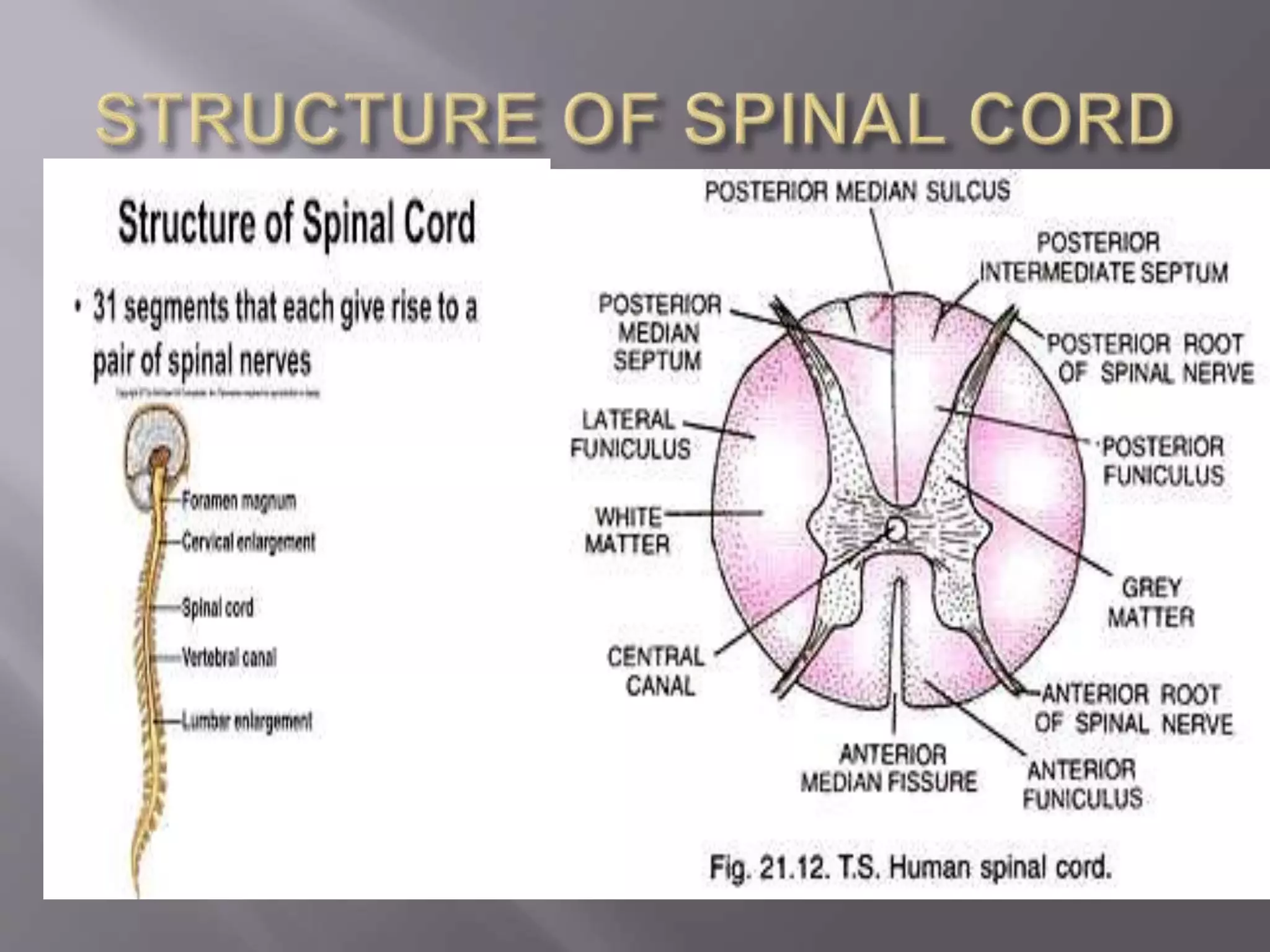
 STRUCTURE OF SPINAL CORD
 WHAT IS TRACTS?
 TRACTS OF THE SPINAL CORD
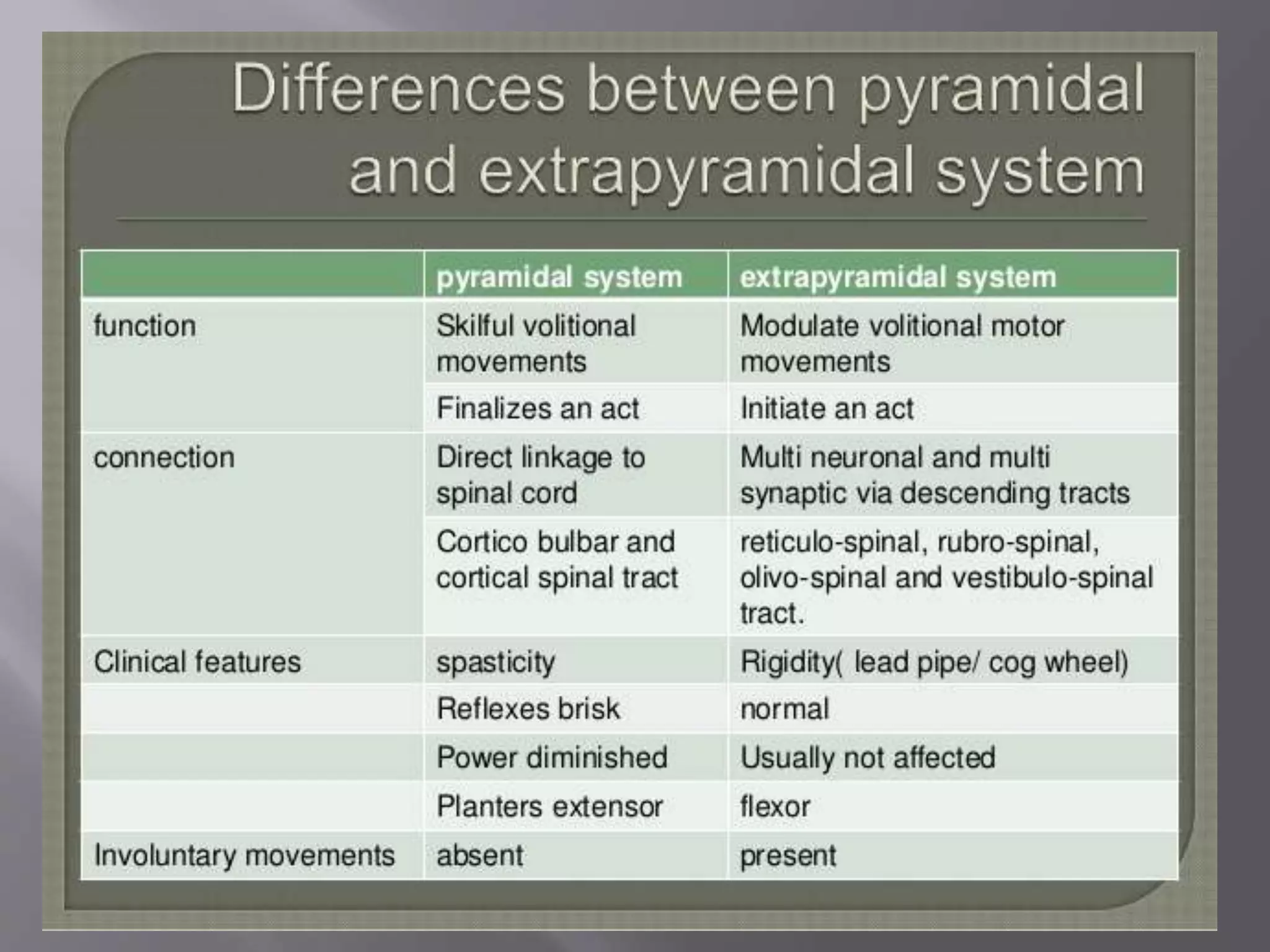
 DIFFERENCE BETWEEN PYRAMIDAL AND
EXTRAPYRAMIDAL TRACTS
 PYRAMIDAL TRACTS
 EXTRAPYRAMIDAL TRACTS
 SPINAL CORD -- spinal cord is the long cylindrical
lower part of the central nervous system.
SITUATION AND EXTENT– spinal cord is lies
loosely in the vertebral canal.
 it extend from upper border of atlas vertebrae to
the lower border of first lumbar or upper border of
second lumbar vertebra in an adult.
 it is continous with the medulla oblongeta ,
inferiorly it terminates as conus medullaris.
 LENGTH– about 18 inch or 45 cm in adult male
-- about 43 cm in females.
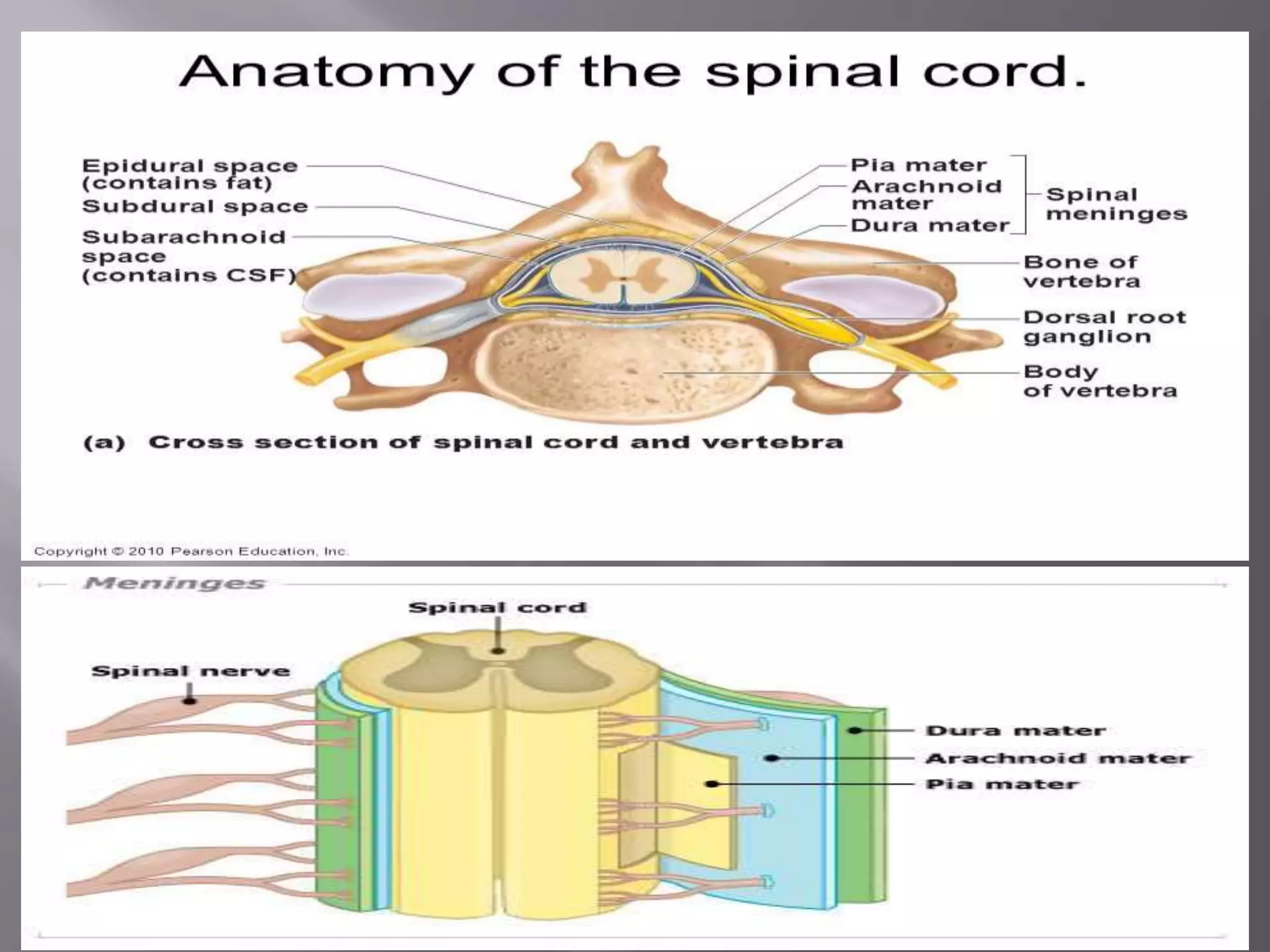
 COVERINGS– spinal cord is covered by
sheaths called meninges.
 meninges of spinal cord—
1. Dura mater
2. Arachnoid mater
3. Paya mater
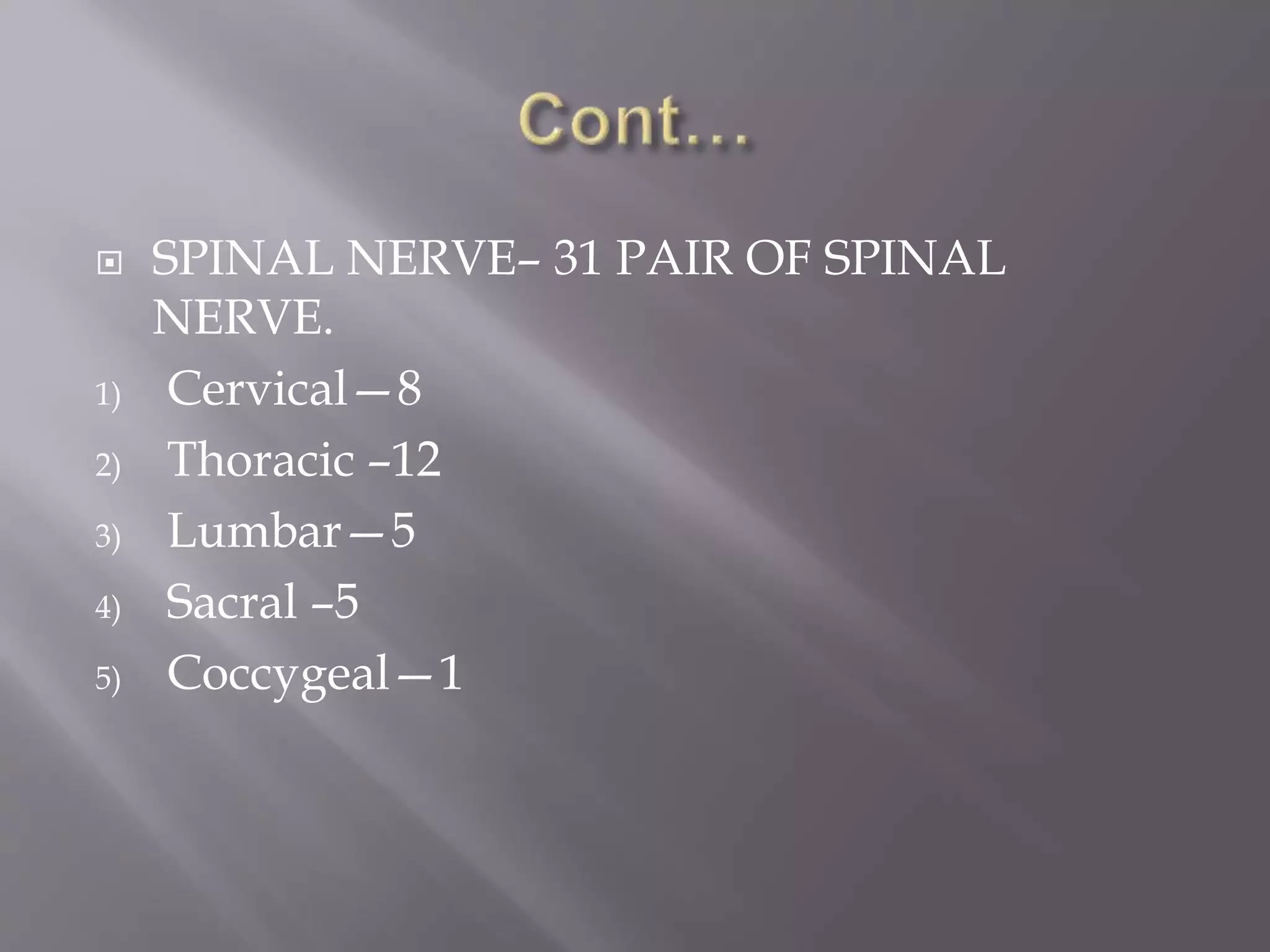
 SPINAL NERVE– 31 PAIR OF SPINAL
NERVE.
1) Cervical—8
2) Thoracic –12
3) Lumbar—5
4) Sacral –5
5) Coccygeal—1
 SPINAL SEGMENT– segment or part of spinal
nerve root which attached to vertebral column
is called spinal segment.
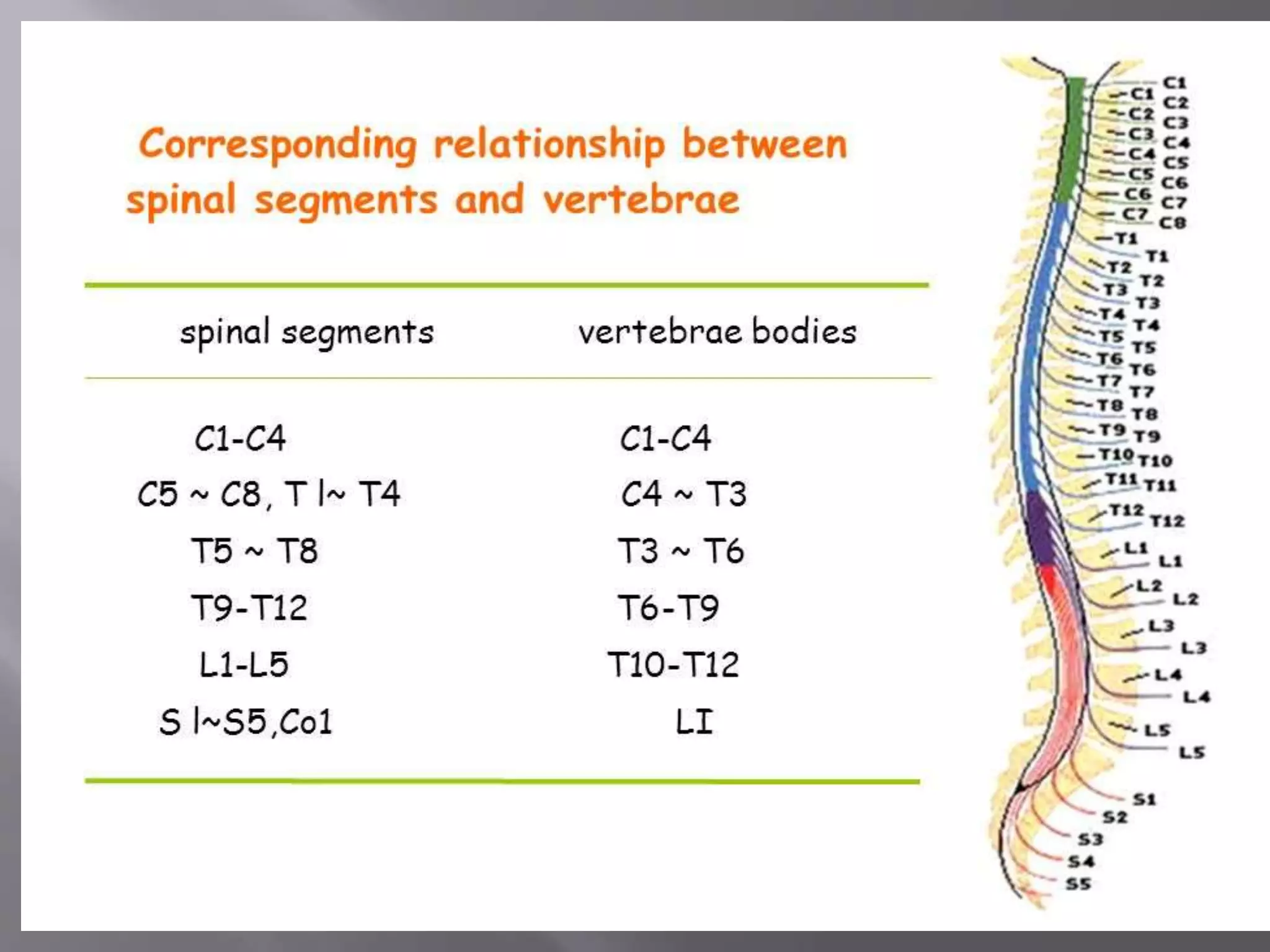
 length of the spinal cord (45cm) is smaller than
the length of vertebral collumn (65cm) ,so
spinal segment do not correspond to the
vertebral level.
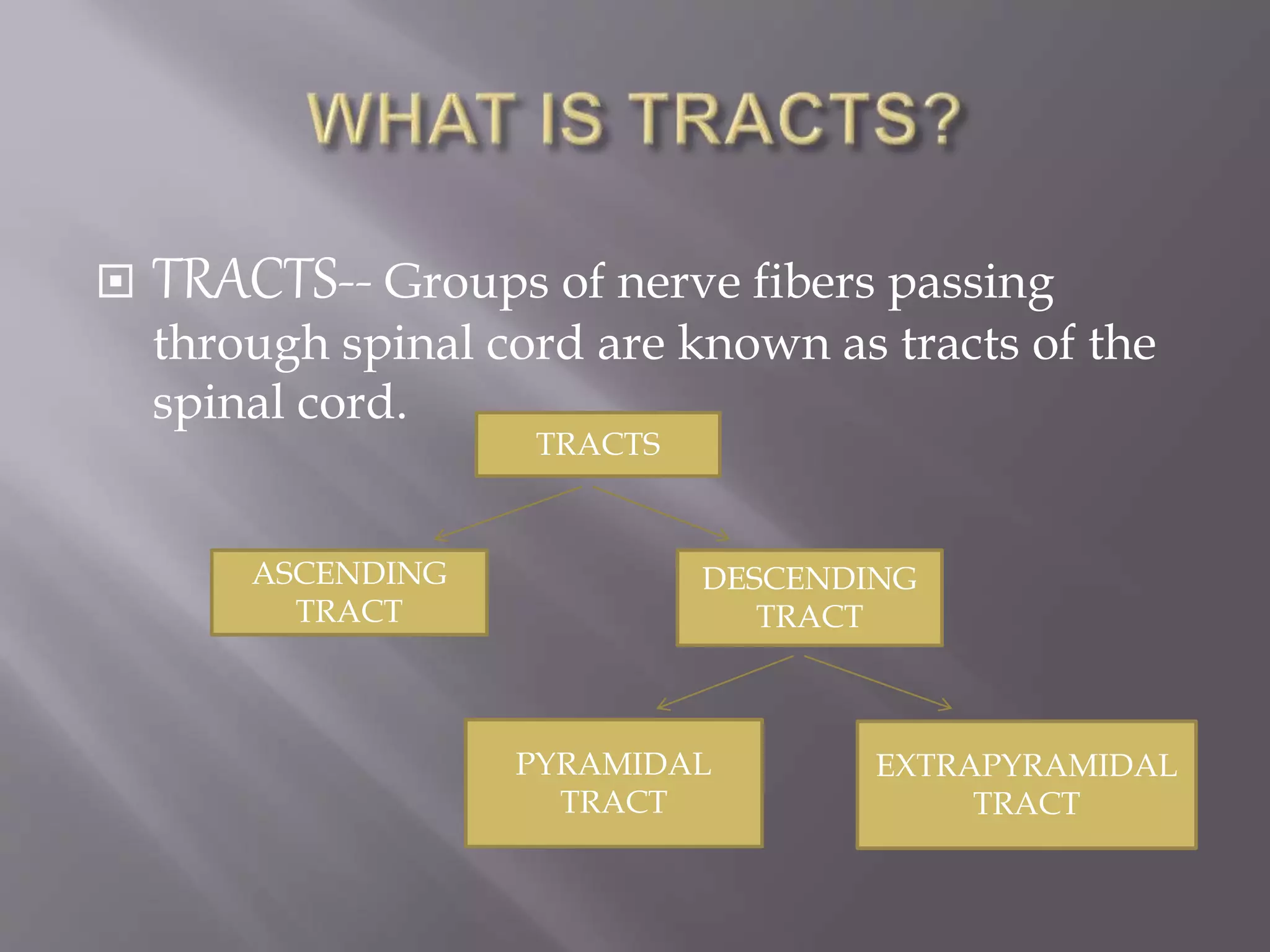
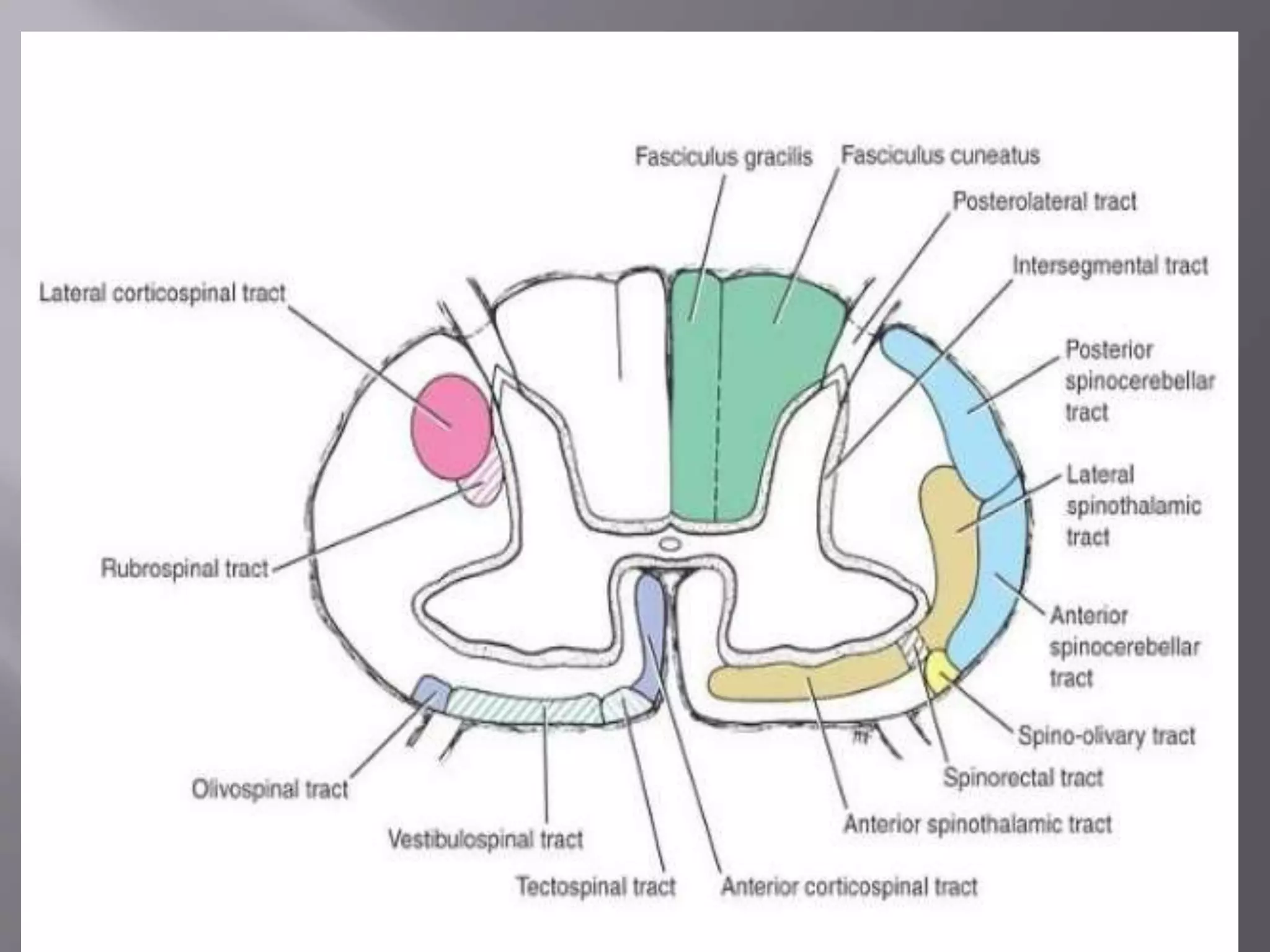
 TRACTS-- Groups of nerve fibers passing
through spinal cord are known as tracts of the
spinal cord.
TRACTS
ASCENDING
TRACT
DESCENDING
TRACT
PYRAMIDAL
TRACT
EXTRAPYRAMIDAL
TRACT
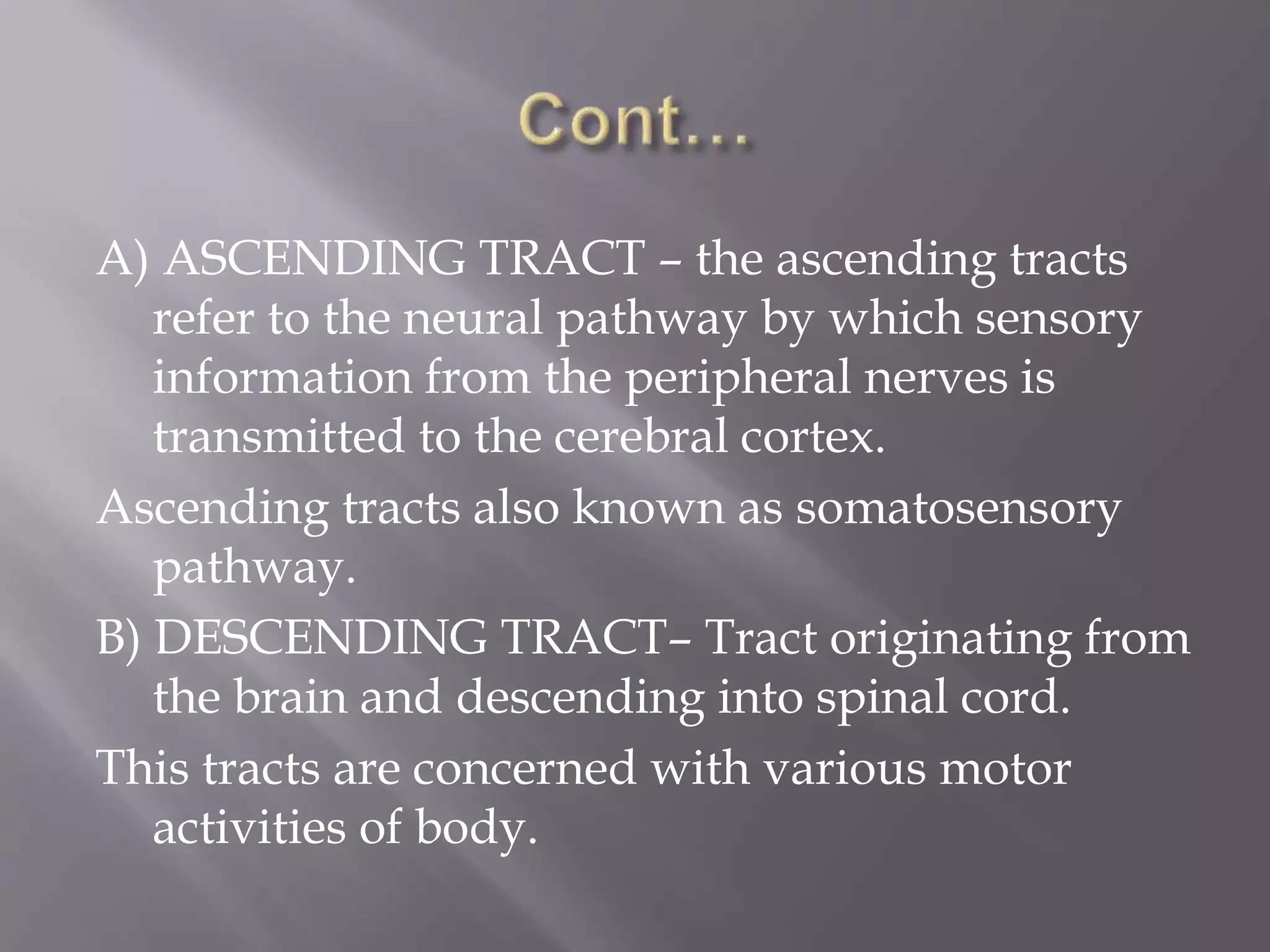
A) ASCENDING TRACT – the ascending tracts
refer to the neural pathway by which sensory
information from the peripheral nerves is
transmitted to the cerebral cortex.
Ascending tracts also known as somatosensory
pathway.
B) DESCENDING TRACT– Tract originating from
the brain and descending into spinal cord.
This tracts are concerned with various motor
activities of body.
 PYRAMIDAL TRACT OR CORTICOSPINAL
TRACT–
FUNCTION– control voluntary movements of
opposite half of body.
-- facilitatory for flexors and inhibitory for
extensors.
ORIGIN–
• 30% from primary motor cortex(area4)
• 30% from premotor area and supplementary motor
cortex.
• 40% from the somatosensory area.
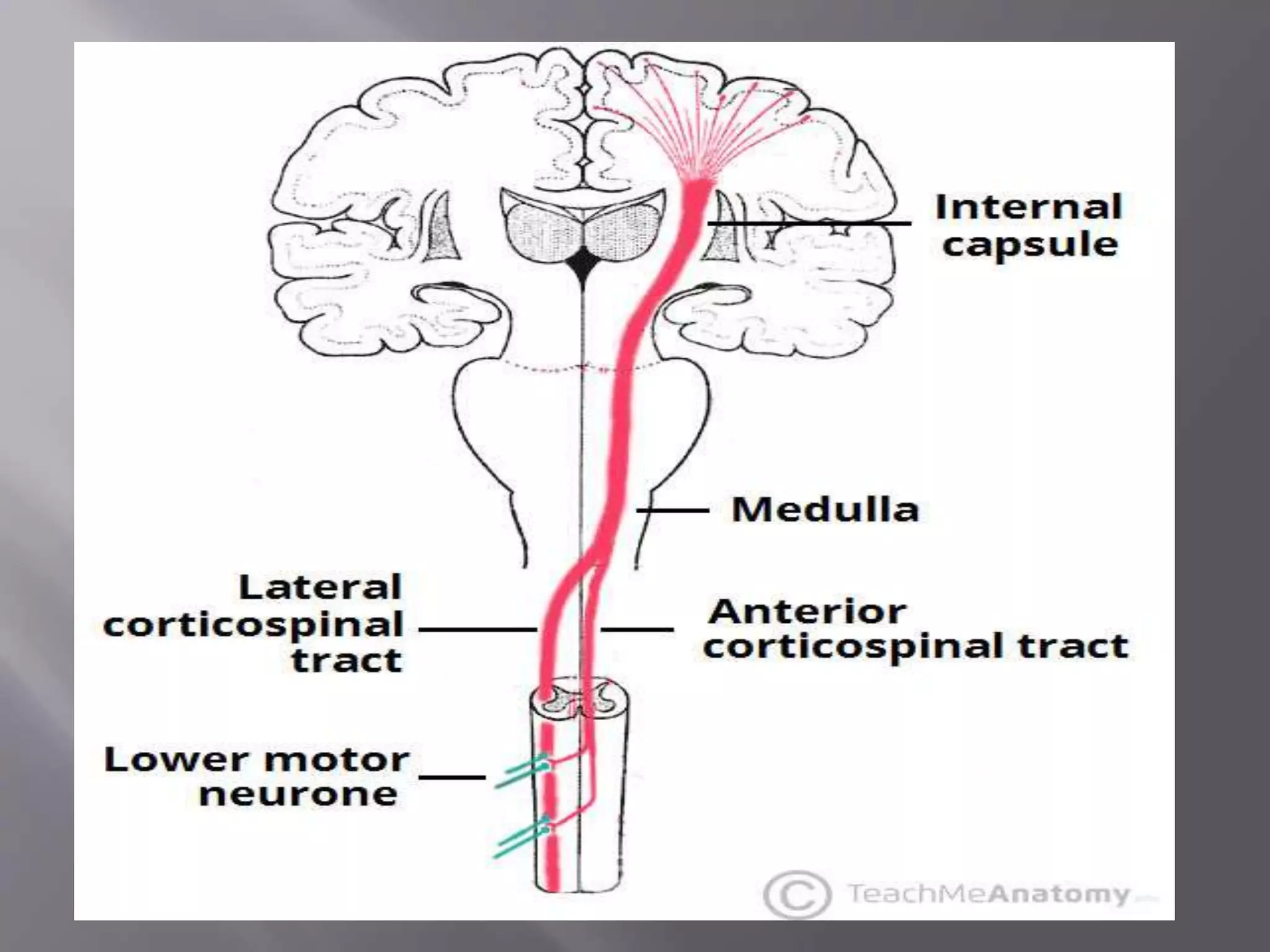
COURSE AND TERMINATION–
 The fibers descend as a part of corona radiata .
 Then pass through the posterior limb of internal
capsule.
 Then downwards through the brainstem
 Forming pyramids in the medulla.
 At the lower part of medulla 80% of the fibers
decussate in the midline to reach opposite side.
 Forming two separate tracts from here.
1) Lateral corticospinal tracts(crossed fibers)
2) Anterior corticospinal tract(uncrossed fibers)
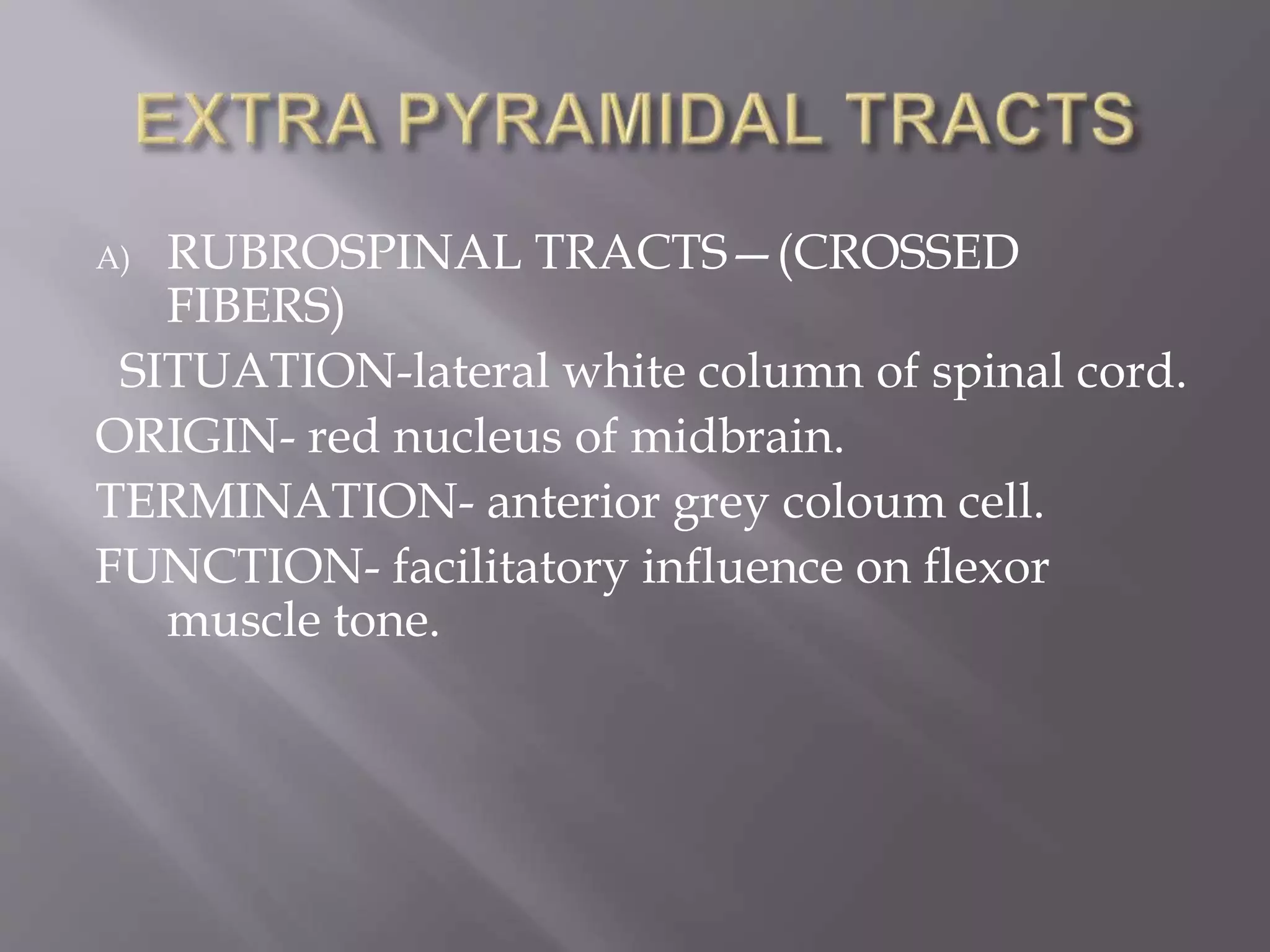
A) RUBROSPINAL TRACTS—(CROSSED
FIBERS)
SITUATION-lateral white column of spinal cord.
ORIGIN- red nucleus of midbrain.
TERMINATION- anterior grey coloum cell.
FUNCTION- facilitatory influence on flexor
muscle tone.
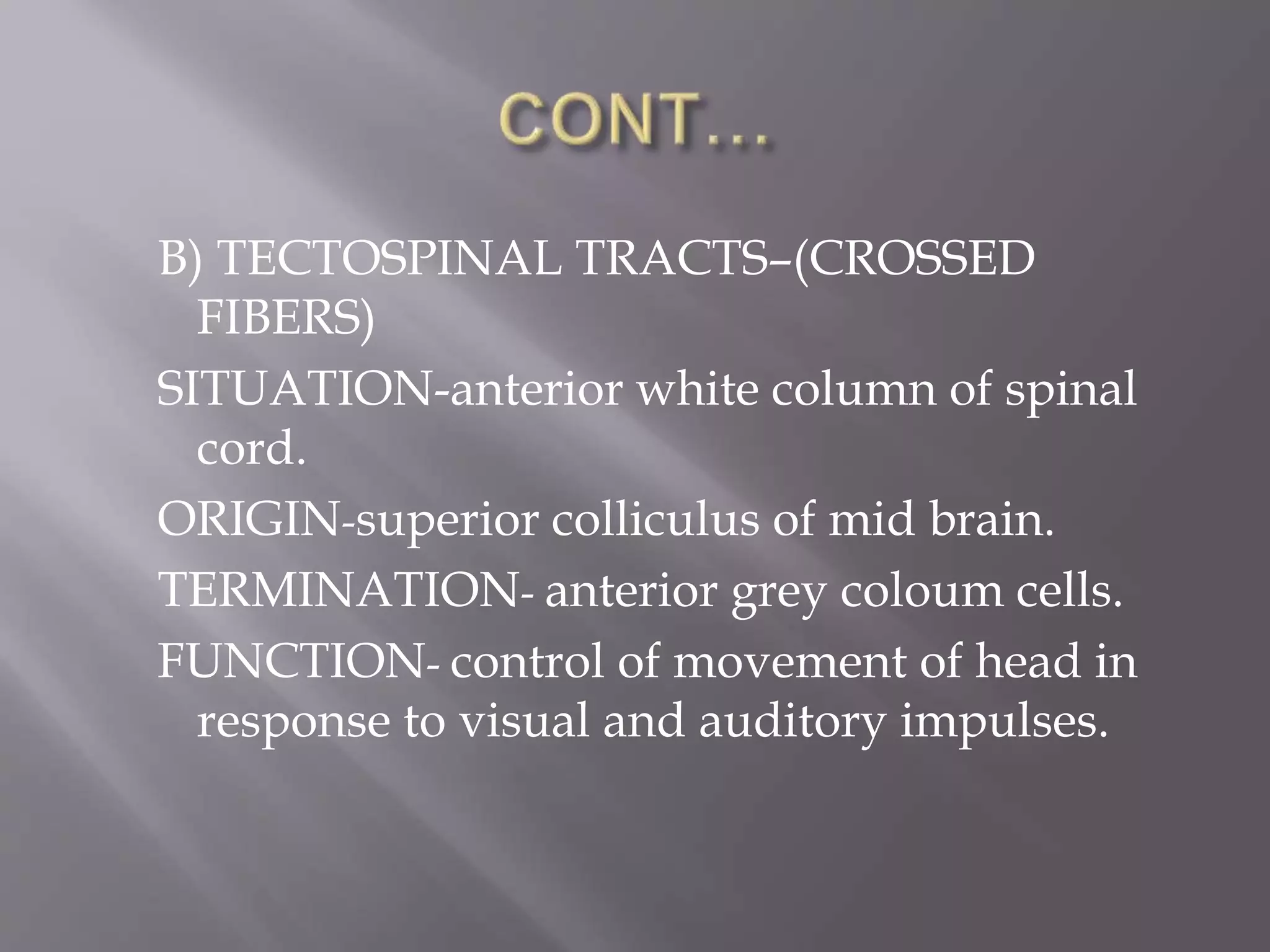
B) TECTOSPINAL TRACTS–(CROSSED
FIBERS)
SITUATION-anterior white column of spinal
cord.
ORIGIN-superior colliculus of mid brain.
TERMINATION- anterior grey coloum cells.
FUNCTION- control of movement of head in
response to visual and auditory impulses.
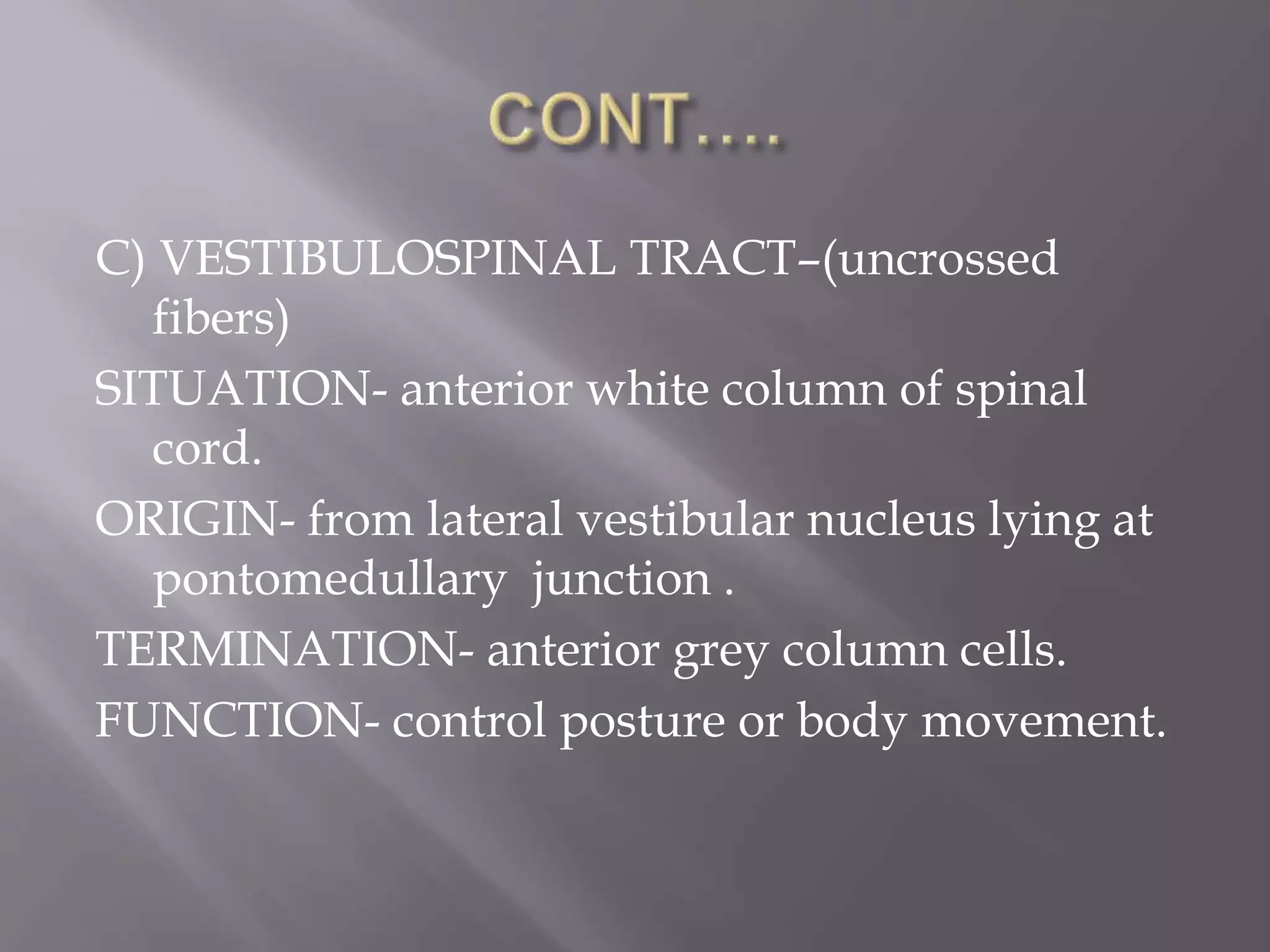
C) VESTIBULOSPINAL TRACT–(uncrossed
fibers)
SITUATION- anterior white column of spinal
cord.
ORIGIN- from lateral vestibular nucleus lying at
pontomedullary junction .
TERMINATION- anterior grey column cells.
FUNCTION- control posture or body movement.
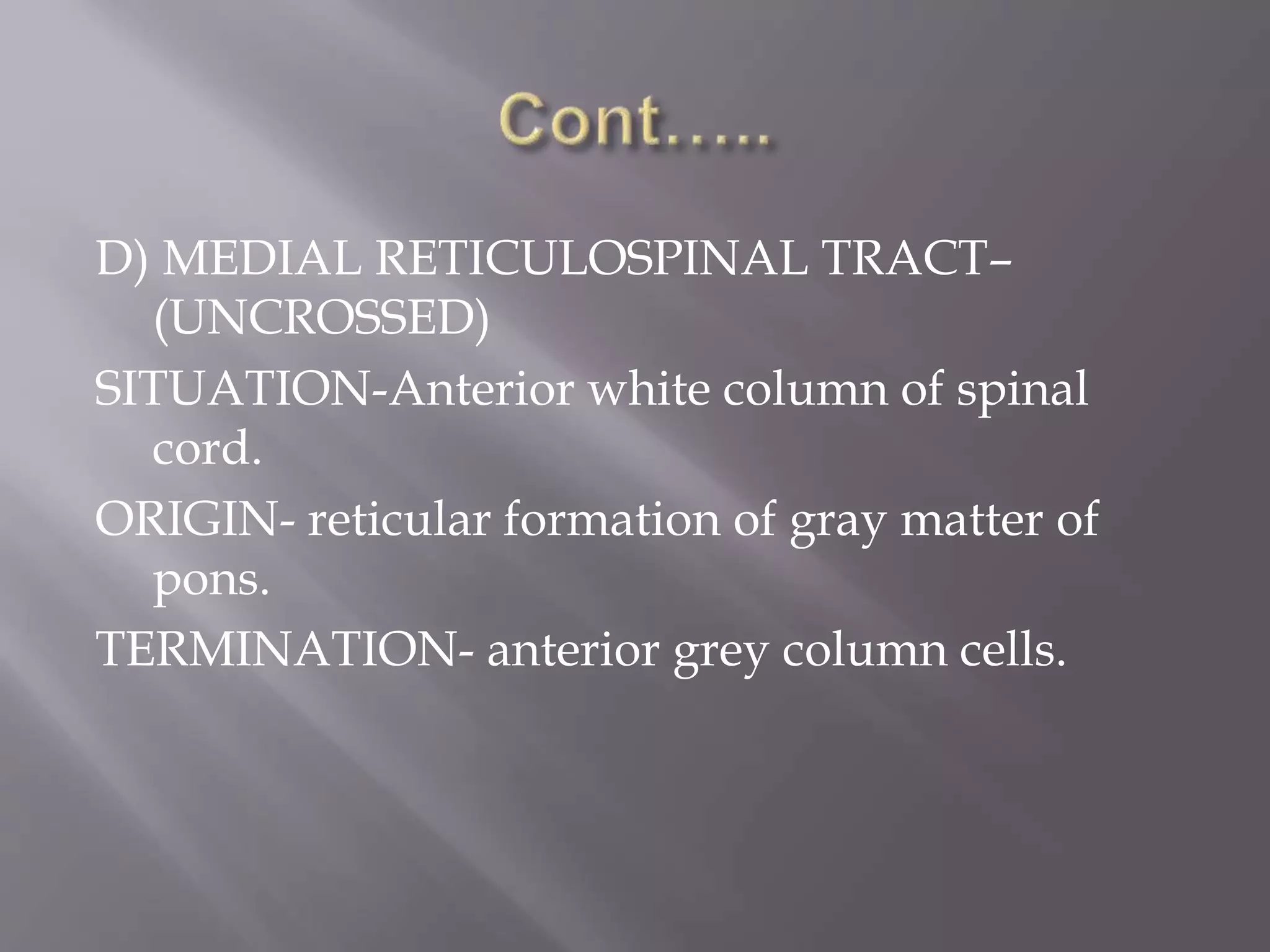
D) MEDIAL RETICULOSPINAL TRACT–
(UNCROSSED)
SITUATION-Anterior white column of spinal
cord.
ORIGIN- reticular formation of gray matter of
pons.
TERMINATION- anterior grey column cells.
E) LATERAL RETICULOSPINAL TRACTS–
(uncrossed and crossed)
SITUATION- anterolateral white column of spinal
cord.
BEGINNING – reticular formation of grey matter of
medulla oblongata.
TERMINATION- anterior grey column cell .
FUNCTION OF RETICULOSPINAL TRACTS–
i. Coordination of voluntary and reflex movements.
ii. Control of muscle tone.
iii. Control of respiration and diameter of blood
vessels.
F) OLIVOSPINAL TRACT– (UNCROSSED)
SITUATION- Anterolateral column of white
matter of spinal cord.
BEGINNING- inferior olivary nucleus in medulla
oblongata.
TERMINATION- anterior grey column cells.
FUNCTION- control of movements due to
proprioception.

Pyramidal and extrapyramidal tracts of spinal cord by sk

  • 1.
  • 2.
     SPINAL CORD STRUCTURE OF SPINAL CORD  WHAT IS TRACTS?  TRACTS OF THE SPINAL CORD  DIFFERENCE BETWEEN PYRAMIDAL AND EXTRAPYRAMIDAL TRACTS  PYRAMIDAL TRACTS  EXTRAPYRAMIDAL TRACTS
  • 3.
     SPINAL CORD-- spinal cord is the long cylindrical lower part of the central nervous system. SITUATION AND EXTENT– spinal cord is lies loosely in the vertebral canal.  it extend from upper border of atlas vertebrae to the lower border of first lumbar or upper border of second lumbar vertebra in an adult.  it is continous with the medulla oblongeta , inferiorly it terminates as conus medullaris.
  • 4.
     LENGTH– about18 inch or 45 cm in adult male -- about 43 cm in females.  COVERINGS– spinal cord is covered by sheaths called meninges.  meninges of spinal cord— 1. Dura mater 2. Arachnoid mater 3. Paya mater
  • 6.
     SPINAL NERVE–31 PAIR OF SPINAL NERVE. 1) Cervical—8 2) Thoracic –12 3) Lumbar—5 4) Sacral –5 5) Coccygeal—1
  • 7.
     SPINAL SEGMENT–segment or part of spinal nerve root which attached to vertebral column is called spinal segment.  length of the spinal cord (45cm) is smaller than the length of vertebral collumn (65cm) ,so spinal segment do not correspond to the vertebral level.
  • 10.
     TRACTS-- Groupsof nerve fibers passing through spinal cord are known as tracts of the spinal cord. TRACTS ASCENDING TRACT DESCENDING TRACT PYRAMIDAL TRACT EXTRAPYRAMIDAL TRACT
  • 11.
    A) ASCENDING TRACT– the ascending tracts refer to the neural pathway by which sensory information from the peripheral nerves is transmitted to the cerebral cortex. Ascending tracts also known as somatosensory pathway. B) DESCENDING TRACT– Tract originating from the brain and descending into spinal cord. This tracts are concerned with various motor activities of body.
  • 14.
     PYRAMIDAL TRACTOR CORTICOSPINAL TRACT– FUNCTION– control voluntary movements of opposite half of body. -- facilitatory for flexors and inhibitory for extensors. ORIGIN– • 30% from primary motor cortex(area4) • 30% from premotor area and supplementary motor cortex. • 40% from the somatosensory area.
  • 15.
    COURSE AND TERMINATION– The fibers descend as a part of corona radiata .  Then pass through the posterior limb of internal capsule.  Then downwards through the brainstem  Forming pyramids in the medulla.  At the lower part of medulla 80% of the fibers decussate in the midline to reach opposite side.  Forming two separate tracts from here. 1) Lateral corticospinal tracts(crossed fibers) 2) Anterior corticospinal tract(uncrossed fibers)
  • 17.
    A) RUBROSPINAL TRACTS—(CROSSED FIBERS) SITUATION-lateralwhite column of spinal cord. ORIGIN- red nucleus of midbrain. TERMINATION- anterior grey coloum cell. FUNCTION- facilitatory influence on flexor muscle tone.
  • 18.
    B) TECTOSPINAL TRACTS–(CROSSED FIBERS) SITUATION-anteriorwhite column of spinal cord. ORIGIN-superior colliculus of mid brain. TERMINATION- anterior grey coloum cells. FUNCTION- control of movement of head in response to visual and auditory impulses.
  • 19.
    C) VESTIBULOSPINAL TRACT–(uncrossed fibers) SITUATION-anterior white column of spinal cord. ORIGIN- from lateral vestibular nucleus lying at pontomedullary junction . TERMINATION- anterior grey column cells. FUNCTION- control posture or body movement.
  • 20.
    D) MEDIAL RETICULOSPINALTRACT– (UNCROSSED) SITUATION-Anterior white column of spinal cord. ORIGIN- reticular formation of gray matter of pons. TERMINATION- anterior grey column cells.
  • 21.
    E) LATERAL RETICULOSPINALTRACTS– (uncrossed and crossed) SITUATION- anterolateral white column of spinal cord. BEGINNING – reticular formation of grey matter of medulla oblongata. TERMINATION- anterior grey column cell . FUNCTION OF RETICULOSPINAL TRACTS– i. Coordination of voluntary and reflex movements. ii. Control of muscle tone. iii. Control of respiration and diameter of blood vessels.
  • 22.
    F) OLIVOSPINAL TRACT–(UNCROSSED) SITUATION- Anterolateral column of white matter of spinal cord. BEGINNING- inferior olivary nucleus in medulla oblongata. TERMINATION- anterior grey column cells. FUNCTION- control of movements due to proprioception.