Intermediate Filaments
-Dr. Sarita Nanda
Biochemistry Department
Daulat Ram College
Introduction
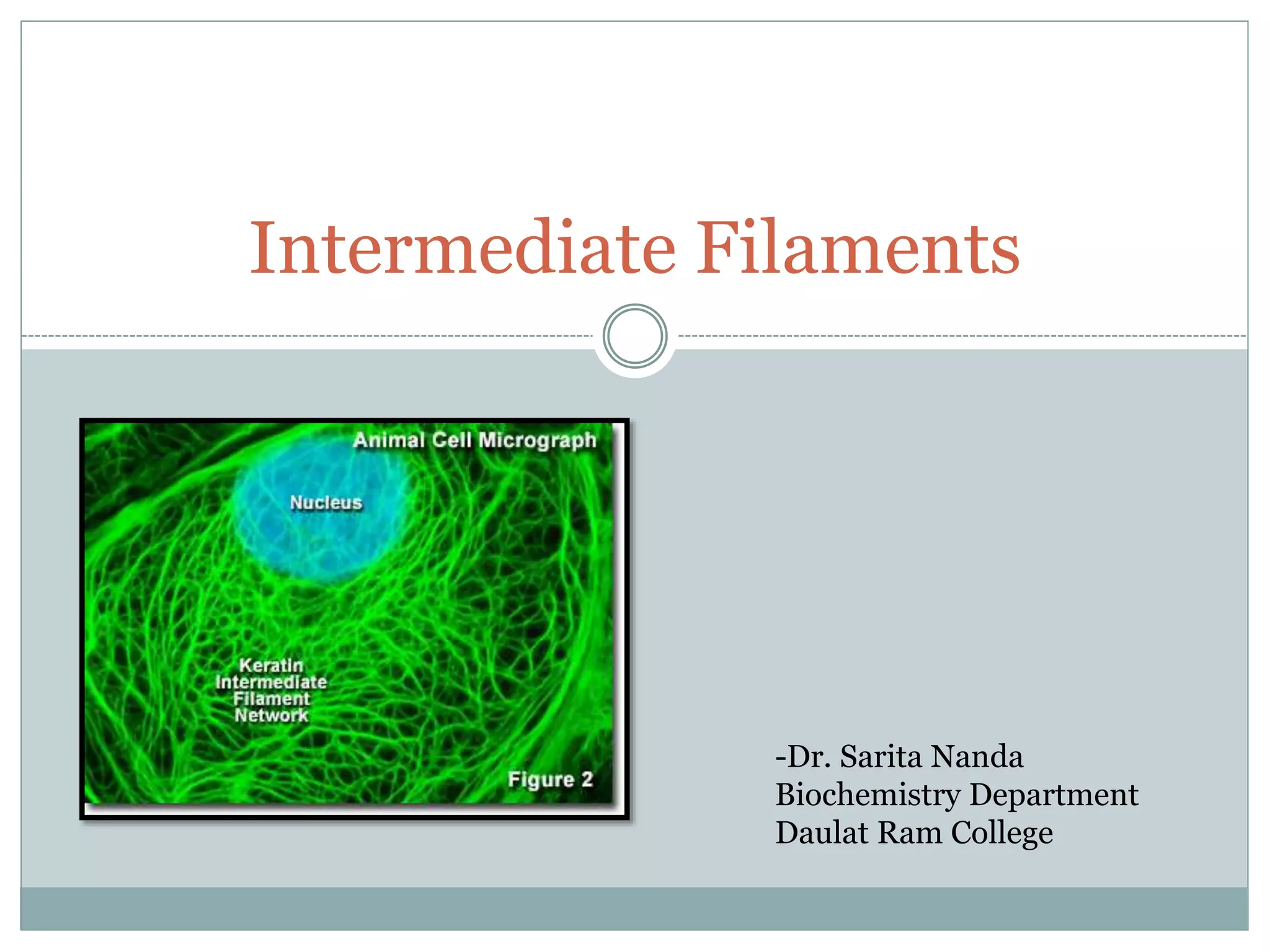
 They have diameter between 8-11nm
 They provide mechanical strength to cells and tissues
 They provide scaffold for localization of cellular
processes
Intermediate Filament Proteins
 They are composed of variety of proteins
 There are 65 different intermediate filament
 Type I, II, III,IV, V and VI proteins
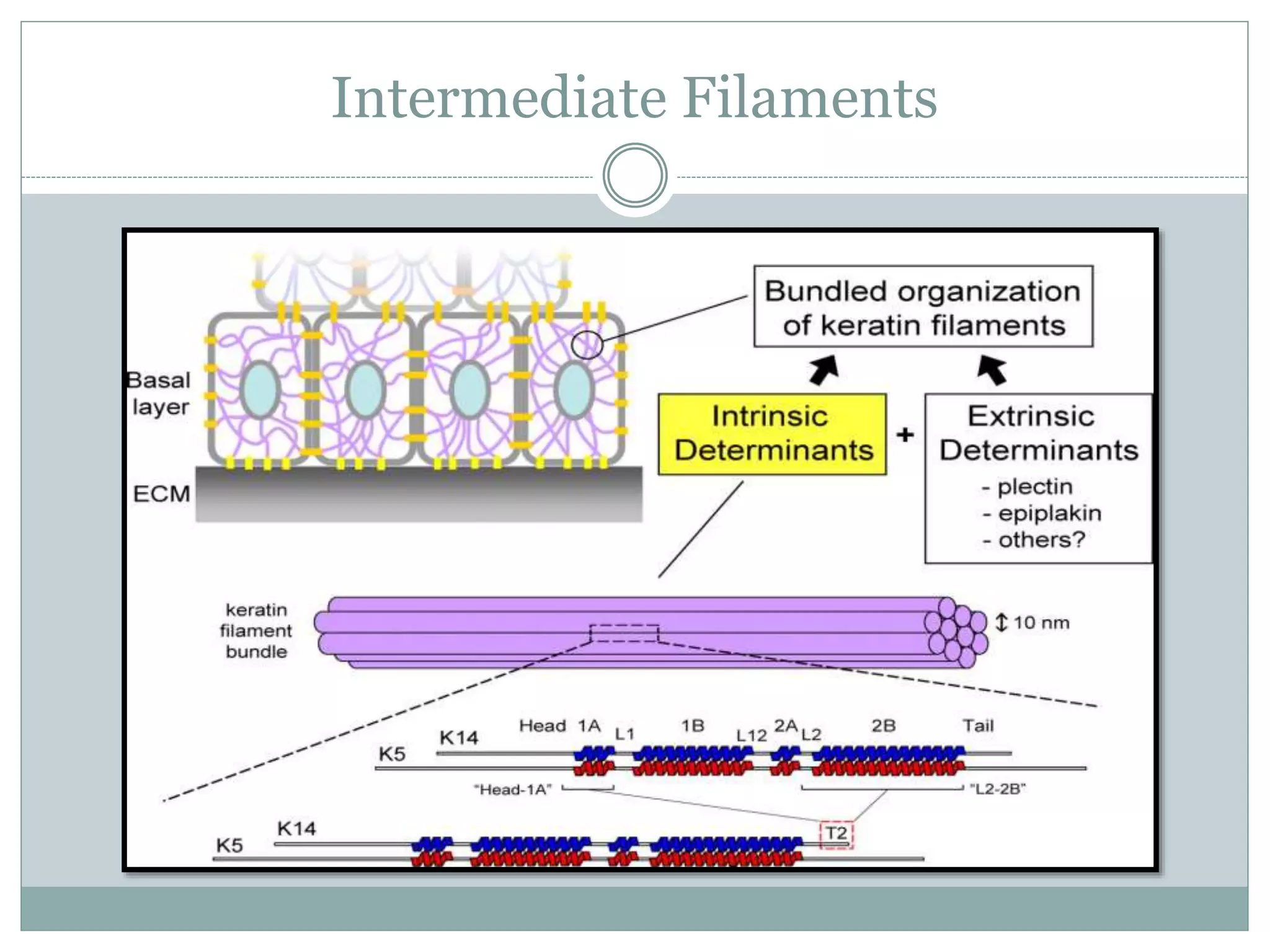
 Type I is acidic keratin which is of size 40-69 KD
found in epithelial cells
 Type II is neutral/basic keratin of 50-70KD found in
epithelial cells
 Type III is vimentin which is of 54 KD found in
fibroblasts
Intermediate Filament Proteins
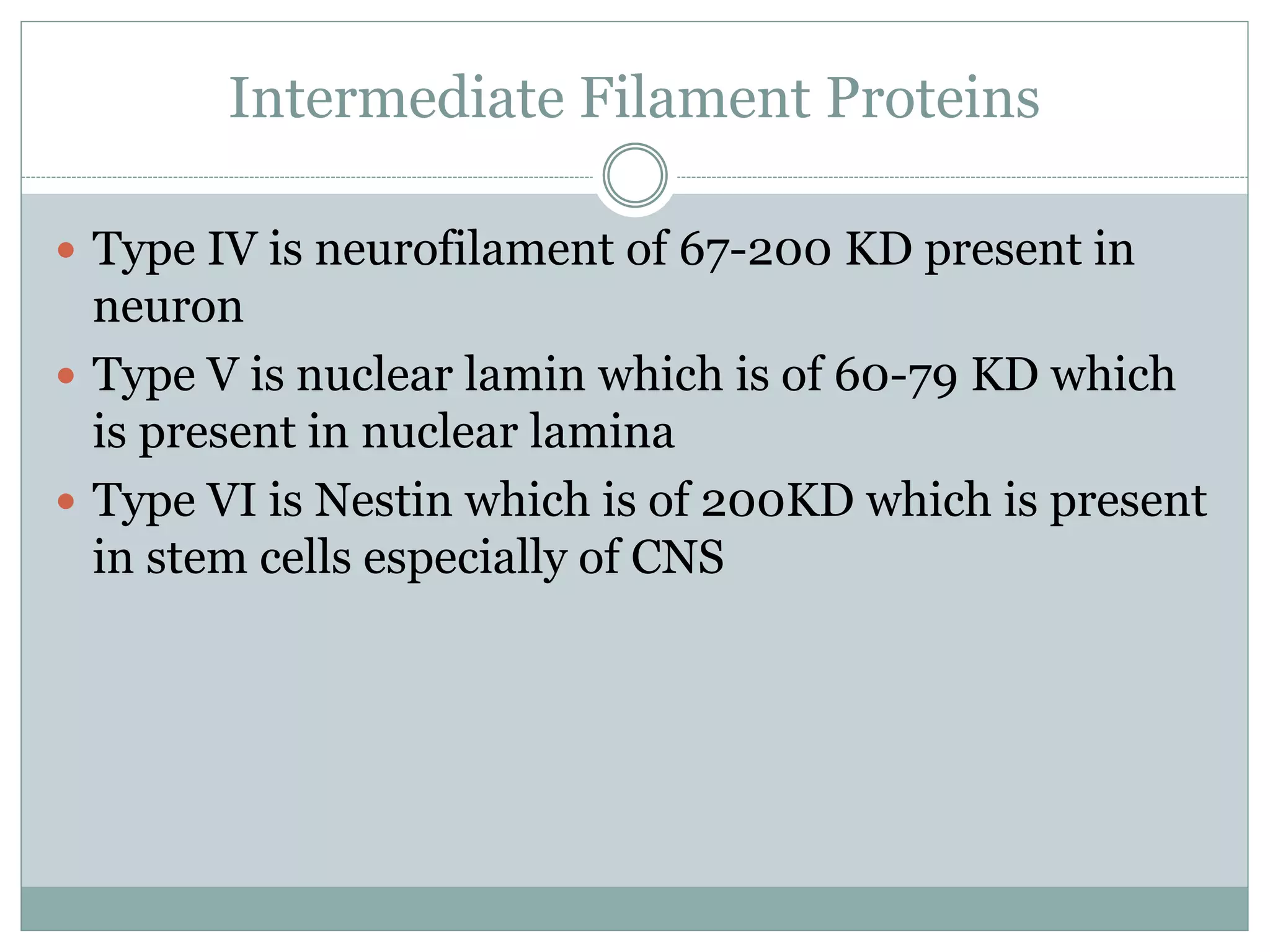
 Type IV is neurofilament of 67-200 KD present in
neuron
 Type V is nuclear lamin which is of 60-79 KD which
is present in nuclear lamina
 Type VI is Nestin which is of 200KD which is present
in stem cells especially of CNS
Assembly of Intermediate Filament
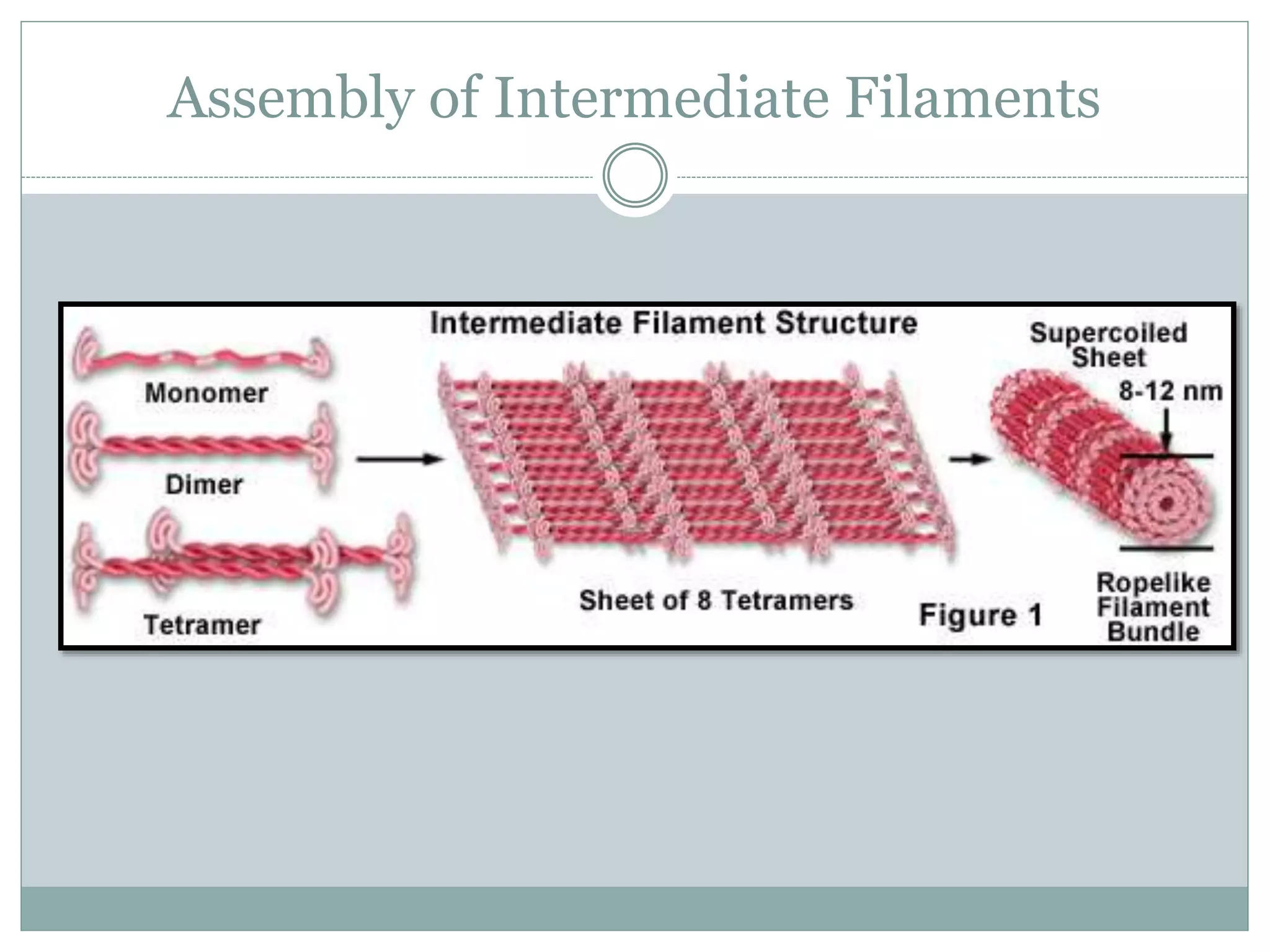
 The first stage is it forms dimers.
 The dimers form tetramers The tetramers assemble
end to end to form protofilament
 The tetramers organize to form octamer
 They are arranged in antiparallel manner.
 Thus they are apolar. They do not have distinct ends
i.e. barbed or pointed end of intermediate filament.
Assembly of Intermediate Filaments
Intermediate Filaments
Characteristics
 Intermediate filaments are generally more stable than
actin filaments or microtubules
 They do not exhibit dynamic behavior associated with
other cytoskeleton
 Intermediate filament protein can be modified by
phosphorylation which can regulate their assembly and
disassembly.
 This is observed in nuclear lamin
 Cytoplasmic intermediate filaments such as vimentin are
also phosphorylated which lead to their disassembly and
reorganization in dividing or migrating cells
Intracellular Organization of Intermediate
Filament
 Both keratin and vimentin attach to nuclear envelop
serving to position and anchor nucleus within the
cell
 Intermediate filament associate with associate with
other cytoskeleton elements
 Intermediate filaments form junctions
 Desmosomes: cell-cell
 Hemidesmosome-cell-matrix
Junction Proteins
 On the cytoplasmic the junctions are associated with
plakins
 Plakins bind intermediate filaments
 Hemidesmosomes bind to different member od
plakins i.e. Plectins bind to other cytoskeleton
elements
 Desmin connects individual actin myosin assemblies
of muscle cell both one to another and to the plasma
membrane
 Neurofilaments are major intermediate filaments of
motor neurons , NF- L, NF-M, NF-H
Junction Proteins
 They help to support and stabilize other cytoskeleton
in thin extension of nerve cells
Junction Proteins
Hemidesmosomes
Diseases of Intermediate filament
 Epidermis bullous simplex(EBS)
 Mutant keratin gene form skin blister resulting from
cell lysis after minor trauma
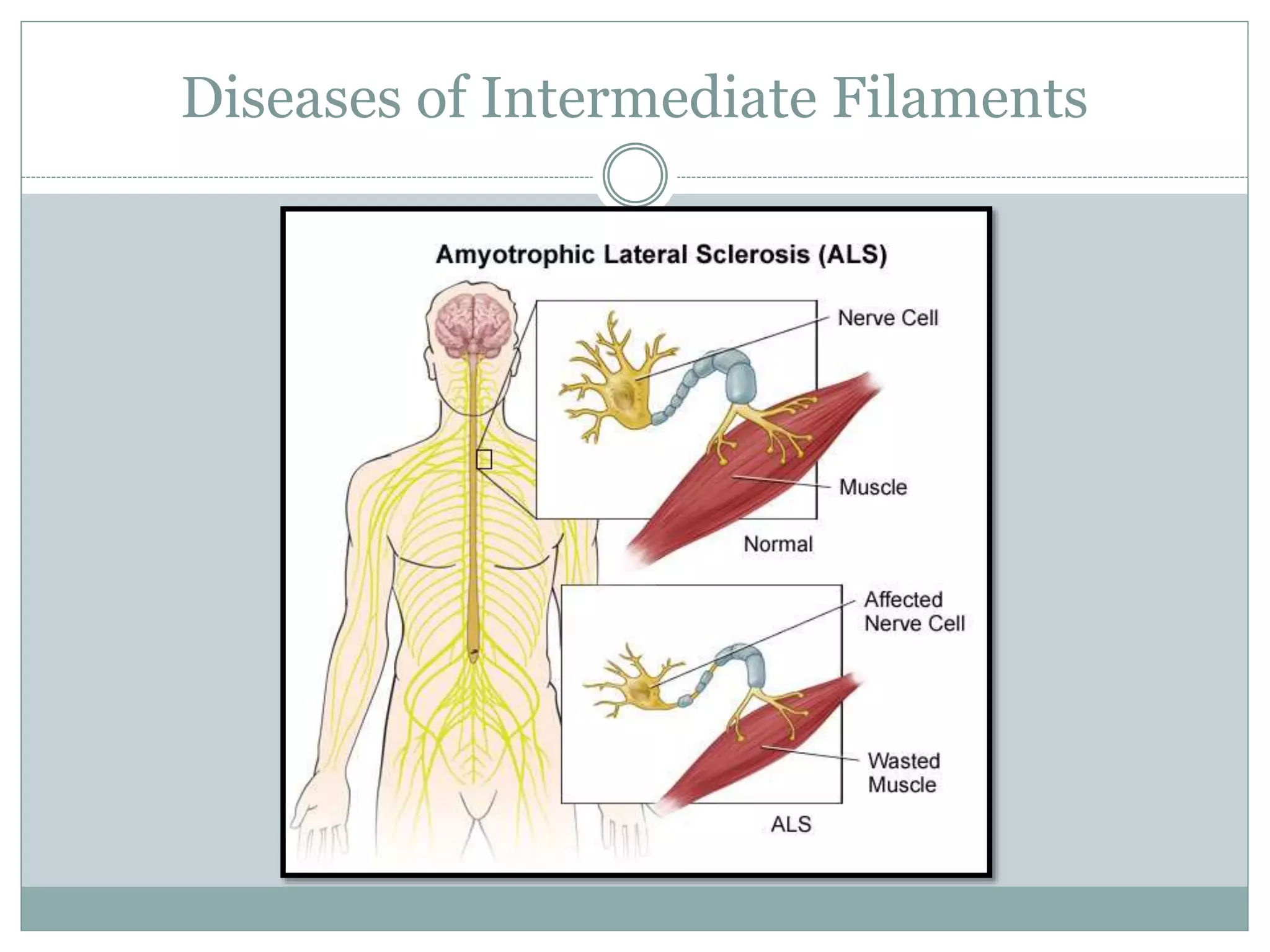
 Lou Gehrig's disease (Amyotrophic lateral sclerosis,
ALS): leads to progressive loss of motor neurons
which lead to muscle atrophy, paralysis and eventual
death
Diseases of Intermediate Filaments
Epidermolysis Bullosa Simplex (EBS)

Intermediate filaments

  • 1.
    Intermediate Filaments -Dr. SaritaNanda Biochemistry Department Daulat Ram College
  • 2.
    Introduction  They havediameter between 8-11nm  They provide mechanical strength to cells and tissues  They provide scaffold for localization of cellular processes
  • 3.
    Intermediate Filament Proteins They are composed of variety of proteins  There are 65 different intermediate filament  Type I, II, III,IV, V and VI proteins  Type I is acidic keratin which is of size 40-69 KD found in epithelial cells  Type II is neutral/basic keratin of 50-70KD found in epithelial cells  Type III is vimentin which is of 54 KD found in fibroblasts
  • 4.
    Intermediate Filament Proteins Type IV is neurofilament of 67-200 KD present in neuron  Type V is nuclear lamin which is of 60-79 KD which is present in nuclear lamina  Type VI is Nestin which is of 200KD which is present in stem cells especially of CNS
  • 5.
    Assembly of IntermediateFilament  The first stage is it forms dimers.  The dimers form tetramers The tetramers assemble end to end to form protofilament  The tetramers organize to form octamer  They are arranged in antiparallel manner.  Thus they are apolar. They do not have distinct ends i.e. barbed or pointed end of intermediate filament.
  • 6.
  • 7.
  • 8.
    Characteristics  Intermediate filamentsare generally more stable than actin filaments or microtubules  They do not exhibit dynamic behavior associated with other cytoskeleton  Intermediate filament protein can be modified by phosphorylation which can regulate their assembly and disassembly.  This is observed in nuclear lamin  Cytoplasmic intermediate filaments such as vimentin are also phosphorylated which lead to their disassembly and reorganization in dividing or migrating cells
  • 9.
    Intracellular Organization ofIntermediate Filament  Both keratin and vimentin attach to nuclear envelop serving to position and anchor nucleus within the cell  Intermediate filament associate with associate with other cytoskeleton elements  Intermediate filaments form junctions  Desmosomes: cell-cell  Hemidesmosome-cell-matrix
  • 10.
    Junction Proteins  Onthe cytoplasmic the junctions are associated with plakins  Plakins bind intermediate filaments  Hemidesmosomes bind to different member od plakins i.e. Plectins bind to other cytoskeleton elements  Desmin connects individual actin myosin assemblies of muscle cell both one to another and to the plasma membrane  Neurofilaments are major intermediate filaments of motor neurons , NF- L, NF-M, NF-H
  • 11.
    Junction Proteins  Theyhelp to support and stabilize other cytoskeleton in thin extension of nerve cells
  • 12.
  • 13.
    Diseases of Intermediatefilament  Epidermis bullous simplex(EBS)  Mutant keratin gene form skin blister resulting from cell lysis after minor trauma  Lou Gehrig's disease (Amyotrophic lateral sclerosis, ALS): leads to progressive loss of motor neurons which lead to muscle atrophy, paralysis and eventual death
  • 14.
  • 15.
    Diseases of IntermediateFilaments Epidermolysis Bullosa Simplex (EBS)