WELCOME
CHEMOTHERAPY
EXTRAVASATION
Presenter
Dr. Saqi Md. Abdul Baqi
MD (Phase-B)
Dept. of Haematology,
BSMMU
What is extravasation?
• Extravasation is the accidental leakage or
infiltration of intravenous drugs into the
surrounding tissues from the vein
• This can lead to an immediate inflammatory
painful reaction and with some drugs may
result in local tissue destruction (necrosis) and
other complications
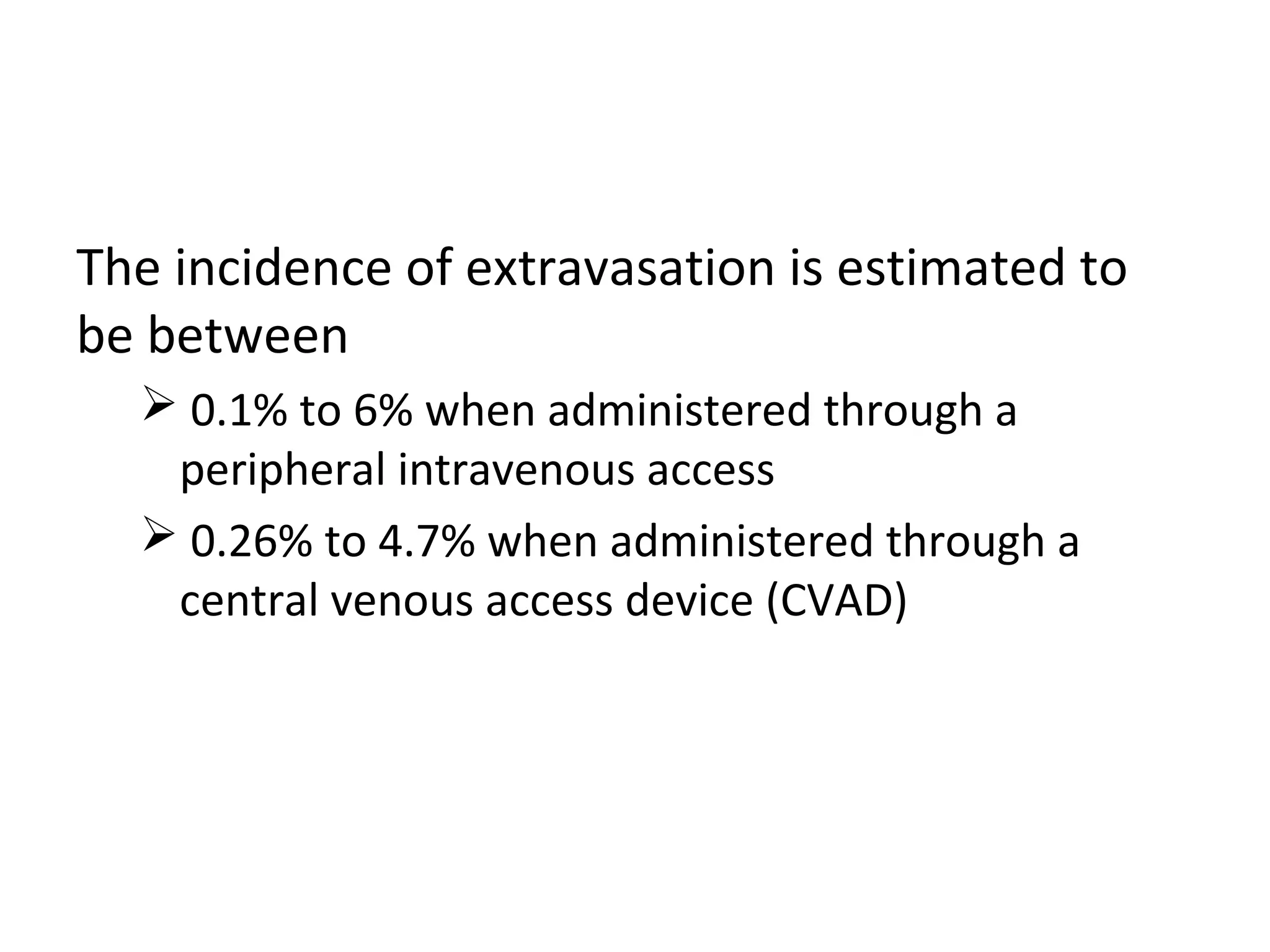
The incidence of extravasation is estimated to
be between
 0.1% to 6% when administered through a
peripheral intravenous access
 0.26% to 4.7% when administered through a
central venous access device (CVAD)
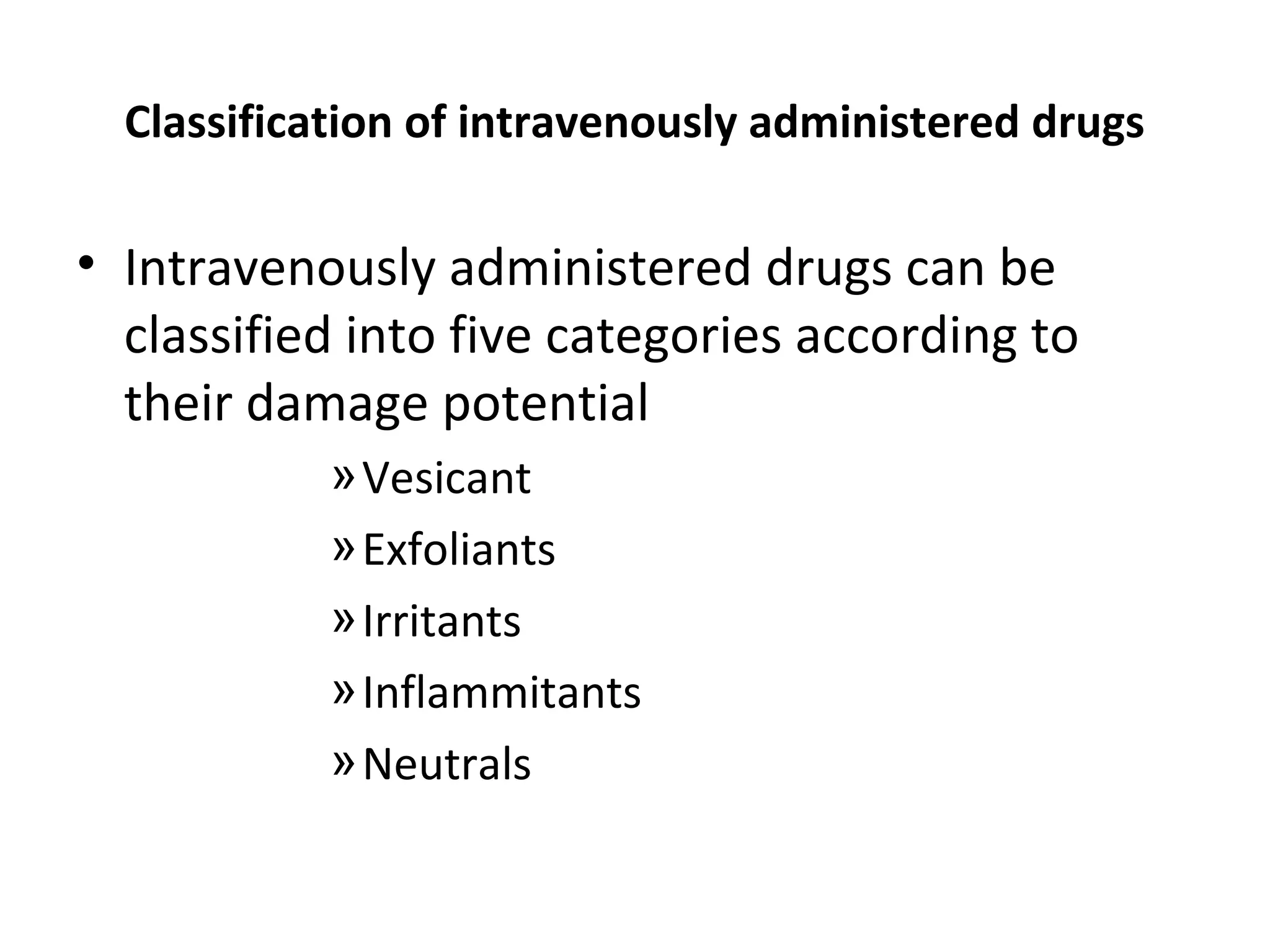
Classification of intravenously administered drugs
• Intravenously administered drugs can be
classified into five categories according to
their damage potential
»Vesicant
»Exfoliants
»Irritants
»Inflammitants
»Neutrals
Vesicants
• Vesicants are drugs that have the potential to
cause blistering and ulceration, which when
left untreated can lead to tissue damage and
necrosis
• Vesicants may be sub-classified into
» DNA binding drugs
» non-DNA binding drugs
Vesicants
DNA binding drugs are capable
of producing more severe
tissue damage and mainly
include :
– Daunorubicin
– Doxorubicin
– Epirubicin
– Idarubicin
– Mitoxantrone
– Dacarbazine
– Mitomycin C
Non-DNA-binding drugs
include :
–Vinblastine
–Vincristine
–Vindesine
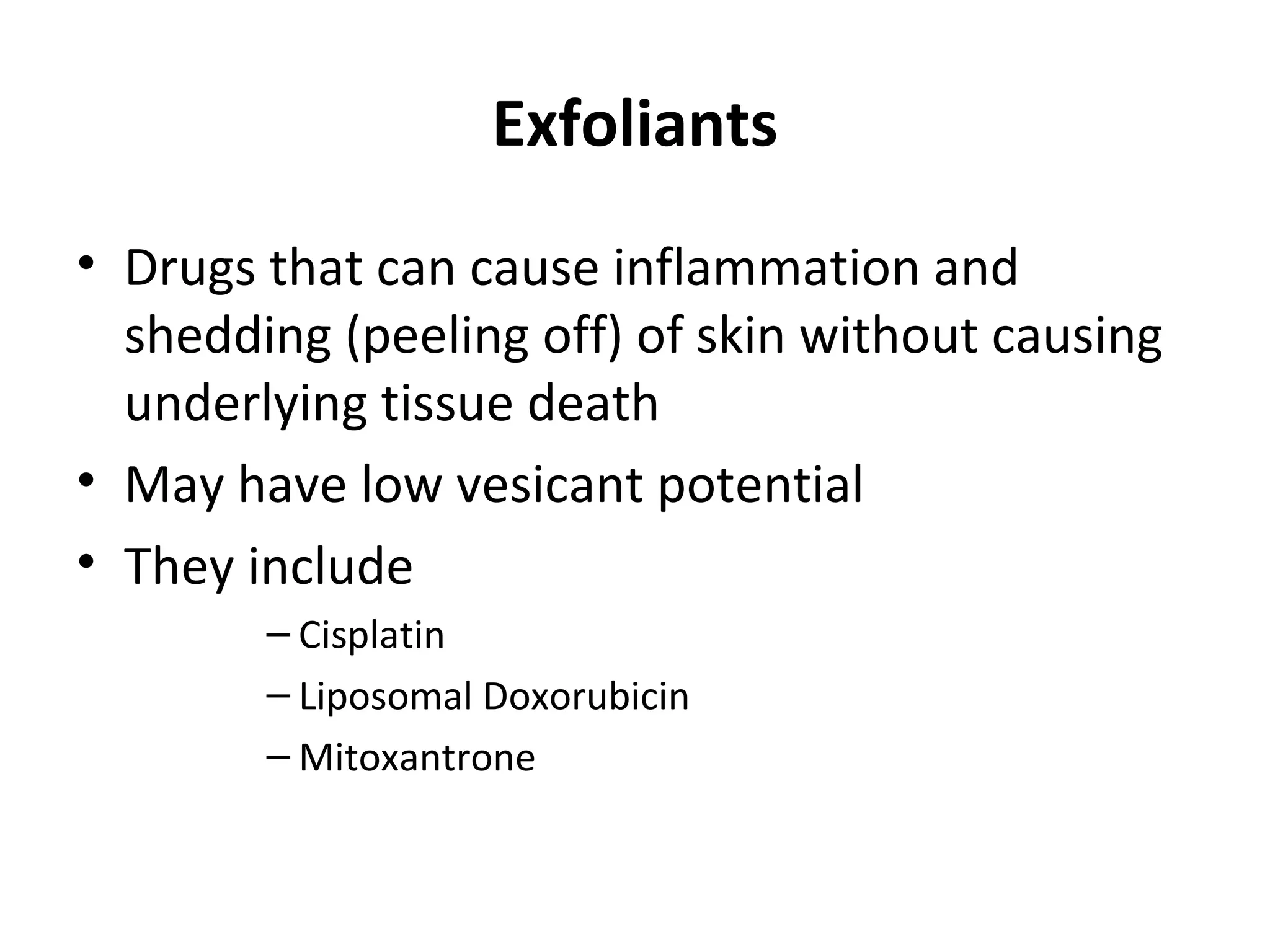
Exfoliants
• Drugs that can cause inflammation and
shedding (peeling off) of skin without causing
underlying tissue death
• May have low vesicant potential
• They include
– Cisplatin
– Liposomal Doxorubicin
– Mitoxantrone
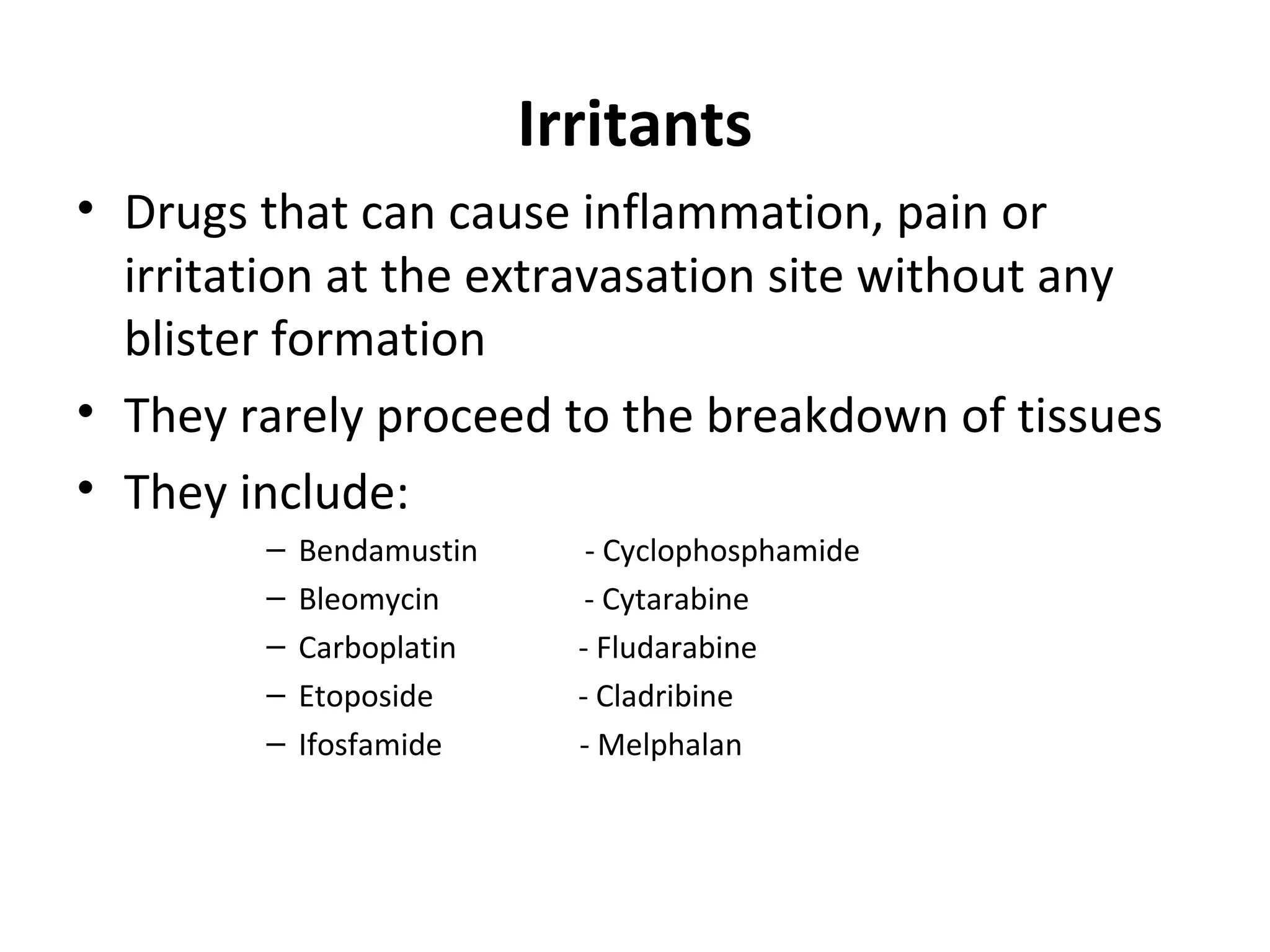
Irritants
• Drugs that can cause inflammation, pain or
irritation at the extravasation site without any
blister formation
• They rarely proceed to the breakdown of tissues
• They include:
– Bendamustin - Cyclophosphamide
– Bleomycin - Cytarabine
– Carboplatin - Fludarabine
– Etoposide - Cladribine
– Ifosfamide - Melphalan
Inflammitants
• Drugs that cause mild to moderate
inflammation, painless skin erythema and
elevation (flare reaction) at the extravasation
site
• They include:
– Bortezomib
– 5-fluorouracil
– Methotrexate
Neutrals
• Drugs that neither cause inflammation nor
damage upon extravasation
• They include:
– Asparaginase
– Bleomycin
– Bortezomib
– Bevacizumab
– Cetuximab
– Rituximab
– Trastuzumab
– Alemtuzumab
Risk factors of chemotherapy
extravasation
• Patient factor
– Infants and young children
– Elderly patients
– Those who are unable to communicate, e.g. sedated,
unconscious, confused, language issues
– Chronic diseases, e.g. cancer, peripheral vascular
disease, superior vena cava (SVC) syndrome,
lymphoedema
– Medications: anticoagulants, steroids
– Repeated intravenous cannulation/venepuncture
– Fragile veins or thrombocytopenic patient
• Factors related to chemotherapeutic agent
– Vesicant properties of the drug
– Its concentration, volume
– Prolonged peripheral line infusions of vesicants
• Iatrogenic causes
– Lack of training of nurses
– Poor cannula size selection
– Poor location selection
– Lack of time
CLINICAL MANIFESTATIONS
• Burning, stinging pain, swelling, erythema,
induration and skin discoloration
• A resistance is felt on the plunger of the syringe if
drugs are given by bolus
• There is absence of free flow when
administration is by infusion
• May progress to blister formation
• Blister formation or necrosis can lead to invasion
and destruction of deeper structures
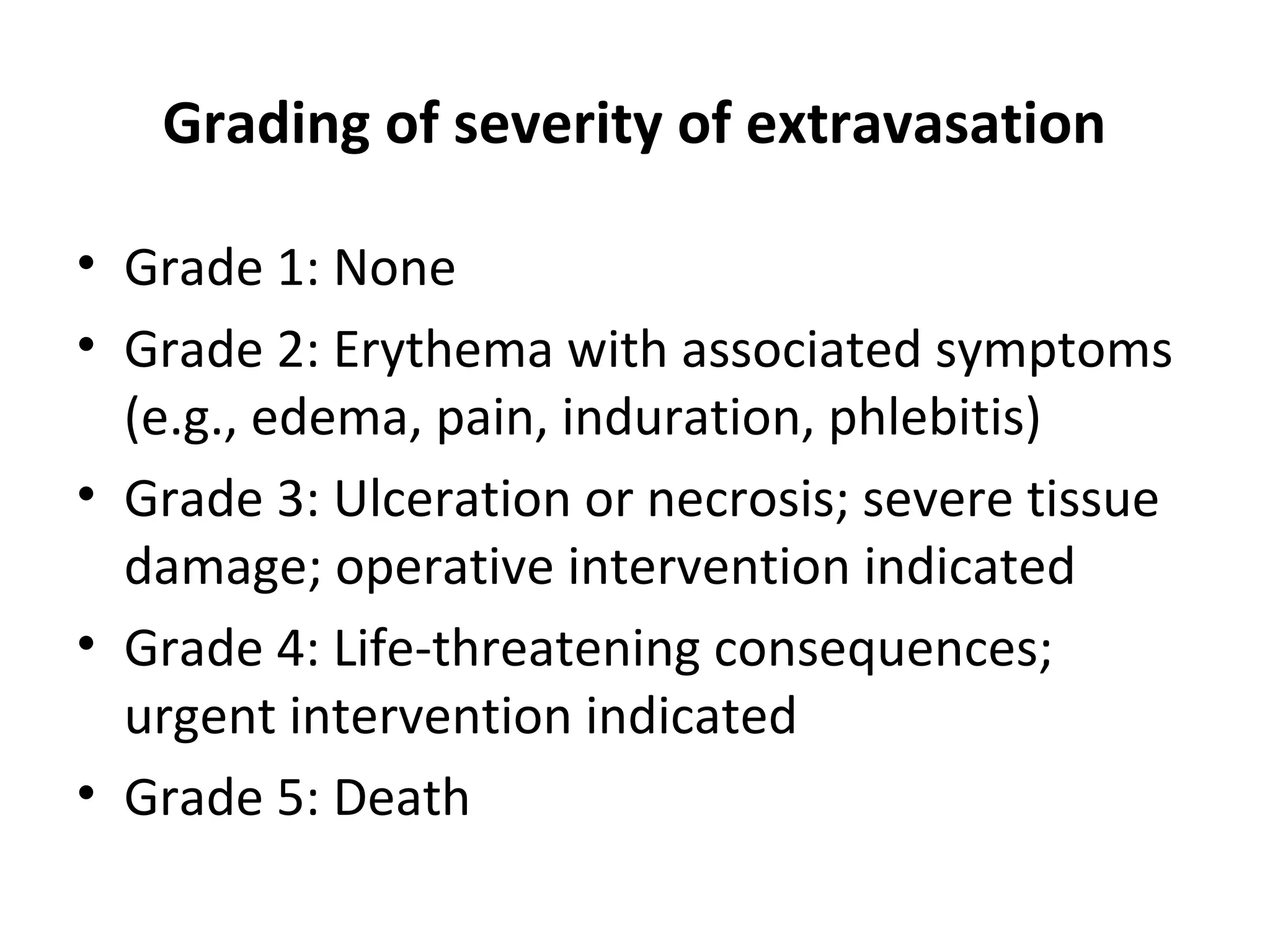
Grading of severity of extravasation
• Grade 1: None
• Grade 2: Erythema with associated symptoms
(e.g., edema, pain, induration, phlebitis)
• Grade 3: Ulceration or necrosis; severe tissue
damage; operative intervention indicated
• Grade 4: Life-threatening consequences;
urgent intervention indicated
• Grade 5: Death
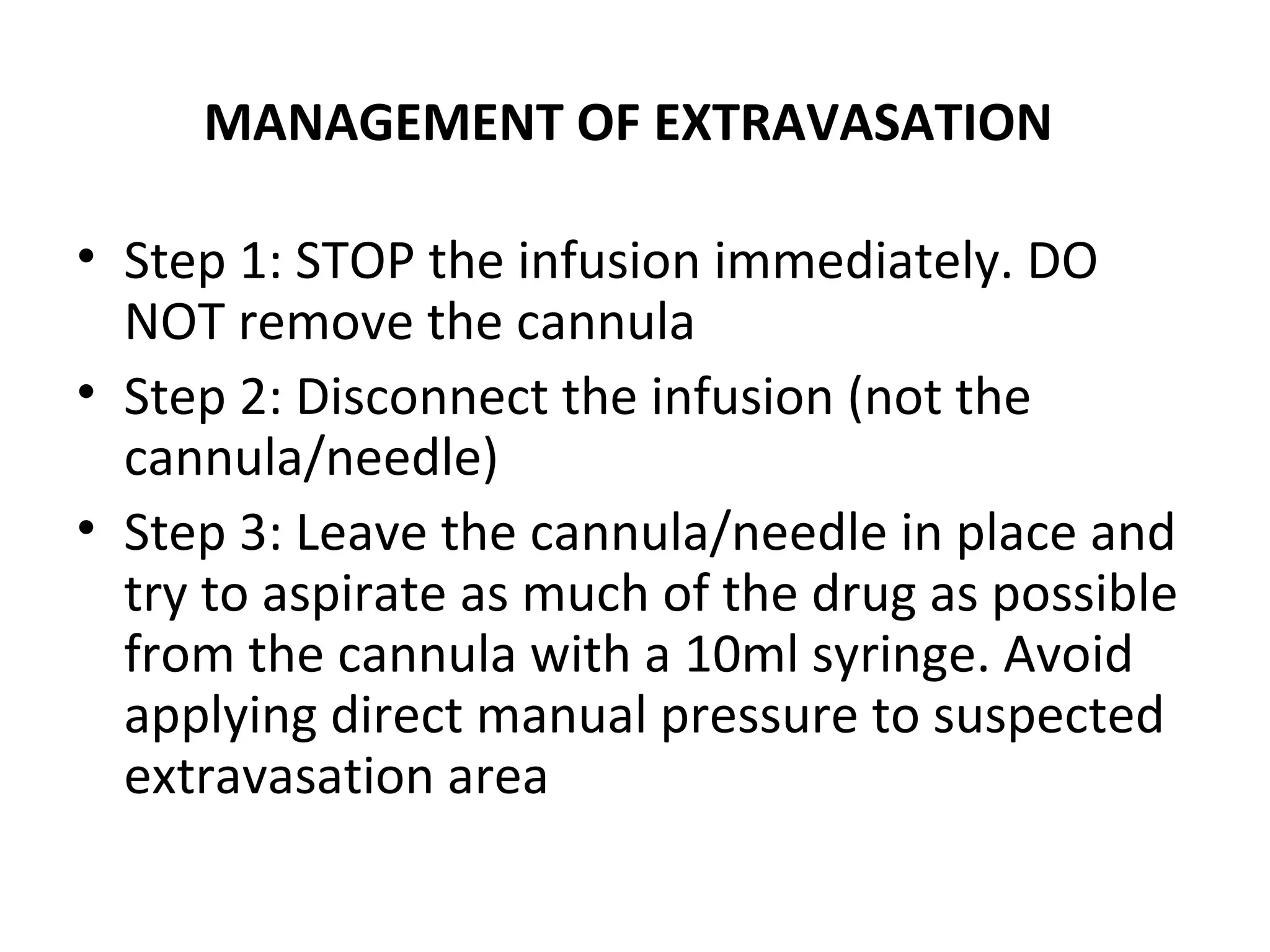
MANAGEMENT OF EXTRAVASATION
• Step 1: STOP the infusion immediately. DO
NOT remove the cannula
• Step 2: Disconnect the infusion (not the
cannula/needle)
• Step 3: Leave the cannula/needle in place and
try to aspirate as much of the drug as possible
from the cannula with a 10ml syringe. Avoid
applying direct manual pressure to suspected
extravasation area
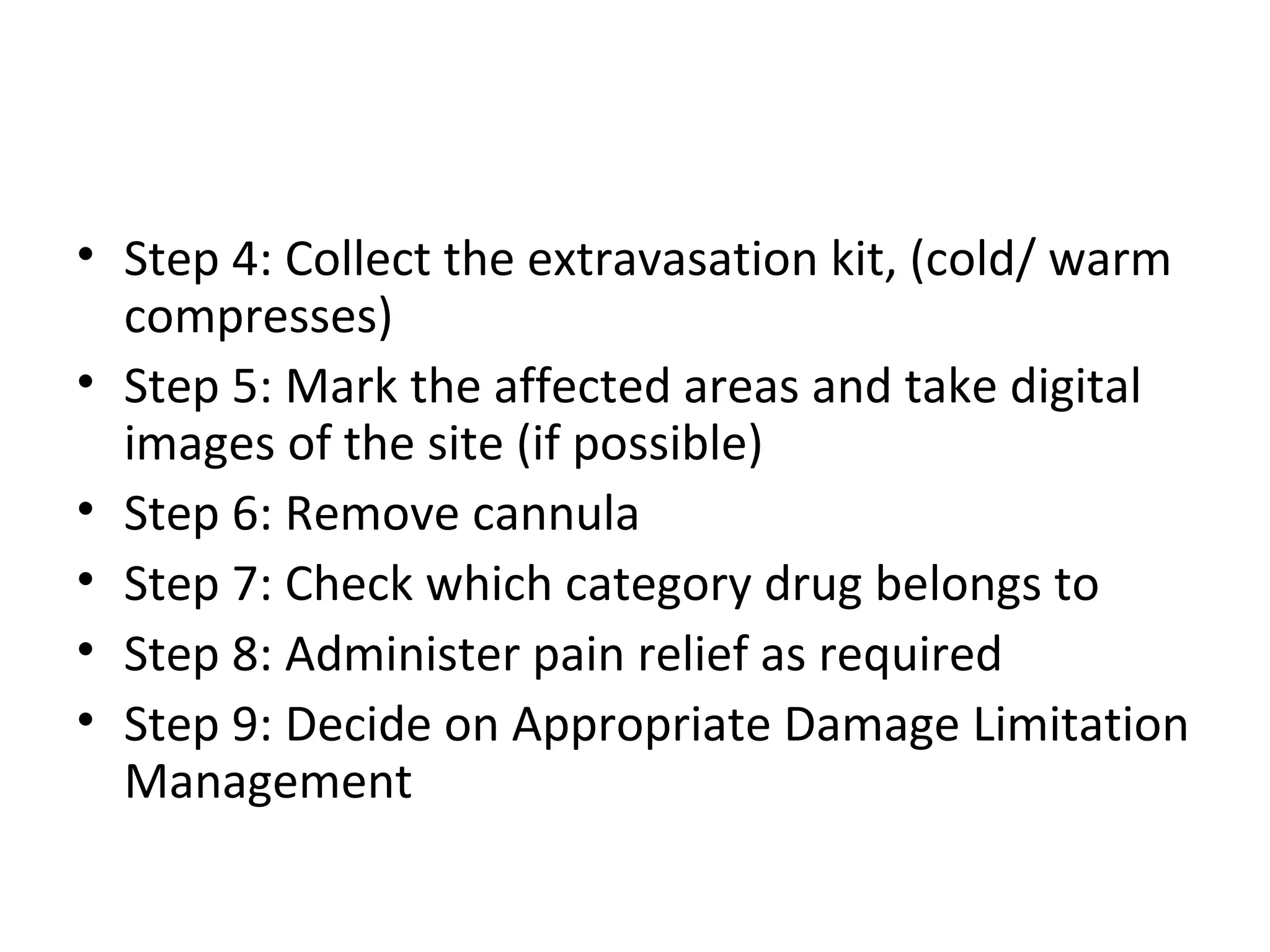
• Step 4: Collect the extravasation kit, (cold/ warm
compresses)
• Step 5: Mark the affected areas and take digital
images of the site (if possible)
• Step 6: Remove cannula
• Step 7: Check which category drug belongs to
• Step 8: Administer pain relief as required
• Step 9: Decide on Appropriate Damage Limitation
Management
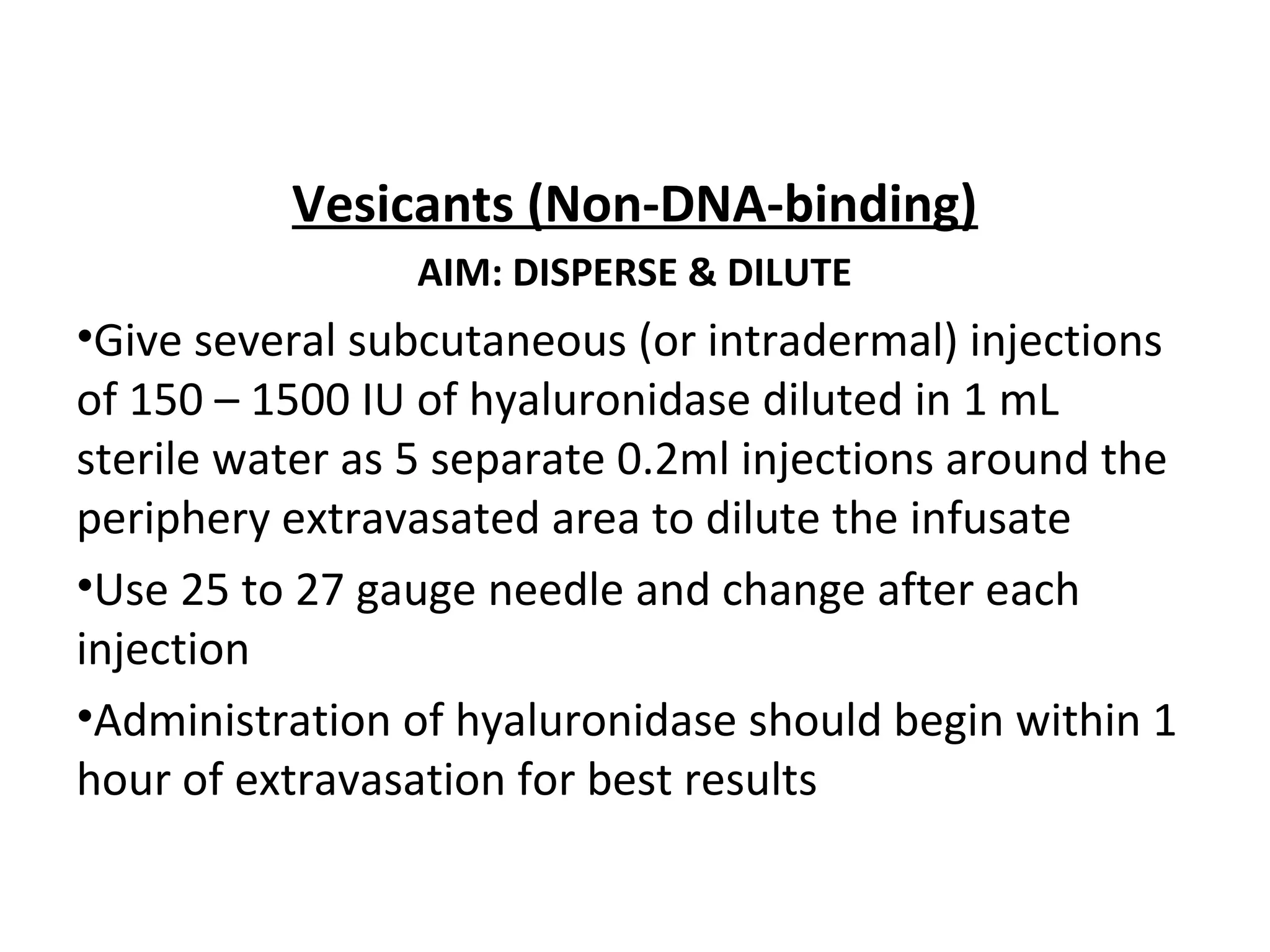
Vesicants (Non-DNA-binding)
AIM: DISPERSE & DILUTE
•Give several subcutaneous (or intradermal) injections
of 150 – 1500 IU of hyaluronidase diluted in 1 mL
sterile water as 5 separate 0.2ml injections around the
periphery extravasated area to dilute the infusate
•Use 25 to 27 gauge needle and change after each
injection
•Administration of hyaluronidase should begin within 1
hour of extravasation for best results
• Apply hydrocortisone 1% cream every 6 hours for as
long as erythema persists
• Elevate the limb
• Apply a warm pack to the affected area for 20
minutes 4 times daily for 1 to 2 days
• Consider referral to Hand/Plastic Surgeon
Vesicant (DNA Binding)
AIM: LOCALISE & NEUTRALISE
•Neutralise the area by applying a thin layer topical
DMSO to the marked area using a cotton bud. Do not
use DMSO If blistering present
•Allow the DMSO to dry, and then cover with a non-
occlusive gauze dressing, this should be applied within
10-25 minutes
•Apply a cold pack for 20 minutes. Repeat every 4
hours for 24 hours to help localise the area
• 3 hours after first DMSO application apply
hydrocortisone 1% cream. Repeat every 6 hours for 7
days
• Elevate the limb
• Consider referral to Hand/Plastic Surgeon
• Large volumes anthracycline extravasation (above 3mls)
consider Dexrazoxane (Savene)
• Day 1 1000mg/m2 IV as soon as possible and no later than 6
hours post extravasation.
• Day 2 1000mg/m2
• Day 3 500mg/m2
Non-Vesicants
AIM: SYMPTOMATIC RELIEF
•Elevate the limb
•Consider applying a cold pack if local symptoms occur
•Apply hydrocortisone cream 1% every 6 hours for 7
days or as long as erythema persists
Prevention of chemotherapy extravasation
• Continuous education of the medical team
about all policies and protocols regarding
chemotherapy administration
• Classification of chemotherapeutic drugs:
Knowledge of characteristics of the drug and
compliance to the manufacturer’s
recommendations
• Appropriate vascular access
– In case a central vascular access is not possible, an
adequate peripheral vein is used
– Veins that are small and/or fragile should be
avoided
– It is not recommended to use veins located at the
dorsum of the hand, the antecubital fossa, and
the radial and ulnar aspects of forearm
• Appropriate peripheral arm assessment
– Palpation of the vein
– History of previous venipunctures
– Available extremities where veins can be
punctured
– Level of consciousness of the patient
• Appropriate equipment selection
– Use of the smallest size of cannula in the largest
available vein
– Use of 1.2-1.5 cm long small bore plastic cannula
– Use of a clear dressing
– Avoiding the use of a butterfly needle
• Educating the patient about all risks associated
with chemotherapy administration
• Confirming venous patency by flushing with 0.9%
sodium chloride solution with at least 5–10 ml
prior to administration of vesicants
• Close monitoring of the infusion site every 5 to
10 min and avoiding infusion of vesicants for
more than 30 to 60 min
• Documentation and reporting of any
extravasation incident
Take Home Messages
• Vesicant drugs should be administered with
cautions
• Chemotherapy infusion should be given
through a central venous access or through an
adequate peripheral vein
• Avoid the use of butterfly needle
• Extravasation kits should be available in the
ward in order to provide immediate
management
Extravasation Kit
It contains:
•Hyaluronidase 1500 units injection
•Hydrocortisone 1% cream
•Water for injection (5ml)
•Heat Pad - instant
•Cold Pad (in freezer on ward)
•2mL Syringes x 2
•19G needles x 2 (for drawing up)
•25G needles x 4 (for injection)
•Alcohol swabs
•10mL syringe x 1
•Indelible pen
•Extravasation guideline
•Extravasation audit form
•Patient information leaflet
Resources
• Overview, prevention and management of chemotherapy
extravasation: World J Clin Oncol 2016 February 10; 7(1): 87-97
• Guidelines for the Management of Extravasation (Version 5.5 - 04
Nov 2016): North England Cancer Network
• Clinical Guideline for the management in extravasation of cytotoxic
drugs in adults: Royal Cornwall Hospitals
• Guideline for the Management of Extravasation (Version 2 - 14 Jun
2011): Pan Birmingham Cancer Network
THANK YOU

Extravasation

  • 1.
  • 2.
    CHEMOTHERAPY EXTRAVASATION Presenter Dr. Saqi Md.Abdul Baqi MD (Phase-B) Dept. of Haematology, BSMMU
  • 3.
    What is extravasation? •Extravasation is the accidental leakage or infiltration of intravenous drugs into the surrounding tissues from the vein • This can lead to an immediate inflammatory painful reaction and with some drugs may result in local tissue destruction (necrosis) and other complications
  • 4.
    The incidence ofextravasation is estimated to be between  0.1% to 6% when administered through a peripheral intravenous access  0.26% to 4.7% when administered through a central venous access device (CVAD)
  • 5.
    Classification of intravenouslyadministered drugs • Intravenously administered drugs can be classified into five categories according to their damage potential »Vesicant »Exfoliants »Irritants »Inflammitants »Neutrals
  • 6.
    Vesicants • Vesicants aredrugs that have the potential to cause blistering and ulceration, which when left untreated can lead to tissue damage and necrosis • Vesicants may be sub-classified into » DNA binding drugs » non-DNA binding drugs
  • 7.
    Vesicants DNA binding drugsare capable of producing more severe tissue damage and mainly include : – Daunorubicin – Doxorubicin – Epirubicin – Idarubicin – Mitoxantrone – Dacarbazine – Mitomycin C Non-DNA-binding drugs include : –Vinblastine –Vincristine –Vindesine
  • 8.
    Exfoliants • Drugs thatcan cause inflammation and shedding (peeling off) of skin without causing underlying tissue death • May have low vesicant potential • They include – Cisplatin – Liposomal Doxorubicin – Mitoxantrone
  • 9.
    Irritants • Drugs thatcan cause inflammation, pain or irritation at the extravasation site without any blister formation • They rarely proceed to the breakdown of tissues • They include: – Bendamustin - Cyclophosphamide – Bleomycin - Cytarabine – Carboplatin - Fludarabine – Etoposide - Cladribine – Ifosfamide - Melphalan
  • 10.
    Inflammitants • Drugs thatcause mild to moderate inflammation, painless skin erythema and elevation (flare reaction) at the extravasation site • They include: – Bortezomib – 5-fluorouracil – Methotrexate
  • 11.
    Neutrals • Drugs thatneither cause inflammation nor damage upon extravasation • They include: – Asparaginase – Bleomycin – Bortezomib – Bevacizumab – Cetuximab – Rituximab – Trastuzumab – Alemtuzumab
  • 12.
    Risk factors ofchemotherapy extravasation • Patient factor – Infants and young children – Elderly patients – Those who are unable to communicate, e.g. sedated, unconscious, confused, language issues – Chronic diseases, e.g. cancer, peripheral vascular disease, superior vena cava (SVC) syndrome, lymphoedema – Medications: anticoagulants, steroids – Repeated intravenous cannulation/venepuncture – Fragile veins or thrombocytopenic patient
  • 13.
    • Factors relatedto chemotherapeutic agent – Vesicant properties of the drug – Its concentration, volume – Prolonged peripheral line infusions of vesicants • Iatrogenic causes – Lack of training of nurses – Poor cannula size selection – Poor location selection – Lack of time
  • 14.
    CLINICAL MANIFESTATIONS • Burning,stinging pain, swelling, erythema, induration and skin discoloration • A resistance is felt on the plunger of the syringe if drugs are given by bolus • There is absence of free flow when administration is by infusion • May progress to blister formation • Blister formation or necrosis can lead to invasion and destruction of deeper structures
  • 15.
    Grading of severityof extravasation • Grade 1: None • Grade 2: Erythema with associated symptoms (e.g., edema, pain, induration, phlebitis) • Grade 3: Ulceration or necrosis; severe tissue damage; operative intervention indicated • Grade 4: Life-threatening consequences; urgent intervention indicated • Grade 5: Death
  • 16.
    MANAGEMENT OF EXTRAVASATION •Step 1: STOP the infusion immediately. DO NOT remove the cannula • Step 2: Disconnect the infusion (not the cannula/needle) • Step 3: Leave the cannula/needle in place and try to aspirate as much of the drug as possible from the cannula with a 10ml syringe. Avoid applying direct manual pressure to suspected extravasation area
  • 17.
    • Step 4:Collect the extravasation kit, (cold/ warm compresses) • Step 5: Mark the affected areas and take digital images of the site (if possible) • Step 6: Remove cannula • Step 7: Check which category drug belongs to • Step 8: Administer pain relief as required • Step 9: Decide on Appropriate Damage Limitation Management
  • 18.
    Vesicants (Non-DNA-binding) AIM: DISPERSE& DILUTE •Give several subcutaneous (or intradermal) injections of 150 – 1500 IU of hyaluronidase diluted in 1 mL sterile water as 5 separate 0.2ml injections around the periphery extravasated area to dilute the infusate •Use 25 to 27 gauge needle and change after each injection •Administration of hyaluronidase should begin within 1 hour of extravasation for best results
  • 19.
    • Apply hydrocortisone1% cream every 6 hours for as long as erythema persists • Elevate the limb • Apply a warm pack to the affected area for 20 minutes 4 times daily for 1 to 2 days • Consider referral to Hand/Plastic Surgeon
  • 20.
    Vesicant (DNA Binding) AIM:LOCALISE & NEUTRALISE •Neutralise the area by applying a thin layer topical DMSO to the marked area using a cotton bud. Do not use DMSO If blistering present •Allow the DMSO to dry, and then cover with a non- occlusive gauze dressing, this should be applied within 10-25 minutes •Apply a cold pack for 20 minutes. Repeat every 4 hours for 24 hours to help localise the area
  • 21.
    • 3 hoursafter first DMSO application apply hydrocortisone 1% cream. Repeat every 6 hours for 7 days • Elevate the limb • Consider referral to Hand/Plastic Surgeon • Large volumes anthracycline extravasation (above 3mls) consider Dexrazoxane (Savene) • Day 1 1000mg/m2 IV as soon as possible and no later than 6 hours post extravasation. • Day 2 1000mg/m2 • Day 3 500mg/m2
  • 22.
    Non-Vesicants AIM: SYMPTOMATIC RELIEF •Elevatethe limb •Consider applying a cold pack if local symptoms occur •Apply hydrocortisone cream 1% every 6 hours for 7 days or as long as erythema persists
  • 23.
    Prevention of chemotherapyextravasation • Continuous education of the medical team about all policies and protocols regarding chemotherapy administration • Classification of chemotherapeutic drugs: Knowledge of characteristics of the drug and compliance to the manufacturer’s recommendations
  • 24.
    • Appropriate vascularaccess – In case a central vascular access is not possible, an adequate peripheral vein is used – Veins that are small and/or fragile should be avoided – It is not recommended to use veins located at the dorsum of the hand, the antecubital fossa, and the radial and ulnar aspects of forearm
  • 25.
    • Appropriate peripheralarm assessment – Palpation of the vein – History of previous venipunctures – Available extremities where veins can be punctured – Level of consciousness of the patient
  • 26.
    • Appropriate equipmentselection – Use of the smallest size of cannula in the largest available vein – Use of 1.2-1.5 cm long small bore plastic cannula – Use of a clear dressing – Avoiding the use of a butterfly needle
  • 27.
    • Educating thepatient about all risks associated with chemotherapy administration • Confirming venous patency by flushing with 0.9% sodium chloride solution with at least 5–10 ml prior to administration of vesicants • Close monitoring of the infusion site every 5 to 10 min and avoiding infusion of vesicants for more than 30 to 60 min • Documentation and reporting of any extravasation incident
  • 28.
    Take Home Messages •Vesicant drugs should be administered with cautions • Chemotherapy infusion should be given through a central venous access or through an adequate peripheral vein • Avoid the use of butterfly needle • Extravasation kits should be available in the ward in order to provide immediate management
  • 29.
    Extravasation Kit It contains: •Hyaluronidase1500 units injection •Hydrocortisone 1% cream •Water for injection (5ml) •Heat Pad - instant •Cold Pad (in freezer on ward) •2mL Syringes x 2 •19G needles x 2 (for drawing up) •25G needles x 4 (for injection) •Alcohol swabs •10mL syringe x 1 •Indelible pen •Extravasation guideline •Extravasation audit form •Patient information leaflet
  • 30.
    Resources • Overview, preventionand management of chemotherapy extravasation: World J Clin Oncol 2016 February 10; 7(1): 87-97 • Guidelines for the Management of Extravasation (Version 5.5 - 04 Nov 2016): North England Cancer Network • Clinical Guideline for the management in extravasation of cytotoxic drugs in adults: Royal Cornwall Hospitals • Guideline for the Management of Extravasation (Version 2 - 14 Jun 2011): Pan Birmingham Cancer Network
  • 31.