






IV infiltration and
extravasation.
SRCHUNG
03/03/2018
Infiltration
Leakage of I.V. fluid or
medications (nonvesicant) into
the surrounding tissue
Causes
IV catheter is improperly placed.
IV catheter is dislodged or
slipped out or through the blood
vessel lumen.
Risks factors
Type of therapy – concentrated fluid, excessive or
continuous IV fluids or medications
Age – young and elderly
Mental status - disorientated
Overall physical condition – ill or injured, fat or thin,
veins visibility
Type of IV access – inappropriate sizes
Practice setting – inexpert, changes of IV site, timing
and monitoring.
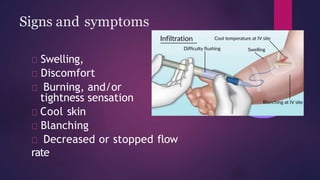
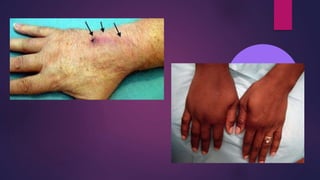
Signs and symptoms
Swelling,
Discomfort
Burning, and/or
tightness sensation
Cool skin
Blanching
Decreased or stopped flow
rate
Complications
Tissue extravasation
Prevention
Select an appropriate I.V. site, avoiding
areasof flexion.
Use propervenipuncture technique.
Follow facility policy for securing the I.V.
catheter.
Observe the I.V. sitefrequently.
Management
Stop the infusion and remove the device
Elevate the limb to increase patient comfort; a warm
compress may be applied.
Check the patient's pulse and capillary refill time.
Perform venipuncture in a different location and restart
the infusion, as ordered.
Check the site frequently.
Document your findings and interventions performed.
Extravasation
Extravasation
Extravasation is the leaking of
vesicant drugs into surrounding
tissue.
Signs and symptoms
Blanching
Burning
Discomfort at the I.V. site
Cool skin around the I.V. site
Swelling at or above the I.V. site
Blistering and/or skin sloughing
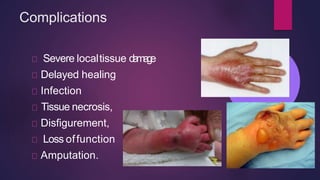
Complications
Severe localtissue damage
Delayed healing
Infection
Tissue necrosis,
Disfigurement,
Loss offunction
Amputation.
Prevention
Avoid IV insertion into small and/or
fragile, areas of flexion, extremities with
preexisting edema, or areas with known
neurologic impairment.
Careful IV monitoring for patients on
vesicant medications, such as certain
antineoplastic drugs (doxorubicin,
vinblastine, and vincristine), and
hydroxyzine, promethazine, digoxin,
and dopamine.
Adhere to facility policy in vesicant
administration via a peripheral I.V.; certain
institutions administer vesicants via a central
venous access device only.
Always administer vesicants last after giving
multiple drugs.
Practice proper administration techniques
strictly
Management
Cease I.V. flow and keep the I.V. line
onlyto administer the antidote
otherwise remove it.
Record the amount of extravasated
solution and notify the doctor.
Give antidote according to facility's
protocol ordoctor’s order.
Elevate the extremity.
Perform frequent assessments of sensation,
motor function, and circulation of the affected
extremity.
Record the extravasation site, patient's
symptoms, the estimated
amount of extravasated solution, and the
treatment.
Follow the manufacturer's recommendations
to apply either cold or warm compresses to
the affected area.
Reference
Complications of Peripheral I.V. Therapy
https://www.nursingcenter.com/ncblog/february-
2015-(1)/complications- of-peripheral-i-v-therapy

IV infiltration and Extravasation

  • 1.
  • 2.
    Infiltration Leakage of I.V.fluid or medications (nonvesicant) into the surrounding tissue
  • 3.
    Causes IV catheter isimproperly placed. IV catheter is dislodged or slipped out or through the blood vessel lumen.
  • 4.
    Risks factors Type oftherapy – concentrated fluid, excessive or continuous IV fluids or medications Age – young and elderly Mental status - disorientated Overall physical condition – ill or injured, fat or thin, veins visibility Type of IV access – inappropriate sizes Practice setting – inexpert, changes of IV site, timing and monitoring.
  • 5.
    Signs and symptoms Swelling, Discomfort Burning,and/or tightness sensation Cool skin Blanching Decreased or stopped flow rate
  • 6.
  • 8.
    Prevention Select an appropriateI.V. site, avoiding areasof flexion. Use propervenipuncture technique. Follow facility policy for securing the I.V. catheter. Observe the I.V. sitefrequently.
  • 9.
    Management Stop the infusionand remove the device Elevate the limb to increase patient comfort; a warm compress may be applied. Check the patient's pulse and capillary refill time. Perform venipuncture in a different location and restart the infusion, as ordered. Check the site frequently. Document your findings and interventions performed. Extravasation
  • 10.
    Extravasation Extravasation is theleaking of vesicant drugs into surrounding tissue.
  • 11.
    Signs and symptoms Blanching Burning Discomfortat the I.V. site Cool skin around the I.V. site Swelling at or above the I.V. site Blistering and/or skin sloughing
  • 12.
    Complications Severe localtissue damage Delayedhealing Infection Tissue necrosis, Disfigurement, Loss offunction Amputation.
  • 13.
    Prevention Avoid IV insertioninto small and/or fragile, areas of flexion, extremities with preexisting edema, or areas with known neurologic impairment. Careful IV monitoring for patients on vesicant medications, such as certain antineoplastic drugs (doxorubicin, vinblastine, and vincristine), and hydroxyzine, promethazine, digoxin, and dopamine.
  • 14.
    Adhere to facilitypolicy in vesicant administration via a peripheral I.V.; certain institutions administer vesicants via a central venous access device only. Always administer vesicants last after giving multiple drugs. Practice proper administration techniques strictly
  • 15.
    Management Cease I.V. flowand keep the I.V. line onlyto administer the antidote otherwise remove it. Record the amount of extravasated solution and notify the doctor. Give antidote according to facility's protocol ordoctor’s order. Elevate the extremity.
  • 16.
    Perform frequent assessmentsof sensation, motor function, and circulation of the affected extremity. Record the extravasation site, patient's symptoms, the estimated amount of extravasated solution, and the treatment. Follow the manufacturer's recommendations to apply either cold or warm compresses to the affected area.
  • 17.
    Reference Complications of PeripheralI.V. Therapy https://www.nursingcenter.com/ncblog/february- 2015-(1)/complications- of-peripheral-i-v-therapy