Abdominal Examination Dr Polly Drew
Objectives To succinctly examine the abdomen and present your findings to a consultant examiner in 6 minutes Discuss disease processes behind your clinical findings Pass the exam….
Likely osce patients Organomegaly :  hepatomegaly, splenomegaly, polycystic kidneys Abdominal mass : lymphoma, pseudocyst, renal transplant Jaundice Hernia Ascites Aneurysm: AAA Stoma
Introduction Introduce yourself Ask permission to examine Ask if any pain anywhere Are they comfortable lying flat?
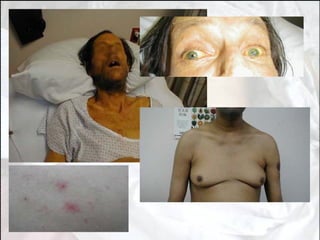
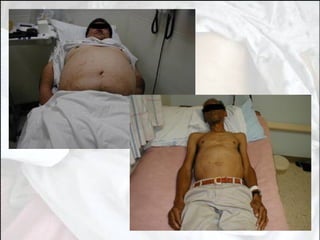
Stand at the end of the bed STOP Look for a few seconds Show you are looking around the bed Oxygen Catheters Drains Fluids Dressings Position Comfortable? Generally  ?cachetic Pallor Jaundiced Bruising Tatoos
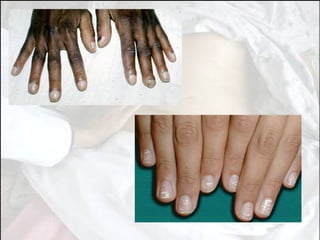
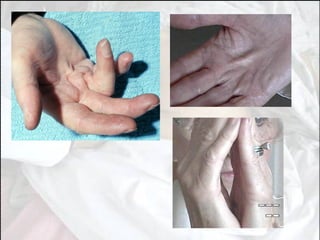
HANDS/ARMS Look at  both hands  for; Clubbing  Leuconychia/koilonychia Dupuytren’s contracture Pallor of skin creases Stretch out arms for  liver flap Palpate radial  pulse
 
 
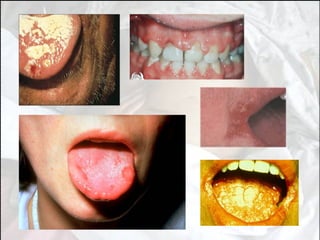
HEAD Look at the  eyes Jaundiced  Sclera Conjunctival  pallor Keiser fleischer rings  Look at the  mouth Dentician Hydration Nutrition – tongue Breath (ketosis/halitosis) Thrush?
NECK/CHEST Palpate cervical  lymph nodes Left supraclavicular fossa for Virchow’s node/Troisier’s sign (esp. if mass in abdo) CHEST Spider Naevi Pupura Gynaecomastia Scratch marks (icteric)


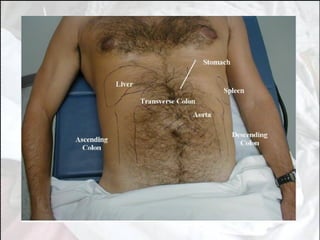
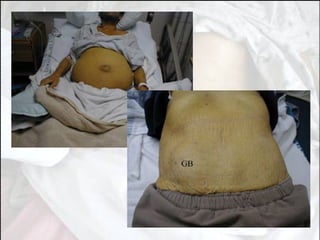
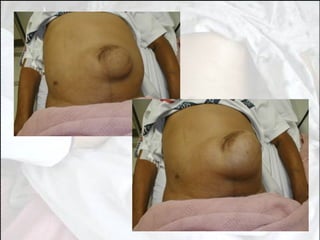
ABDOMEN LOOK Scars ?pathology* Stoma ?type….examine it!* Veins ?portal hypertension Distension Masses Peristalsis COUGH!! Define edges of defect*


ABDOMEN FEEL Kneel down Ask re tenderness Palpate LLQ    RLQ Tenderness Guarding Rigidity Mass ….what are you look for?
ABDOMEN MASS S ize S ite S hape S urface ?Fixed E dge C onsistency P ercussion note B ruit/bowel sounds
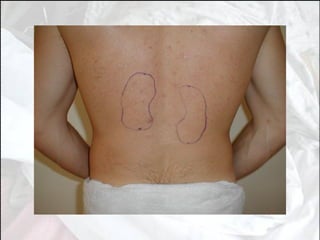
ABDOMEN PALPATE ORGANS Liver RIF    RUQ Define upper and lower borders by percussion Surface texture? Spleen RIF    LUQ ?ask patient to roll towards you Percuss ?extent & surface texture Kidneys Ballot R side then L side ?CAPD ?Dialysis ?Transplant Aortic Aneurysm ?expansile pulsation ?size ?examine fem/pop pulses
 
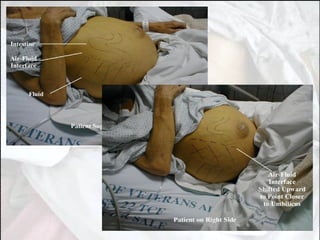
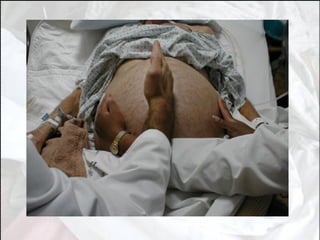
ABDOMEN ASCITES Shifting  Dullness Percuss  centrally then to each flank Locate point of change on R side Ask patient to  roll  towards you Wait…. Percuss again  ?area of dullness moved Fluid  Thrill ?use patients  hand in midline Flick one side and feel the other side
 
 
ABDOMEN LISTEN Bowel sounds 2 areas Up to 30 seconds ?pitch ?quiet Aorta for  Bruit Renal bruits If hepatomegaly present auscultate over liver
THEN… Cover  the patient up Turn to the examiner “  I would like  to complete my examination  by examining the external genitalia, performing a digital rectal examination and dipstick the urine.” Present your  findings!!!
FINDINGS The hardest part! Stand up straight Take your stethoscope and hold it in your hands behind your back Look the examiner in the eye No ers… No ‘thought I heards’
Normal Examination findings… I examined this  elderly gentleman’s  abdomen.  On general inspection from the end of the bed he appeared  comfortable at rest .  There were  no peripheral signs of abdominal or liver disease .  His abdomen was  soft and non-tender with no  distension. There were  no palpable masses or organomegaly .  Bowel sounds were  present . In summary, this is an elderly gentleman with normal abdominal examination.
Abnormal Findings… Present in the same order as for normal Describe succinctly 5 cm firm mass in epigastrum, non-mobile, not pulsatile 4cm liver edge Include important negatives only…this will come with knowledge

Abdominal Examination

  • 1.
  • 2.
    Objectives To succinctlyexamine the abdomen and present your findings to a consultant examiner in 6 minutes Discuss disease processes behind your clinical findings Pass the exam….
  • 3.
    Likely osce patientsOrganomegaly : hepatomegaly, splenomegaly, polycystic kidneys Abdominal mass : lymphoma, pseudocyst, renal transplant Jaundice Hernia Ascites Aneurysm: AAA Stoma
  • 4.
    Introduction Introduce yourselfAsk permission to examine Ask if any pain anywhere Are they comfortable lying flat?
  • 5.
    Stand at theend of the bed STOP Look for a few seconds Show you are looking around the bed Oxygen Catheters Drains Fluids Dressings Position Comfortable? Generally ?cachetic Pallor Jaundiced Bruising Tatoos
  • 6.
    HANDS/ARMS Look at both hands for; Clubbing Leuconychia/koilonychia Dupuytren’s contracture Pallor of skin creases Stretch out arms for liver flap Palpate radial pulse
  • 7.
  • 8.
  • 9.
    HEAD Look atthe eyes Jaundiced Sclera Conjunctival pallor Keiser fleischer rings Look at the mouth Dentician Hydration Nutrition – tongue Breath (ketosis/halitosis) Thrush?
  • 10.
    NECK/CHEST Palpate cervical lymph nodes Left supraclavicular fossa for Virchow’s node/Troisier’s sign (esp. if mass in abdo) CHEST Spider Naevi Pupura Gynaecomastia Scratch marks (icteric)
  • 11.
  • 12.
  • 13.
  • 14.
    ABDOMEN LOOK Scars?pathology* Stoma ?type….examine it!* Veins ?portal hypertension Distension Masses Peristalsis COUGH!! Define edges of defect*
  • 15.
  • 16.
  • 17.
  • 18.
  • 19.
    ABDOMEN FEEL Kneeldown Ask re tenderness Palpate LLQ  RLQ Tenderness Guarding Rigidity Mass ….what are you look for?
  • 20.
    ABDOMEN MASS Size S ite S hape S urface ?Fixed E dge C onsistency P ercussion note B ruit/bowel sounds
  • 21.
    ABDOMEN PALPATE ORGANSLiver RIF  RUQ Define upper and lower borders by percussion Surface texture? Spleen RIF  LUQ ?ask patient to roll towards you Percuss ?extent & surface texture Kidneys Ballot R side then L side ?CAPD ?Dialysis ?Transplant Aortic Aneurysm ?expansile pulsation ?size ?examine fem/pop pulses
  • 22.
  • 23.
    ABDOMEN ASCITES Shifting Dullness Percuss centrally then to each flank Locate point of change on R side Ask patient to roll towards you Wait…. Percuss again ?area of dullness moved Fluid Thrill ?use patients hand in midline Flick one side and feel the other side
  • 24.
  • 25.
  • 26.
    ABDOMEN LISTEN Bowelsounds 2 areas Up to 30 seconds ?pitch ?quiet Aorta for Bruit Renal bruits If hepatomegaly present auscultate over liver
  • 27.
    THEN… Cover the patient up Turn to the examiner “ I would like to complete my examination by examining the external genitalia, performing a digital rectal examination and dipstick the urine.” Present your findings!!!
  • 28.
    FINDINGS The hardestpart! Stand up straight Take your stethoscope and hold it in your hands behind your back Look the examiner in the eye No ers… No ‘thought I heards’
  • 29.
    Normal Examination findings…I examined this elderly gentleman’s abdomen. On general inspection from the end of the bed he appeared comfortable at rest . There were no peripheral signs of abdominal or liver disease . His abdomen was soft and non-tender with no distension. There were no palpable masses or organomegaly . Bowel sounds were present . In summary, this is an elderly gentleman with normal abdominal examination.
  • 30.
    Abnormal Findings… Presentin the same order as for normal Describe succinctly 5 cm firm mass in epigastrum, non-mobile, not pulsatile 4cm liver edge Include important negatives only…this will come with knowledge