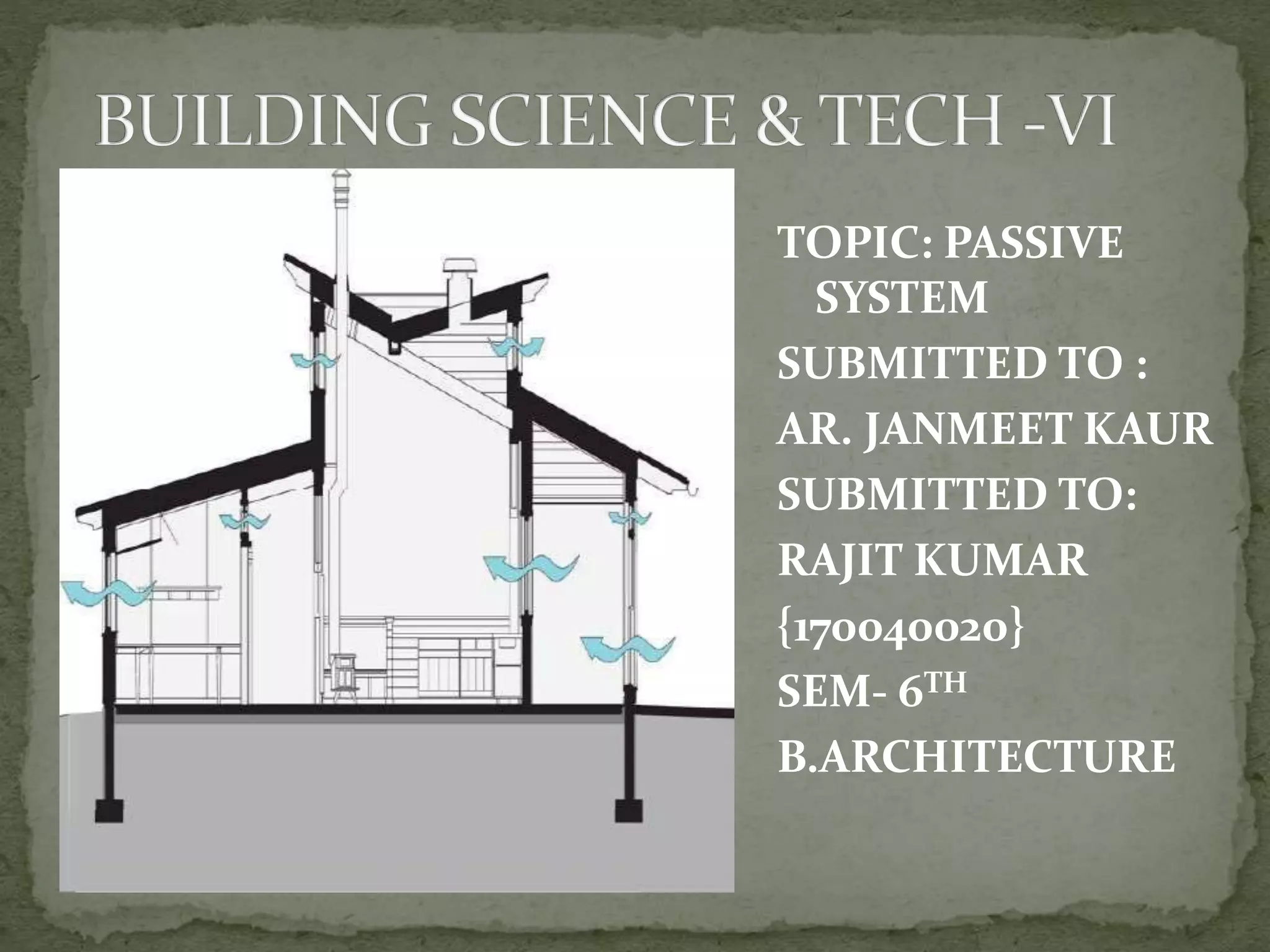
TOPIC: PASSIVE
SYSTEM
SUBMITTED TO :
AR. JANMEET KAUR
SUBMITTED TO:
RAJIT KUMAR
{170040020}
SEM- 6TH
B.ARCHITECTURE
 Passive systems are effective in net-zero buildings
because they allow the user to maintain comfort in a
space without the need for energy. Common passive
techniques include natural ventilation and the use of
thermal mass.
 Stagnant systems require no power, no moving parts,
no controls and little to no maintenance.
 Built around the Four External Envelope Issues.-Water
/ Air / Vapor / Thermal.
 Advantages of Passive
Building Systems
1. One time cost
2. Costs Fixed and Known
- High Cost Certainty
3. Predictable stream of
benefits
4. Typically requires no
Little or No Maintenance
5. No Moving Parts &
works 24 hours per day
 Disadvantages of
Passive Building
Systems
1. Increases First Cost
2. Essentially Fixed
3. Cannot be easily
Upgraded .
4. No Sex appeal or cool
plaques.
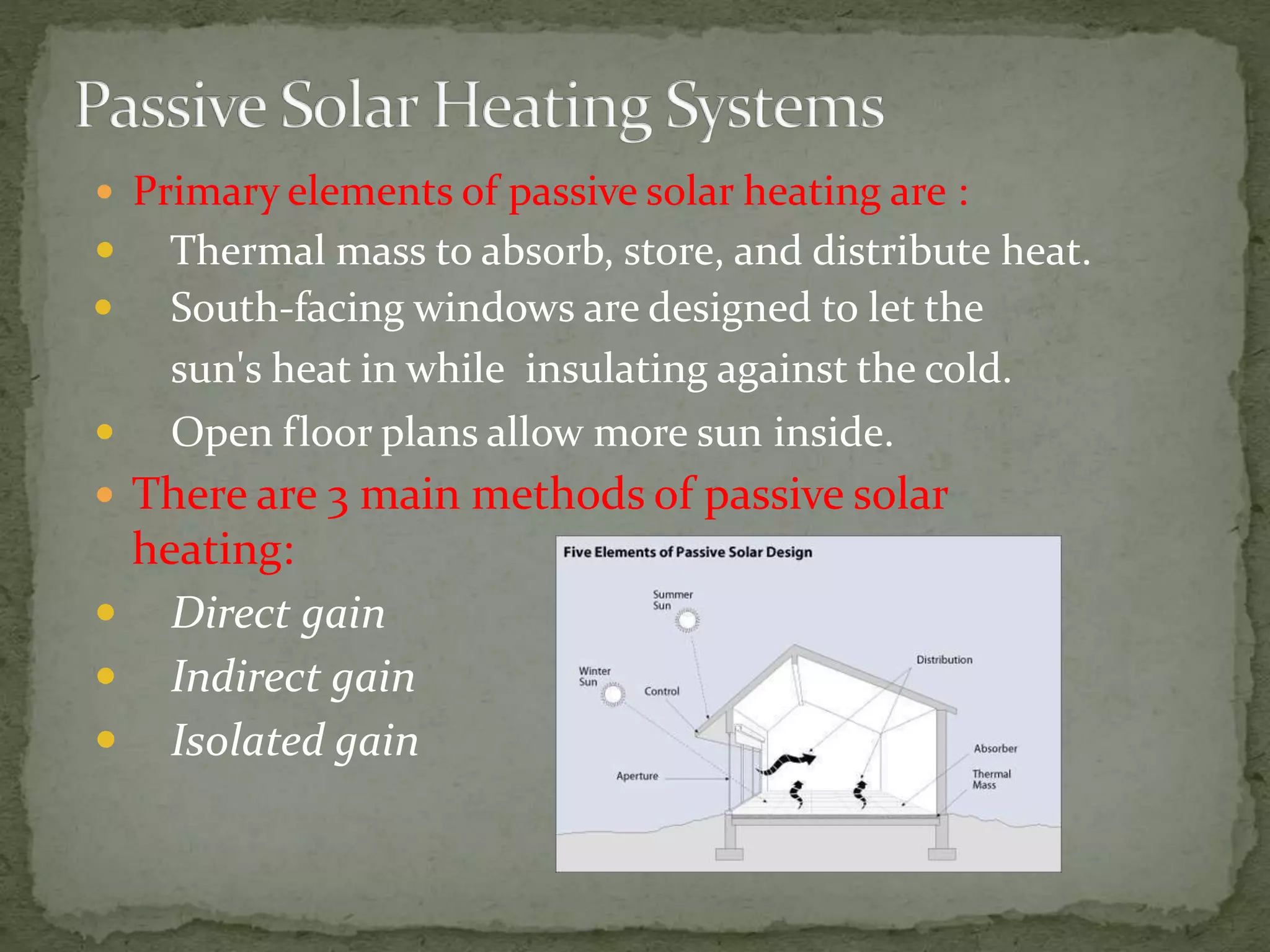
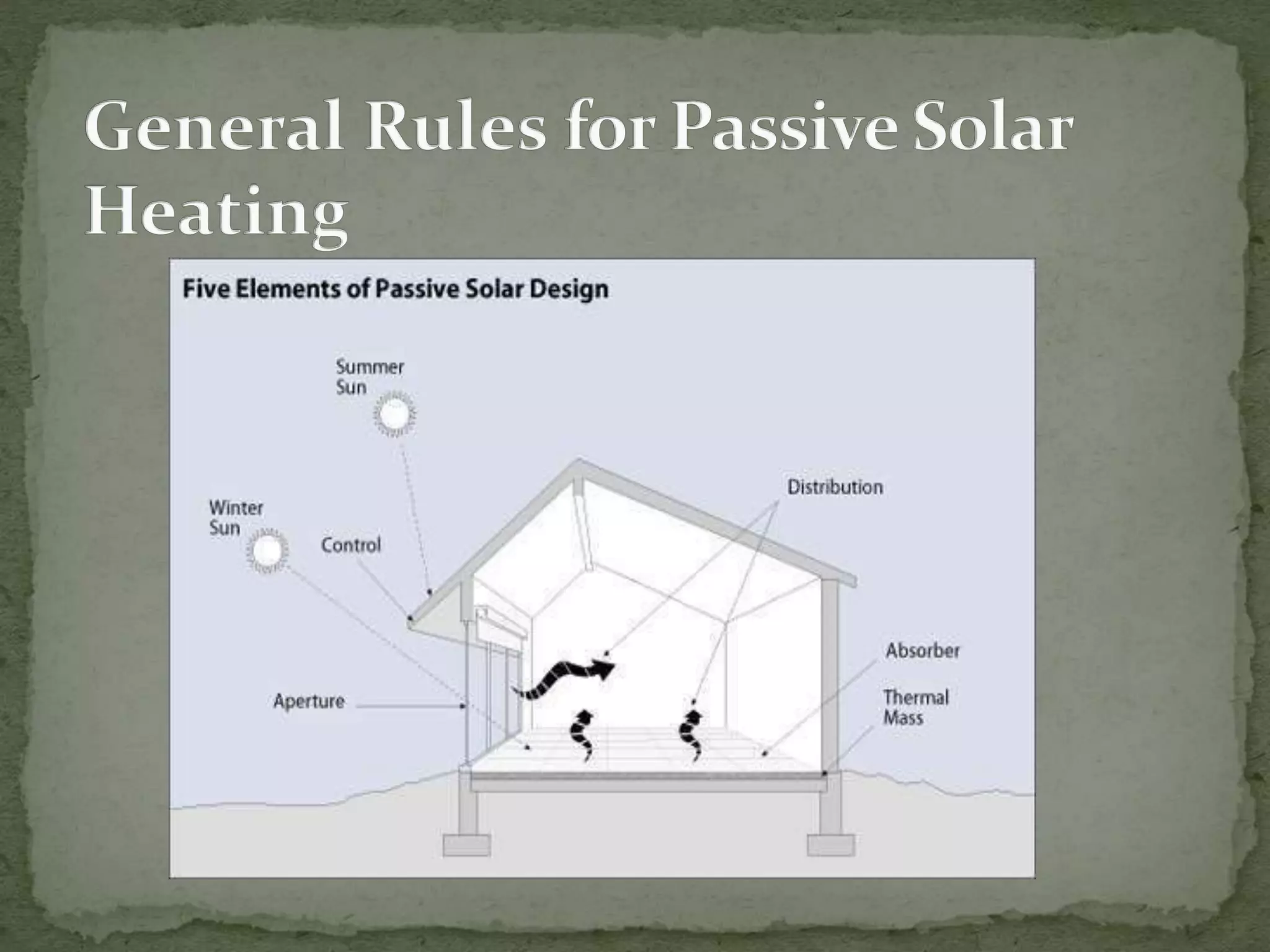
 Primary elements of passive solar heating are :
 Thermal mass to absorb, store, and distribute heat.
 South-facing windows are designed to let the
sun's heat in while insulating against the cold.
 Open floor plans allow more sun inside.
 There are 3 main methods of passive solar
heating:
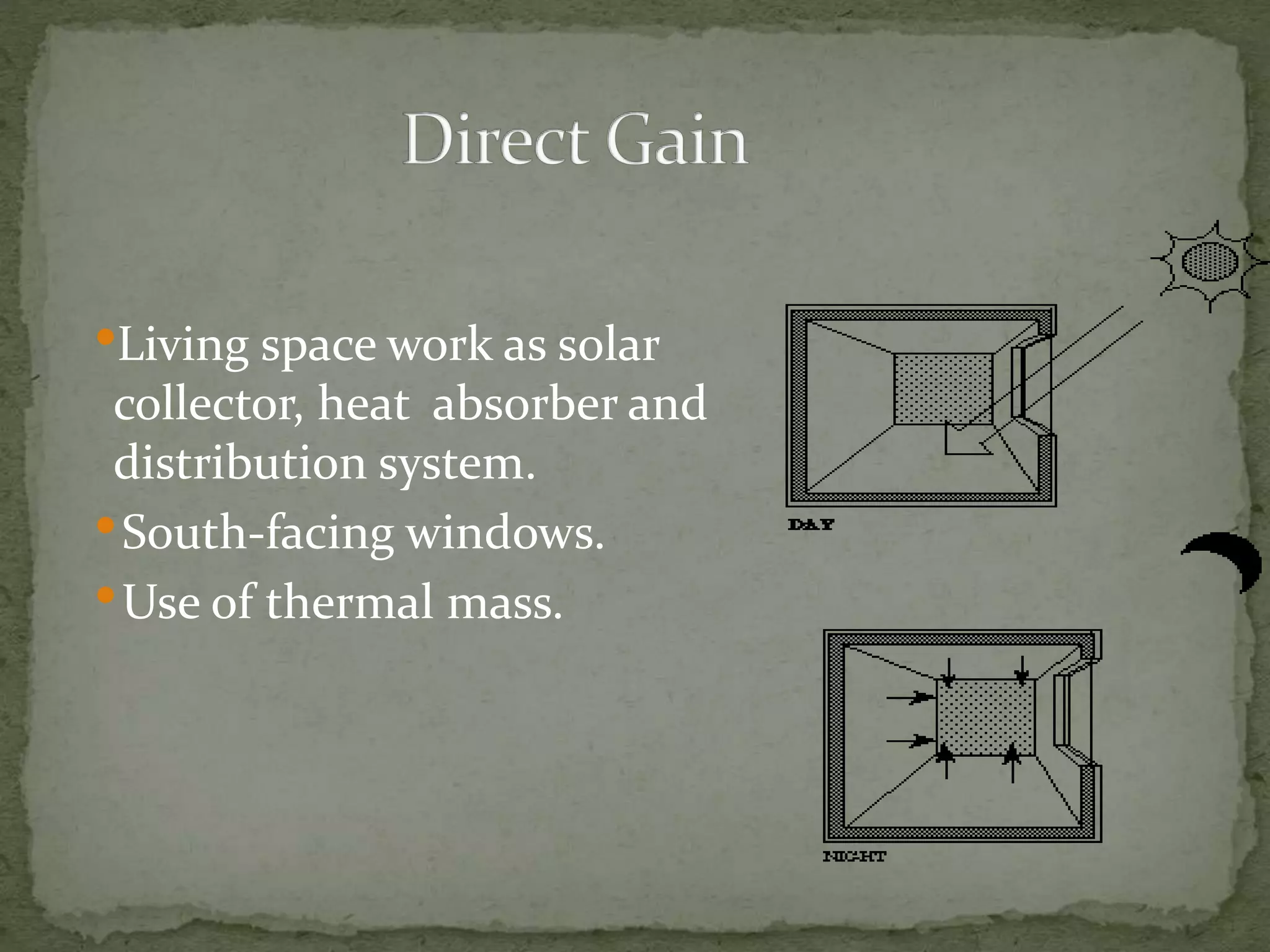
 Direct gain
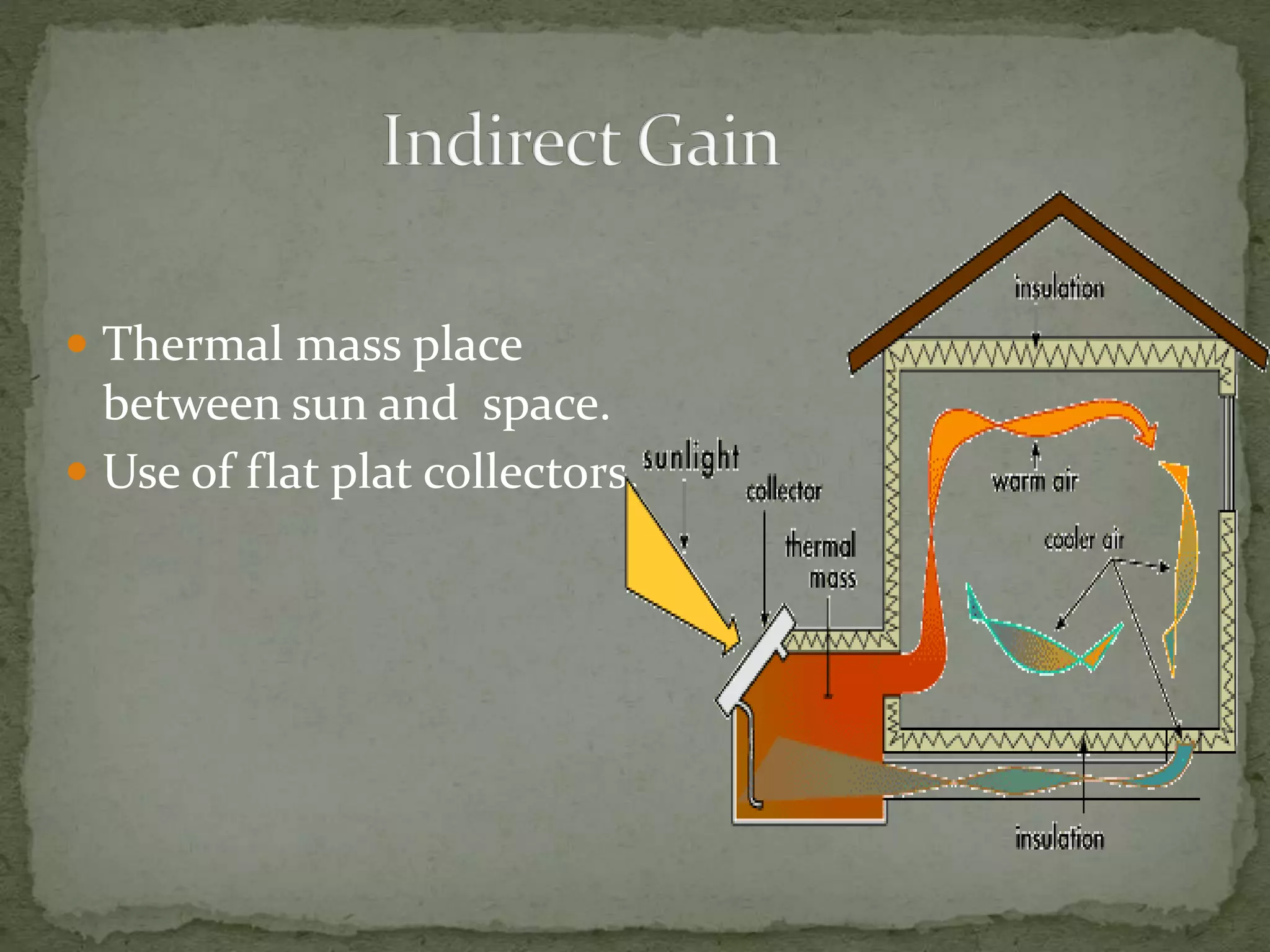
 Indirect gain
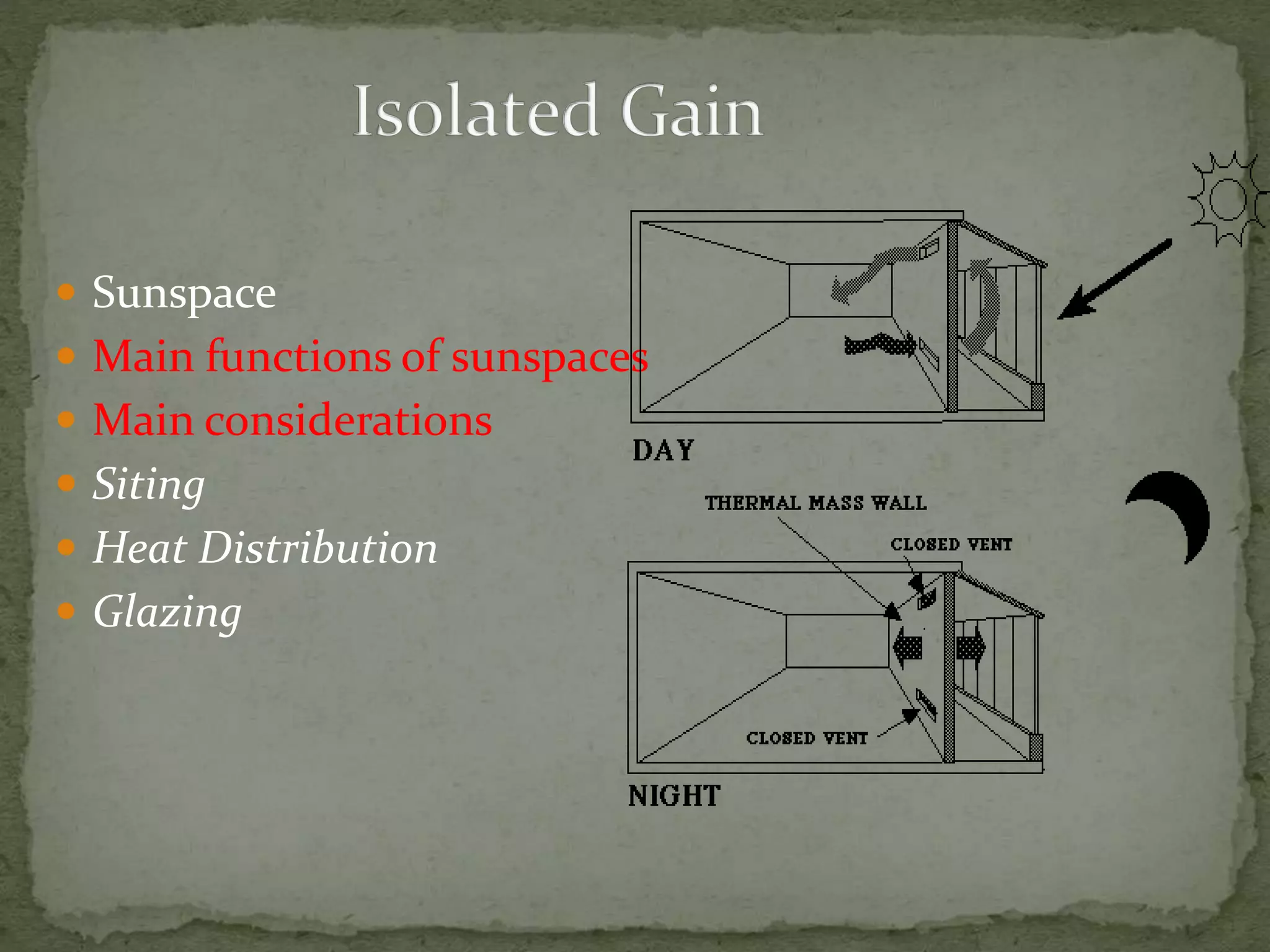
 Isolated gain
•Living space work as solar
collector, heat absorber and
distribution system.
•South-facing windows.
•Use of thermal mass.
 Thermal mass place
between sun and space.
 Use of flat plat collectors.
 Sunspace
 Main functions of sunspaces
 Main considerations
 Siting
 Heat Distribution
 Glazing
1. Conservation Levels: Higher than normal levels of insulation
and air tightness
2. Distribution of Solar Glazing: distributed
throughout the building proportional to the heat loss of
each zone
3. Orientation: Optimum within 5 degrees of true south
4. Glazing Tilt: Looking for perpendicular to sun angle in
winter, although vertical efficient where lots of reflective
snow cover
5. Number of glazing layers: 3 to 4 for severe climates, less
otherwise
6. Night insulation and Low-E glazing: Greatly improves
reduction of night heat losses
7. Mixing passive systems can increase comfort levels
General Rules for Passive Solar Heating
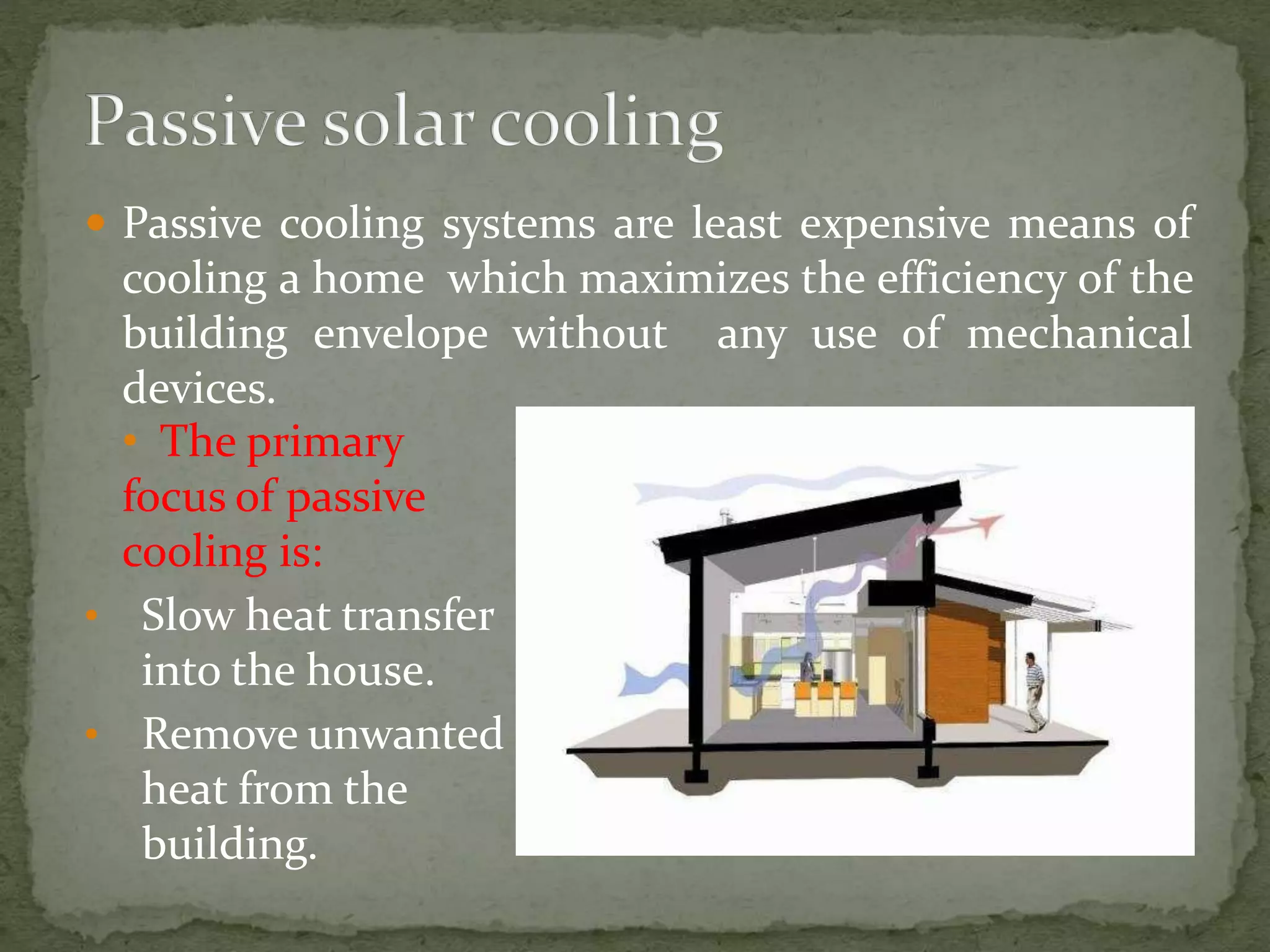
 Passive cooling systems are least expensive means of
cooling a home which maximizes the efficiency of the
building envelope without any use of mechanical
devices.
• The primary
focus of passive
cooling is:
• Slow heat transfer
into the house.
• Remove unwanted
heat from the
building.
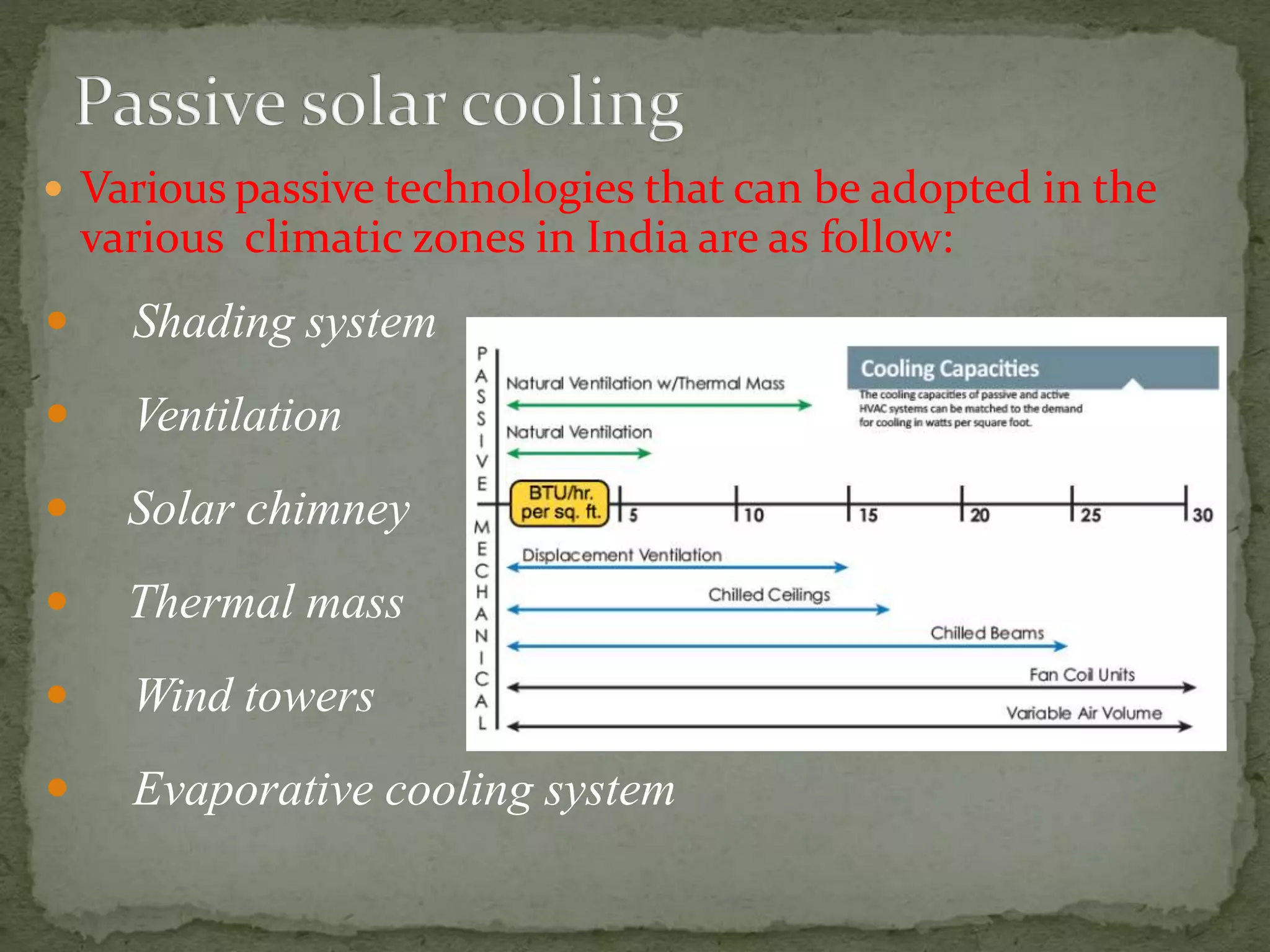
 Various passive technologies that can be adopted in the
various climatic zones in India are as follow:
 Shading system
 Ventilation
 Solar chimney
 Thermal mass
 Wind towers
 Evaporative cooling system
 The most effective method of cooling a building is to
shade windows, walls and roof of building from direct
solar radiation.
 There are two types of shading system:
 External Shading
 Internal Shading
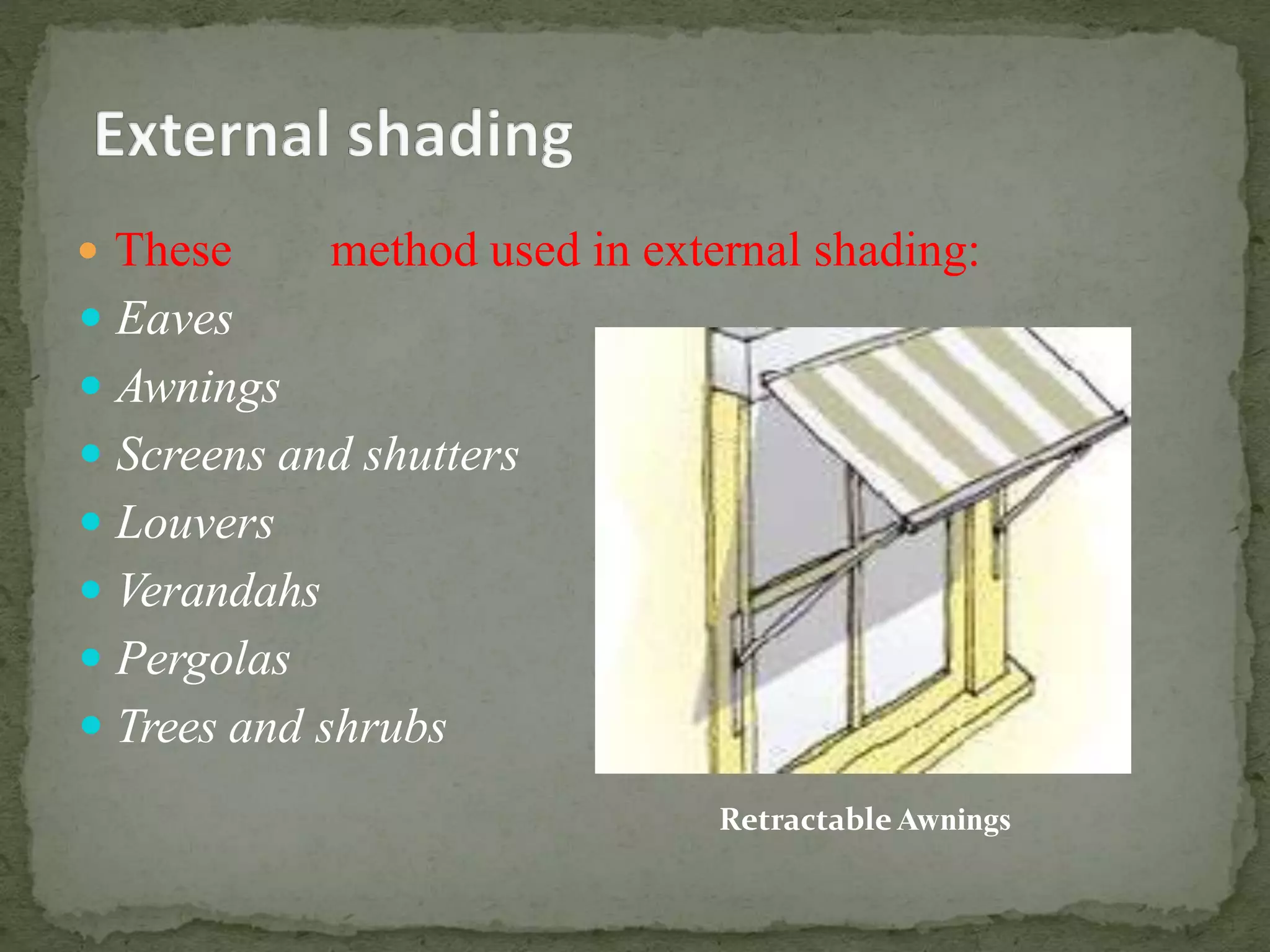
 These method used in external shading:
 Eaves
 Awnings
 Screens and shutters
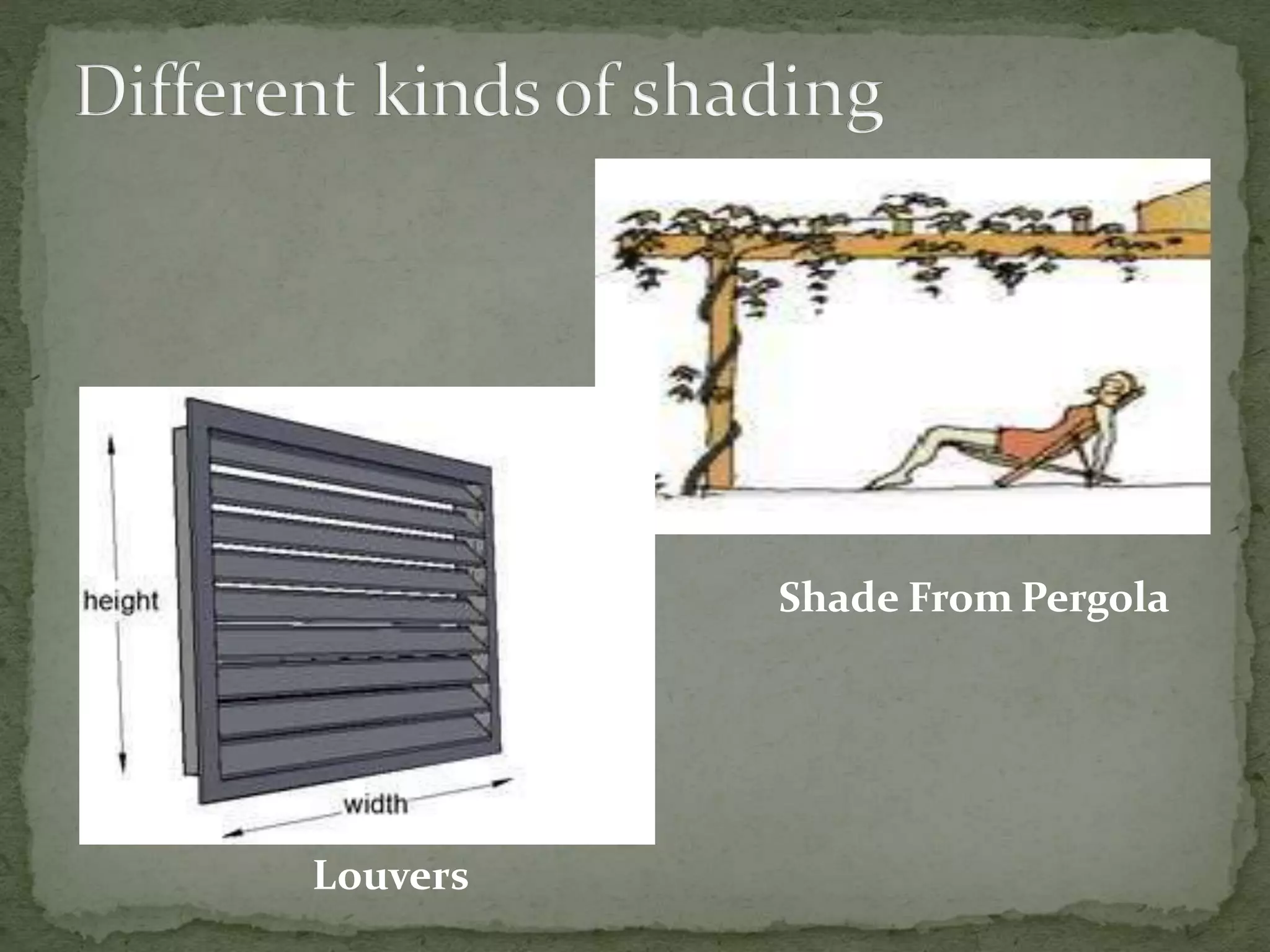
 Louvers
 Verandahs
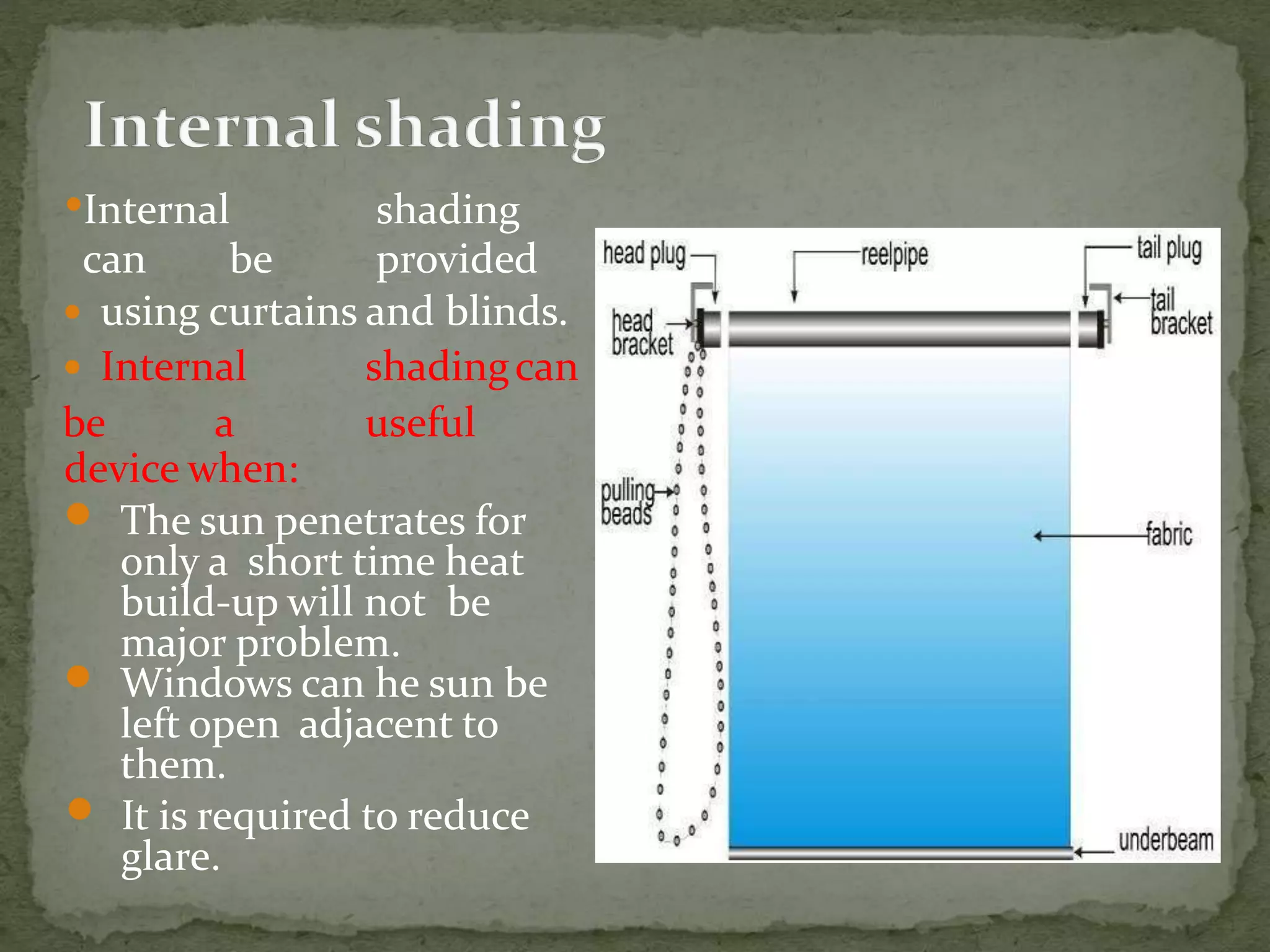
 Pergolas
 Trees and shrubs
RetractableAwnings
Shade From Pergola
Louvers
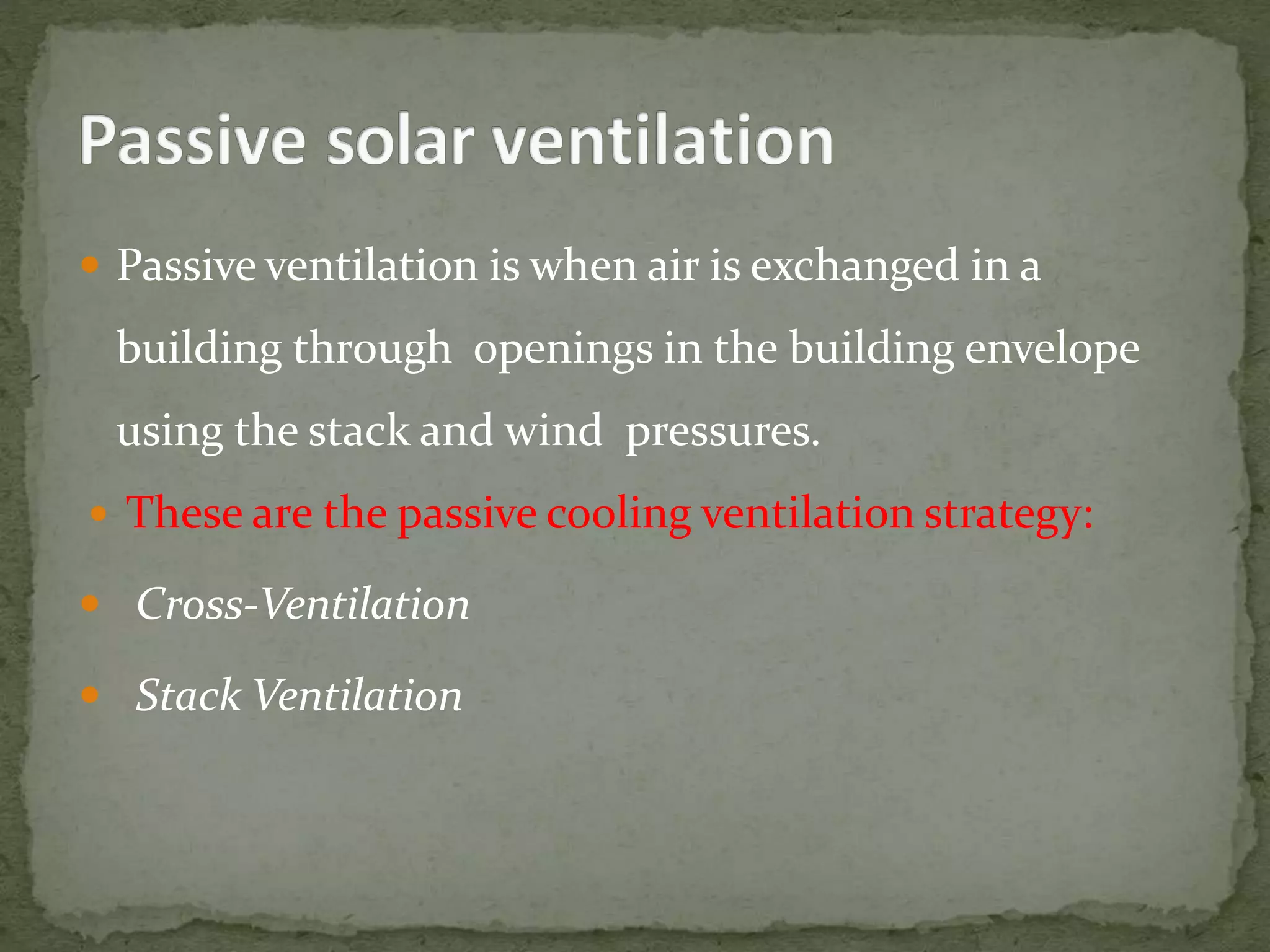
•Internal shading
can be provided
 using curtains and blinds.
 Internal shadingcan
be a useful
device when:
 The sun penetrates for
only a short time heat
build-up will not be
major problem.
 Windows can he sun be
left open adjacent to
them.
 It is required to reduce
glare.
 Passive ventilation is when air is exchanged in a
building through openings in the building envelope
using the stack and wind pressures.
 These are the passive cooling ventilation strategy:
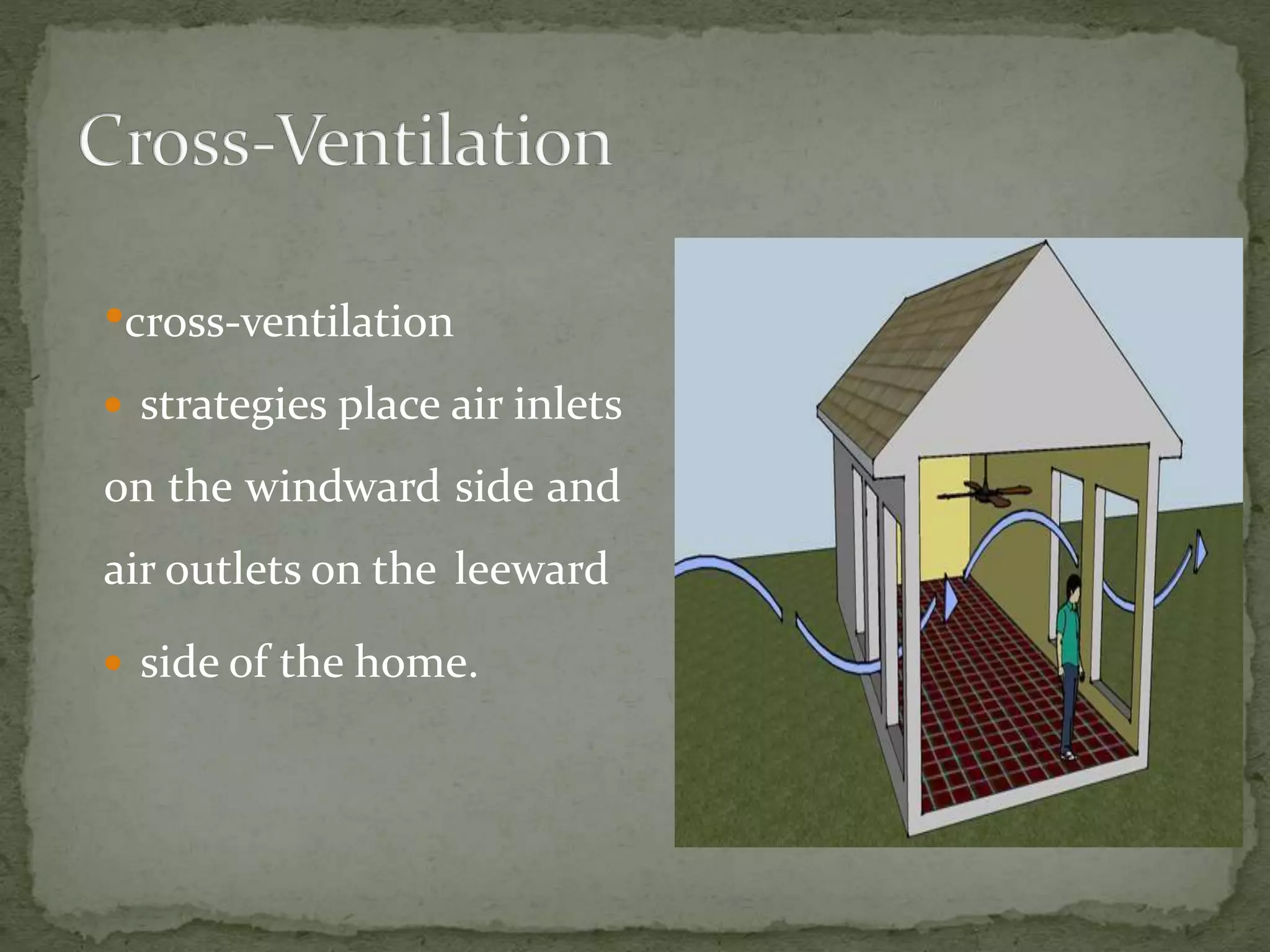
 Cross-Ventilation
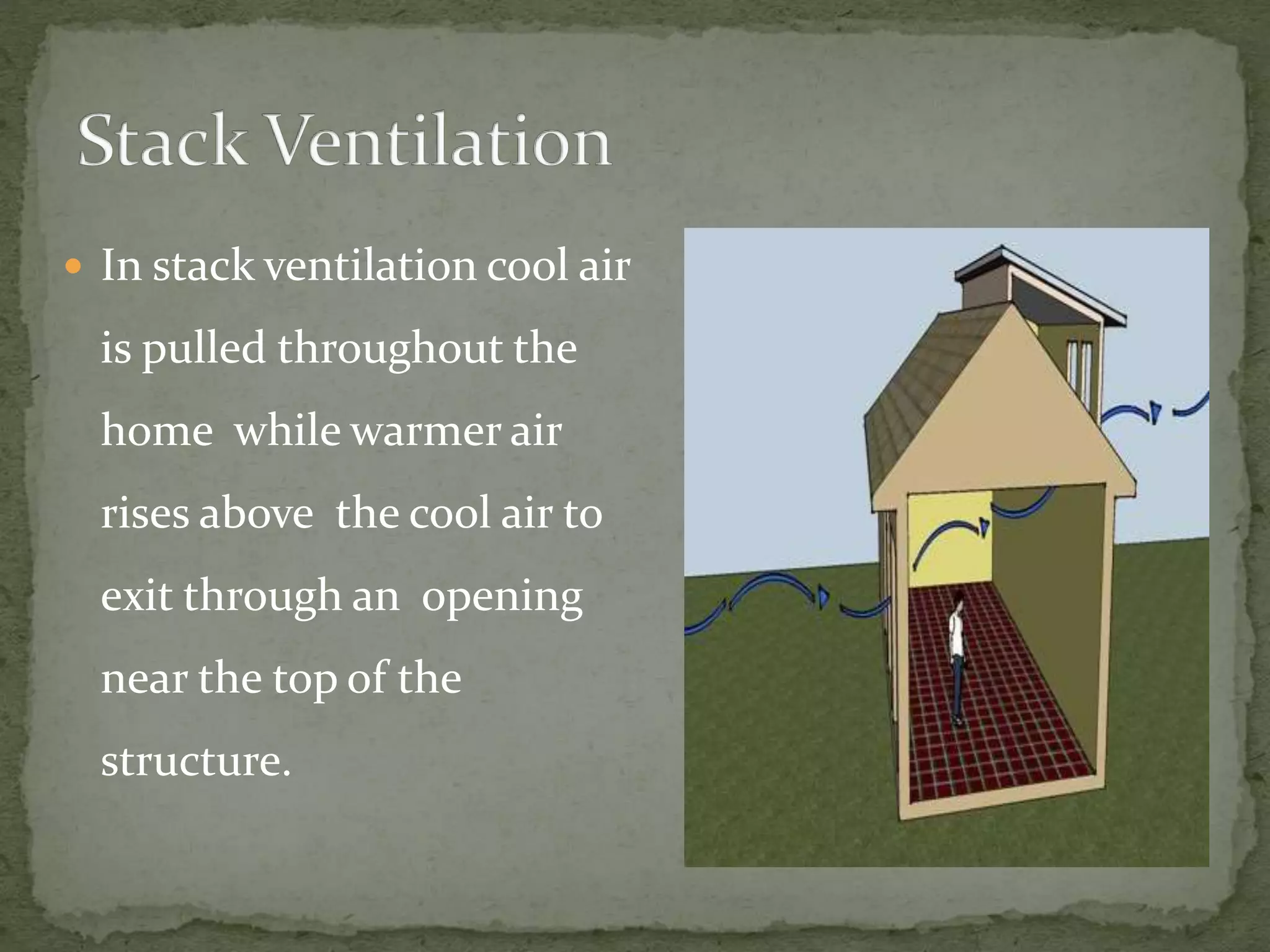
 Stack Ventilation
•cross-ventilation
 strategies place air inlets
on the windward side and
air outlets on the leeward
 side of the home.
 In stack ventilation cool air
is pulled throughout the
home while warmer air
rises above the cool air to
exit through an opening
near the top of the
structure.
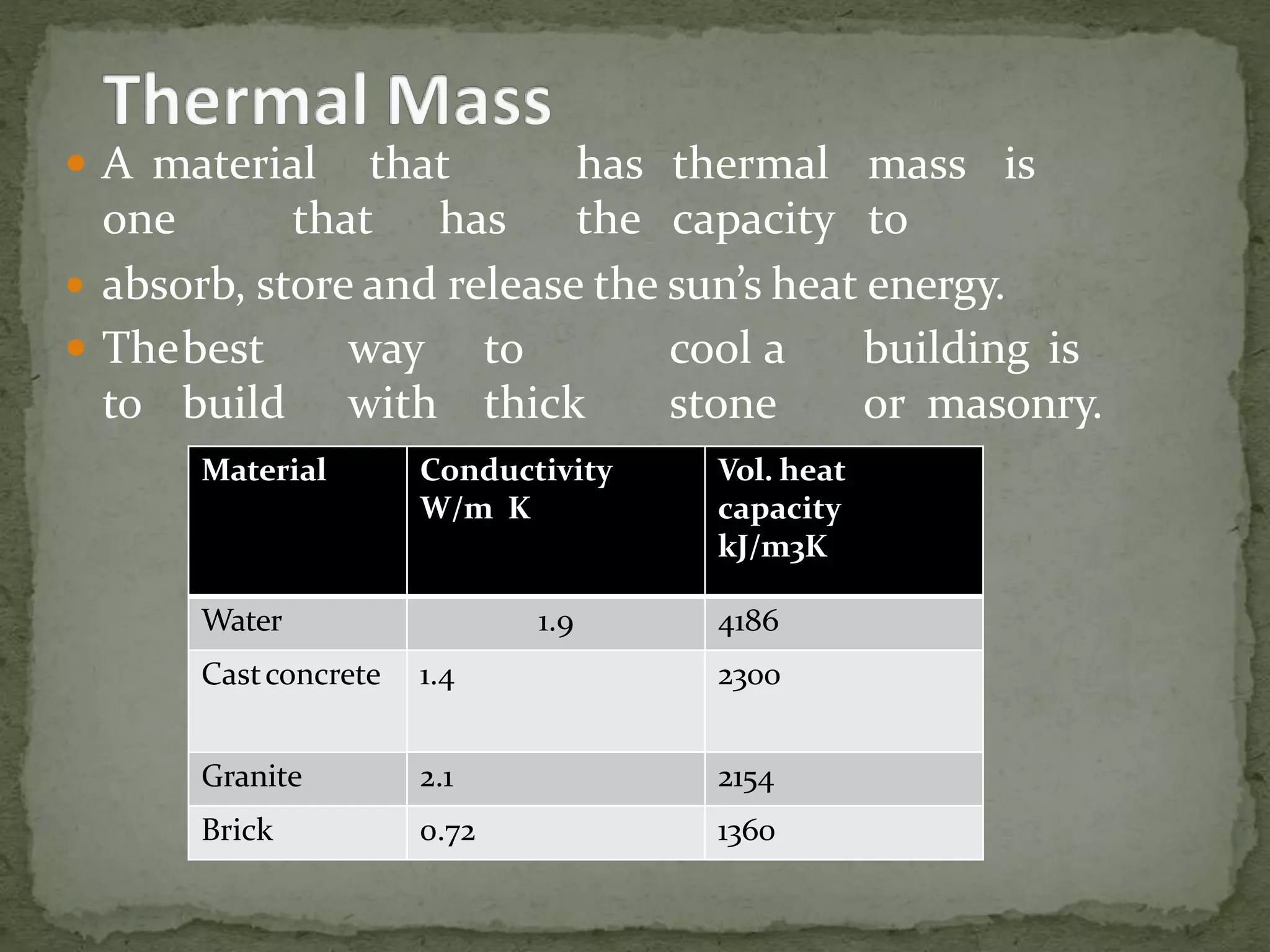
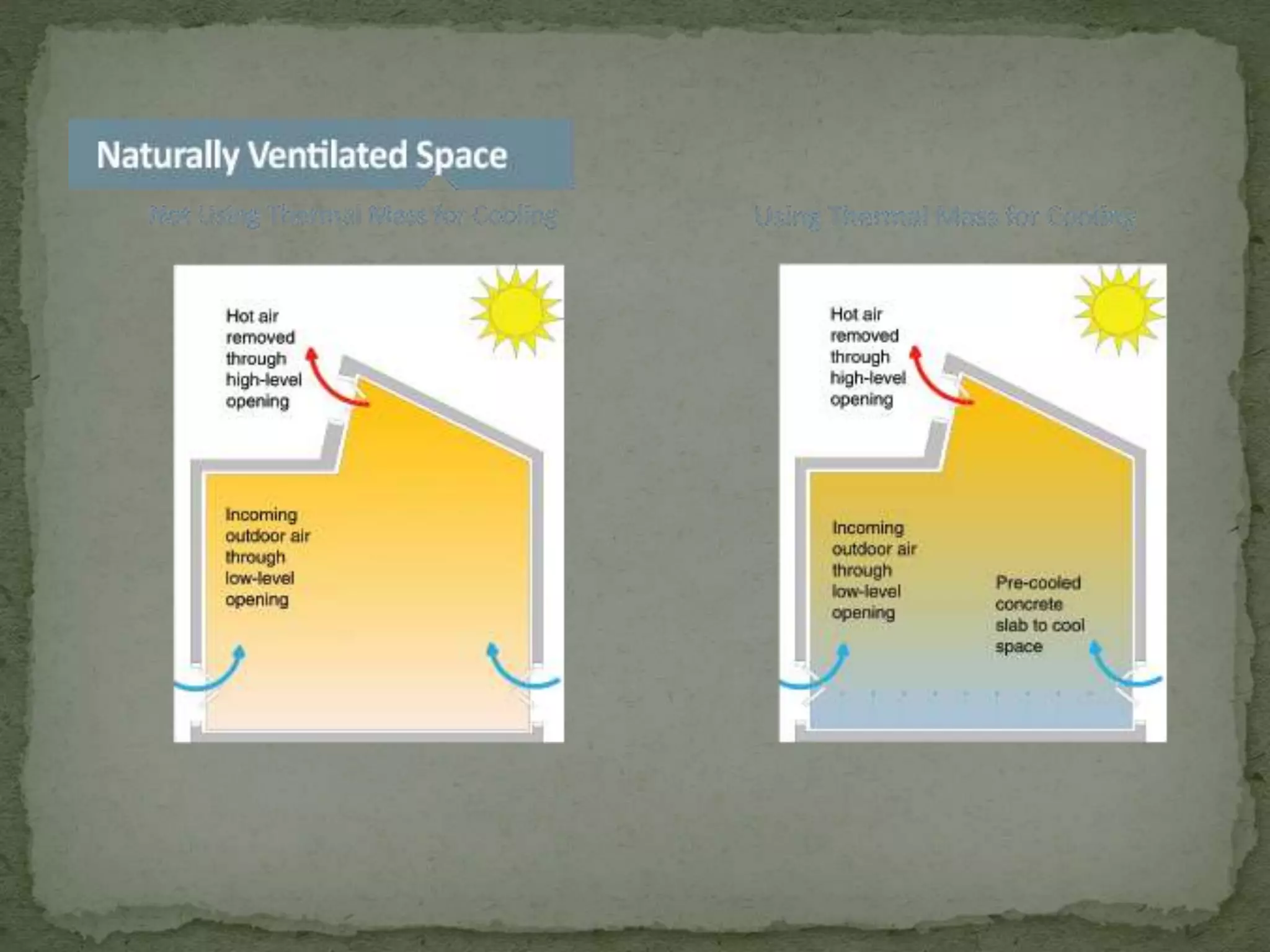
 A material that has thermal mass is
one that has the capacity to
 absorb, store and release the sun’s heat energy.
 Thebest way to cool a building is
to build with thick stone or masonry.
Material Conductivity
W/m K
Vol. heat
capacity
kJ/m3K
Water 1.9 4186
Castconcrete 1.4 2300
Granite 2.1 2154
Brick 0.72 1360
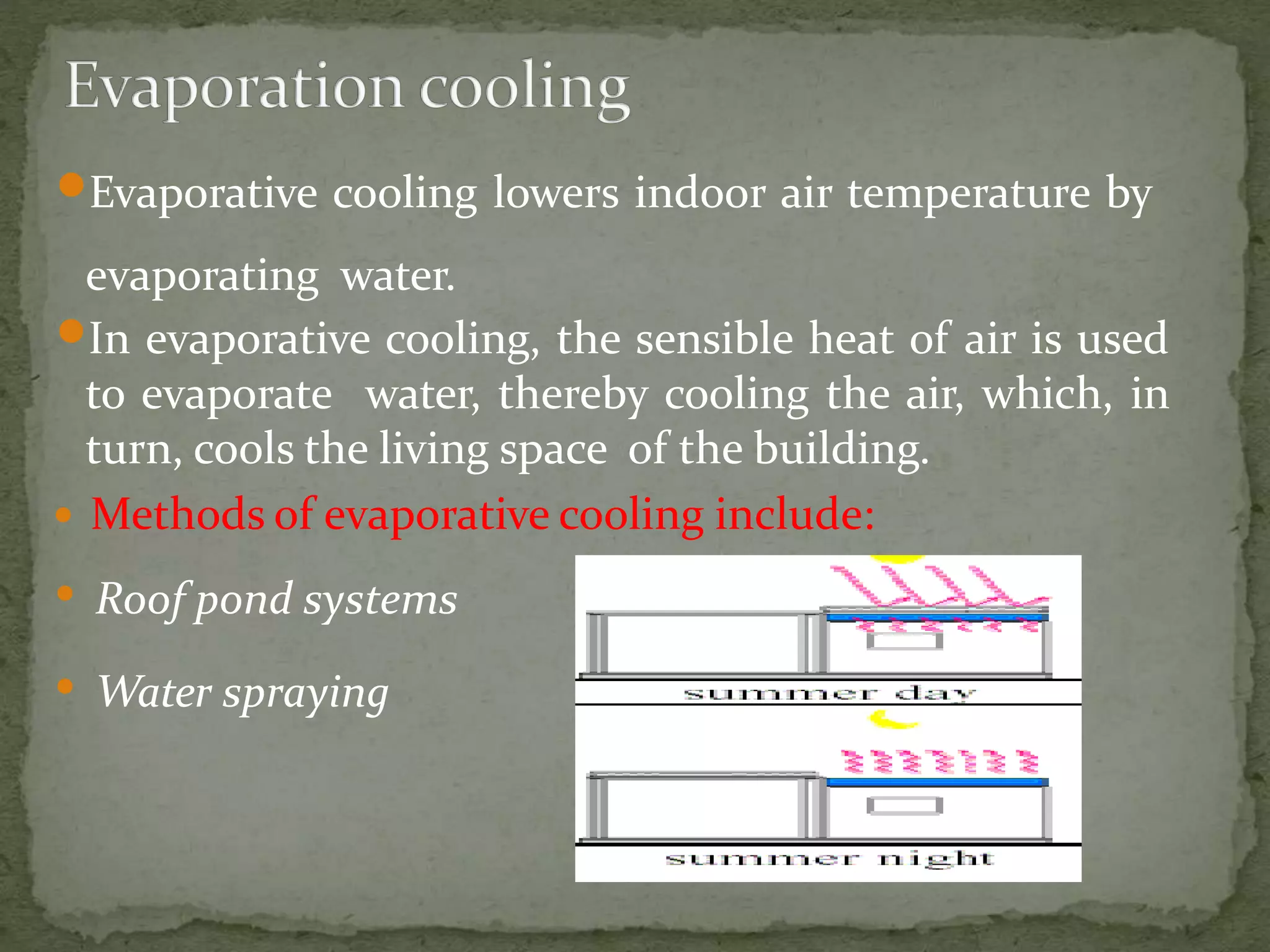
Evaporative cooling lowers indoor air temperature by
evaporating water.
In evaporative cooling, the sensible heat of air is used
to evaporate water, thereby cooling the air, which, in
turn, cools the living space of the building.
 Methods of evaporative cooling include:
• Roof pond systems
• Water spraying
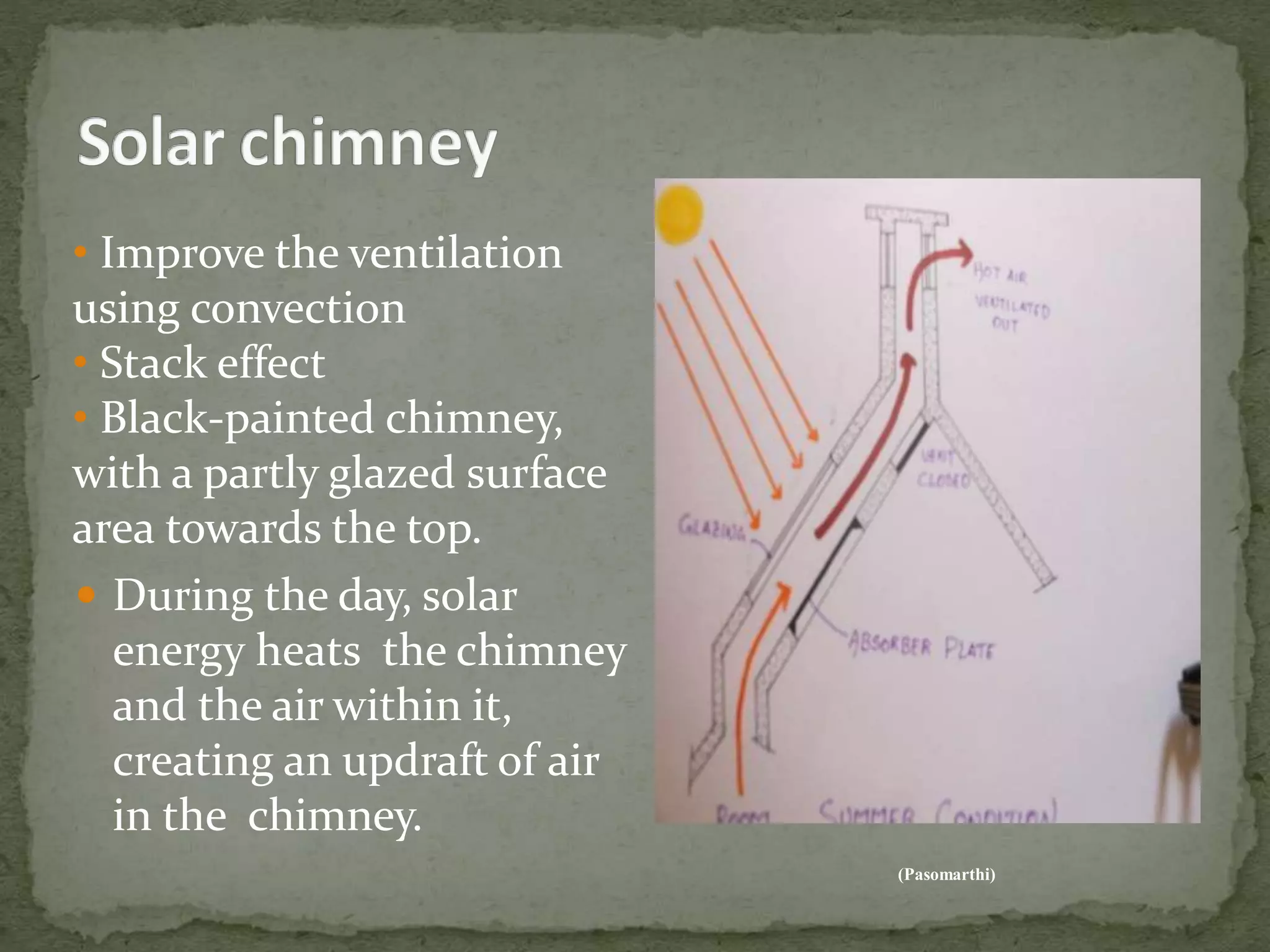
 During the day, solar
energy heats the chimney
and the air within it,
creating an updraft of air
in the chimney.
(Pasomarthi)
• Improve the ventilation
using convection
• Stack effect
• Black-painted chimney,
with a partly glazed surface
area towards the top.
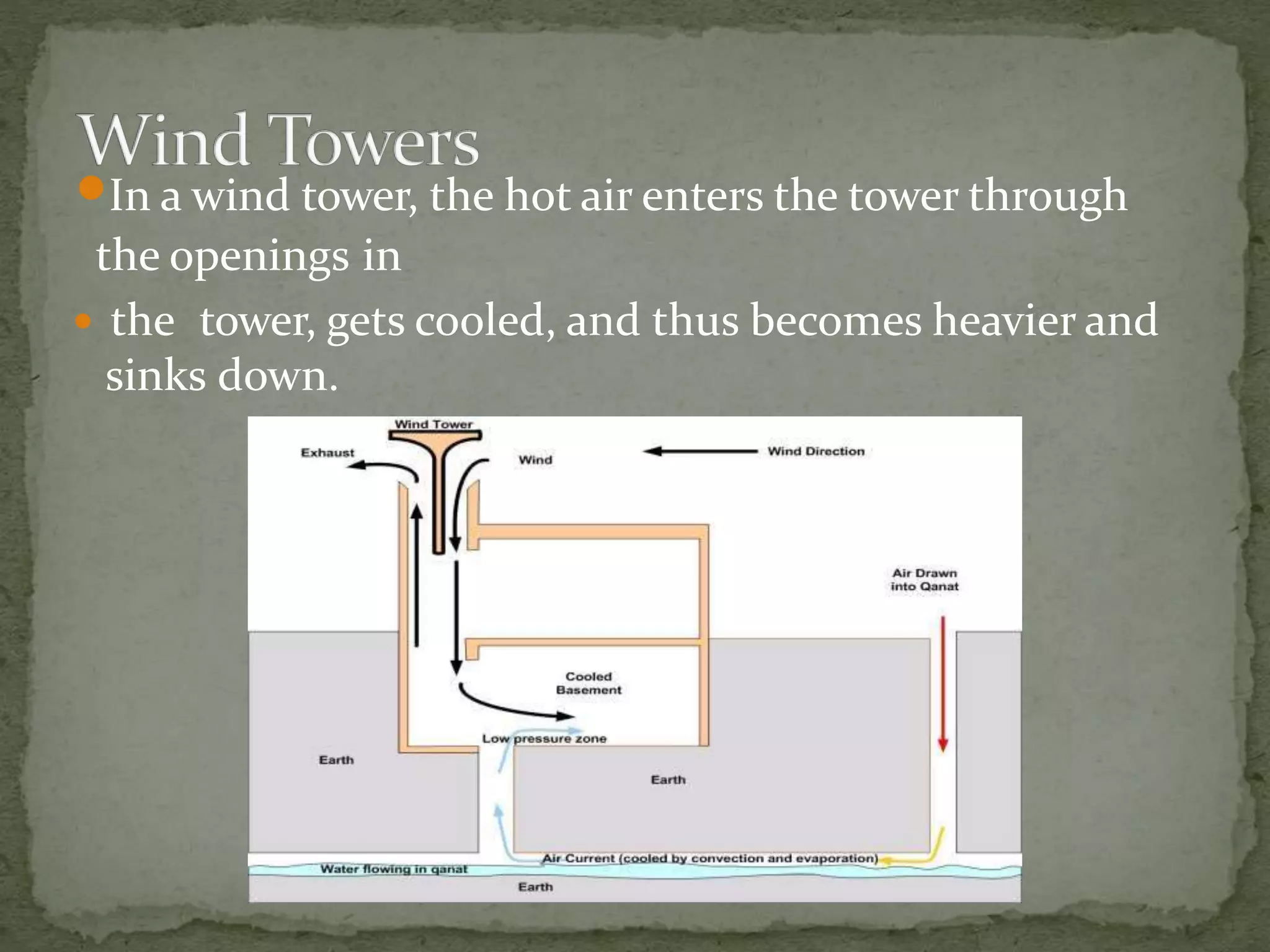
In a wind tower, the hot air enters the tower through
the openings in
 the tower, gets cooled, and thus becomes heavier and
sinks down.

Building science and tech (passive system)

  • 1.
    TOPIC: PASSIVE SYSTEM SUBMITTED TO: AR. JANMEET KAUR SUBMITTED TO: RAJIT KUMAR {170040020} SEM- 6TH B.ARCHITECTURE
  • 2.
     Passive systemsare effective in net-zero buildings because they allow the user to maintain comfort in a space without the need for energy. Common passive techniques include natural ventilation and the use of thermal mass.  Stagnant systems require no power, no moving parts, no controls and little to no maintenance.  Built around the Four External Envelope Issues.-Water / Air / Vapor / Thermal.
  • 3.
     Advantages ofPassive Building Systems 1. One time cost 2. Costs Fixed and Known - High Cost Certainty 3. Predictable stream of benefits 4. Typically requires no Little or No Maintenance 5. No Moving Parts & works 24 hours per day  Disadvantages of Passive Building Systems 1. Increases First Cost 2. Essentially Fixed 3. Cannot be easily Upgraded . 4. No Sex appeal or cool plaques.
  • 4.
     Primary elementsof passive solar heating are :  Thermal mass to absorb, store, and distribute heat.  South-facing windows are designed to let the sun's heat in while insulating against the cold.  Open floor plans allow more sun inside.  There are 3 main methods of passive solar heating:  Direct gain  Indirect gain  Isolated gain
  • 5.
    •Living space workas solar collector, heat absorber and distribution system. •South-facing windows. •Use of thermal mass.
  • 6.
     Thermal massplace between sun and space.  Use of flat plat collectors.
  • 7.
     Sunspace  Mainfunctions of sunspaces  Main considerations  Siting  Heat Distribution  Glazing
  • 9.
    1. Conservation Levels:Higher than normal levels of insulation and air tightness 2. Distribution of Solar Glazing: distributed throughout the building proportional to the heat loss of each zone 3. Orientation: Optimum within 5 degrees of true south 4. Glazing Tilt: Looking for perpendicular to sun angle in winter, although vertical efficient where lots of reflective snow cover 5. Number of glazing layers: 3 to 4 for severe climates, less otherwise 6. Night insulation and Low-E glazing: Greatly improves reduction of night heat losses 7. Mixing passive systems can increase comfort levels General Rules for Passive Solar Heating
  • 10.
     Passive coolingsystems are least expensive means of cooling a home which maximizes the efficiency of the building envelope without any use of mechanical devices. • The primary focus of passive cooling is: • Slow heat transfer into the house. • Remove unwanted heat from the building.
  • 11.
     Various passivetechnologies that can be adopted in the various climatic zones in India are as follow:  Shading system  Ventilation  Solar chimney  Thermal mass  Wind towers  Evaporative cooling system
  • 12.
     The mosteffective method of cooling a building is to shade windows, walls and roof of building from direct solar radiation.  There are two types of shading system:  External Shading  Internal Shading
  • 13.
     These methodused in external shading:  Eaves  Awnings  Screens and shutters  Louvers  Verandahs  Pergolas  Trees and shrubs RetractableAwnings
  • 14.
  • 15.
    •Internal shading can beprovided  using curtains and blinds.  Internal shadingcan be a useful device when:  The sun penetrates for only a short time heat build-up will not be major problem.  Windows can he sun be left open adjacent to them.  It is required to reduce glare.
  • 16.
     Passive ventilationis when air is exchanged in a building through openings in the building envelope using the stack and wind pressures.  These are the passive cooling ventilation strategy:  Cross-Ventilation  Stack Ventilation
  • 17.
    •cross-ventilation  strategies placeair inlets on the windward side and air outlets on the leeward  side of the home.
  • 18.
     In stackventilation cool air is pulled throughout the home while warmer air rises above the cool air to exit through an opening near the top of the structure.
  • 19.
     A materialthat has thermal mass is one that has the capacity to  absorb, store and release the sun’s heat energy.  Thebest way to cool a building is to build with thick stone or masonry. Material Conductivity W/m K Vol. heat capacity kJ/m3K Water 1.9 4186 Castconcrete 1.4 2300 Granite 2.1 2154 Brick 0.72 1360
  • 21.
    Evaporative cooling lowersindoor air temperature by evaporating water. In evaporative cooling, the sensible heat of air is used to evaporate water, thereby cooling the air, which, in turn, cools the living space of the building.  Methods of evaporative cooling include: • Roof pond systems • Water spraying
  • 22.
     During theday, solar energy heats the chimney and the air within it, creating an updraft of air in the chimney. (Pasomarthi) • Improve the ventilation using convection • Stack effect • Black-painted chimney, with a partly glazed surface area towards the top.
  • 23.
    In a windtower, the hot air enters the tower through the openings in  the tower, gets cooled, and thus becomes heavier and sinks down.