
Aligning
Incentives
in Supply Chains

                   Presenter: Liu Qi
CISCO –
World’s largest network equipment maker

 • In 2001, its much vaunted supply chain had snapped

 • CISCO shocked investors by scraping $2.5 billion of
   surplus raw materials - one of the largest inventory
   write-offs in U.S. business history

 • Reason: contractors had everything to gain and
   nothing to lose by building excess inventory, they did
   not worry about CISCO's real needs
CISCO's supply chain is the rule rather than an
exception


 • Companies don't worry about the
   behavior of their partners

 • Every firm behaves in ways that maximize
   its own interests rather than the supply
   chain's interests
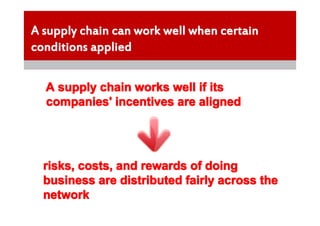
A supply chain can work well when certain
conditions applied

  A supply chain works well if its
  companies' incentives are aligned


  risks, costs, and rewards of doing
  business are distributed fairly across the
  network
Incentive plays an important role in supply chain


  • well designed and aligned incentives can make a supply
    chain more efficient and create a win-win situation

  • misaligned incentives may cause
    – excess inventory
    – stock-outs
    – incorrect forecasts
    – inadequate sales efforts
    – even poor customer service
An example of well designed and aligned
incentives in supply chain: 7-Eleven


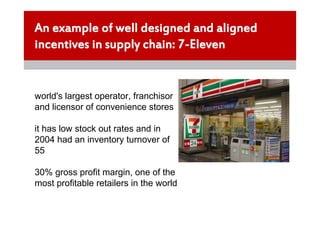
world's largest operator, franchisor
and licensor of convenience stores

it has low stock out rates and in
2004 had an inventory turnover of
55

30% gross profit margin, one of the
most profitable retailers in the world
An example of well designed and aligned
incentives in supply chain: 7-Eleven Cont.


close alignment between 7-11's interests and its
partners

incentives are clear, e.g.,fail to deliever on time will
result a penalty payment

share rewards with partners

build deep trust with partners
However, it is hard to align incentives


• companies cannot observe other firms'
  actions

• information is not available for everyone

• incentive schemes are often badly designed
How to realign incentives in your supply chain


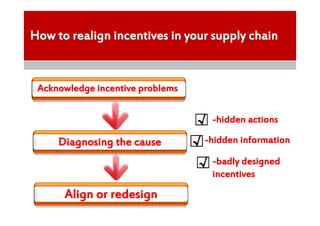
 Acknowledge incentive problems

                                   -hidden actions

     Diagnosing the cause         -hidden information

                                   -badly designed
                                   incentives
      Align or redesign
Align or redesign incentives


Rewriting contracts

Revealing hidden information

developing trust
Rewriting Contracts


 • creating a contract that rewards or penalizes
   partners based on outcomes

 • a powerful tool - small changes in incentives
   can transform supply chains quickly - should be
   used before other apporaches

 e.g. rewriting contracts between video retailers and
   studios
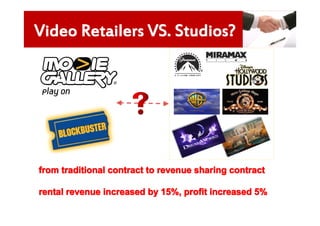
Video Retailers VS. Studios?


from traditional contract to revenue sharing contract

rental revenue increased by 15%, profit increased 5%
Revealing Hidden Information


• basic rule: making actions visible

• most effective way: tracking and
  monitoring more business variables

• other methods: information system,
  mystery shoppers
Developing Trust


• use intermediaries to align the incentives
  of the two parties

• build long term relationship based on a
  mutual benefit belief
Two caveates of aligning incentives


 • a solution that resolves incentive
   misalignment for one company may
   exacerbate the problem for another

 • companies must align the incentives of all
   the key decision makers in their supply
   chains
Conclusion

• companies should always study their supply chains

• conduct incentive audits

• educate managers about their supply chain partners

• examine case studies from other industries

Aligning Incentives In Supply Chains

  • 1.
  • 2.
    CISCO – World’s largestnetwork equipment maker • In 2001, its much vaunted supply chain had snapped • CISCO shocked investors by scraping $2.5 billion of surplus raw materials - one of the largest inventory write-offs in U.S. business history • Reason: contractors had everything to gain and nothing to lose by building excess inventory, they did not worry about CISCO's real needs
  • 3.
    CISCO's supply chainis the rule rather than an exception • Companies don't worry about the behavior of their partners • Every firm behaves in ways that maximize its own interests rather than the supply chain's interests
  • 4.
    A supply chaincan work well when certain conditions applied A supply chain works well if its companies' incentives are aligned risks, costs, and rewards of doing business are distributed fairly across the network
  • 5.
    Incentive plays animportant role in supply chain • well designed and aligned incentives can make a supply chain more efficient and create a win-win situation • misaligned incentives may cause – excess inventory – stock-outs – incorrect forecasts – inadequate sales efforts – even poor customer service
  • 6.
    An example ofwell designed and aligned incentives in supply chain: 7-Eleven world's largest operator, franchisor and licensor of convenience stores it has low stock out rates and in 2004 had an inventory turnover of 55 30% gross profit margin, one of the most profitable retailers in the world
  • 7.
    An example ofwell designed and aligned incentives in supply chain: 7-Eleven Cont. close alignment between 7-11's interests and its partners incentives are clear, e.g.,fail to deliever on time will result a penalty payment share rewards with partners build deep trust with partners
  • 8.
    However, it ishard to align incentives • companies cannot observe other firms' actions • information is not available for everyone • incentive schemes are often badly designed
  • 9.
    How to realignincentives in your supply chain Acknowledge incentive problems -hidden actions Diagnosing the cause -hidden information -badly designed incentives Align or redesign
  • 10.
    Align or redesignincentives Rewriting contracts Revealing hidden information developing trust
  • 11.
    Rewriting Contracts •creating a contract that rewards or penalizes partners based on outcomes • a powerful tool - small changes in incentives can transform supply chains quickly - should be used before other apporaches e.g. rewriting contracts between video retailers and studios
  • 12.
    Video Retailers VS.Studios? from traditional contract to revenue sharing contract rental revenue increased by 15%, profit increased 5%
  • 13.
    Revealing Hidden Information •basic rule: making actions visible • most effective way: tracking and monitoring more business variables • other methods: information system, mystery shoppers
  • 14.
    Developing Trust • useintermediaries to align the incentives of the two parties • build long term relationship based on a mutual benefit belief
  • 15.
    Two caveates ofaligning incentives • a solution that resolves incentive misalignment for one company may exacerbate the problem for another • companies must align the incentives of all the key decision makers in their supply chains
  • 16.
    Conclusion • companies shouldalways study their supply chains • conduct incentive audits • educate managers about their supply chain partners • examine case studies from other industries